
Korean hairstyles have a way of making soft layers and strategic fringe look like the most obvious choice in the room. Right now the shift is toward cuts that move with you, curtain bangs that actually frame, lived-in color that doesn’t scream for a root touch-up, and a glossy finish that reads as healthy rather than flat-ironed.
This collection of 31 Trendy Korean Hairstyles covers the range from a sharp chin bob to flowing mid-back waves, so there’s something for fine hair that needs a blunt baseline, thick hair that wants weight removed, or anyone whose current fringe refuses to behave. Each look is built around styling that holds its shape without a fight.
Pixie Bob With Side Swept Bangs

Can fine hair actually hold a short cut without looking like a sad tuft? It can, provided the cut works with the texture rather than against it. This ear-length pixie bob keeps the black hair compact on the sides and stacks the short, textured bangs to one side, creating asymmetry that gives the illusion of density. Ask your stylist for: ear-length pixie bob, short side-swept textured bangs. The side part and fine, straight texture mean this style holds its shape through a workday with just a dab of paste at the roots.
Chin Length Bob With Blunt Fringe

This chin-length bob in dark brown is cut with a sharp horizontal line across the forehead and a slight inward curl at the ends. Ask your stylist for: chin-length bob, blunt fringe. The straight, fine texture helps the fringe stay crisp, but the drawback is that any regrowth shows fast. A flat iron and a trim every six weeks keep the geometry intact.
Chin Length Bob With Curtain Bangs

Notice how the curtain bangs here don’t just frame the face but blend directly into the soft layers of the bob. The gentle blowout creates a continuous sweep from the fringe through the chin-length ends. Ask your stylist for: chin-length bob, soft layers, curtain bangs. The fine, wavy texture takes well to a round brush and a heat protectant, and the bangs can be pushed to either side if you need a quick change. A trim every eight weeks keeps the curtain shape defined.
Layered Chin Bob With Blonde Highlights
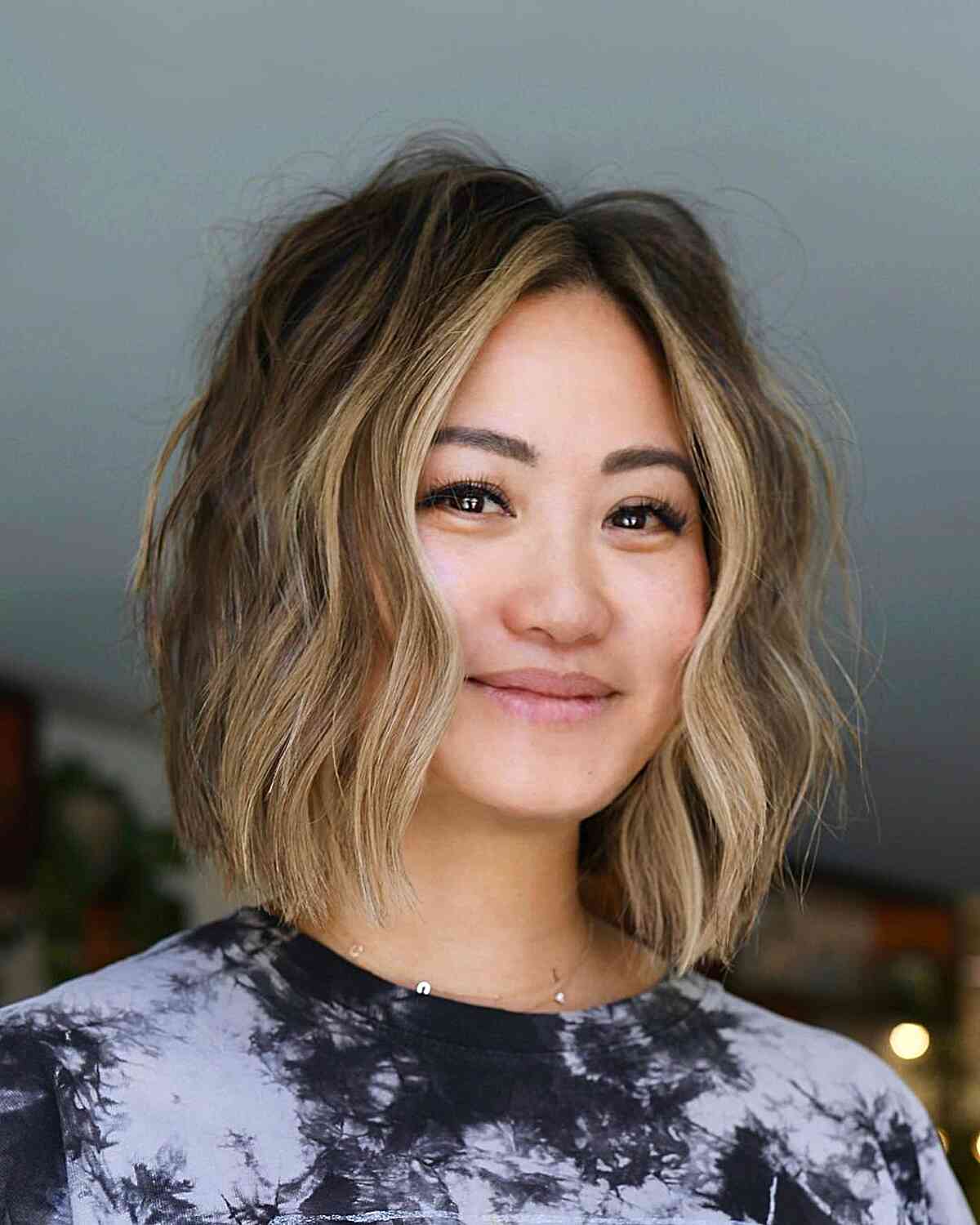
Where a solid dark bob can read as severe, this chin-length version uses blonde highlights on a dark brown base to add dimension through the wavy layers. The curtain bangs and middle parting keep it soft rather than sharp. Ask your stylist for: chin-length layered bob, curtain bangs, blonde highlights. The highlights are woven through the mid-lengths and ends, so they brighten the face without a harsh root line.
A texturizing spray at the roots lifts the waves, and the highlights need a toning appointment every six to eight weeks to keep them from warming up. This one works best for medium-density, wavy hair that can hold the bend without a curling iron.
Collarbone Hush Cut With Curtain Bangs

A hush cut looks soft and undone, but the reality is that the fine, feathery layers require regular maintenance to avoid looking ragged. This collarbone-length version keeps the dark brown hair smooth with a blowout, and the curtain bangs are cut to blend seamlessly into the face-framing pieces. Ask your stylist for: collarbone hush cut, soft layers, curtain bangs. The fine, straight texture means the layers hold their shape without product, but the drawback is that split ends show quickly on the delicate tips. Plan for a trim every eight weeks and a round brush for the daily blow-dry.
Collarbone Layers With Blunt Bangs
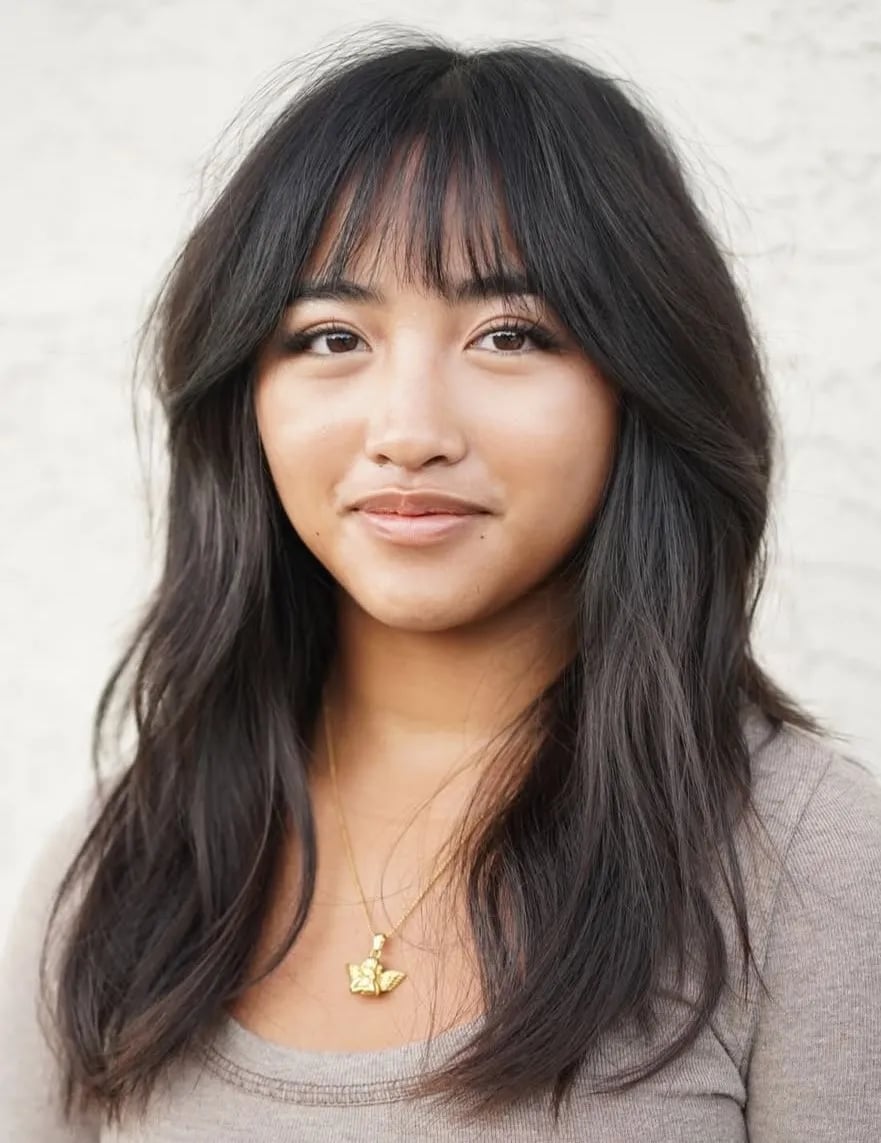
Wondering if blunt bangs work with wavy hair? They do, provided you have medium density and a collarbone-length starting point. The blunt fringe lands straight across, which suits oval and long faces best by shortening the visual length of the face. Ask your stylist for: collarbone length, long layers, blunt bangs. Air-dry with a smoothing cream to let the natural wave come through, and plan on trimming those bangs every four to six weeks. They grow faster than you think.
Collarbone Shag With Balayage
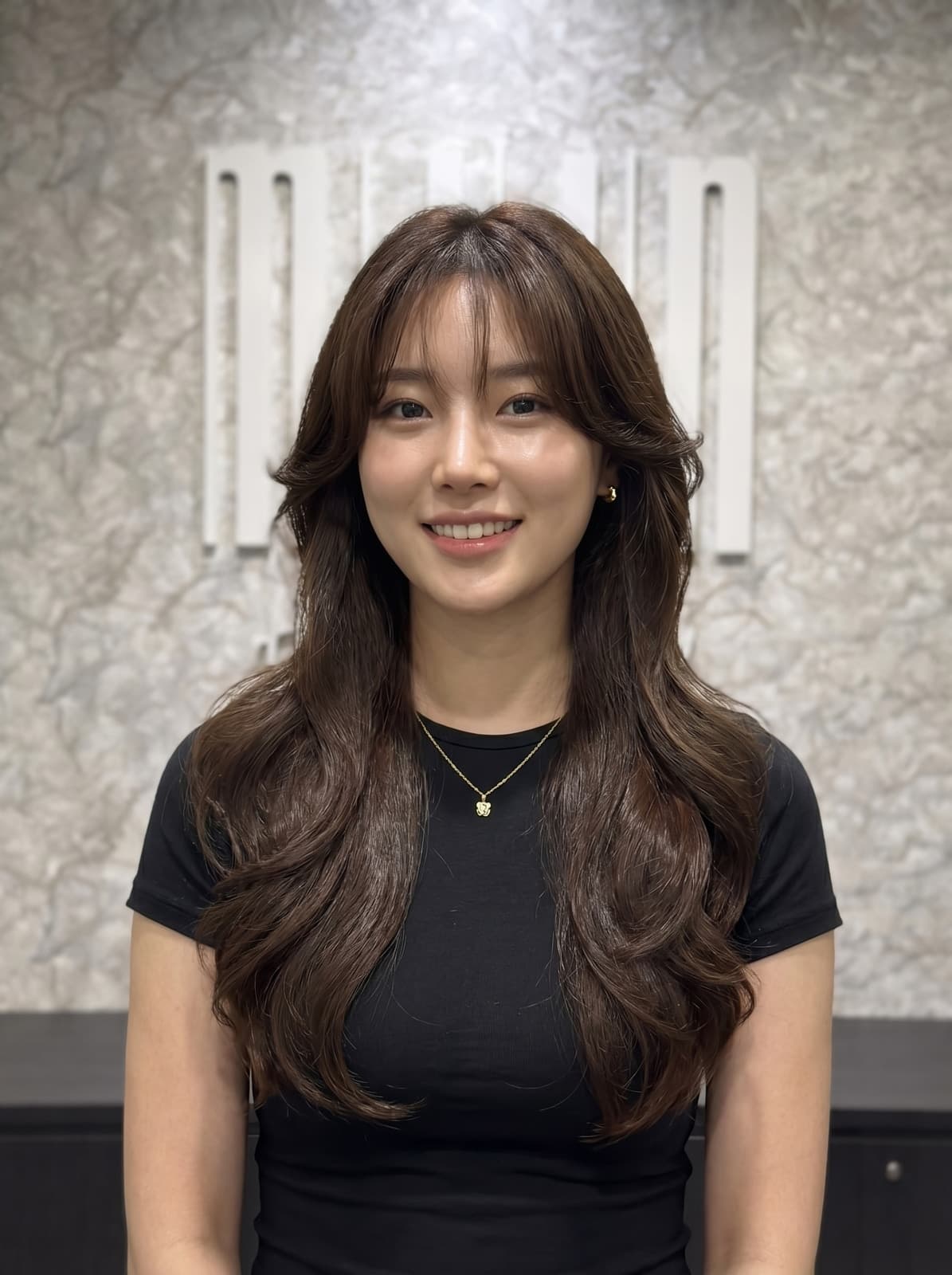
The collarbone shag with balayage is a seasonal workhorse. The shag cut builds internal layers that create movement, while the balayage adds dimension without a harsh root line. Ask your colorist for: collarbone shag, curtain bangs, balayage. A sea salt spray enhances the texture and keeps waves defined. Balayage needs a touch-up every ten to twelve weeks, which aligns neatly with the shift from spring into summer or fall into winter. It is a cut that looks polished without looking like you tried.
Collarbone Layers With Curtain Bangs, Dark Brown
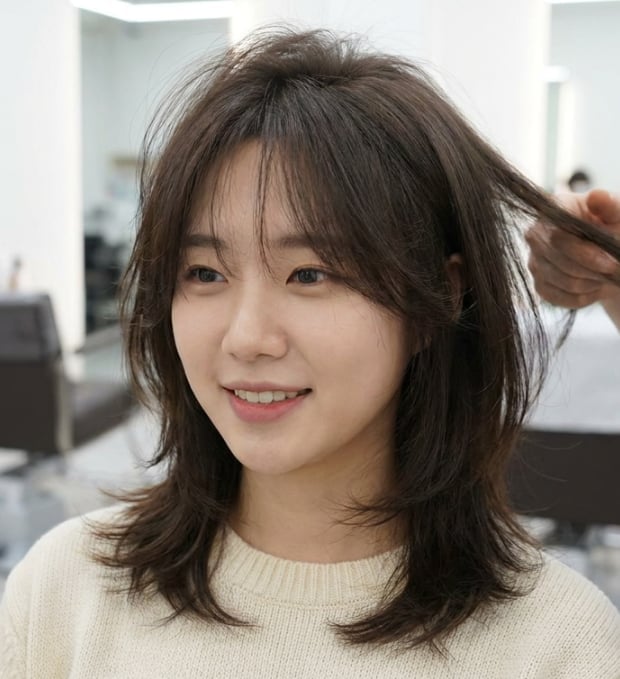
A glossy blowout on collarbone-length layers requires a round brush and some patience. The curtain bangs are cut to sweep away from the face, which softens the overall shape. Ask your stylist for: collarbone length layers, curtain bangs. Blow-dry with the brush lifting at the roots for volume that holds through the day. The middle parting keeps the weight distributed evenly. Trim every eight to ten weeks to maintain the shape, because the layers lose their precision faster than a one-length cut.
Collarbone Layers And Curtain Bangs, Wavy
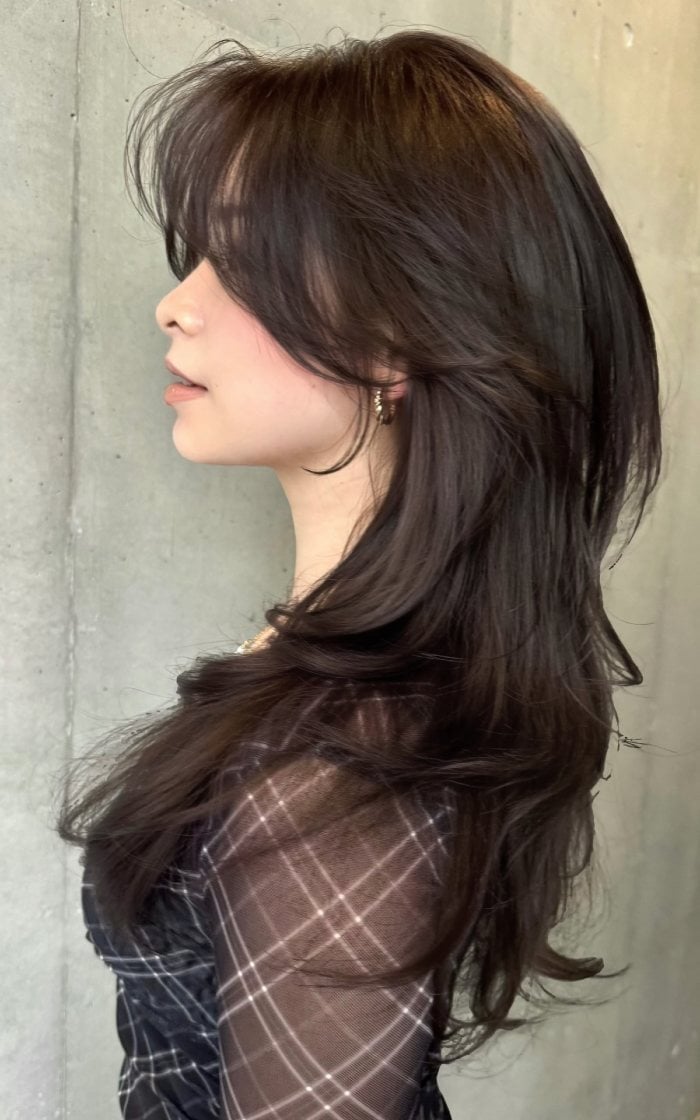
Can thick wavy hair pull off this collarbone look? Yes, but the salon visit is required. The face-framing layers and curtain bangs need a professional hand to remove bulk while keeping the length. Ask your stylist for: collarbone length, face-framing layers, curtain bangs. A smoothing serum and a round brush at home will tame the wave pattern. This cut requires a skilled stylist to shape the layers correctly.
Collarbone Waves With Subtle Highlights

Soft waves and subtle highlights read as one unit rather than two separate decisions. The face-framing layers are cut so the lighter strands fall around the jaw, creating dimension without chunky streaks. Ask your colorist for: collarbone length waves, curtain bangs, subtle highlights. A texturizing spray applied to damp hair and diffused gives the wave pattern hold. The highlights will need refreshing every ten to twelve weeks, but the lived-in effect means the grow-out is forgiving rather than urgent.
Collarbone Cut With Face-Framing Layers

The rule with face-framing layers is that they only look this good if you commit to the blowout. A collarbone cut with prominent layers and curtain bangs needs a round brush and a heat protectant to get that polished sweep, especially on medium wavy texture. Ask your stylist for: collarbone length cut, prominent face-framing layers, curtain bangs. The middle parting and soft waves create volume around the jaw, which softens square and round faces. Plan for a trim every eight to ten weeks, or the layers start landing in a way that feels less face-framing and more we-had-a-plan-once.
Shoulder Length Layers With Face Framing, Close-Up Take

Does a side view of your haircut ever reveal a sad, shapeless blob where the face-framing should be? This shoulder-length cut solves that with soft, medium-density layers that start at the chin and taper into the rest of the dark brown hair, creating a continuous curve from the middle part to the ends. Ask your stylist for: shoulder length layers, face-framing pieces. The wavy texture and medium density make the layers hold their shape without collapsing, and a smooth blowout with a round brush keeps the face-framing pieces from flipping in the wrong direction. A trim every eight to ten weeks preserves the side profile.
Shoulder Layers With Curtain Bangs

Shoulder-length dark brown hair with prominent layers and soft curtain bangs relies on that internal structure for the straight, polished finish. Ask your stylist for: shoulder length layers, soft curtain bangs. Thick, straight hair holds the shape best, and the curtain bangs need blow-drying away from the face to land correctly. A DIY blow-dry with a round brush is doable, but the bangs will fight you if you skip the direction change. Salon for the initial cut, home for the daily refresh.
Shoulder Layers With Side Swept Bangs
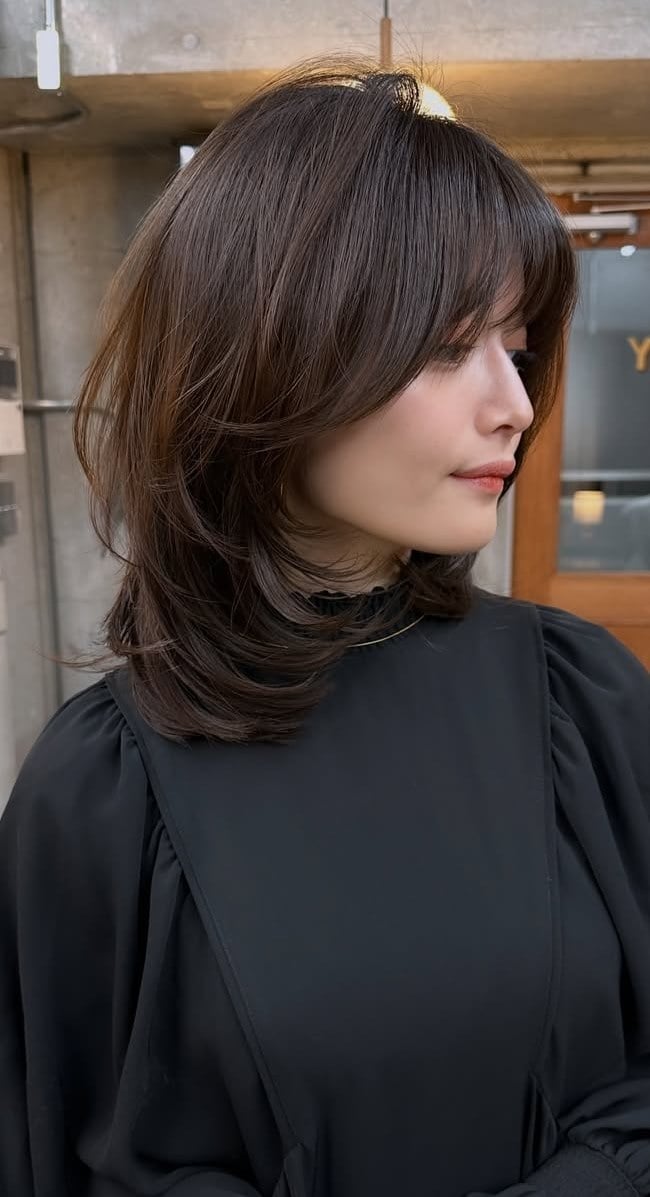
Curtain bangs get the attention, but side-swept bangs solve a different problem: they add asymmetry to a symmetrical cut. A medium brown, layered shoulder-length style with a side part and side-swept bangs is softer than a blunt fringe and more structured than no bangs at all. Ask your stylist for: shoulder length layers, side-swept bangs. The fine, straight texture here lets the layers sit flat without pouf, which is exactly what this style needs. A small round brush on the bangs keeps them swept to the side through the day.
Shoulder Waves Air Dried With Creating A Natural And Effortless Look
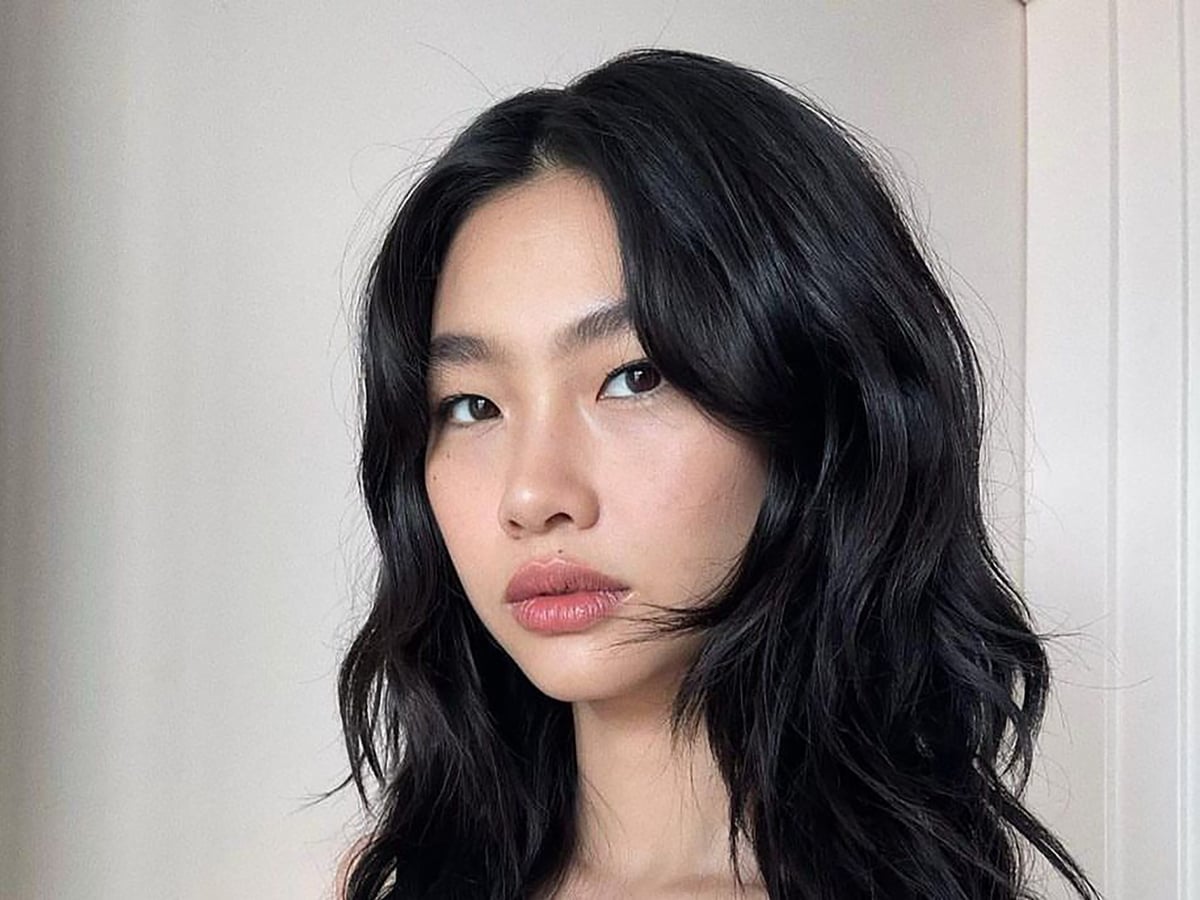
The trick is that the layers do the work, not the tools. Shoulder-length black hair with subtle internal layers and a middle part air-dries into soft, voluminous waves without a round brush or a diffuser. Ask your stylist for: shoulder length soft waves, air-dried finish. Apply a curl cream to soaking-wet hair, then scrunch upward and leave it alone. Thick, wavy texture holds the shape for a full day, and a middle part keeps the volume even on both sides. This is a true DIY cut, though a salon trim every ten weeks keeps the layers from turning into a shapeless blob at the ends.
Shoulder Shag With Full Bangs

Full bangs look great for about two weeks, then they start their campaign to poke you in the eye. This shoulder-length shag with black hair keeps them in check with shaggy layers that add movement, so when the fringe grows past your brows, the cut still has shape. Ask your stylist for: shoulder length shag, shaggy layers, full bangs. Thick, straight hair at shoulder length handles the texture well, and the full bangs work best on oval or long faces. You will need a round brush and a blow-dryer to smooth the fringe every morning, plus a trim every four to six weeks to keep it out of your line of sight. The honest drawback: the grow-out phase where the bangs hit mid-nose and you question every life choice that led to this cut.
Mid-Back Waves With Subtle Highlights
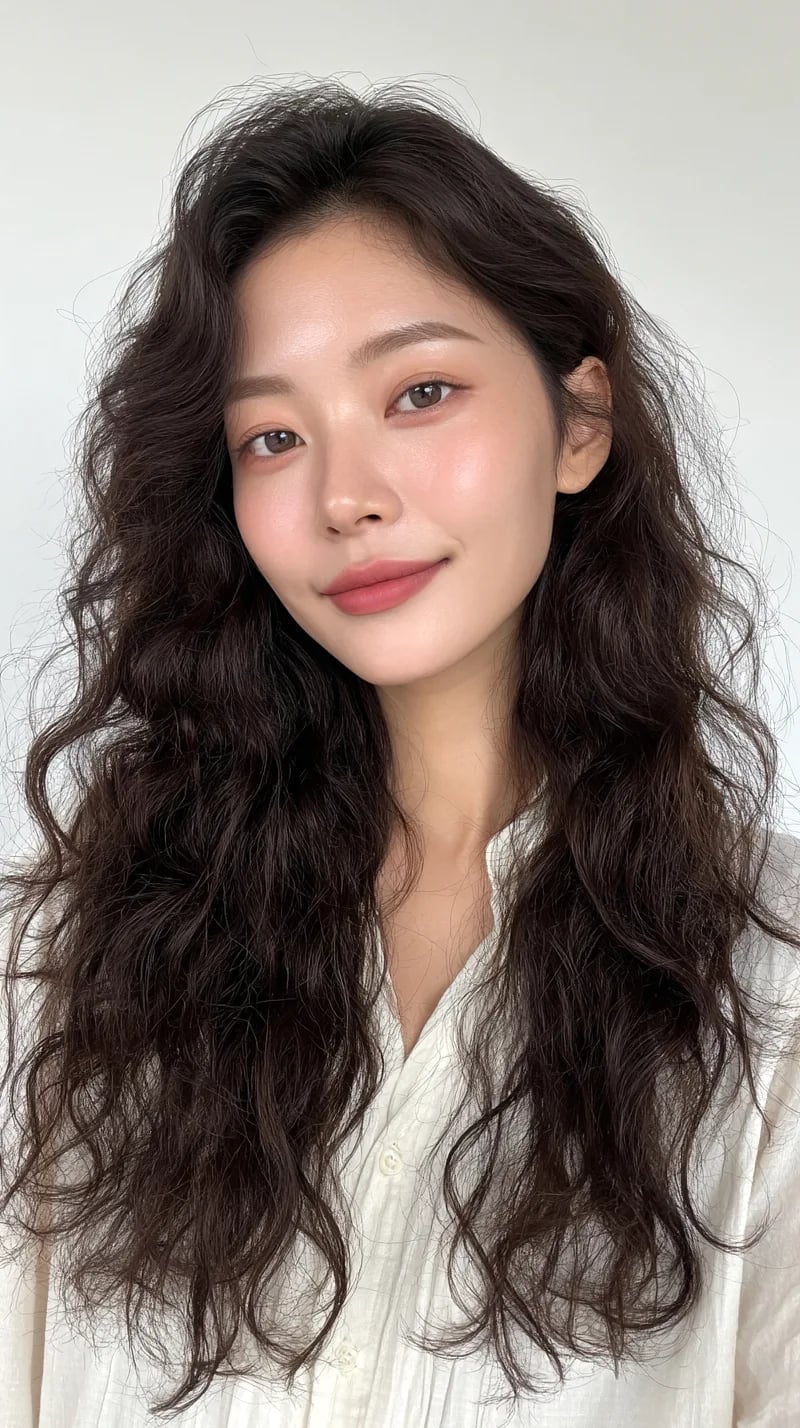
Does your hair air-dry into a shape that looks like you made an effort, or does it default to a vague triangle? If you have thick, wavy hair, this mid-back length with a dark brown base and subtle lighter highlights is the version that works without a heat tool. Ask your colorist for: mid-back length loose waves, subtle highlights. The middle parting keeps the weight centered, and the loose waves benefit from the natural texture of thick hair rather than fighting it. The subtle highlights add dimension without creating a harsh line at the roots, which means you can go longer between color appointments. This look suits most face shapes because the length falls below the collarbone and the waves soften any angular lines. It is essentially the haircut equivalent of a good night’s sleep: low effort, high return.
Mid-Back Layers With Blonde Highlights
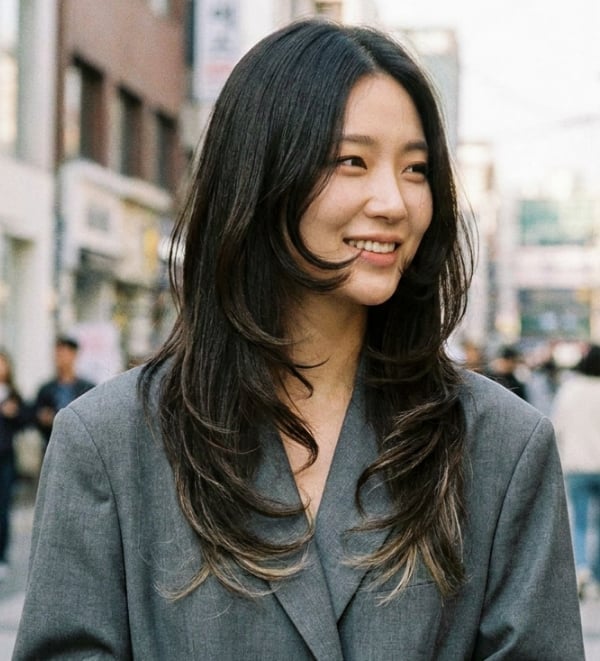
Long layers cut into mid-back length dark brown hair, with subtle blonde highlights woven through the top sections and curtain bangs framing the face. Ask your colorist for: mid-back length long layers, curtain bangs, blonde highlights. The highlights are applied using a hand-painted technique that keeps the transition soft and avoids the stripe effect. This is strictly a salon job. The balayage-style placement requires a trained eye to keep the blonde pieces concentrated through the layers. The curtain bangs need a trim every six to eight weeks to maintain their shape, and the highlights will need a refresh every ten to twelve weeks as the dark base grows in. For daily styling, a blow-dryer with a round brush encourages the soft wave pattern and keeps the fringe swept to the sides.
Mid-Back Layers With Voluminous Blowout

There is a specific window between late fall and early spring when a voluminous blowout makes sense as daily wear. This mid-back length style with dark brown hair, face-framing layers and curtain bangs delivers the kind of lift that works for holiday gatherings, work presentations or any event where you want your hair to announce itself before you do. Ask your stylist for: mid-back length layers, curtain bangs, voluminous blowout. Curtain bangs keep the volume from looking top-heavy, and the layers prevent the ends from falling flat. A large round brush and a volumizing spray at the roots create the shape, and the hold lasts through a full day if you skip the humidity. The thick, wavy texture holds the blowout longer than fine hair would, so factor in your own density before committing to the daily round-brush routine.
Mid-Back Layers With Curtain Bangs

Ask your stylist for: mid-back length layers, curtain bangs. The key is to specify that the bangs should hit at the cheekbone and taper into the face-framing pieces, so there is no blunt line where the fringe ends and the layers begin. Fine, straight hair at this length benefits from the layers adding movement without losing density. The curtain bangs soften round and square face shapes by drawing the eye outward. A blow-dryer with a round brush is enough to shape the fringe each morning, and a trim every eight to ten weeks keeps the bangs from sliding into awkward territory. The middle part is essential here, so resist the urge to switch to a deep side part halfway through the week.
Mid-Back Waves With Face-Framing Layers
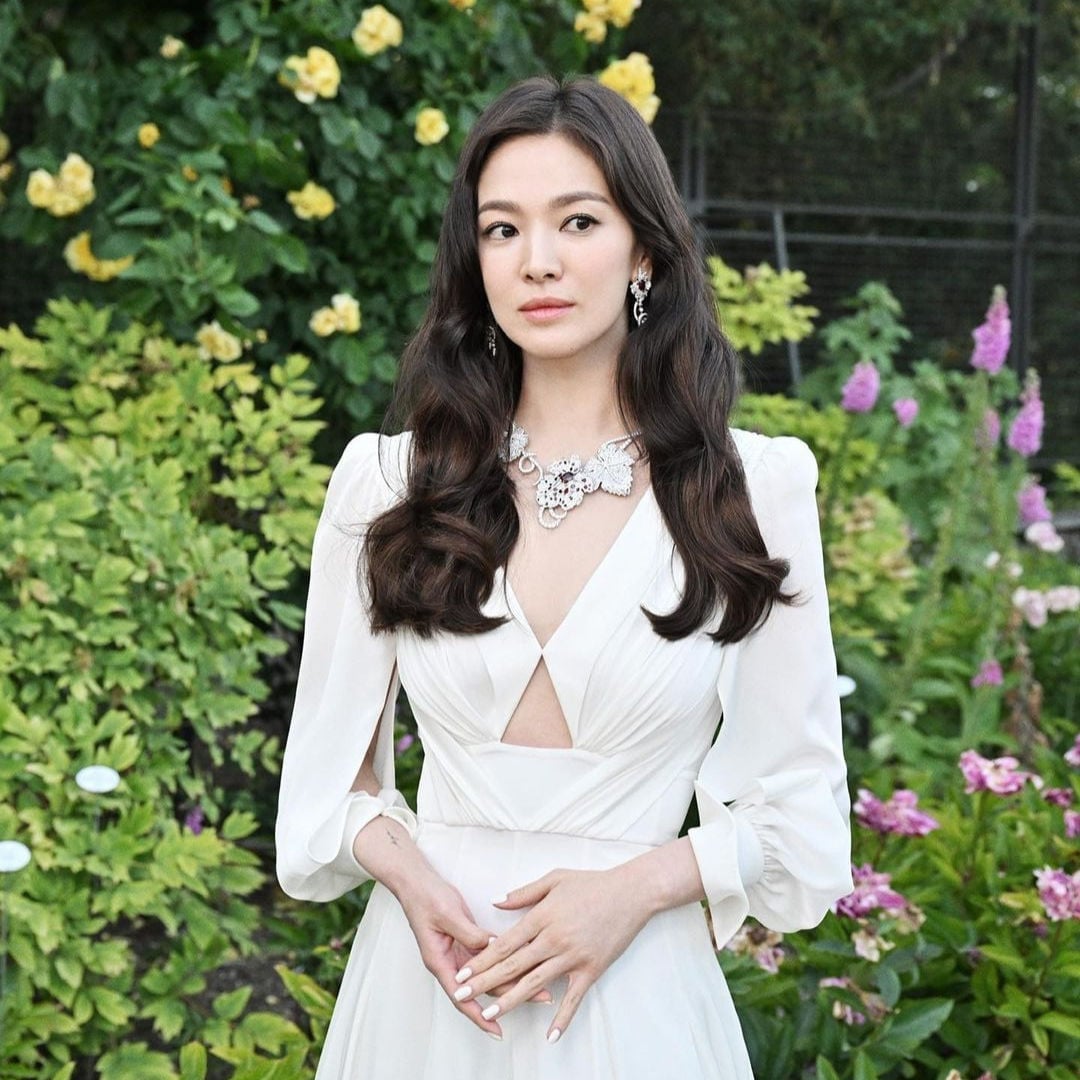
Before you commit to a full head of uniform waves, consider the face-framing layer route instead. This style keeps the length at mid-back with a middle part and uses soft layers around the front to break up the density of thick, wavy hair. Ask your stylist for: mid-back length loose waves, face-framing layers. The layers start around the collarbone, so the waves have room to move without losing volume at the ends.
The trade-off is that thick, wavy hair does not hold a perfect wave pattern without some effort. You will need a round brush to define the front sections, and a trim every eight to ten weeks to keep the layers from growing into a single blunt shape. A salon cut is required here: the layering needs precision to avoid looking heavy on the bottom. Skip this if you air-dry exclusively and hope for the best.
Mid-Back Layers With Wispy Bangs, Black

The bangs are cut light enough that they blend into the hair instead of sitting as a separate piece. Ask your stylist for: mid-back length layers, wispy bangs. Thick, wavy hair is the ideal base for this cut, and the wispy bangs soften round and square face shapes without requiring daily blow-drying. Dry texturizing spray gives the waves a tousled finish that lasts most of the day. The bangs need a trim every four to six weeks to stay wispy rather than heavy.
Mid-Back Wolf Cut With Curtain Bangs
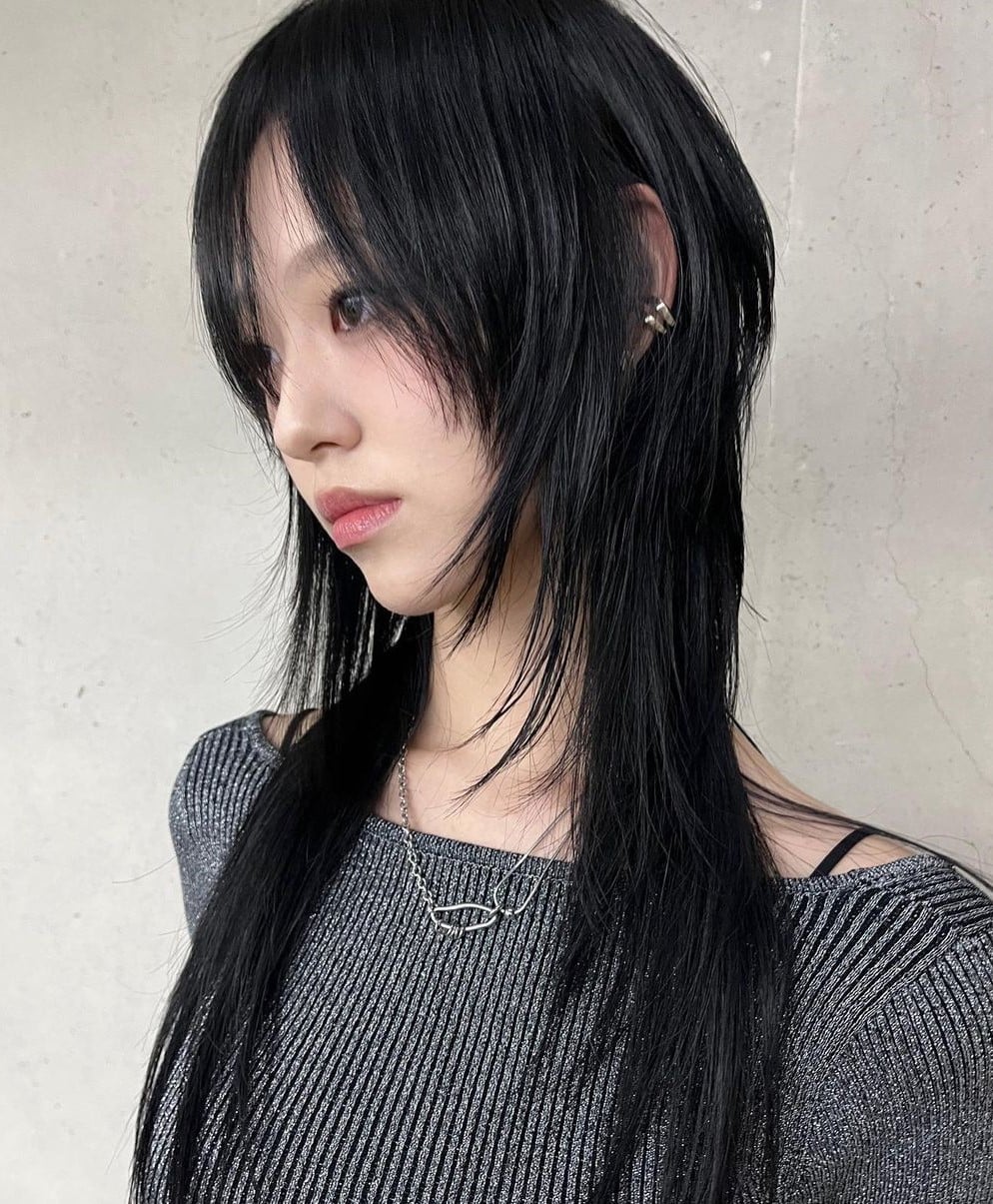
Is the wolf cut actually wearable on longer hair, or is it a shag that got a new name? At mid-back length with shaggy layers and curtain bangs, the answer is yes, but only for fine, straight textures. The cut relies on interior layering to create volume, which works well on hair that tends to fall flat. Ask your stylist for: mid-back wolf cut, shaggy layers, curtain bangs. The layers are concentrated through the crown and mid-lengths, so the ends stay relatively light. Oval and heart-shaped faces handle the curtain bangs best, while round faces may find the side volume adds unwanted width. If your hair is thick or curly, the layers can turn into a pyramid shape that is hard to fix without a lot of thinning.
Mid-Back Layers With Blunt Bangs, Straight, Close-Up Take

Blunt bangs on thick, straight hair require a precise hand because the density amplifies every millimeter of unevenness. This mid-back cut uses long layers throughout the body, then a horizontal line of black fringe that hits just above the brows, with a middle part to anchor the symmetry. Ask your stylist for: mid-back length layers, blunt bangs. The technique involves cutting the bangs dry, section by section, so the weight falls evenly without gaps. A salon visit is required here. Use a smoothing serum for a sleek finish, and expect to trim the bangs every four to six weeks if you want to see where you are going.
Mid-Back Loose Waves In Dark Blue-Black

Dark blue-black hair appears black in low light and reveals a cool, inky tone in direct sun. Here it is styled in loose waves that reach mid-back, with a side part and no bangs. Ask your colorist for: mid-back length loose waves, dark blue-black color. The shade works as an all-over color or a gloss on natural black hair, and it fades to a softer charcoal instead of a brassy green. A moisturizing conditioner helps maintain the gloss, and a toning appointment every six to eight weeks keeps the blue from washing out entirely. This is a winter-to-spring color: it looks deliberate under coat collars and evening lighting, less so in harsh summer sun.
Mid-Back Long Layers With Face-Framing Bangs, Medium Brown

Ask your stylist for: mid-back length long layers, face-framing bangs. This cut suits most face shapes because the bangs can be adjusted to soften a square jaw or add width to a long face. Air-dry with a smoothing cream to keep the straight texture sleek, then trim the bangs every four to six weeks so they don’t slide past the cheekbone.
Mid-Back Waves With Side Swept Fringe

Is a loose wave blowout worth the twenty minutes? Depends on your tolerance for a round brush. Dark brown hair at mid-back length gets long layers and a side-swept fringe, then styled into soft, loose waves that land somewhere between polished and casual. The side part helps the fringe fall across the forehead rather than sitting heavy.
Ask your stylist for: mid-back length loose waves, side-swept fringe. This works best on medium-density wavy hair that holds a bend without a ton of product. The trade-off: you need a heat tool every wash day, and the fringe demands a trim every six to eight weeks to stay out of your eyes. A texturizing spray after styling gives the waves separation without crunch.
Collarbone Waves With Side Swept Bangs

The design is straightforward: collarbone-length medium brown hair with soft layers and side-swept bangs, styled into loose waves. The grow-out reality is that the face-framing layers keep their shape for about two months before the shortest pieces start brushing the chin. Side-swept bangs are more forgiving than blunt fringe. They blend into the layers as they grow, so you can stretch trims to every six to eight weeks. A texturizing spray at the roots lifts the waves, and a side part keeps the bangs sweeping where you want them rather than drooping into your line of sight.
Collarbone Bob Half Up Half Down Bun
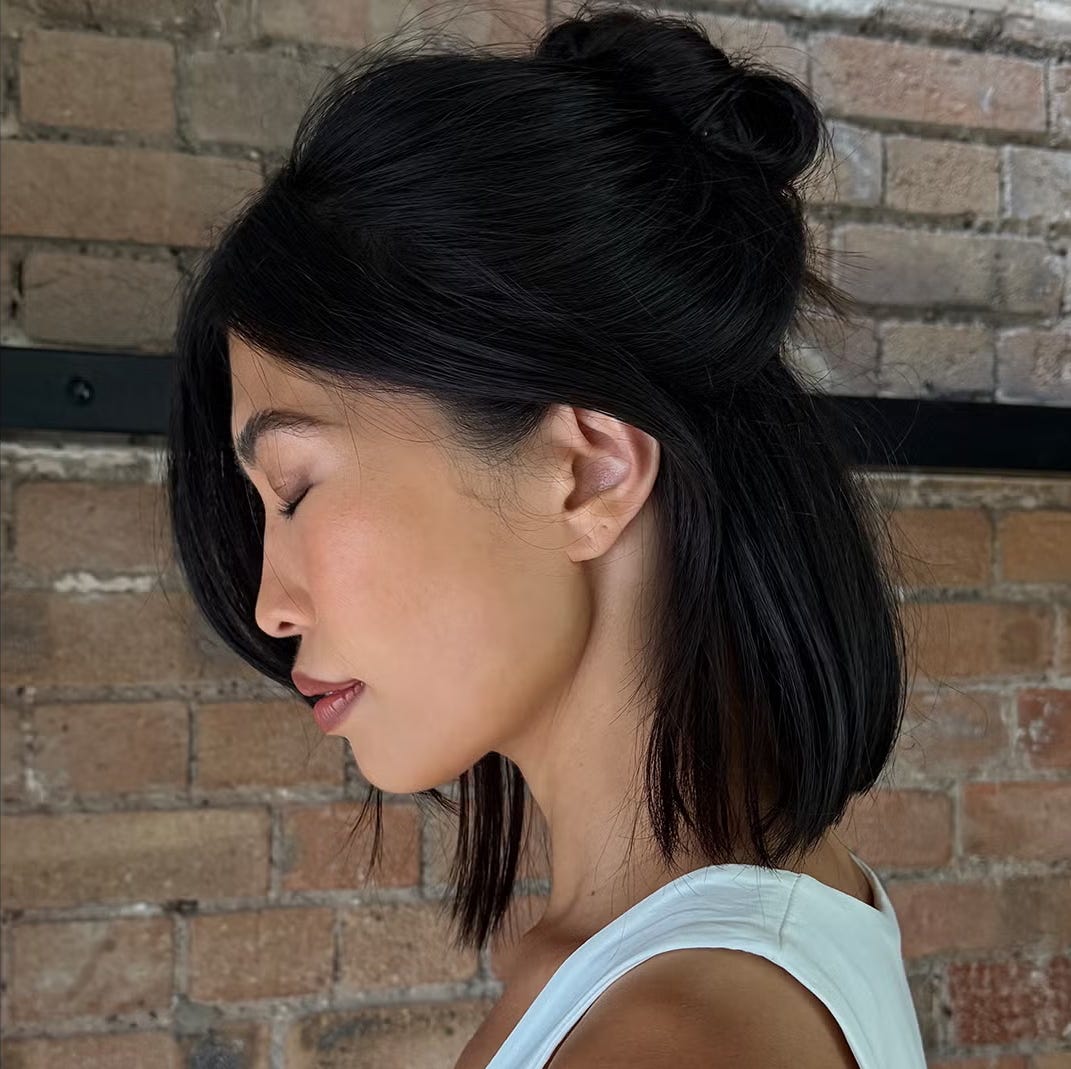
A half-up bun on a collarbone-length bob works because the fine, straight texture stays sleek while the top section gets the volume. Start with a middle part, then gather the hair above the ears into a small, messy bun at the crown. A texturizing spray on the roots before you pull it up gives the bun grip without pins sliding out. The rest hangs straight and glossy. This is a DIY-friendly style: five minutes, no heat, and it holds for a full day as long as you don’t touch the bun too much.
Long Layers With Full Bangs And Red Tones
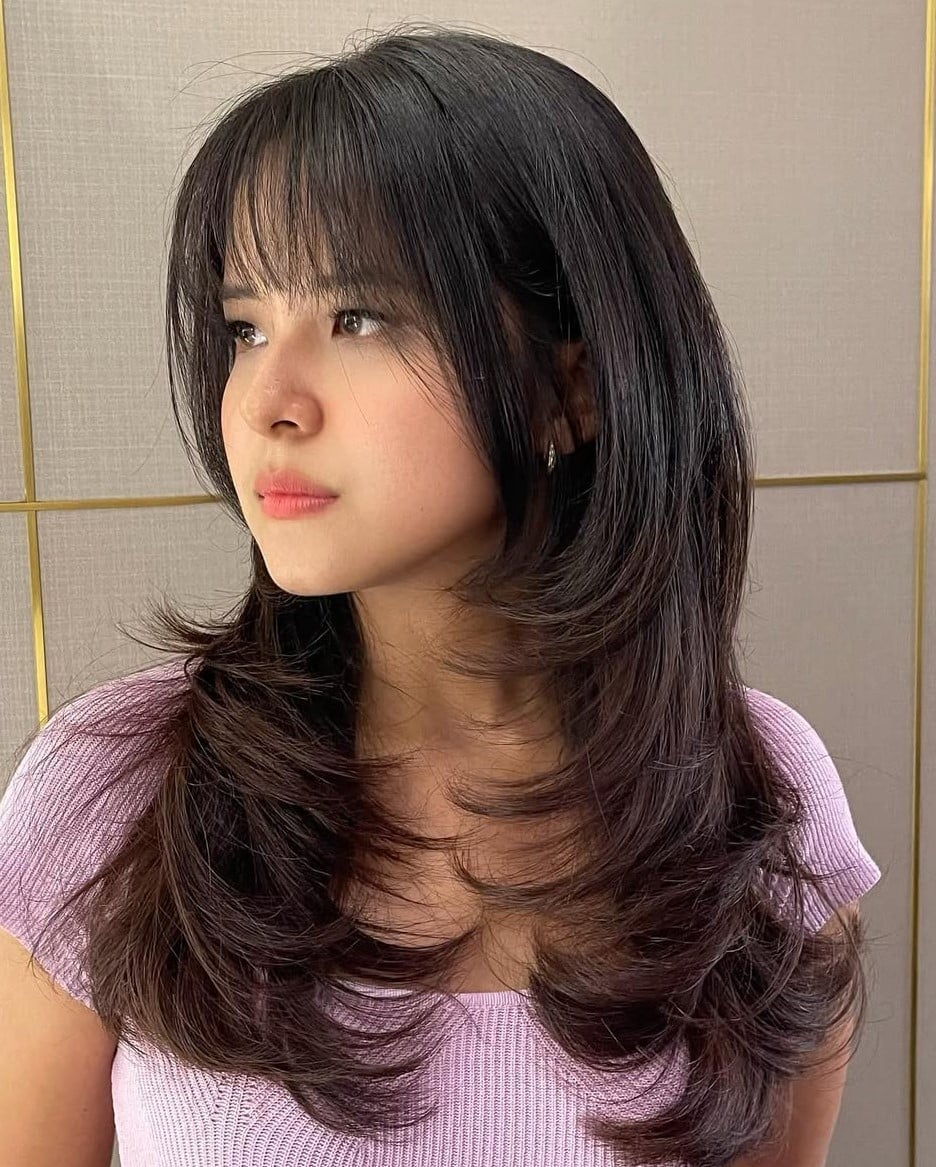
Does dark brown with subtle red undertones read as warm or dramatic? On long, fine straight hair with full bangs and a middle part, it lands somewhere between the two. The layers add movement without reducing density, and the full bangs create a strong horizontal line that balances the length. This cut suits oval and long faces best, the bangs shorten the visual length of the face, while the long layers keep the rest elongated. Ask your colorist for: long layered cut, full bangs, subtle red undertones. A round brush and blow-dryer are the standard tools for a smooth finish, and the bangs need a trim every four to six weeks to stay at brow level.
Long Layers With Full Bangs

The trick here is in the bangs. They are cut with internal layering, so the fringe looks full and blunt from the front but feathers slightly at the ends instead of landing as one solid wall of hair. That same internal layering carries into the face-framing pieces, which graduate from the cheekbone down toward the collarbone. On fine, straight hair, this prevents the weight from pulling the bangs flat against the forehead by lunchtime.
Ask your stylist for: long layered cut, full bangs. This is a salon build. The layering inside the fringe requires precision shears and a steady hand, and the grow-out needs a trim every eight to ten weeks to keep the bangs from sliding into your peripheral vision. The trade-off: those first two weeks when the bangs are exactly the wrong length and you regret every life choice that led you here. Push through.
Final Thoughts
For fine hair, stick with blunt ends and soft face-framing layers to add perceived fullness. For thicker hair, layered cuts reduce weight and let movement happen naturally. A trim every six to eight weeks keeps the shape honest, and a toning session at week eight stops brassiness before it starts.
- Trim blunt bobs or fringes every 6-8 weeks to maintain shape.
- Tone lighter highlights on dark brown bases every 8-10 weeks to prevent brassiness.
- Use a heat protectant spray before blow-drying or heat styling.
- Wash and condition hair 2-3 times per week, allowing natural texture to dry when possible.
Embrace the polished yet natural aesthetic of Korean hair trends.