
Bangs are a shortcut to a whole new silhouette, and the current batch is less about a single heavy line and more about movement. Soft face-framing layers and curtain bangs have pushed out the poker-straight fringe, making texture the real star of the show.
This collection of 26 ideas for Trendy Cutting Bangs covers every length from a chin-length bob to mid-back waves, for fine, thick, wavy, and straight textures. If your fringe tends to fall flat by midday or you are tired of the same old part, these cuts offer a practical reset. No single style works for everyone, but one of these will work for you.
Dark Brown Shoulder Length With Full Fringe
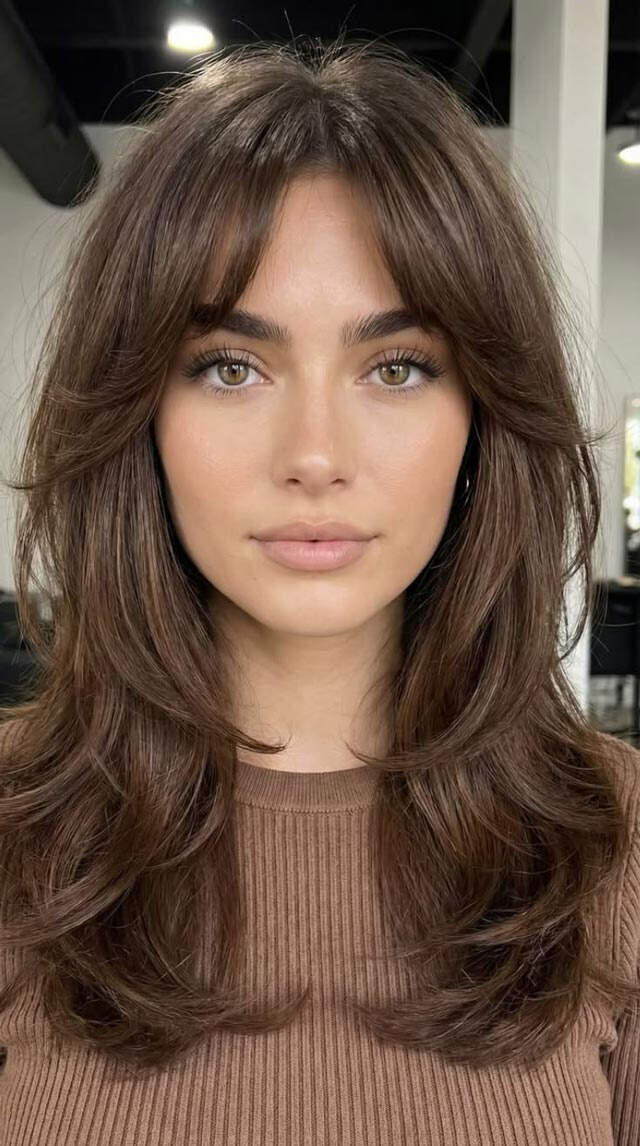
A full fringe reads as a commitment, but on thick, straight hair it lands closer to a statement. The shoulder length with long layers keeps the weight from pooling at the ends, so the fringe stays the focus without the rest of the cut going flat. Ask your stylist for: shoulder length cut with long layers and a full fringe. This combo works well for thick, straight hair starting at shoulder length; the blunt line can soften angular faces. To keep the fringe from shifting to the sides, trim it every three weeks. A volumizing mousse on damp hair before blow-drying gives the roots lift, which balances the density of the fringe.
Thick Wavy Mid-Back With Curtain Bangs
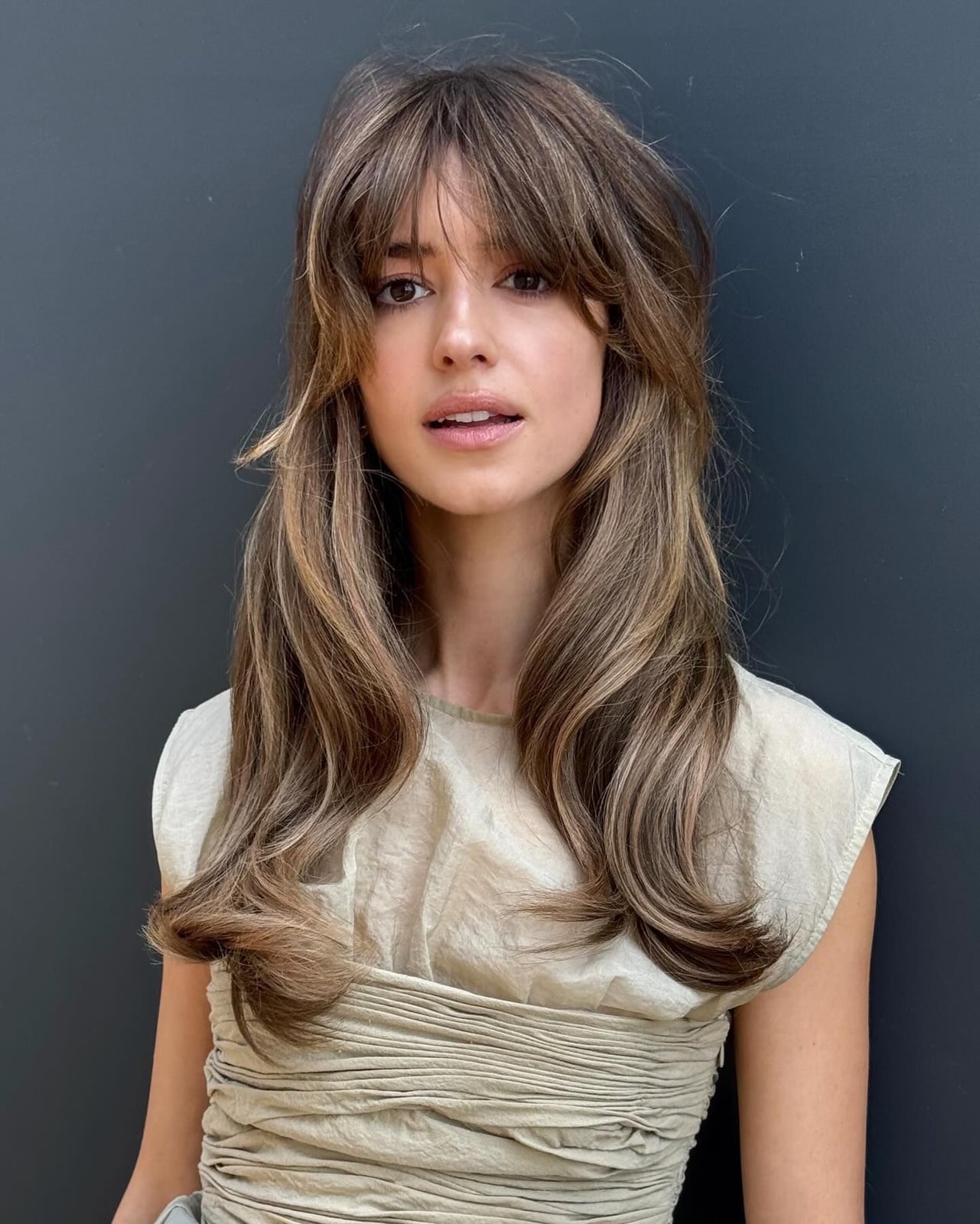
The genius of this cut is how the shag elements do the work. Soft, long layers throughout the mid-back length give thick waves somewhere to move, while the face-framing curtain bangs blend into those layers so there’s no harsh line where the fringe ends. The dark blonde base with lighter balayage adds dimension that makes the texture look lived-in, not styled within an inch of its life.
Ask your stylist for: mid-back length with long layers, soft curtain bangs, loose waves. Thick, wavy hair at mid-back length takes to this well, and curtain bangs suit most face shapes. For everyday wear, air dry with a curl cream or diffuse to encourage the wave pattern. Trim the curtain bangs every six weeks to keep them from sliding into the layers.
Collarbone Layered Bob With Curtain Bangs
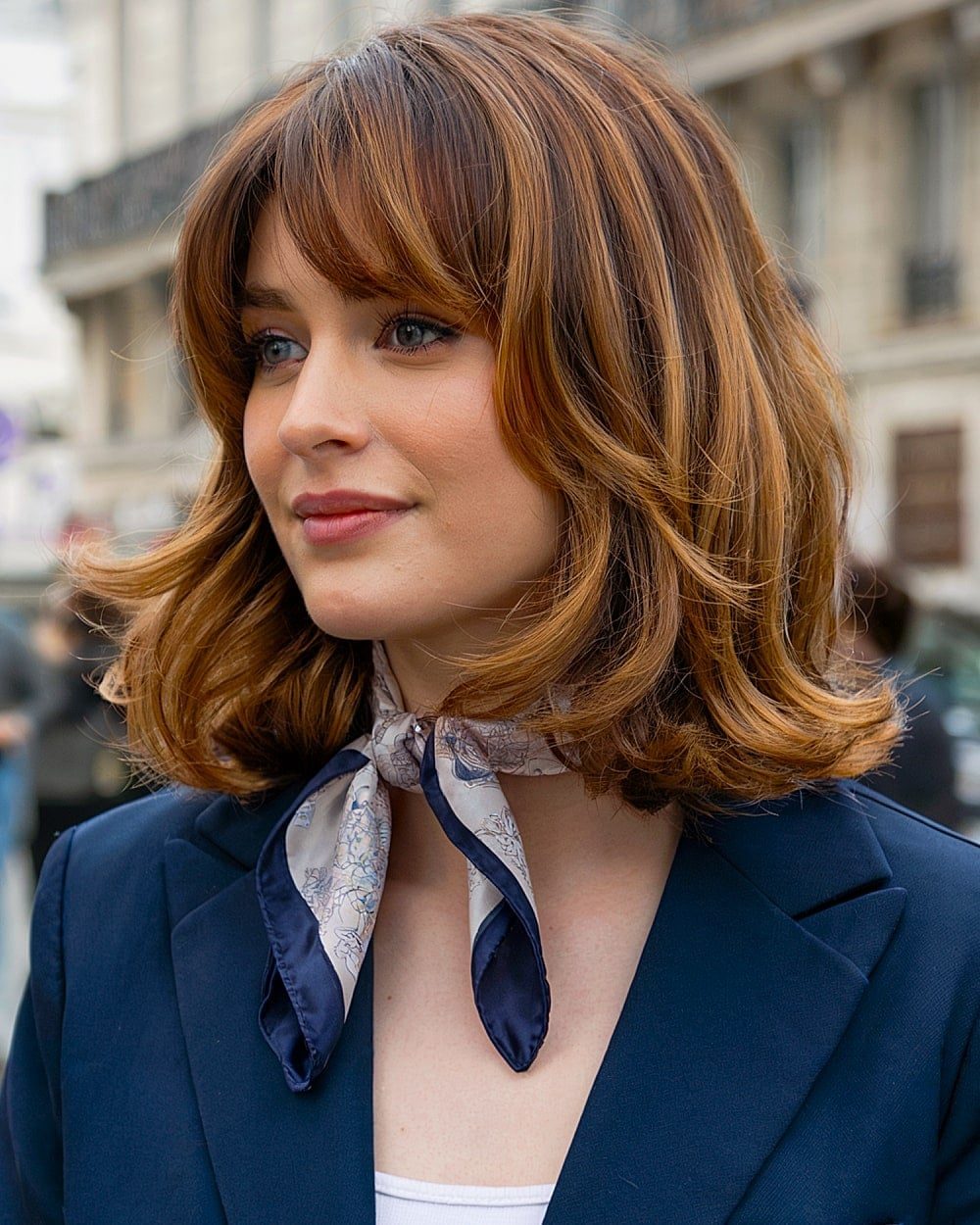
Curtain bangs look like they belong to a layered bob when they are softly blended into the face-framing layers, so the fringe never reads as a separate piece. The collarbone length with a layered bob and a side part gives the warm copper color room to show off its lighter pieces. Ask your stylist for: collarbone layered bob, curtain bangs, side part. Medium density wavy hair at collarbone length is the sweet spot here; the curtain bangs soften square and oval faces. This is a salon cut, not a DIY project, so book the appointment. Use a round brush during a blowout to enhance the waves, and trim the bob every six to eight weeks.
Collarbone Waves With Dual Bangs
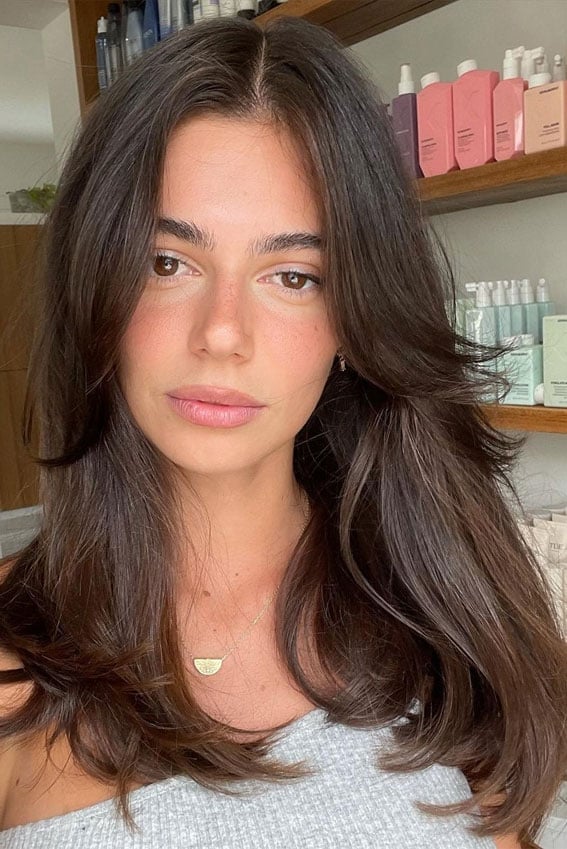
This style sits between a full fringe and a curtain bang, and it demands attention either way. The micro fringe is trimmed short and blunt, while the longer curtain bangs frame the face on either side, all set on collarbone-length soft waves with a middle part. Dark brown with subtle highlights keeps the dual bangs from competing with the color. Ask your stylist for: collarbone length with soft waves, micro bangs and curtain bangs. Medium density wavy hair at collarbone length handles the double duty well. The honest drawback is upkeep: two distinct bang styles mean two separate trim schedules, so plan for monthly touch-ups. A texturizing spray on the waves and a small flat iron for the micro bangs keep both sections in line.
Voluminous Mid-Back With Curtain Bangs
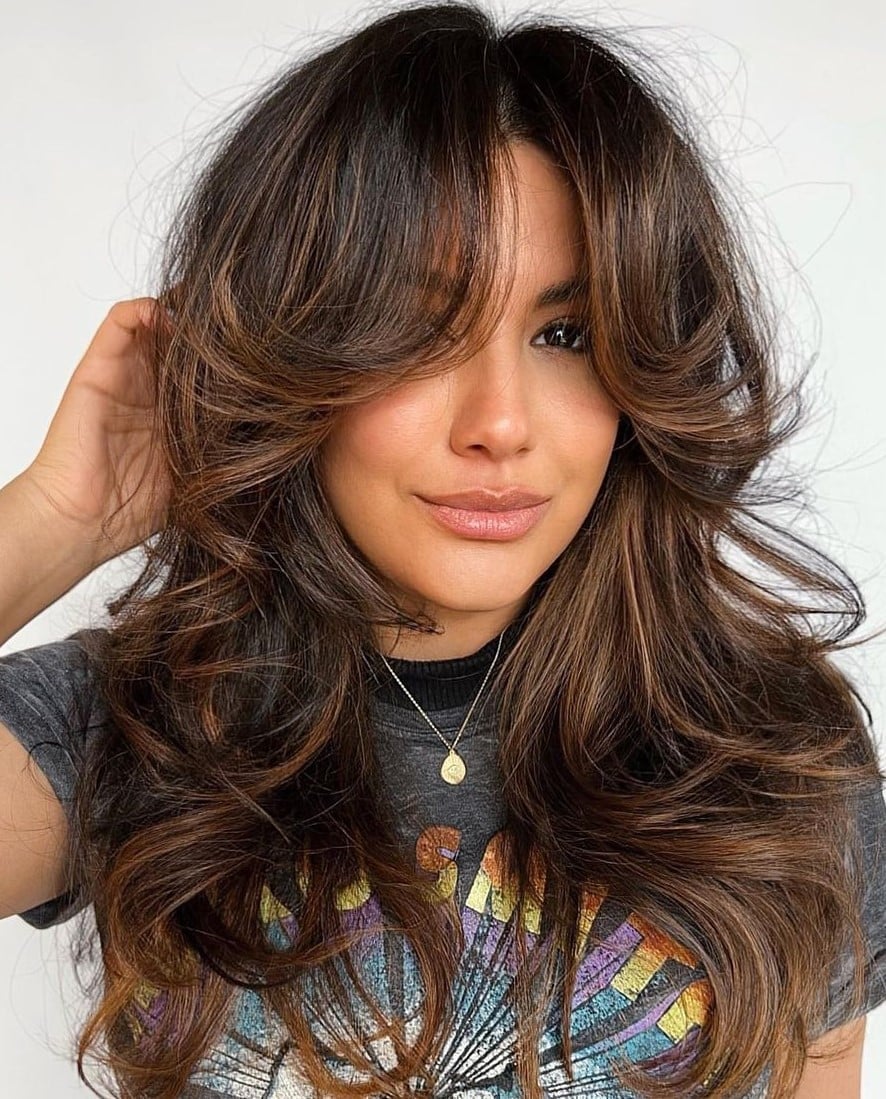
A voluminous blowout is the backbone of this mid-back length style, and the prominent curtain bangs with a middle part frame the face without weighing down the rest. The layers are cut to encourage movement, so thick, wavy hair lifts at the root instead of hanging flat. Dark brown with lighter highlights adds depth to the volume.
Ask your stylist for: mid-back length with volume, soft waves and prominent curtain bangs. Thick, wavy hair at mid-back length is ideal; the volume and curtain bangs add shape to longer styles. To keep the volume from falling by mid-afternoon, use a large round brush for the blowout and set the roots with velcro rollers while they cool. Trim the fringe every six weeks, and the rest of the cut every eight to ten.
Collarbone Shaggy Layers With Shaggy Bangs

Shaggy bangs hit different than a blunt fringe: they’re cut into the layers rather than sitting on top, so the whole haircut moves as one piece. The collarbone length keeps it from feeling heavy, while the wavy medium-density texture gives the shaggy layers something to grip. Ask your stylist for: collarbone shaggy cut with shaggy bangs, textured finish. This is a salon cut. The point-cutting on the bangs is too precise to replicate at home. A texturizing paste or sea salt spray on damp hair, then scrunch, and you’re done. Trim the bangs monthly to keep the piecey ends from turning blunt.
Mid-Back Shag With Curtain Bangs and Medium Brown With Highlights
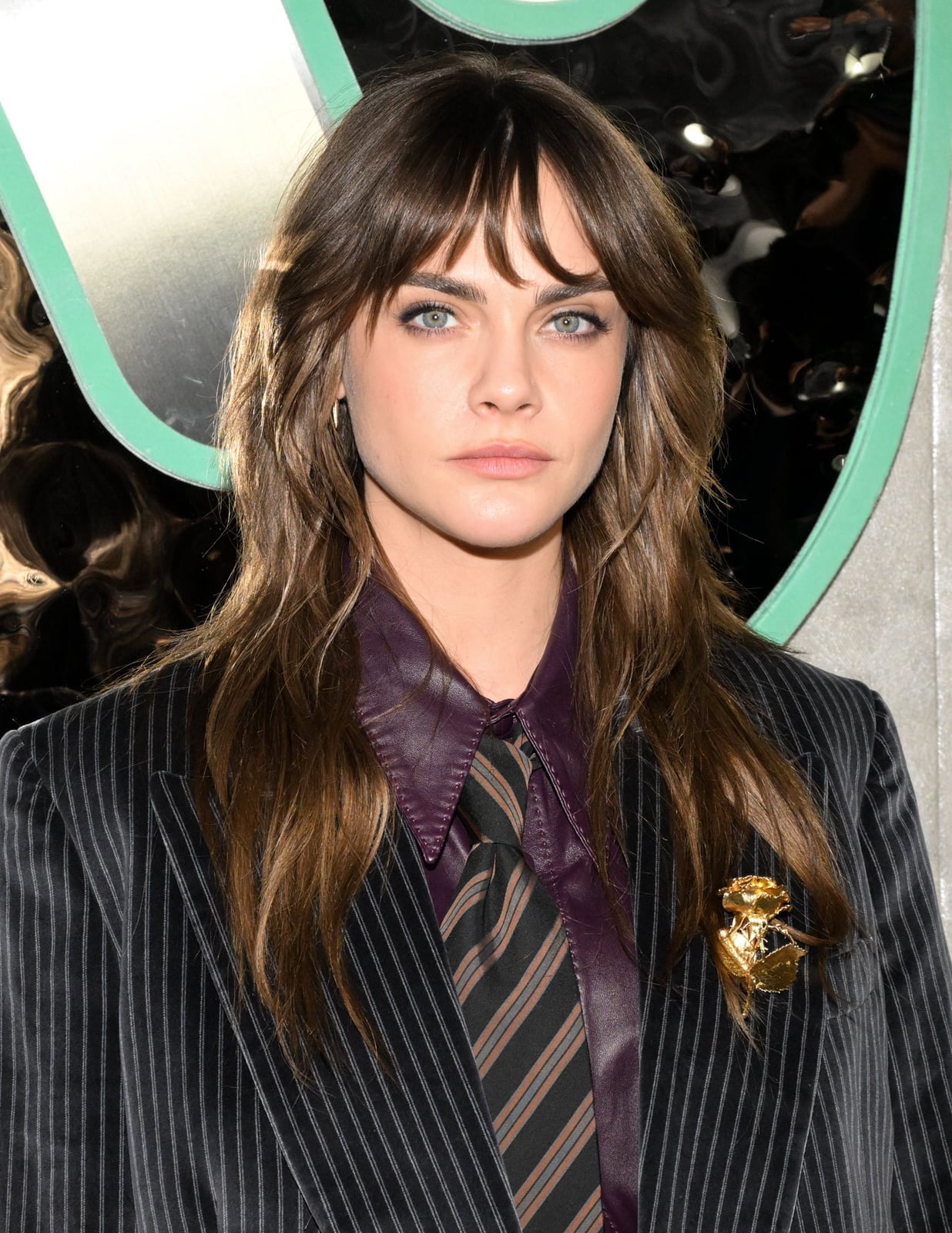
Wondering what to do with thick, wavy hair that always feels like too much? A mid-back shag with curtain bangs and a textured blowout is the answer. The long layers take out bulk while the curtain bangs soften the front, and the medium brown with subtle highlights adds dimension that moves with the waves. Ask your stylist for: mid-back shag with long layers and curtain bangs. It is a salon-only cut that thrives in fall and winter, when a little volume reads as intentional. Trim the curtain bangs every six to eight weeks to keep them skimming the cheekbones.
Fine Wavy Mid-Back With Face-Framing Bangs
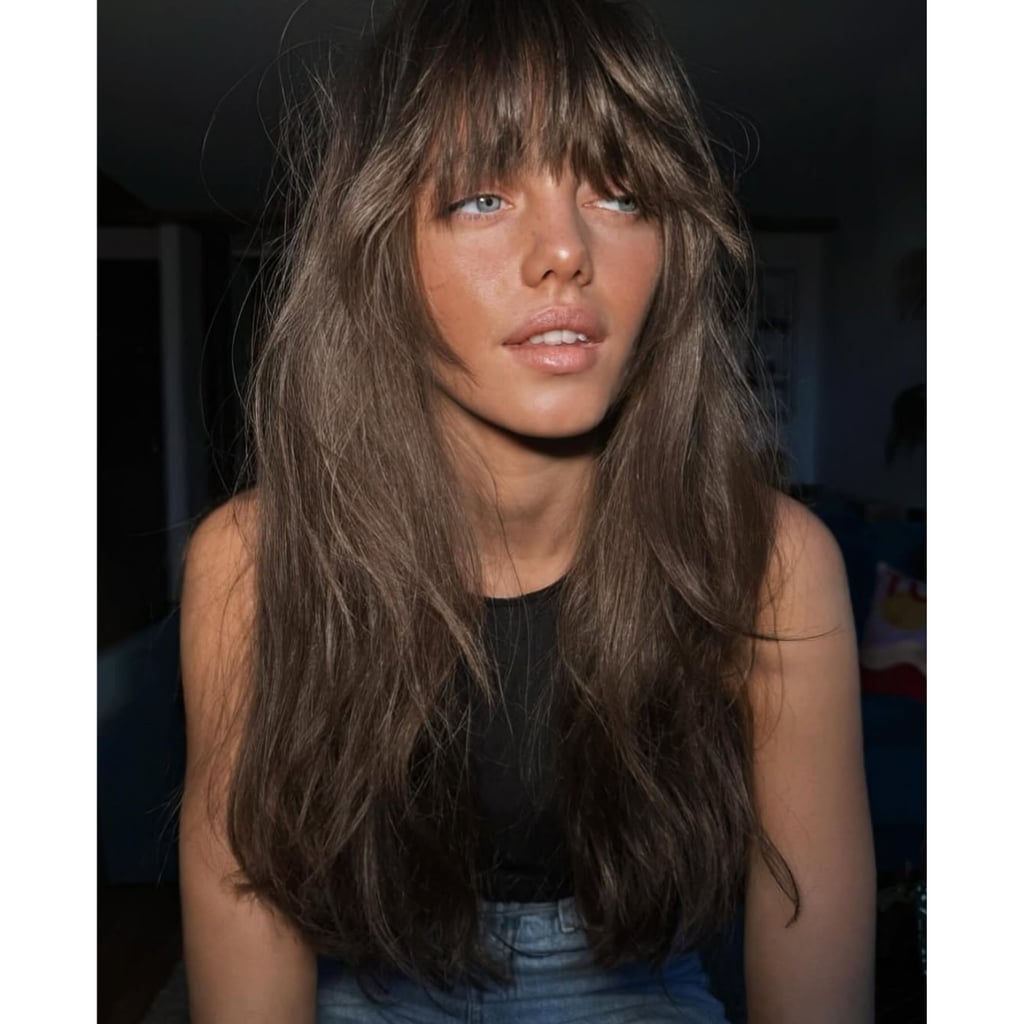
If your fine wavy hair tends to fall flat, the rule is: don’t add more hair, add shape. Long layers keep the mid-back length from dragging the waves down, and soft face-framing bangs add volume at the front without sacrificing length. Ask your stylist for: mid-back length with long layers and soft face-framing bangs. The drawback? Those bangs need a trim every three weeks to stay in the sweet spot, or they’ll slide into the layers and disappear. A lightweight mousse on damp hair, then air dry, and the texture does the rest. The dark brown with balayage adds subtle depth that helps the waves look fuller.
Fine Wavy Collarbone Bob With Curtain Bangs
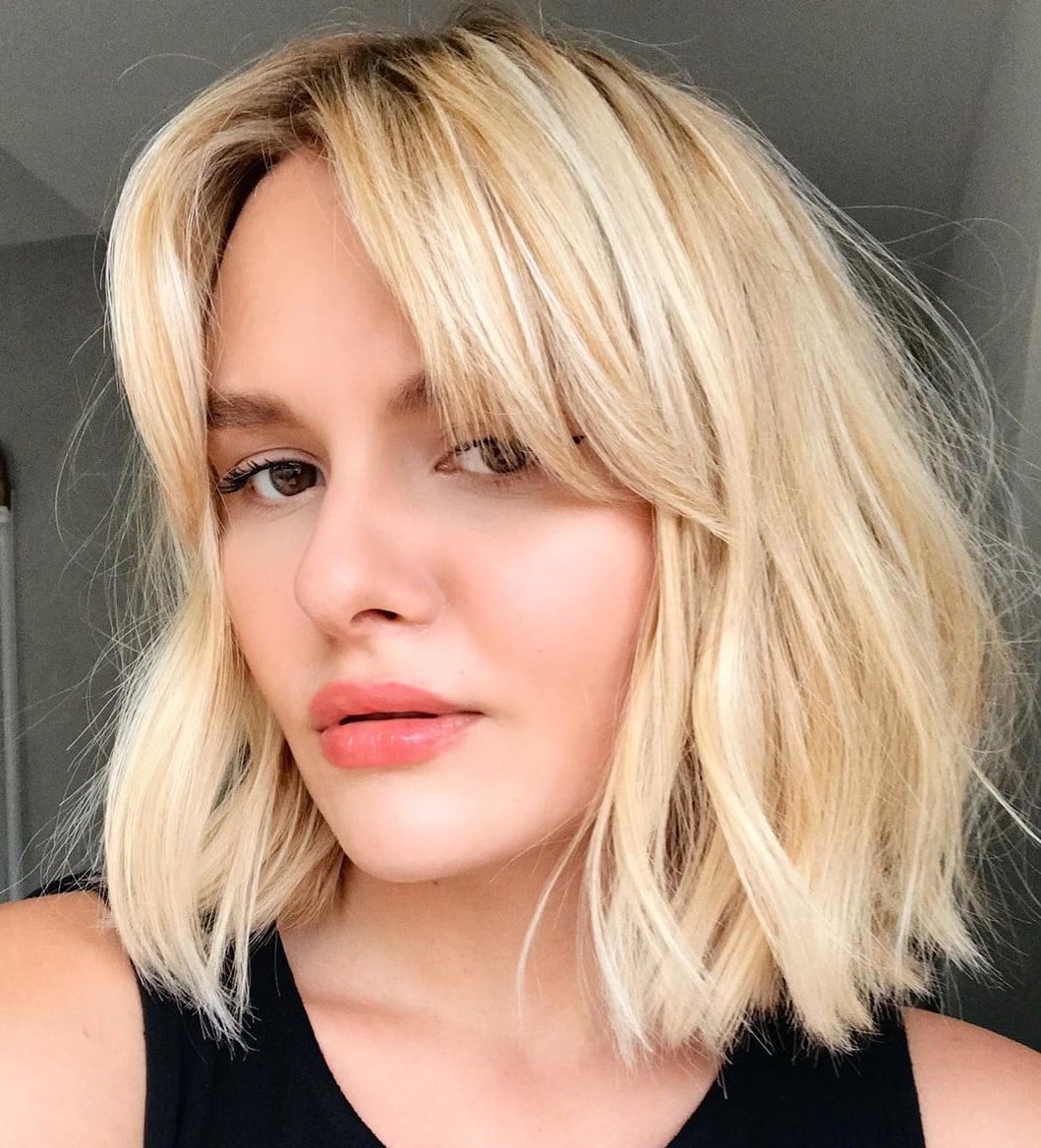
Cutting curtain bangs into a collarbone bob on fine wavy hair requires a specific technique: the bangs are cut dry and point-cut into the layers so they blend into the rest of the cut. The ash blonde color adds visual texture that compensates for the fine density, and the loose waves keep the bob from looking too stiff. Ask your stylist for: collarbone bob with layers, soft curtain bangs, loose waves. This is strictly a salon cut. The dry point-cutting is not a DIY move. A texturizing spray and a diffuser give the waves grip without weighing them down. Plan a trim every six weeks to keep the bob shape and the bangs in proportion.
Shoulder Layers With Side-Swept Bangs

Wondering how to ask for side-swept bangs without getting a curtain fringe that won’t stay put? Specify the sweep angle and the endpoint. Shoulder-length subtle layers with side-swept bangs that graze the brow bone and blend into the longest layer. Ask your stylist for: shoulder length cut with subtle layers and side-swept bangs. This is a salon cut. The bangs need to be cut dry and on an angle to fall correctly. At home, blow-dry them to one side with a small round brush, then set with a cool shot. Fine straight hair holds the sweep well, but the fringe needs a trim every three to four weeks to keep the angle clean.
Collarbone Shag With Wispy Bangs

A collarbone-length shag with wispy bangs relies on its layers to keep that platinum blonde from looking flat. The shaggy cut and face-framing pieces work best on fine, wavy hair that holds a bend without a curling iron. Ask your stylist for: collarbone shag cut with wispy bangs and face-framing layers. To get the tousled finish, apply a texturizing spray to damp hair and scrunch, then let it air dry. Shaggy, wispy bangs on fine hair need a trim every three to four weeks to stop looking straggly.
Mid-Back Layers With Shaggy Bangs

A mid-back length with shaggy bangs is a different beast on thick, wavy hair than on finer textures. The fullness of the shaggy fringe and the air-dried waves work together to create that lived-in look without product. Ask your stylist for: mid-back length with layers and shaggy, face-framing bangs. If your hair is fine, the shaggy bangs can look sparse rather than soft. On thick hair, they land as intended: relaxed, slightly undone, and easy to refresh with a mist of water and a reshape.
Collarbone Butterfly Cut With Wispy Bangs

Can a single haircut add volume and keep length at the same time? The butterfly cut does exactly that, with its short interior layers that lift the crown and long face-framing pieces that stay at collarbone. The wispy bangs and the dark brown with purple undertones catch daylight differently, shifting from nearly black to a subtle violet. Ask your stylist for: collarbone butterfly cut with wispy bangs and soft layers. This is a cut for fall and winter, when the deeper tones feel right and you want a fringe that still lets you pull it back.
Shoulder Shag With Choppy Bangs
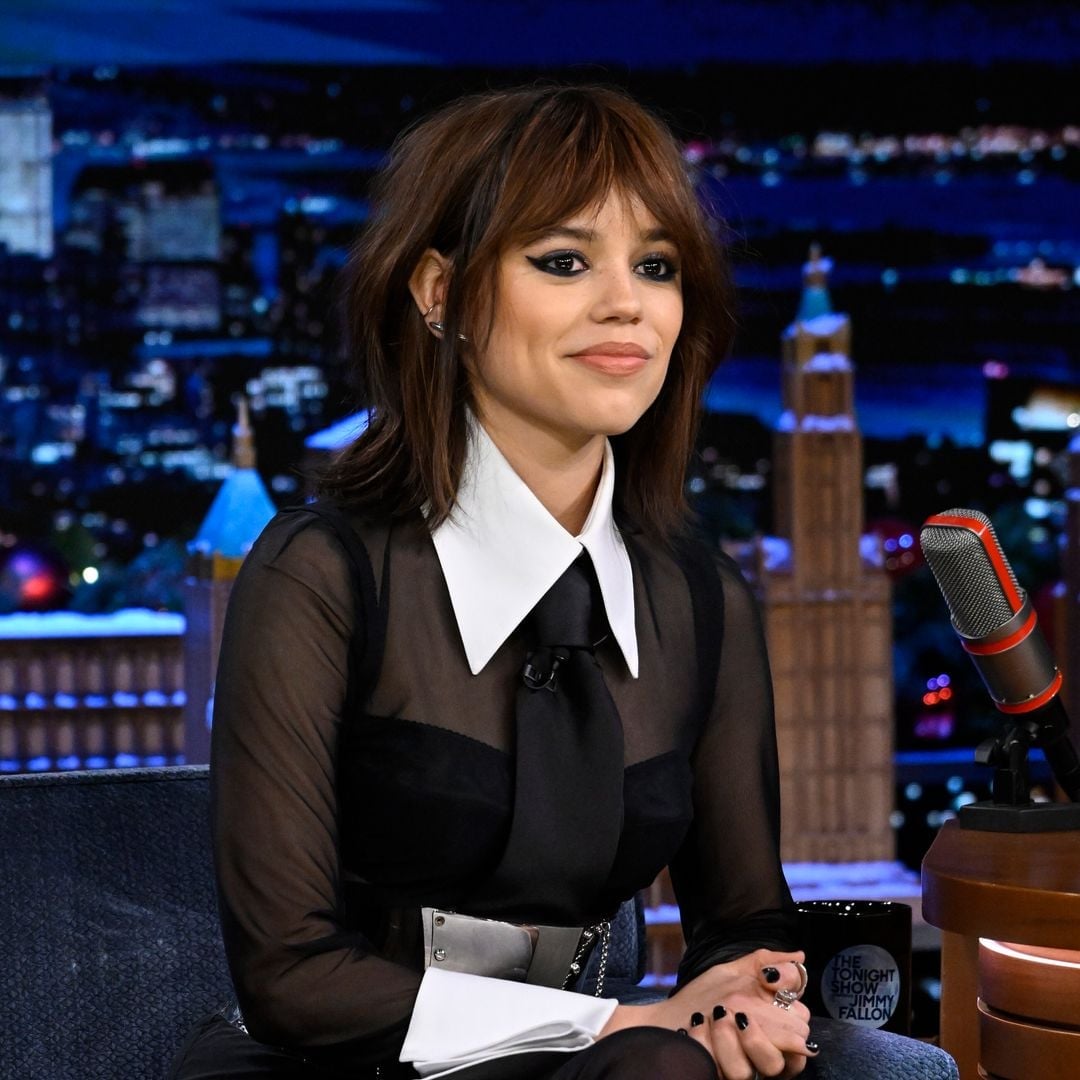
A choppy bang is not a curtain bang, and it is not a wispy one. It lands somewhere between blunt and feathered, which means it suits a square or heart-shaped face that can handle the weight of a more graphic fringe. Ask your stylist for: shoulder length shag with choppy bangs and textured layers. This is a salon-only cut: the layers need precision to avoid looking like a mullet gone wrong. The honest drawback is that choppy bangs on thick, wavy hair can spring up an inch after a wash, so you will be reaching for a flat iron more often than you might like.
Collarbone Air-Dried Wavy With Curtain Bangs

The curtain bang on air-dried wavy hair is built on a simple technique: a smoothing product worked through damp hair, then left alone. The collarbone length lets the waves fall without dragging the bangs down, and the middle parting keeps the curtain pieces symmetrical. Ask your stylist for: collarbone length wavy hair with air-dried texture and curtain bangs. Upkeep is minimal: a trim every six to eight weeks to keep the bangs from blending completely into the layers, and a refresh with water on day two.
Collarbone Bob With Full Straight Bangs
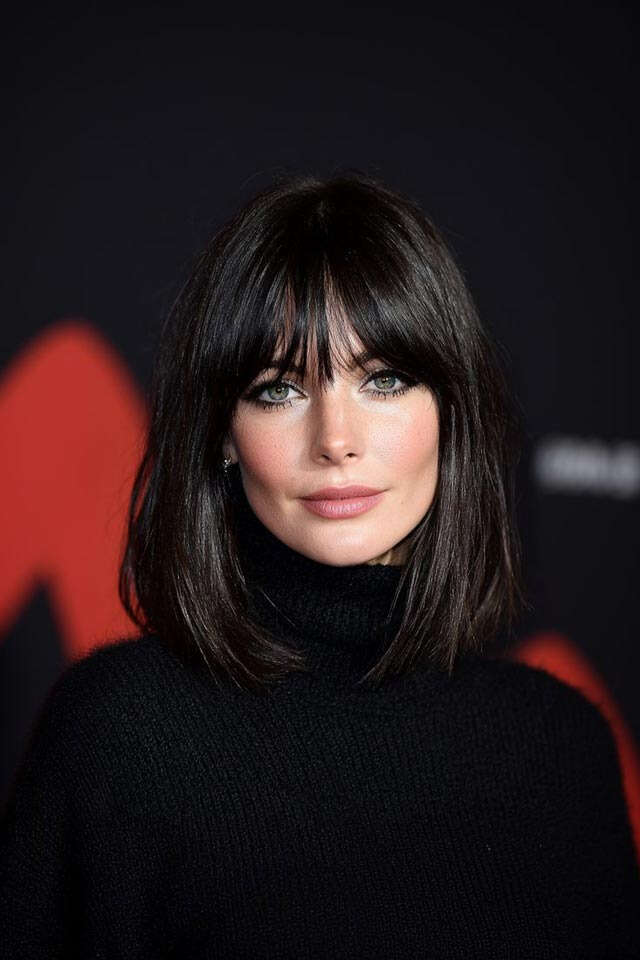
A blunt fringe can work for fine hair when paired with a collarbone bob and full straight bangs, cut with a clean line across the forehead. The blunt fringe balances the fine texture without overpowering it, and the smooth blowout keeps everything sleek. Ask your stylist for: collarbone bob with full straight bangs. Use a flat iron on the bangs to maintain that crisp edge, and plan on a trim every three to four weeks, since even a quarter inch of growth changes the proportion.
Chin Length Shag With Blunt Micro Bangs
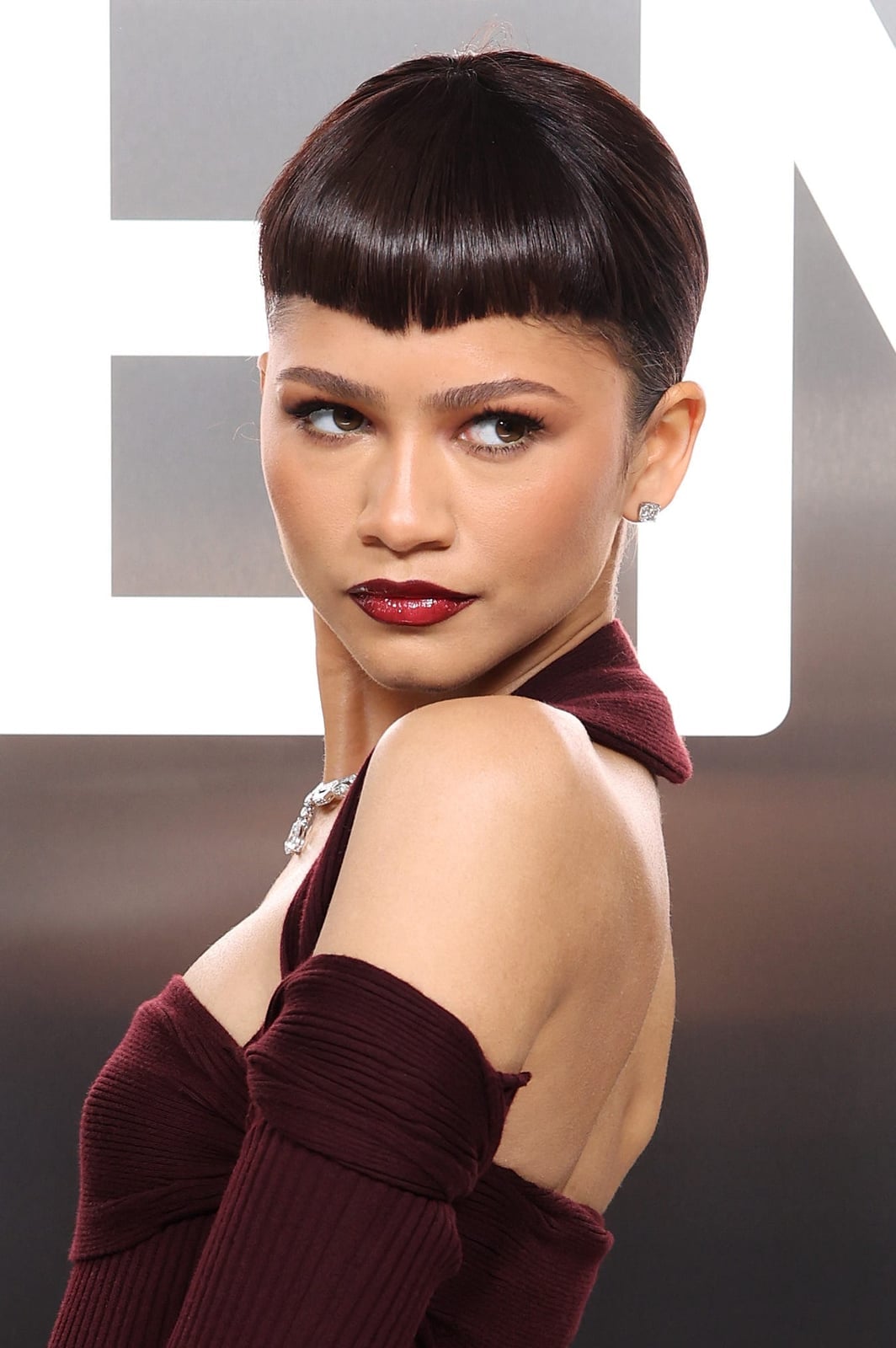
Blunt micro bangs require a commitment to geometry. This chin length shag pairs them with a textured, slightly messy finish so the overall effect lands as edgy rather than severe. The thick, wavy texture gives the shag its volume, while the micro bangs sit above the eyebrows for maximum impact. Ask your stylist for: chin length shag with blunt micro bangs. The real drawback is the upkeep: those bangs need a trim every two to three weeks to keep the line sharp, and skipping one appointment leaves you in awkward territory.
Mid-Back Loose Waves With Curtain Bangs

On thick hair, long layers keep the bulk from forming a wedge, and the curtain bangs here are cut to blend into the sides instead of sitting as a separate piece. This creates a cohesive wave pattern that moves together. Ask your stylist for: mid-back length with loose waves, blowout, and prominent curtain bangs.
On thinner hair, the same long layers can make the ends look sparse if overdone. The curtain bangs still work, but you would want them cut with a softer taper so they do not create a visible density gap between the fringe and the sides. Either way, the middle part and the blowout give the waves a polished finish rather than a beachy one.
Short Bob With Blunt Bangs
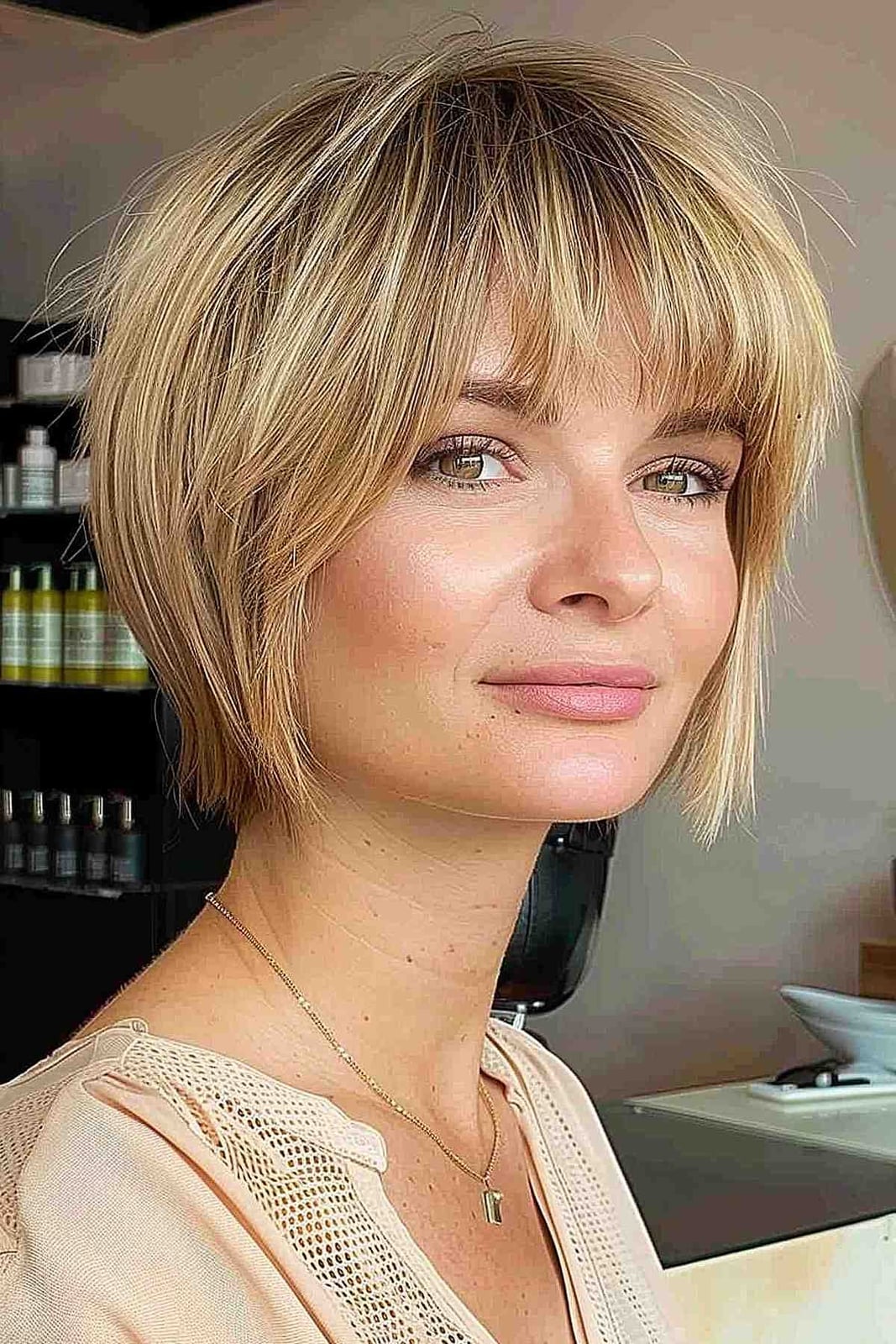
Can ash blonde highlights hold their tone through summer? On a short bob with blunt bangs, the answer depends on how often you wash. Ash tones fade faster in sun and hard water, so the highlights can shift warmer by week four. The bob itself ends around the ear, making the blunt bangs the focal point, and the straight blowout keeps the graphic lines sharp. Ask your stylist for: short bob ending at the ear with blunt bangs. This cut is salon-only for the precision, but the daily styling takes under ten minutes with a flat iron.
Mid-Back Layers With Wispy Bangs and Warm Brown With Blonde Highlights

Wispy bangs work best on medium density hair, where the lighter ends can feather without exposing too much scalp. Here, the mid-back length and long layers give the loose waves enough weight to hold shape, and the warm brown base with blonde highlights adds dimension that keeps the wispy bits from looking flat. Ask your stylist for: mid-back length with long layers, loose waves, and soft wispy bangs.
The drawback is that very fine or very thick hair can make wispy bangs behave differently: on fine hair they can disappear, and on thick hair they can chunk together. For medium density, though, they soften the face without demanding daily heat styling, and the blend into the face-framing layers means grow-out is forgiving.
Chin Length Blunt Bob With Full Bangs
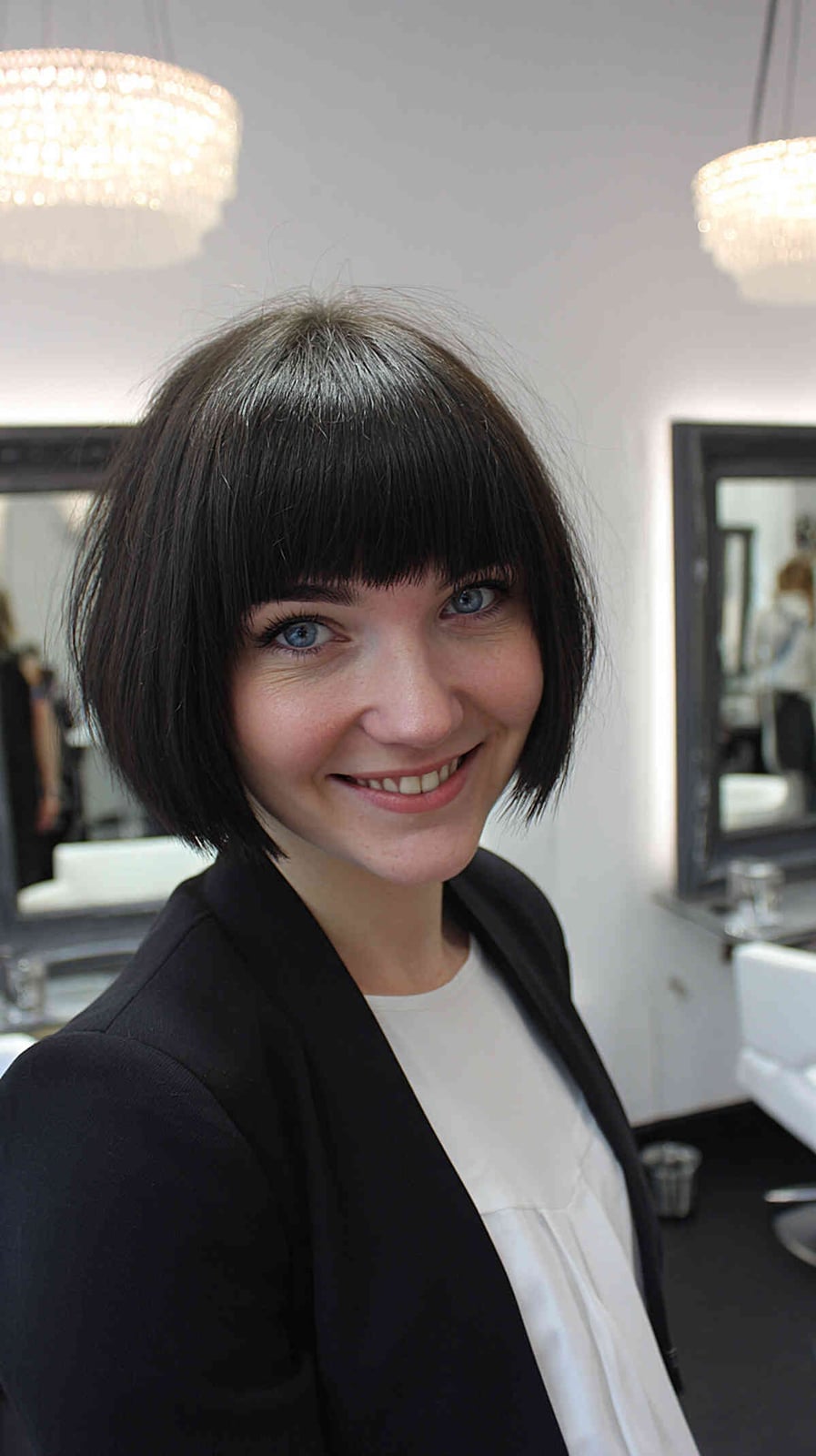
A chin-length blunt bob in solid black is a geometry problem with your hair as the medium. The full, straight bangs land just above the brows, and the middle parting at the crown keeps the whole thing symmetrical rather than severe. Ask your stylist for: chin length blunt bob with full straight bangs. A flat iron seals the sleek finish, and the fringe needs a trim every three weeks to stay sharp. Fine, straight texture makes the blunt edge look cleaner rather than sparse.
Pixie Cut With Curtain Bangs
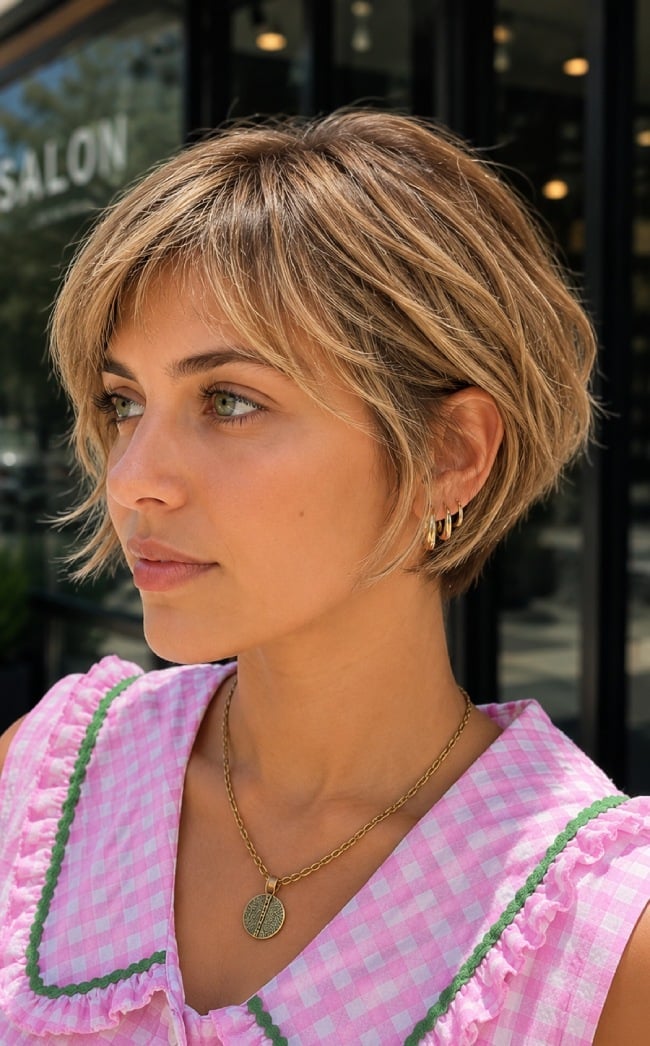
Can a pixie cut still feel soft? Yes, when the curtain bangs do the work. This ear-length cut in blonde uses a side part and a wavy, fine texture to keep things from looking too severe. Ask your stylist for: pixie cut with soft curtain bangs and a side part. This one is salon-only: a pixie needs precise graduation, and the bangs must blend into the top layers without a visible seam. A texturizing paste and a quick tousle are all the styling it needs.
Collarbone Shag With Full Bangs
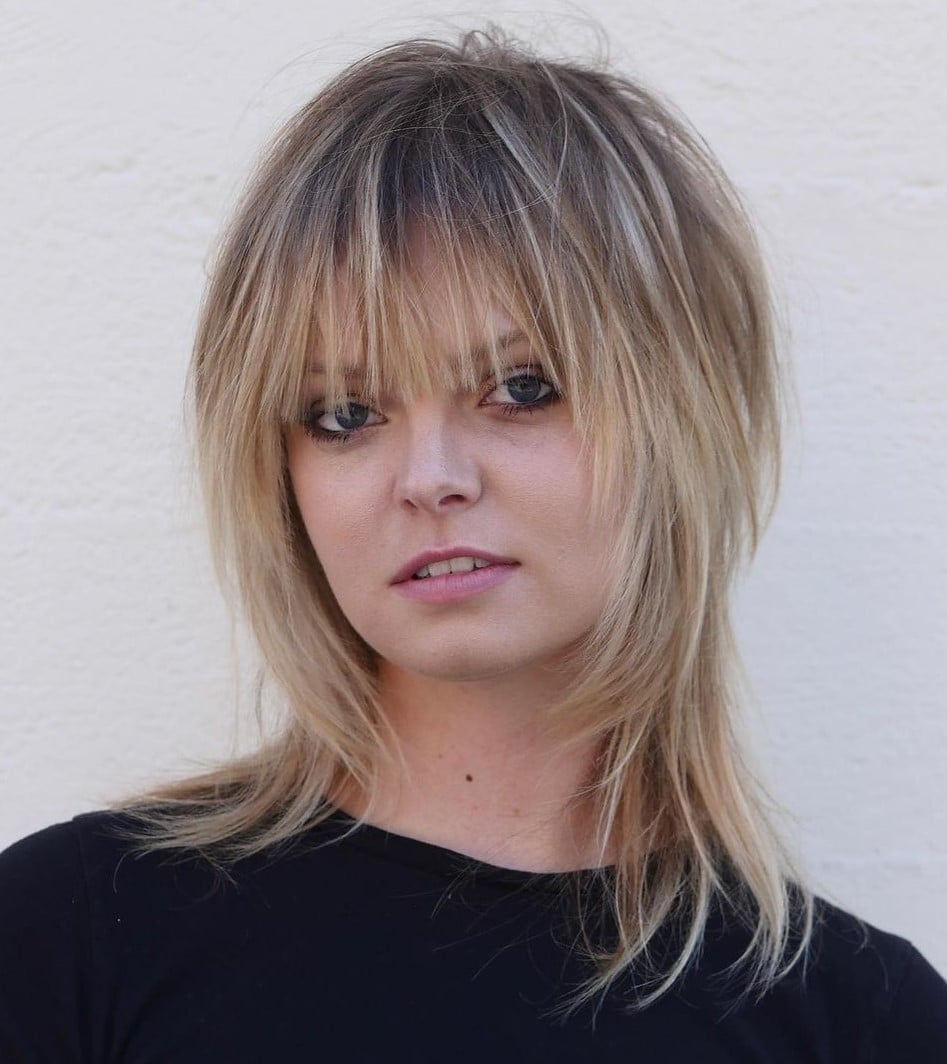
A collarbone shag with choppy layers and full bangs looks great in the mirror and less great at 3 p.m. on a humid day. The thick, wavy texture that gives the cut its body also makes the fringe curl in directions you did not plan. Ask your stylist for: collarbone shag with choppy layers and full bangs. Blow drying with fingers and a texturizing spray gets you a messy finish that works with the wave pattern. The honest drawback: the bangs need a monthly trim and a dry shampoo habit to stay out of your eyes.
Collarbone Shaggy Layers With Curtain Bangs, Wavy
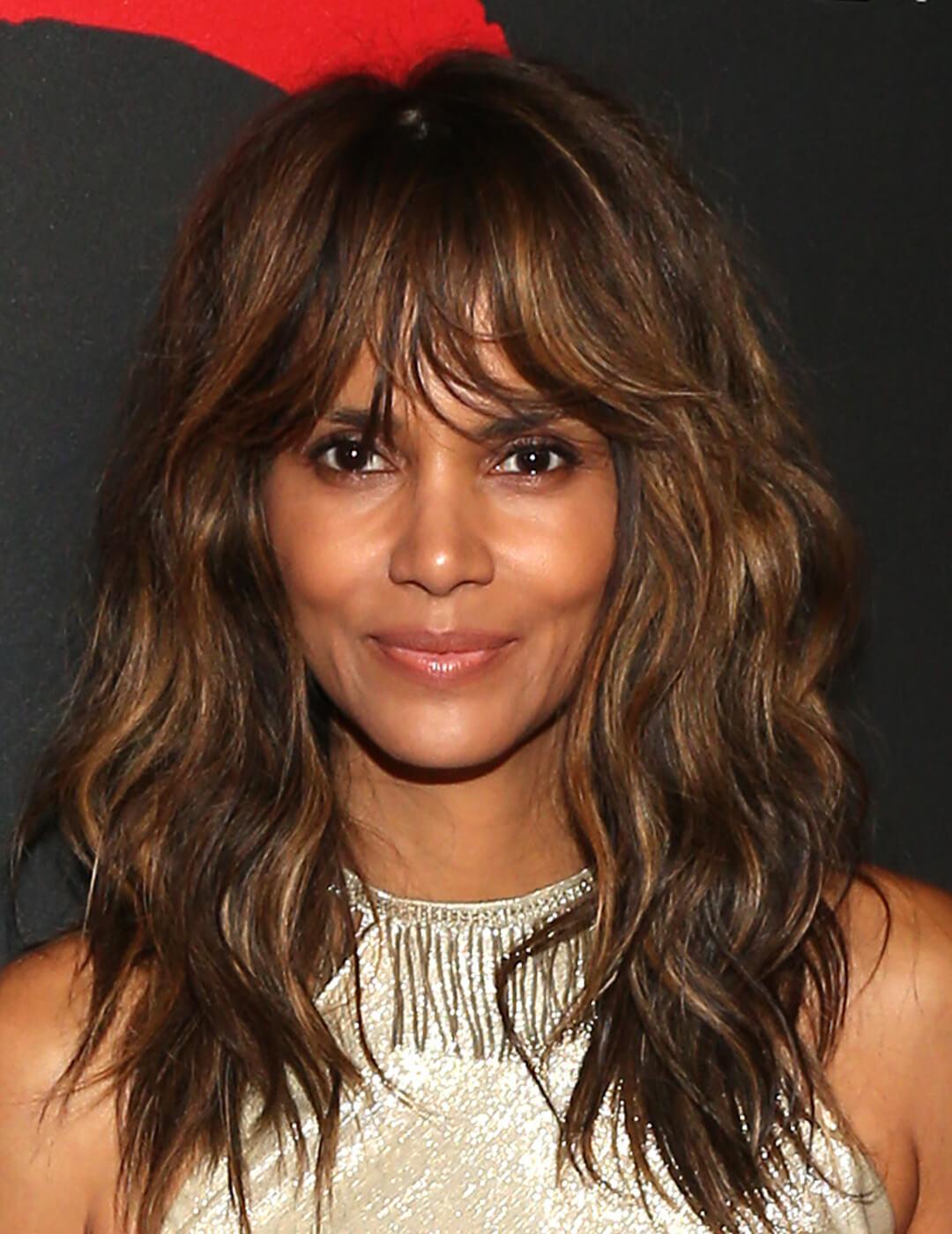
Shaggy layers that start at the jaw and curtain bangs that part in the middle: this is the difference between a haircut that frames your face and one that just sits there. The honey blonde base with subtle highlights adds depth to the wavy, medium-density texture. Ask your stylist for: collarbone length with shaggy layers and curtain bangs. A texturizing cream and air drying gives the waves room to move without looking deliberate. The face-framing effect is softer than a full fringe but more defined than a simple grown-out layer.
Short Hair With Curtain Bangs

Short hair with curtain bangs is the summer answer to the question of how to keep your neck cool and your style interesting. This ear-length cut in dark brown uses a side part and a textured, tousled finish to avoid looking like a helmet. Ask your stylist for: short textured hair with prominent curtain bangs and side part. The fine, wavy texture pieces out naturally with a spritz of texturizing spray and a quick finger comb. It works for casual days and for events where you want your hair to look like you did not try too hard.
Shoulder Layered Cut With Blunt Bangs
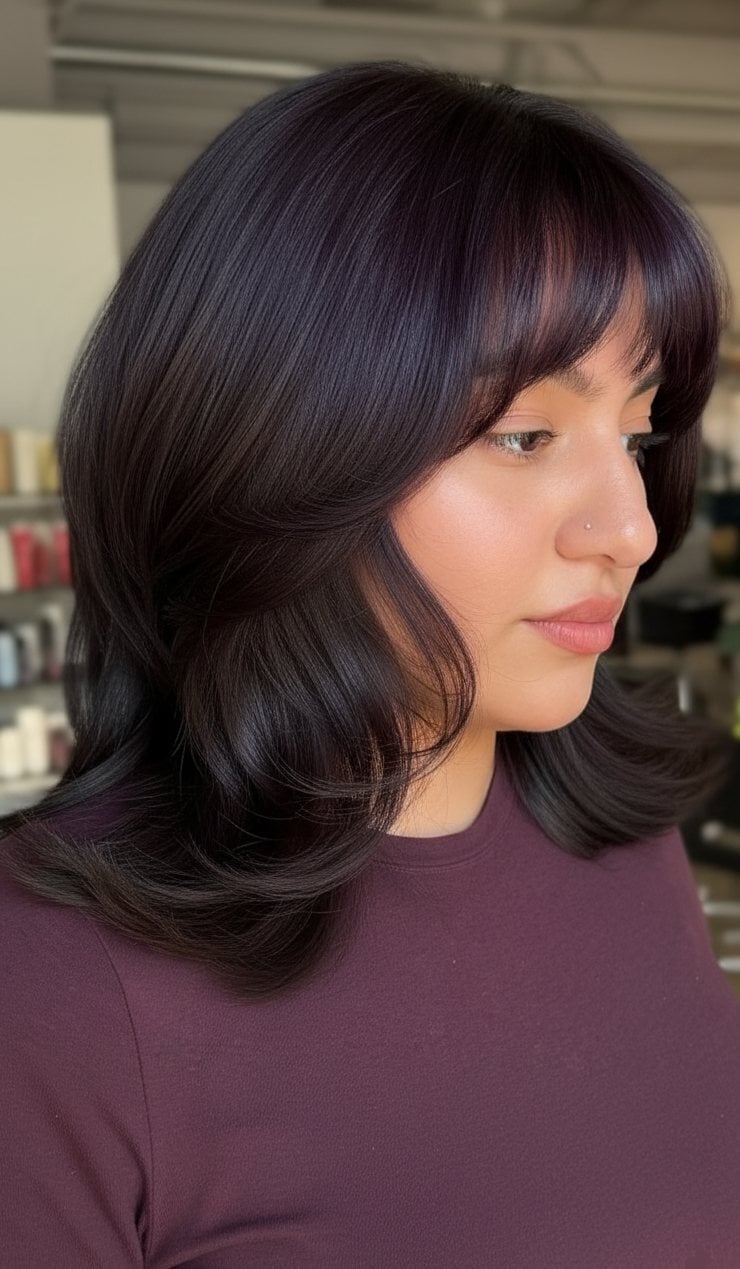
This shoulder-length layered cut pairs blunt bangs with face-framing pieces, all in a dark plum shade that needs color-safe shampoo to keep the tone from fading warm. The blunt fringe lands above the brows, creating a strong contrast against the softer waves beneath. Ask your stylist for: shoulder length layered cut with blunt bangs and face-framing pieces. Thick, wavy hair at shoulder length can handle the weight of blunt bangs without them floating apart. The real drawback is the trim rhythm: every three weeks for the fringe, plus a glossing appointment every six to keep that plum from turning muddy.
Final Thoughts
For fine hair, lighter wispy or curtain bangs that blend into layers prevent weighing hair down. For thick hair, bolder blunt or shaggy bangs provide structure and manageability.
- Trim bangs every 2-4 weeks to maintain shape and length.
- Use dry shampoo at the roots to absorb oil and extend wear between washes.
- Style bangs with a small round brush and blow dryer for a polished finish.
- Consider a smoothing serum for flyaways on straight or blown-out styles.
Find the fringe that speaks to your style.