
Blonde balayage is a freehand painting technique that leaves the root line soft and the ends lighter, so it grows out without a harsh band. For 2027, the palette has shifted toward beige, ash and honey tones, with face-framing pieces and curtain bangs making regular appearances.
These 30 Trendy Blonde Balayage looks cover the spectrum from cool platinum to warm caramel, on lengths that start at ear level and go past the mid-back. Whether your hair is fine and falls flat or thick and needs depth, there is a lived-in shade and a root shadow here that buys you an extra two weeks between appointments. No chunky highlights, no flat-ironed poker-straight finish, just soft dimension that moves with you.
Collarbone Beige Blonde Balayage With Side Part
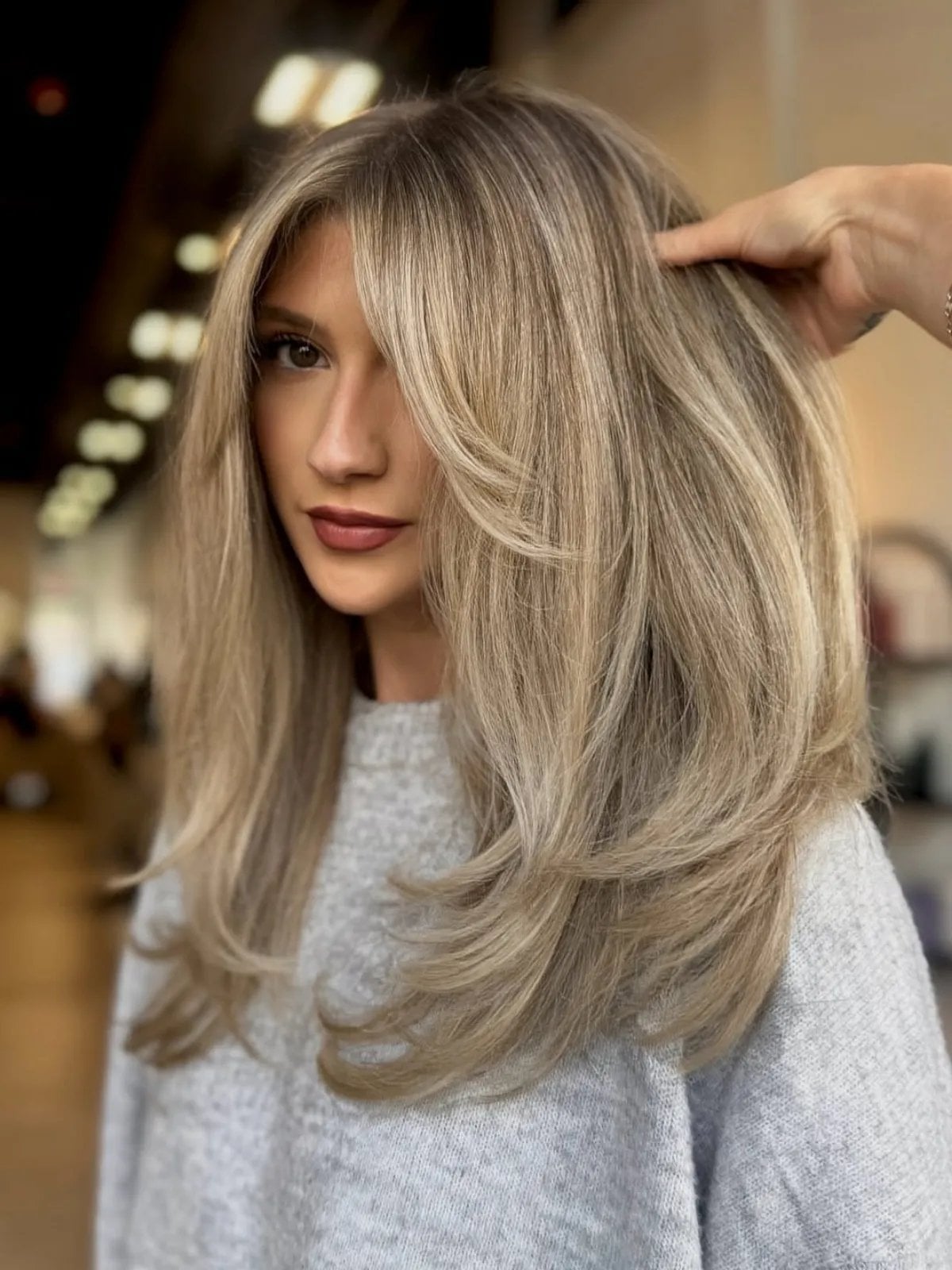
A collarbone-length cut with a side part does something a middle part cannot: it breaks up the symmetry and lets the beige blonde balayage read as a soft wash of light rather than a single stripe. The loose waves give the medium texture enough movement to keep the color from sitting flat, and the subtle dimension means the lighter pieces catch the eye without shouting. This suits oval and square face shapes, and it works best on medium to thick hair that already starts at the collarbone. Ask your colorist for: collarbone beige blonde balayage with soft waves. A texturizing spray on dry hair defines the waves, and a trim every six to eight weeks keeps the ends from fraying.
Mid-Back Ash Blonde Balayage With Curtain Bangs
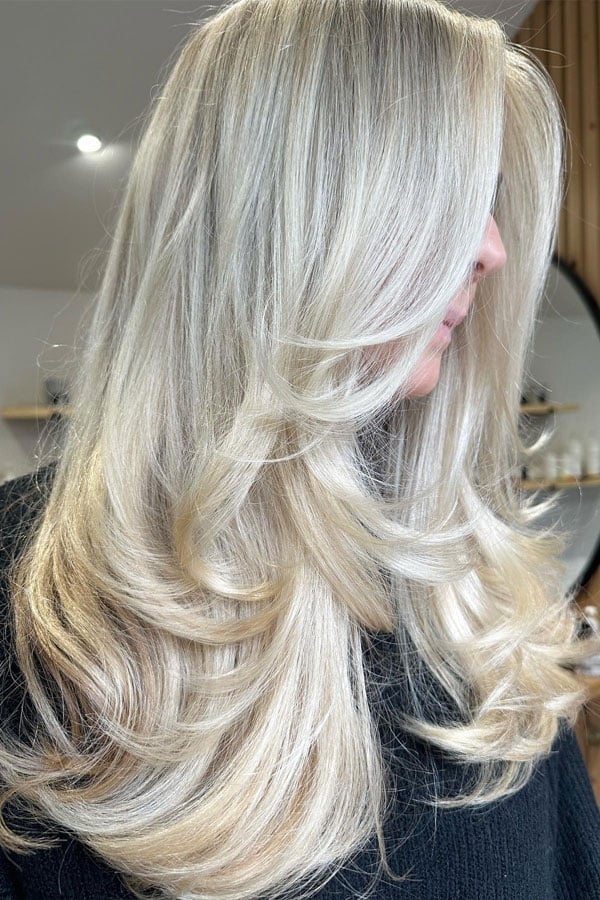
The balayage technique here starts with a darker root and paints the ash blonde lighter as it moves down, so the mid-back length ends with the brightest color at the tips. Feathered layers give the thick, wavy texture room to move, and the curtain bangs soften the front without committing to a full fringe. It is a lived-in color that grows out gracefully, which is the point.
This suits thick hair from mid-back length and elongates round and heart-shaped faces. Ask your colorist for: mid-back ash blonde balayage, curtain bangs, darker roots. A volumizing mousse and a round brush build the blowout, and a toner every four to six weeks keeps the ash from drifting brassy.
Collarbone Ash Blonde Balayage With Face-Framing
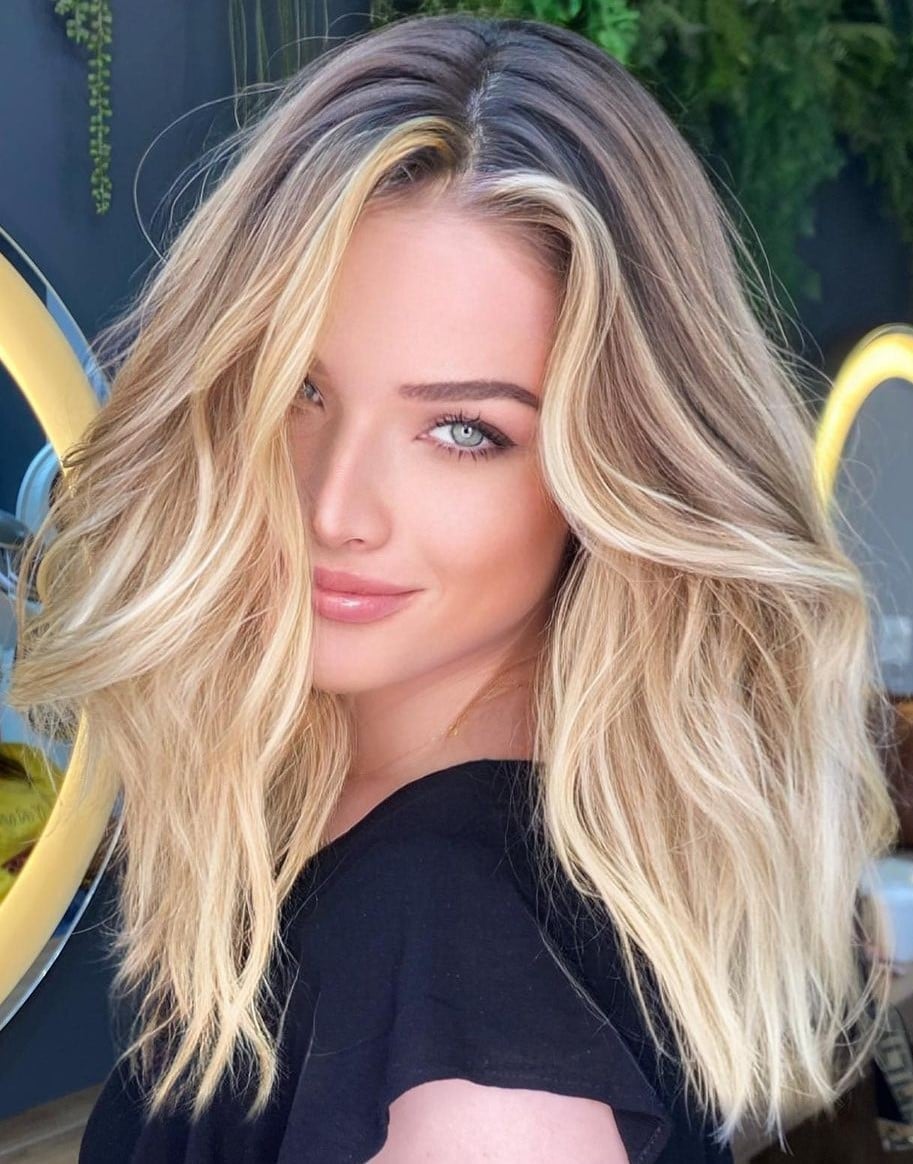
How do you get the bright, face-framing pieces without the whole head turning silver? You ask for the balayage to concentrate the lightest ash blonde around the front, then let the rest of the collarbone length stay a shade deeper. The curtain bangs carry that brightness right along the jawline, which softens square and angular faces. Thick, wavy texture holds the loose waves well, and the middle part keeps the framing balanced. Ask your colorist for: collarbone ash blonde balayage, face-framing layers, curtain bangs. A flat iron helps define the waves, and the ash tone needs a toner every four weeks to stay cool.
Collarbone Beige Blonde Balayage Blowout
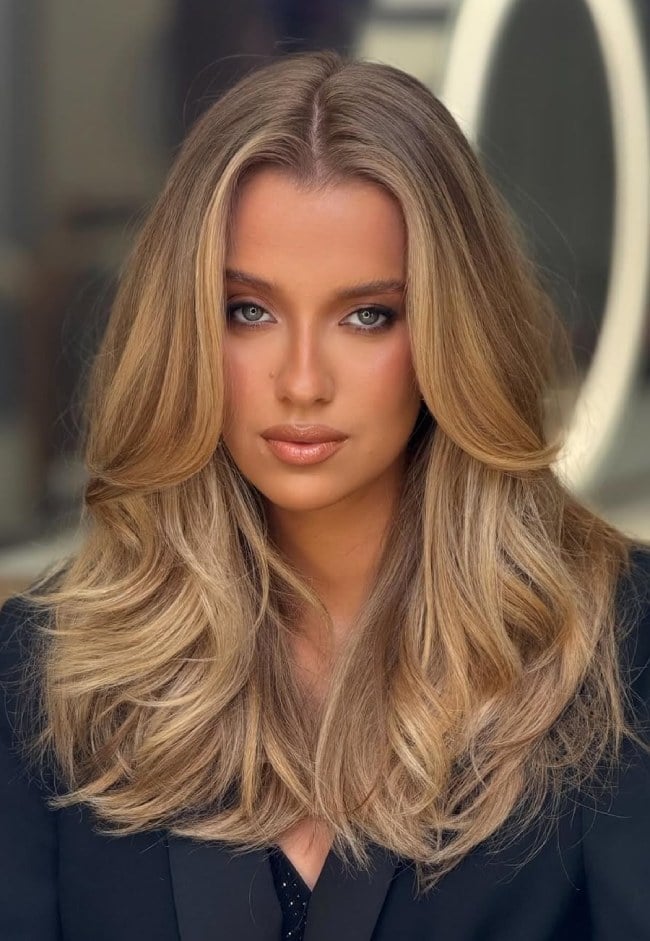
Set this beige blonde balayage against a cooler ash version and the difference is immediate: the beige tone carries warmth without tipping into gold, which makes the blended lighter pieces look sun-lit rather than striped. The blowout with soft waves depends on the face-framing layers and curtain bangs to give the collarbone length its volume, and the thick texture holds the shape for most of the day. This balances round and heart faces by adding width at the cheekbones. Ask your colorist for: collarbone beige blonde balayage, face-framing layers, curtain bangs. A large round brush builds the blowout, and a heat protectant spray is the non-negotiable step before styling.
Ash Blonde Balayage Collarbone Lob
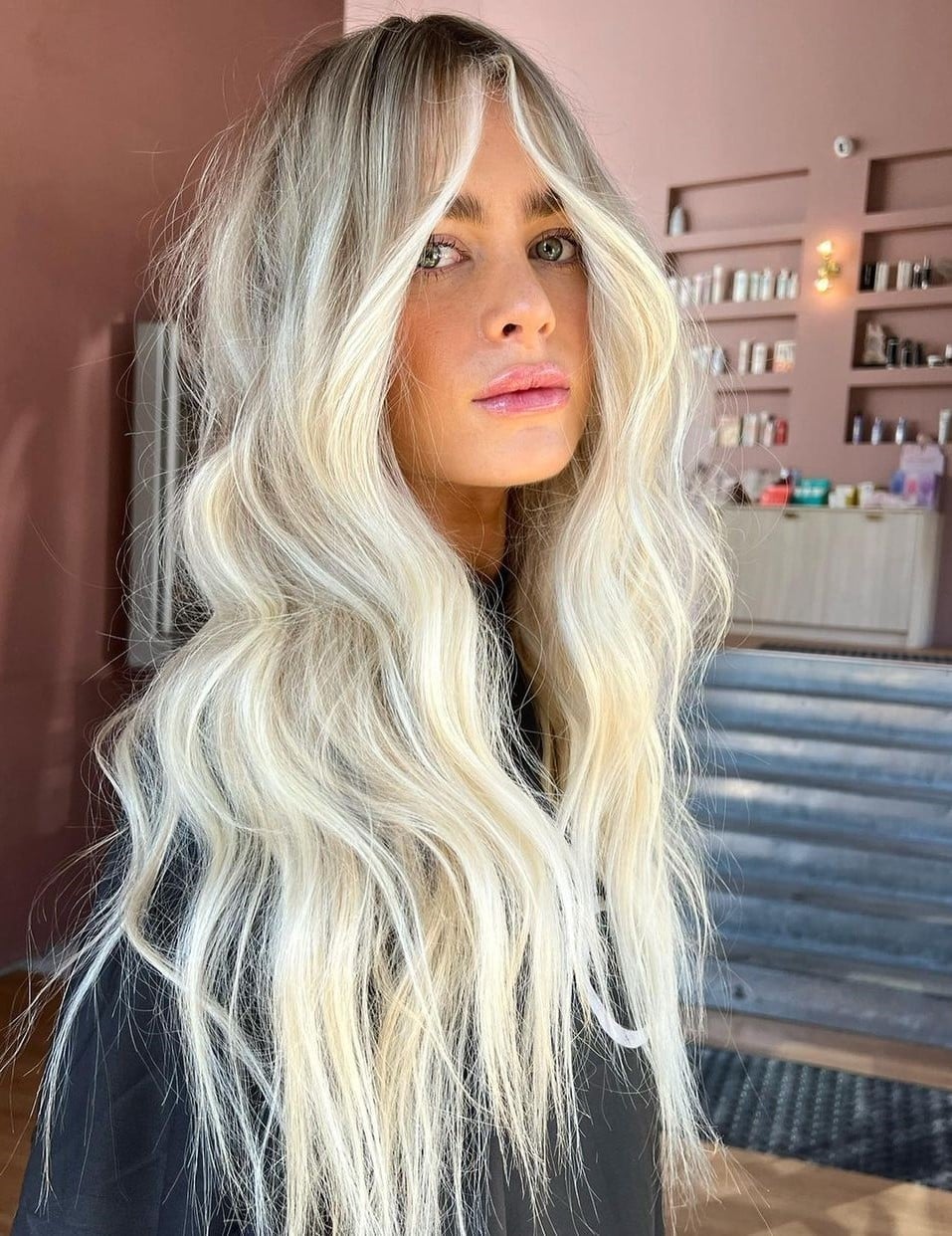
A collarbone lob with ash blonde balayage sits neatly between a chin-length bob and a mid-back mane: it keeps the face-framing brightness of the curtain bangs but leaves enough length to pull back or braid. The soft layers give the thick, wavy texture its shape, and the ash tone reads cooler than a beige blonde, which suits anyone who wants less yellow in their blonde.
This is the more versatile option if you cannot decide between short and long. It softens square and angular jawlines, and it works on thick hair that starts at the collarbone. Ask your colorist for: collarbone ash blonde balayage lob, curtain bangs. The toner is what keeps the ash from turning brassy, so plan for a touch-up every four weeks, with root maintenance every eight to ten.
Mid-Back Caramel Blonde Balayage With Layers
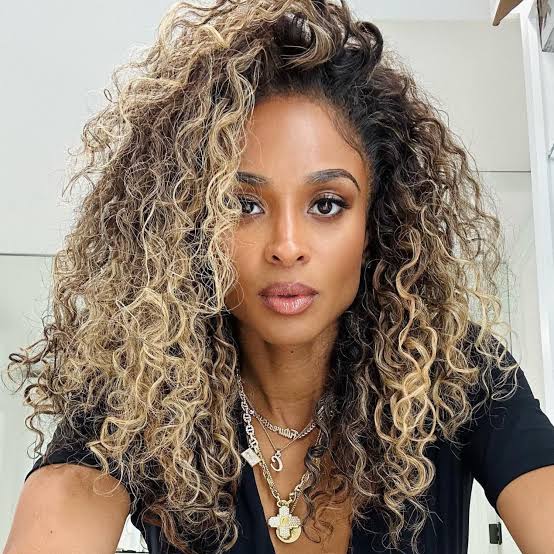
Caramel blonde balayage is the color equivalent of a chunky knit sweater: warm, cozy, and made for the months when the light turns golden. This mid-back length cut uses soft layers to let a darker base peek through, with lighter caramel pieces woven in for a dimensional effect that moves as you do. The technique works best on thick, wavy hair that can carry the weight of the layers, and it suits any face shape since the color does the talking. Ask your colorist for: mid-back caramel blonde balayage with layers. The shade lands well for everyday wear and office settings, where it looks polished without stealing the meeting. Plan on a trim every eight weeks to keep the layers in shape.
The beauty of this caramel blonde balayage is that it doesn’t demand a fresh root touch-up every month. The darker base grows out gracefully, so you can wait longer between salon visits and still look put together. For upkeep, a sulfate-free shampoo helps preserve the warm tones longer, because brassiness is the enemy of a good caramel. This is a salon-only job, given the precision needed to place those lighter pieces through thick hair, but the payoff is a low-maintenance color that carries you from pumpkin-spice season straight into the holidays.
Mid-Back Beige Blonde Balayage With Face-Framing
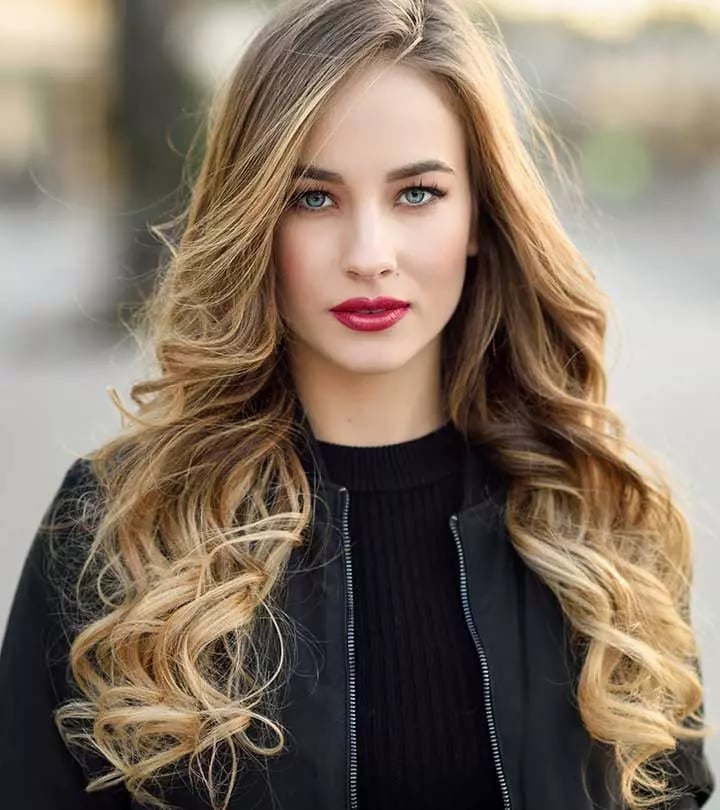
Face-framing layers are the quiet workhorse of this beige blonde balayage, drawing attention to the eyes without shouting about it. The mid-back length cut pairs curtain bangs with loose, glossy waves, and the color blends lighter blonde pieces into a warmer base for a tone that sits somewhere between honey and sand. This design genuinely flatters oval face shapes, and the curtain bangs soften round or heart faces by breaking up the width across the forehead. Ask your colorist for: mid-back beige blonde balayage with curtain bangs and face-framing layers. Thick, wavy hair carries the volume best, and the layers keep the ends from looking heavy. To maintain the gloss, blow-dry with a round brush for lift and finish with a shine serum, because dull beige is just beige.
Chin Length Bob With Blonde Balayage
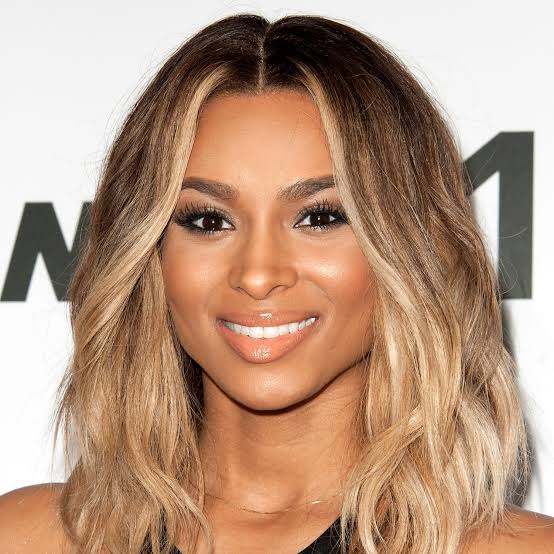
Can you get a blonde balayage bob at home? Technically yes, but you’ll likely end up with something that looks like a bad highlight kit explosion. This chin length bob with curtain bangs relies on a sun-kissed effect, where lighter blonde strands are blended into a warmer base, and that subtlety is exactly what’s hard to replicate outside a salon. The wavy, medium texture holds the shape well, and the length softens angular jawlines by adding a bit of movement around the chin. Ask your colorist for: chin length bob with curtain bangs and sun-kissed blonde balayage. The salon handles the foils and the tone, while you handle the upkeep: a sea salt spray for texture and a trim every six to eight weeks to keep the bob from drooping into a mullet. It’s a casual, everyday style that works best when you let the waves do their own thing.
Collarbone Bob Dark Blonde Balayage
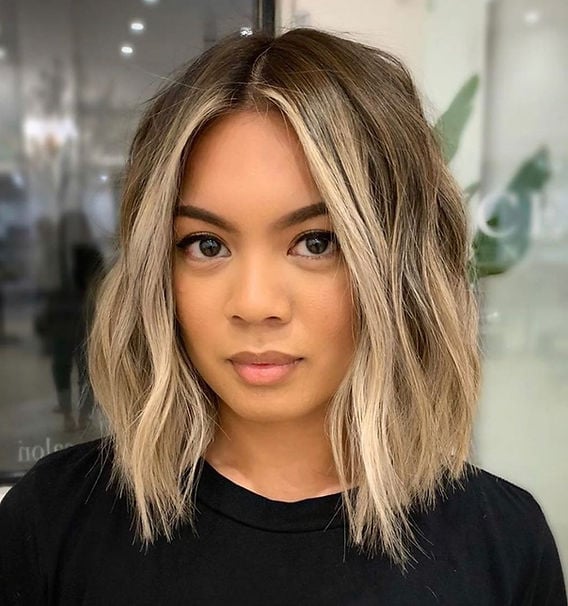
A collarbone bob with a dark blonde base and lighter blonde highlights is a grown-up take on high-maintenance blonde, because the darker root gives it a lived-in feel from day one. The face-framing pieces are the standout, styled as subtle curtain bangs that sweep away from the middle parting and add movement to soft waves. This cut suits oval and long faces by adding width at the cheekbone level, and it works best on medium density hair that has enough body to hold the wave. Ask your colorist for: collarbone bob with dark blonde base and face-framing blonde highlights. The honest drawback is brassiness: those lighter pieces can pull warm over time, so a purple shampoo is essential to keep the tone cool. Trim the bob every six to eight weeks to maintain the shape, and use a texturizing paste for definition on days when the wave falls flat.
Mid-Back Platinum Blonde Balayage Blowout
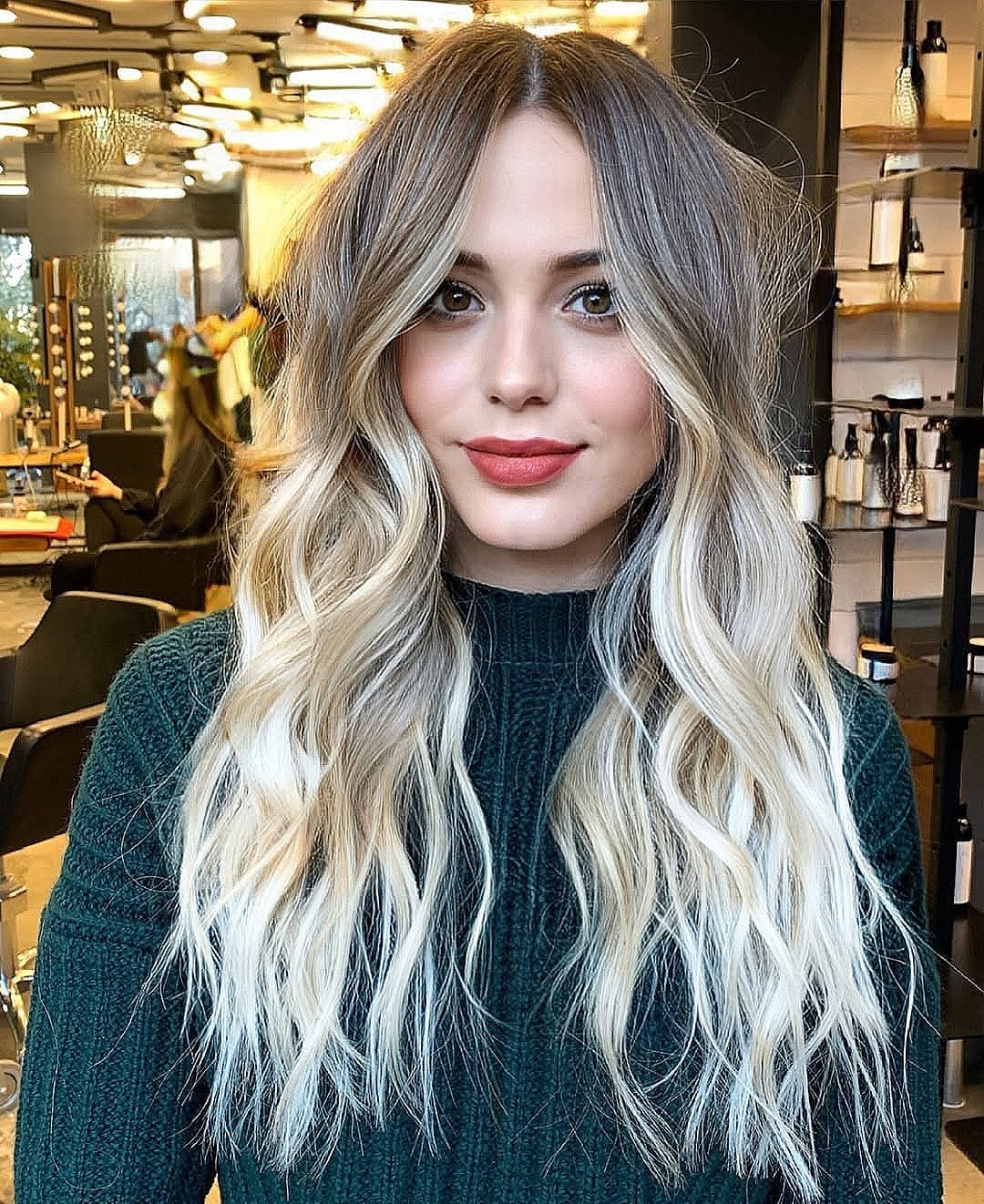
Platinum blonde balayage starts with a darker root and transitions to a striking, icy pale tone, which means the colorist has to lift the ends several levels before toning. It’s a multi-step process that takes hours, and the result is a voluminous blowout with loose waves and curtain bangs that frame the face without competing with the color. This design suits medium density hair of mid-back length, and it works best on oval or heart faces where the curtain bangs can balance a wider forehead. Ask your colorist for: mid-back platinum blonde balayage with darker roots and curtain bangs.
The upkeep is where platinum gets honest. You’ll need a purple shampoo to keep the tone from yellowing, and a heat protectant before any styling because the lift leaves hair more porous. Expect a toning appointment every six to eight weeks to refresh the pale shade, and a trim every eight to ten weeks to keep the ends healthy. This is a salon-only commitment, but for those who want a statement color that still looks soft, it’s worth the chair time.
Mid-Back Warm Beige Blonde Balayage
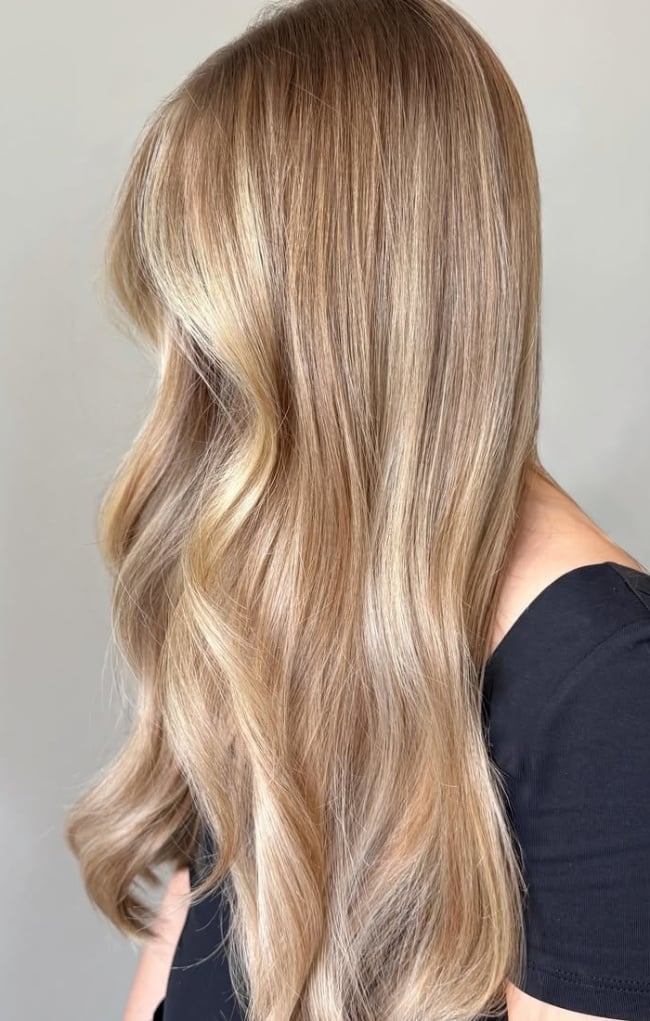
Beige blonde can look flat if the tone is off, but a warm beige blonde balayage on mid-back length hair with layers solves that on its own. The sun-kissed highlights blend into a lighter base, and the loose waves reflect light at different angles, so the color shifts across the hair. Ask your colorist for: mid-back warm beige blonde balayage with sun-kissed highlights.
Thick hair at this length holds wave patterns without fighting them, which is the point. A round brush and a medium heat setting create the glossy finish you see here; a trim every eight weeks keeps the layers from tangling at the ends. The middle parting lets the warmth spread evenly on both sides, no awkward part lines.
Collarbone Ash Blonde Balayage Blowout
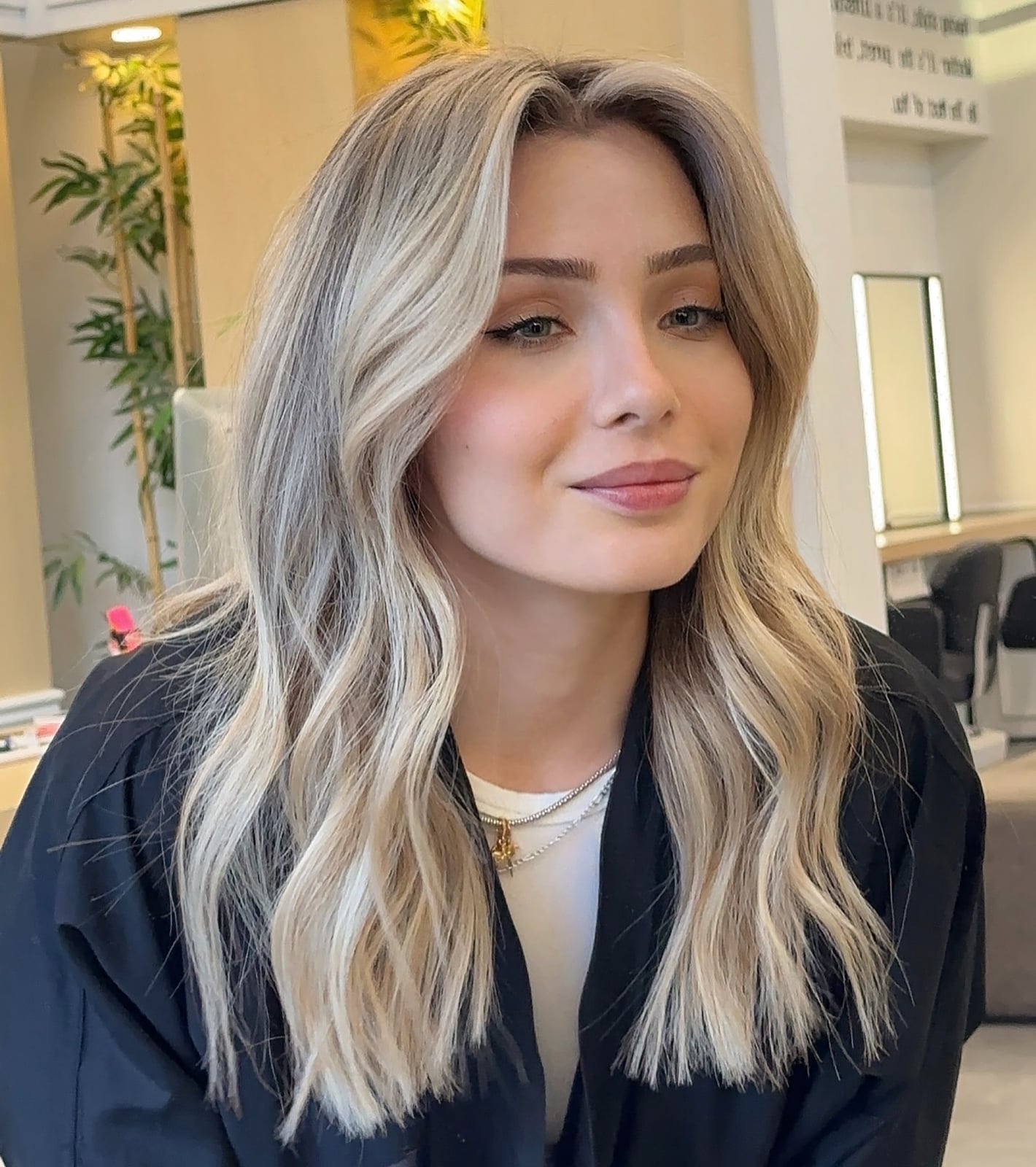
Can you get ash tones without looking dusty? Yes, if the base is ash blonde and the balayage stays lighter. This collarbone length with face-framing layers keeps the cool tint visible without overwhelming the shape. The wavy blowout adds volume without fighting the ash undertone. Ask your colorist for: collarbone ash blonde balayage, face-framing layers. A toning appointment every four to six weeks keeps the ash from turning brassy, and that is a trade-off worth making.
Mid-Back Ash Blonde Balayage With Layers, Wavy
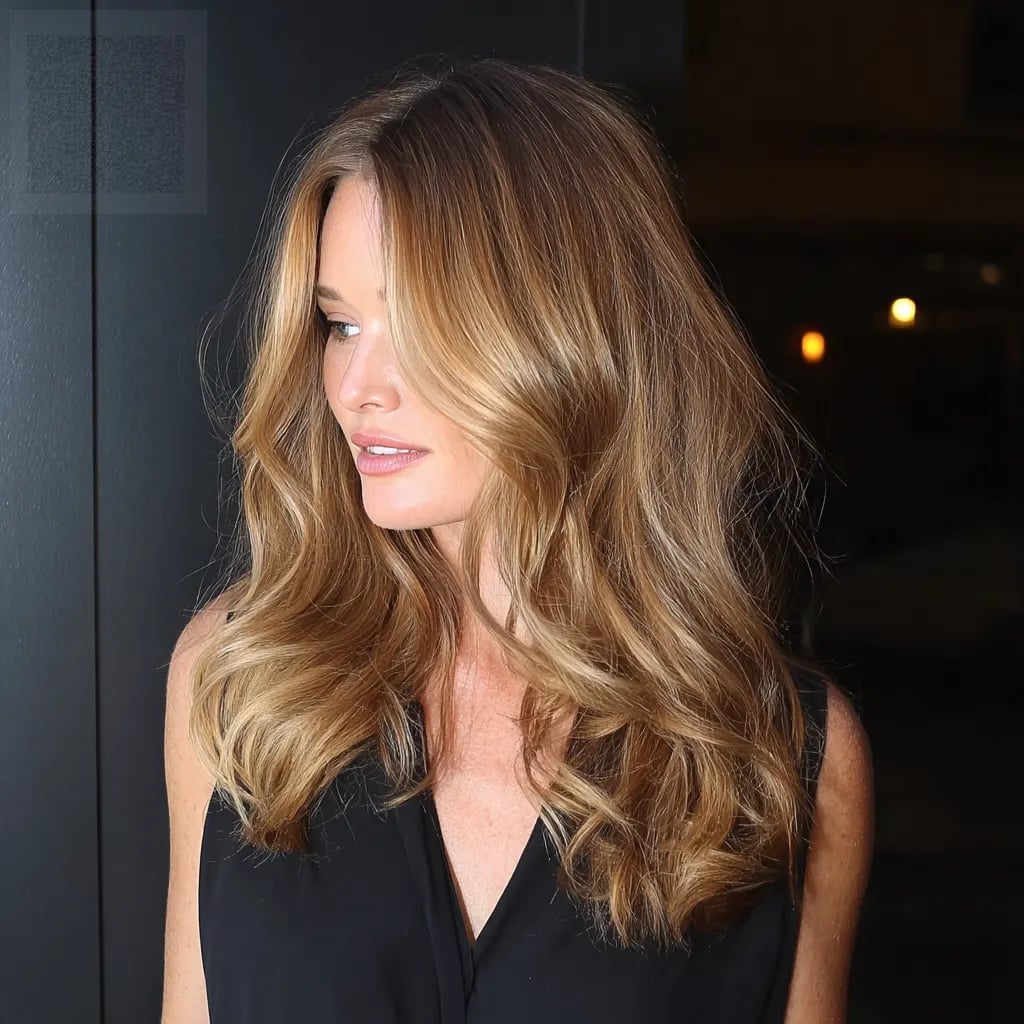
The design here relies on contrast between the darker base and the lighter ash blonde highlights, and thick wavy hair is the ideal canvas for that depth. The subtle layers prevent the mid-back length from looking heavy, while the loose waves let the lighter pieces sit on top rather than disappear into the darker sections. Ask your colorist for: mid-back ash blonde balayage, lived-in look.
This is a good choice for those who want dimension without a high-maintenance root line. The darker base grows out naturally, and the ash highlights stay cool-toned with a toner refresh every six weeks. A texture spray on the waves adds definition without weighing the hair down, and a trim every eight weeks keeps the ends from fraying.
Collarbone Ash Blonde Balayage Side Part, Wavy
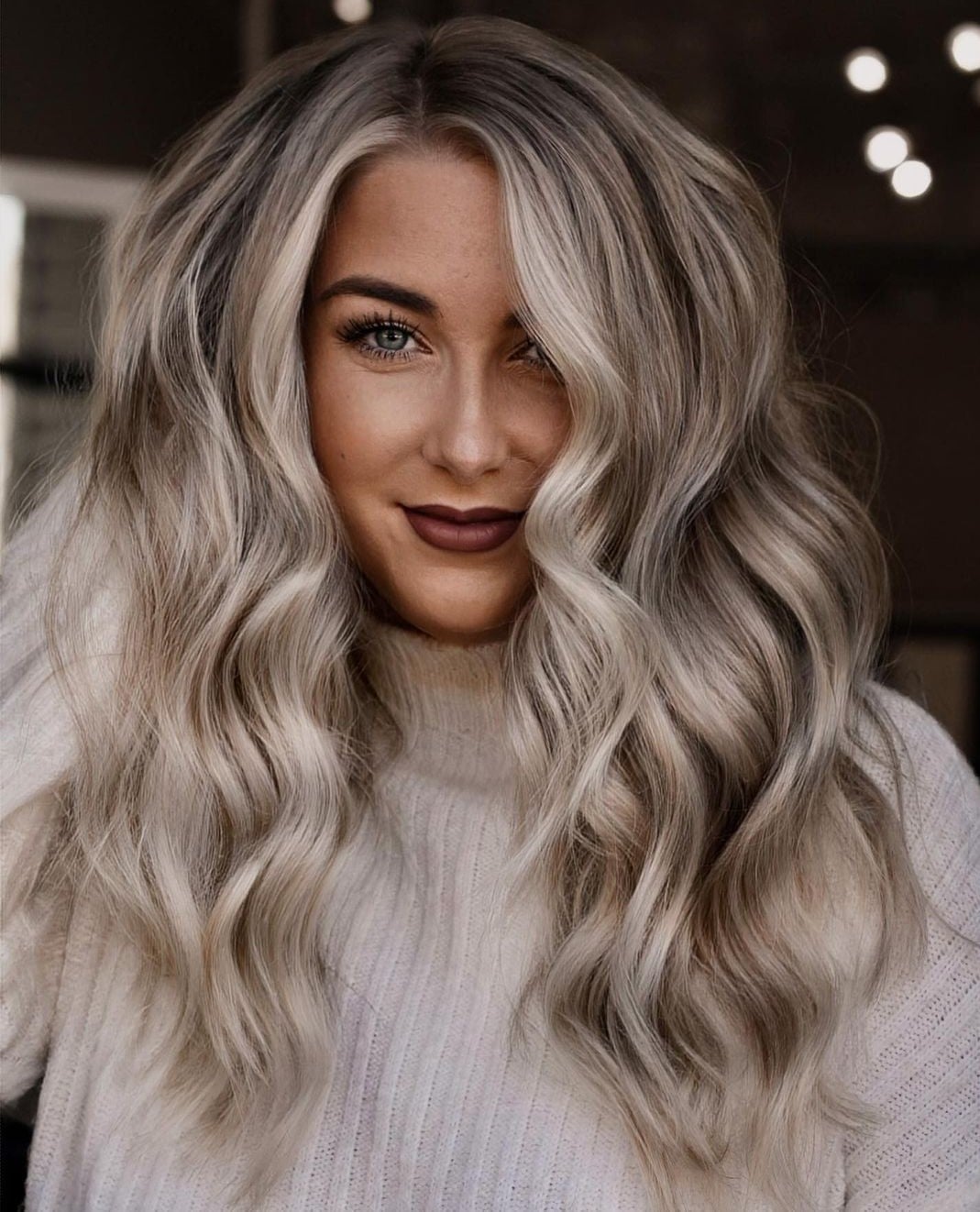
This collarbone-length cut with a side part creates asymmetry that ash blonde balayage plays into well. The cool-toned highlights hit the top layers and the side-swept pieces, so the color lands where the eye goes first. Loose waves keep the look from feeling too structured, and the slightly darker base at the roots means a grow-out is not a crisis. Ask your colorist for: collarbone ash blonde balayage with side part. This is a strong spring and summer shade, since ash tones hold up better in warm weather than honey or gold shades that can pull brassy in humidity.
Mid-Back Ash Blonde Balayage Blowout, Middle
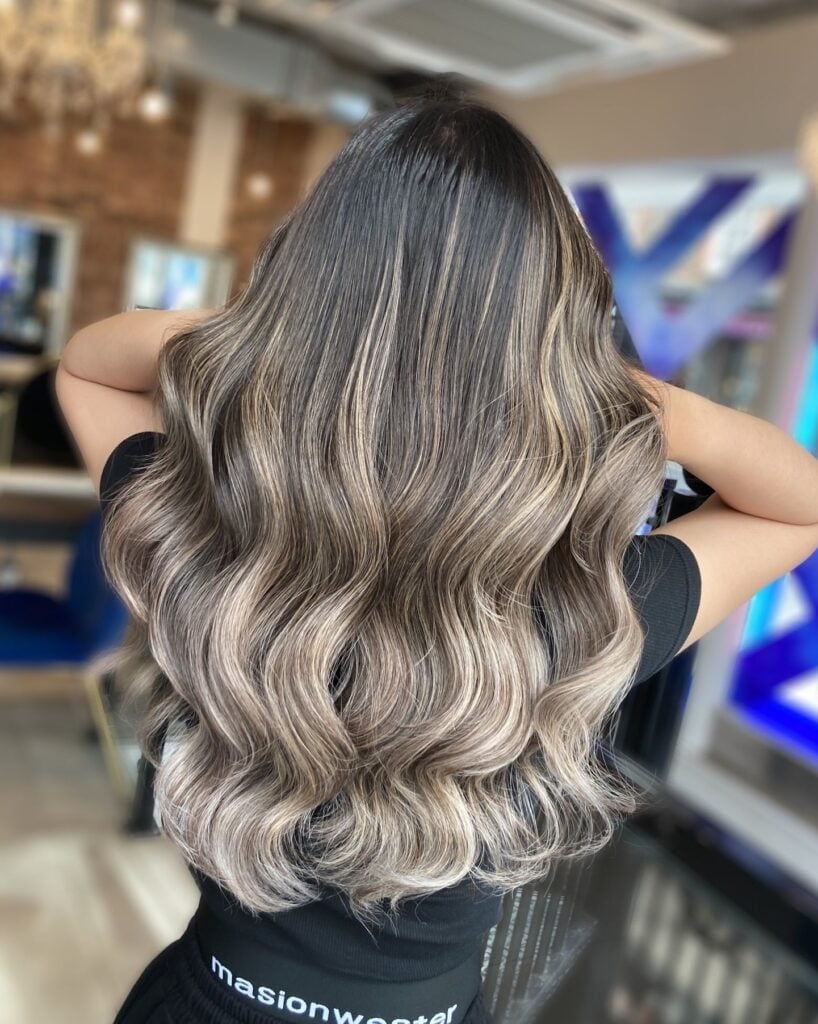
A blowout on balayage hair is about showcasing the transition from dark base to lighter ends. Here the mid-back length with a layered cut lets the ash blonde pieces sit seamlessly over the darker sections, and the middle parting keeps the blend symmetrical. The blowout technique smooths the cuticle, which makes the lighter ash blonde pieces catch light evenly. Ask your colorist for: mid-back ash blonde balayage, dark to light blend.
Upkeep is straightforward for this look. A root shadow is not necessary because the dark base is already part of the color story. Toning appointments are typically every four to six weeks. A volumizing mousse before drying gives the blowout staying power, and a trim every eight weeks keeps the layers from collapsing at the ends.
Shoulder Length Blonde Balayage With Bangs
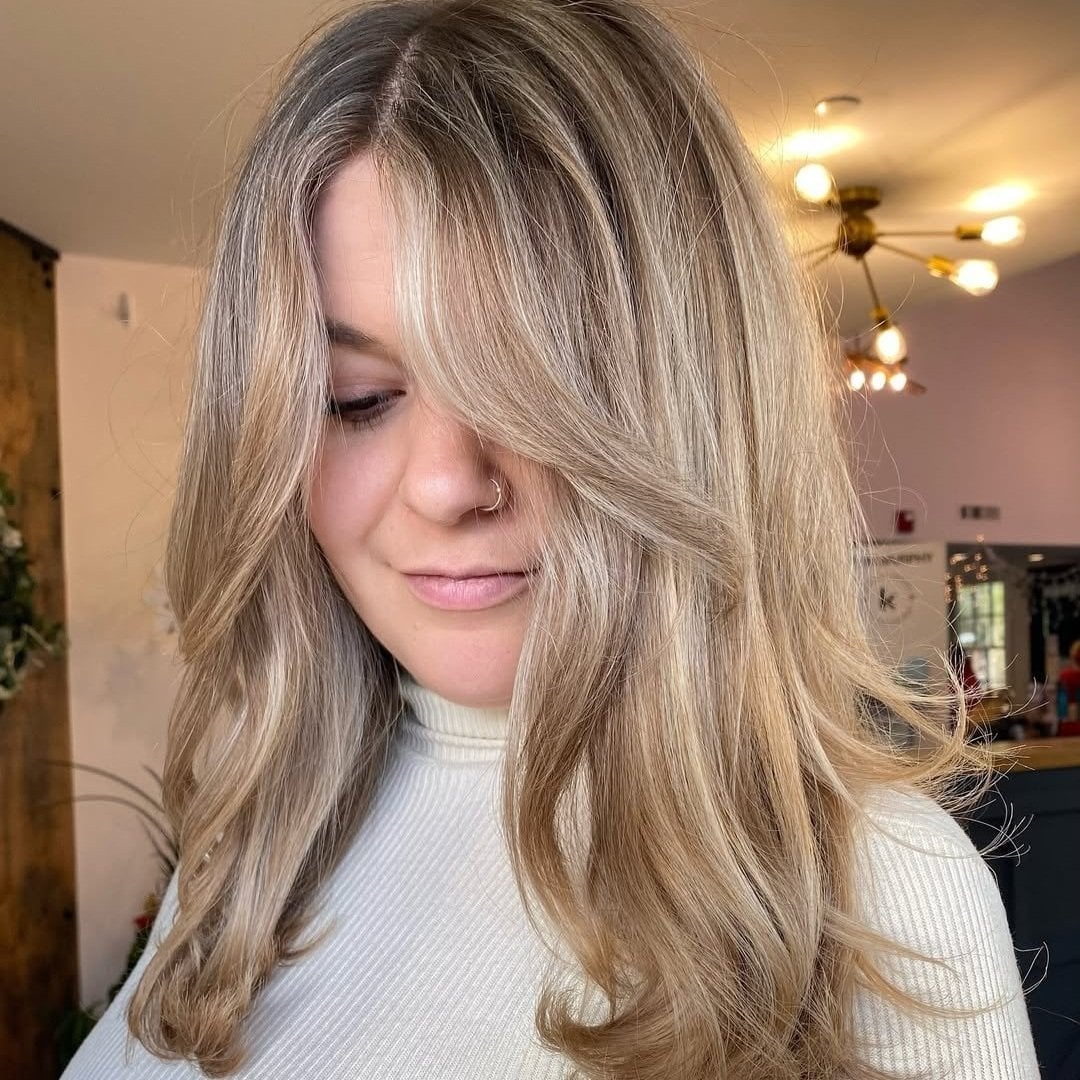
Curtain bangs change the entire job of a blonde balayage, because they pull the lightest pieces right up to your cheekbones instead of letting them sit at the ends. This shoulder-length cut keeps soft layers throughout, so the warmer blonde base melts into lighter tones without a hard line. It suits medium to thick hair that starts at shoulder length, and the face-framing softens round and heart shapes in a way a bangs-free style cannot. Ask your colorist for: shoulder length blonde balayage, curtain bangs. A texturizing spray gives the loose blowout its waves, and a trim every six to eight weeks keeps the fringe from turning into a curtain you have to part yourself.
Mid-Back Ash Blonde Balayage Loose Waves
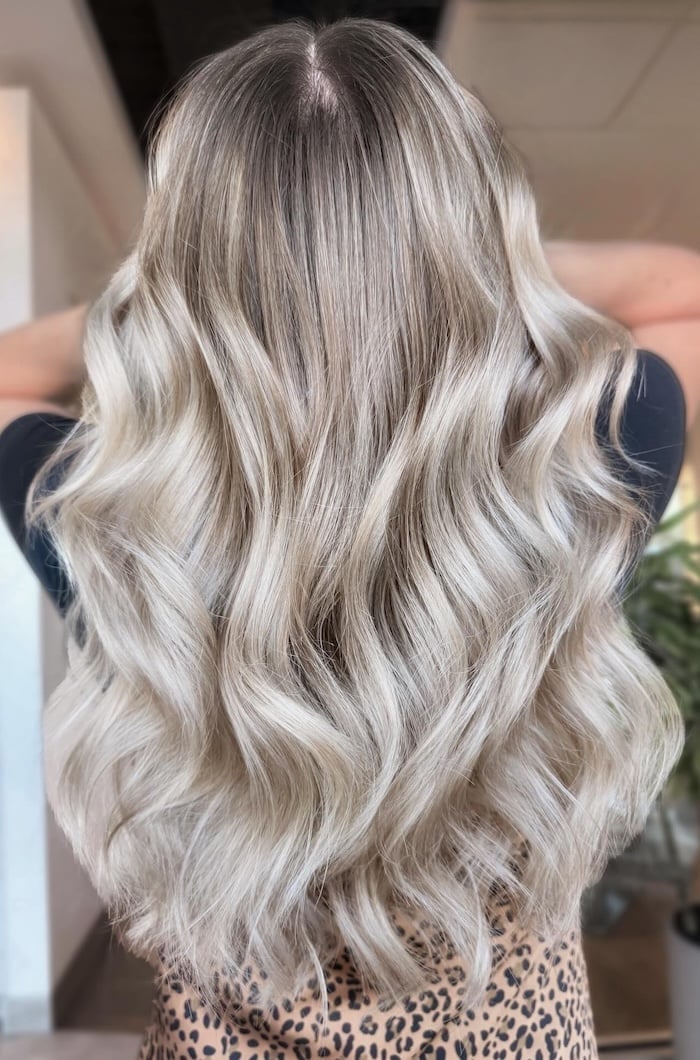
How long will that cool-toned dimension actually last? Ash blonde balayage fades faster than warmer shades, because the blue and violet pigments wash out first, leaving brassiness behind. This mid-back version weaves lighter, cool strands through a slightly darker base, so the roots grow out softly and the contrast stays visible for weeks. Thick, wavy hair at mid-back length holds the style well. Ask your colorist for: mid-back ash blonde balayage with cool tones. A shine serum on loose waves brings back the gloss, but the real work is a toner appointment every four to six weeks to keep the ash from turning honey.
Collarbone Ash Blonde Balayage With Fringe
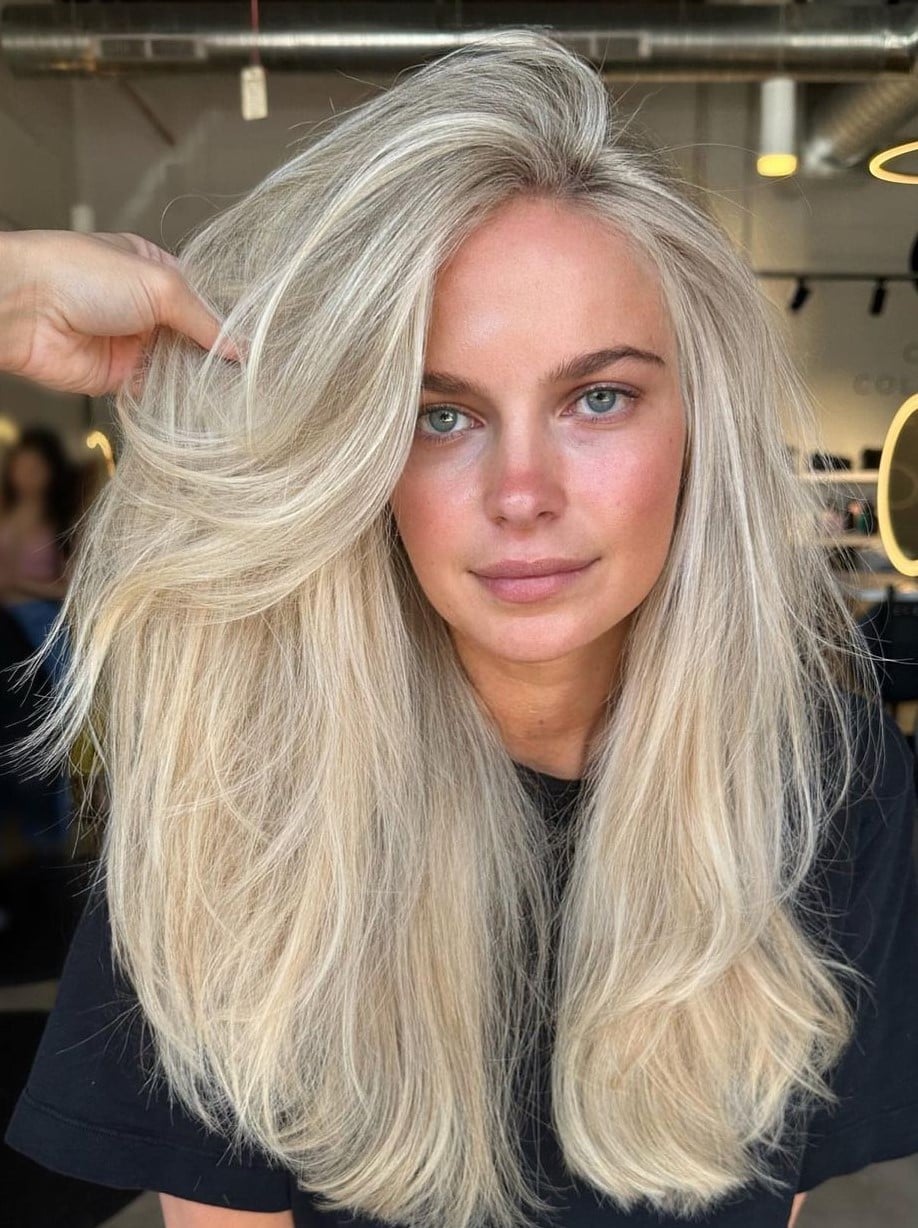
The bright blonde pieces here do not stop at the jaw, they run through the curtain bangs and wrap around the face, which makes the ash tone look deliberate rather than faded. A collarbone cut with soft layers gives the loose waves somewhere to land, and thick hair keeps the shape from collapsing. It softens square and angular jawlines because the fringe breaks up the line of the chin. Ask your colorist for: collarbone ash blonde balayage, curtain bangs. Specify the fringe length you want, grazing the brow or longer, because that one detail decides whether it reads as lived-in or just grown out. Toner is not optional with ash, and a trim every six to eight weeks keeps the bangs on duty.
Mid-Back White Blonde Balayage Waves
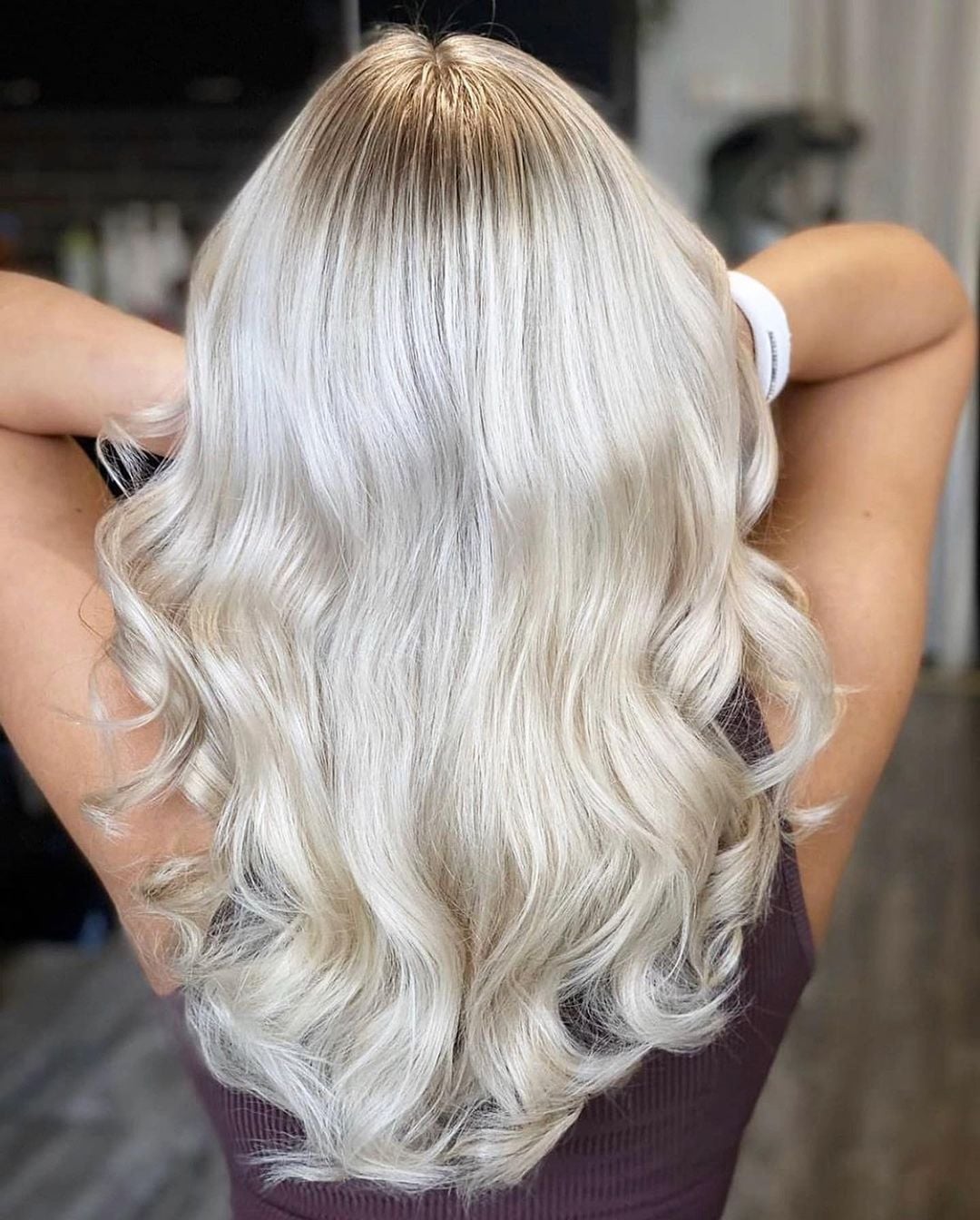
White blonde is the endgame of the blonde spectrum, and this mid-back version keeps subtle darker roots so the grow-out does not announce itself every two weeks. Long, thick hair carries the loose waves well, and the middle parting lets the blended lighter tones run the full length. Ask your colorist for: mid-back white blonde balayage, subtle roots. It suits oval and heart faces because the length pulls the eye down. This level of lift demands regular toning and deep conditioning, and a trim every eight weeks barely keeps up with the ends. If you cannot commit to the maintenance, pick a warmer blonde and let the white stay on someone else’s head.
Shoulder Length Blonde Balayage With Side Bangs, Wavy
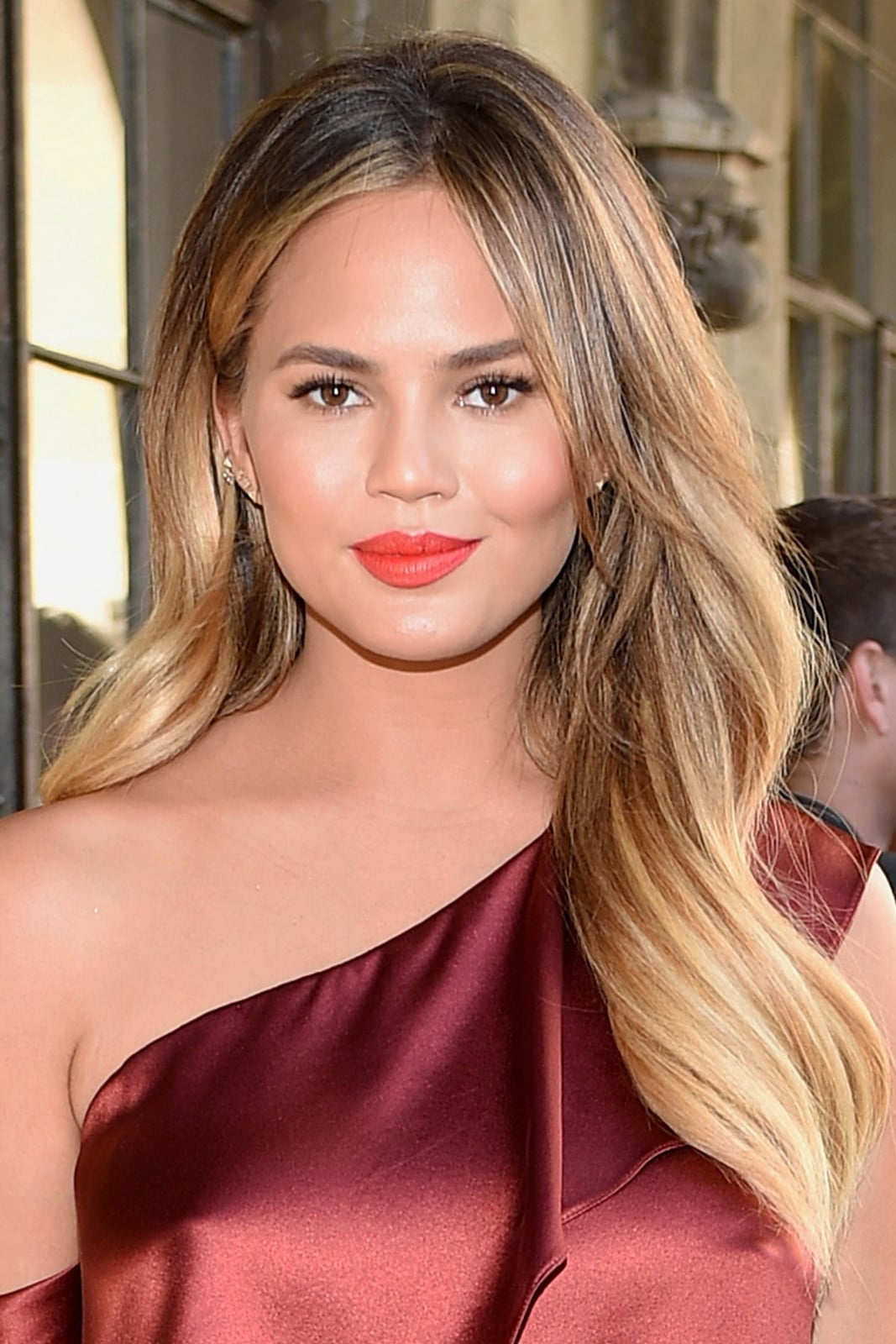
Set this against a middle part and you will see the difference: the side part and side-swept bangs give the darker roots a clear path to the lighter ends, so the contrast reads instantly. Shoulder-length hair with soft layers keeps the blowout from going flat, and thick, wavy texture gives the transition some movement. It works best on medium to thick hair starting at shoulder length, and the side sweep softens angular jawlines without hiding them. Ask your colorist for: shoulder length blonde balayage, side-swept bangs. A texturizing spray breaks up the waves, and a trim every six to eight weeks keeps the bangs from creeping toward your chin.
Mid-Back Ash Blonde Balayage Soft Waves, Wavy
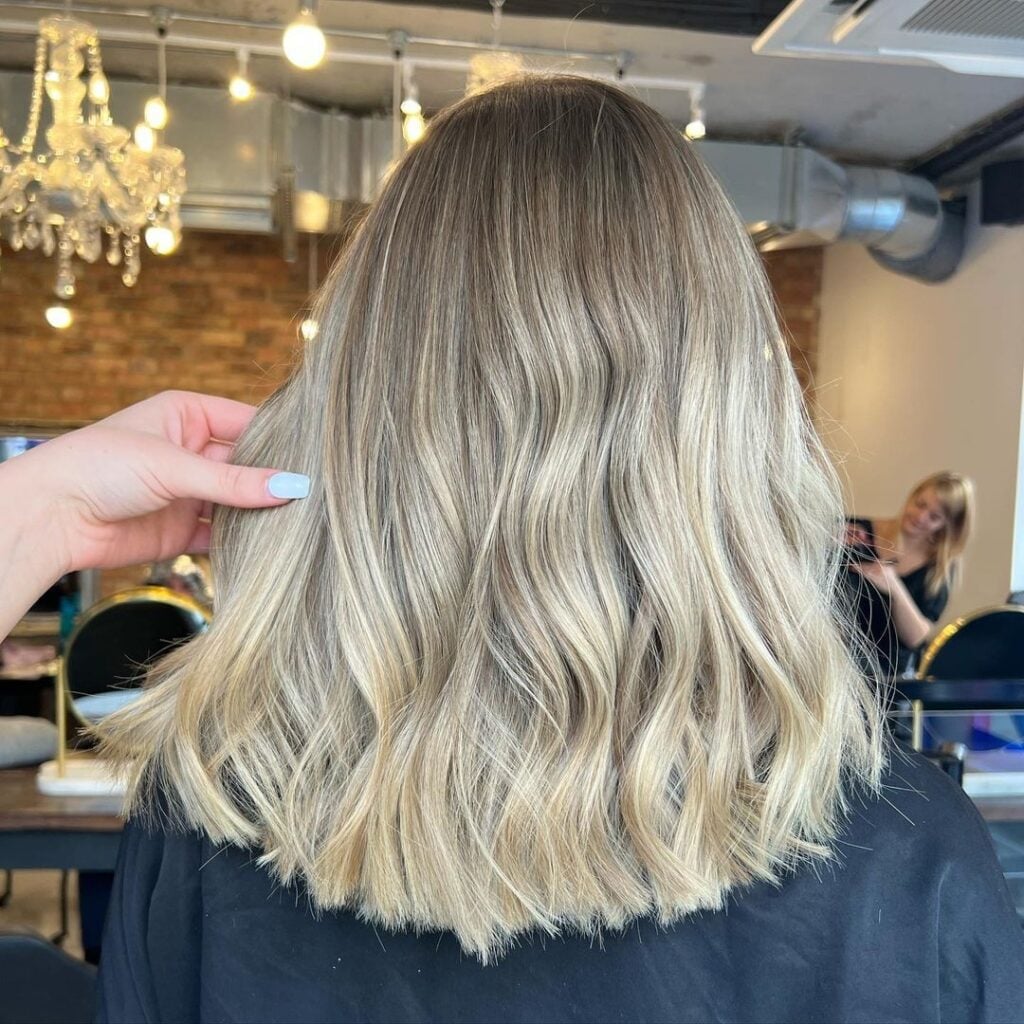
The beauty of this ash blonde balayage lies in how the lighter tones are woven through the darker base, not painted on in obvious stripes. That soft transition is what gives the mid-back length waves their depth, so the color shifts as the hair moves. It is a technique that rewards thick hair, where there is enough surface area for the blend to read properly.
Ask your colorist for: mid-back ash blonde balayage with soft waves. The middle part and the layers work together to let the color fall naturally. A toner every four to six weeks keeps the ash tone from drifting warm, which is the main battle with this shade.
Mid-Back Beige Blonde Balayage With Curtain Bangs, Wavy
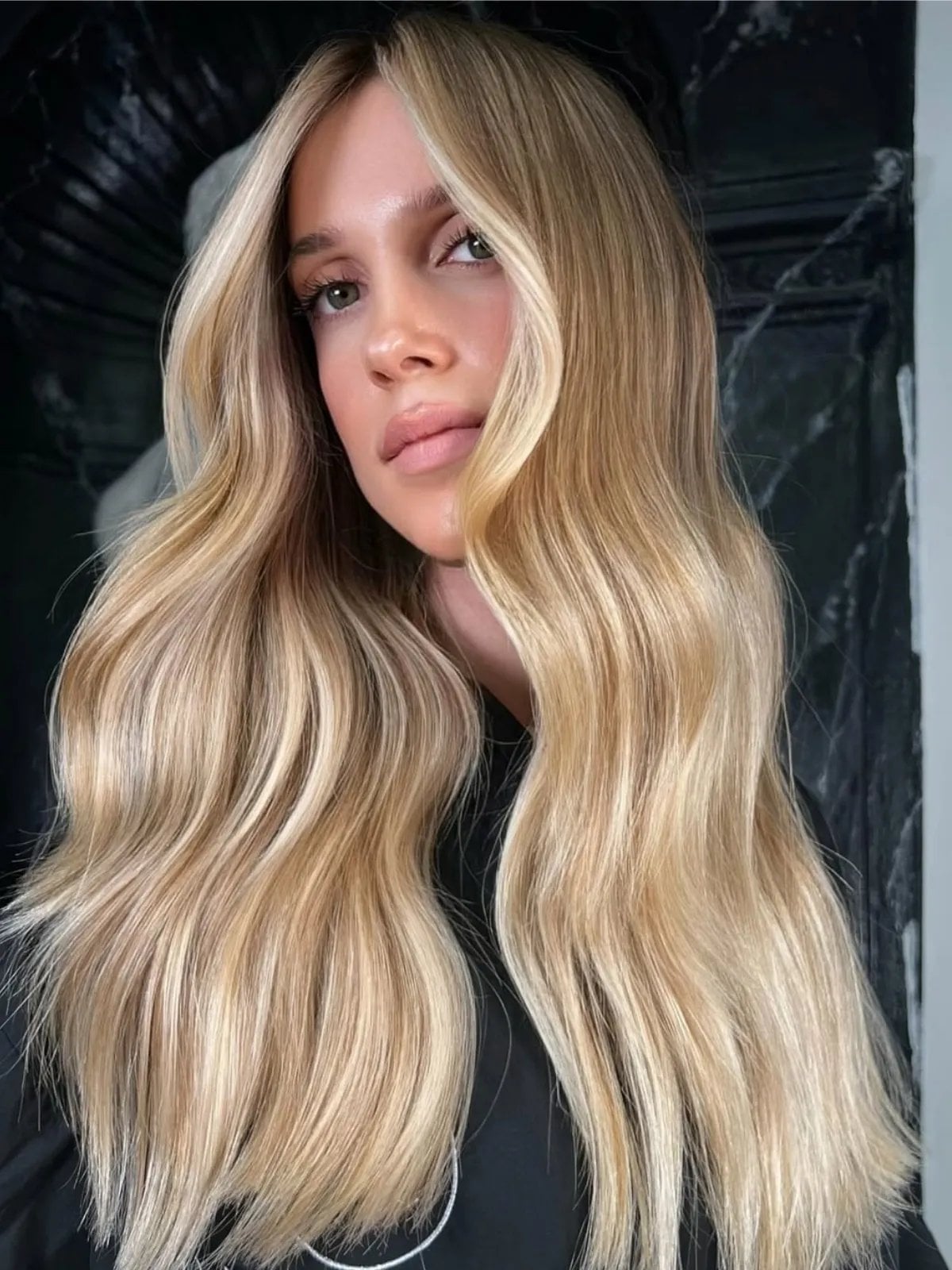
Beige blonde balayage with curtain bangs is the summer festival answer to the question of how to look put together without trying. The darker roots melt into lighter ends, so the color grows out gracefully, and the soft bangs frame the face without demanding constant attention. This is a look that works for thick, wavy hair of mid-back length, and the curtain bangs help balance round and heart faces.
Ask your colorist for: mid-back beige blonde balayage, curtain bangs. The loose waves and middle part keep it casual, but the gloss on the color makes it polished enough for an evening event. A texturizing spray on the lengths will keep the wave pattern defined without stiffness.
Mid-Back Honey Champagne Blonde Balayage
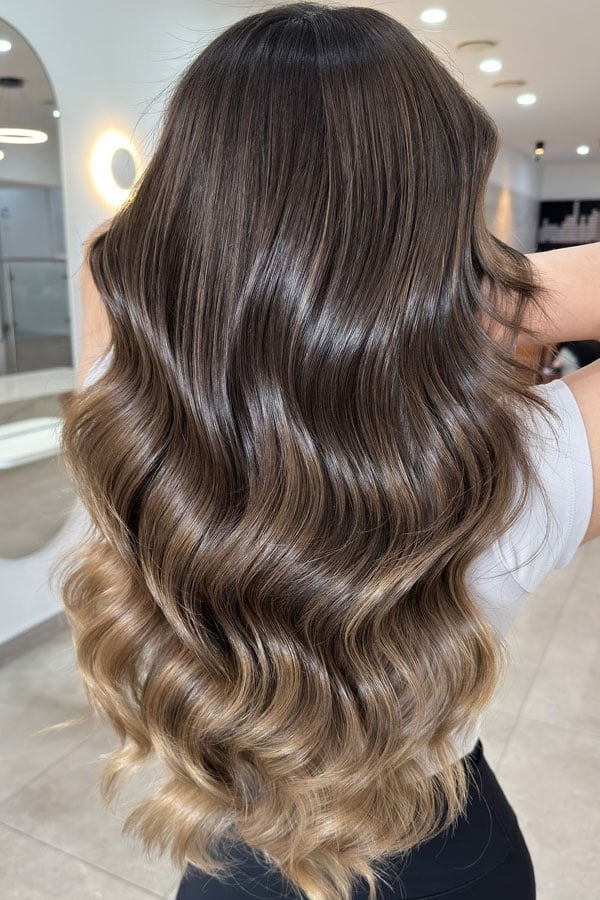
How do you keep warm blonde tones from turning brassy? The honey champagne blonde balayage here shows the answer: it leans into the warm side, with golden tones blended into lighter champagne highlights, so there is no fight against the undertone. The mid-back layers and loose, glossy waves give the color room to show its dimension.
Ask your colorist for: mid-back honey champagne blonde balayage. This shade suits thick hair of mid-back length, and it works with any face shape. To keep the gloss up, a shine serum on the lengths does the job, and a trim every eight weeks keeps the layers moving well.
Mid-Back Dimensional Blonde Balayage
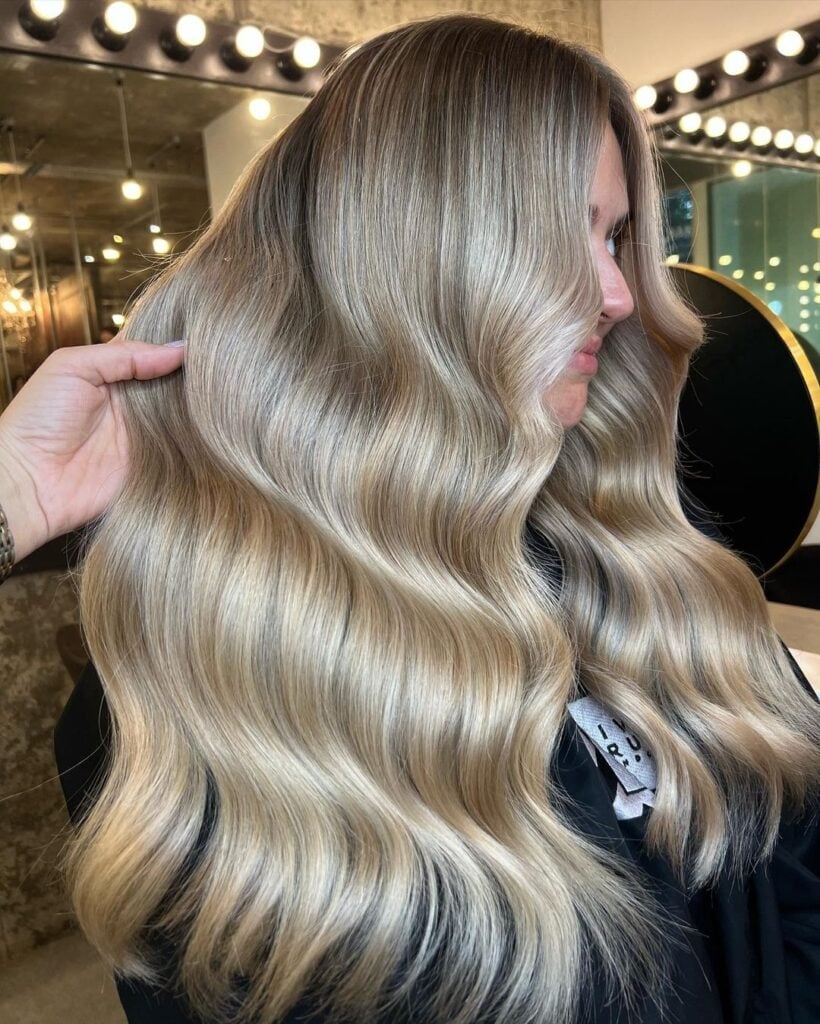
The dimensional blonde balayage here is built on contrast: lighter blonde highlights play through a darker blonde base, so the mid-back waves catch the light unevenly. Ask your colorist for: mid-back dimensional blonde balayage. The side parting and thick, wavy texture are what make the technique work, giving the color enough movement to show its depth. This approach suits thick hair of mid-back length, and it works for any face shape.
Fine Bob Ear Length Blonde Balayage
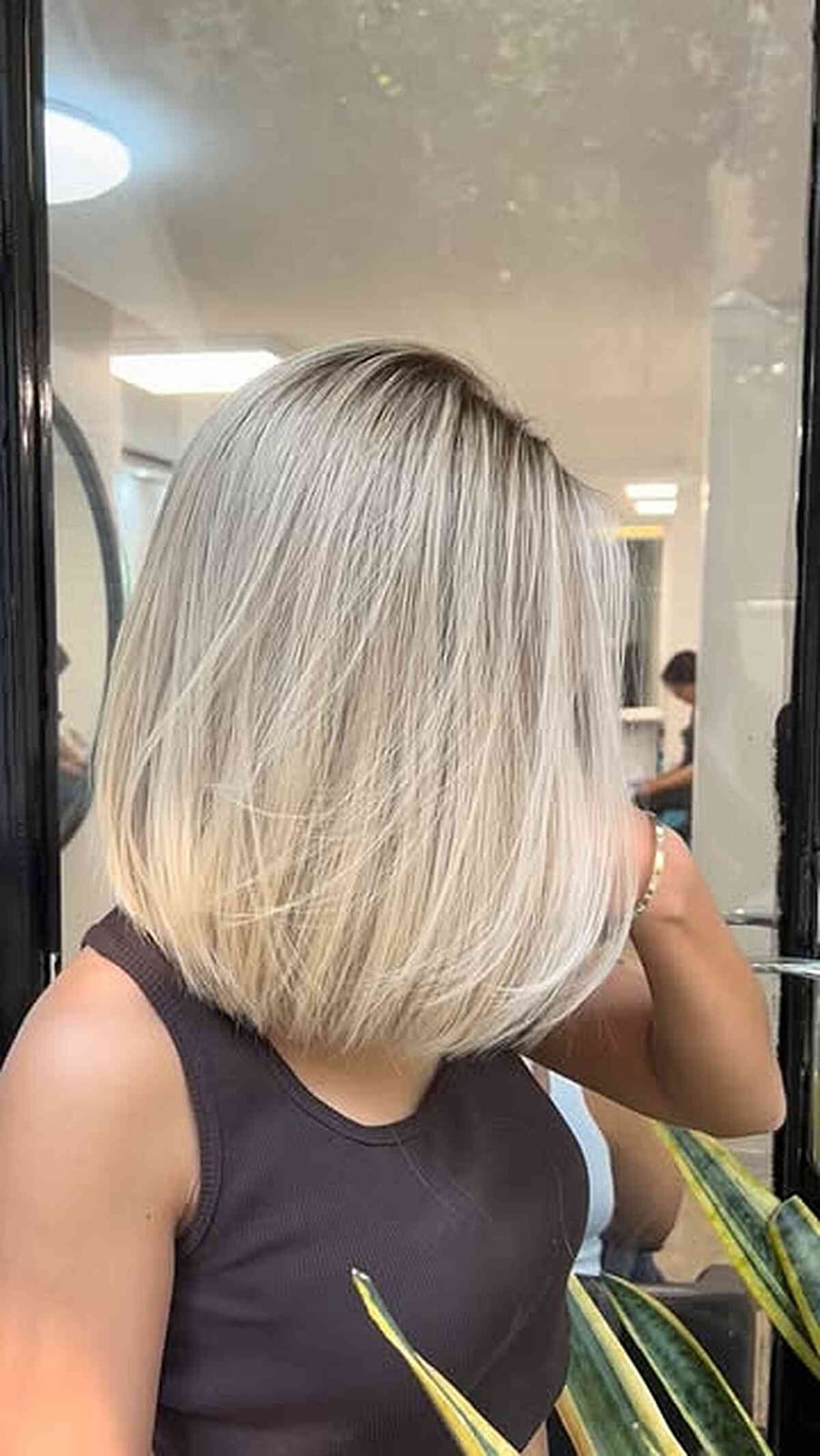
A fine bob ending at the ear is a different beast from a balayage on thick hair. Here, the lighter blonde tones are blended toward the ends, so the color adds a sense of movement and volume that the fine, straight texture does not have on its own. Ask your colorist for: ear length fine bob, blended blonde ends. The middle part and clean, straight styling keep the silhouette sharp, and the lighter ends give it a lift. It suits fine hair that starts at ear length, and it balances long faces nicely. A volumizing spray at the roots helps, and a trim every six to eight weeks keeps the bob shape crisp.
Mid-Back Platinum Blonde Balayage Waves, Wavy
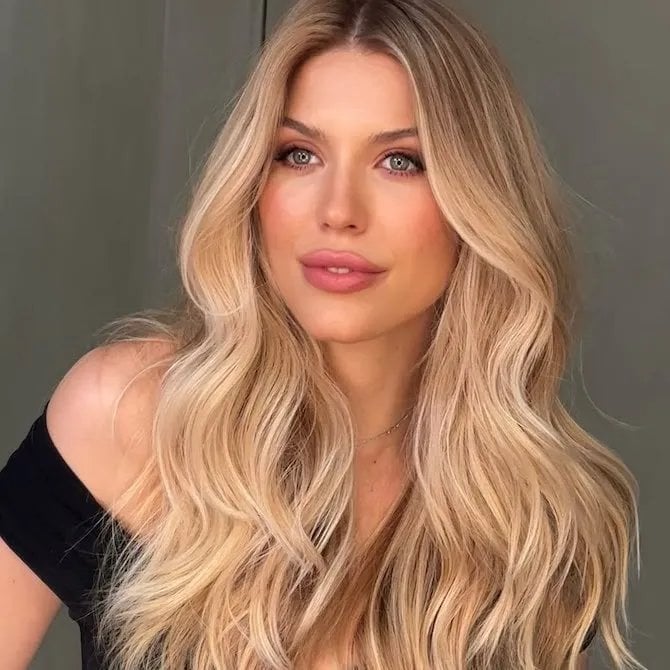
Can a platinum blonde balayage look natural? On medium-density hair of mid-back length, yes, when the bright pieces are painted softly into long layers. Loose waves let the lighter tones show through the hair. This color requires a salon visit, not a weekend project. Lifting a base to platinum needs precise sectioning and timing; one uneven application leaves patchy bands. Ask your colorist for: mid-back platinum blonde balayage with long layers.
Oval and heart-shaped faces benefit from the vertical lines the layers create. The platinum pieces need regular toning to stay cool and avoid yellowing, so budget for a purple shampoo and a toning appointment every four to six weeks. A deep conditioning mask once a week keeps the texture from feeling brittle. A trim every eight weeks removes any split ends that show more on lightened hair.
Mid-Back Dark Brown With Blonde Balayage
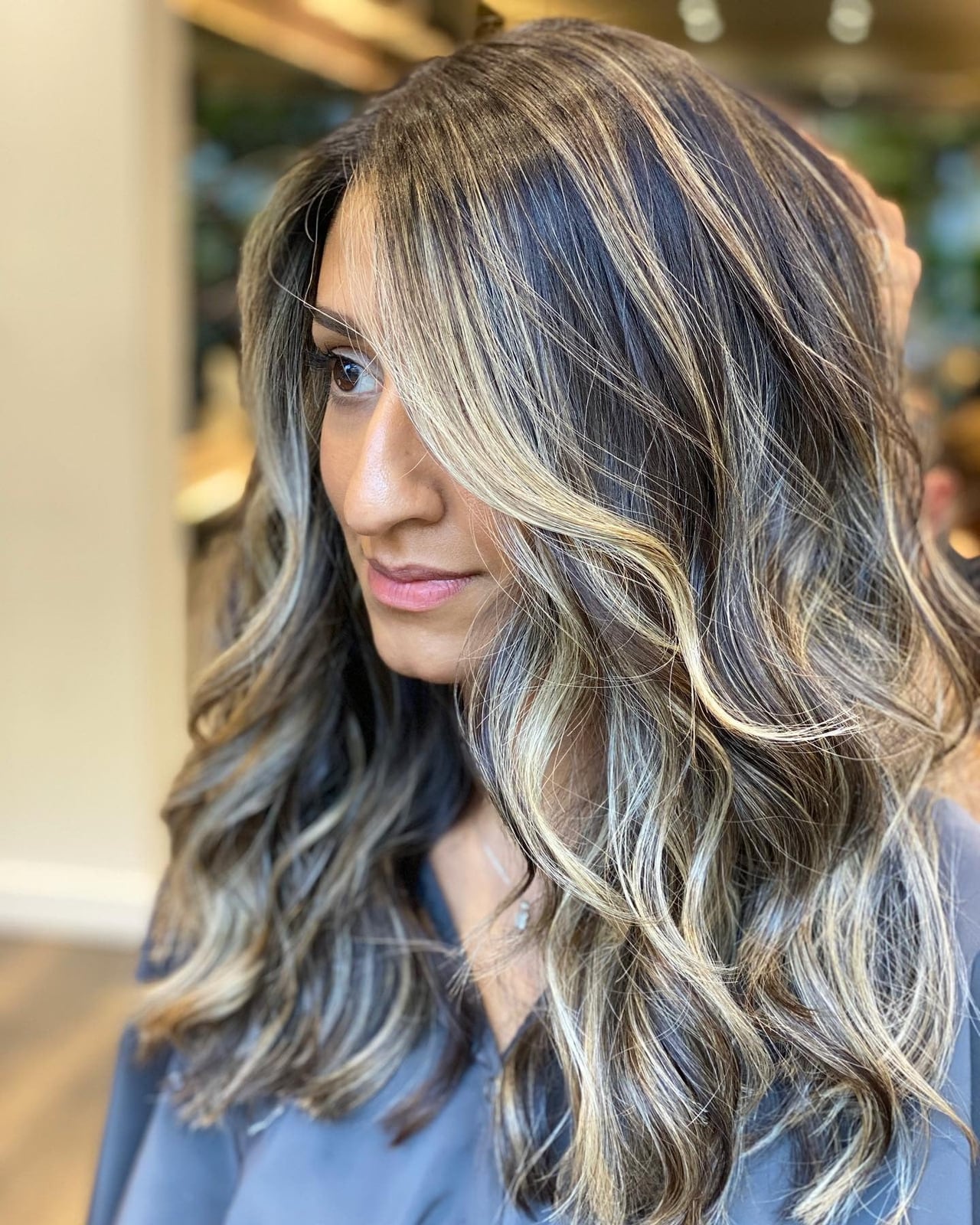
The design is a high-contrast gamble: a dark brown base with blonde balayage highlights that run through thick, wavy mid-back hair. When it works, the dimension is striking, with the lighter pieces lifting the overall tone without washing out the depth. The trade-off is that dark bases resist lightening. Brassiness can creep in after two or three washes, especially if the stylist cannot lift the brown high enough on the first pass. A color-depositing conditioner in a cool blonde tone helps, but it is a maintenance routine, not a one-and-done fix.
For those with naturally dark hair, this look suits all face shapes because the contrast creates its own structure. The loose waves soften the transition between the two shades. Ask your colorist for: mid-back dark brown with blonde balayage. A trim every eight weeks keeps the ends healthy and prevents the lighter sections from looking frayed.
Collarbone Neutral Blonde Balayage Waves
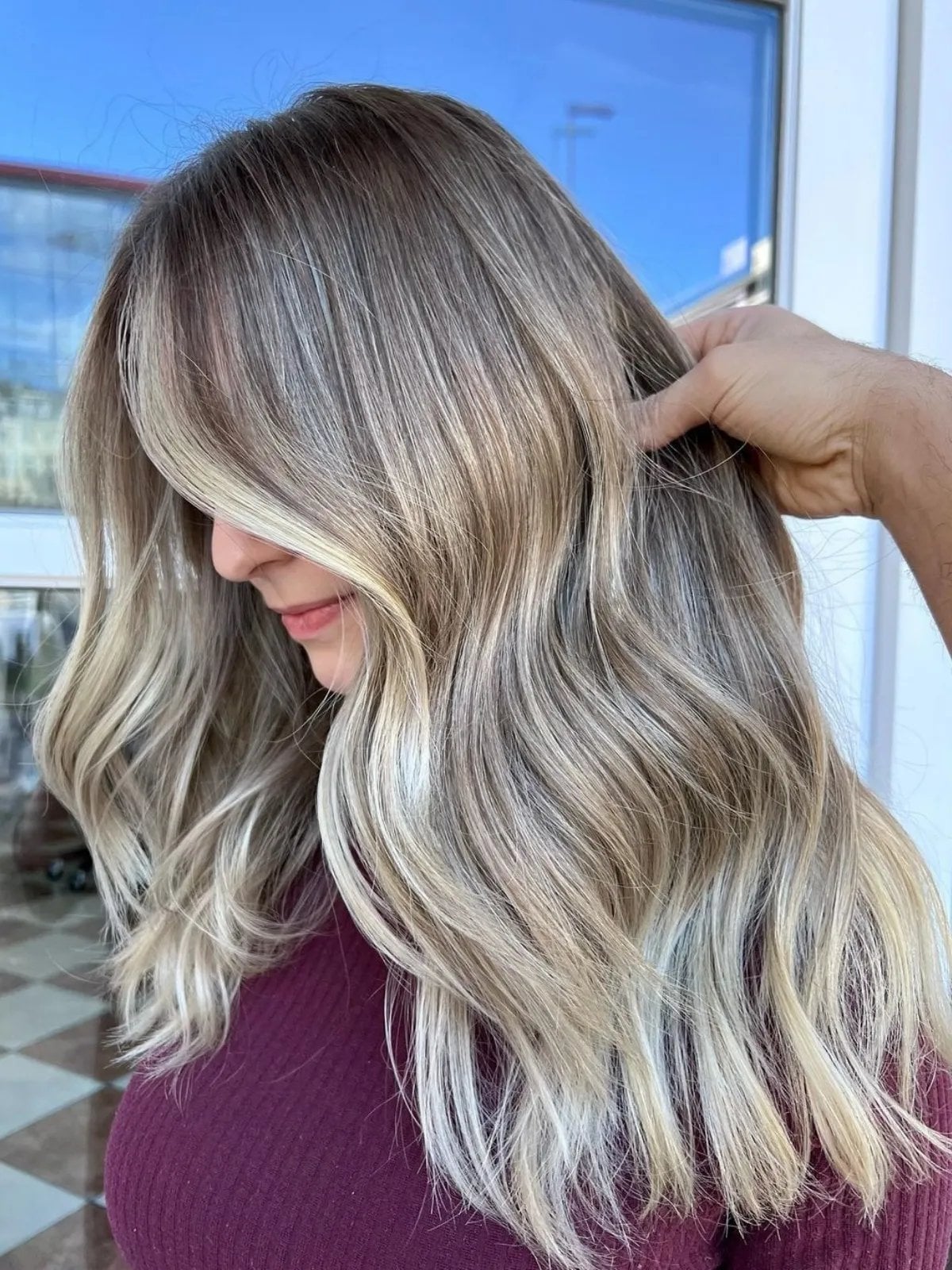
A neutral blonde with subtle balayage sits on the collarbone, styled in soft waves with a side parting. The technique here is about gradual lift, not dramatic contrast. The colorist paints thin sections from the mid-lengths to the ends, leaving the root area slightly darker for a lived-in feel. Medium-density hair holds the waves well, and the side parting adds volume at the crown. This is a salon color because achieving a neutral tone without pulling warm or ashy requires professional mixing.
A texturizing spray on the lengths defines the wave pattern and stops the hair from looking flat by the afternoon. Ask your colorist for: collarbone neutral blonde balayage with side part. The subtle transition means toning appointments can stretch to eight weeks. A trim every six to eight weeks keeps the collarbone line clean and the ends fresh.
Collarbone Blonde Balayage Bob With Root Shadow
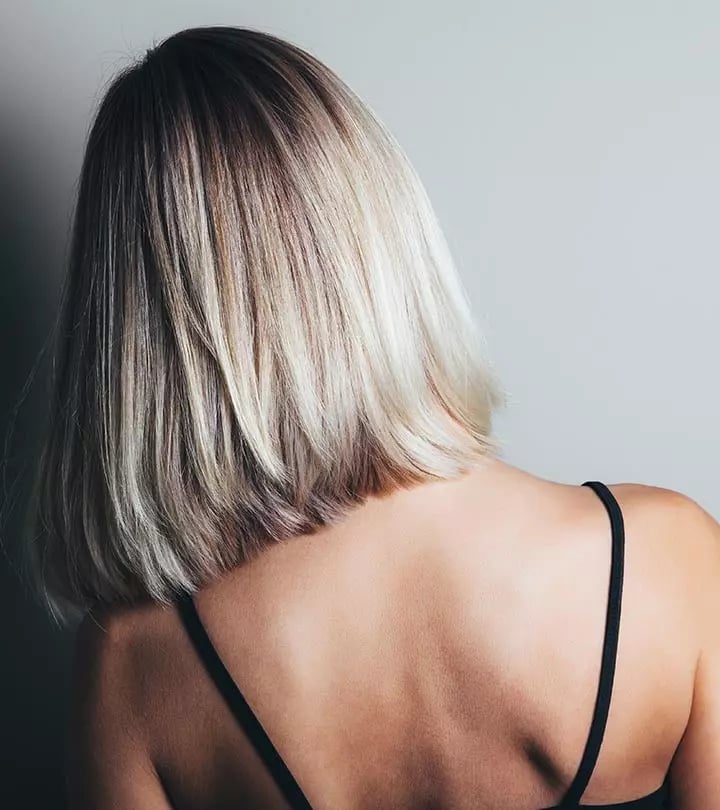
A blonde balayage on a bob usually means frequent root touch-ups, but the root shadow here changes the calculation. The darker root melts into lighter ends, so the grow-out is soft rather than stark. Thick, straight hair of collarbone length carries the shadow well, and the middle parting keeps the line symmetrical. Air-drying works for this texture, which cuts styling time to zero on most days. Ask your colorist for: collarbone blonde balayage bob, visible root shadow. The bob shape needs a trim every six to eight weeks to maintain the blunt line; the color can stretch to ten weeks before the shadow starts to feel muddy.
Long Sandy Beige Blonde Balayage
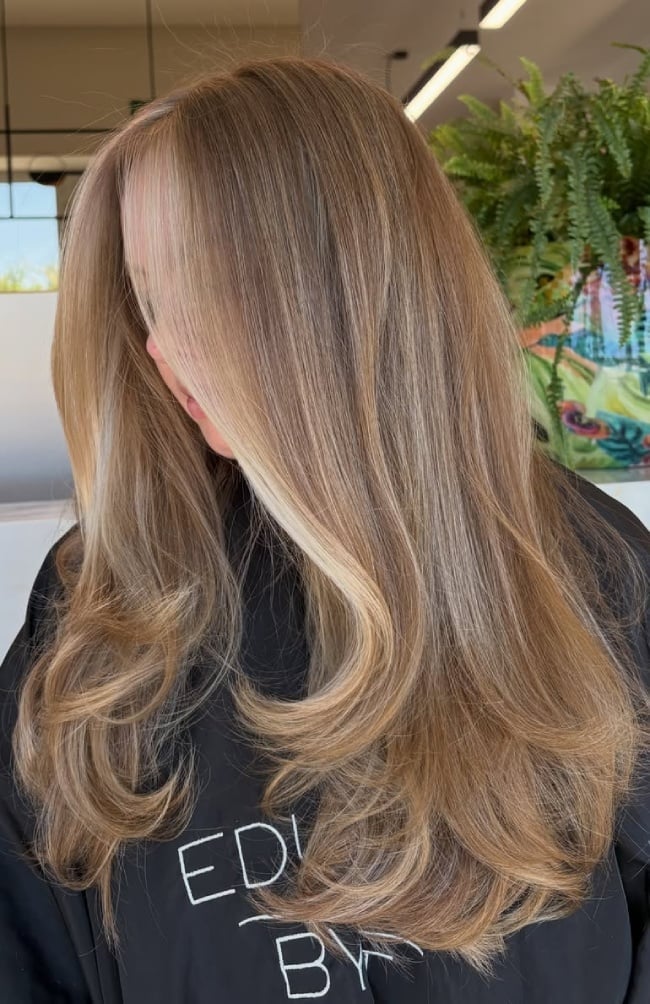
The sandy beige blonde balayage here uses face-framing pieces to draw attention to the front, while the long, layered hair falls in loose waves. The warm beige tones blend with lighter blonde pieces, creating a sun-kissed effect that suits thick hair of long length. The face-framing sections are painted slightly lighter around the jaw, which balances heart-shaped faces at the lower third. All face shapes can wear this, but the placement of the lighter pieces matters for balance.
This is a salon-only color because the beige base requires a neutralizer to keep it from turning brassy. The layers help the waves hold shape without heavy styling. Ask your colorist for: long sandy beige blonde balayage, face-framing pieces. A trim every eight to ten weeks maintains the length and keeps the ends looking smooth.
Final Thoughts
For a low-maintenance blonde balayage, warmer tones like beige or honey need fewer salon visits than cool ash or platinum. A softly blended root shadow buys you six to eight weeks before the grow-out line shows. If you prefer a cooler tone, plan for a toning appointment every four to six weeks to keep the brass out.
- Tone cool or platinum shades every 4-6 weeks.
- Use a color-safe shampoo and conditioner at home.
- Deep condition weekly to offset lightening dryness.
- Trim ends every 8-10 weeks to prevent split ends.
Choose the blonde balayage that best suits your lifestyle and desired maintenance.