
Chestnut brown hair is having a moment, but not the kind that demands a weekly toner appointment. The shift is toward cuts that let the natural richness of the shade do the work, with soft face-framing layers and curtain bangs leading the way.
This collection of 34 ideas for Simple Chestnut Hair spans from a sharp French bob to mid-back waves, covering low-upkeep trims and salon-worthy blowouts alike. Whether your hair is fine and falls flat or thick and resistant to shape, there is a cut here that solves the problem without a second appointment. The range suits round, square, oval and long face shapes, and every texture from straight to coily gets a look.
Chic French Bob With Curtain Bangs
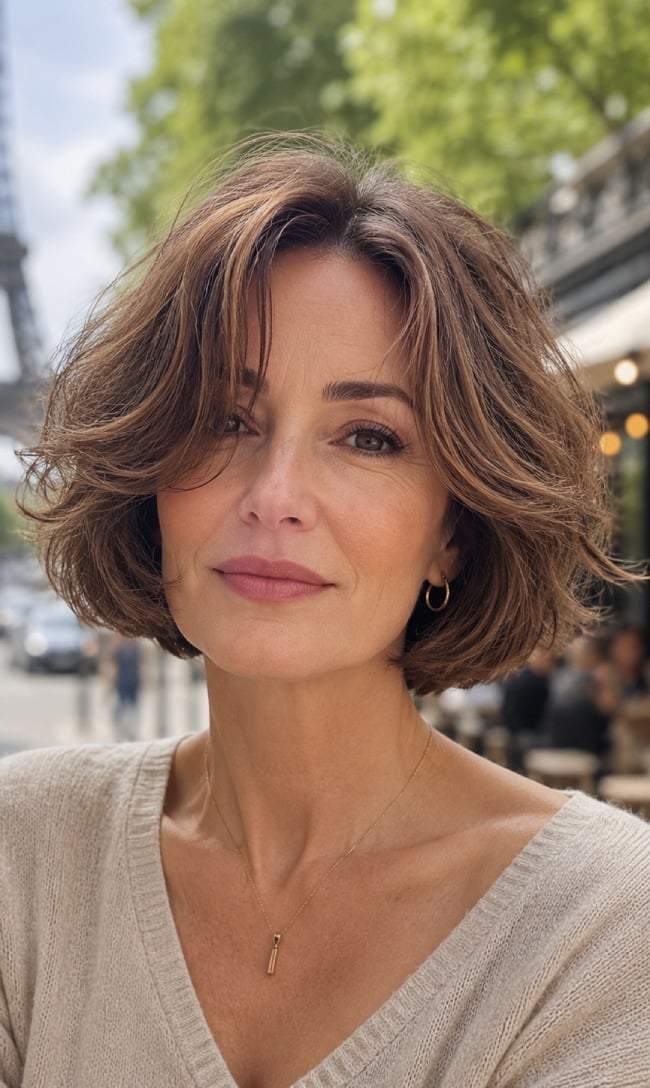
Need a cut that looks like you barely tried but definitely didn’t? A French bob with curtain bangs lands that note precisely, with soft side-swept layers and gentle waves hitting just at the chin. Medium to thick hair that can hold a wave and starts at collarbone length is the ideal starting point; the curtain bangs soften round and square faces without requiring daily fuss. Ask your stylist for: French bob, chin length, soft curtain bangs, gentle waves. Use a round brush to blow-dry the fringe away from your face, and plan a baseline trim every six weeks.
Layered Bob With Smooth Blowout
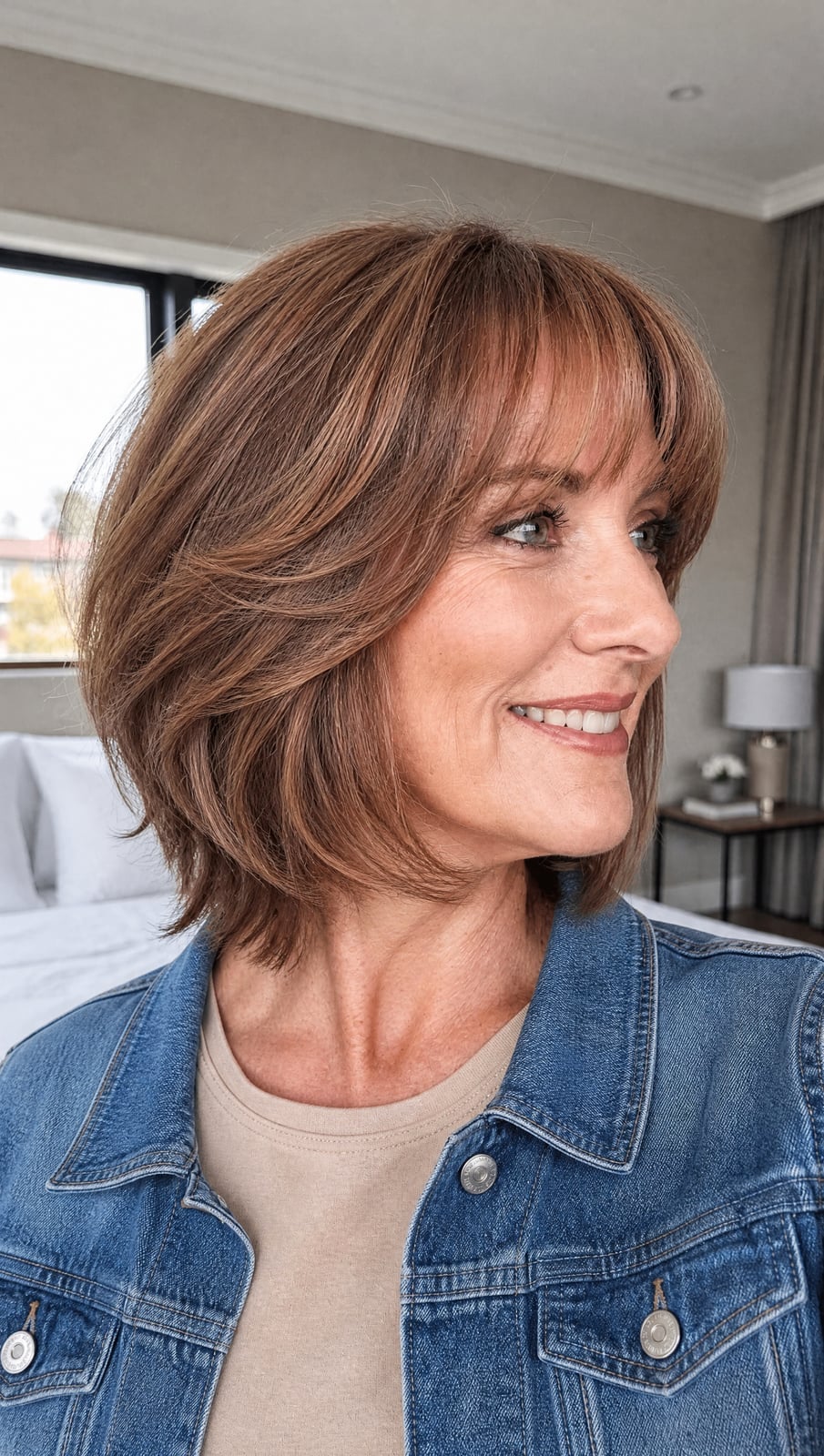
The layered bob here does something clever with fine, straight hair: the subtle layers create movement without sacrificing the clean collarbone line. A side parting adds visual lift at the root, while soft curtain bangs keep the front from falling flat. Ask your stylist for: Layered bob, collarbone length, smooth blowout, side parting. A large round brush and a heat protectant are all you need for the blowout; the baseline needs a trim every six to eight weeks to keep the shape precise.
Textured Wavy Bob With Side Bangs
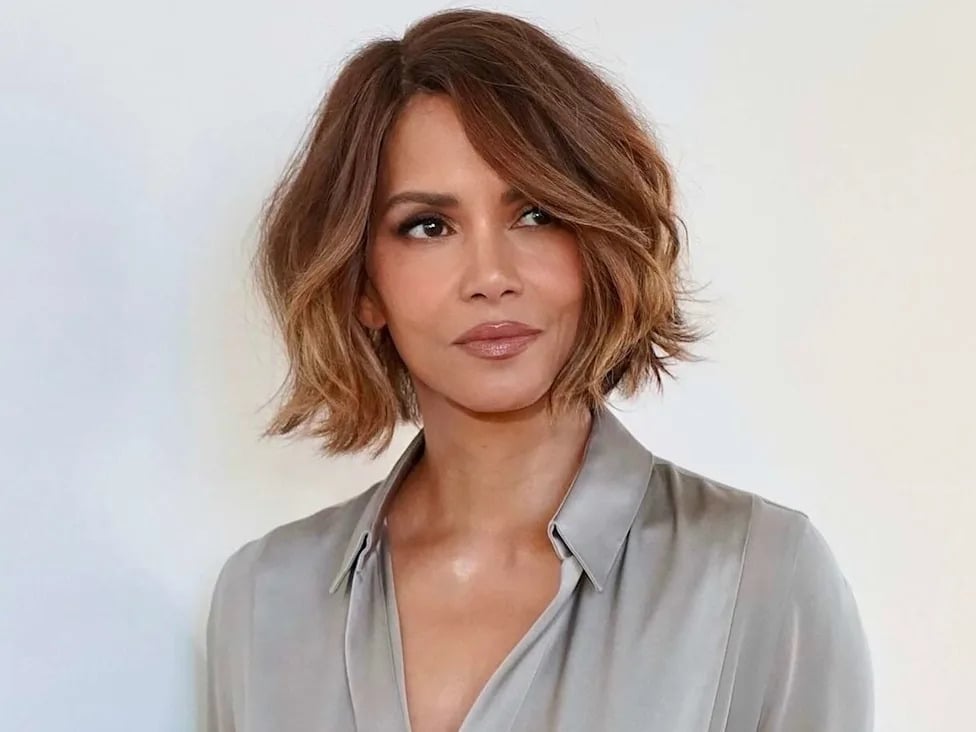
A chin-length bob with short side bangs and an intentionally tousled finish suits fine, wavy textures that want to look fuller than they are. The chestnut brown base is lifted by subtle blonde highlights, and the side parting keeps the volume centered. Ask your stylist for: Textured wavy bob, chin length, short side-swept bangs, tousled finish. Oval and long face shapes benefit most from the width this cut creates at the jaw. Apply sea salt spray to damp hair and scrunch. That is the whole styling routine.
Angled Bob With Caramel Highlights
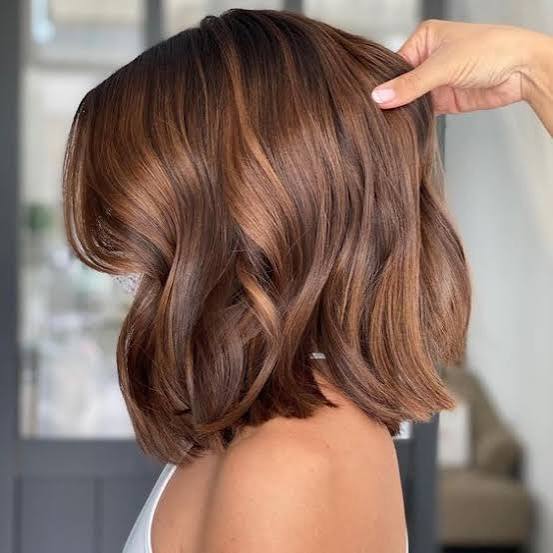
Compare this angled bob with subtle layers to a blunt bob of the same length, and the difference is all in the movement. The angle drops shorter at the nape and graduates toward the chin, which elongates rounder face shapes. Caramel highlights warm the chestnut base without the commitment of a full color change. Ask your colorist for: Angled bob, chin length, subtle layers, caramel highlights. This is one for the salon: the angle and layered color both need a professional hand to avoid a choppy line.
Blunt Collarbone Bob With Air-Dried Texture

A blunt bob at collarbone length shows exactly why fine, straight hair benefits from a clean edge. There are no layers to hide behind, so the cut relies on a precise line that needs a trim every six weeks to stay sharp. Ask your stylist for: Blunt bob, collarbone length, air-dried finish. Let it air dry with minimal product. A lightweight leave-in conditioner is enough. Split ends become immediately visible, making regular trims essential.
Collarbone Lob With Side-Swept Bangs
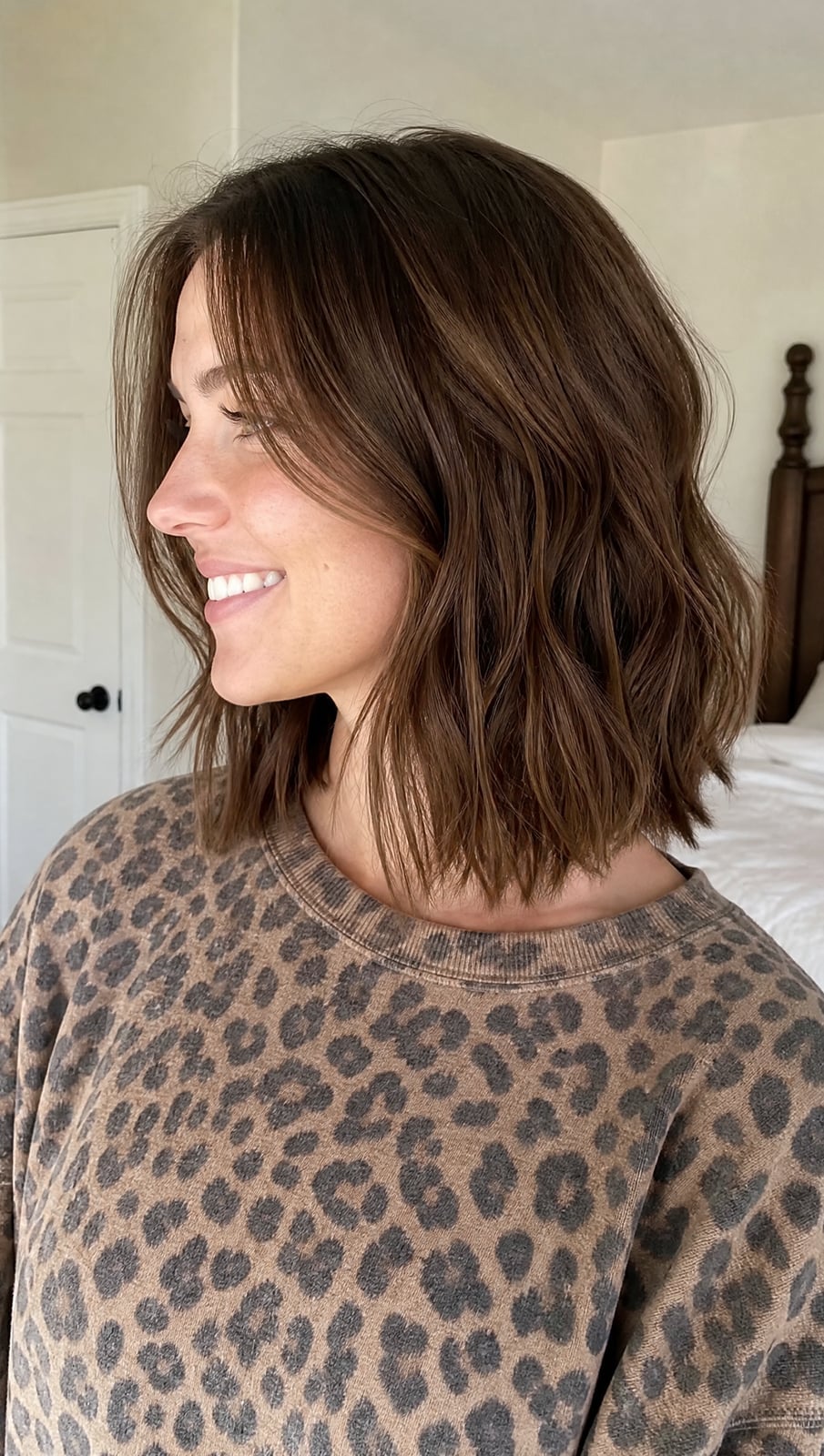
Wondering what to do with hair that wants to wave and not be fussed with? This collarbone lob keeps the length low-maintenance while the side-swept bangs add movement without demanding a round brush every morning. The air-dried wavy texture and side parting make it read as deliberate rather than lazy. Ask your stylist for: collarbone lob, side-swept bangs, air-dried wavy texture. Thick, wavy hair that reaches the collarbone is the ideal starting point, and the side-swept bangs soften angular faces. Apply a wave-enhancing spray and scrunch; trim the baseline every six to eight weeks.
Lob With Caramel Highlights and Curtain Bangs
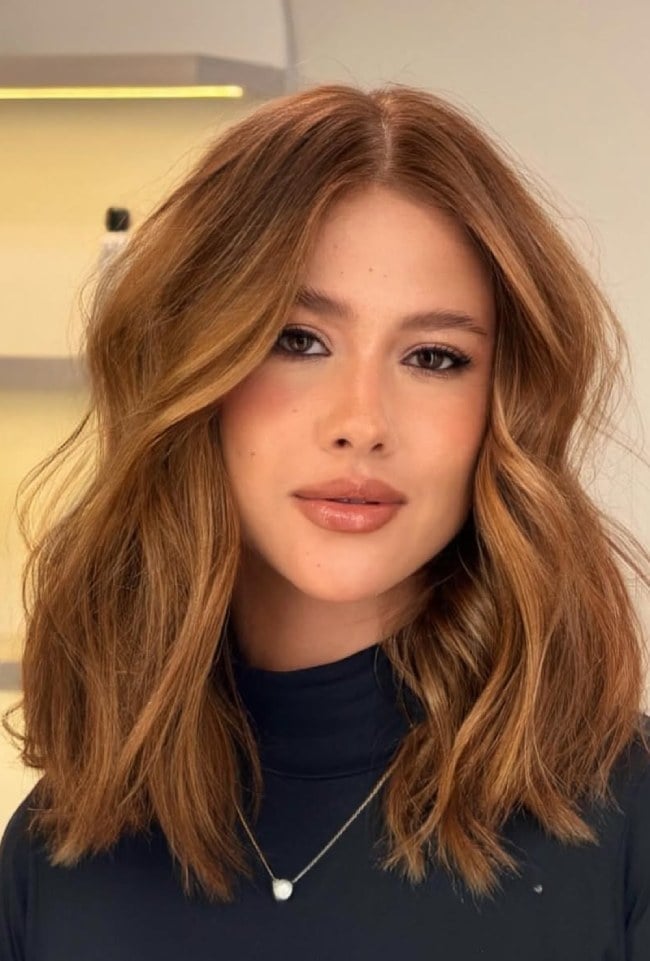
This lob combines soft layers and curtain bangs with lighter caramel highlights that frame the face. The chestnut brown base keeps the look grounded while the warm highlights add brightness.
To style, spray damp hair and blow-dry the curtain bangs outward with a round brush for a soft swoop. Ask your colorist for: collarbone lob, soft layers, curtain bangs, caramel highlights. Medium density wavy hair at collarbone length suits this best; the curtain bangs frame most face shapes. Trim the baseline every six to eight weeks.
Collarbone Layers With Curtain Bangs
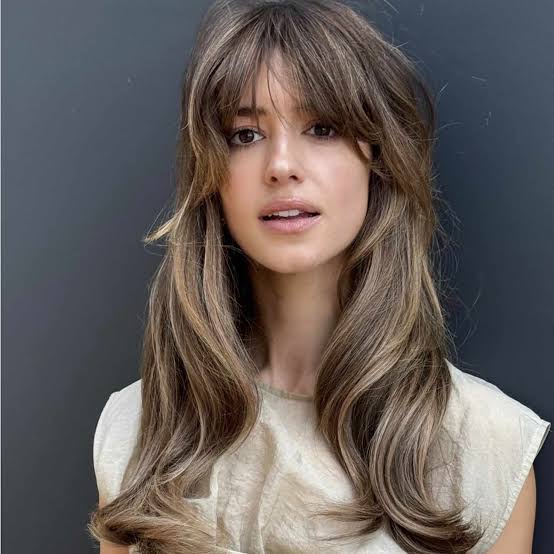
The long face-framing layers and soft curtain bangs on this collarbone cut do the heavy lifting for anyone with fine to medium wavy hair. The subtle blonde highlights add a little dimension without overwhelming the chestnut base. Ask your stylist for: collarbone length, long face-framing layers, soft curtain bangs. Curtain bangs soften round faces particularly well, and the air-dried texture keeps the look from feeling overworked. Air dry with a texturizing product and trim the baseline every six to eight weeks.
Shoulder Length Waves With Curtain Bangs
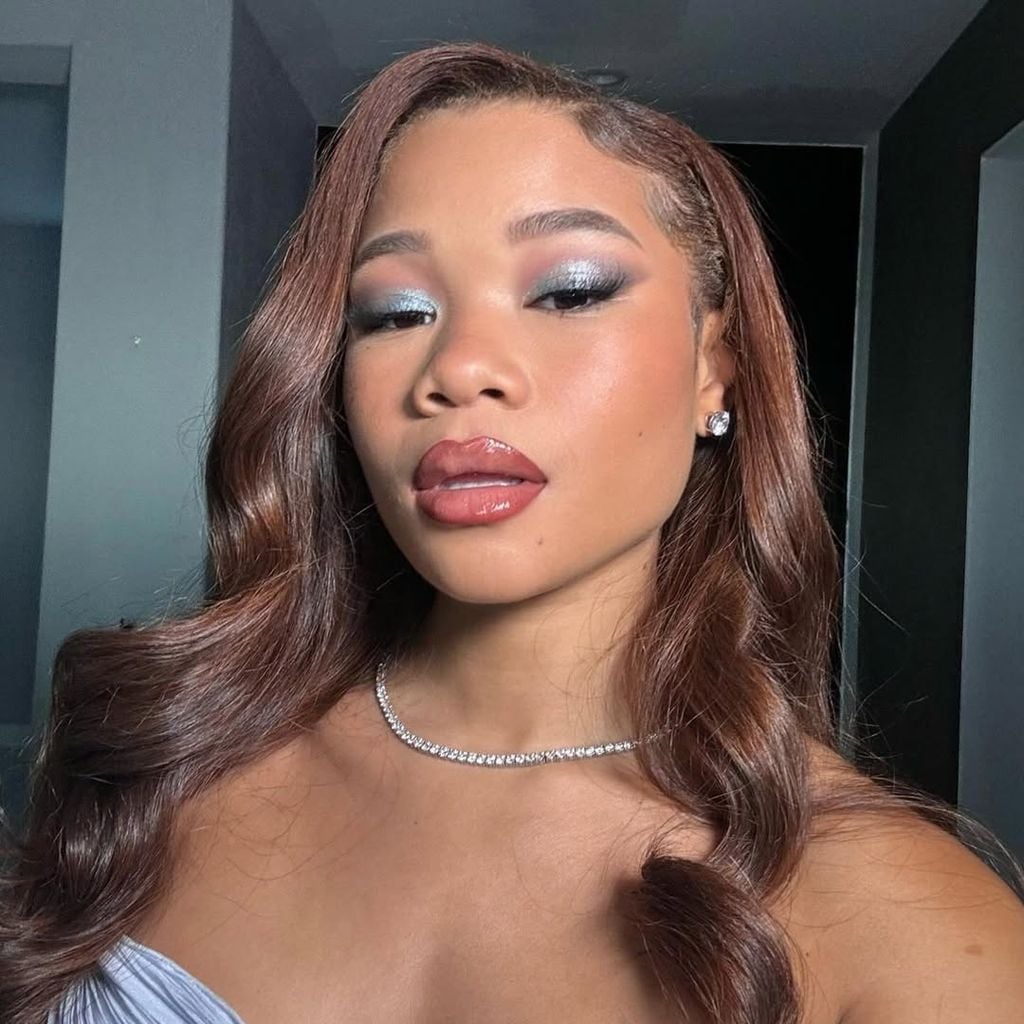
How do you describe loose waves with styled edges to your stylist without sounding like you want a prom updo? Say shoulder length waves with soft curtain bangs and a side parting. The medium chestnut base with subtle lighter pieces adds depth without a full highlight appointment. Ask your stylist for: shoulder length waves, soft curtain bangs, side parting. Medium density wavy hair at shoulder length takes the curl best; the curtain bangs frame most face shapes. Use a curling wand for the styled edges. This is a salon cut best maintained with a trim every six to eight weeks.
Shoulder Length With Blunt Bangs
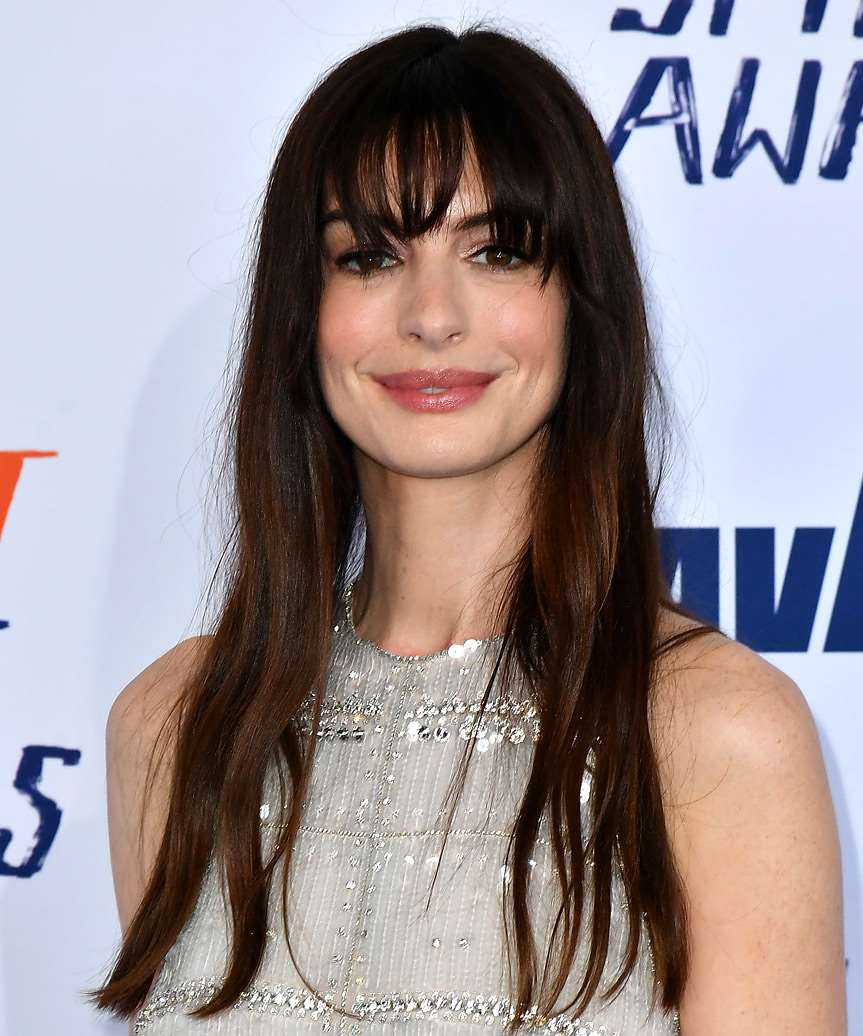
The straight blowout and blunt bangs on this shoulder-length cut deliver a polished look that reads as intentional. The mistake people make is underestimating how fast blunt bangs grow. On thick, straight hair, they need a trim every four to six weeks or they start grazing your eyelashes. Ask your stylist for: shoulder length, subtle long layers, blunt bangs, straight blowout. Oval and long faces suit blunt bangs best. Use a flat iron for the smooth finish and accept that you will be in the chair more often than you planned.
Medium Chestnut Blowout With Waves
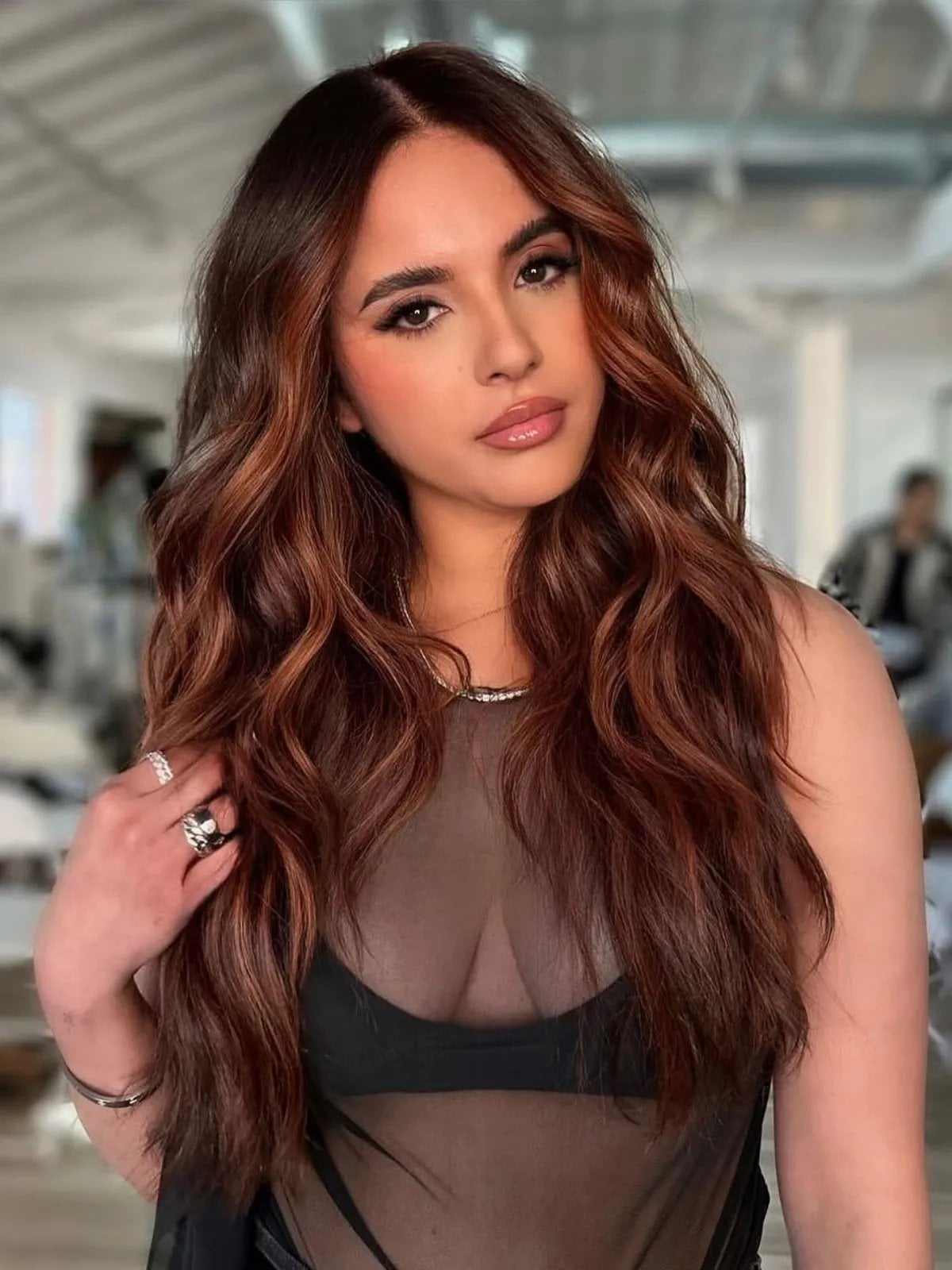
A shoulder-length cut with soft layers and curtain bangs, styled into a smooth blowout with gentle waves, makes the medium chestnut brown shade look almost liquid. This suits medium-density wavy hair that already reaches the shoulder; the curtain bangs frame most face shapes without requiring constant adjustment. Ask your stylist for: shoulder length, soft layers, curtain bangs, blowout with waves. The blowout holds best when you use a round brush during drying, and the baseline needs a trim every six to eight weeks to keep the shape crisp, though the waves forgive a week of grow-out.
Thick Straight Shoulder With Curtain Bangs
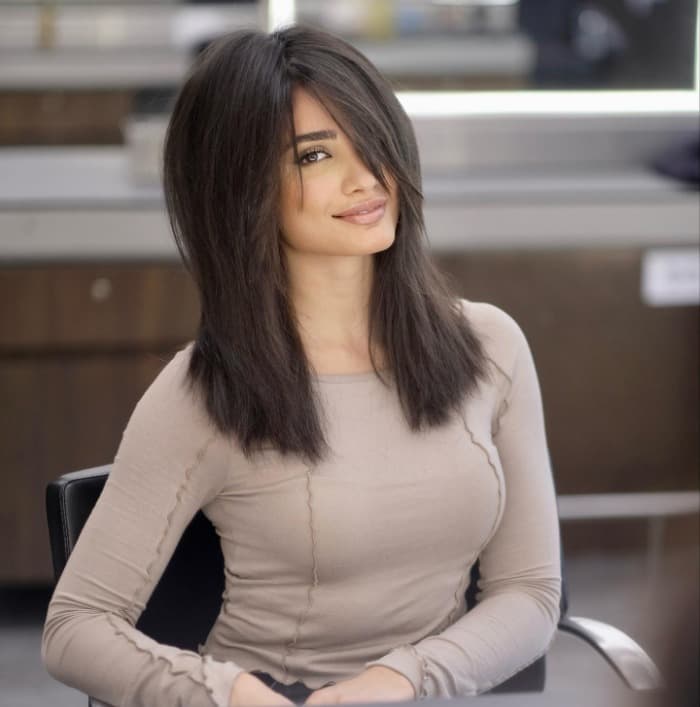
Can thick, straight hair actually wear curtain bangs without them turning into a solid wedge? Yes, when the cut uses long layers through the shoulder-length body and a middle parting to let the dark chestnut curtain bangs fall softly. Thick, straight hair that naturally holds a blowout is ideal; the bangs soften round and oval faces. Ask your stylist for: shoulder length, thick straight hair, curtain bangs, blowout. The sleek finish is appropriate for work through fall and winter, and the middle parting helps the bangs blend when you push them aside on warmer days.
Shaggy Collarbone Cut With Full Fringe
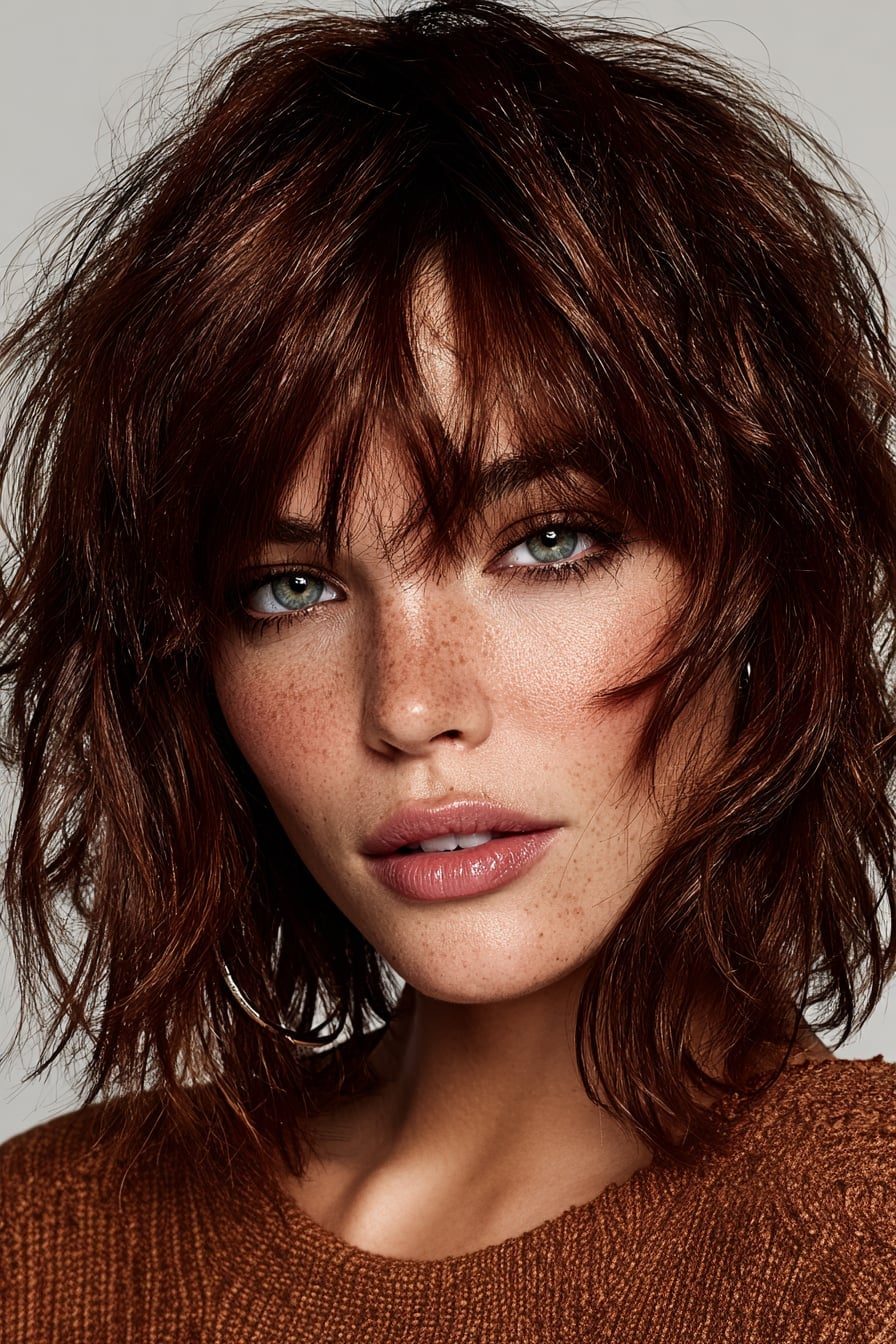
A shaggy cut relies on choppy layers cut into the collarbone length, with a full fringe that lands just above the brows. The deep chestnut shade and fine, wavy texture let the layering show rather than hide under density. This cut is strictly a salon job, because the stylist point-cuts each section to create that lived-in texture without losing the shape. Ask your stylist for: shaggy cut, collarbone length, full fringe, tousled finish. The full fringe works well on longer face shapes, balancing the vertical line, and the layers add movement to fine hair that can look flat in a one-length cut.
While the photo shows a front view with a middle parting, the shag works with a slight side part too. A texturizing paste on the ends reinforces the choppy effect between salon visits.
Light Chestnut Long Bob Blowout
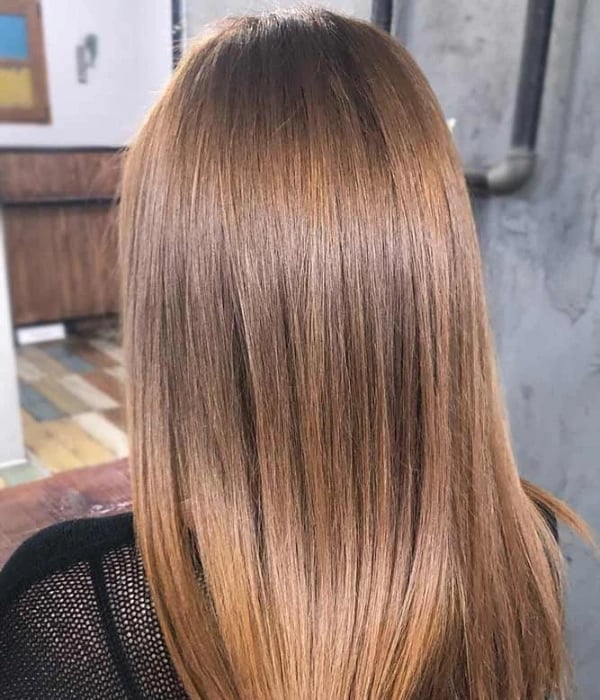
This shape suits fine, straight hair because the blunt perimeter creates the illusion of density, and the middle parting elongates round or oval faces. Ask your stylist for: long bob, collarbone length, straight glossy blowout, light chestnut. The upkeep is straightforward: a shine serum keeps the gloss between washes, and the baseline needs a trim every six to eight weeks. Without layers, the grow-out stays neat, so this is a good low-commitment cut for anyone who wants a polished work look without salon visits every month.
Shoulder Length With Loose Waves
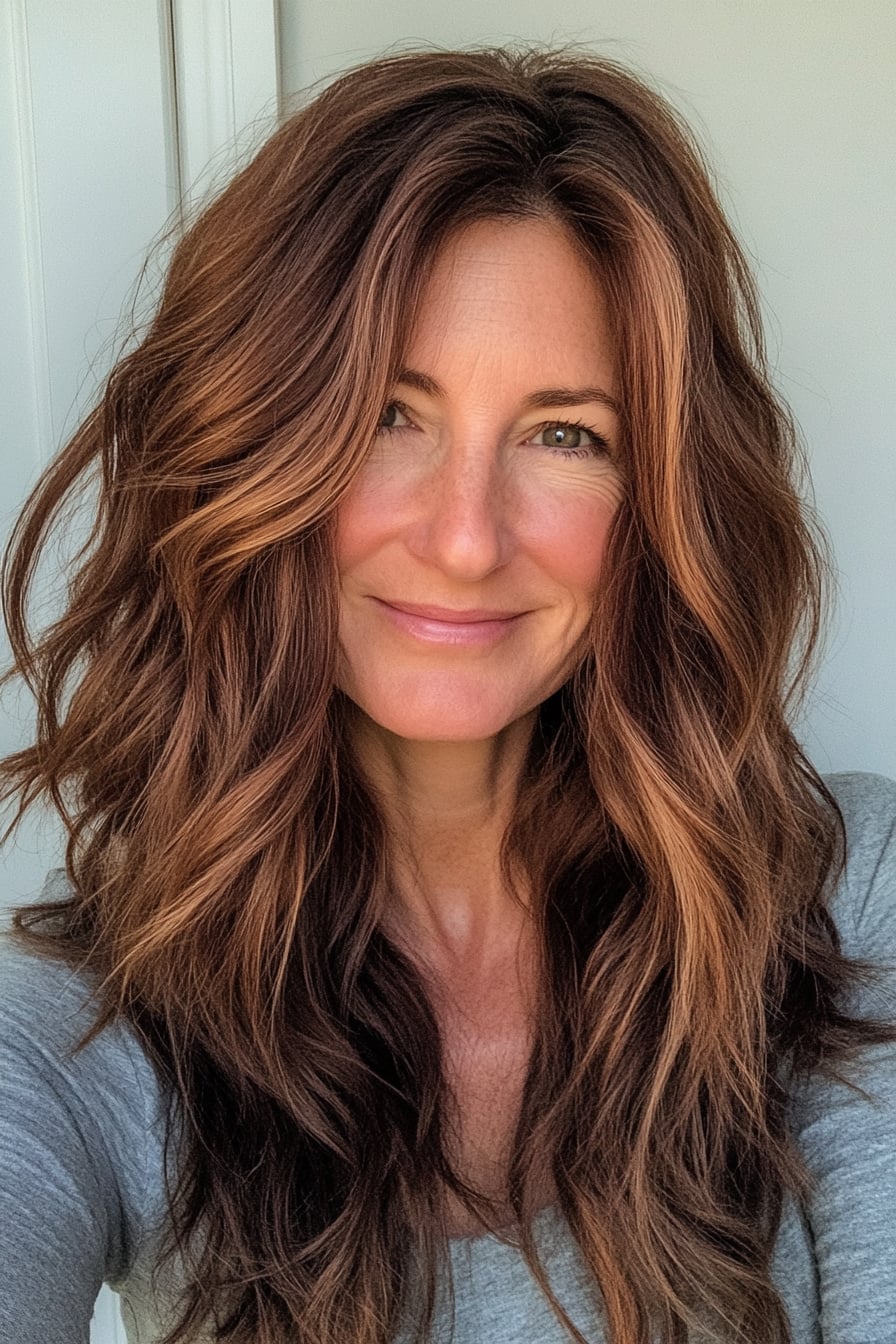
How do you ask for waves that look like a salon finish? Start with shoulder-length hair cut with long layers and face-framing pieces, then request chestnut with warm highlights to give the loose waves contrast. A texture spray applied to damp hair, then left to dry without touching, produces the lived-in wave pattern shown here. Ask your stylist for: shoulder length, long layers, face-framing pieces, loose waves. The face-framing pieces soften angular jawlines, and the warm highlights prevent the chestnut base from reading flat when the waves fall.
Shoulder Layers With Honey Highlights
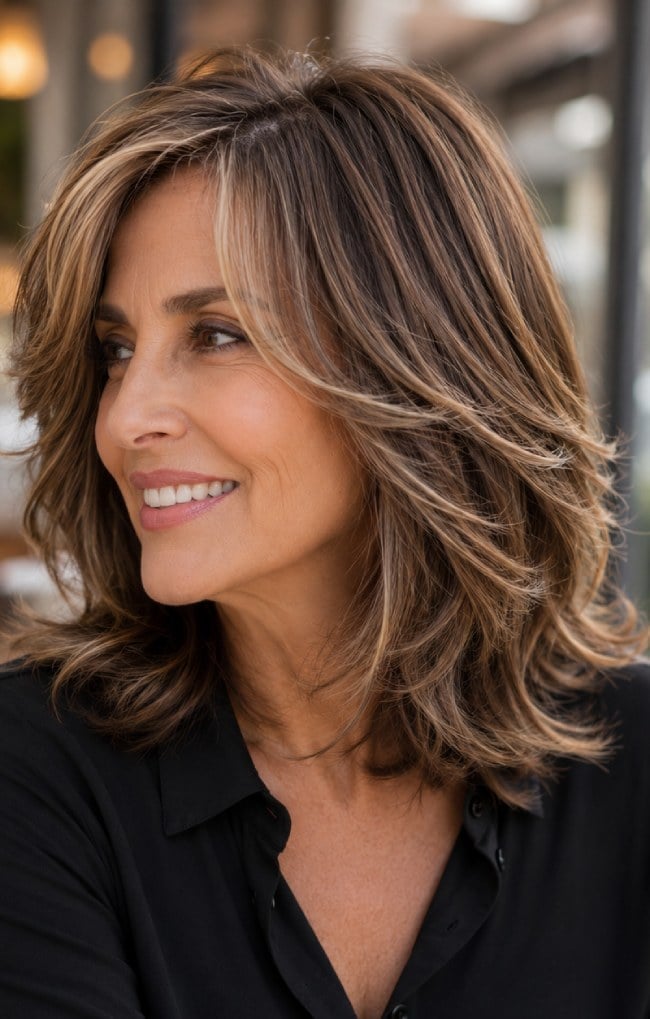
The common mistake here is assuming any honey highlight will do. A shoulder-length cut with prominent layers and soft waves needs a warm chestnut base with lighter honey highlights placed through the ends, not the roots. The slightly tousled finish is the point, but without the right tonal contrast, the color can appear flat. Medium density wavy hair at this length gets the most out of the layers, adding movement where thicker hair might otherwise sit heavy. Ask your stylist for: shoulder length, prominent layers, honey highlights. Use a texturizing spray to maintain that lived-in feel, and budget for a trim every six to eight weeks, because the real drawback is that faded highlights make the whole look feel older than it is.
Shoulder Layers With Honey Tones and середина спины
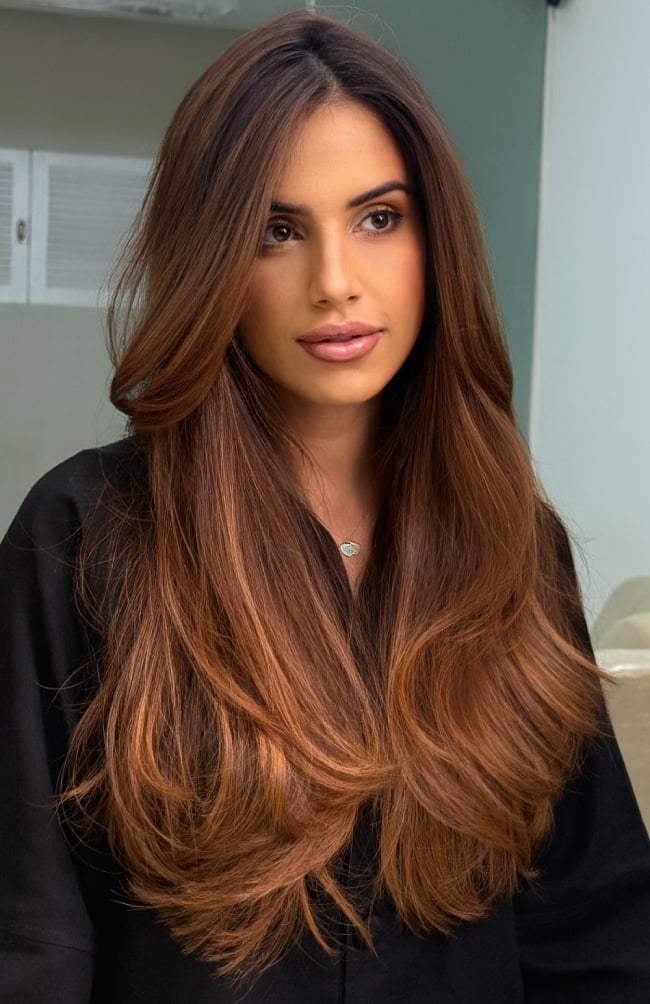
A shoulder-length cut with soft, face-framing layers and subtle waves works well because the rich chestnut base with honey-toned highlights provides contrast without fading quickly. Thick, glossy texture gives it a polished finish that suits both day and evening wear.
Thick, wavy hair at this length holds the shape of the layers better than fine hair. Face-framing pieces soften angular faces without requiring constant adjustment. Ask your stylist for: shoulder length, soft face-framing layers, honey-toned highlights. The layers behave well as the hair grows out, maintaining the silhouette for about four weeks past the ideal trim point. A liquid volumizer at the roots keeps the lift from collapsing, and a baseline trim every six to eight weeks prevents the ends from looking ragged.
Shoulder Straight With Lighter Strands
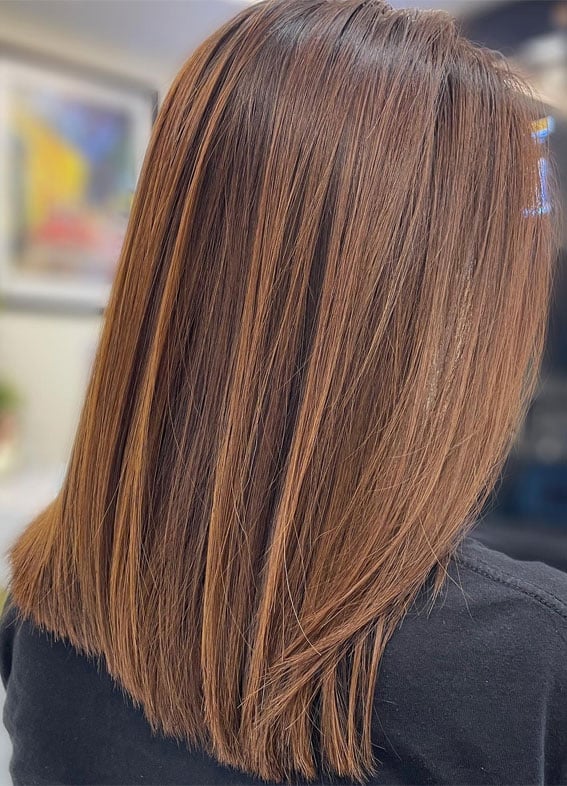
What makes this cut work when the temperature drops? A shoulder-length cut with layers styled straight, featuring a rich chestnut colour with subtle lighter strands throughout, hits the sweet spot between polished and low-maintenance. A middle parting and thick, straight texture keep the silhouette clean, while the lighter strands add dimension without overwhelming the look. Thick, straight hair at this length benefits from the layers, which prevent it from looking like a solid block of colour. Ask your stylist for: shoulder length, layers, subtle lighter strands. A heat protectant is essential before straightening, and the style transitions into warmer months by swapping the flat iron for a round brush and cool shot.
Collarbone Waves With Subtle Highlights
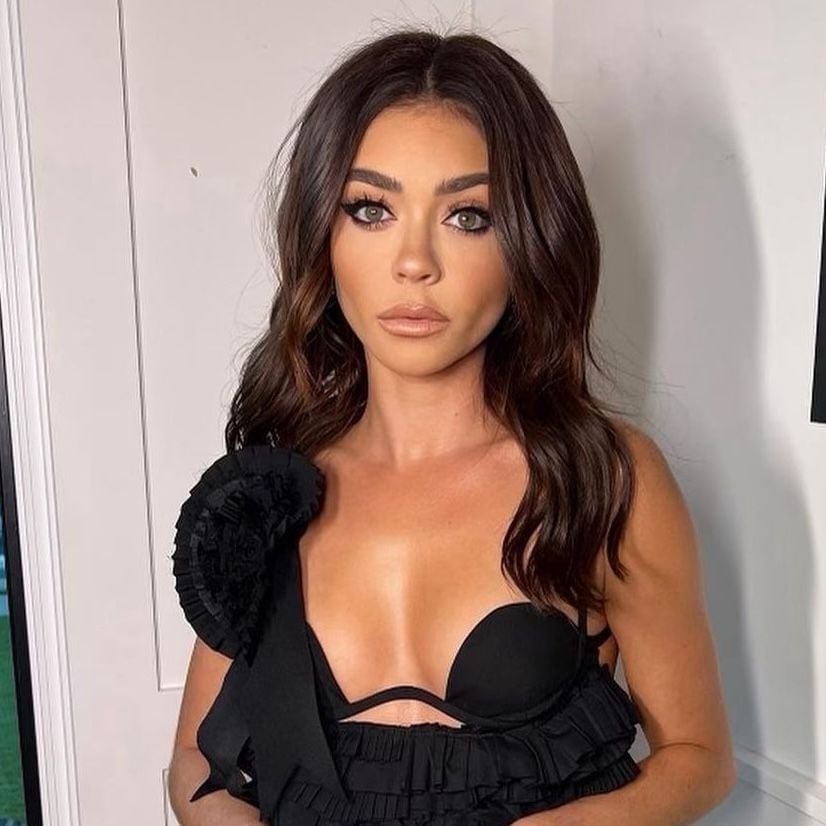
The technique behind collarbone-length hair with loose waves relies on long layers cut into the mid-lengths, not the ends. A middle parting and a dark chestnut base with subtle lighter highlights create the dimension that keeps the waves from looking like a single texture. Medium density wavy hair at this length gets the lift it needs from the layering, rather than from product.
Ask your stylist for: collarbone length, long layers, dark chestnut with subtle highlights. This is a DIY-friendly style if you already own a curling wand and a texturizing spray, but the initial cut requires a salon visit to get the layer placement right. The loose waves hold their shape for a day, and the subtle highlights grow out softly, so you can stretch the time between toning appointments to about ten weeks.
Collarbone Layers With Side-Swept Bangs, Wavy
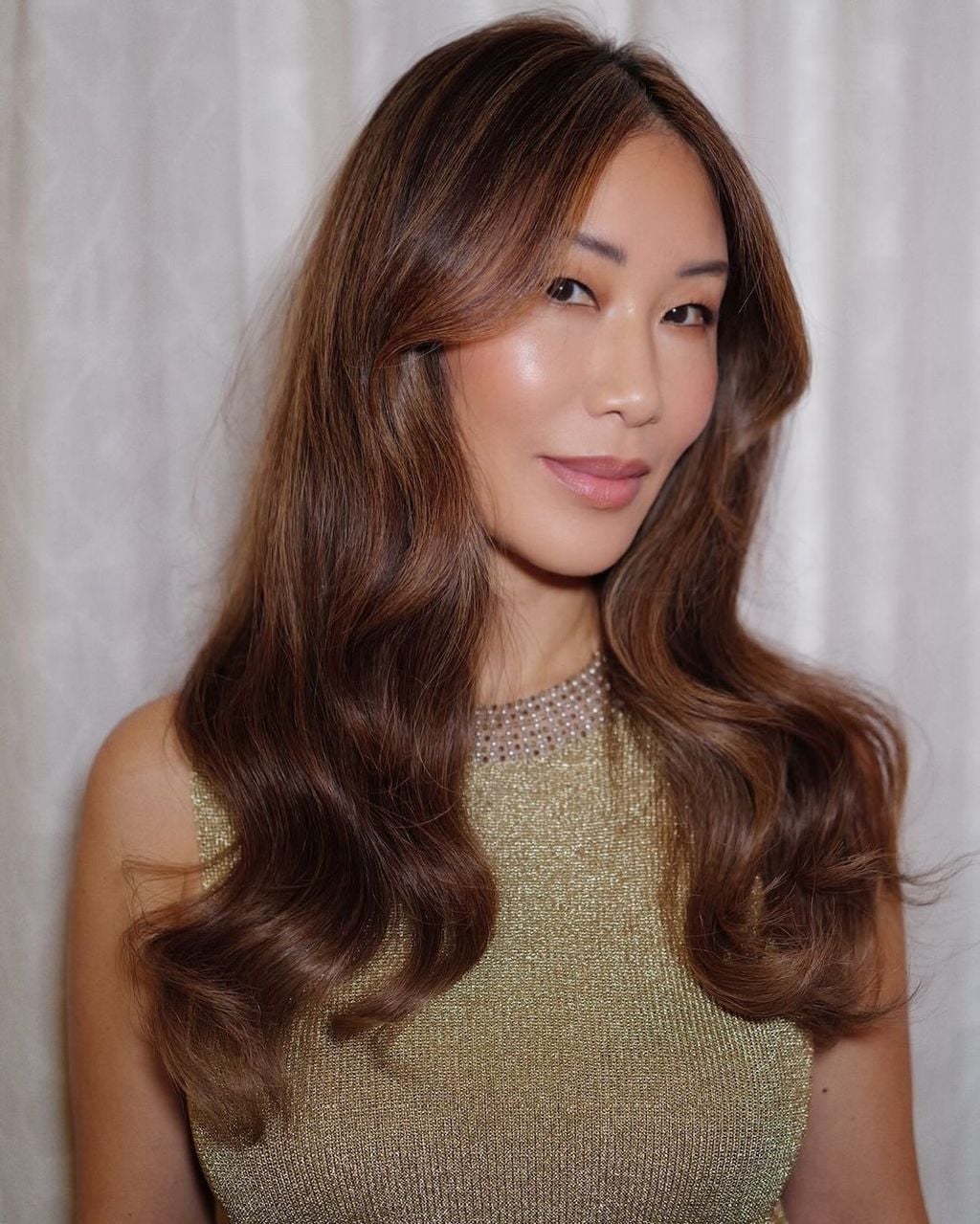
Collarbone-length hair with long layers and side-swept bangs works best for those who want movement without losing length. The chestnut base with subtle highlights and a blowout with soft waves add polish, but the real question is who it flatters. Side-swept bangs soften angular faces and balance a longer forehead, but if your hair is fine, the bangs can separate and look stringy by midday. Medium wavy hair at collarbone length has enough weight to hold the layers in place.
Ask your stylist for: collarbone length, long layers, side-swept bangs. A round brush and a blow-dryer with a concentrator nozzle are the tools you need to keep the bangs sweeping in the right direction. Trim the baseline every six to eight weeks, and the bangs need a touch-up every four weeks to stay off the lashes.
Mid-Back Layers With Soft Curls
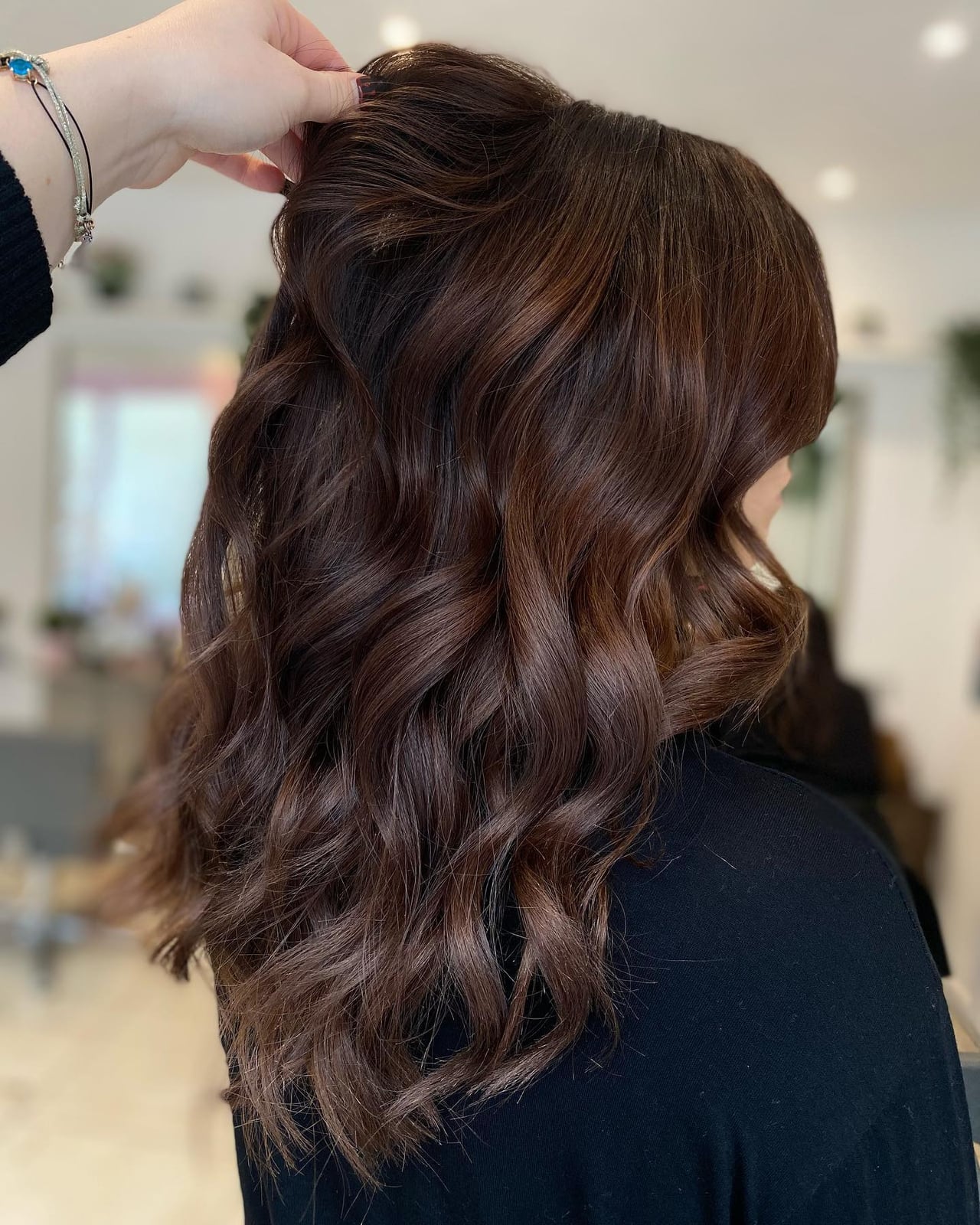
Soft curls that hold their shape start with the layers. This mid-back cut uses long layers throughout thick, wavy hair, which gives each curl room to form its own shape instead of collapsing into one heavy wave. The chestnut base with its subtle lighter tones adds depth that looks natural, not painted on. A blowout with soft curls completes the effect.
Ask your stylist for: mid-back length, long layers, chestnut with subtle tones, soft curls. This is a salon look: the layers need a trained eye to keep the weight balanced so the curls hold without going frizzy. At home, a diffuser on low heat will do the job, but the initial cut is what makes it work. Plan a trim every eight to ten weeks to keep the shape from turning into a triangle.
Mid-Back Layers With Face-Framing Pieces
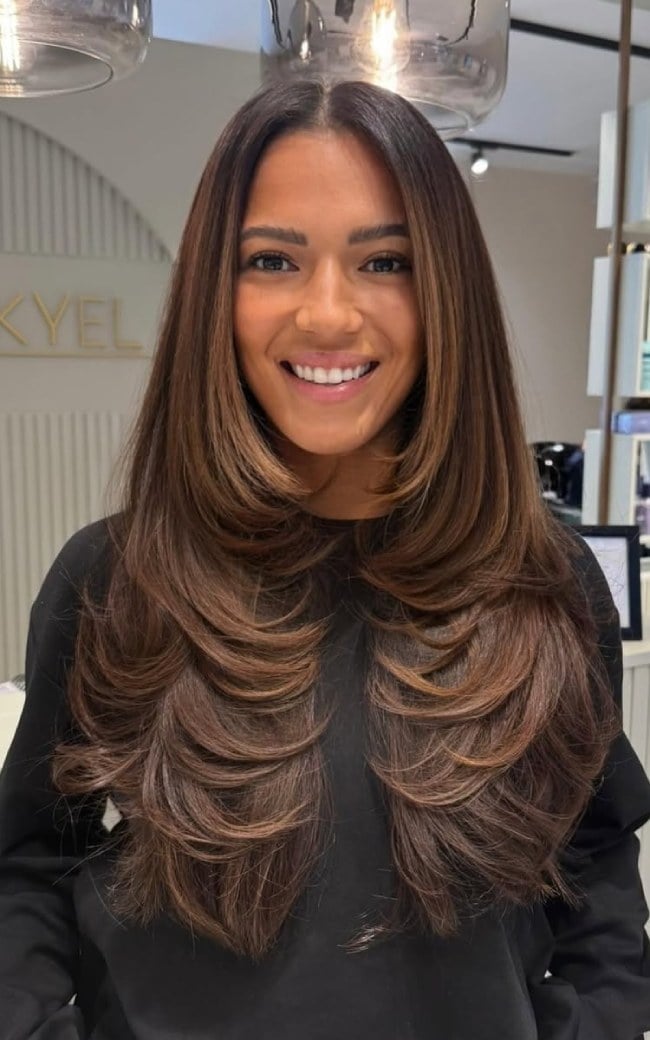
The mistake with face-framing layers is asking for them and then pretending they don’t need maintenance. These pieces start at the cheekbone and soften angular faces, sure, but they also grow out faster than the length. This warm chestnut brown cut uses long layers throughout thick, wavy hair with a voluminous blowout that keeps the framing visible without looking sparse. The subtle lighter tones add dimension to the layers.
The one real drawback: those face-framing pieces will hit your collarbone in about six weeks, and the whole point is lost. Book a trim every eight weeks at most, or the framing becomes just another layer.
Mid-Back Air-Dried Texture
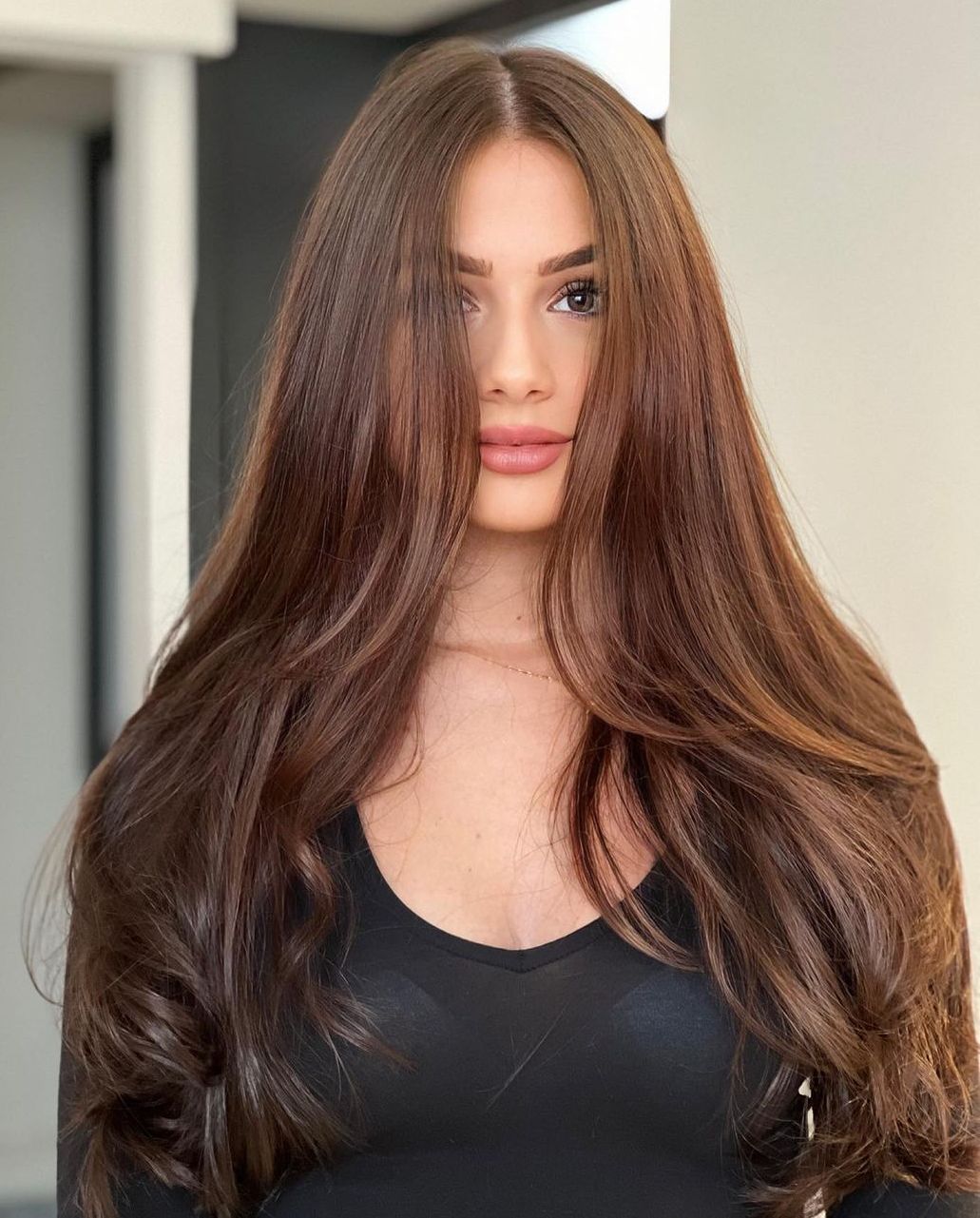
Air-dried texture on thick, wavy hair either looks like a magazine spread or like you forgot to brush it. The difference is the cut. This mid-back length relies on long layers that prevent the weight from pulling the waves straight, so the natural S-shape holds without product gymnastics. The rich chestnut brown color is uniform, which means no patchy drying: one shade, one texture, one predictable result. A middle parting keeps it simple.
For upkeep, apply a leave-in conditioner to damp hair and walk away. That is the entire routine. No diffuser, no round brush, no heat. The trim rhythm is every eight to ten weeks, and you can do this at home between salon visits because the cut is forgiving. The air-dried finish typically holds its shape all day, though thick hair may need a mid-day finger comb if you sleep on it wet.
Mid-Back Layers With Soft Waves and Rich Chestnut
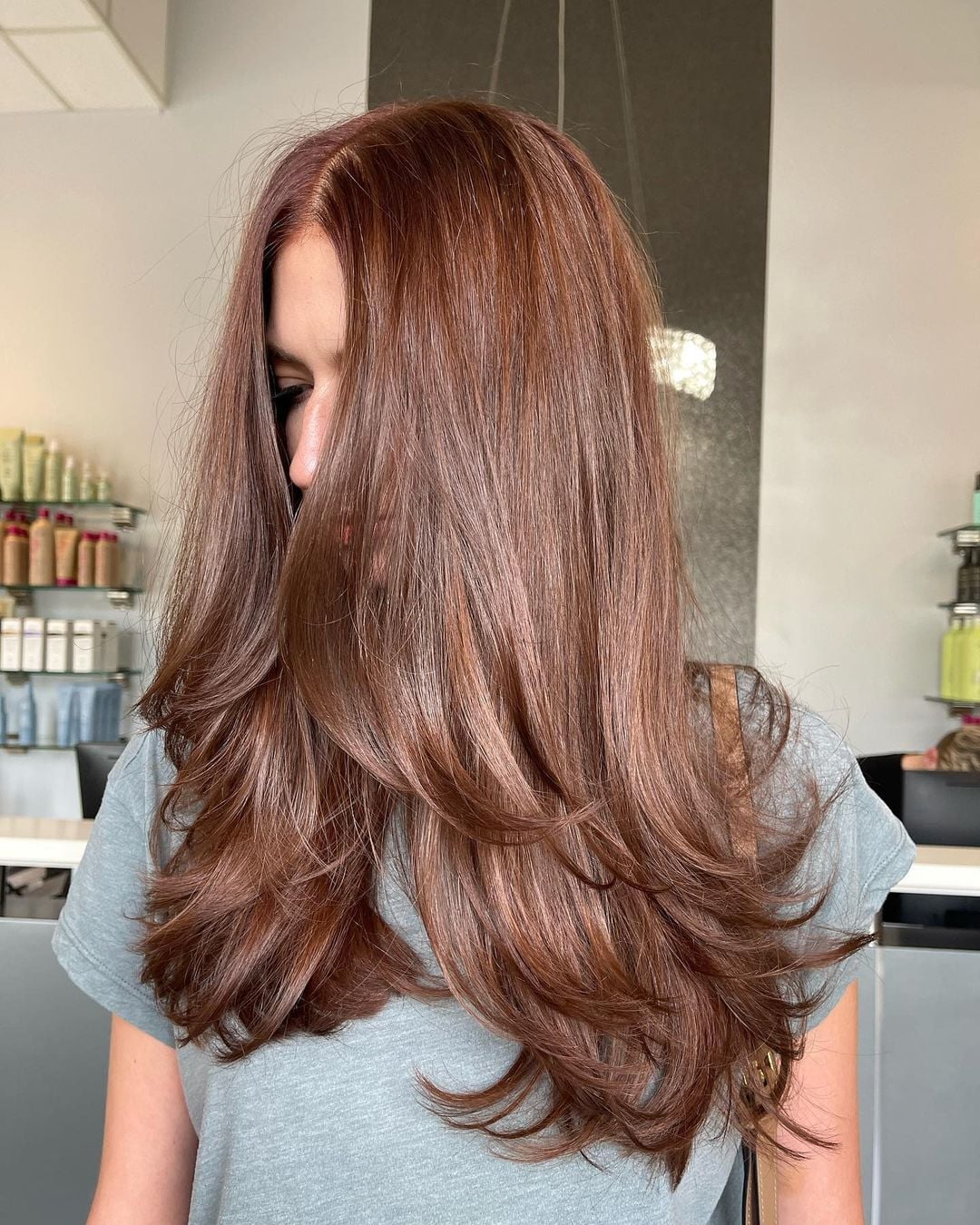
Can you wear a rich chestnut shade year-round without it feeling like you’re stuck in October? Yes, if the cut is layered well. This mid-back style uses long layers on thick, wavy hair, styled with a blowout and soft waves that keep the color from looking heavy. The middle parting and front view show off the uniform depth of the shade, which works for autumn and also suits spring when paired with a lighter texture. Soft waves are the bridge: they add movement so the color breathes.
For a seasonal occasion, think holiday dinners or winter weddings where the warmth of the chestnut stands out against darker coats. In summer, the same cut works with a looser wave and a bit less styling time. Ask your stylist for: mid-back length, long layers, rich chestnut, soft waves.
Mid-Back Glossy Waves With Balayage
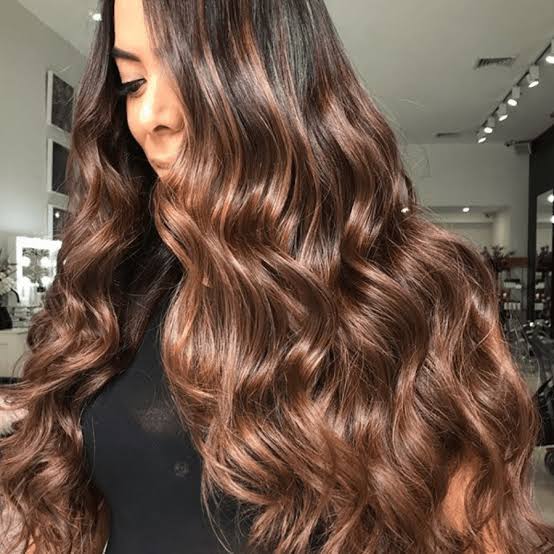
Balayage on a chestnut base is a technique that adds dimension without a harsh grow-out line. Here, subtle lighter brown highlights are painted through the mid-lengths and ends of thick, wavy hair, creating depth that catches light without screaming for attention. The mid-back length and long layers keep the waves from tangling, and the glossy finish is the result of a shine serum, not a filter. A middle parting balances the color distribution.
This is a salon technique: hand-painted highlights require a colorist who understands placement, not a box dye. Ask your colorist for: mid-back length, loose waves, glossy finish, balayage highlights. At home, maintain the gloss with a weekly shine treatment and a heat protectant before styling. The trim schedule is every eight to ten weeks, but the color itself can stretch to twelve weeks before the contrast feels off.
Mid-Back Glossy Waves With Long Layers
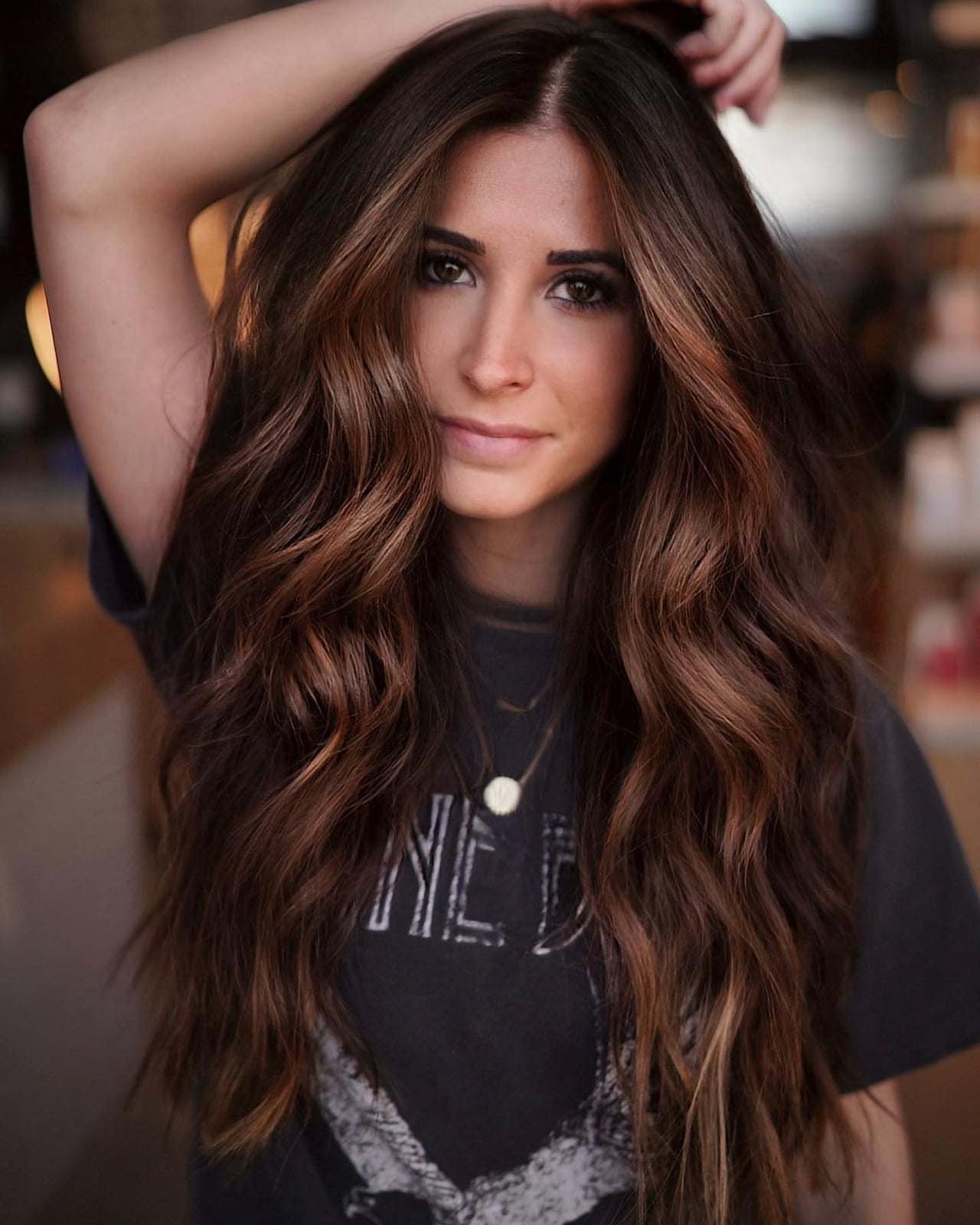
A glossy chestnut wave with long layers is a straightforward request that delivers maximum shine for medium density wavy hair at mid-back length. The middle part keeps the look balanced and lets the subtle layers frame the face without requiring bangs. This cut suits a round or oval face shape particularly well, as the vertical lines from the middle part and the gentle layers elongate the profile.
Ask your stylist for: mid-back length, long layers, glossy finish. At home, a shine serum applied to damp hair before blow-drying with a round brush will replicate the salon finish. Expect to schedule a trim every eight to ten weeks to keep the ends healthy and the gloss even.
Mid-Back Waves With Glossy Finish, Chestnut Brown
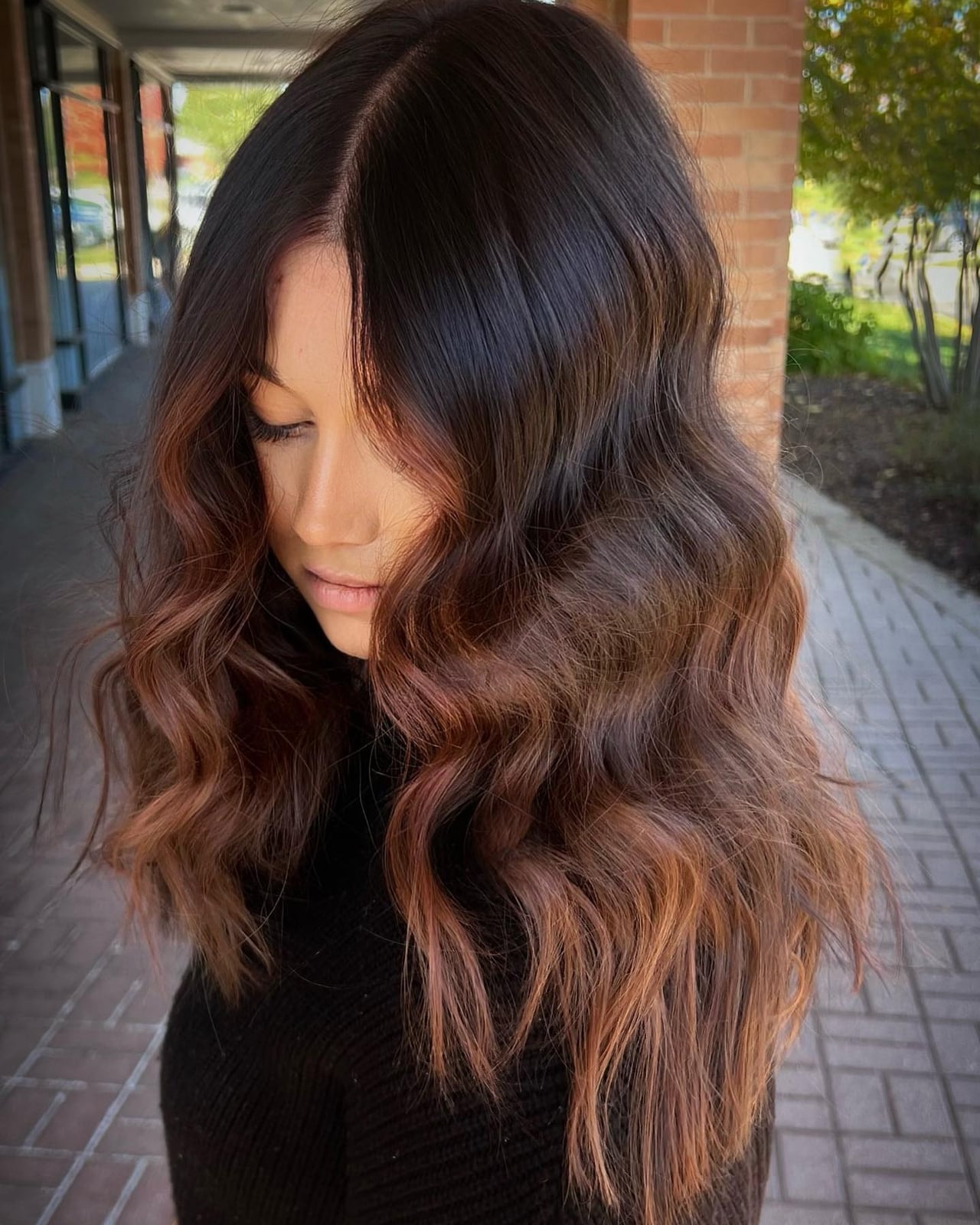
How do you get those polished mid-back waves without them looking stiff or overdone? The answer lives in the blowout technique combined with a high-gloss finish on a simple chestnut brown base. The long layers and middle parting keep the style modern, while the soft S-wave pattern adds volume without curl.
Ask your stylist for: mid-back length, long layers, glossy finish. This is a salon-leaning look: a professional blowout with a round brush and a finishing gloss spray creates the mirrored shine. A DIY version works if you have a round brush and a heat protectant, but expect the gloss to last about two days before you need a touch-up with a shine spray.
Mid-Back Natural Waves With Warm Tones
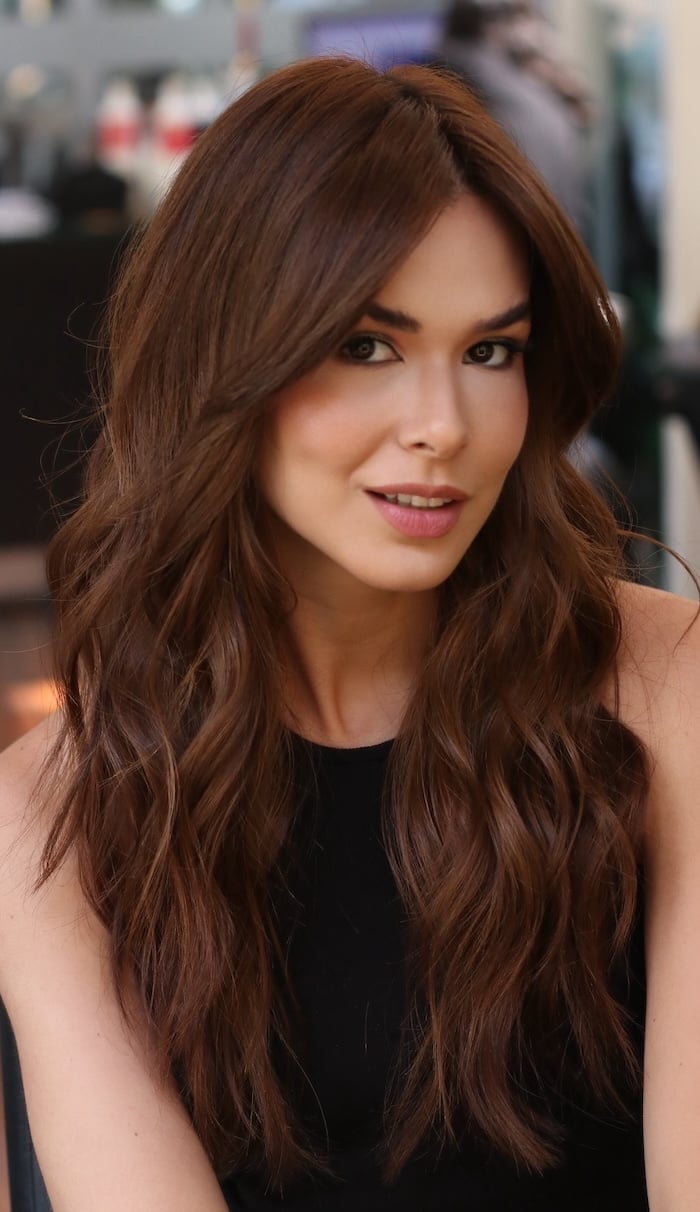
The warm chestnut undertones and subtle lighter pieces add dimension that catches the eye, but here is the catch: those warm tones can pull brassy after four to six weeks. A toning appointment at the same interval keeps the chestnut clean rather than orange. The mistake is skipping it and wondering why the color looks flat.
Mid-Back Chestnut Balayage With Gloss
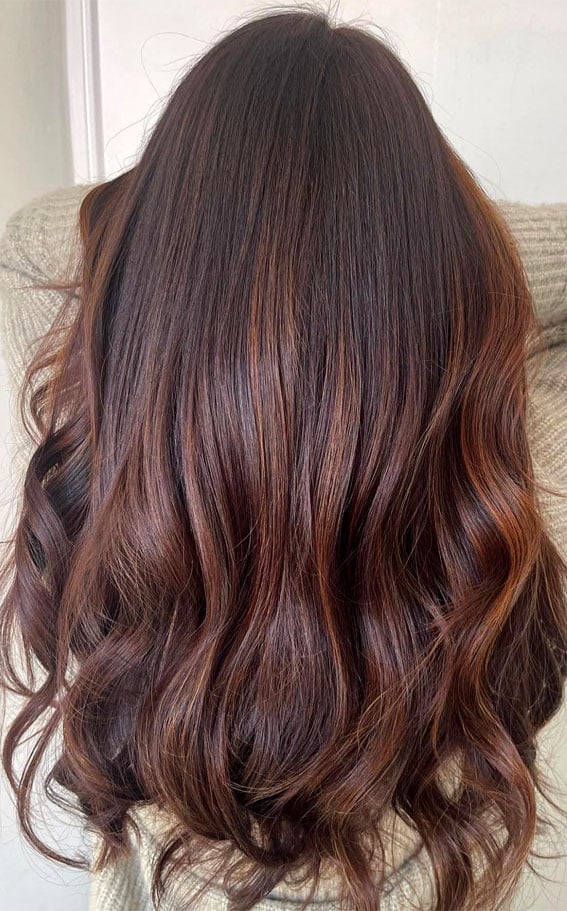
A deep chestnut base with lighter balayage pieces creates a built-in dimension that thick, wavy hair wears well. The back view confirms that the subtle highlights wrap around the layers, adding movement without obvious lines. This is a cut-and-color combo that wears gracefully: the balayage grows out softly, so you get about four months before the lighter pieces need a refresh.
Ask your colorist for: deep chestnut base, lighter chestnut balayage, glossy finish. For upkeep, a color-safe shampoo and a weekly glossing treatment preserve the shine. Expect to trim the ends every eight to ten weeks, as the balayage keeps the midsections looking fresh longer than a single-process color would.
Mid-Back Chestnut With Lighter Pieces
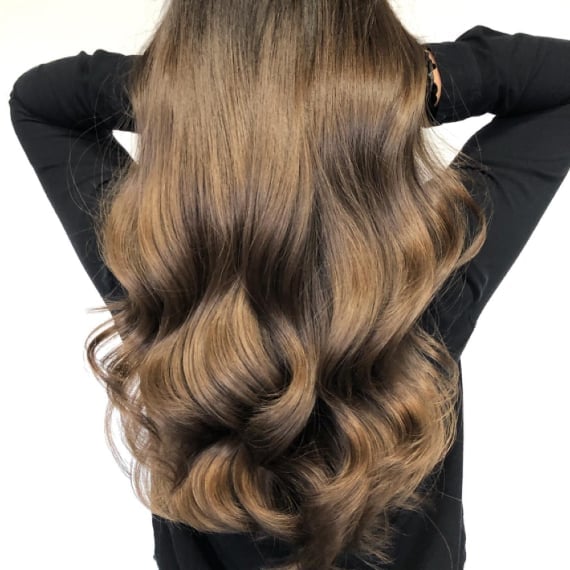
Can a single base shade with a few lighter strands carry you through both a summer wedding and a winter office party? The answer is yes, when the lighter pieces are placed subtly throughout the mid-back length. The loose, voluminous waves and middle parting here show how the chestnut brown gains depth from the highlights without looking busy.
Ask your colorist for: chestnut brown base, subtle lighter pieces. This style lands especially well in fall and early spring, when the warm brown tones complement the seasonal light without fighting it. A salon appointment is required for the highlights, but the waves are achievable at home with a large barrel curling iron and a texture spray.
Mid-Back Waves With Balayage Highlights, Wavy
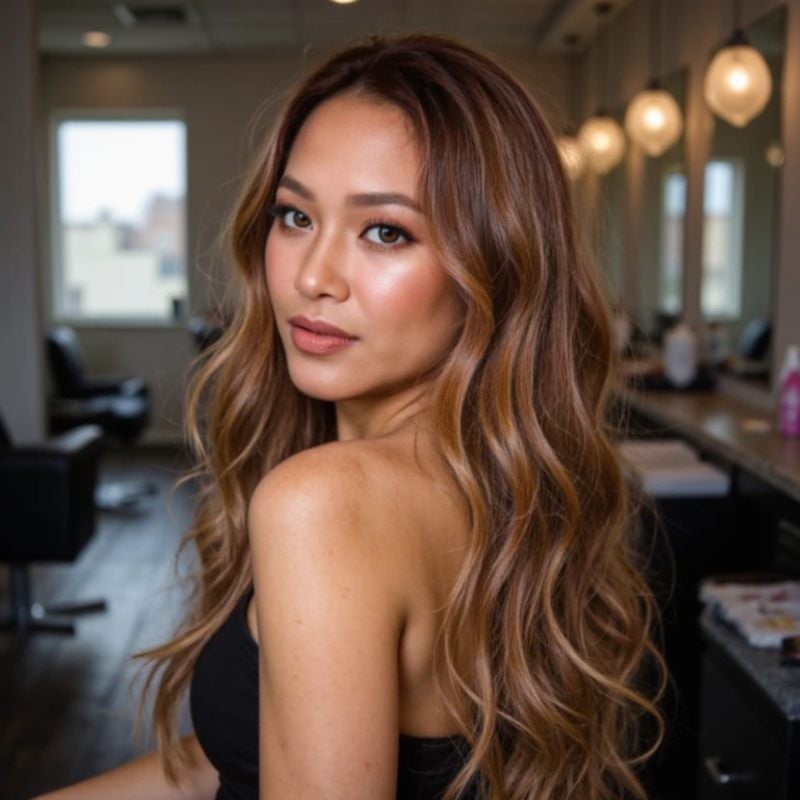
A chestnut brown base is painted with balayage highlights that start lower down, so the color looks sun-kissed. Ask your colorist for: mid-back length, loose waves, chestnut brown, balayage highlights. Thick, wavy hair that reaches mid-back can handle this technique because the lighter pieces add dimension without overwhelming the natural texture.
This is a salon-only move. Balayage requires a trained hand to place each highlight for a soft, blended effect that grows out naturally. Plan for a two-hour appointment and a toning visit every ten to twelve weeks to keep the warmth from shifting too brassy.
Mid-Back Waves With Balayage and A Woman With Thick
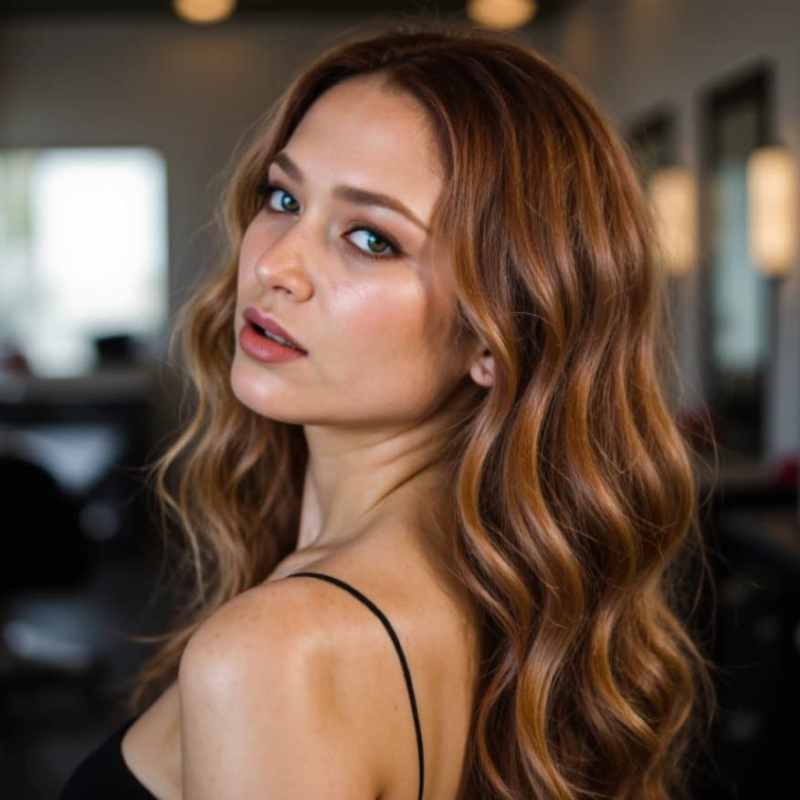
Thick, wavy hair is a good candidate for balayage because the lighter strands have room to move without disappearing into a dense mass. The chestnut brown base anchors the look while the highlights catch the light on the waves. Ask your stylist for: mid-back length, loose waves, chestnut brown, balayage. This works best on hair that already has some natural wave or curl, since the color needs texture to show its full effect.
Upkeep is straightforward: a trim every eight to ten weeks to keep the ends healthy and a purple shampoo once a week to neutralize any warmth that creeps in. The grow-out is forgiving because the highlights are painted lower down, so you can stretch your salon visits to twelve weeks without a visible root line.
Mid-Back Chestnut With Red Undertones
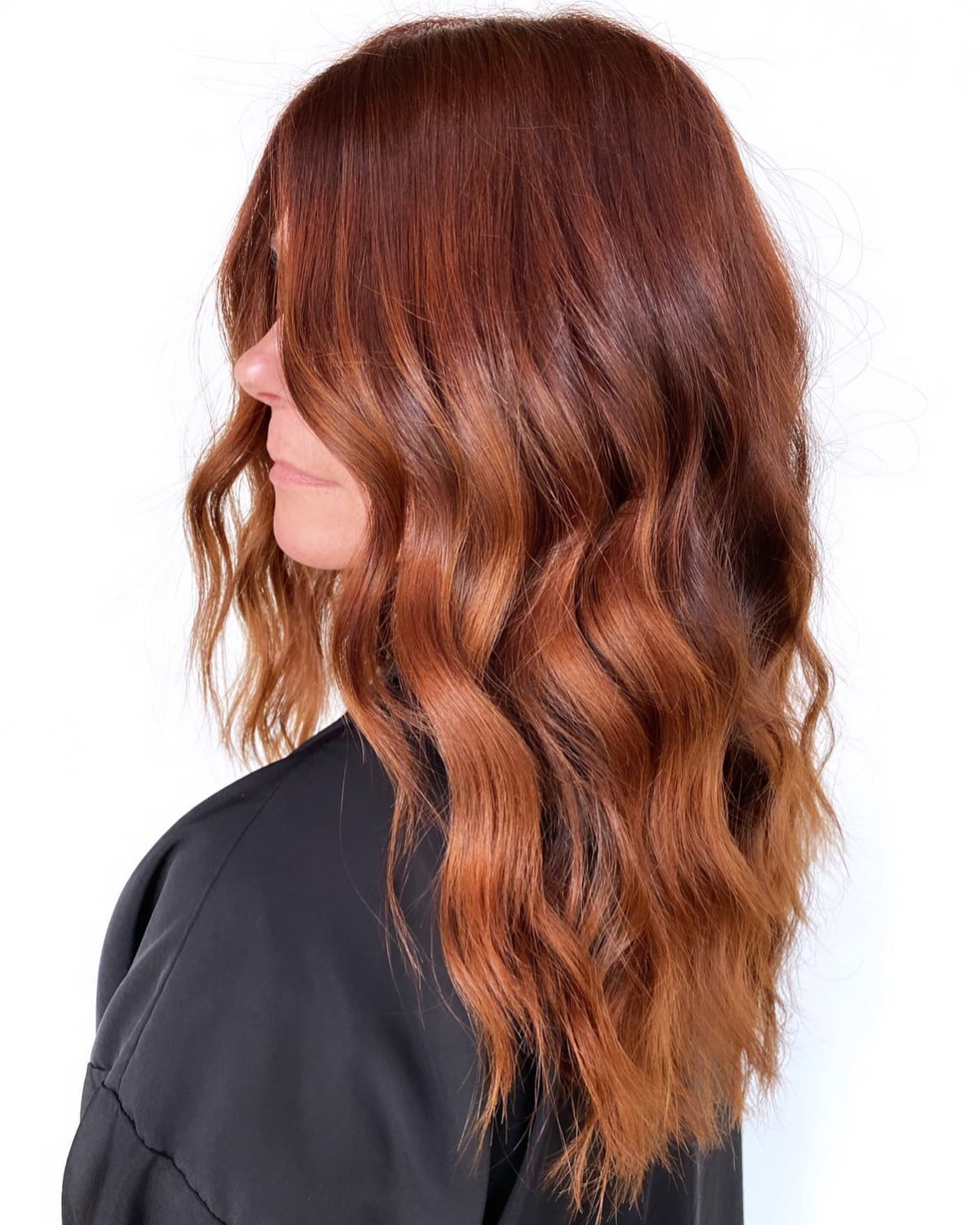
A chestnut brown with warm red undertones avoids looking flat. This mid-back cut uses a base of rich chestnut with warm red undertones that intensify toward the ends, where the color shifts to a lighter, almost copper tinged brown. Ask your colorist for: mid-back length, layers, loose waves, chestnut with red undertones. Medium density wavy hair that reaches mid-back holds the red through the wave pattern without overpowering it.
This is a salon color, not a box job. The transition from deeper roots to lighter ends requires a skilled hand to paint the warmth in gradually. The appointment typically takes two and a half hours, and a gloss treatment every eight weeks maintains the red tones.
Mid-Back Layers With Curtain Bangs
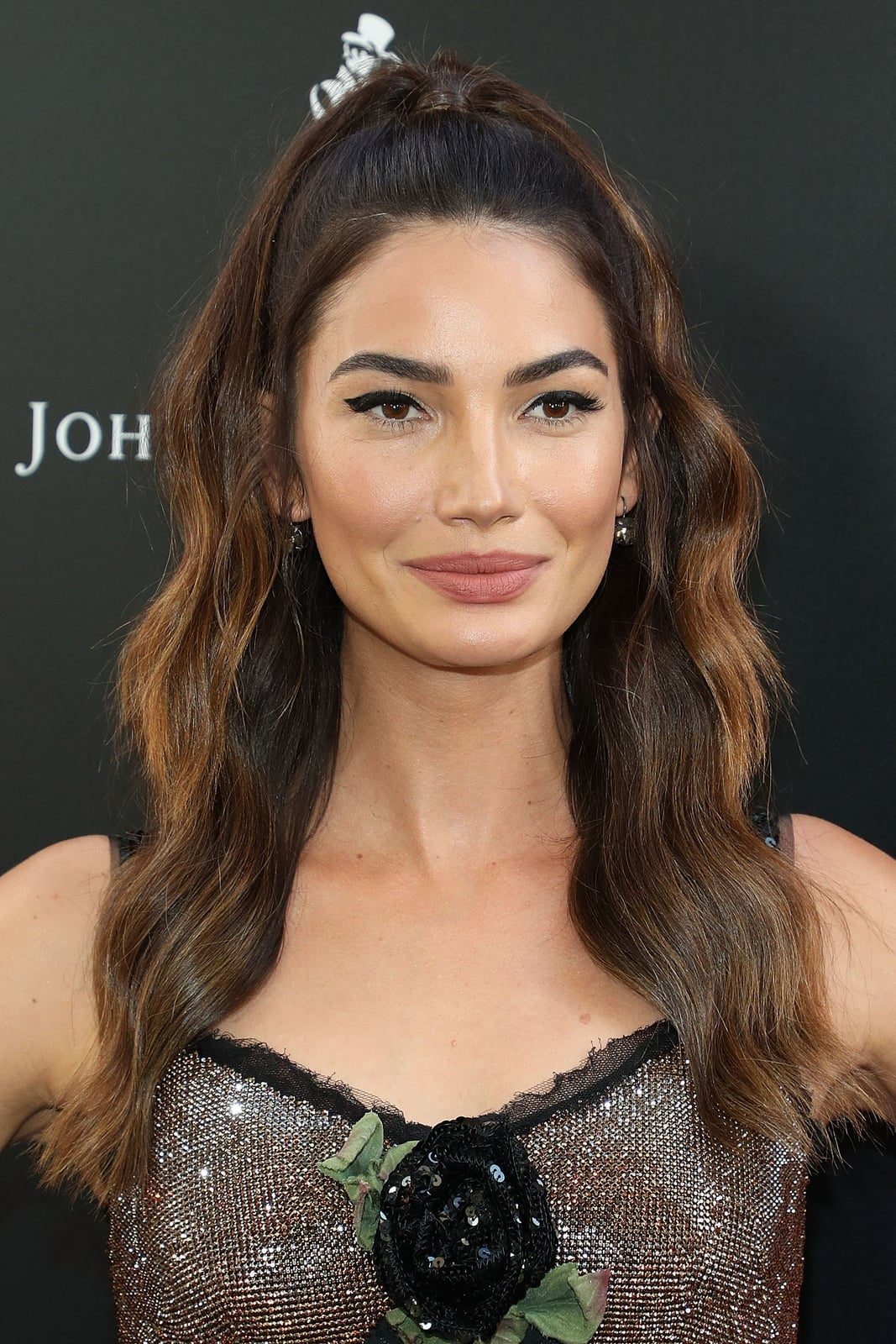
The common mistake with curtain bangs and long layers is assuming they will fall perfectly without effort. This mid-back cut has long layers and a middle part, with curtain bangs that frame the face and subtle lighter pieces in the chestnut base for depth. Ask your stylist for: mid-back length, long layers, curtain bangs, air-dried waves. The drawback is that curtain bangs need a quick blow-dry and a round brush every morning to maintain their swoop; let them dry flat and they will hang straight into your eyes rather than sweeping to the side.
Final Thoughts
Fine hair holds its shape best with a blunt baseline and minimal layering. For wavy or thick textures, ask for longer internal layers to remove weight without losing density. The right cut for your chestnut shade is the one you can wash, add a little texture spray, and leave.
- Trim blunt bobs and lobs every six to eight weeks to maintain shape.
- Refresh chestnut tones with a color-depositing conditioner every four to six weeks.
- Protect wavy textures from heat with a spray before styling.
- Wash hair twice weekly to preserve color vibrancy and natural oils.
Embrace the effortless beauty of simple chestnut hair.