
Balayage is the hand-painted coloring technique that creates soft, natural dimension without a harsh regrowth line. For 2027, the trend favors simpler, more blended applications that work with your natural base rather than against it.
These 28 ideas cover every length and texture, from collarbone bobs to mid-back waves, with tones that stay subtle enough to skip the salon for months. If your fine hair falls flat or your grow-out line shows too soon, this collection offers a low-commitment fix. Simple Balayage means less upkeep and more life in your color.
Collarbone Layers With Caramel Balayage
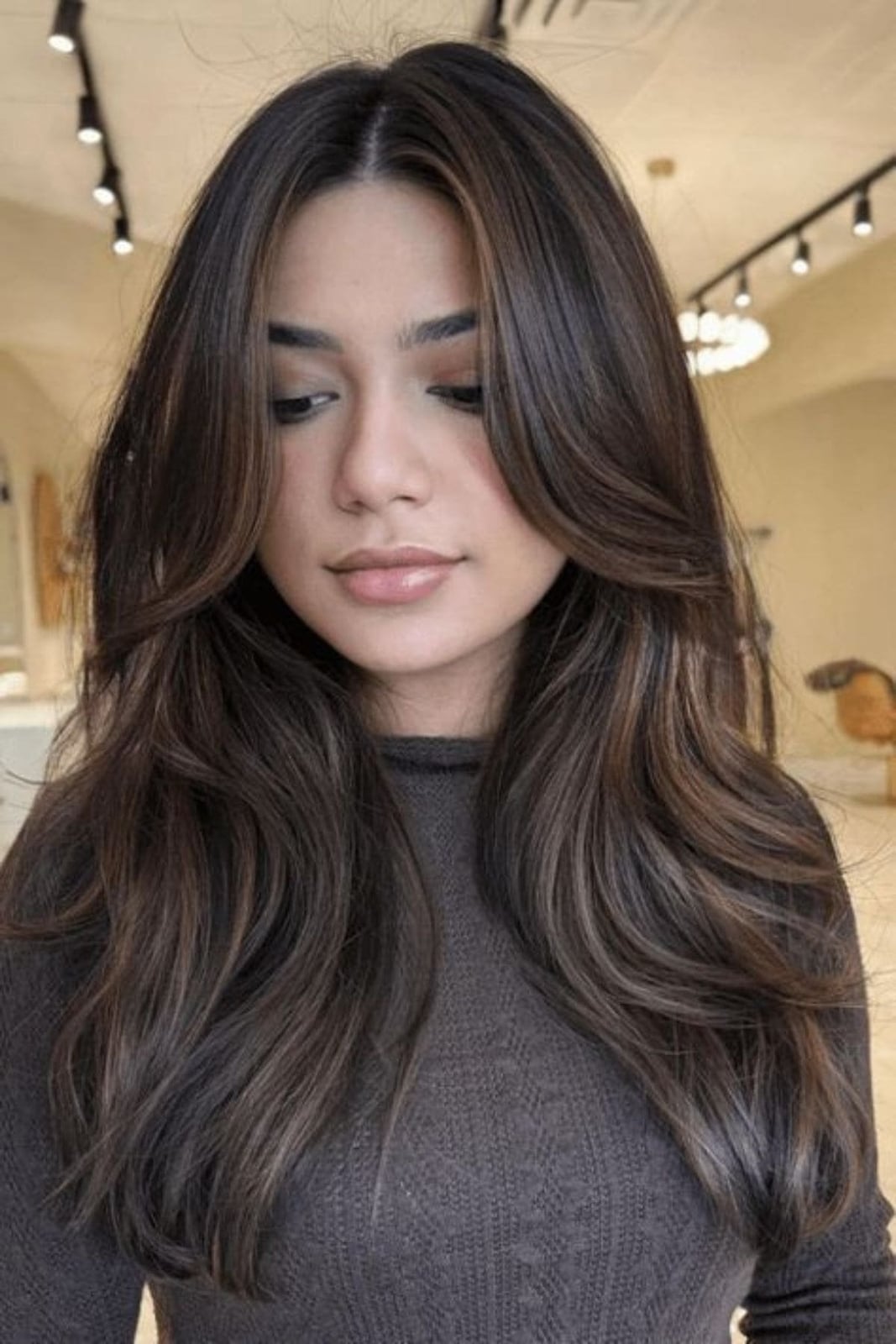
Wondering if balayage works on shorter hair? These collarbone-length layers prove it does, as long as the cut and color are built together. The dark brown base keeps the roots deep while the caramel balayage sweeps through the mid-lengths and ends, creating dimension that moves with the wave pattern. The curtain bangs are the real trick here: they catch the lighter pieces closest to the face, so the color reads as intentional rather than random. This setup works best on thick, wavy texture that is already collarbone length or longer. Ask your colorist for: collarbone layers with caramel balayage and curtain bangs. Oval and heart-shaped faces get the most out of the curtain bang shape, since the soft taper at the cheekbone balances a wider forehead or a pointed chin.
Mid-Back Waves With Caramel Balayage
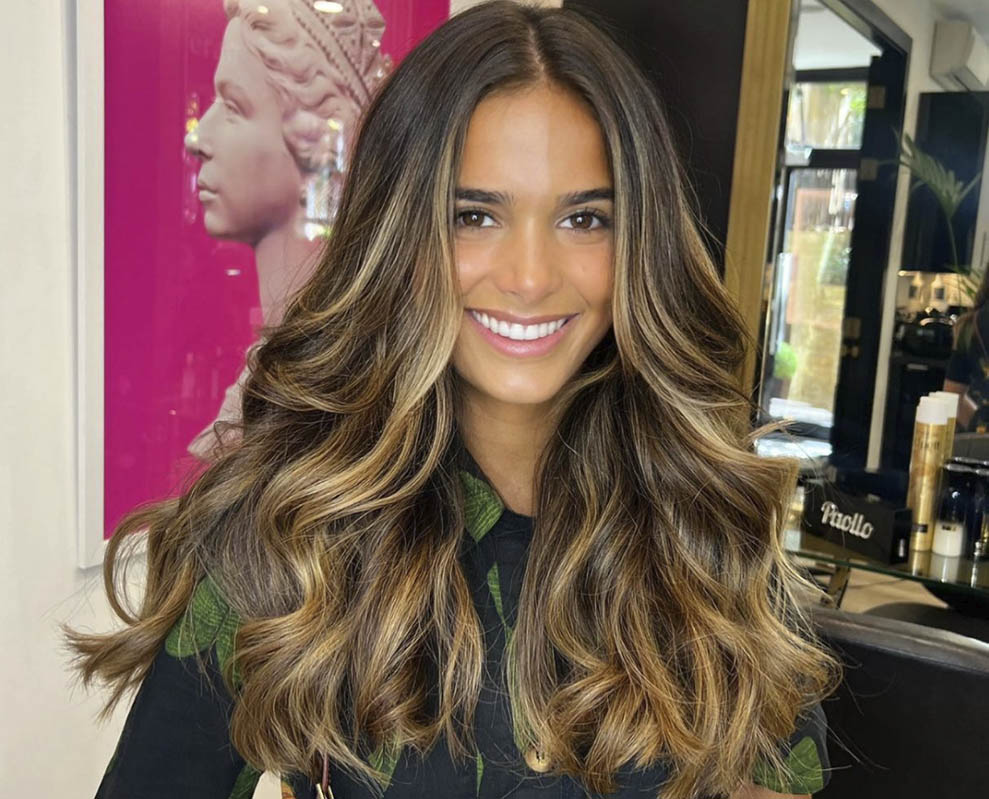
The caramel balayage here is painted from the mid-lengths downward, leaving the dark brown base untouched at the roots. That is the technical difference between this and a full foil: the lightener is hand-painted in a sweeping motion, so the transition between the two shades is soft rather than striped. On mid-back length, thick, wavy hair, the technique creates a gradient that feels intentional without looking uniform.
Ask your colorist for: mid-back wavy hair with caramel balayage and curtain bangs. The curtain bangs are cut to blend into the layers, so the face-framing dimension reads as part of the same application. A texturizing spray on dry waves keeps the shape from falling flat, and a toning appointment every 10 to 12 weeks keeps the caramel from warming too orange.
Long Layers With Lived-In Caramel Balayage
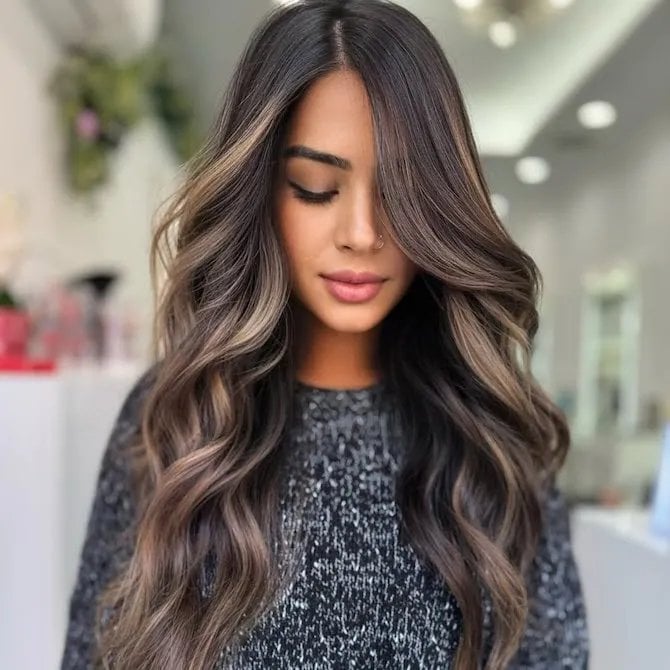
The lived-in label on this balayage means the caramel pieces are painted closer to the root at the front than at the back, so the face-framing layers read lighter without a hard line of demarcation. On a dark brown base with long layers, the effect is subtle dimension rather than a dramatic lift. The curtain bangs are the standout detail: they are cut to sweep outward, so the lighter strands fall naturally around the cheekbones.
Ask your colorist for: long layers with lived-in caramel balayage and curtain bangs. The key is to keep the base shade rich so the balayage reads as a warm accent, not a full color change. Square and round face shapes benefit from the soft diagonal line the bangs create, which breaks up the width at the jaw or the fullness of a round hairline.
Mid-Back Waves With Seamless Caramel Balayage, Wavy
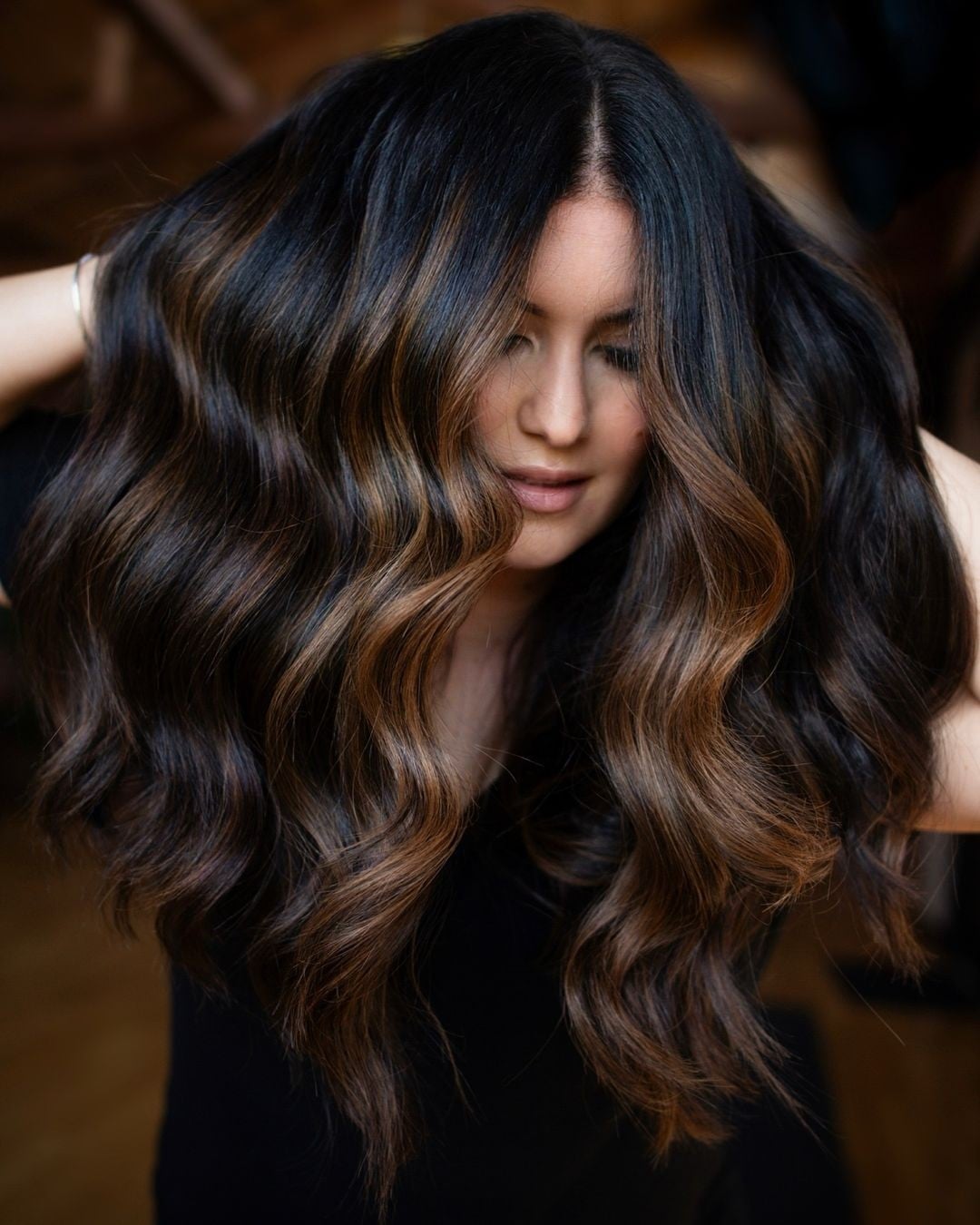
Traditional highlights start at the root and go all the way down, which means a visible grow-out line within weeks. This seamless caramel balayage does the opposite: the color is painted onto the mid-lengths and ends only, so the dark brown base remains solid at the top and the transition is gradual. On thick, wavy, mid-back-length hair, the lack of bangs means the face-framing pieces are part of the same long layers, which keeps the overall shape flowing. Ask your colorist for: mid-back loose waves with seamless caramel balayage. The touch-up schedule is longer than a traditional highlight, about three to four months between appointments, since the root color is never lifted.
Collarbone Waves With Subtle Highlights
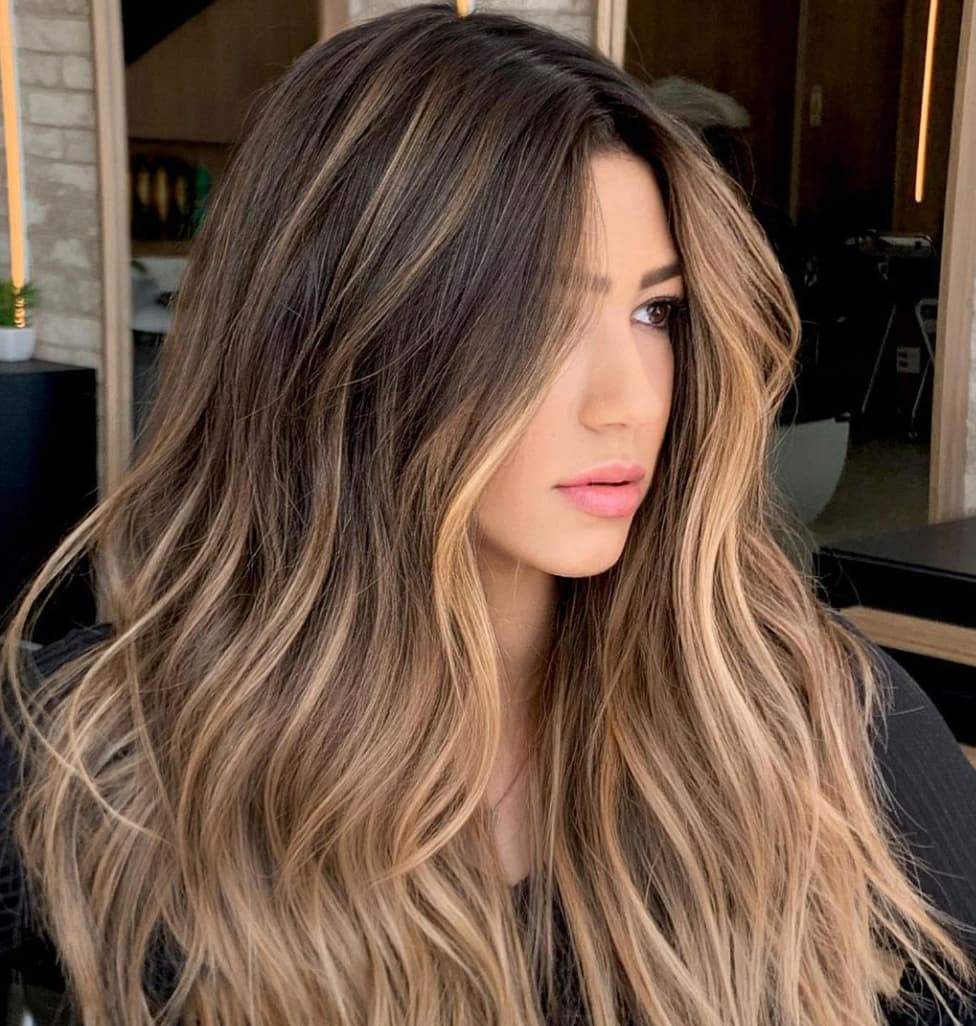
How do you ask for color that looks like you spent the summer outside without specifying a shade? The trick is in the placement. This collarbone-length cut uses a dark brown base with subtle lighter brown balayage highlights painted only through the mid-lengths and ends, so the color stays close to the natural depth at the root. The wave pattern helps the lighter strands catch the light at different angles, which makes the dimension look more organic. Ask your colorist for: collarbone wavy hair with subtle lighter brown balayage. Medium-density, wavy hair at collarbone length is the ideal canvas: short enough to keep the color application contained, long enough for the gradient to register.
Mid-Back Dimensional Lighter Brown Balayage
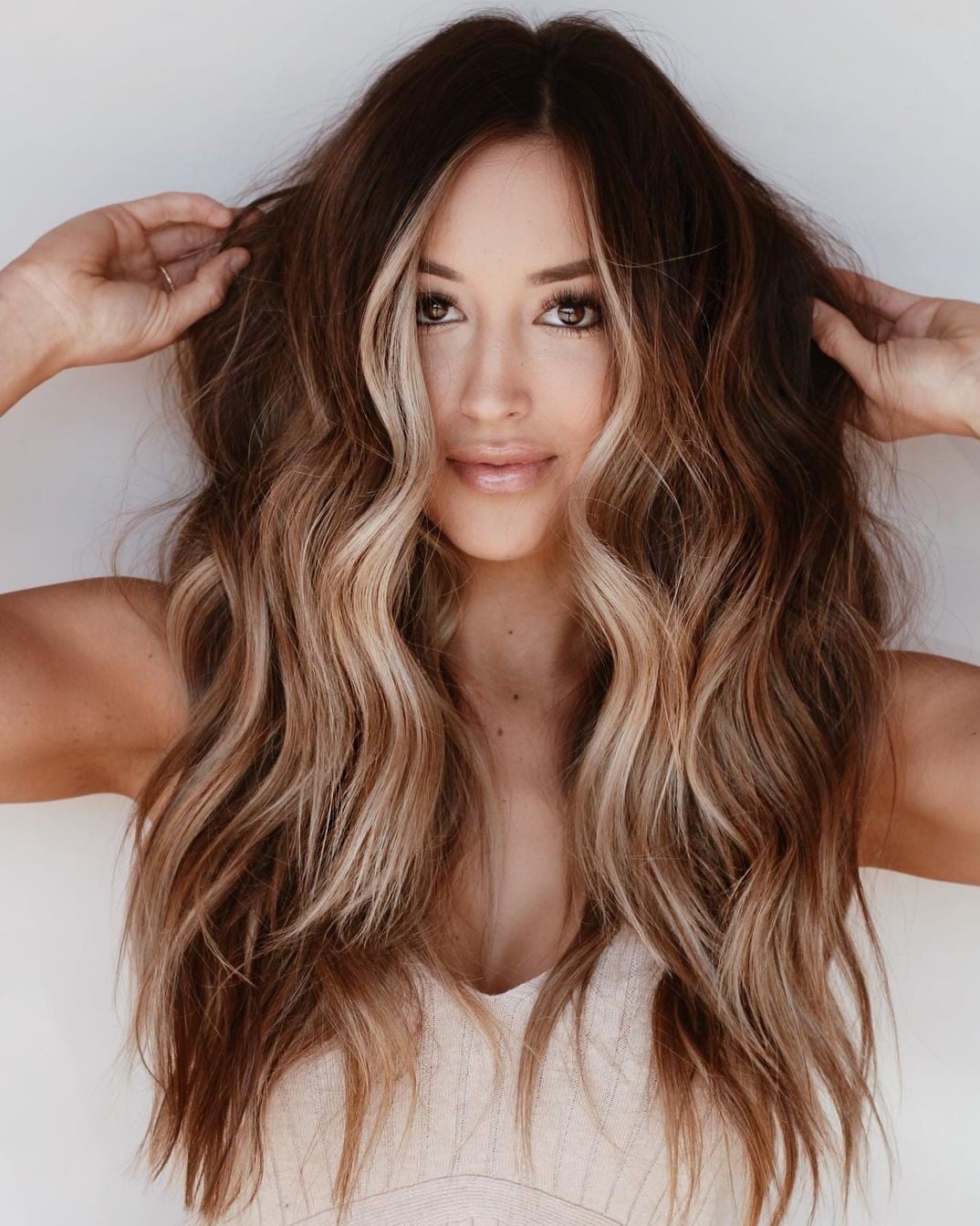
The design relies on a medium brown base with lighter brown balayage that stays subtle. On thick, wavy hair at mid-back length, the color lands in soft ribbons that catch light. That is the appeal and the catch: dimensional balayage on this length looks lived-in, which means the grow-out is gentle, but the lighter pieces can lean brassy around week 8 if you skip a toning appointment.
Ask your colorist for: mid-back wavy hair with dimensional lighter brown balayage. Thick, wavy texture carries the blend best, fine hair may not show the dimension as clearly. Loose waves let the color fall where it lands, no heavy styling required. A trim every eight weeks keeps the ends clean.
Shoulder Length Curly With Golden Blonde Balayage
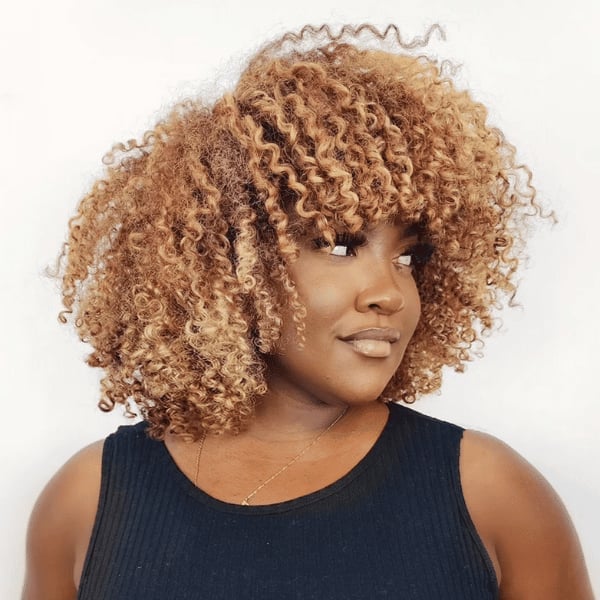
Golden blonde balayage on a dark brown base works specifically because curly texture scatters the light pieces instead of concentrating them in flat streaks. At shoulder length with thick, coily curls, the blonde lands on the mid-lengths and ends, leaving the root area dark and undamaged. The contrast reads as sun-kissed, not striped. Ask your colorist for: shoulder length curly hair with golden blonde balayage. Curls this dense need the color placed by hand, not woven into a foil. That is the balayage part. A curl-defining cream and diffusing are all the styling it asks for.
Mid-Back Dark Blonde With Lighter Blonde Balayage
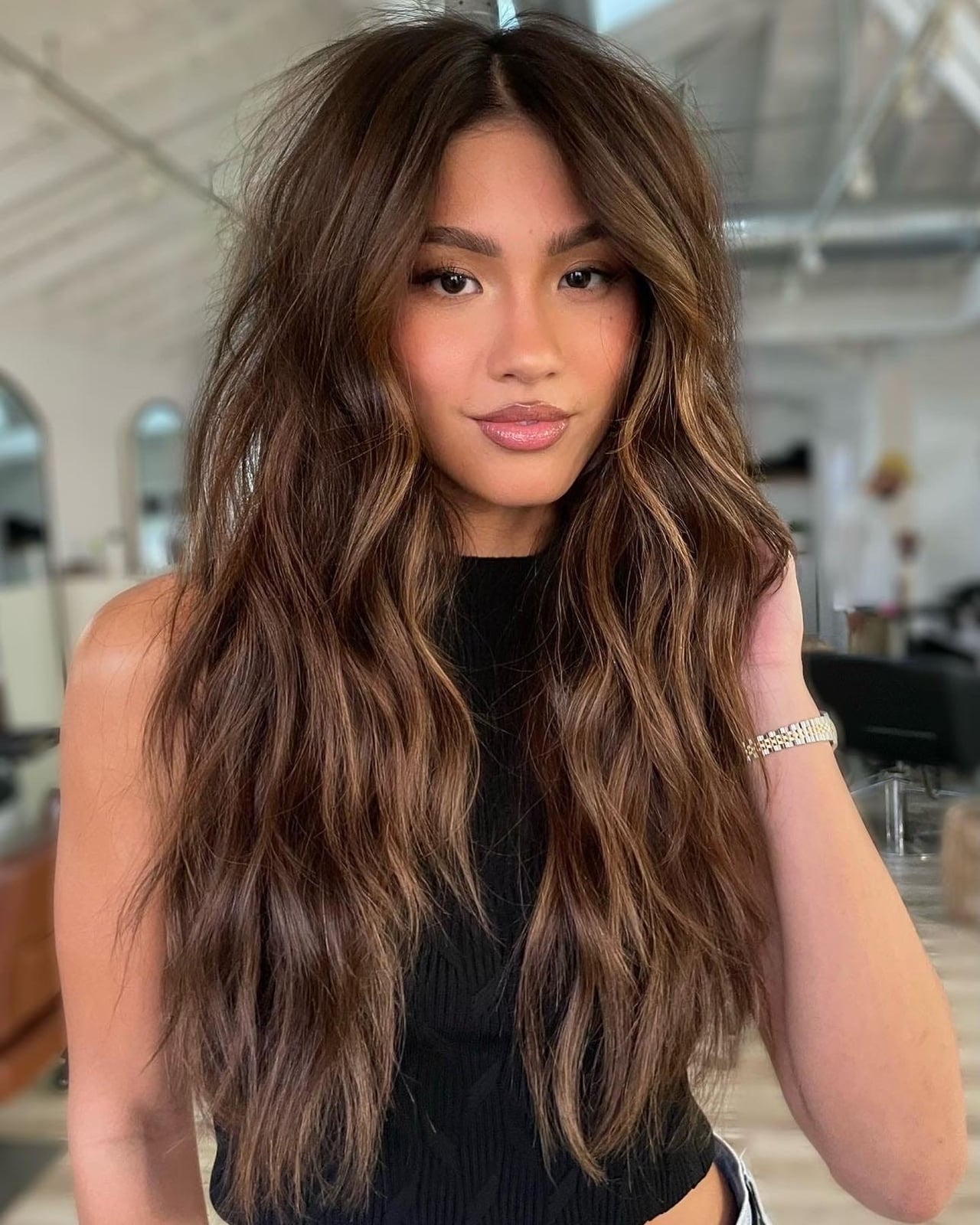
Face-framing layers change how balayage reads. Here, a dark blonde base gets lighter blonde balayage that concentrates around the face, with soft curtain bangs pulling the brightness forward. The mid-back length keeps the back darker, so the color does not feel flat or all-over. Ask your colorist for: mid-back dark blonde hair with lighter blonde balayage and curtain bangs. The technique uses fine slices painted from mid-shaft to ends, heavier near the front layers. Thick, wavy texture holds the shape without a curling iron, though a blowout adds the polished sheen visible here.
Mid-Back Wavy With Dimensional Balayage
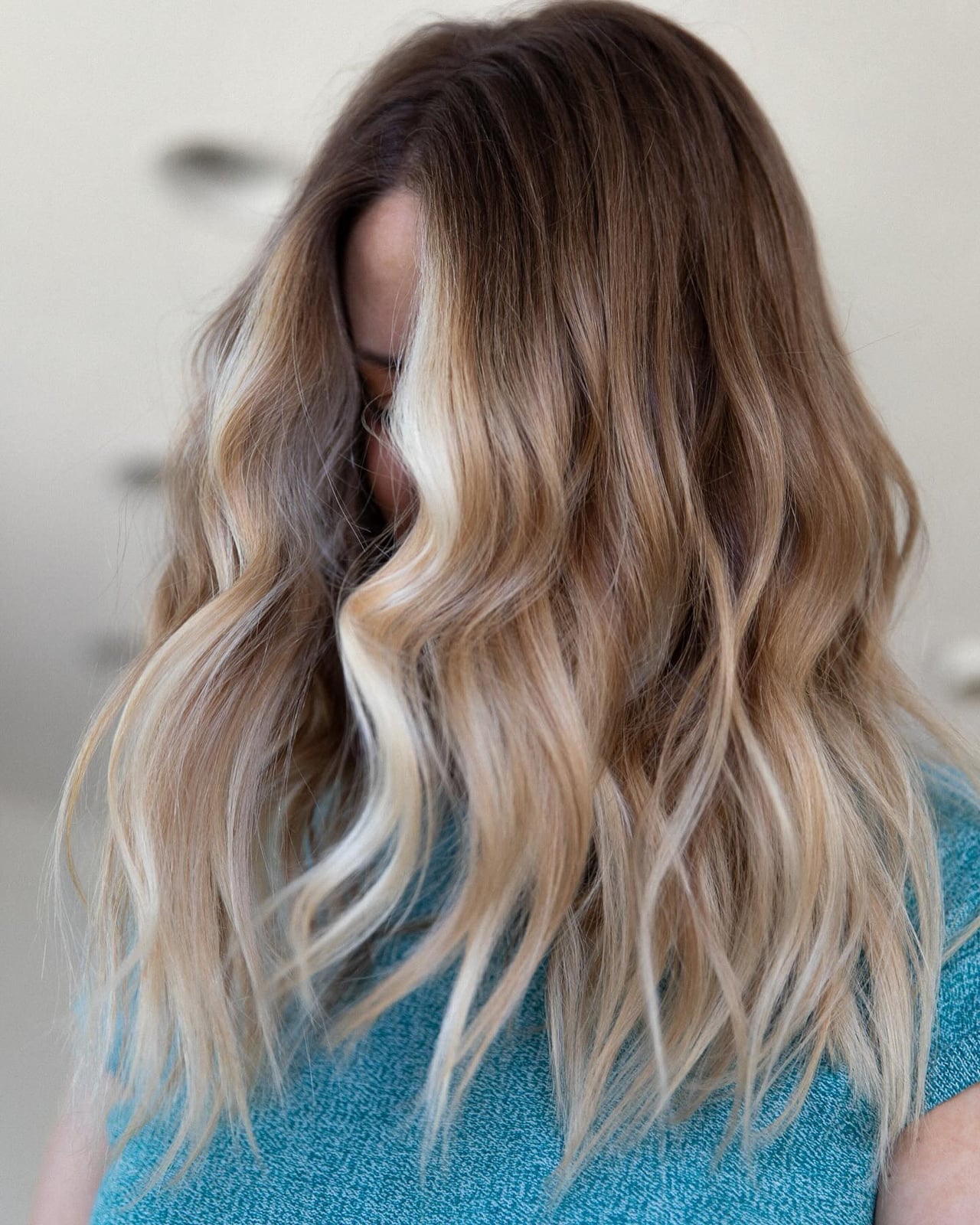
Does dimensional balayage on mid-back hair need daily styling? Not really, but it does need a routine. The medium brown base with lighter brown balayage shows best when the waves have some structure, a quick styling with a smoothing serum or a few minutes with a curling iron. The payoff is that the color works with the wave pattern. Ask your colorist for: mid-back wavy hair with dimensional lighter brown balayage. Thick, wavy texture carries the blend naturally. A trim every six weeks stops the ends from dragging the shape down.
Mid-Back With Caramel Balayage and Side Bangs
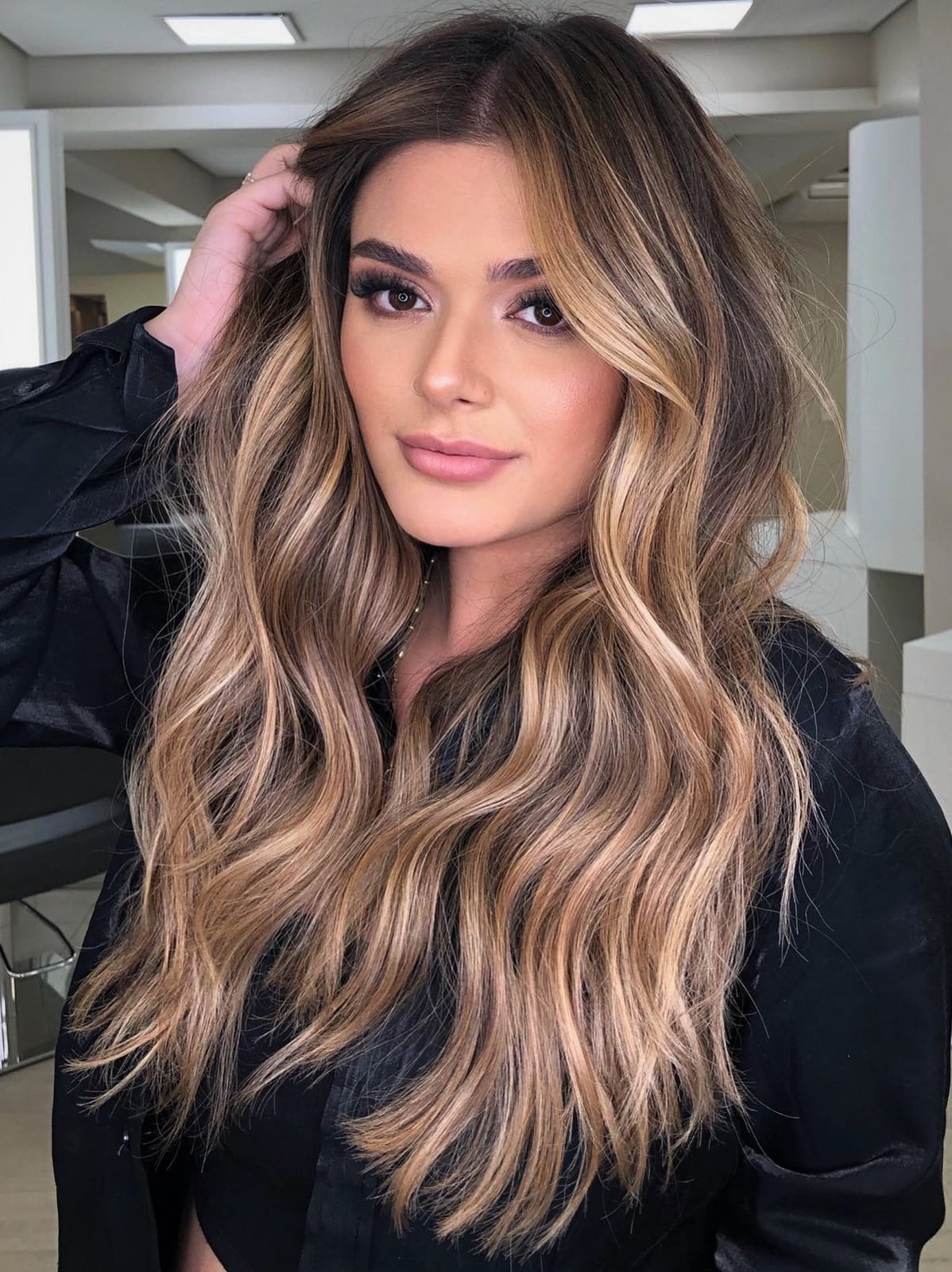
The combination of caramel balayage and side-swept bangs is straightforward to ask for but easy to get wrong. You want a medium brown base with caramel pieces that start below the eye line, and the bangs should be cut so they sweep across without hitting the brow. Ask your colorist for: mid-back wavy hair with caramel balayage and side-swept bangs. The side parting keeps the balayage heavier on one side, which adds asymmetry. Thick, wavy texture holds the sweep in place, and a texturizing spray gives the movement you see here.
Angled Bob With Caramel Face-Framing
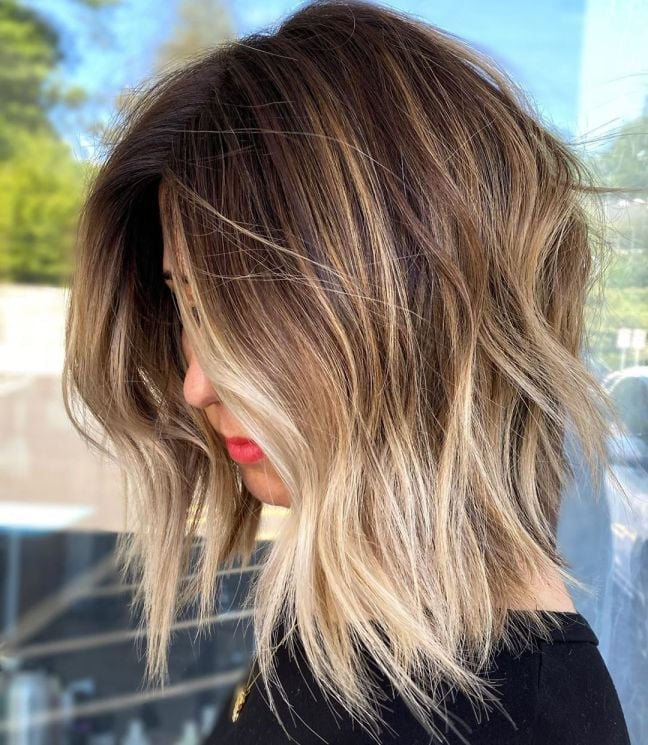
The front of the angled bob hits collarbone length while the back stacks shorter, a geometry that gives thick, wavy hair more movement than a blunt cut would. Caramel balayage is painted onto the face-framing pieces only, so the dimension stays visible even when the hair is down. A blunt bob would keep the color more contained; this cut lets the caramel travel into the waves. Ask your colorist for: collarbone angled bob with caramel face-framing pieces. The angle and waves are easiest to enhance with a flat iron, and this is strictly a salon cut. The stacked back is not a bathroom-mirror job. A trim every six weeks keeps the line sharp.
Collarbone Lob With Honey Blonde Balayage
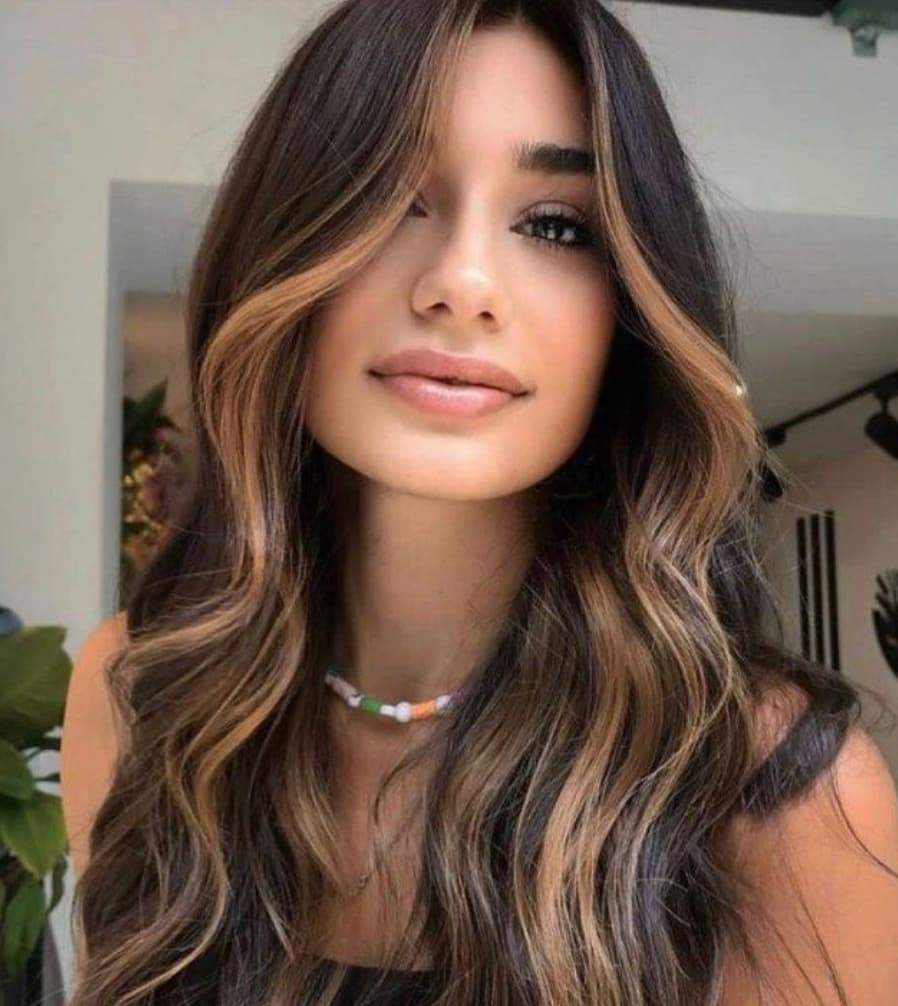
Wondering if a collarbone lob with honey blonde balayage will work on your hair? It does best on medium-density, wavy hair that holds a blowout. The dark brown base keeps the root line low-maintenance, while the honey blonde concentrates around the face via curtain bangs that soften a square or round jaw. Ask your colorist for: collarbone lob with honey blonde balayage and curtain bangs. Fine hair can look thinner with this much layering, so pass if your texture is on the sparse side. For everyone else, a round brush on the fringe during blow-drying is all the styling it needs.
Shoulder Length Curly With Honey Blonde Balayage and Air Dried
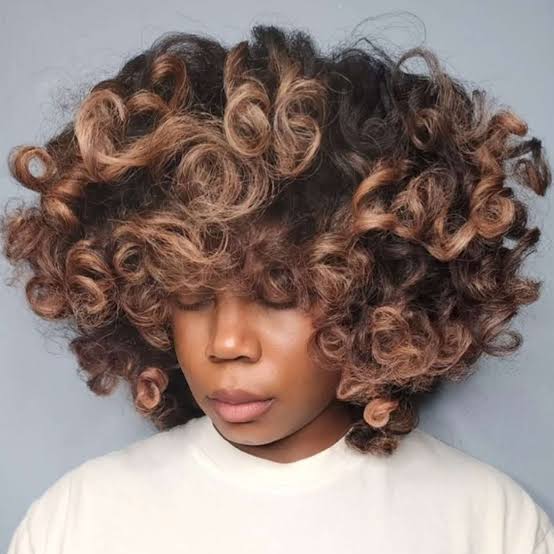
On shoulder-length, thick curls, a honey blonde balayage is painted in sections so each coil grabs a different amount of light. The dark brown base stays visible at the root, and the warmer tone lands on the ends for depth. Ask your colorist for: shoulder length curly hair with honey blonde balayage. This is a salon-only technique, painting on dry curls takes a trained eye to avoid banding. Air-drying is the point here: scrunch in a curl cream and let the curl pattern do the work. It is a casual, everyday look that needs zero heat.
Mid-Back Ash Blonde Balayage
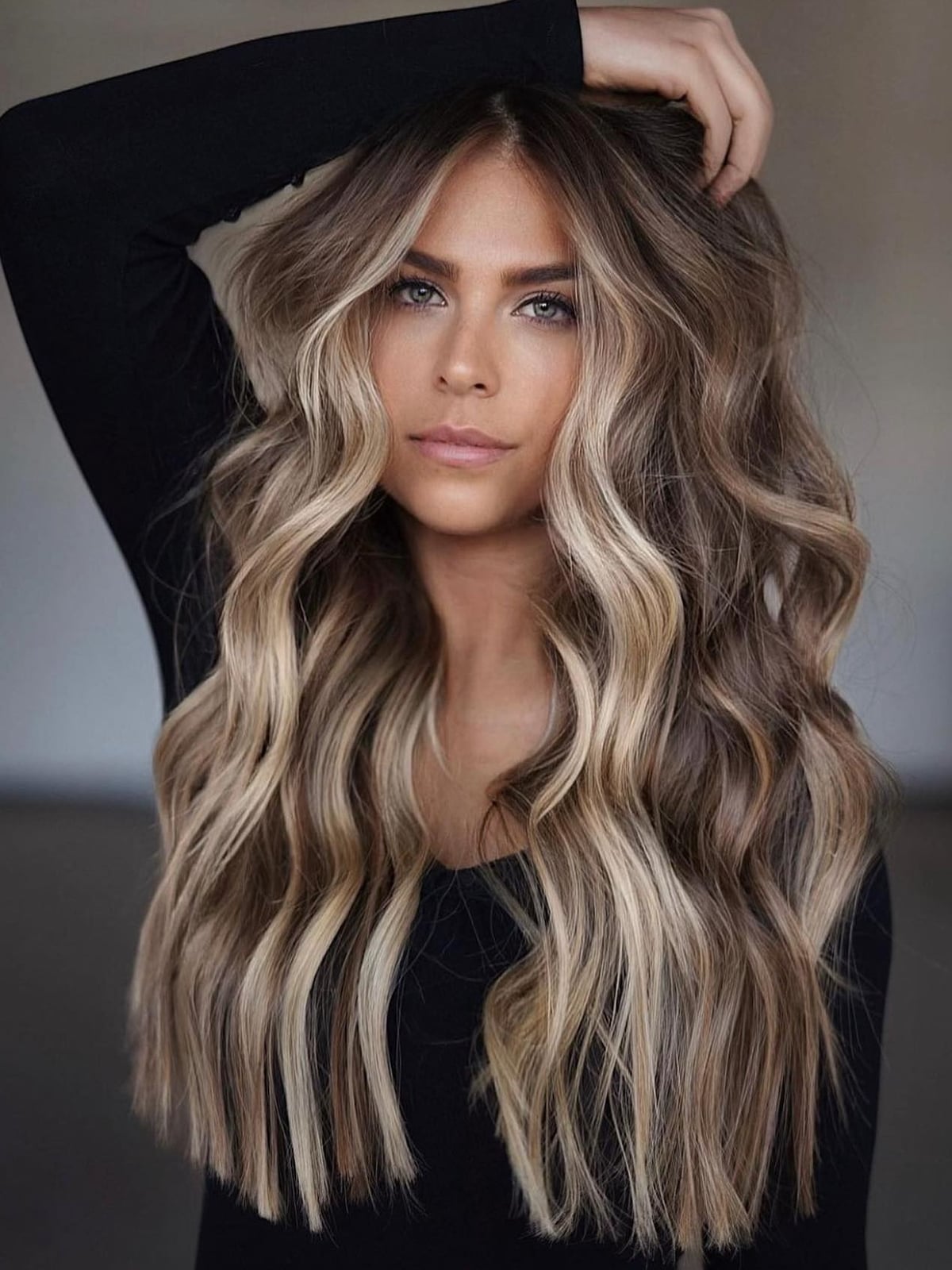
Ash blonde balayage on thick, wavy hair needs strategic placement to avoid reading as one flat sheet of silver. Here the cool-toned highlights are woven through a neutral blonde base, with curtain bangs and face-framing layers breaking up the mass. The mid-back length gives the waves room to move, and the middle part keeps the distribution even. Ask your colorist for: mid-back hair with ash blonde balayage and curtain bangs.
The upkeep reality: ash tones fade fast. A purple shampoo is not optional, use it weekly or the blonde will shift toward yellow. A trim every six weeks maintains the layers, and toning appointments every six to eight weeks prevent the cool shades from warming up. This is not a color you can stretch.
Collarbone Lob With Neutral Blonde Balayage and Side Bangs
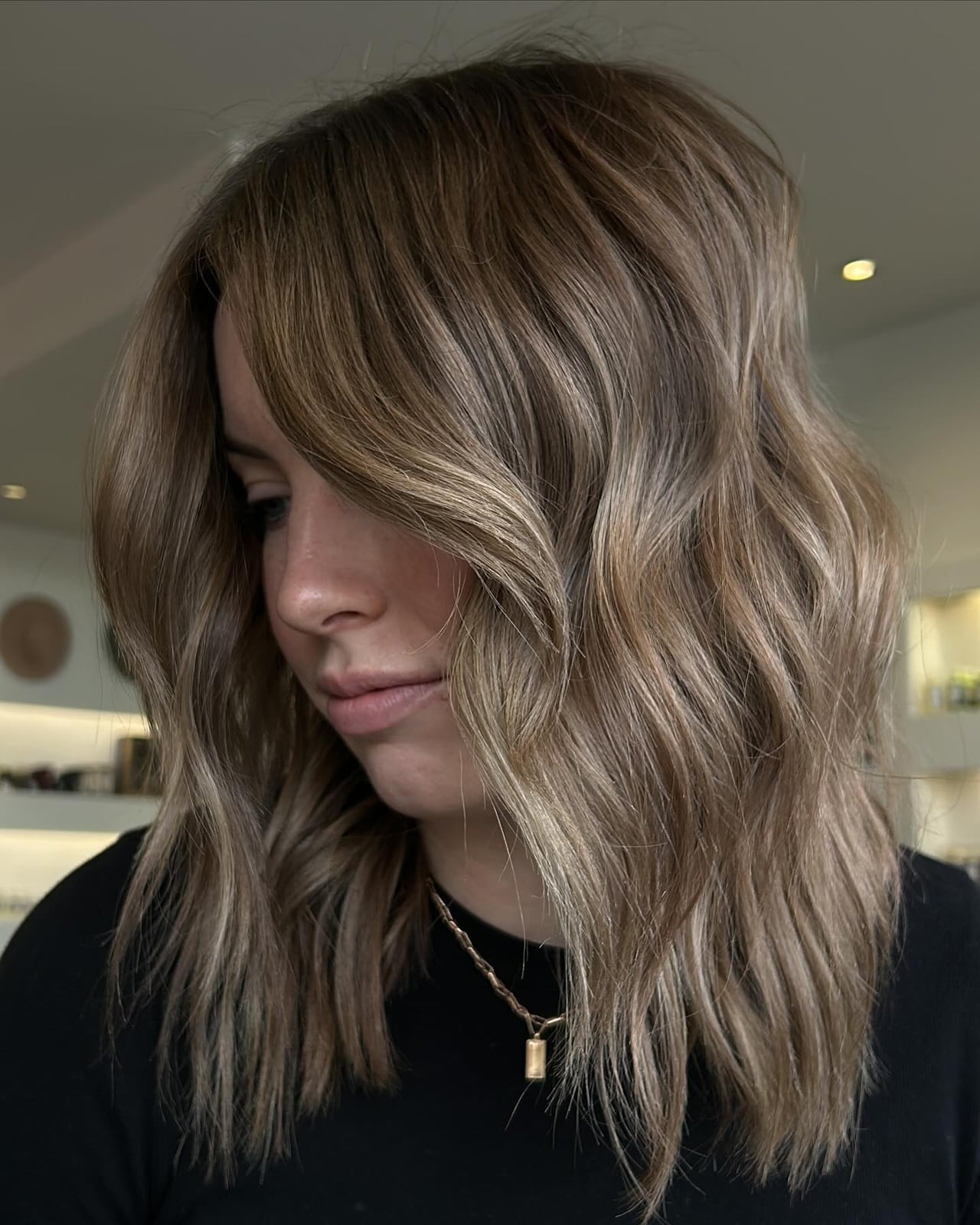
How do you ask for a subtle, neutral blonde balayage with visible dimension? Say exactly what is visible here: a collarbone lob with side bangs and lighter blonde pieces blended into a medium blonde base. The side part and side bangs draw attention to the face, so the highlights stay focused around the front. Ask your colorist for: collarbone lob with neutral blonde balayage and side bangs. The drawback is that side bangs need a trim every three to four weeks to stay out of your eyes, and they can make a round face feel heavier if they are cut too full. Wavy styling with a light hold product keeps the shape from looking overworked.
Collarbone Layers With Caramel Balayage and Styled In Soft Waves
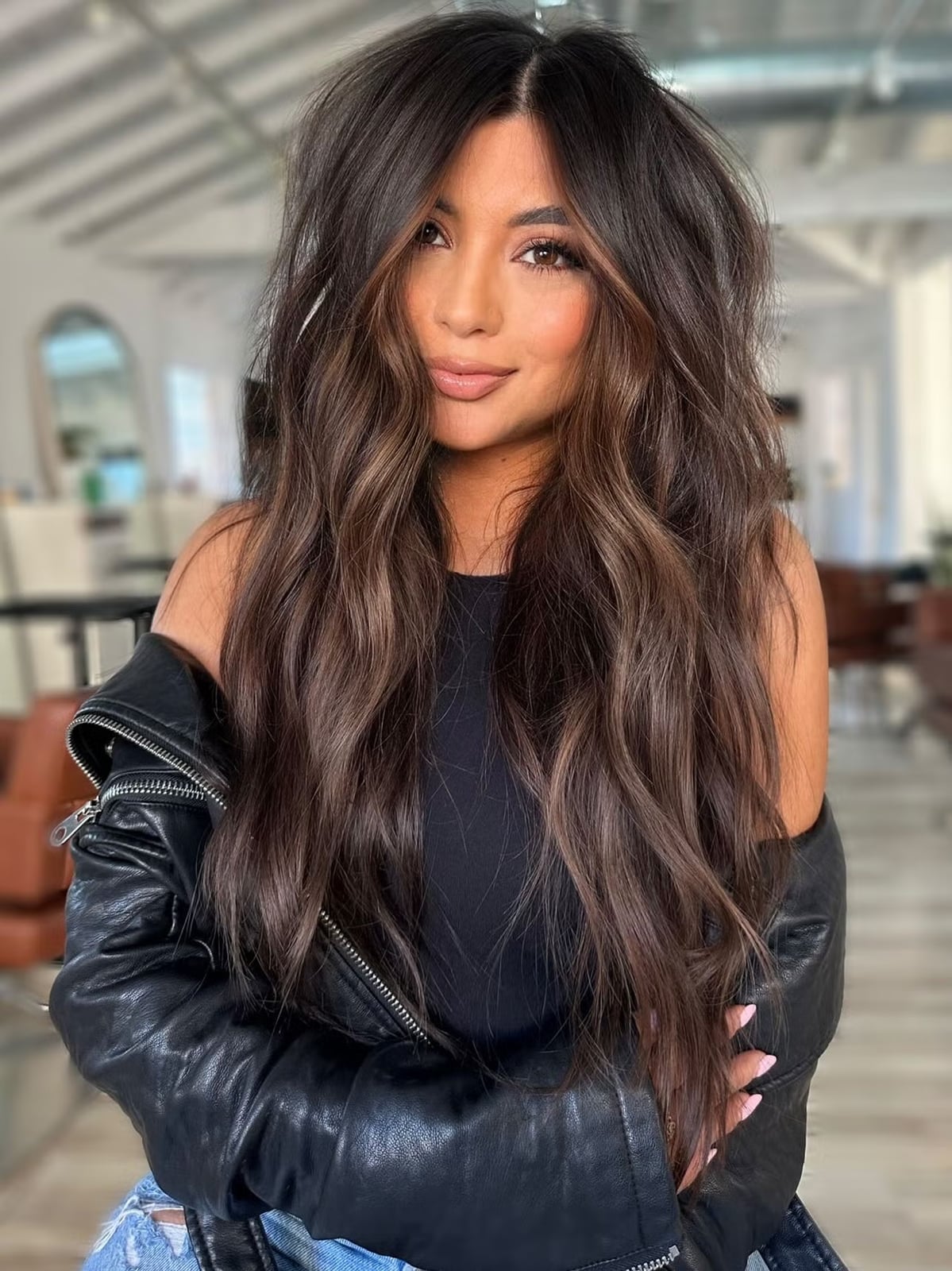
This is not a uniform tint applied from root to tip. The collarbone layers here use a dark brown base with caramel balayage highlights woven through the mid-lengths and ends, so the dimension comes from the contrast, not a single flat shade. Medium-density, wavy hair at collarbone length handles the technique best: the waves catch the lighter pieces and make the depth visible. Ask your colorist for: collarbone layers with caramel balayage. A smoothing cream keeps the wave pattern defined and glossy without weighing it down.
Mid-Back With Blonde Balayage Gradient, Wavy
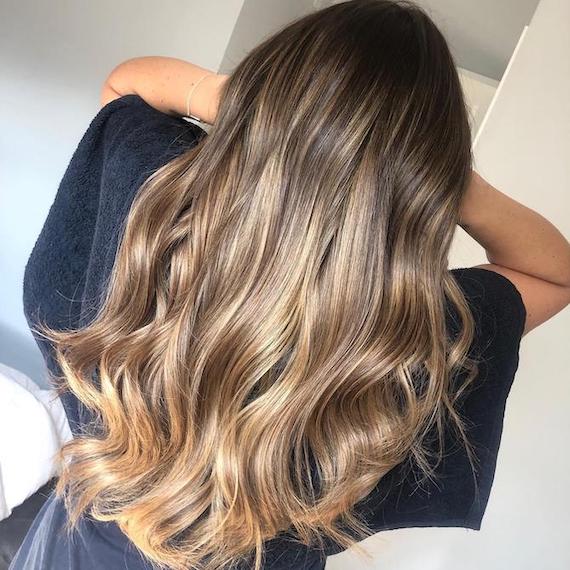
A balayage gradient relies on the hair being thick enough to show the transition. This mid-back length starts at a dark brown base and shifts into blonde highlights that get lighter toward the ends, so the color appears as a seamless fade. Thick, wavy hair at mid-back length or longer provides enough density for the gradient to spread, and the waves break up the line of demarcation naturally.
Straight, fine hair will not show the same depth from root to tip, which is the whole point of the technique. Ask your colorist for: mid-back hair with seamless blonde balayage. The application is a salon-only process, but the grow-out is low-maintenance because there is no harsh root line to manage.
Mid-Back Dark Blonde With Lighter Blonde Balayage, Close-Up Take
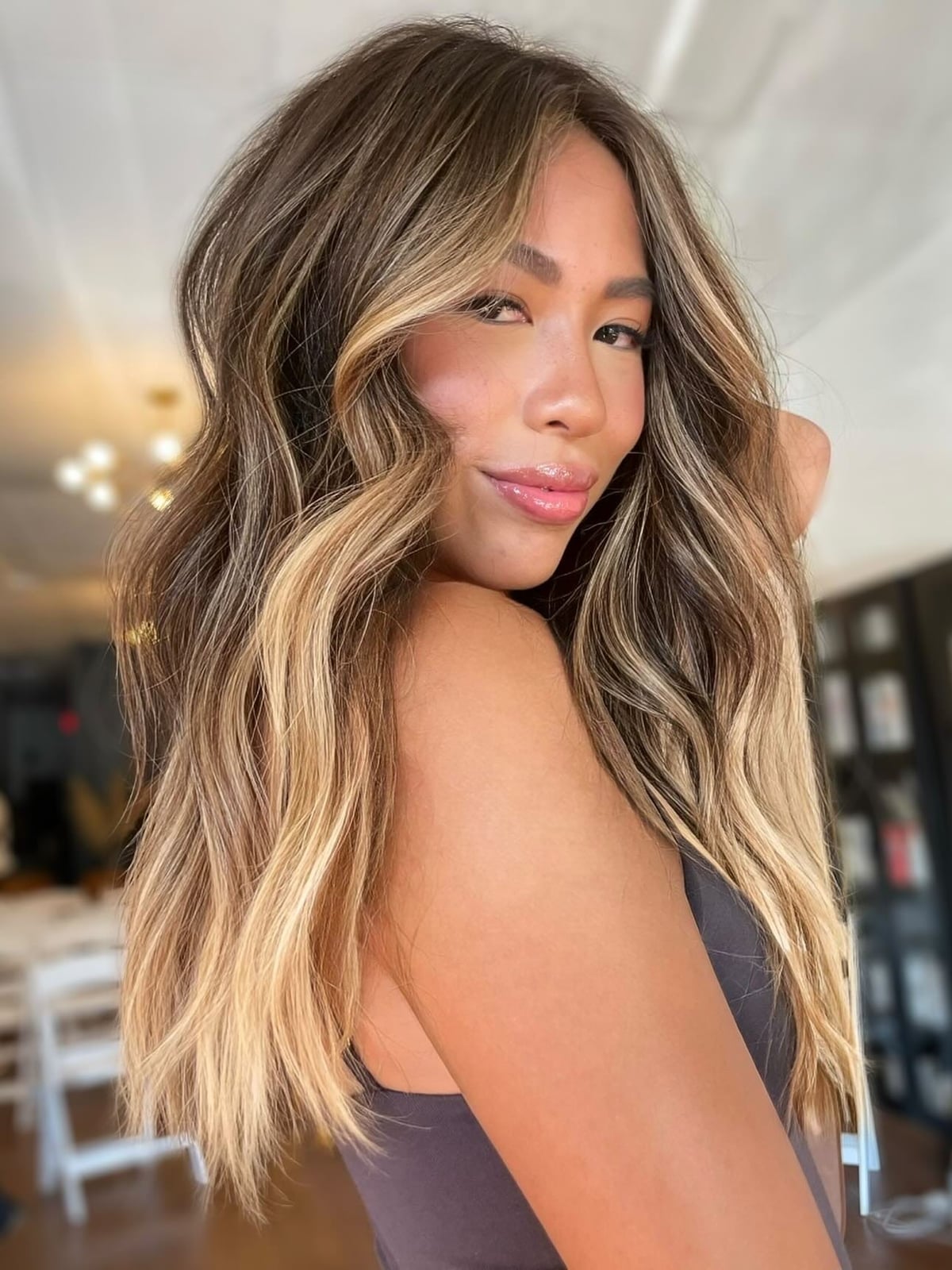
The face-framing sections here are built with a lighter blonde balayage that stays concentrated around the curtain bangs and the front layers, while the rest of the mid-back length carries a subtler dark blonde base with scattered highlights. This placement draws attention to the face without making the whole head look highlighted. Curtain bangs soften the transition between the darker base and the lighter pieces, which is useful on round or square face shapes.
Ask your colorist for: mid-back dark blonde hair with lighter blonde balayage and curtain bangs. The technique requires the colorist to hand-paint the front sections first, then feather the remaining color toward the back for a balanced result. Thick, wavy texture holds the wave pattern well, so the face-framing pieces stay visible throughout the day.
Shoulder Length Brunette Balayage
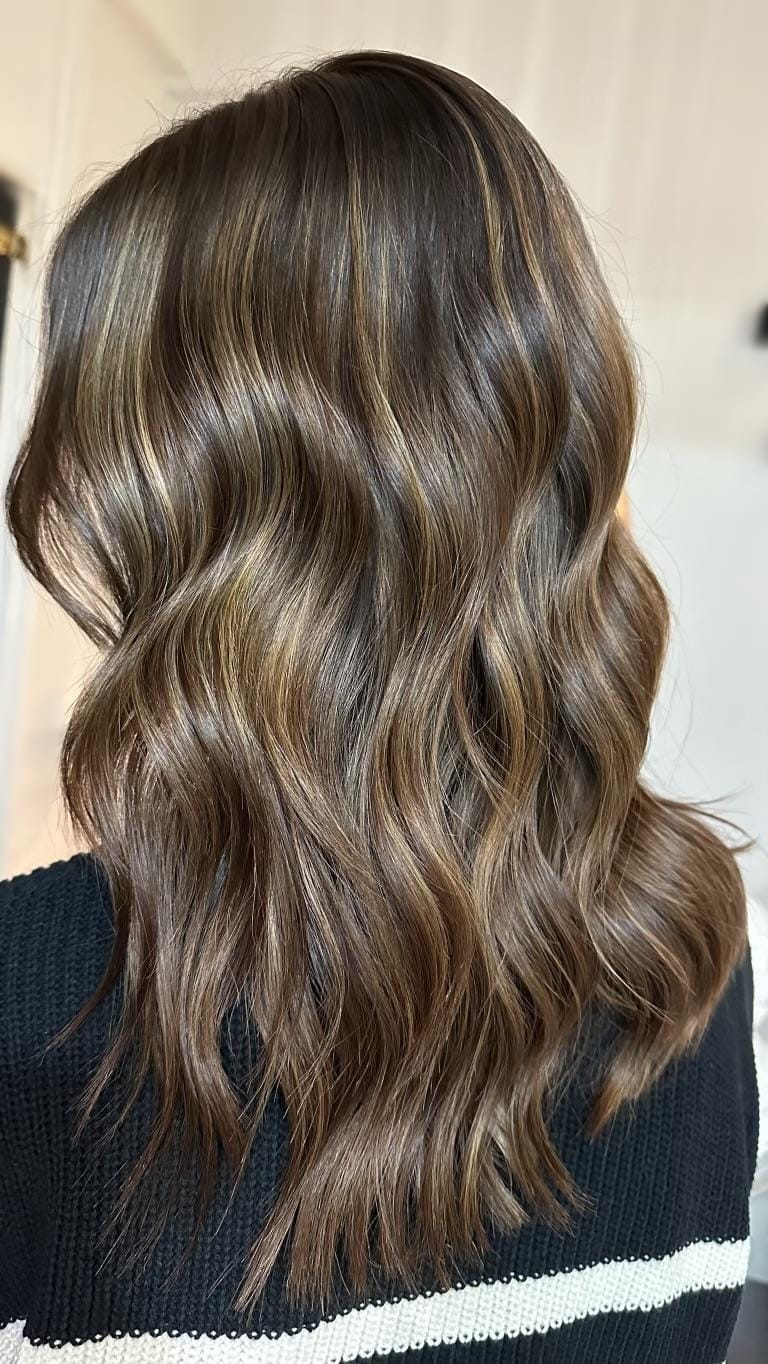
Does a shoulder-length cut make balayage worth it, or does the color get lost in the shorter length? In this case, the warm brown base and caramel highlights are placed high enough that the dimension shows even when the hair is not styled. The back view confirms the color runs from the mid-lengths to the ends, so a ponytail or a simple wave still reads as dimensional. Ask your colorist for: shoulder length brunette hair with caramel balayage. For upkeep, a toning appointment every 10 to 12 weeks keeps the caramel from pulling too warm, and a shine spray brings the gloss back between washes.
Collarbone Lob With Caramel Balayage
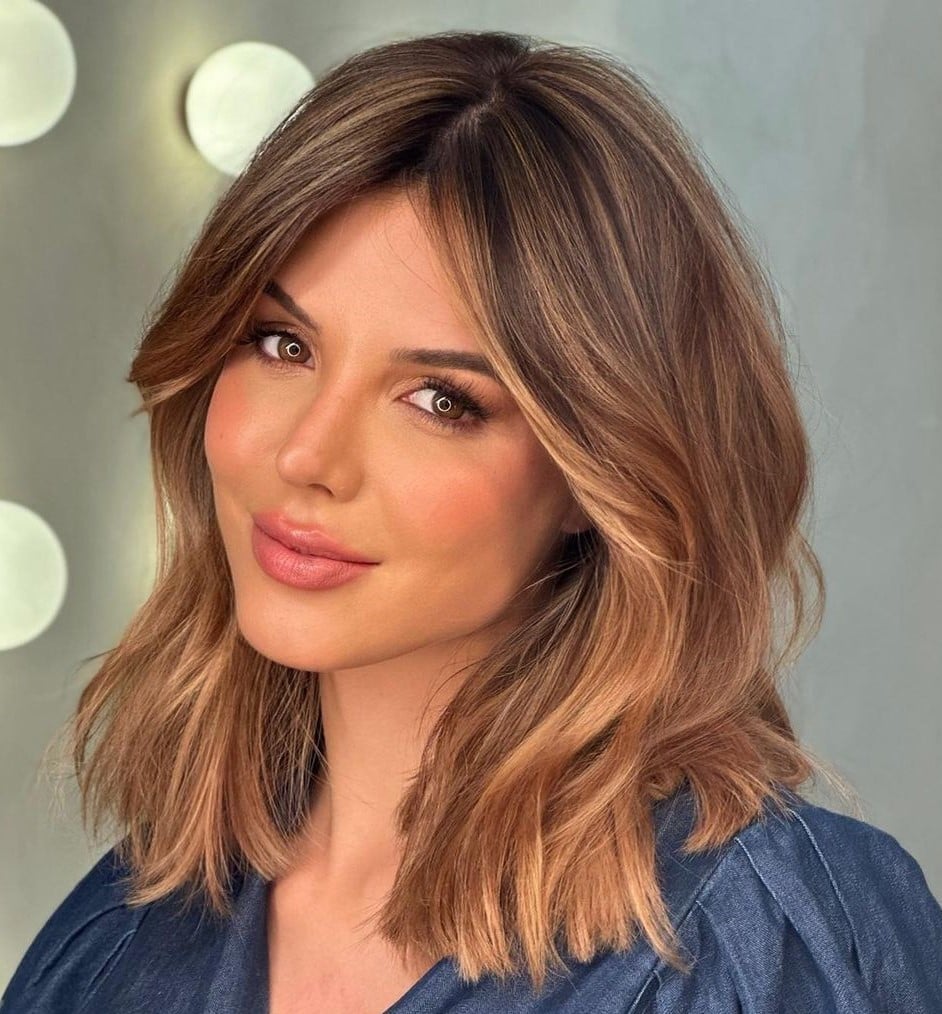
A lob with curtain bangs and a middle part needs the color to work with the cut, not against it. Here, the caramel balayage is painted onto a brown base starting just below the curtain bangs, so the lighter pieces frame the face without competing with the bangs themselves. The seamless blend is what makes this a salon-only job: hand-painting the caramel pieces so they melt into the base requires a colorist who understands placement, not a box dye. Ask your colorist for: collarbone lob with caramel balayage and curtain bangs. The lob shape keeps the color concentration visible at this length, so the dimension does not disappear into longer hair.
Mid-Back With Soft Blonde Balayage Blend
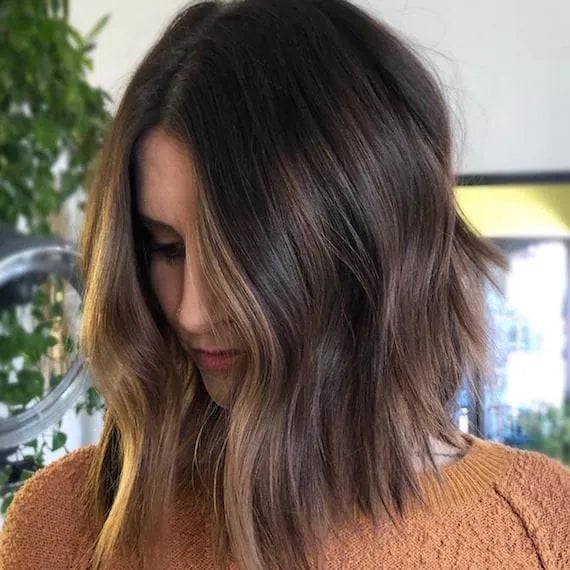
The soft balayage blend here is the opposite of a harsh line of demarcation: the blonde highlights fade into the dark brown base so gradually that you barely spot where one ends and the other begins. Thick, wavy hair at mid-back length or longer carries this effect best, because the loose waves reflect light at different angles and make the transition look even more natural. Ask your colorist for: mid-back hair with a soft blonde balayage blend.
Compare this to a more contrasted balayage, where the lighter pieces sit in obvious ribbons against the base. That approach works well on straight hair that needs visible dimension. This one relies on subtlety and texture. A shine serum helps the glossy finish look polished. Plan a toning appointment every 8 to 10 weeks to keep the blonde from warming up into brass.
Mid-Back Brunette With Warm Blonde Balayage
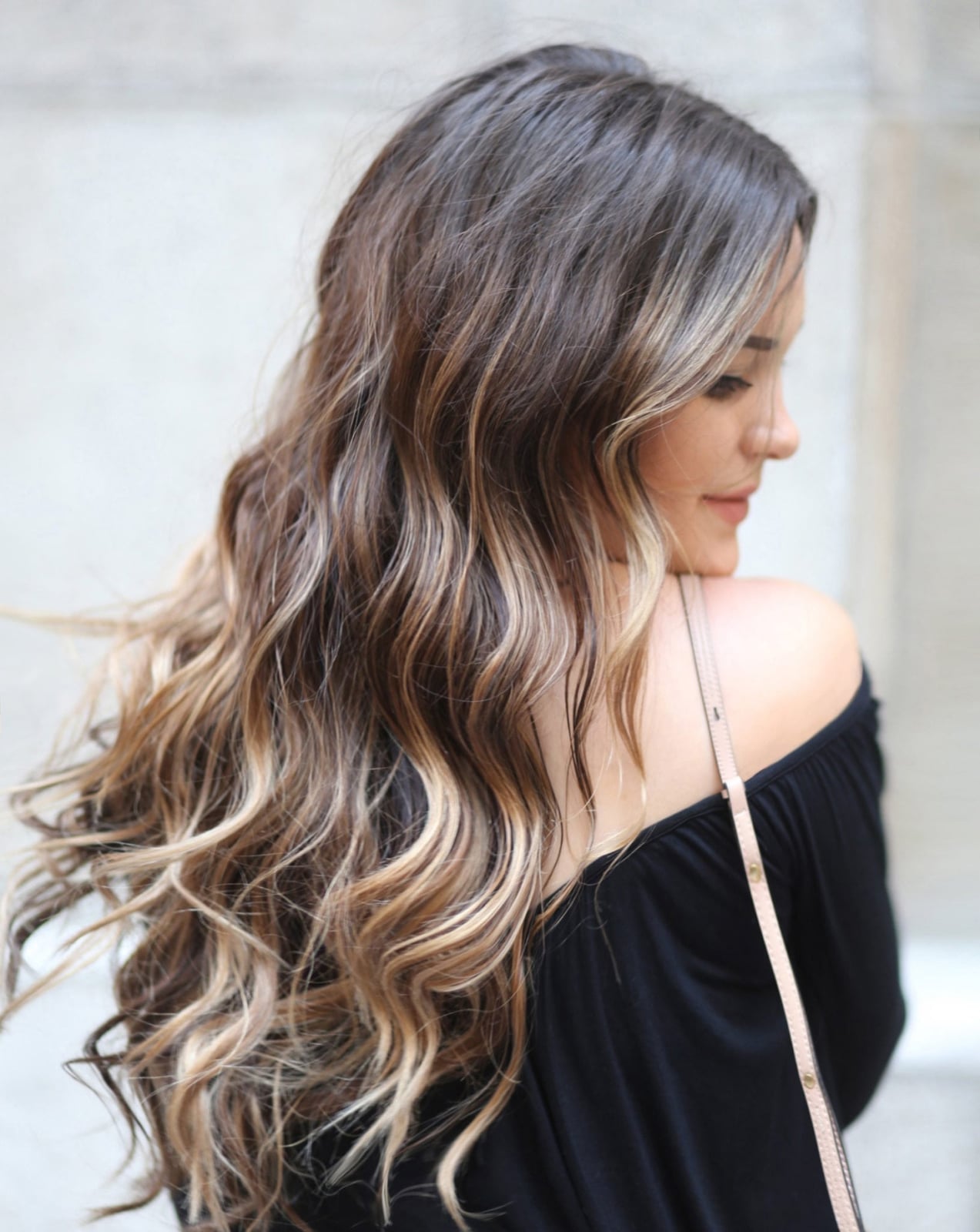
Wondering if warm blonde highlights on brunette hair will look too golden? The answer depends on the tone of your base. A natural brunette with warm undertones takes this combination easily, because the blonde picks up the same amber notes. Thick, wavy hair that reaches mid-back provides a good base, and the curtain bangs do double duty: they soften round and square faces while pulling the lighter pieces toward the front. Ask your colorist for: mid-back brunette hair with warm blonde balayage and curtain bangs.
If your base leans cool or ashy, warm blonde can look brassy. A cooler-toned balayage would sit better on that foundation. For this look, a heat protectant before blow-drying keeps the waves smooth, and a toning visit every 8 to 10 weeks maintains the warmth without letting it tip into orange.
Mid-Back Straight With Ash Blonde Ends
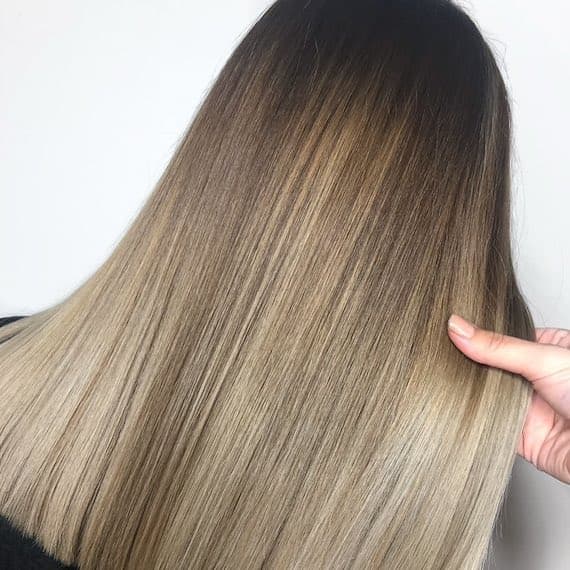
The design here is straightforward: a dark brown root that melts into ash blonde ends with no visible line where the two colors meet. That seamless transition is the entire point, and it requires a colorist who paints the lightener in a graduated motion rather than sectioning off chunky pieces. Thick, straight hair at mid-back length shows off the gradient clearly because the flat surface reflects the color shift without interruption. Ask your colorist for: mid-back straight hair with dark brown to ash blonde balayage.
Upkeep is the trade-off for that clean gradient. Ash blonde ends need a toning shampoo every few washes to stay cool, and a salon toner every 6 to 8 weeks prevents them from yellowing. A smoothing serum and a flat iron give the sleek finish this style demands. Without regular toning, the ash fades into a muddy beige.
Chin Length Bob With Ash Blonde Face-Framing
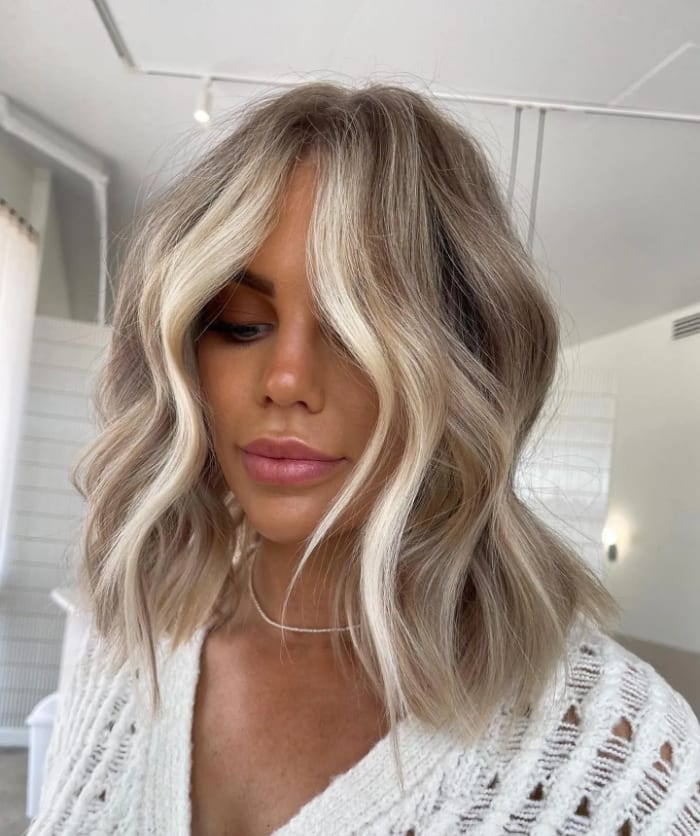
A chin-length bob with ash blonde face-framing pieces sounds low-maintenance until you realize how quickly the lighter sections can make fine, wavy hair look limp. The bob itself holds its shape well, but the balayage placement matters: if the face-framing pieces start too high, they create a halo effect that reads as accidental. Ask your colorist for: chin length bob with ash blonde face-framing pieces. The real drawback is that fine hair can struggle to support the wave pattern needed to give the bob volume, so a texturizing spray becomes a daily necessity rather than an optional extra. A trim every six weeks keeps the bob from losing its clean line.
Chin Length Bob With Caramel Balayage
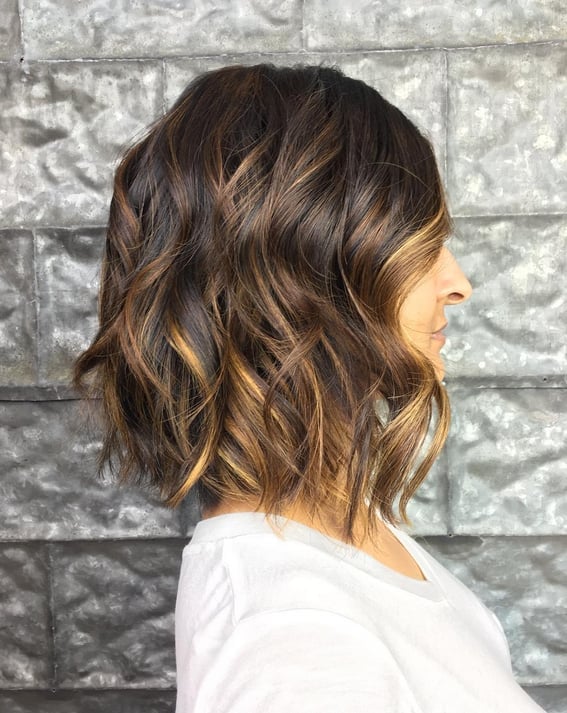
Caramel balayage on a chin-length bob works best when the lighter pieces start around the ears and concentrate toward the ends, so the dark brown base stays dominant near the roots. Medium-density, wavy hair at chin length takes this well because the waves create enough movement to show the caramel without making it look stripey. Ask your colorist for: chin length bob with caramel balayage. A smoothing serum adds the shine that makes caramel look warm instead of dull. The side part helps the lighter pieces fall forward naturally, so the dimension is visible even when the hair is down.
Mid-Back Dark Blonde With Blonde Balayage and Loose Waves
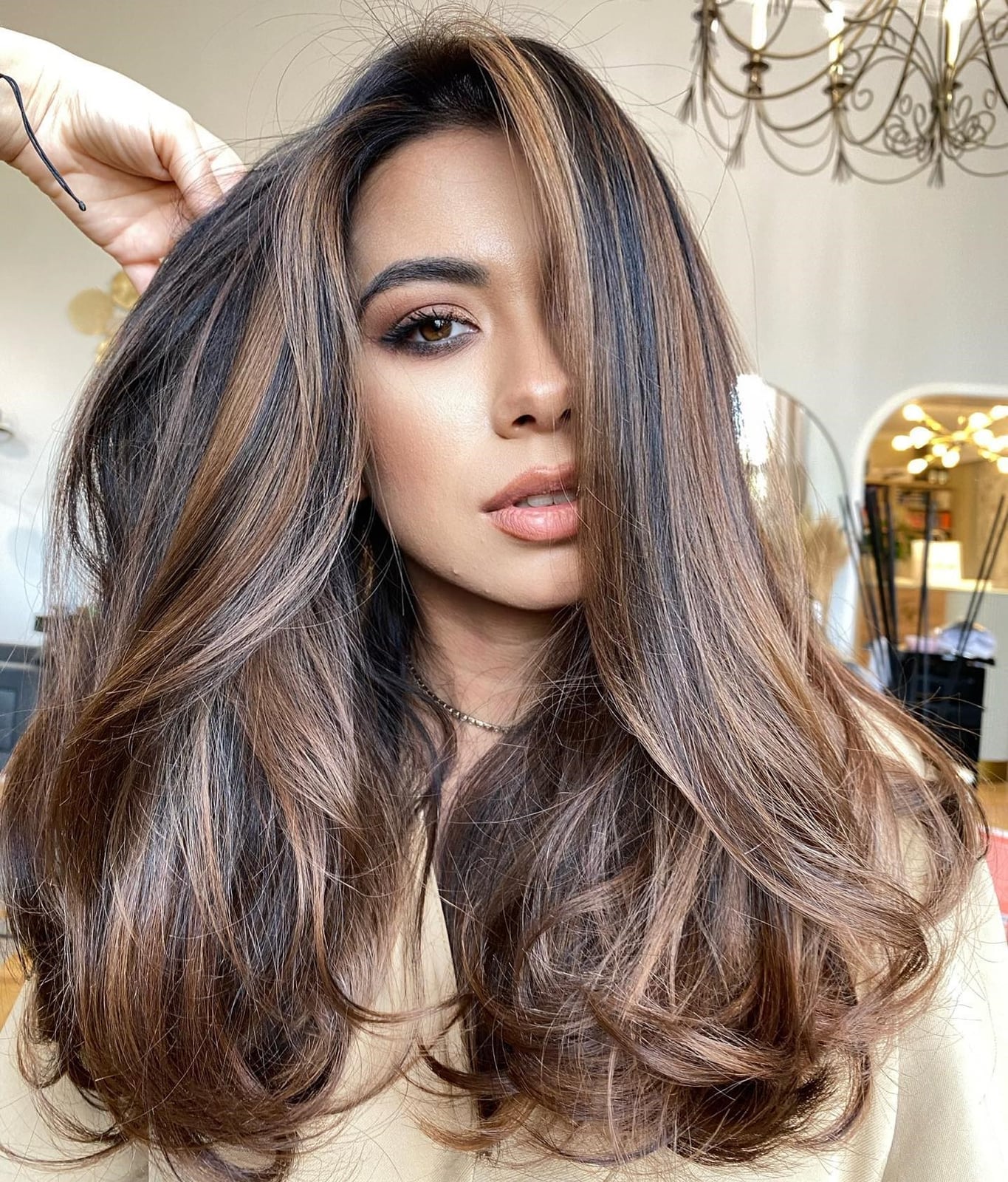
If you are torn between a full blonde transformation and something that still looks like your natural color, this mid-back dark blonde with blonde balayage sits firmly in the latter camp. The loose waves and thick texture give the lighter pieces room to move, so the contrast shows up in motion instead of as a flat stripe. It suits wavy, thick hair that reaches mid-back or longer, and the middle parting works with most face shapes. Ask your colorist for: mid-back dark blonde hair with blonde balayage. The payoff is dimension without the upkeep of an all-over blonde, since your roots stay dark and the grow-out line blurs for weeks.
This is the practical choice for anyone who wants lightness but not the commitment of a full bleach-out. The dark base keeps the blonde balayage looking sun-kissed. To keep the brightness from dulling, a toning appointment every eight to ten weeks does the trick. A volumizing mousse at the roots helps the waves hold their shape, and the thick texture means you can skip the flat iron entirely. This color looks like you spent a weekend at the beach, not three hours in a salon chair.
Mid-Back Dark Blonde With Platinum Balayage, Wavy
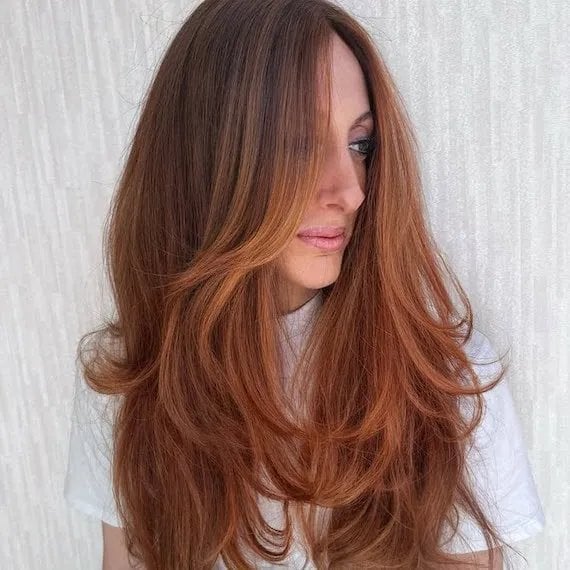
The contrast here is the whole point: a dark blonde base with platinum blonde balayage woven through wavy, medium density hair. This is not a subtle shift; it’s a bold strike of lightness that draws the eye. The lighter strands add the illusion of fullness, and the wavy texture softens what could otherwise be a stark line. It suits most face shapes, especially with the middle parting keeping everything balanced. Ask your colorist for: mid-back dark blonde hair with platinum blonde balayage. The difference between this and a softer caramel blend is the commitment: platinum demands attention, and your roots will show sooner.
If your hair is fine or low density, the high contrast can make thin spots more obvious, so you might want to skip this one. For those with medium density, this dimensional look moves from dark to light without a hard edge. The blowout waves help the platinum strands stand out, but you’ll need to keep up with toning every four to six weeks. A purple shampoo at home stretches the time between salon visits, and the dark base means regrowth is less of a giveaway than it would be on a full platinum head.
Mid-Back Wavy With Platinum Highlights
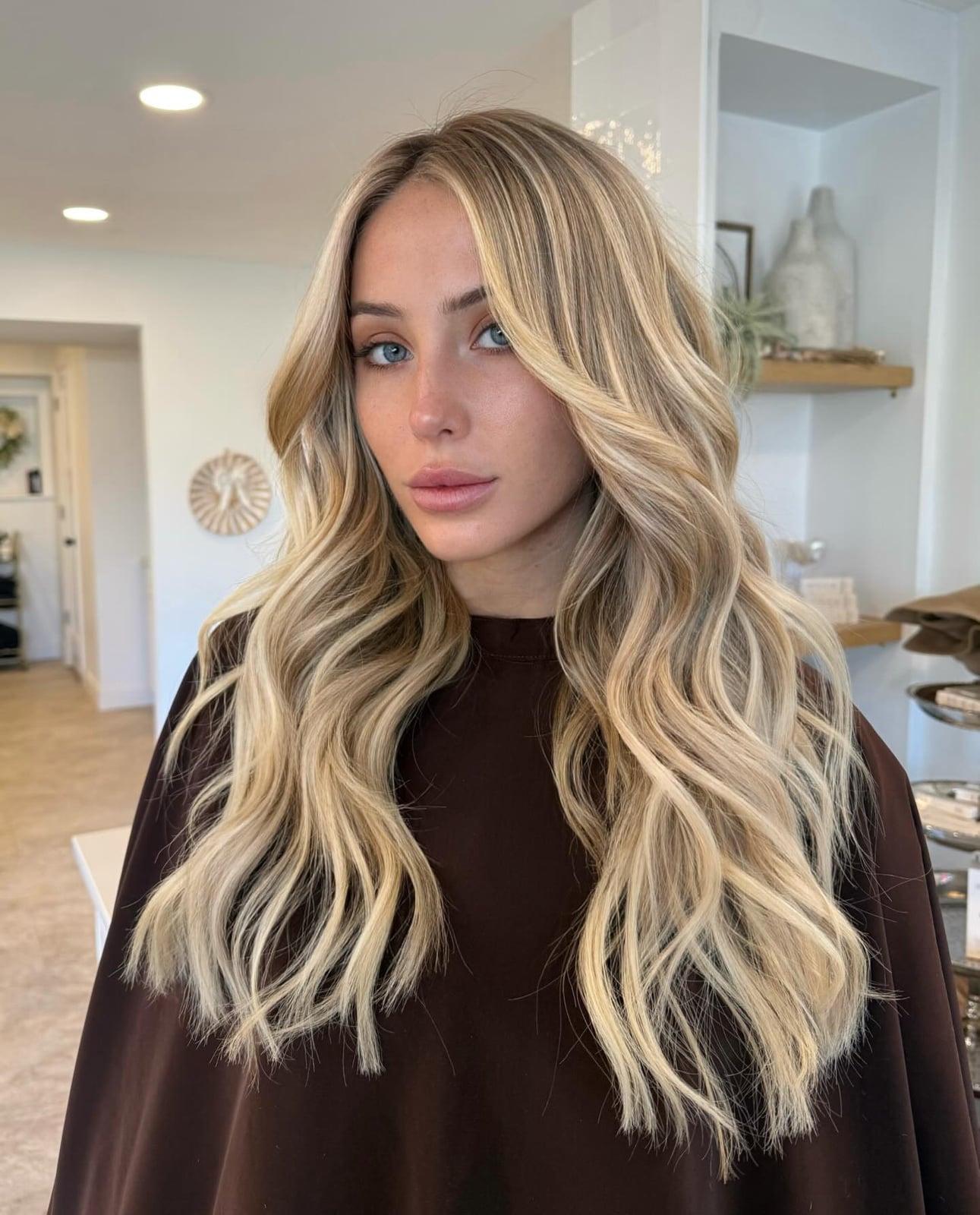
The technique here is balayage with a lighter hand, painting platinum highlights onto an ash blonde base so the brightness concentrates at the ends. The result on thick, wavy mid-back hair is a gradient that feels natural, not striped, because the highlights are woven through the waves. It suits thick, wavy hair that is mid-back or longer, and the middle parting lets the lighter pieces frame the face without needing bangs. Ask your colorist for: mid-back hair with ash blonde base and platinum balayage highlights. This is a salon-only job, since getting the placement right on thick hair takes a steady eye and a lot of foil. At home, you would risk patchiness that looks like a mistake. Between appointments, a toning conditioner keeps the platinum from turning brassy, and a trim every six weeks keeps the ends healthy enough to hold the color.
Final Thoughts
For a low-maintenance balayage, opt for tones that are only one to two shades lighter than your base color and focus on soft blending around the face. This approach keeps regrowth subtle and extends the time between salon visits.
- Schedule balayage touch-ups every three to four months to maintain blended dimension.
- Use color-safe shampoos and conditioners to preserve pigment vibrancy.
- Incorporate a deep conditioning mask weekly for optimal shine and health.
- Minimize heat styling and always use a heat protectant spray.
Embrace the ease of balayage for effortless dimension.