
The shag haircut, once a symbol of rock and roll rebellion, has evolved into a sophisticated staple. For 2027, it’s all about refined layers, modern bangs, and rich color dimensions that offer effortless style for every hair type.
This collection of 32 Classy Shag Hair ideas spans collarbone to mid-back lengths, from fine to thick textures, and includes lived-in color options like ash blonde, silver grey, and vibrant copper. Whether your hair falls flat, your grow-out line shows too soon, or your fringe refuses to cooperate, there’s a shag here that works.
Voluminous Curly Shoulder-Length Shag

Those defined curls are the whole point of this cut. The shag’s layered architecture is designed to lift the curl pattern rather than flatten it, so each ringlet sits on its own. It works best on naturally thick, curly hair that is already at shoulder length; the full bangs and middle part suit oval and long faces. Ask your stylist for a shoulder-length shag with voluminous curls and full bangs. Enhance the curl with a cream and either air dry or use a diffuser on low heat. A trim every six to eight weeks keeps the shape from turning into a vague triangle.
Mid-Back Shag With Silver Grey Blend
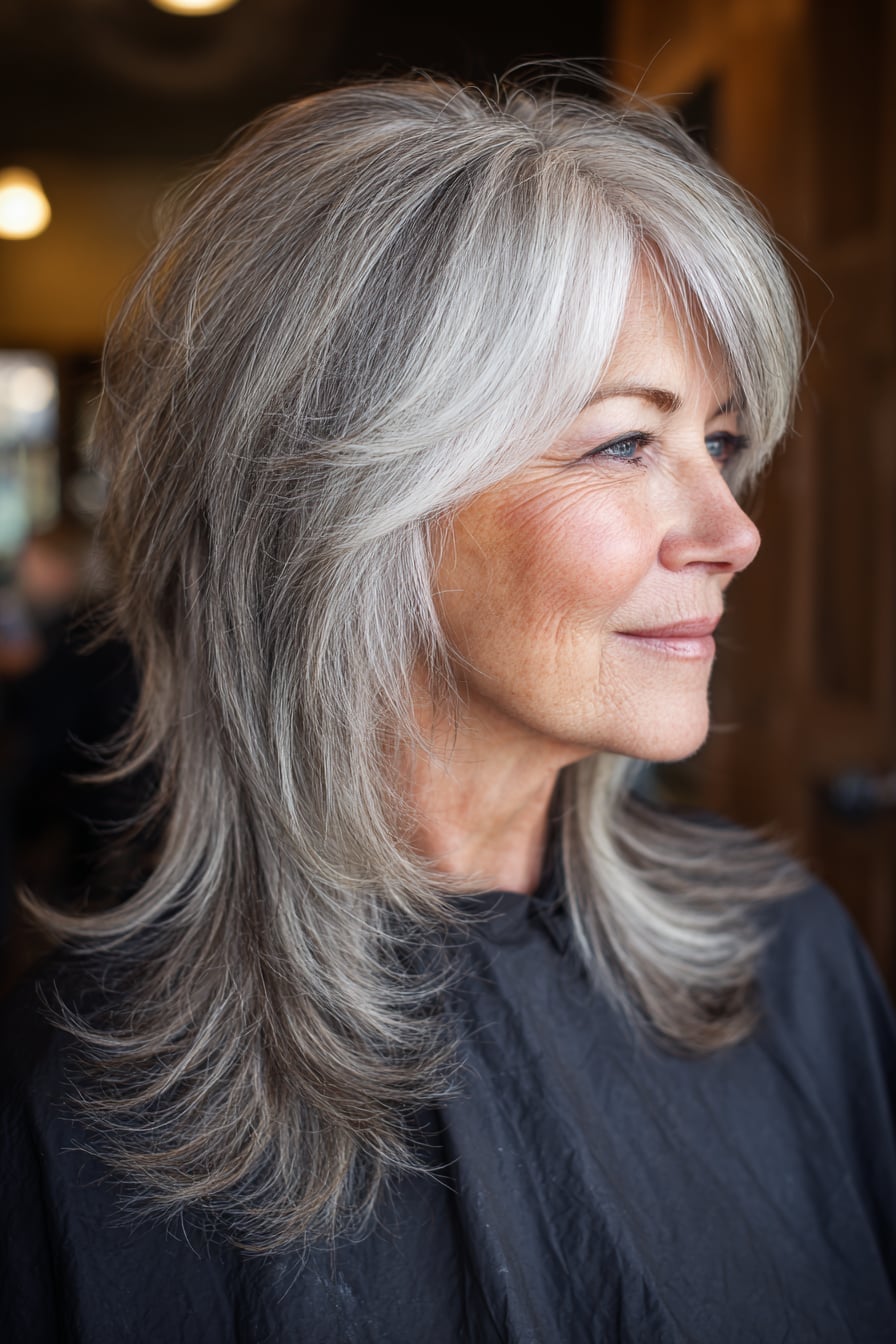
Building volume on fine hair is a technical trick, not a wish. The blowout here starts with a volumizing spray applied at the roots before any heat touches the hair. The stylist then works in sections, lifting each piece at the root with a round brush and directing the ends to emphasize the soft curtain bangs. The silver and grey blend relies on a clean, cool base, so a purple shampoo used weekly prevents yellowing.
This cut works for an evening or special event where you want the layers to show movement. Ask your stylist for a mid-back shag with curtain bangs in silver and grey. The side view is where the layered texture reads most clearly, so the blowout needs to be thorough.
Collarbone Shag With Textured Waves
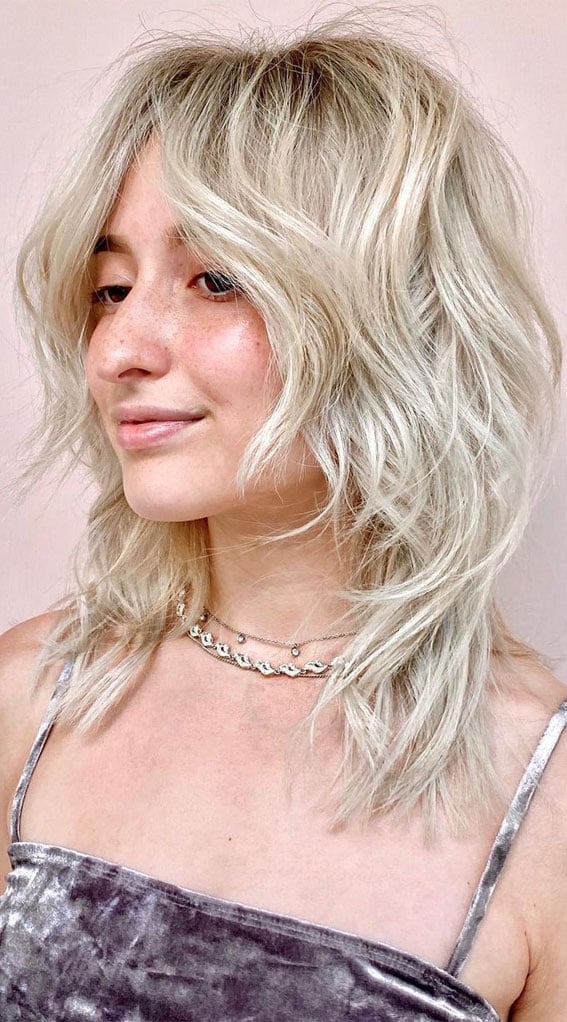
Can you get textured waves without a curling iron? Yes, if the cut does the work. This collarbone-length shag uses face-framing bangs and layered pieces that naturally create movement when air-dried. It suits fine, wavy hair starting at collarbone length; the side part and face-framing bangs soften round and square faces. Ask your stylist for a collarbone shag with textured waves and face-framing bangs. Apply a texturizing spray to damp hair and scrunch, then let it dry. A salon cut is the foundation, but the daily finish is a DIY two-minute job. The baseline needs a trim every six weeks or the layers lose their separation.
Collarbone Shag With Choppy Layers

A softer shag relies on subtle graduation, but this one is the opposite. The choppy layers are cut with more deliberate separation, so the ends stack rather than blend. That makes it a better fit if your hair is medium density rather than fine, too little bulk and the choppiness reads as sparse. The curtain bangs and middle part work to elongate round faces.
Ask your stylist for a collarbone shag with choppy layers and curtain bangs. A texturizing spray and a diffuser on low speed bring out the loose waves. The layers need trimming every eight to ten weeks; after that, the choppy edges soften and you lose the separation that defines this version.
Long Blonde Balayage Shag

The shag is not usually a long cut, and that is precisely why this one stands out. The full bangs and thick, wavy texture keep the shape from looking like a grown-out bob. The balayage is painted from the mid-lengths down, so the root line stays soft for months. One drawback: maintaining that blown-out texture daily requires a round brush and some heat, because air-drying this length produces looser waves that can fall flat by midday. Ask your stylist for a mid-back shag with balayage and full bangs. It suits thick, wavy hair and oval or long faces. The color needs a touch-up every ten to twelve weeks, but the cut holds its shape for about eight.
Collarbone Ash Blonde Shag
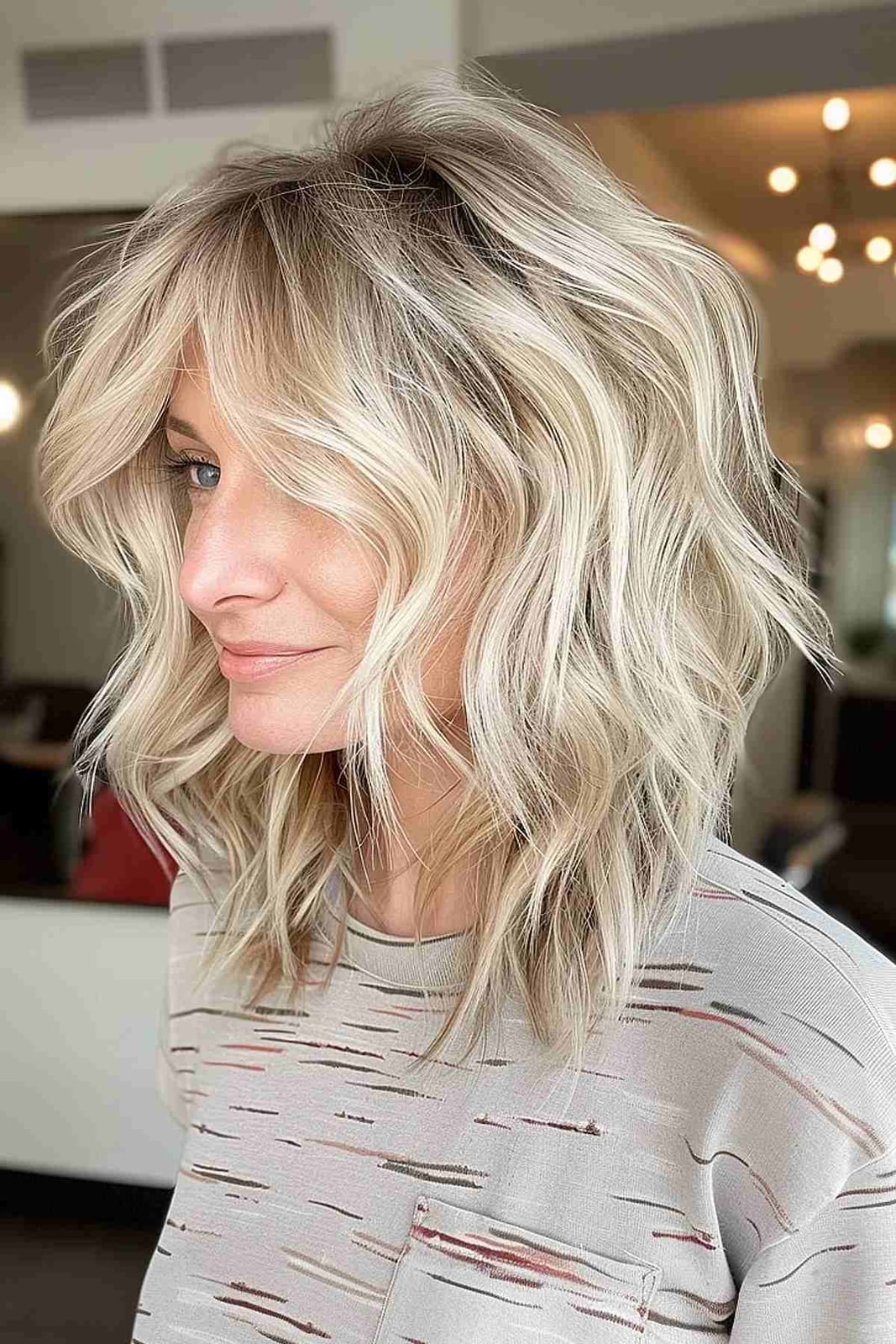
Who says a shag can’t look polished for summer? The ash blonde base with a darker root shadow and subtle highlights keeps the grow-out line soft for weeks, so you can spend more time outside and less time in the chair. Fine to medium wavy textures take well to the collarbone length and wispy bangs, especially with a side part that breaks up the forehead line. Ask your colorist for a collarbone shag with wispy bangs in ash blonde. A dry shampoo at the roots adds the texture the shag silhouette needs, and a baseline trim every six to eight weeks keeps the shape from turning into a shapeless blob.
Shoulder Shag With Choppy Layers

The design logic of a shoulder-length shag is simple: the choppy layers create the stacked volume at the crown while the wispy bangs soften the front. Medium-density wavy hair air-dries into the right texture without a diffuser. Ask your stylist for a shoulder-length shag with choppy layers and wispy bangs. Work a leave-in conditioner through damp hair and let it air dry. The baseline needs a trim every six to eight weeks, a rhythm you can easily manage at home with a good pair of shears if you know your limits.
Long Shag With Full Bangs

Full bangs on a long shag are a specific request, not a compromise. The medium brown base with highlights adds dimension through the long layers, and the thick wavy texture provides the lift that keeps the shag from looking like a flat triangle. Oval and long face shapes benefit from the horizontal line the full bangs create, which visually shortens the face. Ask your stylist for a long shag with full bangs and long layers. A volumizing mousse at the roots before blow-drying gives the crown the height the silhouette demands. The baseline can stretch to every eight to ten weeks, since longer lengths hide a minor shape drift better than short ones.
Collarbone Shag With Piecey Fringe

How do you make a full fringe feel modern without being heavy? Ask for a piecey finish. The dark auburn base with lighter red highlights adds depth that makes each separated strand stand out, and the middle part keeps the fringe from looking like a solid block. Wavy, medium-density hair at collarbone length handles the piecey texture well. Ask your stylist for a collarbone shag with piecey full fringe. For the fringe itself: a texturizing paste worked between the fingers defines each piece without stiffness. The baseline needs a trim every six weeks, and the fringe will need a touch-up every three to four weeks to stay at brow level.
Collarbone Shag In Rich Burgundy
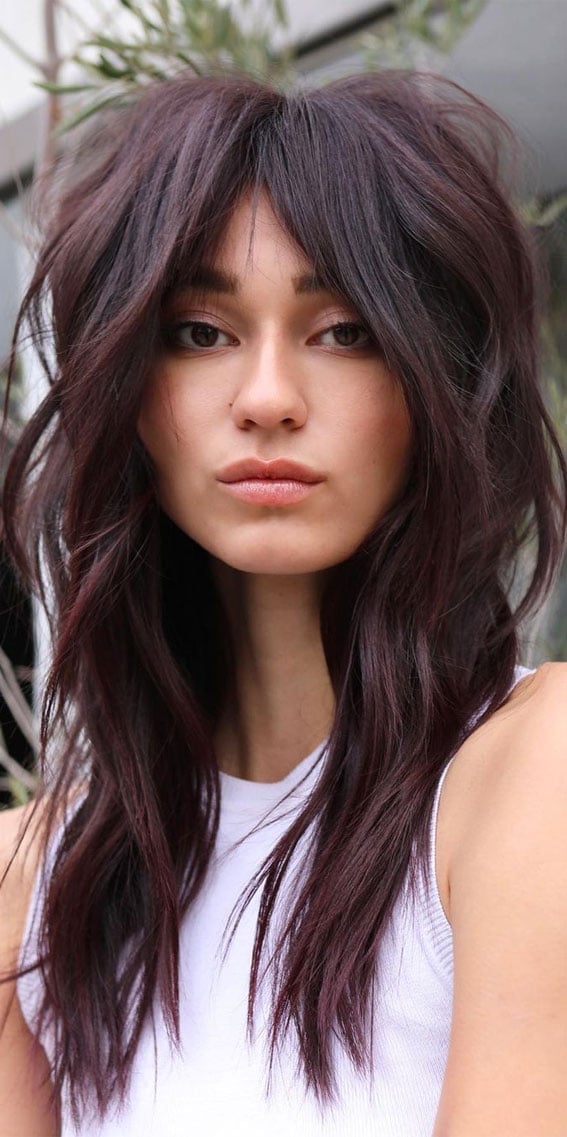
The deep burgundy base is the focal point here, but the choppy layers and full bangs give the color a shape to live inside. Thick, wavy hair at collarbone length benefits from the weight removal the shag layers provide, preventing the triangle effect that dense hair can create. Ask your stylist for a collarbone shag with choppy layers and full bangs in burgundy. Burgundy tones fade faster than browns, so a color-depositing conditioner every two weeks extends the life of the shade. The trim rhythm is every six to eight weeks. At-home gloss treatments can refresh the tone between salon appointments, but the cut itself is best left to a professional.
Collarbone Shag With Lived-in Waves
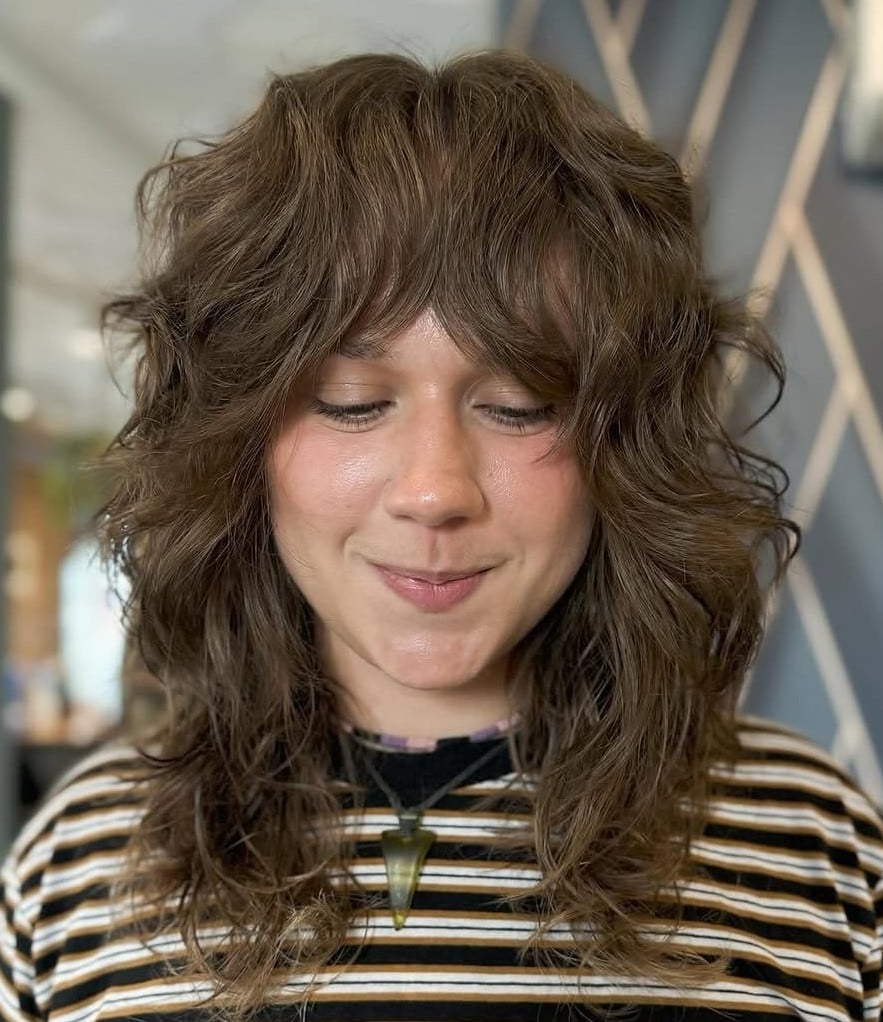
The lived-in wave is the section’s great irony: you pay a stylist good money to make your hair look like you did nothing at all. This collarbone shag uses soft curtain bangs and subtle highlights in medium brown to build that illusion from the root. The side part and wavy texture give it weight without requiring you to own a round brush. Ask your stylist for: collarbone shag with curtain bangs and lived-in waves. An air-dry or quick diffuse will get you there in about fifteen minutes. The catch: those curtain bangs need a dry touch-up with a flat iron most mornings, because no one wakes up looking like they just left the salon.
Medium density hair holds the wave pattern best here. If your texture runs finer, the stylist can adjust the layer depth so you do not lose the body by noon. A trim every six weeks keeps the collarbone length clean and prevents the curtain bangs from becoming a full face-framing layer.
Dark Brown Collarbone Shag

It is not a blunt bob, and that is the point. This dark brown collarbone shag uses soft waves and wispy bangs to soften angular features where a one-length cut would highlight them. The middle part and face-framing layers draw the eye down, which makes it a solid choice for oval and long face shapes. Ask your stylist for: collarbone shag with soft waves and wispy bangs. A smoothing serum is all you need for shine, then air-dry or diffuse for under ten minutes. The trim rhythm holds at every six to eight weeks, so the wispy bangs stay off your lashes and the collarbone length stays sharp. Medium density wavy hair is the sweet spot for this cut, as the layers need enough weight to move without looking stringy.
Collarbone Shag With Blonde Highlights
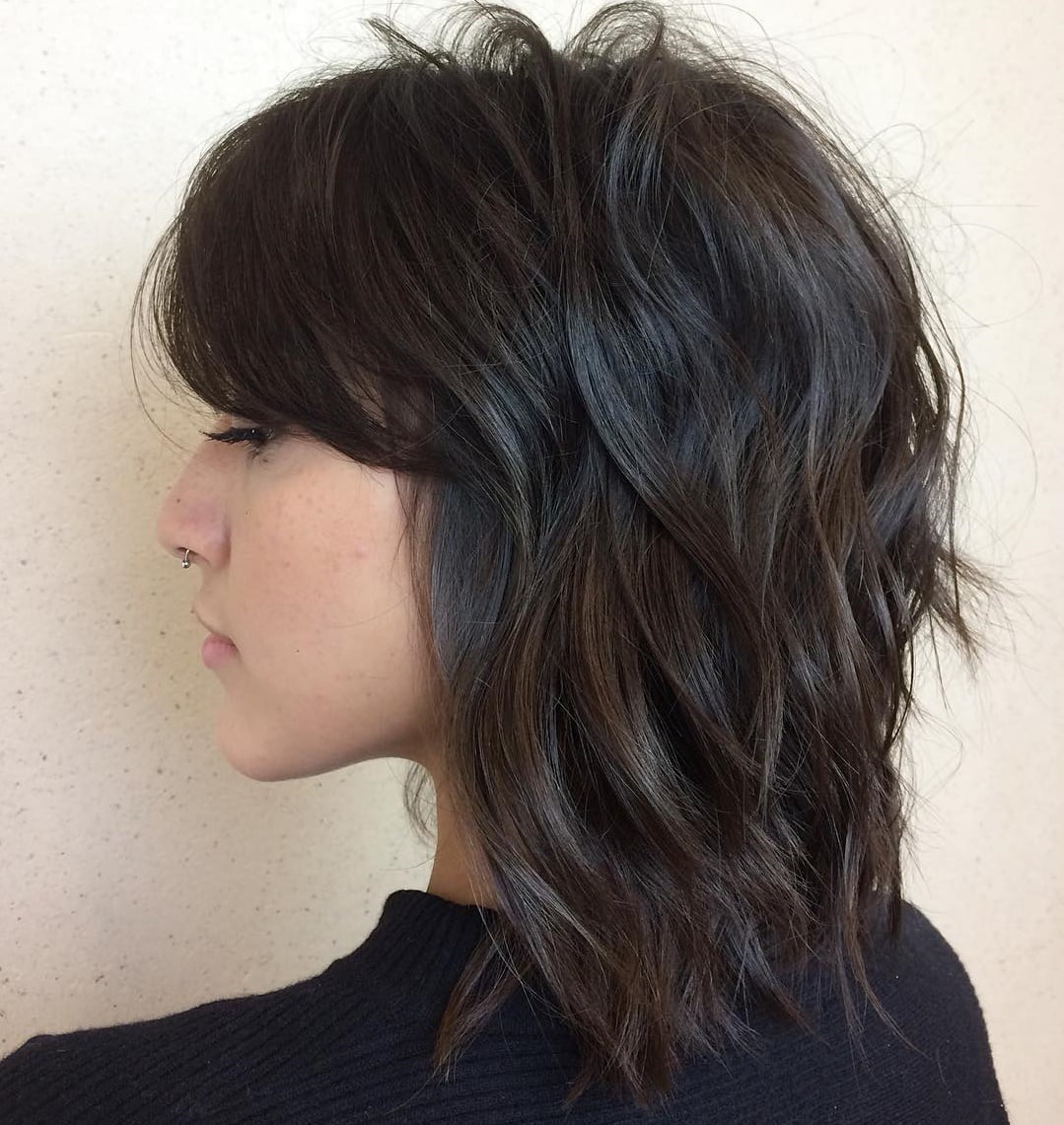
How do you get blonde highlights into a shag without the whole thing looking like a 2008 flashback? The answer is in the placement. This collarbone shag uses a middle part and face-framing layers, so the stylist can weave the blonde highlights closer to the root at the front and keep them softer through the back. Ask your stylist for: collarbone shag with face-framing layers and blonde highlights. The blowout styling gives the wavy texture volume at the crown, which is the whole point of a shag. This is a salon job for both cut and color. DIY touch-ups are not realistic for the highlight placement, so budget for a color appointment every eight to ten weeks to keep the blonde from growing out into a solid band at the part.
The wavy texture and medium density mean the layers will hold their shape without a curling iron. Curtain bangs complete the front profile, framing round and heart face shapes without shortening the visual line.
Collarbone Golden Blonde Shag
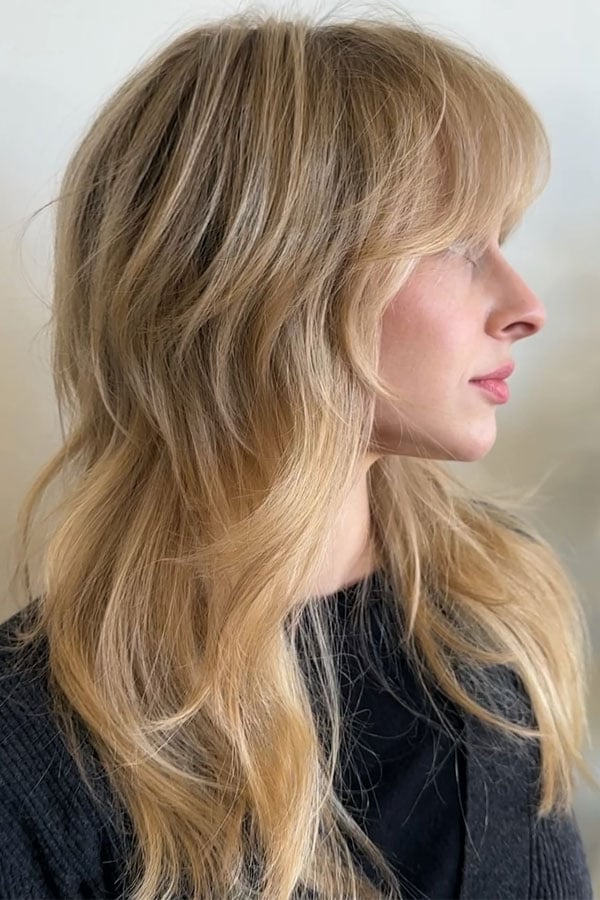
Golden blonde is warm, which means it is also brass-prone, and the most common mistake is letting it go too long between toning appointments. This collarbone shag uses choppy, textured layers and wispy bangs in a golden blonde base with subtle highlights to keep the color from reading as one flat block. The middle part and side view angle work together to show off the layer movement. Ask your stylist for: collarbone shag with choppy layers and wispy bangs in golden blonde. A texturizing spray and an air-dry are all you need for a natural finish, so styling runs under ten minutes. The upkeep is the trade-off: the golden tone needs a toning appointment every six to eight weeks, and the trim follows the same rhythm to keep the wispy bangs from growing past the brow. Medium density wavy hair carries the choppy layers best, as finer textures can look too sparse at the ends.
Collarbone Shag With Grey Streaks
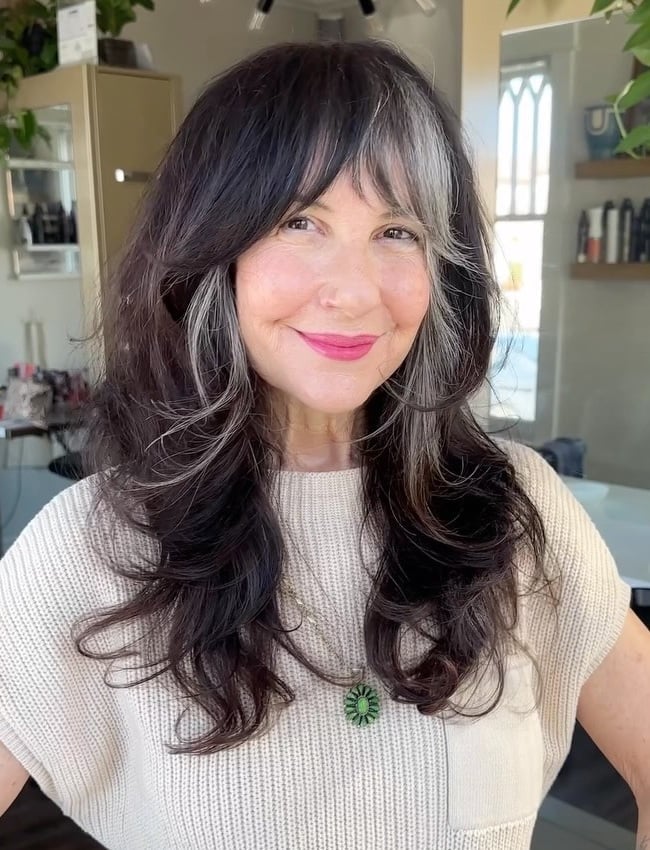
Grey streaks used to be something you covered, but this collarbone shag treats them as the main event. The dark brown base and prominent natural grey streaks create a high-contrast look. Soft waves and face-framing layers keep the texture from looking flat, and the side part adds asymmetry to balance the streak placement. Ask your stylist for: collarbone shag with face-framing layers and grey streaks. This cut works year-round, but it lands especially well in fall and winter when the contrast between the dark base and the grey feels more graphic. A lightweight styling product is all the styling requires, so the natural wavy texture does the work. Medium density hair at collarbone length is ideal, as the grey streaks need enough hair to show through without overwhelming the dark base. Trim every six to eight weeks to keep the face-framing layers from sliding past the jaw.
Mid-Back Shag With Heavy Texture

There is a difference between asking for layers and asking for a commitment. This mid-back shag leans fully into the latter, with choppy layers cut throughout that give thick, wavy dark brown hair a deliberately rough edge. The shaggy fringe and middle parting keep the weight from pooling at the ends, so the whole cut moves as one piece instead of two separate curtains of hair.
Styling time is a real factor. Thick hair does not wake up looking this textured, it needs a textured blowout with a diffuser and a sea salt spray to coax the wave pattern into something that matches the cut’s intent. If you have the density to carry it, this is a statement, but it is not a low-maintenance one. Ask your stylist for: mid-back shag with heavy texture and shaggy fringe. Plan on a trim every 8 to 10 weeks to keep the choppy ends from merging into a single blunt line.
Shoulder-Length Dark Brown Shag

If a mid-back shag feels like too much hair to manage, this shoulder-length version is the close alternative that keeps the spirit intact. Full bangs do the heavy lifting here, cutting horizontally across the forehead to balance a longer face shape while the thick, wavy dark brown texture air dries into its own natural volume. The middle part and the full fringe work together to frame the face without needing a single styling tool. Ask your stylist for: shoulder-length shag with full bangs in dark brown. Just let a leave-in conditioner do its job and resist the urge to brush it once it is dry, that is the whole trick to the lived-in finish.
Mid-Back Shag In Vibrant Copper

Vibrant copper does not sit still, and neither does this mid-back shag with its curtain bangs blending into face-framing layers. The loose waves and textured finish give the color room to shift with every movement, so the copper reads as dimensional rather than flat. This is a color that demands a schedule: copper fades fastest of any shade, and you will be refreshing it with a color-depositing conditioner every few washes to keep it from drifting toward orange. The salon work is the expensive part, about three hours in the chair for the cut and full color, and the at-home maintenance is where the real effort lives. Ask your colorist for: mid-back shag with curtain bangs in vibrant copper. A trim every 8 to 10 weeks keeps the textured ends from looking ragged while the color does its thing.
Shoulder Shag With Platinum Blonde
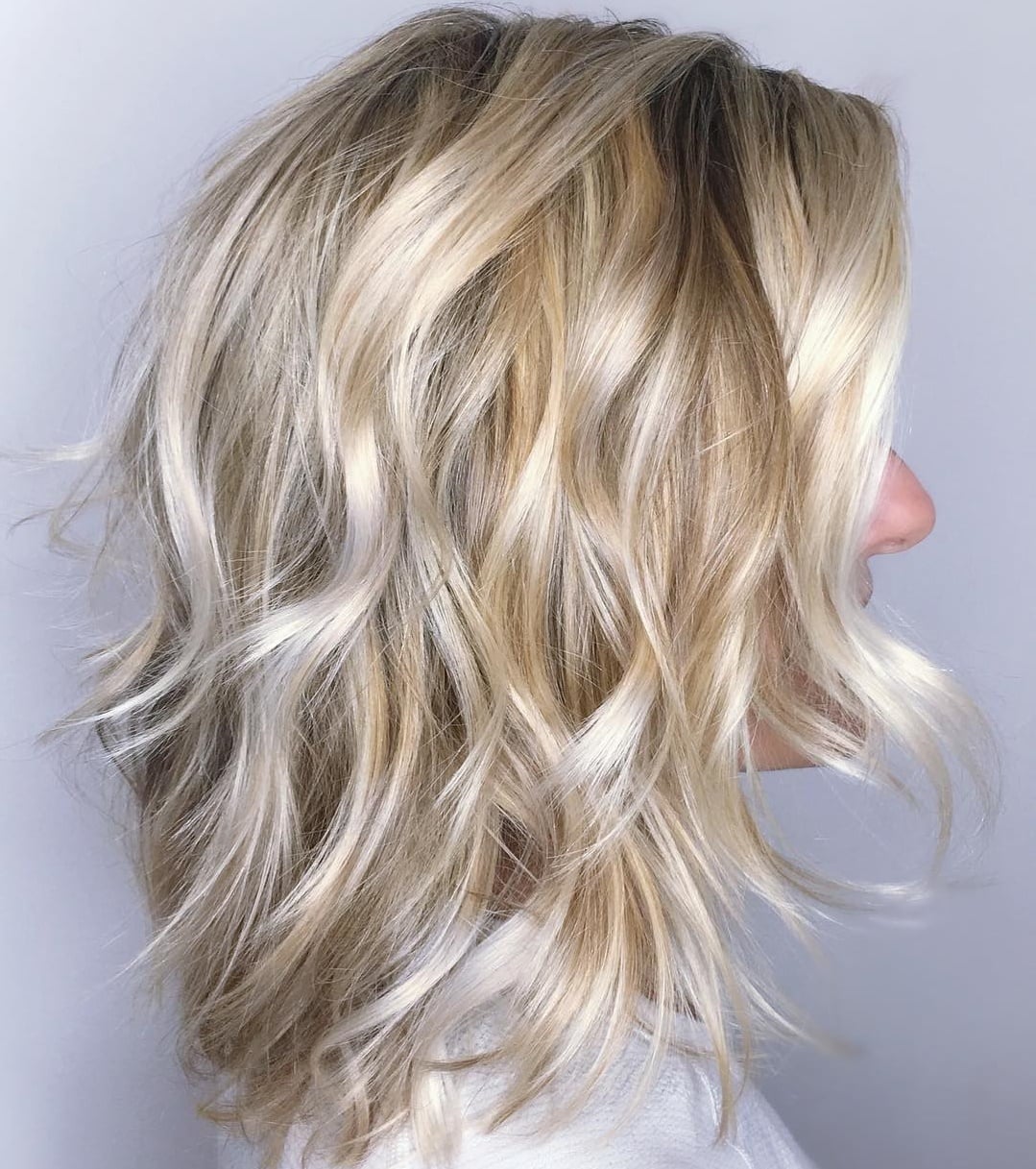
Can fine hair handle a shag without falling flat? Yes, if the layers are cut to create internal support rather than remove bulk. This shoulder-length version uses curtain bangs and textured waves to build volume into fine, wavy platinum blonde hair, with ash undertones and lighter highlights adding depth so the cut does not wash out to a single pale sheet. The side part gives the layers somewhere to land, and the tousled finish keeps everything looking intentional. Ask your colorist for: shoulder-length shag with curtain bangs in platinum blonde. The color upkeep is the real commitment, a purple shampoo once a week to hold the ash tone and a bond-building treatment to keep fine hair from snapping, plus a trim every 6 to 8 weeks to preserve the shape.
Chin-Length Shag With Blunt Bangs

Blunt bangs on a chin-length shag is a specific request, and you should say those exact words to your stylist. The choppy layers throughout give the dark brown cut its shag identity, while the blunt, textured bangs add a sharpness that keeps it from reading as a soft, romantic style. The middle parting and air-dried wavy texture mean you are not fighting the cut, you are just letting it settle. This is a salon-built look, not a DIY trim, because the bluntness of the bangs needs a steady hand. Ask your stylist for: chin-length shag with choppy layers and blunt bangs. Budget for a trim every 4 to 6 weeks, blunt bangs announce their grow-out within a month.
Shoulder Shag With Swept Bangs

Volume this deliberate is usually a fight with a round brush, but the swept bangs do the heavy styling for you. Thick, wavy hair at shoulder length holds those soft curls without deflating by lunch. The side parting and long, swept bangs balance a round face by drawing the eye diagonally. Ask your stylist for: shoulder-length shag with swept bangs and platinum highlights. A volumizing spray at the roots and a diffuser keep the shape bouncy, with a trim every six to eight weeks to preserve the line.
Chin Shag With Tousled Layers
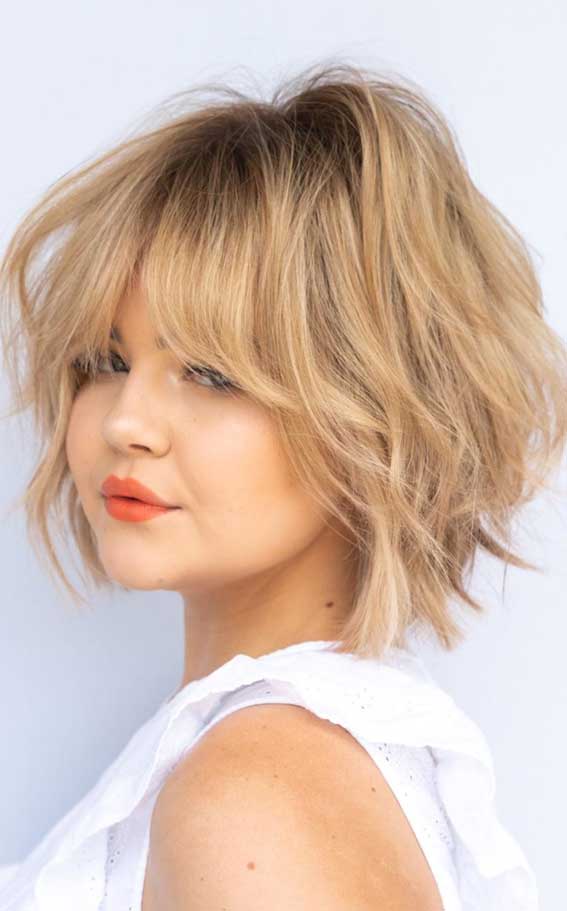
Does this cut look like it just happened, or did it take an hour? On fine, wavy hair, the answer is usually the latter. The chin-length shag with textured, tousled layers needs daily styling to keep that messy finish from reading as bedhead. A texturizing paste worked into dry hair gives the honey blonde layers grip, but the piecey effect fades fast on fine strands. The real drawback is the upkeep: the cut relies on precise layering, so plan for a trim every four to six weeks, and ask your stylist for: chin-length shag with tousled layers and textured bangs.
Collarbone Shag With Wispy Curtain Bangs

Skip the fuller fringe and let the wispy curtain bangs do a softer version of the same job. This collarbone shag with textured waves and wispy curtain bangs in ash blonde with subtle highlights reads as lived-in without the commitment of heavy styling. The air-dried finish is the point, which means it is a strong salon choice for fine, wavy hair that does not want a daily blowout. A texturizing spray on damp hair and a quick air dry gets you out the door. Ask your stylist for: collarbone shag with wispy curtain bangs, then trim every six to eight weeks to keep the wispy ends from growing heavy.
Collarbone Shag With Salt and Pepper

Salt and pepper tones have a way of looking intentional with a structured cut, and the choppy layers give the color a place to land. This collarbone shag with choppy layers and soft curtain bangs works for fine, wavy hair because the blowout adds volume at the roots. The side parting and curtain bangs frame the face without extra weight, which suits most face shapes. It is a dependable choice for the office or a weekend dinner. Ask your colorist for: salt and pepper blend with choppy layers. A volumizing spray before the blowout keeps the shape, and a trim every six weeks maintains the baseline.
Collarbone Shag With Textured Layers
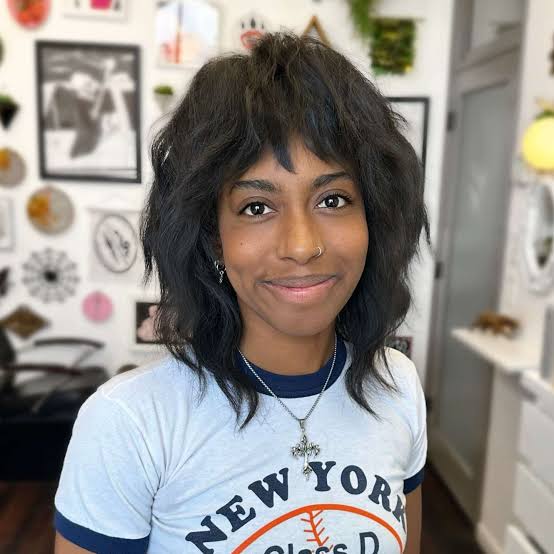
The key to this cut is how the textured layers are cut into the wave, not against it. A stylist carves the layers to follow the natural movement of medium-density wavy hair, so the dark brown strands fall into place rather than fighting for direction. Face-framing bangs keep the front light and blend the sides.
This is a salon-leaning cut because the internal layering is what makes it work. Ask your stylist for: collarbone shag with textured layers and face-framing bangs. After washing, a texturizing spray works well with air drying to set the finish, with a trim every six to eight weeks to keep the layers from blending into one.
Mid-Back Shag With Long Layers

Ever wonder if a shag can still work when you don’t want to lose length? This mid-back version keeps the weight but swaps in long, choppy layers that let thick, wavy hair actually move. The dark brown base with subtle lighter pieces adds depth without screaming for attention, and those curtain bangs pulled to a middle part soften the whole thing. It is a lot of hair, but it behaves.
Ask your stylist for: mid-back shag with long layers and curtain bangs. The air-dried finish is the point here: a texturizing spray is all it takes to make the layers separate. A trim every eight to ten weeks keeps the shape from turning into a triangle. This one genuinely flatters thick, wavy hair at mid-back length, and the middle part with curtain bangs suits oval and long faces best.
Collarbone Shag With Choppy Bangs

The choppy bangs here are cut short enough to stand out and textured enough to blend into the shag layers. On a collarbone-length cut with a middle part and light brown highlights, those choppy bangs become the focal point, especially on fine, wavy hair that needs the illusion of density. You can get this at a salon, and you should: the bangs need a stylist to cut them at an angle that avoids a straight line. Ask your stylist for: collarbone shag with choppy layers and choppy bangs. A texturizing paste on the bangs gives them definition without weighing them down.
Mid-Back Shag With Face-Framing Layers

Face-framing layers on a mid-back shag look great for about four weeks. After that, the shortest pieces start to feel disconnected from the length. This dark brown version with thick, wavy texture and a middle part shows the trade-off clearly: the layers give the front a soft, sculpted shape, but they demand a trim every eight to ten weeks to keep that shape. The hair air-dries naturally, which helps the texture stay consistent.
Ask your stylist for: mid-back shag with long face-framing layers. If you air-dry, a smoothing serum on the ends prevents the face-framing pieces from looking fuzzy. The real drawback is that those front layers grow out faster than the back, so skipping a trim means they lose their intended arc. Best on thick, wavy hair at mid-back length, with a middle part that suits oval and long faces.
Short Shag With Curtain Bangs
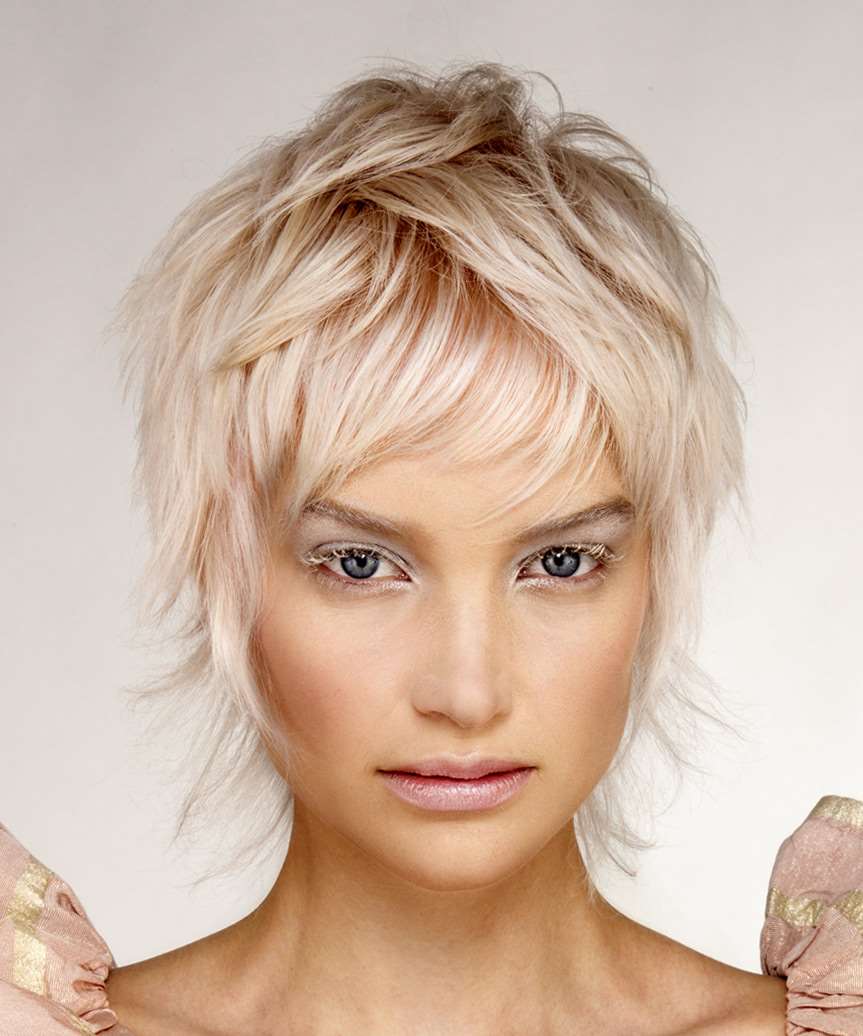
This is not a low-maintenance color. The ash blonde base with platinum highlights is cool-toned and high-contrast, which means a purple shampoo every other wash and a toning appointment every four to six weeks to keep the brass away. The cut itself is a short, choppy shag with curtain bangs and a middle part, built for fine, wavy hair that needs volume at the crown. A texturizing spray and dry shampoo help maintain lift at the roots through the day. Ask your stylist for: short choppy shag with curtain bangs. Trim the shape every four to six weeks to preserve the choppy layers.
Shoulder Shag With Long Curtain Bangs

How do you get long curtain bangs that actually sweep to the side and stay there? The technique starts with a side part, not a middle one. This shoulder-length shag in honey blonde with highlights uses that side part to let the long curtain bangs open away from the face, creating a soft, textured wave pattern throughout. The medium, wavy texture holds the shape without much effort: a texturizing spray and a quick diffuse or air-dry is enough. Ask your stylist for: shoulder-length shag with long curtain bangs. This is a salon cut, not a DIY project: the bangs need to be cut on an angle that follows the side part. A baseline trim every six weeks keeps the length manageable.
Collarbone Shag With Blonde Highlights and Curtain Bangs

The trick with a collarbone shag is that the layers do the work even when the texture is fine. Soft, textured layers throughout keep the weight off the ends, which means the hair holds volume rather than collapsing into a V-shape. Wispy curtain bangs with a side part pull the eye outward instead of cutting the face in half, so the cut suits round and square shapes as well as ovals. Ask your stylist for a collarbone shag with textured layers and wispy curtain bangs. The blonde highlights add dimension that makes fine strands look denser, and a loose blowout with a round brush gives the wavy texture a glossy finish that lasts until the next wash.
Short Chin Shag With Textured Bangs

A chin-length shag with short textured bangs is a geometry lesson: the choppy finish keeps the shape light. Ash blonde with highlights gives the fine, wavy texture some visual depth, but those short bangs demand daily attention. They need a texturizing paste and a few finger-combs every morning to stay piecey. The drawback is that the bangs grow out fast, so a trim every four weeks is required to keep the choppiness defined.
Final Thoughts
For fine hair, keep the length at collarbone or shorter with choppy layers to create the illusion of fullness. For thick hair, longer lengths with heavier layering reduce weight and encourage movement. The key is matching the shag’s shape to your hair’s natural behavior.
- Schedule trims every 6-8 weeks to maintain the shag’s layered shape.
- Use texturizing spray on dry hair for an air-dried, lived-in finish.
- For color-treated shags, use a color-safe shampoo to preserve vibrancy.
- Deep condition monthly to keep textured or highlighted hair healthy.
Find your perfect shag and embrace textured style.