
Honey hair color keeps evolving, and for 2027, the focus is on warm, dimensional shades that look lived-in rather than freshly painted. Curtain bangs and soft face-framing layers are the go-to finishing moves this season, giving honey tones a natural, polished feel.
Inside, you will find 29 takes on Classy Honey Hair, from chin-length bobs to mid-back waves, with techniques ranging from balayage to babylights. Whether your hair is fine and needs volume or thick and needs shape, there is a honey shade and cut that works. No more guessing which toner to ask for or watching highlights turn brassy by week four.
Chin Length Bob With Side Swept Fringe
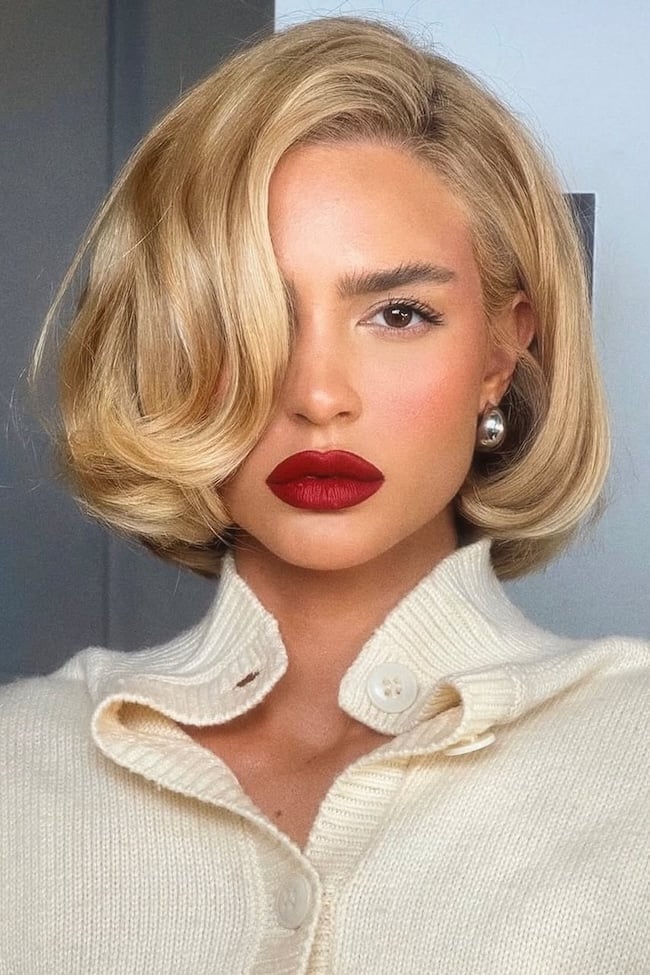
A chin-length bob with soft, wavy texture and a side-swept fringe is a design that works with fine hair rather than against it. The glossy honey blonde finish adds the appearance of density, and the side part creates volume at the crown. This cut softens round and square face shapes, and the waves keep the silhouette from looking severe. Ask your stylist for: chin length bob, soft wavy texture, side-swept fringe. Tuck one side behind the ear for a quick polished shift, and plan a trim every six to eight weeks to maintain the line.
Wavy Fine Bob With Wispy Side Bangs
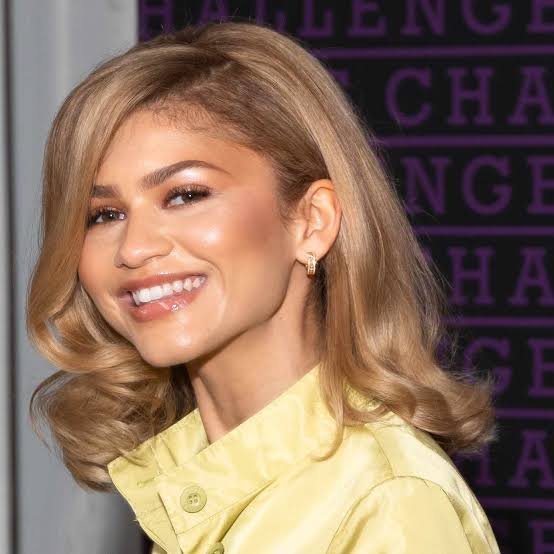
How do you ask for a shade that reads warm without crossing into brassy territory? Start with the cut: a chin-length bob with soft waves and wispy side-swept bangs. The rich honey blonde tone here is glossy rather than metallic, which keeps it sophisticated. The wispy bangs soften angular jawlines, and the fine texture benefits from the gentle wave pattern, which adds the illusion of body. Ask your colorist for: rich honey blonde, soft waves, wispy side-swept bangs. A texturizing spray on the mid-lengths defines the wave without weighing it down.
Layered Bob With Honey Highlights
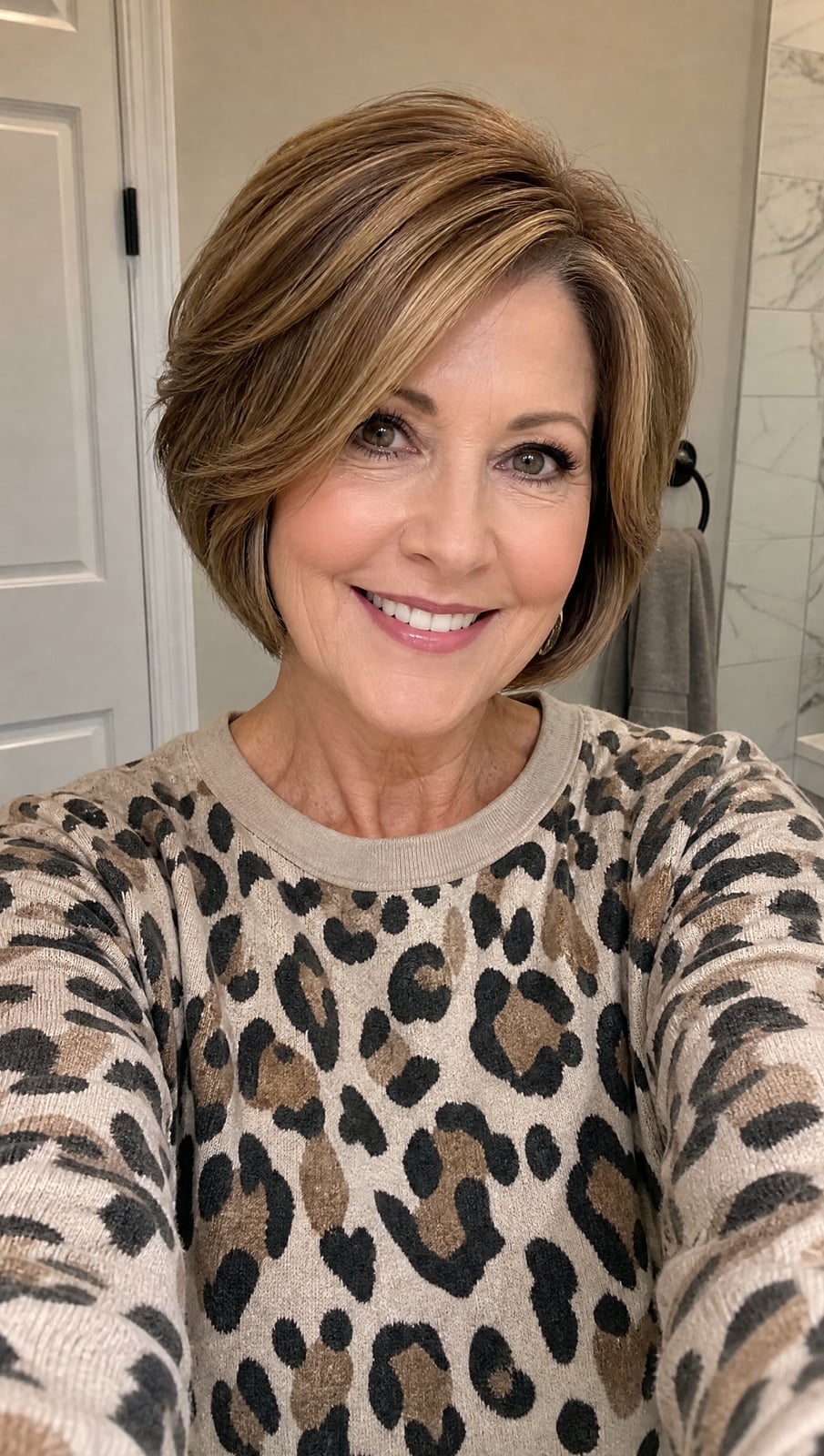
A layered bob with side-swept bangs works best when the color supports the cut’s architecture. Here, a honey blonde base is accented with subtle lighter highlights placed through the layers, which catch the eye as the hair moves. This technique adds dimension without chunky stripes, and the layers reduce bulk for thick, wavy textures. Ask your colorist for: layered bob, honey blonde with subtle highlights. A professional blowout with gentle waves finishes the look, and the tone holds for about eight weeks before a gloss appointment is needed.
Collarbone Layers With Curtain Bangs
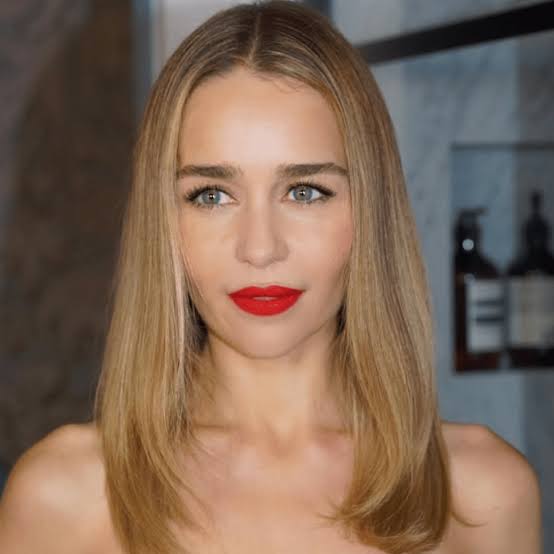
Collarbone layers with curtain bangs sit between a lob and longer lengths, making them a practical choice for fine, straight hair that needs movement without losing density. The honey blonde base with subtle lighter highlights adds depth, and the middle part keeps the style balanced. Curtain bangs soften round and oval face shapes, and the blowout styling gives a glossy, pulled-together finish.
Ask your stylist for: collarbone length layers, curtain bangs, honey blonde with subtle highlights. A trim every six to eight weeks keeps the bangs from overtaking the brows, and a heat protectant before blow-drying preserves the shine.
Wavy Collarbone Layers With Warm Tone
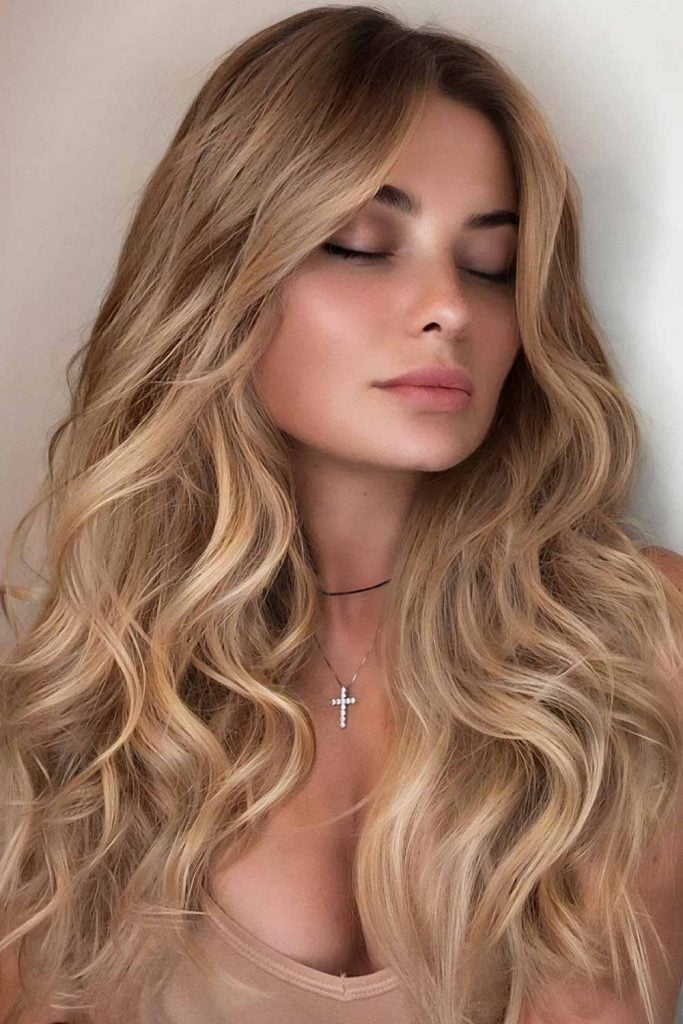
A collarbone-length cut with soft, wavy layers and a middle parting relies on the warmth of the honey blonde shade to give it life. The glossy finish reflects light evenly, which is what makes medium-density hair look fuller than it is. The waves are soft enough to air-dry with a cream or mousse, skipping the round brush entirely. Ask your colorist for: collarbone length wavy layers, warm honey blonde. A glossing treatment every six to eight weeks maintains the shine and prevents the tone from drifting dull.
Collarbone Balayage With Curtain Bangs, Wavy
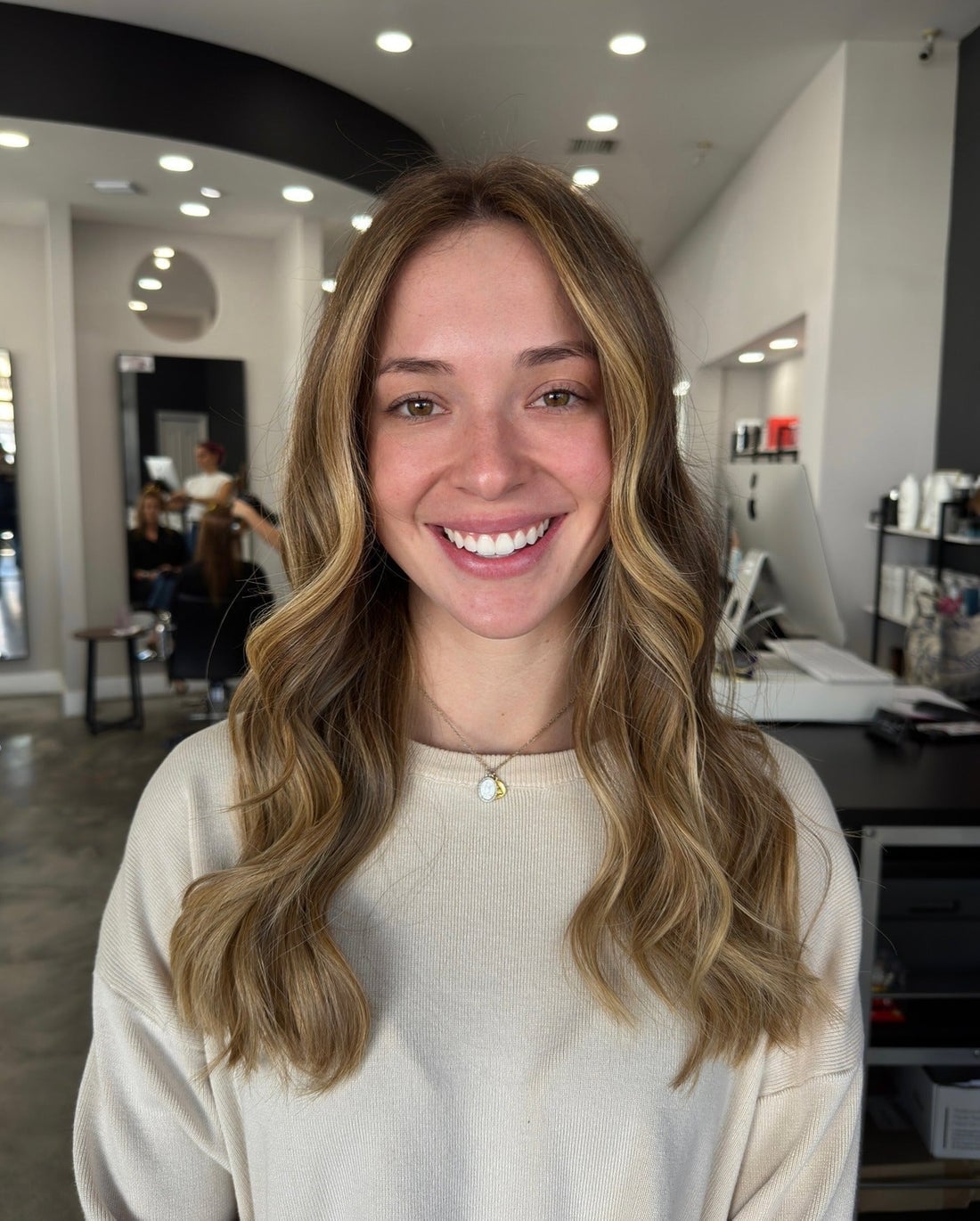
A honey blonde balance keeps the base darker at the roots and weaves lighter strands through the ends. On collarbone length hair with a middle part and curtain bangs, the result is a soft, lived-in contrast that grows out gracefully. Ask your colorist for: collarbone length layers, honey blonde balayage, curtain bangs. Wavy, medium density hair gets the most from this technique. A blowout with waves makes the dimension obvious. A toning appointment every eight to ten weeks keeps brassiness away.
Mid-Length Layers With Honey Highlights
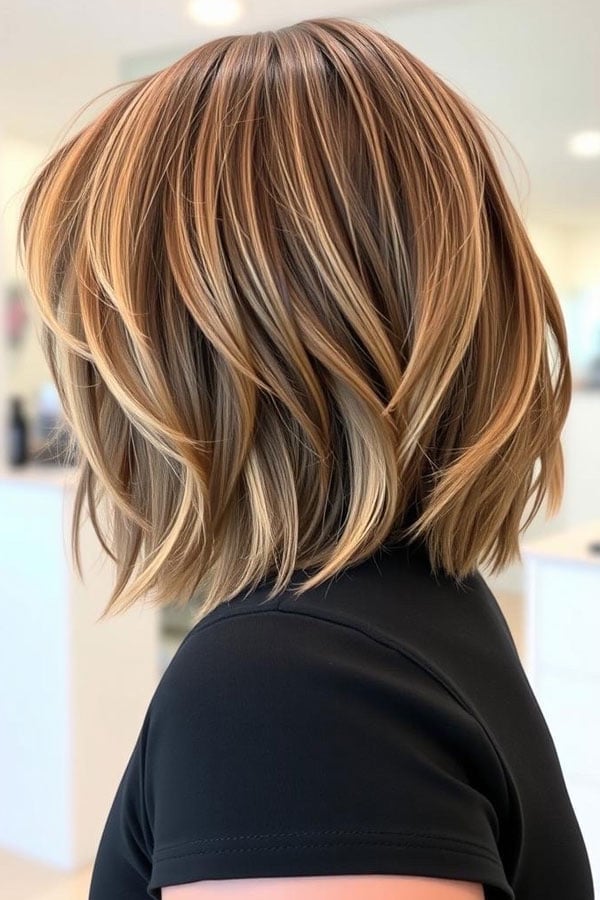
How do you get honey highlights that look intentional rather than scattered? The placement matters more than the shade. Ask your colorist for: collarbone length layered cut, honey highlights, wavy style. On a side-parted, mid-length cut with no bangs, the highlights should land on the top layer and around the face for a sunlit effect. Medium density, wavy hair at collarbone length benefits from the lift. A sea salt spray encourages the natural wave pattern, and a trim every eight weeks keeps the layers sharp.
Collarbone Waves In Spiced Honey Blonde
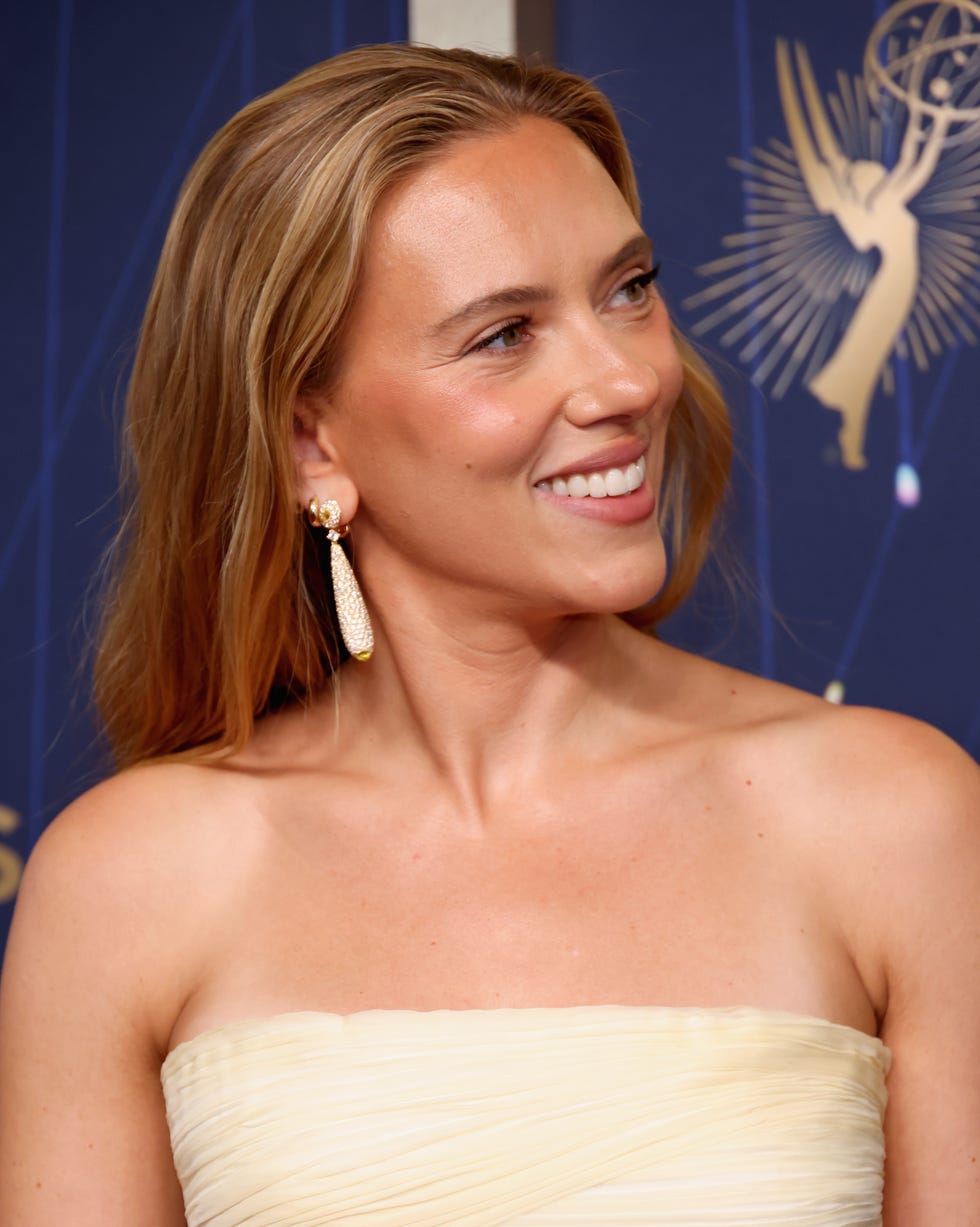
On collarbone length hair with a side part and loose waves, the shade reads as rich rather than bright. Thick, wavy hair carries the color well because the density lets the warmth show through. Ask your colorist for: collarbone length waves, spiced honey blonde. A smoothing serum after washing keeps the cuticle flat and the shine high, and a salon glossing every six weeks preserves the tone.
Fine Collarbone Waves With Curtain Bangs
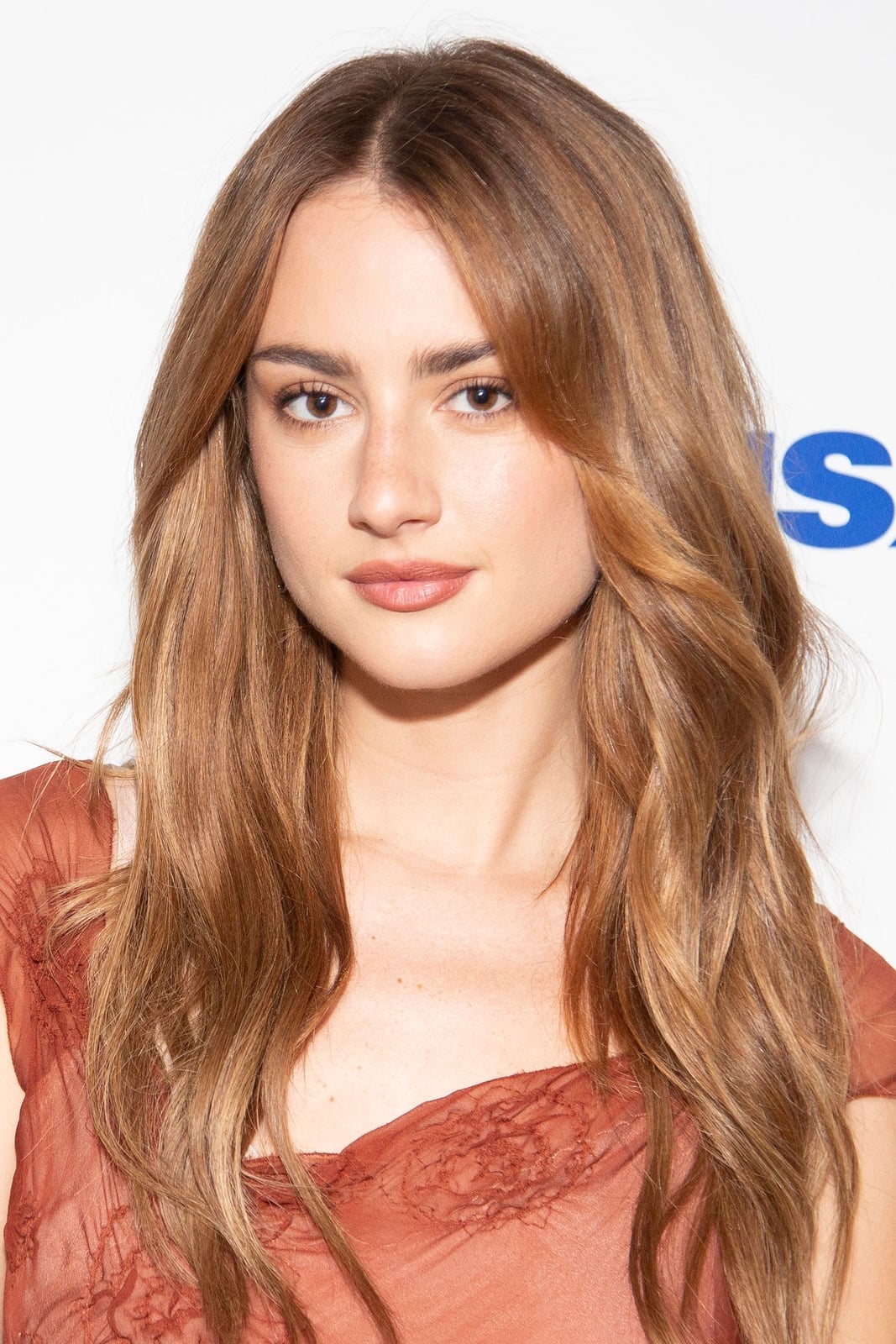
Is fine, wavy hair a good candidate for curtain bangs and honey blonde color? Yes, provided the cut stays collarbone length and the waves get a light blowout. The middle part and curtain bangs soften the face without weighing down the hair. Ask your stylist for: collarbone length soft waves, curtain bangs, warm honey blonde. A texturizing spray applied to damp roots adds grip, and a trim every six weeks stops the bangs from sliding into the rest of the cut.
Collarbone Layers Face Framing Highlights
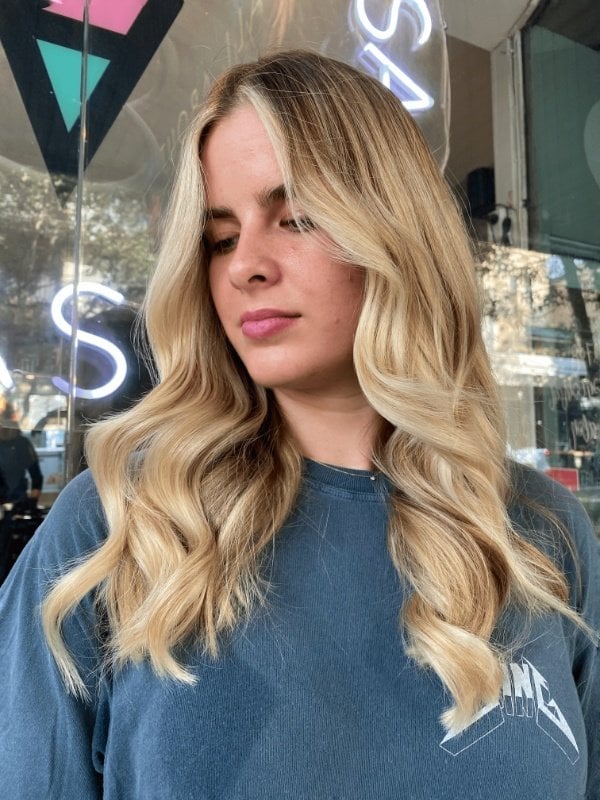
Face-framing highlights on thick, wavy hair start at the cheekbone and feather into the ends, creating a gradient that catches light even without a blowout. The honey blonde base keeps the overall color warm, while the lighter pieces around the face add contrast. Curtain bangs and a middle part complete the frame. Ask your colorist for: collarbone length layers, face-framing highlights, curtain bangs. A professional blowout shows the dimension best, and a toning appointment every six to eight weeks keeps the lighter pieces cool.
Collarbone Layers With Blended Highlights
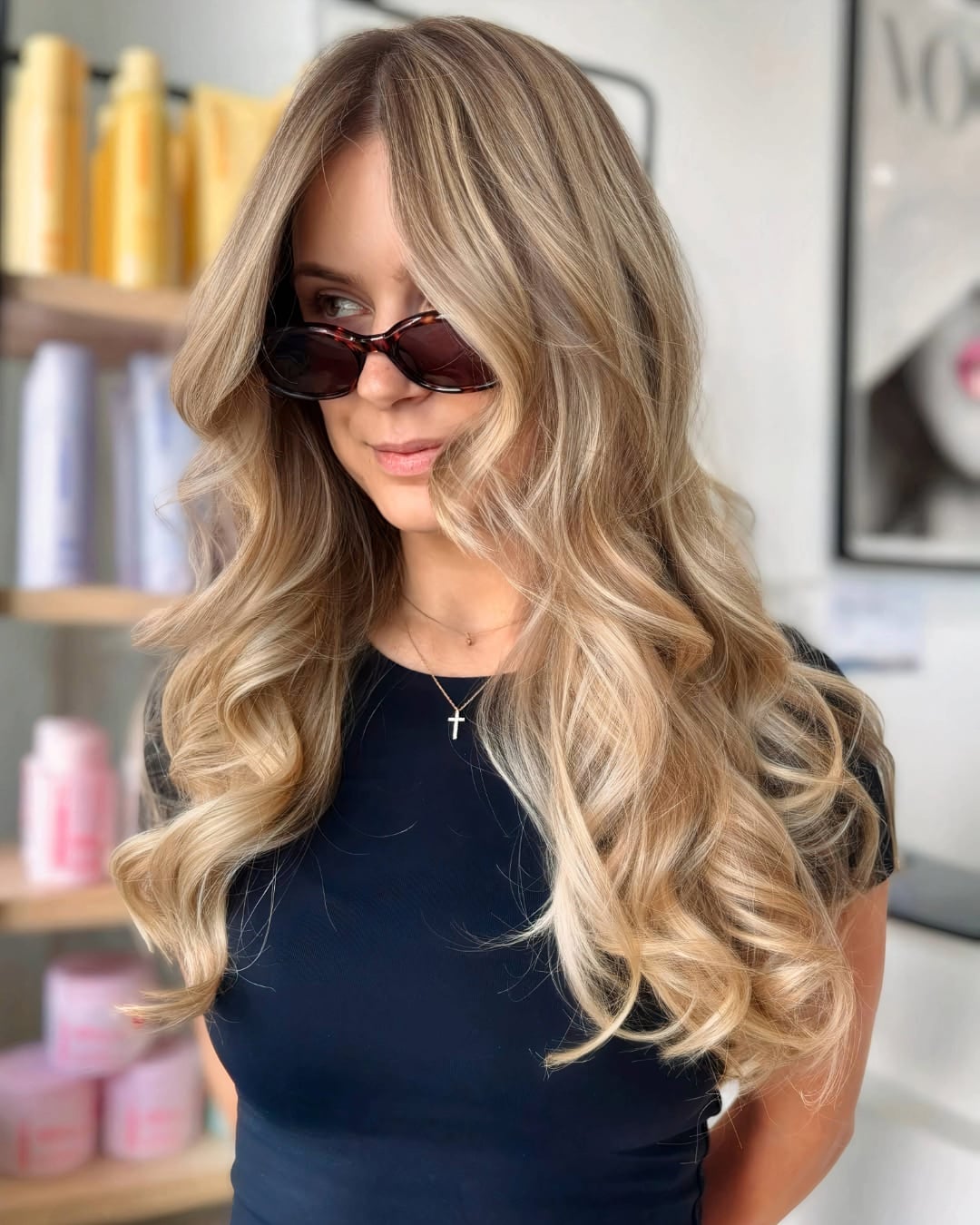
The design here relies on the contrast between a honey blonde base and lighter blended highlights, both of which land on collarbone-length layers with face-framing pieces. Thick, wavy hair starting at collarbone length benefits from the soft movement these layers provide. Ask your colorist for: honey blonde with blended highlights, face-framing collarbone layers. To encourage the natural wave pattern, apply a texture spray on damp hair and let it air-dry, then touch up with a curling wand on any straight sections. The highlights need a toning appointment every eight weeks to keep the warmth from turning brassy.
Shoulder Length Soft Waves Honey Brown
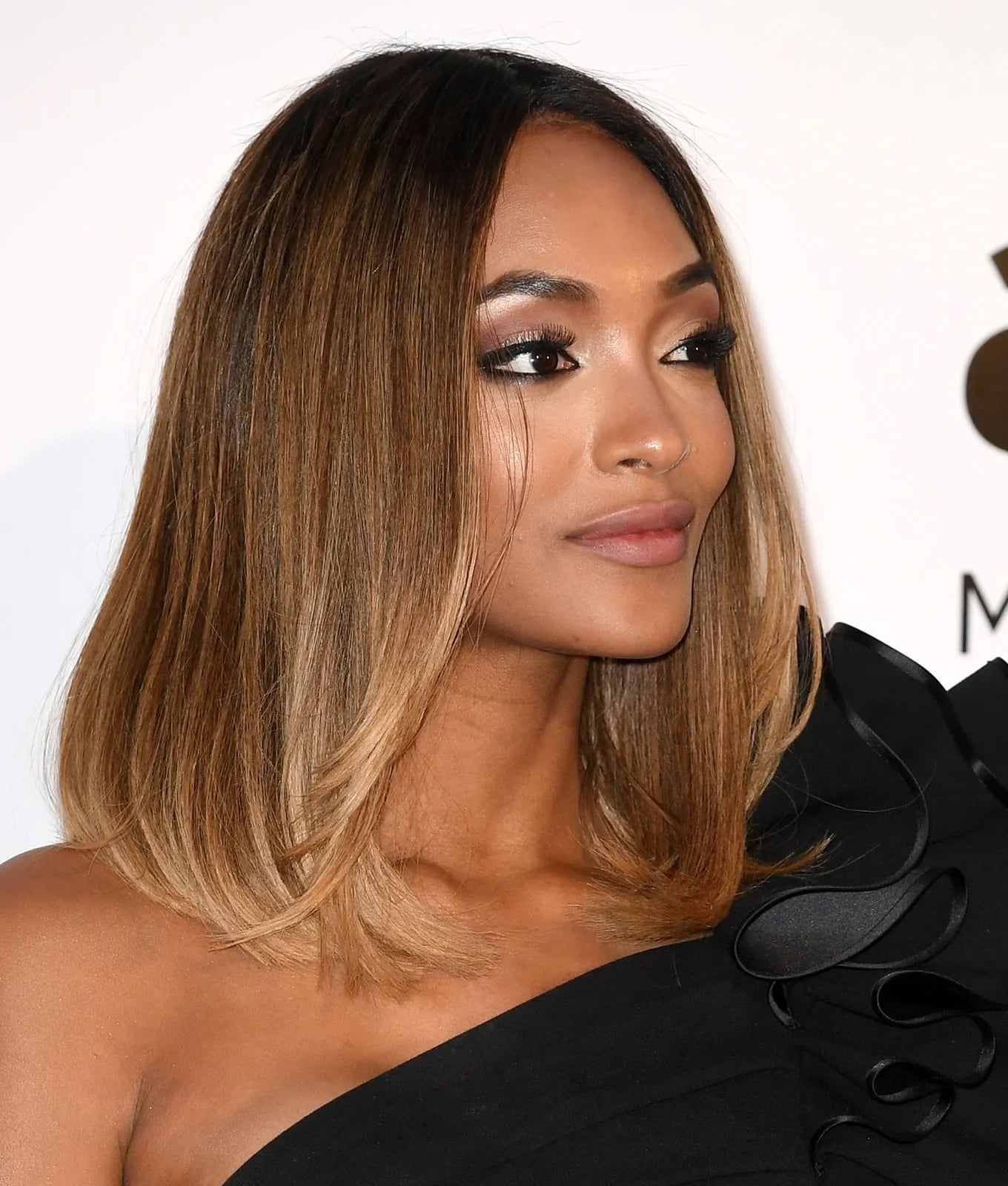
To get a warm, dimensional look without it reading as brassy, start with a rich honey brown base and lighter highlights woven through, not painted on top. For shoulder-length hair with soft waves and a blowout finish, the tone creates the dimension. Ask your colorist for: honey brown base with lighter blended highlights. A smoothing serum on dry hair seals the cuticle and adds gloss to the blowout. A toning appointment every six to eight weeks maintains the contrast between the base and the lighter pieces.
Chin Length Bob Glossy Waves
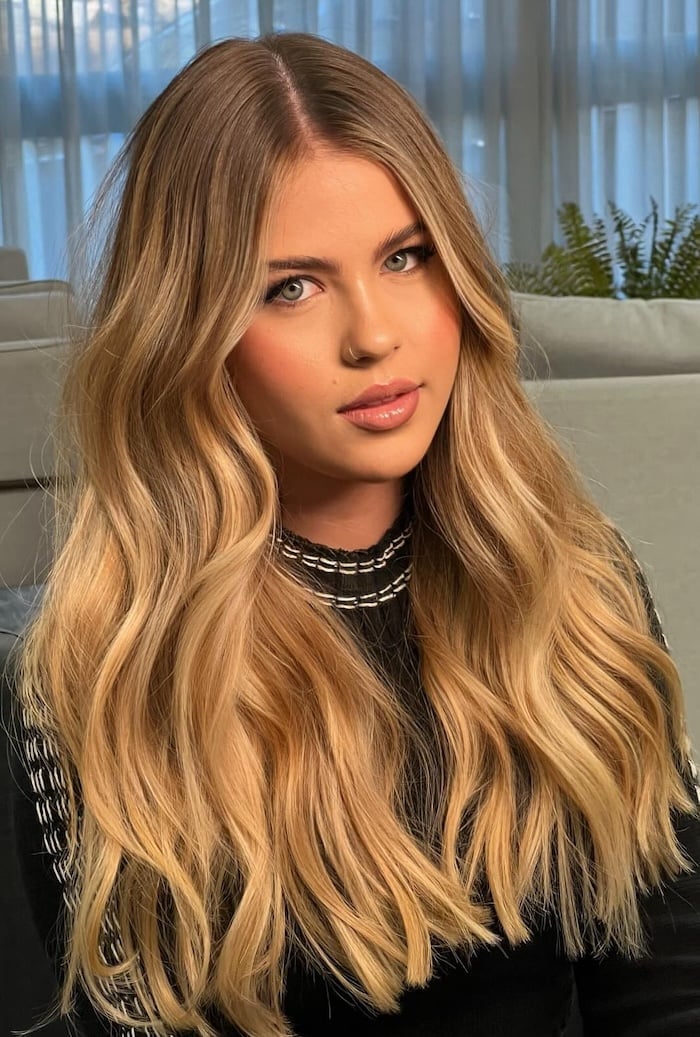
That chin-length bob with a side-swept fringe is a different animal from the collarbone or mid-back cuts nearby. The shorter length means the honey blonde shade reads more solidly, with less room for gradient or shadow root techniques. It suits fine to medium wavy textures that hold a bend at chin level. Ask your stylist for: chin-length bob, soft wavy texture, side-swept fringe. The side-swept fringe softens round and square face shapes by breaking up the horizontal line across the jaw.
Because the bob is blunt at the perimeter, it needs a trim every six to eight weeks to stay sharp. The glossy finish comes from a heat protectant before blow-drying and a light spritz of shine spray on the ends. A toning appointment every eight weeks keeps the honey tone from pulling too yellow on fine hair.
Mid-Back Layers With Face Framing
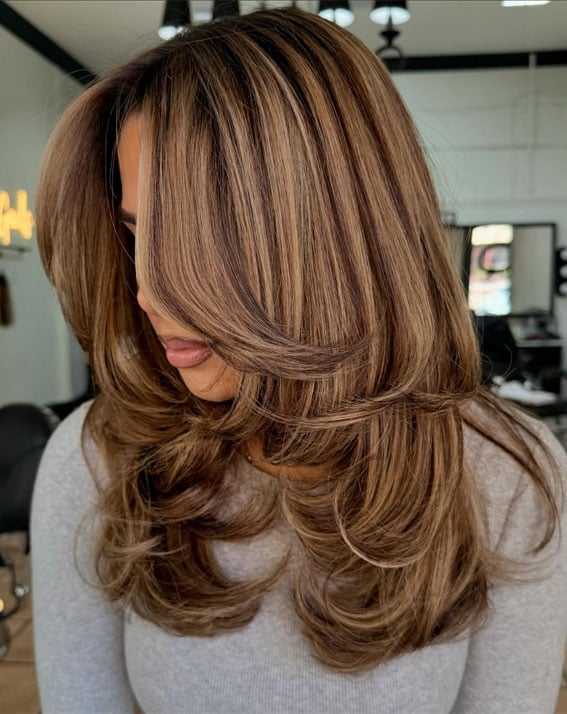
The dimensional effect here comes from layering a honey brown base with lighter blonde highlights on mid-back length hair, then cutting face-framing layers that start around the collarbone. The side view shows how the layers create contrast with the rest of the length. Thick, wavy hair at mid-back length needs that internal layering to prevent the color from sitting in one flat block. Ask your colorist for: mid-back layers, honey brown with blonde highlights, face-framing pieces. A voluminous blowout emphasizes the layers and the highlight placement.
The upkeep is straightforward: a trim every eight weeks to keep the face-framing layers from growing past the collarbone. Without regular toning, the lighter pieces can drift toward a brassy gold within a few washes.
Mid-Back Layers Honey Brown With Highlights
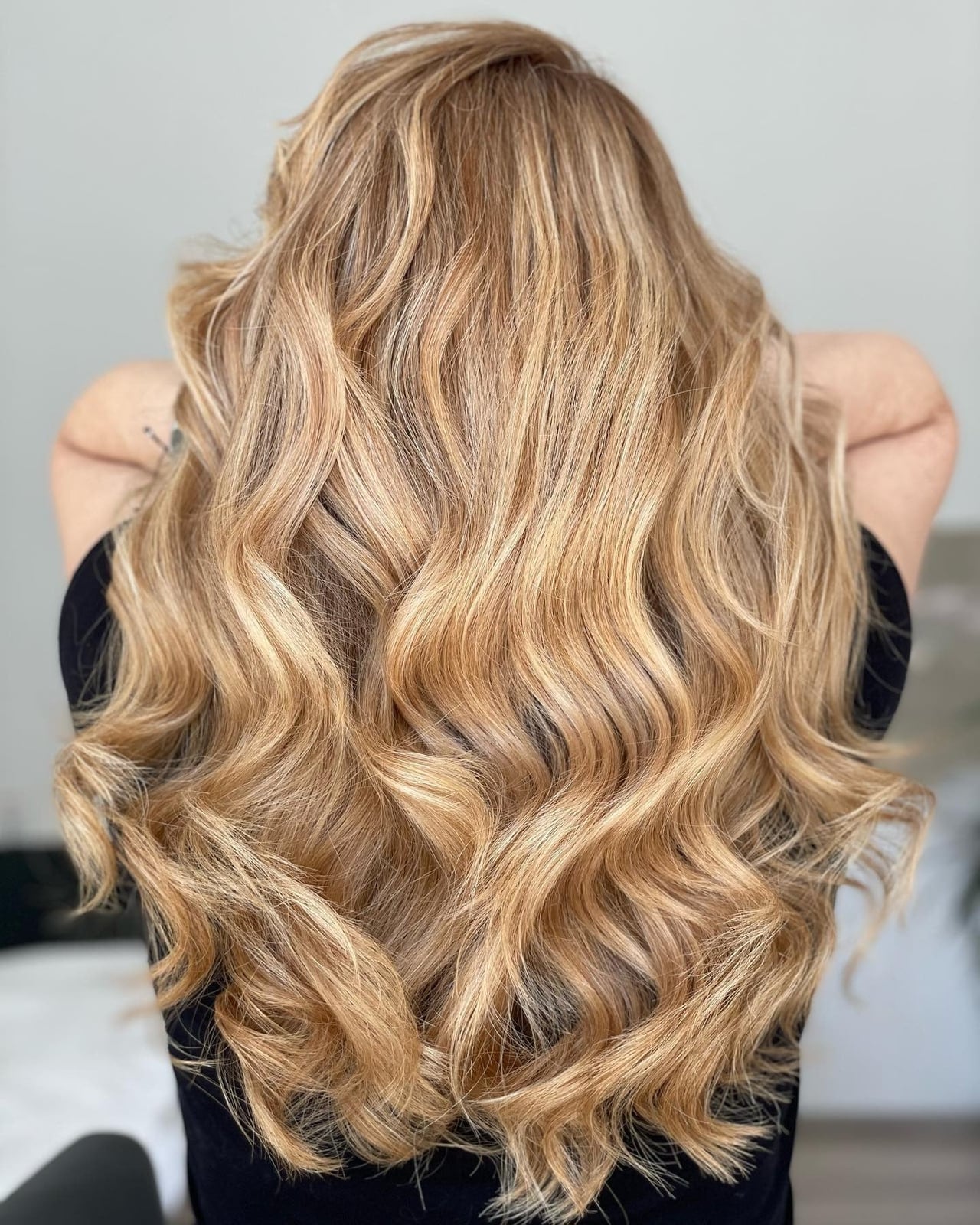
A honey blonde balayage on mid-back layers is lower maintenance than it looks, because the hand-painted technique skips a defined root line. The back view shows how the lighter pieces sit mostly through the ends, leaving the top deeper. Thick, wavy hair at this length handles the balayage well, as the texture helps blend the painted sections naturally. Ask your colorist for: mid-back balayage, honey blonde highlights. The grow-out is forgiving for about twelve weeks before the natural base and the lightened ends start to feel intentional rather than grown out.
Mid-Back Wavy Balayage
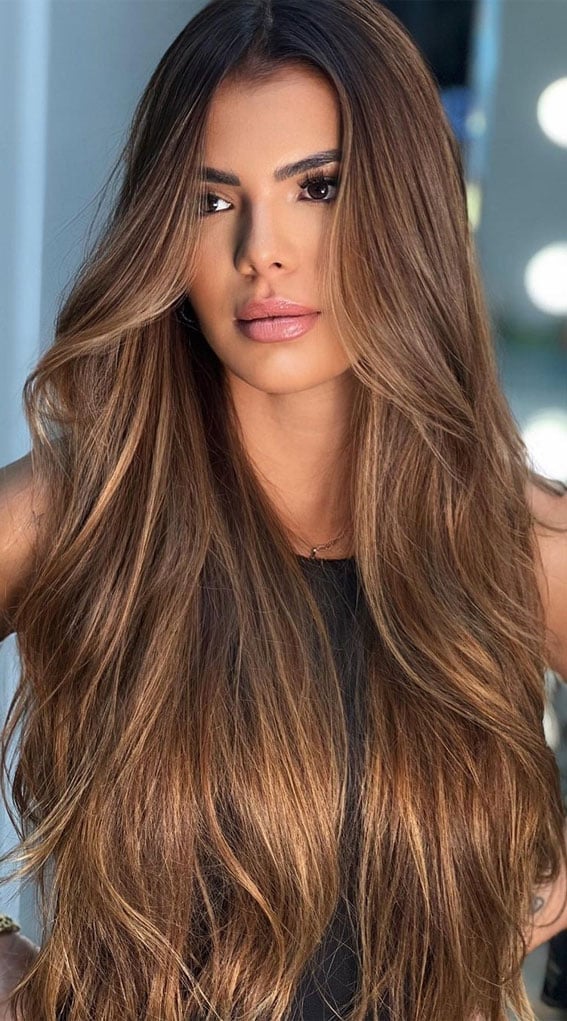
A golden brown bronde balayage works for anyone with thick, wavy hair past the shoulders who wants dimension without a high-contrast look. The side part and wavy blowout show off the soft color melt, where the bronde tone stays warm without turning brassy. The mid-back length keeps the focus on the movement, not the root line.
This shade sits between brown and blonde, so it looks natural even with visible highlights. Ask your colorist for: golden brown bronde balayage, side part. Thick waves catch the lighter pieces, and the technique avoids heavy saturation at the ends. A trim every ten weeks keeps the shape clean, and a gloss appointment every twelve weeks prevents the warmth from drifting muddy.
Mid-Back Wavy Golden Bronde
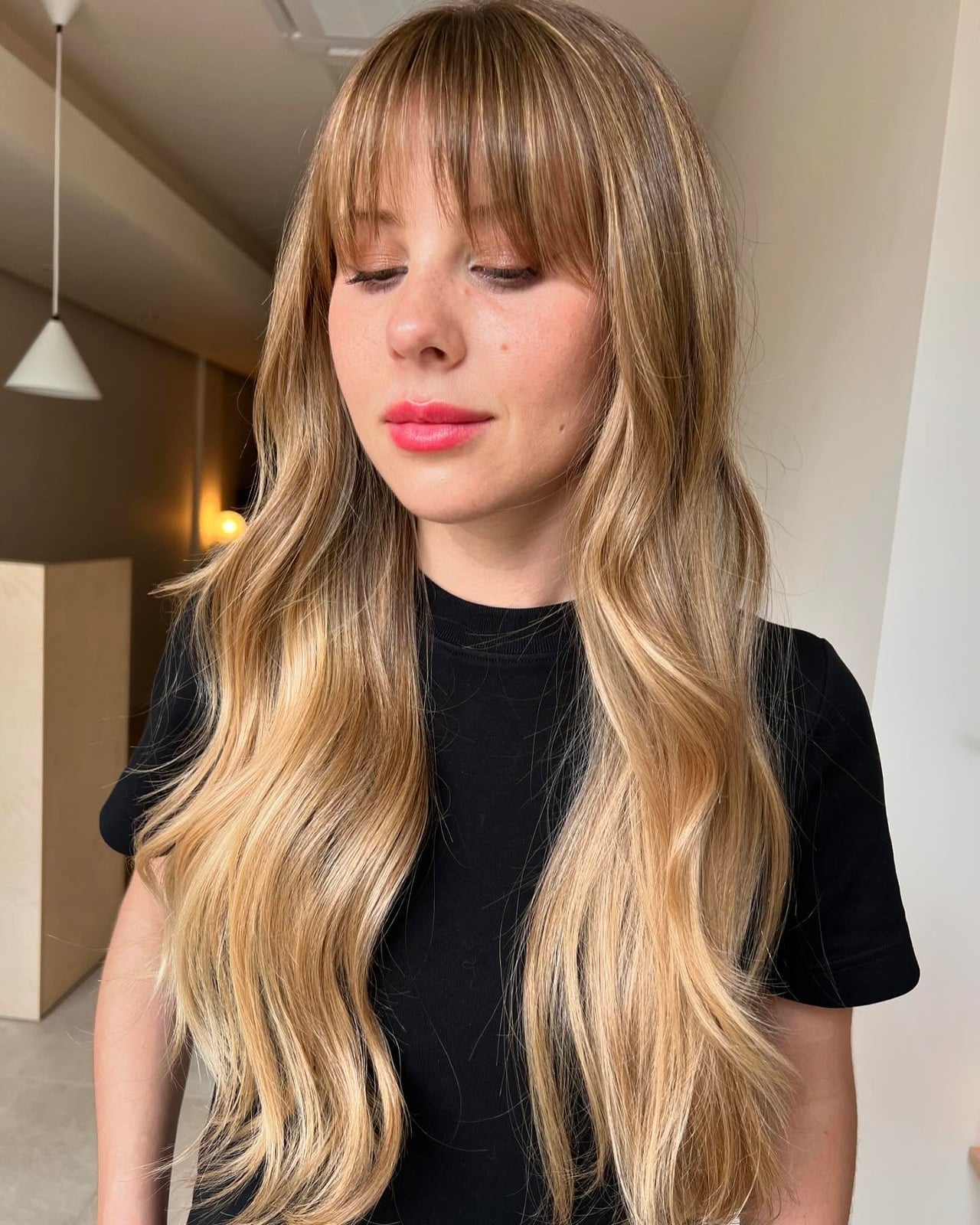
The design starts with a honey blonde base, then adds lighter highlights. That placement is what gives the color its glow: the highlights sit close to the base shade, so there is no harsh line between the two. Loose waves let each piece of hair show its individual tone.
Ask your colorist for: honey blonde with lighter highlights, loose waves. The technique requires a hand-painted application, which keeps the blend soft. A toning appointment every eight weeks keeps the golden tone from turning too yellow, and a trim every eight to ten weeks maintains the weight at the ends. Thick hair benefits from the subtle lift, and the blowout adds polish without looking stiff.
Mid-Back Honey Blonde With Highlights
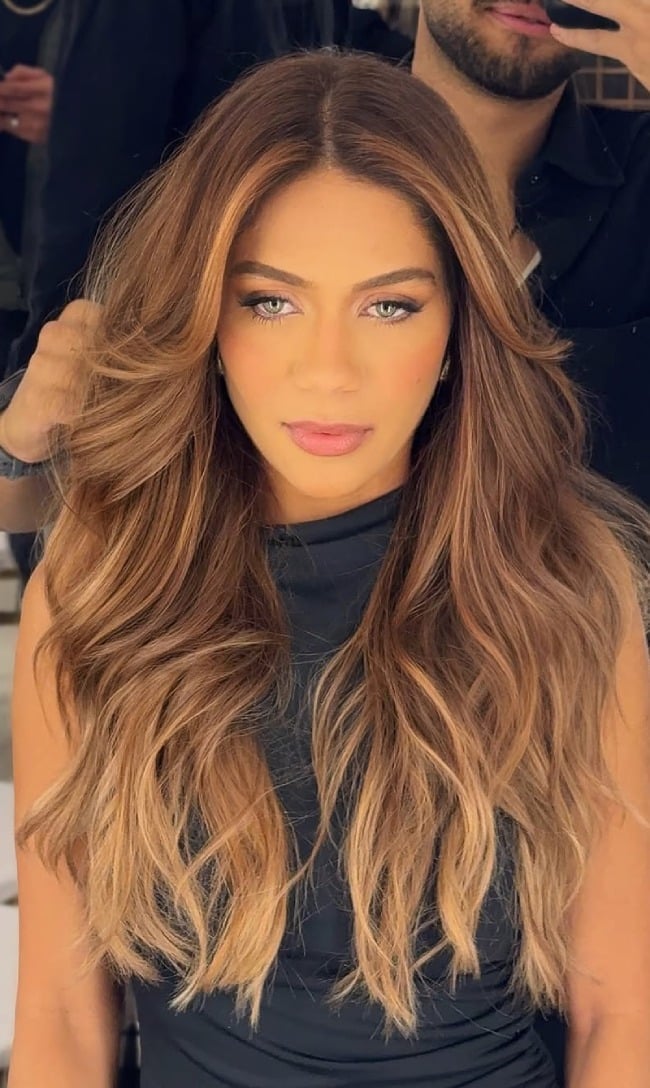
How do you ask for a honey chestnut balayage that actually looks like this? You name the base, the placement and the finish. The base is a warm honey chestnut, the balayage is painted through the mid-lengths, and the soft waves are set with a blowout. Ask your colorist for: honey chestnut balayage, curtain bangs, soft waves. The middle parting lets the curtain bangs frame the face without shortening the overall length, and the thick texture holds the wave pattern for a full day. A gloss treatment every six weeks keeps the chestnut tone from fading warm.
Mid-Back Honey Chestnut Balayage, Layers
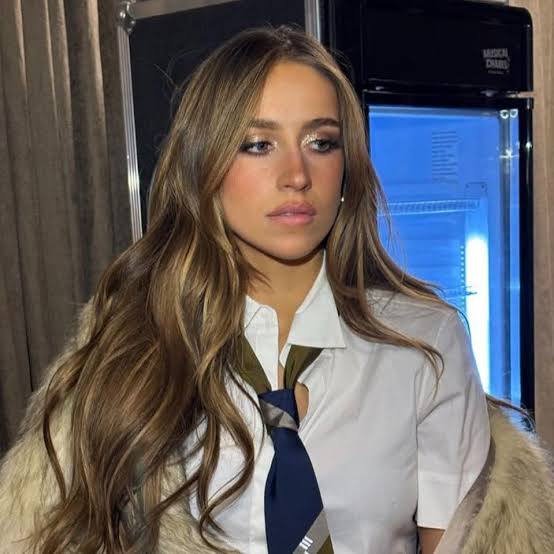
The honey brown base with a blonde balayage looks lived-in, but there is a trade-off. The air-dried waves and middle parting give it a casual finish, but that balayage placement requires a salon visit every time. You cannot touch up the blonde pieces at home without risking a patchy result.
Ask your colorist for: honey brown with blonde balayage, air-dried waves. The thick, wavy texture works with the technique because the lighter pieces sit where the hair naturally bends. The downside is the grow-out: the blonde sections stay visible for about four months, but the line between the honey brown base and the balayage is soft enough that it does not scream for a root touch-up. A trim every eight weeks keeps the ends healthy, and a purple shampoo once a week prevents the blonde from turning brassy.
Mid-Back Air Dried Waves Honey Brown Balayage
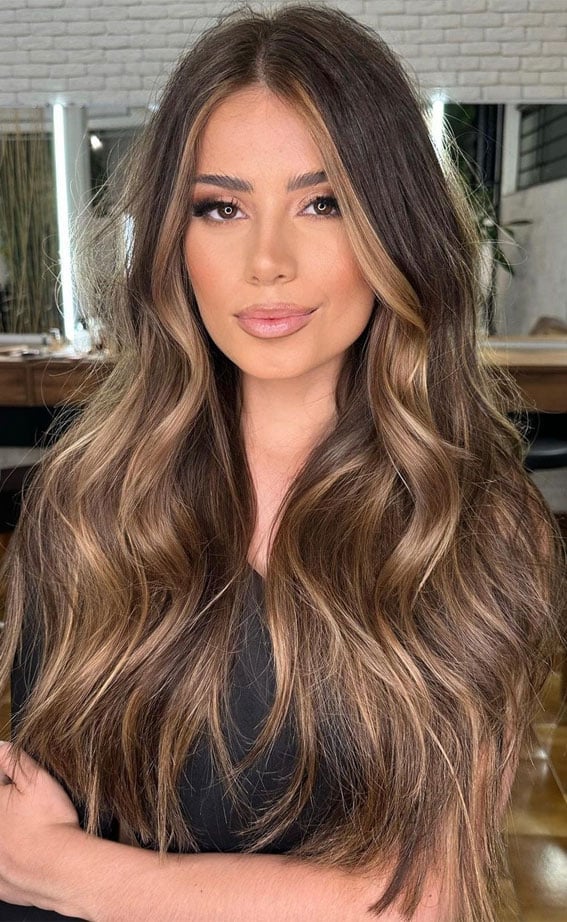
The honey blonde highlights on a dark brown base create a dimensional effect that works with air-dried texture. The wavy blowout shows the deeper base and the lighter pieces, but the real test is upkeep. The highlights sit close to the root, so they grow out softly without leaving a harsh band.
Ask your colorist for: honey blonde highlights on dark brown base, wavy blowout. A toning appointment every ten weeks keeps the highlights from pulling too warm, and a trim every eight weeks prevents the ends from thinning. The thick texture holds the wave pattern without product, so the styling time is short: apply a heat protectant, rough dry the roots and let the rest air dry. The mid-back length means the highlights stay visible without requiring a full head of foils.
Mid-Back Wavy Dark Brown Honey Highlights
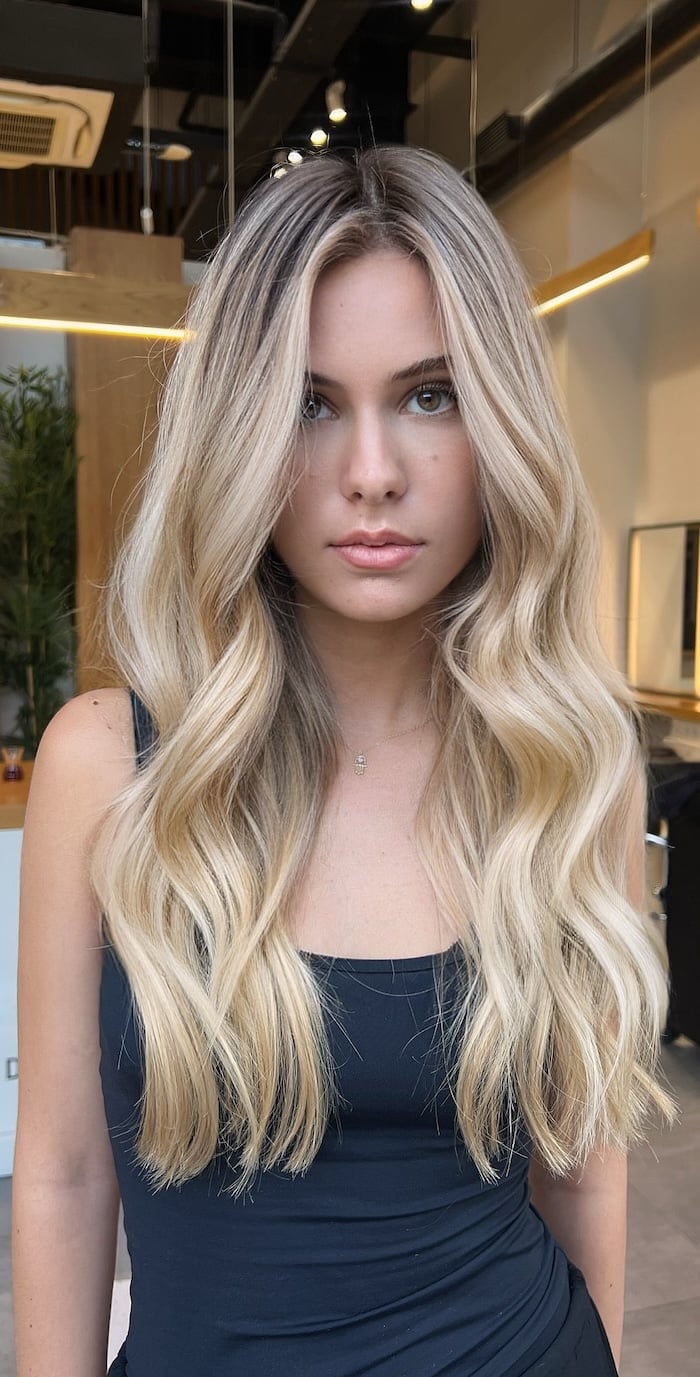
Ash blonde can read cool, even icy, on its own. Honey blonde highlights change the math entirely, warming up an ash base without turning it brassy. The technique here places fine ribbons of honey through the mid-back length and waves, so the color reads as dimensional rather than stripey. Thick, wavy hair carries this best, as the texture diffuses the highlights into a soft, blended effect. Ask your colorist for: mid-back length wavy hair, dark brown with honey blonde highlights. A wavy blowout is the styling sweet spot, letting the lighter pieces catch light naturally.
Mid-Back Ash Blonde With Honey Highlights, Wavy
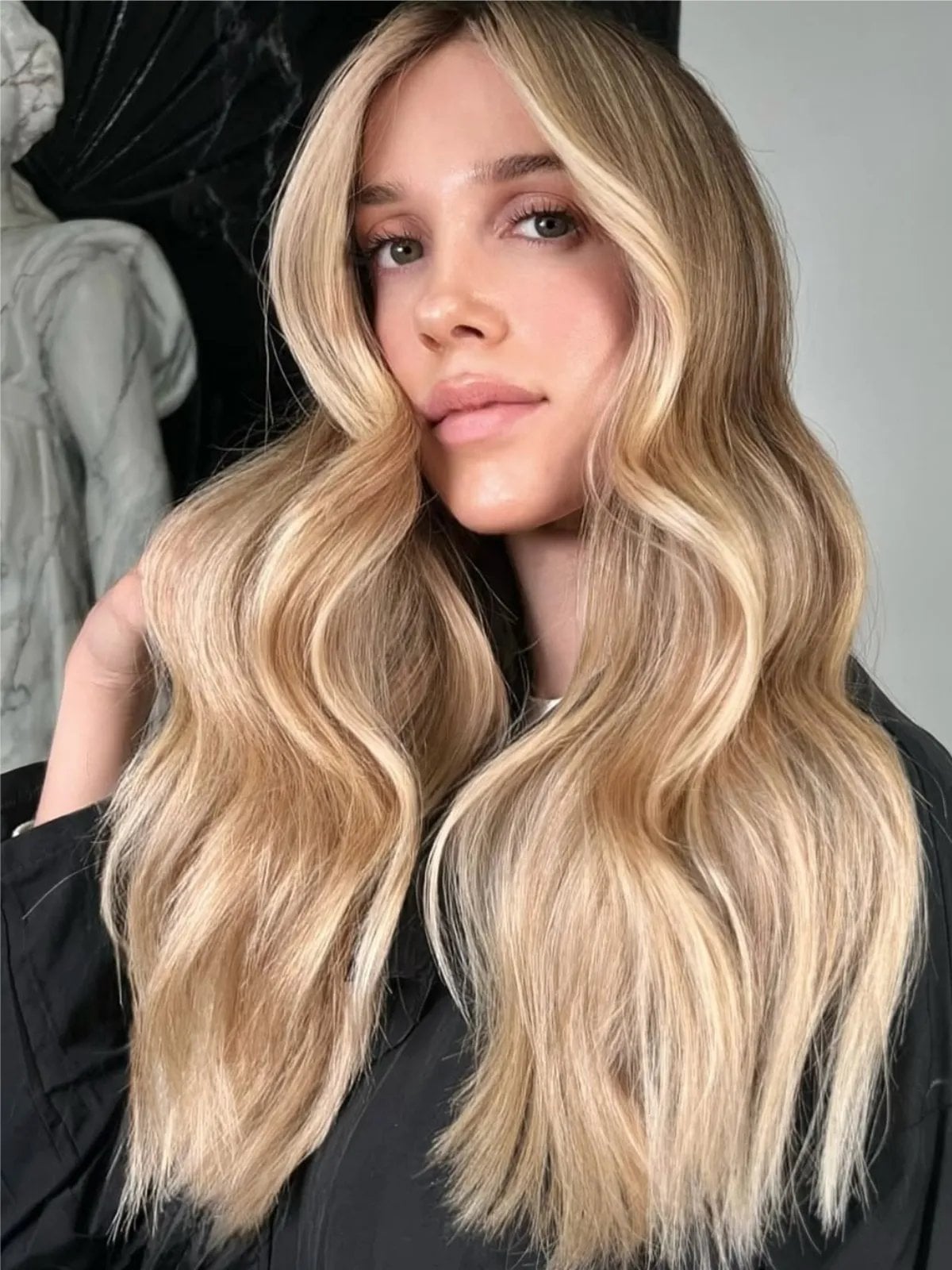
Can a cool-toned base and warm highlights coexist without looking confused? Yes, when the placement is balayage. This combination works because the honey pieces are concentrated through the mid-lengths and ends, leaving the ash root intact for a lived-in grow-out. The long layers and loose waves are key, they keep the color from settling into a solid block. Thick, wavy hair of mid-back length is the natural fit here, the texture softens the two tones.
Who should pass? Fine or straight hair may not show enough movement to justify the technique, the highlights could look sparse. A middle part and voluminous blowout help the honey tones look deliberate. The payoff is a color that fades gracefully, no harsh regrowth line to chase.
Mid-Back Honey Blonde With Balayage and Curtain Bangs
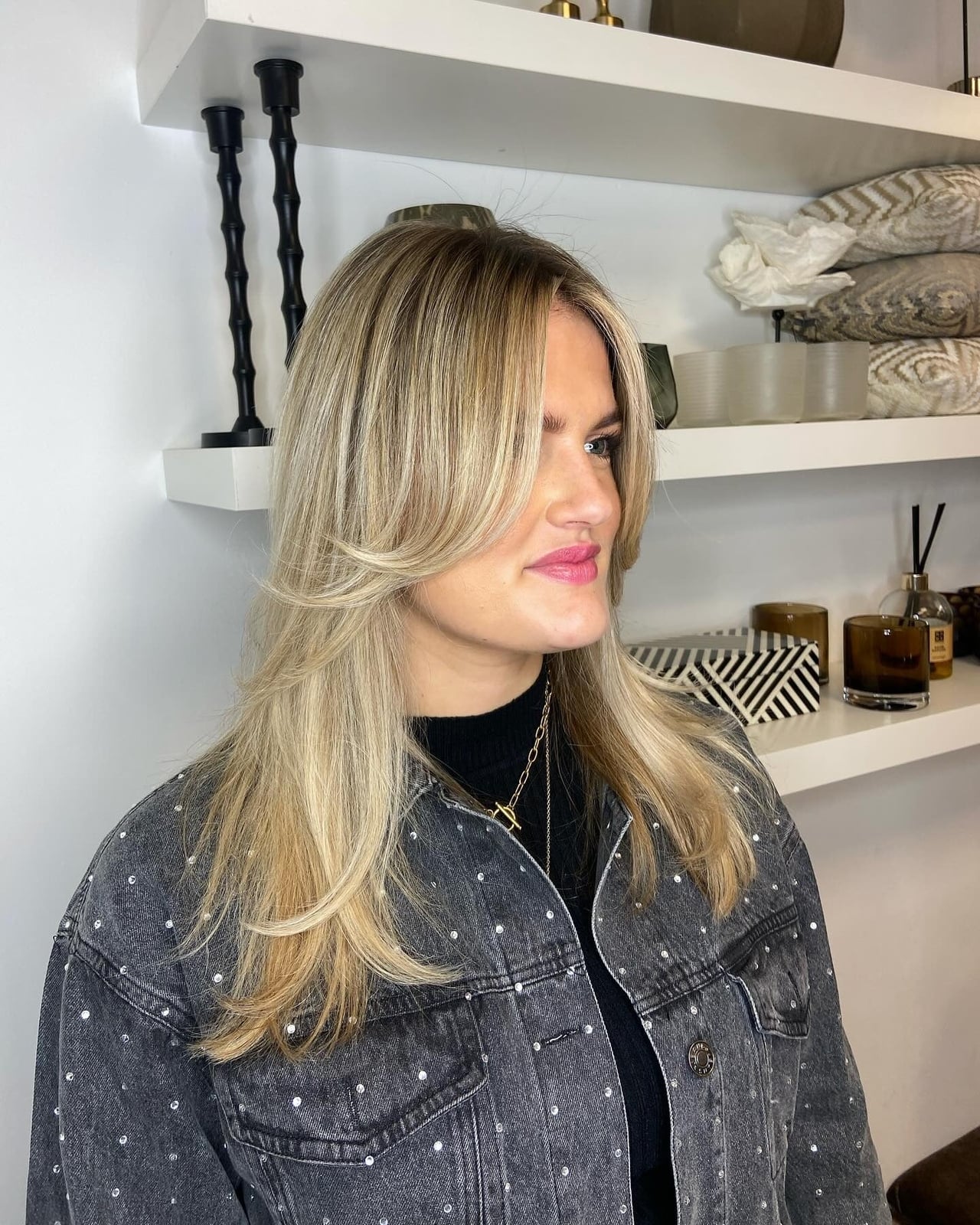
This is not a full-head highlight. The balayage technique keeps the honey blonde closer to the ends, so the root stays deeper and the grow-out is low-maintenance. Curtain bangs frame the face without committing to a full fringe, and they soften the transition from darker root to lighter length. Thick, wavy hair of mid-back length works best here, the waves catch the lighter pieces and make the color read as sun-kissed.
Ask your colorist for: mid-back length layered hair, honey blonde with balayage. The placement should stay concentrated around the face and ends, not pulled through the crown. A side view shows how the lighter strands wrap around the layers, creating depth without a heavy line. A toning appointment every eight to ten weeks keeps the honey from tipping into gold.
Mid-Back Vibrant Honey Blonde With Curtain Bangs, Close-Up Take
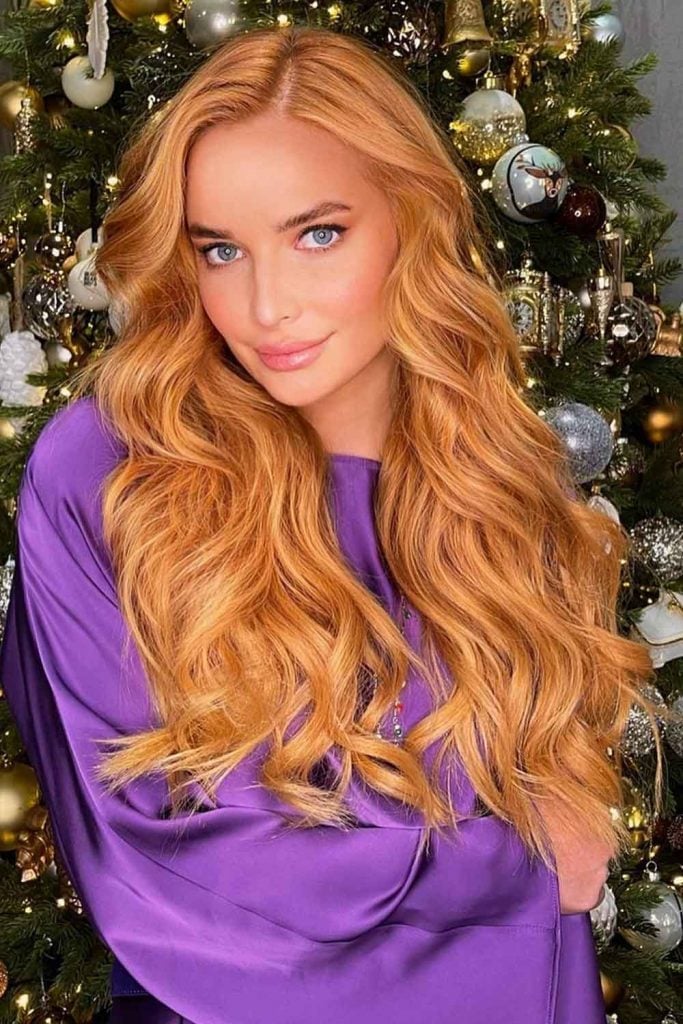
Vibrant honey blonde sits a few steps warmer than the subtle, ashy versions of the trend. The lighter highlights here are woven through the mid-back waves, creating contrast against a richer base. This color is polished and makes a strong choice for work settings where you want your hair to look done without being loud. Curtain bangs keep the look soft and modern. Ask your colorist for: mid-back length wavy hair, vibrant honey blonde with curtain bangs. A professional blowout is the styling default, the waves need structure to show off the dimension.
Mid-Back Medium Brown With Honey Highlights, Side
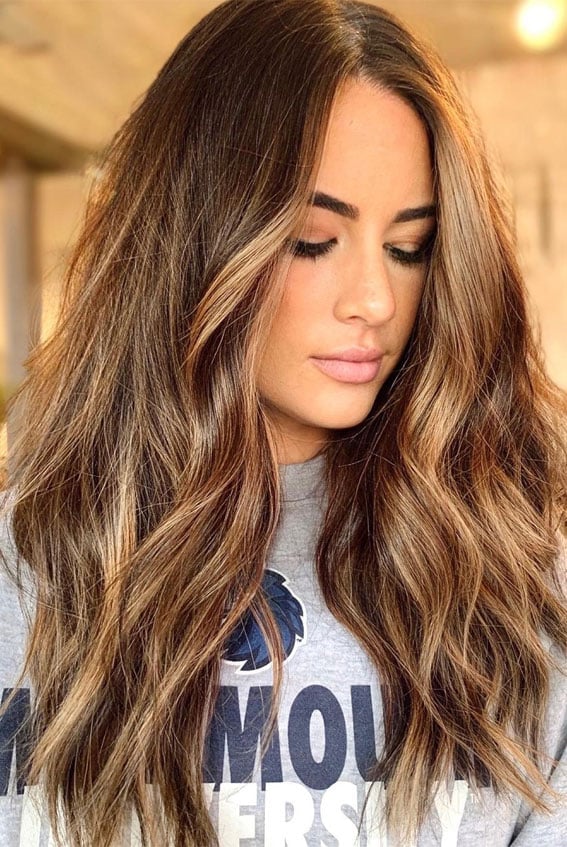
Honey highlights on a medium brown base is a low-risk color move, and that is exactly the point. The highlights add warmth without a full commitment to blonde, so the grow-out is subtle and the maintenance is manageable. A side parting changes how the lighter pieces fall, concentrating them on one side for a more deliberate look. Thick, wavy hair of mid-back length carries the dimension well, the texture keeps the highlights from blending into the base.
Upkeep is straightforward. A toning appointment every eight to ten weeks keeps the honey from dulling, and a blowout is the easiest styling route to show off the contrast. The color works as a bridge between seasons, warm enough for summer, grounded enough for fall. No dramatic regrowth, no brassiness panic, just a reliable, wearable shade.
Mid-Back Soft Waves Honey Beige Brown
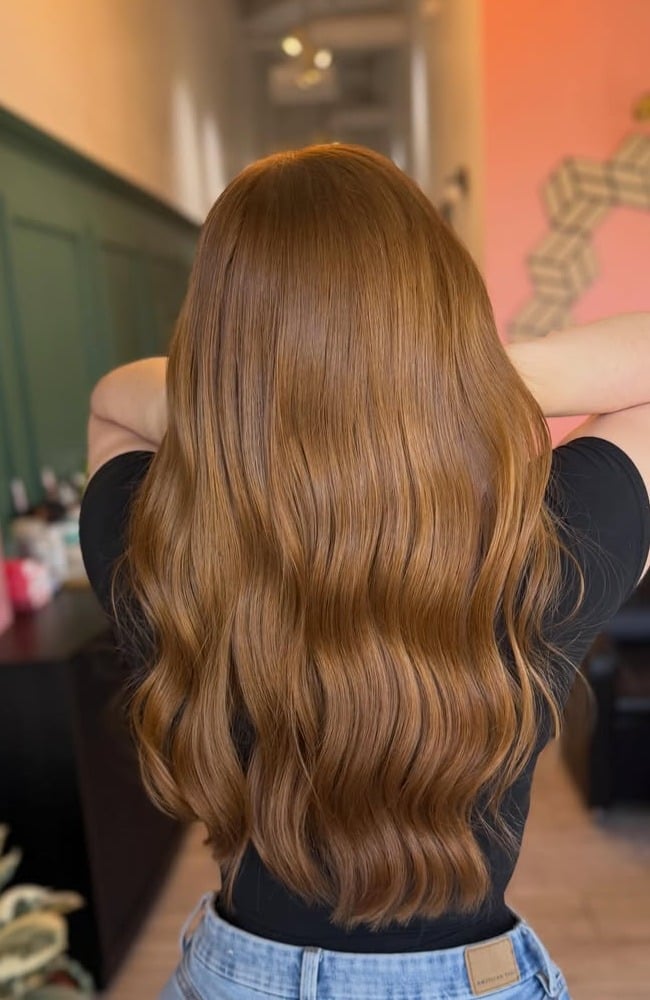
Honey beige brown is a shade that sits right between warm and neutral, so it picks up light without going too golden or too ashy. The mid-back length and soft S-waves give the color room to show its depth, especially when the hair is thick and naturally wavy. Ask your colorist for: mid-back length soft waves, honey beige brown. A smoothing cream helps define the wave pattern without weighing it down. Plan on a toning appointment every eight to ten weeks to keep the beige from drifting into brass.
The technique behind this tone is subtle: your colorist will mix a warm honey base with a small amount of beige pigment, then apply it as a single-process color. That means no harsh regrowth line and a softer grow-out overall. It works best on hair that already has some natural wave, since the shade relies on texture to show its dimension. Straight hair tends to look flat with this color, so if you prefer a sleek finish, ask for a gloss instead.
Mid-Back Straight Blonde With Honey Highlights, Layers
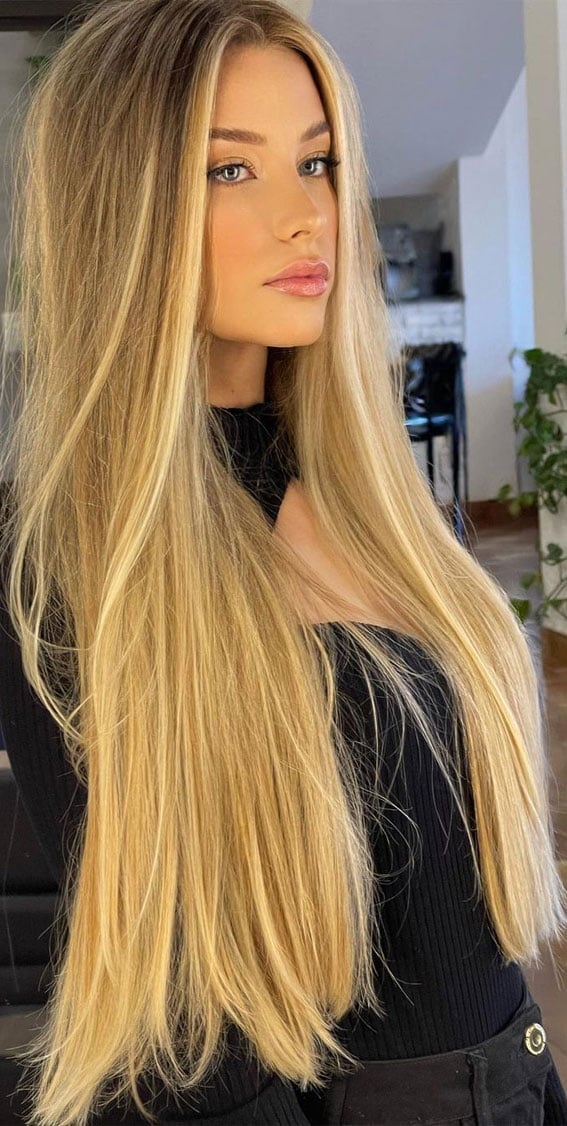
How much time does honey blonde highlights on a straight, fine base actually take? About two and a half hours in the chair for the initial application, then a touch-up every ten to twelve weeks. The honey tones here are painted onto a blonde base, so the highlights add warmth rather than contrast. Ask your colorist for: mid-back length straight hair, blonde with honey blonde highlights. A smoothing serum keeps the fine texture from looking flyaway between washes. Trim the layers every eight to ten weeks to maintain the shape.
Mid-Back Air Dried Honey Blonde Balayage, Close-Up Take
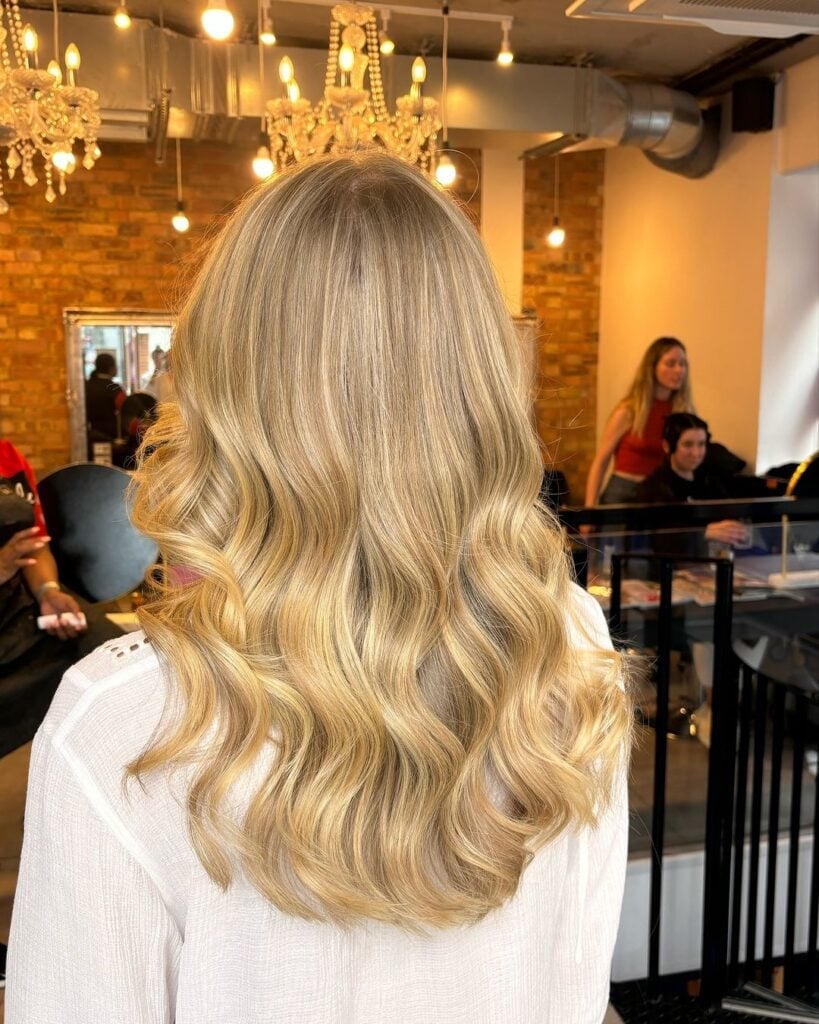
The appeal of air-dried balayage is that it looks like the color grew there on its own. This version uses a honey blonde base with lighter pieces blended through the ends, so the eye moves down the hair without stopping at a root line. The thick, wavy texture helps the balayage look natural. Ask your colorist for: mid-back length air dried waves, honey blonde balayage.
DIY balayage is a gamble. The hand-painting technique requires seeing the hair in three dimensions, which is hard to do on your own head. A salon application costs time but gives you that graduated lightness from the mid-back down, not a stripe halfway up. The real drawback: air-dried waves need a curl cream and some patience, and the balayage will fade faster than a single-process color. Expect a toning visit around week six if you want the honey tone to stay warm.
Mid-Back Honey Blonde With Curtain Bangs, Office-Safe Version
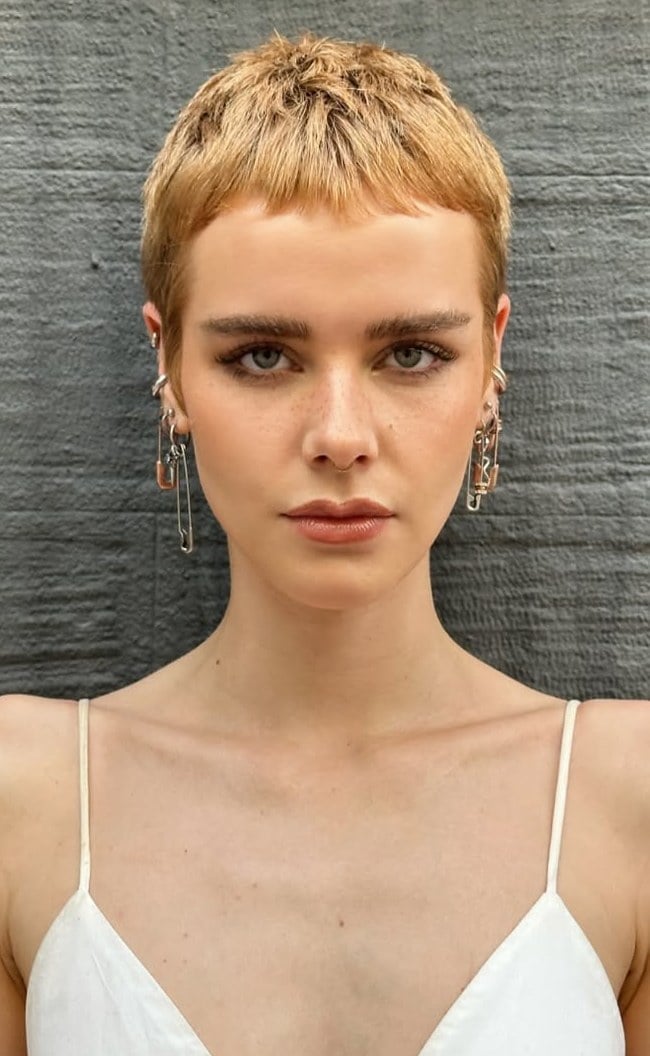
A honey blonde pixie crop with micro bangs is short, sharp, and not remotely office-safe in the boring sense. The fine texture and straight finish give the cut a deliberate look. Ask your colorist for: mid-back length long layers, honey blonde with subtle highlights, curtain bangs. A professional blowout keeps the shape clean and the color even. Tone every six to eight weeks, because short hair shows brassiness faster than long hair does.
Final Thoughts
For a natural, lived-in look, ask your colorist for balayage or babylights. If you prefer more contrast and dimension, go with chunky highlights or a full dimensional color. The right technique depends on your starting shade and how often you want to visit the salon.
- Use sulfate-free shampoo and a weekly gloss to keep color vibrant.
- Schedule a toner every six to eight weeks to prevent brassiness.
- Apply a heat protectant before styling to preserve shine.
- Trim ends every eight to ten weeks to maintain shape.
- Blonde balayage needs gentle care to prevent fading.
Embrace the warmth and glow of honey hair.