
Split dye hair divides the head into two or more distinct color sections, creating a high-contrast look that is both deliberate and personal. The trend now favors vivid two-tone and pastel combinations over rainbow or metallic finishes, with asymmetrical partings and blunt cuts sharpening the divide.
This collection of 16 ideas covers everything from classic black-and-blonde contrasts to neon green and pastel pink pairings, across lengths that range from chin-length bobs to mid-back waves. Aesthetic Split Dye Hair solves the problem of fine hair that lacks visual weight by using bold color blocks to create the illusion of density and texture.
Mid-Back Length Split Dye Black And Platinum Blonde
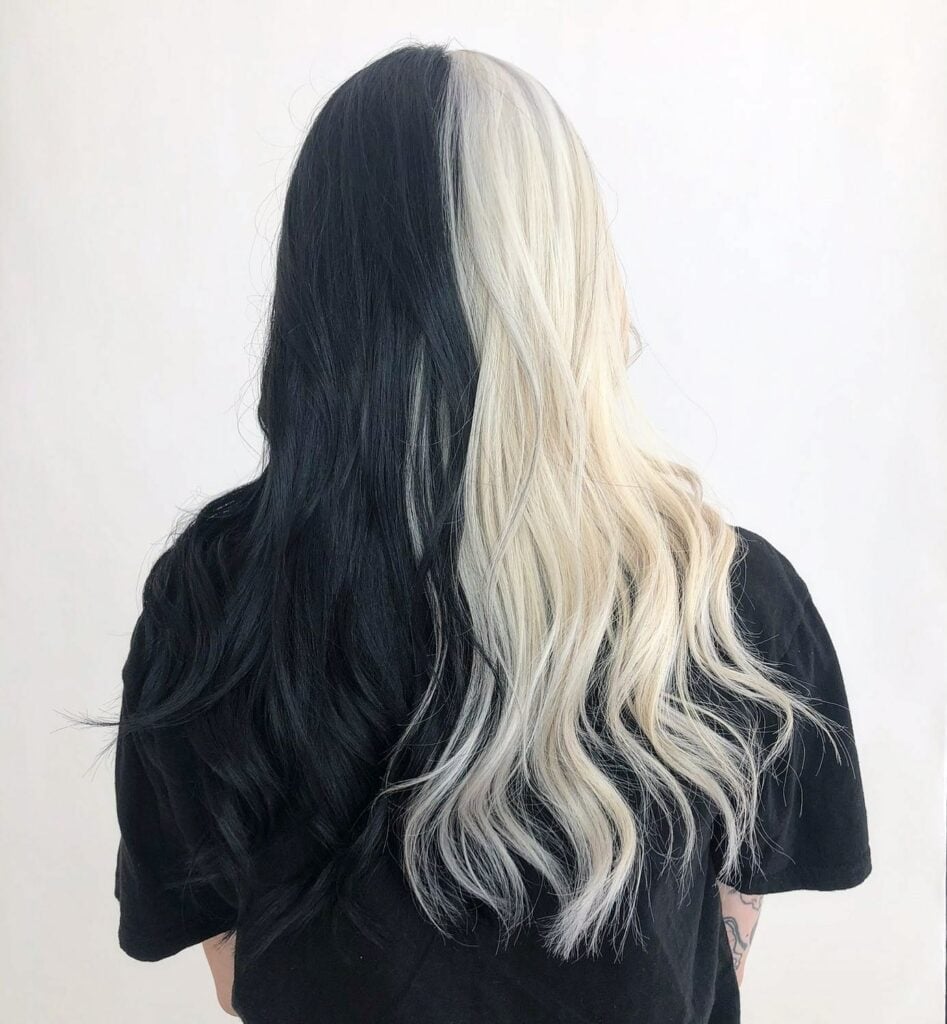
Ask your colorist for: mid-back length hair, split dye black and platinum blonde, middle part. To keep the waves defined without weighing them down, work a sea salt spray through damp hair and air dry or diffuse. A trim every eight to ten weeks maintains the shape and prevents the ends from looking tired.
Mid-Back Straight Cut Black And Purple Split Dye
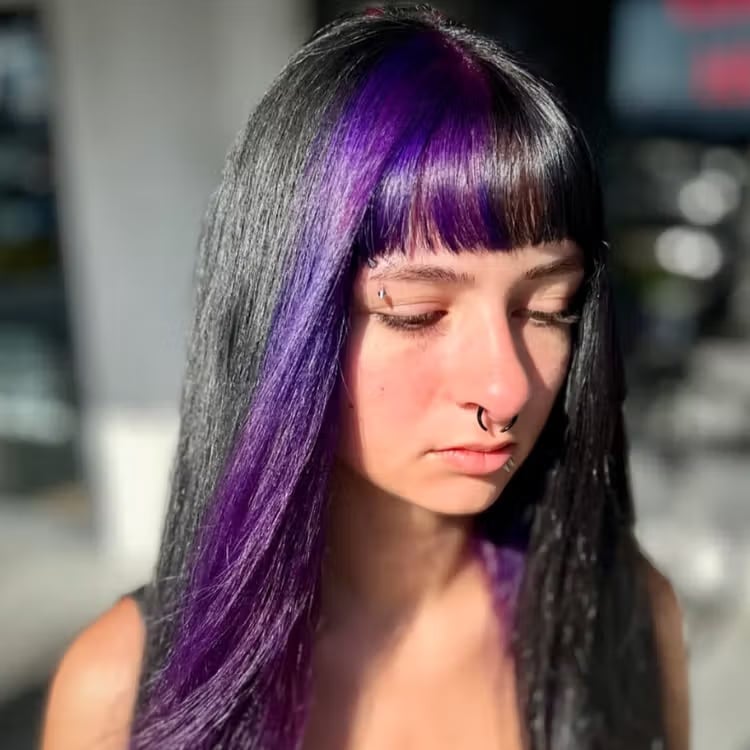
Can fine, straight hair handle a split dye? Yes, when the cut is a precise straight line and the color sections meet along a clean middle part. This mid-back length pairs a deep black base with a vibrant purple half, and the blunt bangs anchor the whole look. Fine to medium straight textures keep that sharp division visible, and the bangs work with most face shapes by shortening the visual length of the forehead.
Ask your colorist for: mid-back length straight cut, blunt bangs, black and vibrant purple split dye. To maintain the crisp finish, run a flat iron through the lengths on low heat. The blunt bangs need a trim every four to six weeks, or they start grazing your eyes.
Mid-Back Wavy Split Dye Black And Neon Green
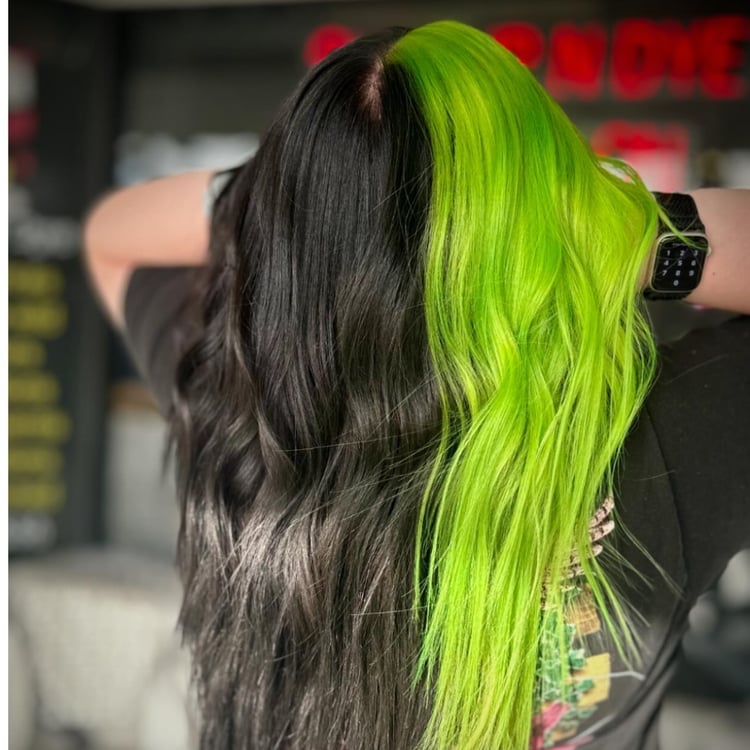
A neon green half against a black half sounds like a lot until you see it on thick, wavy hair at mid-back length. The middle parting keeps the two sides separate, and the natural wave pattern stops the colors from looking flat. The vivid green will fade fastest on porous, thick hair, so a color-depositing conditioner every other wash extends the life of the split. Ask your colorist for: mid-back length wavy hair, split dye black and neon green, middle part. Touch up the green section every four to six weeks to keep the neon from turning toward olive.
Mid-Back Wavy Braided Split Dye Green And Purple
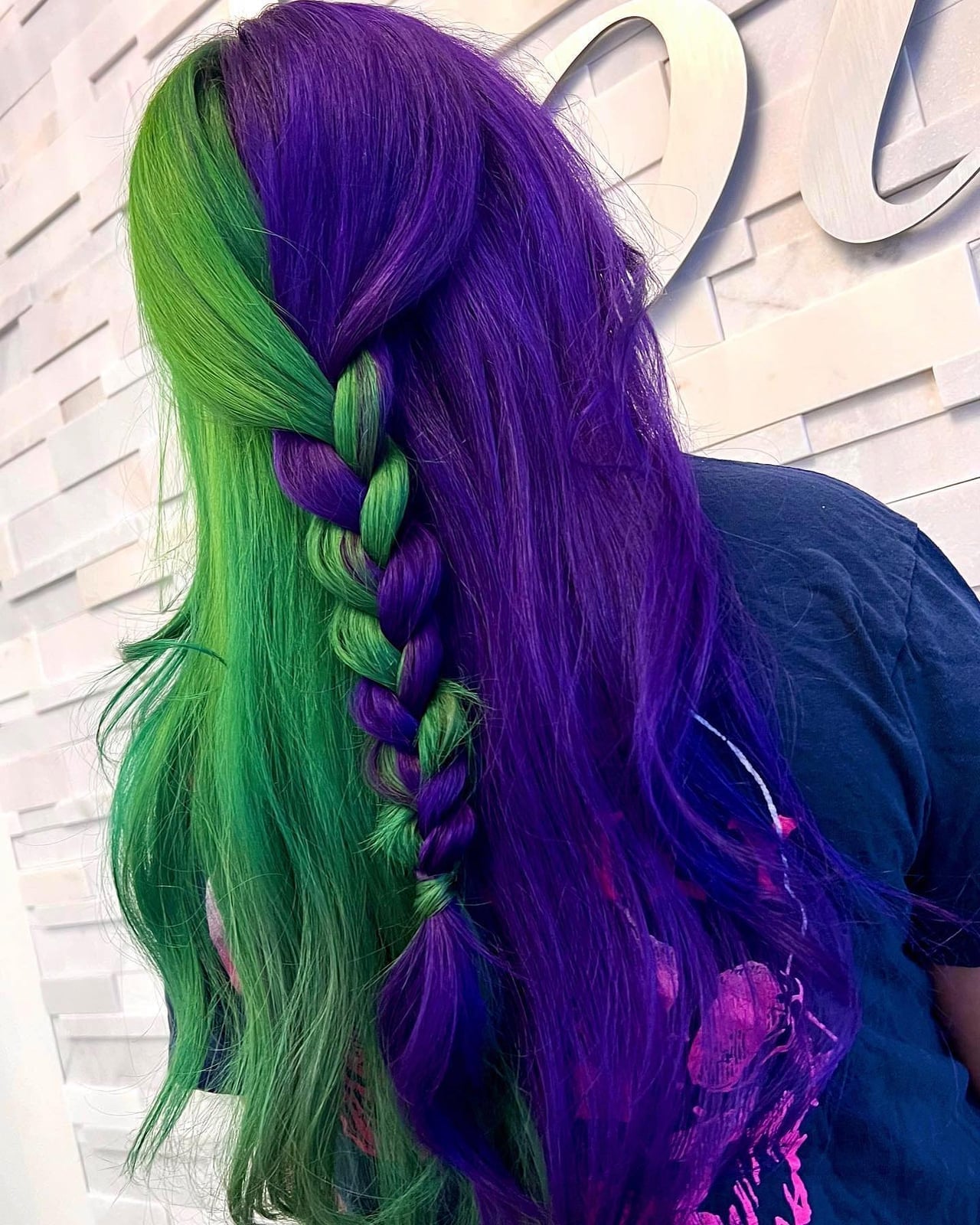
How do you show off a split dye from every angle? Add a braid. This mid-back length pairs vivid green on one side with deep purple on the other, and a center braid pulls the two colors together without blending them. The side view lets you see exactly where each color starts and stops. Thick, wavy hair gives the braid enough grip to hold its shape through a full day.
Ask your colorist for: mid-back length wavy hair, split dye green and purple, center braid. For the braid itself, apply a texturizing spray before you start for hold without stiffness. This styling works especially well for summer events or festival season, when you want the color contrast visible even from a distance.
Mid-Back Layered Split Dye Pastel Purple And Pink
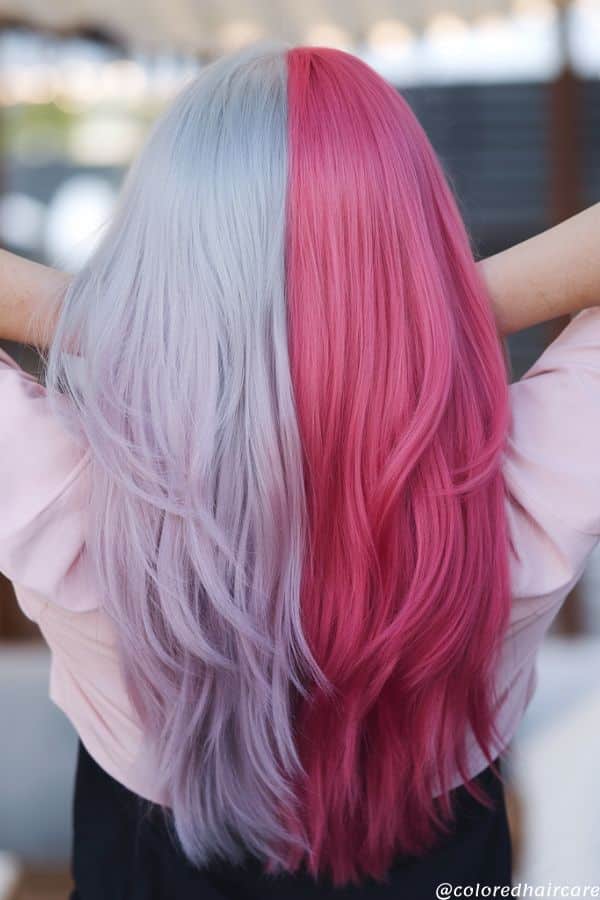
Pastel purple on one side and bright pink on the other sounds like two different color families, but on mid-back long layers with a wavy blowout, they read as one soft gradient. The difference between pastel and bright pink is that pastels require a near-white base underneath, which means more bleach time and more careful toning. If your hair is naturally dark, expect two salon sessions to lift light enough for the pastel side. Ask your colorist for: mid-back length layered hair, wavy blowout, split dye pastel purple and pink. The layers add movement, but the pastel side will need a toning appointment every four to six weeks to avoid turning brassy.
Mid-Back Layered Split Dye Teal Blue And Orange
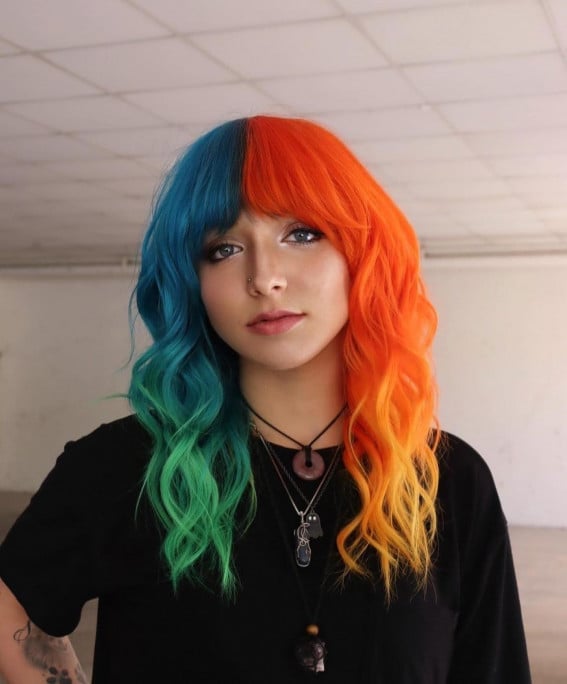
The teal blue and orange split dye is a color combination that practically begs for sunshine, landing it squarely in festival season. The mid-back length layered cut with full bangs gives the vivid hues plenty of canvas to play on, and the soft waves let each shade stand out without competing. This is a look for warm-weather months when you want your hair to do the talking. Ask your colorist for: mid-back length layers, full bangs, teal blue and orange split dye. The thick, wavy texture holds the color well, but be prepared for a longer salon session to get that contrast crisp.
Collarbone Straight Cut Multi-Color Split Dye
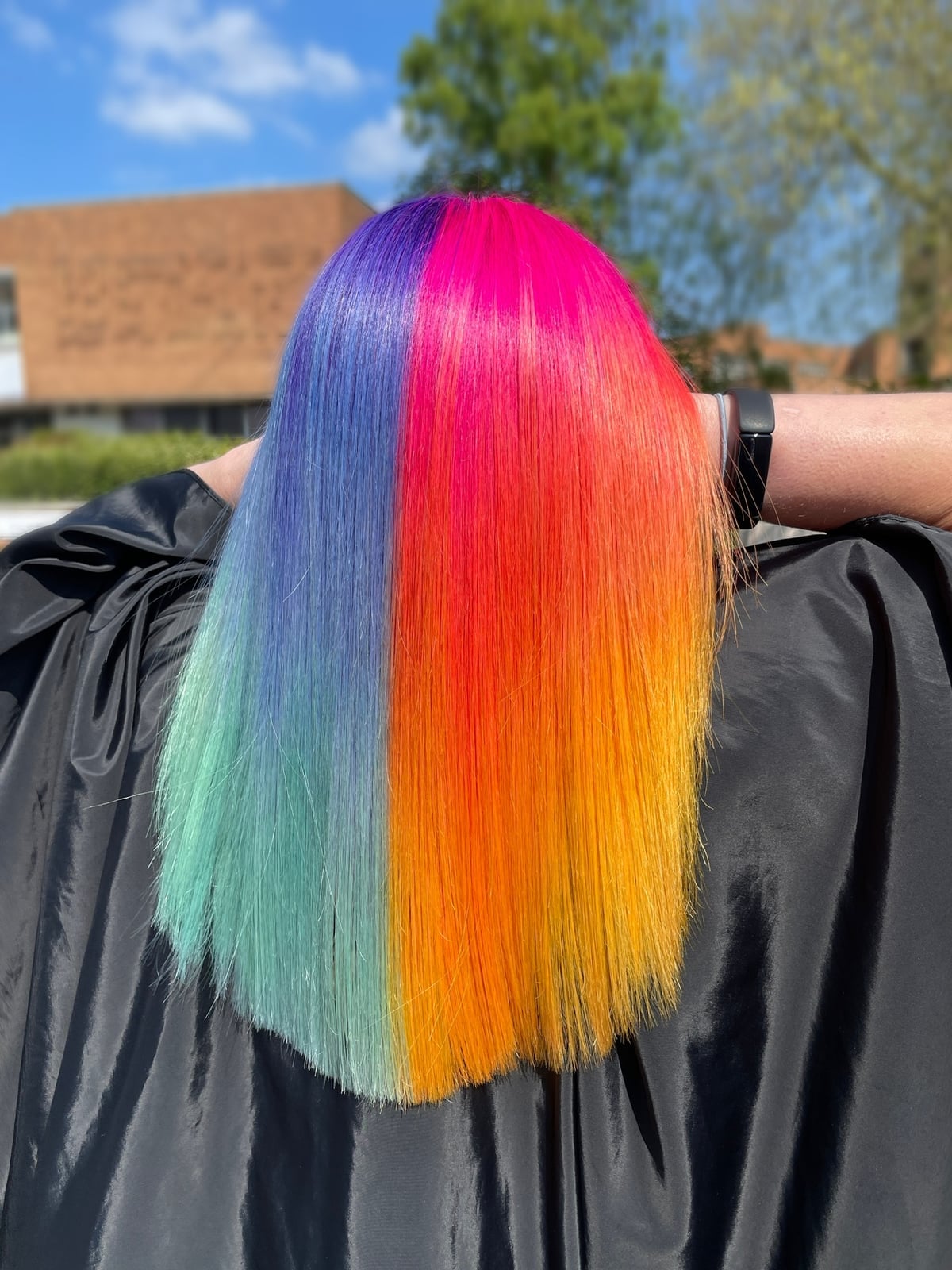
Building a multi-color split dye like this one takes precision and time, since each section of purple, blue, pink, orange, and yellow needs its own bleach and color application. The straight cut at collarbone length keeps the focus on the color blocks, and the fine, straight texture lets the sections read as clean lines rather than a muddy blend. This is a salon job through and through, not a weekend DIY, because getting the sections even and the colors distinct requires real skill. Ask your colorist for: collarbone straight cut, multi-color split dye. A middle part suits most faces, and the back view shows off the technique best.
Shoulder Length Blunt Cut Pink And Blue Split Dye
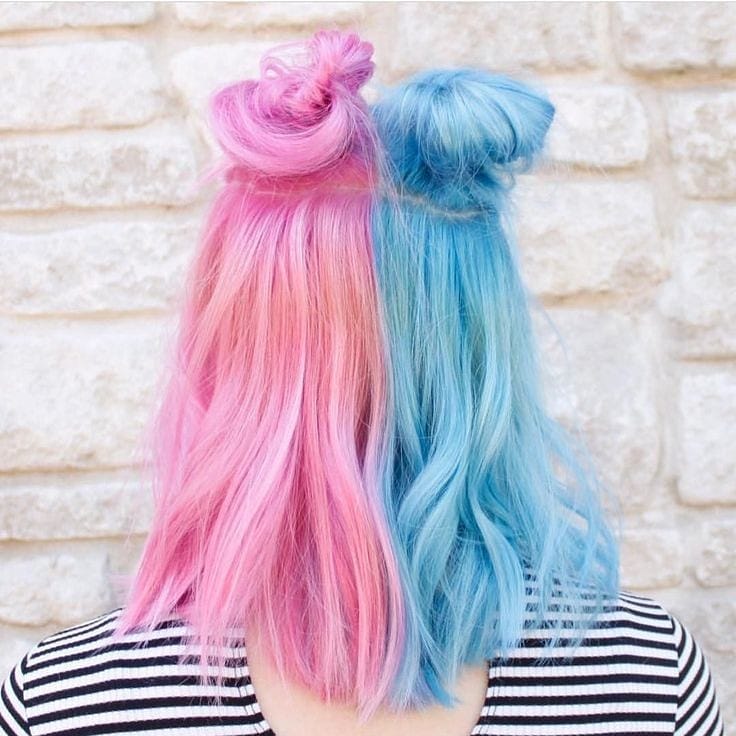
Wondering if a blunt bob can handle a split dye without looking like a costume? It can, when the cut is this precise and the hair is thick enough to hold the shape. The shoulder-length blunt cut with blunt bangs gives the vivid pink and blue split a graphic, almost architectural frame, and the straight texture with subtle waves keeps it from feeling heavy. This is a style that suits thick hair best, since the blunt edges need density to look intentional. Ask your colorist for: shoulder-length blunt cut, blunt bangs, pink and blue split dye. For upkeep, a smoothing serum keeps the finish polished, and those blunt bangs will need a trim every four to six weeks to stay sharp.
Collarbone Lob Wavy Blue And Pink Split Dye
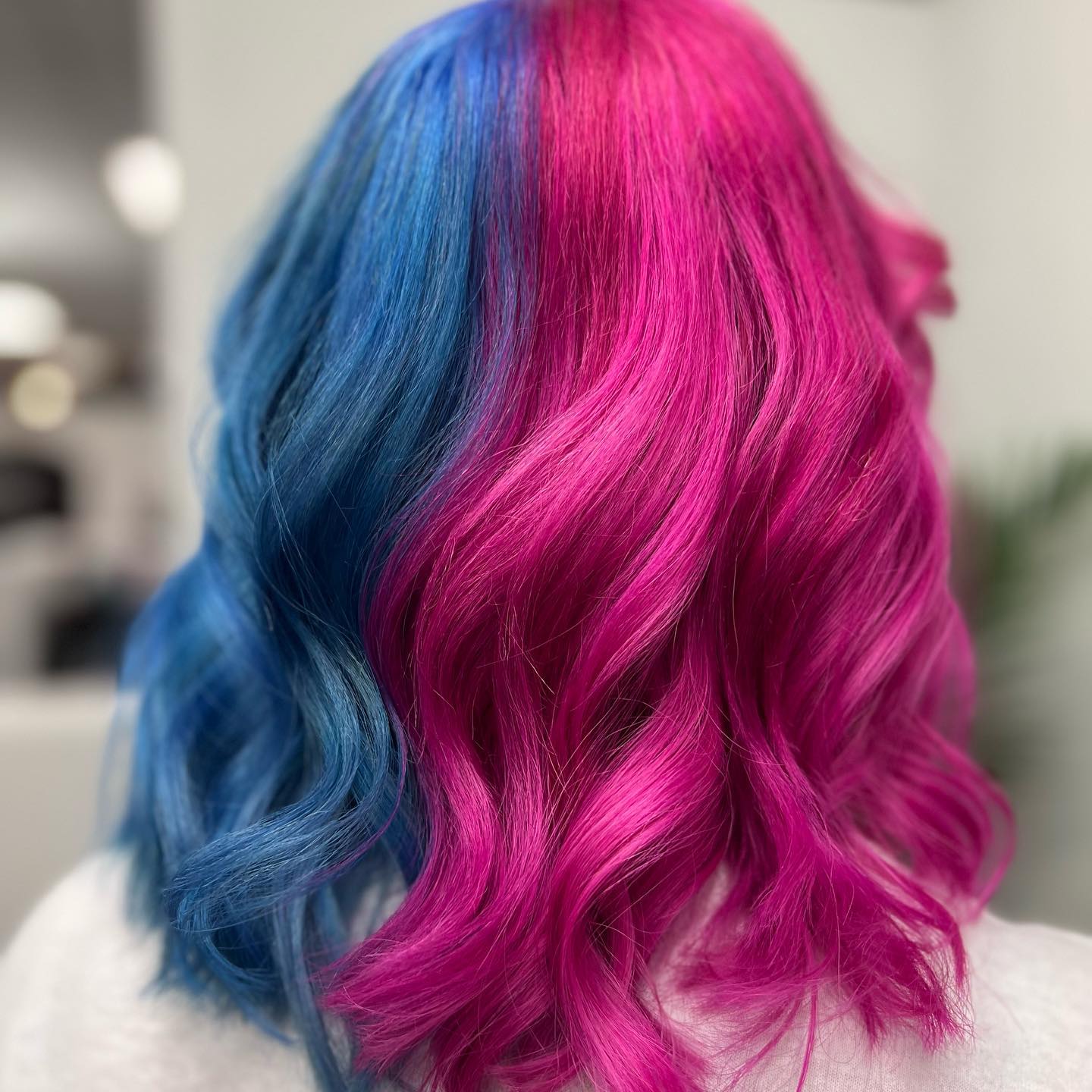
What makes a lob with split dye wear well is the grow-out: the collarbone length means the vivid blue and pink sections don’t hit the roots for a while, so you get more mileage between touch-ups. The loose waves on this medium-density wavy texture soften the contrast, making the two tones feel like they belong together rather than fighting each other. The middle part keeps the split clean, and the lob’s versatility means you can wear it straight or with waves depending on your mood. Ask your colorist for: collarbone lob, wavy texture, blue and pink split dye. The main upkeep is keeping those vivid tones fresh, which usually means a toning appointment every four to six weeks.
Collarbone Shag Split Dye Blonde Pink And Yellow
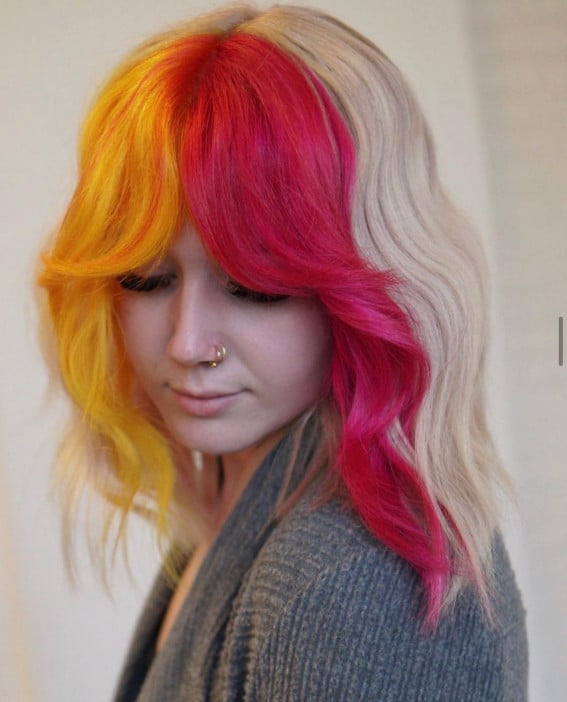
What should you ask for if you want a split dye that avoids a flat half-and-half look? Start with the cut: a collarbone-length shag with curtain bangs that blend the blonde, pink, and yellow sections into the face-framing pieces. The loose waves and thick texture give the shag its movement, while the curtain bangs soften the transition between the two sides. Ask your stylist for: collarbone shag, curtain bangs, blonde, pink, yellow split dye. The shag’s layers mean the colors land at different lengths, which keeps the look from being a flat split. A styling cream through the ends will define the waves, and the shag needs a trim every six to eight weeks to keep its shape.
Collarbone Layered Split Dye Black Red And Orange
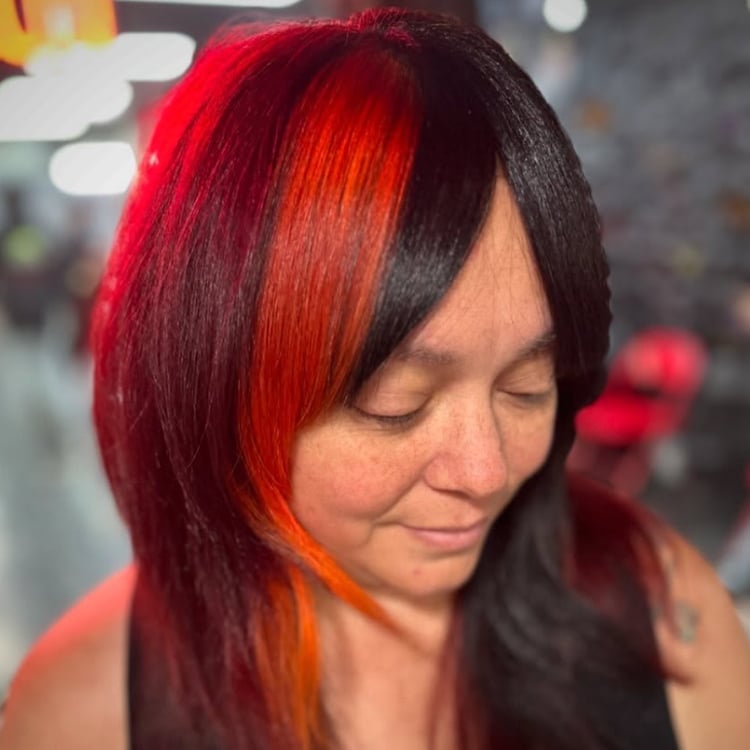
Working multiple vivids over a black base takes a two step process: the dark side stays as is, while the opposite side gets lifted before the red and orange sections are placed. The end result is a collarbone length layered cut with curtain bangs, styled in a soft blowout. The black base anchors the brighter tones, so the red and orange are placed as deliberate sections. This setup works best on thick, wavy hair, since the layers help the color transitions land smoothly without a hard block.
Ask your colorist for: a collarbone length layered cut with curtain bangs, a black base and red and orange split dye. The blowout adds volume, but the black side needs regular toning to stop it pulling warm. A gloss treatment every four to six weeks keeps the dark side deep and the vivids from turning dusty.
Collarbone Layered Asymmetrical Black And Blonde Split Dye
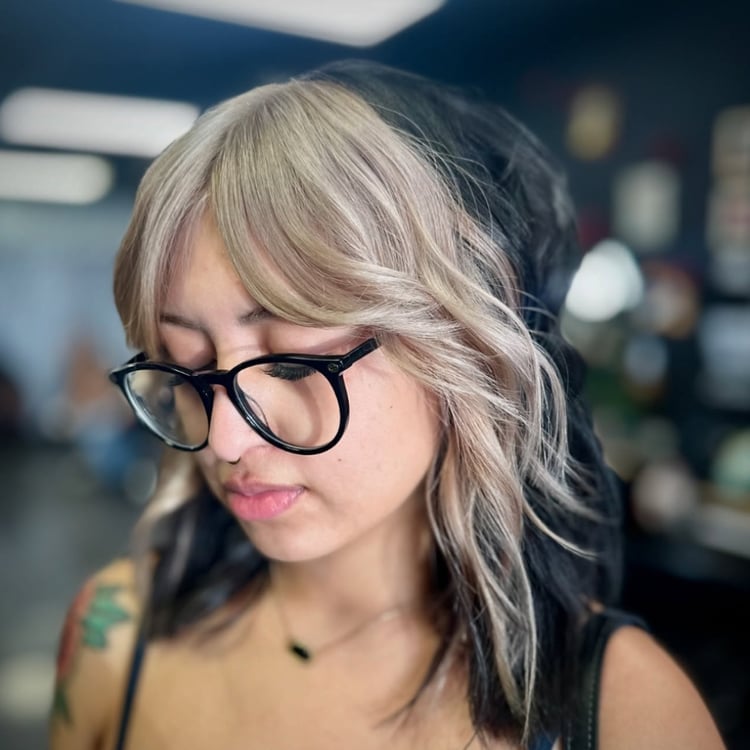
An asymmetrical split dye means the color division is not a straight line down the middle. Here, the black side dominates the front while the platinum blonde sweeps around the back and into the curtain bangs. The collarbone length layers and loose waves keep the contrast from feeling severe. The catch is that the blonde side will fade faster than the black, so you are signing up for a toning appointment every three to four weeks to keep the platinum from looking brassy. Curtain bangs suit most face shapes, but the blonde section demands a higher commitment to upkeep. If you do not have the patience for regular purple shampoo sessions, this one will show every skipped wash.
Collarbone Lob Platinum Blonde And Pastel Pink Split Dye
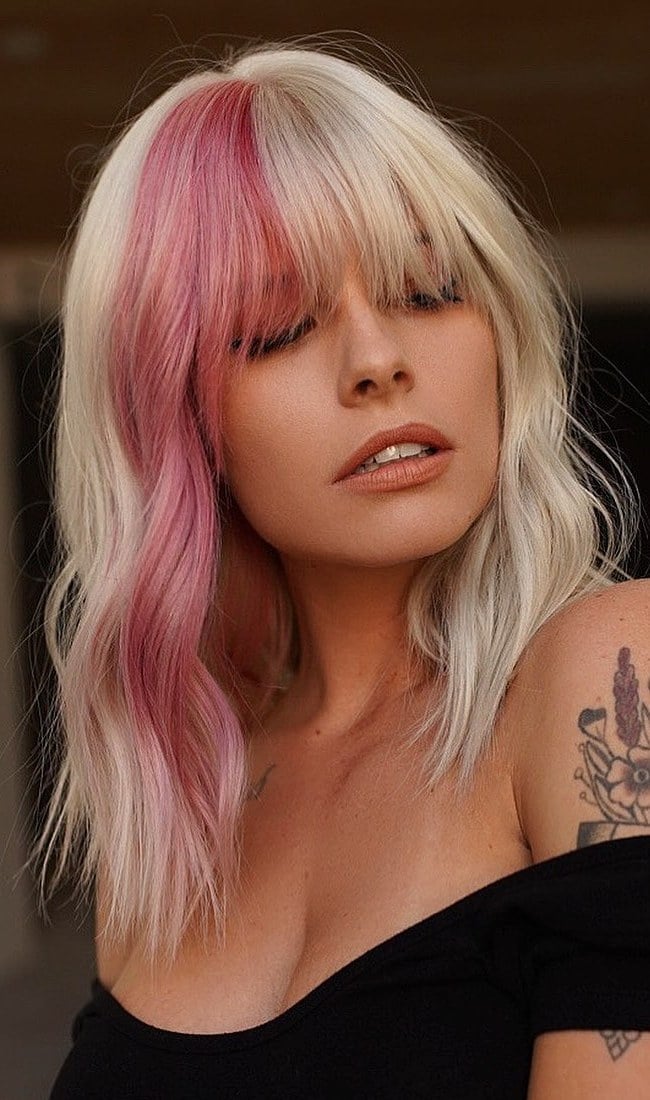
A platinum blonde lob with blunt bangs has a clean, structured feel. Add a pastel pink split dye on the other side and the contrast softens the whole shape. The precision of the blunt bangs and the lob means the color line has to be exact, which is why this is a salon job through and through. A pastel pink will fade in about four washes without a color-depositing conditioner, while the platinum side needs a purple shampoo every two weeks. Fine, wavy hair works well here because the lob and blunt bangs create volume at the ends rather than weighing the hair down. Ask your colorist for: a collarbone length lob with blunt bangs, a platinum blonde and pastel pink split dye.
Collarbone Layered Half Orange Half Blonde Split Dye
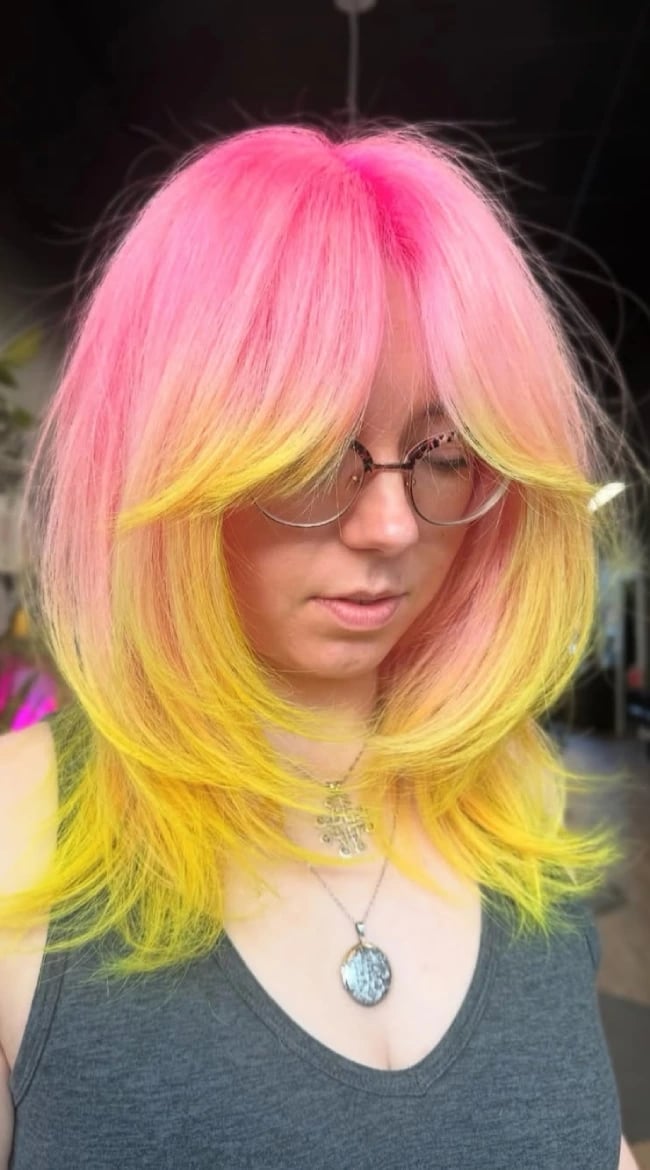
Can you wear half orange, half blonde without it reading as a costume? Yes, if the placement is deliberate and the hair is wavy, medium density and cut to collarbone length. The curtain bangs blend the two colors into the face-framing pieces, avoiding a hard line at the part. The orange side is the star here, but it fades faster than the blonde because warm pigments on lightened hair tend to wash out first. For medium density wavy hair, the layers keep the halves from looking like two separate wigs. Ask your colorist for: a collarbone length layered cut with curtain bangs, half orange, half blonde split dye. A texturizing spray helps the waves hold their shape and the color stays visible longer.
Chin Length Blunt Bob Pink And Purple Split Dye
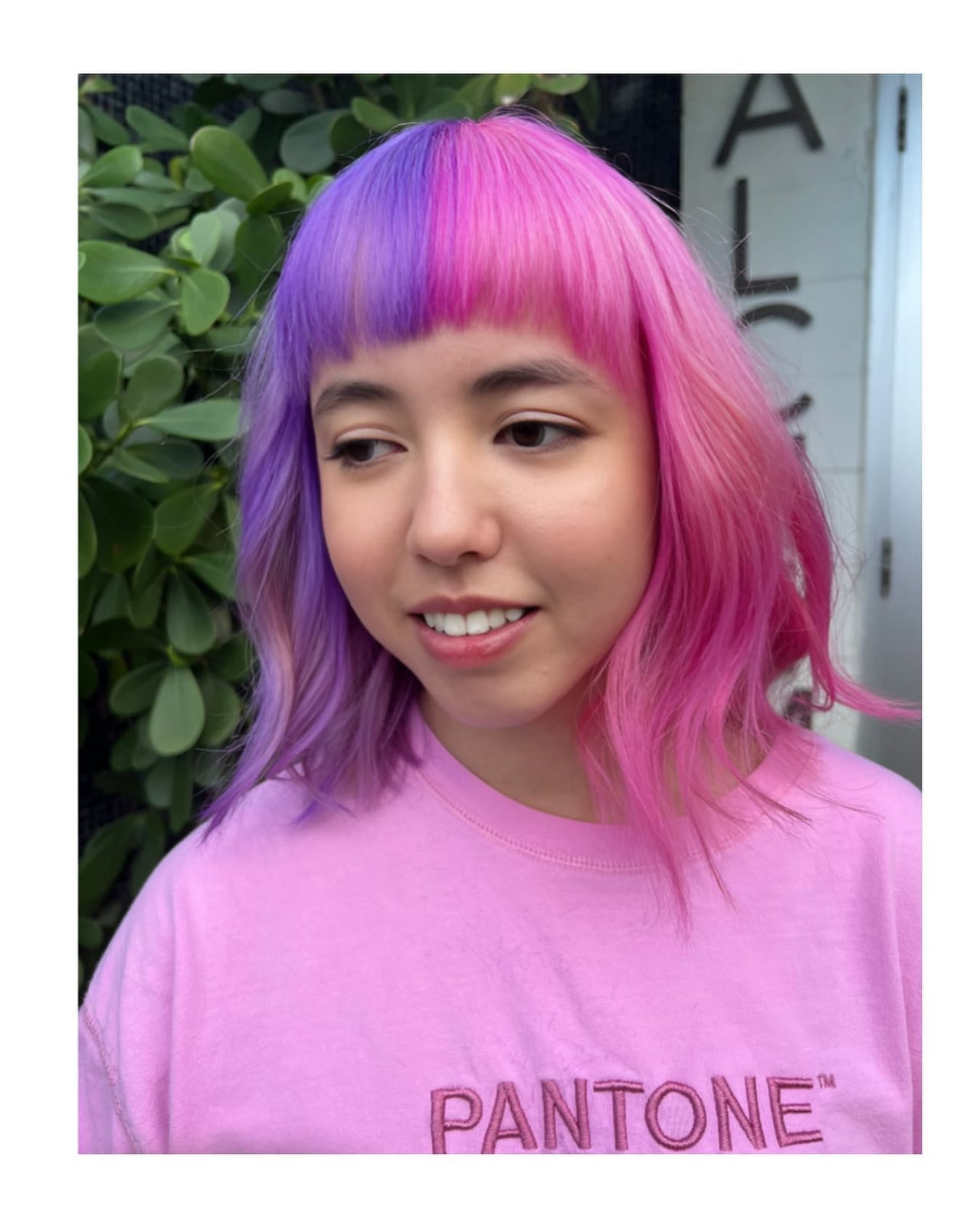
A chin-length blunt bob with blunt bangs already has a graphic quality. Adding a vivid pink and purple split dye amplifies the geometry. The side parting shifts the color division, so more of the pink shows on the heavier side while the purple peeks through the bangs. The wavy texture keeps the two tones from sitting still, which is exactly what you want when the bob is that short. Ask your colorist for: a chin length blunt bob with blunt bangs, vivid pink and purple split dye. Blunt bobs need a trim every six to eight weeks to hold the shape, and both vivid colors will need a color-safe shampoo plus a toning mask every two weeks to stay bright.
Short Choppy Split Dye Black And Blonde
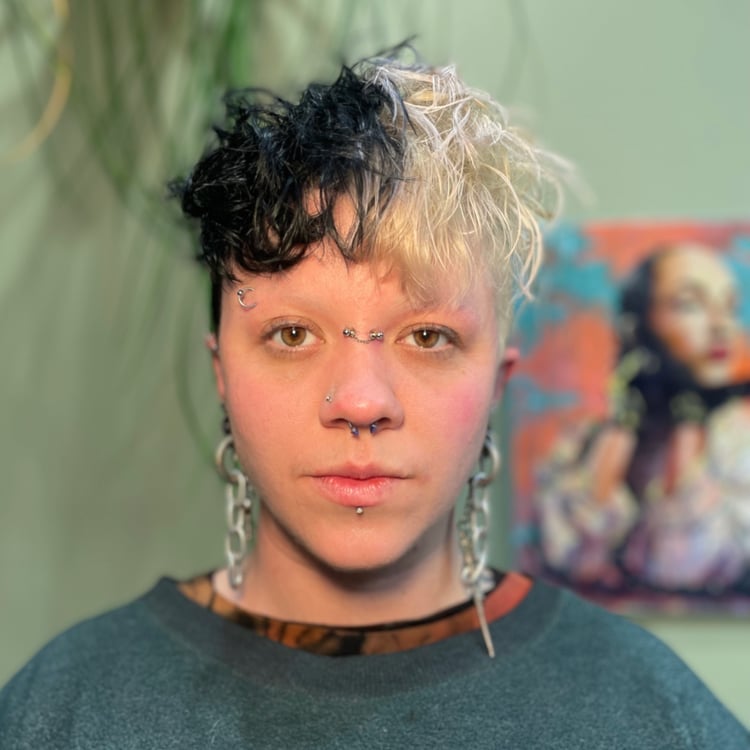
The wavy, fine texture gives the cut movement, so it suits oval and heart face shapes without extra styling effort. Ask your colorist for: short choppy hair, short bangs, black and blonde split dye. Work a texturizing product through damp hair and let it air-dry for that lived-in look. The blonde side will need a purple shampoo once a week to keep it from turning brassy, and the black side will fade softer over time. It’s an edgy, alternative choice that works year-round, though the short length means trims every four to six weeks to keep the choppy shape sharp.
Final Thoughts
Fine hair shows color lines more sharply, so a blunt baseline and minimal layers keep the contrast crisp. On thicker or coily textures, a slight gradient at the parting line softens the transition without losing the graphic effect. Stick with one vivid and one neutral tone for your first try, then branch into pastel or neon combos once you know how your hair holds color.
- Schedule salon touch-ups every 6-8 weeks to maintain color vibrancy.
- Use color-safe shampoos and conditioners to prevent fading.
- Minimize heat styling to preserve color integrity.
- Tone lighter sections every 4-6 weeks to keep brassiness away.
Embrace the artistic freedom of split dye.