
A single-process color or a few well-placed highlights can shift the whole feel of your hair without requiring a full transformation. The current trend leans toward shades that look like a polished version of your natural color, with soft face-framing pieces and a glossy finish that works with your texture, not against it.
These 31 Simple Hair Color Ideas span from short to long, low upkeep to salon-intensive, and cover brunette, blonde, red, and fantasy shades. Whether your hair is fine and falls flat or you are managing a visible grow-out line, there is a shade and technique here that keeps maintenance manageable and the result fresh.
Chin Length Shag With Wispy Bangs
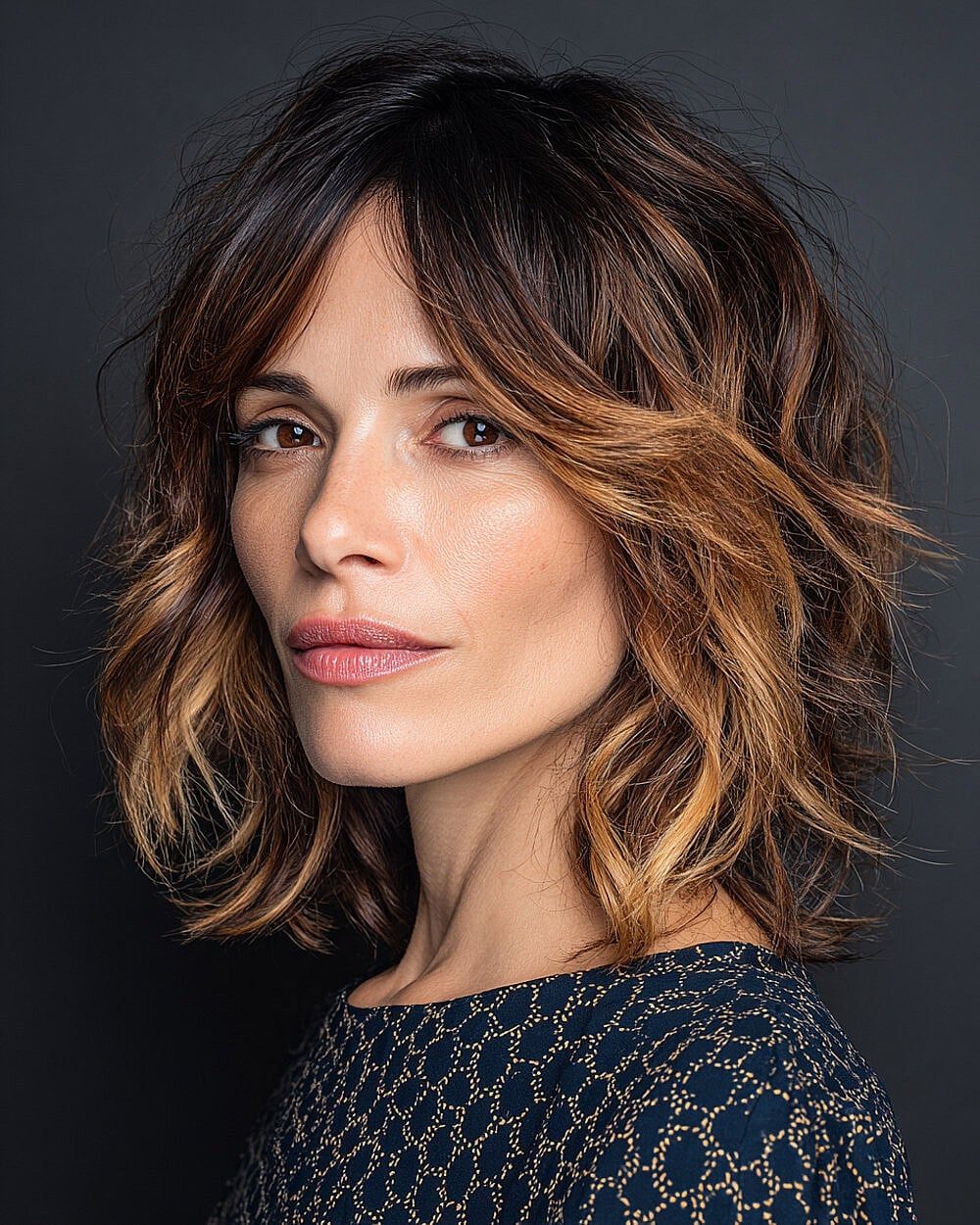
The choppy layers and wispy bangs give fine, wavy hair shape without weighing it down. The dark brown base with blonde and caramel highlights adds depth so the texture reads as lived-in, not flat. Ask your colorist for: chin-length shag, wispy bangs, dark brown with blonde and caramel highlights. This cut suits fine hair that is chin-length or longer, and the wispy bangs soften round and oval faces. A texturizing spray on damp hair, scrunched and left to air-dry, keeps the messy wave going; plan a trim every 8 to 10 weeks.
Chin Length Bob With Curtain Bangs
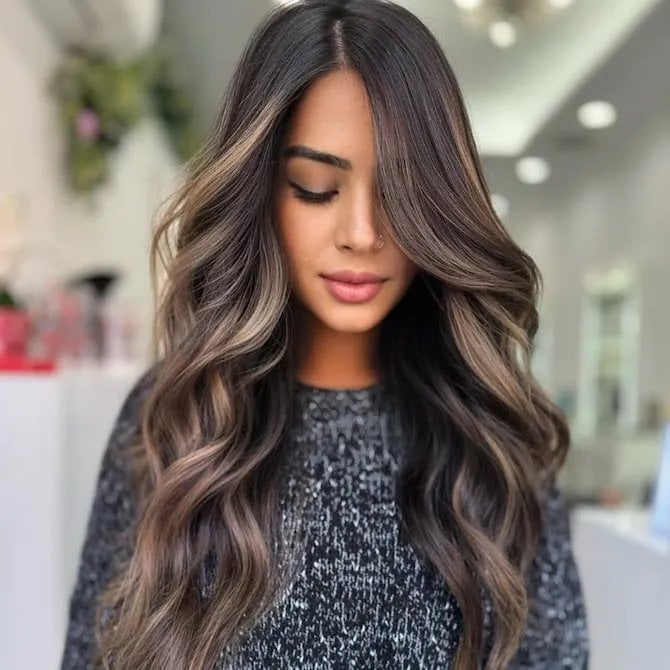
Wondering how to get that lived-in brunette bob with caramel balayage without it looking streaky? The balayage is painted through the mid-lengths and ends, leaving the roots a rich brunette so the grow-out stays soft. Ask your colorist for: chin-length bob, curtain bangs, brunette with caramel balayage. The fine, wavy texture takes a smooth blowout well, and the curtain bangs suit square and heart faces. For a glossy finish, blow-dry the fringe and ends with a round brush, and tone the highlights every 6 to 8 weeks to keep the caramel from turning brassy.
Collarbone Lob With Caramel Highlights
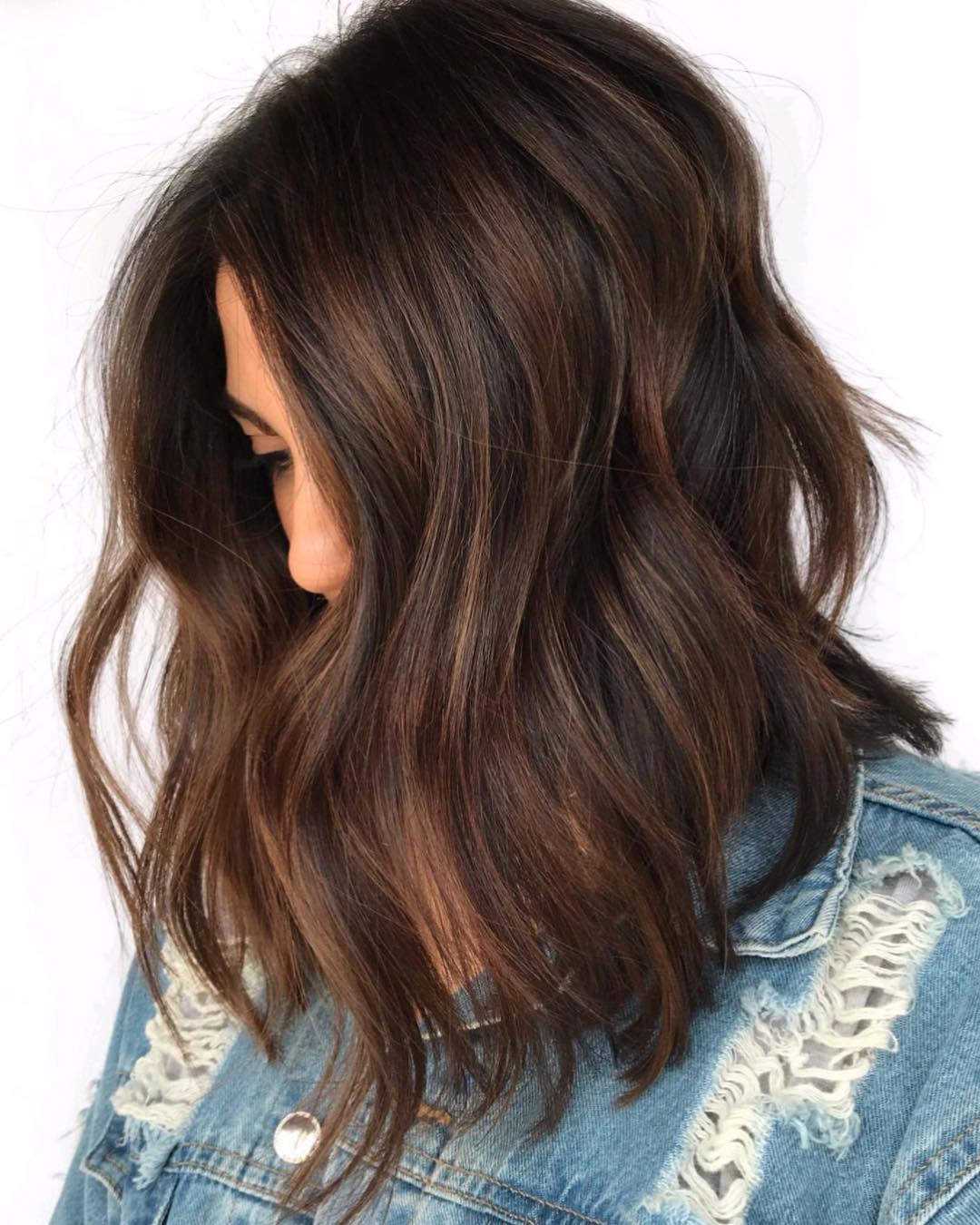
That makes them a low-commitment way to add dimension to a collarbone lob with curtain bangs. Ask your colorist for: collarbone lob, curtain bangs, dark brown with caramel highlights. The face-framing layers blend the color so the grow-out is forgiving, which matters for medium-density wavy hair that air-dries more than it styles. A wave-enhancing cream and a diffuser keep the loose waves defined, and the lob needs a trim every 8 to 10 weeks.
Collarbone Bob With Blonde Balayage
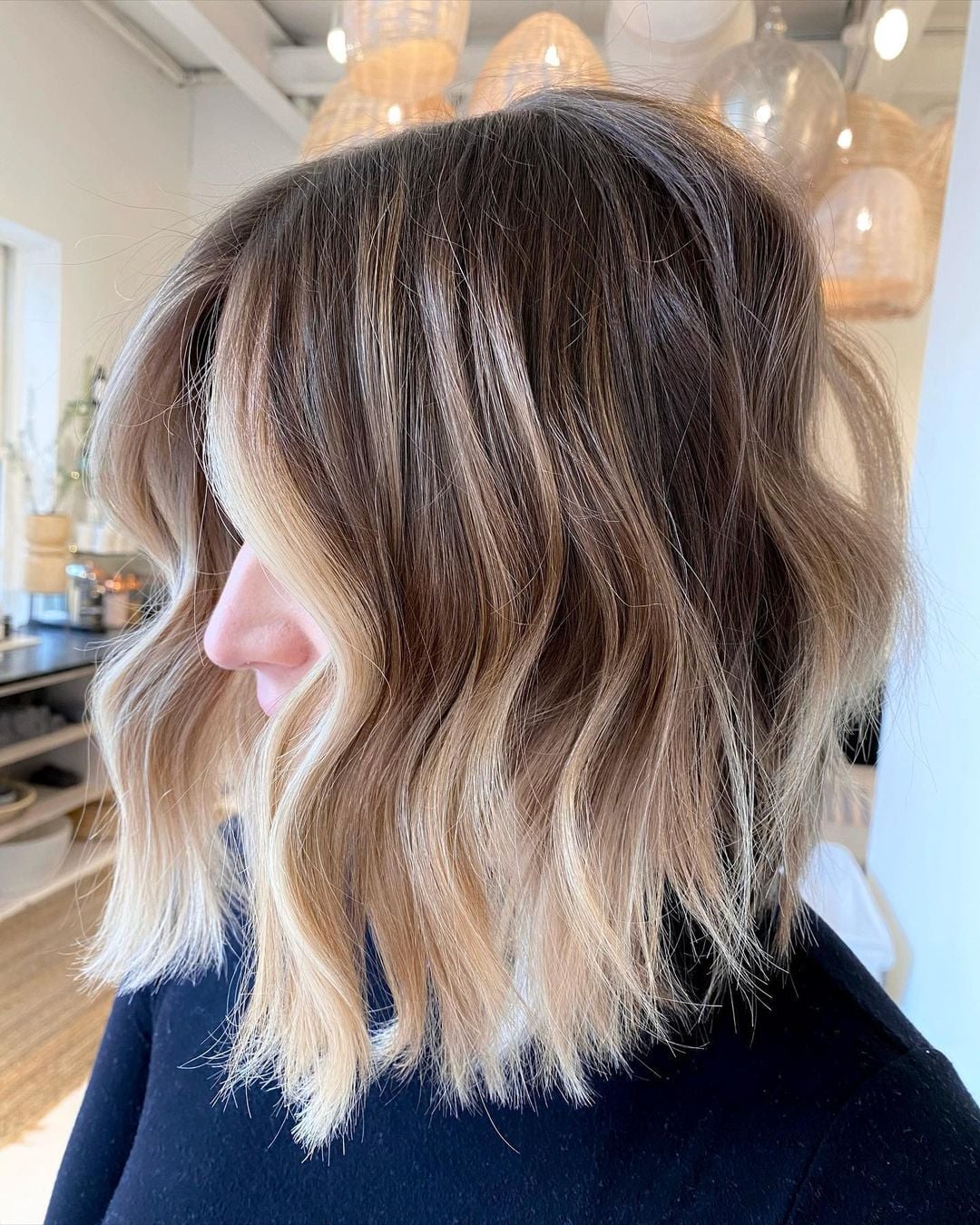
Ask your colorist for: collarbone bob, curtain bangs, dark brown with blonde balayage. This works well for medium-density wavy hair at collarbone length, and the curtain bangs balance square and round faces. The trade-off is salon time; this technique takes longer than a standard highlight because each section is hand-painted. Rough-dry with a texturizing spray for that lived-in finish, and tone every 8 to 10 weeks.
Collarbone Lob With Plum Brown Hue
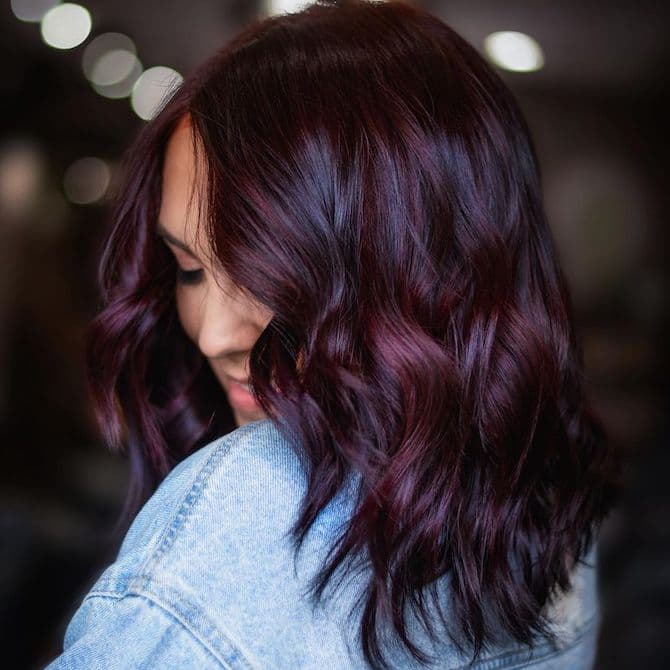
Plum brown is the shade that shows up for the colder months and stays interesting through spring, when the light catches its subtle variations. The deep, rich tone on this collarbone lob with curtain bangs gives medium wavy hair a polished look without a high-maintenance highlight schedule. Ask your colorist for: collarbone lob, curtain bangs, plum brown color. It suits medium wavy hair at collarbone length, and the curtain bangs soften round and heart faces. To keep the plum from fading into a flat brown, use a color-depositing conditioner weekly, and trim the lob every 8 to 10 weeks.
Collarbone Layers With Soft Waves
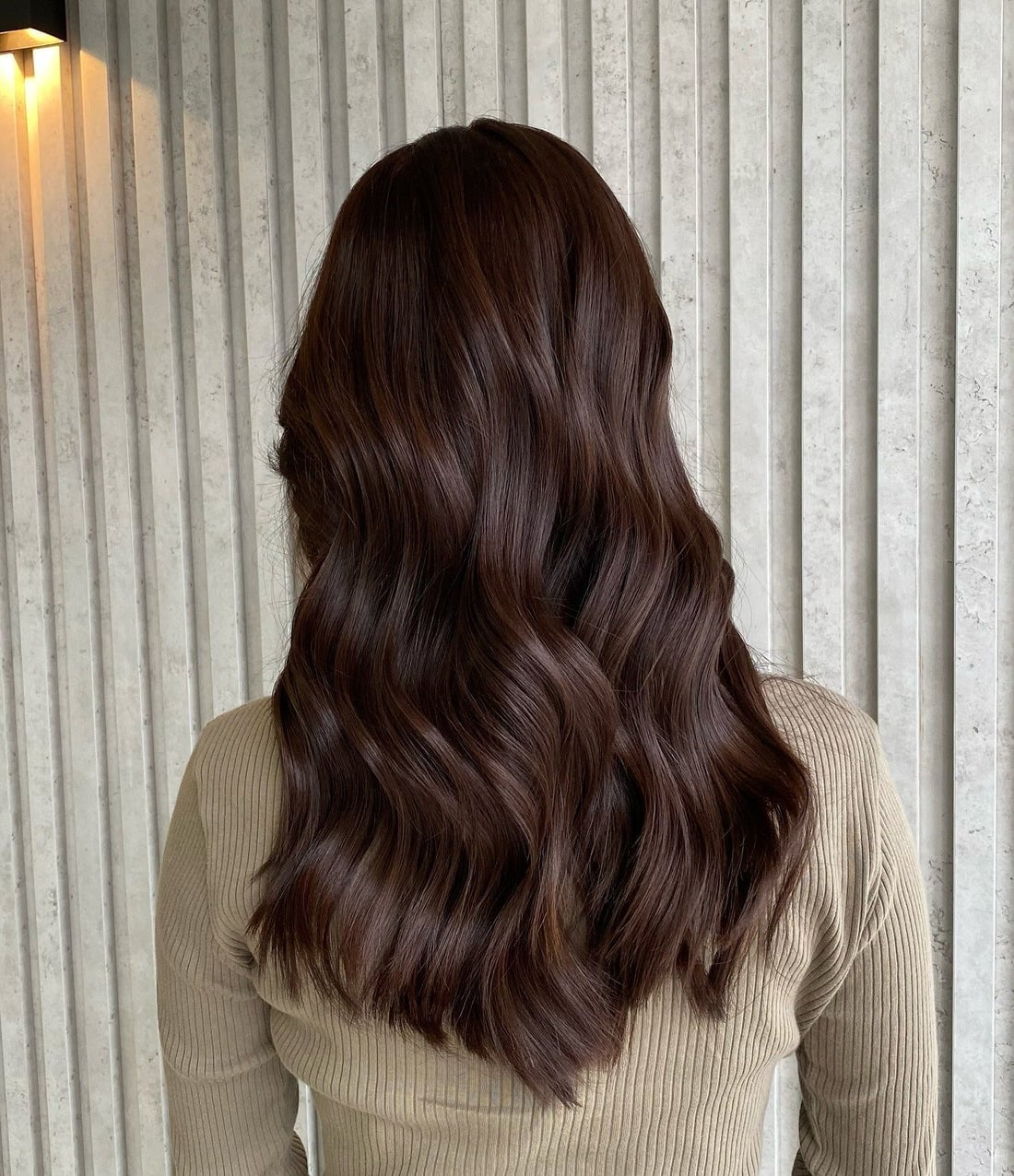
Those subtle lighter brown highlights threading through the medium brown base are painted on, not foiled, which keeps the blend soft rather than stripey. The face-framing layers and curtain bangs do the work of showing off the dimension without needing a full head of color. Ask your colorist for: collarbone layers, face-framing layers, medium brown with lighter highlights. Thick wavy hair at collarbone length handles this well, and the face-framing pieces are a natural fit for oval and heart shapes. A trim every eight to ten weeks keeps the layers from collapsing into one shape.
Collarbone Lob With Vibrant Copper Red
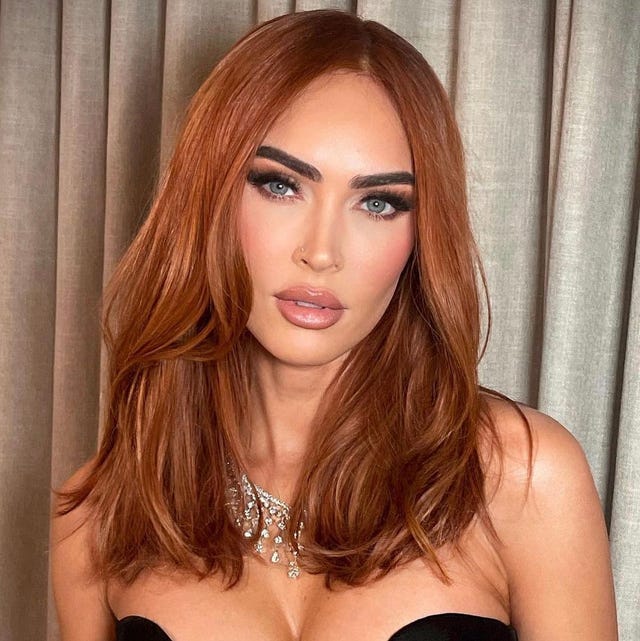
A lob cut straight with soft layers lets the vibrant copper red speak for itself, which it does loudly. Wispy bangs keep the whole thing from feeling heavy, but here is the trade-off: copper red fades faster than any brown or blonde, and it fades to orange, not back to your natural shade. Medium straight hair at collarbone length works best, and the wispy bangs soften round and heart faces. Ask your colorist for: collarbone lob, wispy bangs, vibrant copper red. Expect a toning gloss every four weeks to keep the color from drifting.
Collarbone Layers With Beige Blonde
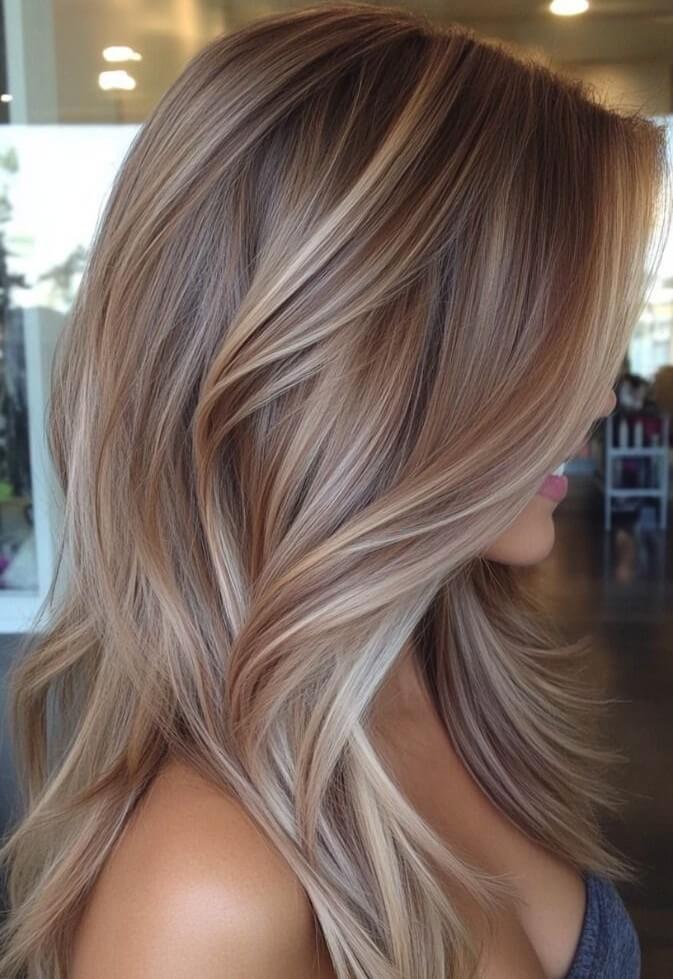
Who can actually wear beige blonde without looking washed out? Medium wavy hair at collarbone length, for one, because the soft layers and face-framing pieces add enough movement to keep the pale tone from falling flat. The subtle golden highlights warm up the beige base, which helps. Oval and heart faces get the most out of the face-framing pieces. Ask your colorist for: collarbone layers, face-framing pieces, beige blonde with golden highlights. A toner every six to eight weeks is non-negotiable; beige turns brassy fast if you skip it.
Collarbone Medium Brown With Caramel
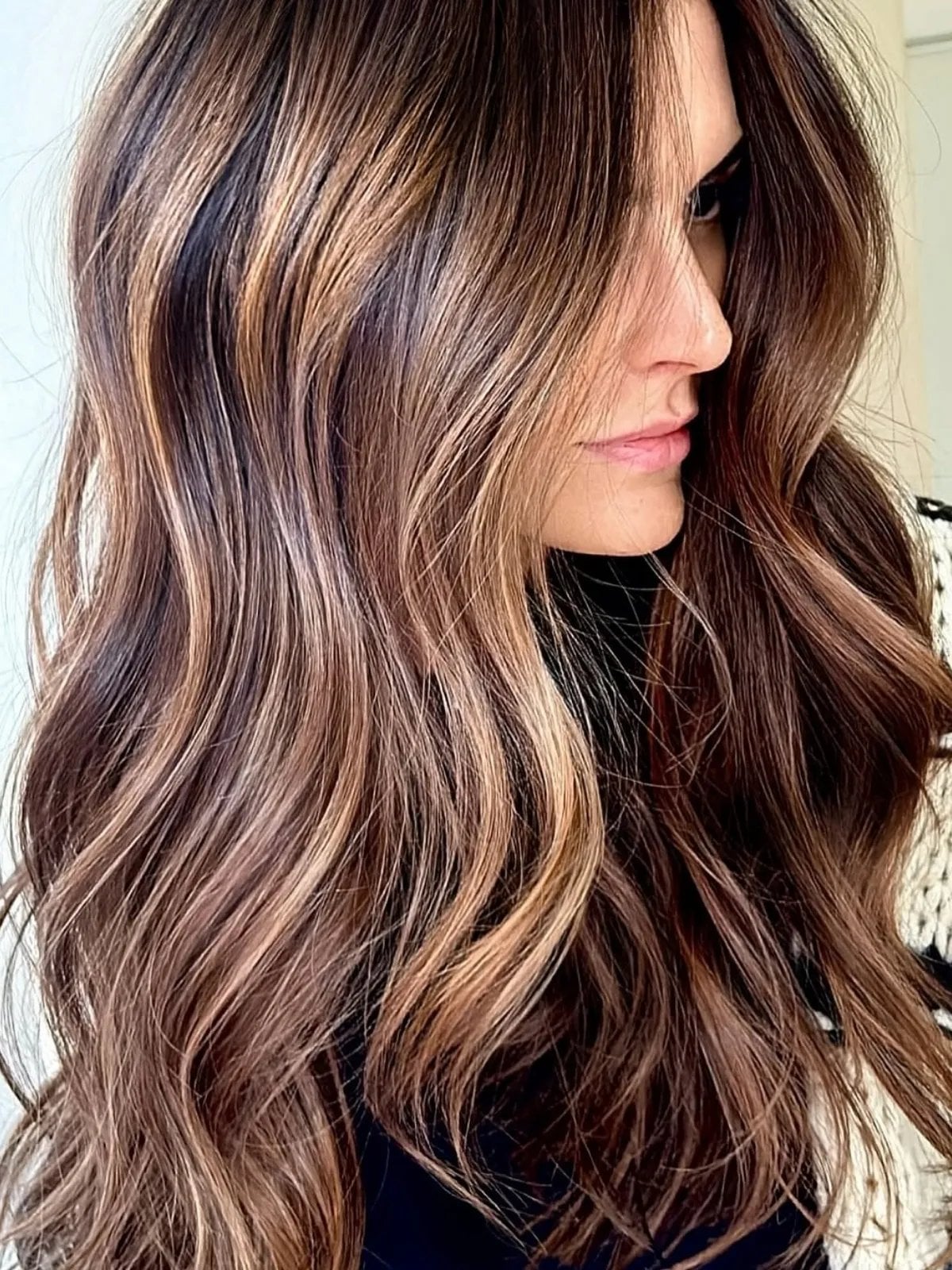
The subtle caramel highlights here are painted close to the root but not touching it, which means the grow-out line stays soft rather than obvious. That is the main point of this approach: you get dimension without a harsh regrowth schedule. Medium wavy hair at collarbone length takes the soft waves easily. Ask your colorist for: collarbone length, medium brown with subtle caramel highlights. A trim every eight to ten weeks keeps the ends from splitting, and a gloss every six to eight weeks refreshes the caramel tone.
Collarbone Brown With Natural Highlights
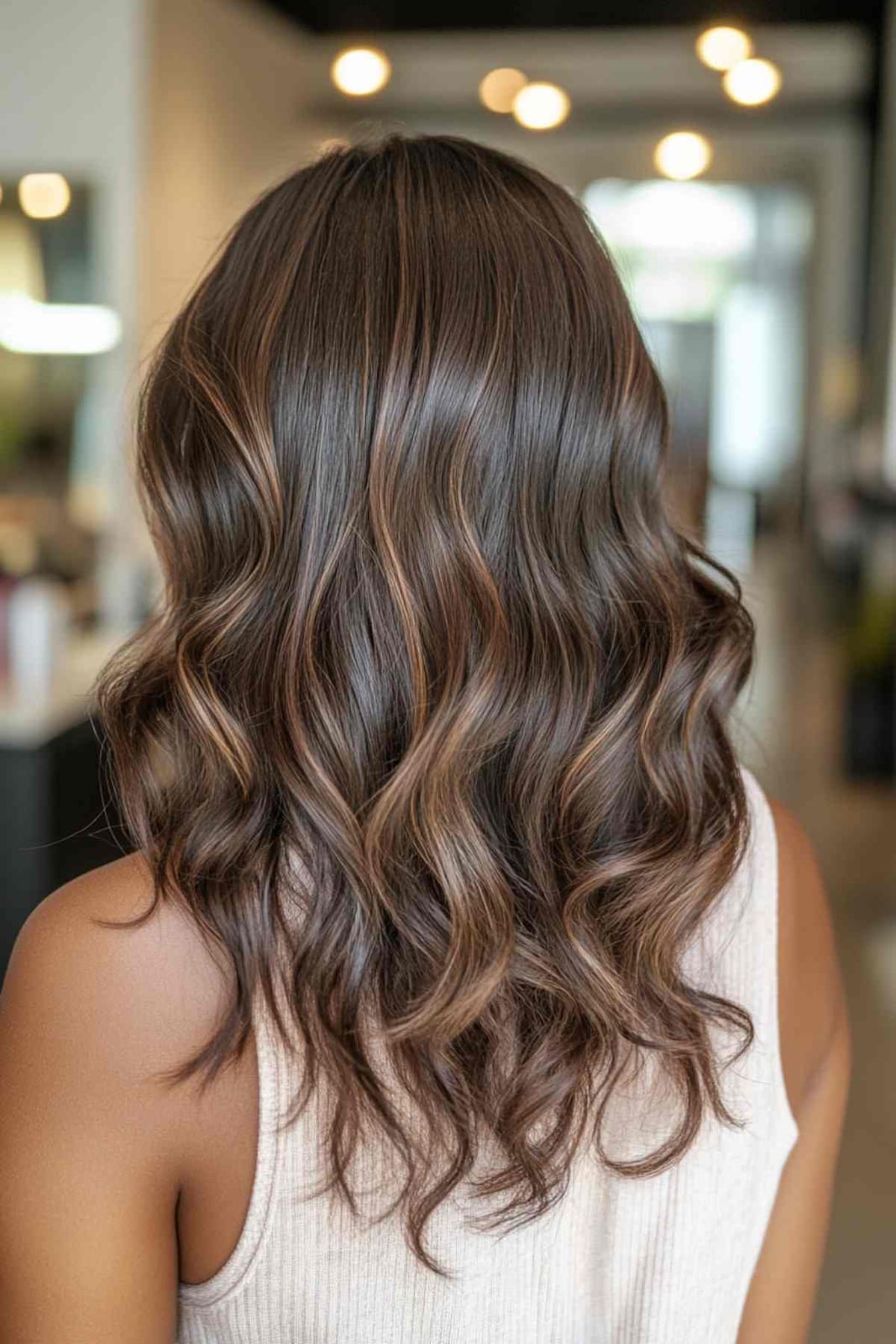
The trick to natural-looking caramel highlights is in the placement: they are woven through the mid-lengths and ends only, leaving the root area dark. That is what keeps the effect subtle and not streaky. The rich brown base provides depth, and the caramel pieces add warmth without going golden. Medium wavy hair at collarbone length works well for this. Ask your colorist for: collarbone length, rich brown with subtle natural caramel highlights. The grow-out is low-maintenance, with a trim every eight to ten weeks.
Collarbone Long Bob With Golden Highlights
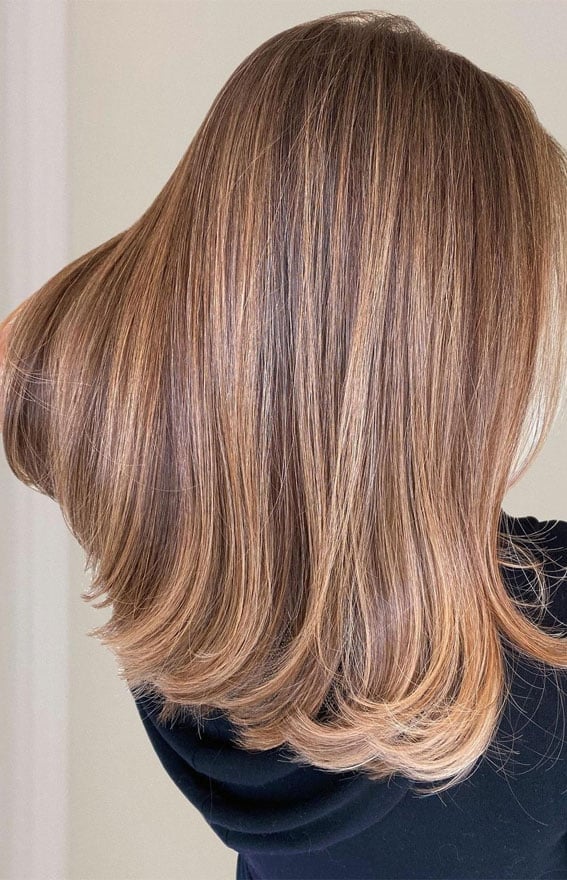
A collarbone-length long bob in a light brown base with subtle golden blonde highlights is the low-contrast cousin of a full-on balayage. Where bolder blonde pieces create a dramatic lift, these softer highlights add dimension without shouting. It’s a good middle ground if you want brightness but not the constant upkeep of a high-contrast look.
This suits medium wavy hair at collarbone length; the natural waves blend the color seamlessly. Ask your colorist for: collarbone length long bob, light brown with subtle golden blonde highlights. The difference between this and a salon visit is that you cannot DIY a soft highlight placement like this. Use a texturizing spray for a lived-in feel, and trim the ends every 8-10 weeks.
Shoulder Length Thick Curly Hair
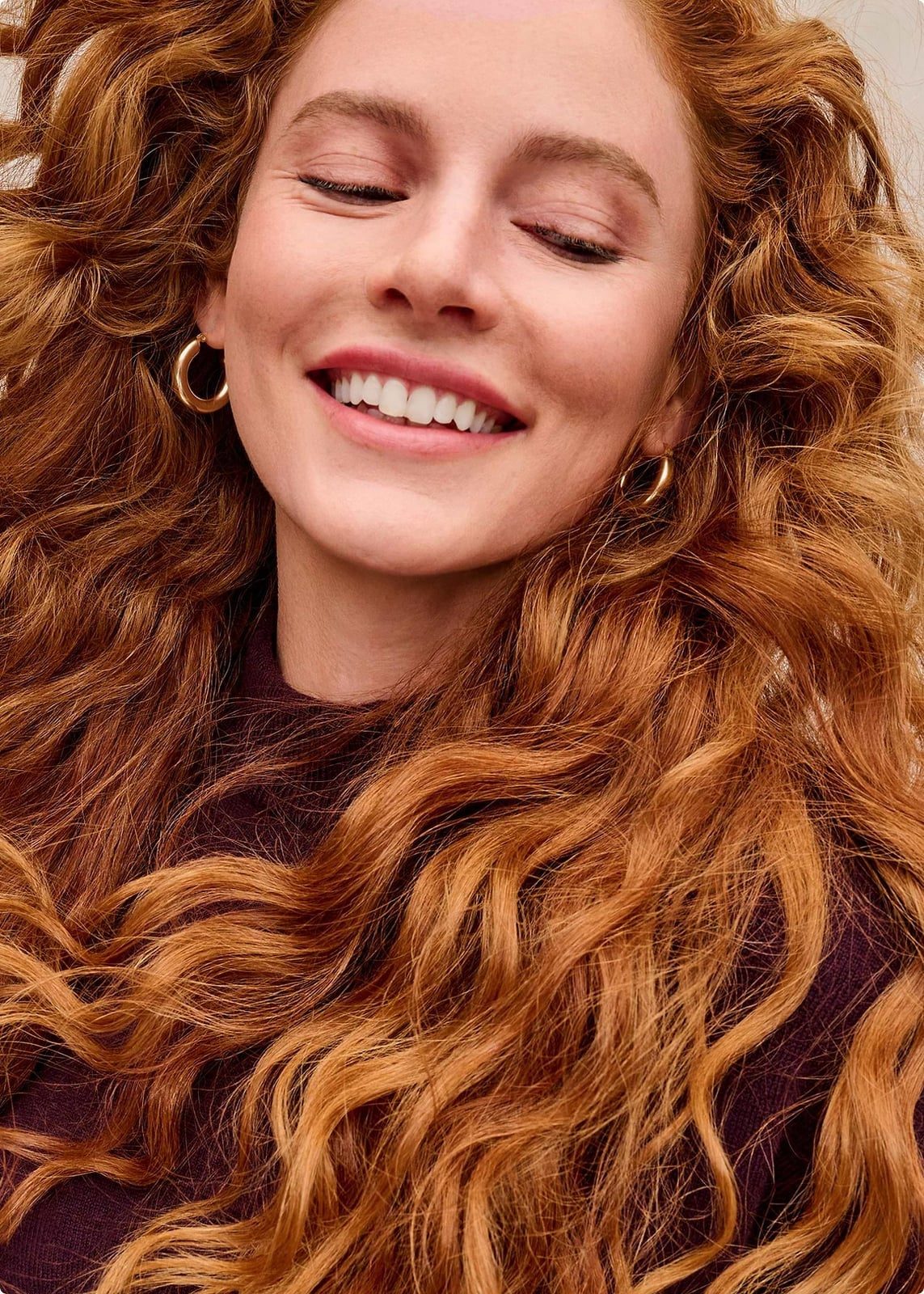
Why would you choose a copper red base with lighter copper highlights over a standard auburn? Because the lighter pieces catch the light and keep the color from reading as flat. Shoulder-length, thick, curly hair styled naturally makes this color sing. The rich copper red base with subtle lighter copper highlights adds dimension to the curl pattern without needing a full head of highlights. Ask your colorist for: shoulder-length curly cut, copper red base with lighter copper highlights. This is a vibrant style for autumn or winter occasions, when a warm, saturated shade feels right. It is a salon-leaning color that layers enhance.
Shoulder Length Silver With Curtain Bangs
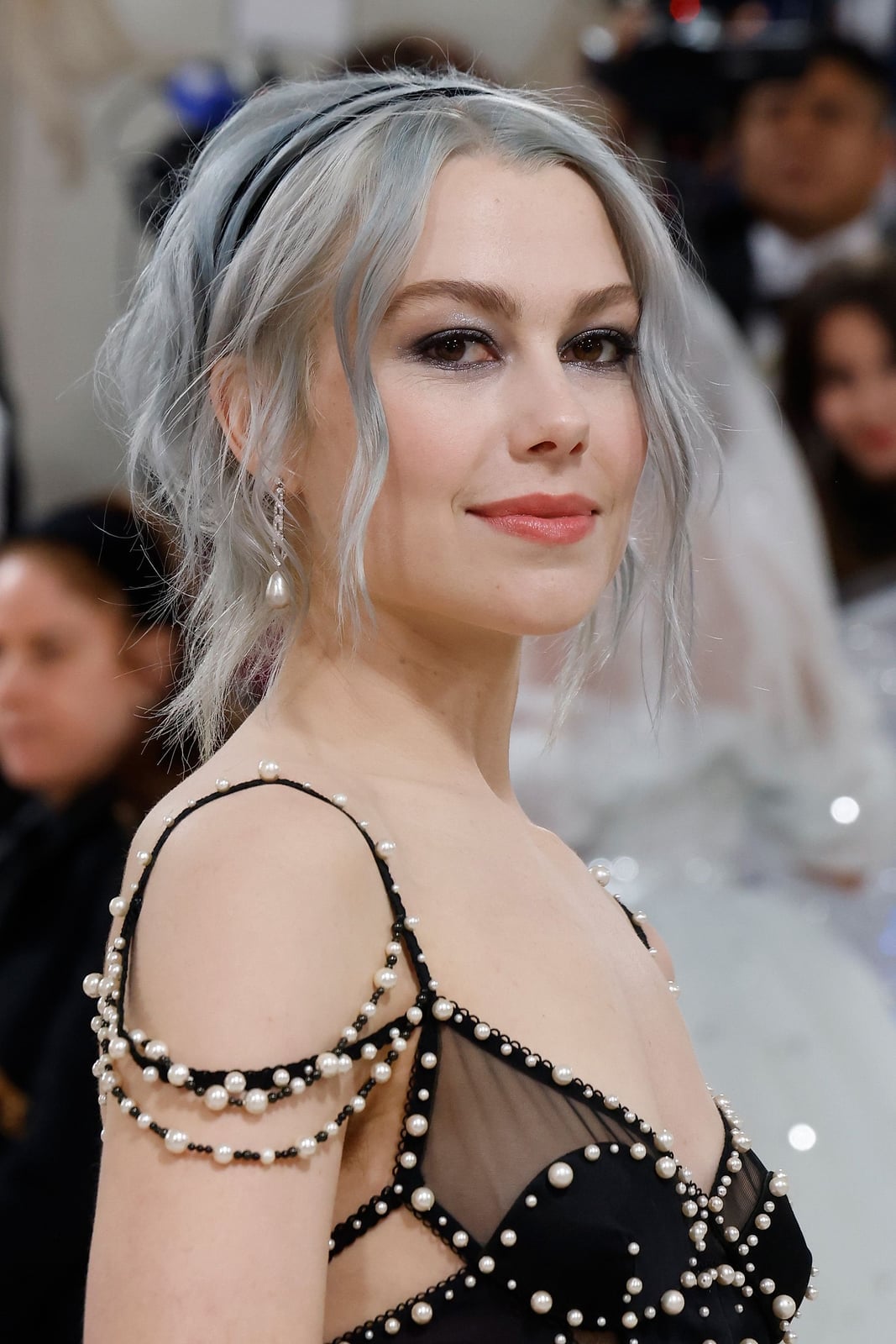
A cool silver tone on shoulder-length hair with loose waves and soft curtain bangs is a specific design. The silver color requires a lifted base and regular toning to avoid a muddy cast. The curtain bangs soften the overall look, making it more wearable than a blunt silver bob. This suits fine wavy hair at shoulder length; the soft texture pairs well with the cool shade. Ask your colorist for: shoulder-length cut, curtain bangs, silver color. The process involves lightening the hair to a pale yellow before applying a silver toner. A purple shampoo used weekly will keep the tone from shifting brassy.
Mid-Back Ash Blonde With Balayage
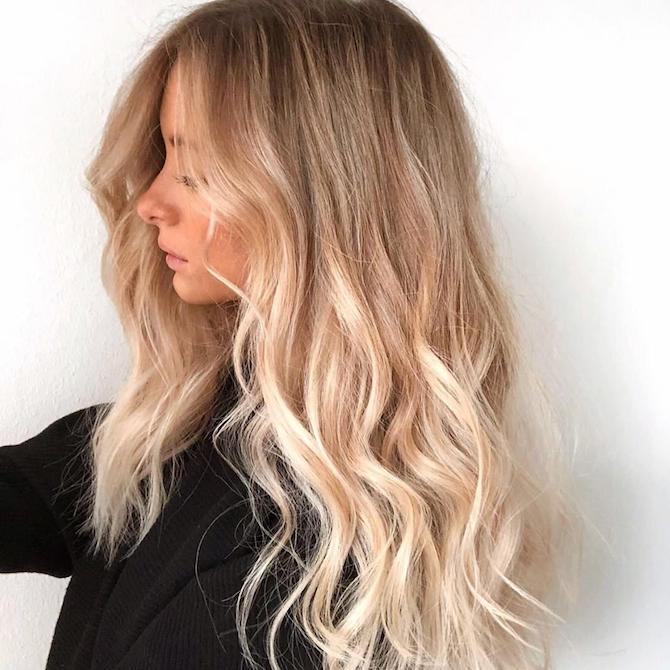
Mid-back length, thick, wavy hair with an ash blonde base and a balayage technique creating lighter blonde tones toward the ends is a look that relies on a cool, clean canvas. The ash blonde base gives the color a modern, slightly muted feel, while the lighter balayage pieces add brightness without high contrast. The honest drawback: ash blonde is prone to turning brassy, especially on porous or darker starting shades. This means a toner appointment every 8-10 weeks is non-negotiable. It suits thick wavy hair at mid-back length, where the balayage can spread naturally through the waves. Ask your colorist for: mid-back length, ash blonde with blonde balayage. Trim every 10-12 weeks to keep the ends healthy.
Mid-Back Dark Brown With Ash Balayage
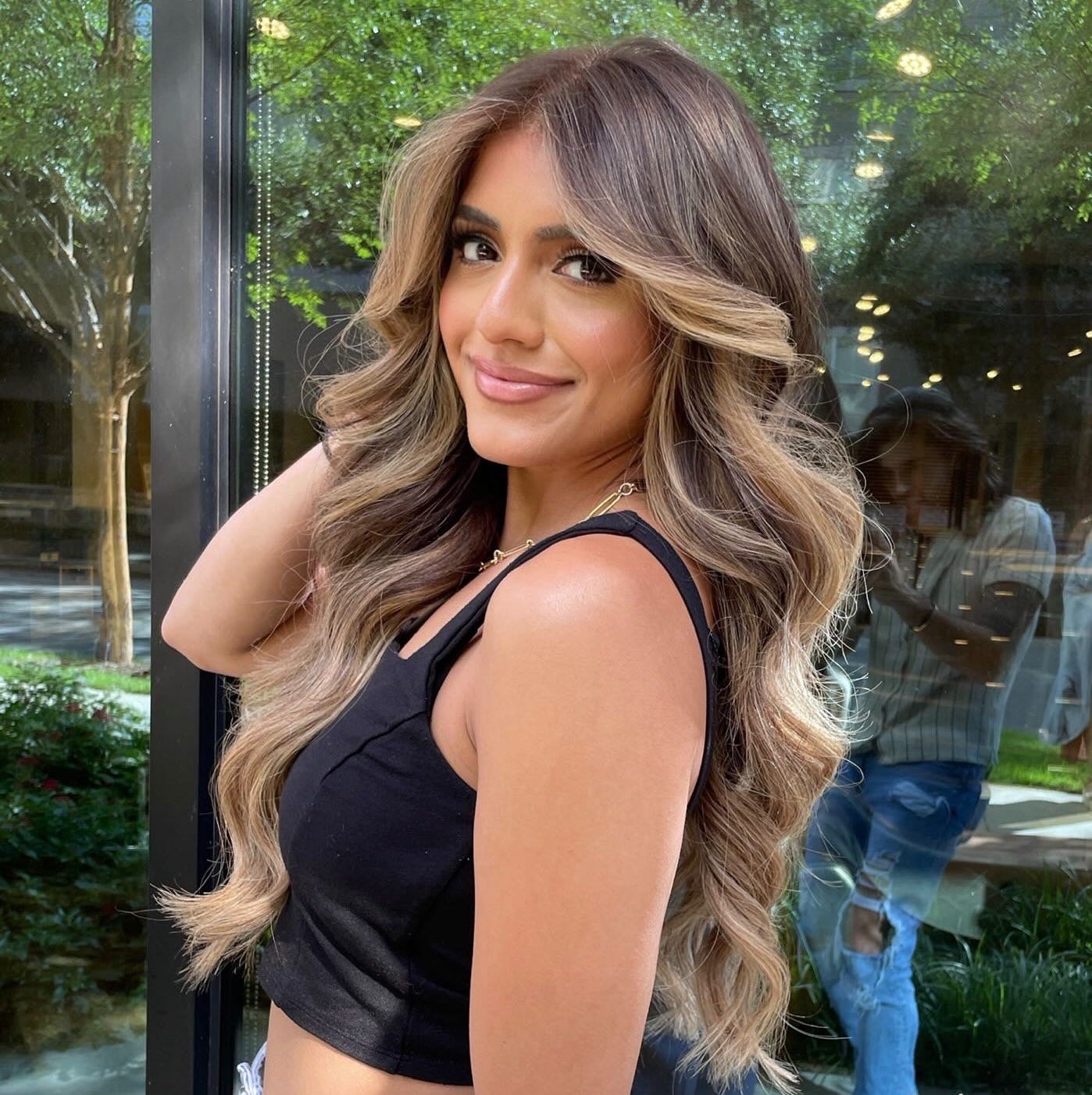
Does ash blonde balayage work on a dark brown base without looking like an afterthought? Yes, when the placement is deliberate and the ash tone is cool enough to contrast the dark base. Mid-back length hair with long layers and soft curtain bangs, a dark brown base enhanced with ash blonde balayage, creates a dimensional, lived-in feel. The ash blonde pieces sit within the waves, adding movement. This suits thick wavy hair at mid-back length; the curtain bangs complement oval and heart faces. Ask your colorist for: mid-back length, long layers, curtain bangs, dark brown with ash blonde balayage. Apply a leave-in conditioner to combat dryness, and tone the balayage every 8-10 weeks to maintain the cool shade.
Mid-Back Light Brown With Balayage
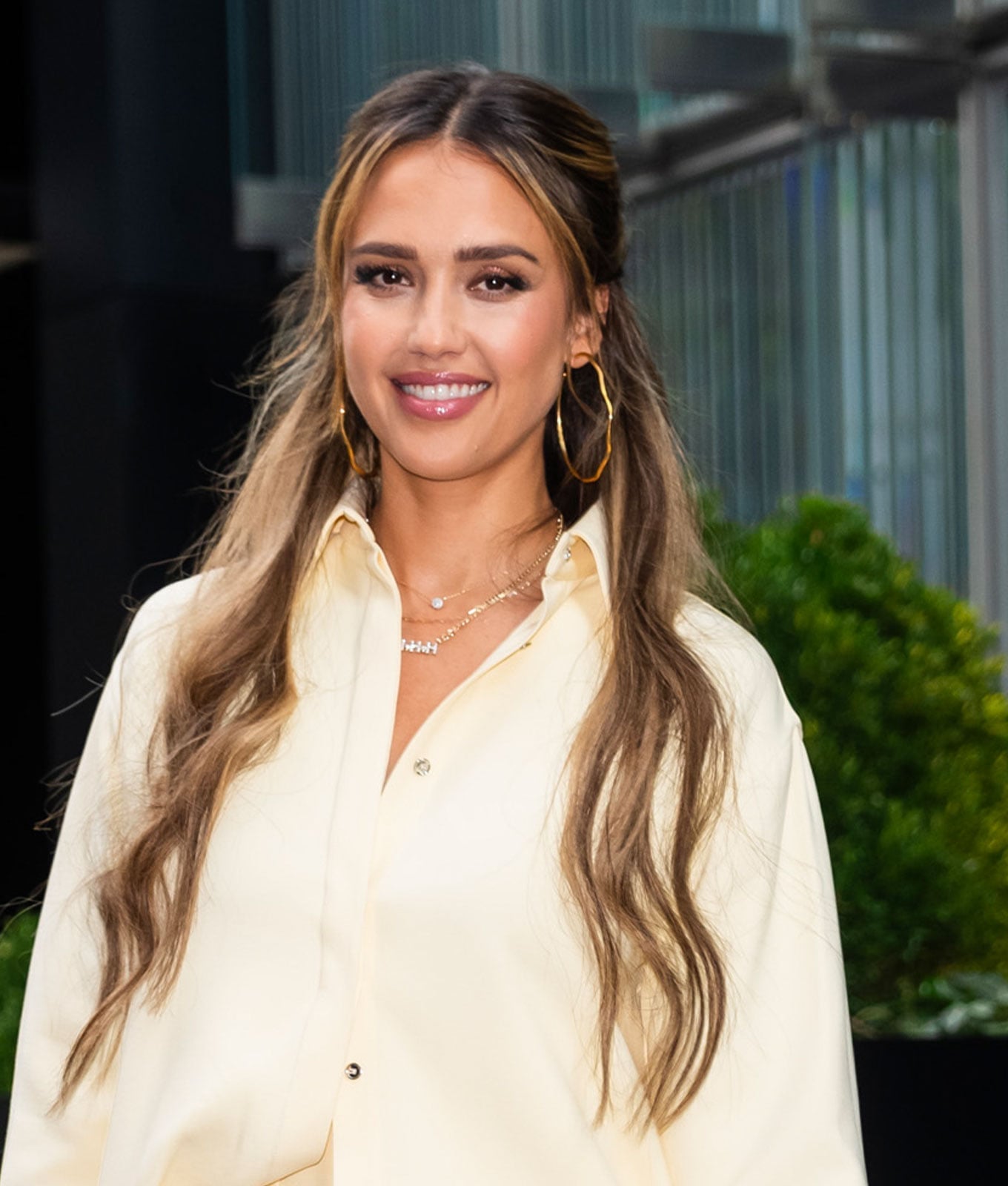
Ask your colorist for: mid-back length, light brown with subtle balayage highlights. Thick wavy hair holds the dimension well, and the middle part lets the color fall evenly on both sides. A trim every 10-12 weeks keeps the layers from tangling, and a texturizing spray helps the waves look lived-in rather than overstyled.
Mid-Back Light Brown Balayage With Sun-Kissed Effect
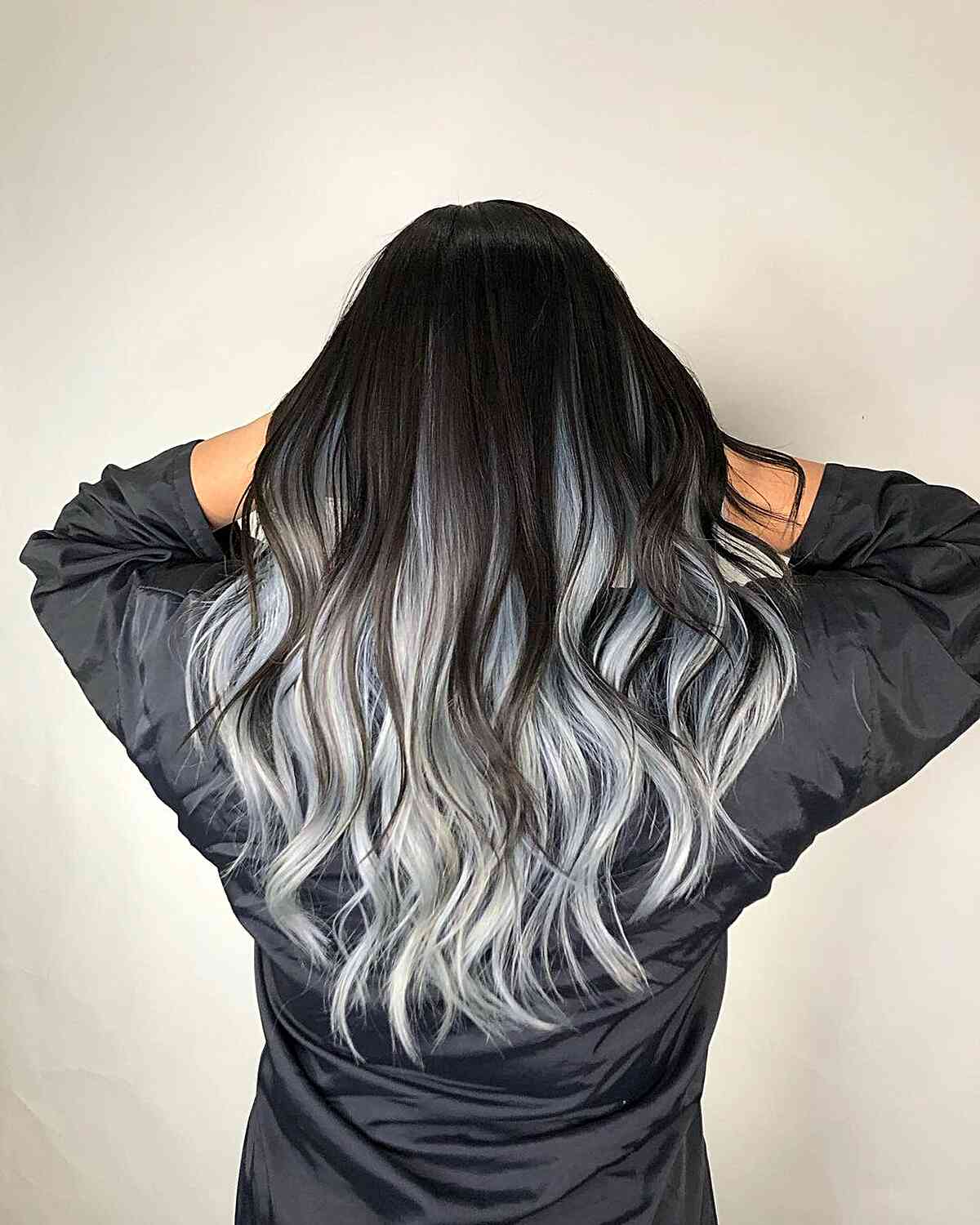
The key detail here is the placement: balayage highlights are concentrated around the face and ends, leaving the roots darker so the light brown base mimics natural sunlight. That soft transition creates a sun-kissed effect.
Ask your colorist for: mid-back length, light brown with subtle balayage highlights, concentrated around the face. Thick wavy hair at mid-back length is the ideal canvas because the texture shows the lighter pieces at different angles. A middle part and no bangs keep the focus on the color shift.
Mid-Back Dark Brown With Dimensional Color
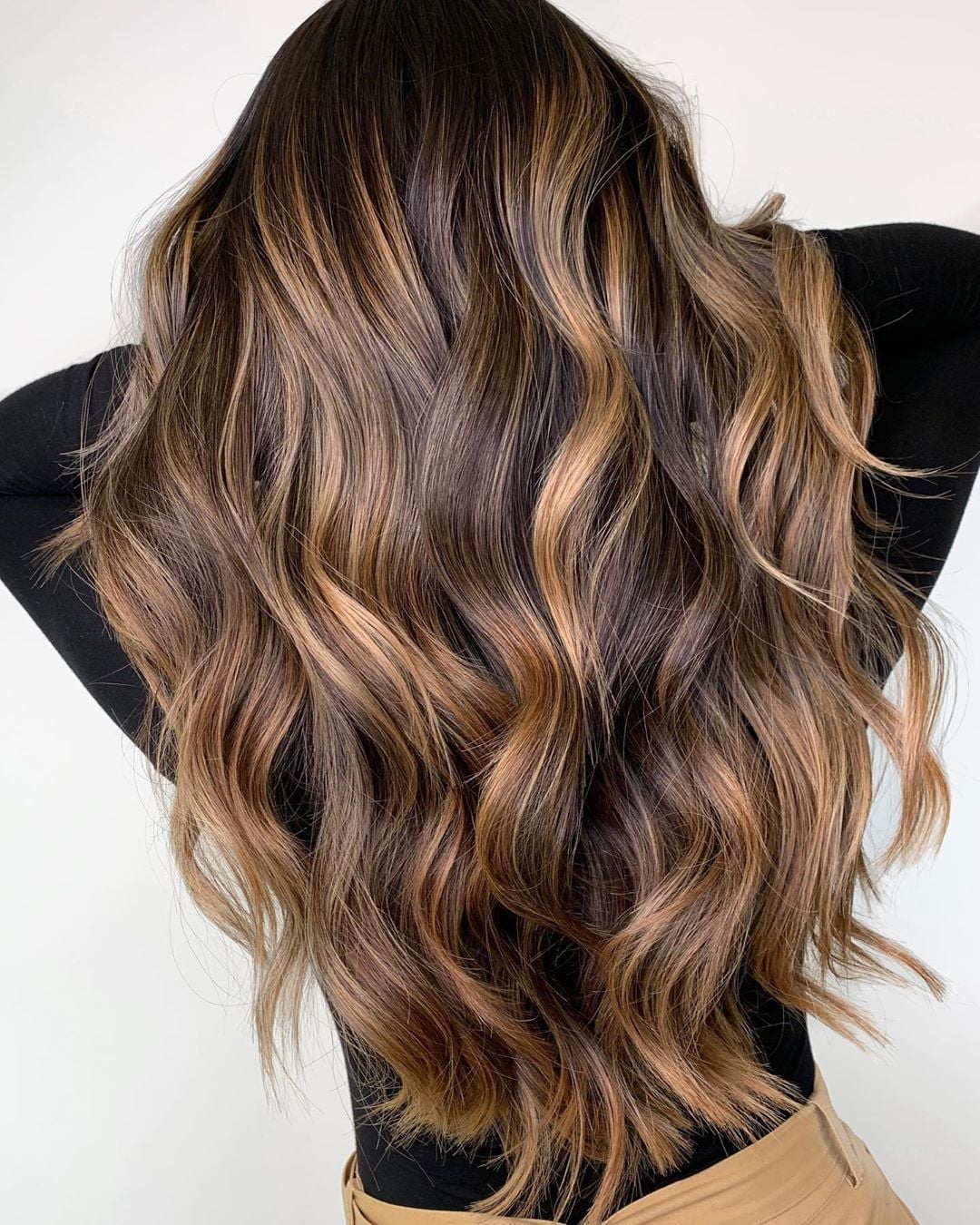
A solid dark brown is flat by comparison. Here, a dark brown base is woven with blonde and caramel highlights in loose waves, creating depth that moves with the hair. The difference is visible from the back view: the lighter pieces sit mostly on the surface, while the base stays rich underneath.
This is a salon job, not a DIY project. A colorist needs to place the highlights so they catch the wave pattern rather than fight it. Ask your colorist for: mid-back length, dark brown with blonde and caramel highlights. Thick wavy hair benefits from the contrast, and the middle part distributes the dimension evenly. A color-depositing mask every few weeks keeps the caramel from turning brassy.
Mid-Back Vibrant Copper Red With Layers
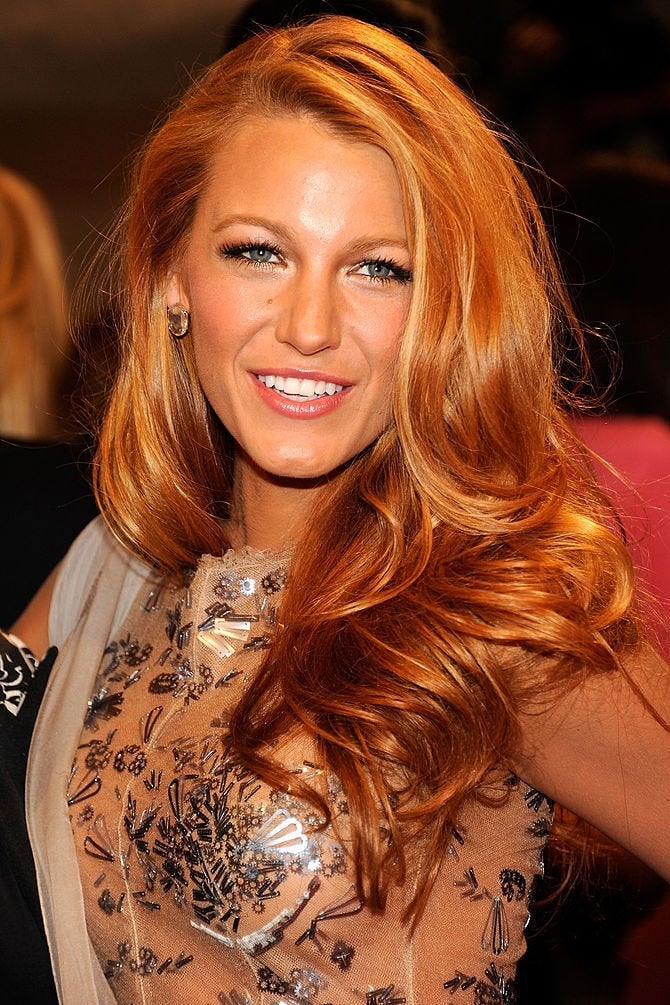
A vibrant copper red is not a subtle choice, and that is the point. On mid-back length hair with long layers and loose curls, the color appears warm and saturated. The uniform saturation means the shade does the work, not the technique. Ask your colorist for: mid-back length, long layers, vibrant copper red color. Medium density wavy hair holds the curl without getting weighed down, and the middle part lets the color fall symmetrically. This is a strong candidate for summer festivals or any occasion where you want the hair to arrive before you do. A curl-defining cream and a scrunch are all the styling it needs.
Mid-Back Deep Red Wavy Hair
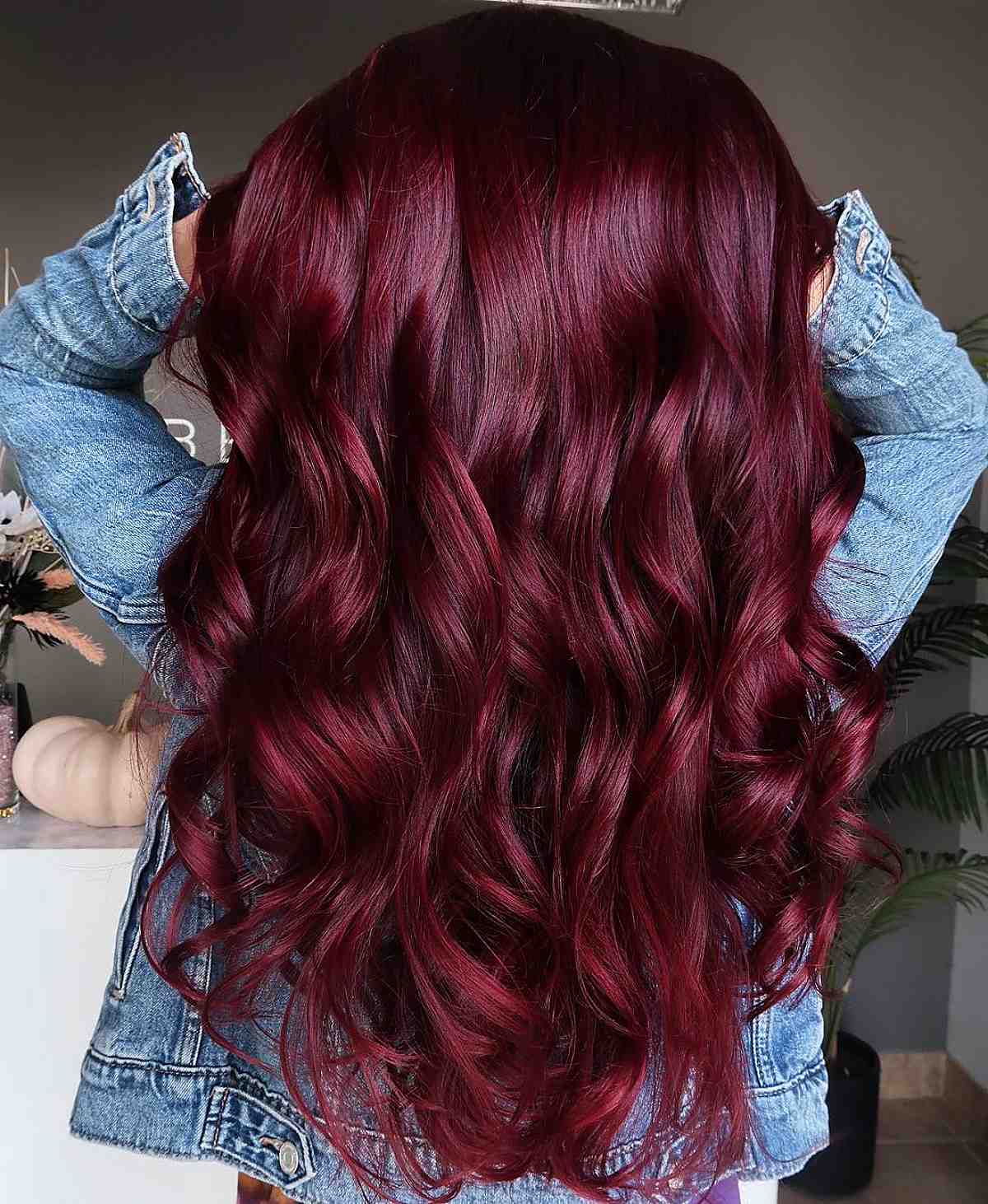
Deep red is built differently than copper. The base is richer, closer to burgundy, and the tone leans cool. On thick wavy hair at mid-back length, the color shows up as a solid gloss, which is the result of a full saturation application. Thick wavy hair benefits from the depth because the waves reflect light at different points, preventing the color from looking one-dimensional.
Ask your colorist for: mid-back length, deep rich red color. The middle part and no bangs keep the silhouette clean. A color-depositing shampoo used weekly helps maintain the richness between salon visits, which usually land around every six to eight weeks for a tone refresh.
Mid-Back Deep Burgundy With Violet
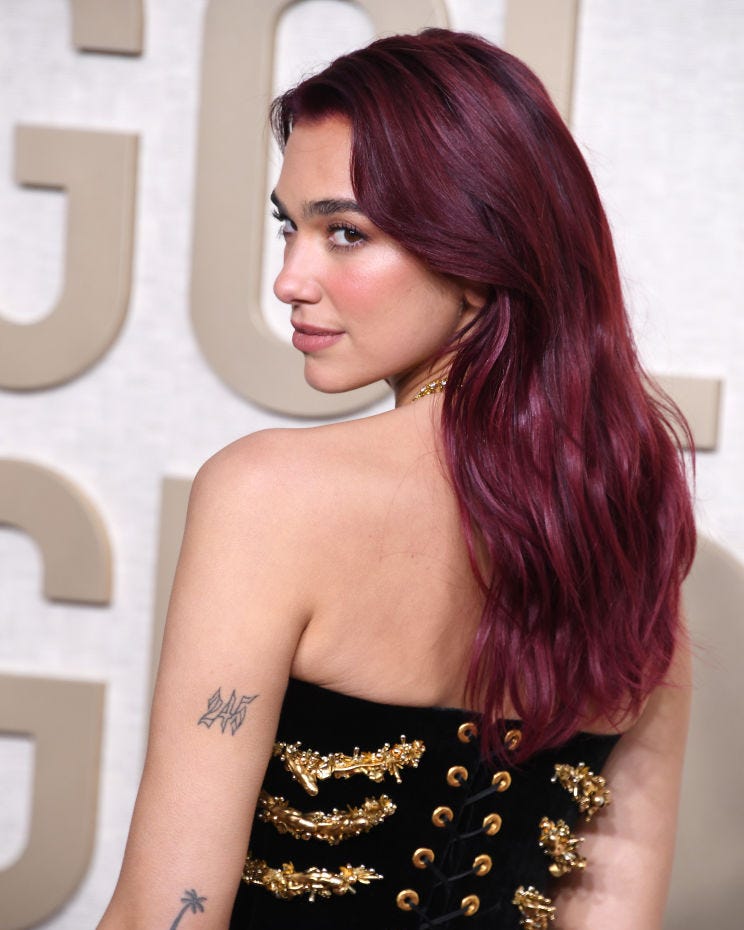
This shade suits a medium density and a wavy texture at mid-back length. The depth of the color adds visual weight, so finer hair may need a gloss treatment to keep the tone from looking flat. A trim every 10 to 12 weeks keeps the ends healthy and the color looking deliberate instead of faded.
Mid-Back Vibrant Cherry Red
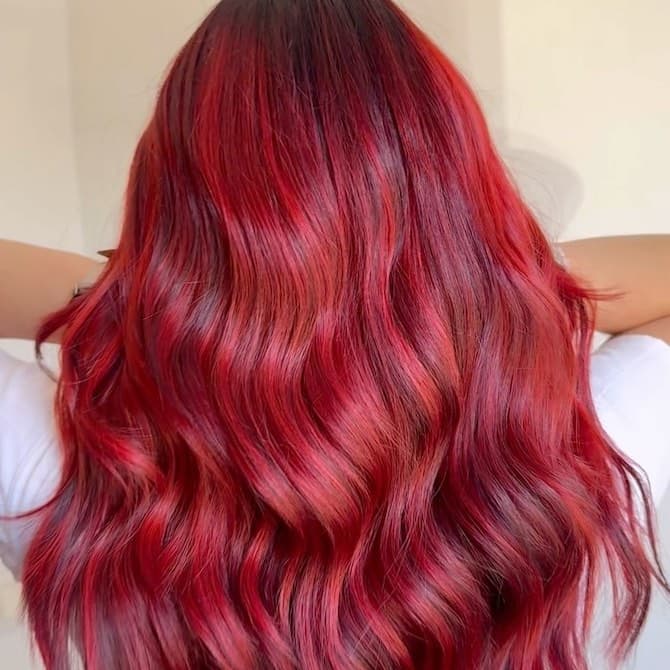
Does the idea of a red that announces itself from across the room appeal to you? This vibrant cherry red delivers exactly that, with darker undertones that keep it from reading as cartoonish. The thick, wavy texture at mid-back length catches the color in a way that straight hair cannot, creating natural dimension through the soft blowout waves. Ask your colorist for: mid-back length, vibrant cherry red color. This intensity works best on a base that has been pre-lightened to at least a level seven, so expect a full day in the chair if you are starting from dark brown. A trim every 10 to 12 weeks keeps the ends from looking dry, and a color-depositing treatment every two weeks prevents the vibrancy from turning into a flat pinkish red.
Mid-Back Dark Brown With Lighter Highlights
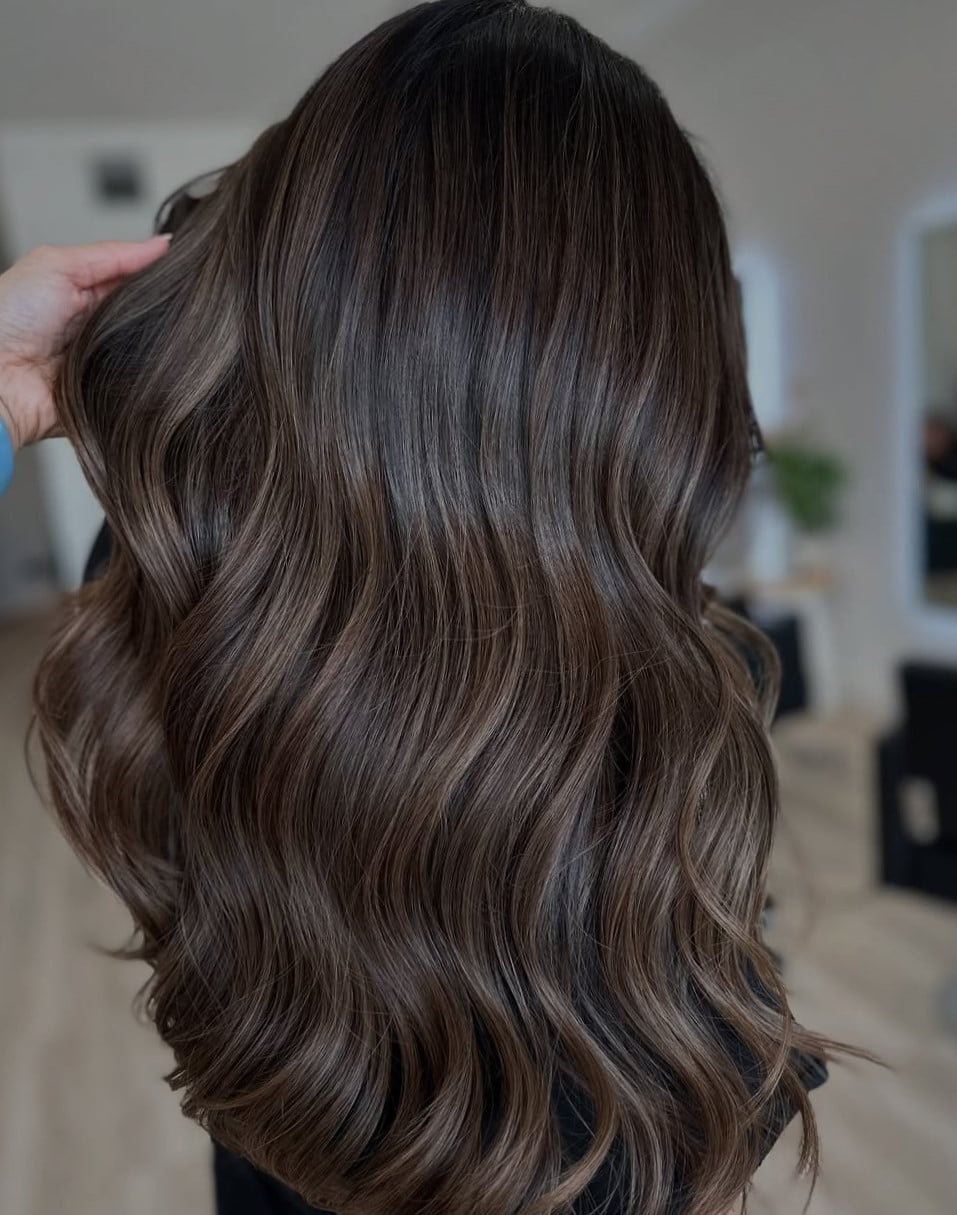
A dark brown base alone can look one-dimensional, but a subtle weave of lighter brown highlights changes the entire feel. The rich base anchors the look while the lighter pieces add dimension in soft waves, giving thick hair a sense of movement without obvious streaks. Ask your colorist for: mid-back length, rich dark brown with subtle lighter brown highlights. The grow-out is the real advantage here: because the highlights are only a shade or two lighter than the base, the root line stays soft for about eight weeks. A smoothing serum after washing keeps the shine up without weighing down the wave pattern. A trim every 10 to 12 weeks keeps the ends healthy and the shape from losing its polish.
This approach works on wavy hair at mid-back length, where the natural texture breaks up the highlights and prevents them from looking striped. The technique is a hand-painted weave, which keeps the transition between shades seamless. A violet-based shampoo once a month keeps any warmth in the lighter pieces from going brassy.
Mid-Back Golden Brown With Lighter Gold
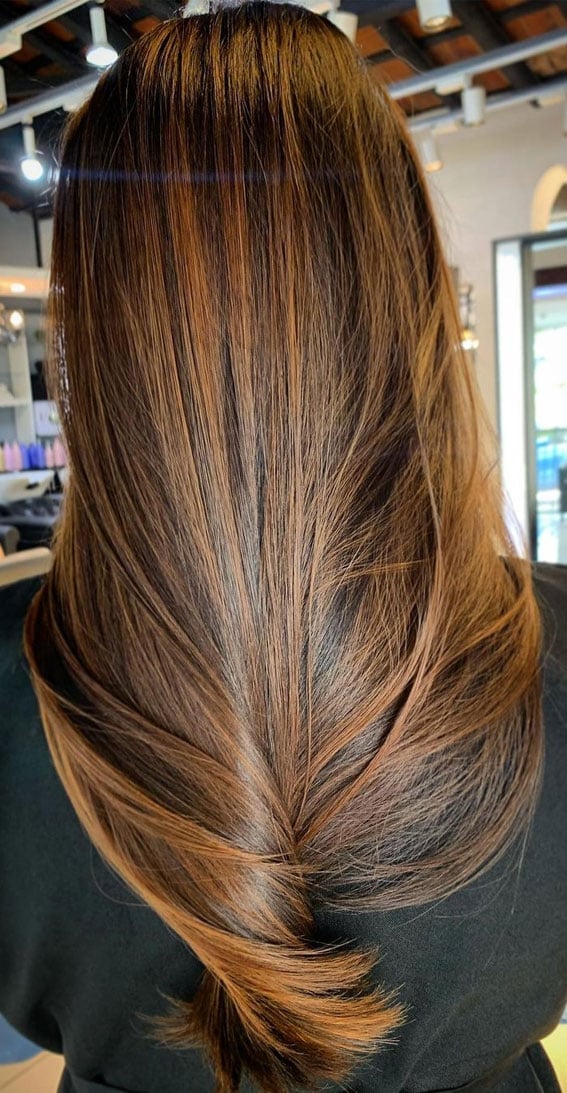
Golden brown is a warm tone that looks sun-kissed and natural, and the lighter gold highlights here take that effect further. The key is the placement: the highlights are concentrated around the face and through the mid-lengths, so the color catches light naturally as the hair moves. Ask your colorist for: mid-back length, golden brown with lighter golden highlights, and request a face-framing ribbon of the lighter gold around the front layers. The base shade should be a level six or seven golden brown, with the highlights lifted to a level eight or nine gold.
This color works on thick, wavy hair at mid-back length, where the loose waves break up the highlights and prevent them from looking chunky. The warm tones mean a purple shampoo is not the right tool here. A blue shampoo, used every third wash, keeps the gold from turning brassy orange.
Mid-Back Deep Red With Orange Highlights
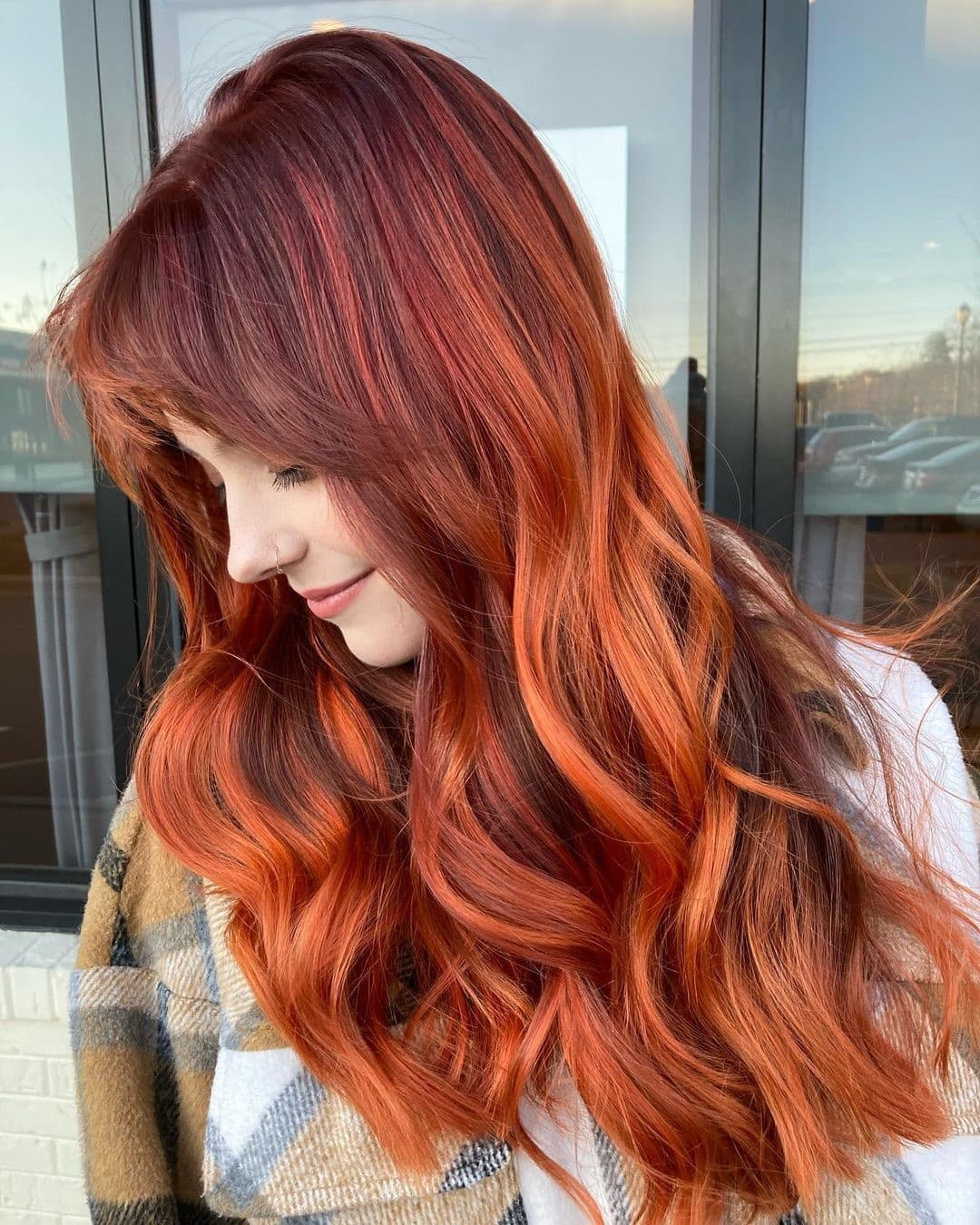
If you are torn between a deep red and a copper, this is the compromise that works. The deep red base keeps the look grounded, while the vibrant orange highlights add a fiery lift. This is a salon-only project: the orange highlights need a lightened base to hold their intensity, and the deep red base needs a separate formula to prevent bleeding. Ask your colorist for: mid-back length, deep red with vibrant orange highlights. The side-swept bangs here help frame the face and show off the contrast between the two shades.
This color suits thick, wavy hair at mid-back length, where the wave pattern allows both tones to show without blending into a muddy mess. A color-depositing conditioner in a copper-red shade every two weeks keeps the orange from fading to a weak peach.
Mid-Back Pink Base With Lighter Pink
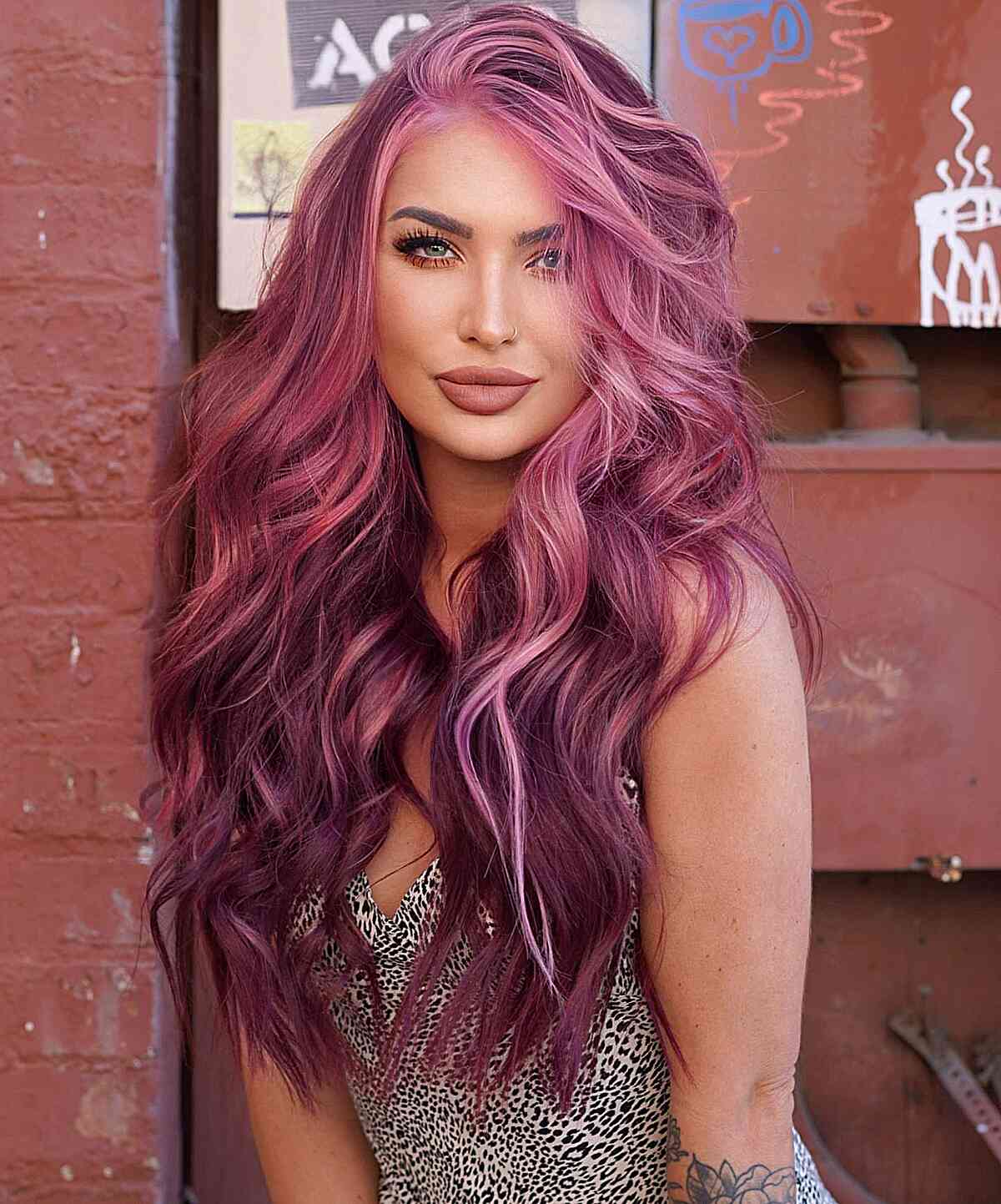
Spring brunch or a summer music festival, when is pink hair actually appropriate? Basically any event where you want people to notice your hair before they notice your shoes. This mid-back length look uses a vibrant pink base with lighter pink highlights woven through thick, wavy hair, styled in a blowout with curtain bangs and a middle parting. The dimension keeps it from reading as a single block of color. Thick, wavy hair at mid-back length holds this shade well, and the curtain bangs suit oval and heart faces. Ask your colorist for: mid-back length, curtain bangs, vibrant pink base with lighter pink highlights. A color-depositing shampoo and conditioner will keep the vibrancy alive between trims, which you will want every 10 to 12 weeks.
Long Copper Blonde With Curtain Bangs
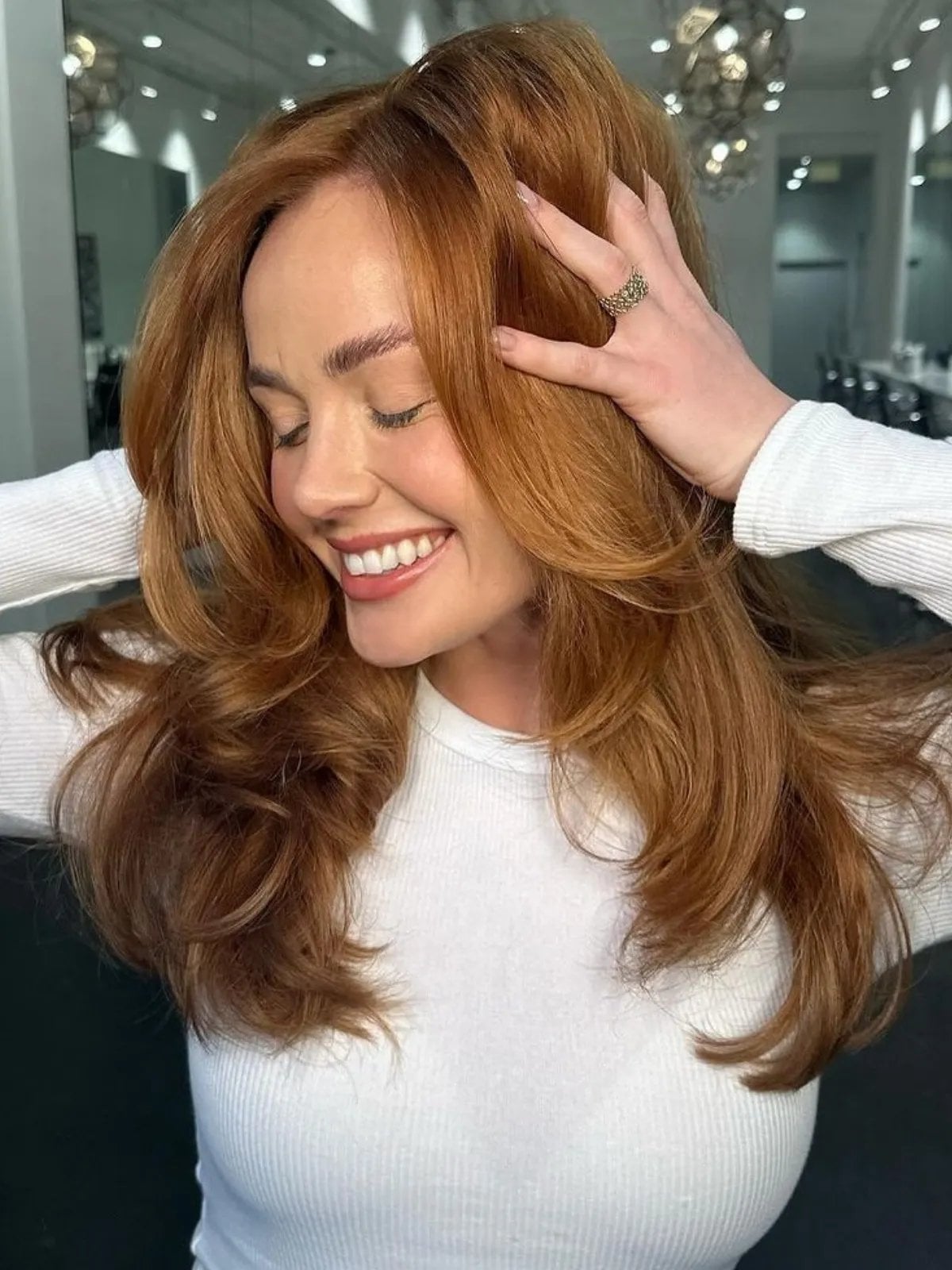
Copper blonde is not one shade; it is a balance between warm copper and cool blonde that requires a colorist who understands tone. This version lands on long, thick, wavy hair styled in a blowout, with curtain bangs and a middle parting. The technique involves lightening the base to a pale yellow, then depositing a copper toner over the lengths while keeping the root area slightly deeper for a lived-in grow-out. The result is a hue that shifts between bronze and gold depending on the light. Curtain bangs soften round and heart faces, and the long layers give the waves somewhere to go. Ask your colorist for: long hair, curtain bangs, copper blonde color. A heat protectant spray is your friend before blow-drying, and a toning gloss every 6 to 8 weeks keeps the copper from drifting orange.
Long Light Brown With Subtle Highlights
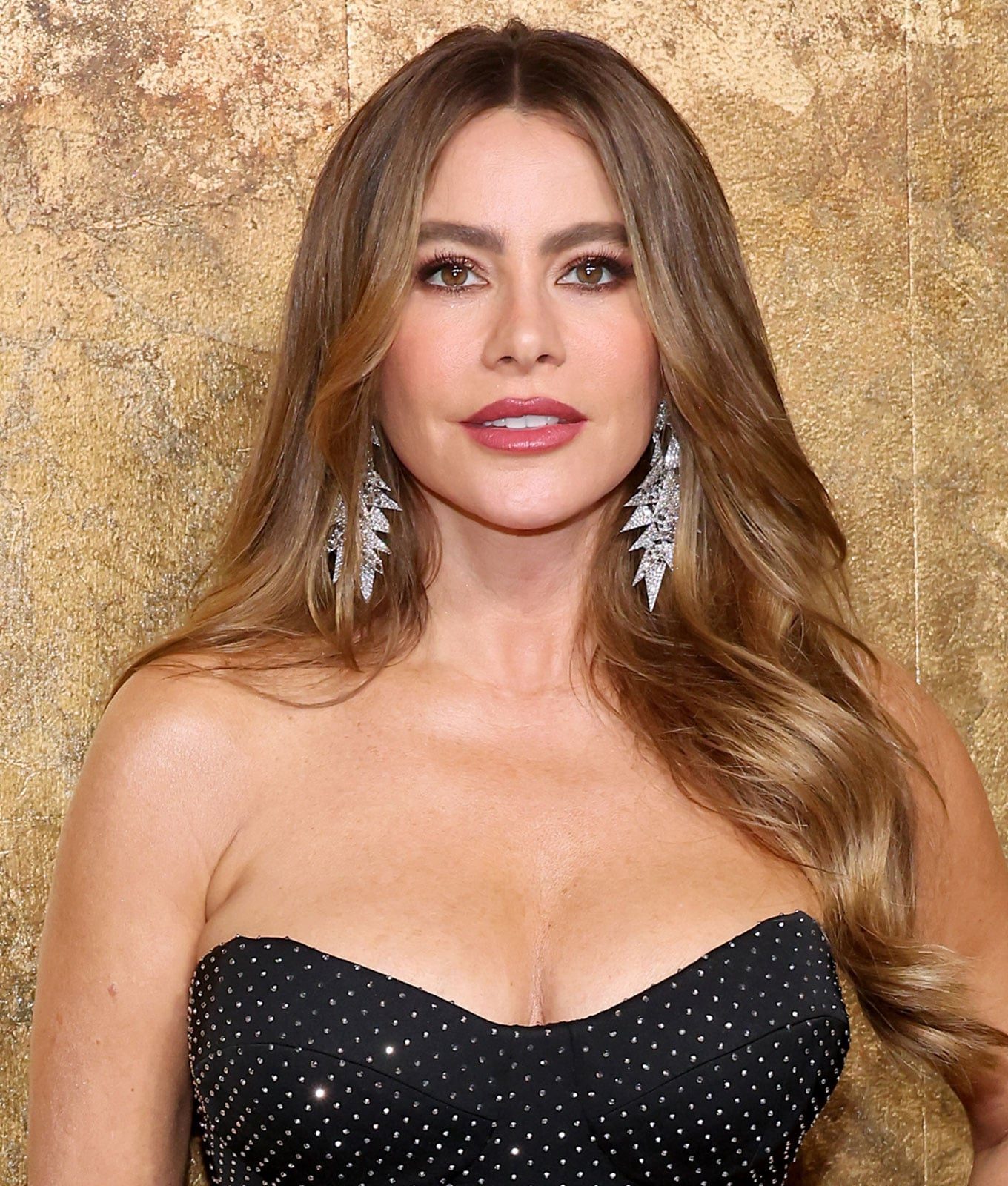
Subtle highlights on a light brown base are the hair equivalent of a no-makeup makeup look: noticeable only in the best way, until they are not. This long, thick, wavy hair has a middle parting and no bangs, with blended highlights that add dimension without announcing themselves. The drawback is that subtle highlights fade into brassiness faster than bolder ones, especially on wavy texture that catches more light. A purple shampoo once a week can delay the orange shift, but you will need a toner appointment around week 8 to keep the blend clean. Ask your colorist for: long hair, light brown with subtle blended highlights. A smoothing serum finishes the blowout, and a trim every 10 to 12 weeks keeps the ends from looking see-through.
Long Platinum Blonde With Wispy Bangs
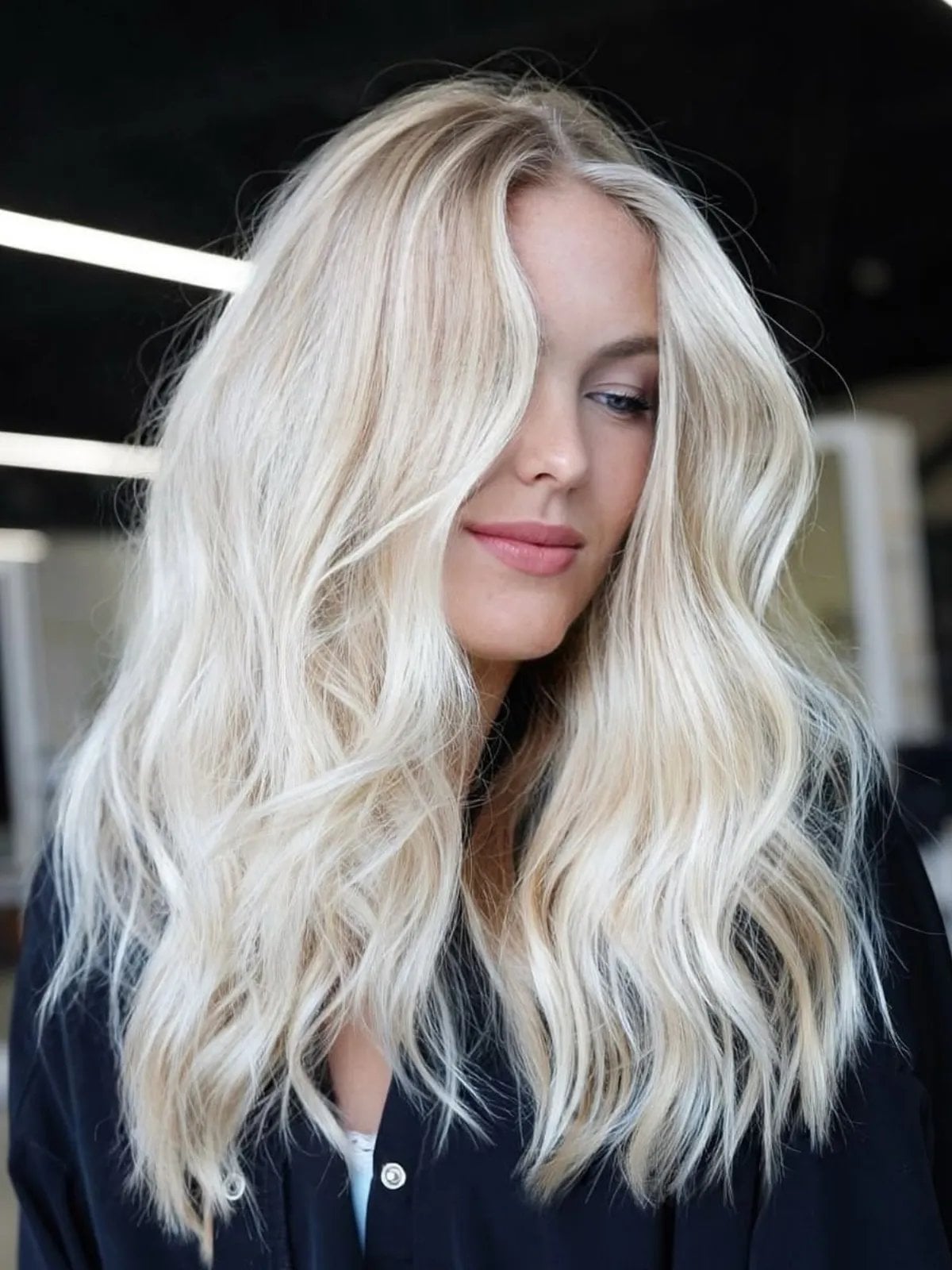
Can anyone actually pull off platinum blonde? Yes, if you have fine hair that does not require heavy bleaching to lift, and if you are prepared for the upkeep. This version lands on long, fine hair with layers and wispy bangs, styled in soft waves with a side parting. The bright, luminous tone works best on fine textures because coarse hair can look dry at this level of lift. Wispy bangs soften round and heart faces, and the long layers keep the fine hair from falling flat. Ask your colorist for: long hair, layers, wispy bangs, platinum blonde color. A silver shampoo and conditioner are non-negotiable to maintain the cool tone, and a trim every 8 to 10 weeks prevents the wispy ends from looking ragged. This is not a shade for the low-maintenance crowd, but the payoff is a head-turning brightness.
Long Straight Light Brown With Blended Highlights
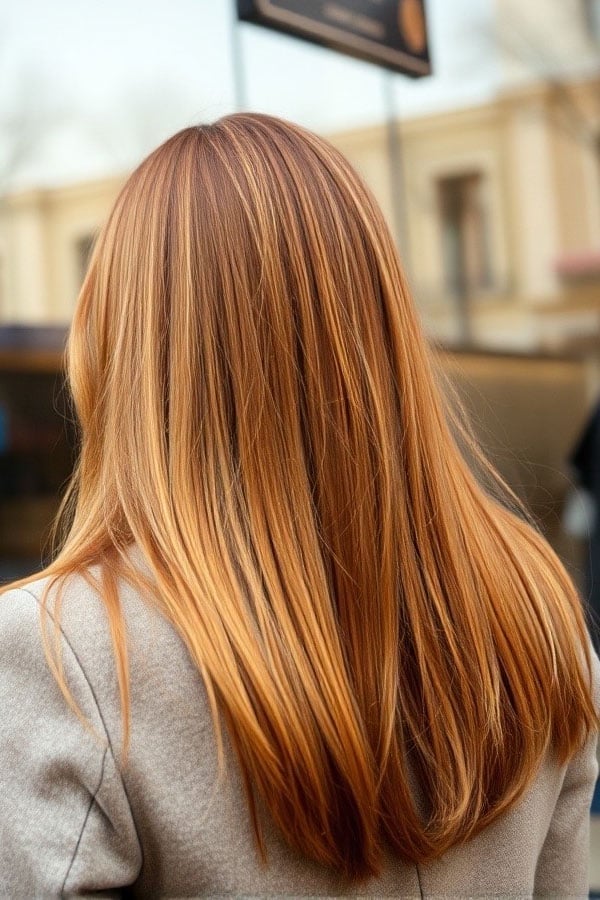
Subtle blonde highlights on a light brown base are designed to grow out gracefully, which is the closest thing to low-maintenance color you will find. This back view shows long, straight, fine hair with a middle parting. The highlights are finely blended for a sun-kissed effect. The grow-out is soft because the highlights start a few inches from the root, so you can stretch toning appointments to 10 or 12 weeks. A flat iron and a smoothing serum give the sleek finish, and a trim every 10 to 12 weeks keeps the ends healthy. Ask your colorist for: long hair, light brown with subtle blonde highlights, sleek style. The downside is that fine, straight hair can look flat without a little product lift at the crown, but a dry texture spray solves that in seconds.
Slicked Back Updo In Silver Grey
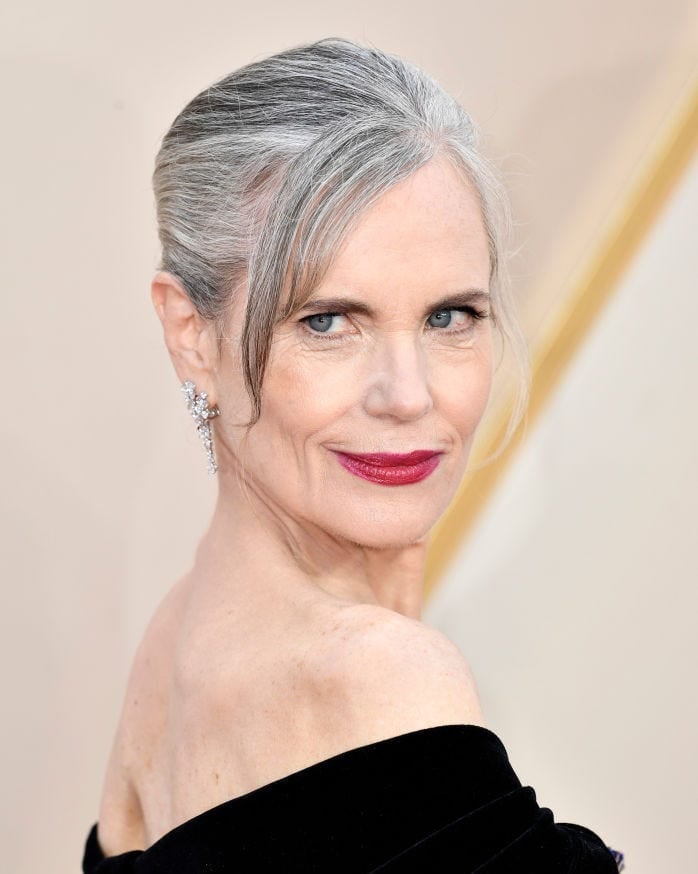
A side view of a slicked back updo reveals just how clean a silver grey can look when the roots are left darker. Fine, straight hair holds this shape best because there’s less bulk to fight the gel or pomade. Ask your colorist for: silver grey color with darker roots. The contrast between the cool silver and the grown-out base gives the color a deliberate finish. A strong-hold product is required for the sleek finish, and toning every six to eight weeks maintains the silver tone without letting it drift toward yellow. This is a salon-only color: getting that vibrant grey without a bleach session isn’t happening.
Final Thoughts
For low maintenance, opt for shades close to your natural base color with blended highlights, or choose a single-process all-over color. Simple color is often the most elegant.
- Trim split ends every 6-10 weeks to maintain shape and color vibrancy.
- Use color-safe shampoo and conditioner to preserve tone.
- Refresh highlights or add dimension with a glossing treatment every 8-12 weeks.
- Protect color from heat styling with a heat protectant spray.