
Braids are a study in control: they tame, they define, and they hold a shape that loose hair only dreams of. The latest wave of braided styles leans into sleek, structured lines and polished finishes, with intricate scalp work and refined accents taking center stage.
This collection of 30 Classy Braided Styles spans every length, from sharp chin-length bobs to cascading mid-back braids, and every commitment level, from quick side braids to salon-worthy updos. Whether your hair is fine and needs a volume boost or thick and can handle elaborate patterns, there is a braid here that works. If your usual style falls flat by noon or your part never stays put, these looks offer a lasting fix.
Neat Box Braids In A Chin Length Bob
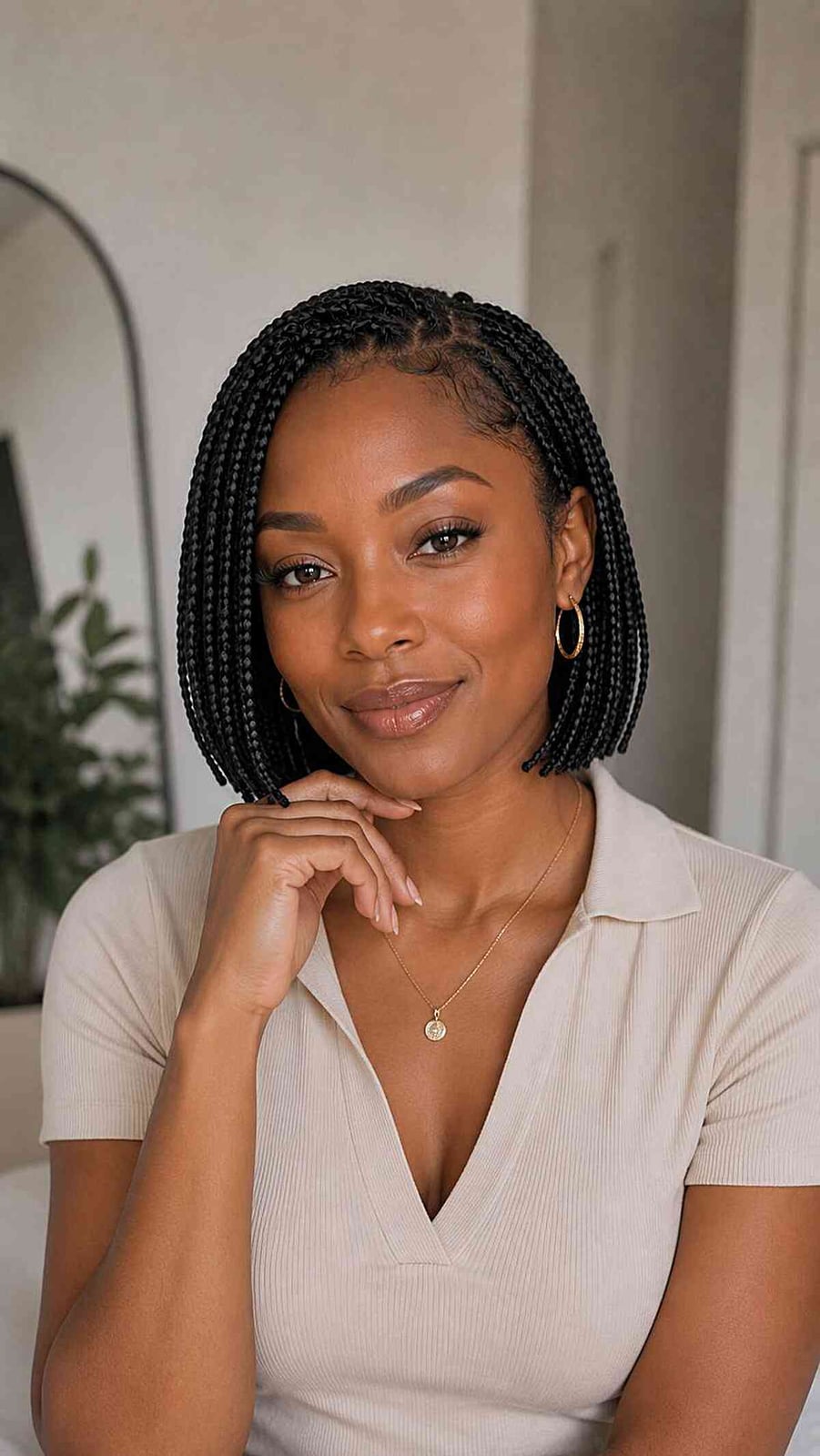
Who said a bob has to be a haircut? This chin-length box braid bob gives you the same sharp silhouette without a single scissor snip. The neat, uniform braids sit smooth and straight, with a middle parting that keeps the line crisp. It suits most face shapes, especially round or square ones, because the length below the chin adds a gentle elongation. Medium-density hair works best to hold the shape without looking bulky. Ask your stylist for: chin-length box braid bob, neat and uniform. Keep it that way with a silk bonnet at night; morning styling is basically none.
Sharp Collarbone Box Braid Bob
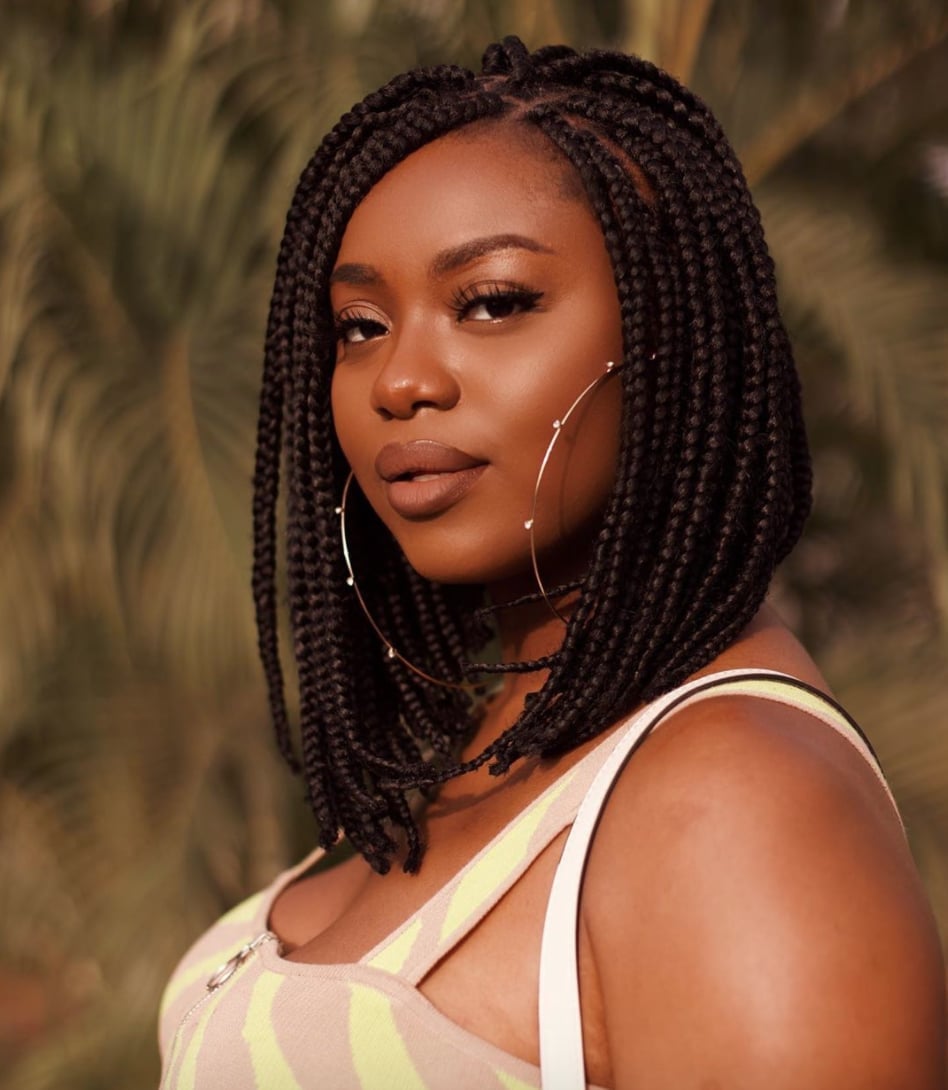
If a traditional bob feels too permanent, this collarbone box braid bob is the flexible cousin. The braids cut straight across at the collarbone with clean lines that read as polished. It suits most face shapes, and the extra length softens a square jaw better than a chin-length version. Straight, medium-density hair carries the sharp edge best. Ask your stylist for: collarbone length sharp box braid bob. Unlike a regular bob, you can take it out in a few months, though the baseline needs a trim every six to eight weeks to keep the cut exact.
Collarbone Box Braids With Beads
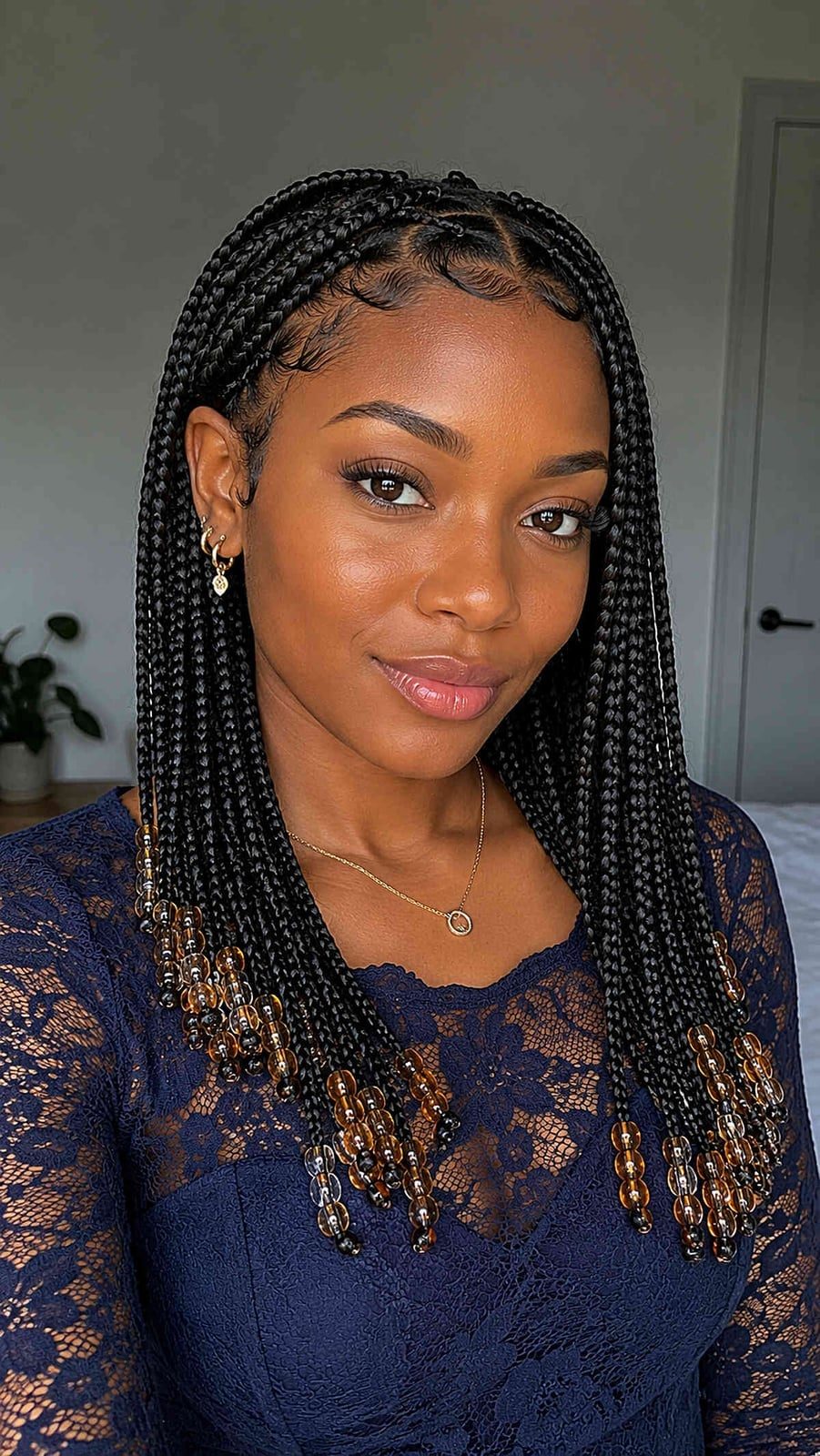
Beads are having a moment, and they turn a simple braid into something with texture. Here, the collarbone-length box braids carry a few beads near the ends, with baby hairs styled around the face. The middle parting keeps it neat, and the beads add a subtle metallic accent without weighing the braids down. It suits medium-density, straight hair; the beads need enough braid thickness to hold them securely. Ask your stylist for: collarbone box braids with beads and baby hairs. You can choose bead placement, but the classic spot is the last inch or two, and it works for festivals or just a Tuesday.
Collarbone Box Braids With Curly Ends
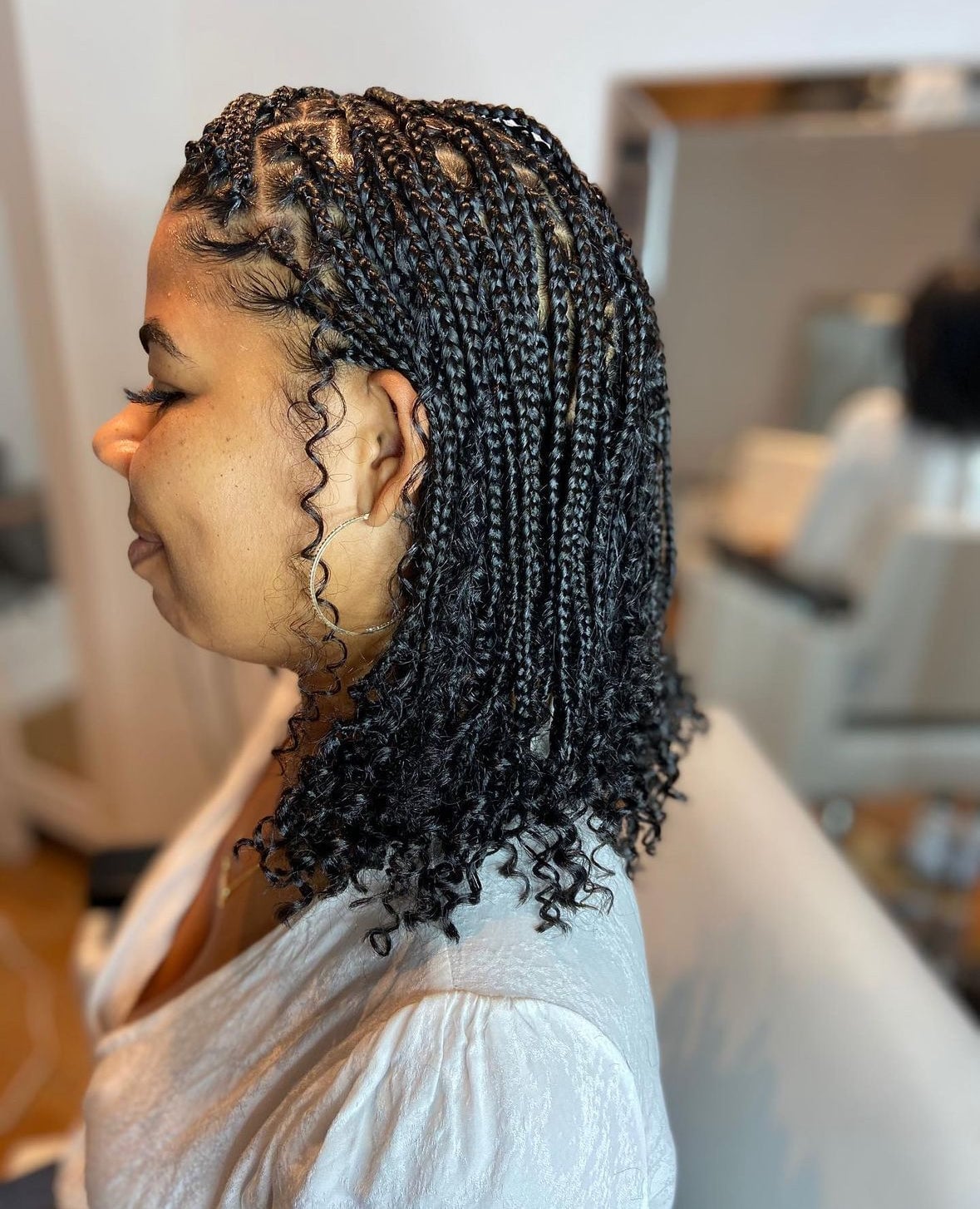
The geometric parting at the scalp sets this one apart before the ends even come into it. Small box braids sweep back in neat sections, then break into loose curls at the collarbone. The sleek braided top and the wavy ends give the style movement, and it suits fine to medium hair that might otherwise look flat. Black is the base here, and the curls soften the overall shape. Ask your stylist for: collarbone box braids with geometric parts and curly ends. The curly ends need a curl-defining cream to stay bouncy, and they will frizz by week three, so plan a refresh before then.
Braided Bob With Loose Curly Ends
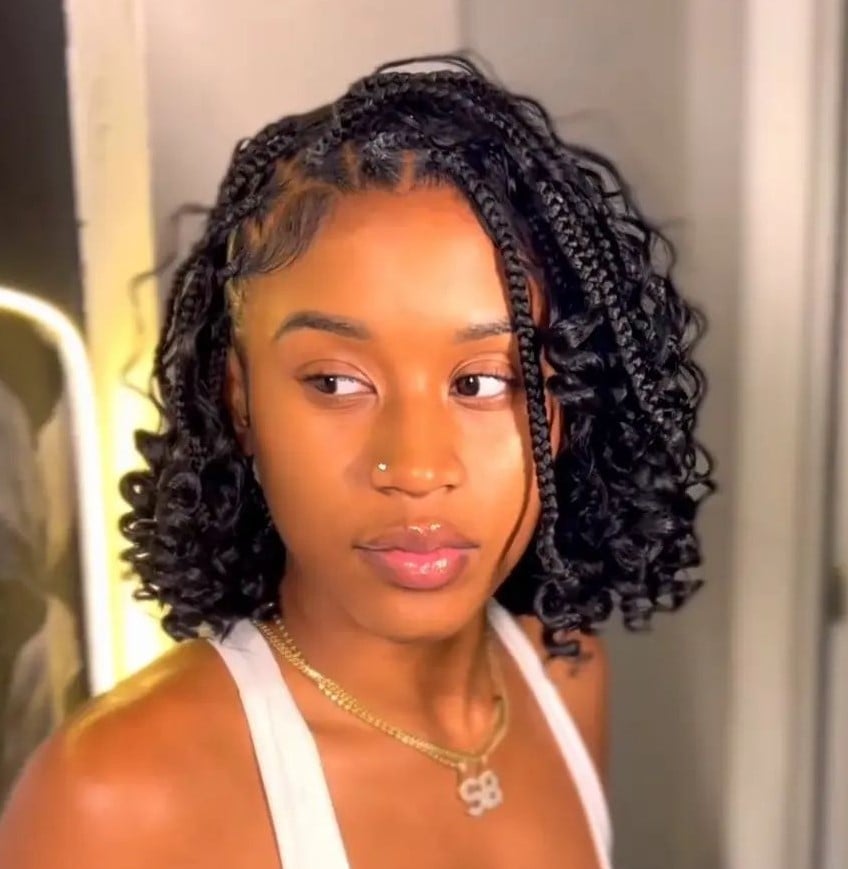
Want a bob that does not commit to all braids or all curls? The braided bob with loose curly ends splits the difference. Micro braids cover the top and sides, then melt into soft, loose waves that hit the collarbone. The side parting and side-swept bang keep the face open, and the curly ends add volume where fine hair tends to fall flat. Ask your stylist for: braided bob with loose curly ends and side-swept bang. To keep the curls defined, use a diffuser on low heat after washing. A trim every six to eight weeks keeps the bob shape from turning into a shapeless blob.
Single Side Braid With Wavy Strands
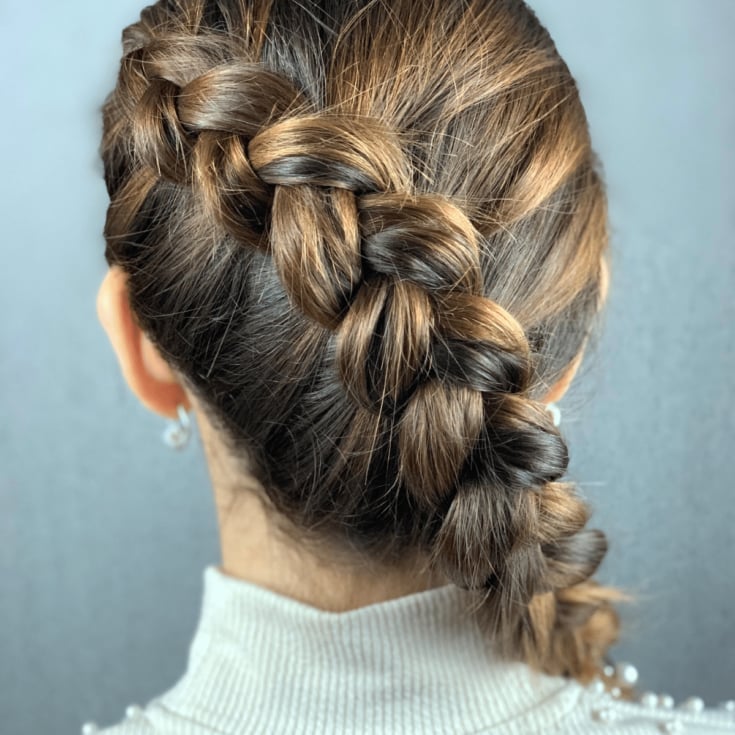
A single thick braid starting from a side parting naturally suits wavy, thick textures. The weight of the braid pulls the waves into a neat line while the loose strands around the face soften the whole silhouette. Ask your stylist for: single thick side braid with soft wavy strands. Collarbone length is the minimum here, and the side part keeps the braid centered rather than dragging your hair off to one side.
Collarbone Waves With Braided Headband
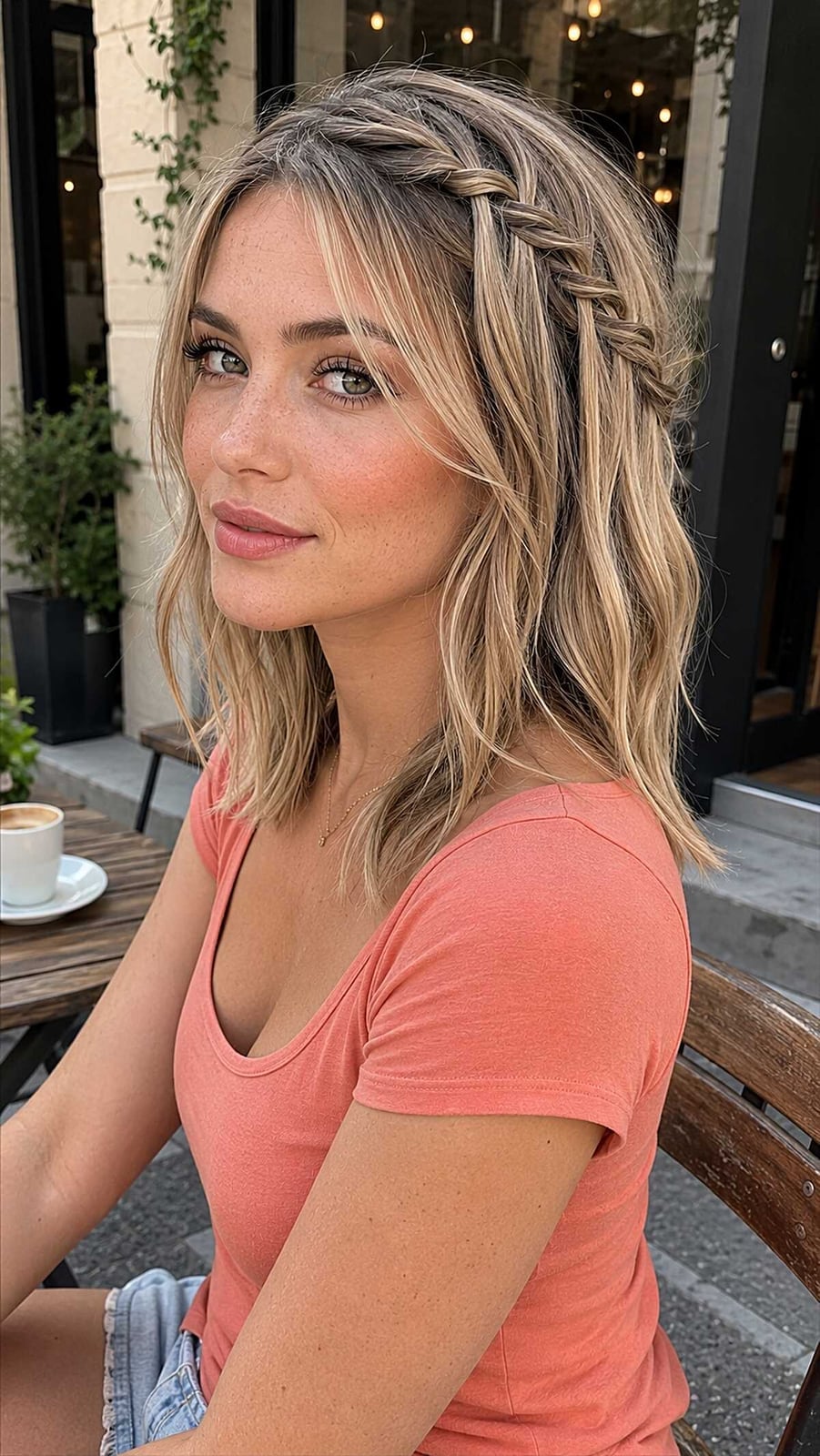
A braided headband crosses the crown and lands right where the middle part meets the loose waves below. The side-swept bangs break the line so it does not read as a strict halo. Ask your stylist for: collarbone length waves with a braided headband and side-swept bangs. Medium density hair holds the headband best, and the waves need a texturizing spray for grit that lasts through dinner.
This works for daytime events where you want detail without a full updo. The headband section stays put as long as the bobby pins are crossed securely over each other.
Side-Swept Braid Updo With Floral Accent
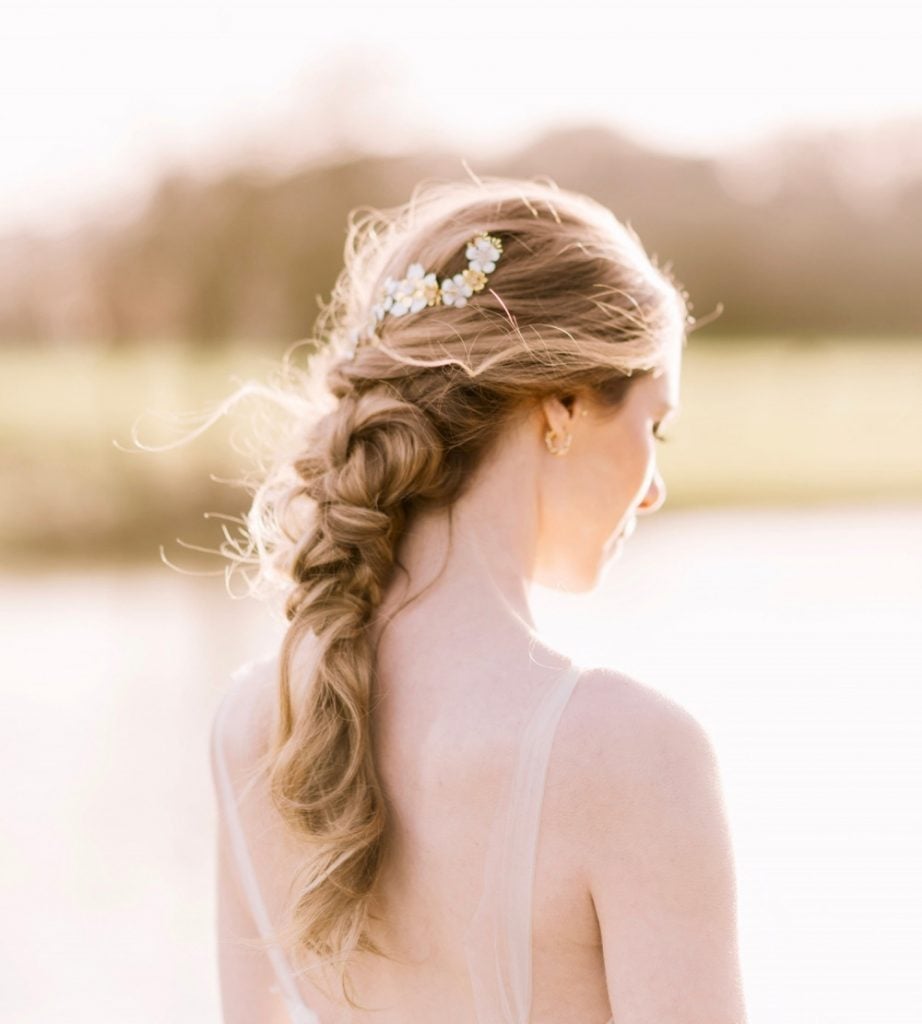
A side-swept braid leading into a low updo demands enough length to wrap around itself, so collarbone hair is the starting line. Fine, wavy texture is actually an advantage here; it tucks into the updo without adding bulk that fights the pins. Ask your stylist for: side-swept braided updo with floral accents and wispy bangs. The flowers need careful positioning to avoid snagging, and this is strictly a salon appointment for the first go.
Messy Braided Bun With Highlights
A messy braided bun that looks intentionally undone takes more effort than a tidy one. The blonde highlights in medium brown hair add contrast that makes the braid visible from across the room. Ask your stylist for: messy braided bun with loose pieces and blonde highlights. Long wavy hair is the starting point, and the middle part keeps the front balanced.
Daily upkeep means pulling out a few strands around the face each morning and refreshing the texturizing spray. The bun itself loosens over the day, but that is the point; it settles into a softer shape by evening. A trim every eight weeks keeps the ends from fraying into the braid.
Woven Braided Crown Updo
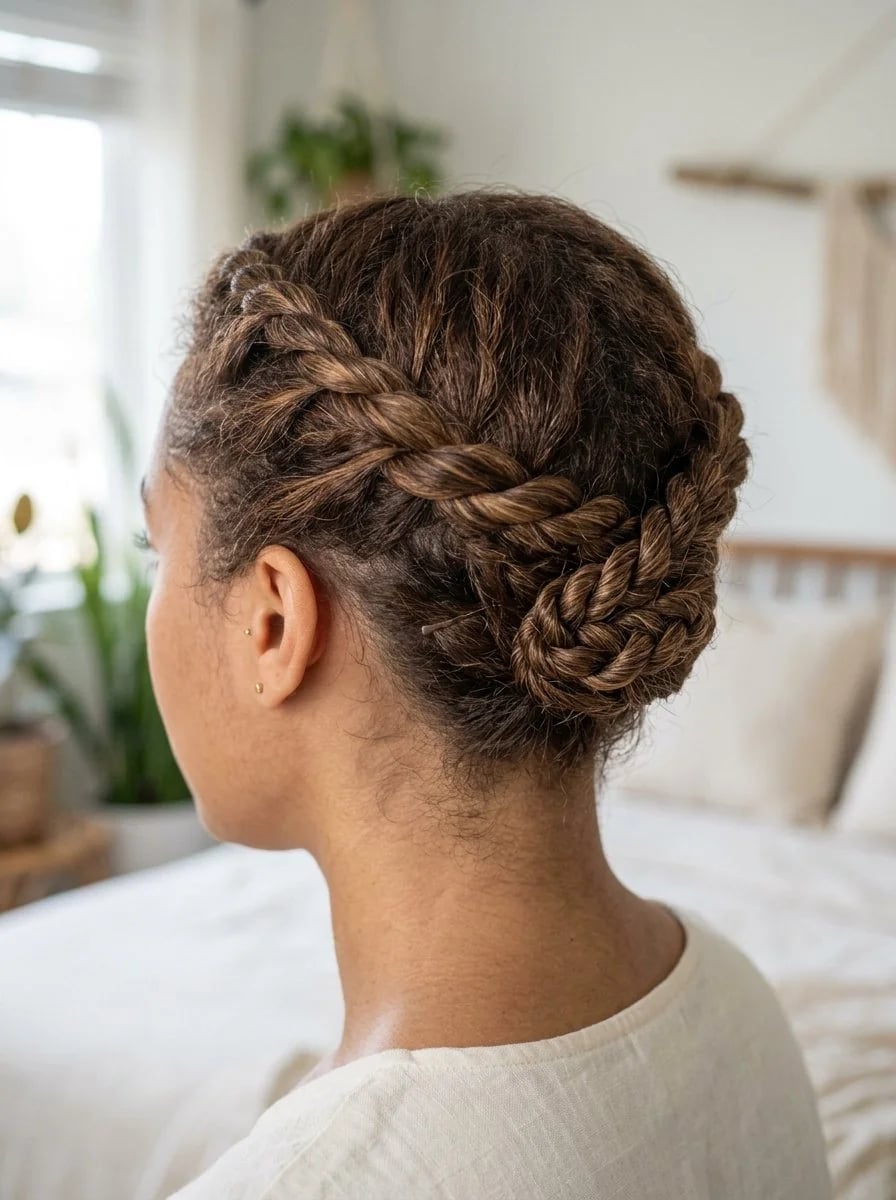
A braided crown updo works by weaving two thick braids around the head and tucking the ends under the opposite side. Thick, wavy brown hair gives the braids enough body to sit flush against the scalp without slipping. Ask your stylist for: woven braided crown updo. The middle part anchors the symmetry, and the wavy texture helps hide the pin points.
Braided Crown Updo With Highlights
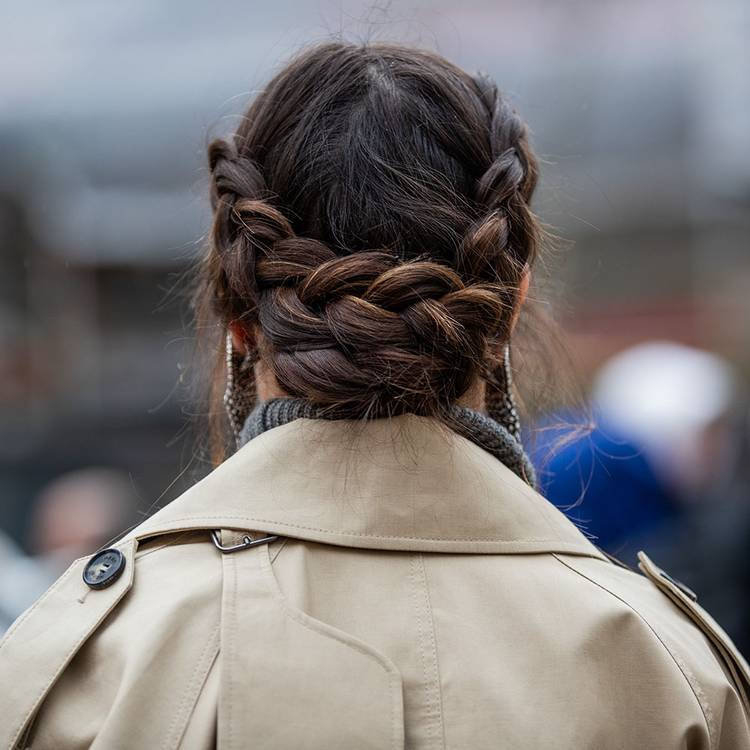
Can a braided crown updo work on fine hair? Thick, wavy texture gives the two wrapped braids the body they need to sit neatly without slipping, so if your strands are on the thinner side, this one will likely feel loose before the night ends. The subtle lighter highlights running through the dark brown base add depth that a single flat shade cannot. Ask your stylist for: two thick braided crown for updo. A light-hold hairspray keeps flyaways in check without stiffening the waves, and the middle part keeps the symmetry clean from the back.
Braided Updo With Floral and Pearl Accents
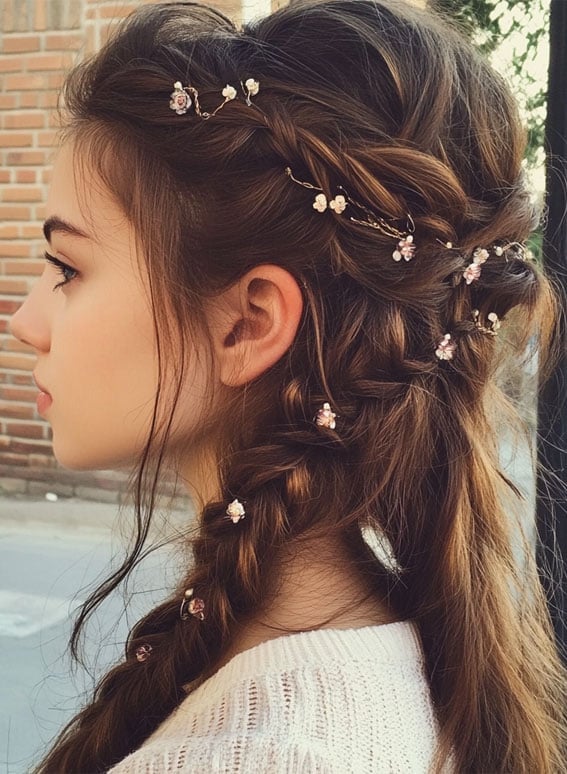
Small floral and pearl accents woven through an updo appear deliberate rather than last-minute. The intricate twists sit on dark brown hair with subtle highlights, and the loose wavy strands at the front keep the silhouette from feeling too rigid. This style suits a wedding or formal evening event, where the details have room to be noticed. Ask your stylist for: intricate braided updo with floral and pearl accents. Medium-density hair at least collarbone length holds the design well, and the accents should be placed carefully to avoid pulling.
Braided Bun With Loose Braids and Beads
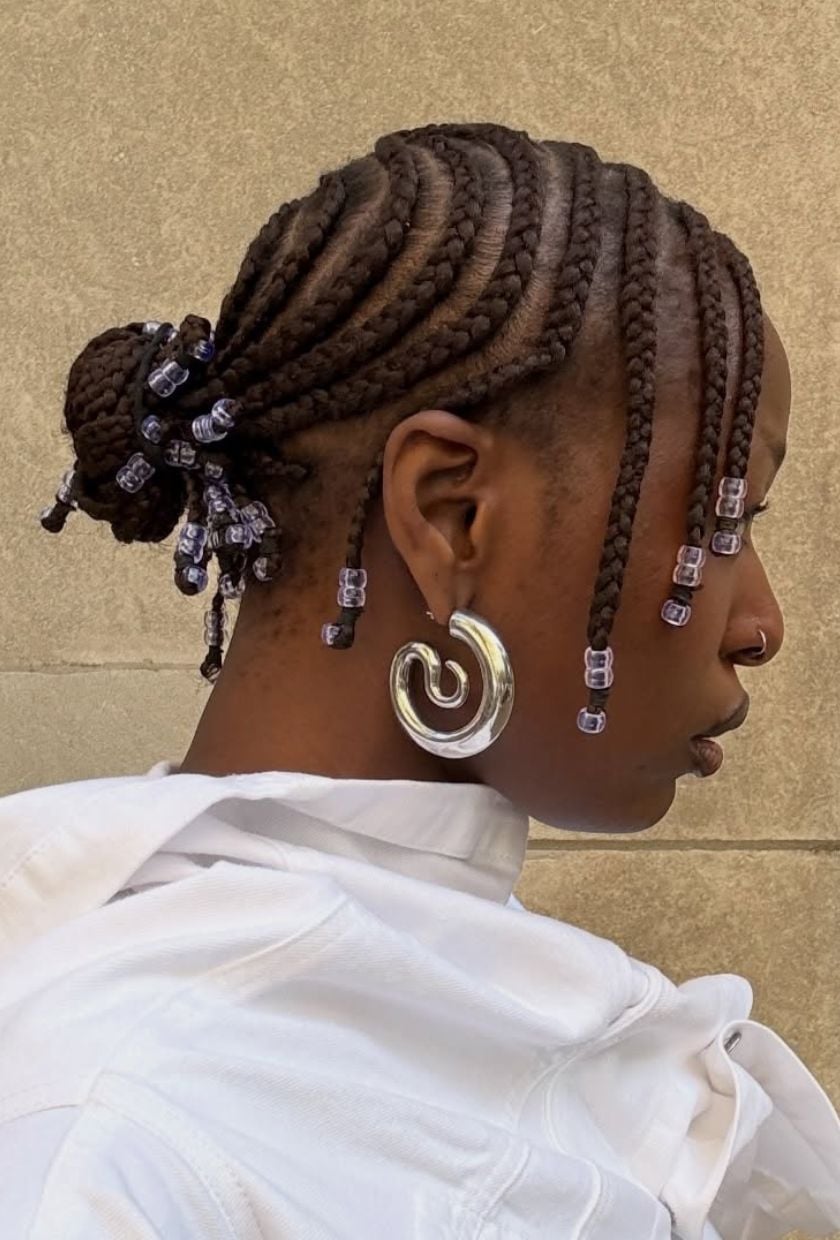
How do you describe a bun that is not all tucked away? The thick dark brown strands wrap into a neat shape at the nape, but several braids hang loose, each one finished with a decorative bead. The middle part and straight texture keep the look clean, while the beads add a tactile detail that moves as you do. Ask your stylist for: braided bun with loose braids and decorative beads. Thick hair at least collarbone length gives the loose braids enough weight to hang evenly. Loosening a few strands from the bun softens the overall finish.
High Box Braid Bun With Face-Framing Tendrils
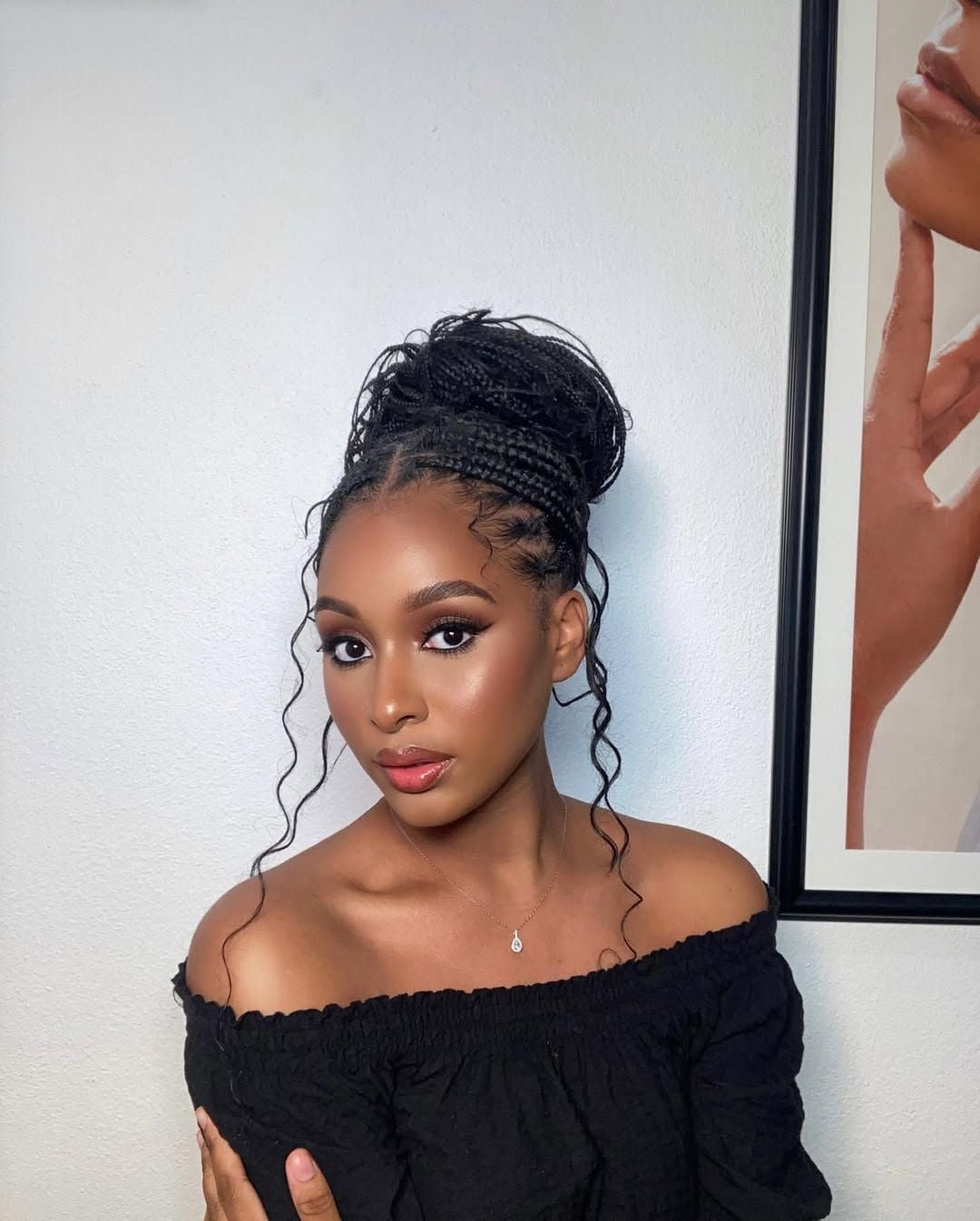
The design is a high bun built from small black box braids, and the volume comes from the number of braids, not any added bulk. Face-framing tendrils are left out to soften the hairline, and the baby hairs are styled in gentle curves. Coily texture at least mid-back length creates the structure this bun needs to stay centered. Ask your stylist for: high box braid bun with face-framing tendrils. The tendrils will need a fine-tooth comb and a light-hold hairspray to stay in place through the day, and the bun itself holds its shape without pins slipping.
Fishtail Braid With Twisted Updo and Ribbon
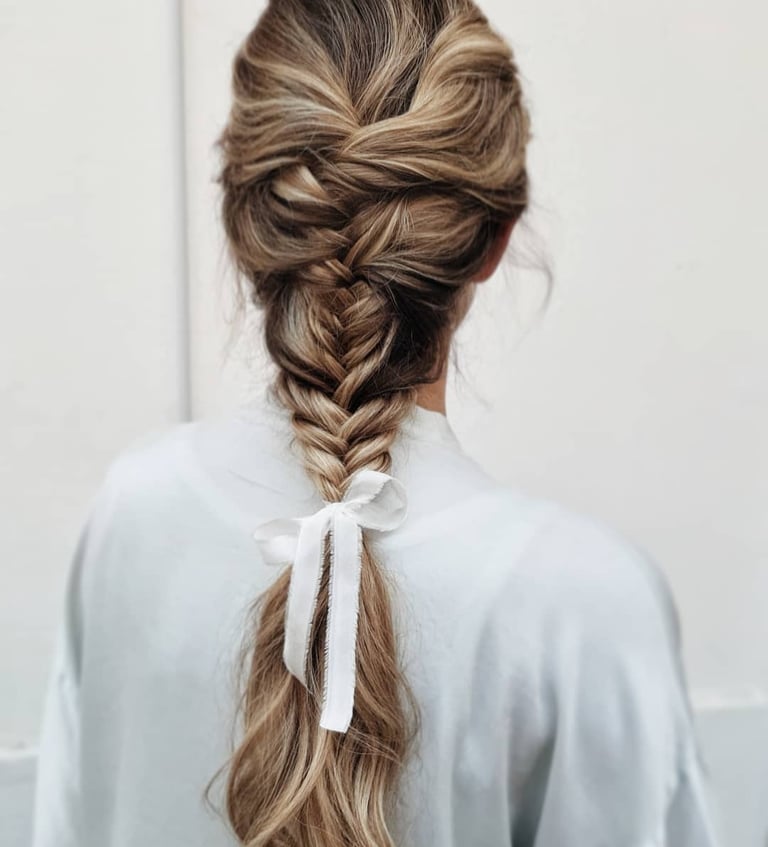
A fishtail braid starts from a twisted updo at the crown and runs down the back in honey blonde with lighter highlights, finished with a small white ribbon at the base. The thick wavy texture gives the fishtail its visible weave, and the twisted updo at the top adds height without extra bulk. This is a salon-only style: the twisted base and the ribbon placement require a second pair of hands to keep everything even. Ask your stylist for: fishtail braid from a twisted updo with a white ribbon. The braid can be loosened slightly after the event for a softer look.
High Ponytail Braid With Baby Hairs
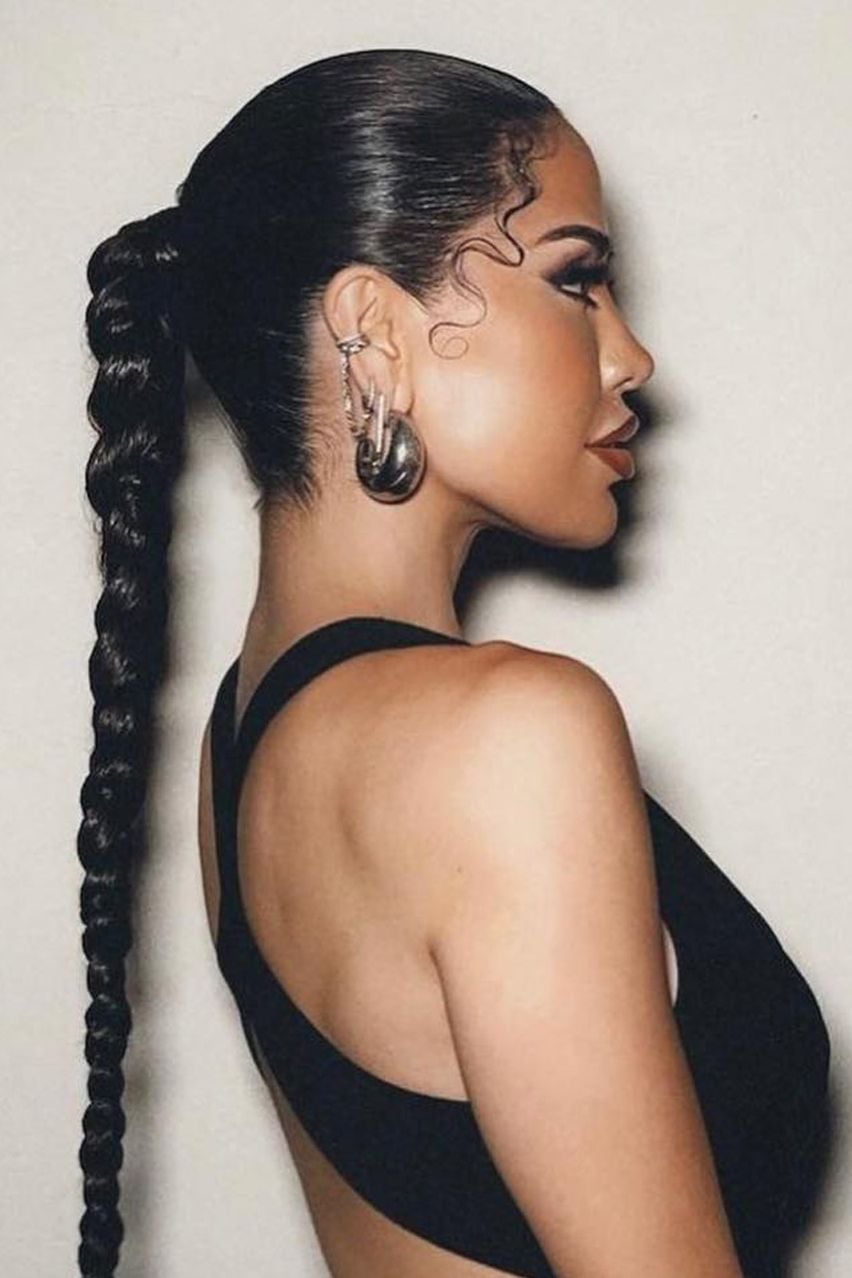
A high ponytail gathered into a single thick braid is a study in control: every strand slicked back, the baby hairs coaxed into precise swirls at the hairline. This style needs straight, thick hair that reaches at least mid-back to carry the braid’s weight without looking anemic. Ask your stylist for a high ponytail braid with sleek baby hairs. The tight tension and the length mean tension headaches are a real risk, so schedule breaks if you wear it for more than a few hours. A strong-hold gel keeps those baby hairs in place, and the braid itself stays tidy with minimal touch-ups.
Braided Ponytail With Cornrows
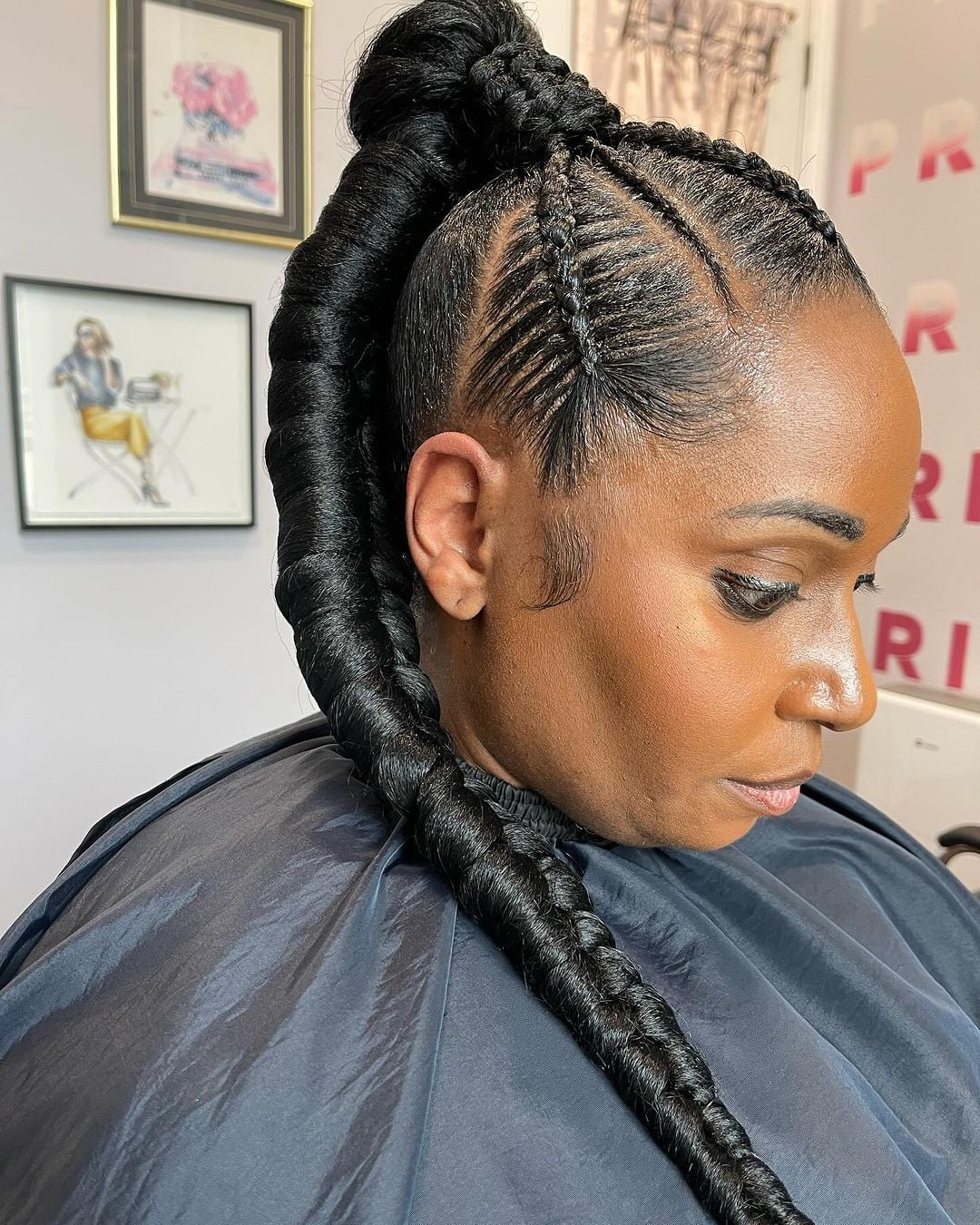
A standard braided ponytail is straightforward: gather and braid. This version adds cornrows on the sides, feeding into a single large plait that hangs to mid-back. The contrast between the flat cornrows and the voluminous ponytail gives it a deliberate, architectural feel. Ask your stylist for a braided ponytail with side cornrows. It suits thick, straight hair, and the cornrows add about an hour to the install. The central parting keeps the symmetry clean. If you want the ponytail drama without the scalp work, stick to the simpler version. This one is for when you have the time and want the detail.
Box Braid High Ponytail With Blonde Tips
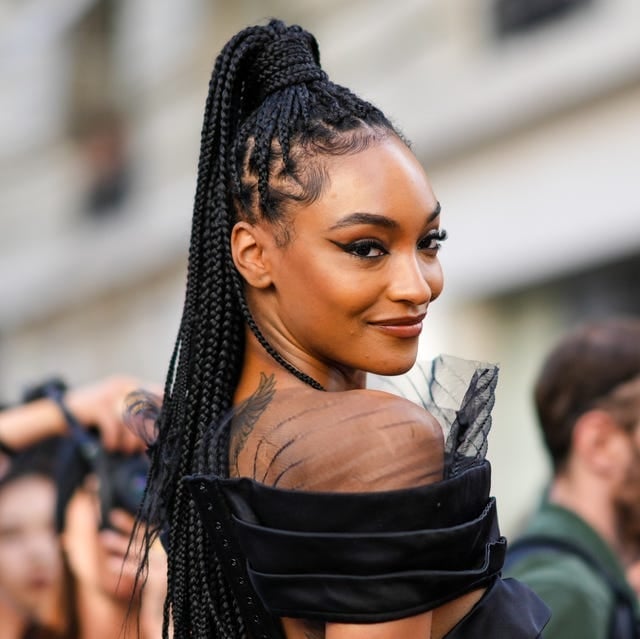
The technique here is about transition: black box braids gathered into a high ponytail that falls to mid-back, with the last few inches dyed blonde. The contrast is sharp, so the color change needs a clean line. Ask your stylist for a high ponytail box braids with blonde tips. The braids themselves are uniform and sleek, and the ponytail’s height keeps the weight off the neck. A drop of serum on the blonde tips stops them from frizzing, and a trim every six to eight weeks keeps the ends looking fresh. The middle part keeps the silhouette balanced.
The blonde tips add a separate upkeep layer: purple shampoo every two to three washes to hold the tone, and a toning session at the six-week mark. It is a salon-done style that holds for several weeks with minimal daily effort.
Cornrows To Long Braids With Geometric Pattern
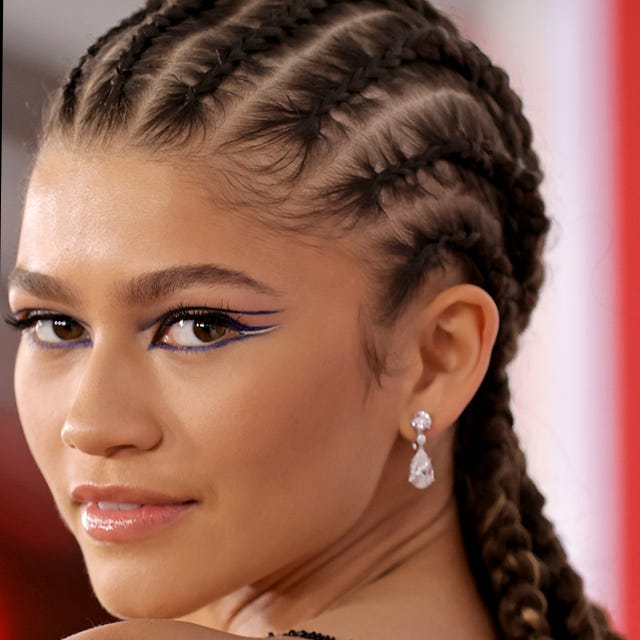
Can a cornrow pattern do the talking for you? When the scalp work is this geometric, yes. The cornrows form a precise repeating pattern before releasing into long, thick braids that fall to mid-back. Ask your stylist for cornrows with geometric pattern into long braids. Thick, straight hair can hold the tight rows without pulling. The middle part frames the symmetry, and the dark brown shade keeps attention on the braidwork. If your hair is fine or prone to breakage at the edges, the tension of the scalp pattern might be too much. For everyone else, it is a low-maintenance daily style that appears carefully planned.
Micro Braids With Loose Wavy Ends
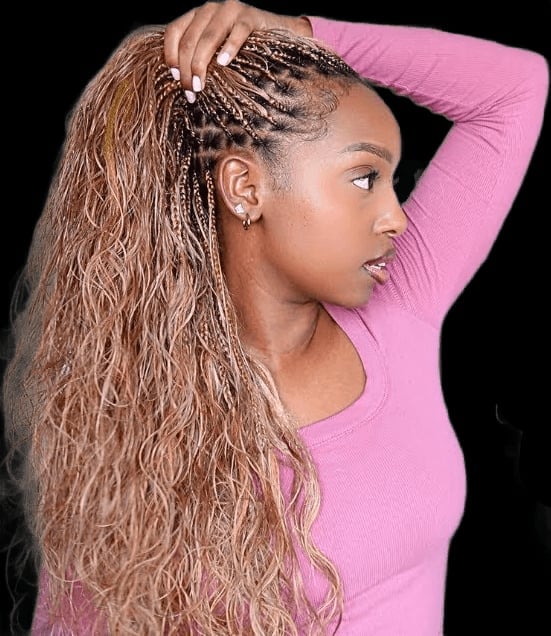
Micro braids that stop about a third of the way down, leaving the ends loose and wavy, create a texture that moves differently than a fully braided style. The honey blonde shade catches light on both the braided sections and the waves. Ask your stylist for micro braids with loose wavy ends. The upkeep is the real story here: the micro braids need consistent moisturizing and gentle handling to avoid frizz, and the wavy ends require a curl-defining cream and a diffuser on low heat to keep their shape. The waves will loosen over time, so a refresh every three to four days is realistic. On the plus side, the braids protect the roots while the ends stay free.
Long Light Brown Box Braids
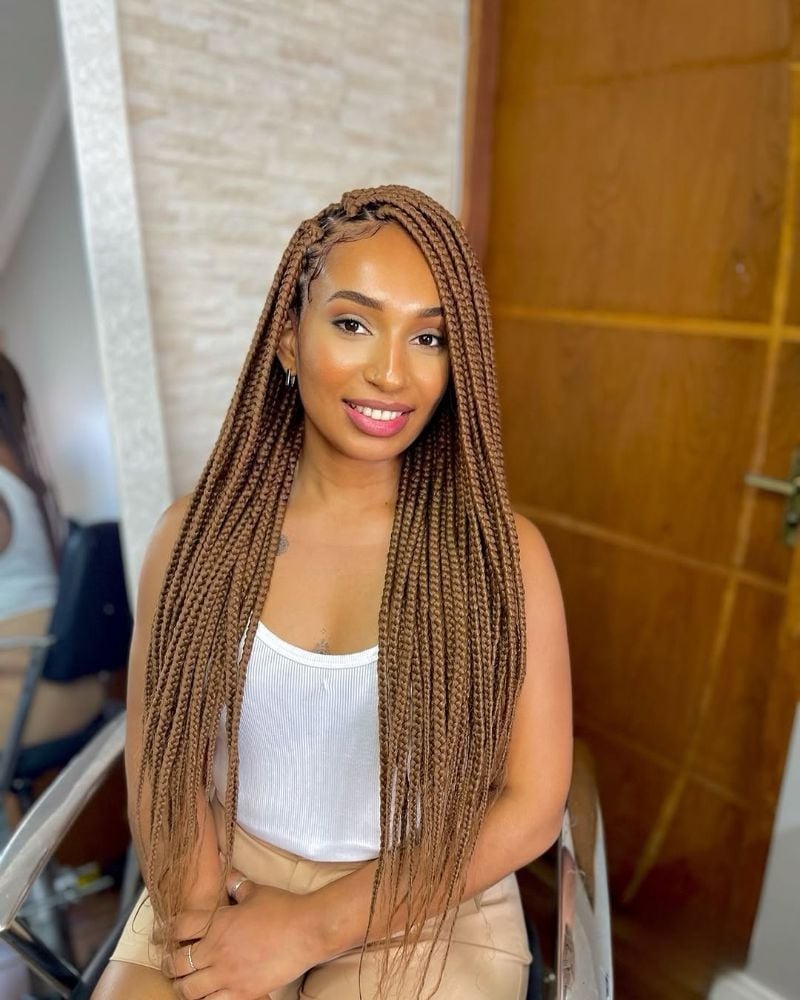
A middle parting and wavy texture at the ends give these mid-back-length braids a soft finish that works year-round. The light brown color keeps the look natural and easy to style, whether you leave them loose or twist them into an updo. Ask your stylist for: long light brown box braids with wavy ends. This design suits hair that already reaches at least mid-back, since the braids need enough length to swing and hold the wave. Maintain the wavy texture with a leave-in conditioner, and schedule a trim on the baseline every eight to ten weeks to keep the ends tidy.
Jumbo Braids With Subtle Highlights
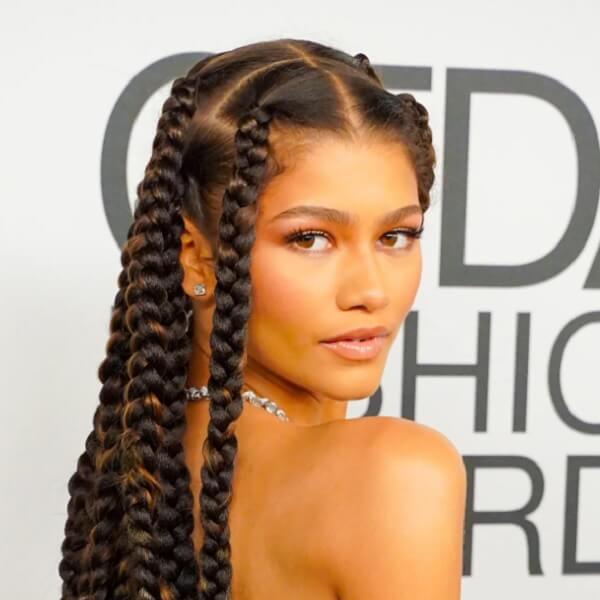
Wondering how to get that bold, sculpted look without it feeling heavy? The answer is in the thickness and the color placement. Ask your stylist for: large thick braids with subtle highlights. The chunky sections give the style structure, while the lighter strands woven through the dark brown base add dimension without looking busy. This length works best on hair that reaches mid-back or longer, so the braids have room to sit fully. A braid-specific shampoo cleans the scalp without loosening the parts, and the baseline needs a trim every eight to ten weeks to prevent fraying.
Box Braids With Gold Cuffs
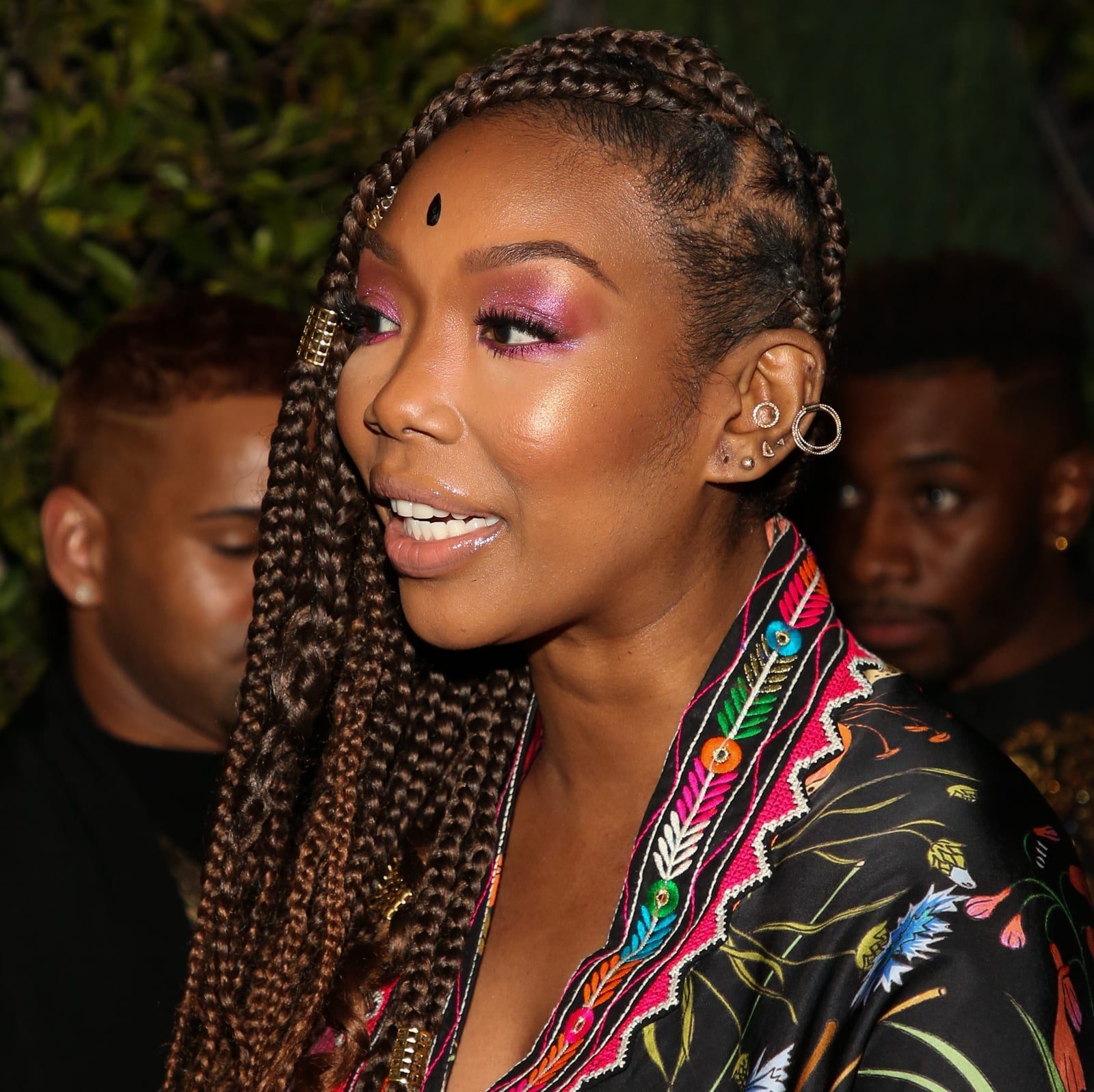
The gold cuffs sit on individual braids rather than at the ends, which changes how the weight falls. Each cuff is clamped onto the braid shaft, so the style keeps its movement instead of feeling bottom-heavy. Ask your stylist for: box braids with subtle caramel highlights and gold cuffs. The caramel streaks break up the dark brown base, and the metal accents catch light without overwhelming the pattern. This design works on coily hair that reaches at least mid-back, since the braids need enough length for the cuffs to slide on without pulling. Have your stylist crimp each cuff firmly in place, and check them weekly for any that have shifted.
Mid-Back Box Braids With Scalp Patterns
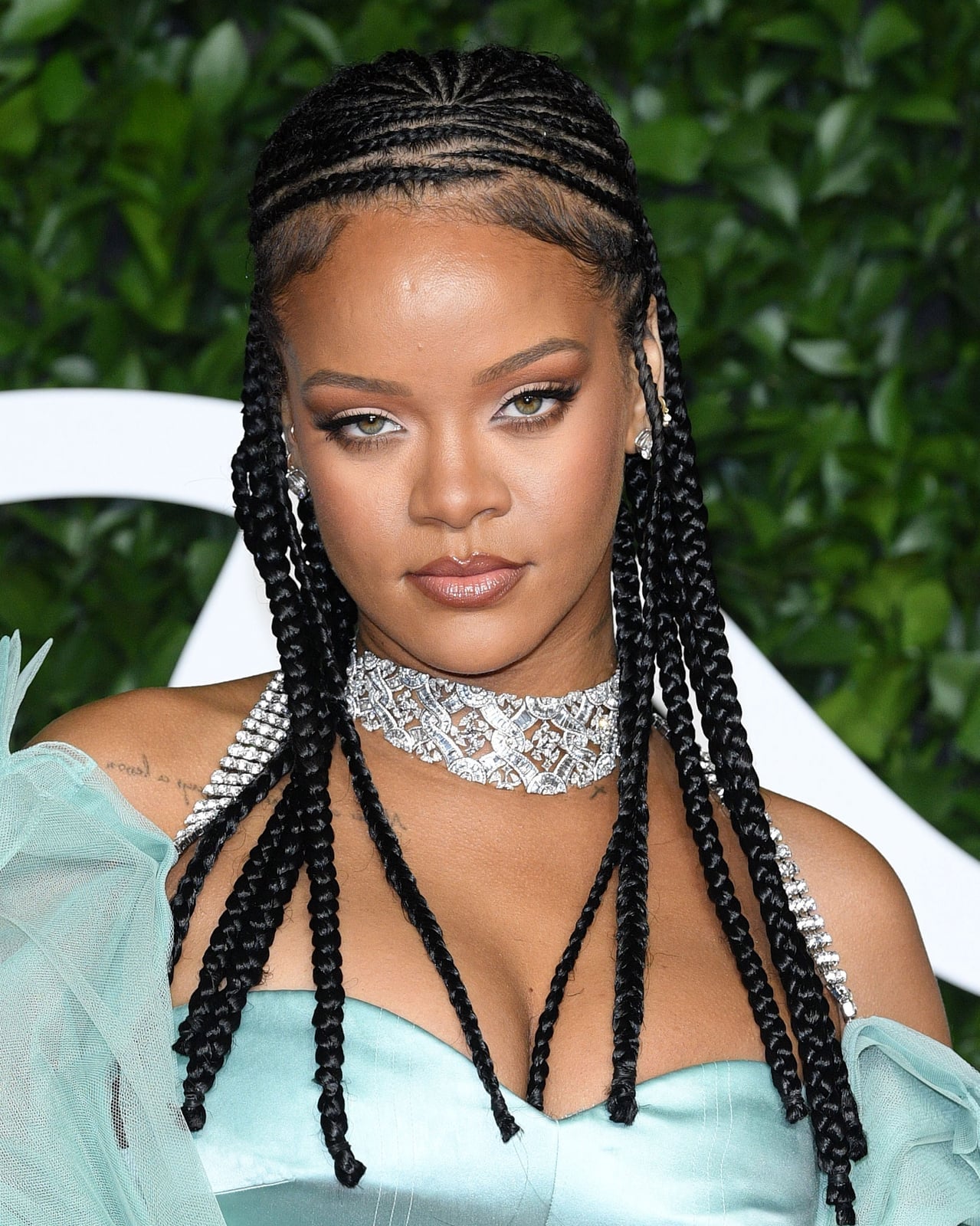
The intricate braided patterns at the scalp are the focal point here, with the hair falling straight in neat box braids. This design creates a strong visual line from root to tip, but the tight scalp work can make cleansing trickier. Ask your stylist for: mid-back box braids with intricate scalp patterns. The style suits thick, coily hair that reaches mid-back, since the density helps the patterns hold their shape. You will need to be careful about product buildup at the roots, so a diluted shampoo applied directly to the scalp is a better bet than heavy leave-in formulas.
Mid-Back Box Braids With Baby Hairs
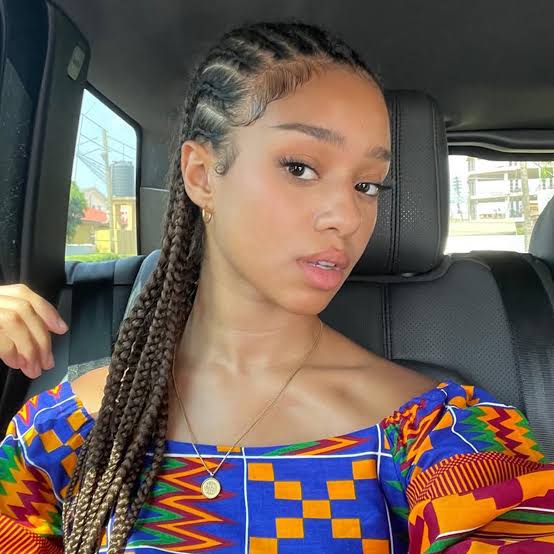
The baby hairs along the hairline are shaped into soft swirls and curls, which gives an otherwise straightforward set of box braids a polished finish. Ask your stylist for: mid-back box braids with neat baby hairs. This style works on coily hair that reaches mid-back, since the length allows the braids to hang evenly while the hairline detail stays the focus. The daily reality is that you will need to reset the baby hairs each morning. A fine-tooth comb and a light gel do the job in a few minutes. At night, a satin bonnet keeps both the braids and the shaped edges from frizzing.
Neatly Done Mid-Back Box Braids
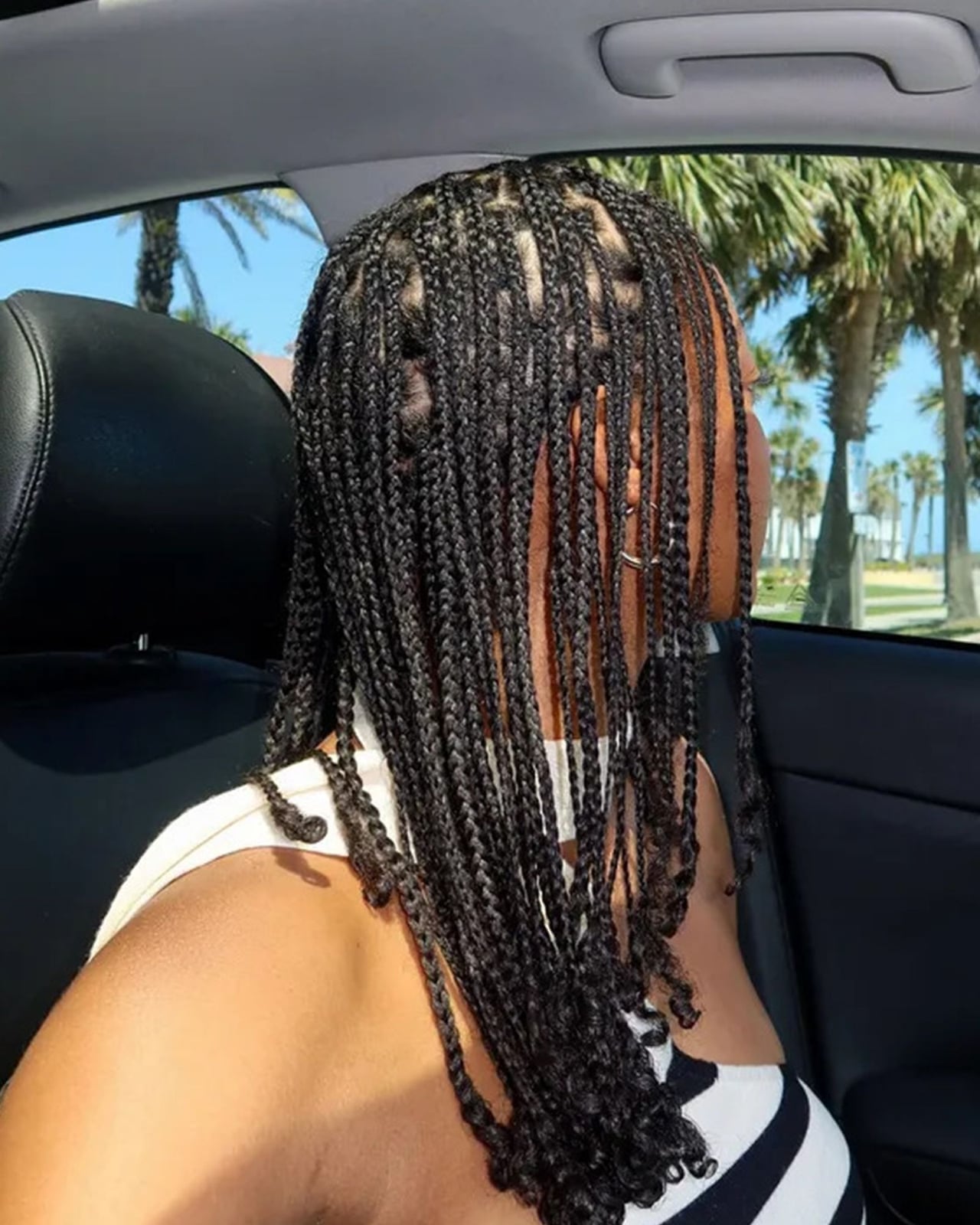
Where a looser braid says casual, these neatly done mid-back box braids say business. The numerous straight black sections are uniform in size, with a clear middle parting at the scalp that keeps the look structured. Thick, straight hair at least mid-back length is the starting point for this classic finish. Ask your stylist for: neatly done mid-back box braids. The hold depends on even tension during installation and a silk scarf at night, not on any product.
Long Micro Braids For Fine Hair
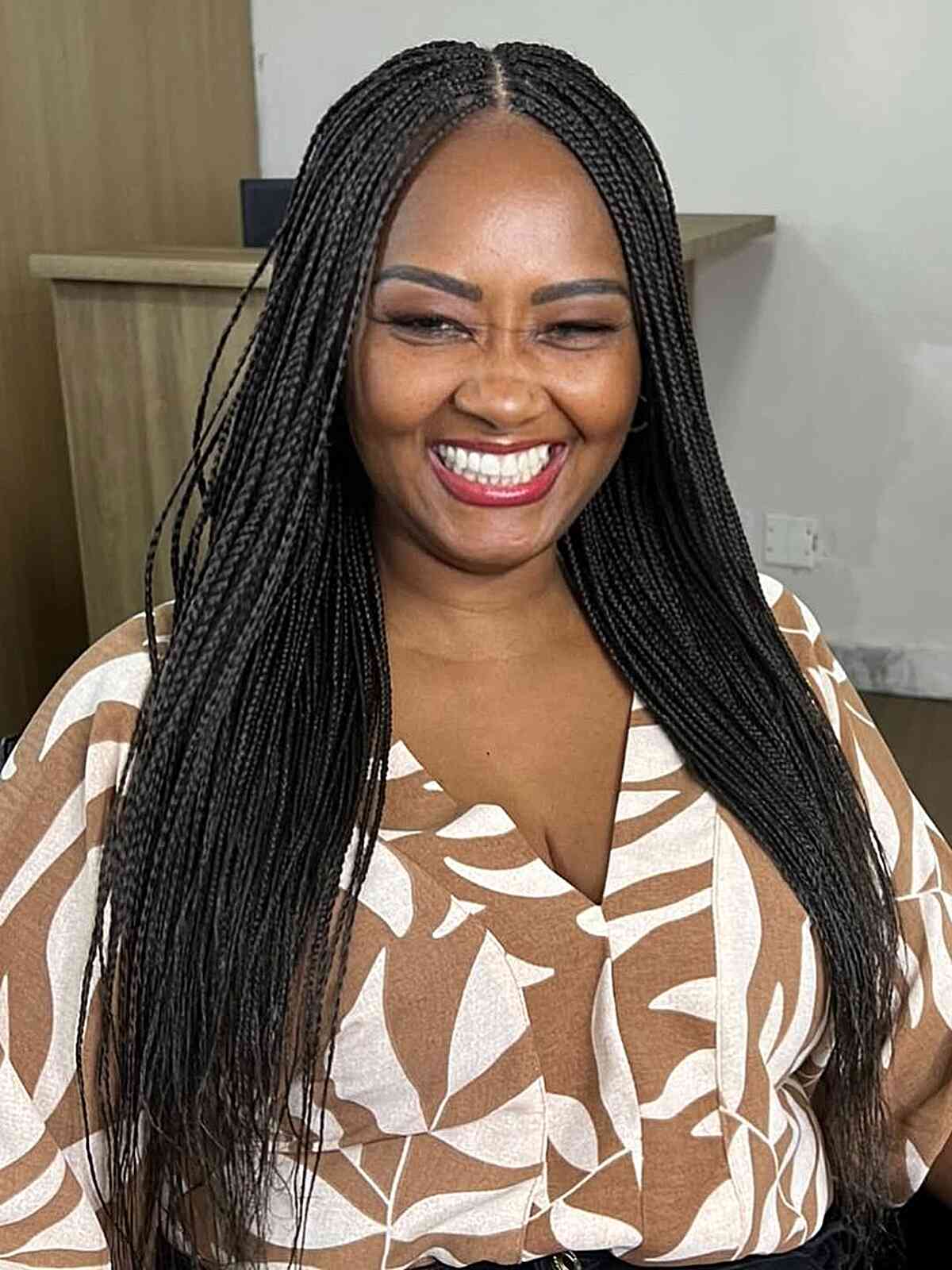
Long micro braids are a density trick for fine, straight hair: the small sections add visual weight and length without bulk. Parted neatly in the middle, these sleek black braids reach mid-back and fall straight, giving a polished line. Anyone with fine hair at least mid-back length can ask for this style. Ask your stylist for: long micro braids for fine hair. The hold is stable, but handle the sections gently to avoid breakage, and plan a trim every eight to ten weeks to keep the ends clean.
Voluminous Curly Black Faux Locs
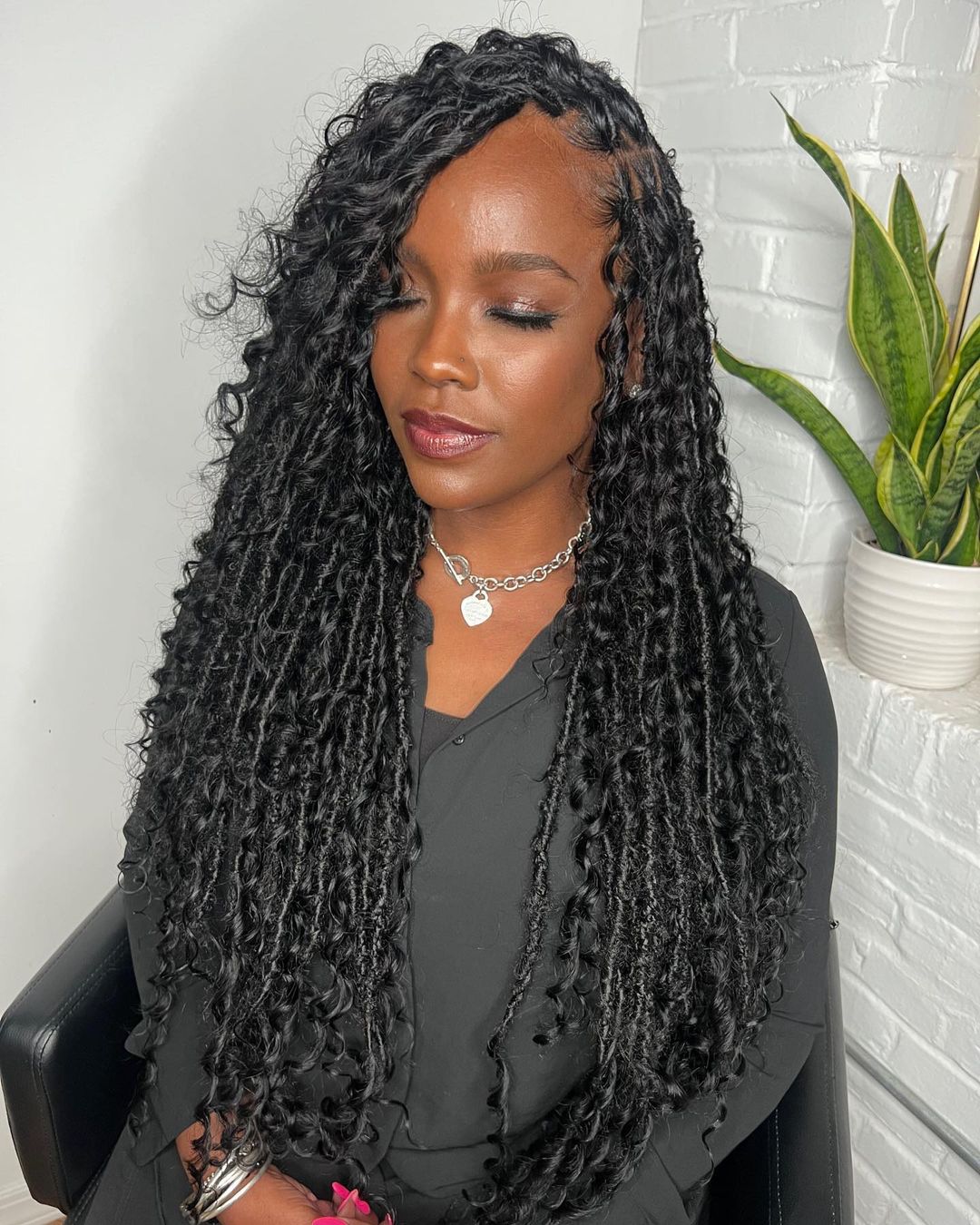
These voluminous curly faux locs are built by wrapping synthetic hair around the natural strand, leaving the ends loose to curl. A dense, textured mass hits mid-back with a subtle side-swept fringe. Hair at least mid-back length can take this technique. Ask your stylist for: voluminous curly black faux locs with side-swept fringe. A lightweight oil on the scalp keeps the roots comfortable, and minimal handling preserves the curl pattern.
Cornrows And Twist Braids With Side Bangs
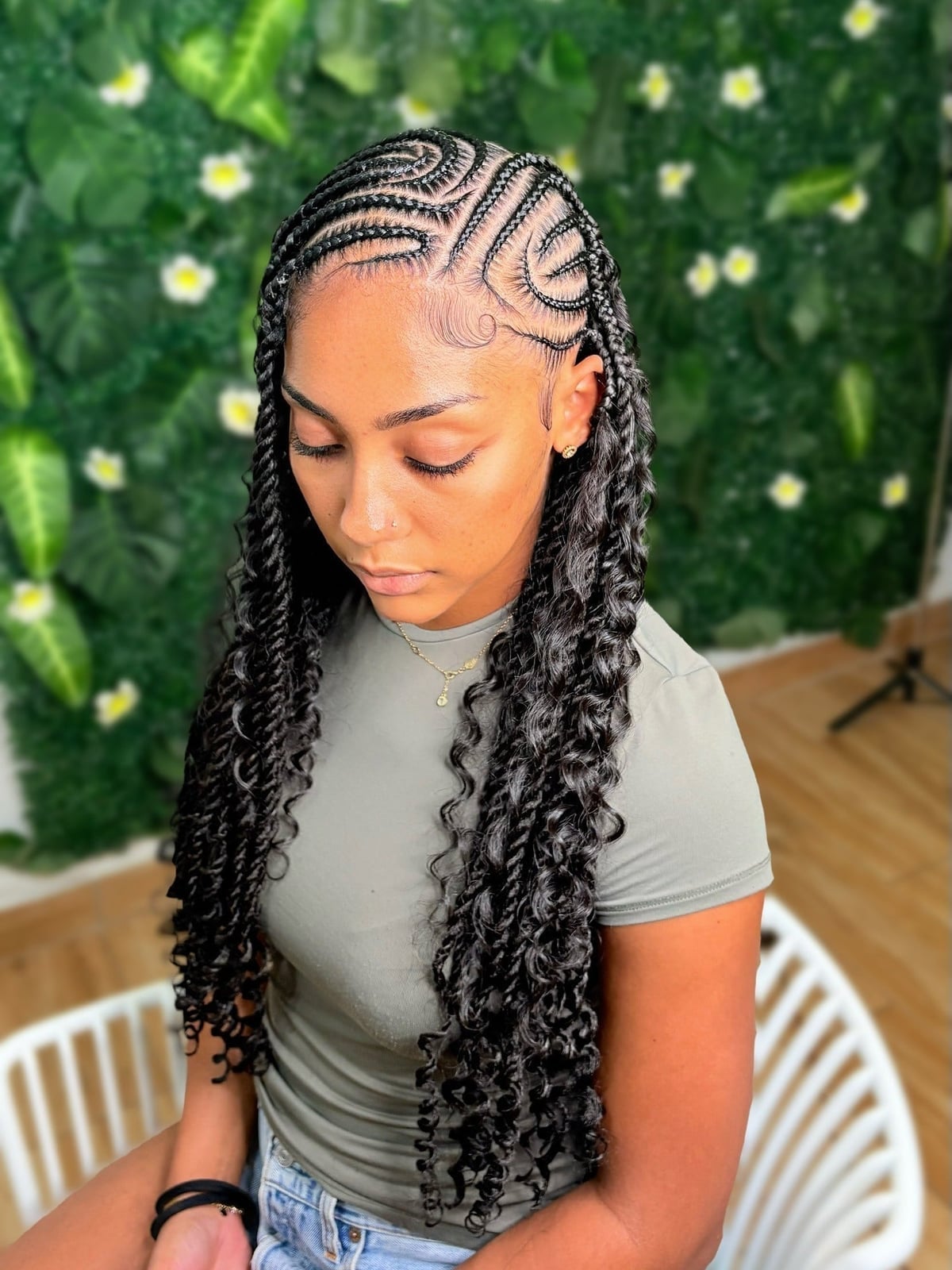
Can you do cornrows and twist braids at home? Technically, yes, but the geometric scalp pattern and seamless transition into mid-back twists call for salon-level tension control. The side-swept bangs frame the face and break up the density of the thick, curly black hair with subtle highlights. Ask your stylist for: cornrows into twist braids with side-swept bangs. Expect a few hours in the chair, but the hold lasts for weeks with minimal effort beyond scalp care.
Large Braids With Darker Roots
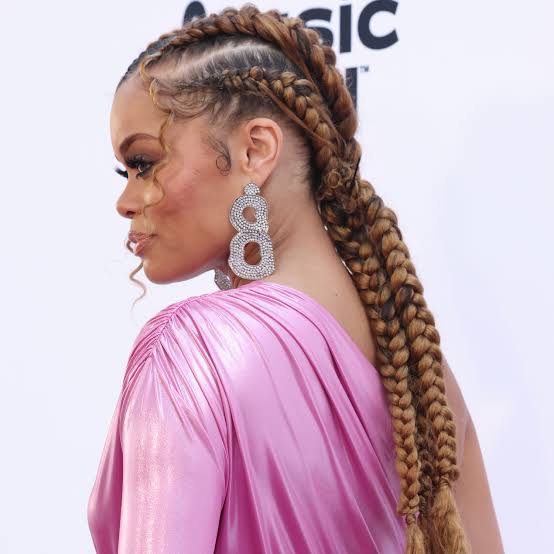
Large thick braids in honey blonde with visible darker roots deliver dimension without needing precise placement. The darker base means no harsh grow-out line: as the braids settle, the root color looks like a natural shadow, not a skip. Wavy, thick hair at least mid-back length works best for this bold scale. Ask your stylist for: large thick braids with visible dark roots. A root touch-up spray can refresh the depth between salon visits, and trimming the baseline every eight to ten weeks keeps the ends healthy.
Final Thoughts
For fine or thin hair, lean on styles with added extensions or opt for updos where you can shape volume yourself. Thick or coarse hair can carry intricate cornrows and jumbo braids without a fuss. Match the braid to your texture and your week, and it will hold its own.
- Trim braids every 6 to 12 weeks to keep ends neat.
- Tone blonde or highlighted braids with care, only when needed.
- Use a heat protectant before any styling near braids.
- Wash gently once a week or every other week.
Braids offer endless possibilities for style and creativity.