
Braids and curls together are less a trend and more a permanent fixture in the styling rotation, but the current wave favors volume and texture over anything tight or uniform. A deep side part and loose tendrils are now the norm, shifting the look from precise to intentionally undone.
This collection of 27 ideas spans collarbone bobs to mid-back lengths, covering everything from box braids with defined curls to braided crowns with wavy texture. Whether your hair falls flat after day one or you are simply tired of a visible grow-out line, there is a Classy Curls Braids style here that holds its shape longer than your last attempt.
Collarbone Bob With Braids And Loose Curls
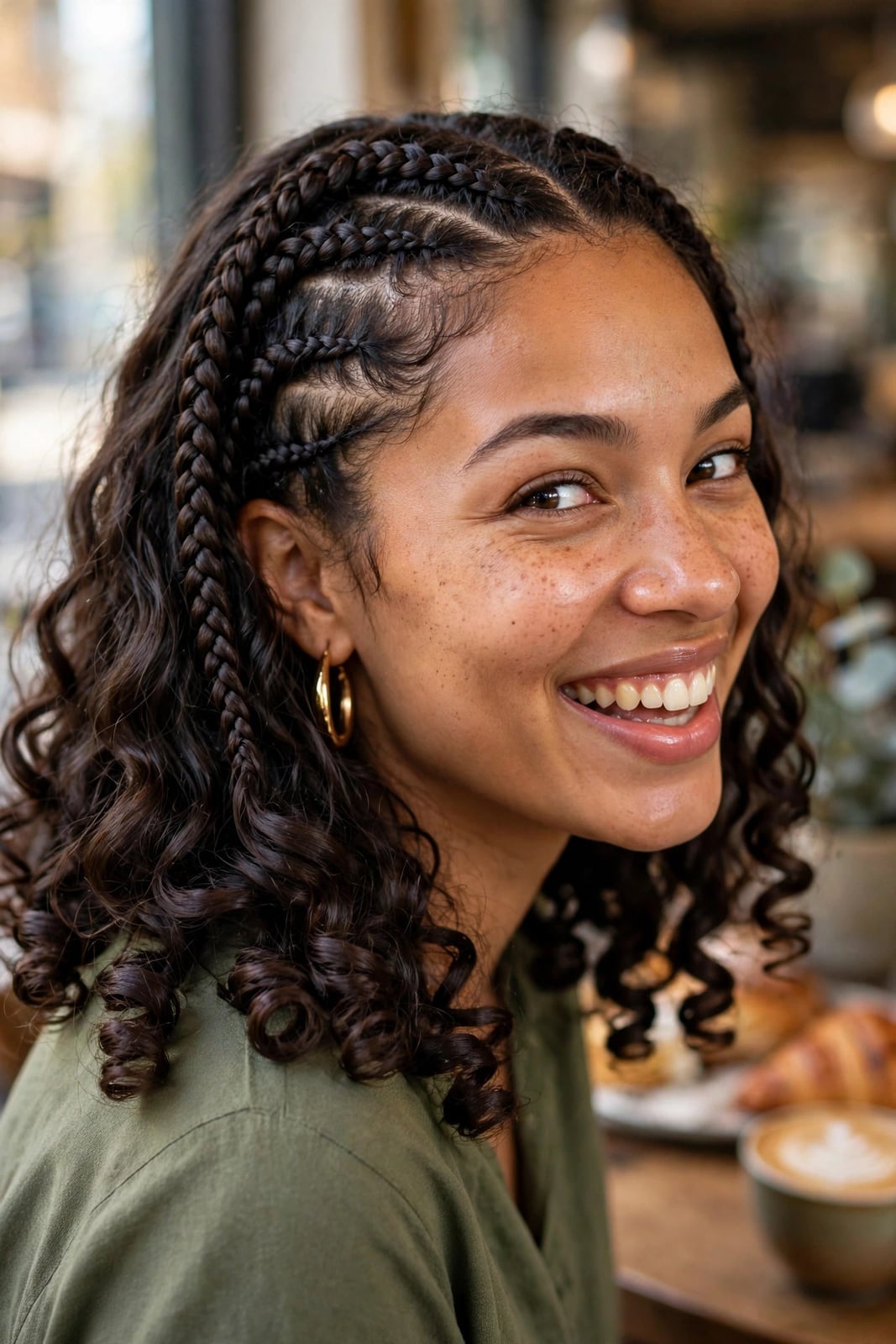
The smart trick here is that the neat braids run only along the hairline, so the collarbone bob keeps its curly movement instead of fighting it. On medium density hair, that contrast appears deliberate without looking fussy, and the side part adds a little height at the crown. The dark brown base with subtle highlights gives the braided sections definition, so they do not disappear into the curls. Soft layers around the jaw help a square face, while the length below the chin balances a round one. Ask your stylist for: a collarbone bob with hairline braids and loose curls. A smoothing product on the braids and a curl cream on the curls keeps both textures behaving, and the bob baseline needs a trim every six to eight weeks.
Chin Length Bob With Delicate Side Braid
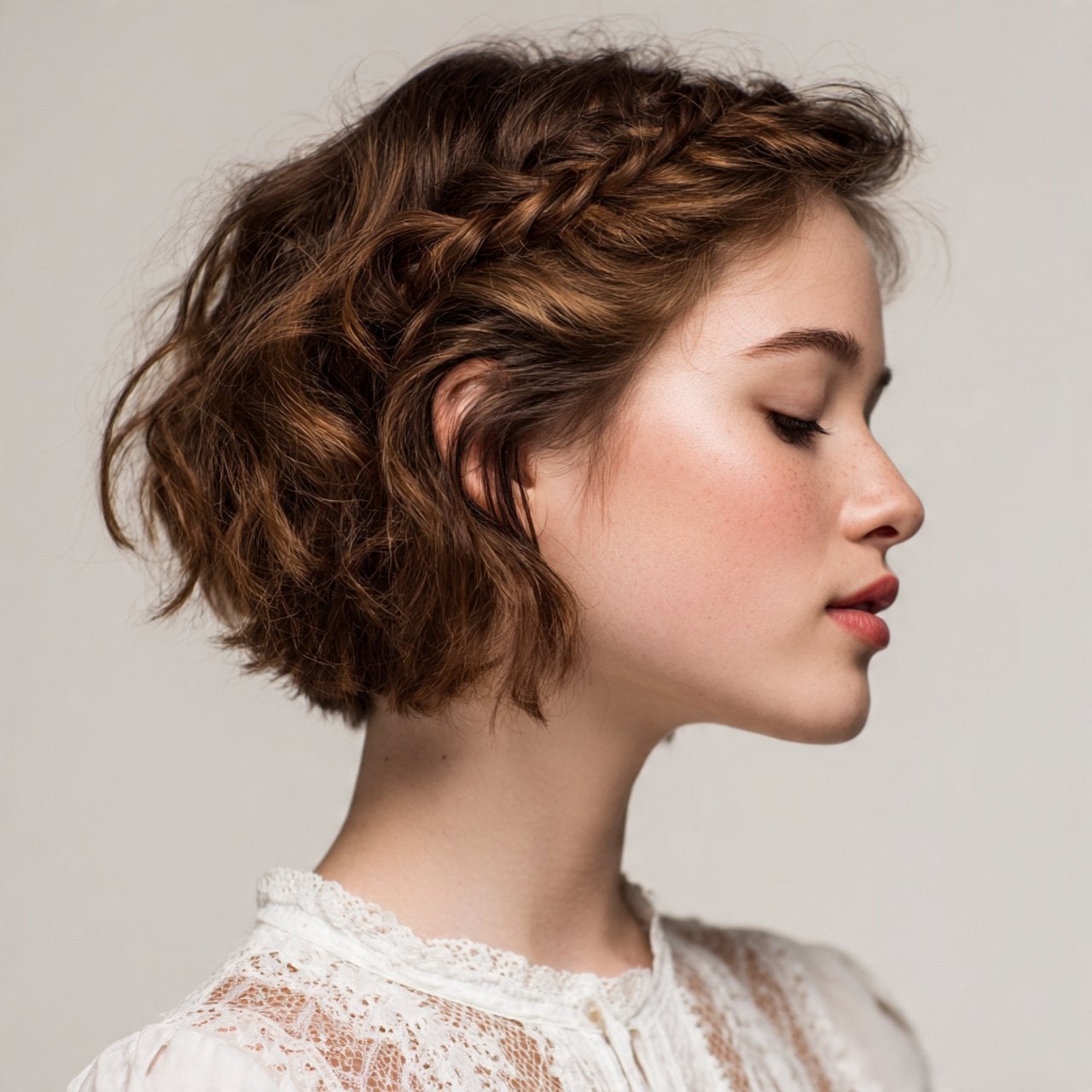
How does a braid survive on hair this short without looking separate? The braid starts at the temple and tapers into the loose tendrils, so it reads as part of the cut rather than a separate element. On a chin length bob with side swept bangs, the medium brown base with subtle highlights keeps the braided section from flattening into the curls. Ask your stylist for a chin length bob with a side braid and face-framing curls. The curly sections get grip from spray, and a trim every six weeks keeps the shape from growing out into a shag.
Collarbone Box Braids With Curly Ends
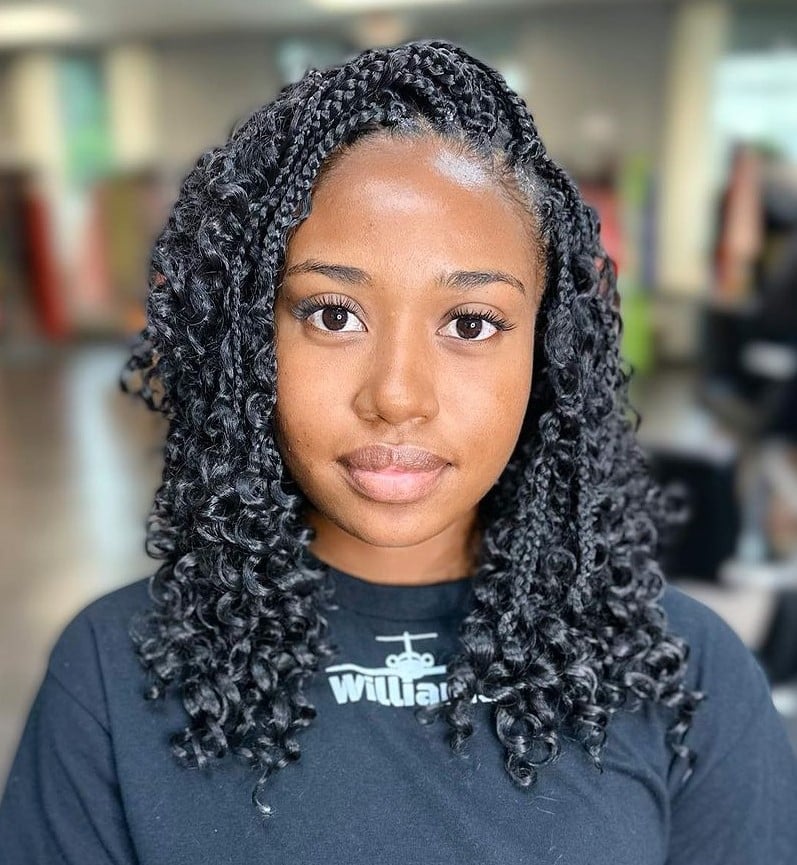
Box braids usually end blunt, which is why the loose defined curls at the ends of these collarbone length braids feel like a genuine departure. The middle part keeps the face open, and the deep black color gives the style a clean, uniform base so the curly ends do the talking.
In daily wear, the braids hold their shape while the curls soften over the first week, which is the point. Ask your stylist for collarbone box braids with curls at the ends. A curl refresher spray on the ends brings the definition back between washes, and any stray braids or uneven curls should be tidied every four to six weeks.
Shoulder Length Box Braids With Defined Curls
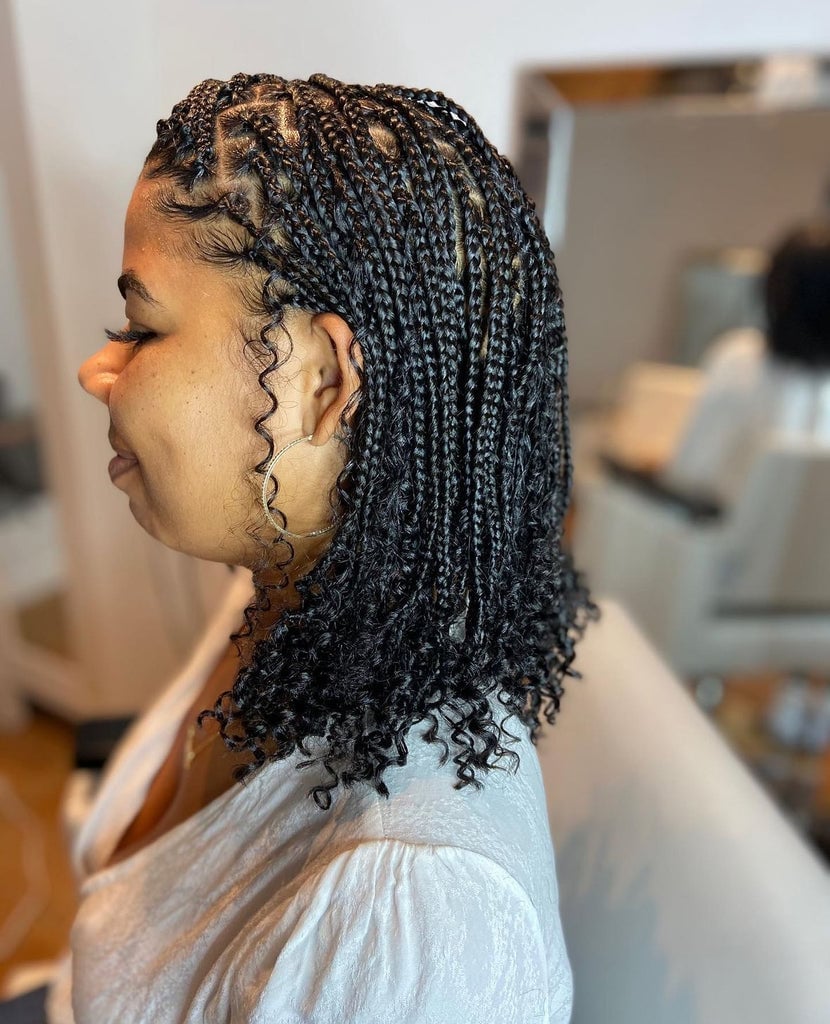
Set these shoulder length box braids against the blunt-ended kind and the difference is all in the finish: the defined curls at the ends add movement that a straight braid simply cannot. The side part breaks up the uniformity, so the style works for oval and heart faces without adding width at the cheekbones. The uniform black color keeps the braided sections looking sharp against the softer curl pattern. Ask your stylist for shoulder length box braids with defined curly ends. A light hair oil on the curls keeps them from frizzing, and re-braiding the hairline as it loosens is the only regular maintenance.
Shoulder Box Braids With Natural Curls
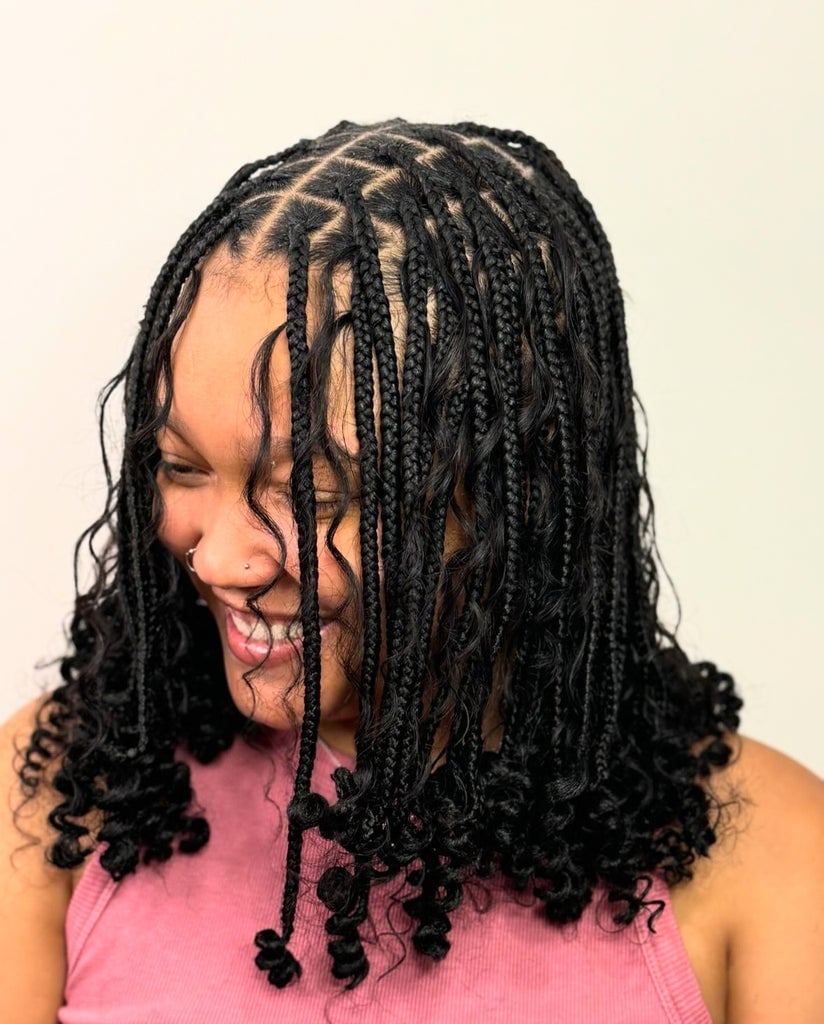
The appeal here is the honest contrast: neat braids at the root, loose natural curls at the ends, with the middle part letting both textures show equally. On shoulder length box braids, that transition gives the style a relaxed finish that tight uniform braids skip entirely. The black base with subtle lighter tones adds depth without changing the overall color.
The two textures age differently. The braids stay crisp for weeks, but the natural curls lose their bounce as they pick up humidity, so expect to refresh them more often than the braided sections. Ask your stylist for shoulder length box braids transitioning to natural curls. A water-based spray revives the curls without weighing them down, and braids that are too tight at the root cause scalp tension, so keep that in mind when they are installed.
Shoulder Fishtail Braid With Wavy Curls
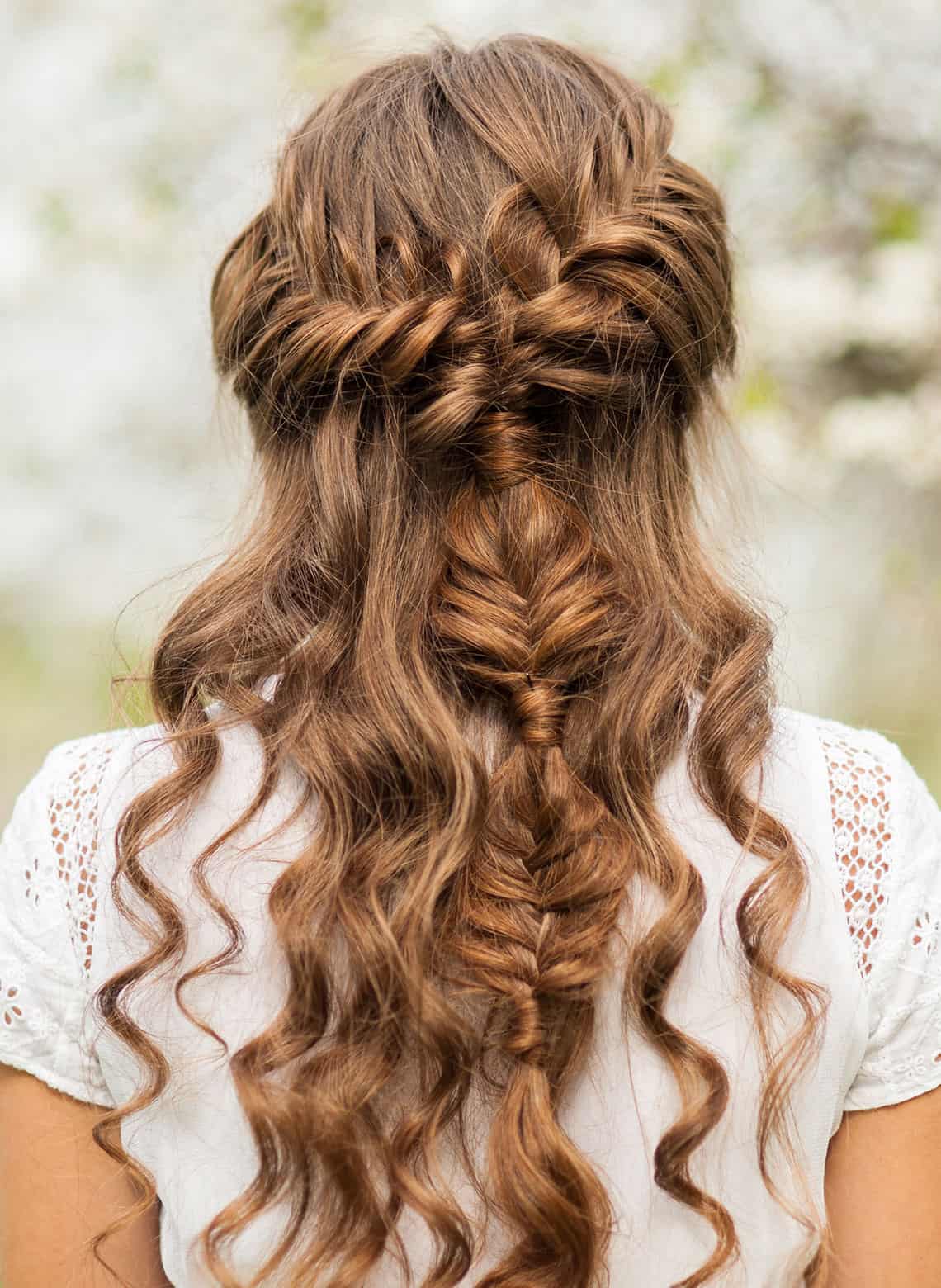
Can a shoulder length braid actually hold wavy texture without falling apart by lunch? A fishtail braid down the back with loose wavy curls framing the shoulders manages exactly that. The medium brown base with lighter highlights keeps the look from reading as one solid block of color. Ask your stylist for a shoulder length fishtail braid with framing wavy curls. This style lands well for spring weddings or summer garden parties: the wavy sections catch movement while the braid stays secure. The waves stop from deflating with product, and misting the braid with water loosens it if the weave feels too tight. Medium density hair starting at shoulder length holds the shape best, and the soft layers around the face help it suit square or round face shapes.
Shoulder Micro Braids With Loose Curls
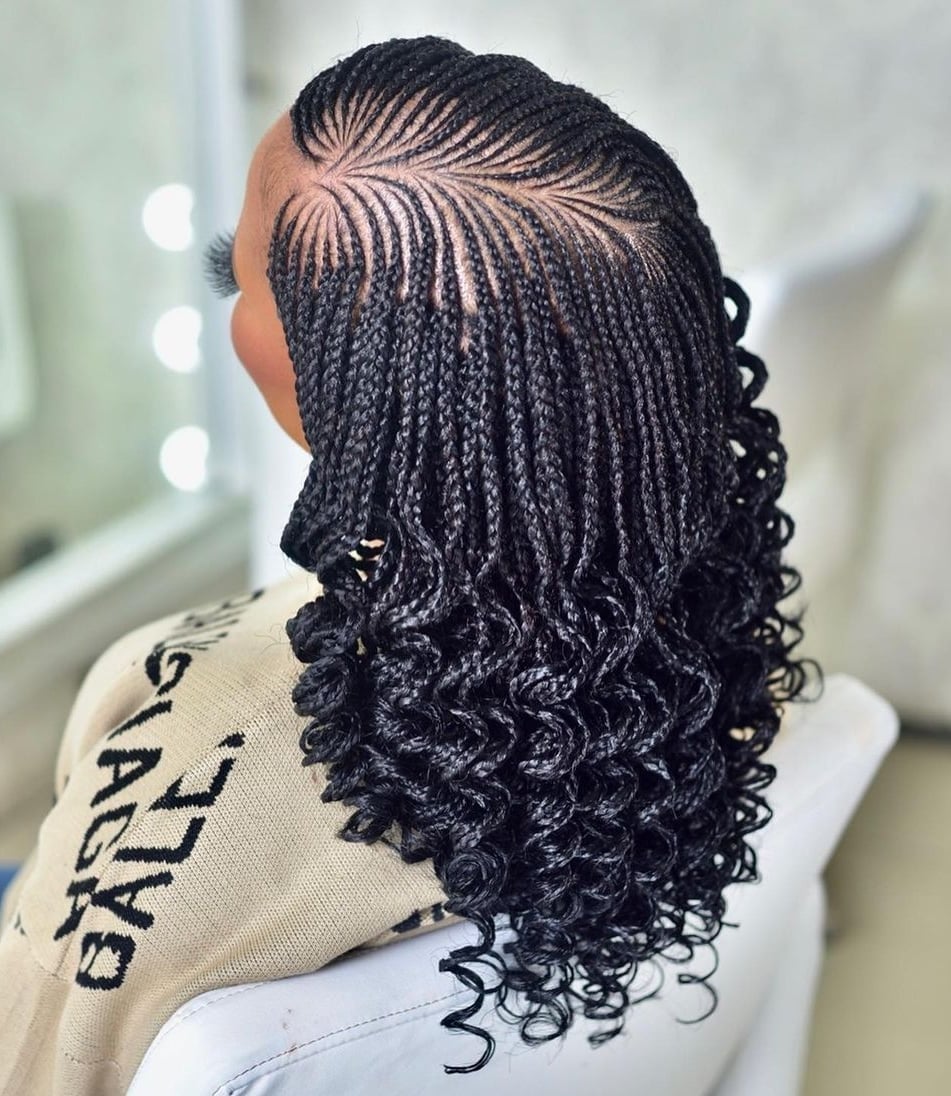
Start with the parting pattern before you pick the braid size. Shoulder length micro braids in deep black with a side parting need that crown detail mapped out first: the stylist sections the hair so the part creates a visible geometric line at the top. The braids themselves fall to the shoulders, and the ends shift into loose defined curls. Ask your stylist for shoulder length micro braids with defined curly ends. Fine to medium density hair works here because micro braids add heft without weighing the roots down. A braid balm smooths any flyaways along the part, and a leave in product on the curly ends keeps them from drying out faster than the braided sections. The side part suits all face shapes, though it works especially well for softening a long face by adding horizontal width at the crown.
Mid-Back Box Braids With Blonde Highlights And Curls
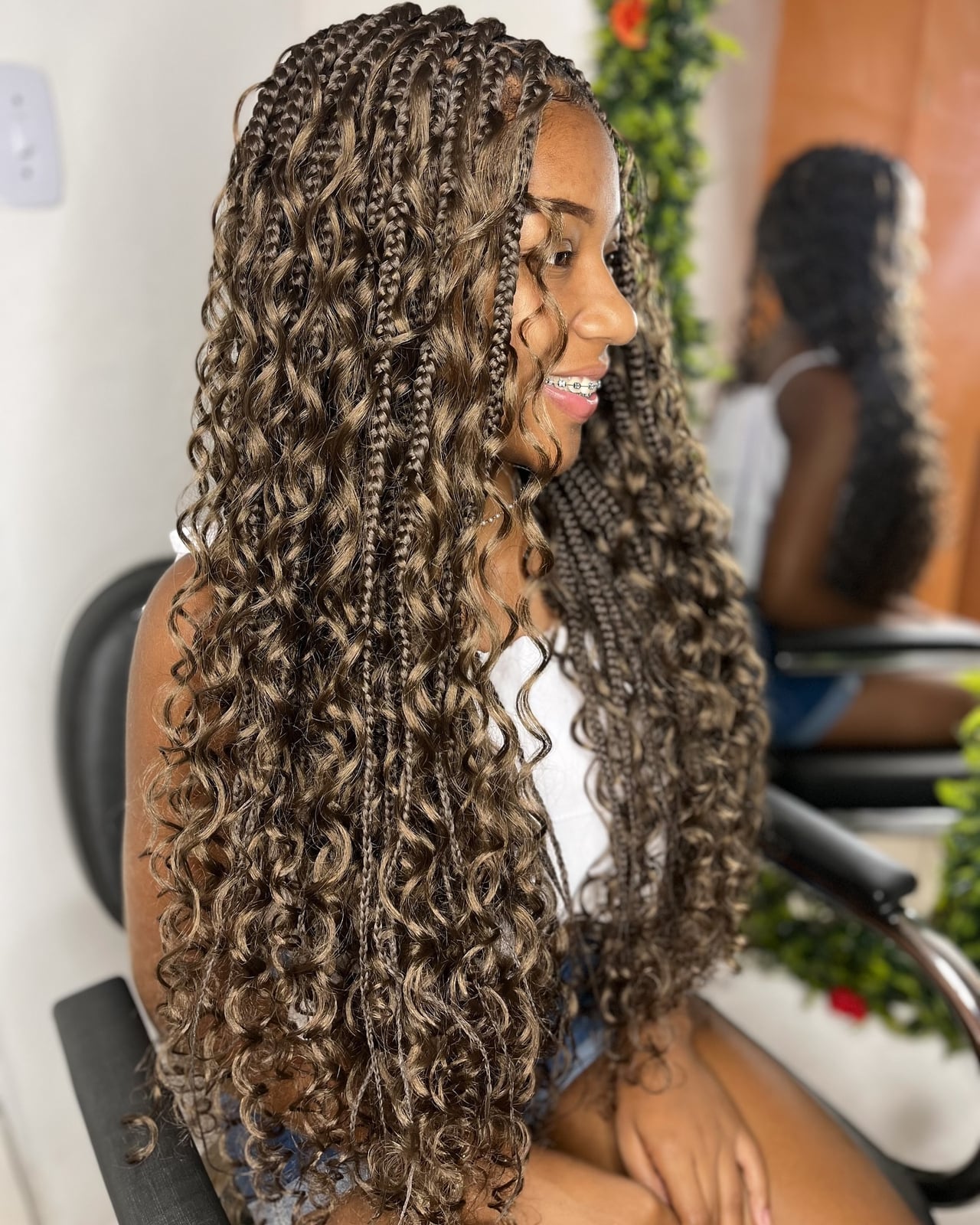
The transition from braid to curl is what makes this design look polished. Mid-back box braids in brown and blonde tones shift into loose defined curls at the ends, creating a silhouette that widens gradually. Ask your stylist for mid-back box braids with transitioning curls and blonde highlights. The blonde pieces are woven throughout the braids, not just painted on the tips, so the color remains visible even when the hair is down. Medium to thick hair starting at shoulder length gives the braids enough substance to hold the curl weight without pulling at the scalp. A silk serum on the curly ends prevents friction frizz, and keeping the braids moisturized with a light spray every few days stops the natural hair from feeling brittle under the extension hair. The middle part keeps the look symmetrical, which helps it look polished for vacation or festival settings.
Mid-Back Box Braids With Blonde Highlights And Curly Ends, Middle
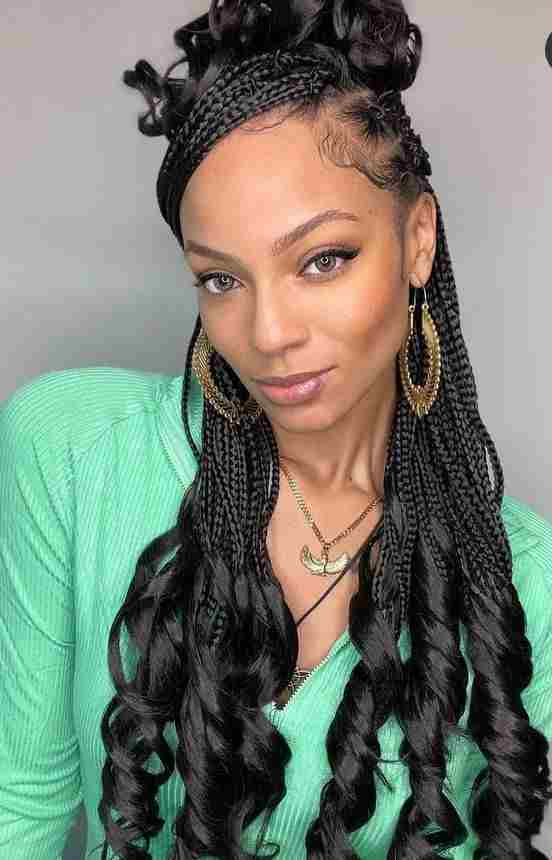
Is this a salon only situation or can you attempt it at home on a long weekend? Mid-back box braids with a middle part and blonde highlights require a second pair of hands for the back sections, so the honest answer is salon. The braids are black at the root with blonde highlights woven through the lengths, and the ends finish in loose defined curls that soften the overall line. Ask your stylist for mid-back box braids with curly ends and blonde highlights. A DIY attempt usually fails at the parting precision: the middle part must be dead straight from forehead to nape, and each braid must mirror its opposite side in size and tension. Medium to thick hair starting at shoulder length gives the braids enough density to hold the curl weight. The blonde highlights need a toning session every eight to ten weeks to stay bright against the black base, which is another reason to keep this one in professional hands.
Mid-Back Box Braids With Wavy Curls And Highlights, Curly
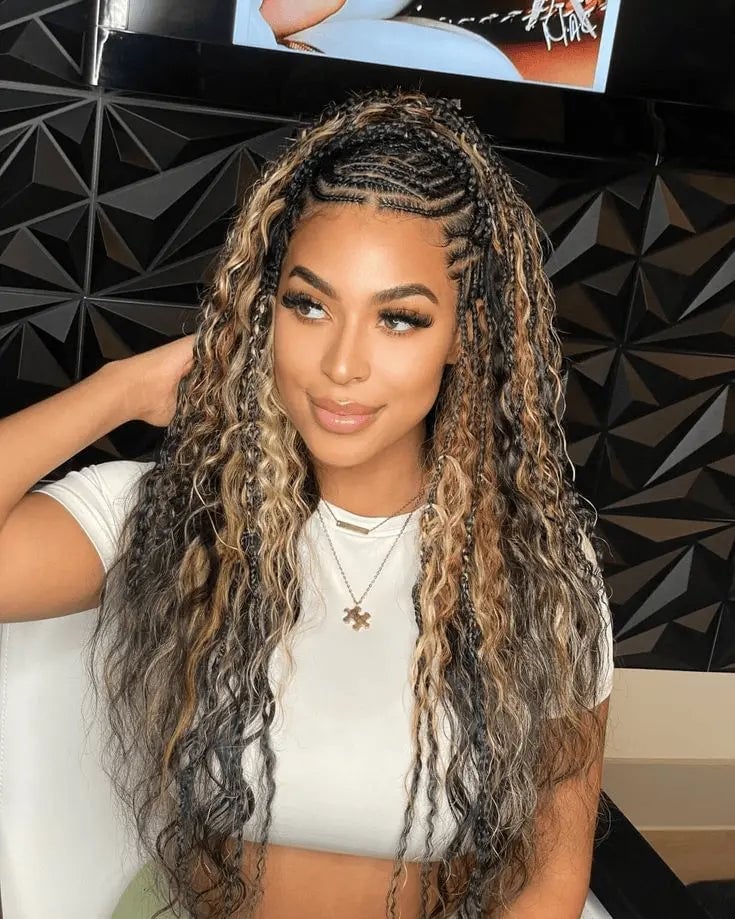
The mistake most people make with this look is treating the wavy curls the same way they treat straight braid ends. Mid-back box braids with a dark base and prominent blonde and brown highlights need the wavy sections to be set with a curl enhancer, not left to air dry and frizz. Ask your colorist for mid-back box braids with wavy curls and multi-tone highlights. The multi tone color creates depth, but the real visual weight comes from the loose wavy curls that break up the braid lines. Medium to thick hair starting at shoulder length is necessary because fine hair may not support the volume of the wavy extensions. The drawback is that the wavy sections can tangle with the braids if you sleep without a satin scarf, and detangling takes patience. A light hold hairspray on the waves keeps them defined, and protecting the braids from friction extends the style by about a week.
Long Box Braids With Voluminous Loose Curls
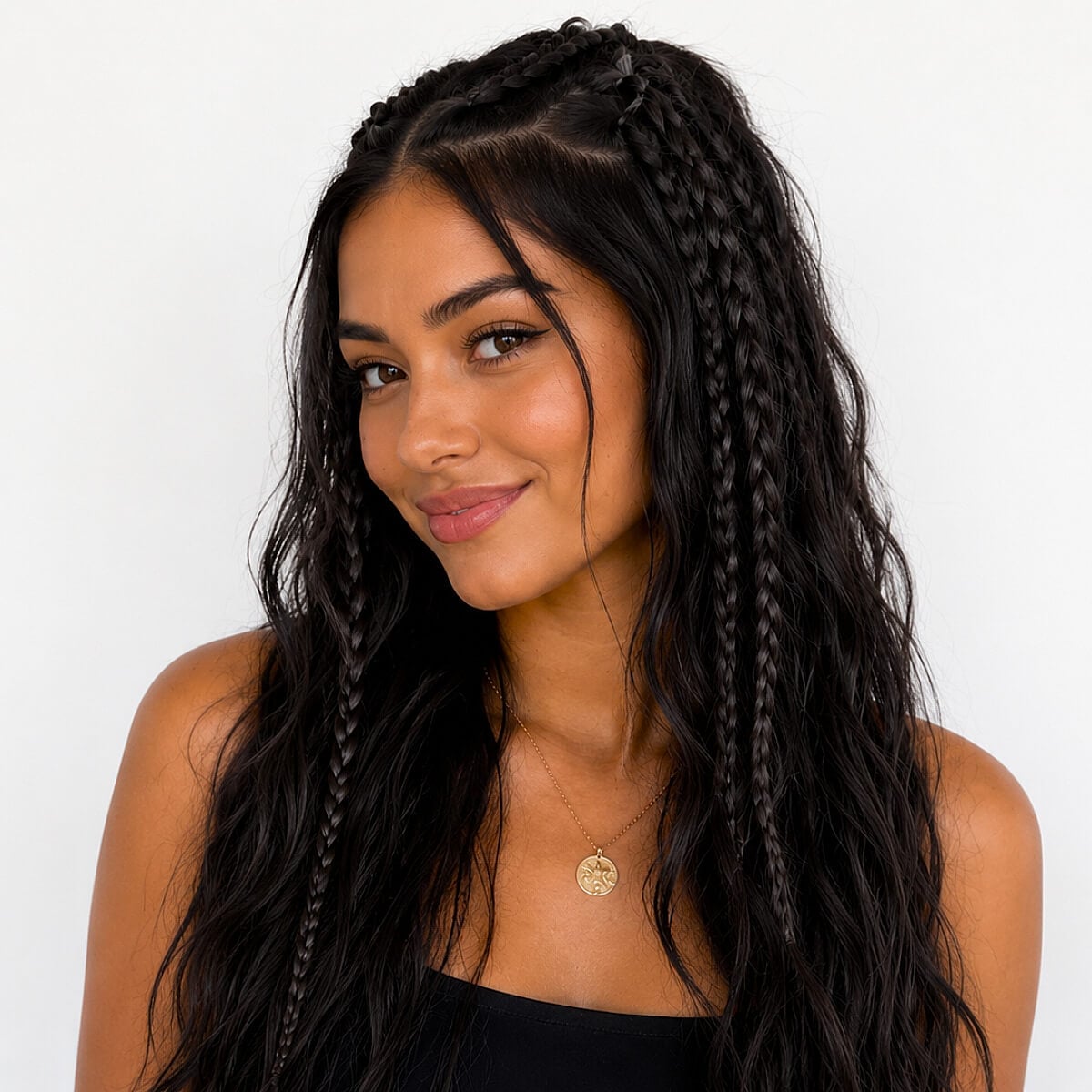
Some people want the structure of braids without losing the bounce of loose hair. This style gives you both: long black box braids, each one ending in a voluminous curl that frames the face and keeps the silhouette from looking flat. It works best if you have medium to thick hair starting at shoulder length, since the braids need enough weight to hold the curls without looking sparse. Ask your stylist for: long box braids with voluminous loose curls. The result sits somewhere between protective and decorative.
The hold comes from the braid structure itself, with the curls adding movement. A silk scarf at night preserves the curl shape without crushing the braids. Avoid over-brushing the ends, since that breaks up the curl pattern faster than you would expect. The length means less frequent installs, but the curls will need a refresh dip every few days to stay defined.
Long Dark Brown Box Braids With Curly Tendrils
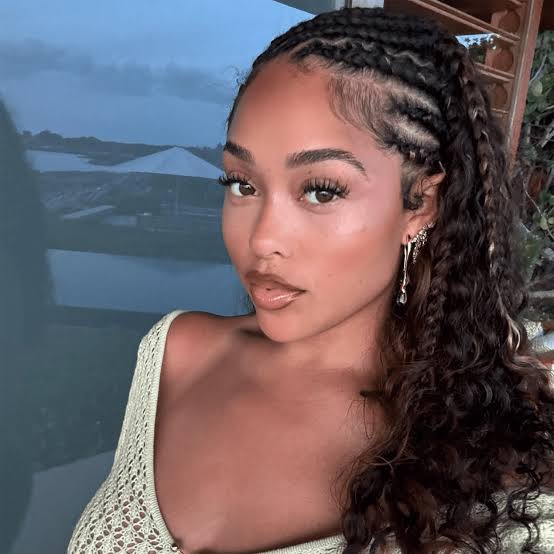
Is it the braids or the tendrils that do the work here? Both. Long dark brown box braids with subtle blonde highlights are styled with a middle parting, and the face is ringed by loose curly tendrils that soften the overall shape. The tendrils are the part that needs the most attention, since they are not braided and will revert to their natural texture overnight. Ask your colorist for: long dark brown box braids with face-framing curly tendrils. A light oil on the tendrils keeps them from looking dry, and the braids themselves need regular moisture to prevent frizz at the root line. The blonde highlights add dimension without requiring a full bleach, and they fade gently over the install cycle and leave no harsh grow-out line.
Mid-Back Dark Brown Box Braids With Loose Curls
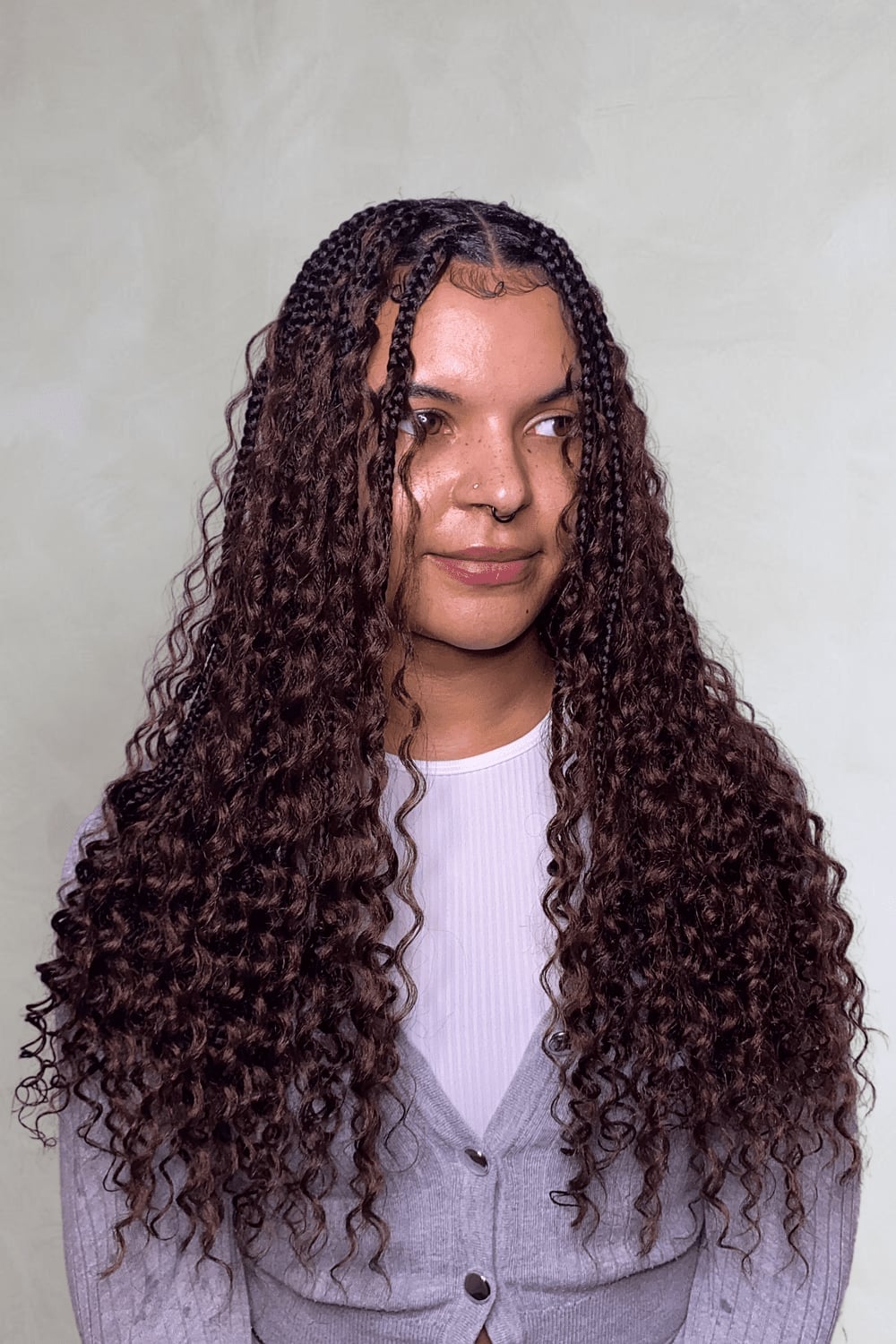
Dark brown box braids that reach mid-back, parted down the middle, with loose voluminous curls at the ends. The braids themselves are the anchor, but the curls are the event, since they take up about the last third of the length and create a full, rounded shape that the straight braid alone cannot achieve. Ask your stylist for: mid-back dark brown box braids with voluminous loose curls. The technique relies on setting the ends with a curling method that matches your natural curl pattern, so the transition from braid to curl looks continuous rather than attached. Medium to thick hair starting at shoulder length works best, because thinner hair can make the curl section look sparse compared to the braided section above.
Mid-Back Box Braids With Curls And Tendrils
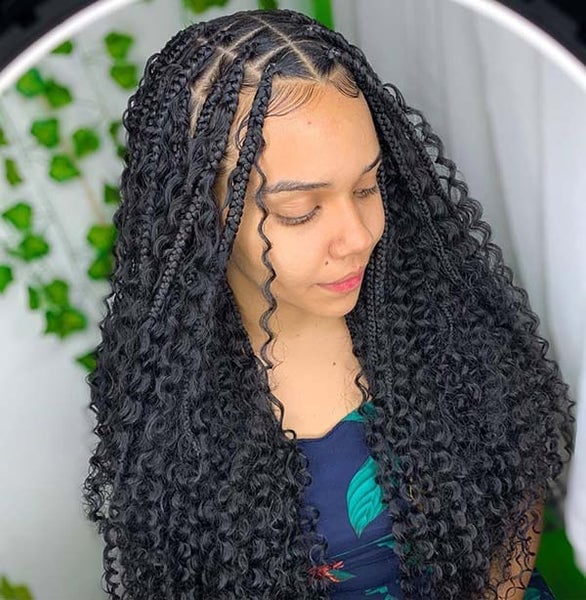
This is the version that hedges its bets. Instead of committing every strand to either braid or curl, it leaves several pieces out as face-framing tendrils while the mid-back box braids fall in a mix of brown and blonde tones. The tendrils are the difference between a style that feels finished and one that feels soft. Ask your colorist for: mid-back box braids with curls and face-framing tendrils. The alternative would be a style where all the curls are incorporated into the braid ends, which feels cleaner but also heavier. The tendrils give you movement around the jaw without losing the protective structure of the braids. A light serum on the tendrils keeps them from separating into frizz, and the blonde pieces add contrast without a full highlight install.
Mid-Back Knotless Braids With Voluminous Curls
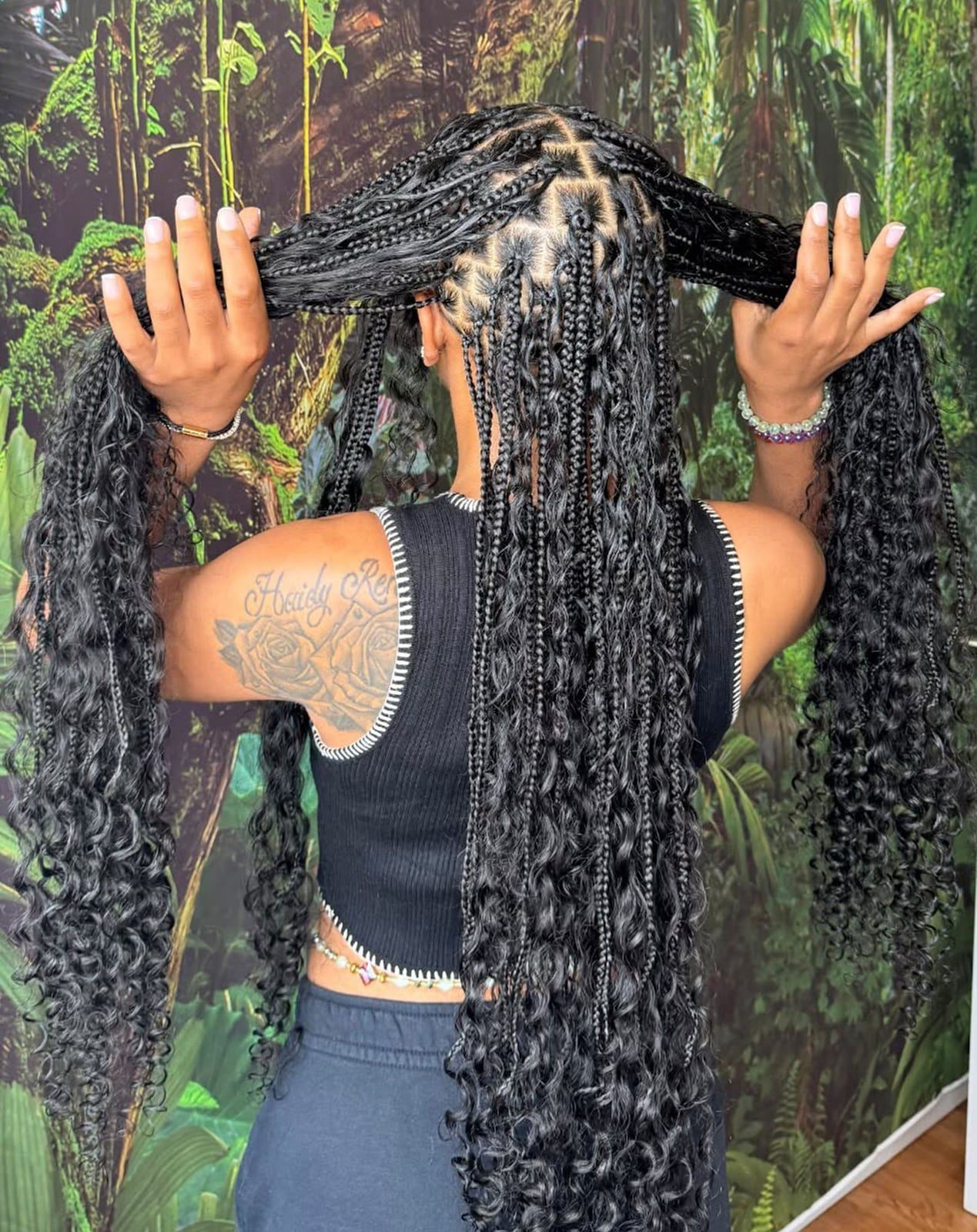
Where does a style like this fit in the calendar? Knotless braids with voluminous loose curls, parted down the middle and reaching mid-back, land in the sweet spot between protective and celebratory. The knotless technique means less tension at the scalp, which makes this a strong choice for warmer months when your hairline needs a break from tight installations. Ask your stylist for: mid-back knotless braids with voluminous loose curls. The black color keeps the focus on the texture contrast: smooth braid, bouncy curl, repeat. Medium to thick hair starting at shoulder length gives the curls enough weight to hold their shape, and the voluminous ends balance the clean lines of the braided section above.
Mid-Back Fulani Braids With Curly Ends
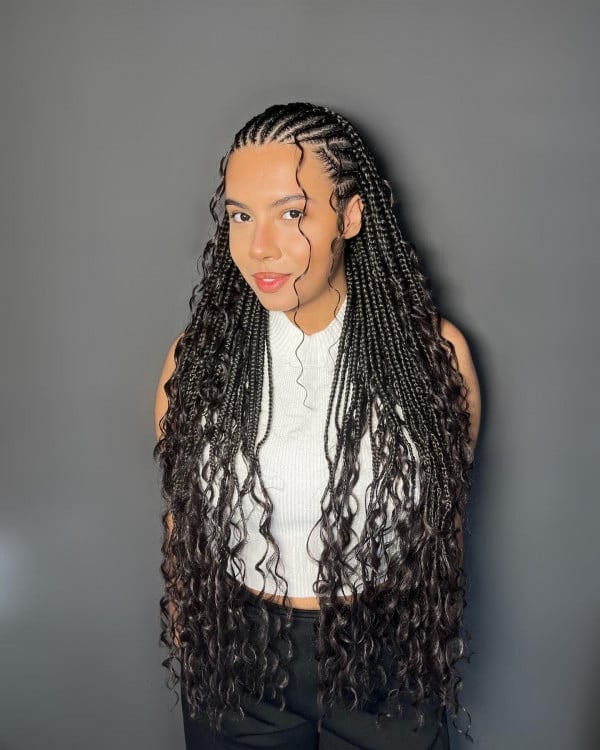
A good rule of thumb: the more complex the braid pattern, the more important it is to use the right vocabulary at the appointment. Fulani braids use smaller braids along the hairline and larger ones behind them, which is what gives this look its sculptural quality. The mid-back length here has a black base with blonde highlights, and the ends are left loose and curly rather than tucked or sealed. Ask your stylist for: mid-back fulani braids with curly ends and hairline braids. The middle part keeps the pattern symmetrical, and the loose curls at the bottom add movement that the structure above deliberately avoids. Medium to thick hair starting at shoulder length holds the shape best.
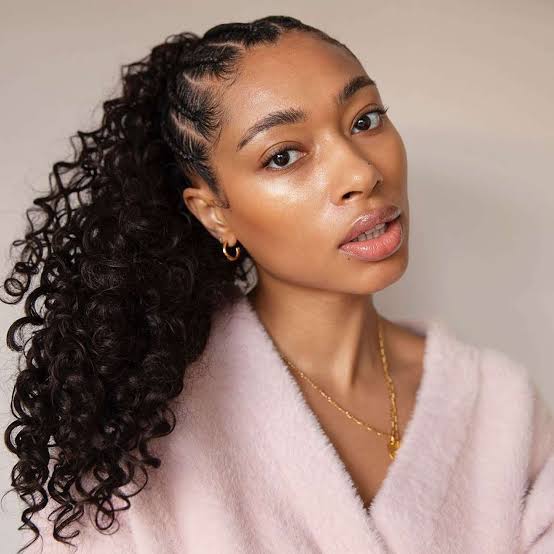
Mid-Back Ponytail With Braids And Curls
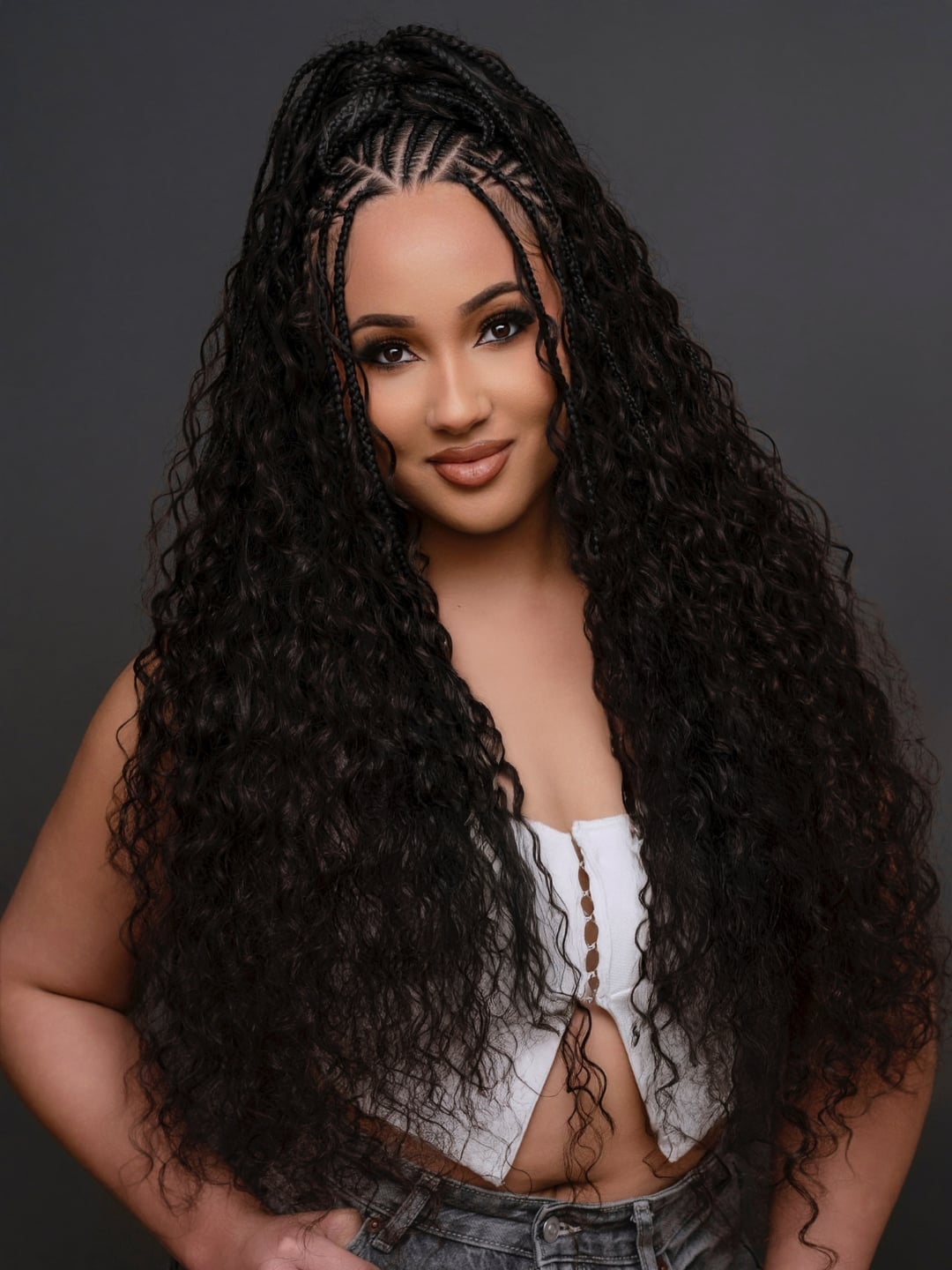
What makes this design work is the way the ponytail acts as a single anchor point for two different textures. Cornrow braids run from a middle part up into a high ponytail, and from that base, the hair falls in voluminous cascading curls. The dark brown base with subtle highlights means the braid lines read clearly without competing with the curls for attention.
The thickness is doing the heavy lifting here: thin hair would not produce the same fullness at the ponytail or the same curl volume below it. Ask your stylist for: high ponytail with cornrow braids and voluminous curls. The middle part keeps the braids balanced on both sides, and the subtle highlights add depth without looking streaky. This is a salon-only design, purely because the cornrow tension and ponytail placement need to be precise.
Mid-Back Box Braids With Curly Tendrils And Baby Hairs
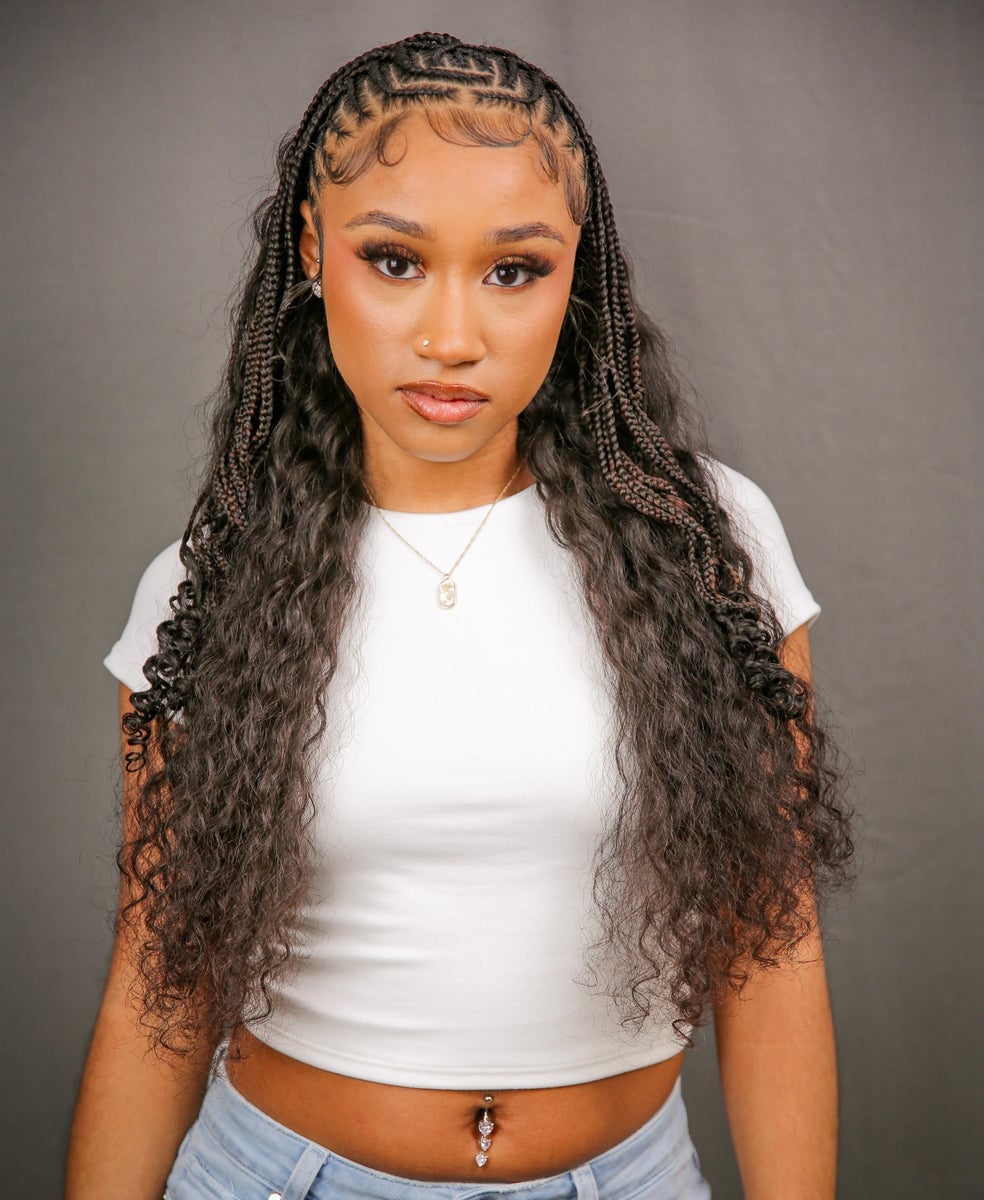
Can you do this at home? Technically yes, but the honest answer is probably not. Small box braids to mid-back with a middle part and baby hairs along the hairline require consistent tension and sectioning that is hard to replicate on your own head. The loose curly tendrils that frame the face here are what soften the look, but they also need to be placed so they do not pull on the braids.
The dark brown base with blonde highlights gives the braids depth, and the baby hairs are styled to lie smoothly against the forehead rather than sticking up. Ask your stylist for: mid-back box braids with baby hairs and curly tendrils. Medium to thick hair starting at shoulder length is the minimum for this amount of braiding, and the curly tendrils need enough natural texture to hold their shape without product buildup.
Mid-Back Box Braids With Decorative Beads
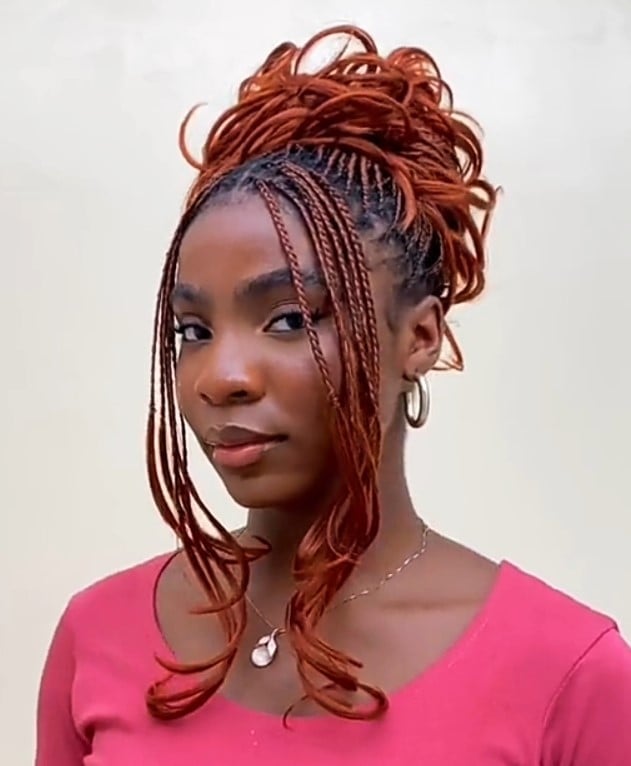
The common mistake with beads is treating them as an afterthought, clipping them on wherever there is space. Beads change the weight distribution of a braid, and if they are placed unevenly, a section can start pulling on the scalp by the end of the day. This mid-back set uses dark brown box braids with blonde highlights, a middle part, and loose tendrils framing the face, with beads distributed at consistent intervals. Ask your stylist for: mid-back box braids with blonde highlights, tendrils, and beads. The one real drawback is that beads catch on everything: scarves, jacket collars, pillowcases. Medium to thick hair starting at shoulder length works best, and the loose tendrils prevent the look from feeling too rigid.
Mid-Back Braids With Voluminous Curly Extensions
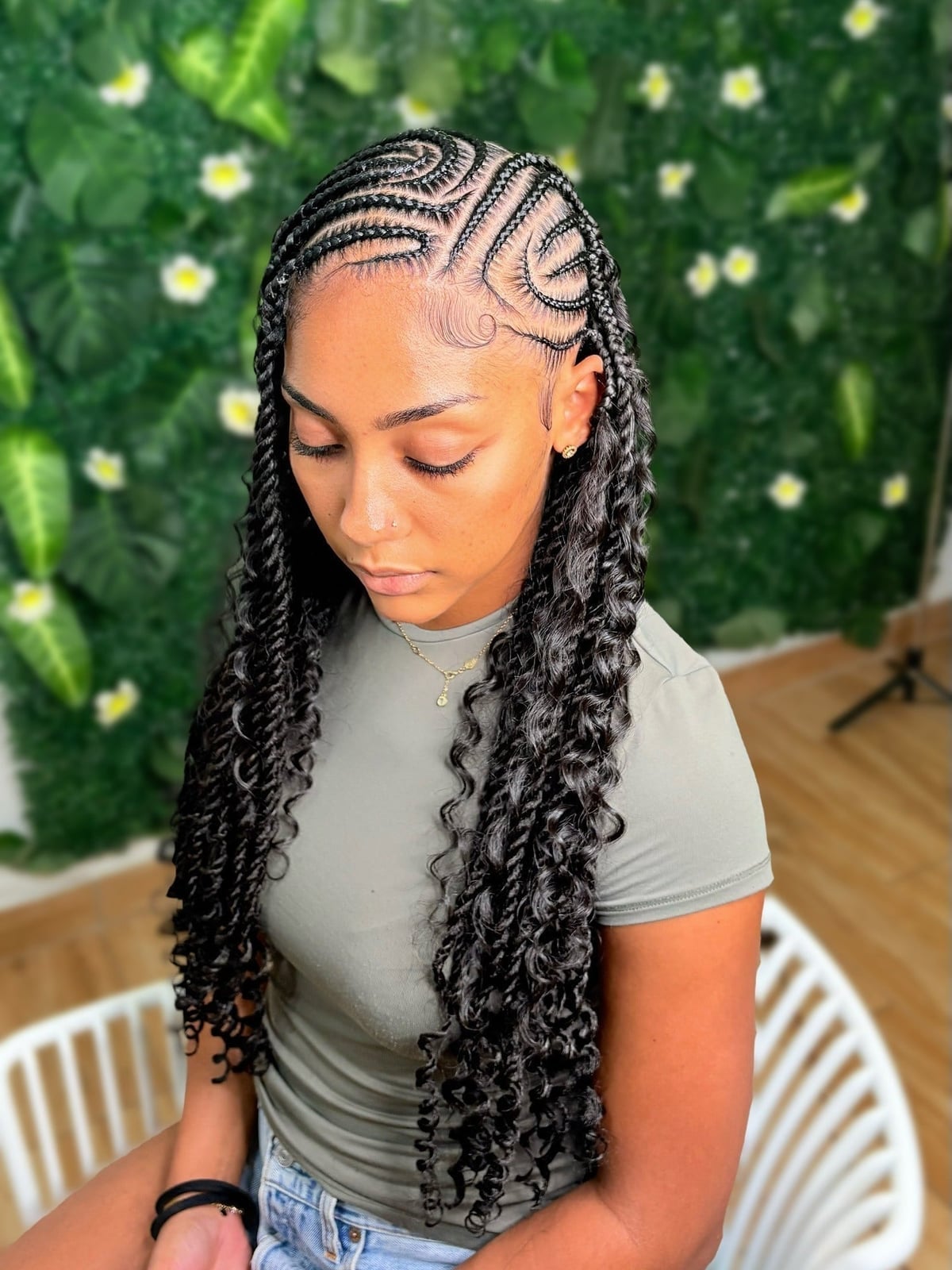
This is a look that asks a question right back at you: do you have the thickness to support it? Intricate braids that transition into long, voluminous curly extensions need a solid base of medium to thick hair at least shoulder length to hold the braid pattern without slipping. The middle part and black base with subtle highlights keep the braids readable even when the extensions take over the visual weight.
The extensions here are what give the curls their dramatic volume, but they also add significant weight, so the braids need to be firm enough to carry them. Ask your stylist for: mid-back braids with long voluminous curly extensions. This suits most face shapes because the volume sits below the jawline, drawing the eye downward rather than outward. It is a salon-only project, and the main consideration is whether your natural texture can blend with the extension texture without a visible seam.
Mid-Back Fishtail Braid With Floral Accents
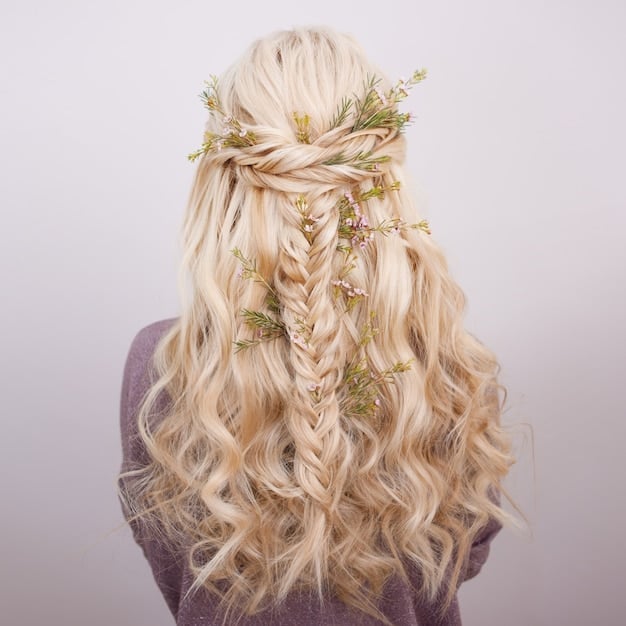
How do you keep flowers in your hair without looking like you just walked through a garden? A fishtail braid starting from a middle parting gives the petals something sturdy to hold onto. The loose wavy and curly blonde hair cascading down is thick, so the braid has enough heft to stay centered. Ask your stylist for: mid-back fishtail braid with floral accents and loose waves. The floral accents are placed after the braid is finished, so they stay fresh for the full event. A trim every eight weeks keeps the layers tidy, and a toning appointment every six weeks maintains the blonde highlights.
Gently mist the curls with water to refresh them the next day, and secure the floral accents carefully so they don’t snag. The hold is moderate, which is exactly what you want for a wedding or special occasion where the hair needs to move but not fall apart. This is a salon-only design that looks deliberate and polished.
Mid-Back Box Braids With Heart Pattern
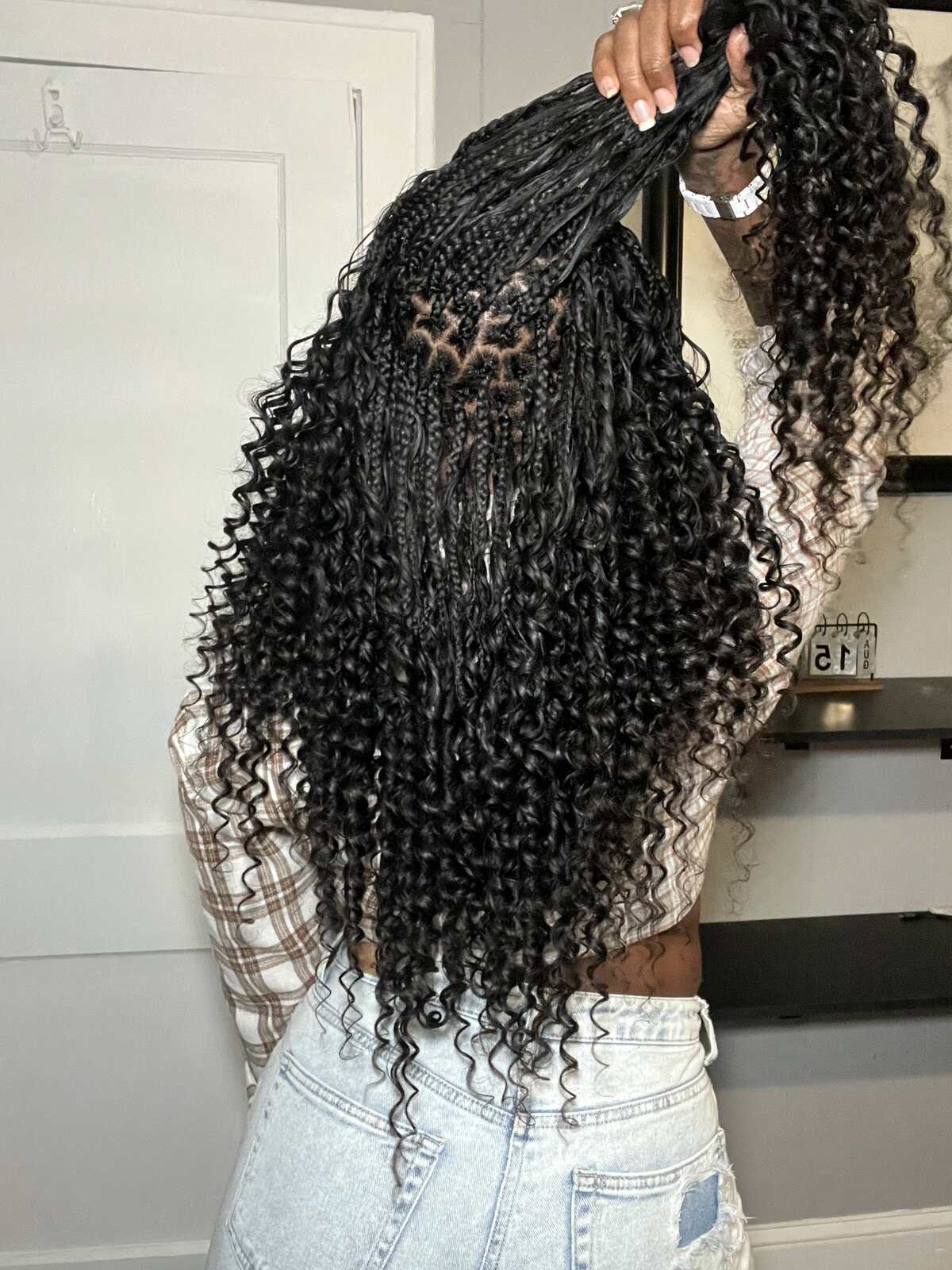
A heart pattern in box braids is built from the parting up, not added later. The stylist maps the heart shape at the crown before starting the braids, so the design is part of the structure. The mid-back length box braids are black, with curly extensions added for volume that cascades down the back. Ask your stylist for: mid-back box braids with curly extensions and a heart pattern. The heart holds its shape because the braids are tensioned consistently from root to end. Use a light hold gel to maintain the outline, and condition the curly extensions to keep them from frizzing. The technique takes about three hours in the chair, but the design lasts four to six weeks with proper care.
Mid-Back Black Hair With Braided Crown
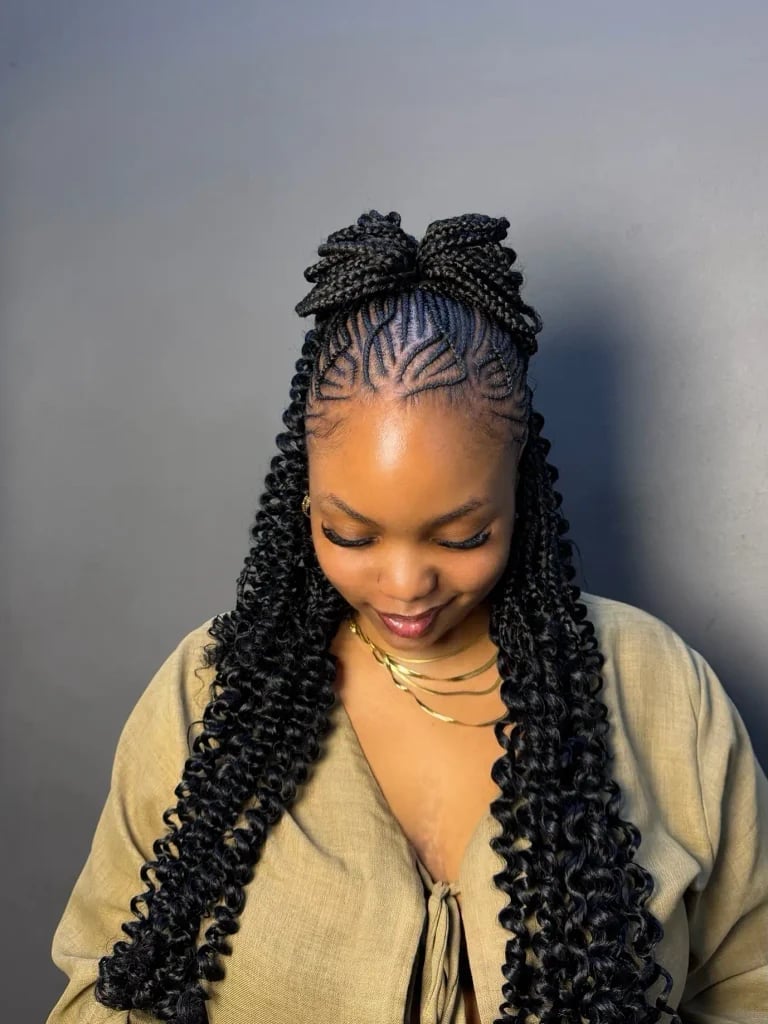
A braided crown that resembles a bow on top reads as romantic, while intricate cornrow patterns at the front add structure. The difference between this and a standard crown updo is the bow shape: it sits flat against the head rather than sticking up, so it stays put. The mid-back black hair has long defined curls cascading down, creating a contrast between the tight cornrows at the scalp and the loose texture below. Ask your stylist for: mid-back black hair with a braided crown and defined curls. A middle parting keeps the crown symmetrical. Thick hair starting at mid-back works best, and the style suits most face shapes because the crown adds height without width. Secure the crown braids tightly, and use a curl enhancer on the loose hair to keep the definition.
Mid-Back Braided Crown Updo With Loose Tendrils
What makes a braided crown look voluminous? The answer is in the layering of the braids themselves. This mid-back updo uses multiple braids stacked to create a voluminous crown, with intricate patterns visible from the front. The dark hair has subtle blonde highlights that add dimension without needing chunky color. Ask your stylist for: mid-back braided crown updo with face-framing tendrils. The loose tendrils soften the updo, so it works for a gala or evening event where you want polish without stiffness. Thick curly hair holds the crown shape best, and a middle parting keeps everything balanced. Use bobby pins to secure any loose strands, and mist the tendrils with a light hairspray so they move naturally.
Mid-Back Braids Updo With Intricate Crown
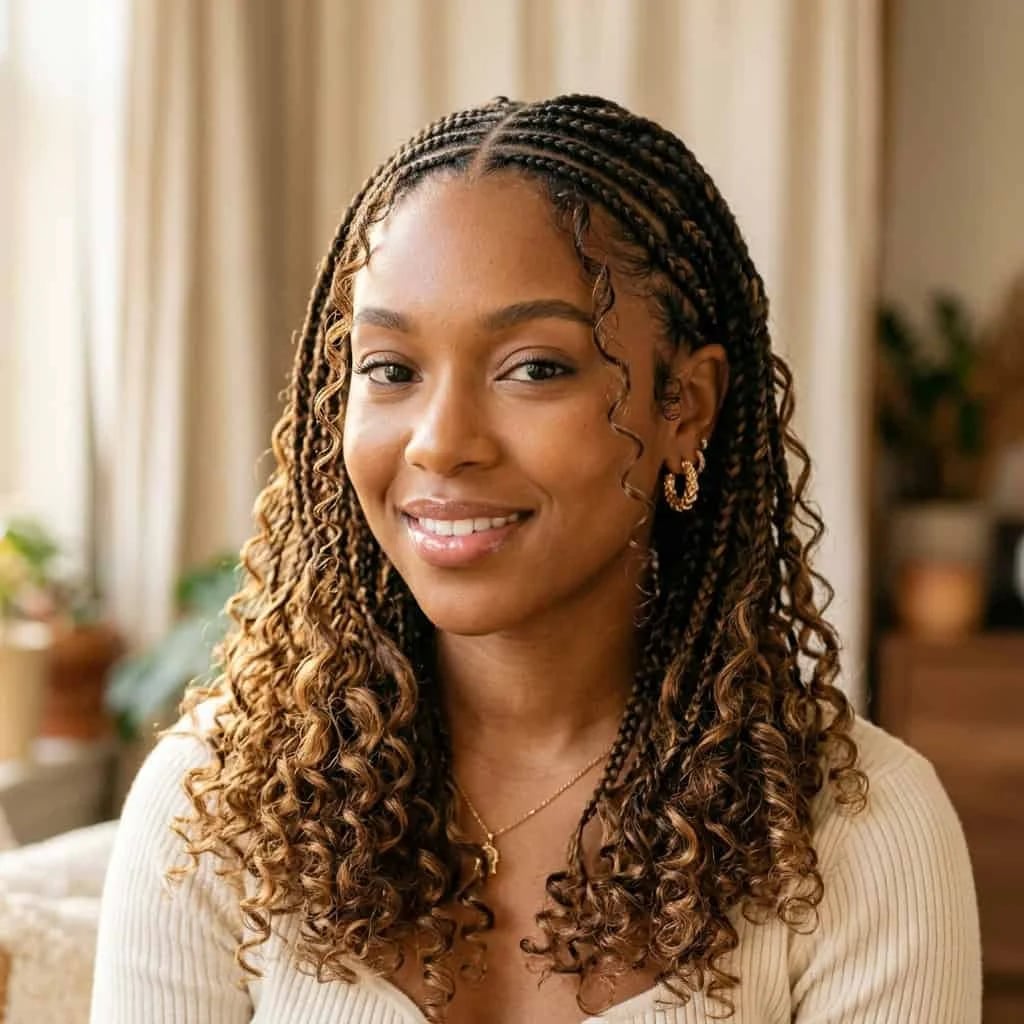
When you ask for an intricate braided crown, specify that you want the braids to form a crown-like structure around the head rather than sitting on top. This updo ends at mid-back, with loose tendrils framing the face and dark brown hair with blonde highlights adding depth. Ask your stylist for: mid-back updo with an intricate braided crown and framing tendrils. Thick curly hair is ideal because it gives the braids body without needing padding. The layers in the cut allow the tendrils to fall naturally rather than sticking out. Apply a finishing spray for hold, and ensure the tendrils stay soft rather than stiff. This is a salon-only style, and the detail in the crown makes it worth the time in the chair.
Mid-Back Large Box Braids With Loose Texture
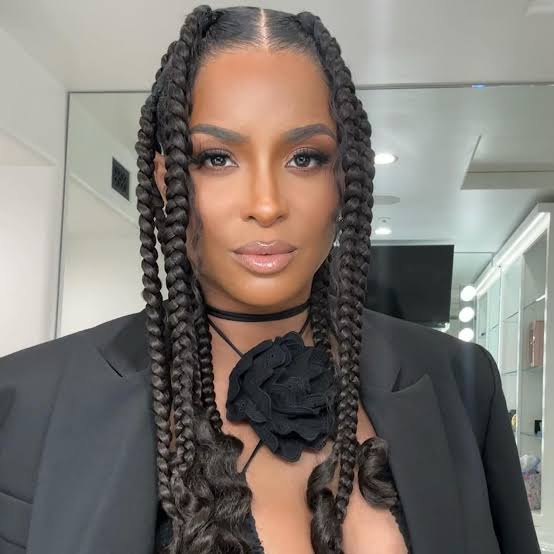
Two thick box braids demand a certain confidence, and this side-parted version delivers it without trying too hard. The braids land at mid-back, each one substantial enough to make a statement, while the ends loosen into a gentle curl that keeps the overall look from feeling rigid.
This style works best if you have medium to thick hair starting at shoulder length. Ask your stylist for: mid-back two large box braids with loose curly ends. The deep side part adds volume at the root, and the curly ends soften the braided structure. A braid balm on those ends keeps them defined between washes, and the size means less daily fuss than smaller braids typically require.
Mid-Back Copper Box Braids With Loose Tendrils
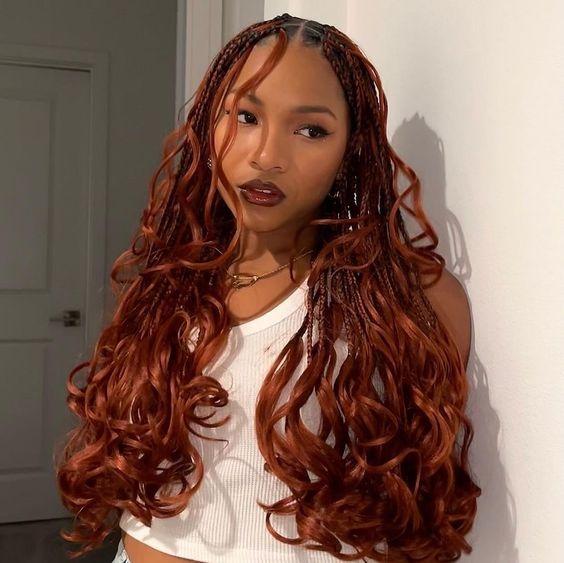
Box braids in a vibrant copper shade with dark roots create an immediate focal point, especially when loose tendrils are left out around the face. The middle part keeps the look symmetrical, while the wavy tendrils break up the braided lines and add movement.
Ask your colorist for: mid-back copper box braids with loose tendrils and dark roots. This finish typically lasts two to three weeks. Copper tones require a color-safe shampoo and a cool-water rinse to keep them from turning brassy. The tendrils need a curl mist and a quick finger-comb each morning, so this is not a wash-and-wear style. It suits medium to thick hair starting at shoulder length and works best for someone who enjoys a little upkeep in exchange for a bold, fashion-forward finish.
Final Thoughts
For a lower-maintenance approach, stick with fewer, larger braids and looser curls that blend more naturally as they grow. For maximum impact, choose intricate patterns and defined curls that require regular upkeep.
- Moisturize braids and scalp regularly with a light oil or spray.
- Wrap hair in a silk scarf or bonnet at night to protect both braids and curls.
- Gently detangle curly sections with a wide-tooth comb or fingers, avoiding friction.
- Refresh curls with a curl-defining cream or spray as needed, avoiding heavy products on braids.
Mastering the blend of braids and curls offers endless stylish possibilities.