
Simple highlights are just what they sound like: a single, lighter shade painted onto the hair in thin sections to add dimension without a full color commitment. The trend right now leans toward soft, lived-in color that grows out naturally, so these are not the chunky stripes you might remember from a decade ago.
These 29 ideas cover the spectrum from high-contrast copper on dark brown to subtle ash tones on grey, across straight, wavy and curly textures. If fine hair needs a lift without looking streaky, or a blunt bob needs depth without a heavy root line, there is a version here that works. Simple highlights are the low-commitment way to brighten the base you have.
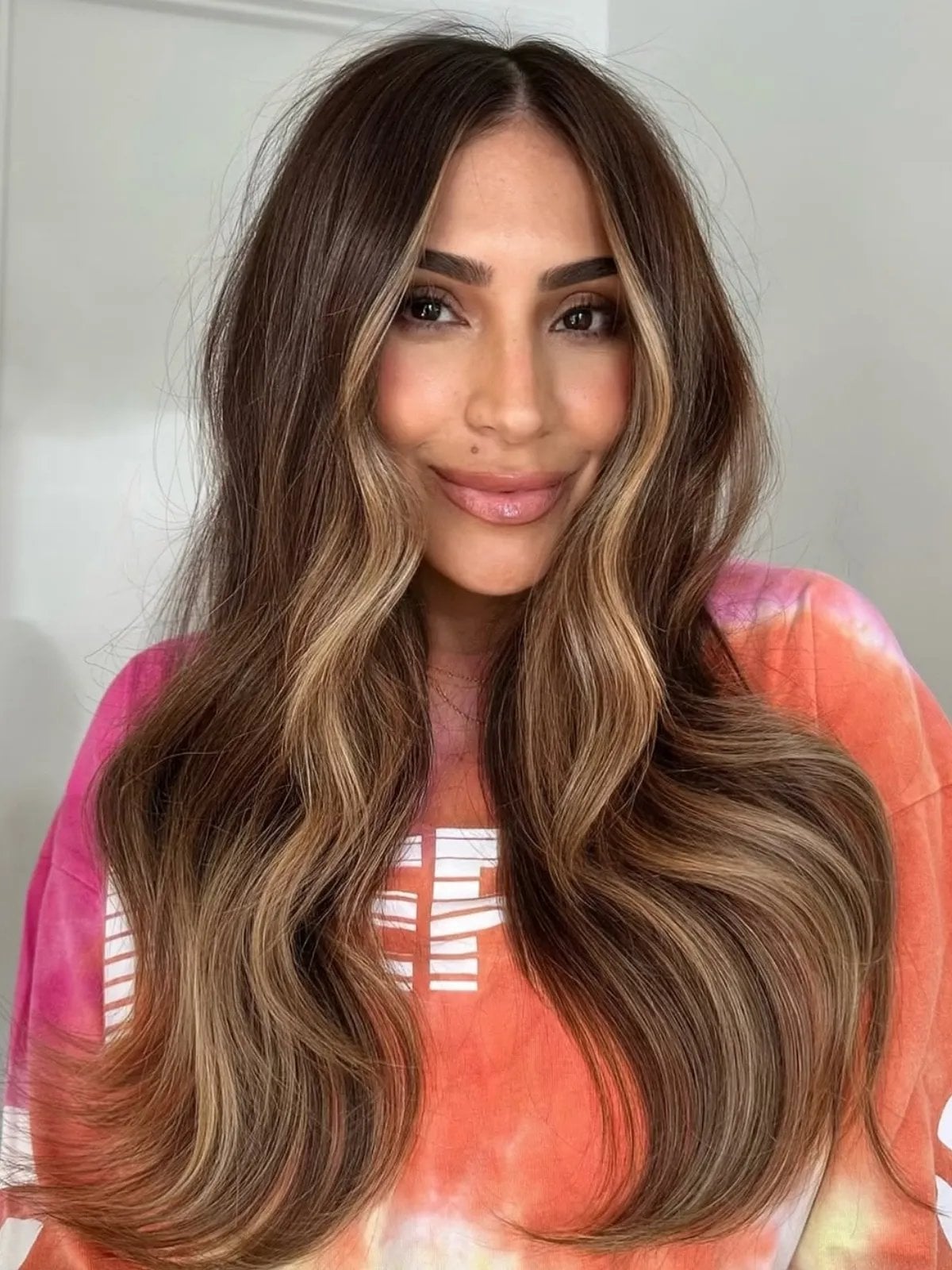
Mid-Back Length Dark Brown With Copper and Blonde Highlights
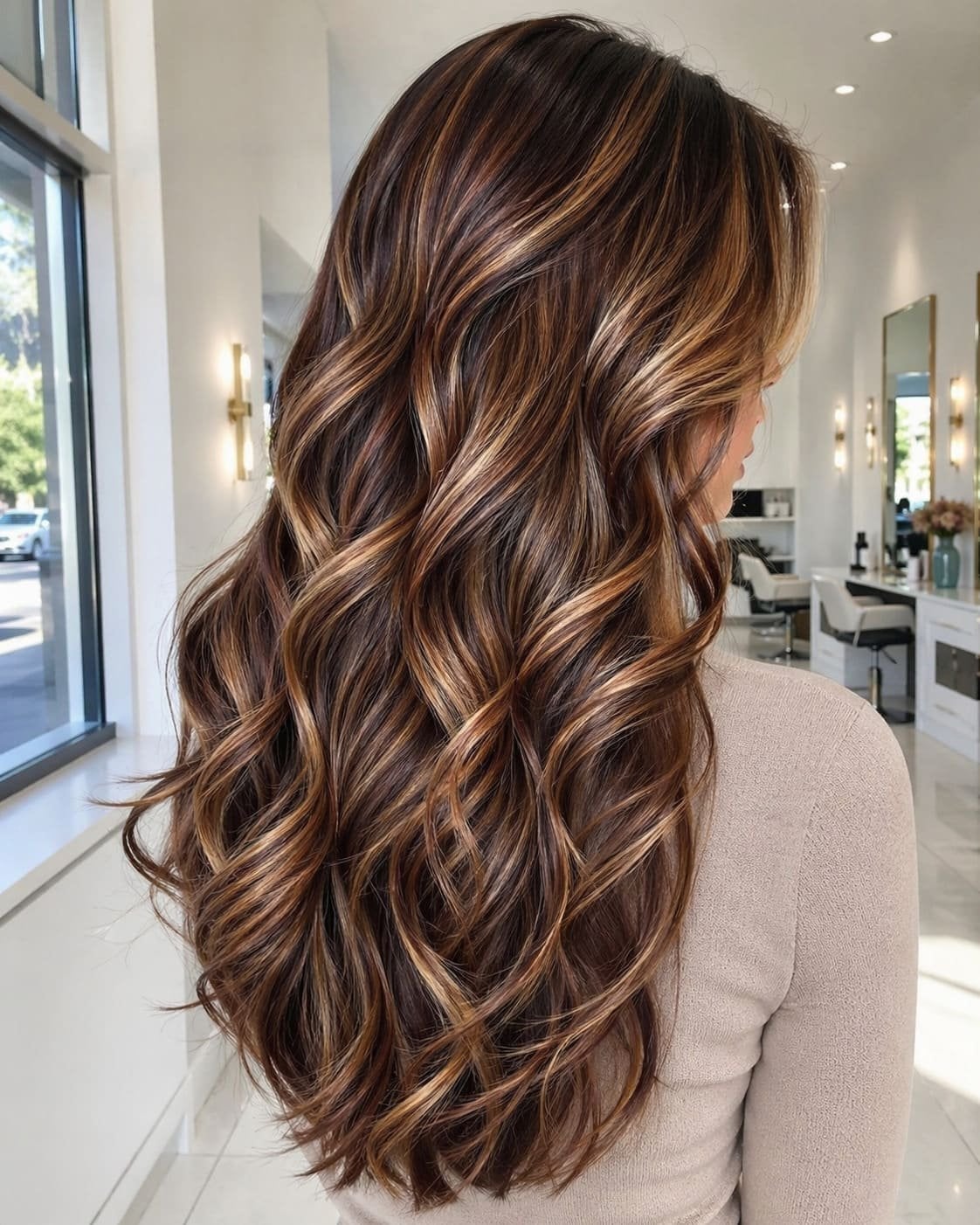
The design here is a study in contrast: copper and blonde highlights threaded through a dark brown base create a dimensional effect that catches the eye without shouting. The loose, cascading curls and middle parting let the color move, so the highlights shift as the hair does. This is a look that works best on thick, wavy hair of mid-back length, where the waves can showcase the interplay of tones.
Ask your colorist for: mid-back dark brown with copper and blonde highlights, loose curls. The technique involves weaving finer pieces of copper and blonde throughout, rather than chunky sections, to keep the dimension natural. To maintain the shape and the color’s vibrancy, plan for a trim every six to eight weeks and use a texturizing spray to enhance the curls without weighing them down.
Mid-Back Dark Brown With Subtle Blonde Highlights and Curtain Bangs
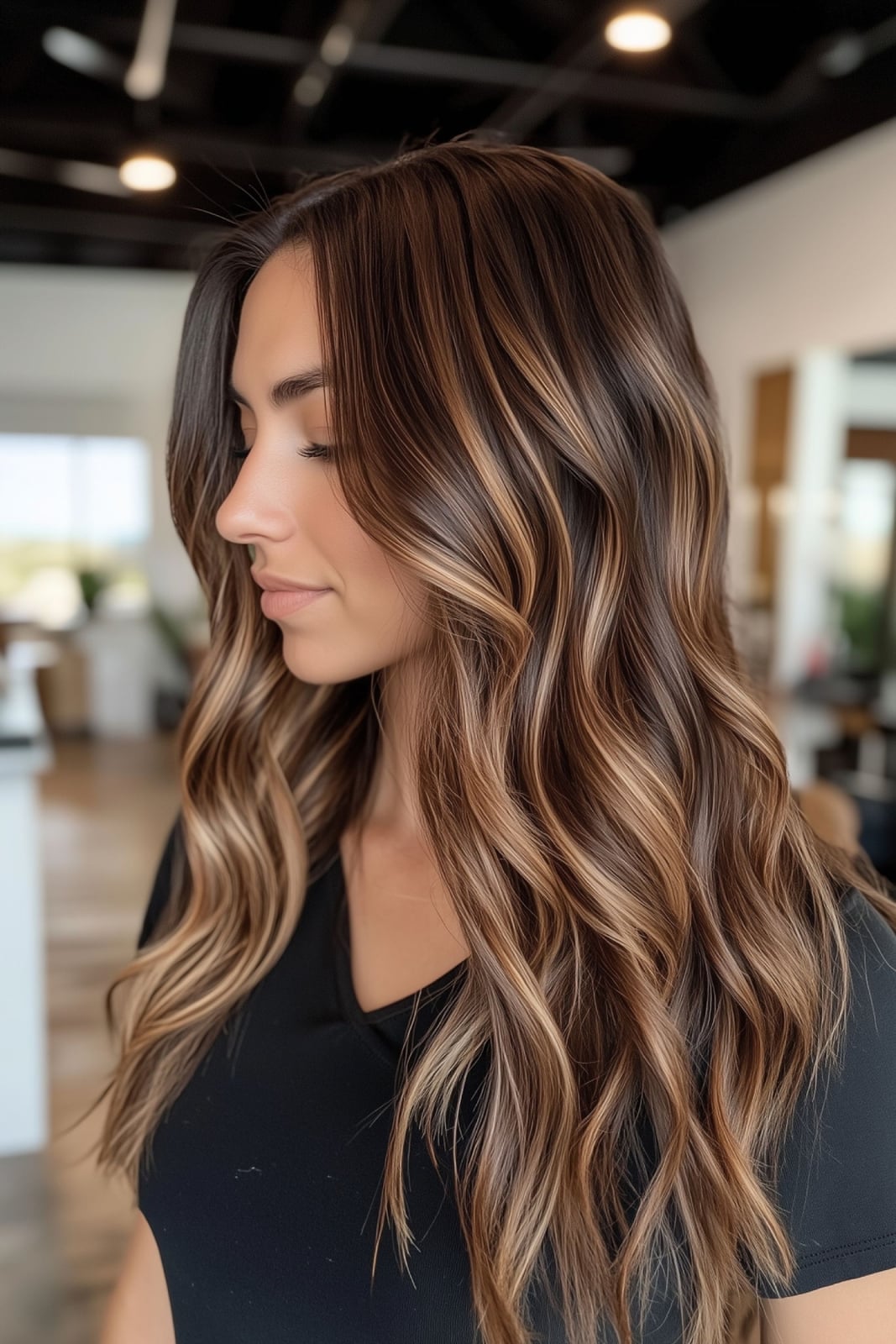
Wondering if you can add highlights without a dramatic change? Subtle blonde highlights on a dark brown base offer a soft, lived-in dimension that reads as natural, not salon-fresh. The curtain bangs and middle parting frame the face, suiting most face shapes, while the loose waves and thick texture give the mid-back length a glossy, healthy appearance.
Ask your colorist for: dark brown with subtle blonde highlights, curtain bangs, loose waves. The key is in the placement: keeping the highlights finer at the roots and slightly bolder toward the ends creates a sun-kissed effect. For styling, a large barrel curling iron will help you achieve those waves, but be prepared to trim the bangs every four to six weeks to keep them grazing your cheekbones just right.
Mid-Back Light Brown With Honey Blonde Highlights, Close-Up Take
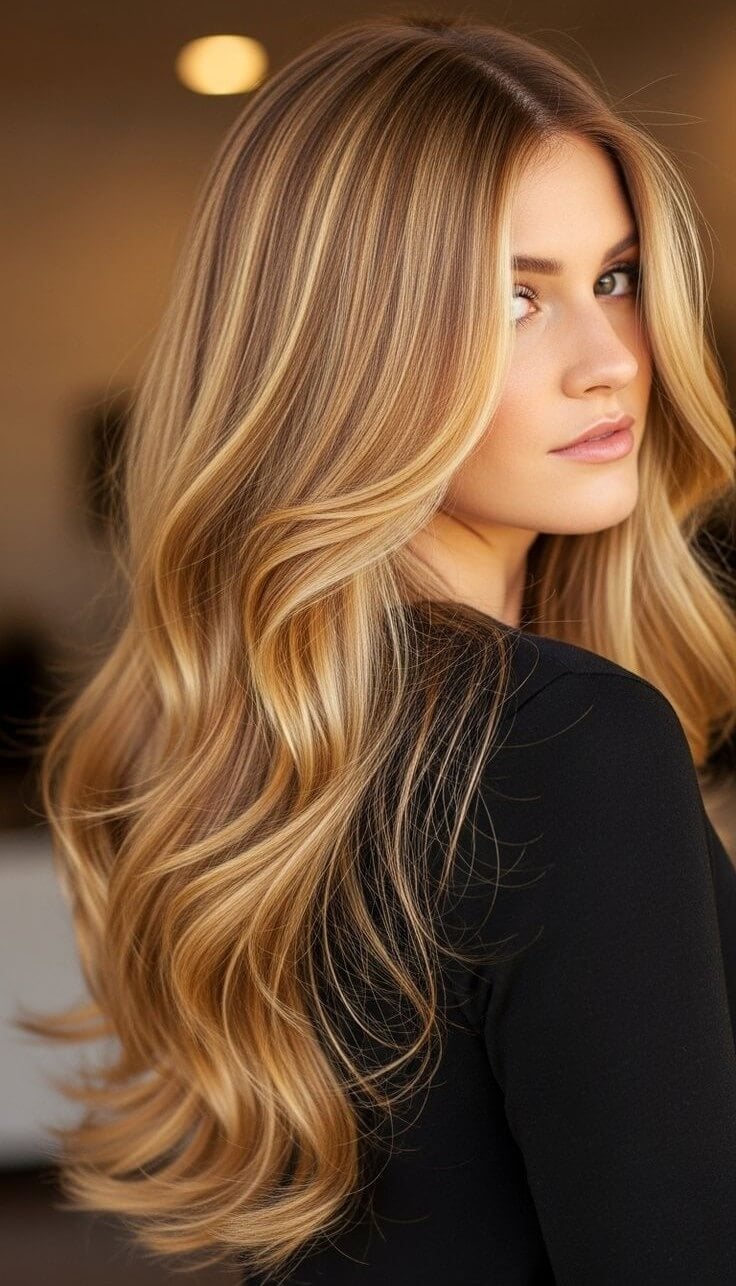
The honey blonde highlights here are placed to catch the light around the face, with face-framing layers and curtain bangs that draw attention to the cheekbones. The light brown base keeps the overall effect warm and soft, while the smooth blowout and thick, wavy texture add polish. This is a style that works for those with oval or heart-shaped faces, as the curtain bangs soften the forehead.
Ask your colorist for: light brown with honey blonde highlights, curtain bangs, smooth blowout. For the exact placement, request that the honey blonde be concentrated on the pieces that frame the face and the ends of the curtain bangs, leaving the rest of the mid-back length more subtle. A round brush during blow-drying will help you achieve that smooth finish, and a trim every six to eight weeks keeps the layers from getting heavy.
Mid-Back Dark Brown With Subtle Blonde Highlights, Office-Safe Version
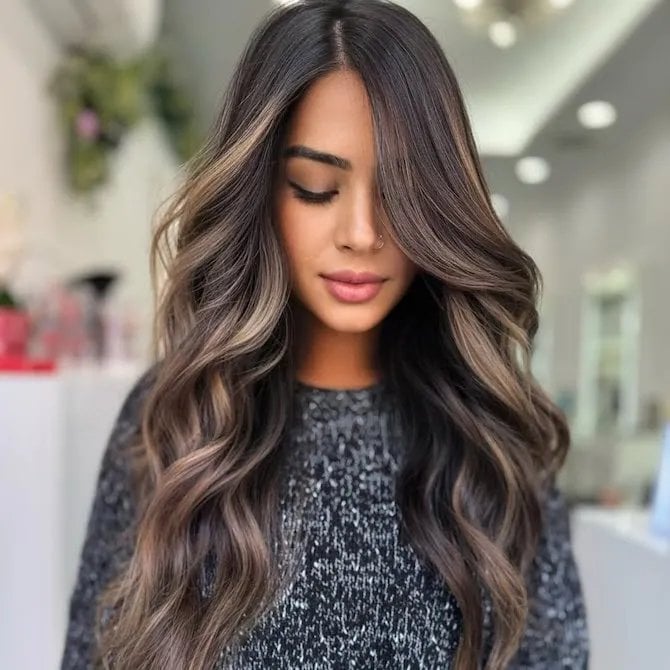
The finely woven blonde highlights here are subtle enough to pass as natural, which makes this an ideal choice for an office environment where you want dimension without an obvious color commitment. The dark brown base keeps the overall look grounded, while the loose waves and middle parting add movement to the thick, wavy texture. This is a low-maintenance option that grows out gracefully, as the highlights are concentrated in the mid-lengths and ends.
Ask your colorist for: dark brown with subtle blonde highlights, loose waves. The technique involves painting fine pieces of blonde throughout, rather than chunky sections, to create a natural, lived-in effect. For everyday styling, you can air dry or diffuse to enhance the natural wave, and a trim every six to eight weeks will keep the long layers from losing their shape.
Mid-Back Dark Brown With Caramel Face-Framing Highlights
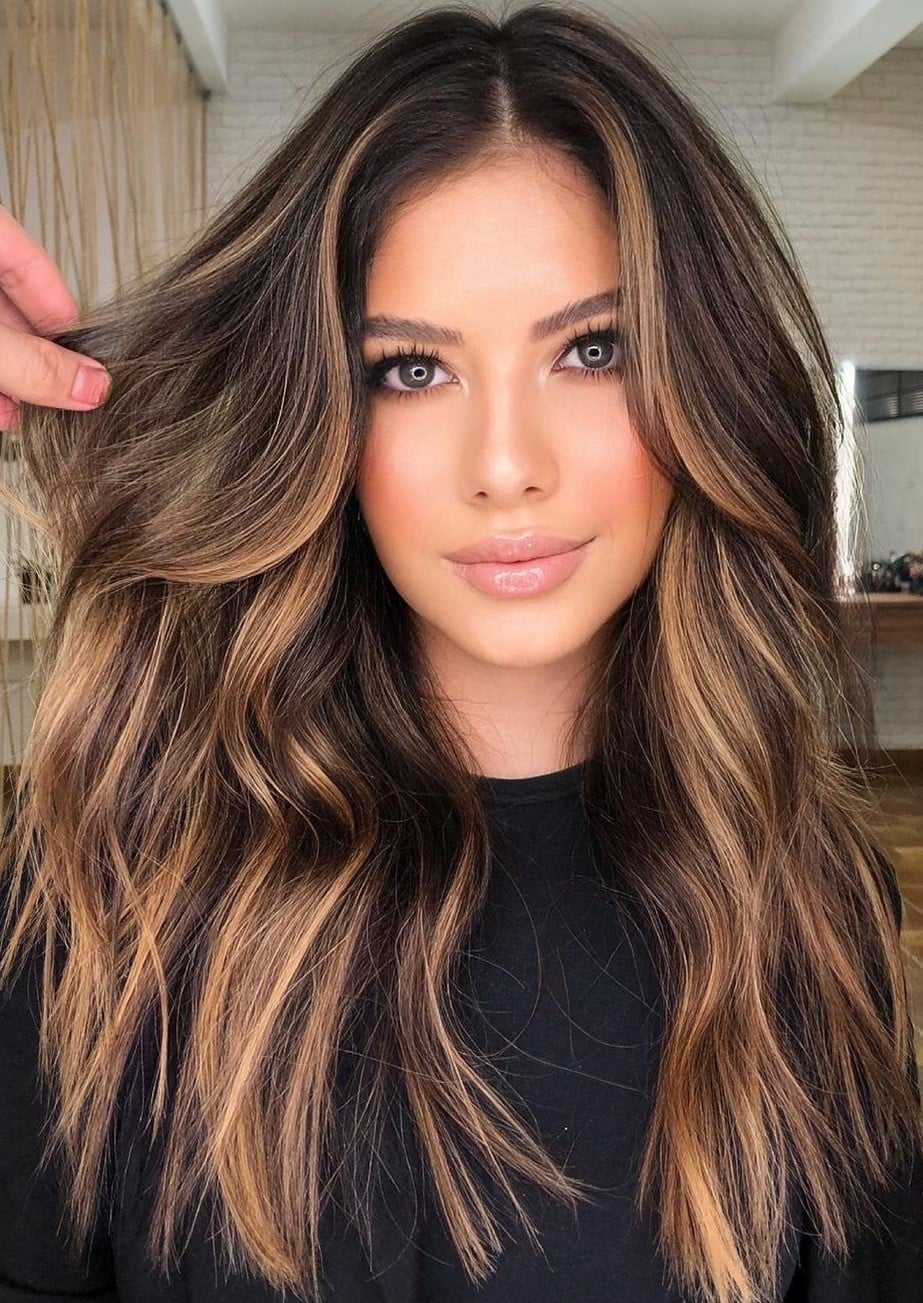
Compared to all-over highlights, face-framing caramel highlights deliver a more targeted impact: they brighten the face without committing the entire head to a color change. The caramel tones on the dark brown base add warmth around the face, and the face-framing bangs and middle parting draw the eye upward. This approach suits most face shapes, as the framing pieces can be adjusted to flatter your specific features.
Ask your colorist for: dark brown with caramel face-framing highlights and bangs. The placement is key: the caramel should be concentrated on the pieces that frame the face and the bangs, leaving the back of the mid-back length darker for depth. To style, use a large round brush for a smooth blowout that shows off the contrast, and expect to trim the bangs every four to six weeks to maintain the shape.
Mid-Back Dark Brown With Caramel Highlights, Close-Up Take
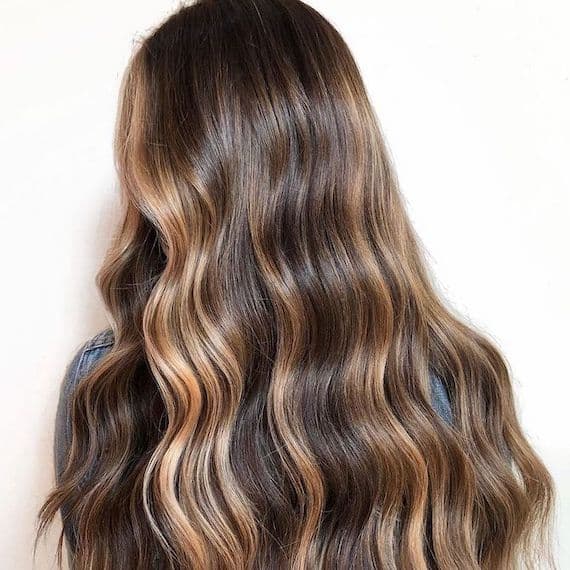
The caramel here is woven in tight, deliberate ribbons that read as grown-up, not brassy, but that takes maintenance. Caramel highlights on a dark brown base lift the whole color, yet they also reveal their warm side faster than cooler tones. Ask your colorist for: dark brown with caramel highlights, long layers. You’ll want a toning appointment around week six to keep the gold from tipping into orange, and a trim every six to eight weeks keeps the long layers moving. Skip this if you hate salon visits; this is a color that announces itself.
Mid-Back Wavy Dark Brown With Subtle Blonde, Softer Variation
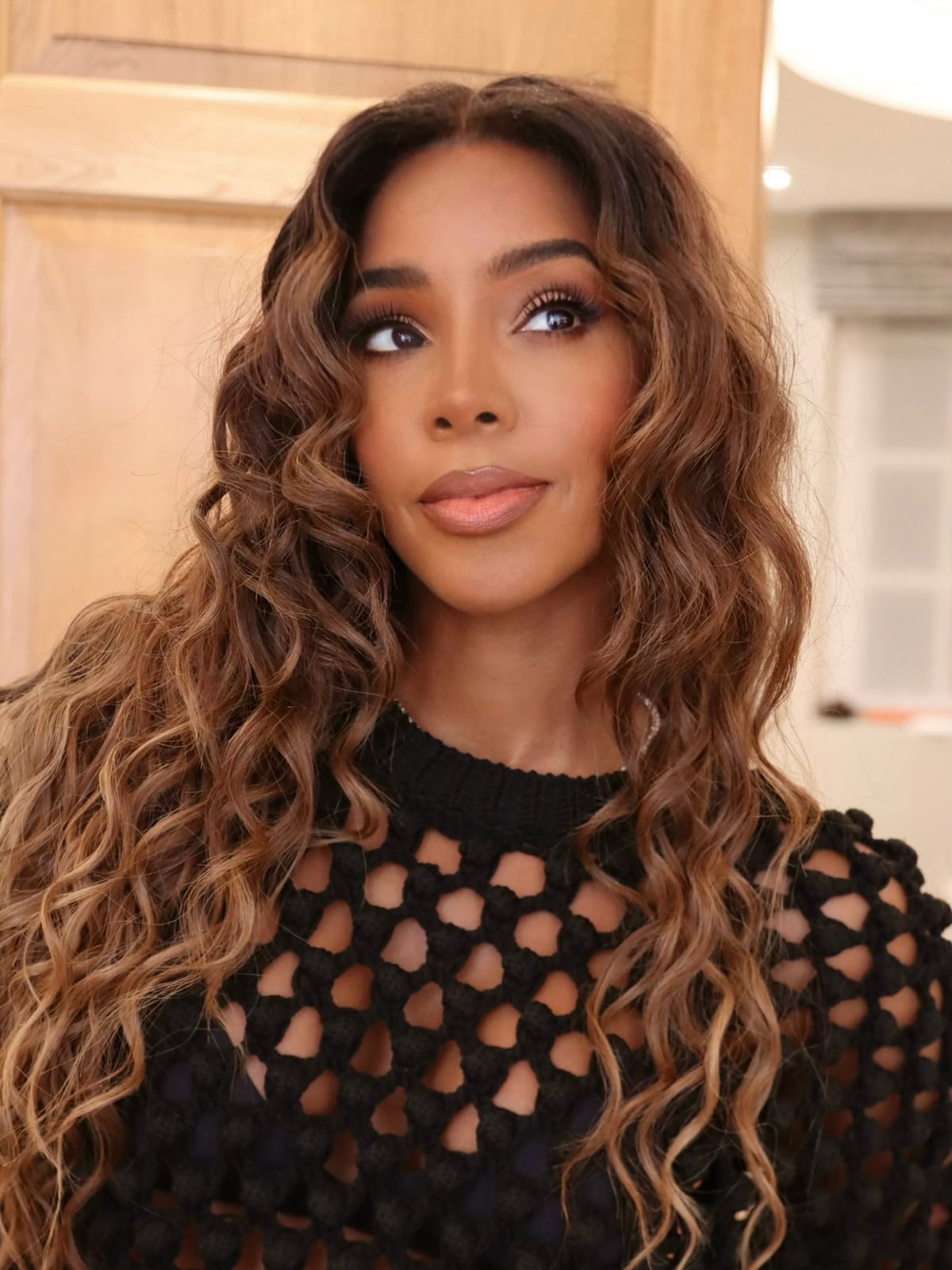
What if you want brightness without the commitment of a full bleach? These subtle blonde highlights on wavy dark brown do the job by staying close to the base color, so the dimension shows up in movement, not in stark contrast. Come fall, the softness carries over nicely: the blonde warms up the darker strands, making the transition from sun-kissed to cozy season feel less abrupt. Ask your colorist for: dark brown with subtle blonde highlights, natural waves. Air dry with a curl cream and you’re done, though a trim every six to eight weeks keeps the layers honest.
Side View Mid-Back Dark Brown With Blonde Highlights, Layers
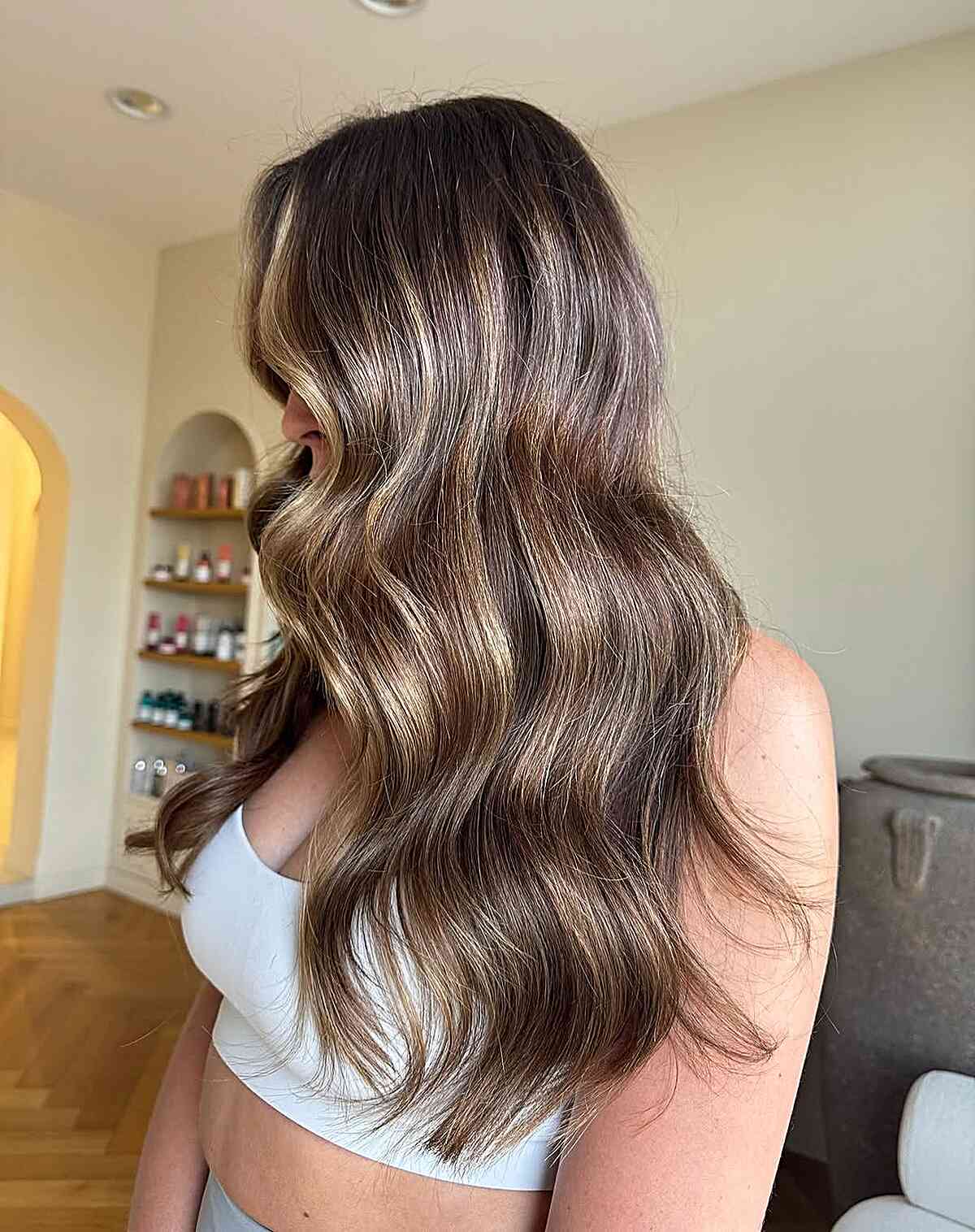
The trick here is placement: the blonde highlights sweep through the mid-lengths and ends, skipping the roots, so the grow-out line stays soft and the dark brown base does the framing work. That side view shows how the layers catch the lighter strands, which is why the color appears natural. Ask your colorist for: dark brown with blonde highlights, loose waves. The technique is a balayage-style sweep, not a foil-every-section approach, so you get dimension without the stripe effect. A texturizing spray on damp hair, then a diffuser, gives you the lived-in wave, and a trim every six to eight weeks keeps the shape from going limp.
Side View Mid-Back Brown With Blonde Highlights, Low-Key Version
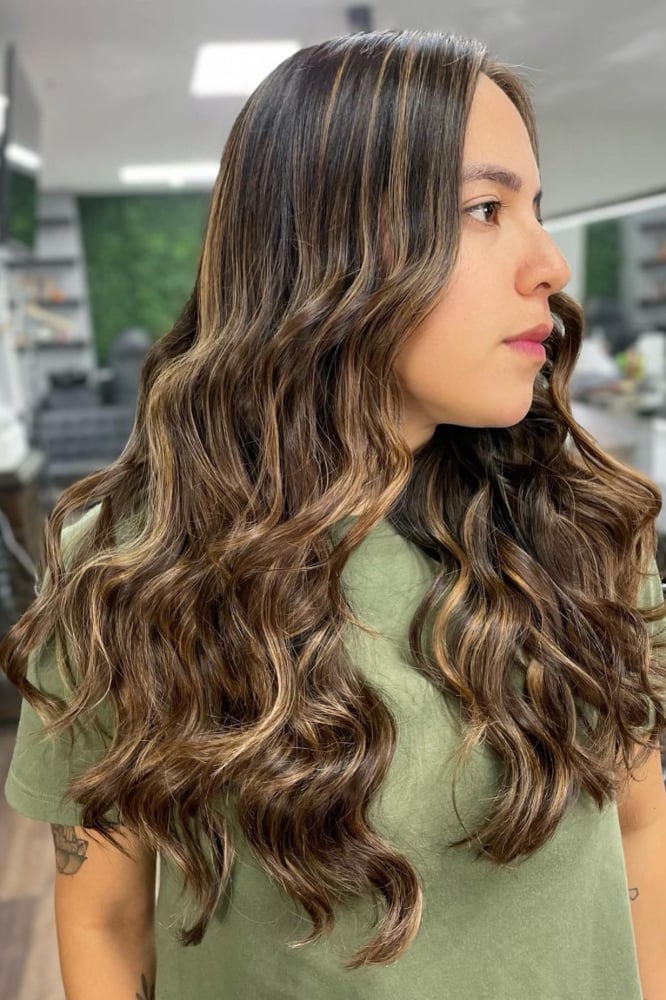
The medium density texture helps, because the strands have enough body to show the variation without looking busy. Ask your colorist for: brown with natural blonde highlights, loose waves. The low contrast means you can stretch the time between appointments, though a toning visit around week eight keeps the blonde from warming up. Air dry with a curl cream, and you have a wash-and-go that still looks deliberate.
Back View Mid-Back Dark Brown With Fine Blonde, Everyday Version
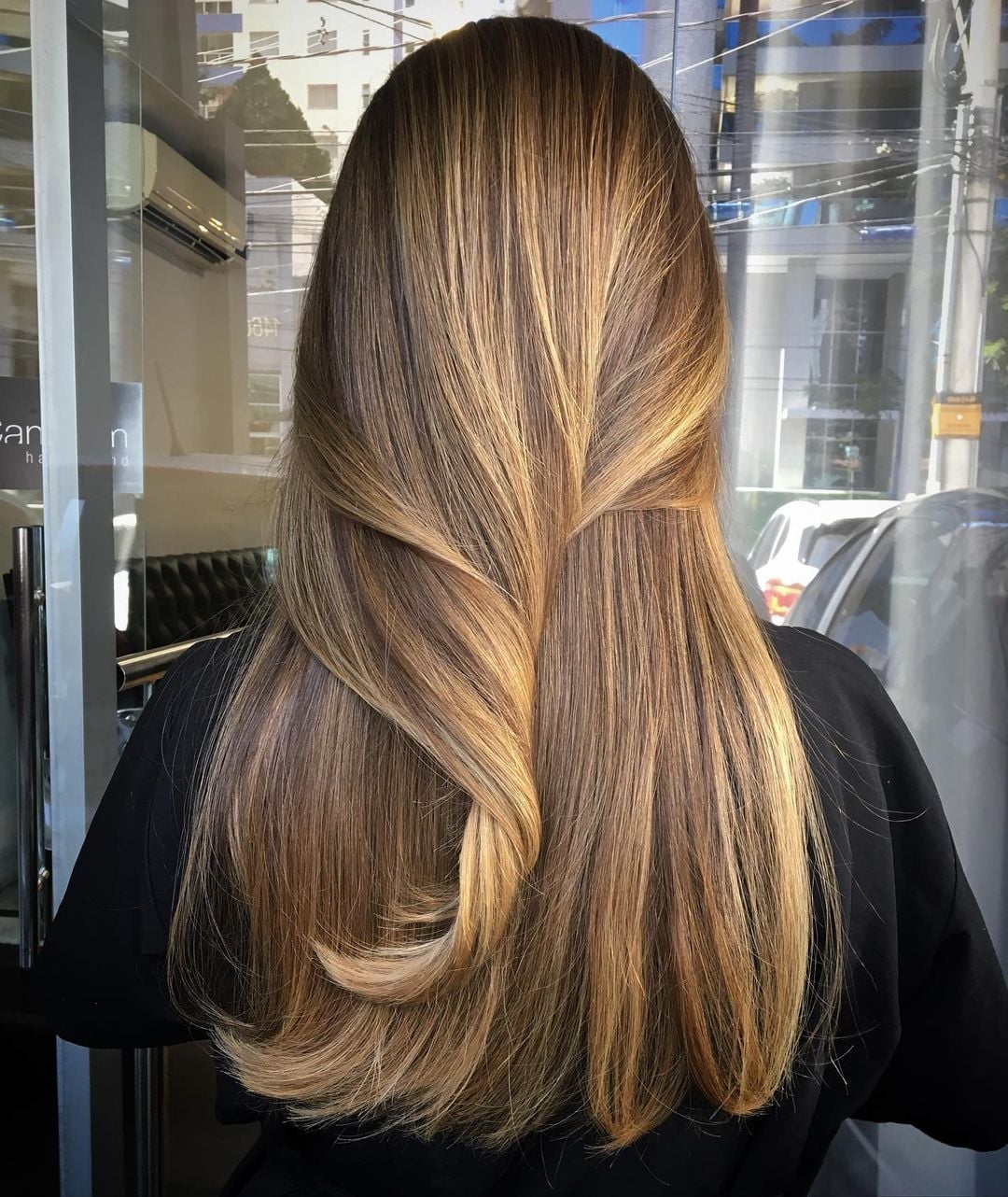
Rule one for dimensional highlights on thick, straight hair: do not try this at home. The fine blonde strands here are woven through a dark brown base, and the even distribution is what makes the blowout look so smooth. At-home kits tend to grab too much hair per section, giving you chunky stripes instead of this subtle shimmer. Ask your colorist for: dark brown with fine blonde highlights, straight blowout. It takes about three hours in the chair, but the payoff is a color that works for the office and the weekend. A flat iron finishes the look, and a trim every six to eight weeks keeps the ends sharp.
Back View Mid-Back Dark Blonde With Lighter Blonde Highlights
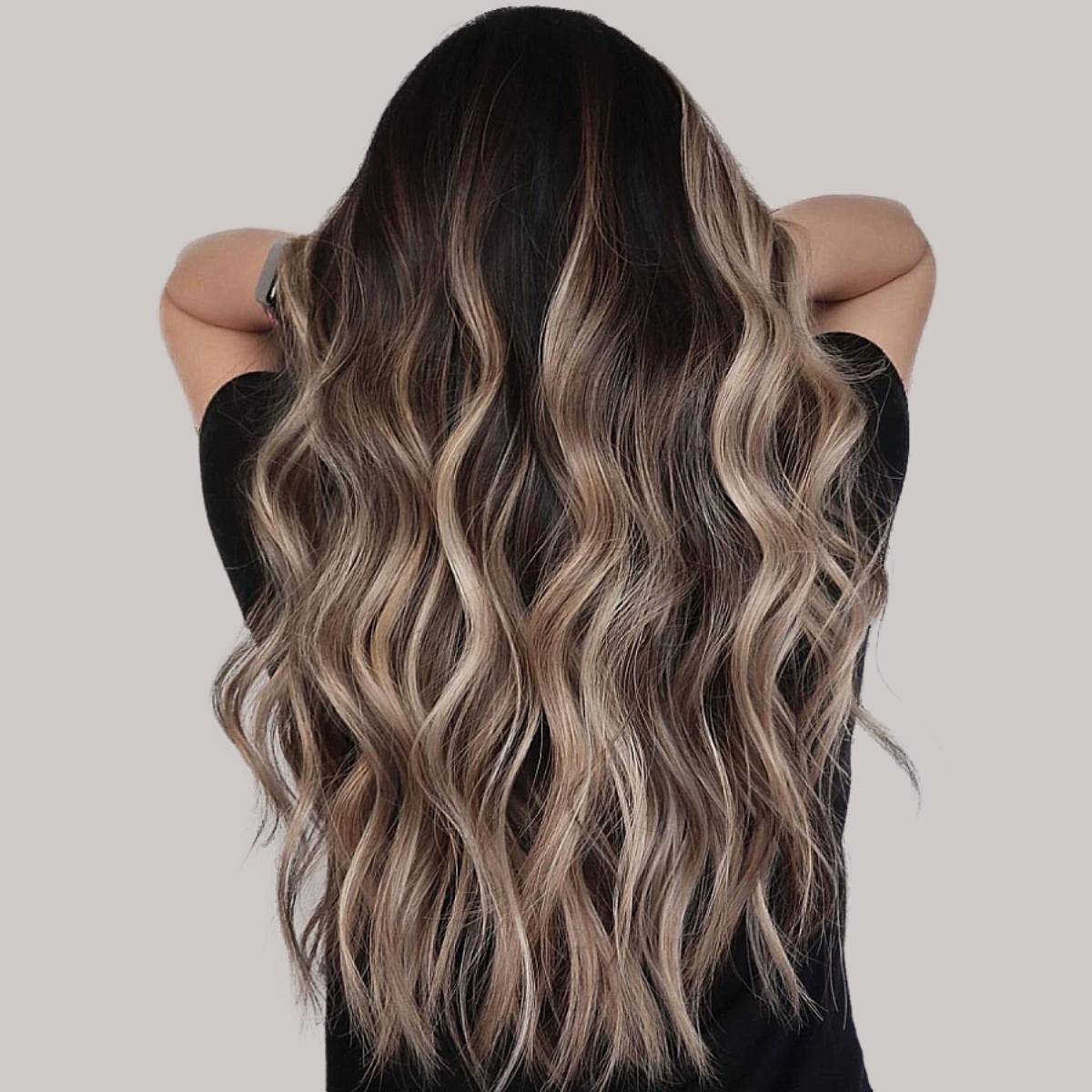
How do you know if you have enough dimension from behind? The lighter blonde highlights on this dark blonde base prove it is not about the front view alone. The mid-back length uses a layered cut that lets the waves catch light at different levels, so the color moves with you instead of sitting flat. This works best on medium density hair with a natural wave. The texture helps the highlights look deliberate, not accidental.
Ask your colorist for: dark blonde with lighter blonde highlights, soft waves. A texturizing spray on damp hair followed by air-drying or a diffuser keeps the wave pattern defined. Trim every six to eight weeks to maintain the layer shape, and a gloss treatment every few months prevents the base from fading brassy.
Back View Mid-Back Dark Brown With Ash Blonde, Bolder Variation
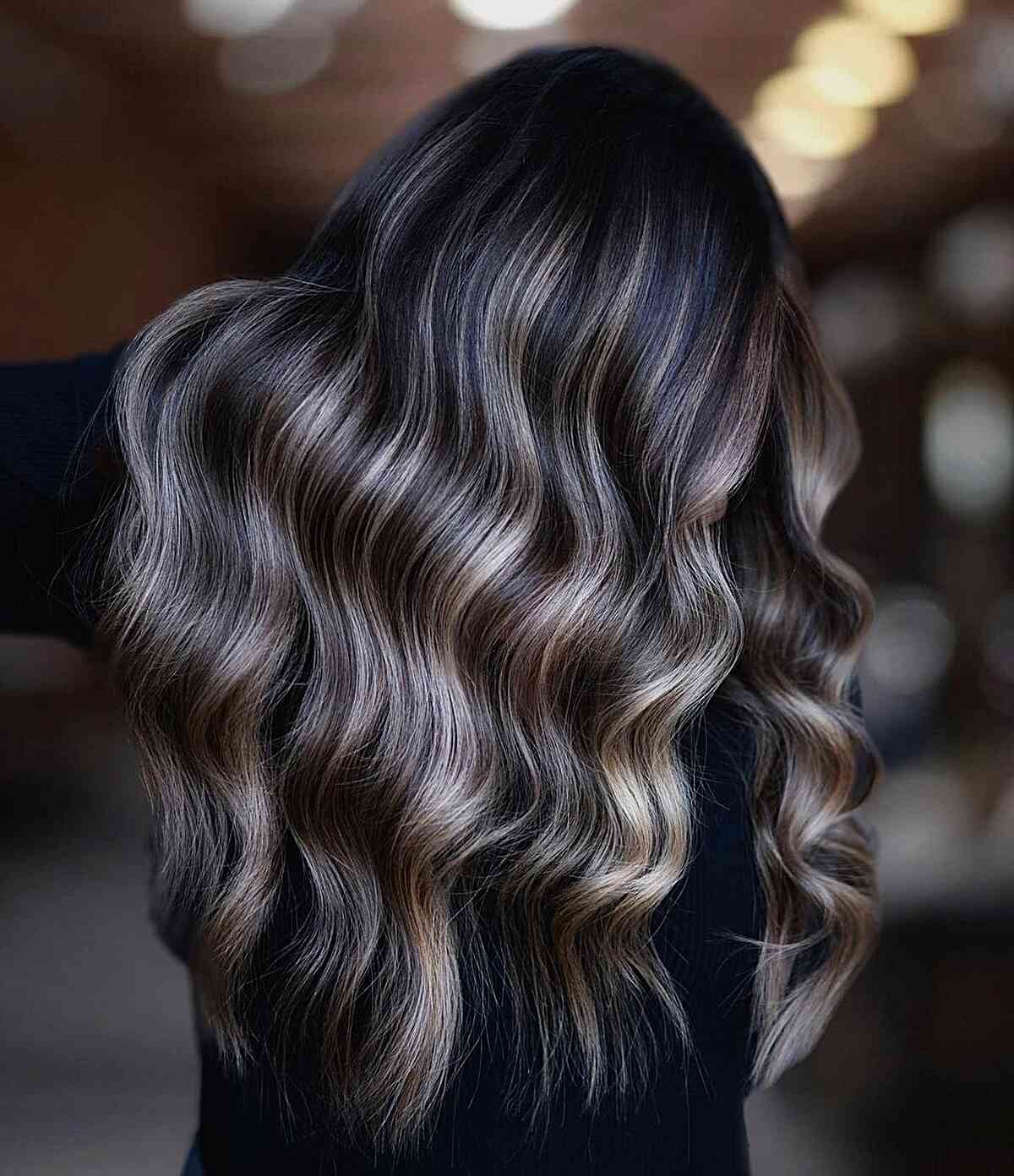
Pure contrast: a very dark brown base with ash blonde highlights woven through the mid-back length. The loose waves spread those lighter pieces across the surface instead of leaving them buried underneath, so the eye registers the difference immediately. Ask your colorist for: very dark brown with ash blonde highlights, loose waves. A volumizing mousse at the roots, then a blowout with a round brush creates the lift, followed by a large-barrel curling iron for the wave. Trim every six to eight weeks, and plan a toning appointment every four to six weeks to keep the ash tone from warming up.
Side View Mid-Back Blonde With Lighter Blonde, Close-Up Take
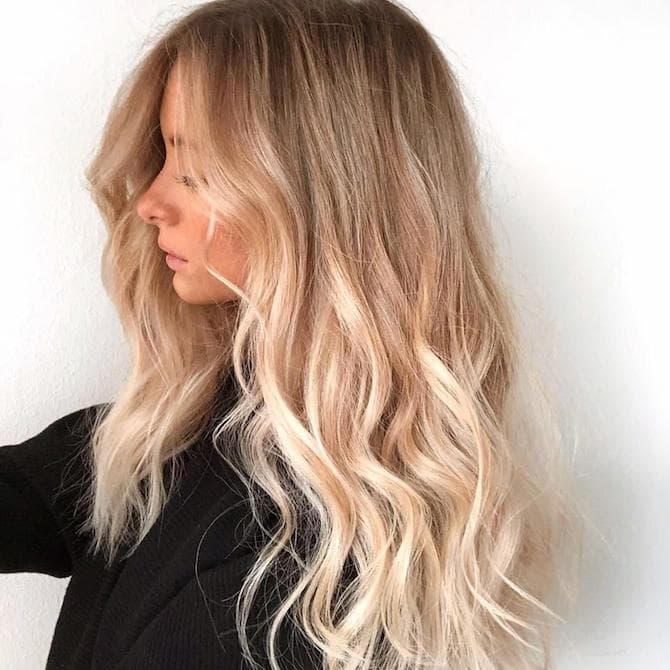
This is a blonde base with lighter blonde highlights, and the difference between the two is just a few levels. That closeness is the point: the dimension shows up in the movement of a blowout rather than in a stark before-and-after. The layered cut and mid-back length let the side view reveal how the highlights sit on top of the waves, not just at the ends.
Ask your colorist for: blonde with subtle lighter blonde highlights, blowout. The subtlety means a single process can lift the highlights without over-lightening the base. A purple shampoo once a week keeps both tones from turning yellow, and a trim every eight weeks keeps the layers from losing their shape. The middle parting helps the color fall evenly on both sides.
Mid-Back Blonde With Highlights and Curtain Bangs
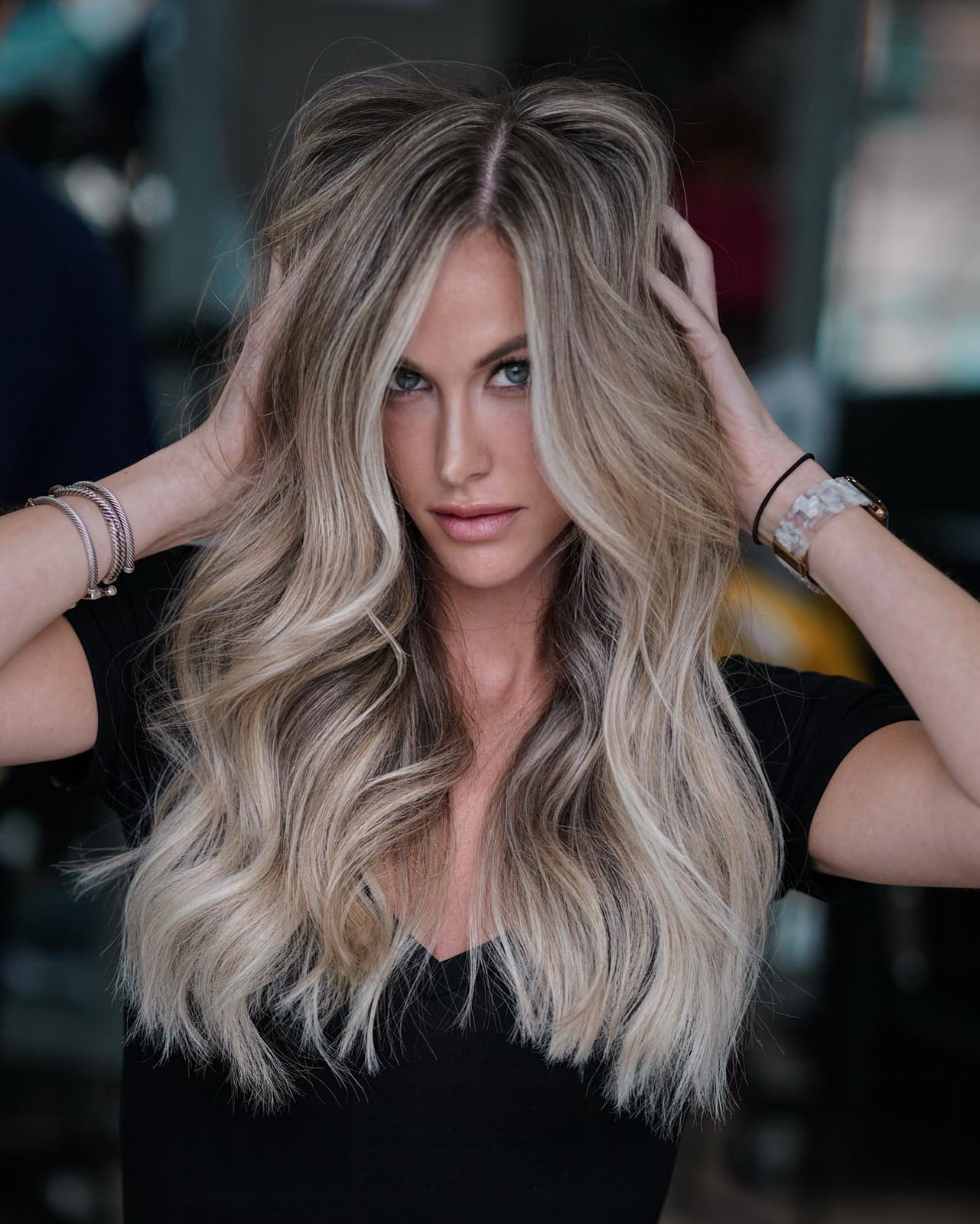
The curtain bangs here do two things: they shorten the face-framing section without losing length overall, and they give the highlights a natural place to catch light. The wavy blowout and thick texture mean the blonde base appears rich and not flat, even without high-contrast pieces.
Ask your colorist for: blonde with highlights, curtain bangs, blowout. When you book, specify that the highlights should start a half-inch from the root so the curtain bangs still have a soft grow-out. Use a large round brush and a blow-dryer to sweep the bangs to the sides, and a texture spray on the mid-lengths for hold. Trim the bangs every four to six weeks; the length can go eight weeks.
Mid-Back Platinum Blonde With Lighter Blonde Highlights
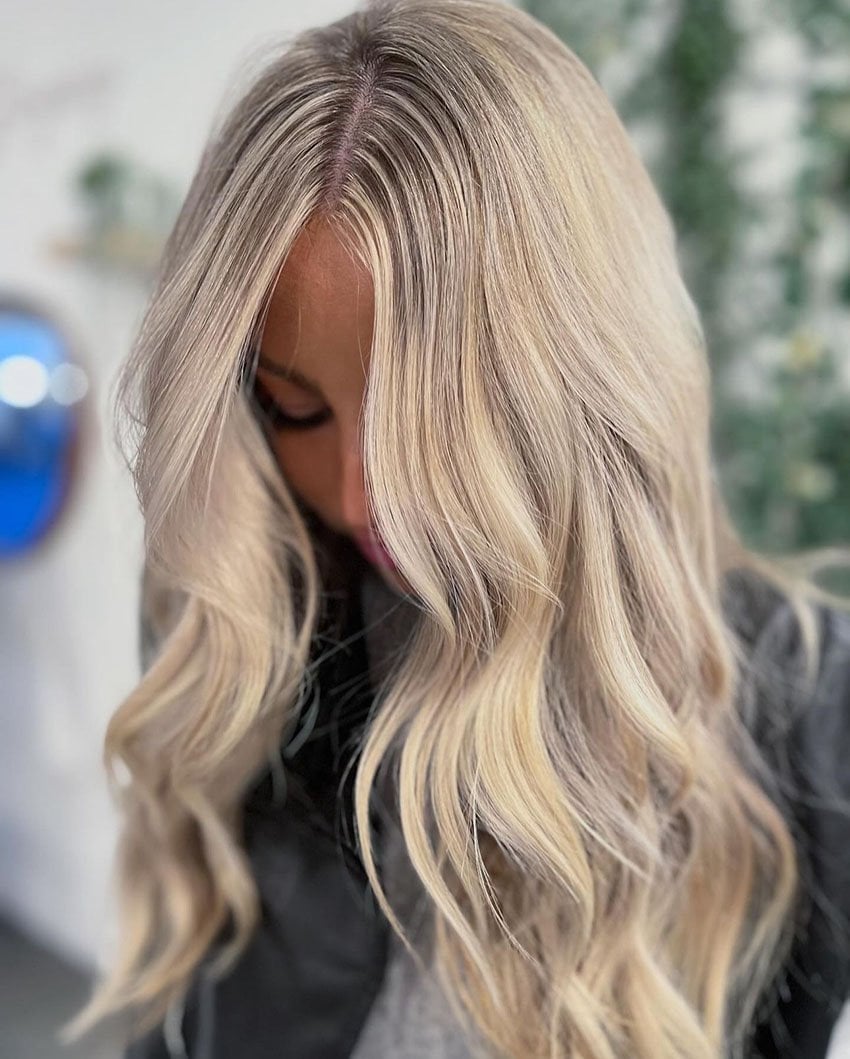
The platinum base is already light, so the lighter blonde highlights here are about texture, not color shift. On a mid-back length with a middle parting and loose waves, the subtle lighter pieces keep the hair from looking like one solid block of toner. Ask your colorist for: platinum blonde with lighter blonde highlights, loose waves. Maintaining this tone requires a toning appointment every three to four weeks, and the lightening process means regular bond-repair treatments are necessary. A glossing serum on dry hair adds back the shine that lightening strips away.
Mid-Back Brown With Subtle Blonde Highlights
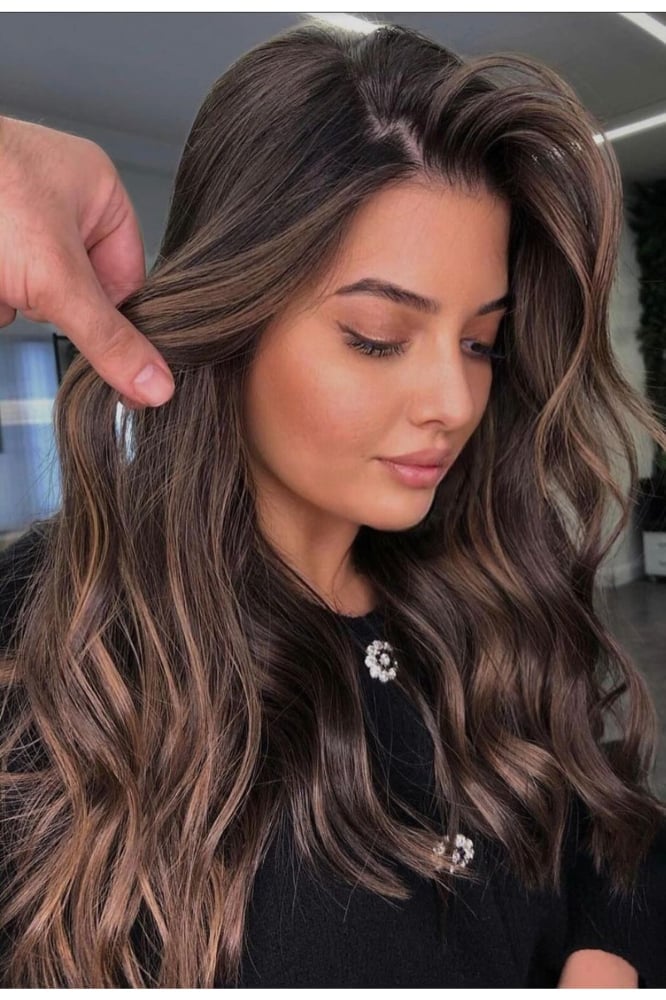
This is the difference between wanting people to notice your highlights and wanting people to notice your hair. Here, the blonde is woven so finely into the brown base that the overall impression is richer, glossier brown without a stripey contrast. Thick, wavy hair at mid-back length handles this density of highlight without looking busy. Ask your colorist for: brown base with subtle blonde highlights, loose waves. The lived-in effect means you can let the hair dry naturally and call it done. A trim every six to eight weeks keeps the ends healthy and the dimension readable, but the grow-out is as forgiving as it gets.
Collarbone Medium Brown With Blonde Highlights
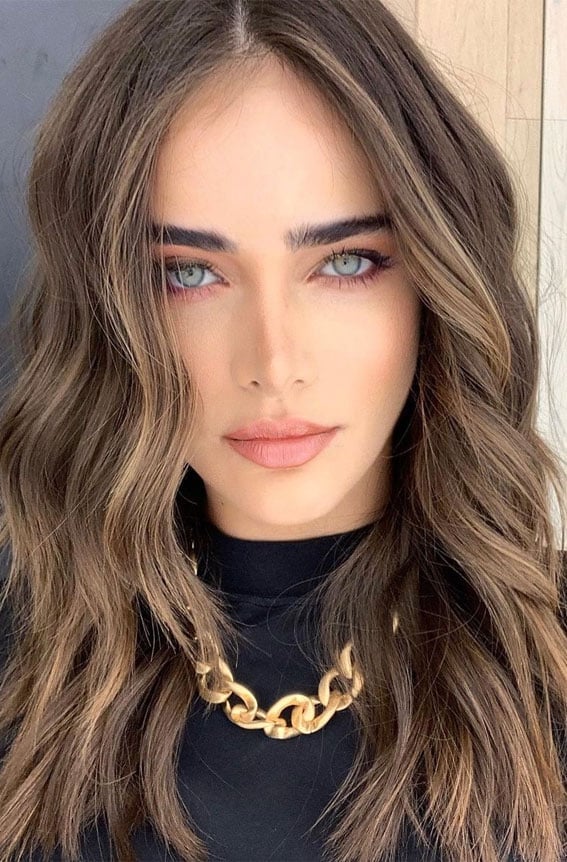
Is collarbone length going to show highlights well enough? Yes, if the placement is smart. Medium brown hair with blonde highlights concentrated around the face and through the curtain bangs means you get the brightness where it counts, even with a shorter canvas. This suits medium-density, wavy hair because the layers add movement without thinning out the ends. Ask your colorist for: medium brown with blonde highlights, curtain bangs, face-framing layers. A large-barrel iron defines the waves in under ten minutes. Trim the bangs every four to six weeks; the rest of the cut can go eight.
Collarbone Warm Brown With Blonde Highlights and Face-Framing Layers
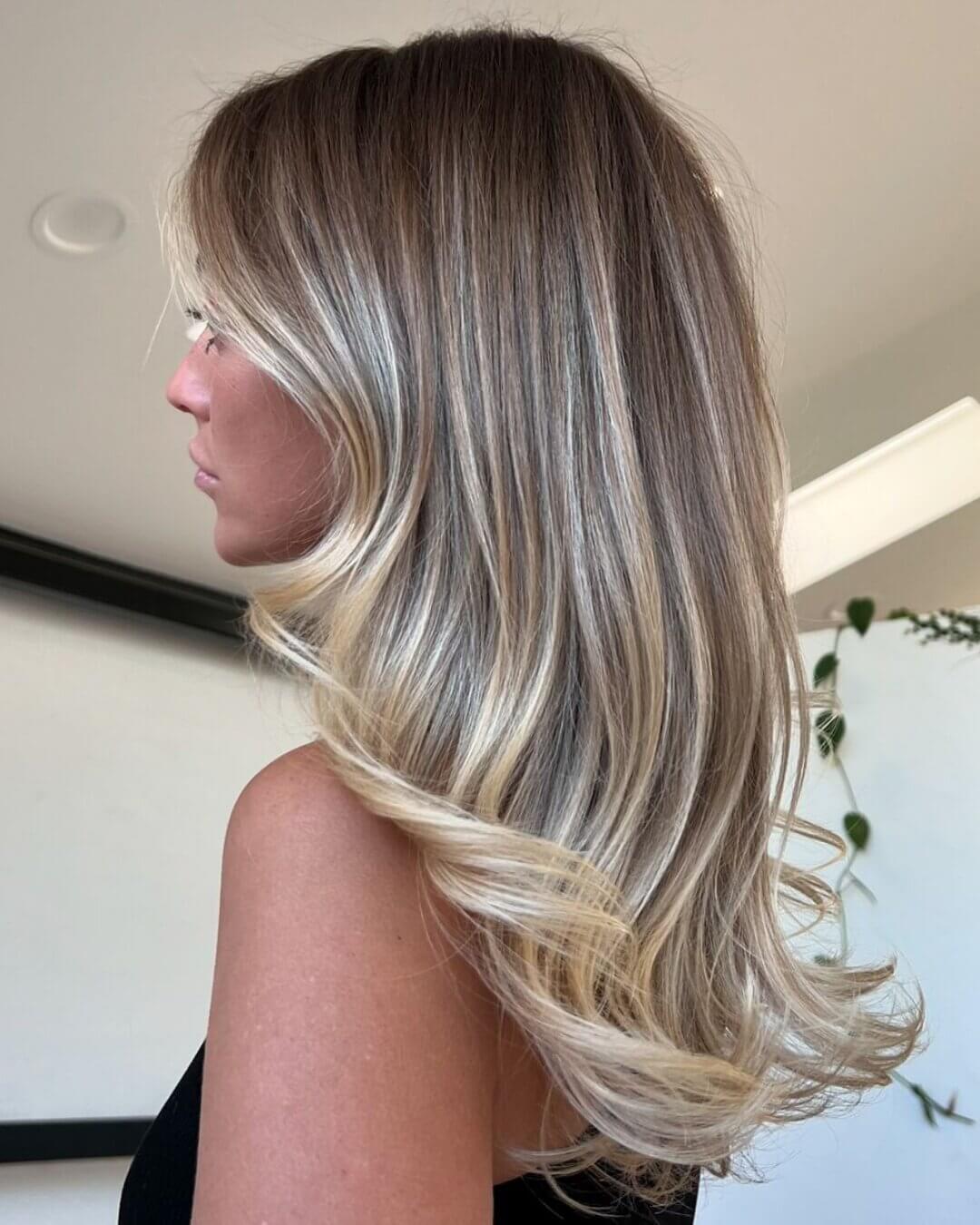
The side view confirms the technique, the highlights follow the curve of the layers rather than sitting in uniform rows. Ask your colorist for: warm brown with blonde highlights, face-framing layers. A smoothing serum on damp hair controls the wave pattern and keeps the gloss visible. Trim every six to eight weeks to preserve the shape.
Collarbone Medium Brown With Blonde Face-Framing, Close-Up Take
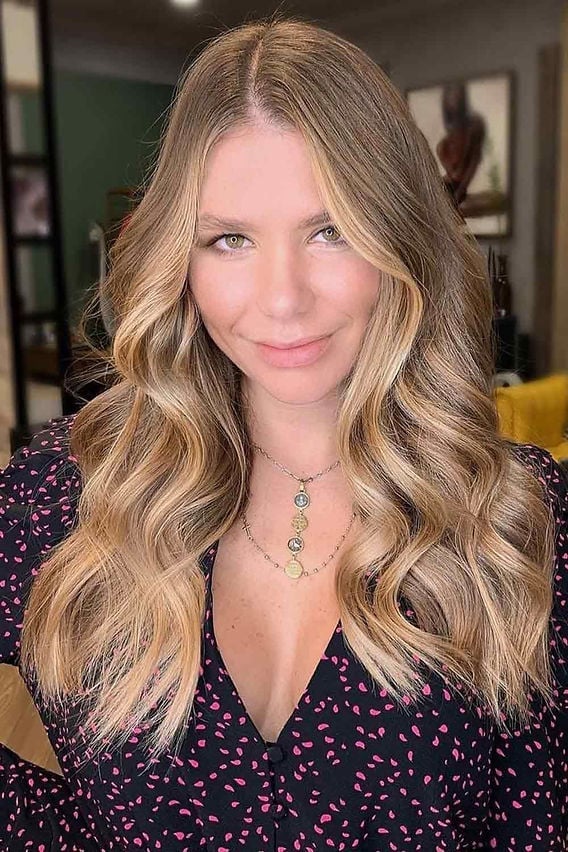
What makes this design work is the specific placement. The blonde face-framing highlights start a few inches from the root and concentrate on the sections that frame the curtain bangs, so the color lifts the face without a harsh grow-out line. The medium brown base stays deep enough to anchor the contrast. Ask your colorist for: medium brown with blonde face-framing highlights and curtain bangs. A round brush blowout gives the ends a soft flip that shows off the lighter pieces. Bangs need a trim every four to six weeks; the length holds its shape for eight.
Collarbone Ash Brown With Ash Blonde Highlights and Curtain Bangs
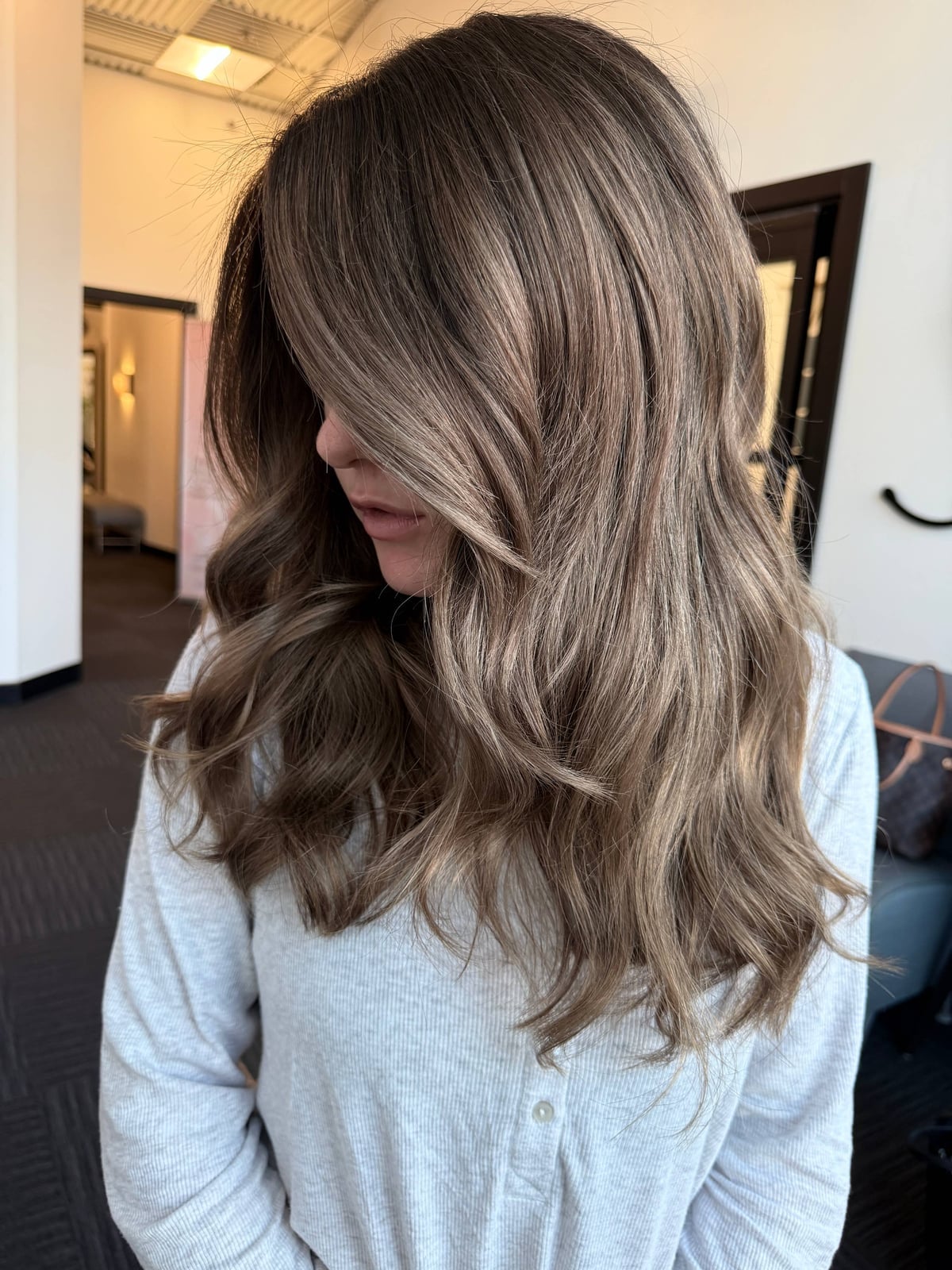
Ash tones fade faster than warm ones, so this design leans on the curtain bangs to keep the brightness visible where it reads best. The ash brown base and ash blonde highlights sit close enough on the tone scale that the grow-out blends rather than announces itself. Thick, wavy hair at collarbone length gives the color enough surface to read as dimensional. Ask your colorist for: ash brown with ash blonde highlights, curtain bangs. A purple shampoo used every second wash preserves the cool tone and prevents brassiness. Trim the bangs every four to six weeks to maintain the shape.
Collarbone Lob With Subtle Brown Highlights
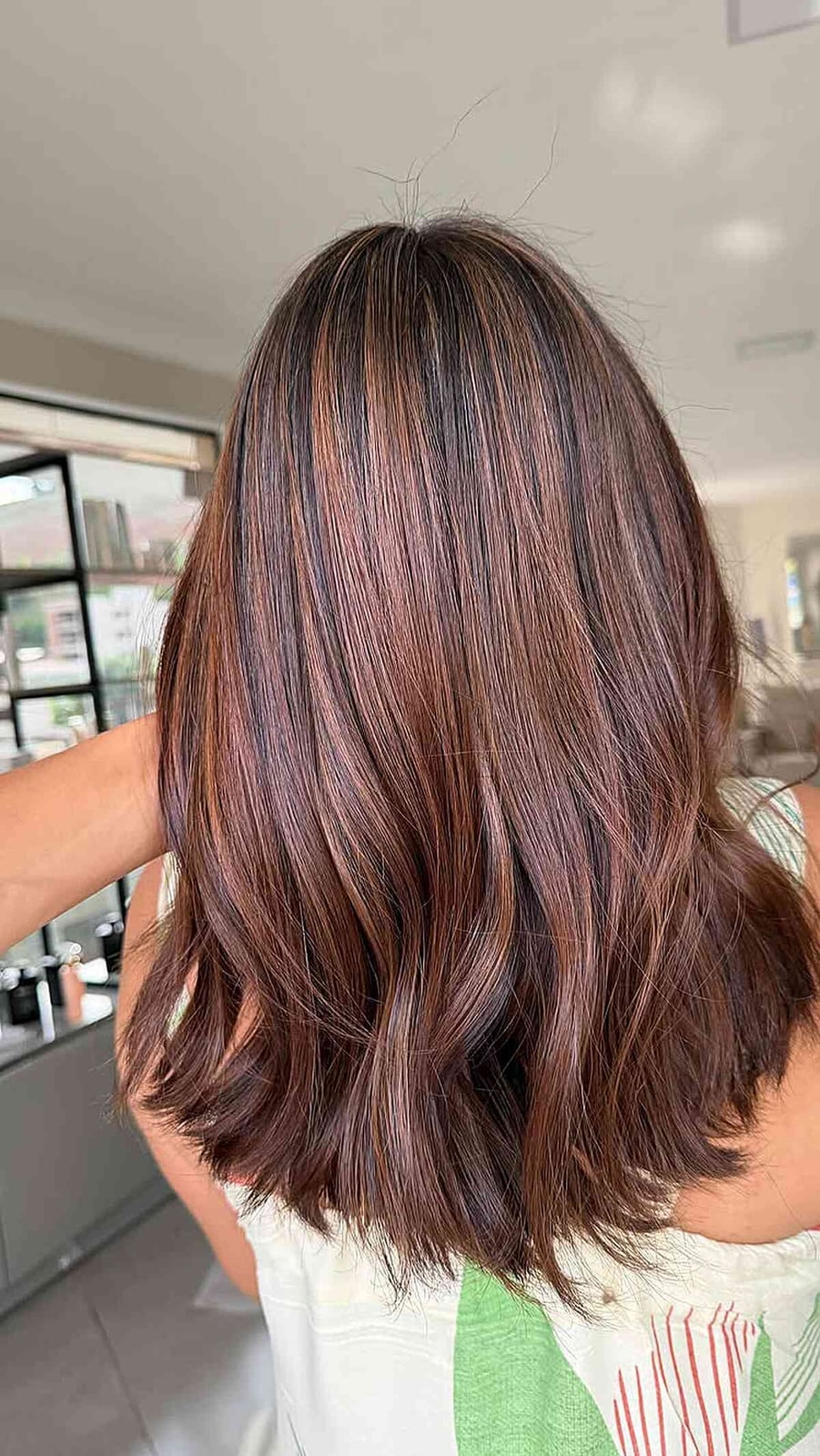
From the back, this lob has a brown base with subtle lighter brown highlights that read more as texture than as color. The wavy medium-density hair and middle parting keep the effect grounded. Ask your colorist for: collarbone lob with subtle brown highlights. Use a texturizing spray on the mid-lengths to add separation that makes the dimension read. Plan for a trim every six to eight weeks to keep the line clean.
Collarbone Lob With Natural Blonde Highlights
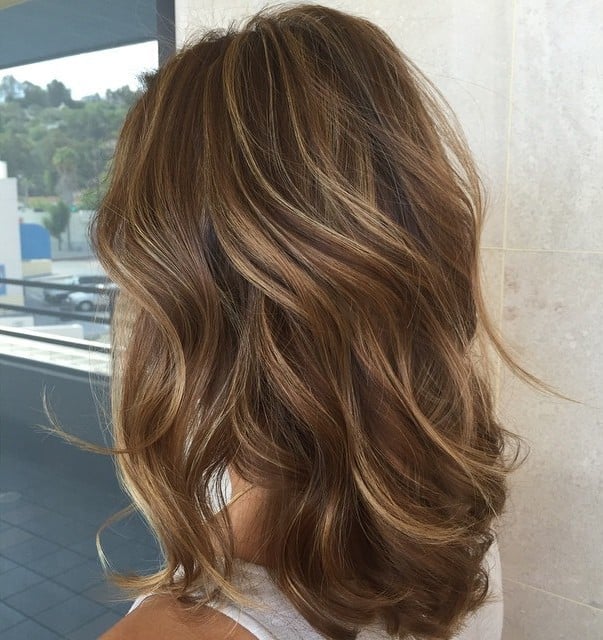
A light brown base with blonde highlights sounds straightforward until you see the side view. The soft wavy blowout lets the color fall exactly where it should. This natural blonde on light brown blend on medium density wavy hair is almost impossible to replicate at home. A single session in the chair will give you a lift that a box of dye and a foil cap simply will not. Ask your colorist for: light brown lob with natural blonde highlights.
Shoulder-Length Dark Brown With Face-Framing Blonde Highlights
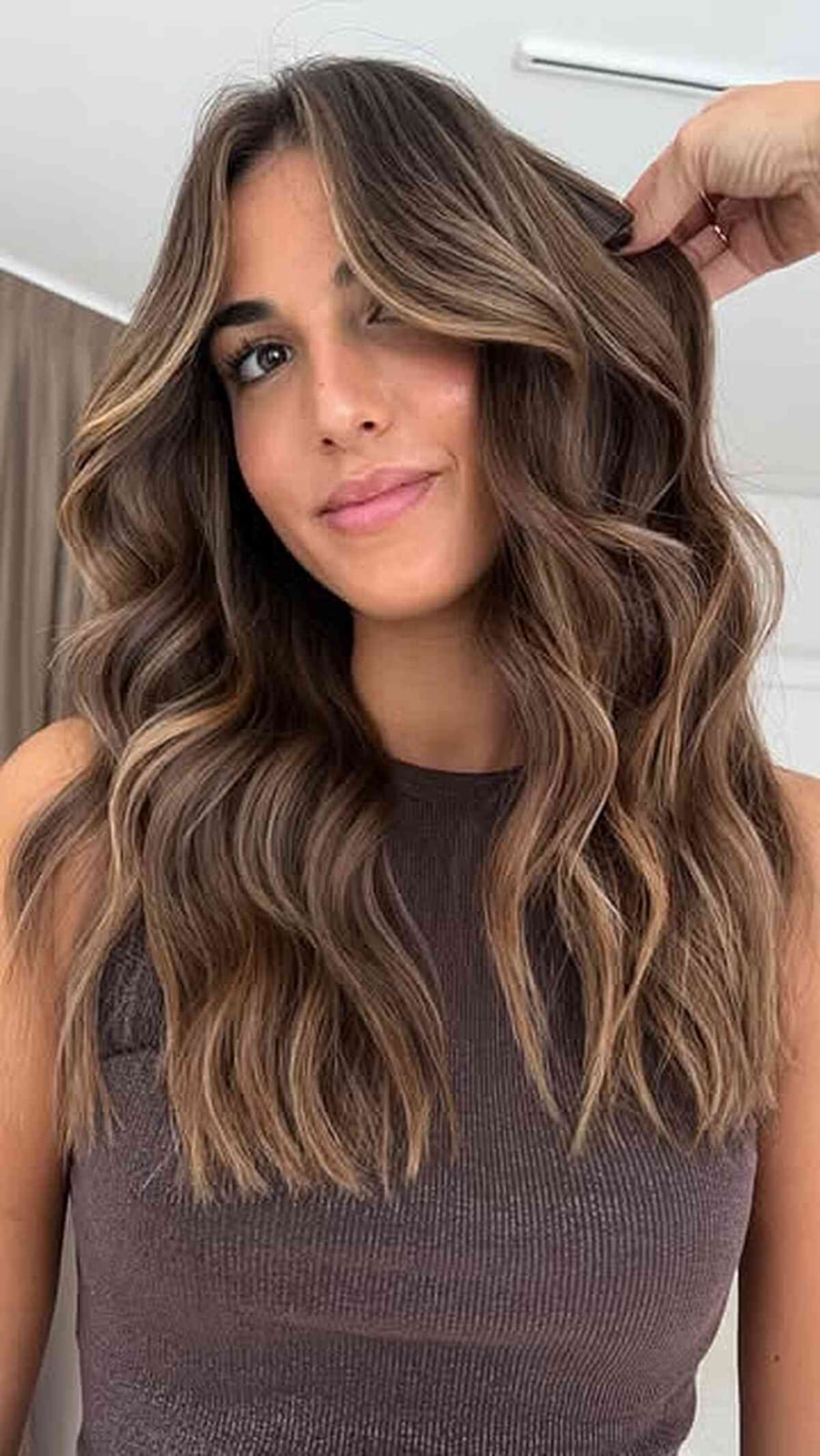
Why wait for spring to brighten things up? A dark brown base with prominent blonde highlights placed at the front and woven into the length mimics the sun hitting the face first. The thick wavy texture and face-framing layers give the color a natural gradient. Ask your colorist for: shoulder-length dark brown with face-framing blonde highlights. This low-commitment color refresh works for a holiday or a Tuesday.
Shoulder-Length Curly Hair With Blonde Highlights
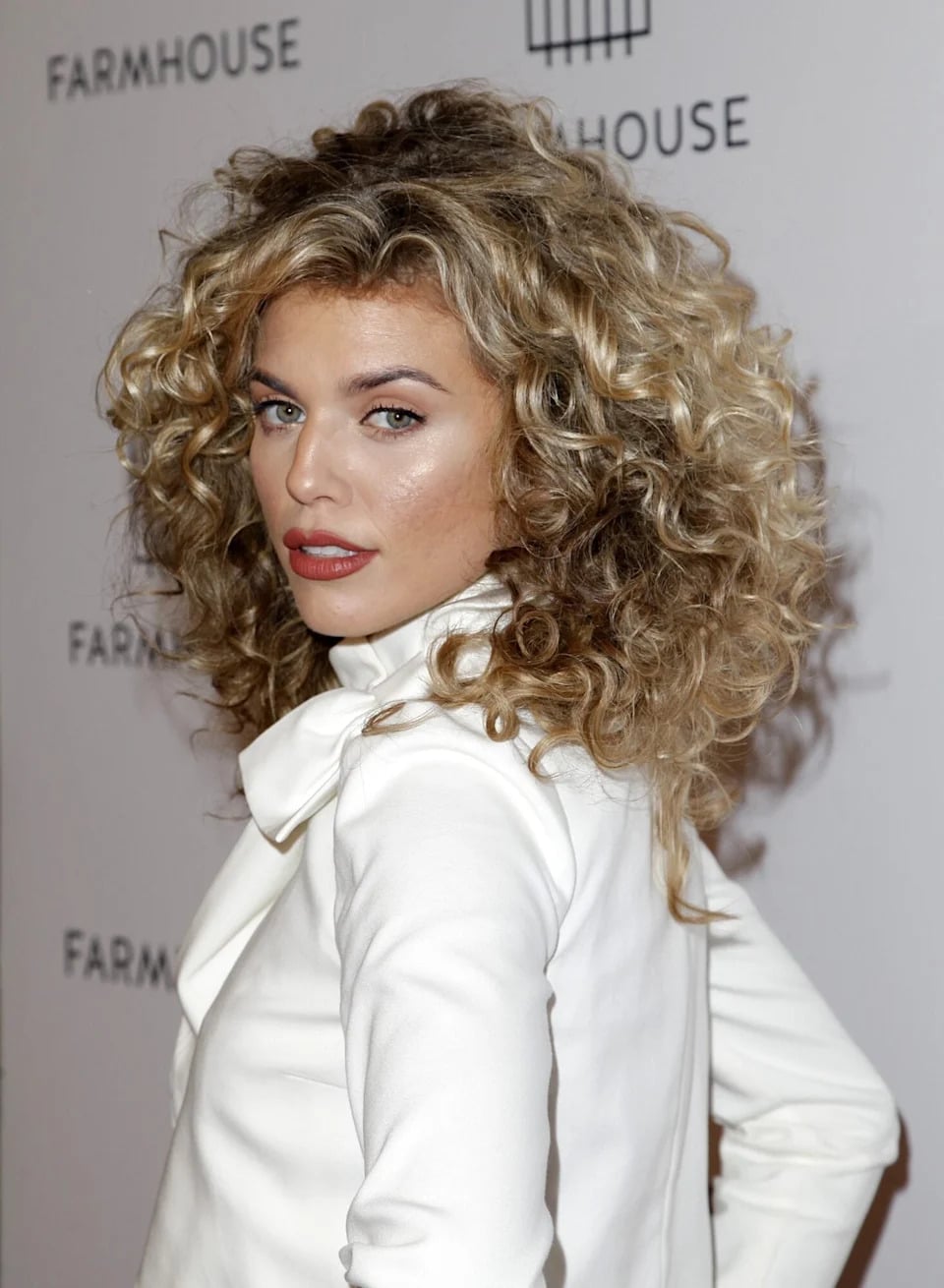
Blonde highlights on a lighter brown base landed on thick curly hair: the side parting lets the lighter pieces sit where they get the most visual weight. The technique here matters because the color is painted onto each curl section rather than woven through straight strands, which keeps the definition crisp even when the hair is air-dried. Ask your colorist for: shoulder-length curly hair with blonde highlights. The even distribution across the curl pattern prevents the dreaded stripe effect.
Collarbone Curly Dark Brown With Blonde Highlights
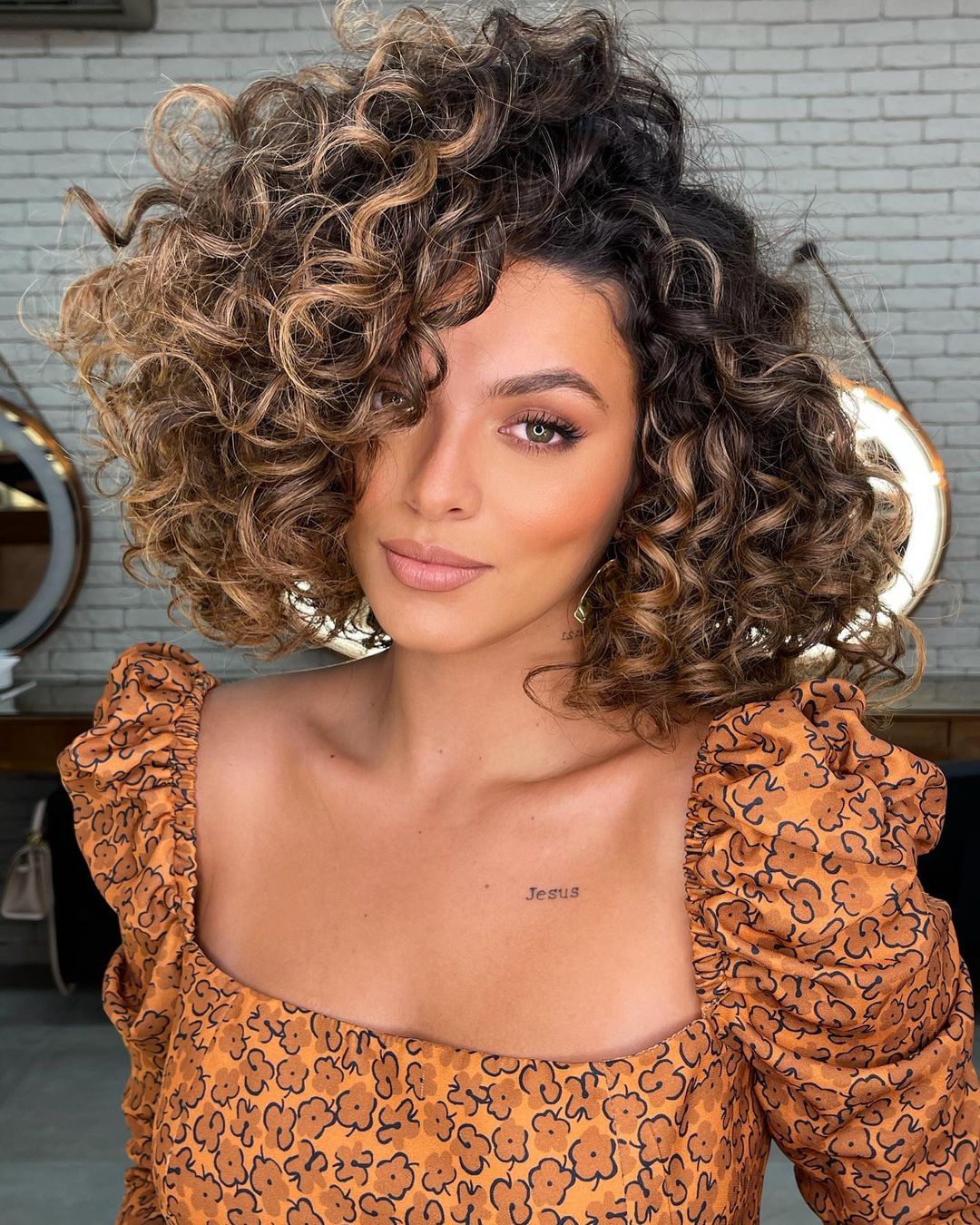
This design uses contrast to its advantage. A dark brown base with blonde highlights placed on each curl gives the collarbone-length shape a built-in lift. The thick texture holds the color well, so the blonde looks intentional. Ask your colorist for: collarbone curly dark brown with blonde highlights. Expect a trim every eight to ten weeks to keep the shape from getting top-heavy, and use a curl-defining cream to keep the blondes looking fresh between washes.
Shoulder Length Wavy Fine Grey With Lighter Grey Highlights
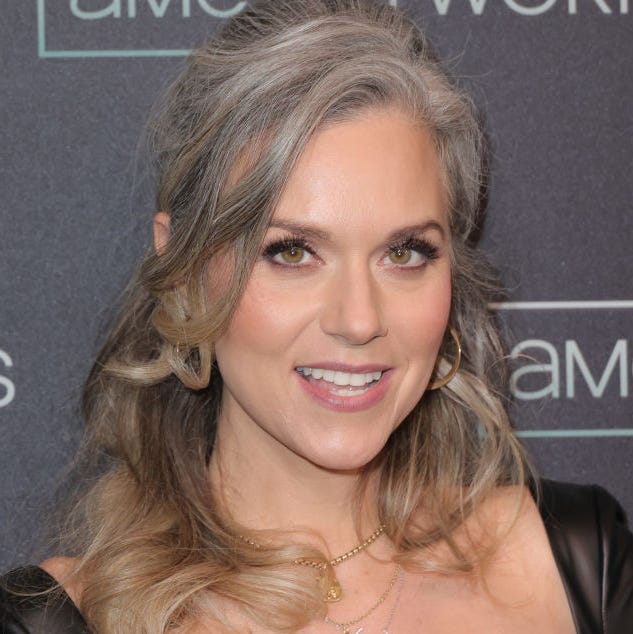
Can grey hair really handle highlights without looking striped? Yes, when the base is a natural grey and the lighter grey pieces are woven finely enough to blend as texture. The shoulder-length cut with side-swept bangs keeps the look soft, and the wavy, fine texture benefits from the dimension the highlights create. Ask your colorist for: shoulder-length grey with lighter grey highlights, side-swept bangs. A root-lifting spray adds volume to fine hair without weighing it down, and the bangs need a trim every four to six weeks to stay out of your eyes. The grow-out is nearly invisible, which makes this style low maintenance.
Collarbone Natural Blonde With Subtle Highlights, Wavy
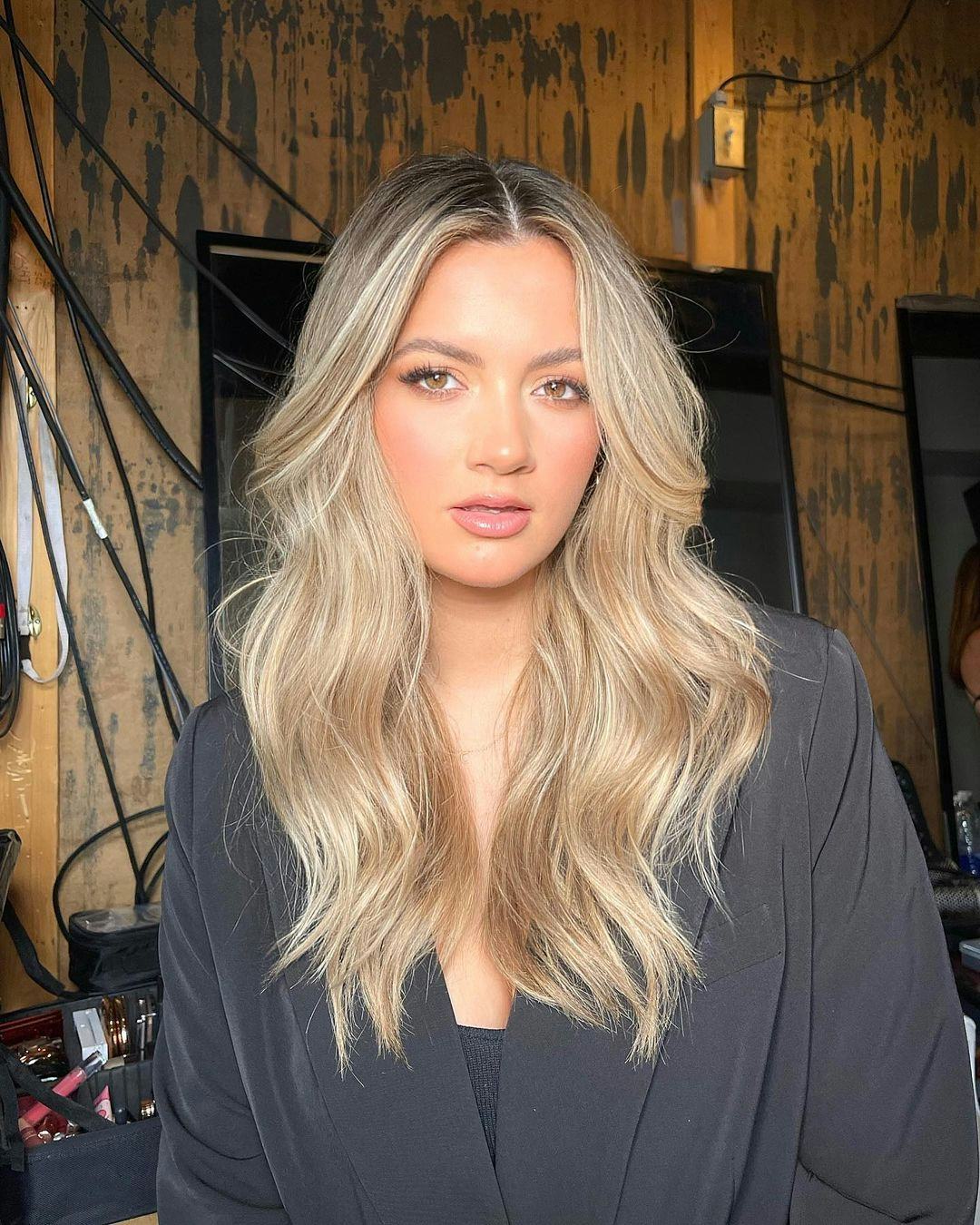
This style uses a middle parting and collarbone length, so the subtle highlights land where they catch light naturally as the hair moves. A natural blonde base with slightly lighter pieces woven through the ends creates a lived-in effect that does not look freshly done. Ask your colorist for: collarbone natural blonde with subtle highlights, air-dried texture. Fine, wavy hair air-dries well with a texturizing spray worked through damp strands, and the grow-out period stretches to eight or ten weeks between trims. No root touch-up is needed because there is no hard line to maintain.
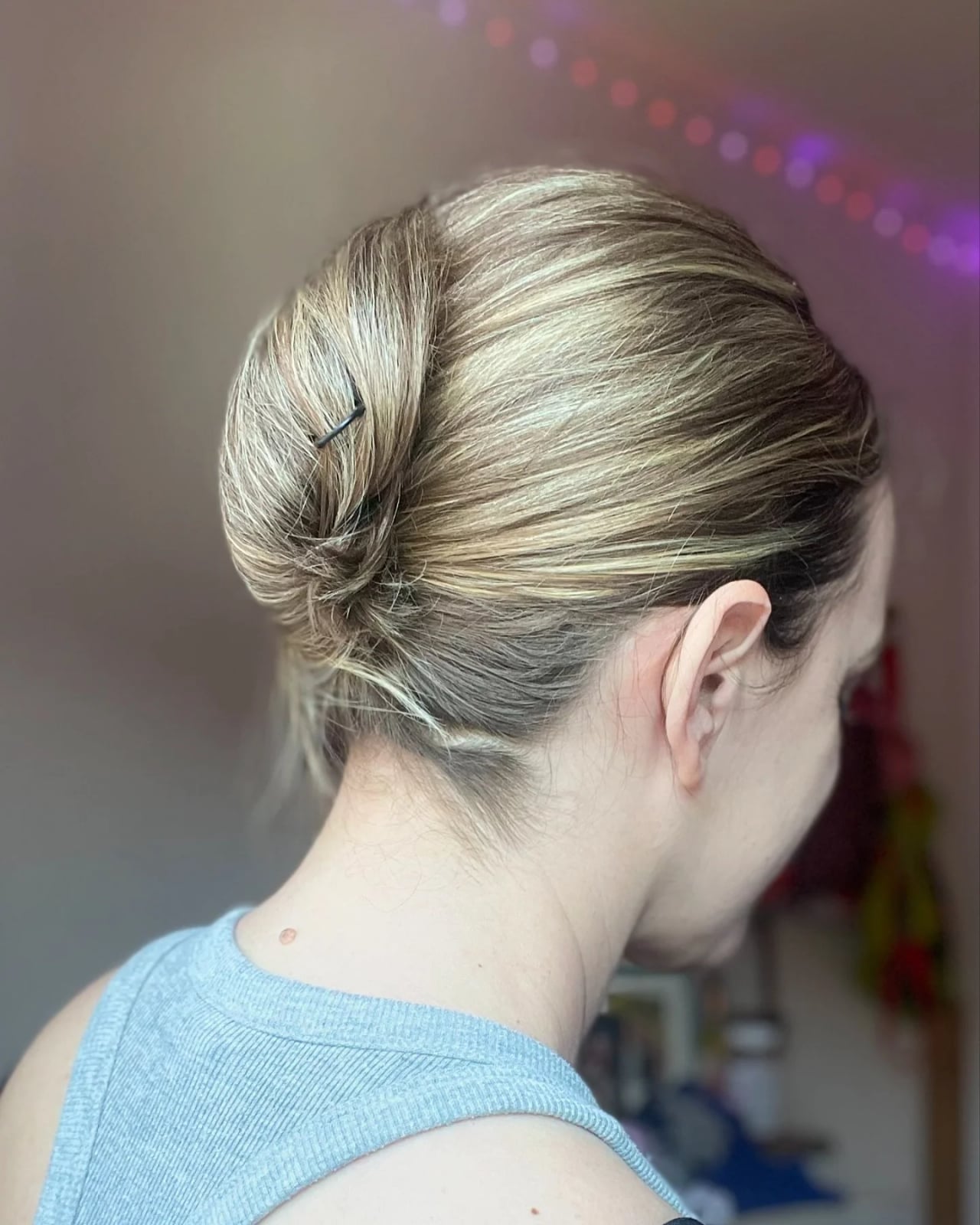
Fine Straight Blonde Hair Updo
A twisted updo on fine, straight blonde hair relies on tension and pin placement rather than volume. The back view shows a neat spiral secured with a single dark pin, which means the sections were twisted tightly enough to hold their own shape. Ask your stylist for: twisted updo for fine blonde hair. A texturizing spray on dry hair before twisting gives the strands enough grip to stay put; smooth fine hair alone will slip out within an hour. The updo works best on second-day hair, and the overall texture should be clean but not freshly washed. A formal event is the natural occasion, but the technique also translates to a quick daytime knot once you practice the twist.
Mid-Back Dark Brown With Caramel Highlights and Curtain, Party Version
Where the everyday caramel highlight is subtle and scattered, this version leans into contrast. The dark brown base is deep enough that the caramel pieces read as distinct ribbons, and the loose waves with a middle parting push the lighter strands forward. Curtain bangs soften the whole effect. Ask your colorist for: dark brown with caramel highlights and curtain bangs. A texturizing spray on the waves keeps the sections separate, and the bangs need a trim every four to six weeks to maintain that soft frame. The difference between this and a work-friendly caramel is the placement: here the highlights sit closer together and higher up, so they show even when the hair is down.
Final Thoughts
The decision comes down to contrast. For a subtle, low-maintenance look that grows out gently, choose highlights that are one to two shades lighter than your base. For more noticeable brightness, especially on darker hair, go for a shade that is three or more shades lighter.
- Refresh highlights every 8-12 weeks depending on grow-out preference.
- Use a color-safe shampoo and conditioner to maintain vibrancy.
- Incorporate a purple or toning shampoo once every 2-3 weeks if brassiness appears.
- Apply a heat protectant spray before using hot styling tools.
Find the highlight shade that complements your natural tone.