
Blonde balayage is a hand-painted highlighting technique that creates soft, natural-looking dimension without a harsh regrowth line. Right now, the trend is shifting toward cooler ash and beige tones paired with lived-in root shadows, so the grow-out stays forgiving for weeks longer than a full foil.
These 30 takes on Classy Balayage Hair Blonde cover every base: shoulder-length bobs that hold their shape, mid-back lengths with face-framing layers, and tones from honey-warm to platinum-cool. If your fine hair goes flat by noon or your fringe refuses to cooperate, there is a version here that works with your texture, your part, and your schedule.
Shoulder Length Golden Blonde Balayage
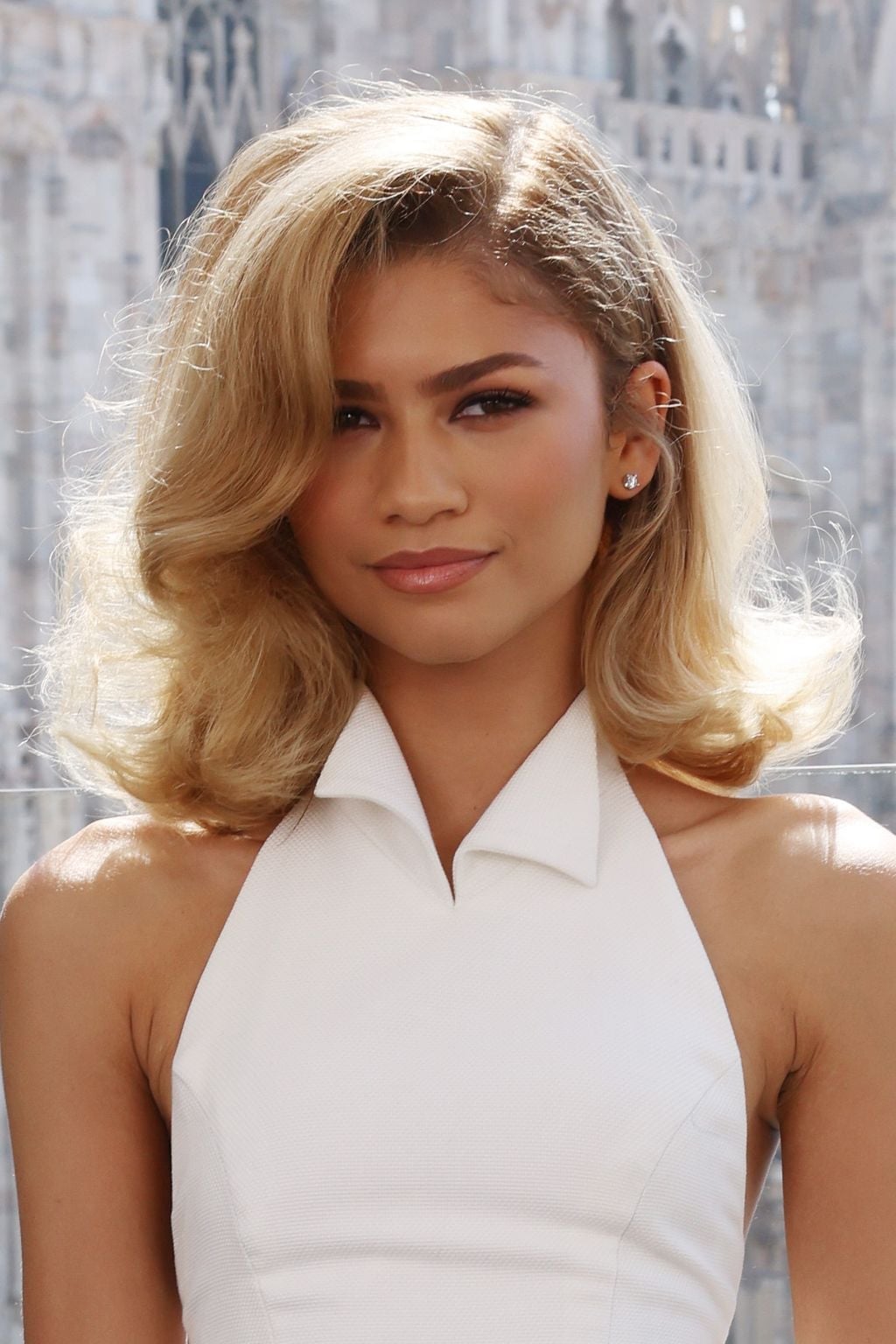
Wondering if golden blonde balayage can work on straight, fine hair without falling flat? A shoulder-length cut with long layers and a smooth blowout proves it can. The bright golden base and subtle balayage highlights add dimension that fine textures usually lack, while the middle parting keeps the look clean. Ask your colorist for: shoulder length with long layers, golden blonde balayage. A medium barrel brush and a heat protectant are all you need for the finish, and a trim every six to eight weeks keeps the shape sharp.
Collarbone Ash Blonde Balayage With Curtain Bangs
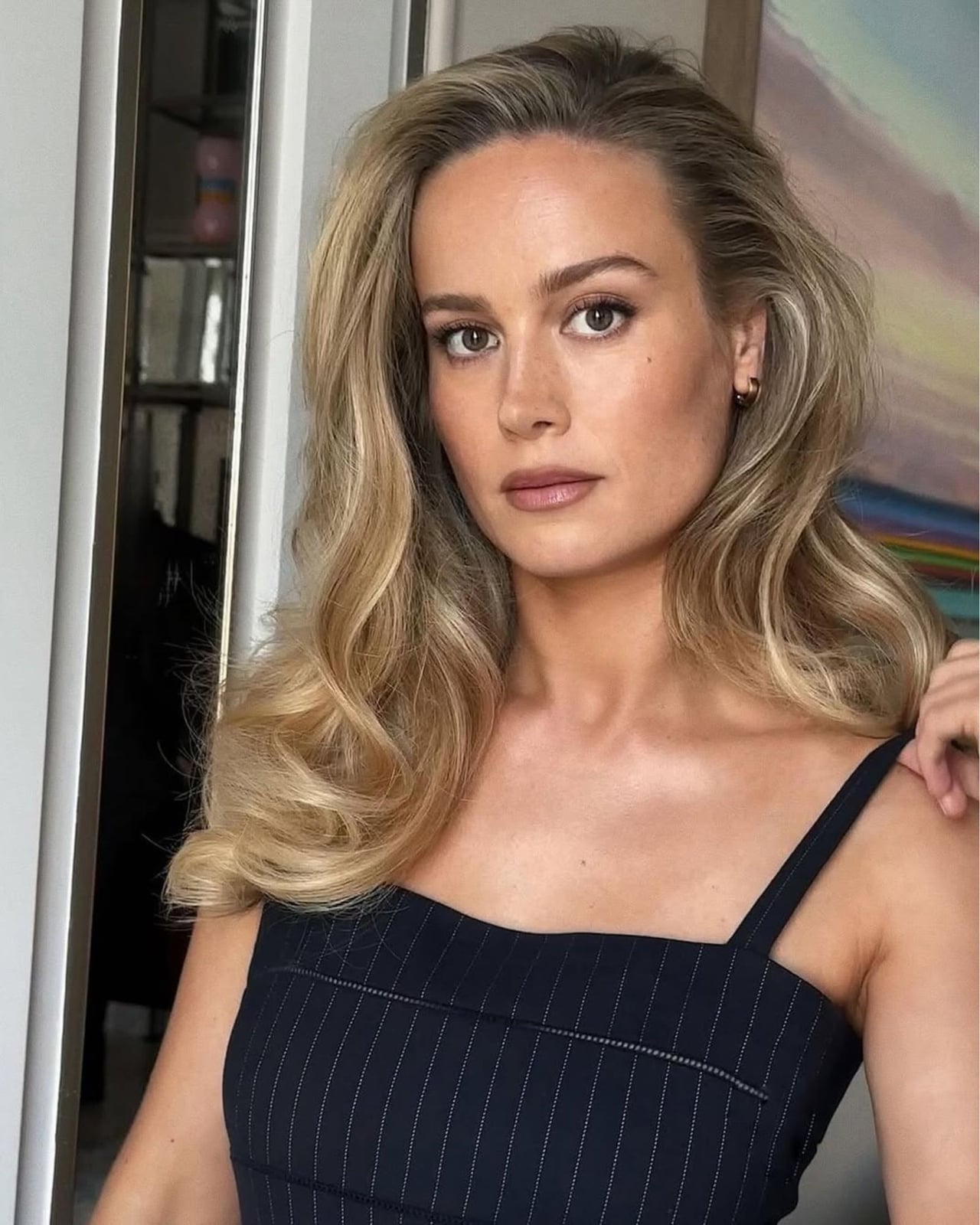
Ask your colorist for: collarbone length, long layers, curtain bangs, ash blonde balayage. The ash tone needs a purple shampoo about once a week to stay silver instead of greenish. A large round brush on the bangs and a quick blow-dry are enough for the rest.
Cool Ash Blonde Blunt Bob With Curtain Bangs, Close-Up Take
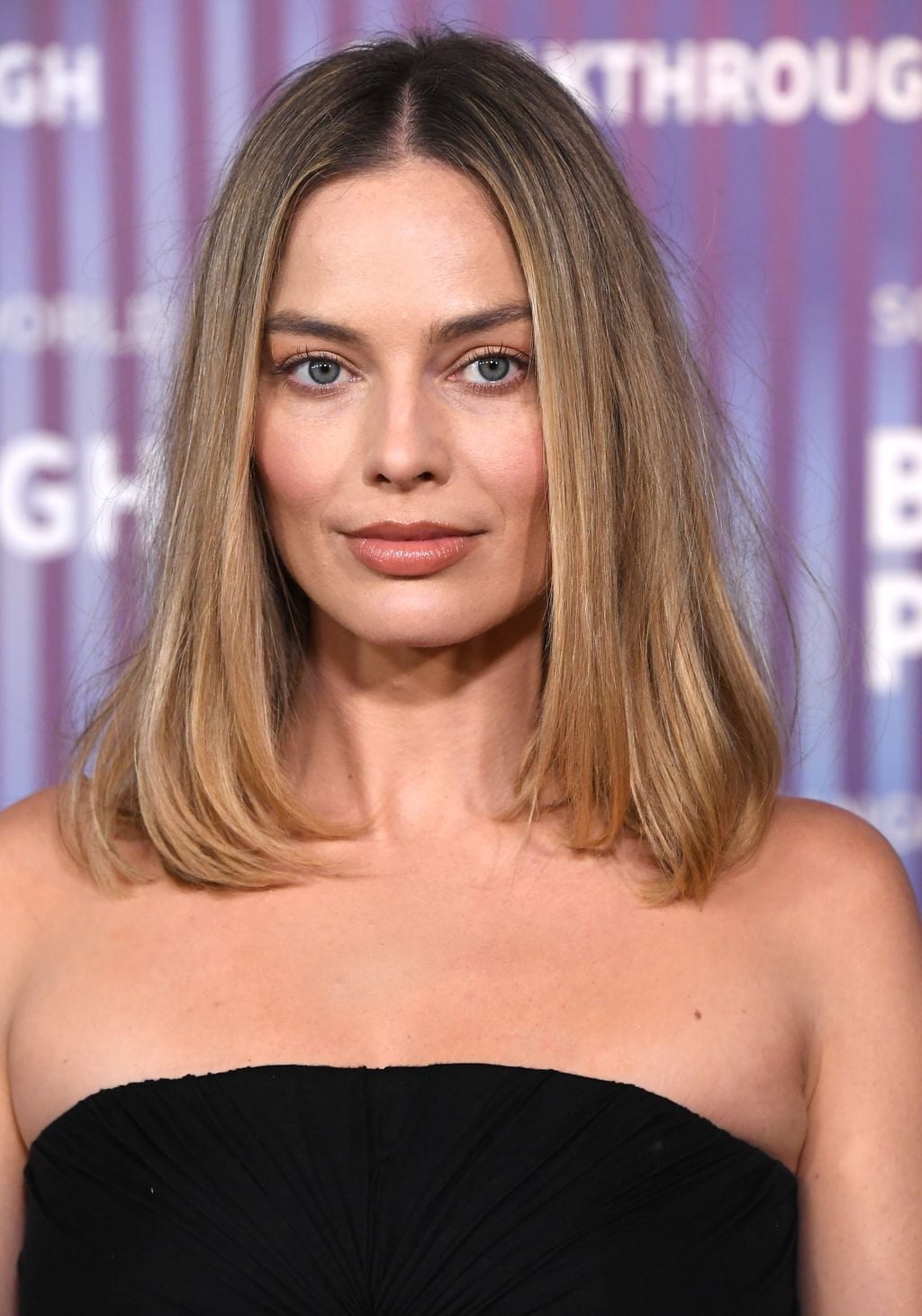
A blunt bob at collarbone length with a middle part and curtain bangs is a sharper silhouette than the layered lobs that usually carry balayage. The cool ash blonde base and subtle balayage highlights add dimension without softening the cut’s clean line, which is the whole point. Fine, straight hair takes well to this shape because the blunt edge creates the illusion of density. Ask your colorist for: collarbone blunt bob, curtain bangs, cool ash blonde balayage. This is a salon color, not a DIY project: the fine texture and straight finish show every uneven lift, so the bleach needs to be applied with precision. Trims every six to eight weeks keep the bob from rounding out.
Chin Length Ash Blonde Bob With Waves
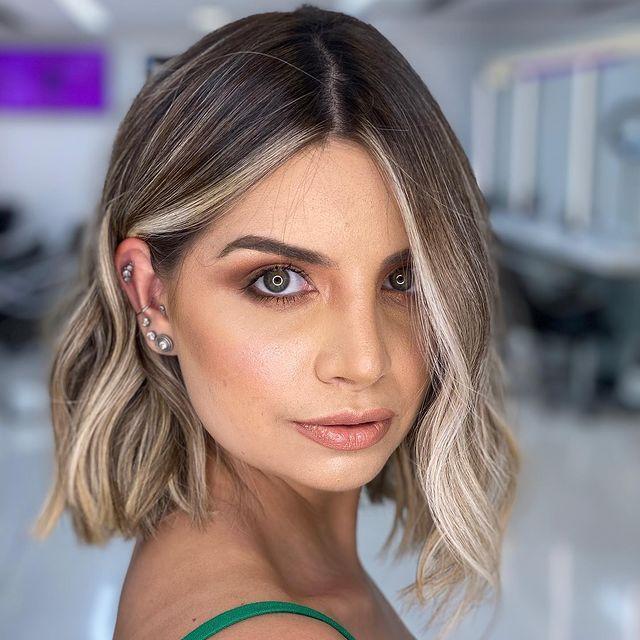
A chin-length bob on fine, wavy hair can look limp by lunch if the waves don’t hold. The side parting here adds lift at the root, and the lighter blonde balayage highlights create the appearance of more texture. Ask your colorist for: chin length bob, side part, ash blonde balayage. A texturizing spray applied to damp hair and scrunched in is the quickest way to keep the waves defined. The bob needs a trim every six to eight weeks; the ash base will need a fresh toner every four to six weeks to stay cool.
Ash Blonde Lob With Subtle Balayage
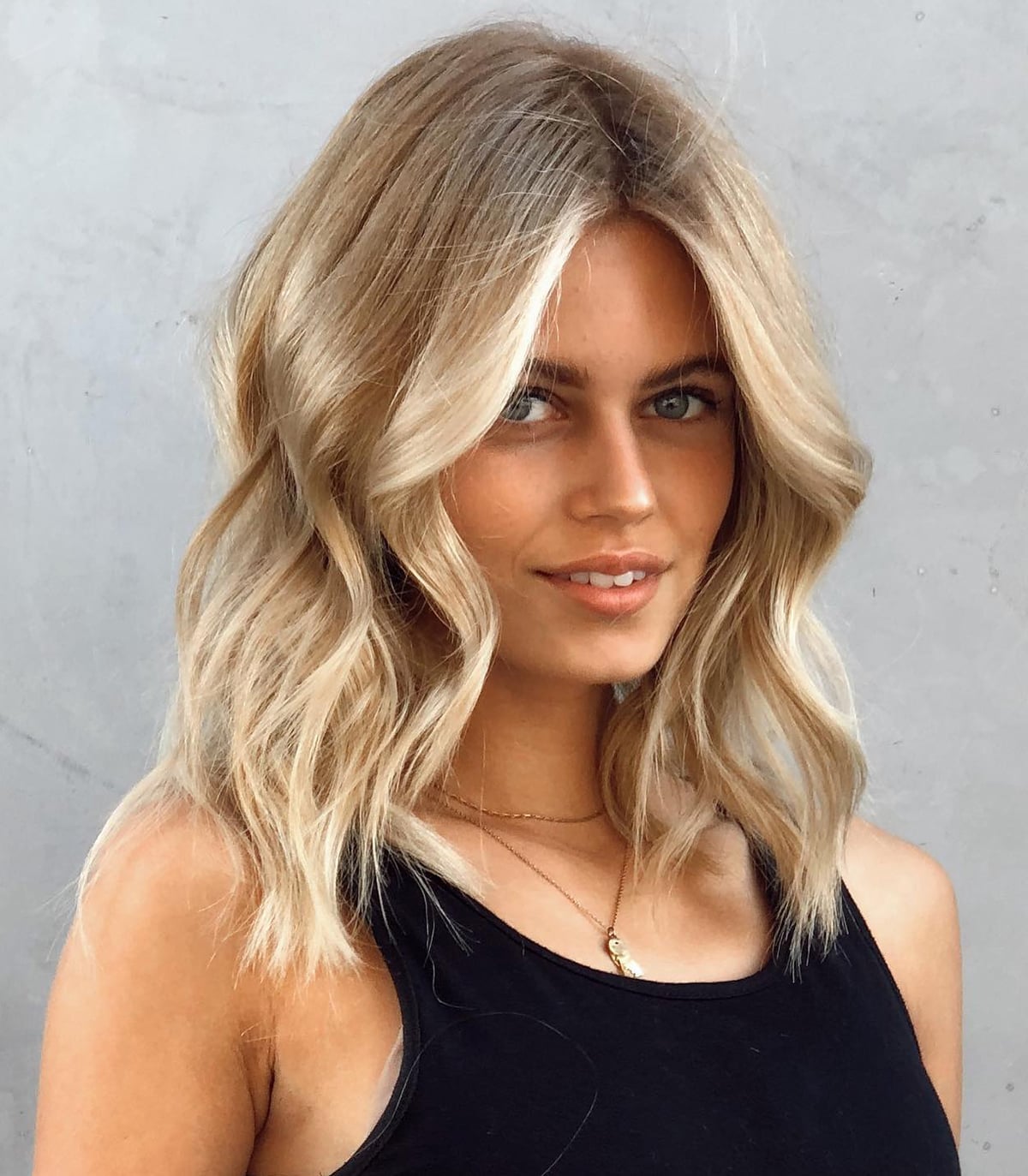
A chin-length lob with a middle parting and no bangs is a straightforward shape, but the ash blonde balayage is where the work lives. The lighter pieces are blended throughout, which gives dimension to medium-density wavy hair. Ash tones fade faster than warm ones, so expect a toning appointment every four weeks to keep the cool undertone from turning brassy. Ask your colorist for: chin length lob, middle part, ash blonde balayage. If you are not ready for that rhythm, a warmer blonde might be a better bet.
Collarbone Ash Blonde Balayage Lob
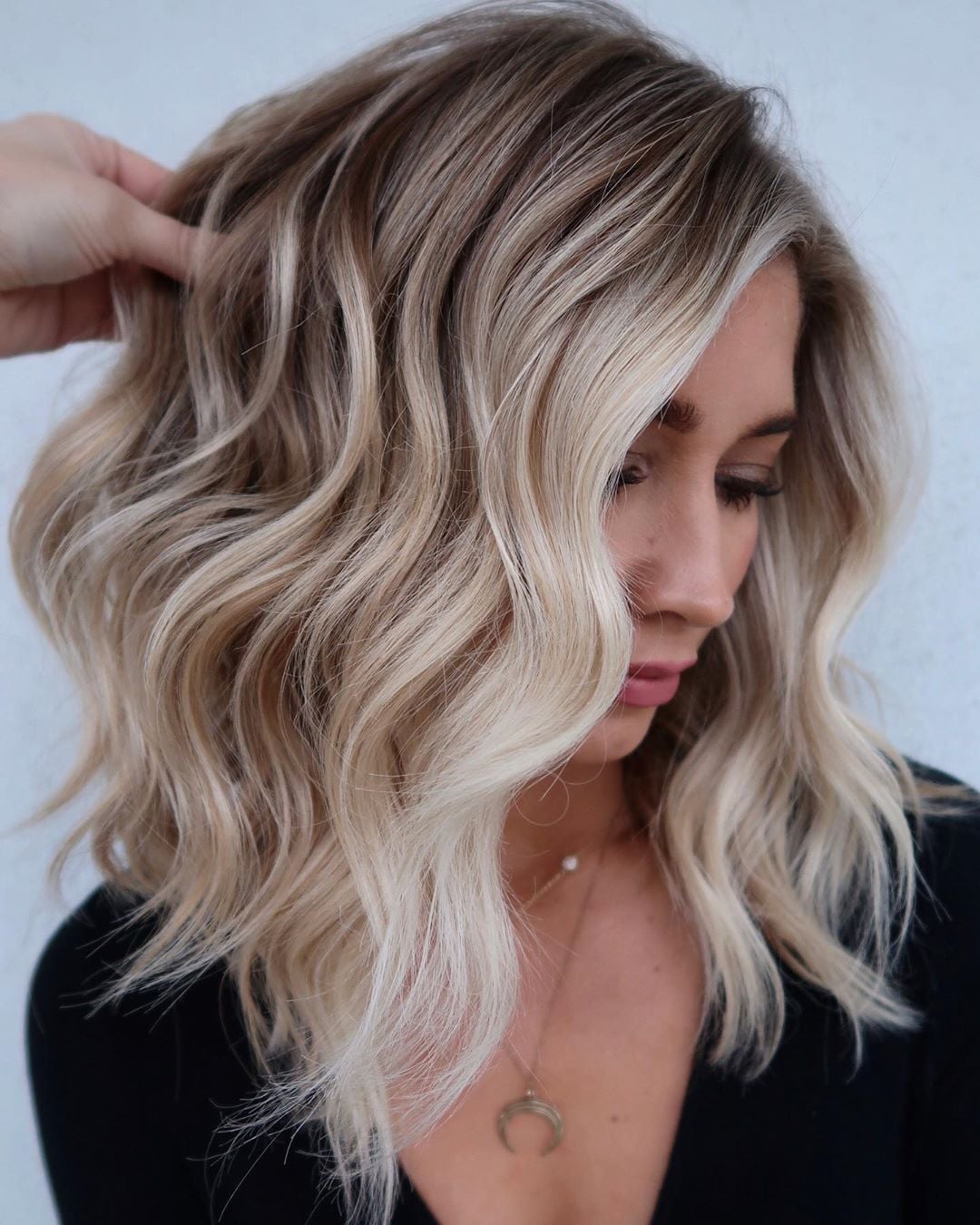
This collarbone lob has a side part and medium density wavy texture, so the ash blonde balayage lands where it can catch movement rather than just sitting flat. Ask your colorist for: collarbone lob, side part, ash blonde balayage. The side part adds volume near the root, which is a decent trick for round faces. After the blowout, wrap sections around a large round brush, then break them up with your fingers. A texturizing spray stops the wave pattern from reading as too deliberate.
Collarbone Light Blonde Balayage With Face-Framing Layers
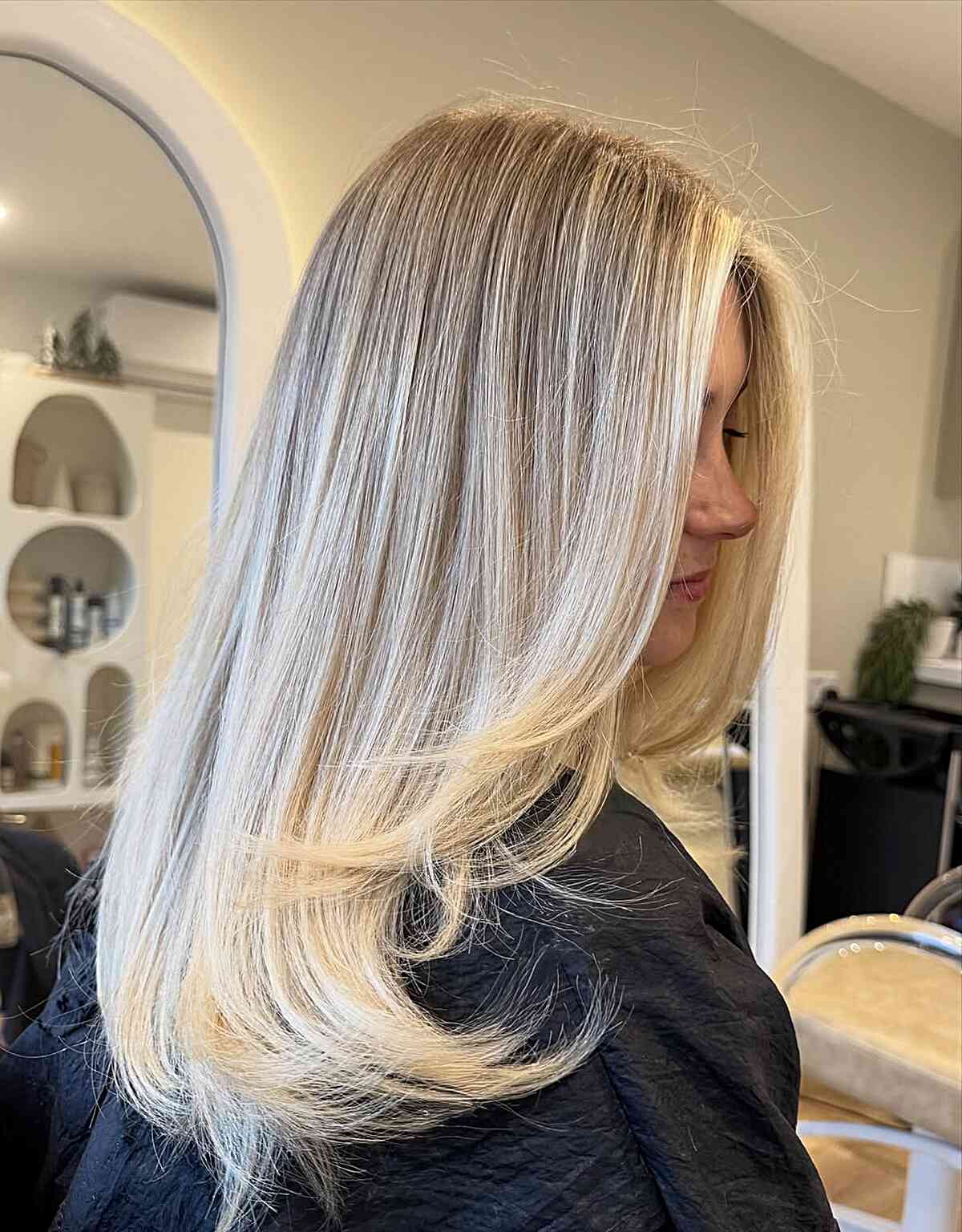
A light blonde base with subtle lighter blonde balayage is a low-contrast move. The colorist paints the lighter pieces only around the face and through the mid-lengths, so the grow-out line never announces itself. On fine, straight hair at collarbone length, those face-framing layers add the movement that a single-length cut would lack. Ask your colorist for: collarbone length, face-framing layers, light blonde balayage.
This is the kind of polish that works for a work presentation or a Saturday brunch without changing a thing. The middle part keeps the face-framing pieces symmetrical, which matters when the hair is straight rather than wavy. A smoothing serum on the ends seals the shine, and the layers stay sharp for about eight to ten weeks between trims.
Collarbone Ash Blonde Balayage With Face-Framing Bangs
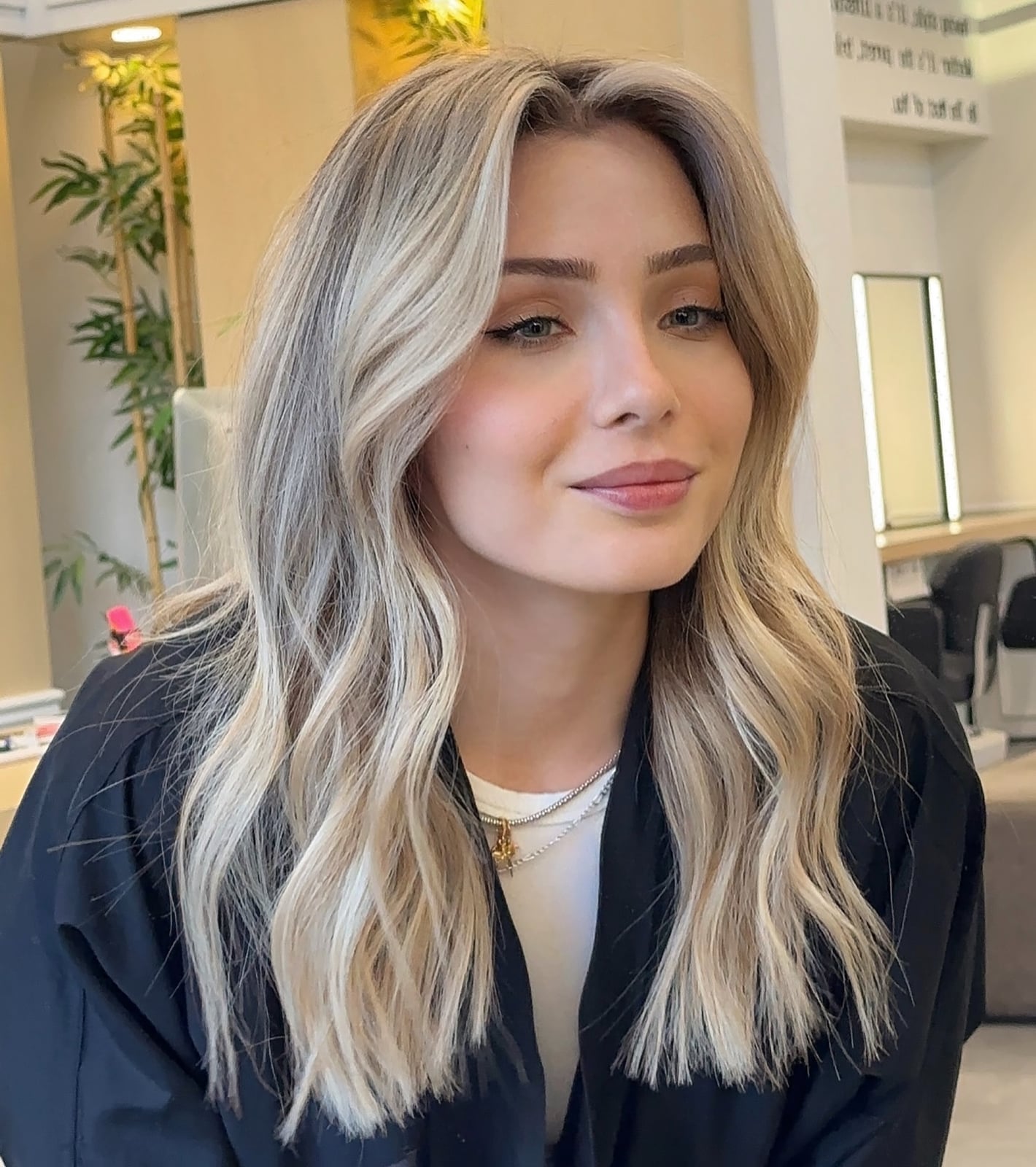
Thick, wavy hair can swallow a balayage if the placement is too timid. This version uses face-framing bangs and layers at collarbone length so the ash blonde has enough surface area to show clearly. The soft waves and middle parting break up the density, and the blonde tones are blended close to the root to avoid a harsh line. Ask your colorist for: collarbone length, face-framing bangs, ash blonde balayage.
Who should pass? If your hair is very fine, the weight of thick waves and bangs may overwhelm the texture. For the rest, a sea salt spray on damp hair, scrunched and air-dried, keeps the wave pattern alive without heat. Trim the bangs as they start grazing your eyes, and schedule a layer refresh every eight weeks. The upkeep is consistent but not punishing.
Collarbone Ash Blonde Balayage With Face-Framing Layers, Wavy
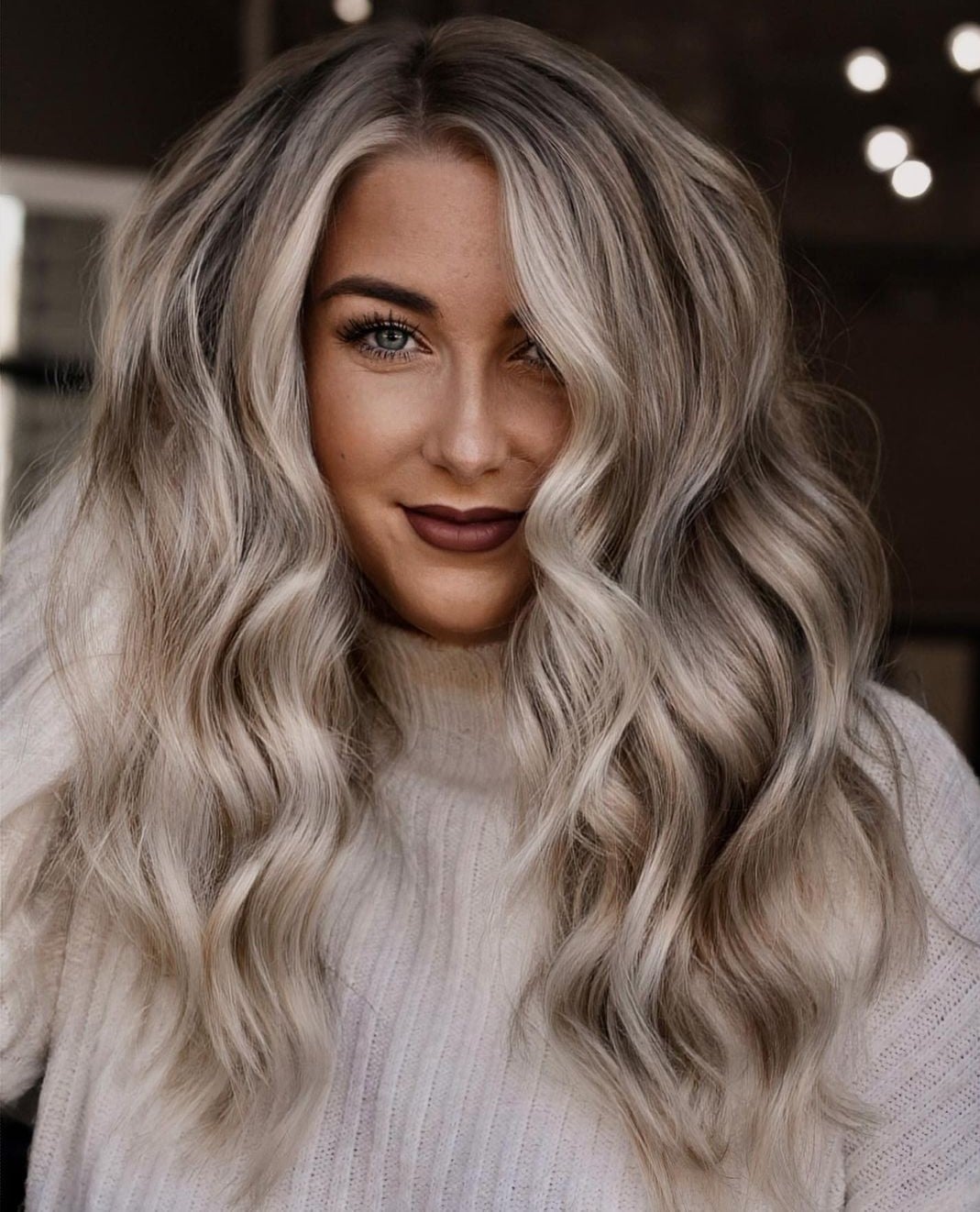
Can you get loose waves on fine hair without spending twenty minutes with a curling iron? Yes, but the cut has to do some of the work. This collarbone length with face-framing layers and a middle part gives fine, wavy texture enough shape that the waves form naturally after a quick scrunch. The ash blonde balayage adds dimension, so the hair reads as fuller than it actually is. Ask your colorist for: collarbone length, face-framing layers, ash blonde balayage. A salon appointment is the way to go here, because the fine texture needs precise layer placement to avoid looking stringy. At home, a light hold spray on damp hair, scrunched and left to air-dry, delivers the wave pattern without the heat damage.
Collarbone Honey Blonde Balayage Lob
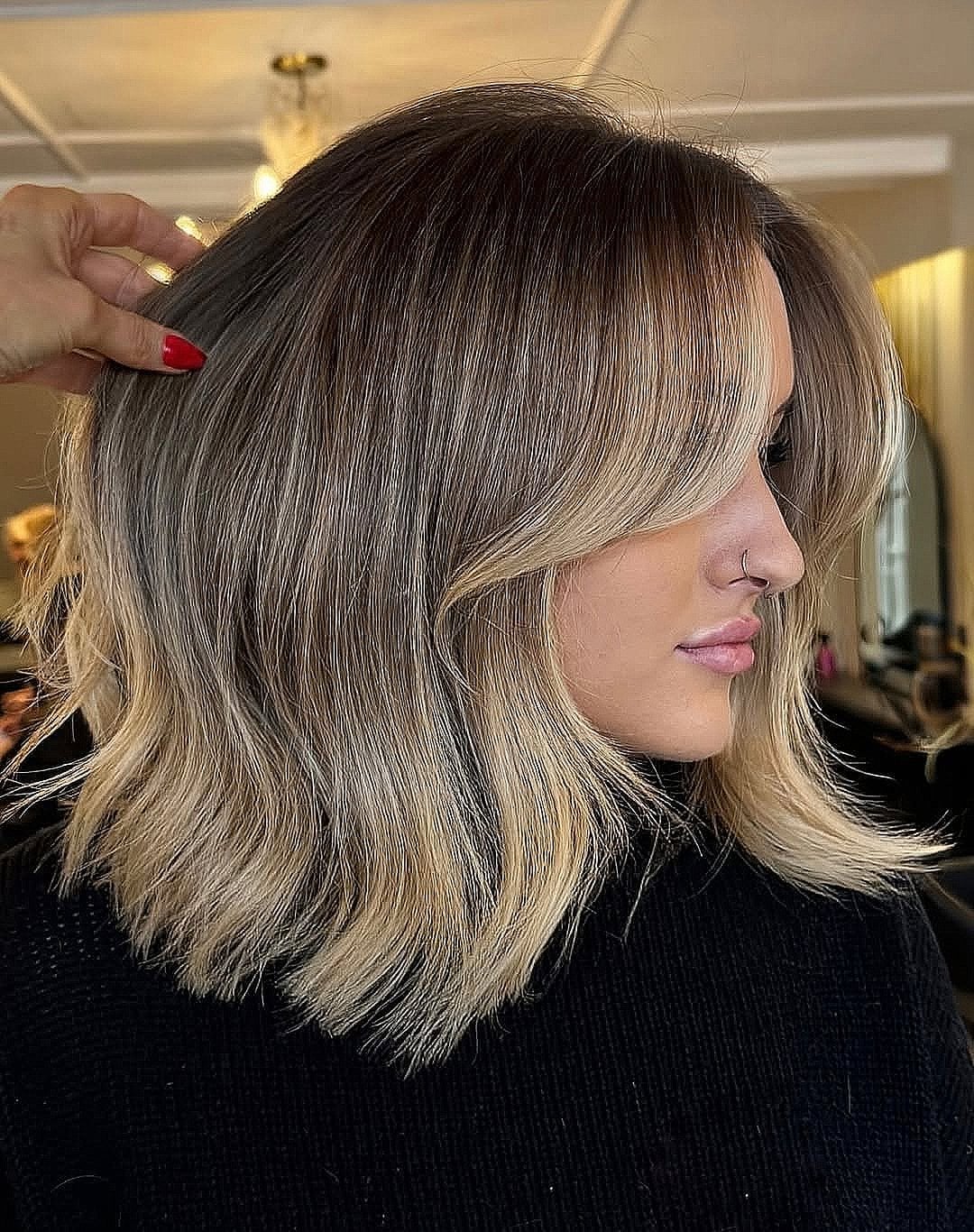
Honey blonde sits on the warm side of the spectrum, so it has a sun-kissed look. This collarbone lob has soft layers and curtain bangs, with a honey blonde base and lighter blonde balayage painted through the mid-lengths and ends. The loose waves and middle parting keep the warmth from feeling heavy. Ask your colorist for: collarbone lob, curtain bangs, honey blonde balayage. Honey tones can drift toward brassiness faster than ash tones. A purple shampoo used once a week keeps the warmth in check without stripping the lighter pieces. The curtain bangs blend into the layers, so the grow-out phase is forgiving, and the lob shape holds for about six to eight weeks before the ends need a trim.
Collarbone Beige Blonde Balayage Lob
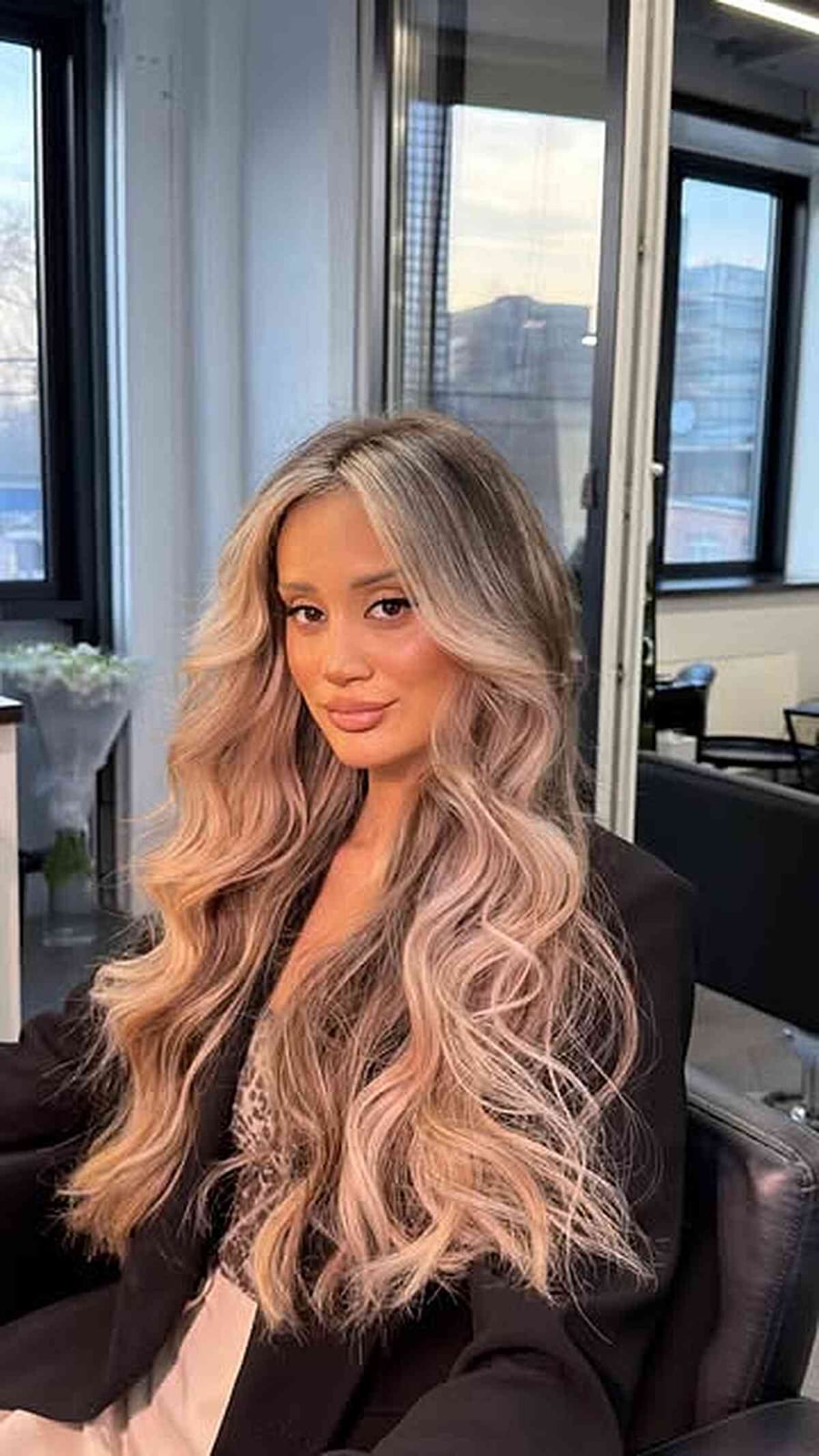
The beige blonde lob works because the tone sits between ash and gold, warm enough to brighten but cool enough to skip that orange undertone. Wavy, medium density hair at collarbone length lets the subtle balayage move through the lengths without overwhelming the curtain bangs. Ask your colorist for: collarbone lob, beige blonde balayage, curtain bangs. The middle part and soft waves keep the whole shape balanced, so the lighter pieces land where they matter most.
Round and round faces benefit from the curtain bangs, which sweep outward and soften the hairline. A lob at this length keeps the curtain bangs visible and not lost in longer layers. Plan for a trim every six to eight weeks to maintain the blunt ends that keep the beige blonde looking fresh and not faded.
Collarbone Platinum Blonde Balayage With Soft Waves
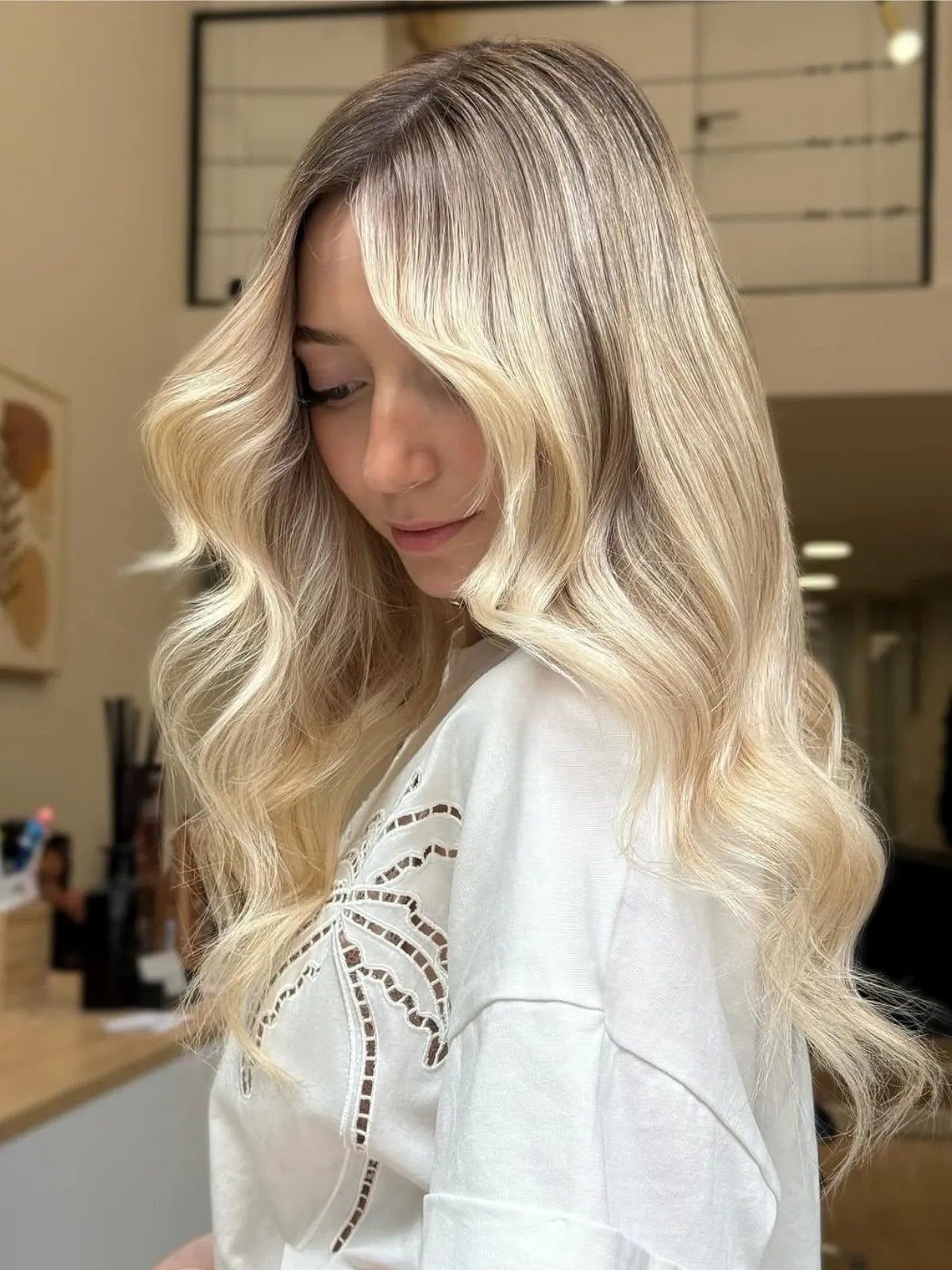
A common mistake with platinum is lifting too much hair in one appointment, which stresses the cuticle and leaves the base uneven. Thick wavy hair at collarbone length can carry the brightness, but the lift needs to happen over two to three sessions if you start darker than a level six. Ask your colorist for: collarbone length, curtain bangs, platinum balayage. The soft waves and curtain bangs help the lighter strands blend rather than sit in harsh blocks. This look is a salon commitment: expect about three hours for the initial application and a toner refresh every four to six weeks.
Collarbone Butter Blonde Balayage With Soft Waves and Curtain Bangs
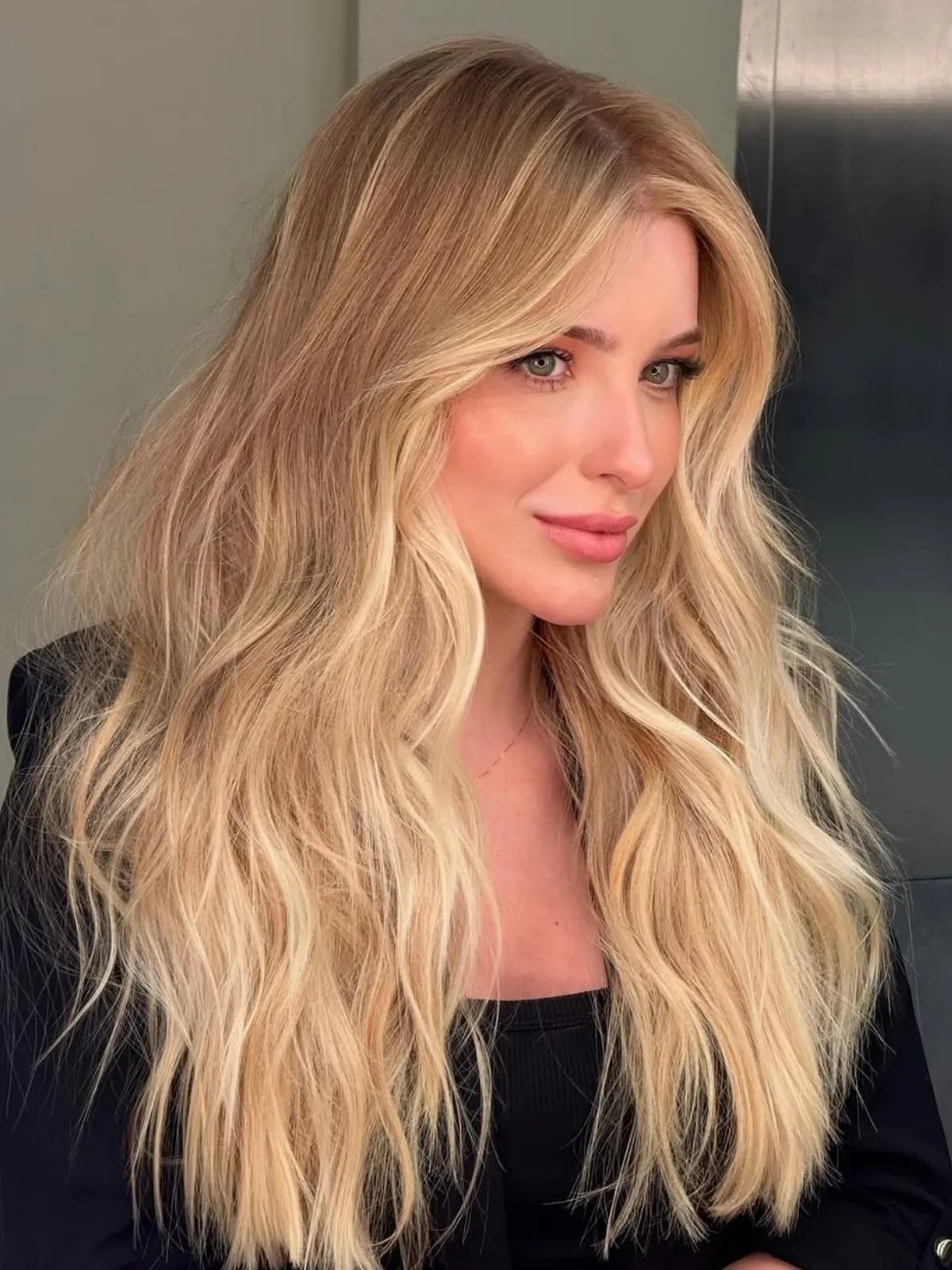
Butter blonde relies on a warm yellow base with enough creaminess to avoid the school-bright yellow that washes out thick textures. The balayage application starts mid-length and feathers upward, leaving the root area untouched so the color reads softer at the crown. Ask your colorist for: butter blonde balayade, collarbone length, curtain bangs. Thick wavy hair holds the soft waves well, and the curtain bangs frame the face without shortening the overall length.
A smoothing serum on damp hair before blow-drying keeps the cuticle flat and the butter tone reflective. The texture stays glossy through the second day if you sleep on a silk pillowcase. Plan a trim every six to eight weeks to keep the lob shape precise.
Collarbone Creamy Blonde Balayage With Soft Waves, Wavy
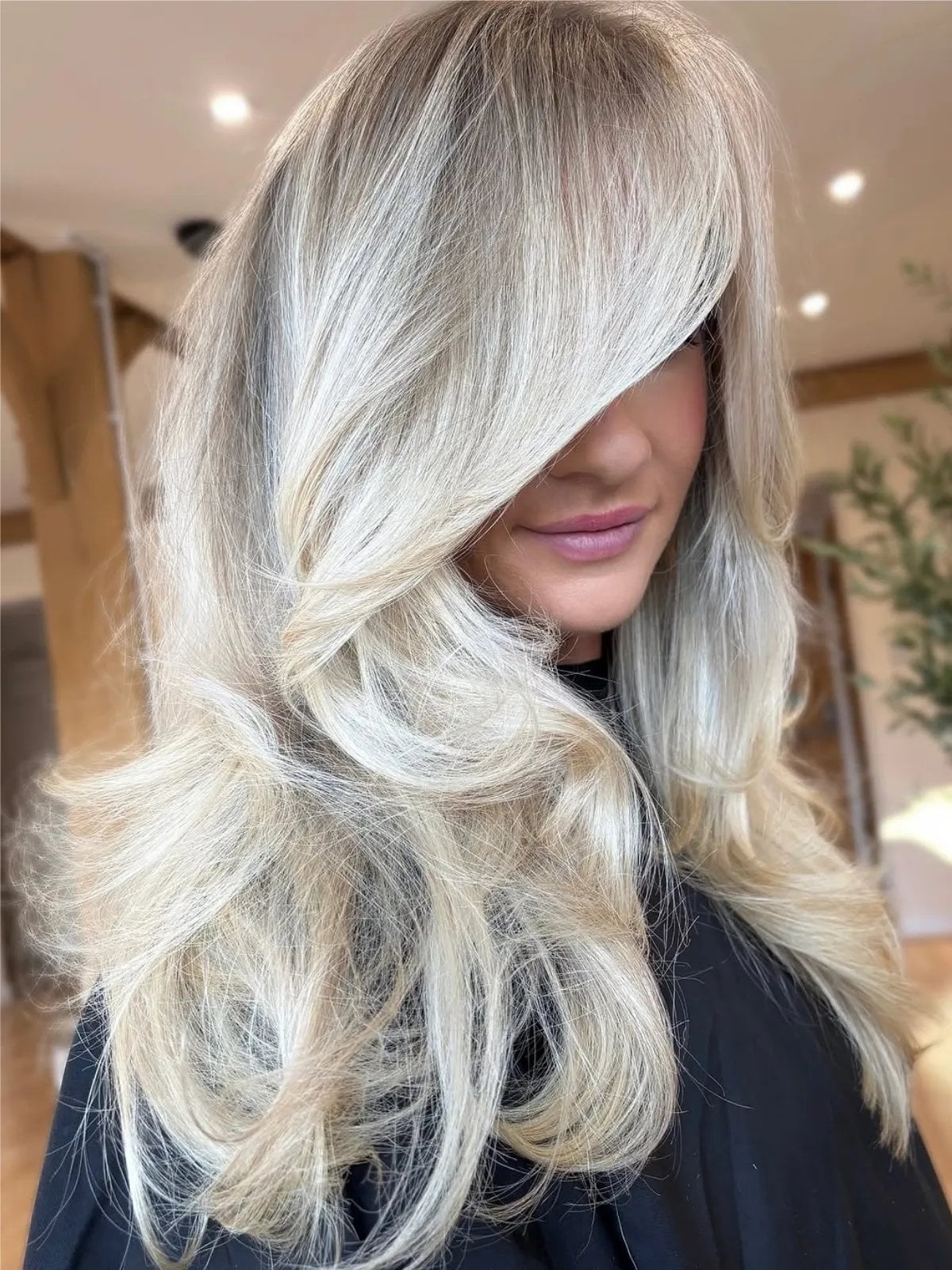
The creamy blonde here is a soft gold with a whisper of beige, avoiding the stark contrast that makes high-contrast blondes look sharp on thick wavy textures. The soft waves and curtain bangs let the creamy sections sit at the curve of the face, drawing the eye outward. Ask your colorist for: creamy blonde balayage, collarbone length, curtain bangs. The blowout with soft waves adds movement without needing a curling iron every morning.
Achieving this creamy blonde on dark bases often requires two to three sessions spaced four weeks apart. The lift takes time because the goal is a translucent tone, not a flat yellow lift. Plan for a gloss refresh every six weeks to keep the creamy tone from tipping into brassy gold.
Collarbone Dark Blonde Balayage With Curtain Bangs, Wavy
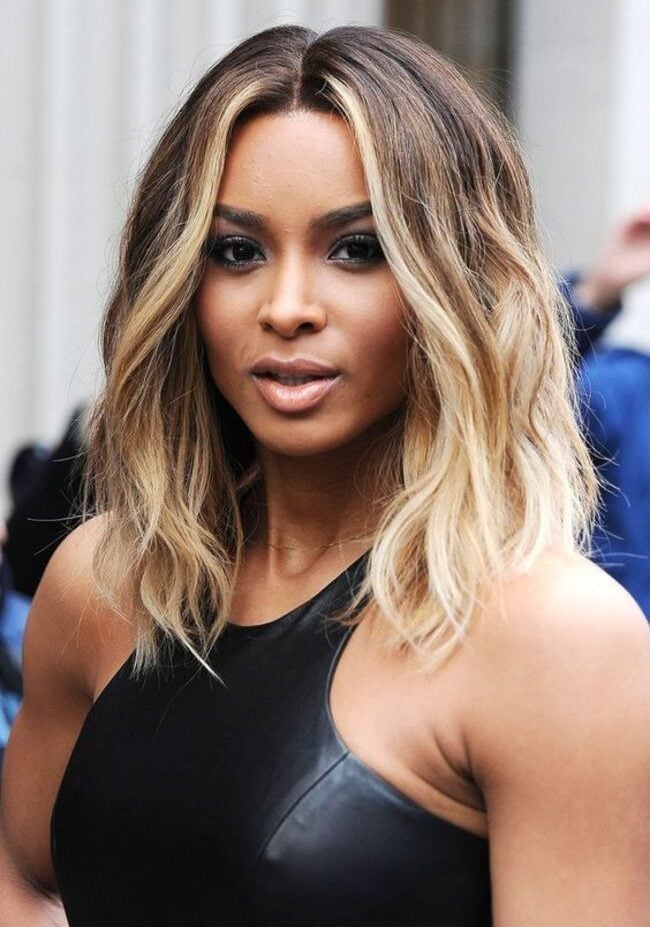
Wondering if dark blonde will look muddy? Thick wavy hair at collarbone length provides enough texture and movement that the lighter highlights stand out and the darker base stays grounded. Ask your colorist for: dark blonde balayage, collarbone length, curtain bangs. The wavy blowout and middle part keep the color balanced: the lighter strands sit at the front and crown, while the darker sections add depth through the lengths.
The curtain bangs soften the transition from dark to light, so the root line never feels harsh. This look suits oval and heart faces best because the side curves of the curtain bangs mirror the face shape. A trim every six to eight weeks keeps the lob shape clean and the layers from tangling.
Collarbone Ash Blonde Balayage With Darker Roots
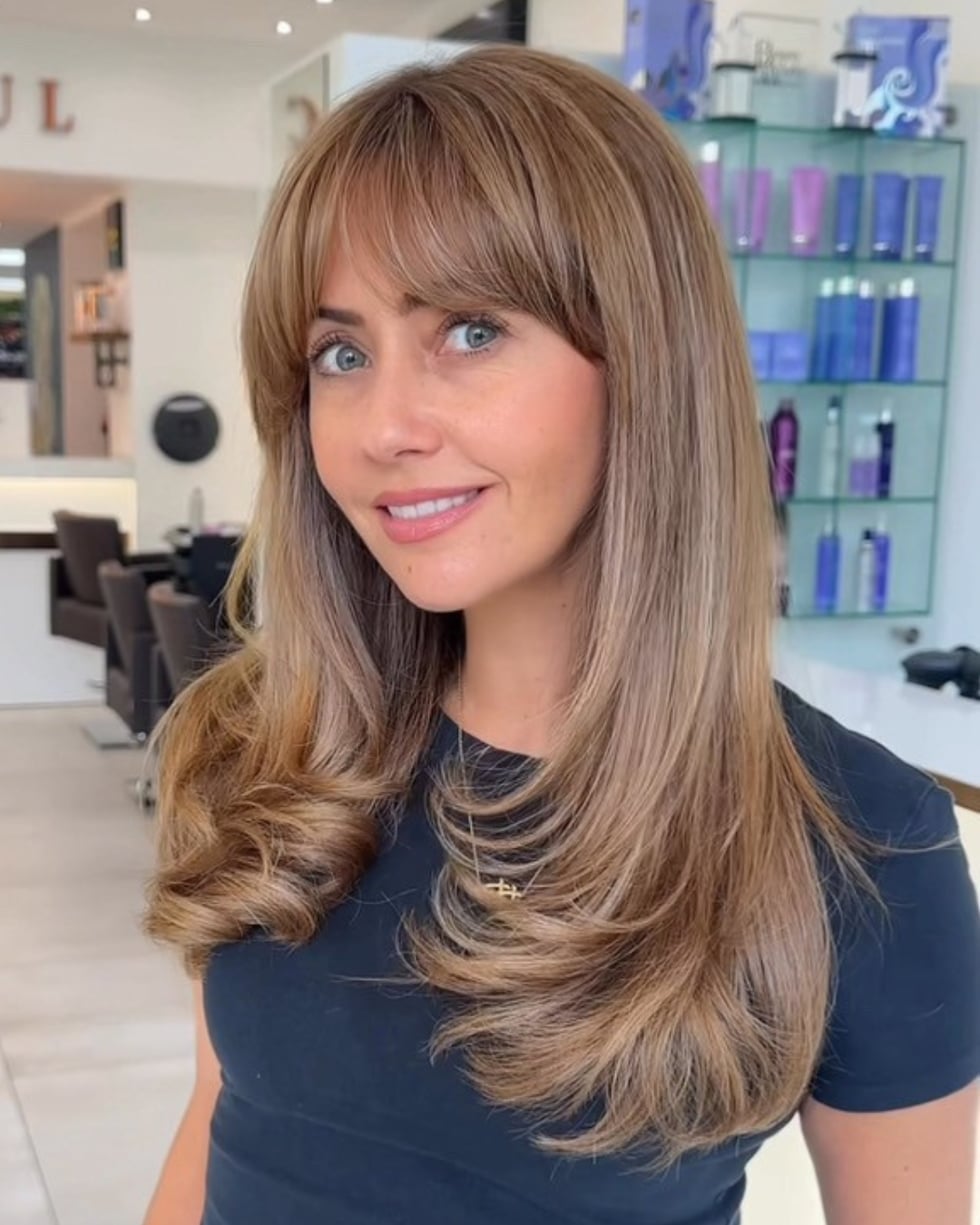
Darker roots with an ash blonde balayage is a low-commitment approach to blonde: the grow-out is built into the design instead of being a problem to fix. Collarbone-length layers and curtain bangs frame the face without demanding constant trims, though the fringe needs a touch-up every four weeks. The ash tone is the part that takes work. A purple shampoo once a week keeps it from pulling brassy, and a toning appointment every six to eight weeks is standard. Ask your colorist for: collarbone length, curtain bangs, ash blonde balayage with dark roots. This is a salon-only job; a root shadow at the bowl is what makes the grow-out look natural rather than overdue.
Collarbone Ash Blonde Balayage With Face-Framing Layers, Close-Up Take
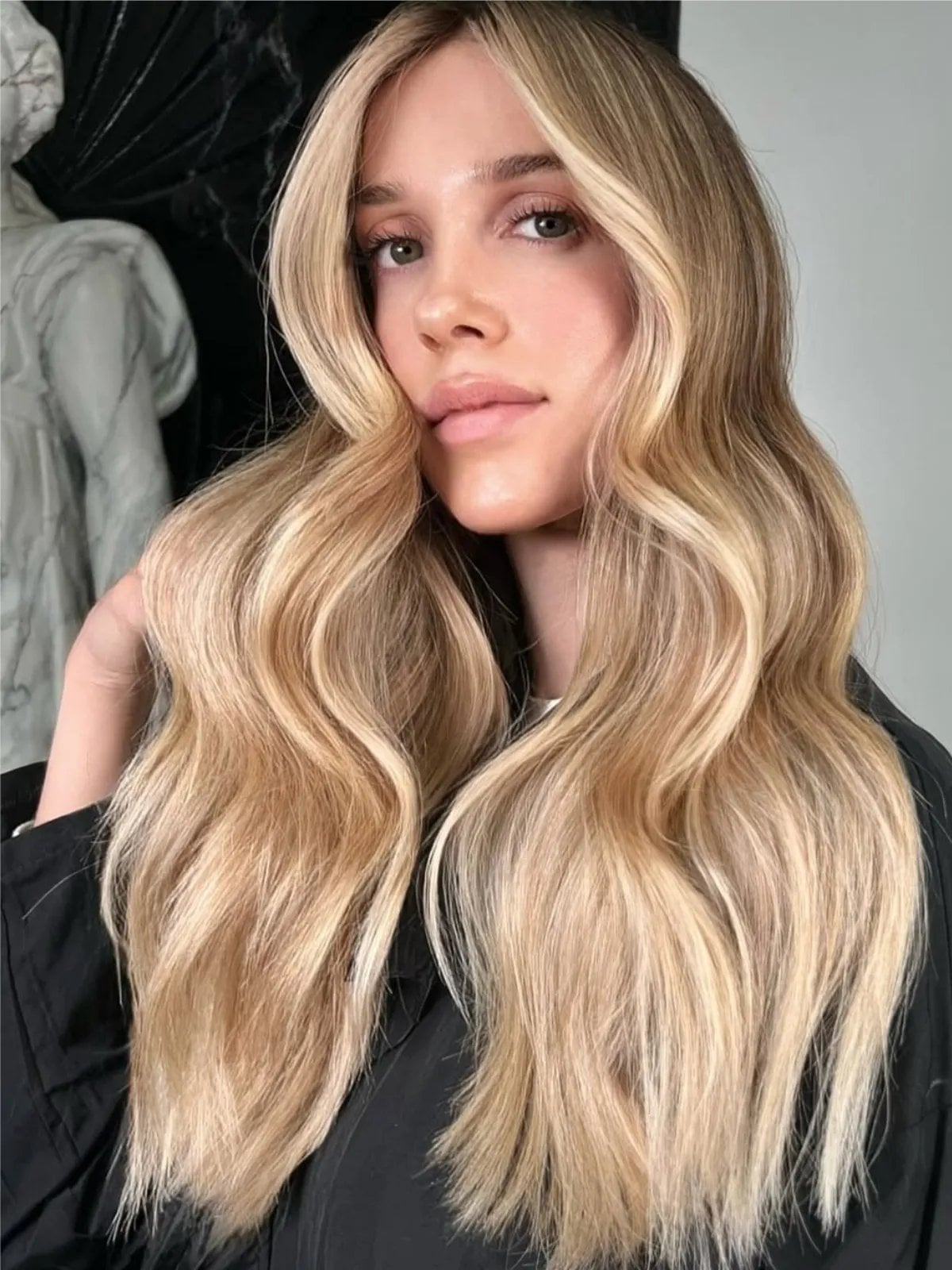
Face-framing layers and a balayage that starts darker at the roots create a softer transition than chunky highlights, which tend to leave a visible band at the regrowth line. Here, the lighter pieces are painted closer to the face, so the brightness lands where you want it without the whole head going blonde. The curtain bangs and middle part pull the dimension forward, which works well for thick, wavy hair that can hold the shape without product. The one real drawback: if your hair is fine, the darker root area can look sparse between toning appointments. Ask your colorist for: collarbone length, curtain bangs, face-framing layers, ash blonde balayage with dark roots. This is not the look for anyone who wants uniform color from root to tip.
Collarbone Ash Blonde Balayage With Long Layers
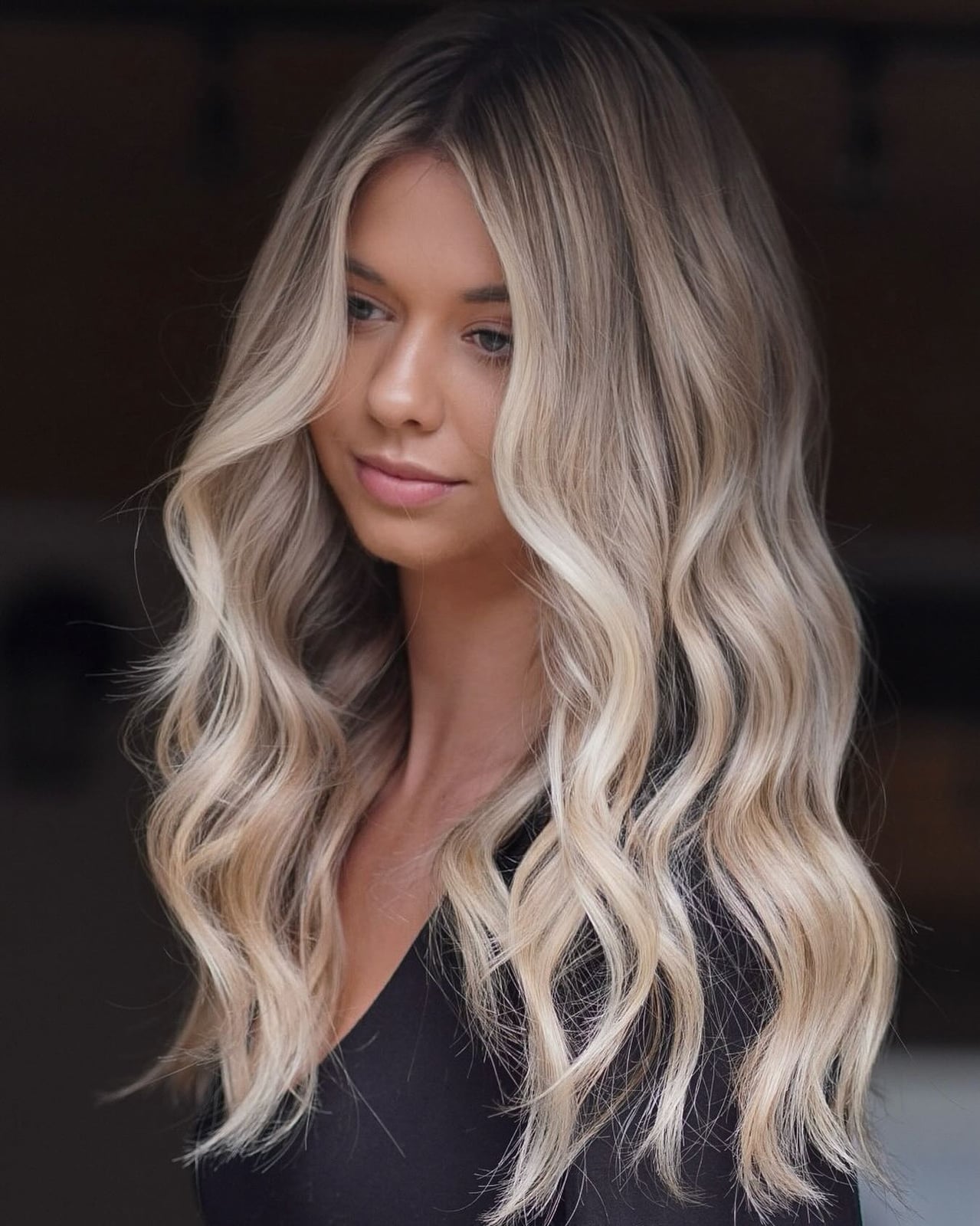
Balayage works by hand-painting color onto sections of hair, which means the transition from darker roots to lighter ends is seamless rather than striped. On mid-back length hair with long layers and curtain bangs, the technique keeps the ash blonde from looking flat: the lighter pieces sit on the surface of each layer, catching light at different points. The middle part and loose waves emphasize the movement, so the color shifts as the hair moves. A salon visit every ten to twelve weeks refreshes the lighter sections without touching the roots, which is the main advantage over a full foil highlight. Ask your colorist for: collarbone length, long layers, curtain bangs, ash blonde balayage. The process takes about three hours, but the grow-out buys you a solid two months of low-maintenance color.
Shoulder Champagne Blonde Balayage
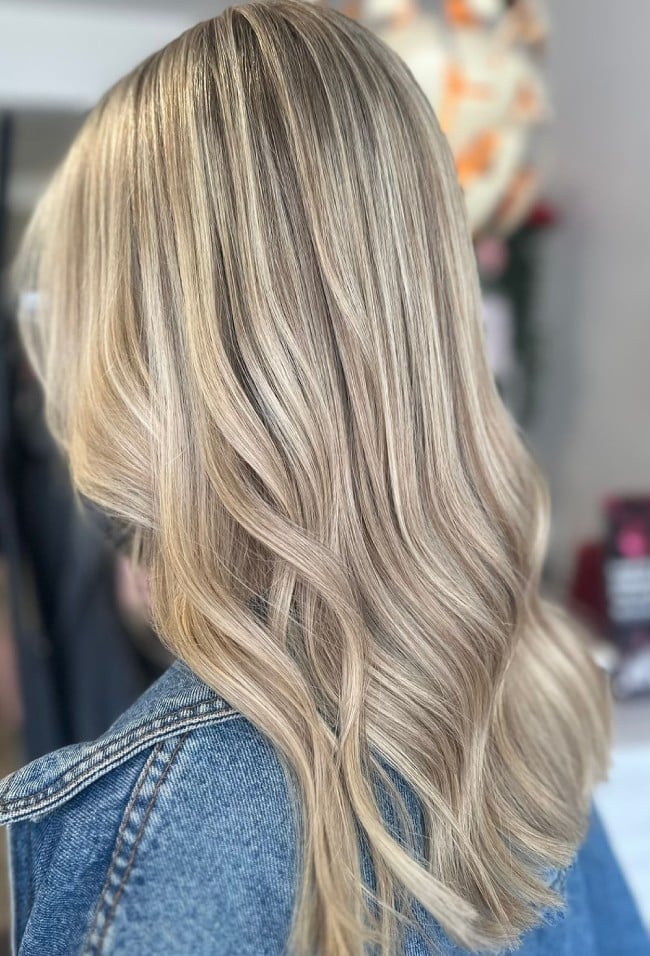
A champagne blonde balayage on shoulder-length hair gives a soft, blended look. The color sits between beige and pale gold, with subtle highlights that blend into the base. The back view shows how the lightness concentrates on the ends while the root area stays darker, which adds depth. To style it: blow-dry with a round brush for volume at the crown, then wrap sections around a large-barrel iron for soft waves. A spritz of texture spray at the ends keeps the wave from falling flat by midday. Ask your colorist for: shoulder length, champagne blonde balayage. The middle part keeps the shape symmetrical and the color distribution even.
Shoulder Caramel Blonde Balayage With Loose Waves
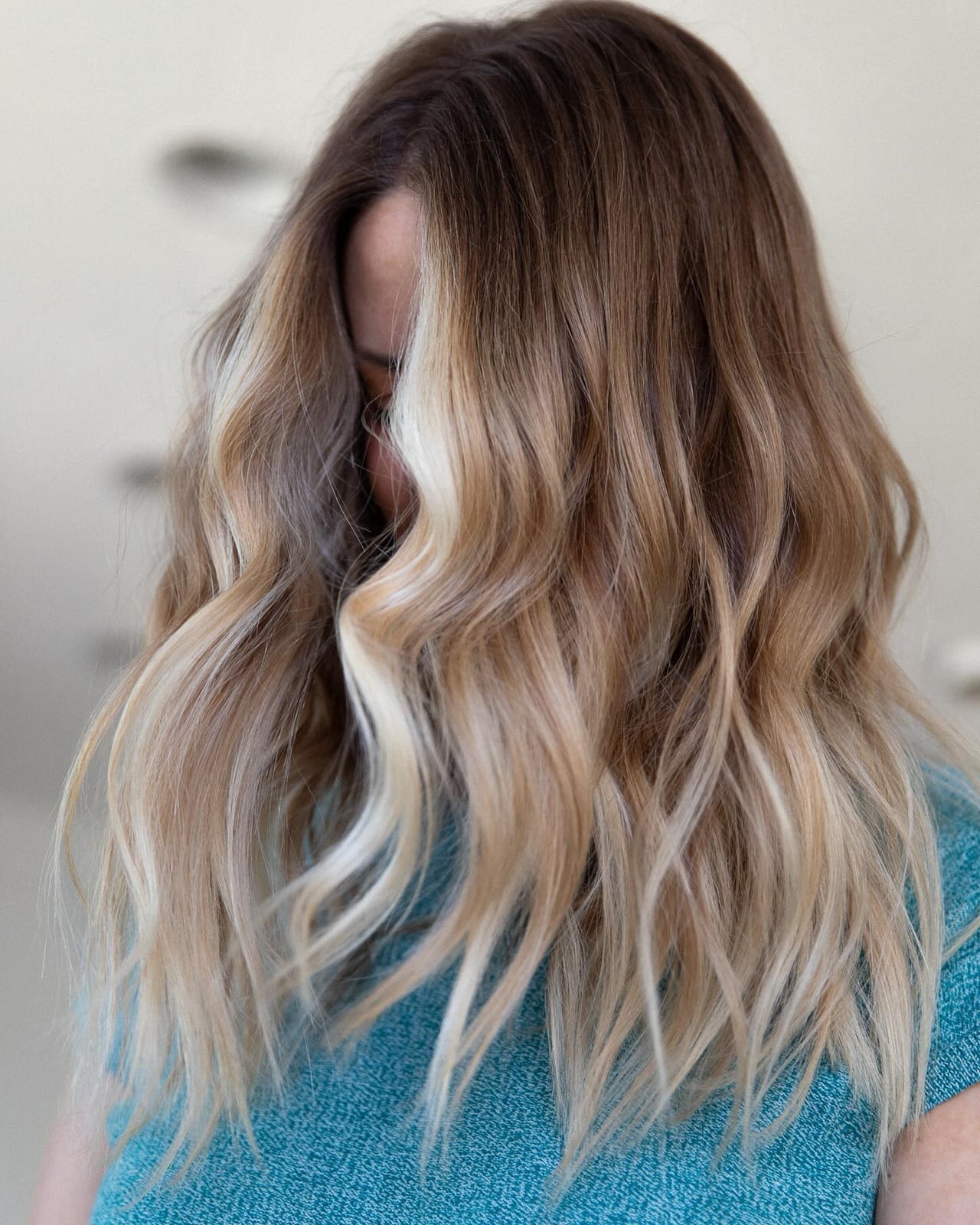
How do you ask for a caramel blonde that does not look like a box dye? Lead with the base color: a darker brunette root that melts into warm caramel tones through the lengths. The side part and loose waves show off the gradient, with the lighter pieces hitting the waves’ high points. This is a salon color, caramel requires a warm toner that can pull orange if applied over a lifted base, so the formulation matters. DIY caramel tends to skew too red or too gold. Ask your colorist for: shoulder length, side part, caramel blonde balayage. Bring a photo of the exact tone you want; caramel is a wide category, and everyone’s idea of it is slightly different.
Shoulder Golden Blonde Balayage With Smooth Blowout
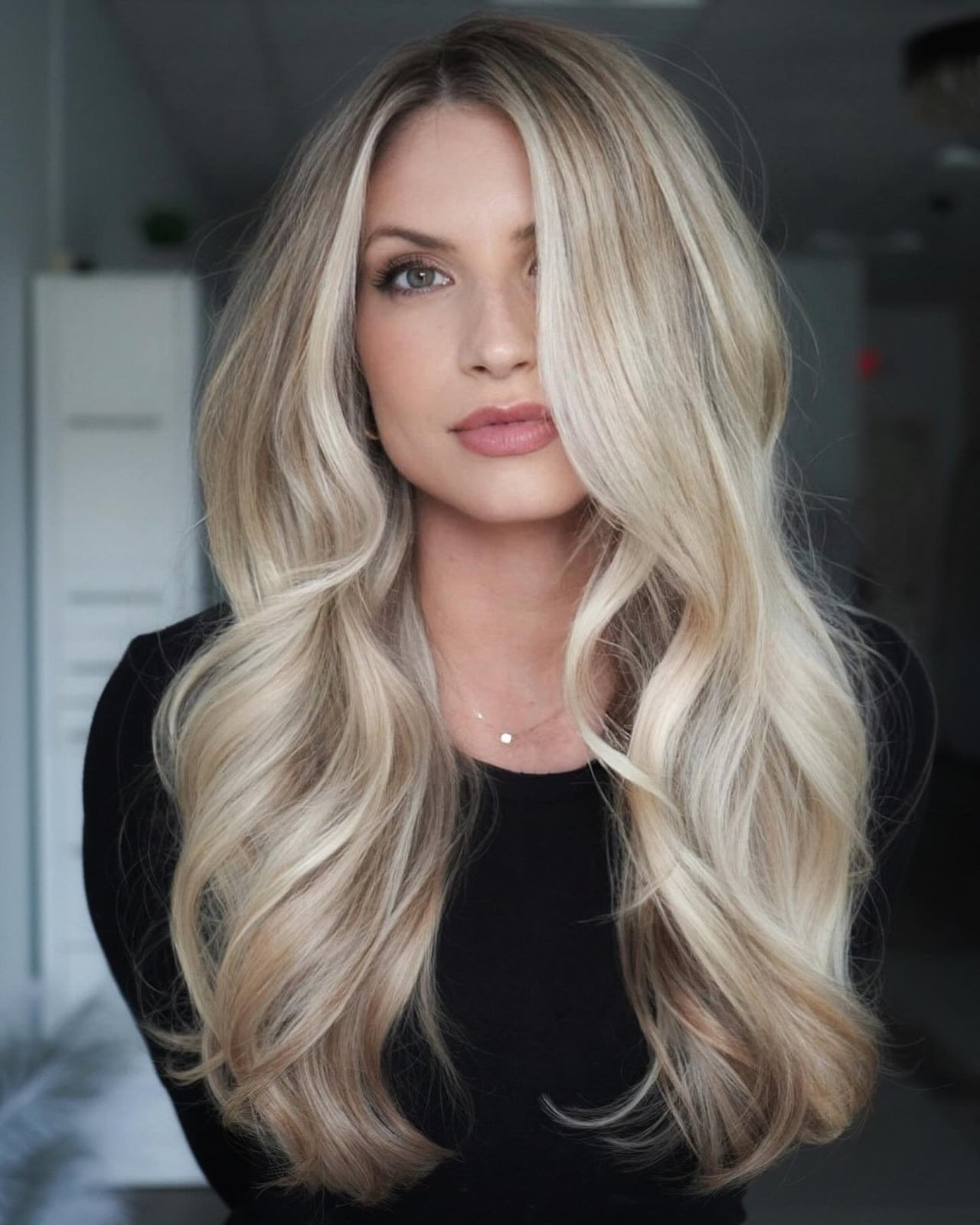
A smooth blowout on shoulder-length hair with long layers shows exactly what a root shadow can do for platinum blonde balayage. The middle part and fine, straight texture keep the look polished rather than fussy. Fine hair starting at shoulder length benefits from the root shadow, which softens the grow-out line and buys you about six weeks between appointments.
Ask your colorist for: shoulder length with long layers, golden blonde balayage. Use a medium barrel brush to get that sleek finish at home. A trim every six to eight weeks keeps the ends healthy and the shape sharp. The platinum pieces stay bright with a toning appointment every four to six weeks, but the root shadow means you are not racing back to the salon the second you see a half inch of growth.
Mid-Back Ash Blonde Balayage With Darker Roots
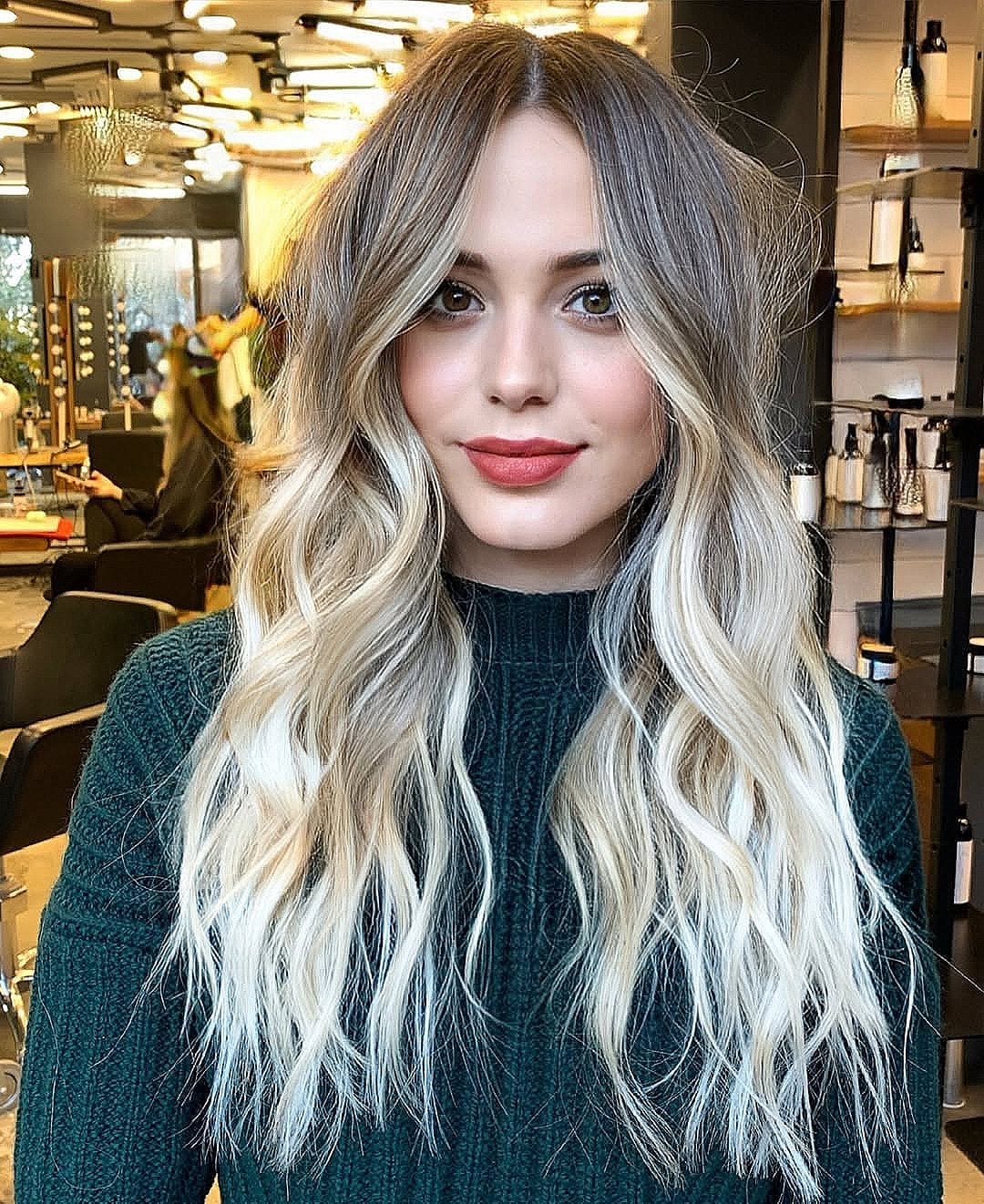
An ash blonde base with platinum blonde balayage reads cool and deliberate, especially when the darker roots stay visible. The mid-back length, layers and wispy bangs give it a soft, lived-in shape that works well for winter. Thick, wavy hair at this length carries the high contrast without looking heavy.
Ask your colorist for: mid-back length, layers, curtain bangs, ash blonde balayage with dark roots. The middle part lets the lighter pieces fall where they naturally would. A texturizing spray on the lengths is enough to finish it. Trim the fringe as needed and layers every eight weeks. This is a salon color, not something you try at home. The finish typically stays cool through the colder months.
Mid-Back Platinum Blonde Balayage With Root Shadow
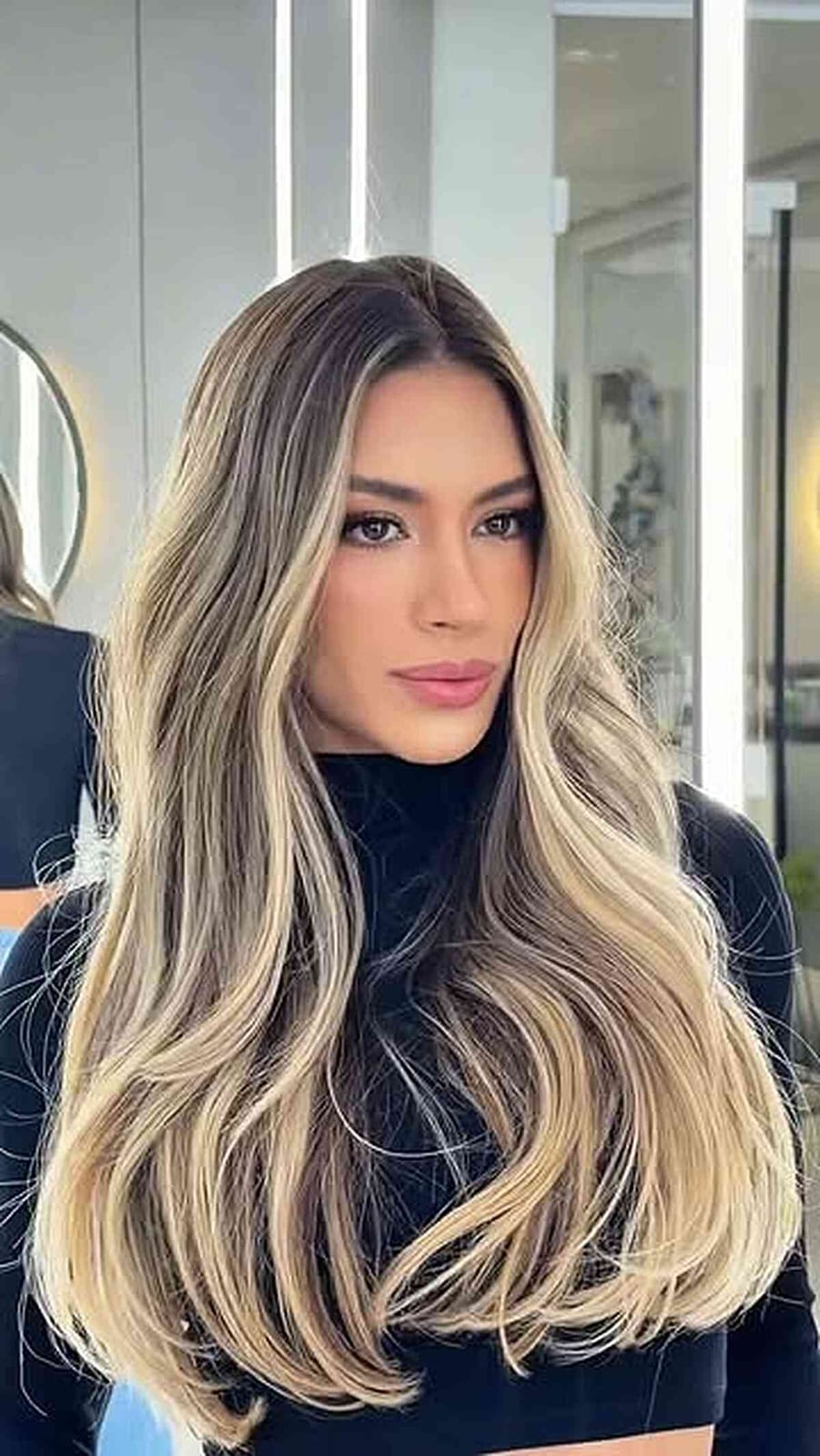
The common mistake with platinum blonde balayage is skipping the root shadow, which leaves a harsh line the second your hair grows. This mid-back length with layers and curtain bangs avoids that trap entirely. The dark blonde base blends into lighter balayage pieces, so the grow-out is gradual rather than obvious.
Ask your colorist for: mid-back length, layers, platinum blonde balayage with root shadow. The one real drawback is the time in the chair: achieving this from a darker base takes multiple sessions to avoid damage. A salon is the only safe route here. A volumizing spray at the roots gives the waves more lift. Trim every eight to ten weeks. The root shadow is not a compromise, it is the thing that makes this look work.
Mid-Back Dark Blonde Balayage With Curtain Bangs
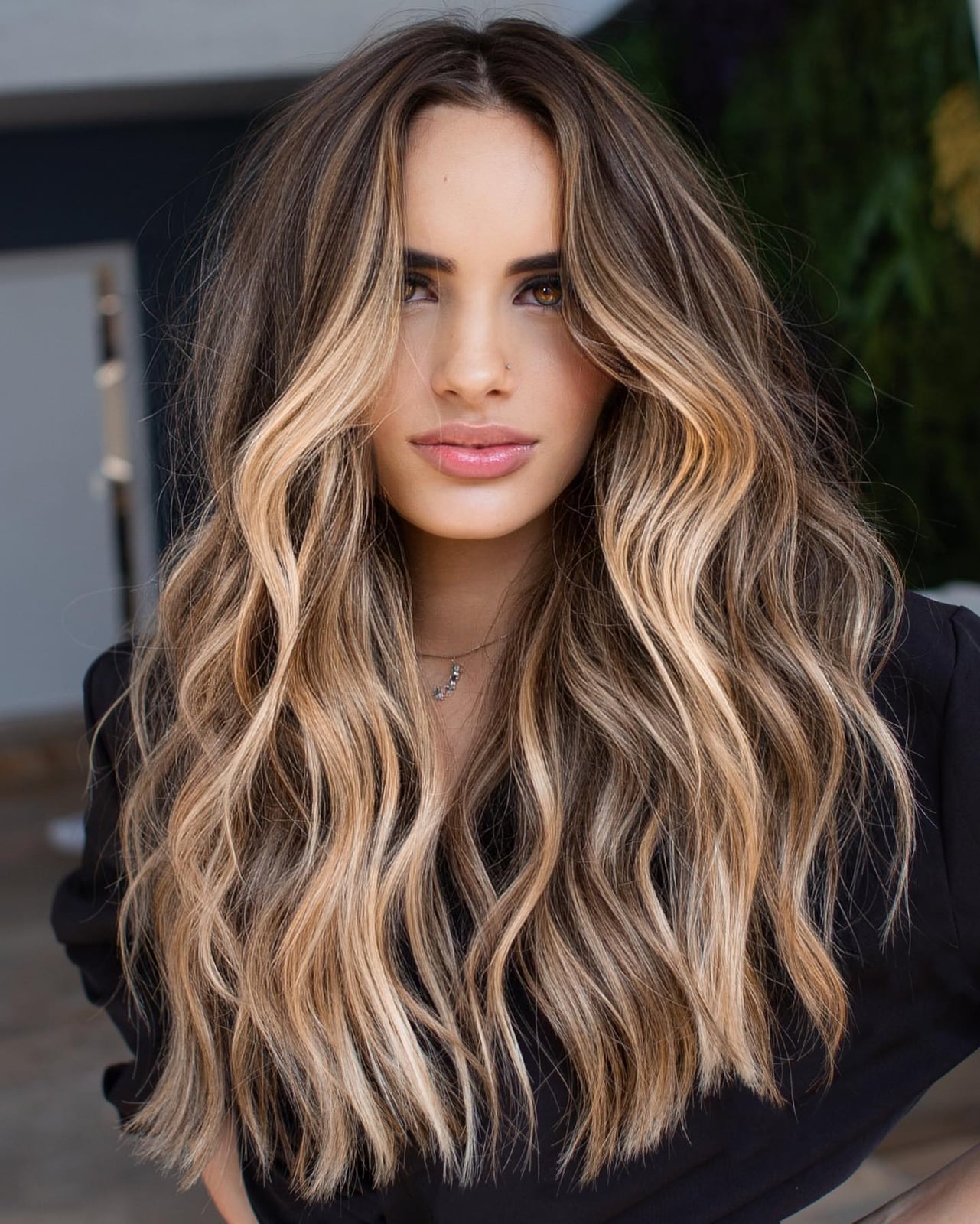
A dark blonde base with lighter balayage highlights is the most straightforward way to add dimension without a full commitment to blonde. The mid-back length and thick, wavy texture carry the color naturally. Curtain bangs frame the face without demanding daily styling. Ask your colorist for: mid-back length, curtain bangs, dark blonde balayage. The technique uses hand-painted highlights that stay concentrated on the mid-lengths and ends, so the roots stay darker and the grow-out is low maintenance. Soft waves from a curling iron finish the look in under fifteen minutes. Trim the fringe as needed and layers every eight weeks.
Mid-Back Golden Blonde Balayage With Loose Waves
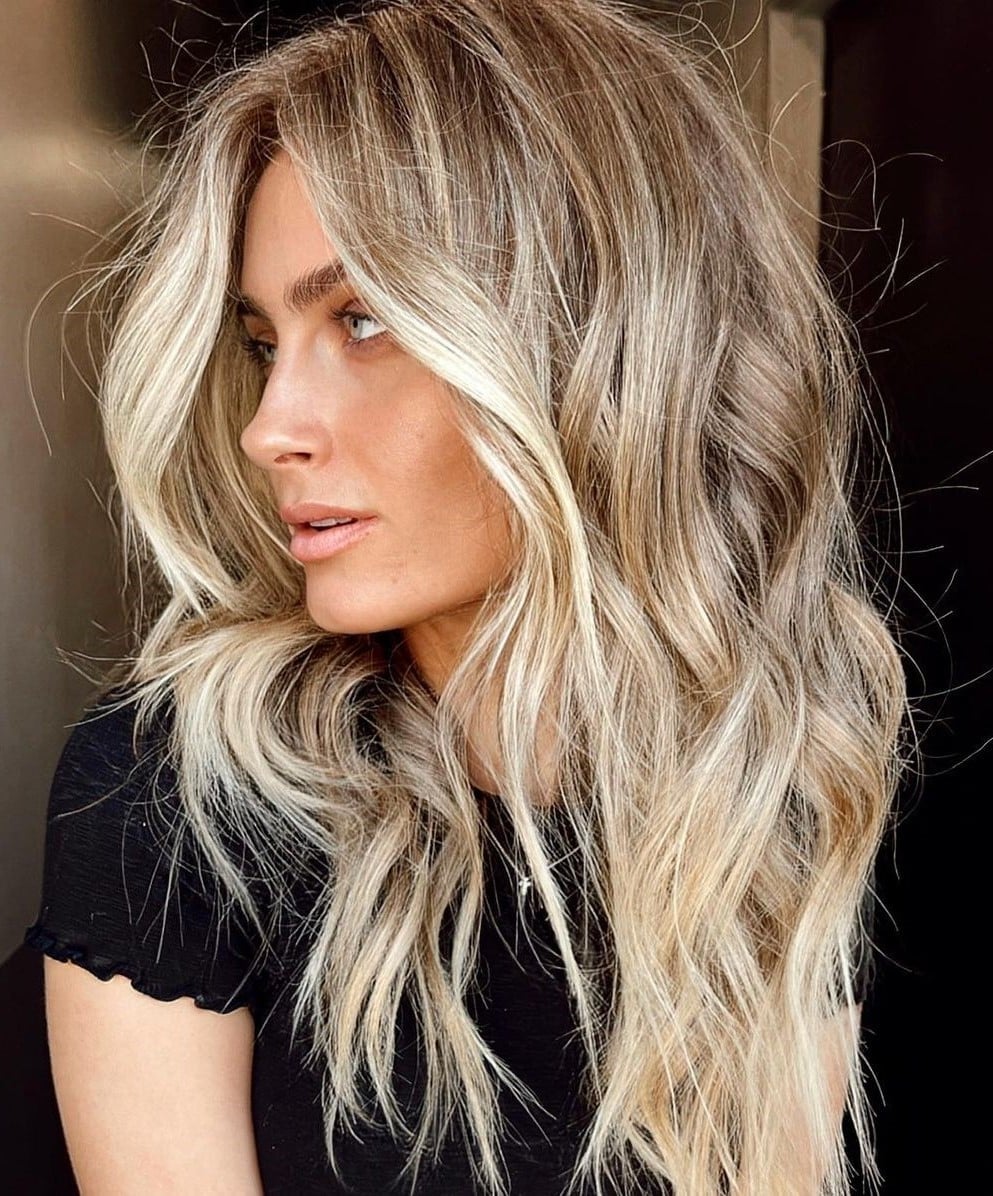
Lighter golden tones are woven through a darker base, so the color has depth instead of flatness. Thick, wavy hair at this length shows off the contrast best. Ask your colorist for: mid-back length, golden blonde balayage. The one real drawback is the time investment for darker bases: getting to this level of caramel highlights usually requires two sessions spaced six weeks apart to keep the hair healthy. The waves add separation. Trim every eight to ten weeks. The lived-in effect looks deliberate.
Mid-Back Caramel Blonde Balayage With Side Part
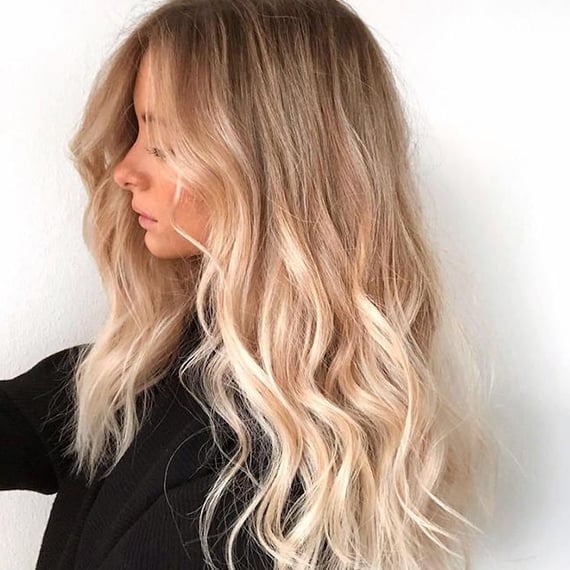
How do you keep a golden blonde balayage on thick, wavy hair from reading as one solid block of color? A side part and a caramel-toned base. That golden blonde base with lighter balayage highlights lands somewhere between warm and dimensional, and the side parting adds volume exactly where thick hair needs it most. The mid-back length means the layers have room to move without getting lost. Ask your colorist for: mid-back length, layers, side part, caramel blonde balayage. Use a curling iron to define the loose waves, and plan on a trim every eight to ten weeks to keep the shape clean.
The intensity of the golden blonde works here because the caramel undertones keep it from reading as brassy. Thick, wavy hair can handle bolder highlights without them looking stripey as long as the blend starts a few inches from the root. This is a color that adds depth rather than competing with natural texture.
Mid-Back Golden Blonde Balayage With Wavy Blowout
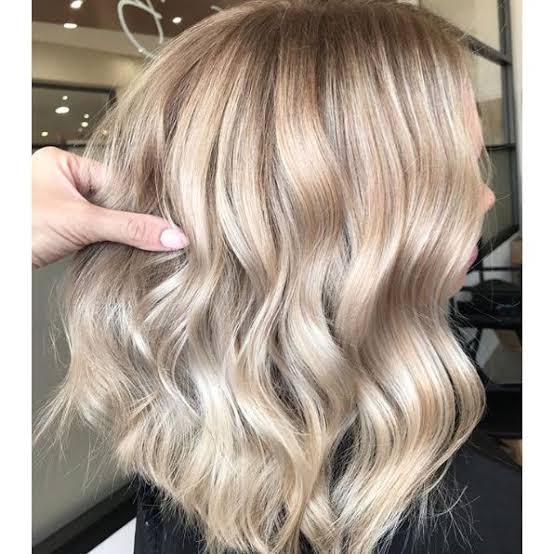
A champagne blonde base with lighter blonde balayage creates the kind of dimension that reads as expensive without requiring a high-maintenance root touch-up. The mid-back length and wavy blowout give the color room to catch the light from every angle. Ask your colorist for: mid-back length, golden blonde balayage, wavy blowout. Expect about three hours in the chair for the initial appointment. The champagne tones need a toning session every six to eight weeks or they can shift toward yellow. A large round brush is your best tool for the blowout at home.
Mid-Back Champagne Blonde Balayage
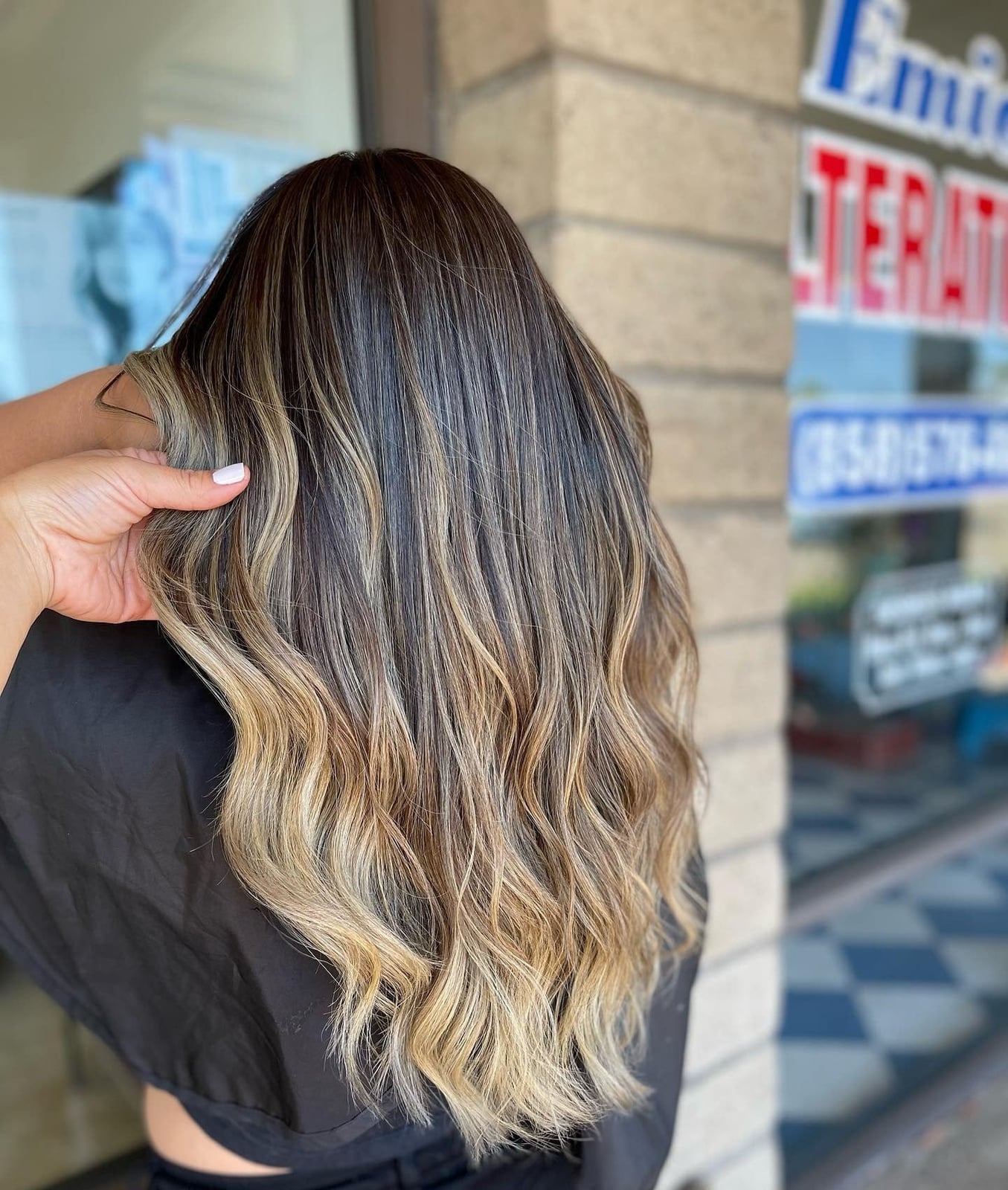
Face-framing bangs and an ash blonde balayage make for a combination that works especially well in spring, when lighter colors and softer outlines feel right. The mid-back length provides enough weight to keep the bangs from overpowering the silhouette, and the thick wavy texture adds natural fullness around the face. Ask your colorist for: mid-back length, face-framing bangs, ash blonde balayage. The loose waves and middle parting keep the look from feeling too polished for daytime events. A glossy finish and those soft pieces around the jaw are what make this read as put together without trying so hard.
An ash blonde balayage with face-framing bangs lands in a specific sweet spot: modern but not trend-driven, sophisticated but not stiff. The layers stop just below the shoulder, which means the shape holds up well between trims. The payoff is a color that deepens in indirect light and brightens in direct sun.
Mid-Back Ash Blonde Balayage With Face-Framing Bangs
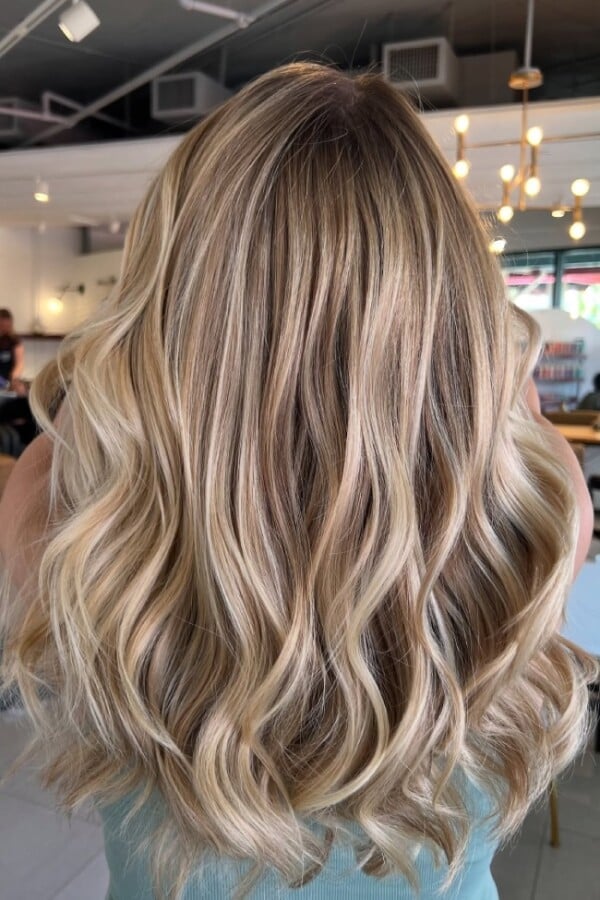
The creamy blonde balayage sits somewhere between a true ash and a neutral beige, which is a tricky balance to pull off. It’s not a champagne and not a silver, so it works for those who find platinum too pale and honey too warm. The mid-back length with long layers and loose curls allows the color to read as seamless from root to end. Ask your colorist for: mid-back length, long layers, creamy blonde balayage. The trade-off is that creamy blonde tones can go brassy within three weeks if you skip a purple shampoo. Thick wavy texture helps disguise any uneven fading, but the tech pushing for low maintenance is not lying.
Mid-Back Creamy Blonde Balayage With Loose Curls
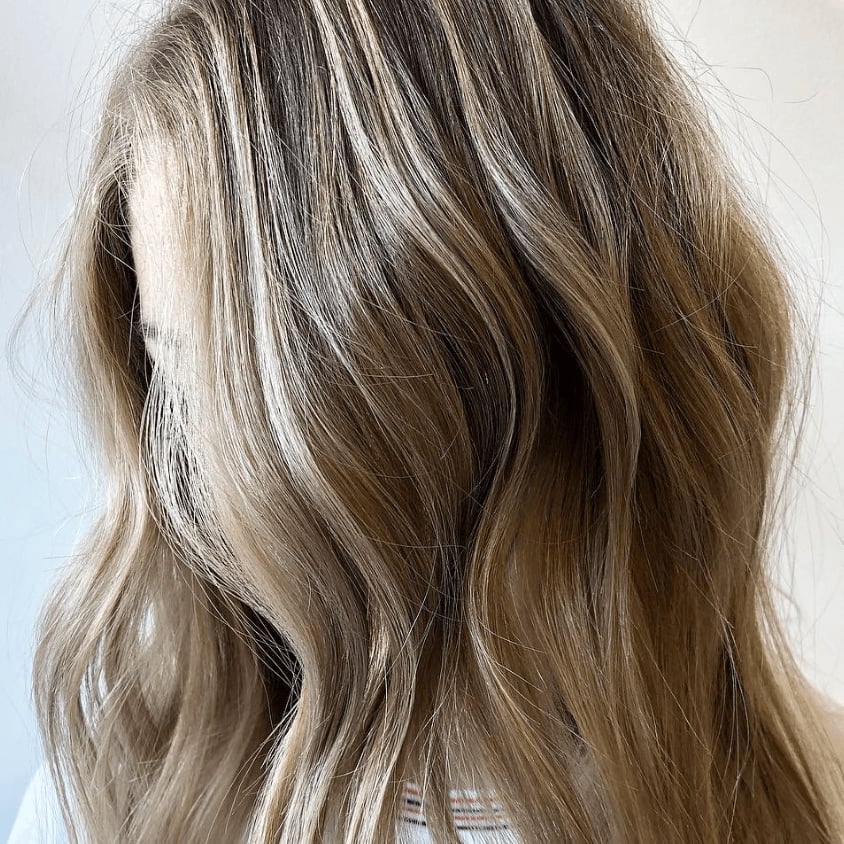
A honey blonde balayage on mid-back length hair with long layers is the kind of request that sounds simple but requires a colorist who can place highlights so they feel dimensional rather than dotted. The thick wavy texture catches the lighter pieces, so the color shifts as the hair moves. Ask your colorist for: mid-back length, long layers, honey blonde balayage. The seamless blend of honey tones avoids the stripe effect that can happen when balayage is painted too evenly. This is a color that reads as natural only because the technique starts a few inches from the roots and builds in intensity down the lengths.
Final Thoughts
For a low-maintenance blonde balayage, stick with warmer tones and a soft root melt. If you want more drama, go cooler with platinum or ash and a higher contrast between base and highlights.
- Use a purple shampoo once a week to keep brassiness away.
- Deep condition weekly to maintain vibrancy and prevent dryness.
- Schedule toning appointments every 8 to 12 weeks.
- Always apply a heat protectant before styling to preserve color.
Blonde balayage offers endless possibilities for a bright, dimensional look.