
Face framing highlights are a low-commitment way to add dimension and brightness around your face without a full head of color. Right now, the trend leans toward soft, lived-in tones that blend naturally with your base shade, so the grow-out is more forgiving.
This collection of 22 takes on simple face framing highlights covers everything from bold blonde streaks on dark brown hair to subtle caramel pieces on a collarbone cut. Whether your hair is fine and needs a lift, thick and wants a lighter feel, or you are tired of a visible grow-out line, there is a version here that works with your texture and your schedule.
Long Dark Brown With Bold Blonde Face-Framing Highlights
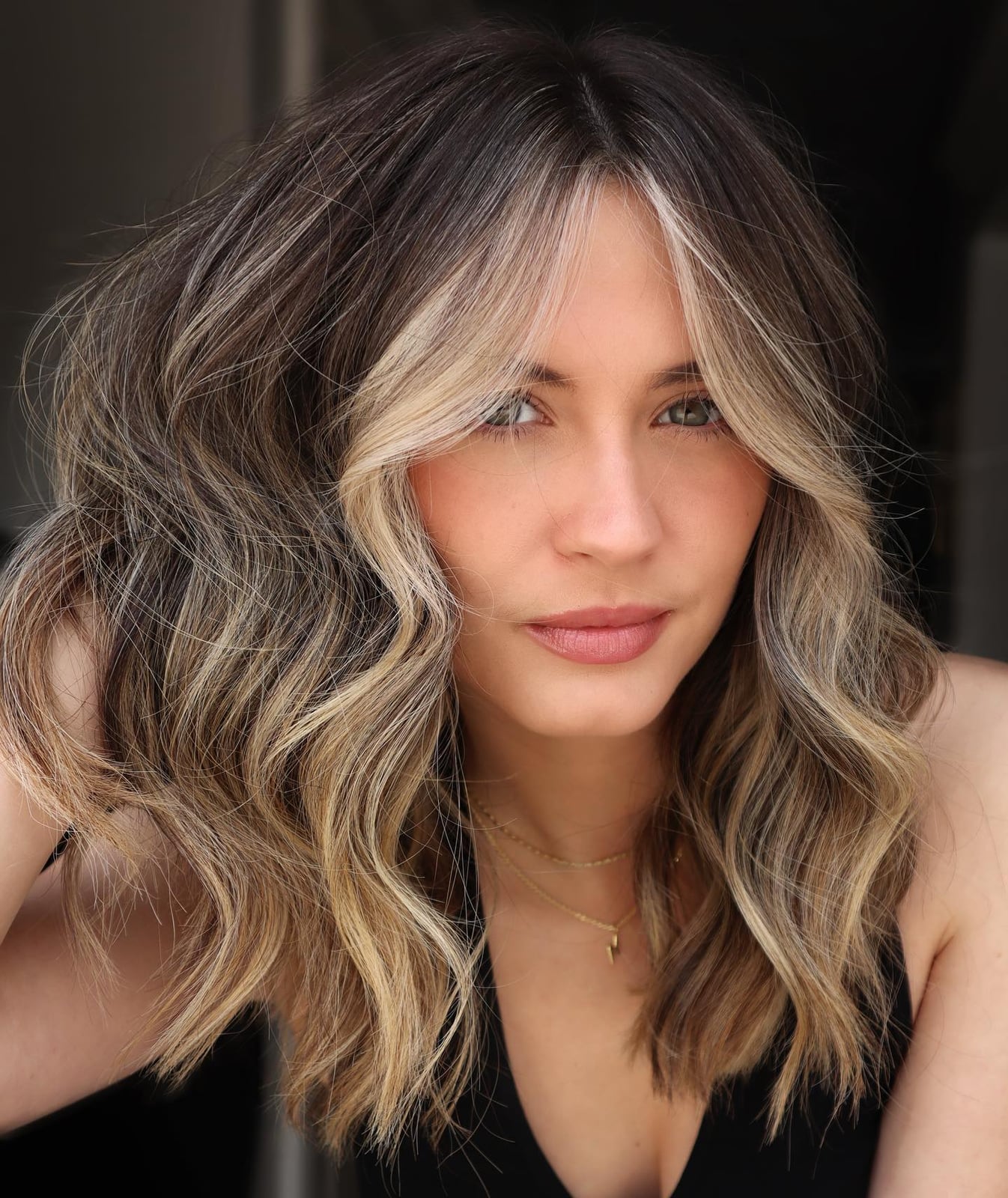
There is a difference between a highlight that sits politely at the back and one that actually earns its keep around the face. Here, bold blonde pieces start at the hairline and travel down through long layers, so the contrast lands right where you want it. Thick, wavy hair of at least mid-back length handles the color without looking sparse, and a middle parting keeps the framing symmetrical. Oval and long face shapes get the most out of that vertical line.
Ask your colorist for: bold blonde face-framing highlights on dark brown hair. A glossing serum tames the waves and adds shine that makes the blonde pop. Plan on a trim every 8 to 10 weeks to keep the long layers from becoming shapeless. The grow-out stays soft because the highlights are concentrated near the front rather than scattered through the whole length.
Mid-Back Dark Brown With Blonde Money Piece
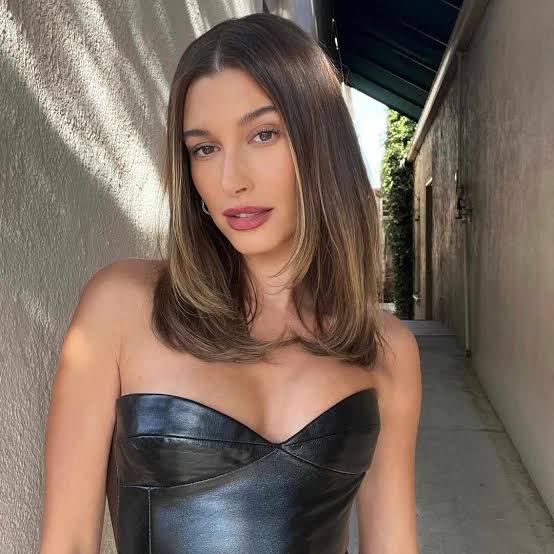
Ever wondered why some face-framing color looks deliberate while other attempts look like the foils slipped? The trick is a money piece, which is just a fancy term for the two front sections that are noticeably lighter than the rest. Here, the blonde money piece sits against a dark brown base, so it reads as a deliberate pop rather than an accident. Medium density, wavy hair of mid-back length carries the contrast without the ends feeling thin. Oval or heart face shapes are natural partners for this placement.
Ask your colorist for: blonde money piece on dark brown hair, wavy blowout. When you book, be specific about wanting the front pieces at least two shades lighter than the rest. A texturizing spray keeps the waves from falling flat by midday. A trim every 8 to 10 weeks maintains the shape and prevents the ends from looking ragged.
Thick Dark Brown With Face-Framing Blonde Streaks
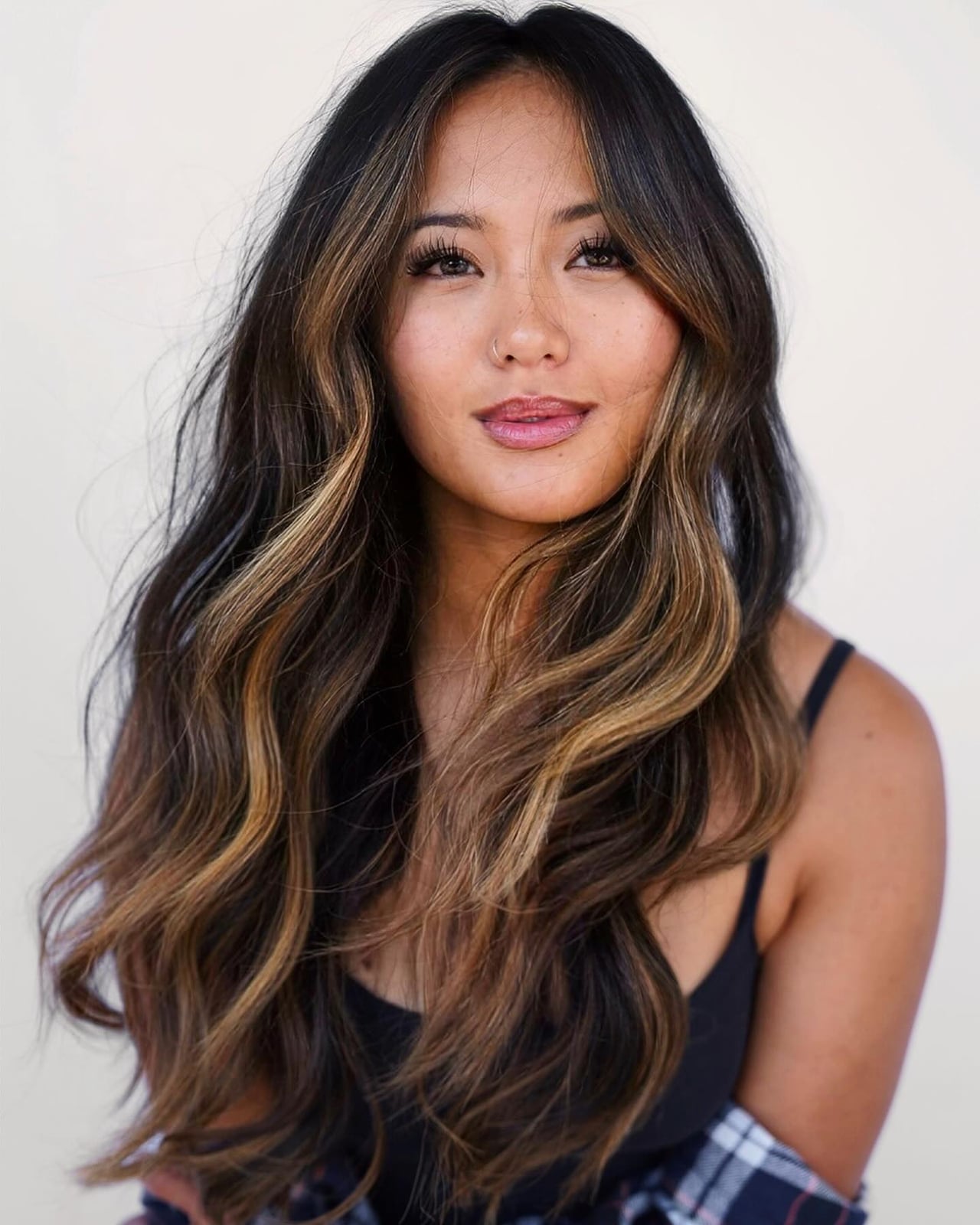
Bold streaks and blended balayage are not the same thing, and knowing the difference saves you a disappointed mirror check. Streaks sit as distinct ribbons of color, while balayage melts into the base. On thick, wavy hair, those defined streaks have enough density to support the contrast without looking stripey. Curtain bangs soften the transition at the front and keep the whole thing from feeling too severe. Square and round face shapes benefit from that soft diagonal line.
Ask your stylist for: face-framing blonde highlights, curtain bangs on thick dark hair. This is a salon-only project. DIY kits tend to land too warm or too patchy on dark bases. A large barrel brush during blow-drying smooths the waves without flattening the volume. A trim every 6 to 8 weeks keeps the curtain bangs from turning into an awkward eyebrow curtain.
Dark Brown With Ash Blonde Face-Framing Pieces
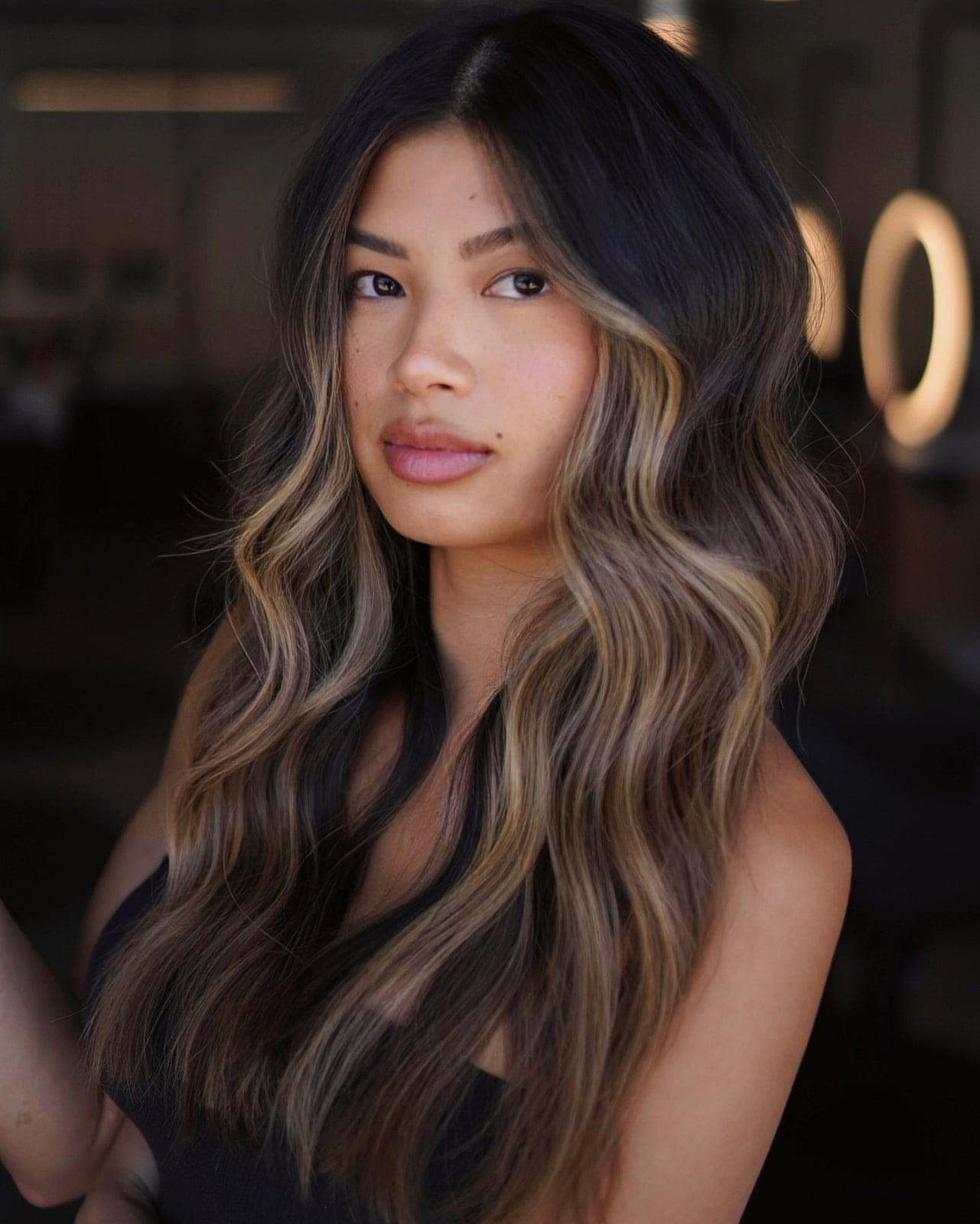
Ash blonde on a dark brown base is a high-maintenance relationship, but the payoff is worth the occasional toner appointment. The cool-toned pieces sit against the dark base without that brassy orange stage that warm blondes often hit. Thick, wavy hair of mid-back length gives the color enough canvas to read clearly, and wispy face-framing pieces blend into the longer layers so the grow-out does not look like a hard line. Oval or long face shapes keep the proportions balanced.
Ask your colorist for: ash blonde face-framing pieces, wispy bangs on dark brown hair. A purple shampoo once a week preserves the cool tone and delays the inevitable warmth. Embrace the natural texture with a sea salt spray instead of reaching for a curling iron every morning. A trim every 8 to 10 weeks keeps the wispy ends from looking straggly. Ash tones need a refresh every 6 to 8 weeks if you want to keep the brass at bay.
Dark Brown With Blonde Balayage Framing
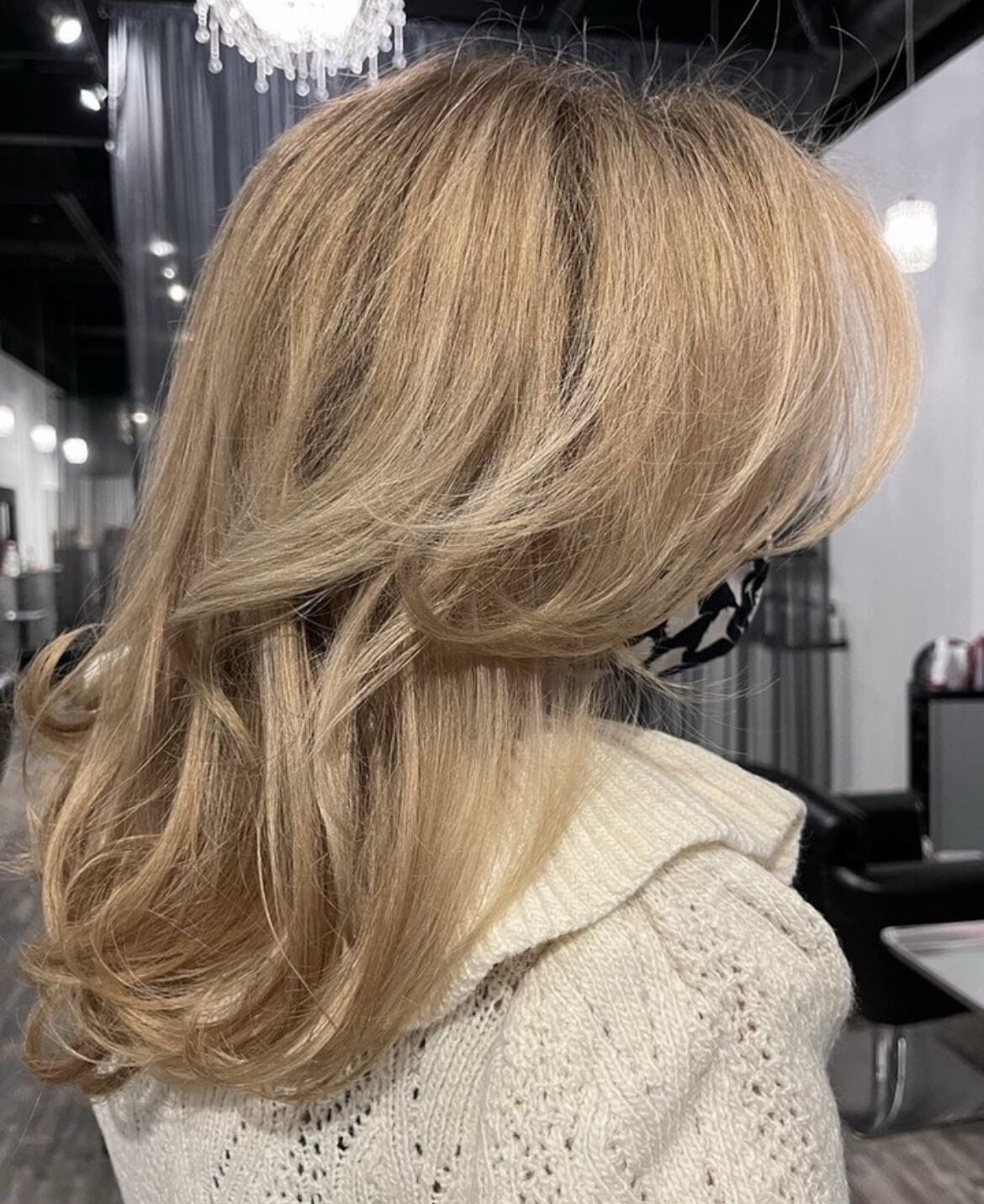
Balayage for face-framing pieces works because the color is painted on freehand, so the transition from dark base to blonde front is soft. Here, the blonde balayage starts a few inches from the roots and intensifies toward the ends, which means the grow-out line is forgiving. Thick, wavy hair of mid-back length holds the gradient well, and a middle parting lets the lighter pieces fall evenly on both sides. Oval and long face shapes get the elongation that a vertical color line provides.
Ask your colorist for: soft blonde balayage face-framing on dark brown hair. One drawback for fine hair: the painting technique can make thin strands look even sparser if the color is placed too high. A wide-tooth comb on damp hair preserves the wave pattern without disrupting the balayage placement. A toner refresh every 10 to 12 weeks keeps the blonde from drifting too warm.
Mid-Back Dark Brown With Lighter Brown Highlights
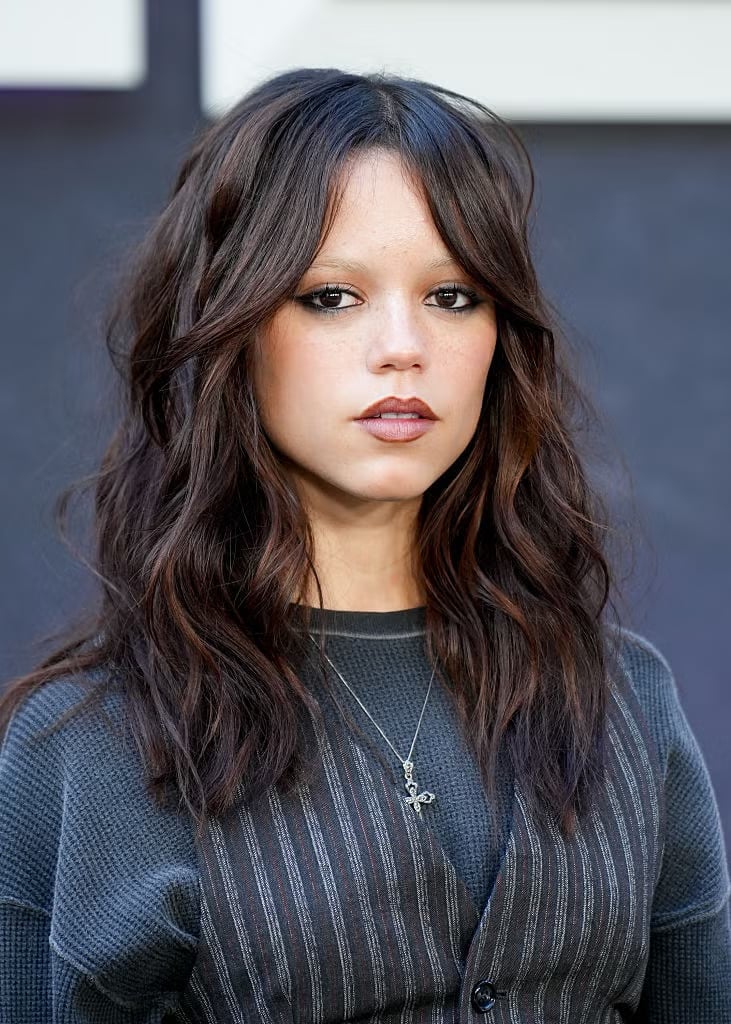
Is there a way to ease into the shorter days without giving up warmth? A dark brown base with lighter brown highlights does exactly that, especially when paired with curtain bangs. Ask your colorist for lighter brown face-framing highlights and curtain bangs. The long layers keep the weight where wavy, medium-density hair needs it, and the middle part lets the lighter pieces sit right at the cheekbone. A trim every six to eight weeks keeps the curtain bangs from turning into a full fringe.
Medium Brown With Subtle Lighter Brown Highlights
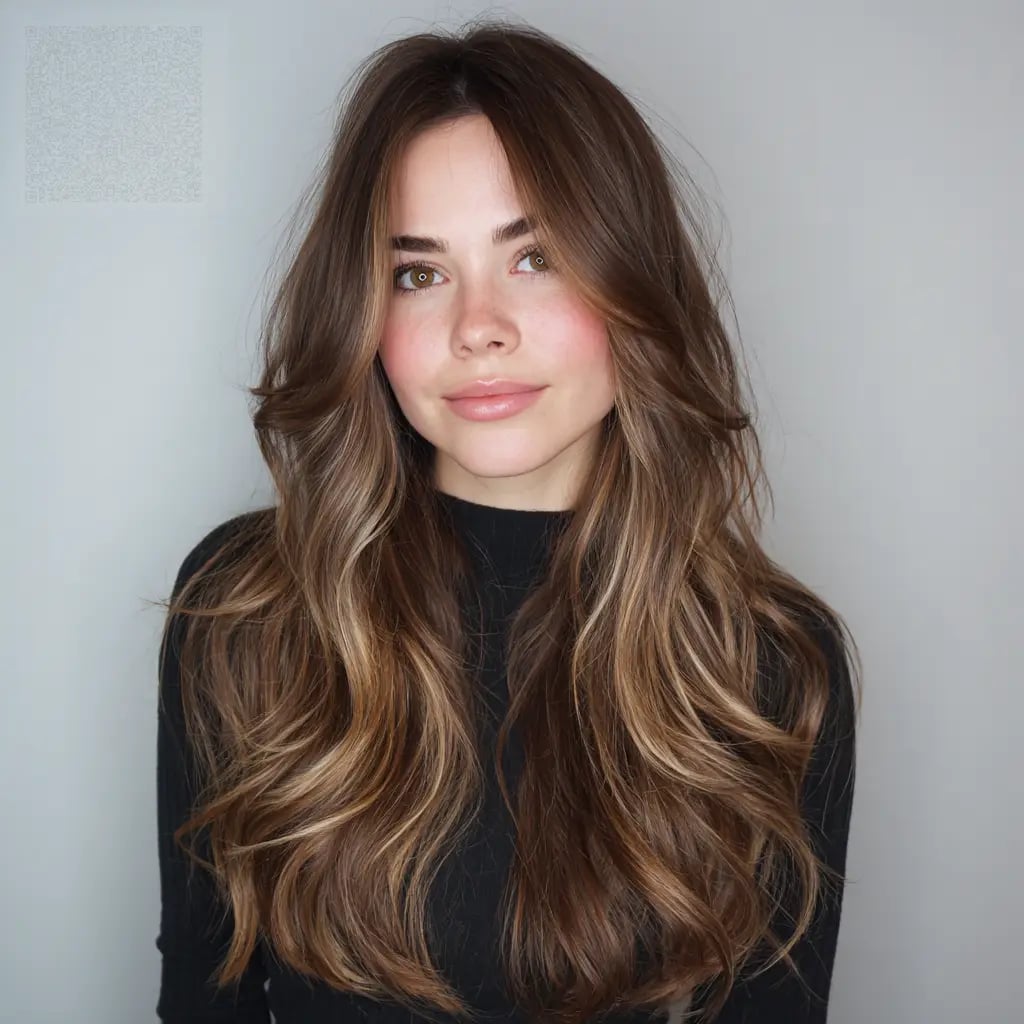
This is the version for anyone who wants dimension without a color appointment that demands a second mortgage. Medium brown with subtle lighter brown highlights reads as natural because it is only a shade or two lighter. Ask your colorist for subtle lighter brown face-framing highlights. The long layers and mid-back length work best on wavy, medium-density hair that air-dries without protest. A smoothing cream and a middle part are the extent of the styling effort. Plan for a trim every eight to ten weeks to keep the ends healthy.
Dark Blonde With Lighter Blonde Face-Framing Highlights
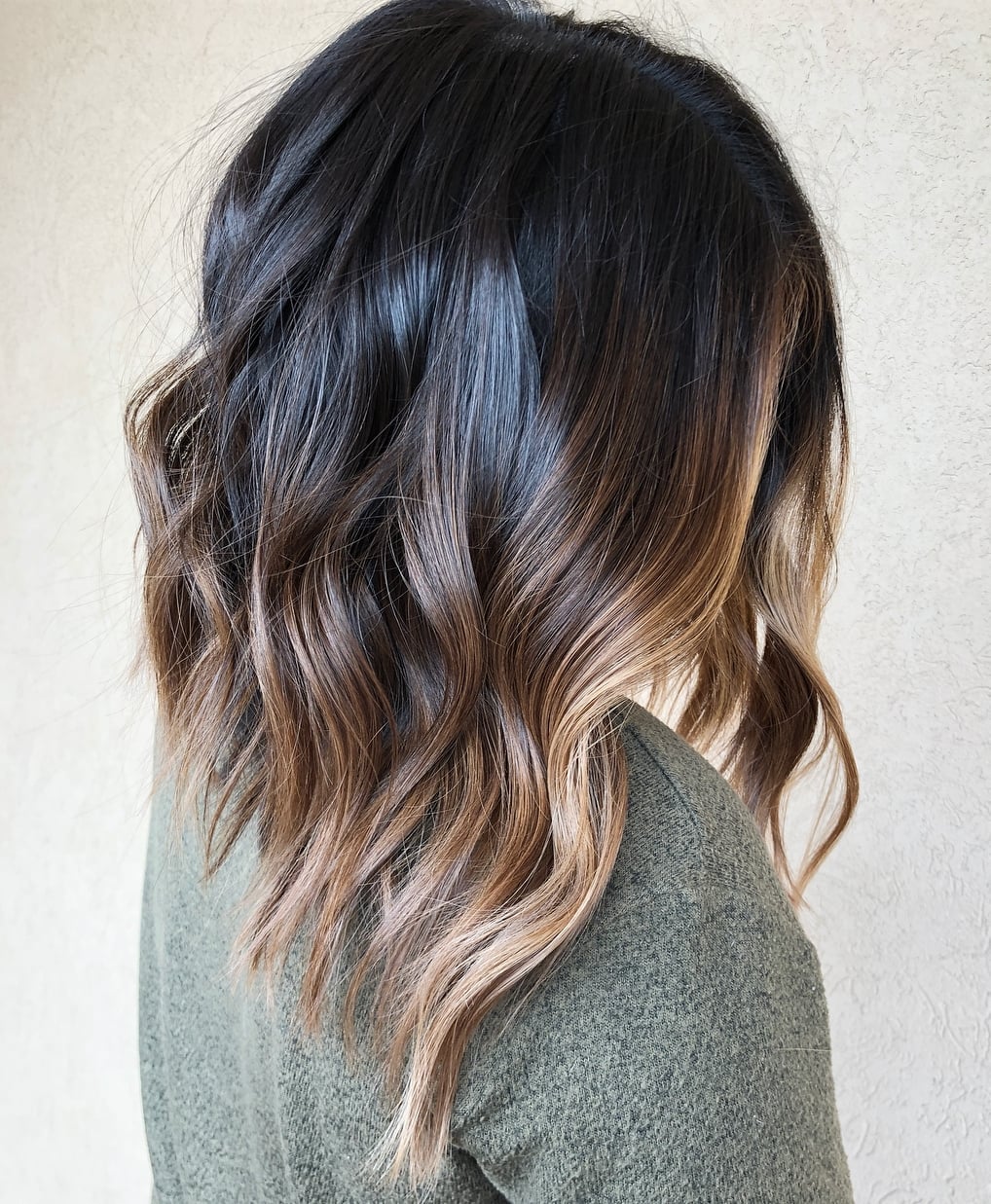
The trick with face-framing highlights on a dark blonde base is keeping the contrast low enough that it looks like you spent the weekend in the sun, not under foils. Ask your colorist for lighter blonde face-framing highlights on dark blonde hair.
The mid-back length and layered cut give thick, wavy hair room to move without turning into a triangle. A middle part ensures the lightest strands land directly at the jaw and cheekbones. A toner refresh every eight to ten weeks keeps the lighter pieces from drifting into brassy territory.
Ash Blonde With Subtle Lighter Blonde Framing
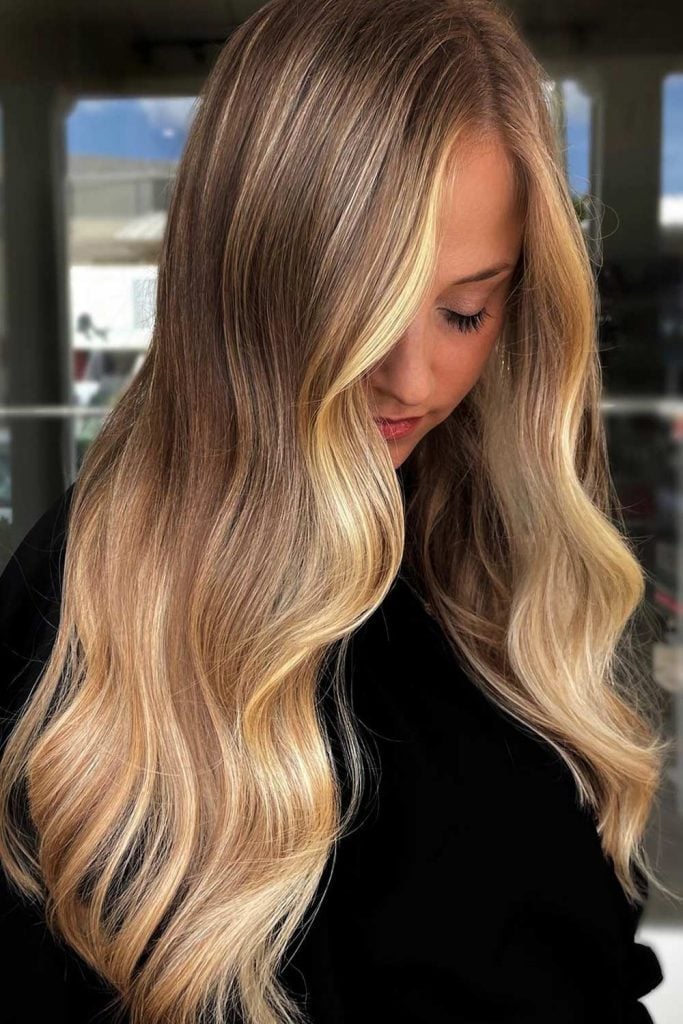
Ash blonde is a cool customer, but it needs company to avoid looking flat. Lighter blonde highlights placed around the face solve that problem without introducing warmth. Ask your colorist for subtle lighter blonde face-framing highlights on ash blonde hair.
The mid-back length and long layers suit wavy, medium-density hair that does not need volume help. A middle part and face-framing pieces keep the lighter strands visible. Ash tones fade faster than warm ones, so regular toning appointments are the difference between cool and muddy. A styling product helps the waves hold their shape between washes.
Blonde With Golden Highlights And Curtain Bangs
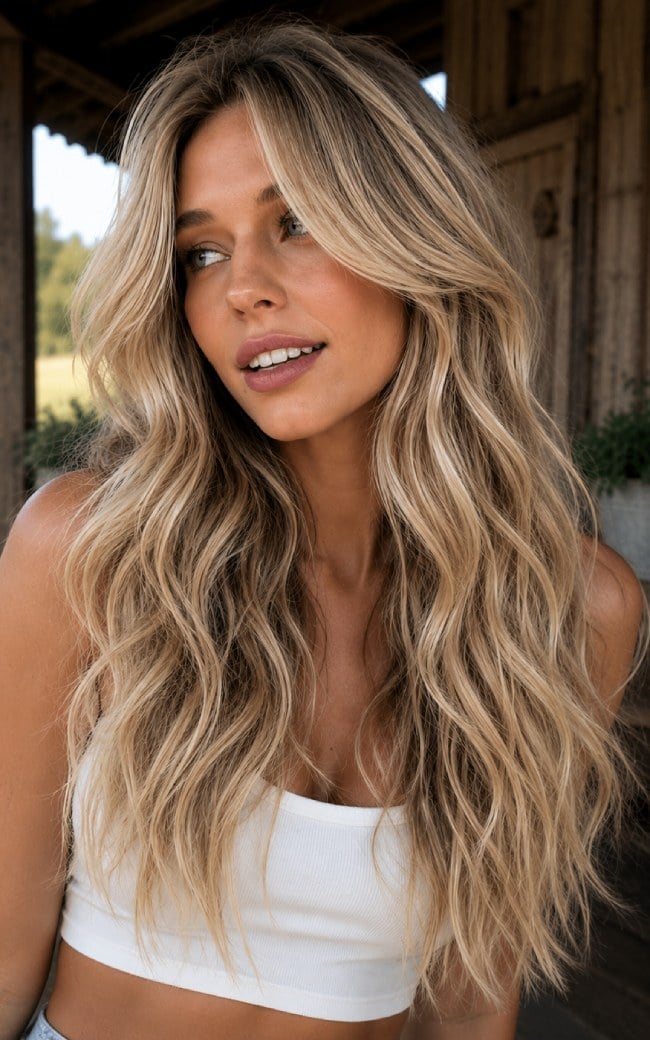
What separates golden highlights from a solid blonde? A root shadow and curtain bangs. The darker base at the roots lets the golden pieces sit only where they catch light, which is around the face. Ask your colorist for golden highlights and curtain bangs on blonde hair.
The mid-back length and long layers keep medium-density wavy hair from looking weighed down. This is a salon project, not a drugstore box job: controlling where the root shadow ends and the gold begins takes a skilled hand. Curtain bangs need a trim every six to eight weeks, and the rest of the length can go ten.
Shoulder Length Lob With Face-Framing Highlights
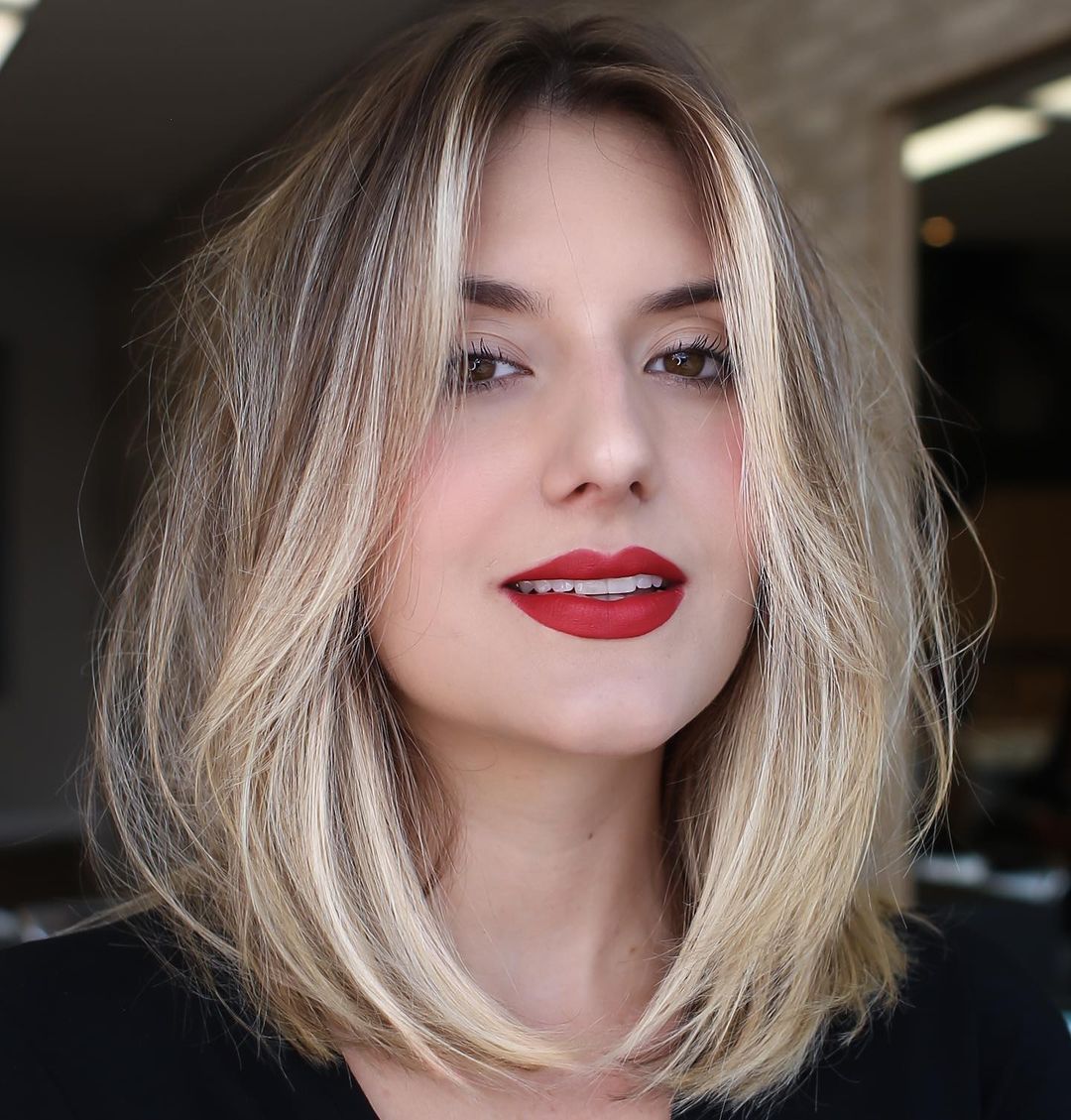
A lob with a side part and curtain bangs gets extra mileage from face-framing highlights that sit right where the eye lands. The collarbone length works well for medium-density wavy hair because the layers don’t thin out the ends too much. A side part softens round and square face shapes by breaking up symmetry. Ask your colorist for: face-framing highlights on a dark blonde lob with curtain bangs. Twist sections of damp hair before blow-drying to encourage those waves, and plan a trim every six to eight weeks to maintain the shape at collarbone length.
Collarbone Dark Brown With Caramel Highlights
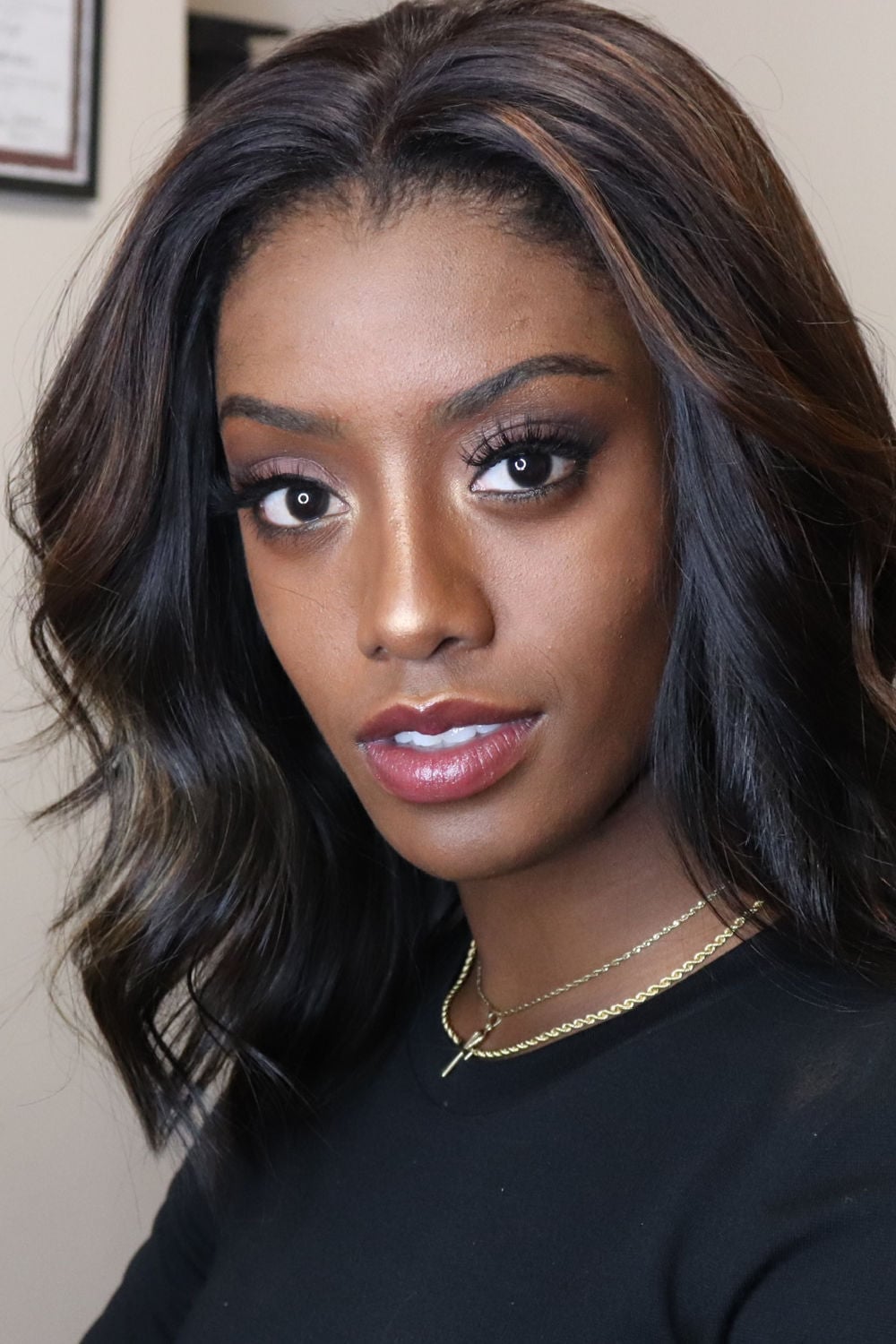
The caramel highlights are concentrated around the face so the dark base stays dominant and the warmth frames your features. A middle part and collarbone length suit oval and long face shapes by adding width at the cheek area. Ask your colorist for: subtle caramel face-framing highlights on dark brown hair with curtain bangs. Thick wavy hair holds the loose waves without much effort, though dry texturizing spray gives that lived-in separation. A trim every six to eight weeks keeps the curtain bangs from grazing the chin.
Collarbone Brown With Subtle Face-Framing Layers
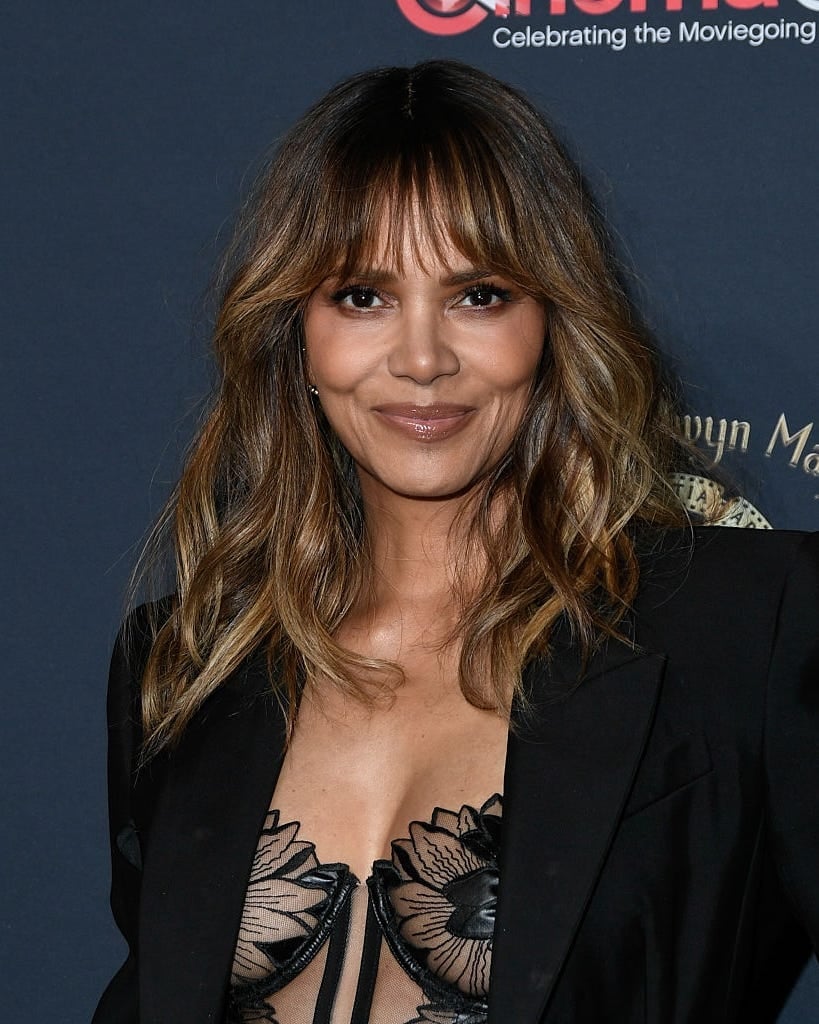
Face-framing layers on a collarbone cut grow out gracefully because the shortest pieces land around the jaw and the rest blends into the length. The subtle highlights on a brown base add dimension without a strong contrast line, so regrowth is less obvious. Medium-density wavy hair benefits from this cut because the layers encourage the natural wave pattern rather than fighting it. Ask your stylist for: subtle highlights with face-framing layers and curtain bangs on brown hair. Blow-drying with a round brush and focusing on the layers gives a polished finish that lasts two to three days. A trim every six to eight weeks maintains the shape.
Collarbone Blonde With Face-Framing Layers
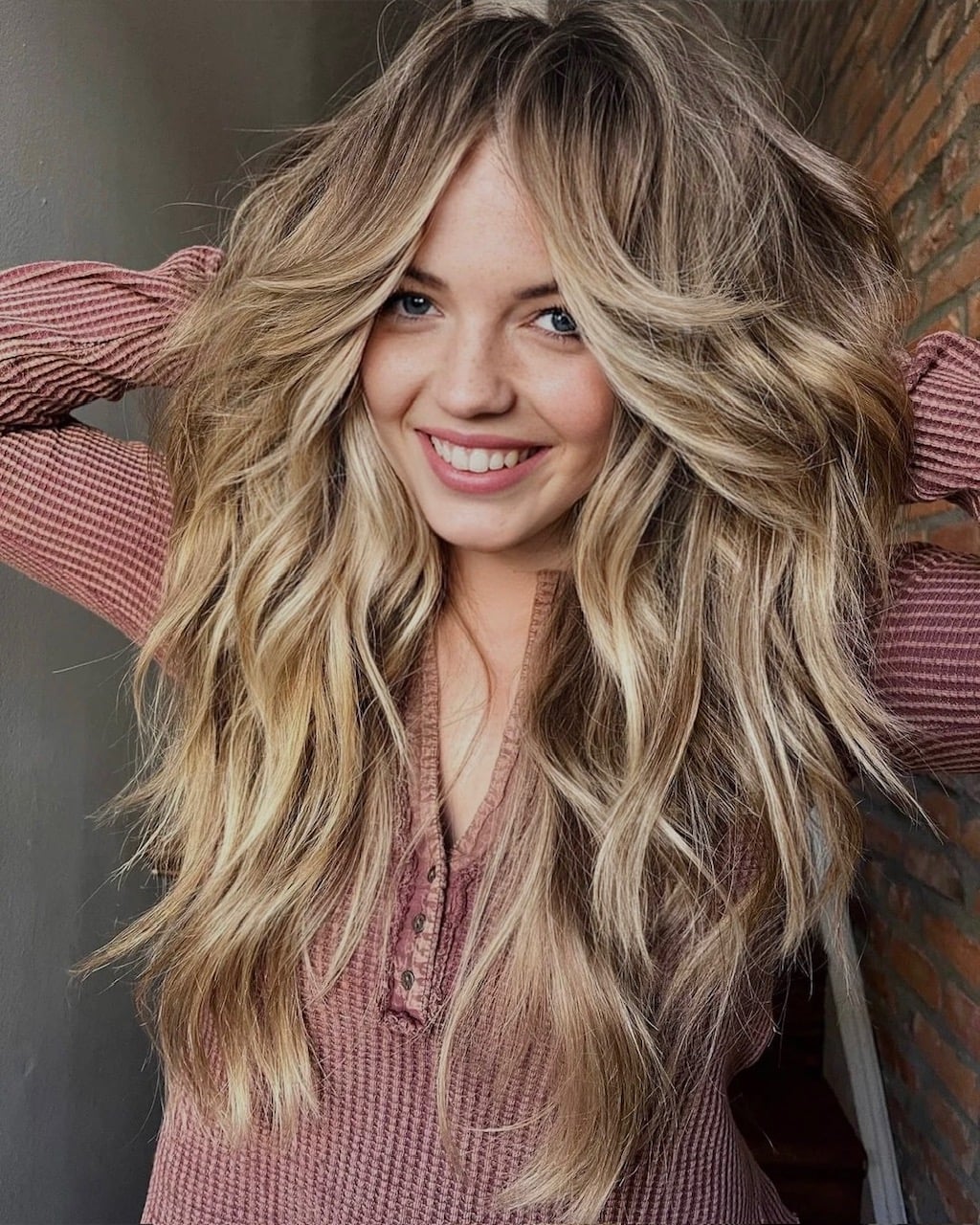
Face-framing layers on a blonde base look similar to face-framing highlights at first glance, but the layers change the silhouette while the highlights only change the color. The collarbone length with a middle part and curtain bangs softens square and round faces by adding vertical lines. Ask your stylist for: face-framing layers and curtain bangs on blonde hair. The potential drawback is that if the layers are cut too short, the blonde pieces can look like a separate section rather than a seamless blend. A large-barrel curling iron enhances the layers without making them too curly, and a trim every six to eight weeks keeps the shape.
Collarbone Ash Brown With Blonde Highlights
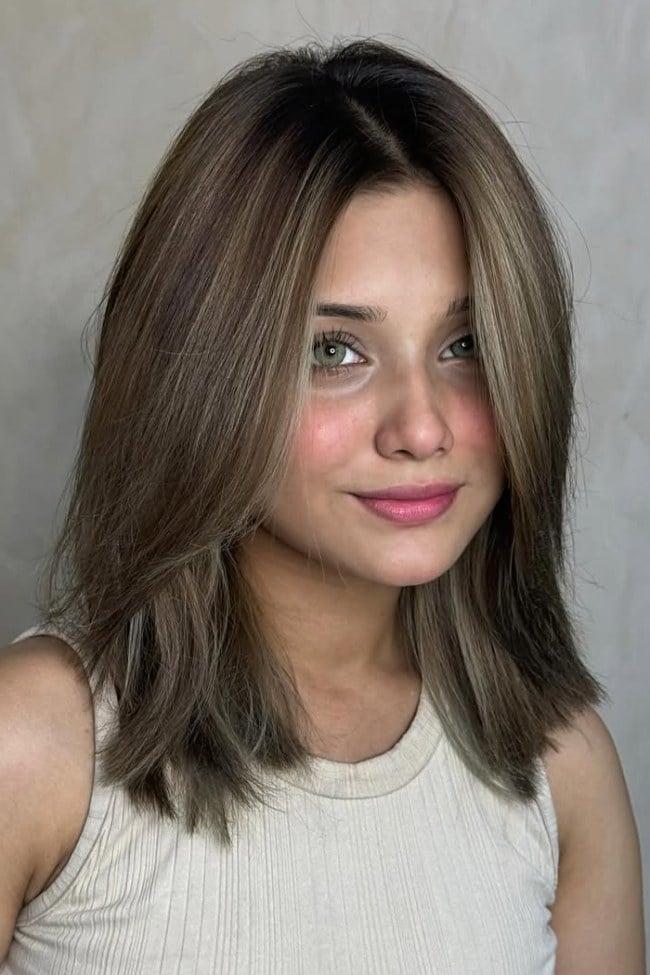
An ash brown base with blonde highlights concentrated around the face adds dimension to fine straight hair without overwhelming it. The collarbone length and curtain bangs soften square and round face shapes, and the middle part keeps the look symmetrical. Ask your colorist for: ash brown base with blonde face-framing highlights and curtain bangs. The DIY alternative is using a purple shampoo once a week to keep the ash tone from turning muddy, but the highlights themselves require a salon visit for proper placement. Overly chunky pieces would look harsh on fine hair, so the subtle spacing here is the right call.
Collarbone Curly Dark Brown With Blonde Highlights
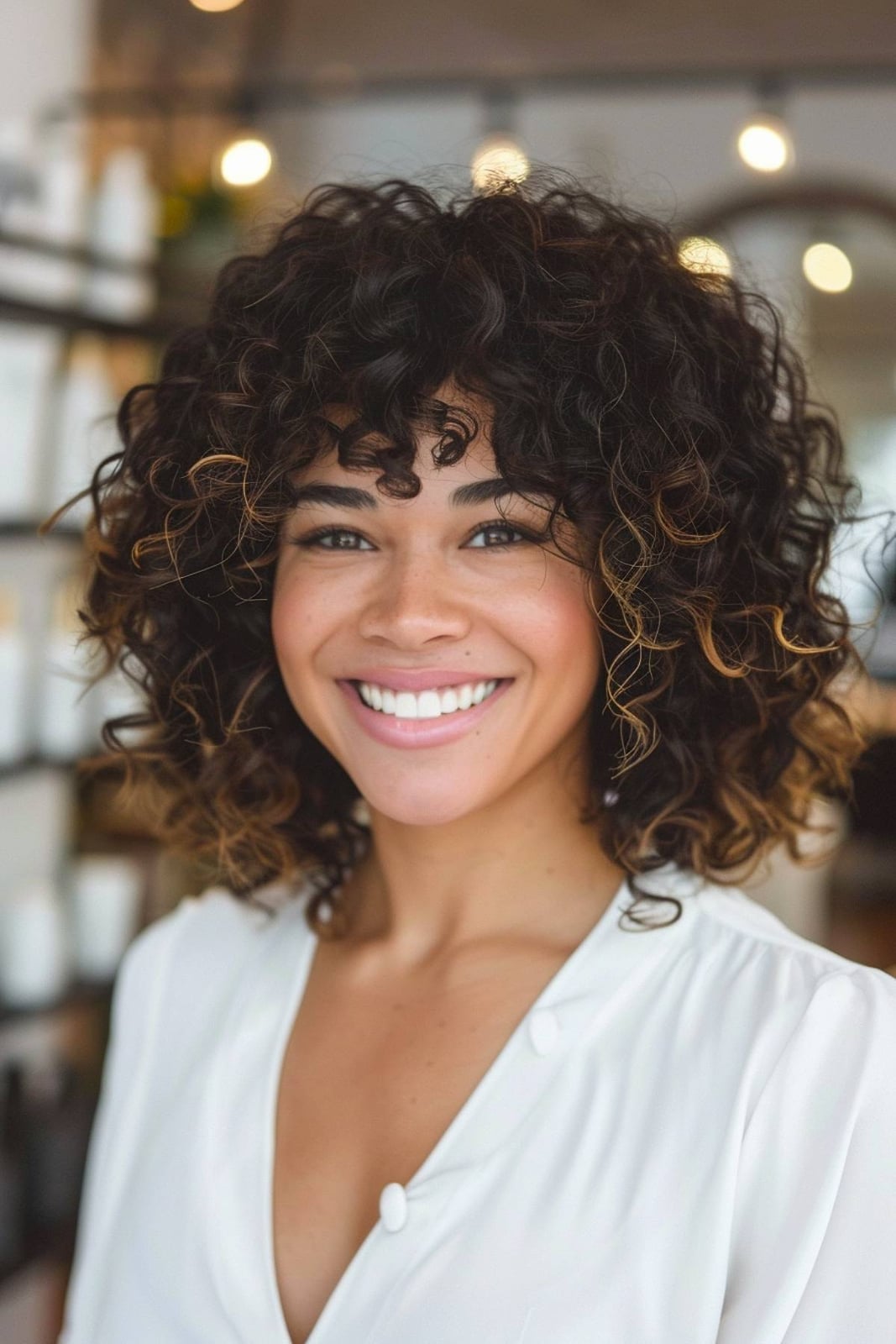
Curly hair does not need a flat iron to show off highlights, which is convenient because air drying takes about zero effort. Thick, dark brown coils cut to collarbone length have blonde pieces woven through the front, so the color moves with every curl instead of sitting in one place. Curly bangs frame the face without requiring a round brush or any convincing. Ask your stylist for a collarbone length curly cut with blonde highlights and curly bangs. Apply a curl cream to damp hair and let it do its thing. A trim every eight to ten weeks keeps the shape from turning into a triangle.
Chin Length Blunt Bob With Honey Balayage
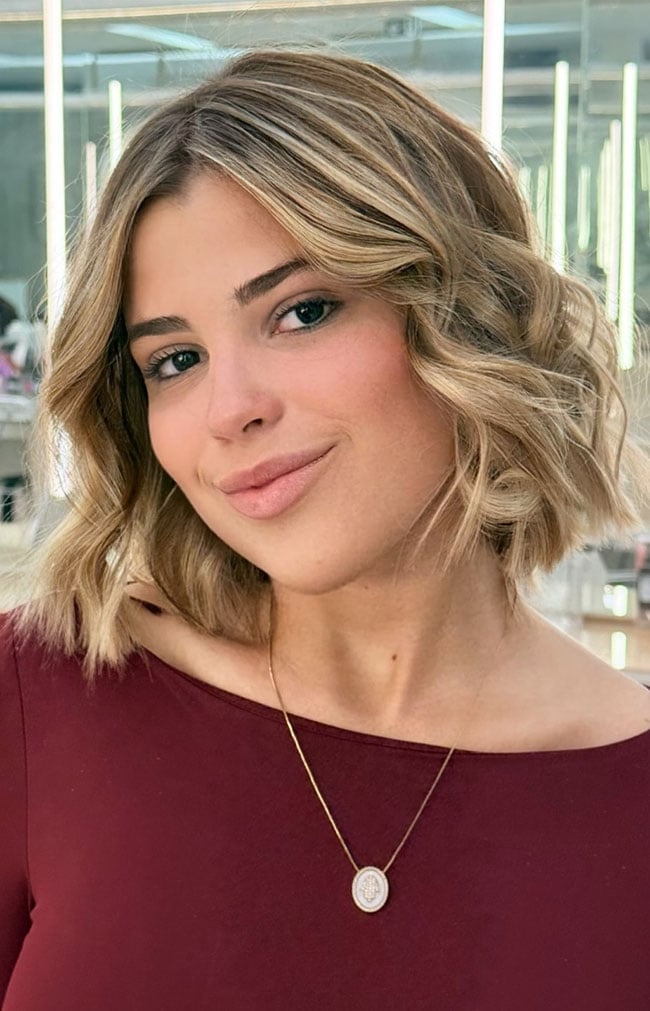
What does a chin length bob do when summer hits and you want to feel like you made an effort without trying? It adds curtain bangs and honey balayage. A blunt bob with soft curls lands right at the chin, and the lighter pieces around the face catch the sun better than any hat. The blonde base keeps things bright while the honey tones add warmth. Ask your colorist for a chin length blunt bob, curtain bangs, and honey balayage. Use a diffuser on your blow dryer to encourage the waves. A trim every six to eight weeks keeps the blunt line sharp.
Angled Bob With Face-Framing Layers And Bangs
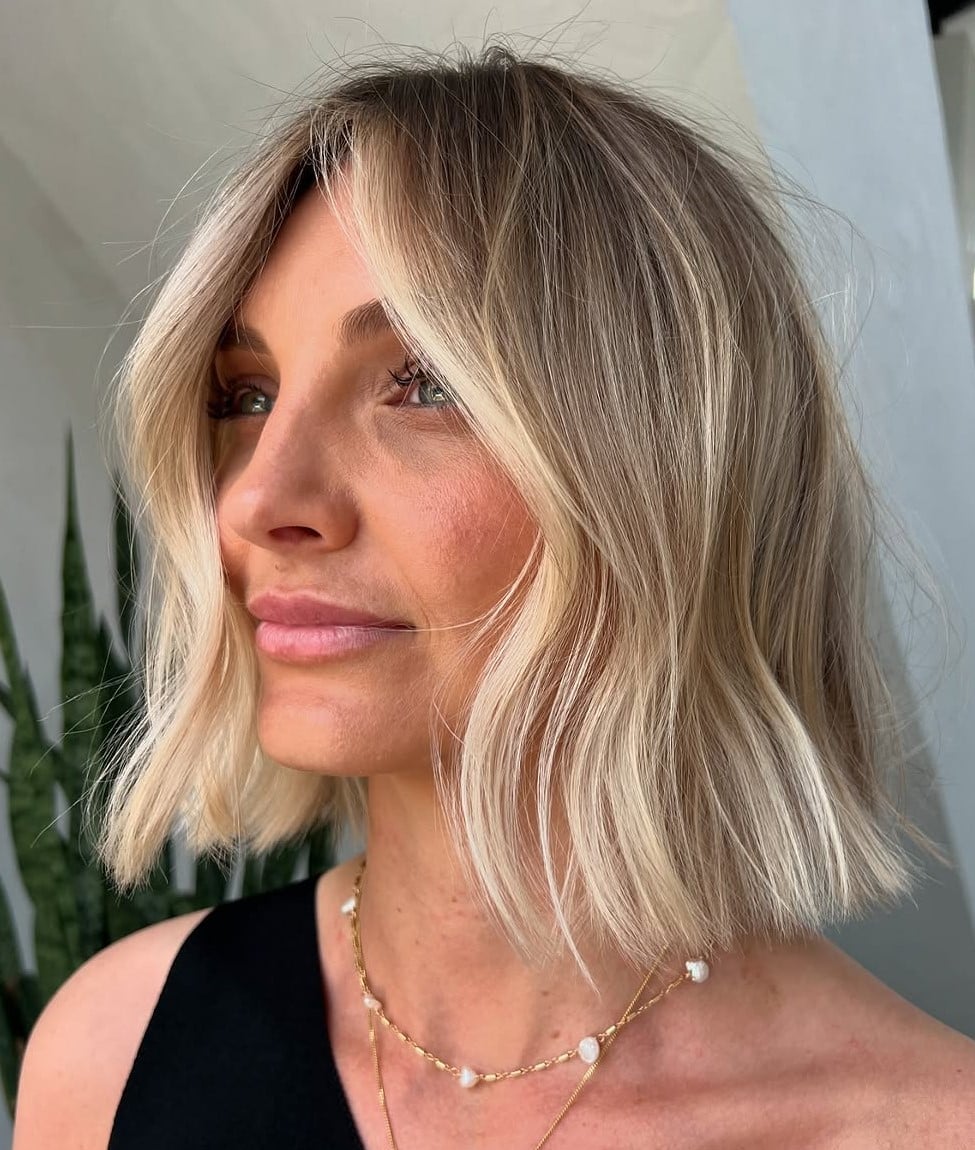
An angled bob with face-framing layers and curtain bangs creates a diagonal line that draws the eye forward, and the layers around the cheekbones soften the whole thing. Curtain bangs sweep to both sides, so you get the framing without a full fringe. Ask your stylist for an angled bob with face-framing layers and curtain bangs. This cut asks for a blowout every time you wash it. A round brush is required to achieve the shape. Trim every six to eight weeks.
Chin Length Angled Bob With Subtle Highlights
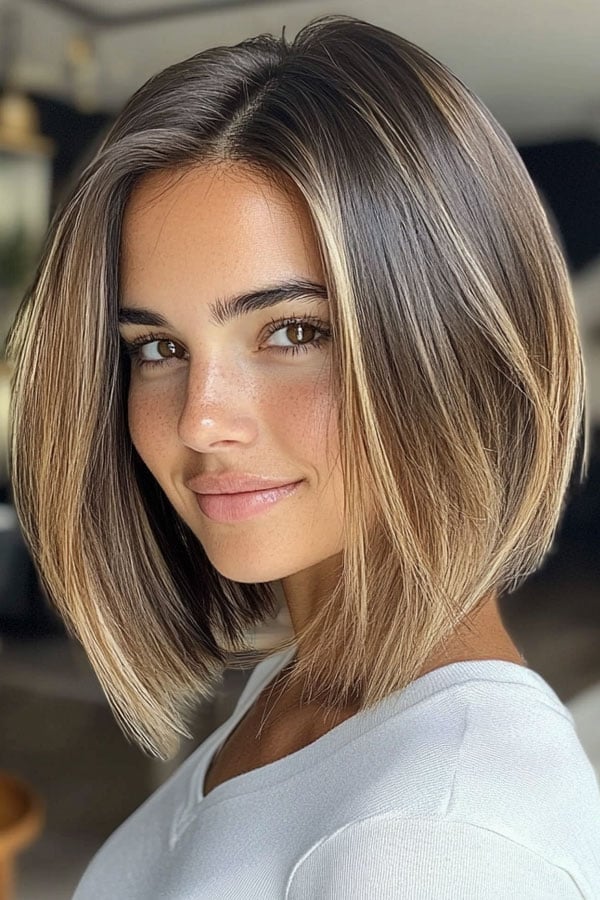
An angled bob on a brown base with subtle blonde highlights is the difference between a solid color and one that has dimension. The brown gives depth, and the lighter pieces around the face add brightness. This version is sleek and straight, letting the angles do the work. Ask your colorist for a chin length angled bob with subtle face-framing blonde highlights. A flat iron creates the glossy finish, and a gloss treatment at the salon keeps the shine alive between cuts.
Compared to a blonde base, the brown base makes the highlights an accent. If you want a low-maintenance grow out, this is the one. A trim every six to eight weeks keeps the line crisp.
Chin Length Bob With Choppy Bangs And Waves
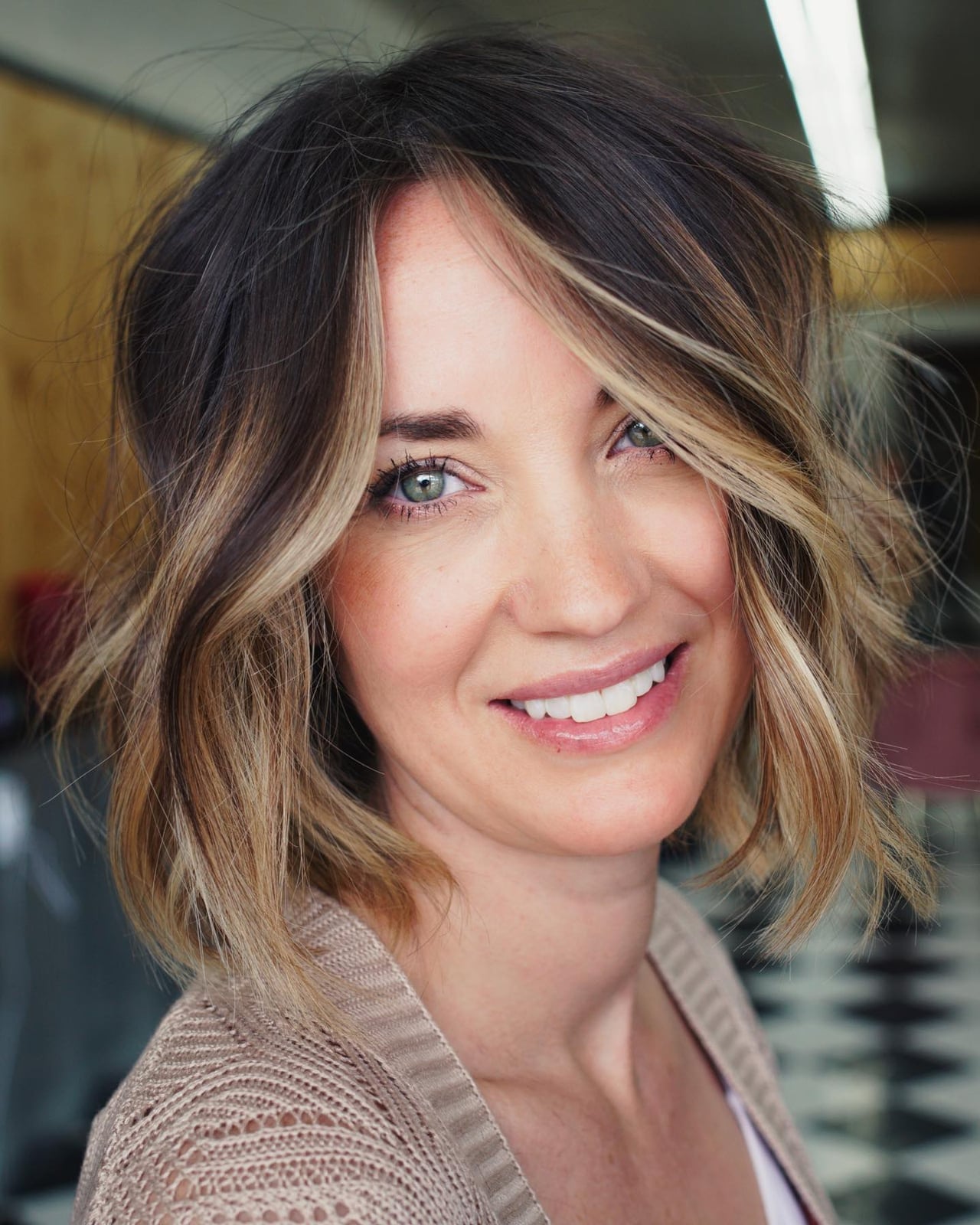
A chin length bob with choppy bangs and messy waves is the haircut equivalent of a shrug that somehow looks intentional. The layers are cut so the ends land at different points, and the blonde highlights around the face make the texture pop. Choppy bangs sit above the eyebrows, so they need a quick dry every morning. Ask your stylist for a layered bob with choppy bangs and face-framing highlights. Work a texturizing paste through the ends to keep the lived-in look. A trim every six to eight weeks prevents the bangs from turning into a curtain.
Shoulder Length Shag With Curtain Bangs

The shag is a layered haircut built around texture, and here the curtain bangs are cut to blend directly into the shortest layers around the cheekbones. That means the face-framing effect starts at the brow and continues down through the wave pattern, not just at the ends. The medium brown base gets dimension from subtle lighter brown balayage that lands mostly on those front pieces, so the highlights move with the layers. Thick, wavy hair of shoulder length holds this shape best; curtain bangs soften square and round faces. Ask your stylist for: shag haircut with curtain bangs and subtle balayage.
Styling is about encouraging the cut, not fighting it. Apply a texturizing spray to damp hair, scrunch, and air dry. A trim every six to eight weeks keeps the layers defined. You get a lived-in look with minimal daily effort.
Long Straight Ash Blonde With Curtain Bangs
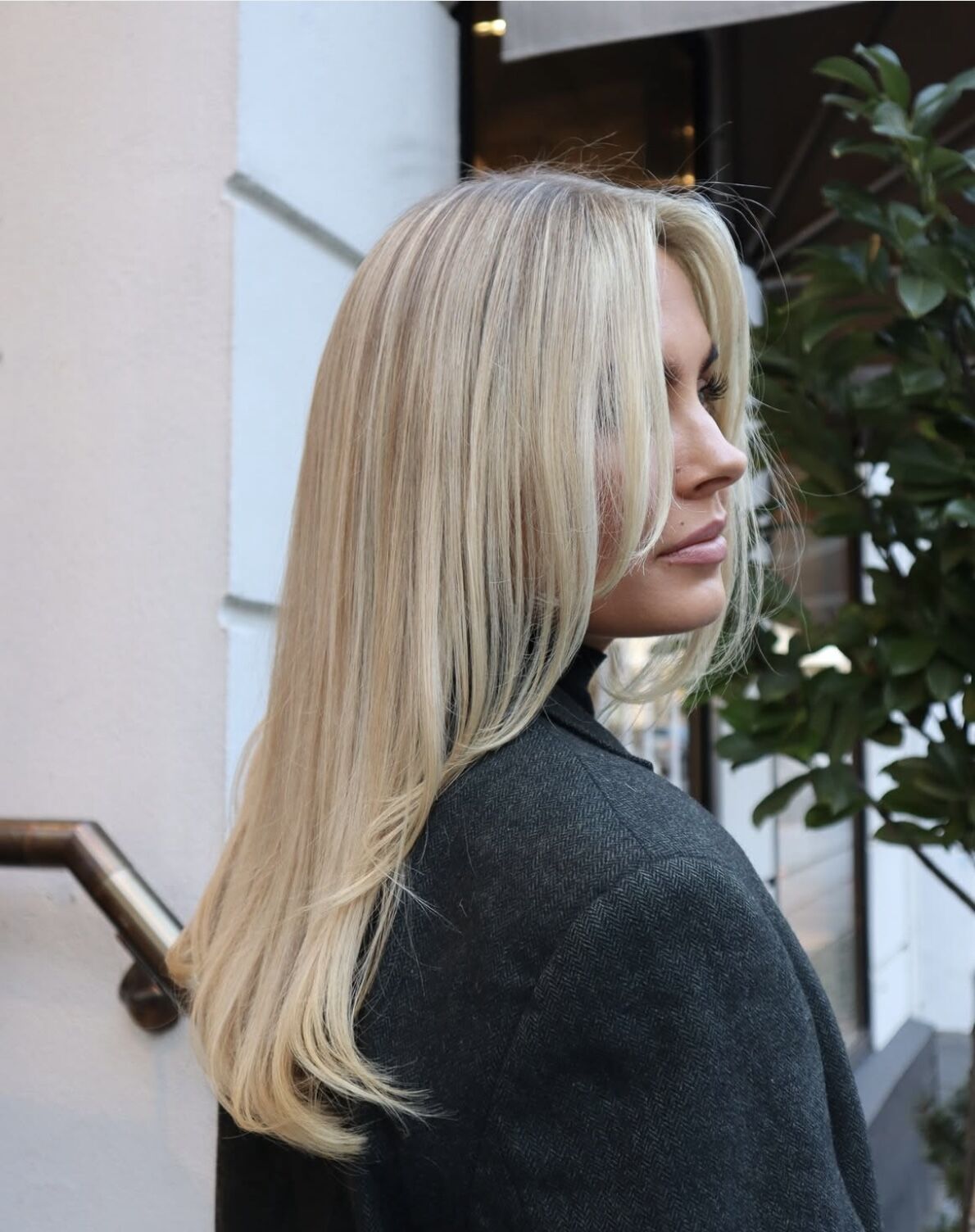
Ash blonde is a cool-toned blonde that sits between beige and silver, and here it runs from a mid-back length through long layers and into curtain bangs. The lighter blonde highlights are concentrated around the face, so the framing is subtle but present. A side parting lets the curtain bangs sweep to one side, which changes how the highlights appear in different lighting. Fine, straight hair of mid-back length works well here, and the curtain bangs suit most face shapes. Ask your colorist for: long straight ash blonde with face-framing curtain bangs.
There is a trade-off with fine, straight hair and curtain bangs: the bangs may not hold their sweep without a little product. A smoothing serum and a flat iron keep everything in place, but the bangs can separate into strings by midday if you skip a lightweight mousse at the roots. The shape is polished, but it asks for a trim every eight to ten weeks to keep the curtain bangs from grazing your eyes. Not a set-it-and-forget-it cut, but the payoff is a sleek, cool-toned frame that looks planned.
Final Thoughts
For a low-maintenance approach, keep the highlights within a shade or two of your base color and pair them with face-framing layers that grow out gracefully. That way you stretch the time between salon visits without looking grown out.
- Maintain highlights with color-depositing conditioners every 2-3 weeks.
- Schedule salon touch-ups for highlights every 10-12 weeks.
- Use heat protectant spray before styling to preserve color.
- Wash hair 2-3 times a week to prevent color stripping.
Face framing highlights are a versatile way to refresh your look.