
Bangs are the quickest route to a new haircut without losing your length, and 2027 is proving that a well-placed fringe is worth the few extra minutes with a round brush. The shift this year leans toward softer, lived-in styles that blend with the rest of your hair rather than sitting like a separate piece.
This collection of 32 Trendy Bangs Style ideas covers everything from low-maintenance curtain bangs to statement blunt fringes, so whether your hair is fine and falls flat or you are tired of a grow-out line that shows at week three, there is a fringe here that will actually cooperate. Expect practical advice on cut, length, layers, and texture for each look.
Mid-Back Wavy Blonde With Curtain Bangs

The magic here is in how the waves move the curtain bangs sideways instead of letting them sit flat against the forehead. A side parting feeds the longer pieces into the rest of the mid-back length, so the bangs read as part of the haircut rather than an add-on. The subtle highlights catch the bends of each wave, which gives the medium-density blonde texture a bit of depth without looking streaky. Ask your stylist for: mid-back wavy blonde with curtain bangs. Blow-dry the bangs with a round brush, directing them away from the face, and plan on a trim every six to eight weeks to keep the shape honest.
Mid-Back Dark Brown With Balayage And Curtain Bangs
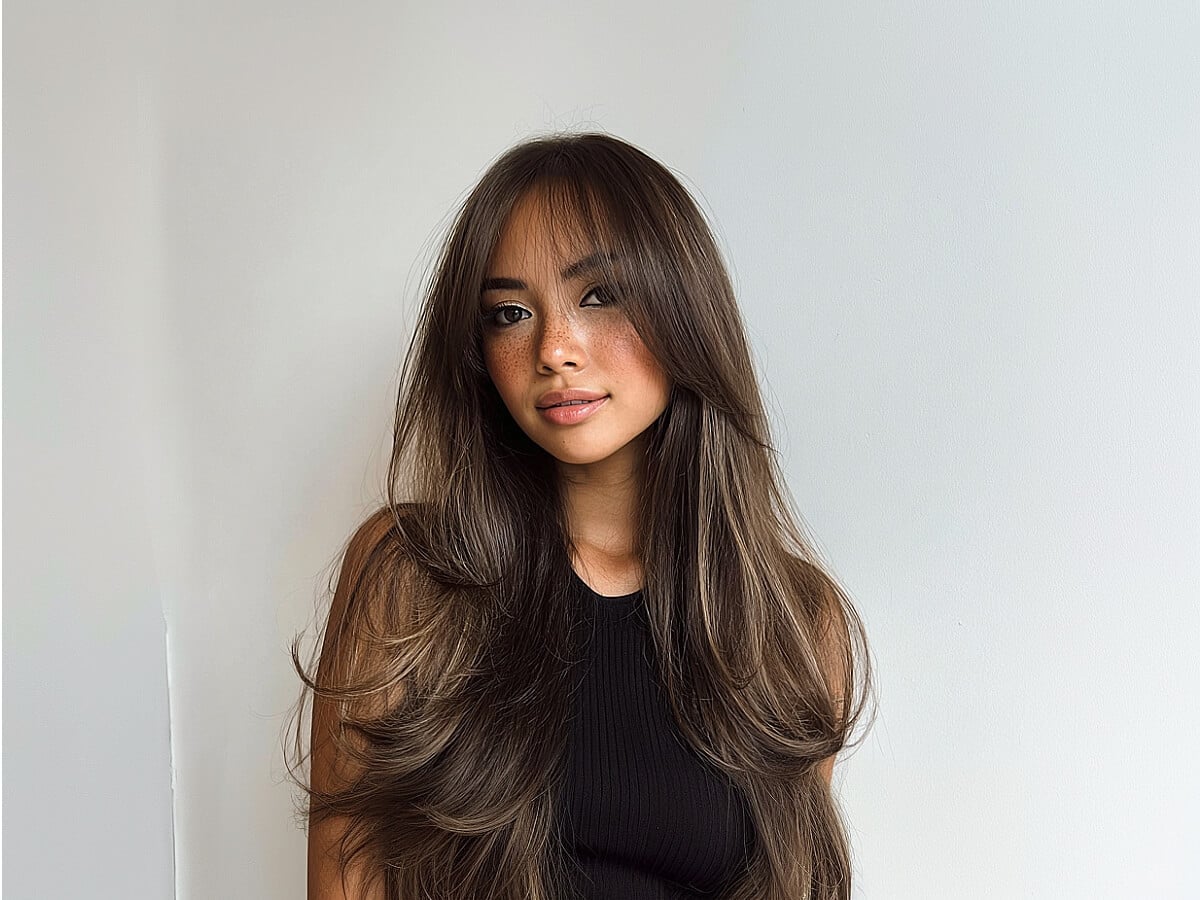
Ever wonder if curtain bangs actually work on thick hair? They do, provided the stylist cuts them with enough weight to hold their shape. The long layers here do the heavy lifting, letting the voluminous blowout lift at the roots without the mid-back length turning into a triangle. The subtle balayage keeps the dark brown from reading as one flat block of color, which helps the side-parted curtain bangs blend rather than sit as a separate piece.
Ask your stylist for: mid-back dark brown with balayage and curtain bangs. Use a large round brush for the blowout, focusing on lifting the roots. The bangs will need a trim every four to six weeks, especially if you wear them swept to the side where they tend to fall faster.
Collarbone Shag With Curtain Bangs
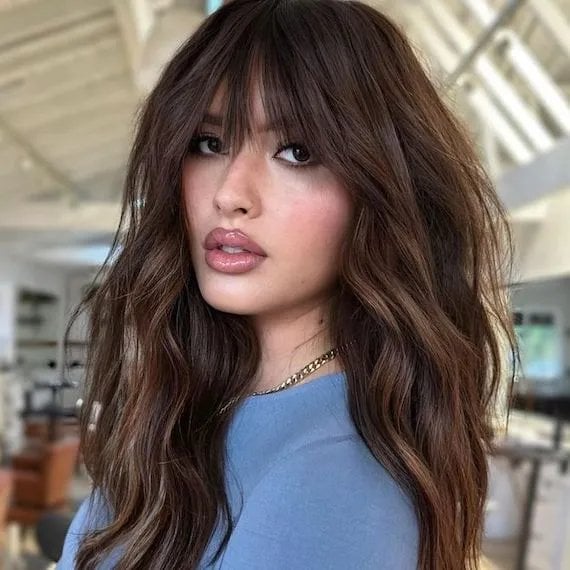
A shag is really a system of layers cut to stack and move together, and here they land right at the collarbone. The middle parting lets the curtain bangs feather into those layers, so the whole cut reads as one continuous texture rather than a bang attached to a haircut. The wavy texture does the styling work for you, which is the point of a shag. Ask your stylist for: collarbone shag with curtain bangs. This is a salon cut, since the layering needs a practiced eye, but once it is done you can let it air-dry with a bit of sea salt spray and call it a day. A trim every six to eight weeks keeps the shag from growing into a shapeless blob.
Mid-Back Dark Brown With Glossy Curtain Bangs and Healthy Appearance

If the shag is the messy cousin, this is the one who shows up polished. The glossy finish on the dark brown lengths sets it apart from textured bangs, which tend to look matte and piecey. The middle-parted curtain bangs here are cut with a clean edge and styled smooth, so they frame the face without any of the deliberate dishevelment. It is a sleeker read that suits a work setting or an evening out, when you want the hair to look finished rather than undone.
Ask your stylist for: mid-back dark brown with glossy curtain bangs. A smoothing serum on the lengths and a round brush on the bangs keeps the shine going. Be prepared to trim the bangs monthly, since the polished look does not forgive a grown-out shape.
Long Brunette With Butterfly Bangs

Butterfly bangs work on a simple trick: the shortest pieces start high near the cheekbone and gradually lengthen into the layers, so the face gets framed from two directions at once. Here the side parting pushes most of the volume to one side, and the thick brunette texture gives each piece enough weight to hold a gentle curve. The balayage highlights trace through the layers, which keeps the movement visible even when the waves settle.
Ask your stylist for: long brunette with butterfly bangs. The cut suits round and oval faces because the graduated lengths soften the jaw without adding width at the cheek. A texturizing spray on the bangs gives them separation and volume, and a trim every six weeks keeps the shortest pieces from turning into an accidental full fringe. The long length balances the bangs, so the overall silhouette stays grounded and not top-heavy.
Mid-Back Dark Blonde With Balayage And Curtain Bangs and Long Layers
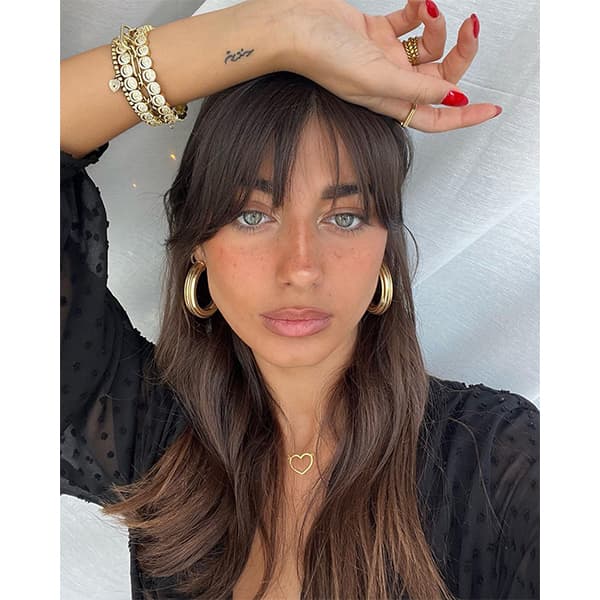
Wondering how to get that lived-in look where the color and cut work as a team? This is it: mid-back length dark blonde hair with a balayage that softens into the ends, paired with long layers and curtain bangs that split at a middle part. The textured, air-dried waves make the whole thing read as deliberate rather than just unbrushed. Medium density wavy hair starting at mid-back gets the most out of this; curtain bangs are a natural fit for oval and square face shapes.
Ask your stylist for: mid-back dark blonde balayage with curtain bangs. The upkeep is forgiving: a light styling cream encourages the air-dried texture, and you will want a bang trim every four to six weeks to keep the face-framing effect sharp.
Collarbone Dark Brown Shag With Full Fringe
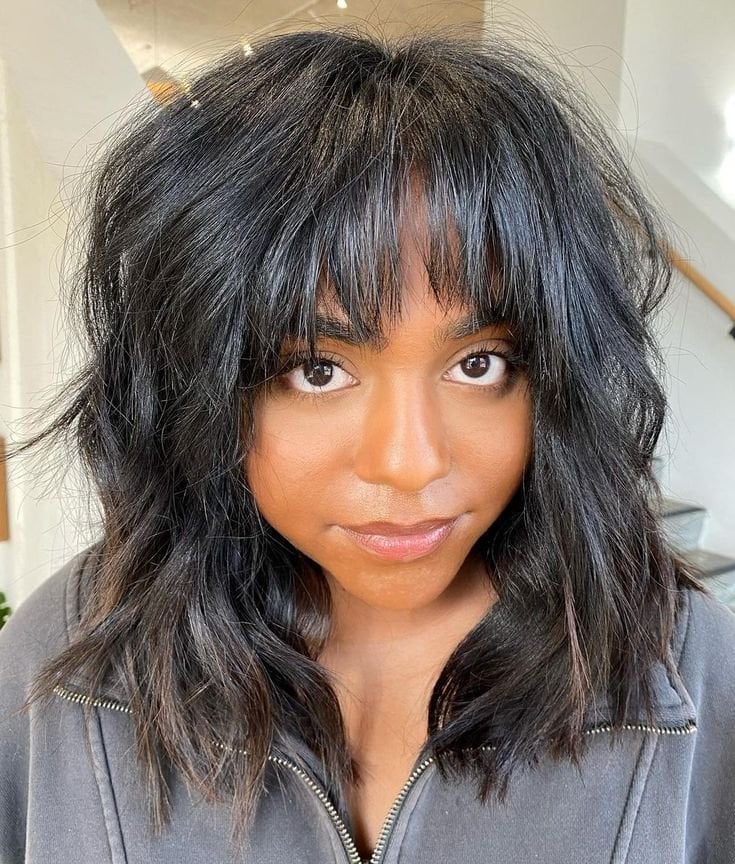
A full fringe on a shag is a commitment, especially when your hair has natural wave. This collarbone-length dark brown version uses textured layers and a middle part to keep the fringe from becoming a solid curtain. Subtle lighter highlights add dimension so the piecey texture looks deliberate. Medium density wavy hair at collarbone length handles the shag structure well; the full fringe tends to favor longer face shapes. The one real drawback: a full fringe on wavy hair needs a flat iron or a round brush every morning, and you will be trimming every three to four weeks to keep it out of your eyes.
Mid-Back Medium Brown With Full Fringe
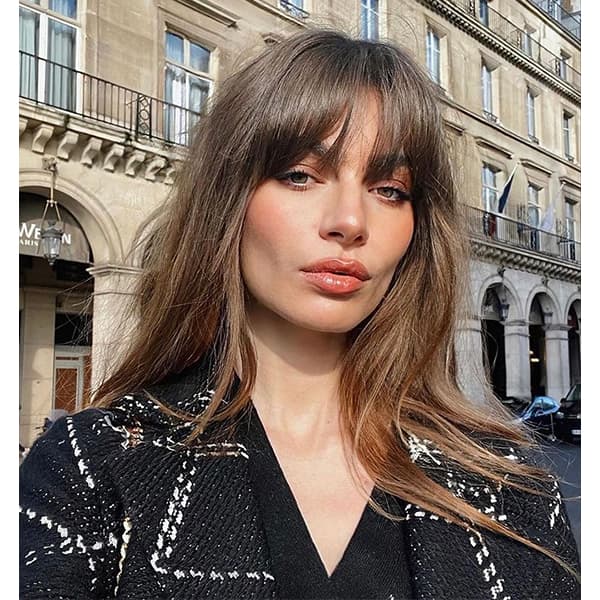
The full fringe lands with a clean, dense line that does not taper into wisps. Mid-back length medium brown hair with subtle highlights keeps the overall look from feeling heavy, while long layers and a middle part give the soft waves room to move. The blowout finish adds a gloss that makes the color look richer.
This design works because the fringe is cut to sit just above the brows, creating a strong horizontal line that balances the length of the hair. Medium density wavy hair at mid-back length provides enough weight to keep the layers from collapsing. A full fringe of this density requires a round brush and a blow-dryer to maintain the shape. The middle part and the long layers ensure the fringe does not compete with the cut; it just anchors it.
Collarbone Brunette With Wispy Bangs
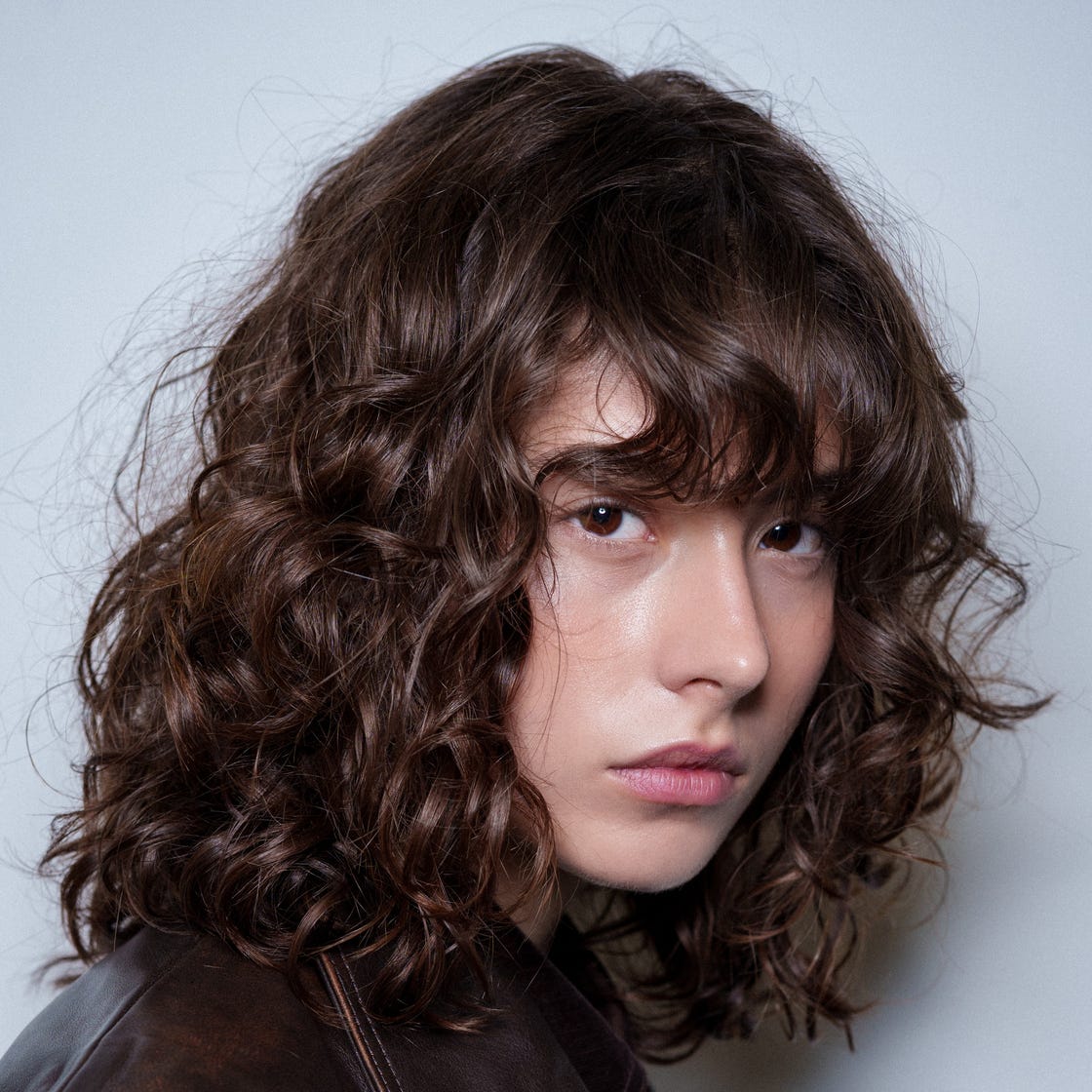
Who actually benefits from wispy bangs, and who should steer clear? This collarbone-length brunette cut with subtle highlights and a side part shows the sweet spot. The wispy bangs feather out rather than sitting as a solid block, which means they soften the hairline without demanding daily flat-iron attention. Medium density wavy hair at collarbone length is ideal; the wispy texture blends into the layers so the grow-out phase is not awkward. Most face shapes can wear this, though a very round face may find the side part and soft ends more flattering than a straight-across fringe.
Ask your stylist for: collarbone brunette with wispy bangs. A texturizing spray keeps the wispy effect from falling flat. The bangs need trimming every six to eight weeks, and the rest of the cut is easy to maintain at home between salon visits.
Long Ash Blonde With Face-Framing Layers And Curtain Bangs
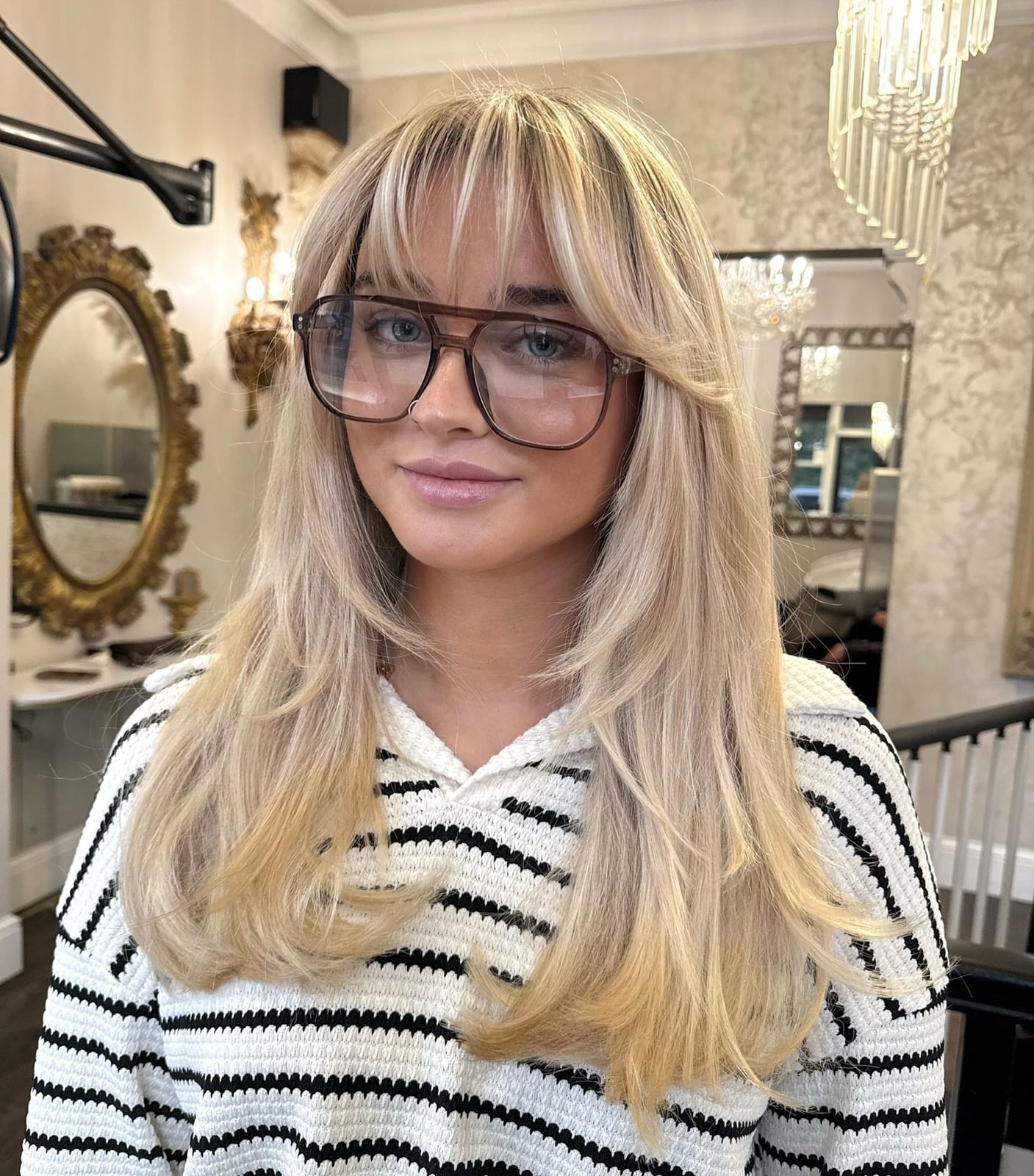
Compare this to a standard long layer cut with thicker hair: the difference is in how the weight falls. On fine wavy hair, long face-framing layers and curtain bangs add volume without removing bulk. This long ash blonde version uses a middle part and a soft blowout to let the curtain bangs sweep outward, which adds width around the cheekbones. Fine hair at long length can look stringy without the right cut, but the curtain bangs and layers here give it a defined shape.
The ash blonde base keeps the tone cool, which works well with the soft wave pattern. Curtain bangs suit oval and heart-shaped faces because they widen the eye area without shortening the face. A volumizing spray at the roots helps fine hair hold the blowout longer. The bangs need trimming every four to six weeks, but the overall cut holds its shape for eight to ten weeks.
Mid-Back Ash Blonde With Full Fringe And Balayage
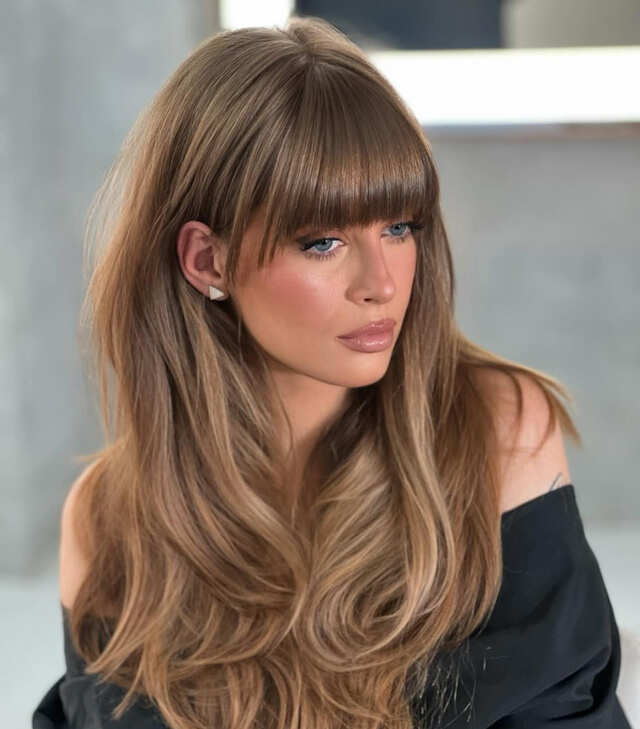
The full fringe here gets a softer edge thanks to the long layers worked through the ends, so it blends with the rest of the cut. Subtle balayage adds dimension to the mid-back ash blonde base, with lighter pieces framing the face. Ask your stylist for: mid-back ash blonde with full fringe and balayage. Medium density wavy hair at this length holds the shape well, and the full fringe suits longer face shapes by shortening the vertical line. Blow-dry the bangs with a round brush, directing them to the side; a trim every four to six weeks keeps the line clean.
Mid-Back Medium Brown With Full Fringe, Close-Up Take

What makes this full fringe work is its density: it lands with a blunt, deliberate weight, not a feathered wisp. Subtle highlights keep the mid-back medium brown base from feeling flat, while the long layers underneath add movement through the body. Ask your stylist for: mid-back medium brown with full fringe. Medium density wavy hair at this length supports the fringe volume, and the style suits longer face shapes by breaking up the length. A round brush blow-dry shapes the fringe, and a trim every four to six weeks is standard.
Mid-Back Light Blonde With Wispy Bangs

Wondering how to ask for bangs that don’t look like an afterthought? The key is specifying a wispy finish with a side parting, so the fringe blends into the long wavy layers rather than cutting across them. Ask your stylist for: mid-back light blonde with wispy bangs. Fine wavy hair at mid-back length benefits from the lightness of wispy bangs, which add movement without weighing the top down. A texturizing spray enhances the undone texture, and the bangs need a trim every six to eight weeks to keep their shape.
Mid-Back Dark Brown With Wispy Bangs
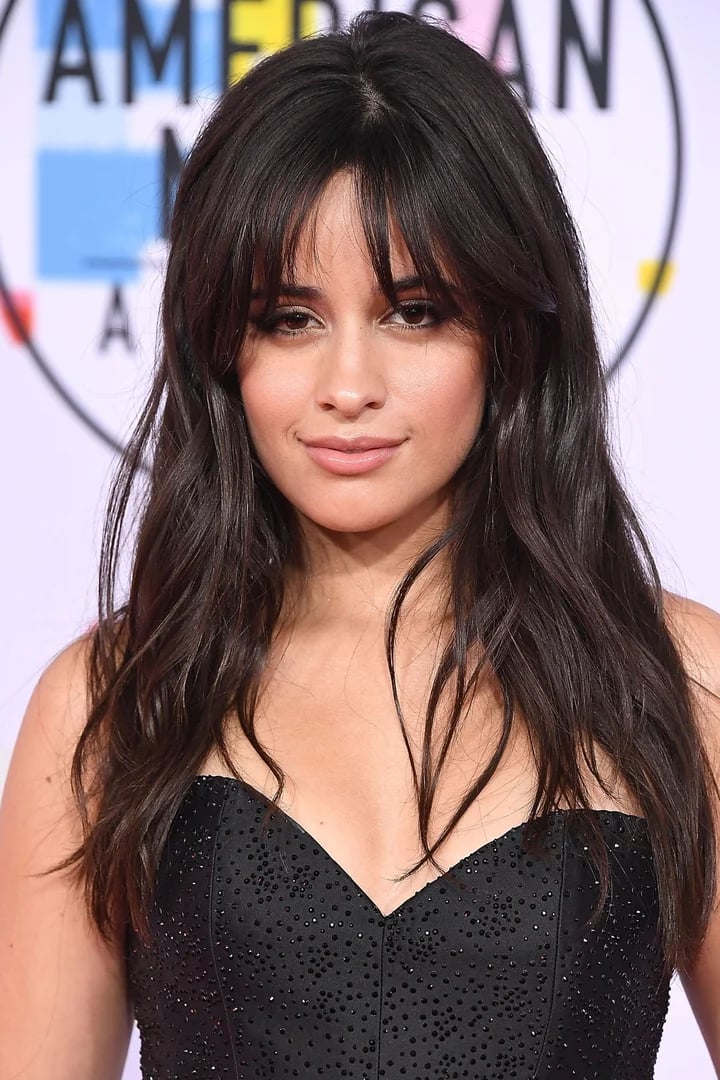
The wispy bangs here are cut with a middle parting, creating a soft curtain effect that frames the face without committing to a full fringe. The mid-back dark brown base gets texture from long layers and loose waves, which keep thick wavy hair from looking too heavy. Ask your stylist for: mid-back dark brown with wispy bangs. The drawback: wispy bangs need daily attention to stay intentional rather than messy. A quick blast with a round brush or a flat iron takes two minutes, but skip it and they wander. Thick hair helps the pieces separate naturally, so you can lean into the texture.
Collarbone Dark Blonde With Curtain Bangs
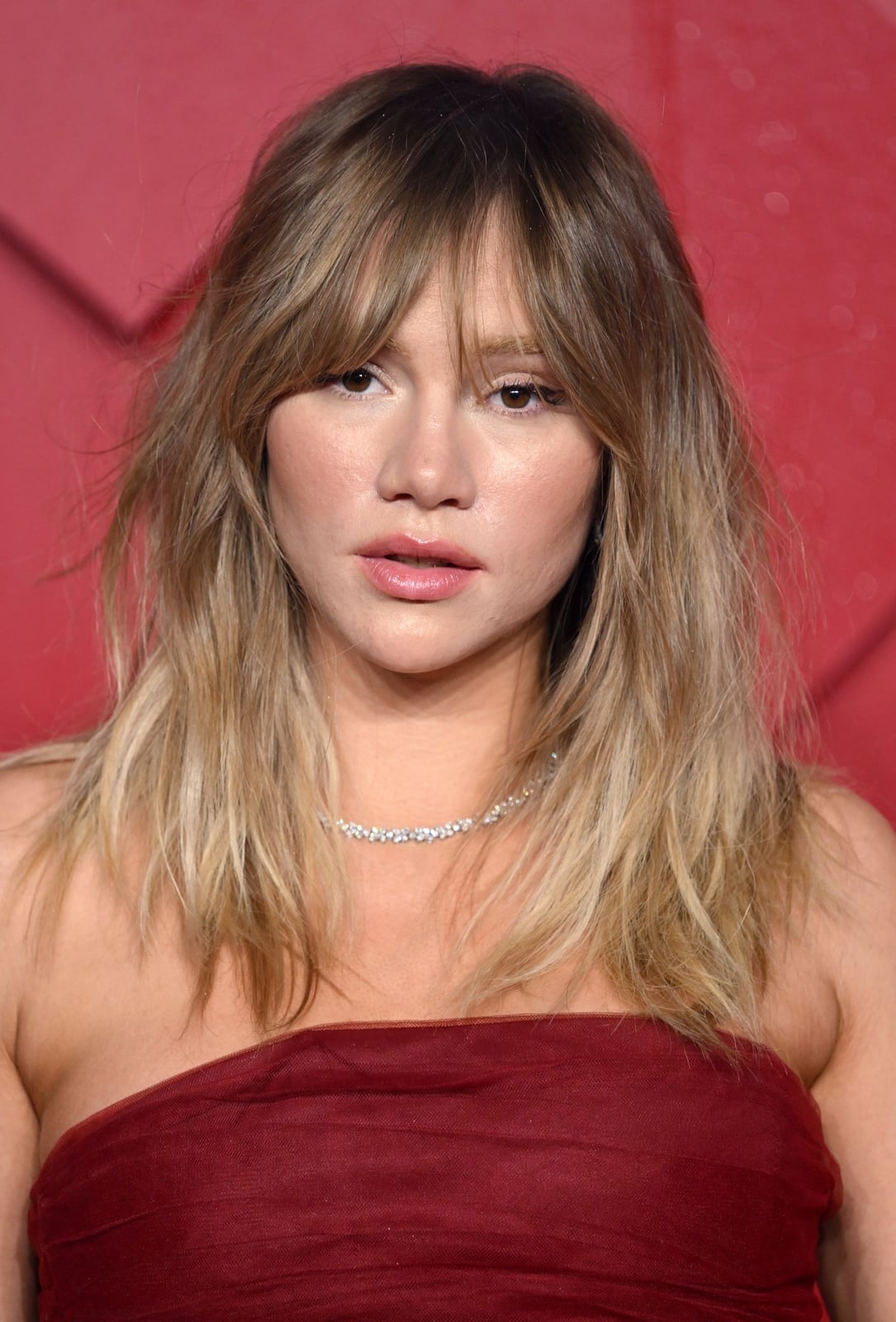
The curtain bangs here are cut with a soft sweep that opens at the center, landing just past the cheekbones to frame the face without blocking it. The collarbone length and loose waves give the dark blonde base with lighter highlights a lived-in feel that reads as current rather than contrived. Ask your stylist for: collarbone dark blonde with curtain bangs. Medium density wavy hair at this length lets the bangs sit naturally with the layers, and the style complements oval and square face shapes. A diffuser on your blow dryer encourages the wave pattern, and a trim every four to six weeks keeps the curtain shape intact.
Long Wavy Dark Brown Messy Ponytail With Wispy Bangs

Ever wonder how a messy ponytail looks deliberate instead of like you gave up? The trick is all in the prep, and this wavy, dark brown version with loose strands is the blueprint. Start with day-old hair so the wavy texture has some grip, then gather it low and off-center, leaving the front pieces out.
Pull a few face-framing strands free after you secure the elastic, and let the wispy bangs fall naturally around the temples. A texturizing spray on the lengths keeps everything piecey without looking stiff. Ask your stylist for: messy ponytail with wispy bangs. This is a DIY situation you can nail in five minutes, and it works for the gym or a casual weekend errand.
Mid-Back Fine Straight Hair With Blunt Bangs

Blunt bangs are the rare design that does the heavy lifting for fine, straight hair, giving the mid-back length an instant graphic edge. The middle parting and subtle highlights in the light brown base keep the sleek styling from reading flat. You will need a flat iron to get the glassy finish, and you will be back in the chair every two to three weeks to keep the line sharp. Ask your stylist for: mid-back straight hair with blunt bangs. The real drawback is the grow-out phase, which lands right in your eyes for a solid month, so book the trim before you start reaching for the headbands.
Collarbone Medium Brown With Curtain Bangs

What makes this collarbone cut work is how the curtain bangs pick up the loose waves and carry them forward. The side parting and soft, face-framing layers blend the bangs into the medium brown lengths, so there is no hard line where the fringe ends. Subtle highlights give the blowout movement without turning it brassy. Ask your stylist for: collarbone medium brown with curtain bangs. The bangs soften a square jaw, and the collarbone length keeps the whole thing wearable for work. A round brush blow-dry, directing the bangs away from the face, gets you there in about ten minutes, with a trim every four to six weeks.
Collarbone Ash Blonde With Curtain Bangs, Straight
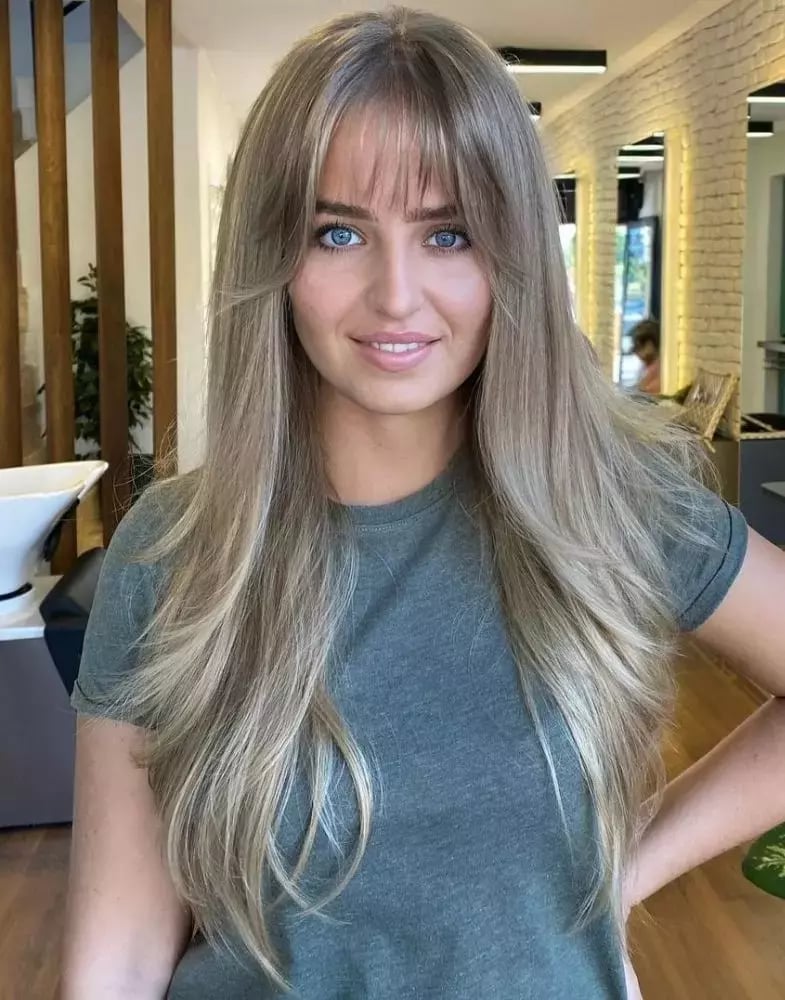
Is this the right look for fine, straight hair, or is it a battle you will lose by noon? The honest answer is that it can work, but you need the right starting point. The ash blonde with highlights and the middle-parted curtain bangs add softness around the face, which is a win for fine textures that tend to lie flat. Ask your stylist for: collarbone ash blonde with curtain bangs. This is a salon-leaning style, since the bangs need a precise cut and the blonde needs a toner to keep the ash from turning brassy. A flat iron on the lengths and a round brush on the bangs will get you out the door, but expect to refresh the toner every six weeks to keep the color true.
Collarbone Honey Blonde Butterfly Cut With Curtain Bangs

The butterfly cut is built on a simple premise: shorter layers on top that fan out into longer ones below, and here it lands at collarbone length with a bouncy blowout. The honey blonde base with subtle highlights gives each layer its own dimension, so the movement reads clearly. Soft curtain bangs with a middle parting tie the face-framing layers into the cut. Ask your stylist for: collarbone honey blonde butterfly cut with curtain bangs. This one suits medium density wavy hair best, and the oval face gets the most out of the framing. A volumizing mousse and a round brush are required for the bounce, with a trim every four to six weeks to keep the layers from growing out into a shapeless blob.
Collarbone Dark Brown With Side Swept Bangs

The deep side parting sweeps those bangs across the forehead instead of letting them sit flat. That thick, straight texture holds the swoop without needing a can of hairspray every hour. Collarbone-length dark brown with a smooth blowout looks polished but not stiff, and the side-swept bangs are the reason. They soften a square jaw and round out a long face without committing to a full fringe. Ask your stylist for: collarbone dark brown with side swept bangs. A flat iron keeps the ends obedient, and those bangs will need a trim every four to six weeks before they start grazing your lashes.
Mid-Back Black Hair With Blunt Bangs
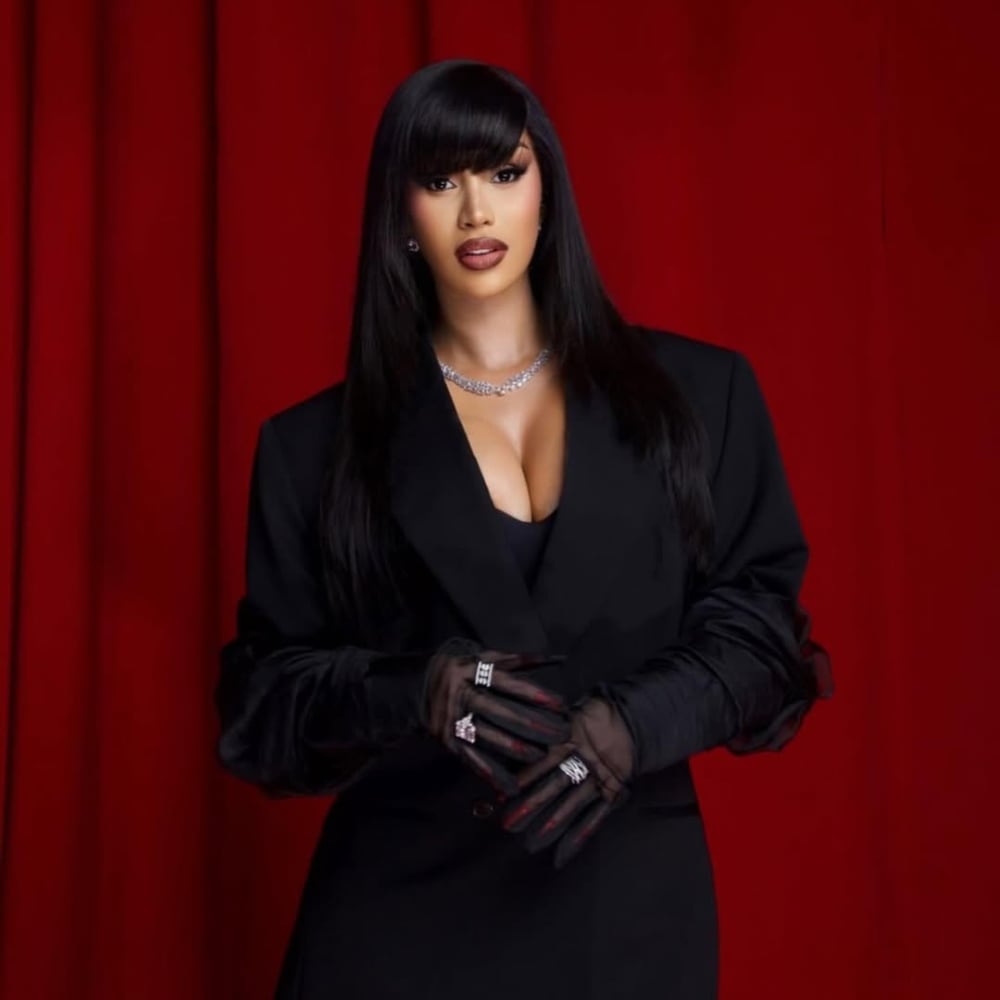
Blunt bangs that land as a sharp, straight line across the forehead need the right words. That mid-back black hair is cut with long layers underneath so the length has movement. The thick texture is what makes it work: fine hair would go flat fast. Ask your stylist for: mid-back black hair with blunt bangs. A flat iron is your daily tool for keeping the line crisp. Plan on a bang trim every two to three weeks, because one millimeter of grow-out turns that sharp edge into a soft one.
The upkeep is the trade-off. You get a bold, graphic frame for your face, but you are on a salon schedule. Blunt bangs at mid-back length also mean the hair needs a dusting every eight weeks to keep the ends healthy.
Mid-Back Dark Brown With Full Straight Bangs
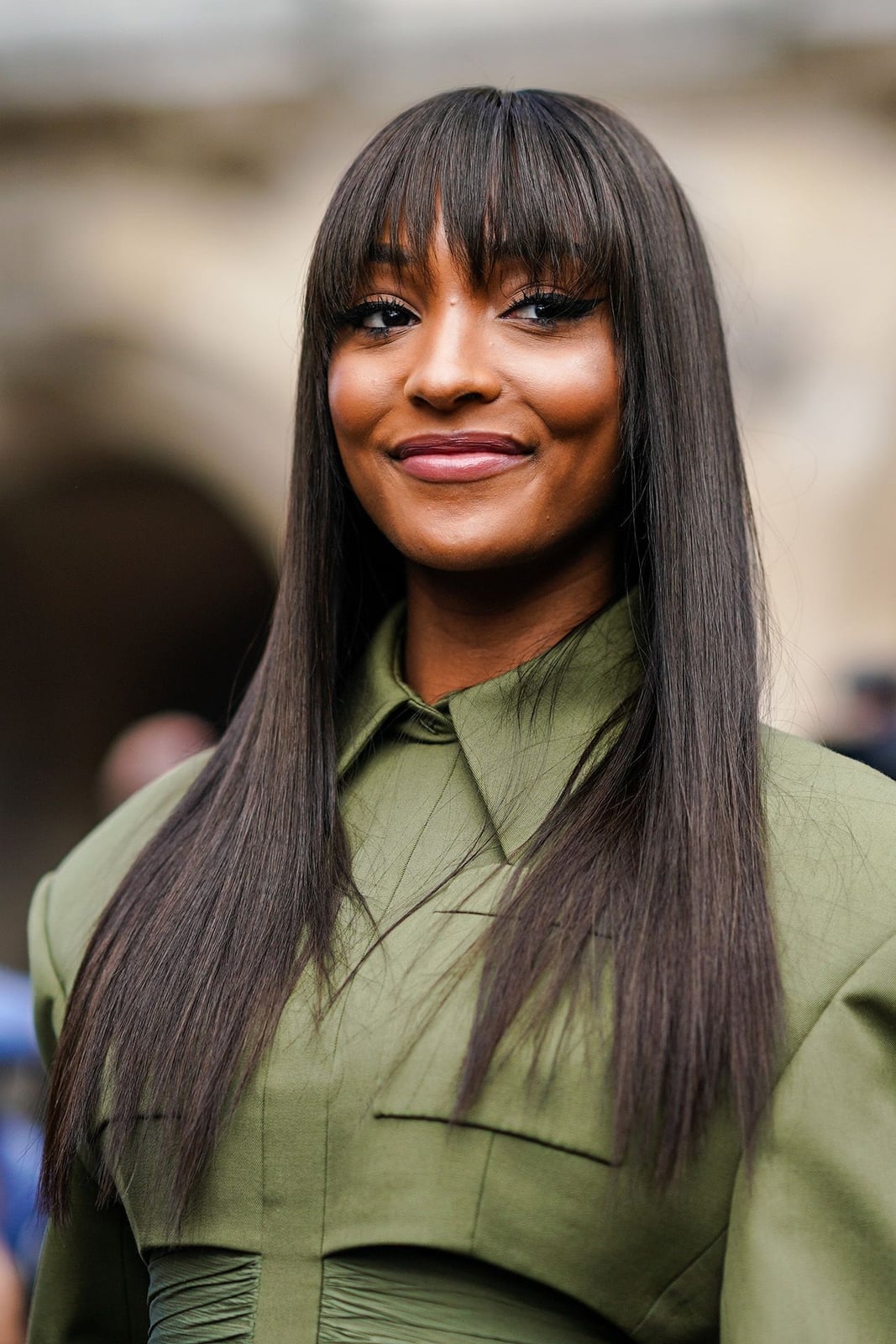
Fine, straight hair and a full set of straight across bangs is a relationship that needs maintenance. That mid-back dark brown length has subtle long layers so the ends do not look like a single block, but the bangs are the star: they sit at eyebrow level, covering the forehead completely. The middle parting underneath the fringe keeps the weight balanced. Fine hair shows every hint of oil, and those bangs will be the first to go greasy. You will be dry-shampooing by lunch on day two. And because the hair is straight, there is no texture to hide an uneven trim. A flat iron is essential for keeping the line sharp. Bang trims every two to three weeks are the price of admission.
On the plus side, full straight bangs do a solid job of shortening a longer face shape and giving fine hair more visual weight at the front.
Mid-Back Dark Brown With French Fringe

The mistake people make with a French fringe is treating it like a blunt bang. A French fringe is softer and slightly wispier, brushing the brow bone rather than sitting as a solid line. That mid-back dark brown hair with fine, straight texture and long layers is the ideal canvas: the fringe is cut with a gentle curve that follows the brow, and the middle parting keeps it from looking heavy. Ask your stylist for: mid-back dark brown with French fringe. A small round brush and a blow-dryer are enough to shape it, no flat iron required. The fringe needs a trim every three to four weeks, but the grow-out is more forgiving than a blunt bang because the ends are softer.
Chin Length Blonde Shag With Full Bangs
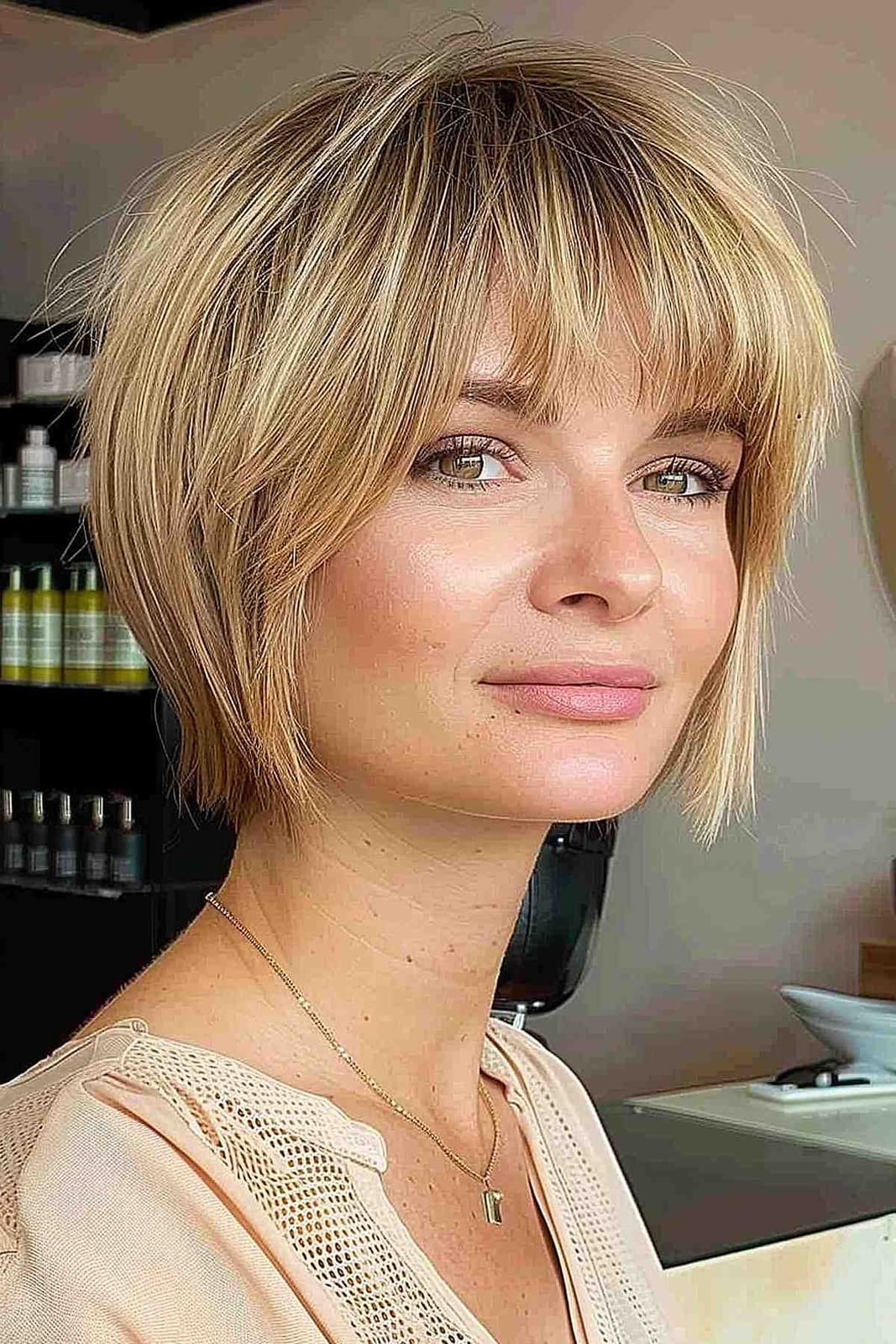
This is not a curtain bang that blends into the sides. This is a full bang with a shag, and the difference is commitment. That chin-length blonde with subtle highlights and a middle parting has textured, piecey layers throughout, so the full bangs read as part of the same chopped-up attitude rather than an add-on. The fine, wavy texture is what gives the shag its grip: straight hair would fall flat. Ask your stylist for: chin length blonde shag with full bangs. A texturizing paste is your friend for separating the pieces. If you want something softer, go with a wispier fringe that feathers into the layers. This one is for when you want the bangs to announce themselves.
Shoulder Length Dark Brown Shag With Choppy Bangs

The design behind choppy bangs is that each strand is cut at a slightly different angle, creating a jagged edge that refuses to lie flat. On a shoulder-length shag with thick wavy hair and subtle lighter pieces, those uneven ends add texture without looking deliberate. A middle parting keeps the weight balanced. This is a salon cut: point-cutting the bangs takes a steady hand, and DIY tends to produce something closer to accidental chunkiness. Ask your stylist for: shoulder length dark brown shag with choppy bangs.
Mid-Length Copper Shag With Messy Fringe
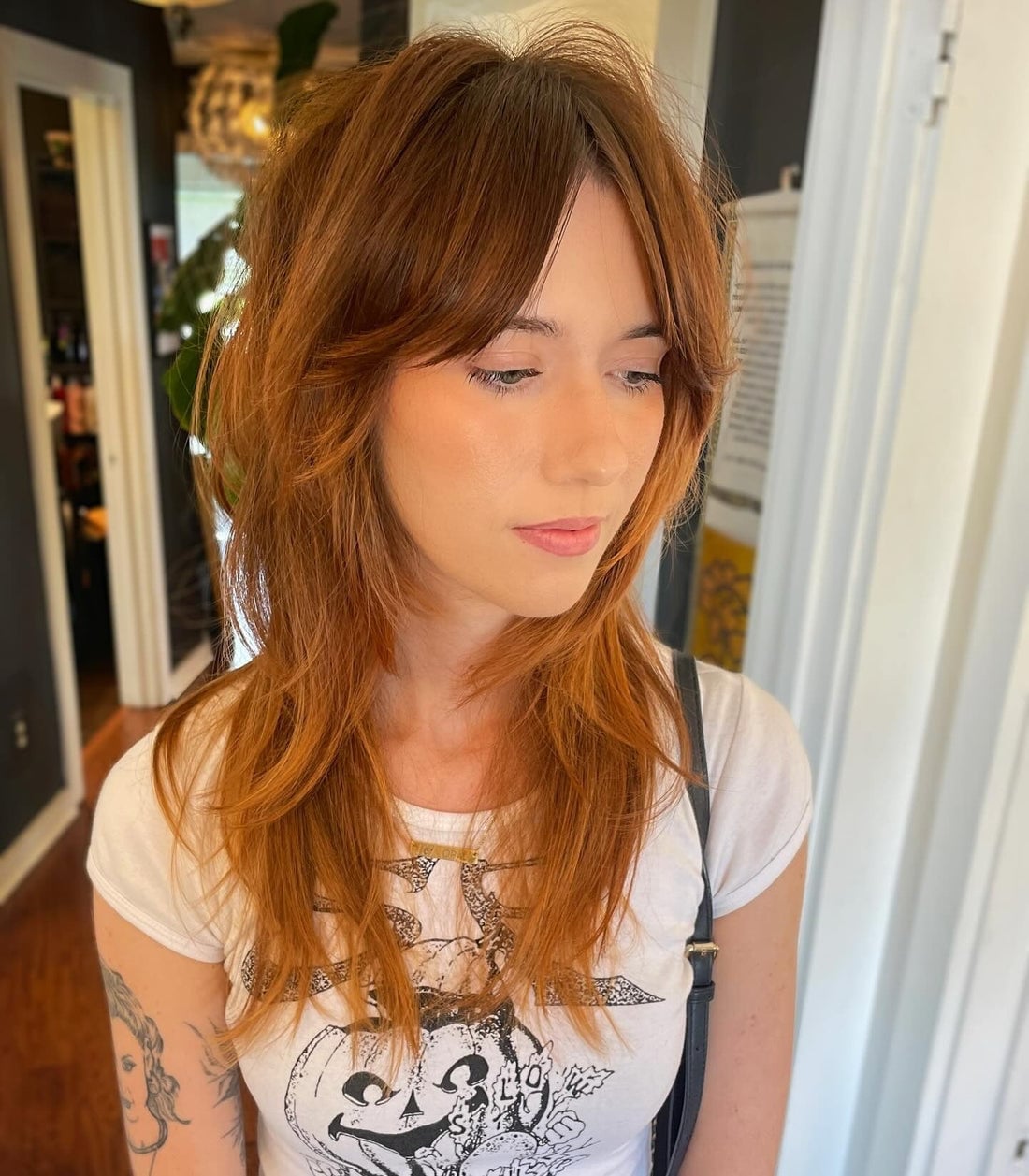
The messy fringe on this copper shag with blonde highlights is built from piecey, separated ends that never form a solid line. On thick wavy hair at mid-length, the fringe lands somewhere between intentional and just-rolled-out-of-bed, which is the whole point. Air-drying preserves that texture, and a texturizing paste worked through the ends keeps the separation visible for the day. Trim every four to six weeks to stop the fringe from turning into a curtain. Ask your stylist for: mid-length copper shag with messy fringe.
Collarbone Ash Blonde Bob With Full Fringe
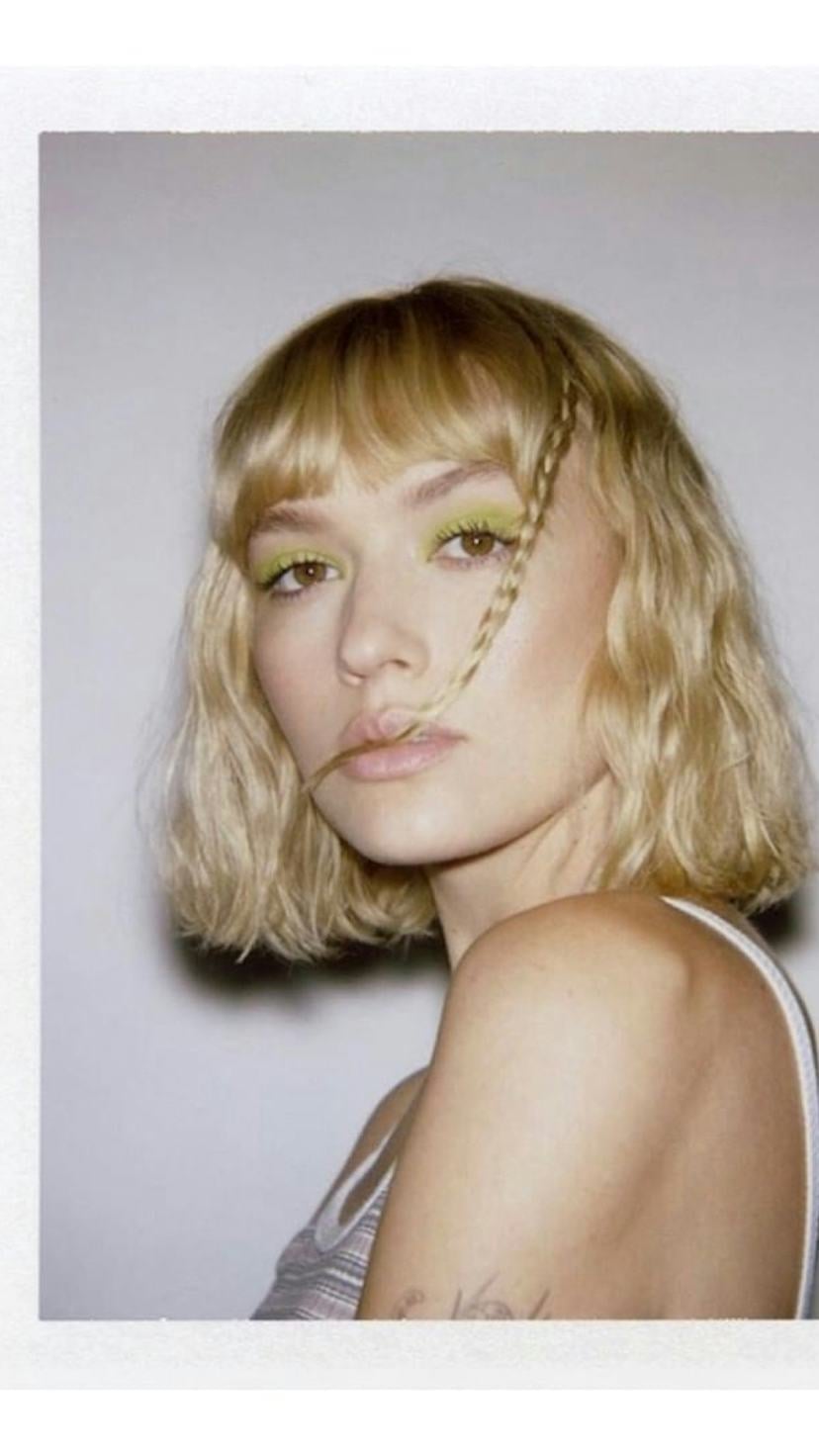
Does a full fringe work on fine wavy hair? It does when the bob lands at collarbone length and the fringe is cut to hit the eyebrows. The ash blonde base keeps the look cool, and the tiny braid tucked into one side of the fringe adds a deliberate accent. Loose waves keep the weight distributed so the fine texture does not fall flat.
Ask your stylist for: collarbone ash blonde bob with full fringe. A volumizing spray on damp roots and a round brush give the crown lift that balances the heavy fringe line.
Short Silver Grey Shag With Wispy Bangs
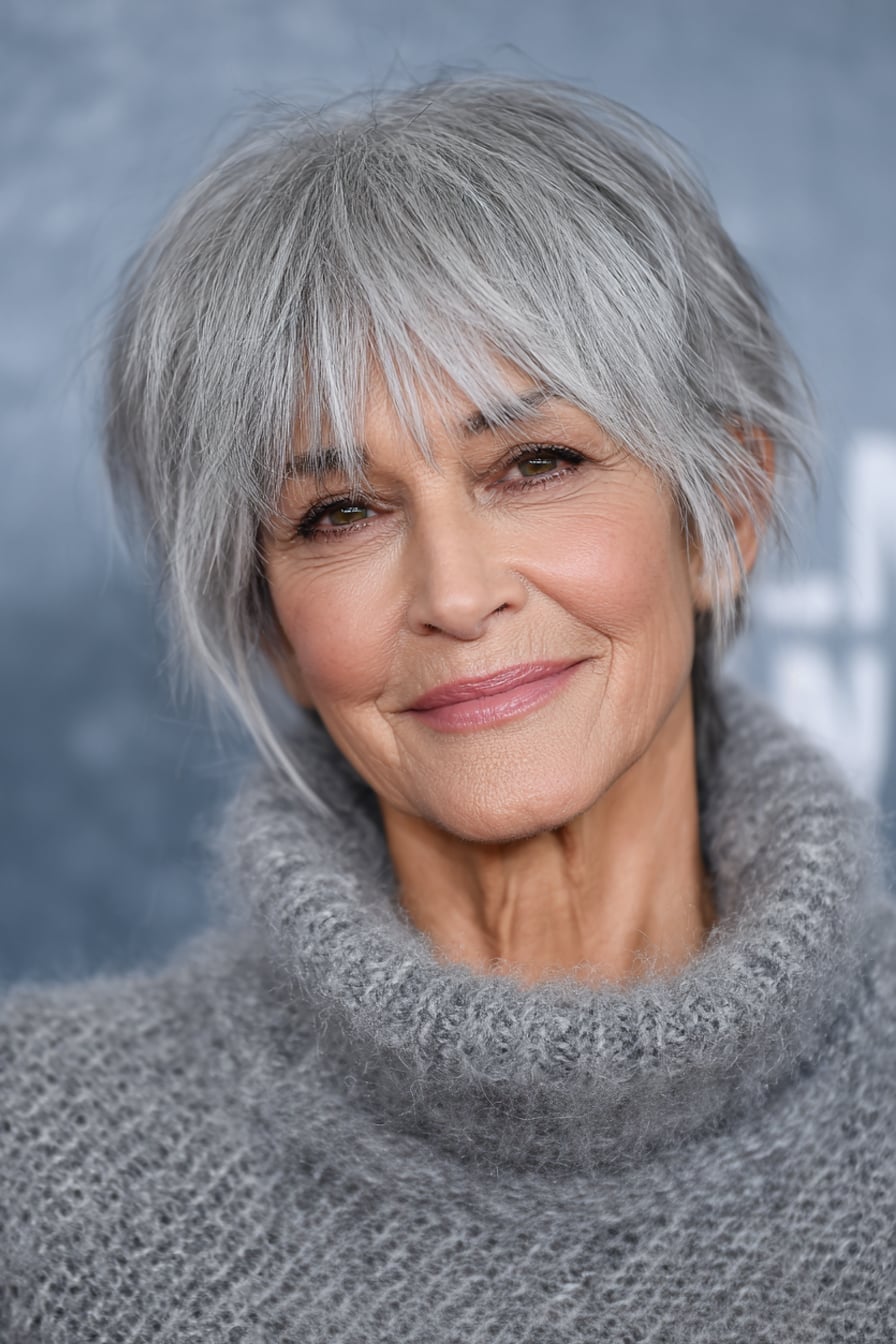
A short silver grey shag at ear length with wispy bangs relies on fine, straight texture to keep the pieces from clumping. The side parting and textured styling mean the bangs need a quick tousle each morning to look lived-in rather than forgotten. The real drawback: wispy bangs this short can read as too sparse if you skip a trim past six weeks, so book a bang trim every four to six weeks. Ask your stylist for: short silver grey shag with wispy bangs.
Ear Length Black Bob With Full Bangs

The stark geometry of an ear-length black bob with full bangs comes from the contrast between the blunt line across the forehead and the clean bob perimeter. Fine straight hair holds the shape best, and a middle parting keeps the cut symmetrical. No texture or wave softens the edges here, which is exactly the point. A flat iron seals the sleek finish. Ask your stylist for: ear length black bob with full bangs.
Chin Length Blonde Bob With Blunt Bangs

This chin-length version with blunt bangs delivers exactly that: a sharp, straight-across fringe paired with a sleek, fine blonde cut that hits right at the jaw. The middle parting keeps things symmetrical, and the blunt edges mean there is zero room for half-hearted shaping. Ask your stylist for: chin length blonde bob with blunt bangs. This is a salon-only move. The precision of those bangs requires a steady hand and a fresh blade. Fine, straight hair holds the line best; wavy textures will need a flat iron to keep the edge crisp. Plan on a bang trim every two to three weeks to maintain the geometry.
Mid-Back Dark Brown Braid With Side Swept Bangs

Full fringes are a commitment. Side-swept bangs, on the other hand, are the low-stakes alternative: they soften a strong jaw or a square face without requiring daily precision styling. This version pairs a thick, wavy dark brown braid with a side-swept fringe that blends into the rest of the hair at mid-back length. The side parting directs the bangs across the forehead, so they stay out of your eyes while still adding movement. Ask your stylist for: mid-back dark brown braid with side swept bangs. The long layers in the braid keep it from looking too uniform, and the wavy texture gives the whole thing a relaxed, bohemian feel. It is the kind of style that works as well for a farmer’s market as it does for a dinner out.
Final Thoughts
For fine hair, wispy or curtain bangs add movement without overwhelming the rest of the cut. Thick hair can handle blunt or choppy styles with ease. If low upkeep is the priority, choose bangs that can grow out into face-framing layers rather than demanding weekly trims.
- Trim bangs every 2-4 weeks to maintain shape.
- Use dry shampoo at the roots to absorb oil between washes.
- Style bangs first with a small round brush and heat protectant.
- Consider a texturizing spray for lived-in looks.
- Refresh color with a gloss or toner every 6-8 weeks if needed.
Find the fringe that speaks to you.