
Viking braids are having a moment, but the modern take is less about reenactment and more about texture, precision, and a little bit of edge. The shift is toward lived-in color and glossy natural texture, with braids that feel intentional rather than costumey.
This collection of 22 Classy Viking Braids covers the range from short, undercut-heavy styles to long, intricate plaits, so there is something for every length and density. If your fine hair tends to fall flat or you are tired of a visible grow-out line, these braided looks offer structure and staying power without demanding a full-time stylist.
Chin Length Bob With Side Braids
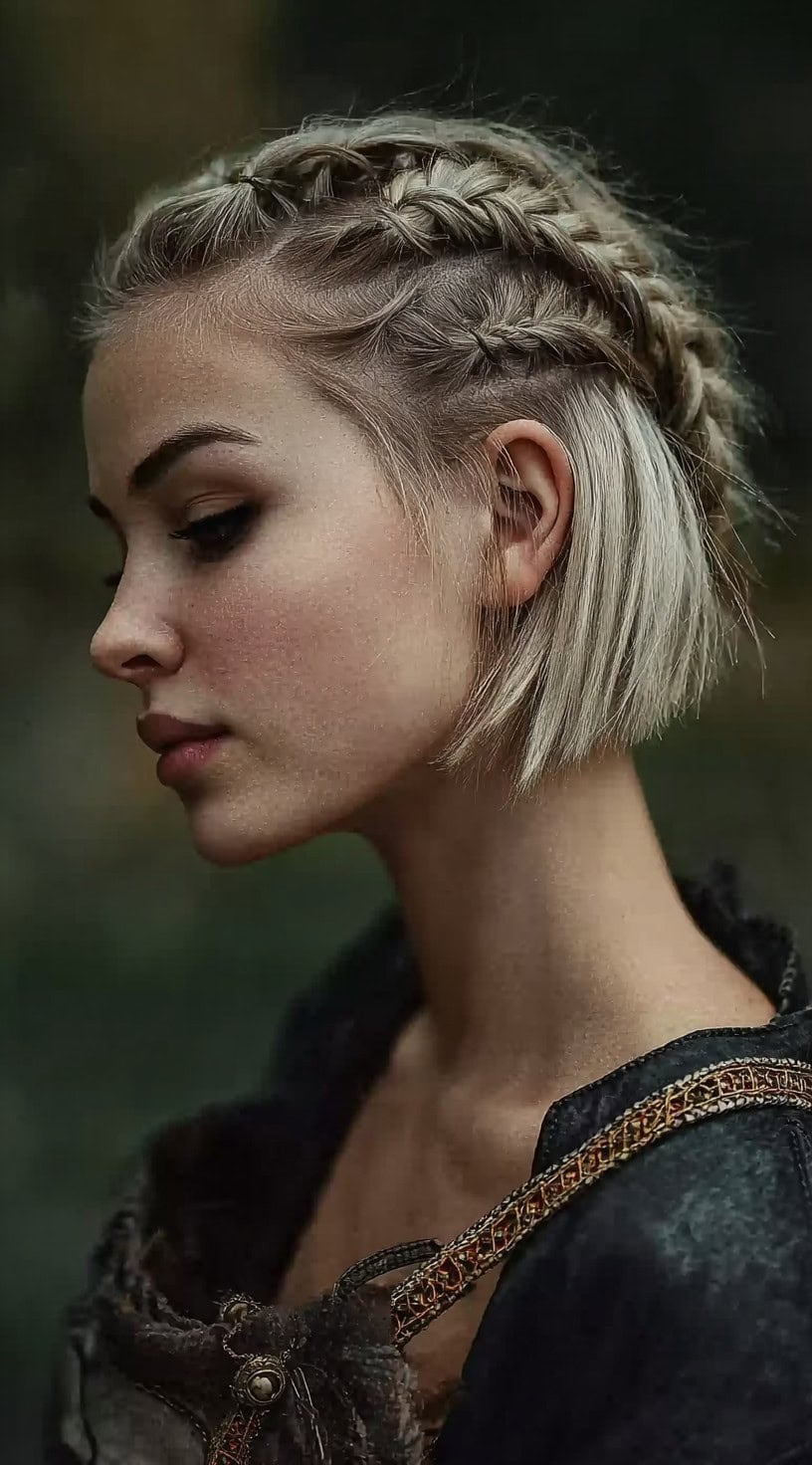
A chin-length bob in ash blonde with subtle highlights gains a Viking edge from small braids woven along the hairline and swept to the side. The side-swept bangs and wavy texture work best for fine to medium hair, and the shape softens round or heart faces. Ask your stylist for: chin length bob with small side braids. A texturizing spray on the waves gives the braids something to grip, and the bob needs a trim every six to eight weeks to keep its line.
Short Undercut With Braids And Waves
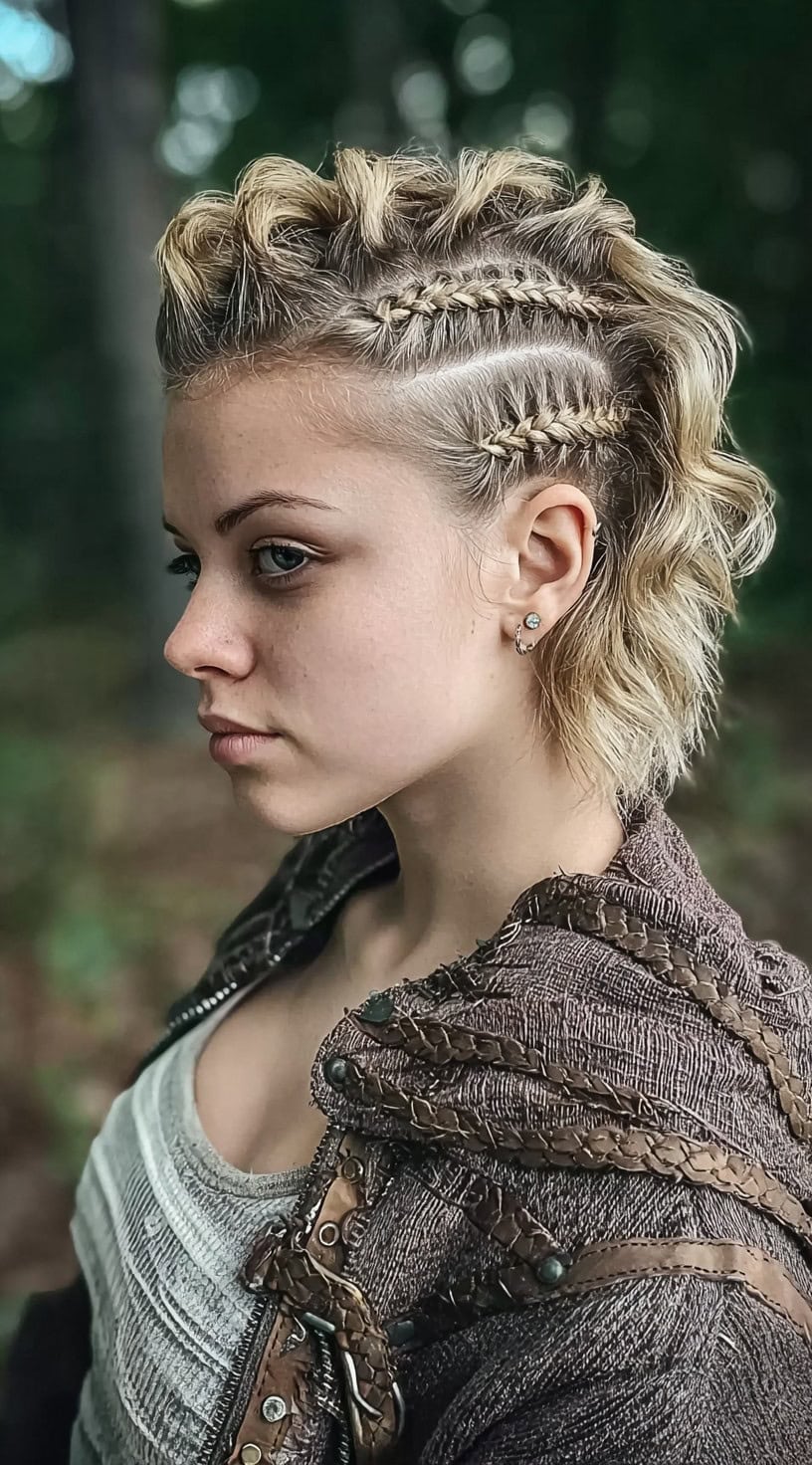
This is not the full commitment of a shaved head. An undercut on one side keeps the weight, while several thin braids on the shaved side and textured waves on top do the Viking work in ash blonde. It lands between edgy and wearable for fine to medium hair types. Ask your stylist for: short undercut with thin braids and textured waves. A texturizing paste on the waves keeps them defined, and the undercut needs a sharpening every three to four weeks.
Undercut With Geometric Braids And Ponytail
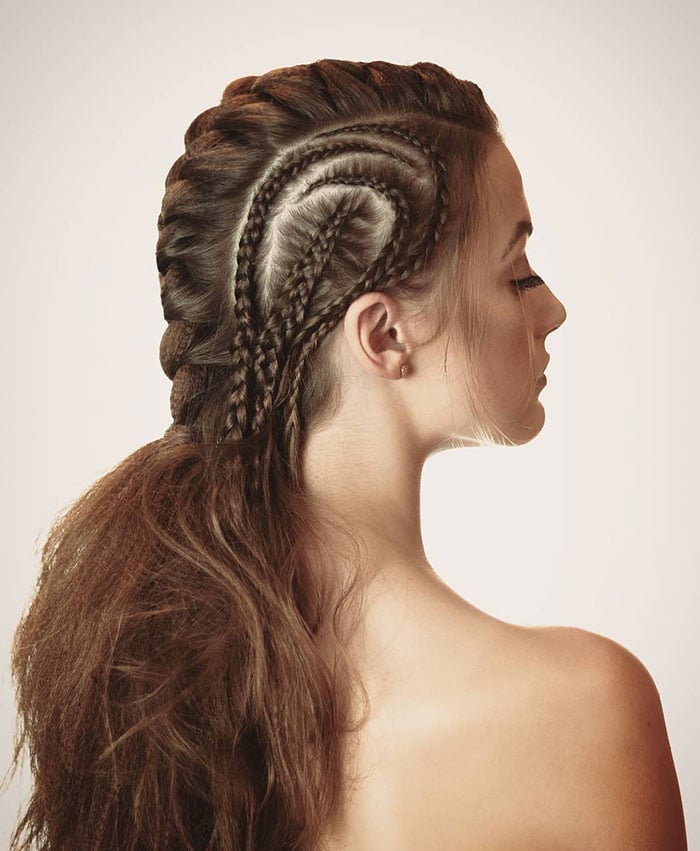
The geometric braids on the side are not a casual Friday project. Each section is mapped out in straight lines on thick, straight hair, using dark brown with lighter brown highlights to make the pattern visible. The undercut keeps the bulk away, and the rest falls into a low ponytail that reaches mid-back.
This precision work needs a stylist who plans the braid placement before picking up a comb. Ask your stylist for: undercut with geometric side braids and low ponytail. A strong hold gel on the braids keeps the edges crisp.
Shoulder Length Mohawk With Braids
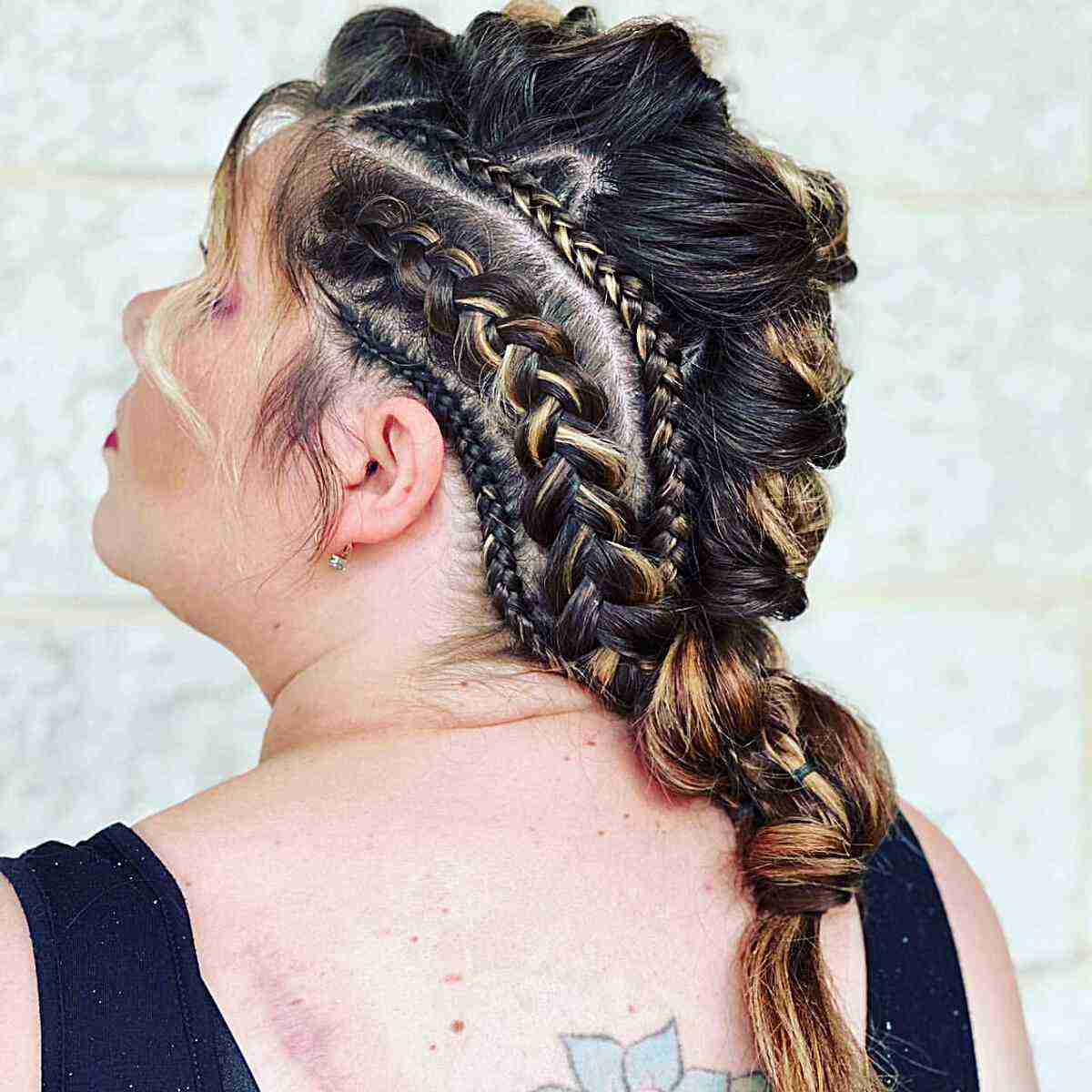
How do you get a braided mohawk that does not look like a costume? Start with shoulder-length, thick, wavy hair in dark brown with blonde highlights, and ask for an undercut that runs from temple to nape. The braid runs down the center strip, and the exposed sides keep it modern. Ask your stylist for: shoulder length undercut with braided mohawk. A texturizing spray on the braid adds grip, and the undercut needs a clean-up every three weeks.
Undercut With Blue Grey Ombre And Buns
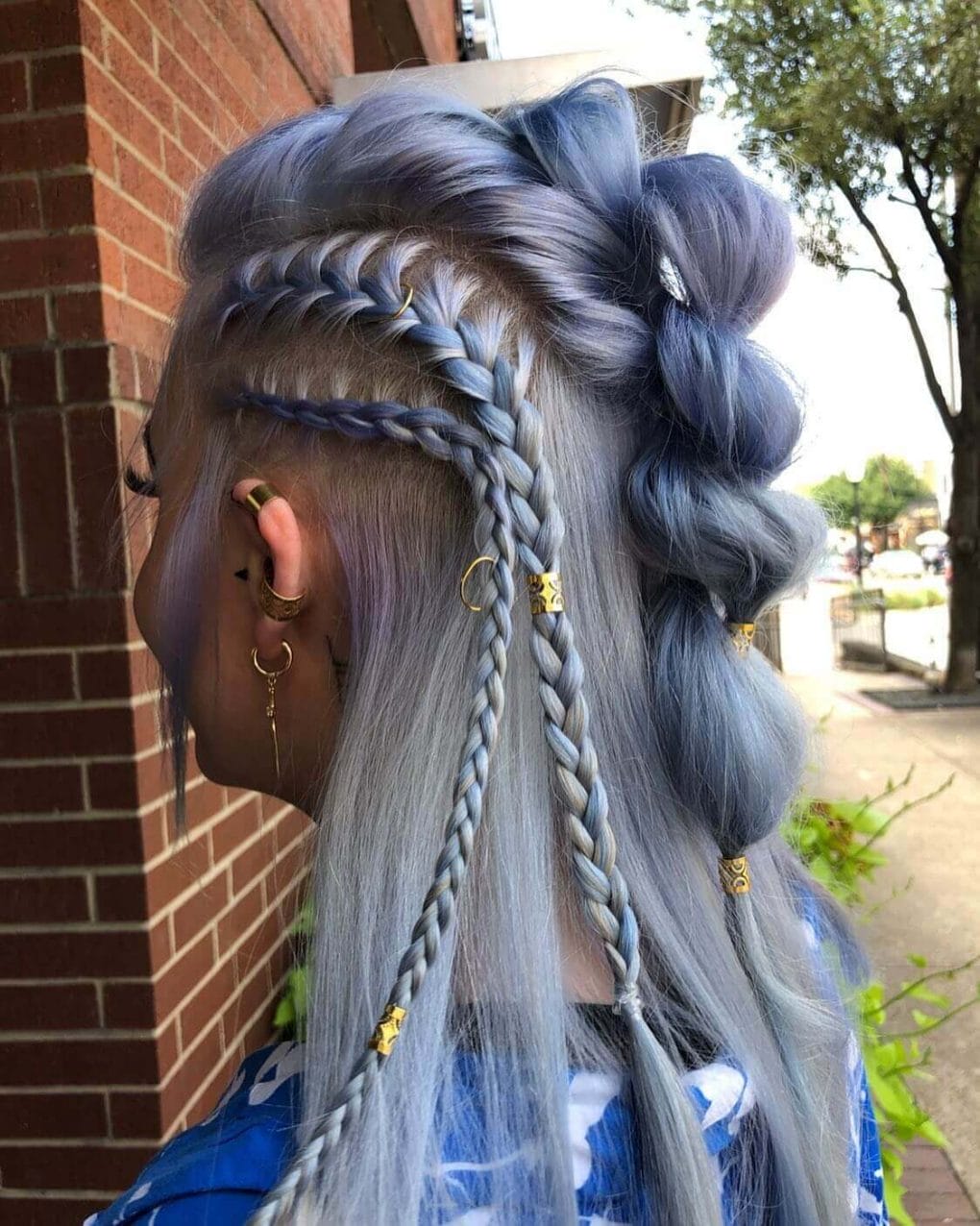
A blue and grey ombre on wavy, medium-density hair already makes a statement. Add an undercut with scalp braids, a few small buns in the longer sections, and gold beads, and the commitment level is clear. The braids sit flat against the head, while the ombre fade from dark blue at the roots to grey at the ends.
This is a color that requires a color-safe shampoo and a toning visit every four to six weeks to keep the grey from turning muddy. Ask your colorist for: blue grey ombre undercut with scalp braids and buns. The beads are removable, so you can switch from festival to office without a full redo.
Collarbone Mohawk With Braids And Curls
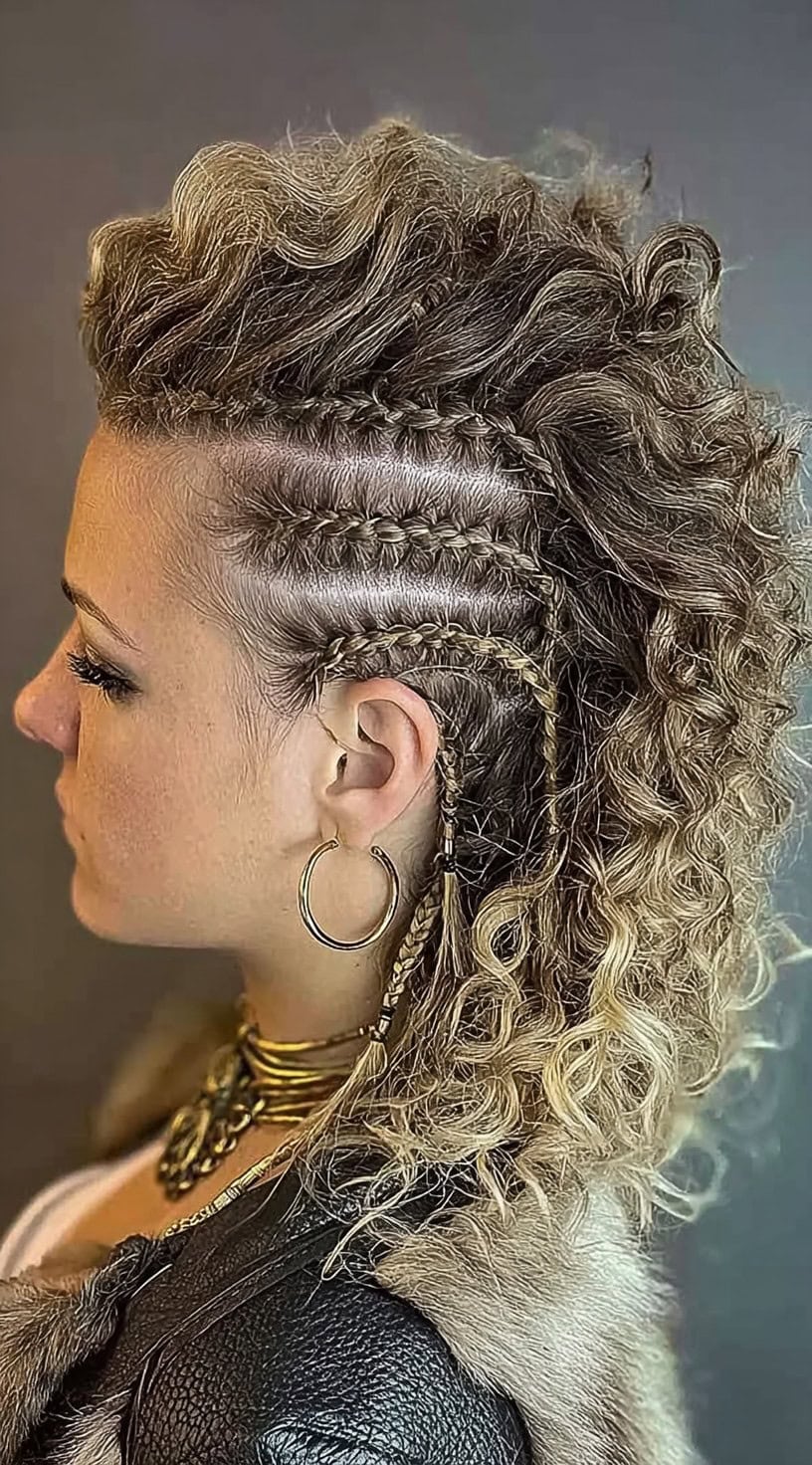
That asymmetry creates the look, but it comes with a catch: the braided section grows out at a different pace than the curly side, so the balance shifts as the weeks pass. Thick, wavy and curly hair handles this best, and the mohawk itself works with most face shapes. Ask your stylist for a collarbone mohawk with intricate braids and loose curls. Apply curl cream to the ends and keep the braided side neat to maintain the contrast. The blonde base with darker roots and subtle highlights adds depth without extra effort.
Mid-Back Blonde With Viking Braids And Accessory
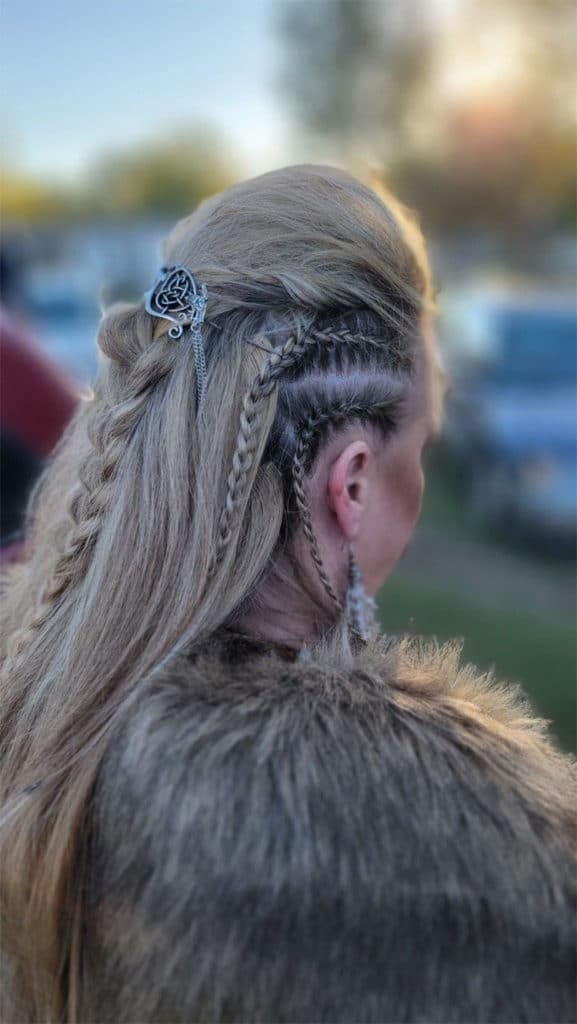
Mid-back blonde hair is woven into small side braids that feed into a larger braid down the back, with a silver accessory placed near the crown. The wavy, thick texture gives the braids body, so they hold their shape through an evening out. Ask your stylist for mid-back blonde with viking braids and a crown accessory. Secure the accessory firmly with bobby pins before the event, and use a flexible hold spray on the braids to keep flyaways in check. This style works for summer festivals or themed parties.
Mid-Back Layers With Side Braids And Beads
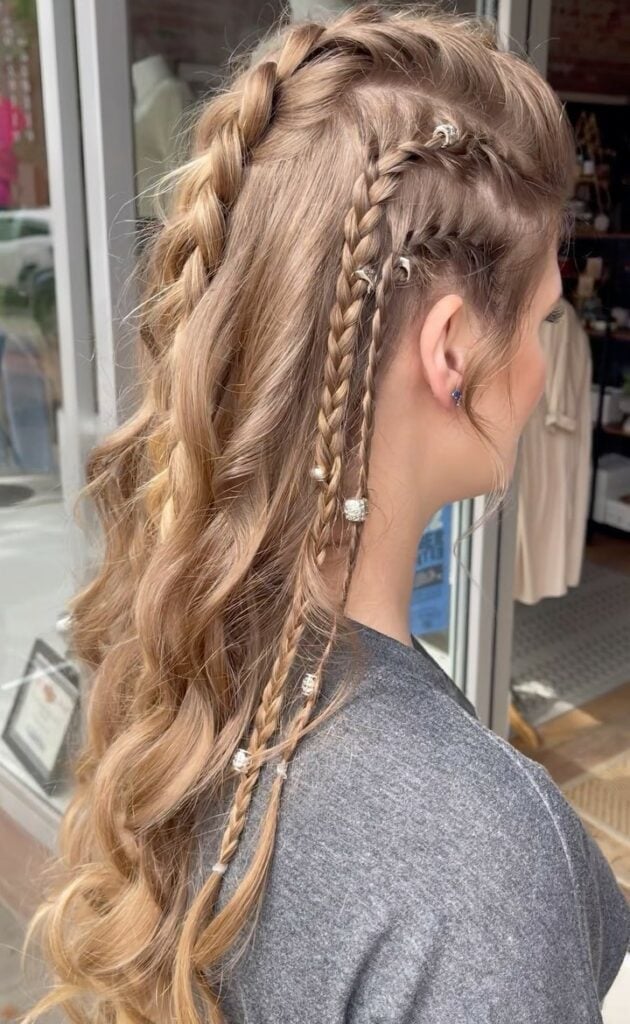
The bead placement is what separates this from a standard braid-and-layer combo. Small sparkling beads are threaded onto a prominent side braid and several smaller accent braids, while the mid-back length stays loose and wavy. The ash blonde color and side-swept bangs keep the whole thing from feeling too heavy. Ask your stylist for mid-back layered hair with side braids and beads. To style, work a smoothing serum through the loose sections before adding the beads, then seal each bead with a small elastic. The layers need a trim every 10 to 12 weeks, and the beads should be removed before shampooing to avoid tangling.
Mid-Back Fishtail Braid With Crown Braids
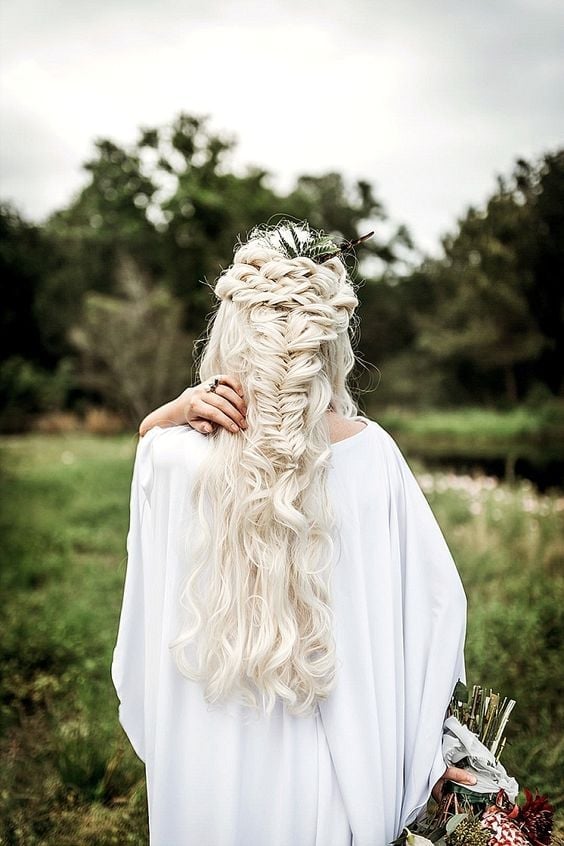
An elaborate fishtail braid relies on thickness and texture to look full rather than stringy, which is why wavy, thick hair at mid-back length is the ideal starting point. Here, the main fishtail is framed by smaller braids that wrap around the head, creating a crown effect. The platinum blonde color makes the weave visible even from a distance. Ask your stylist for a mid-back fishtail braid with crown accent braids. Apply a texturizing spray before braiding to give the sections grip, then gently loosen the fishtail for added volume. This suits most face shapes and holds well for a full day of wear.
Mid-Back French Braids With Highlights
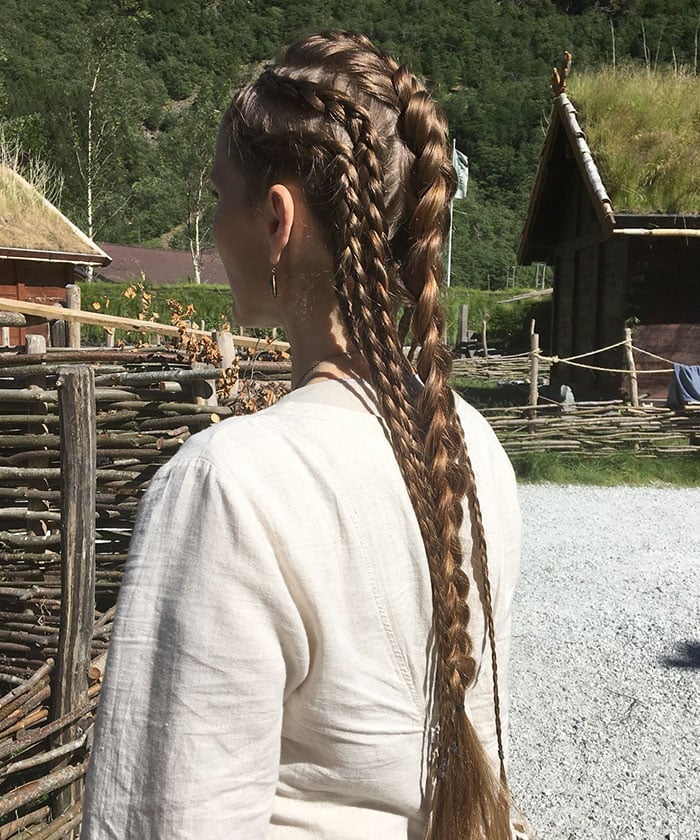
Multiple French braids cascading from the crown look impressive, but replicating that precision at home is a different story. The salon version uses clean, even parts and consistent tension, which is harder to achieve on your own head with thick, wavy hair. The warm brown base with blonde highlights adds dimension that makes each braid pop. Ask your stylist for mid-back with multiple intricate French braids. If you do try it yourself, use a fine-tooth comb to section the hair and work in small, manageable pieces. The highlights will need a refresh every 8 to 10 weeks to keep the contrast sharp.
Mid-Back Mohawk With Blue Streaks And Ponytail
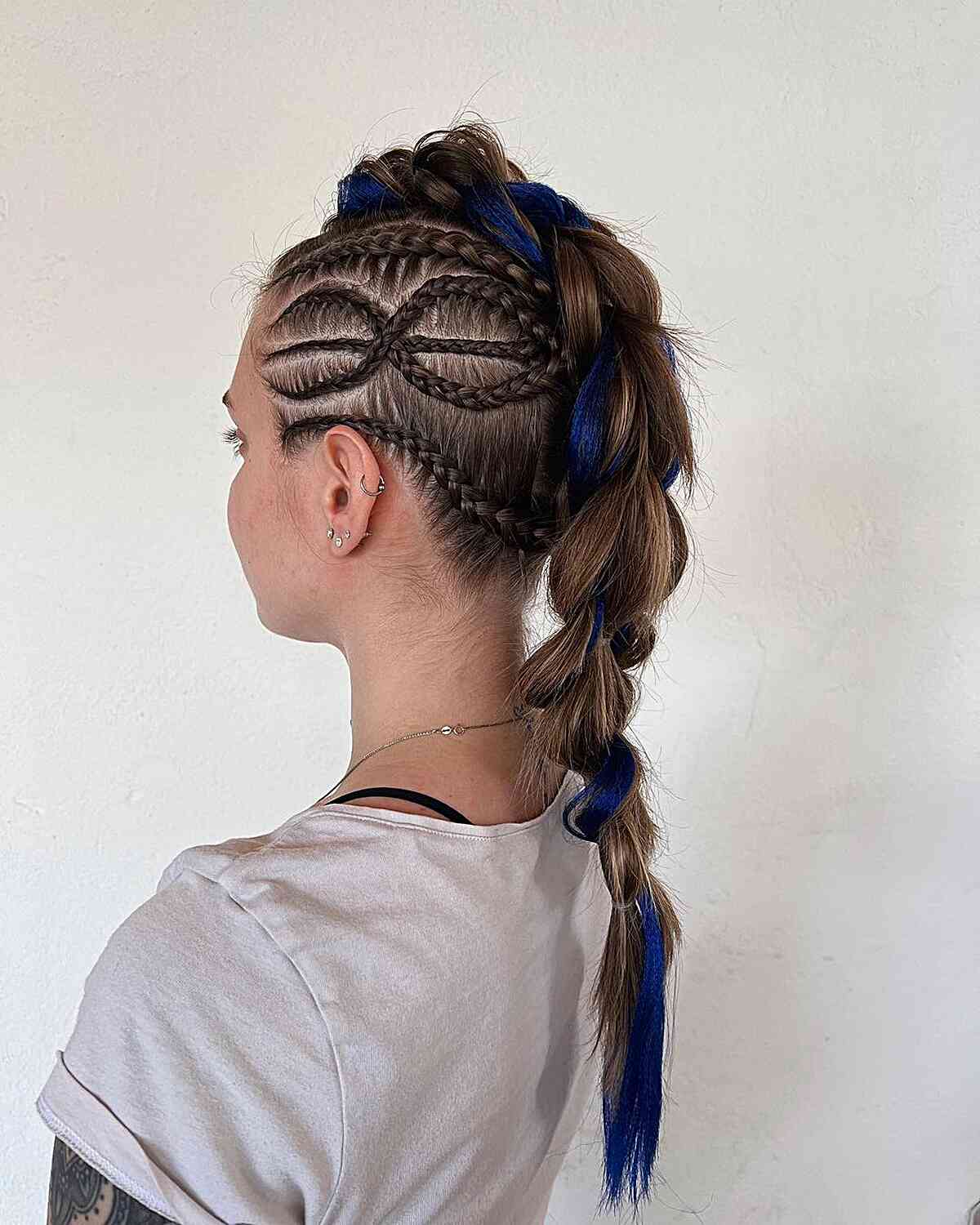
Does a mohawk ponytail actually stay put for a full day? Yes, if the braiding is tight and the base is secure. This mid-back version keeps dark brown as the anchor and runs vivid blue streaks through the side braids and the main ponytail, so the color hits in strips rather than one solid block. Thick, wavy texture holds the braid structure well, and a middle part keeps the mohawk shape symmetrical from the crown down.
Ask your colorist for: mid-back mohawk with intricate braids and ponytail, blue streaks. The blue needs a color-depositing conditioner every few washes to stay saturated, and the ponytail should be tied with a firm elastic at the nape. A trim every ten weeks keeps the mohawk lines clean. The hold is solid: the braids do not loosen much by evening, provided you start with damp, product-coated sections.
Mid-Back Half Updo With Braids And Waves
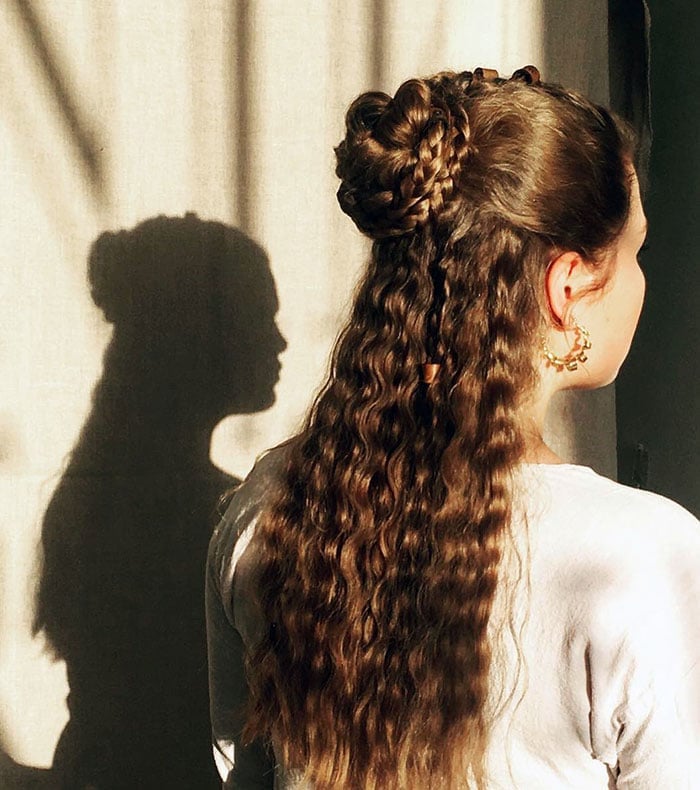
The design is straightforward: an intricate braided updo sits on top, and loose, defined waves fall below it. The dark brown base with subtle lighter highlights gives the braid sections some visible depth. Thick, wavy hair at mid-back length gives the updo enough weight to stay put, but the trade-off is time. Getting that braided crown tight and even on dense hair takes a solid forty minutes, even for someone who braids regularly. Curtain bangs are not part of this version, so the face stays clear. This is a salon-only style for most people.
Mid-Back Braided Crown With Loose Waves
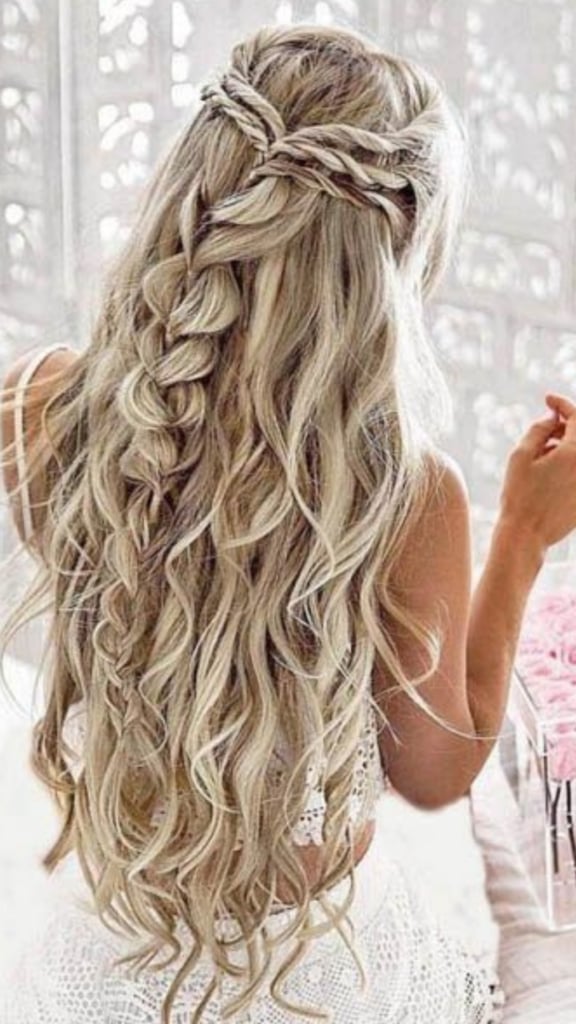
The braided crown is built by taking two sections from above the ears, crossing them at the back and weaving each into the opposite side, so the braid wraps the head like a headband. Platinum blonde with highlights means the braid strands read as separate ribbons instead of one muddy mass. The loose waves below are set with a large-barrel iron and left slightly tousled, not curled into tight rings. Curtain bangs soften the front and blend into the crown braid on each side. Thick, wavy texture at mid-back length gives the crown enough bulk to look substantial. A middle part keeps the bangs symmetrical.
Ask your stylist for: mid-back with braided crown and loose waves, curtain bangs. The crown holds for a full day if each section is pinned with two bobby pins crossed at the base. The waves drop slightly after six hours, which is the intended relaxed finish.
Mid-Back Bubble Braid With Side Braids
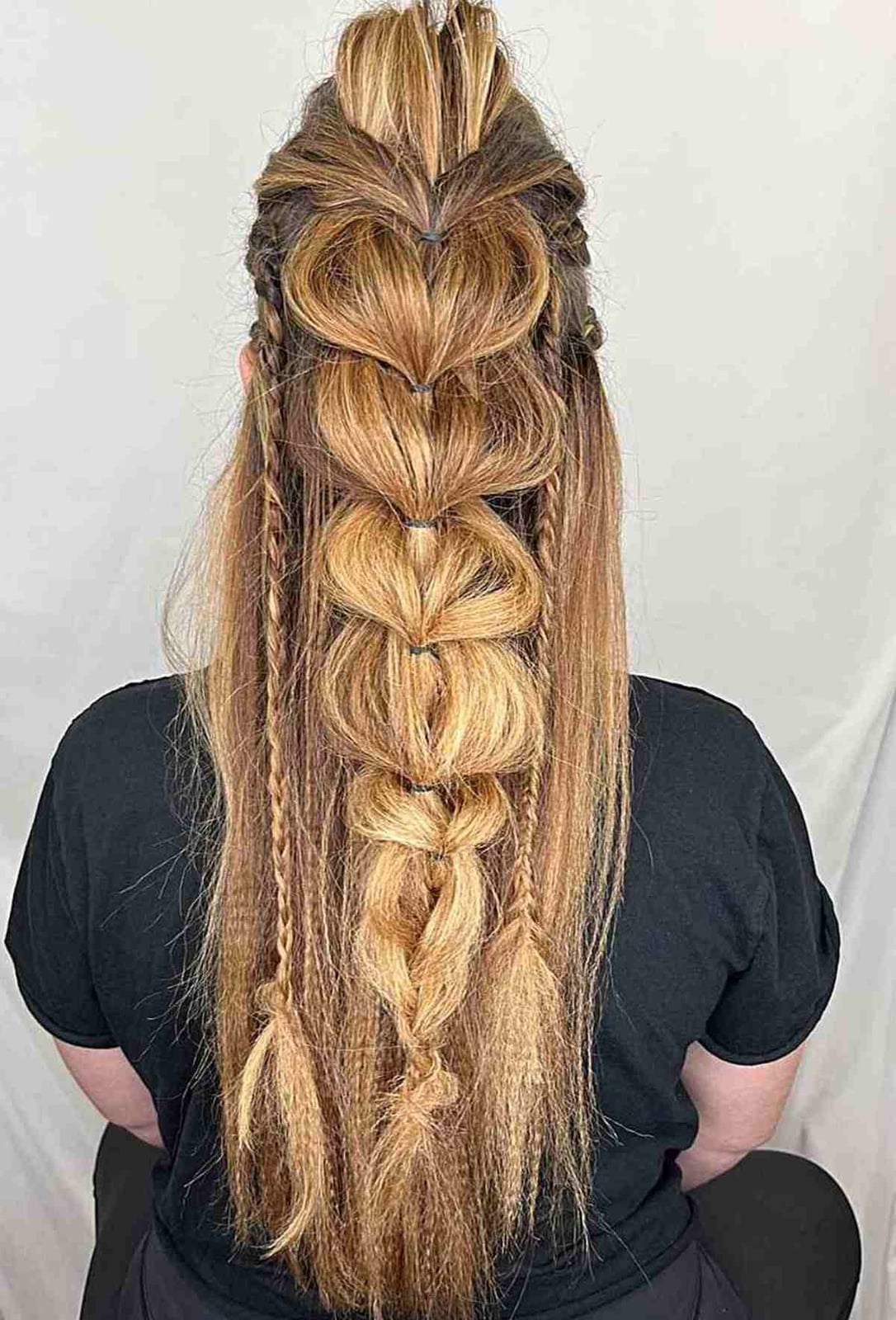
Where a traditional braid is a continuous weave, a bubble braid is a series of poufs separated by clear elastics, each section gently pulled apart. This version runs one central bubble braid from the crown to the mid-back and pairs it with two smaller side braids that tuck behind the ears. The blonde balayage effect means each bubble shows a darker root section and a lighter end, so the poufs appear graduated. Thick, wavy hair is ideal here: the bubbles need volume to hold their shape, and fine hair would collapse them.
Ask your stylist for: mid-back with a central bubble braid and side braids. The clear elastics are invisible on the blonde base, and applying a texturizing spray on each section before pulling keeps the poufs from deflating. The side braids are tighter and stay neat; the bubble braid loosens slightly after eight hours, which is the point where you either re-pull the sections or call it a lived-in look.
Mid-Back Mohawk Braid With Subtle Highlights
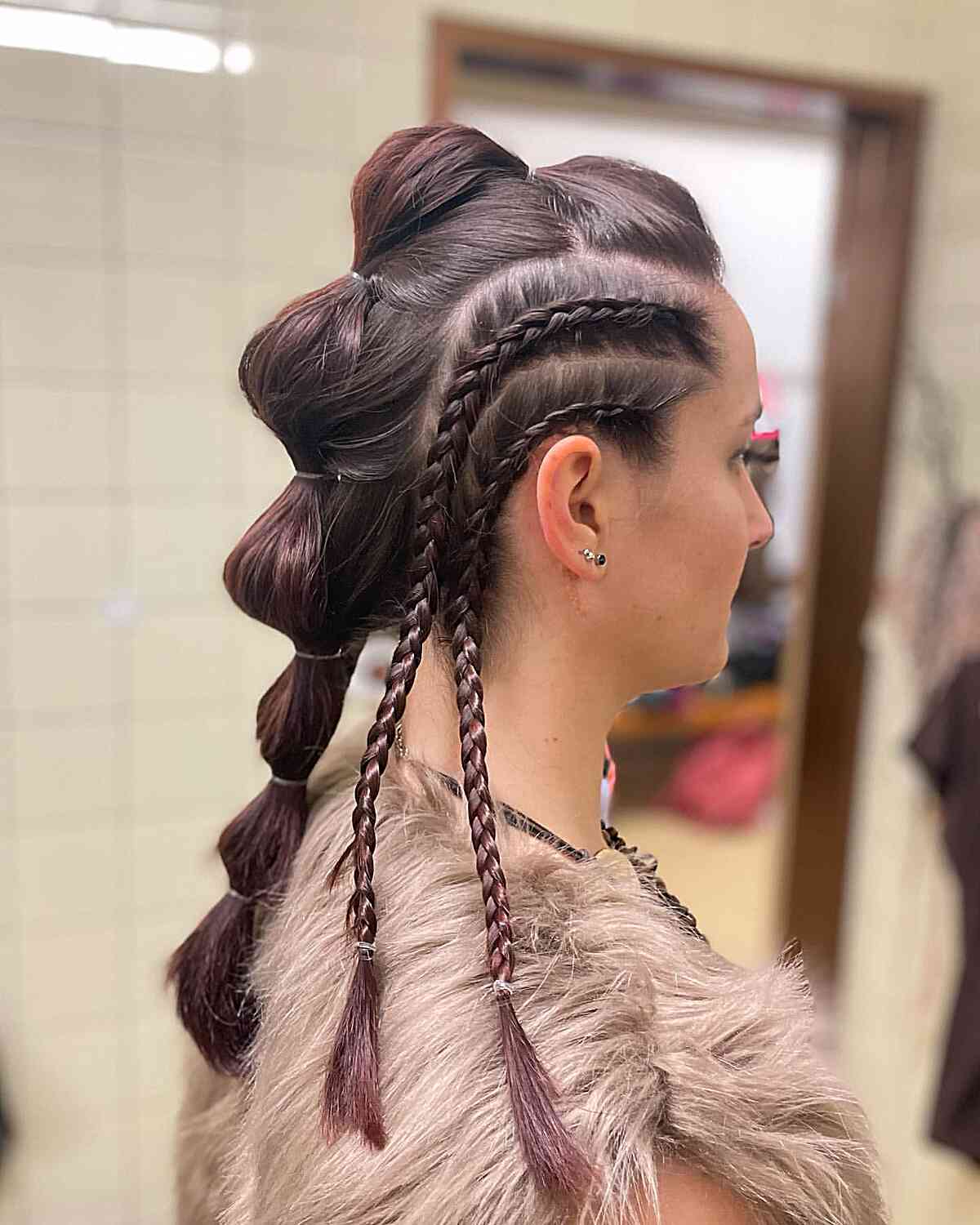
A mohawk braid works best on hair that has enough weight to hold the central ridge without sagging. This version starts at the forehead and runs a thick, three-strand braid down the center of the head to mid-back, with smaller braids on each side tucked close to the scalp. The dark brown base with subtle lighter highlights keeps the braid from looking flat, since the lighter strands catch the eye along the twists. Thick, wavy texture at mid-back length gives the mohawk braid enough body to stay raised. A middle part is used to keep the side sections even. This is a salon-only style due to the precision of the side braids.
Mid-Back Braids With Ponytail And Highlights, Wavy
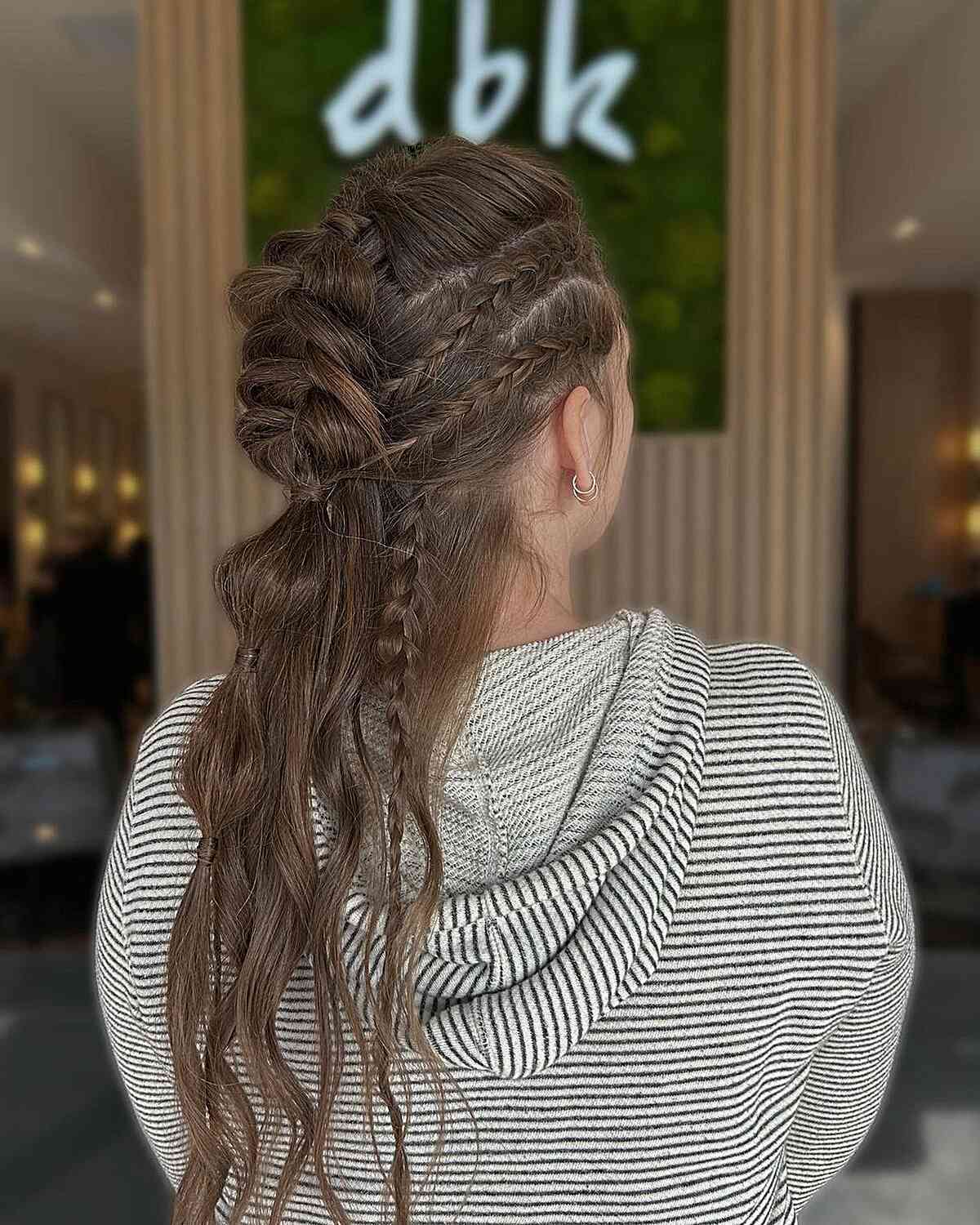
Complex braiding holds up remarkably well when it all funnels into a low ponytail, and on thick, wavy hair the style barely shifts from morning to night. The dark blonde base with lighter highlights adds dimension so the intricate pattern reads clearly even from across the room. A middle parting keeps the braids symmetrical as they travel from the crown down the sides before meeting at the nape.
Ask your stylist for: mid-back with complex braids and a low ponytail, dark blonde. Thick, wavy hair starting at mid-back length suits most face shapes, since the braids add width at the sides. A texturizing spray gives the sections grip before braiding, and the ponytail needs a firm elastic to hold the weight. The style lasts several days if you sleep on a silk pillowcase, though the highlights will need a toning appointment around every eight weeks to keep the dimension sharp.
Mid-Back Light Blonde With Intricate Braids
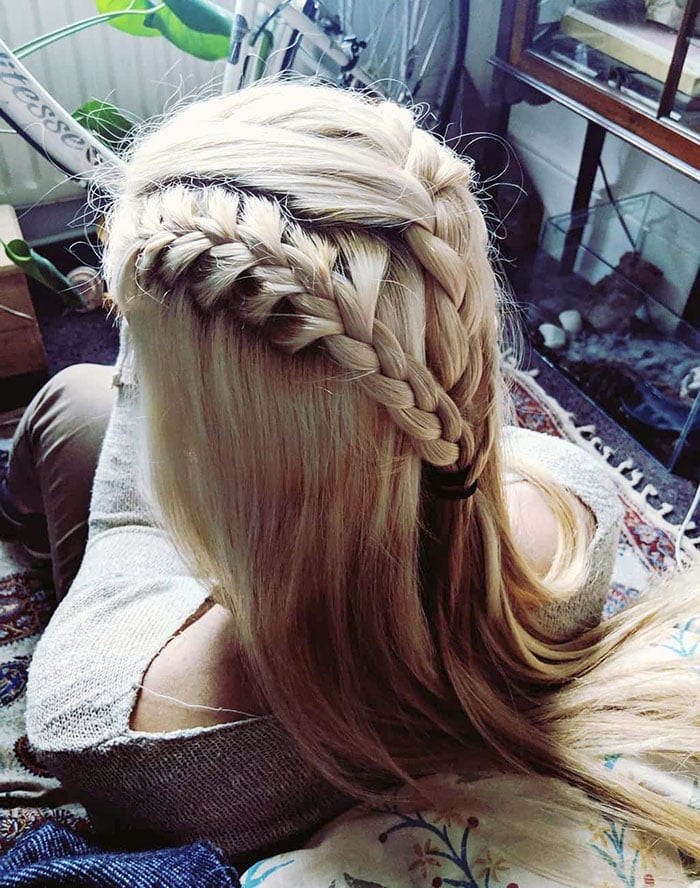
How do you ask for a braided pattern that looks like it took hours without sounding like you expect a medieval reenactment? The key is describing the structure, not the mood. On light blonde hair with a wavy, thick texture, a complex weave of multiple braids with some sections left loose creates that warrior-like finish without needing a single prop. The middle parting keeps the whole thing balanced, and the loose strands soften what could otherwise look like armor.
Ask your stylist for: mid-back light blonde with complex intricate braids. Thick, wavy hair that starts at mid-back length works well for this style because the density gives the braids body and the wave hides any uneven tension. The loose sections are what sell the look, so make sure they are part of the request. A shine serum on the loose pieces and a flexible hold hairspray over everything keeps it polished for the day.
Mid-Back Braids With Top Knot
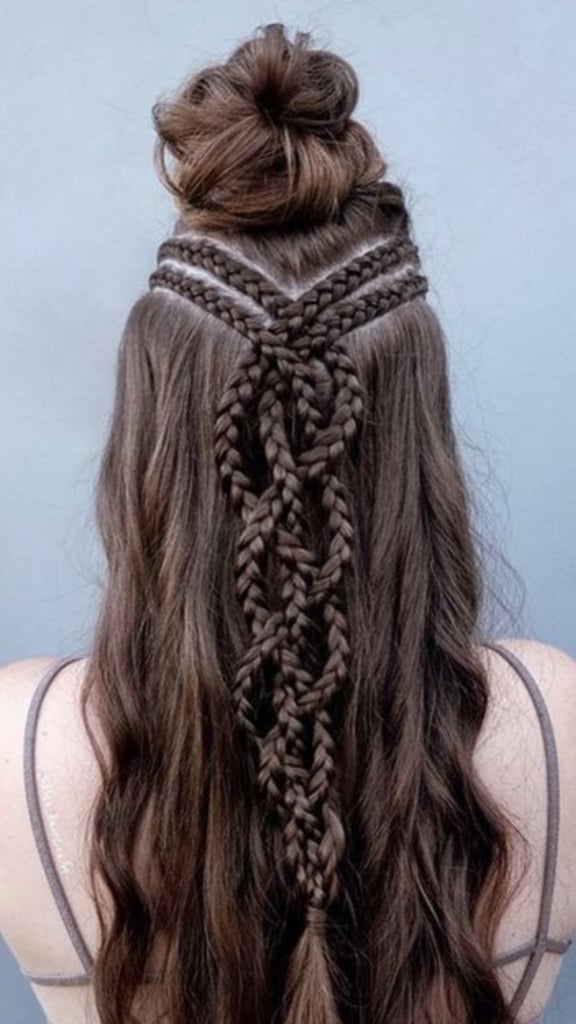
The geometry here is the interesting part: braids form a V-shape on the back of the head before converging into a single central braid that runs down to mid-back, with a top knot bun sitting at the crown. On dark blonde hair with lighter highlights, the wavy, thick texture gives each braid enough substance to hold its shape. Ask your stylist for: mid-back with V-shape braids, central braid and top knot. The top knot needs to be secured firmly at the crown so it does not pull the central braid off-center. A texturizing spray keeps the edges clean. This one suits most face shapes, since the vertical line of the central braid draws the eye downward.
Mid-Back Blonde With Darker Roots And Side Braids
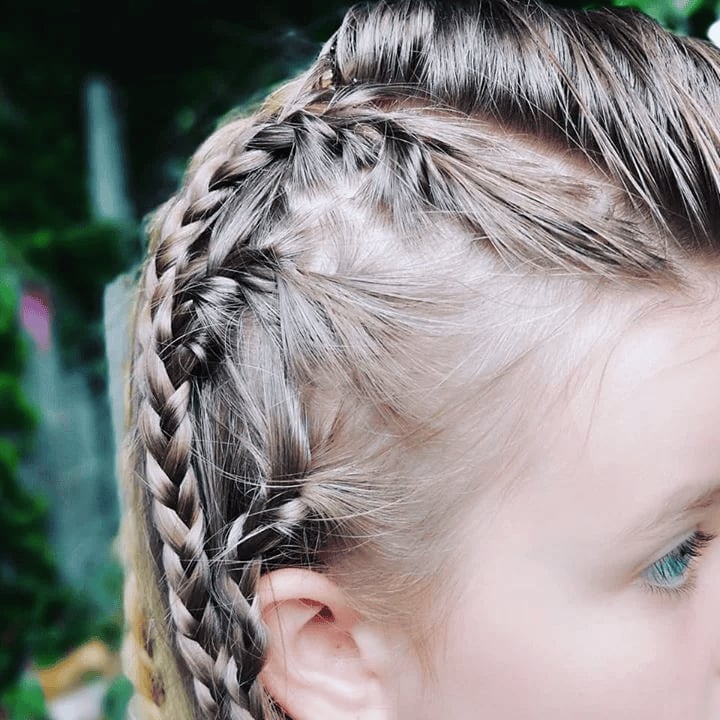
Blonde with darker roots usually means a grow-out appointment is on the calendar, but intricate side braids change the math entirely. The braids along the side of the head hold the root line in place, so the contrast looks like a deliberate color choice. On wavy, thick hair at mid-back length, the braids transition into looser waves toward the back, which gives the style movement without losing the structure. Ask your colorist for: mid-back blonde with darker roots and intricate side braids.
The root contrast actually works in your favor here: it adds depth that flat blonde lacks, and the braids camouflage the grow-out line for about six weeks longer than a standard all-over blonde. The waved sections stay frizz-free while the braids remain defined. Thick, wavy hair starting at mid-back length suits most face shapes, and the side placement of the braids adds volume where you want it.
Mid-Back Fishtail Braid With Face Framing
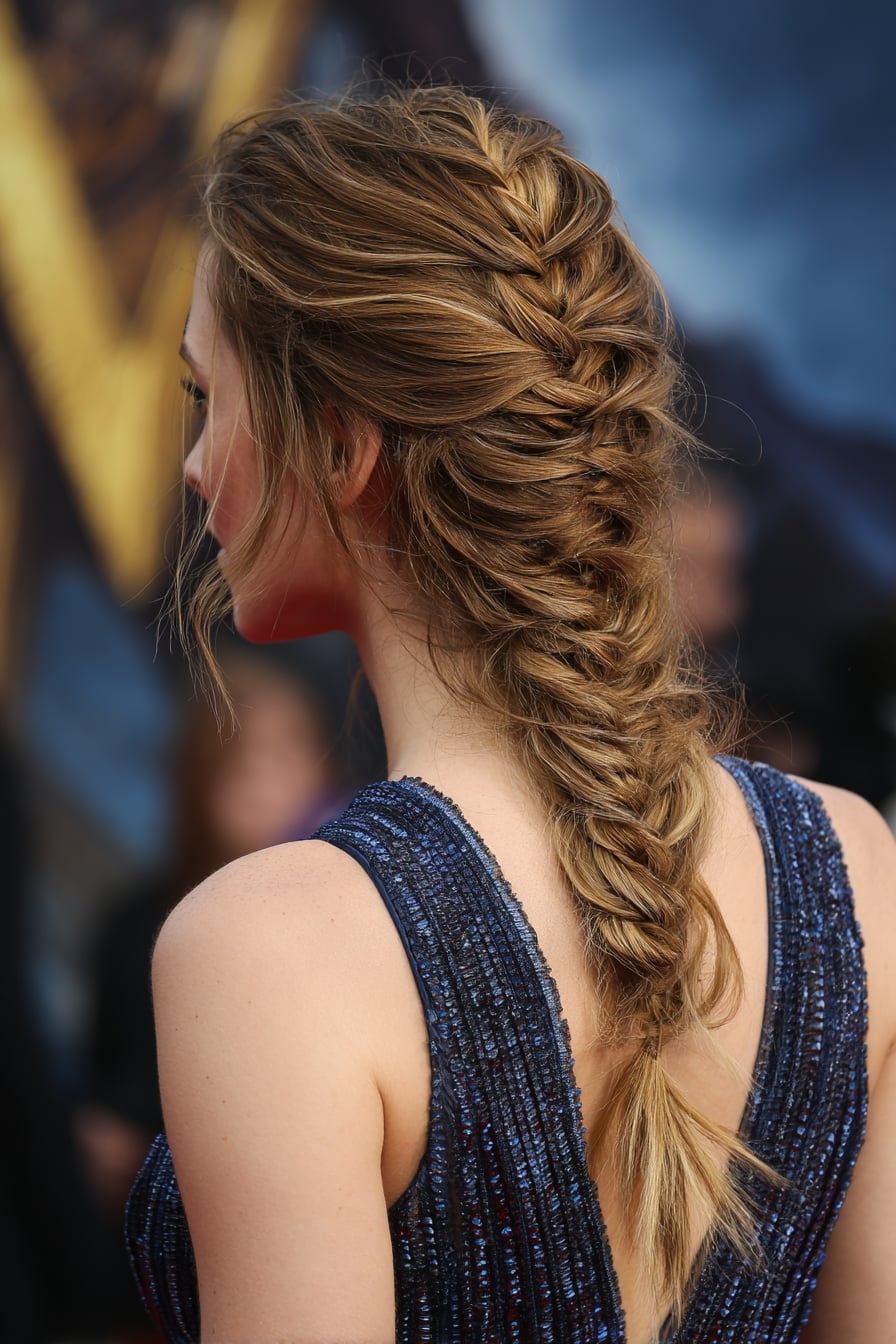
A fishtail braid that starts high on the head and runs to mid-back is a study in texture, and the medium ash blonde base with lighter, sun-kissed highlights woven through makes every strand visible. The face-framing strands are the detail that separates this from a simple braid: they soften angular faces and keep the style from feeling severe. Ask your stylist for: mid-back fishtail braid with face-framing strands, ash blonde.
Medium-density wavy hair is the sweet spot for this look, because fine hair loses the braid’s definition and very thick hair makes it bulky. The fishtail pattern holds well on wavy texture, which grips the strands naturally, and the face-framing pieces break up the symmetry. Gently pulling apart the braid after it’s secured adds width and a softer edge, then a light hold spray keeps the pulled strands in place without stiffening them. The ash blonde tone with lighter highlights needs a toning appointment roughly every six weeks to keep the cooler base from warming up.
Shoulder Length Crown Braid
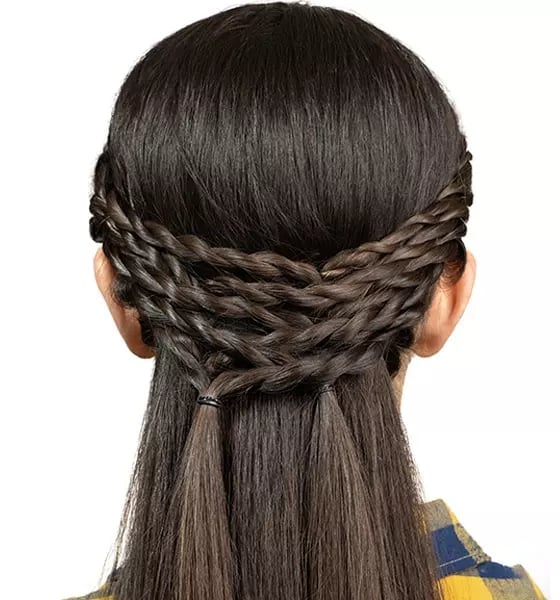
Can you weave a crown braid on shoulder-length fine hair without it unraveling by noon? Yes, but you will earn it. The woven crown sits around the head while the rest falls straight, dark brown and fine to the shoulders. Ask your stylist for: shoulder length straight hair with a woven crown braid. Fine, straight hair starting at shoulder length works best; the braid suits most face shapes. A texturizing spray before braiding gives grip, and a handful of pins keeps the crown from sliding. This one is a salon visit unless you have a second mirror and patience.
Half Up Half Down Viking Style
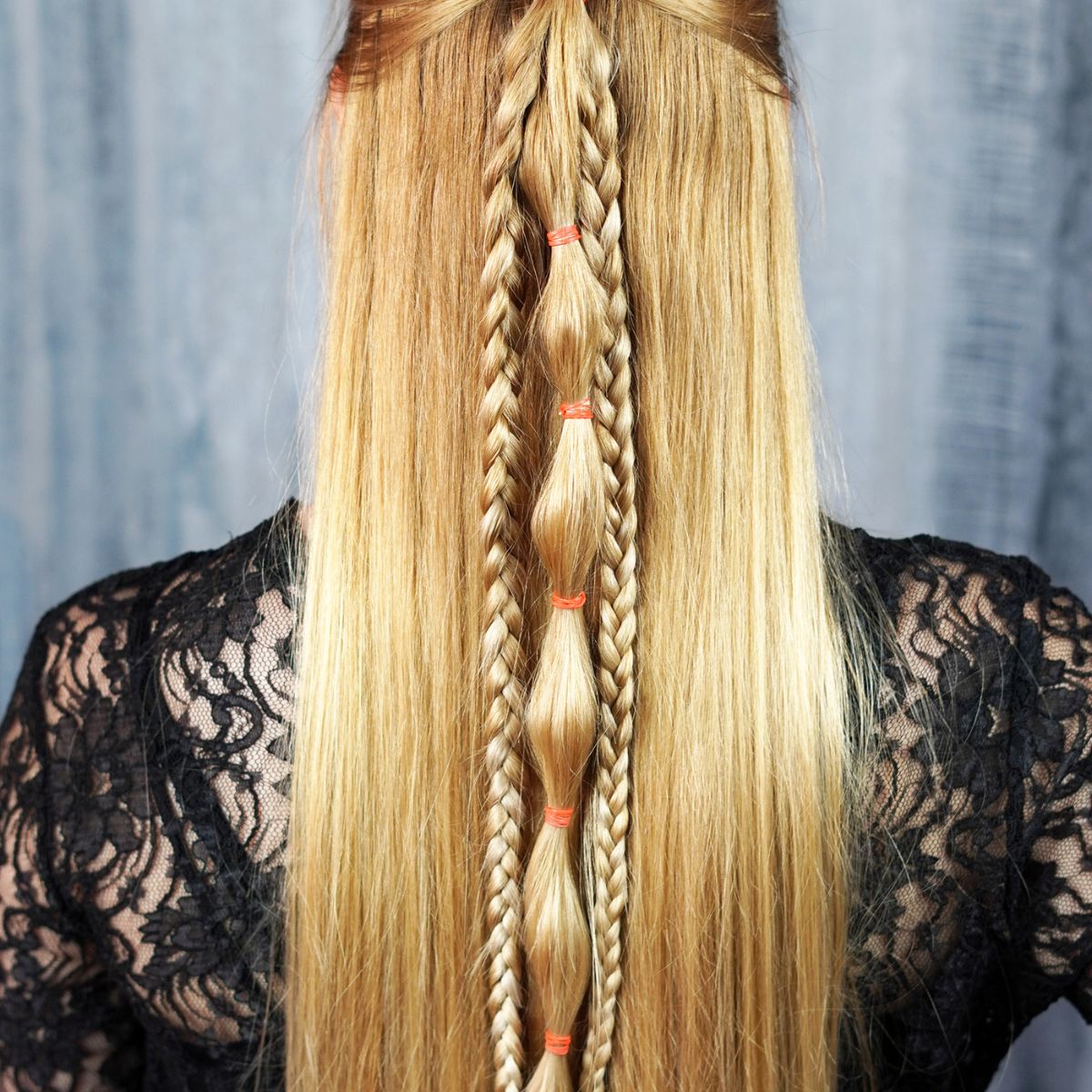
The half up half down viking braid takes a casual silhouette and tightens it with structure. A section from each side is pulled back and braided into a bubble braid, secured with orange elastics, while the rest of the mid-back golden blonde hair falls straight and thick. Ask your stylist for: half up half down with viking style braids. Medium to long hair of any texture adapts well. The braided top section holds the crown back without a ponytail, so it lands as easily at a fall wedding as it does at a Saturday farmers market. Experiment with the braid placement: higher for drama, lower for subtlety.
Final Thoughts
For a lower-maintenance version, stick to one or two larger braids worked into a half-up style. To go all in, pair an undercut with a detailed Mohawk braid for maximum impact.
- Trim intricate braids every 4-6 weeks to maintain scalp neatness.
- Use a silk pillowcase to protect braids and reduce frizz overnight.
- Apply a lightweight hair oil to the scalp and braid ends to keep them hydrated.
- Wash braids gently with a diluted shampoo, focusing on the scalp, and allow ample drying time.
Channel your inner warrior with these stunning Viking braid styles.