
Gray highlights are a modern, sophisticated alternative to traditional highlights, blending seamlessly with darker bases for a subtle yet striking effect. The trend is shifting toward lived-in color with soft face-framing layers and curtain bangs, making it a versatile choice for various lengths and textures.
This collection of 33 ideas covers everything from short bobs to mid-back waves, with options for low to higher maintenance. Whether you have fine hair that falls flat or a visible grow-out line to manage, Simple Gray Highlights offer a refined solution that adds dimension without being overly bold.
Chin Length Bob With Gray Highlights
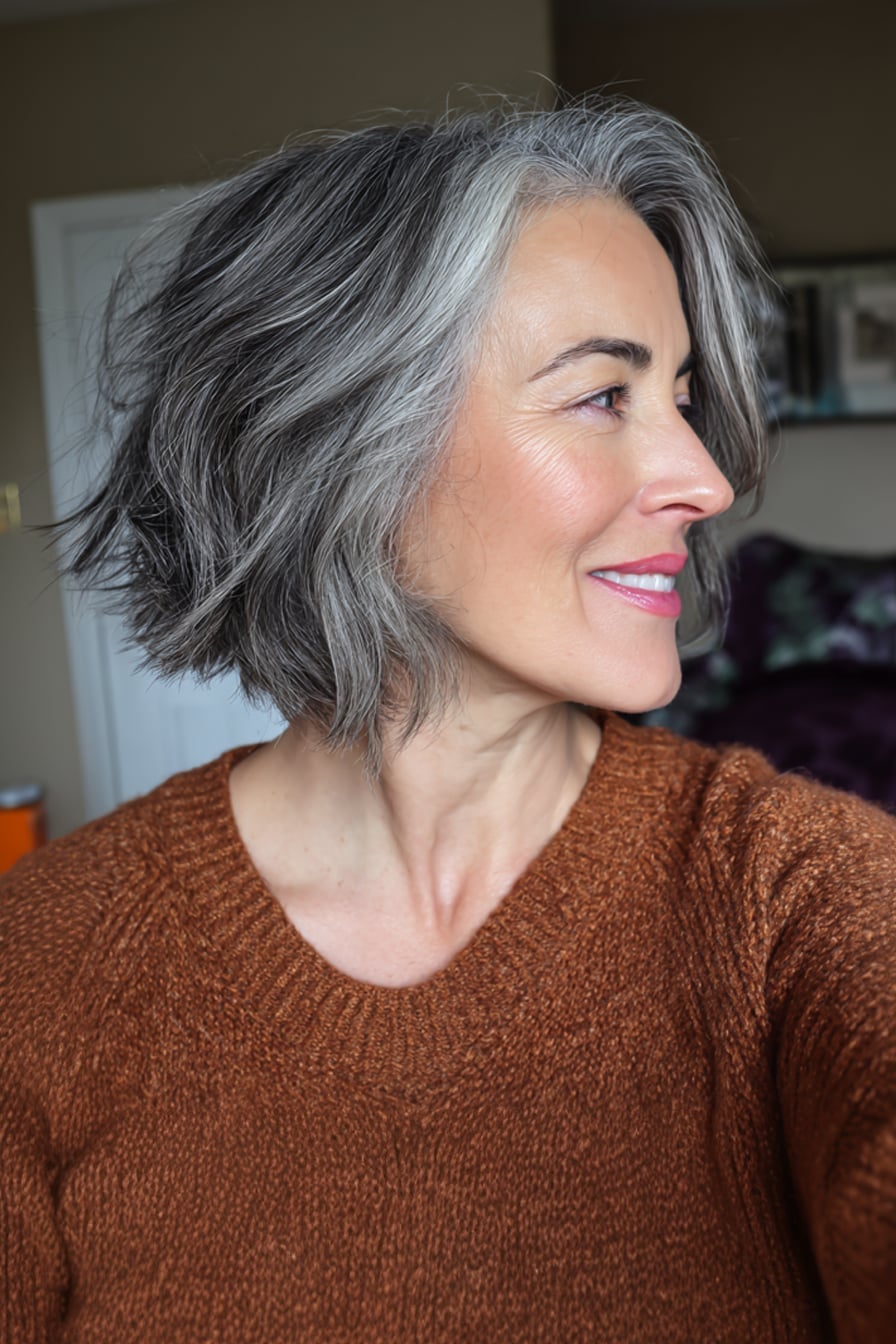
A chin-length bob does most of its talking through shape, but the gray highlights here are the ones holding the conversation. The wavy, thick texture gives the cut movement, while the prominent gray pieces cut through the darker base with a contrast that reads as deliberate. This works best on hair that already has some wave to it, since the bob relies on that natural volume to keep its line. The side part softens a square jaw, and the length rounds out a longer face. Ask your colorist for: chin length wavy bob, blended gray highlights. Let it air dry and the texture does the rest.
Collarbone Lob With Side Swept Bangs
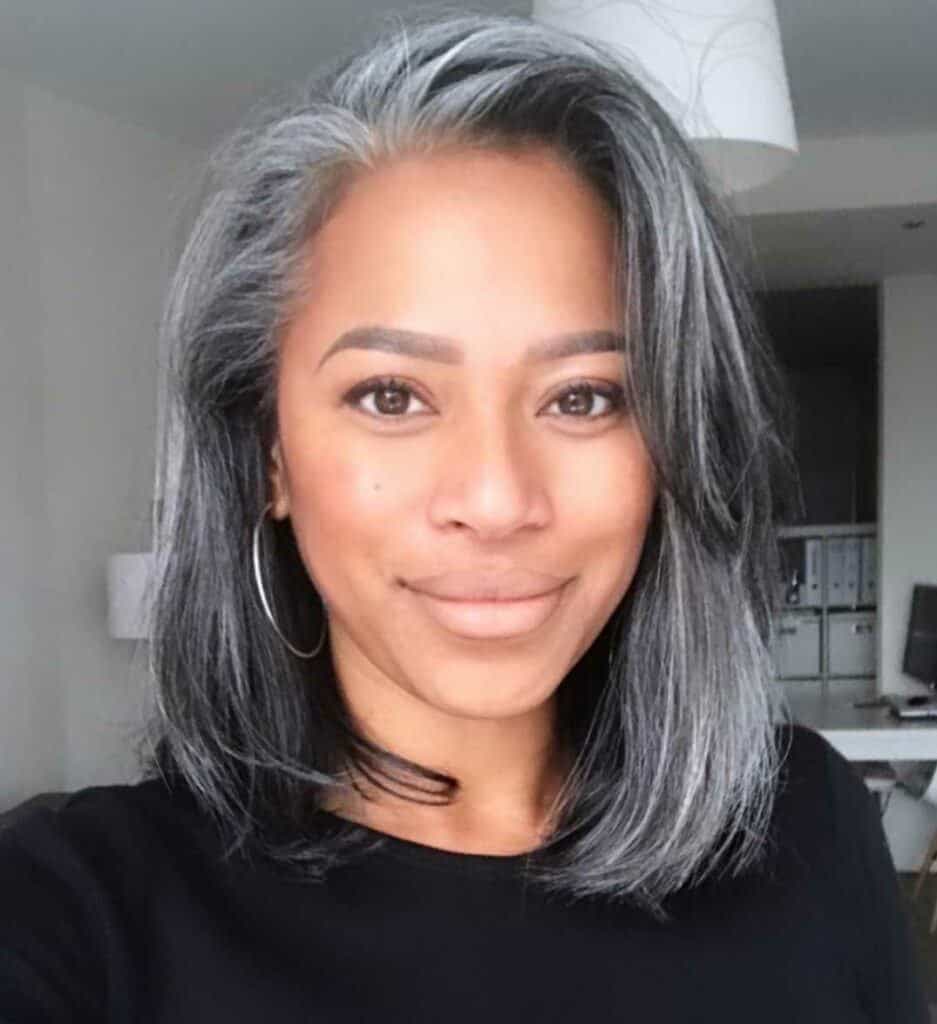
How do you ask for gray that looks grown in rather than painted on? Start with the words that match what you see. This collarbone lob keeps a darker base and lets the gray highlights do the blending work, so the transition reads as natural instead of stark. The side-swept bangs and side parting pull the eye across, which suits oval and heart face shapes by balancing the forehead. Medium density hair carries this best, since the lob holds its shape without needing constant heat. Ask your colorist for: collarbone lob, side swept bangs, blended gray highlights. A round brush and a few minutes give it that slight blowout finish.
Layered Bob With Curtain Bangs Gray Highlights
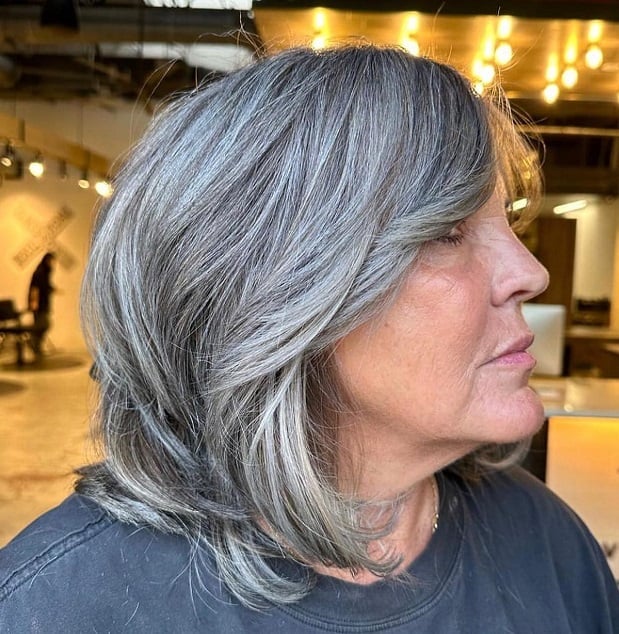
The layered bob here ends at the collarbone, and the curtain bangs frame the face without committing to full fringe territory. Gray highlights run through the layers, which is the point: on thick, wavy hair, the color catches the movement and shows up differently at every angle. A middle parting keeps the face open, and the soft blowout gives the waves just enough polish for an office setting.
Upkeep is straightforward. Use a round brush to blow-dry the face-framing layers so the curtain bangs fall where they should. The cut needs a trim every six to eight weeks to hold the collarbone line, and the gray will ask for a toning appointment around the same time to stay cool rather than brassy.
Mid-Back Layers With Curtain Bangs Gray Highlights
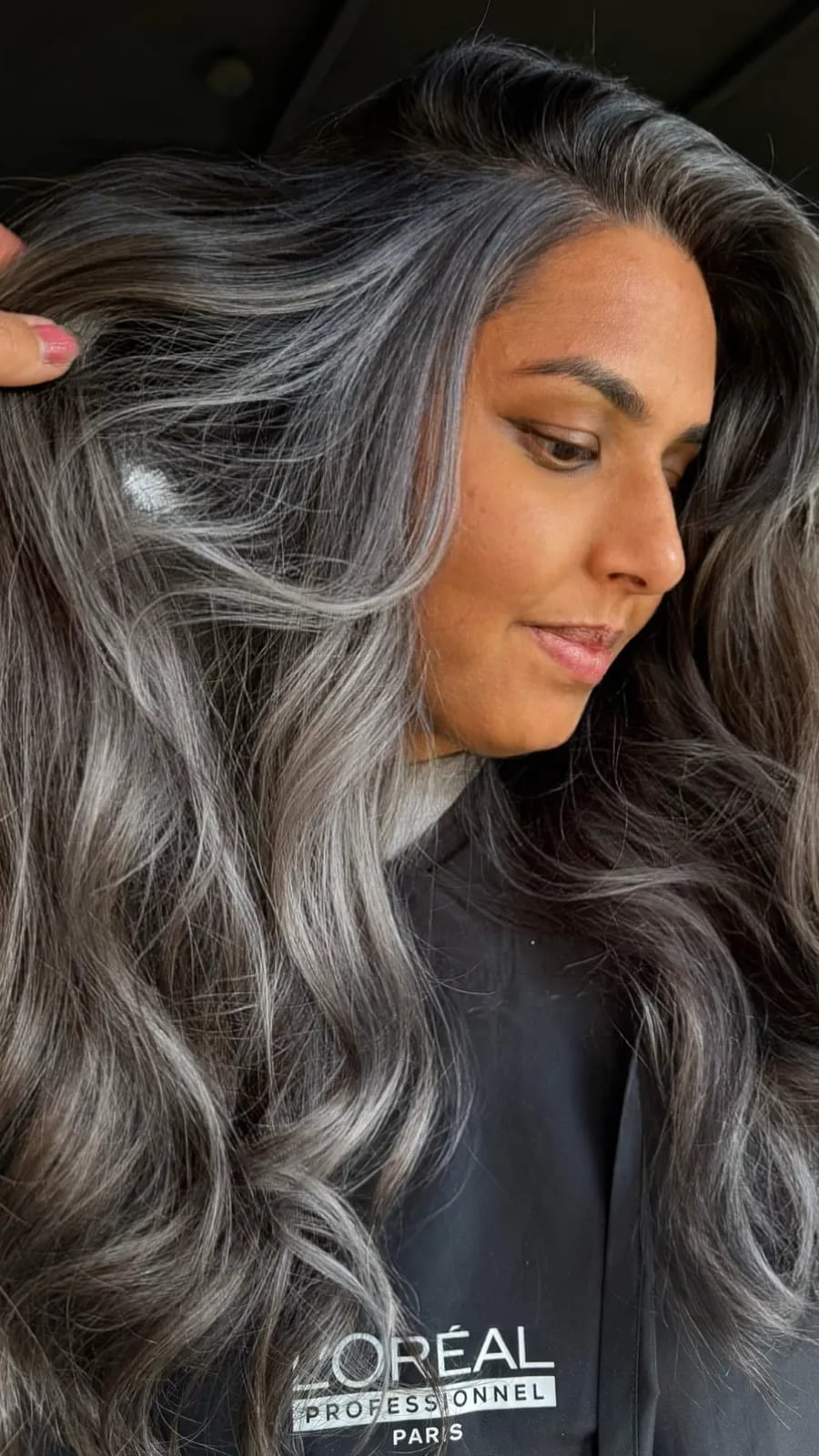
Set this mid-back length against a shorter bob and the difference is all in the commitment. The soft layers and curtain bangs keep the face framed, but the length means the gray highlights on the dark base have room to travel, which gives the color a dimensional quality a bob can’t match. Thick, wavy hair carries this well, since the weight of the length pulls the waves into a relaxed pattern rather than a tight one.
This is a blowout haircut. The polished waves come from a round brush and heat, and that takes about twenty minutes on a good day. It earns its keep for events and workdays when you want the color to read clearly. The layers should be trimmed every ten to twelve weeks to keep the shape from going flat at the ends.
Wavy Mid-Back Hair With Curtain Bangs, Middle
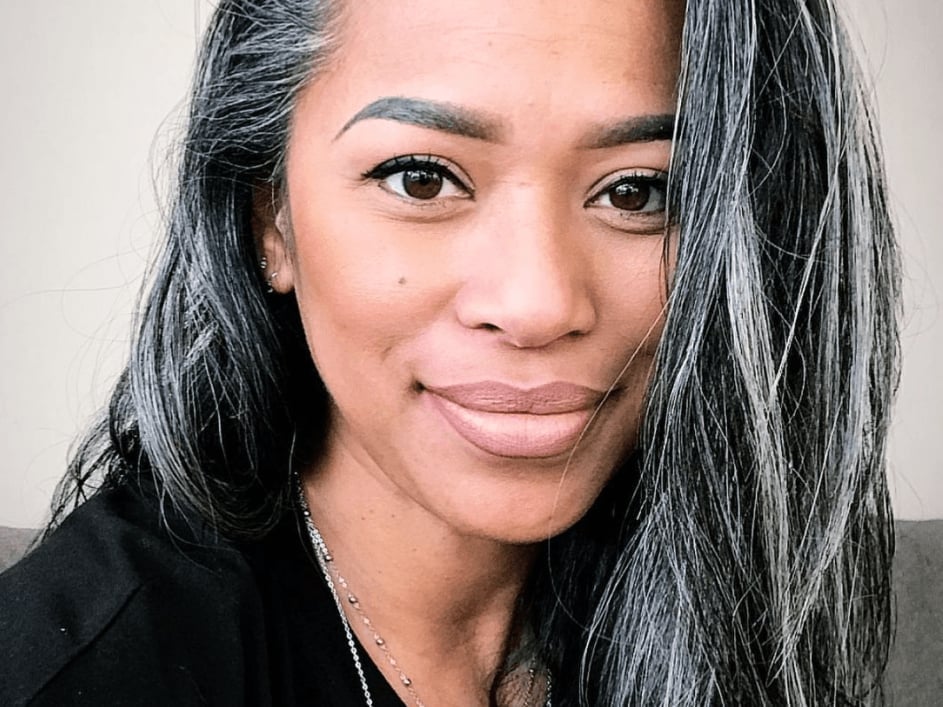
There is a fine line between lived-in and unkempt, and this mid-back style walks it well. The soft layers and curtain bangs frame the face, while the gray highlights blend into the darker base with a natural transition that looks like the color grew there. On fine, wavy hair, that blend is the whole game, since fine strands show every hard line.
Fine hair holds a curl for a short time, so the curtain bangs need regular trims to keep their shape. Air-dried texture is the friend here, and the middle parting keeps the face open and softens a round face. If the gray is placed too boldly on fine hair, it can look like stripes instead of dimension, so the blending has to be subtle.
Shoulder Length Layers With Curtain Bangs
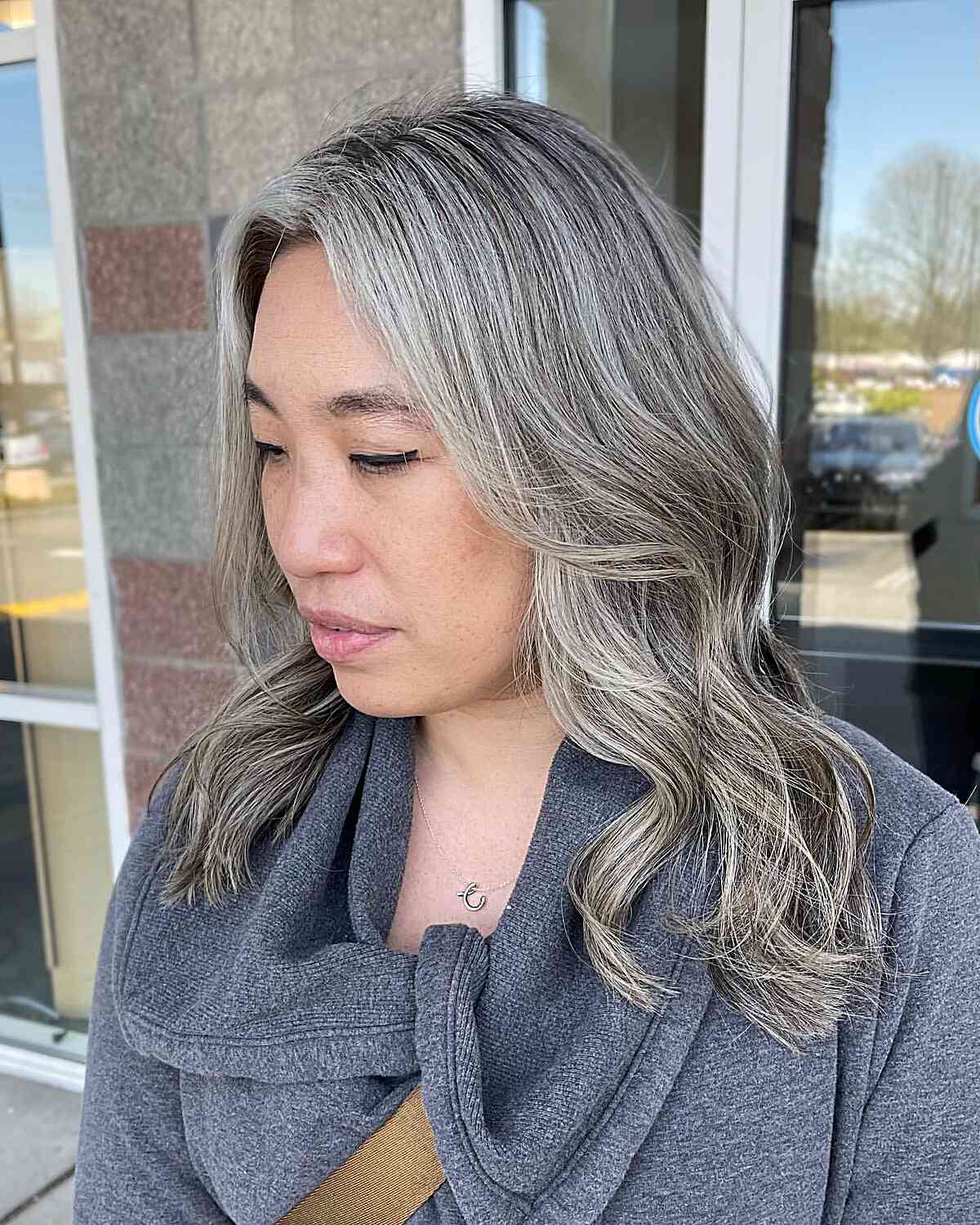
Can you get gray highlights this blended at home? Technically yes, but the result tends to look like you tried. This shoulder-length cut with soft layers and curtain bangs uses a dark base with lighter gray strands woven through thick, wavy hair. The salon process involves a careful balayage or foil placement that keeps the gray from reading as a stripe. A middle part and face-framing layers do the work of making the color look lived-in from day one. Ask your colorist for: shoulder length layered hair, curtain bangs, blended gray highlights. The blowout with a round brush takes about twenty minutes, and the fringe needs a trim every four to six weeks.
Shoulder Length Wavy Hair With Natural Grays
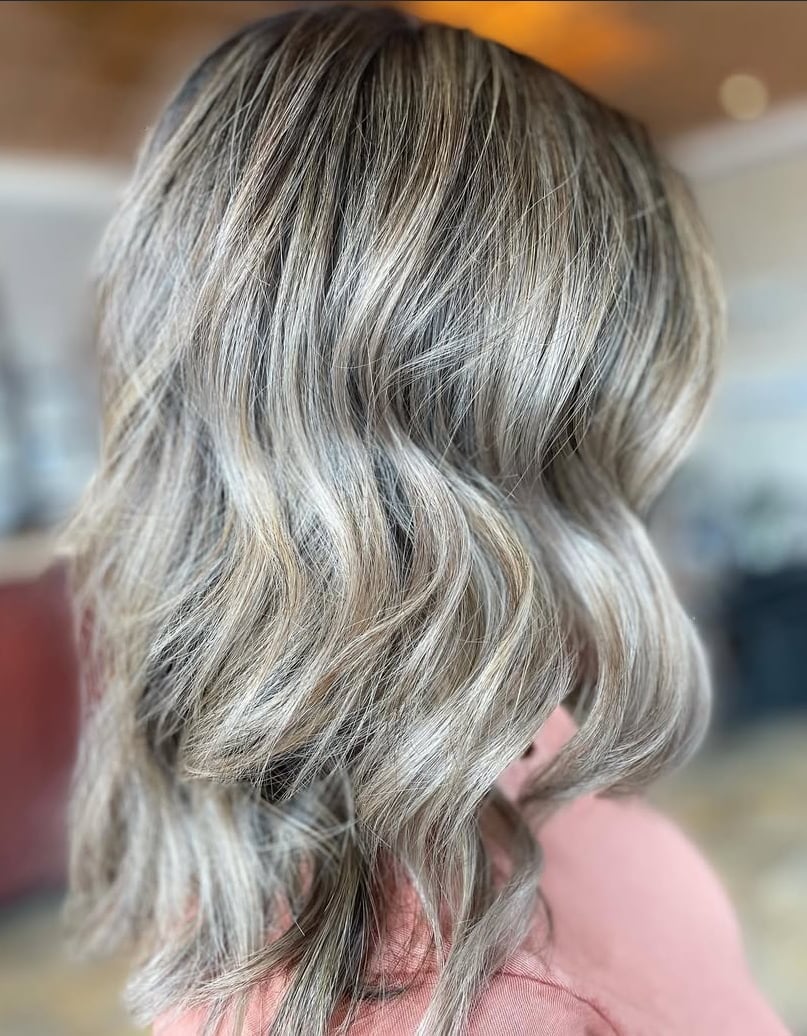
A natural gray base with lighter gray highlights creates a grow-out that actually looks intentional rather than overdue. This shoulder-length cut works with fine, wavy texture and a side part, so the color lands where it catches the most light. The seamless blend means you can go longer between appointments without a harsh root line. Ask your colorist for: shoulder length wavy hair, natural gray blend, subtle highlights. Air drying is the main styling method here, and a trim every eight to ten weeks keeps the ends from looking straggly.
Shoulder Length Layers With Subtle Grays
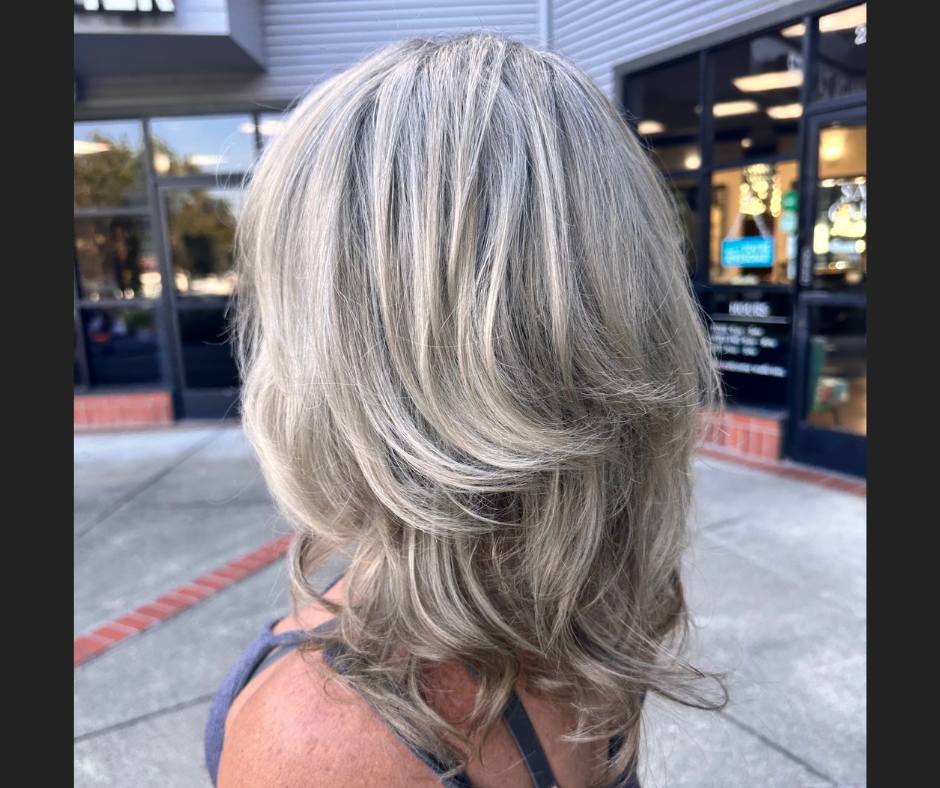
A natural gray base with lighter highlights looks best on medium-density, wavy hair that can carry the dimension without falling flat. The shoulder-length layers and side-parted blowout give the color room to move, so the lighter pieces look like a deliberate blend instead of a faded dye job. This is not a look for someone who wants high contrast. Ask your colorist for: shoulder length layered hair, natural gray base, subtle highlights. A trim every six to eight weeks keeps the layers from losing their shape.
Shoulder Length Dark Base With Gray Highlights
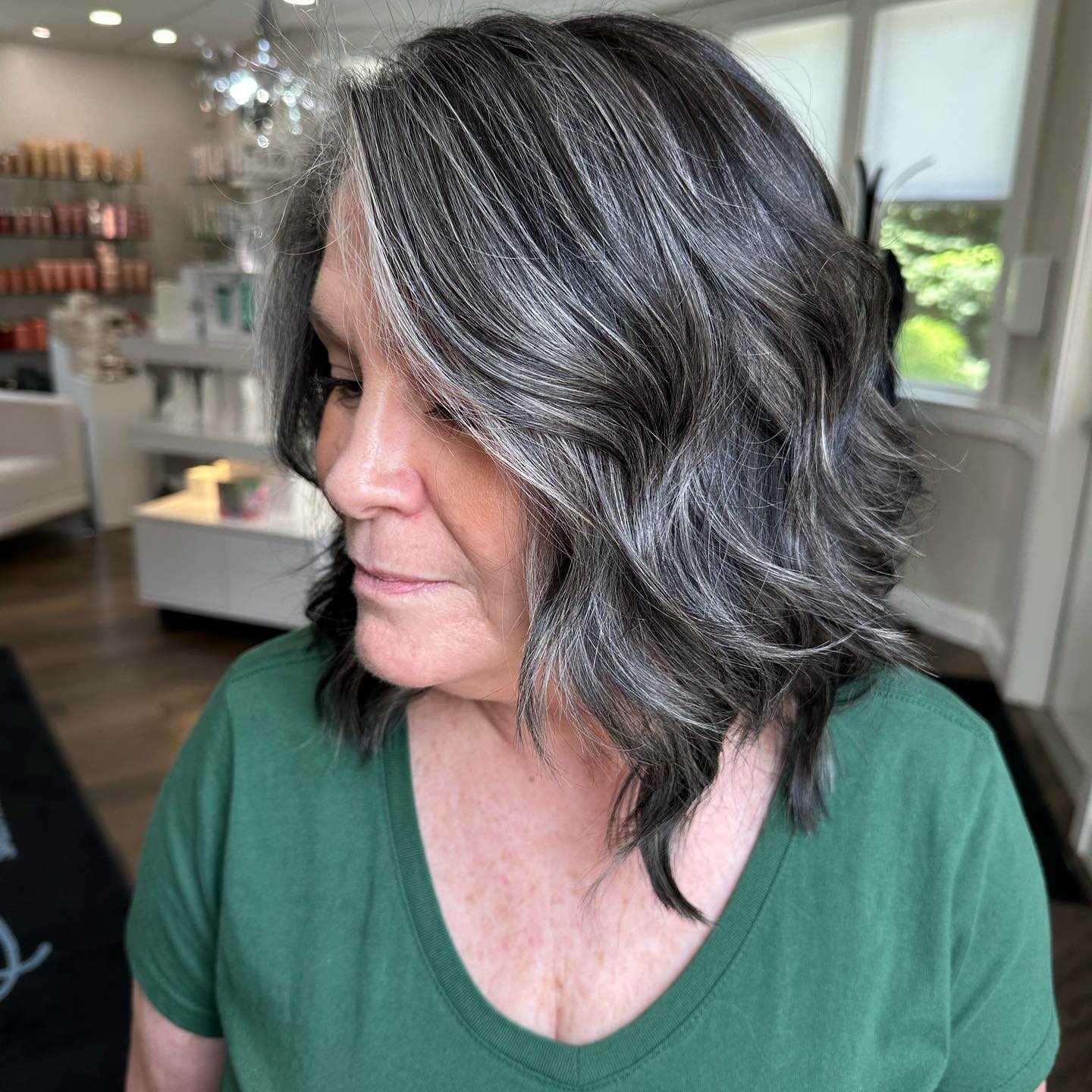
Gray highlights on a dark base can look natural with the right placement. Shoulder length layered hair with a side part and soft waves lets the lighter strands sit where they catch light, so the contrast looks like dimension. The dark base keeps the overall effect grounded, while the gray pieces add movement. Ask your colorist for: shoulder length layered hair, dark base, visible gray highlights. Soft waves enhance the blend, and a trim every eight to ten weeks maintains the shape.
Dark Brown Lob With Subtle Gray Highlights
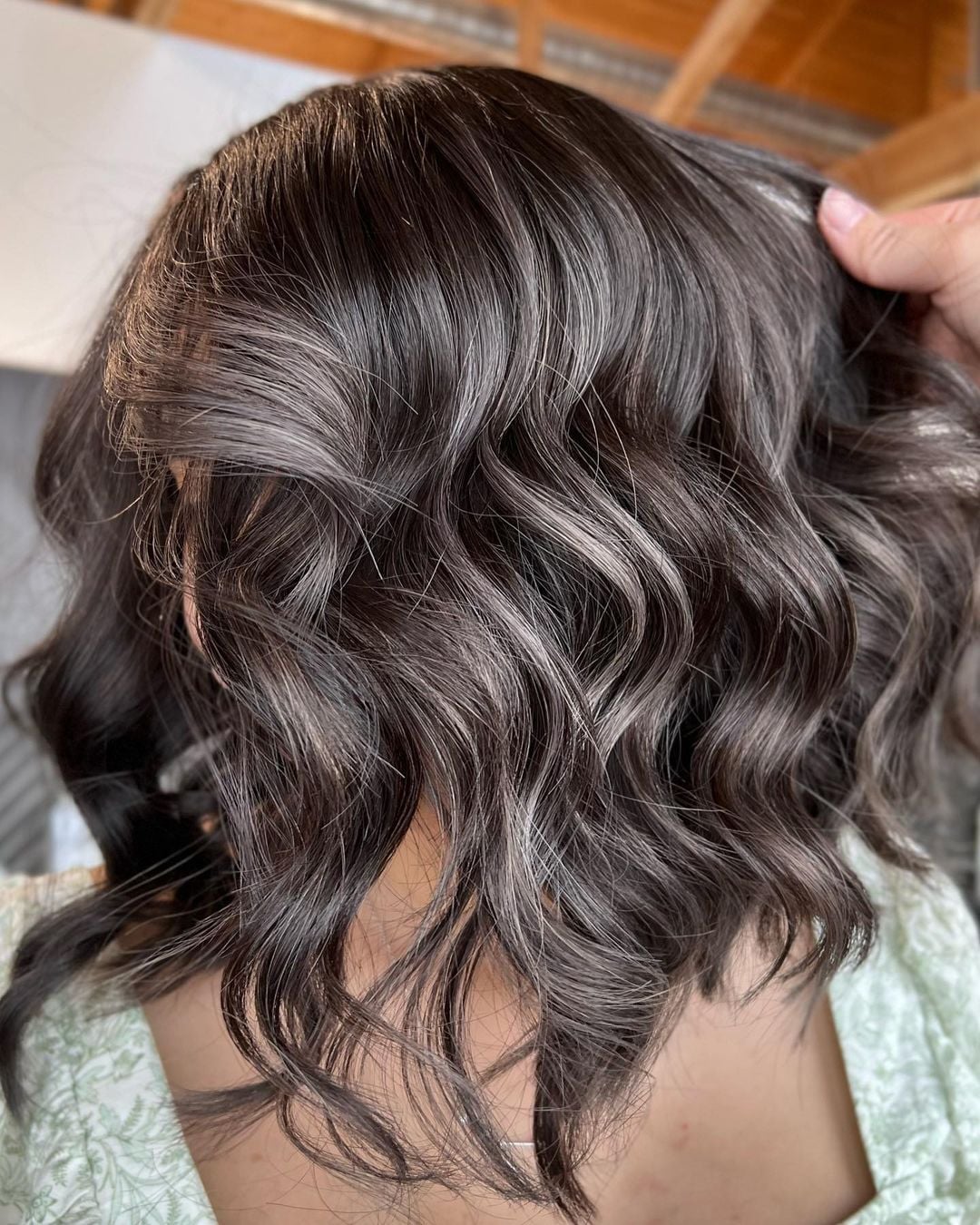
A dark brown lob ending at the collarbone gets subtle gray highlights woven through for a dimensional effect that does not require a full color overhaul. The technique uses fine sections and a low-contrast toner so the gray pieces sit softly against the base, avoiding the stark line you get with chunky foils.
Ask your colorist for: collarbone lob, dark brown base, subtle gray highlights. Loose waves and a middle parting help the lighter strands appear as natural movement. The lob needs a trim every eight to ten weeks, and a toning gloss every six weeks keeps the gray from warming up.
Ash Blonde Lob With Gray Highlights
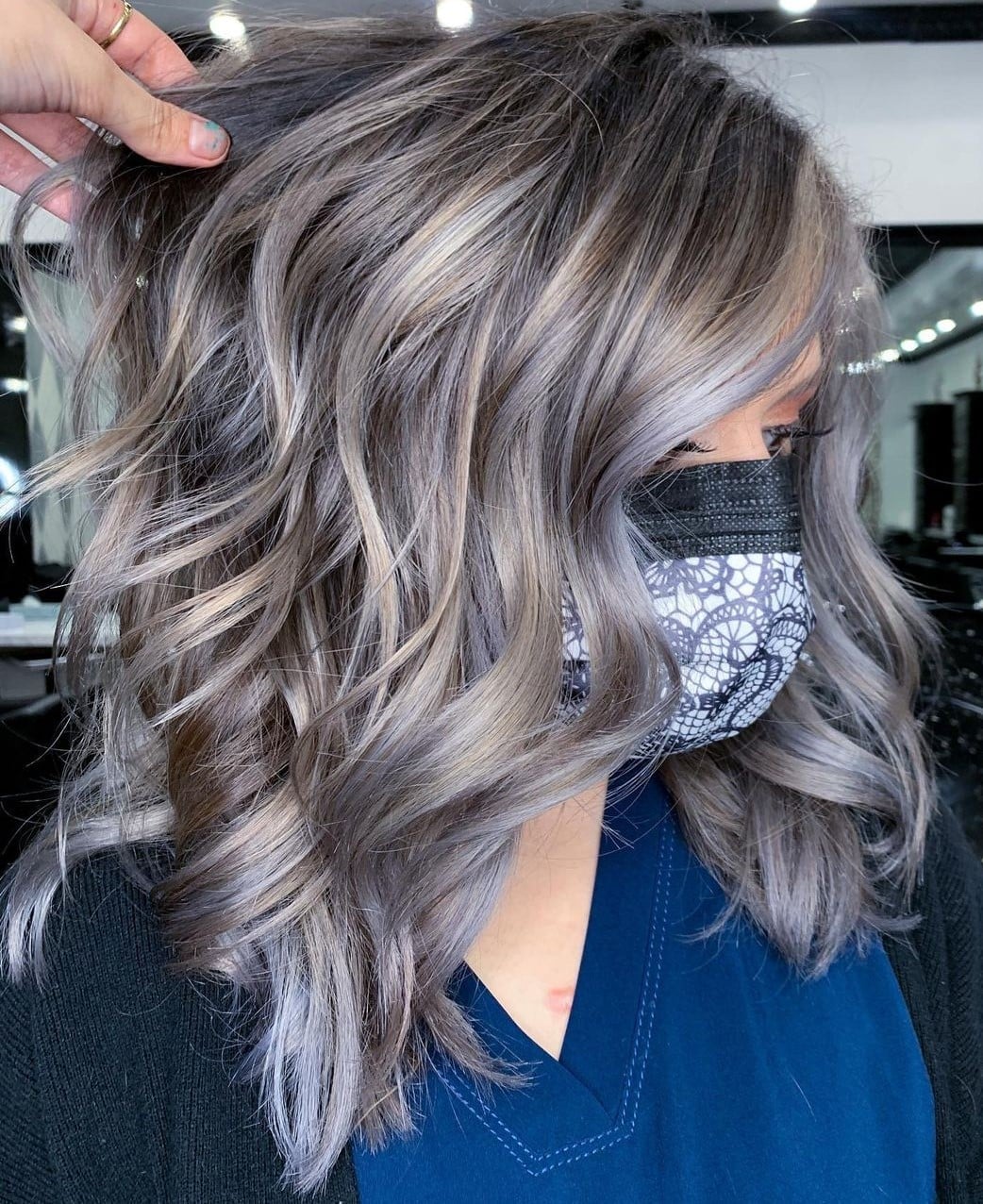
An ash blonde lob with gray highlights sounds like two cool tones fighting for attention, but on fine wavy hair with curtain bangs, they form one cohesive blend. The collarbone length keeps the weight low so fine texture holds its shape, and the middle part lets the curtain bangs soften a round face without losing volume. Ask your colorist for: collarbone ash blonde lob, gray highlights, curtain bangs. A blowout with a round brush defines the waves, and the fringe needs a trim every four to six weeks. This style works for both work and weekends: polished enough for a Monday meeting, loose enough for Saturday errands.
Collarbone Salt and Pepper Gray Blend
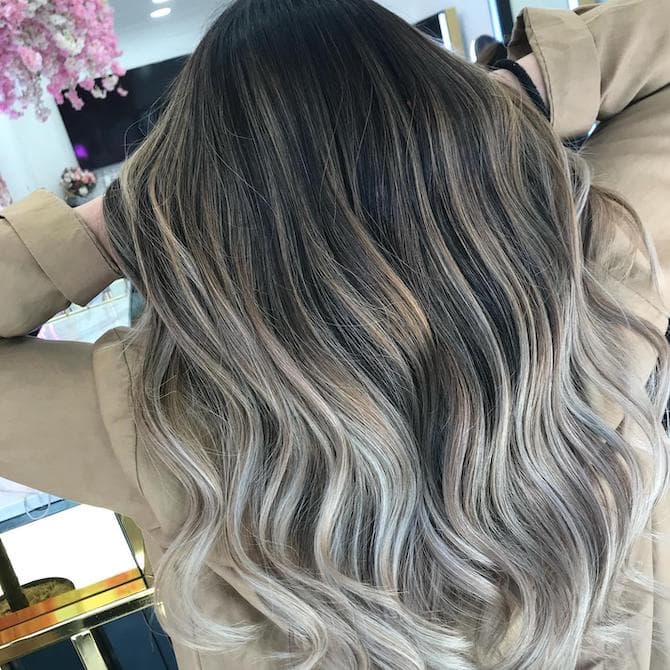
The salt and pepper gray blend works because it doesn’t pretend to be uniform. Medium density wavy hair at collarbone length carries the mixed tones naturally, with face-framing bangs that suit most face shapes without demanding a daily blow-dry. Ask your colorist for: collarbone length, salt and pepper gray, face-framing bangs. The honest drawback is that the lighter strands can pull brassy if you skip a purple shampoo for more than two weeks. Embrace the natural wave pattern and plan a trim for the fringe every four to six weeks to keep the shape clean.
Collarbone Layers With Ash Blonde Highlights
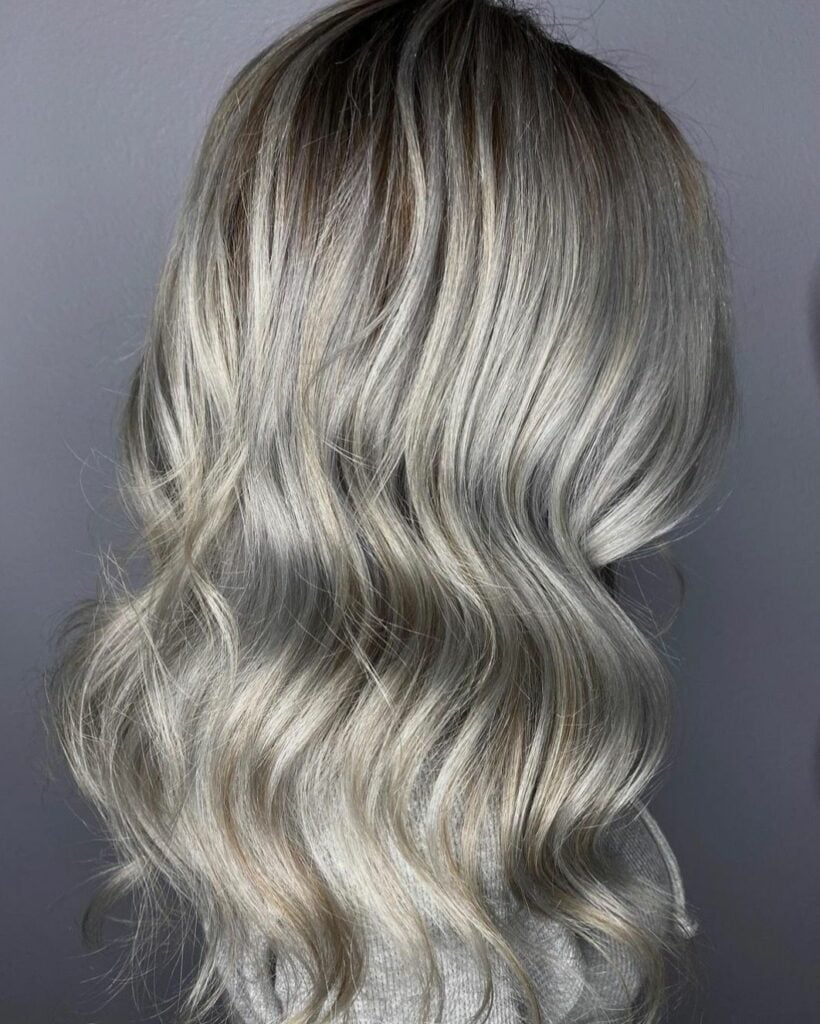
Can you get ash blonde highlights on a dark base without it looking like a home project gone wrong? Yes, but this is a salon-only situation. Thick wavy hair at collarbone length benefits from the layers, which add movement and prevent the darker sections from weighing everything down. Ask your colorist for: collarbone layers, ash blonde highlights, dimensional blend. The middle part keeps the distribution even, and a wavy blowout gives the whole thing a polished finish. DIY is not the move here: lifting a dark base to ash blonde requires precision that a box kit cannot deliver.
Dark Base With Silver Gray Highlights
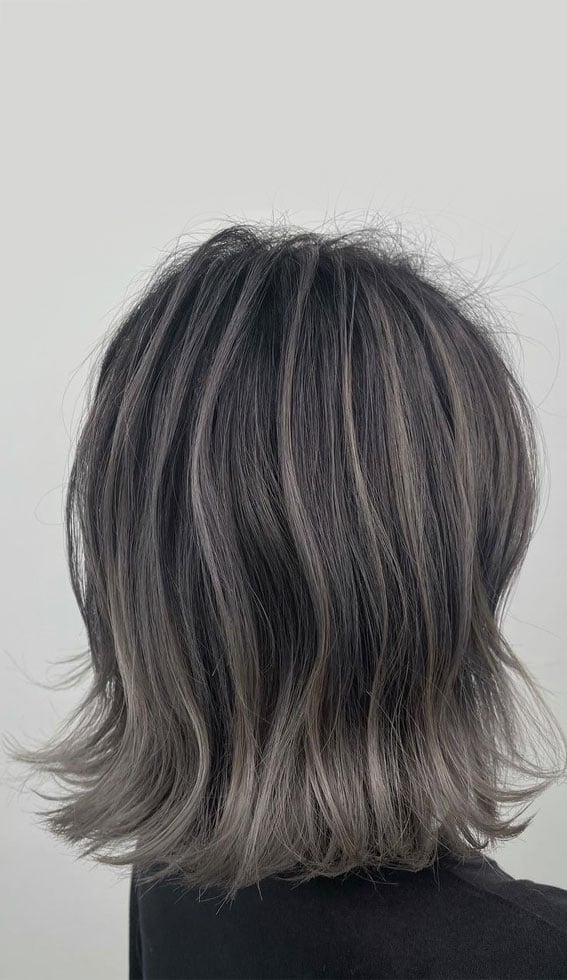
Silver gray highlights on a dark base are a cool-weather staple for a simple reason: the contrast is sharp enough to read from across a room. Thick wavy hair at collarbone length gives the silver strands enough surface to reflect, and the layers keep the shape from looking like a solid block. Ask your colorist for: collarbone layers, dark base, striking silver gray highlights. A loose wave pattern is the fastest way to show off the contrast, and a trim every eight to ten weeks prevents the ends from looking thin. The middle part helps the highlights fall evenly on both sides.
Collarbone Waves With Ash Blonde Silver Highlights
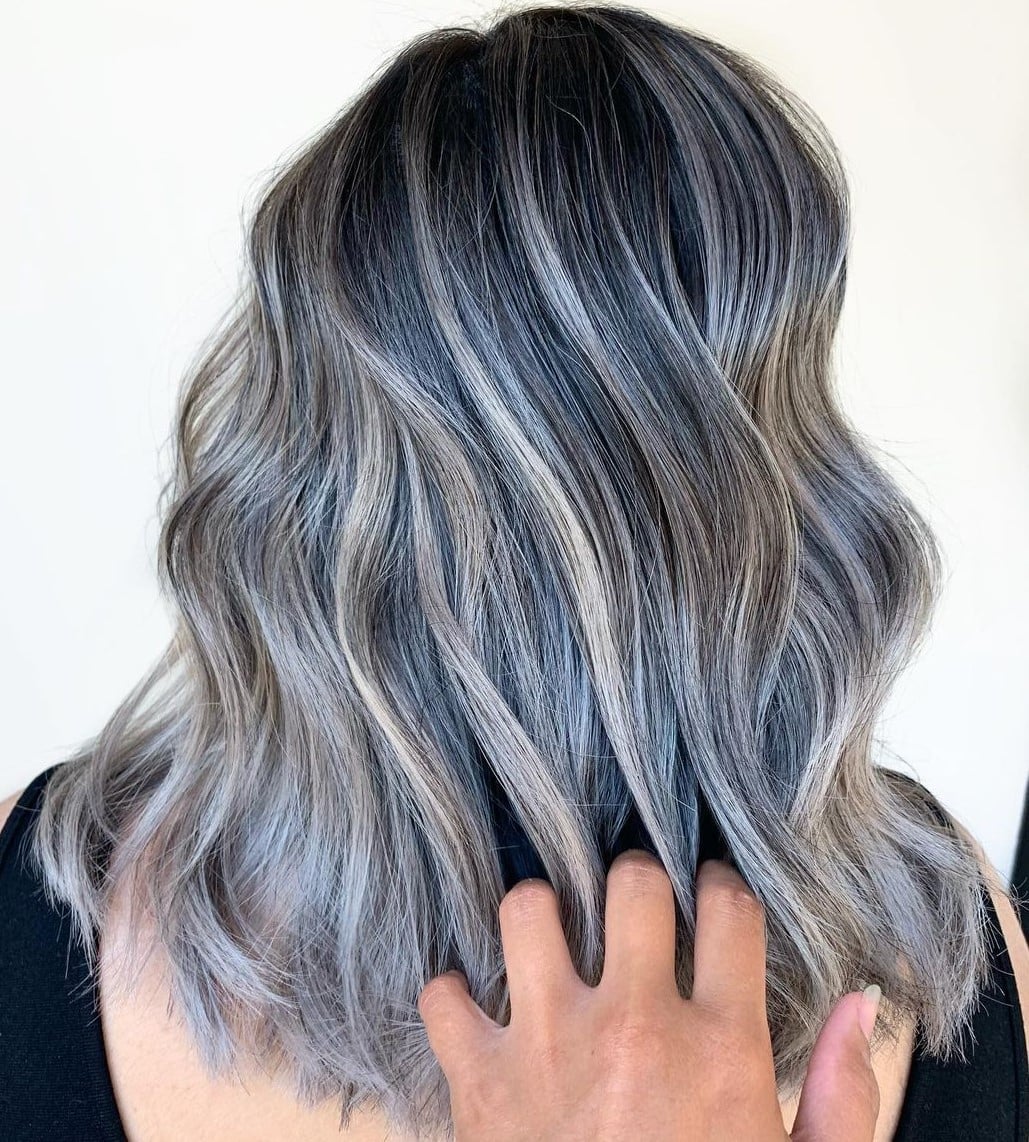
Ask your colorist for: collarbone layers, dark base, ash blonde and silver highlights. This is a bright, dimensional look, but it demands a commitment to toning: a purple shampoo every other wash is the minimum to keep the ash and silver from drifting warm. The middle part and a wavy blowout are all the styling it needs.
Collarbone Lob With Ash Gray Highlights
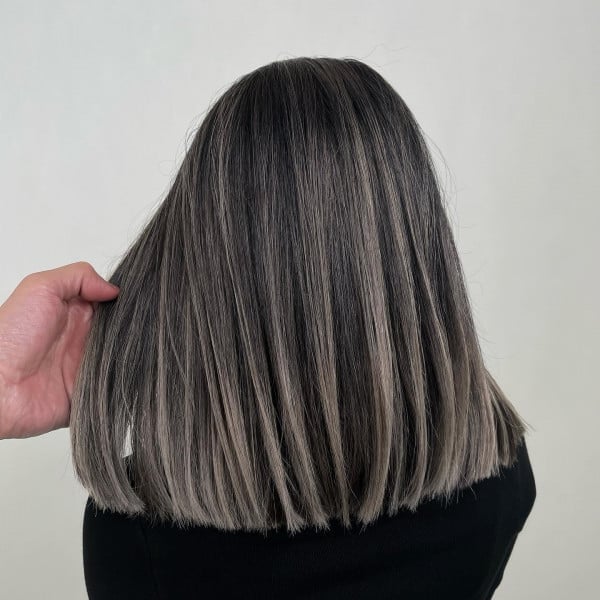
What if that lob could also do the heavy lifting on color? A dark base with ash gray highlights, cut to collarbone length with a middle part and styled in a smooth blowout, gives thick straight hair a cool, modern edge. Ask your colorist for: collarbone lob, dark base, ash gray highlights. The straight texture shows off the contrast best, so a blowout is your friend here. A trim every eight to ten weeks keeps the line crisp and the ends healthy.
Collarbone Layers With Ashy Gray Tones
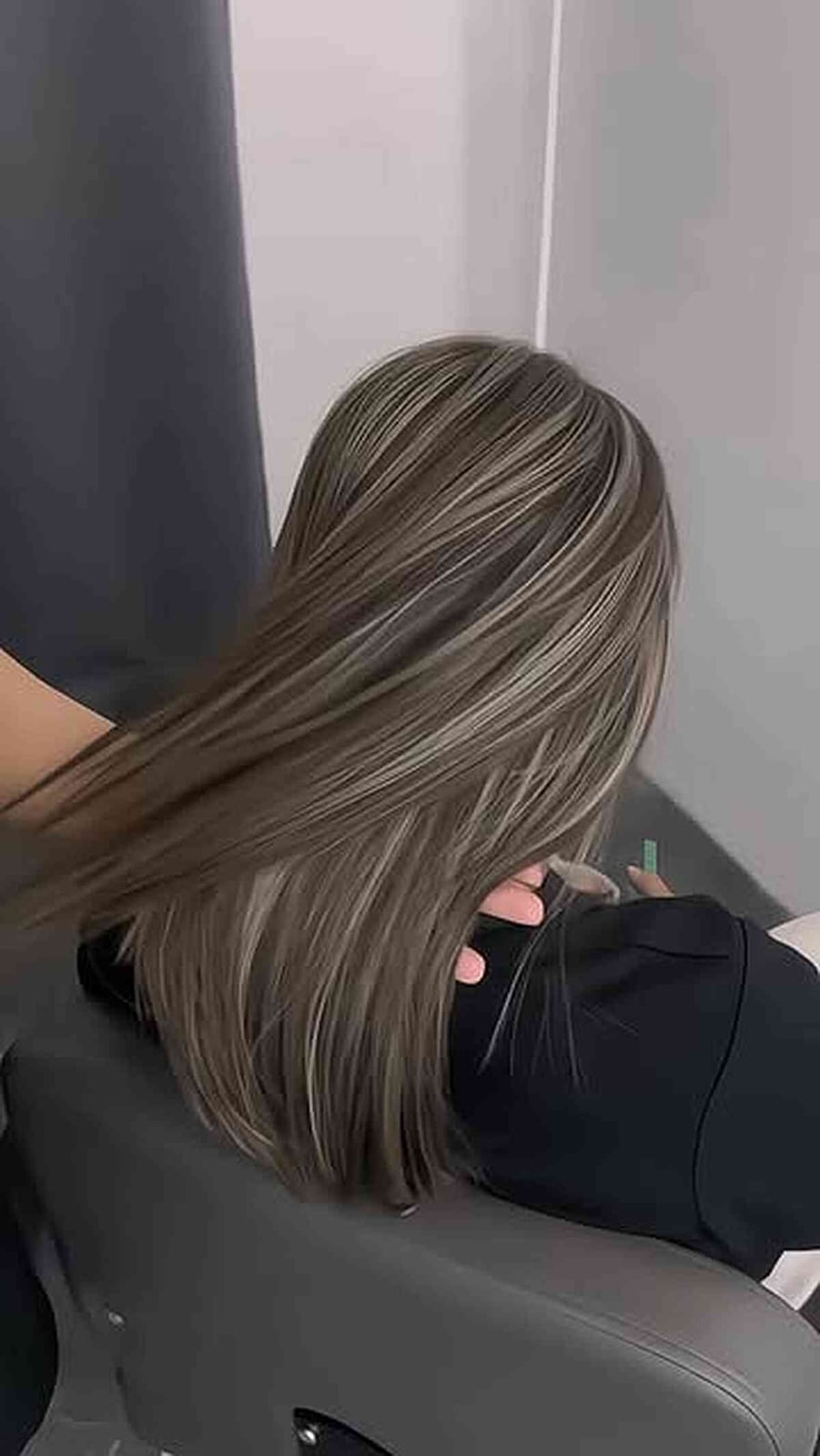
A dark base with ashy gray highlights woven through collarbone-length layers creates a cool shadow effect. The middle part and wavy, medium-density texture let the gray settle naturally. Ask your colorist for: collarbone layers, dark base, ashy gray highlights. A blowout gives it that polished finish, and a trim every eight to ten weeks keeps the layers from losing their shape.
Collarbone Layers With Blended Gray
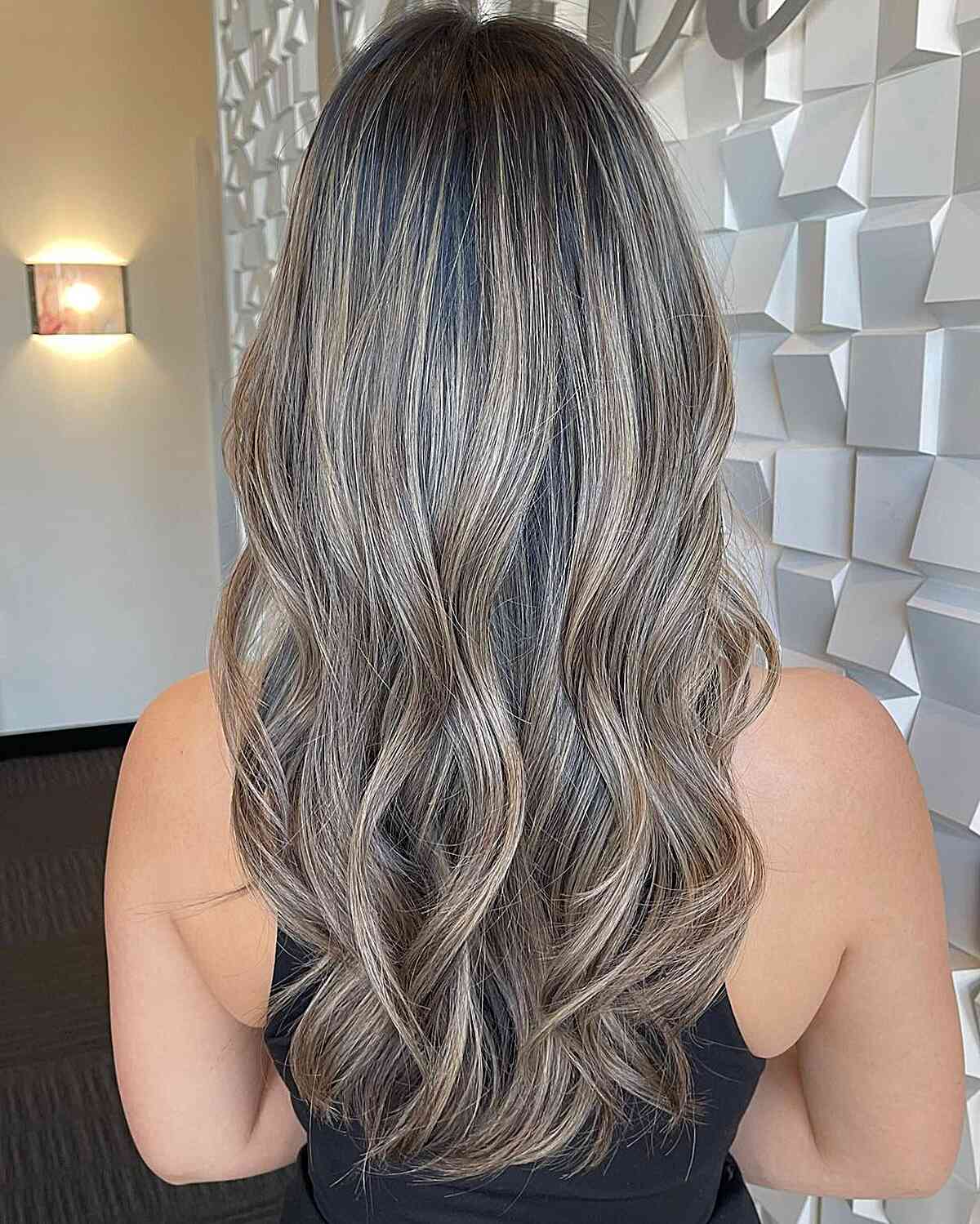
This is not a stark, stripey gray but a blended version that reads as a natural extension of the dark base. The collarbone-length layers, wavy medium-density texture and middle part make it a solid choice for work or everyday wear. Ask your colorist for: collarbone layers, dark base, blended ashy gray highlights. The blowout smooths the waves enough to show the blend, and the season is irrelevant when the tone is this neutral.
Collarbone Wavy Hair With Ashy Gray Highlights
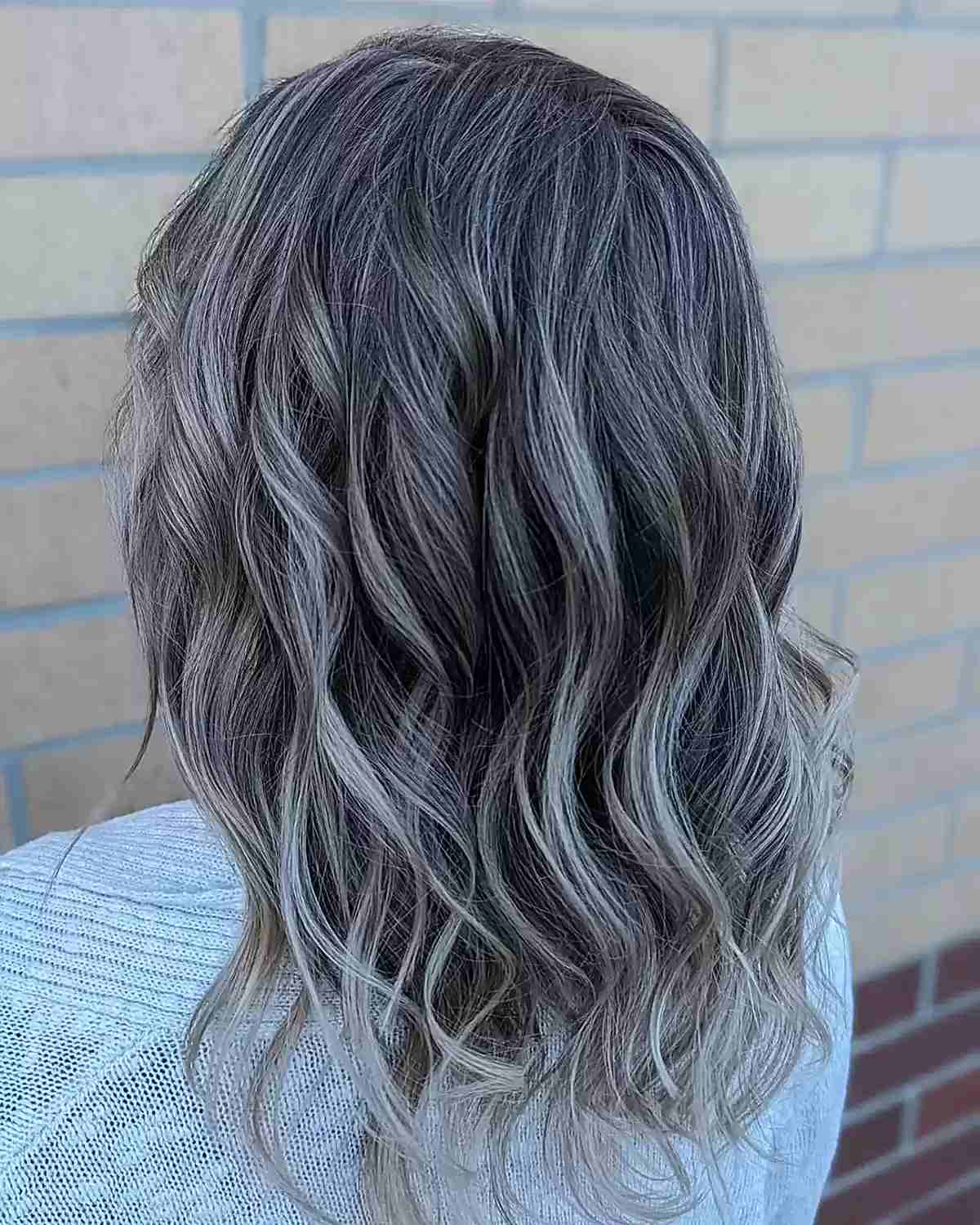
Those cool tones can appear dull if the blowout is skipped or the waves air-dry without product. Ask your colorist for: collarbone layers, dark base, ashy gray highlights. A quick blowout with a round brush solves it, but anyone who hates heat styling should consider a warmer-toned highlight instead.
Collarbone Wavy Hair With Ashy Gray Tones, Middle
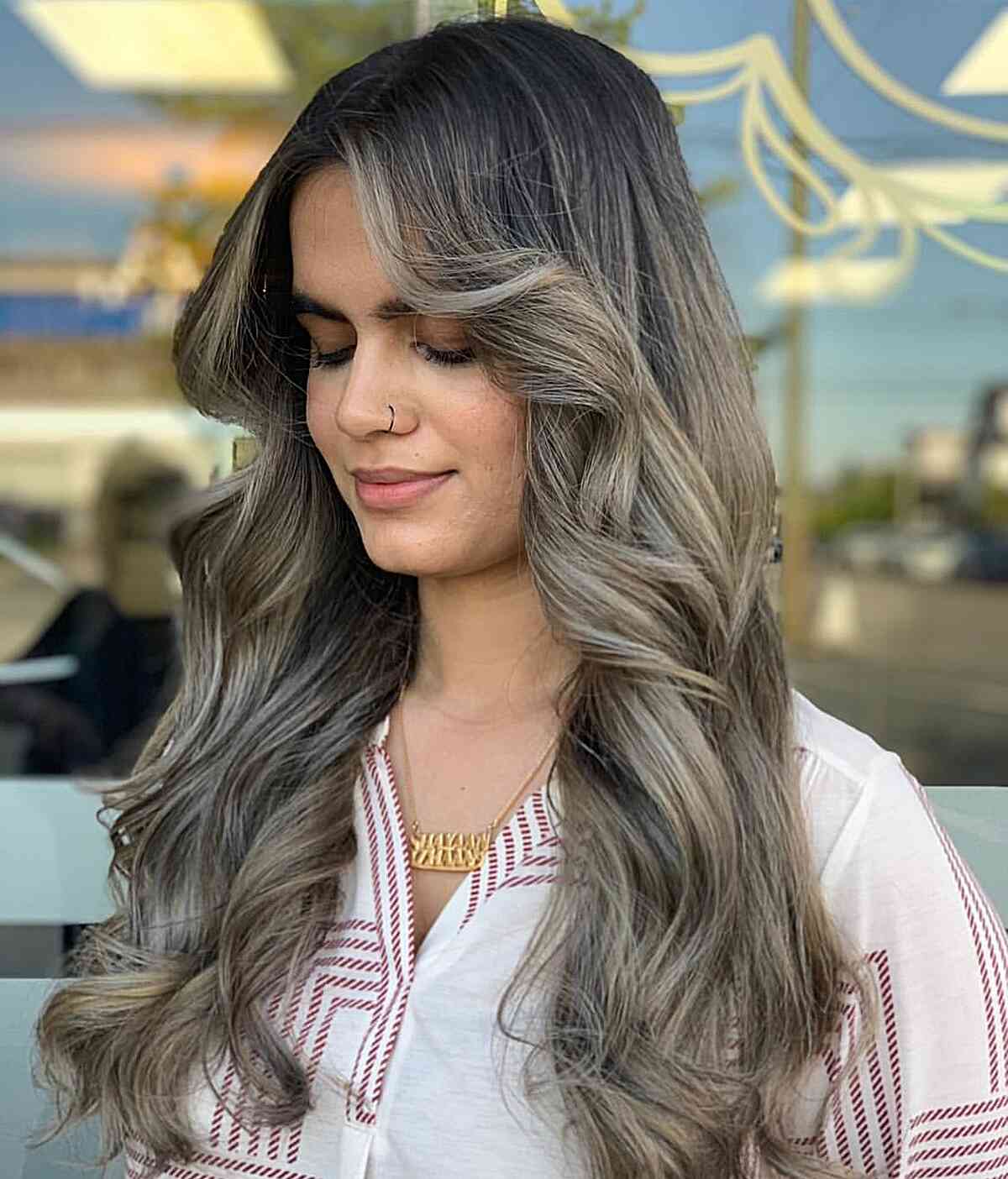
Can you get ashy gray tones at home with a box dye? Technically yes, but the risk of landing on a muddy green is high. A salon does this dark base with ashy gray highlights through collarbone-length layers, wavy medium-density texture and a middle part because the colorist can lift the base evenly first. Ask your colorist for: collarbone layers, dark base, ashy gray tones. It is a salon-only move if you want the cool tone to stay cool.
Collarbone Lob With Ash Blonde Balayage
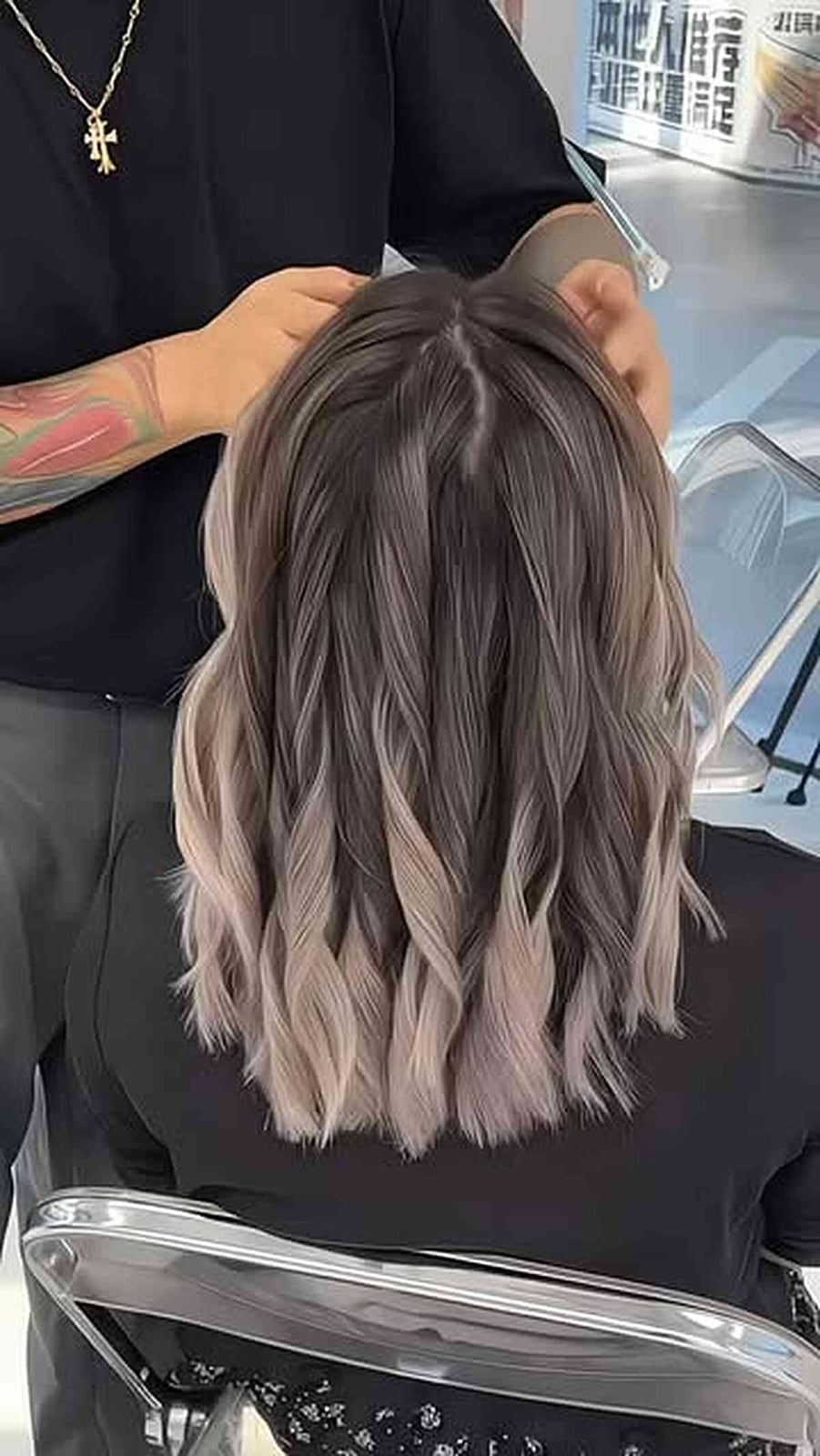
This collarbone lob uses a dark brown base and a seamless ash blonde balayage transition, so the lighter pieces land exactly where they catch movement. Medium density wavy hair holds the color well without looking stripey. Ask your colorist for: collarbone lob, dark brown base, ash blonde balayage. A wavy blowout adds dimension, and a trim every eight to ten weeks keeps the ends healthy through seasonal shifts.
Textured Pixie Cut With Gray Highlights
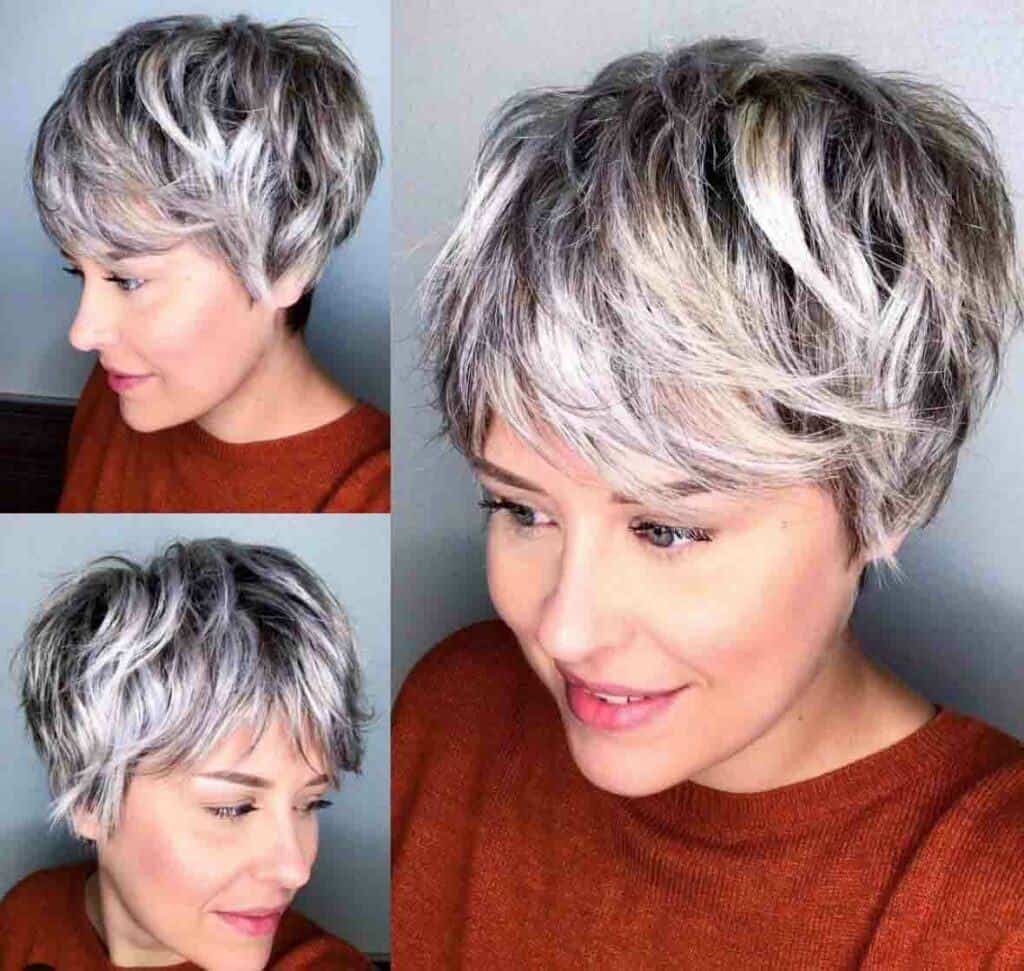
This textured pixie cut uses a gray base with lighter gray highlights, creating depth without relying on length. Fine, wavy hair gains body from the short layers, and the wispy bangs soften angular jawlines. Ask your colorist for: textured pixie cut, gray base, lighter gray highlights, wispy bangs. A texturizing paste on dry hair defines the layers, and a trim every four to six weeks keeps the shape crisp.
Mid-Back Layers With Ash Blonde Highlights
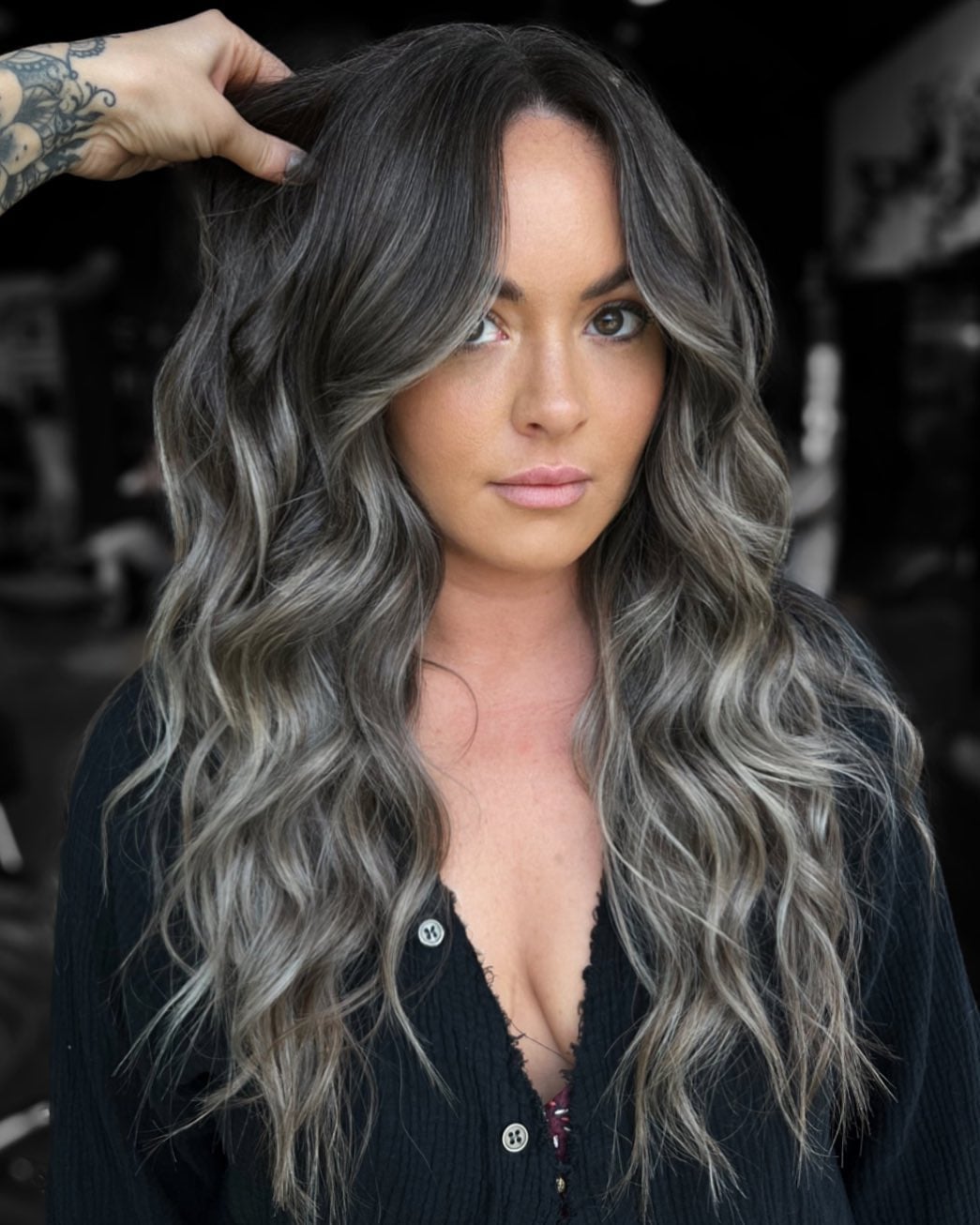
Ask your colorist for: mid-back layers, dark base, ash blonde highlights. The face-framing layers pull the lighter pieces forward, so the contrast lands around your face and does not disappear into the length. Thick, wavy texture at mid-back length spreads the color naturally, and the middle parting keeps the distribution even. A trim every ten to twelve weeks maintains the layering.
Mid-Back Waves With Curtain Bangs, The Texture Appears Thick And Wavy
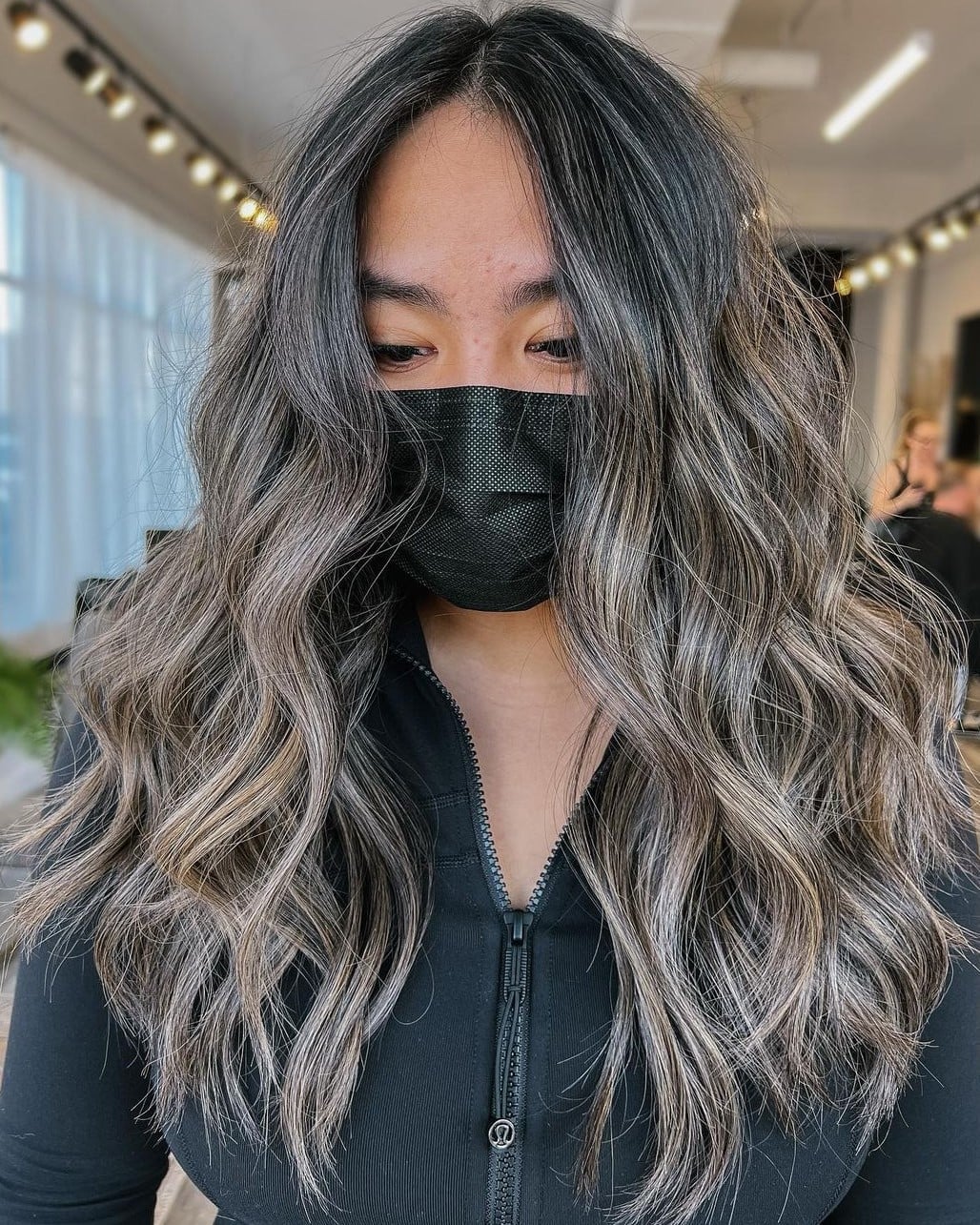
The technique here relies on a dark base with ash blonde highlights woven through thick, wavy mid-back hair, so the lighter strands sit deeper in the wave pattern. Curtain bangs pull the contrast forward, framing the face without shortening the overall length. Ask your colorist for: mid-back waves, dark base, ash blonde highlights, curtain bangs. A blowout with a round brush gives polished waves, and the fringe needs a trim every four to six weeks to stay at the right angle.
Mid-Back Layers With Silver Gray Highlights
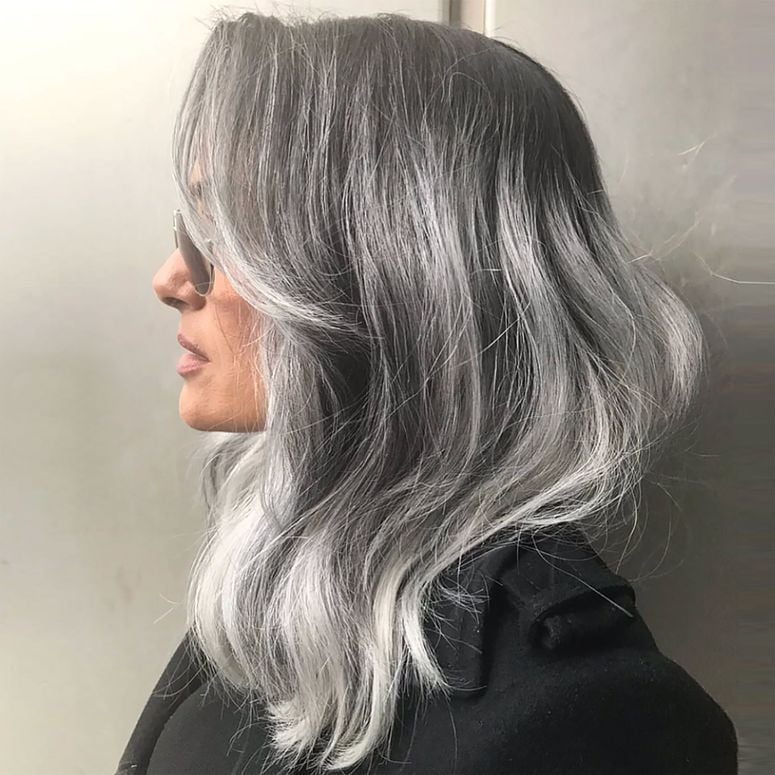
Silver-gray highlights on a dark base read more luminous than the usual ash tones, which matters when you want contrast without going fully metallic. Thick, wavy mid-back hair with face-framing layers lets the silver catch light at different angles, so the color shifts as you move. Ask your colorist for: mid-back layers, dark base, silver-gray highlights. This works for both work and events, and the natural wave pattern keeps the blend looking lived-in rather than freshly painted.
Mid-Back Long Layers With Gray Highlights, Wavy
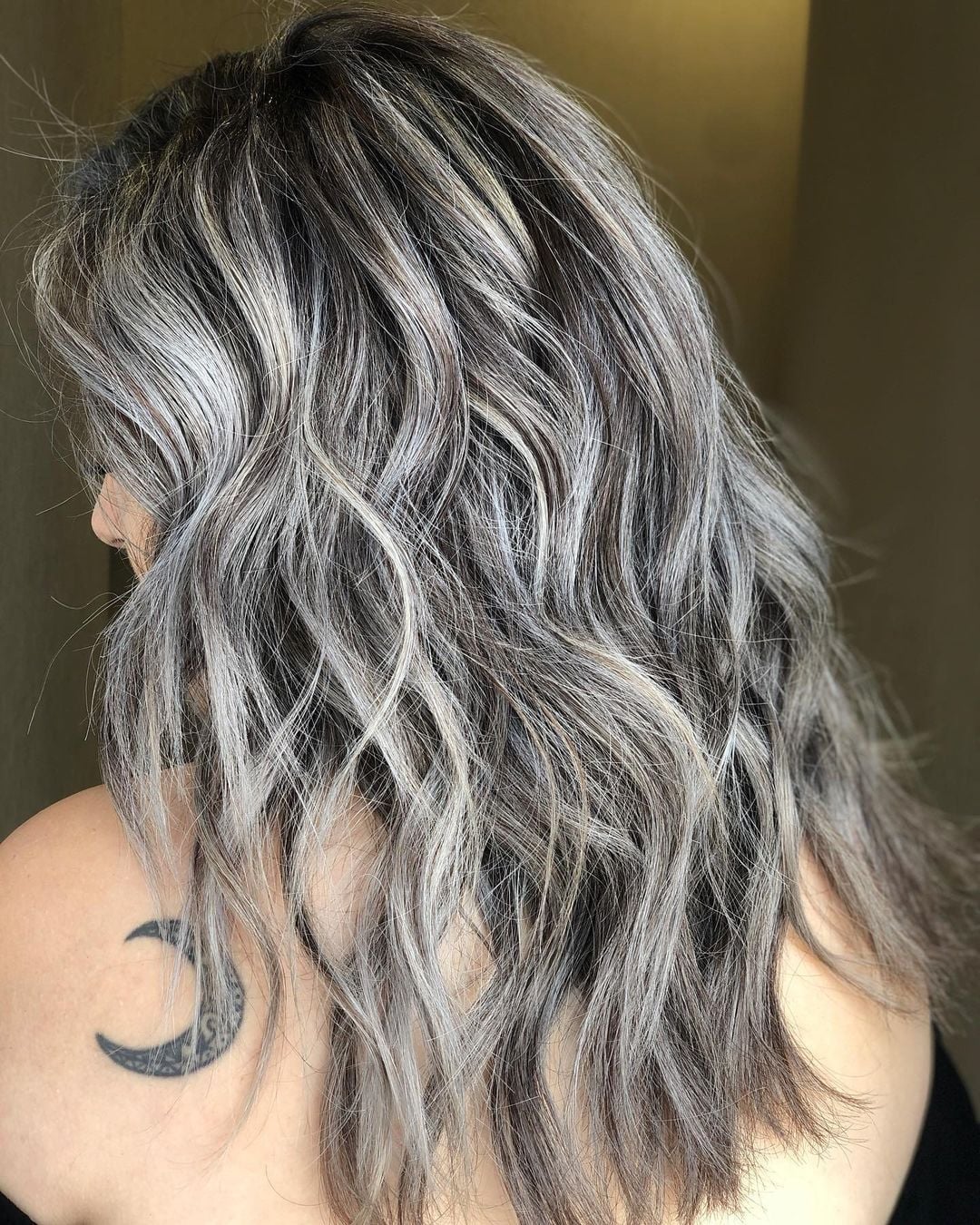
Who this genuinely suits: anyone with thick, wavy texture who wants movement without losing length. The long layers encourage the waves to stack naturally, and the gray highlights land on the high points of each wave, which is where they catch the most light. A trim every ten to twelve weeks keeps the layers from looking raggedy, and that is about the same rhythm as a toning appointment. The middle parting keeps the distribution even, so the color appears deliberate.
Mid-Back Wavy Hair With Ash Gray Highlights
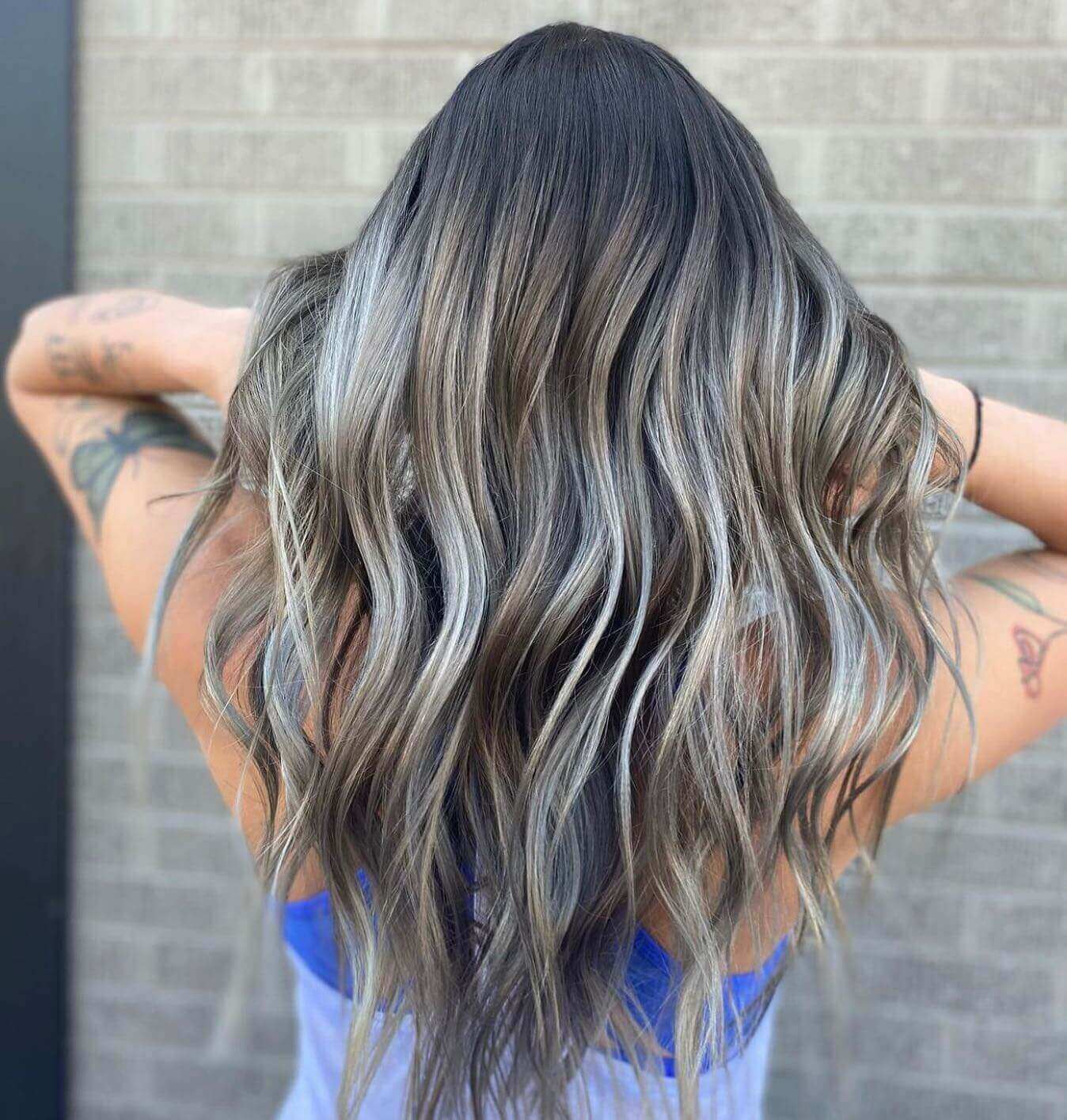
Is there a difference between silver and ash gray highlights, or is that just salon marketing? Ash gray has a cooler, almost greenish undertone that sits differently on a dark brown base than a true silver would. Here, the ash gray highlights are woven through thick, wavy mid-back hair, and the loose wave pattern helps the cool tones create dimension. Ask your colorist for: mid-back wavy hair, dark brown base, ash gray highlights. The salon process involves a partial or full highlight with a toner that neutralizes warmth, and that toner is what gives ash its signature matte finish.
DIY is not a realistic option here. Ash gray requires lifting the dark brown base to a pale yellow before the toner can do its job, and that is two chemical processes most home kits handle poorly. A professional will also place the highlights to follow the wave pattern, which keeps the grow-out looking natural. Thick, wavy hair at this length takes about three hours in the chair, and the cool-toned look stays true for roughly six weeks before the toner starts to fade. A trim every ten to twelve weeks is standard.
Mid-Back Wavy Hair With Natural Gray Blend
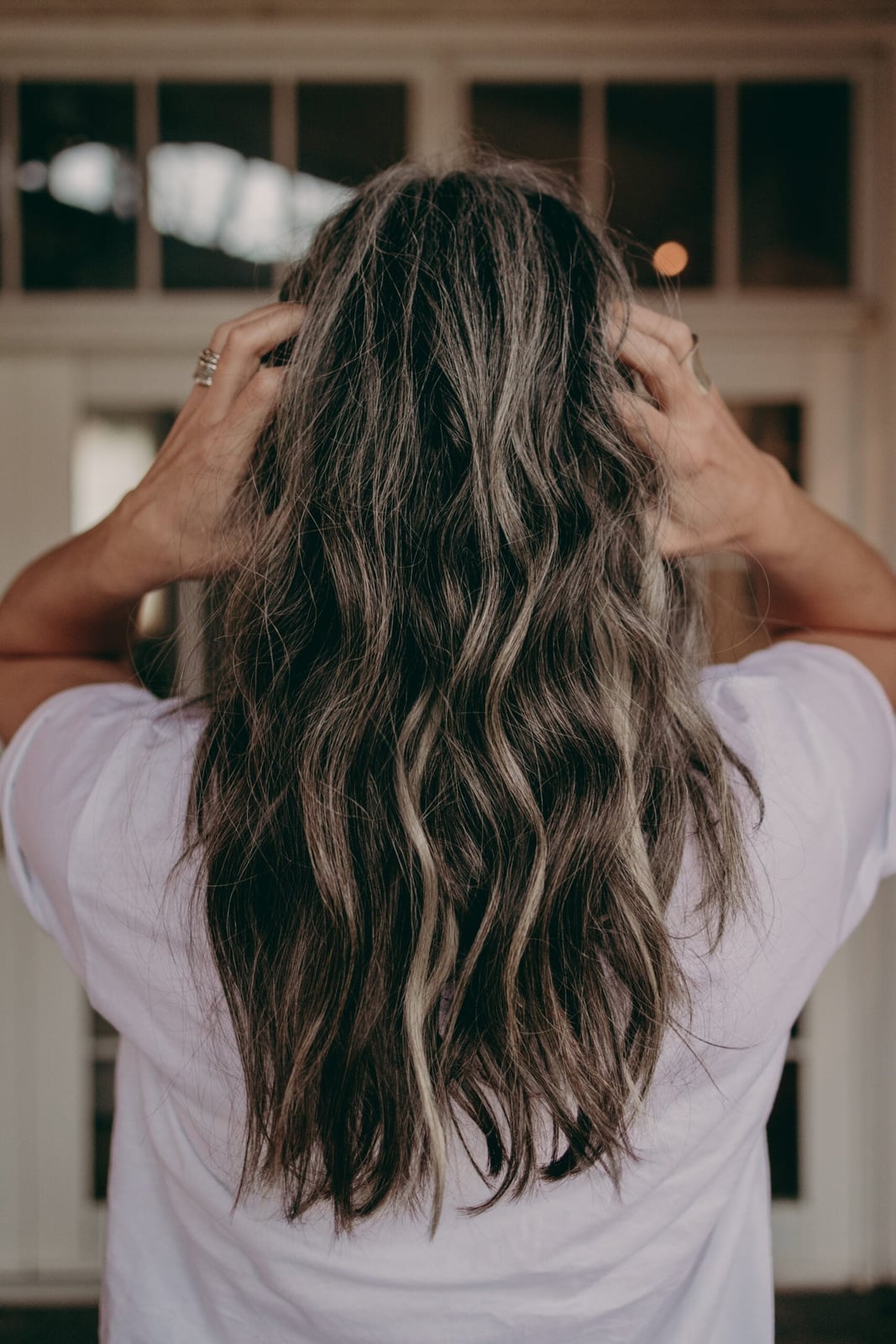
Mid-back length hair with natural waves and a thick texture gets a seamless grow-out from a blend of dark base color and prominent gray highlights. The air-dried styling here is the smart move: it keeps the texture relaxed and the color looking lived-in, which is exactly the point of a natural gray blend. Ask your colorist for: mid-back wavy hair, dark base, natural gray blend. The maintenance is lower than you would expect. A trim every ten to twelve weeks prevents the ends from looking thin, and because the gray is blended rather than placed in chunky sections, the regrowth line is soft. A toning appointment every eight weeks keeps the gray from pulling yellow, but skipping one is not a disaster.
Mid-Back Dark Brown With Gray Highlights
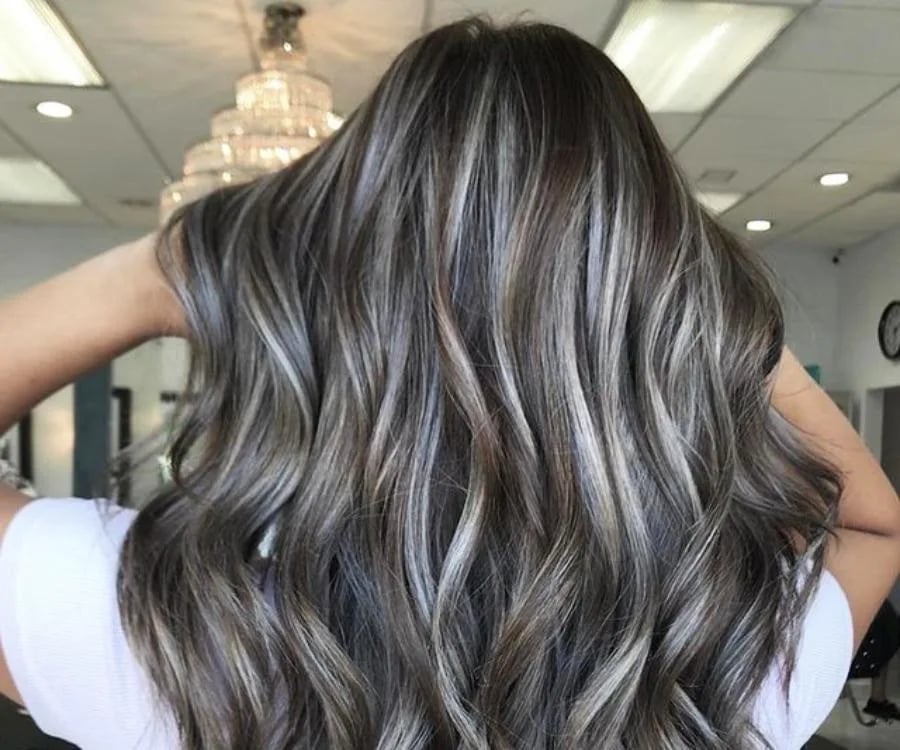
Long, thick hair at mid-back length with a dark brown base and numerous gray highlights distributed throughout is a look that works best on those who actually want the contrast to read clearly. The loose waves and middle parting here push the highlights to the surface, so every wave reveals a new streak of gray. Ask your colorist for: mid-back dark brown hair, numerous gray highlights. Who should pass: anyone with fine hair, because the number of highlights required to achieve this distribution can compromise the integrity of already delicate strands. Thick hair can handle the processing, and the payoff is dimension that moves with every head turn.
This color placement also suits those who do not mind a visible root line. The dark brown base means the regrowth blends naturally for the first four to six weeks, and that is a relief for anyone who hates the every-four-week salon visit. A trim every ten to twelve weeks keeps the ends healthy, and the loose waves are forgiving of a few days between washes. The middle parting keeps the highlight distribution even on both sides, which is a detail that matters more as the hair gets longer.
Mid-Back Wavy Hair With Natural Gray Blend, Close-Up Take
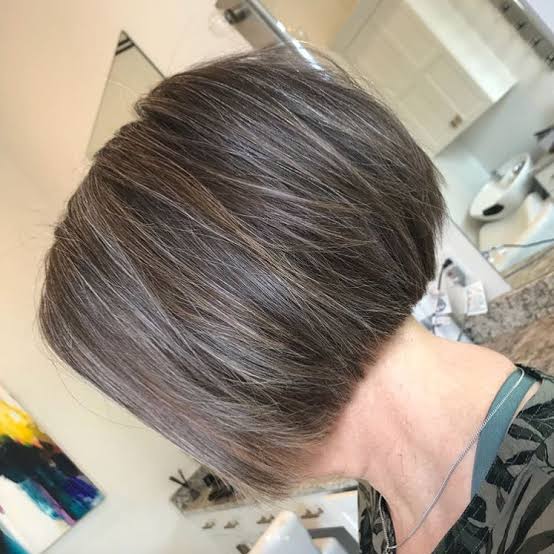
How do you ask for a natural gray blend without ending up with something that looks like you forgot to color your roots for a year? Start with the exact words: mid-back wavy hair, natural gray highlights. The dark base here is the anchor, and the gray is woven in at the mid-lengths and ends, leaving the root area dark for a softer grow-out. The loose waves and glossy finish make the blend look polished rather than accidental. Ask your colorist for: mid-back wavy hair, natural gray highlights. The close-up framing in this photo shows how the gray lands on the high points of each wave, which is what gives the color its dimension. A trim every ten to twelve weeks is standard, and a gloss treatment at the same appointment keeps the shine going.
Mid-Back Ashy Blonde With Gray Highlights
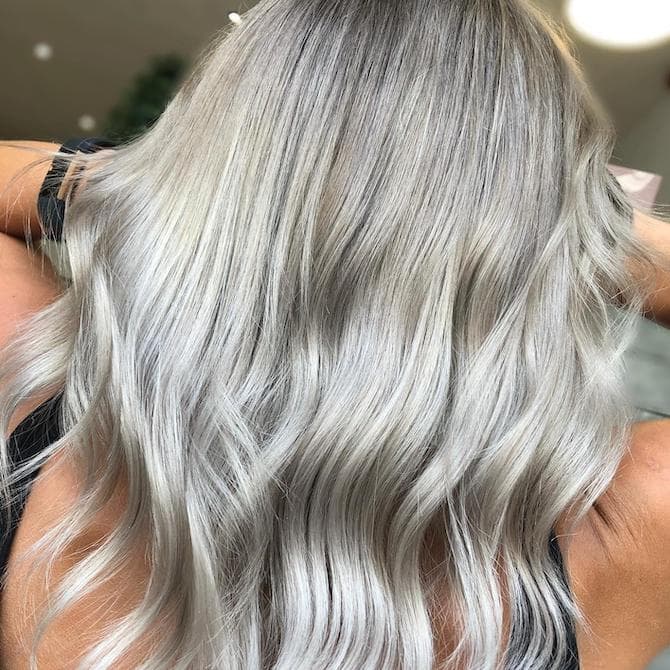
That bright, ashy blonde with gray highlights on thick, wavy mid-back hair is a deliberate design, not an accident. The technique relies on a lightener that lifts the base just enough to deposit a cool, gray-tinged blonde, then a toner that knocks out any warmth. A middle parting and a wavy blowout show off the contrast between the deeper blonde and the lighter highlights. Thick hair carries the dimension without it reading as stripey. Ask your colorist for: mid-back ashy blonde hair, gray highlights. The upkeep is a toner refresh every six to eight weeks and a trim every ten to twelve to keep the ends healthy.
Collarbone Waves With Gray Highlight Blend
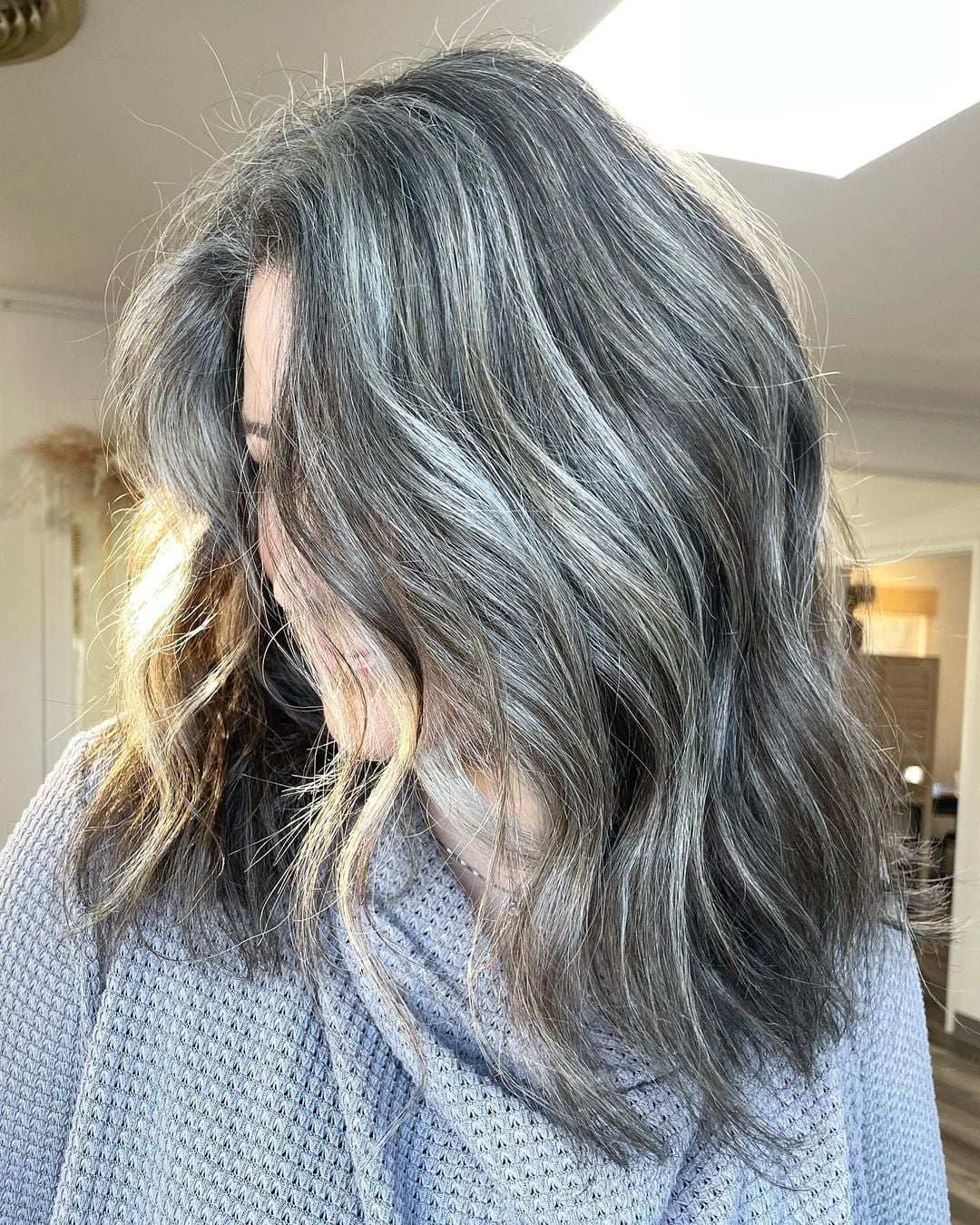
Gray highlights on a dark base can read as salt and pepper, but here they lean into a softer, blended effect. The collarbone waves with face-framing layers and curtain bangs use a mix of fine highlights that start a few inches from the root, so there is no harsh line. This works for fall and winter, when cooler tones feel natural, but also holds up under summer sun without turning brassy. The curtain bangs need a fringe trim every four to six weeks. Ask your colorist for: collarbone waves, gray highlight blend, curtain bangs. The rest of the cut can go eight to ten weeks between salon visits.
Collarbone Shag With Gray Ash Blonde Highlights and Curtain Bangs
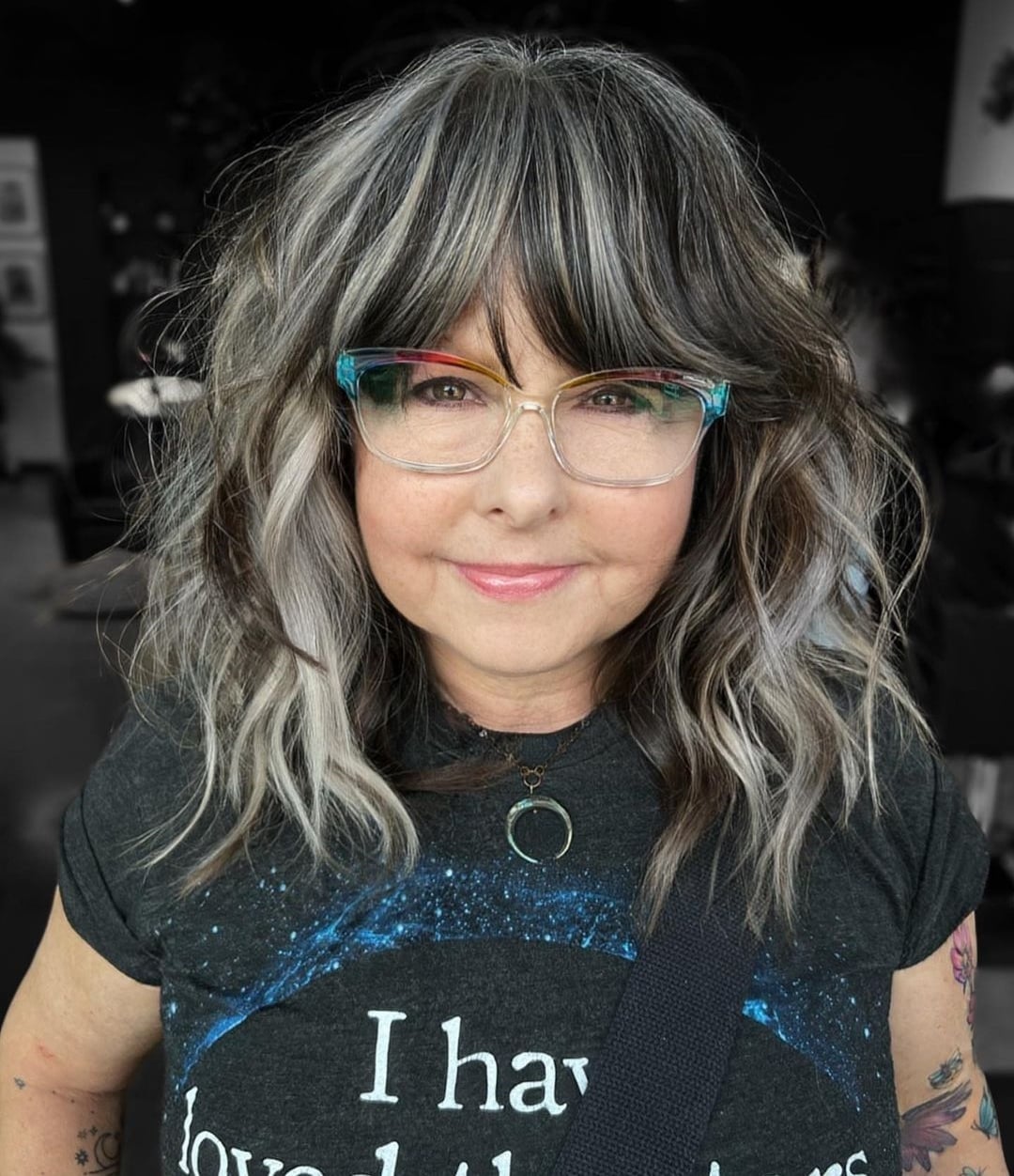
The collarbone shag with curtain bangs and a dark brown base works because the gray and ash blonde highlights hit the face-framing pieces hardest. A shag cut already relies on texture; the highlights emphasize the layers, so the shape reads even when the waves loosen. The trade-off is that thick, wavy hair needs a stylist who understands how a shag sits at rest, not just blown out. If your hair is naturally straight and fine, the layers can look sparse instead of lived-in. Ask your stylist for: collarbone shag, curtain bangs, gray and ash blonde highlights.
Final Thoughts
Consider your natural base color depth when choosing your gray highlight blend. Discuss maintenance with your stylist; some blends require more frequent toning to keep the ash tones from warming up.
- Use a purple or silver toning shampoo once a week to maintain vibrancy.
- Protect hair from heat styling with a thermal protectant spray.
- Consider a color-depositing conditioner to refresh tones between salon visits.
- Trims are typically needed every 6-10 weeks to maintain shape and prevent split ends.
Embrace the subtle power of gray highlights.