
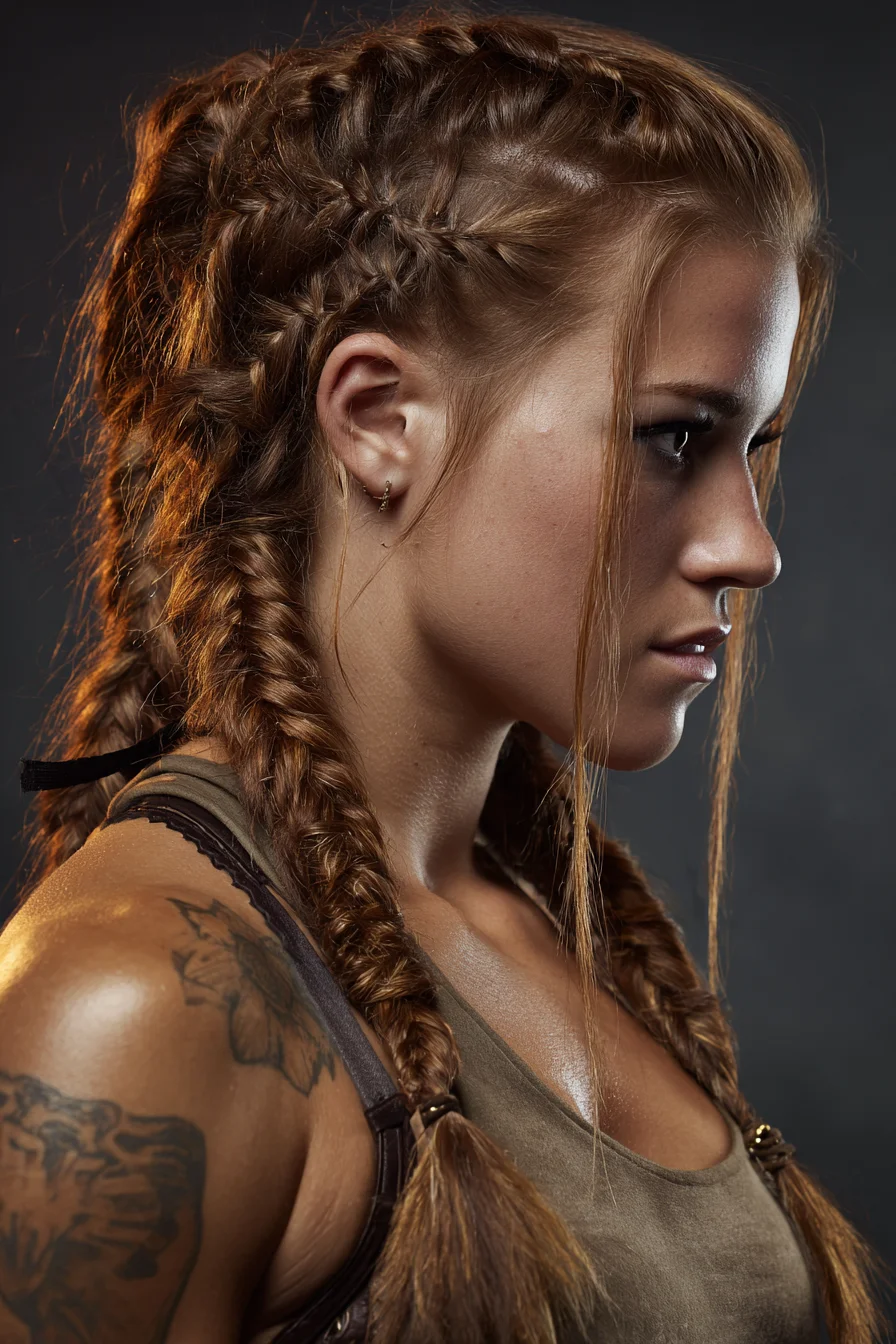
Hi, I’m Lena — a salon stylist with over a decade of hands-on experience creating performance-ready looks. This gallery of 32 wrestling hairstyles for women focuses on secure, low-damage options that stay put through training and competition. I’ve selected styles that work across hair types and lengths — from long, thick hair to shorter, textured tresses — and grouped them into braids, buns, ponytails, and hybrid protective looks. Each image shows a practical variation you can recreate at home or ask your stylist to prep before a match. My pro tips: always detangle, use a lightweight leave-in or styling gel for control, choose snag-free elastics, and avoid excessive tension on the hairline. I’ll also show quick touch-up tricks between rounds and how to adapt each style for comfort, reduced breakage, and better performance on the mat.
Double Dutch Braids into Textured Low Ponytails — Platinum Braided Style
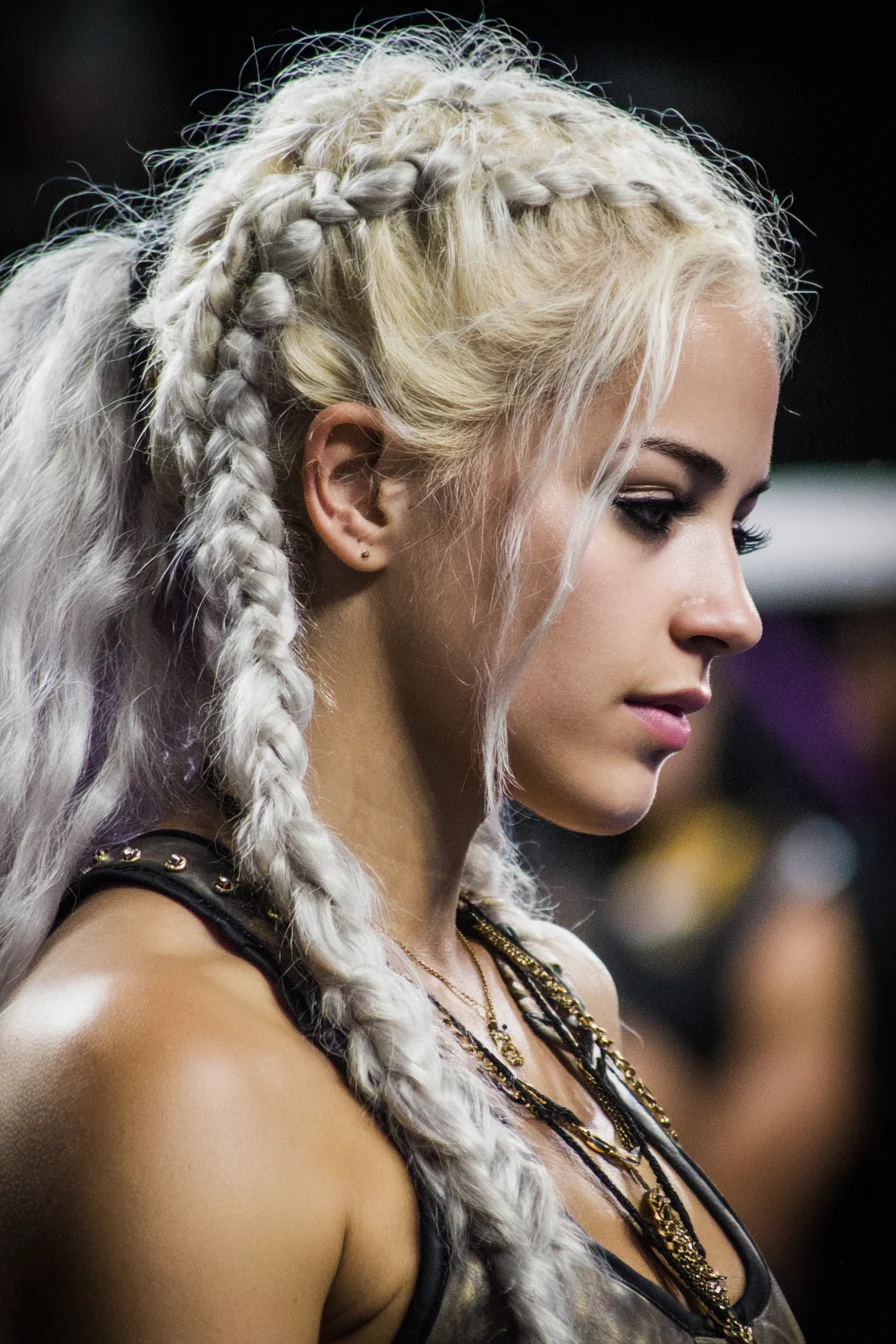
This look suits medium to thick hair and straight-to-wavy textures; fine or short hair can achieve the same silhouette with clip-in extensions for added length and volume. Start by parting the hair into two sections and create tight Dutch (inside-out) cornrows from the hairline to the nape, incorporating hair evenly and keeping tension consistent. Braid the remaining lengths into three-strand braids, then gather into low ponytails and pancake the braids slightly for a fuller, lived-in finish. Salon tools: fine-tooth tail comb, sectioning clips, elastic bands, a soft brush, and optional extension loop tool. If heat smoothing is desired, use a flat iron and a blow dryer. Recommended products: lightweight styling cream or pomade for clean parts and edges, texturizing spray to add grip to the braids, flexible-hold hairspray, and a purple or toning shampoo if the hair is bleached. Difficulty: intermediate — expect 30–60 minutes depending on length and extensions. Maintenance: sleep on a silk pillow or bonnet, refresh with a spritz of water + leave-in and re-tighten elastics as needed; avoid heavy oils at the roots and re-do braids every 1–2 weeks for best scalp health.
Textured Curly High Bun with Face‑Framing Tendrils
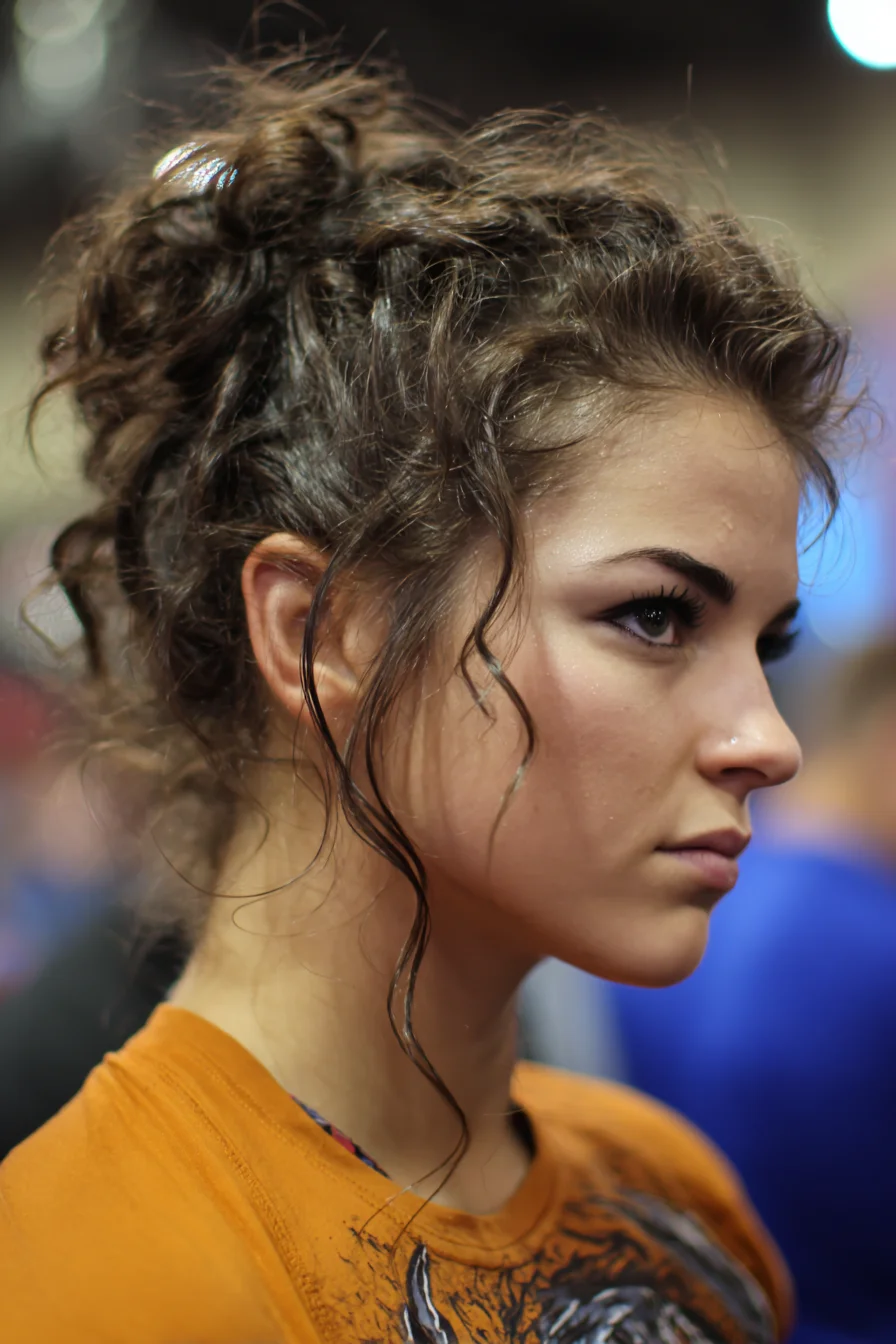
Suitability: Ideal for naturally curly or wavy hair and medium to thick textures. Fine hair can wear this look with volumizing products or a small bun padding; very straight hair will need pre‑curling. Styling technique: Work on damp, well‑conditioned hair. Apply a light leave‑in curl cream and diffuse until mostly dry to enhance natural texture. Gather hair loosely to the crown and form a messy bun, securing with an elastic and strategically placed bobby pins to let curls fall freely. Pull out a few face‑framing tendrils and refine them with a small curling wand for definition if needed. Tools needed: wide‑tooth comb, diffuser (hairdryer), elastic, assorted bobby pins, small curling wand or iron (optional). Products required: leave‑in conditioner or curl cream, sea‑salt or texturizing spray, lightweight finishing serum, flexible‑hold hairspray. Difficulty level: Moderate — straightforward for curl‑savvy clients; 20–35 minutes in salon, longer if pre‑curling straight hair. Maintenance tips: Refresh with a water + leave‑in mist and scrunch to reactivate curls; sleep with a loose silk scarf or pineapple and use a satin pillowcase; re‑pin or touch up tendrils with a curling wand and avoid heavy oils that weigh curls down.
Textured Platinum Double Dutch Braids with Soft Curved Fringe
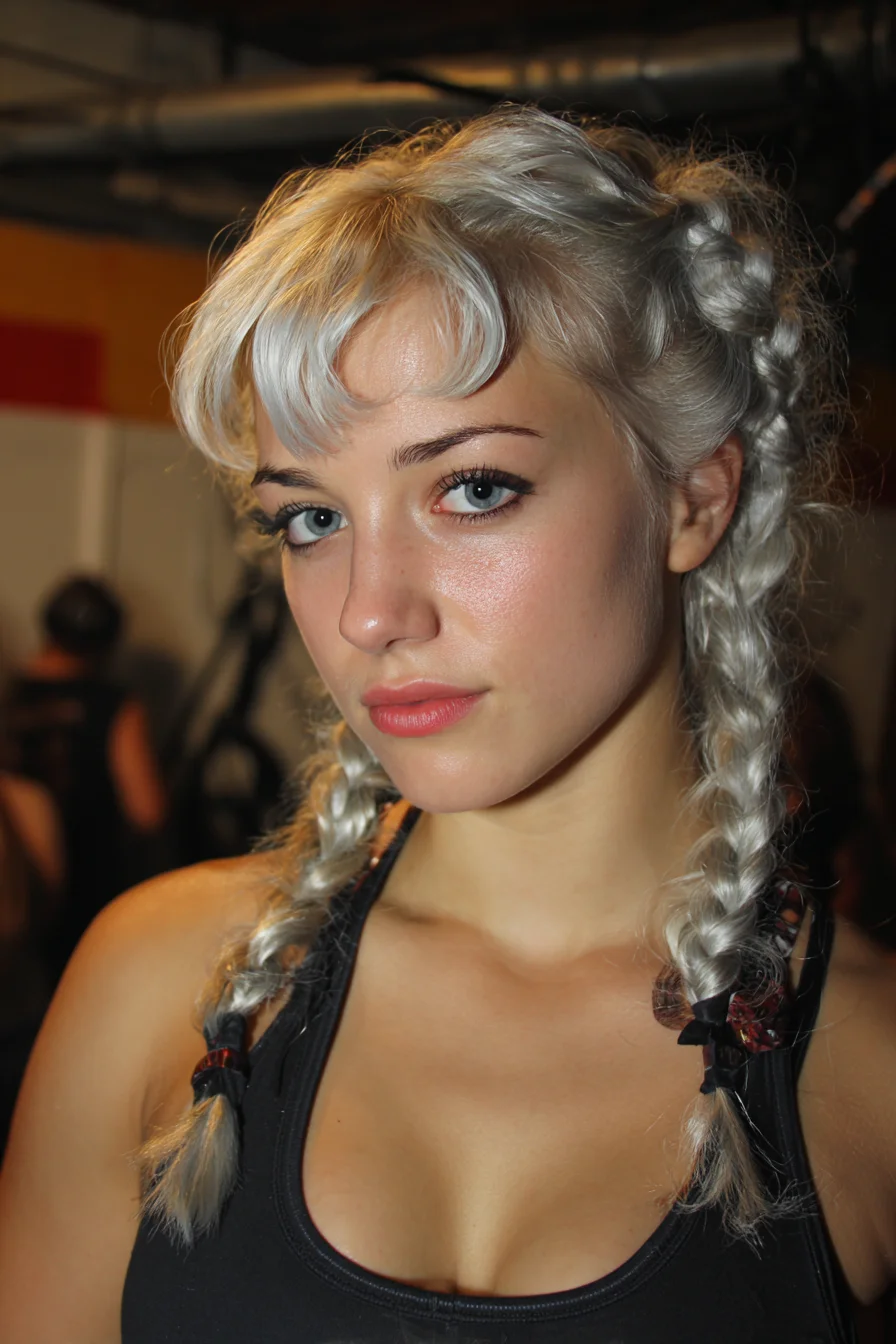
This look flatters fine-to-medium and slightly coarse hair textures; very thick hair can wear it too but will require smaller subsections. Ideal for bleached or pastel shades where the braid definition highlights tone. Technique: create a clean center part and section a soft, curved fringe at the front. Apply a texturizing spray and light mousse, then start two Dutch braids at the hairline, working down the sides and adding hair evenly. Gently pancake the braids (tug the loops) for fullness and finish with small elastics and decorative ribbon or scrunchies. Tools needed: rat-tail comb, sectioning clips, small elastic bands, wide-tooth comb and a fine-tooth comb for the fringe. Products required: lightweight mousse or texturizing spray, flexible-hold hairspray, smoothing serum or lightweight oil for ends, and a heat protectant if heat styling the fringe. Difficulty: intermediate — requires consistent tension and even sectioning but no advanced braiding beyond Dutch technique. Maintenance: sleep on a silk pillowcase, refresh with dry shampoo and a bit of texturizer, avoid tight re-braiding every day to reduce breakage, and use weekly deep conditioning for bleached ends.
Textured Voluminous Side Ponytail with Soft Beach Waves
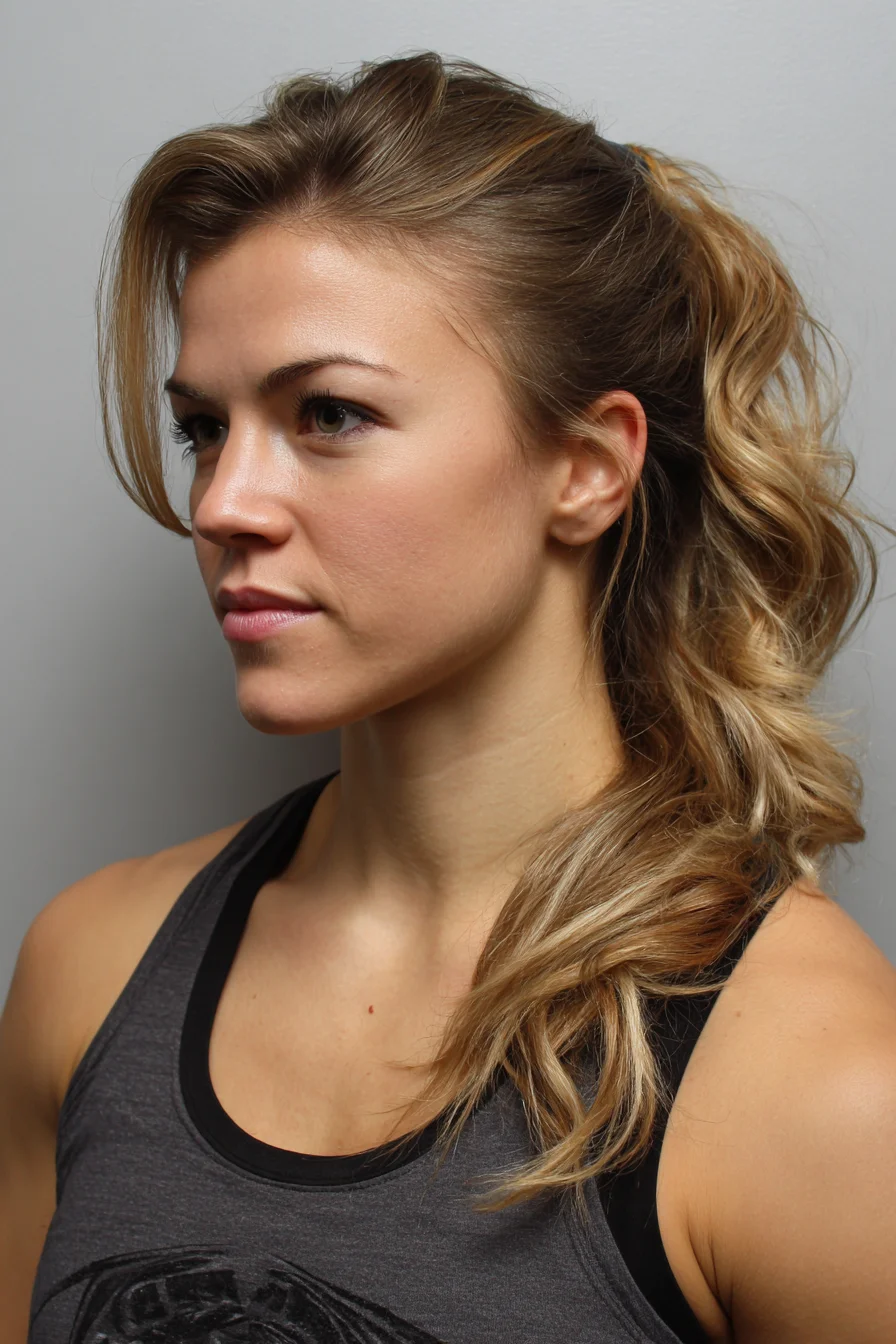
Salon-ready textured side ponytail that pairs soft, face‑framing pieces with loose, beachy waves. Suitability: ideal for medium to thick hair and natural waves; fine hair benefits from volumizing products or a small padding/clip‑in extension for body, while very curly hair should be lightly smoothed or diffused first. Styling technique: blow-dry with a round brush for lift, apply heat protectant and a volumizing mousse at the roots, then create loose 1–1.25″ barrel curls away from the face, alternating directions for natural movement. Lightly backcomb the crown for height, gather hair to a low side position and secure with an elastic, then wrap a small front section around the band to conceal it. Loosen curls with your fingers and pull a few face‑framing strands forward for softness. Tools needed: blow dryer, round brush, 1–1.25″ curling iron, tail comb, elastics, bobby pins and sectioning clips. Products required: heat protectant, volumizing mousse/spray, sea‑salt or texturizing spray, light‑hold hairspray and dry shampoo for grip. Difficulty: moderate — achievable at home with practice. Maintenance tips: refresh with dry shampoo and texturizer, re‑curl fallen pieces, re‑secure the elastic as needed, sleep on silk or loosely braid to preserve waves, and trim ends every 8–12 weeks.
Textured High Ponytail with Double Top Knots and Slicked Sides
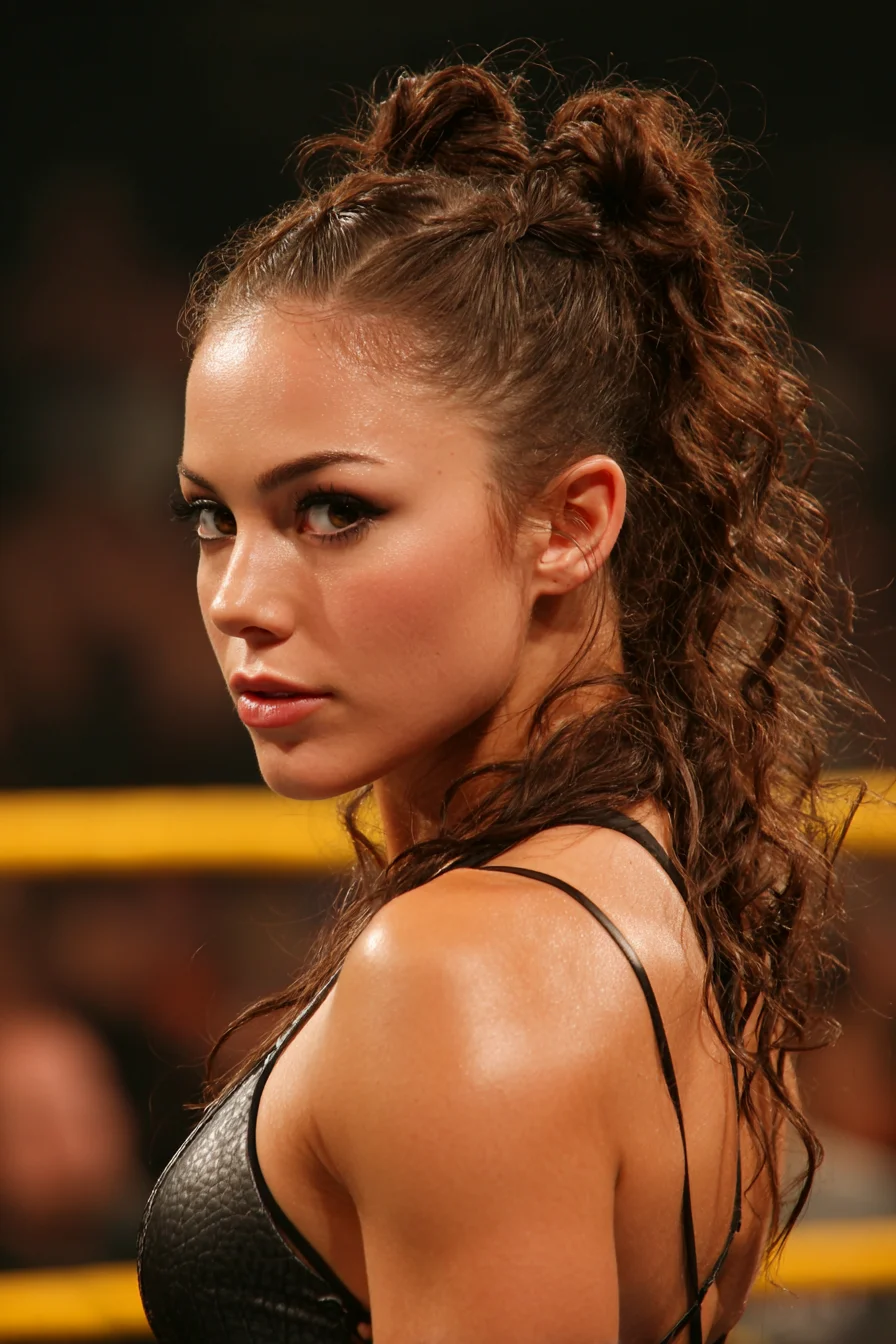
This sporty-glam look works best on medium to long hair and is ideal for naturally wavy, curly, or thick hair — straight hair can be pre-textured with a curling wand. Start by creating a clean center partition at the crown and smooth the sides with a light-hold gel. Section two small top portions and secure each into mini knots or tight ponytails with small elastics, tucking ends under and pinning for neatness. Gather the remaining hair into a high pony that sits just below the knots; use a curling wand or diffuser to enhance and define loose, voluminous curls. Tools needed: tail comb, small elastics, bobby pins, curling wand (or diffuser), blow dryer. Products required: heat protectant, smoothing gel or pomade for sleek sides, sea-salt or texturizing spray for body, medium-hold hairspray. Difficulty: intermediate — requires precise parting and secure pinning. Maintenance tips: refresh curls with a light mist of water or curl refresher and scrunch, touch up any loose pieces with the wand, smooth baby hairs with an edge brush, and sleep on a silk pillowcase or pineapple the pony to preserve shape. Ideal for active events and long wear with occasional retouching.
Textured Voluminous Messy High Bun with Face‑Framing Pieces
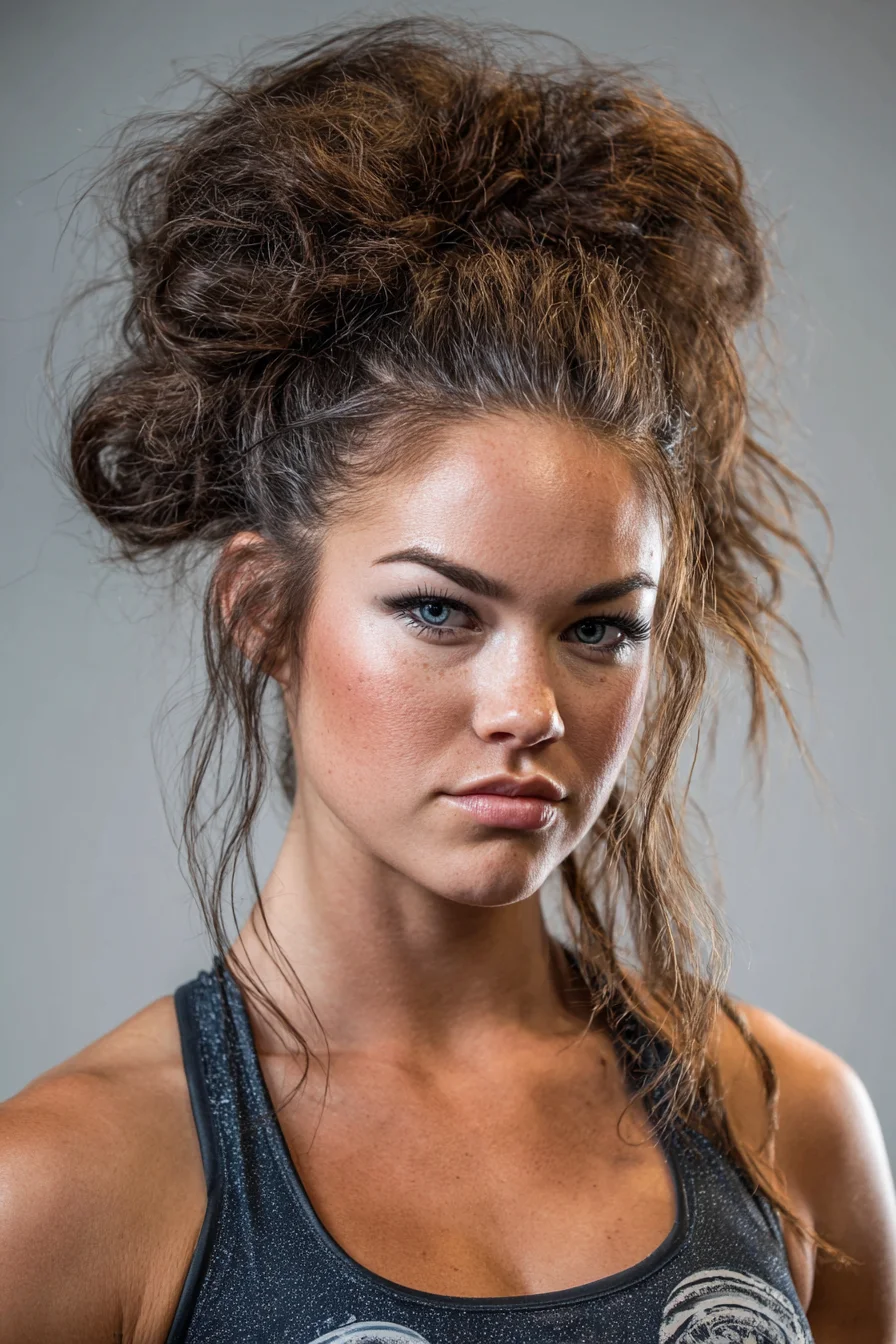
This textured, voluminous messy high bun suits medium to very thick hair and naturally wavy or curly textures; fine hair can achieve the look with added extensions or generous texturizing products. Styling technique: rough-dry damp hair with a diffuser for natural lift, apply salt spray and a light mousse, then backcomb at the crown to build volume. Gather hair into a loose high ponytail, leaving out a few face‑framing pieces. Twist the ponytail loosely into a messy bun and secure with elastic and bobby pins, pulling sections out for shape and softness. Tools needed: blow dryer with diffuser, wide‑tooth comb, teasing brush, elastic, assortment of bobby pins and a few hairpins. Products required: texture/salt spray, lightweight mousse, dry shampoo for grip, small amount of smoothing balm for flyaways, flexible hold hairspray. Difficulty level: moderate — straightforward for textured hair but requires practice to balance volume and secure shape. Maintenance tips: sleep with a silk scarf or loose pineapple, refresh next-day volume with dry shampoo and a few spritzes of salt spray, retuck loose pieces and replace pins as needed; deep‑condition weekly to maintain healthy ends.
Textured Platinum Braided Messy Updo with Face‑Framing Pieces
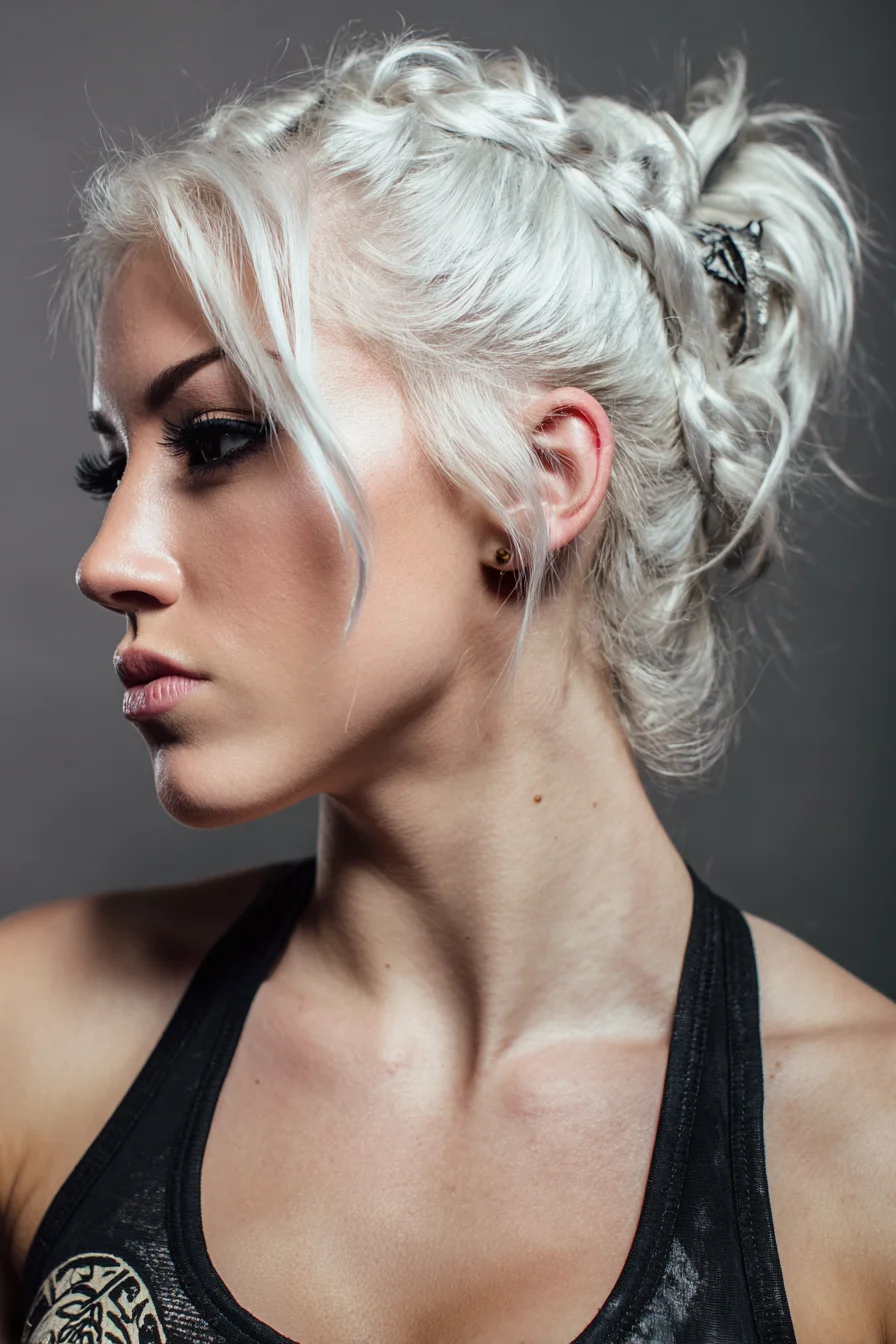
This textured braided messy updo works best on shoulder‑length to long hair and suits medium to thick textures; fine hair can achieve the look with a light extension or added texturizing product. Start on washed, towel‑dried hair treated with a bond builder if hair is bleached. Section the crown, create one or two Dutch/French braids along the sides, then gather remaining hair into a loose mid bun, securing with an elastic and bobby pins. Gently pull at the braids and crown for volume and leave a few face‑framing strands soft. Tools needed: tail comb, paddle brush, small elastics, bobby pins, curling iron or flat iron for added bend, and a sectioning clip. Products required: heat protectant, light mousse or root lifter, texturizing powder/spray or dry shampoo for grip, flexible hold hairspray, and a lightweight shine serum. Difficulty: intermediate (25–40 minutes in-salon). Maintenance: refresh with dry shampoo and re-pin loose pieces, sleep on a silk pillowcase, purple shampoo to maintain cool platinum tones, and weekly deep conditioning to protect bleached hair.
Textured High Ponytail with Face‑Framing Tendrils (Burgundy)
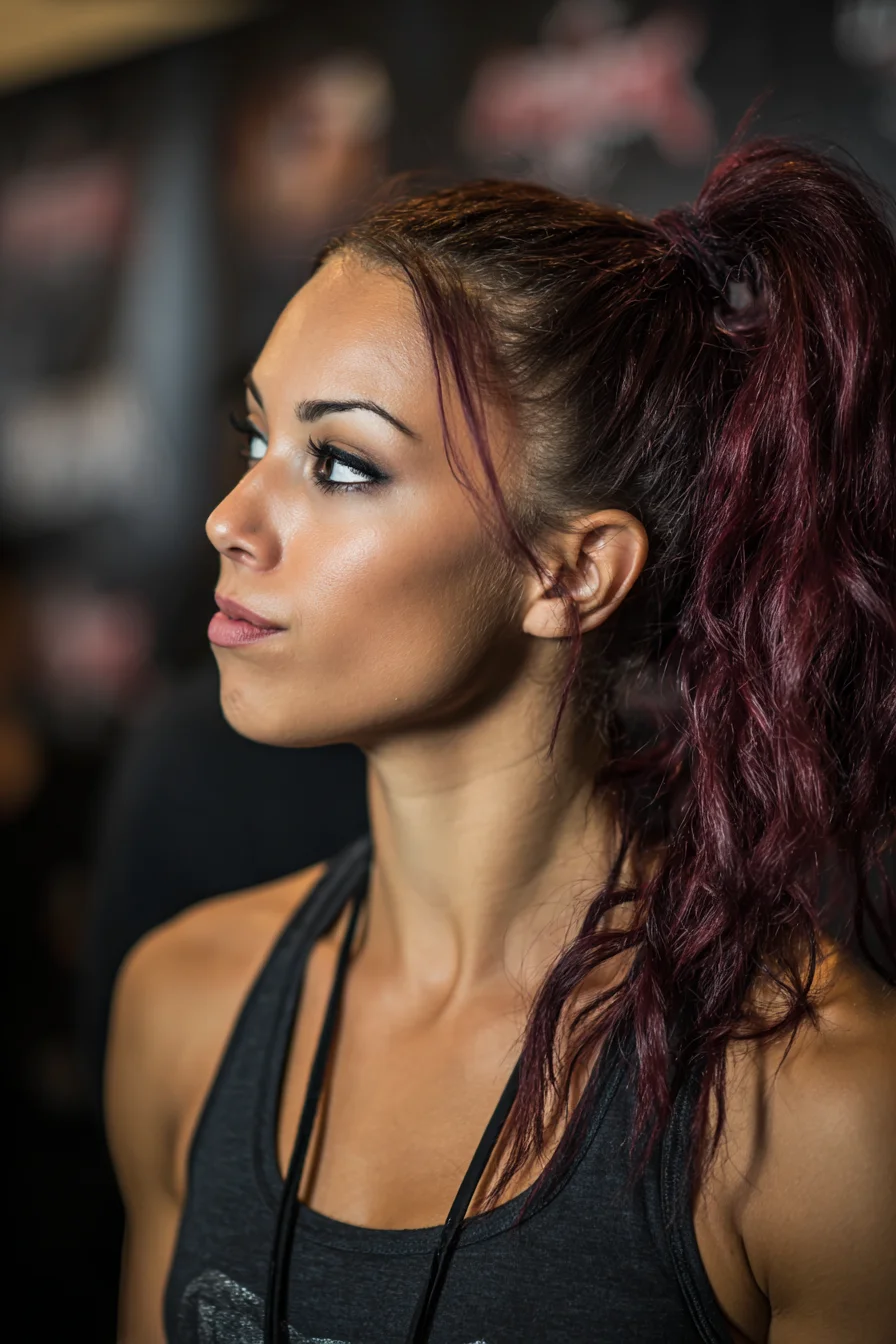
This polished, textured high ponytail suits medium to thick hair and works well on naturally wavy or curly textures. Fine or straight hair benefits from root‑teasing or clip‑in extensions for lift and body; very curly hair should be smoothed at the roots with a light gel or cream for a clean hairline. Start by smoothing hair back from the temples, backcombing lightly at the crown for height, then secure a high ponytail at the crown with a strong elastic. Wrap a small section of hair around the band for a finished look and pin underneath. Create loose, separated waves through the ponytail with a 1–1.25
Textured Mohawk with Mini Cornrows and Loose Braided Tail
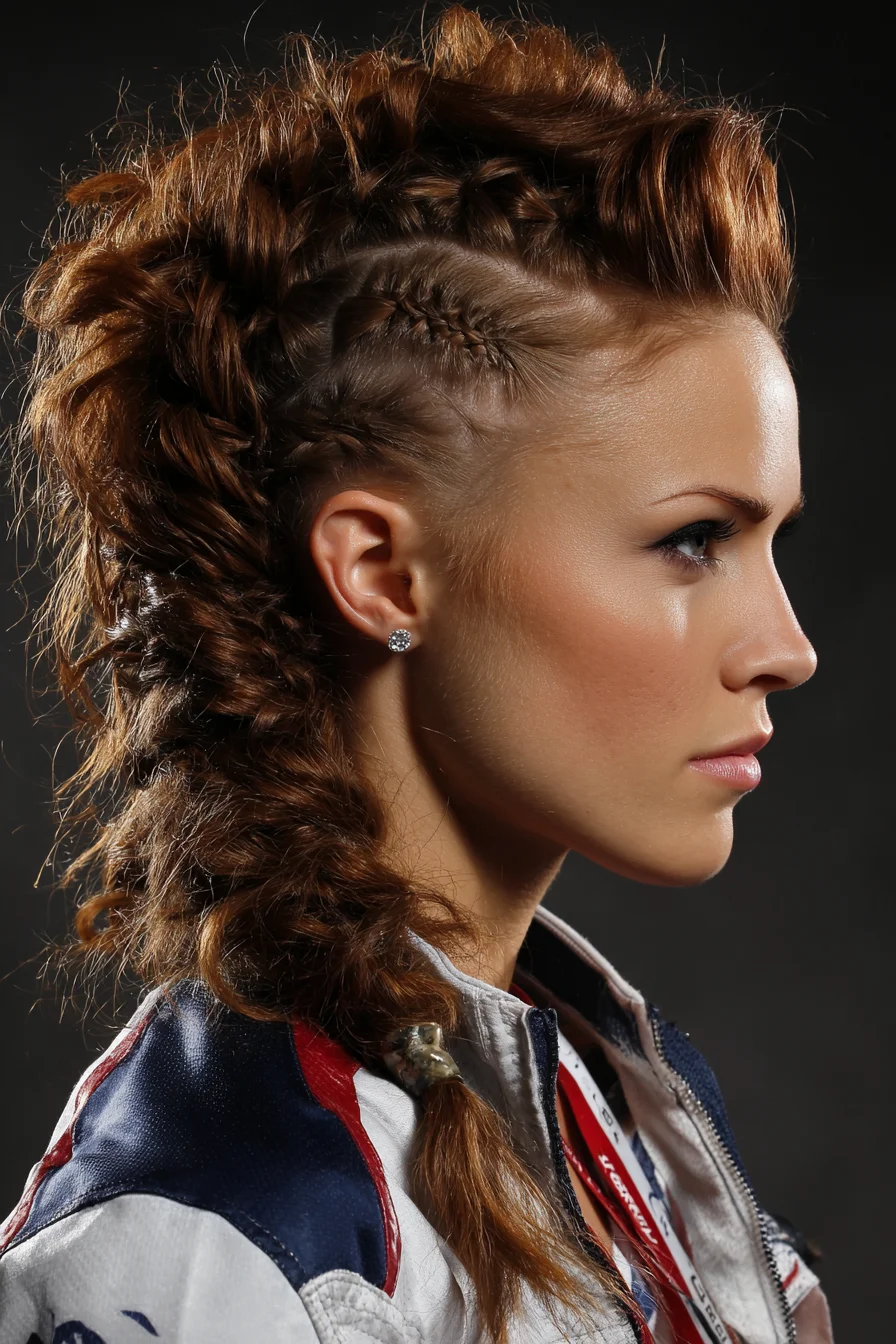
This edgy textured mohawk blends tight side cornrows with a loose, pulled-apart central braid for volume and movement. Best suited to medium-to-thick hair and natural waves; fine hair will benefit from lightweight extensions or root teasing for the same lift, while very curly hair should be smoothed at the scalp before braiding for clean cornrows. Technique: section the sides and create 2–4 small Dutch or French cornrows close to the scalp, then gather the center top into a raised panel, backcomb lightly for lift and braid loosely down the crown, pulling gently to pancake the braid for width. Finish the tail with a small elastic and decorative cuff. Tools needed: rat-tail comb, sectioning clips, small elastics, teasing brush, tail comb, and optional curling wand or texturizing iron. Products required: heat protectant, texturizing spray or powder, light pomade for flyaways, and a strong-hold hairspray. Difficulty: intermediate — 30–50 minutes in-salon. Maintenance: sleep on a silk pillowcase, refresh texture with dry shampoo and texturizing spray, and tighten cornrows or replace elastics after 3–5 days to maintain shape.
Textured High Ponytail with Side Micro Braids and Beachy Waves
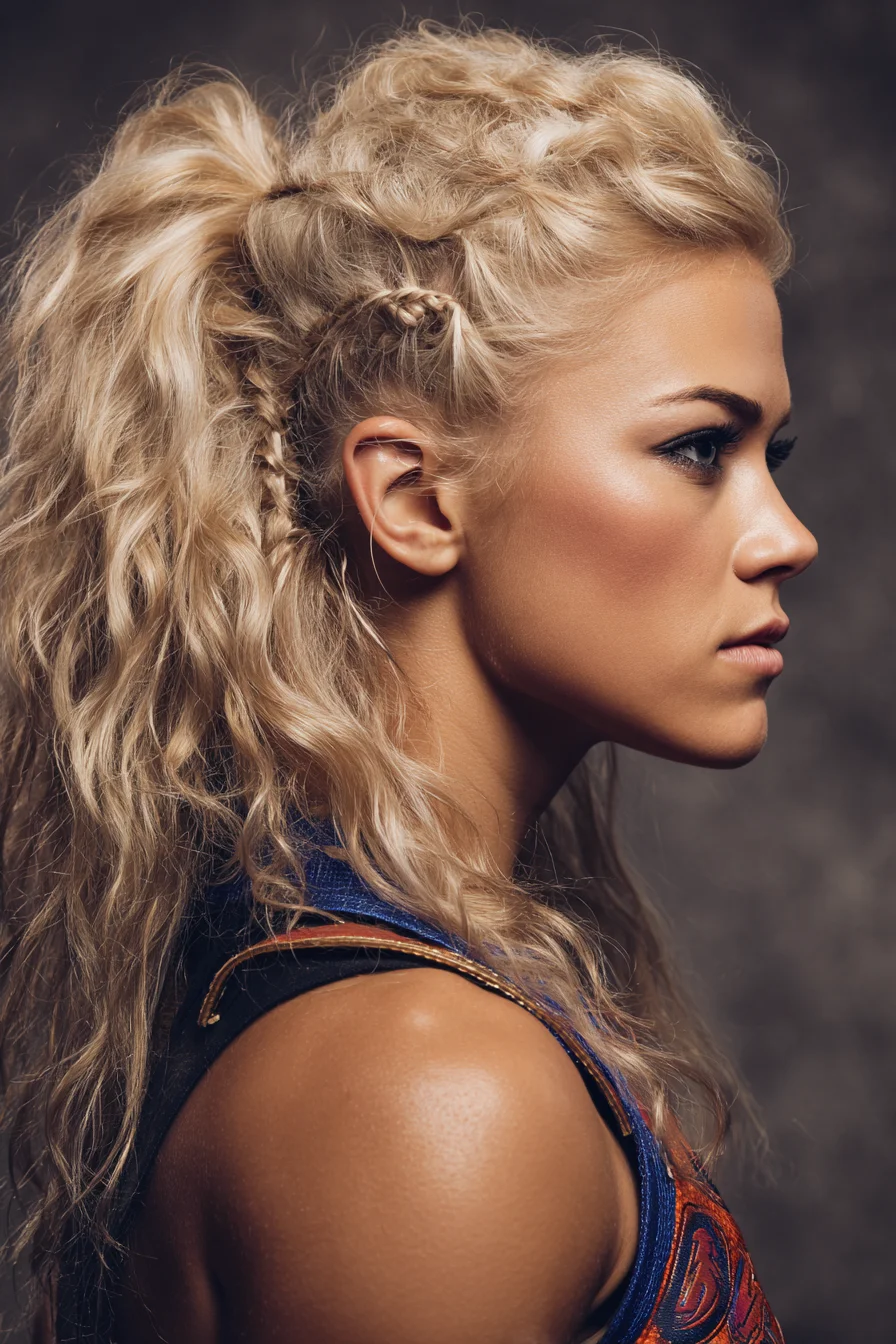
Perfect for medium to long hair with natural wave or thick texture, this textured high ponytail features two side micro braids and loose beachy waves. Start on day-two hair for grip: create a small Dutch or three-strand micro braid along the temple on each side, securing ends with tiny elastics. Backcomb the crown lightly to build lift, gather hair into a high pony and secure with a strong elastic. Wrap a small section of hair around the base to hide the band and pin. Enhance texture by scrunching in a sea-salt texturizer or using a 1–1.25 inch curling wand for random S-shaped waves; gently separate curls with fingers for a lived-in finish. Tools: rat-tail comb, tail comb for clean parts, fine elastics, bobby pins, 1–1.25 curling wand, sectioning clips. Products: heat protectant, texturizing/sea-salt spray, light-hold hairspray, smoothing serum for flyaways, dry shampoo for added grip. Difficulty: intermediate — requires neat micro-braiding and sectioning; allow 30–45 minutes. Maintenance: sleep on a silk pillowcase or loosely pineapple the pony, refresh texture with water + texturizer, re-tighten elastics after 2–3 days, and avoid heavy conditioners at the roots to retain volume.
Double Twisted Space Buns with Curled Face‑Framing Tendrils and Blunt Bangs
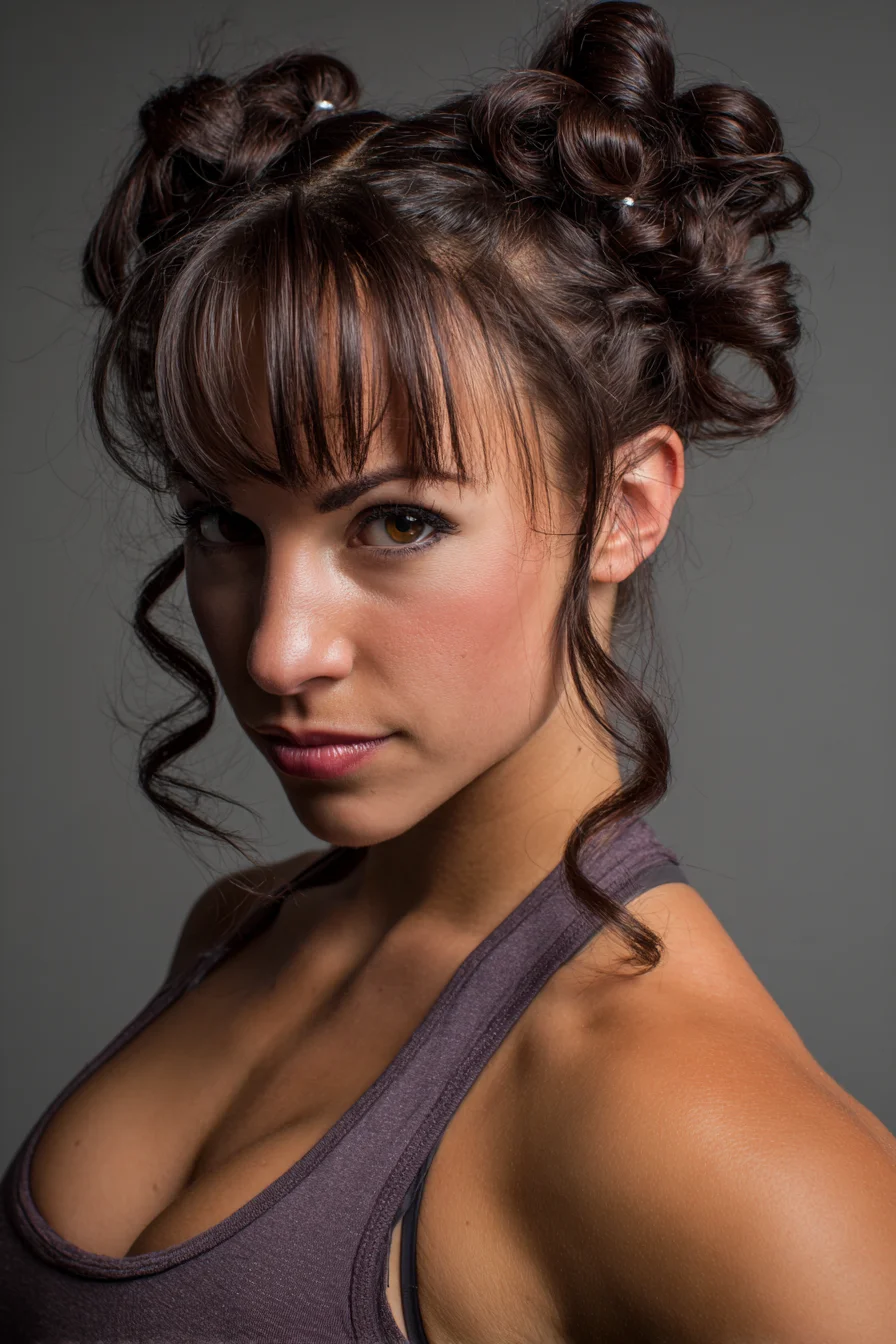
Suitability: Best on medium to long hair with fine to medium density; thick hair works with smaller sections or thinning. Blunt bangs anchor the look and work well on straight to slightly wavy textures. Technique: Start on clean, towel‑dried hair. Apply heat protectant and a volumizing mousse, blow‑dry smooth. Create a precise center part and section two high pigtails. Twist each section into a looped bun, leaving some looped pieces out to create the petal/roller effect, and secure with small elastics and plenty of bobby pins. Use a 3/4–1 curling wand to create spiral face‑framing tendrils; finger‑comb slightly for natural separation. Tools & products: tail comb, small clear elastics, strong bobby pins, 3/4–1 curling wand, heat protectant, mousse or texturizing spray, flexible hold hairspray, light shine serum. Difficulty & time: Intermediate — expect 25–45 minutes depending on hair length and thickness. Maintenance tips: Sleep on a silk pillow or loosely wrap buns; refresh curls with a quick reheat or curl wand touch‑up; use dry shampoo at the roots between washes and resecure loose pieces with pins for longevity.
Textured Half-Up Pony with Mini Braids and Face‑Framing Tendrils
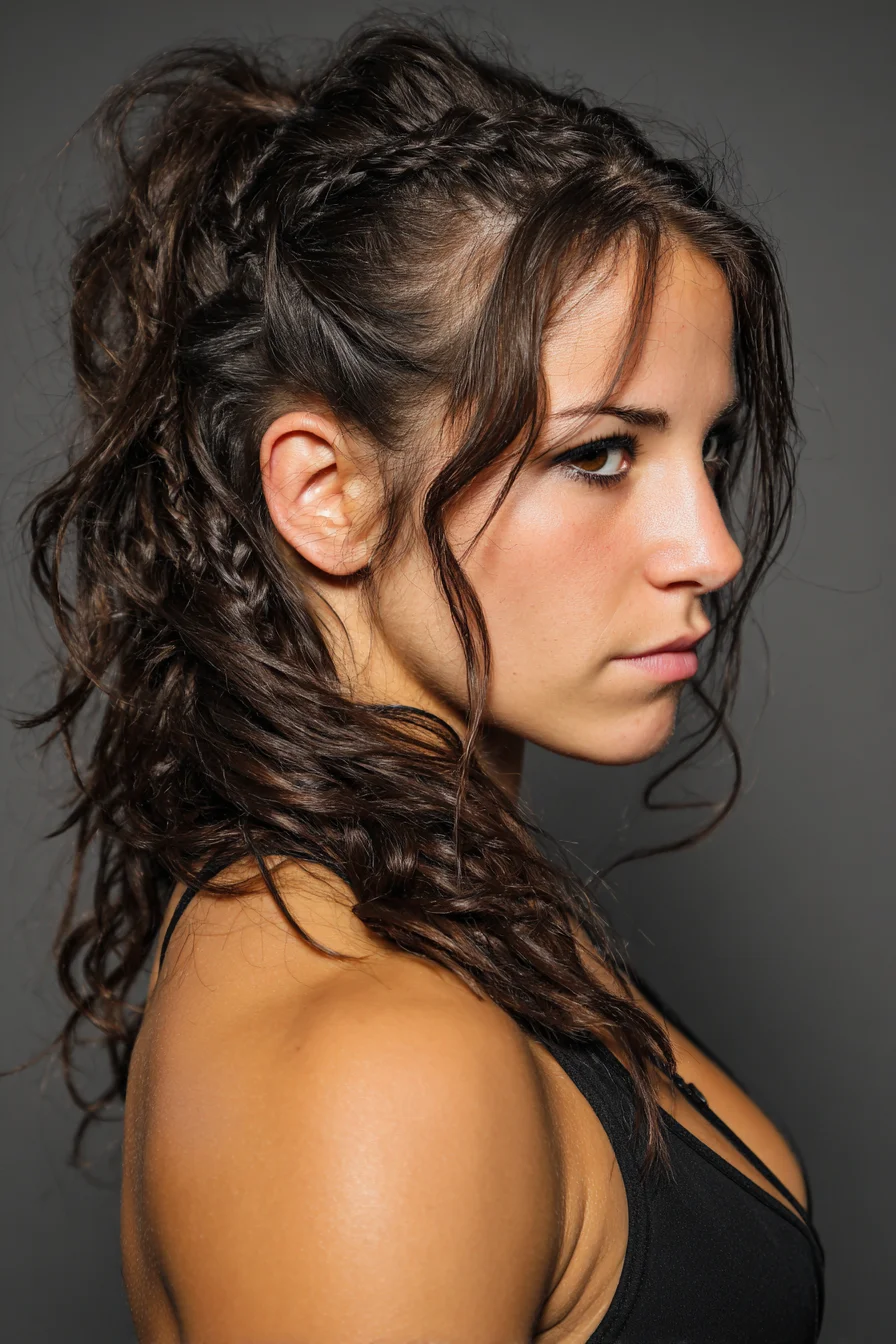
This textured half-up pony with mini braids suits medium to long hair and works especially well on wavy or curly textures — straight hair can achieve the same look after texturizing. Technique: create two or three small Dutch or three‑strand braids along the crown, secure with tiny elastics, then gather the top half of the hair into a loose high ponytail while leaving soft face‑framing tendrils and the lower hair free. Loosen the braids slightly for volume and pull gently at the crown for a lived‑in shape. Tools needed: tail comb, small elastics, bobby pins, curling wand (or flat iron), sectioning clips. Products required: heat protectant, lightweight mousse or curl cream, sea‑salt/texturizing spray, light‑hold hairspray and a few drops of finishing oil for shine. Difficulty level: moderate — requires basic braid skills and heat styling; allow 20–35 minutes. Maintenance tips: sleep on a satin pillow or pineapple the top, refresh texture with water + texturizer or dry shampoo, resecure any loosened braids or pins, and deep‑condition weekly to keep strands healthy.
Double Dutch-to-Fishtail Braids with Face‑Framing Pieces
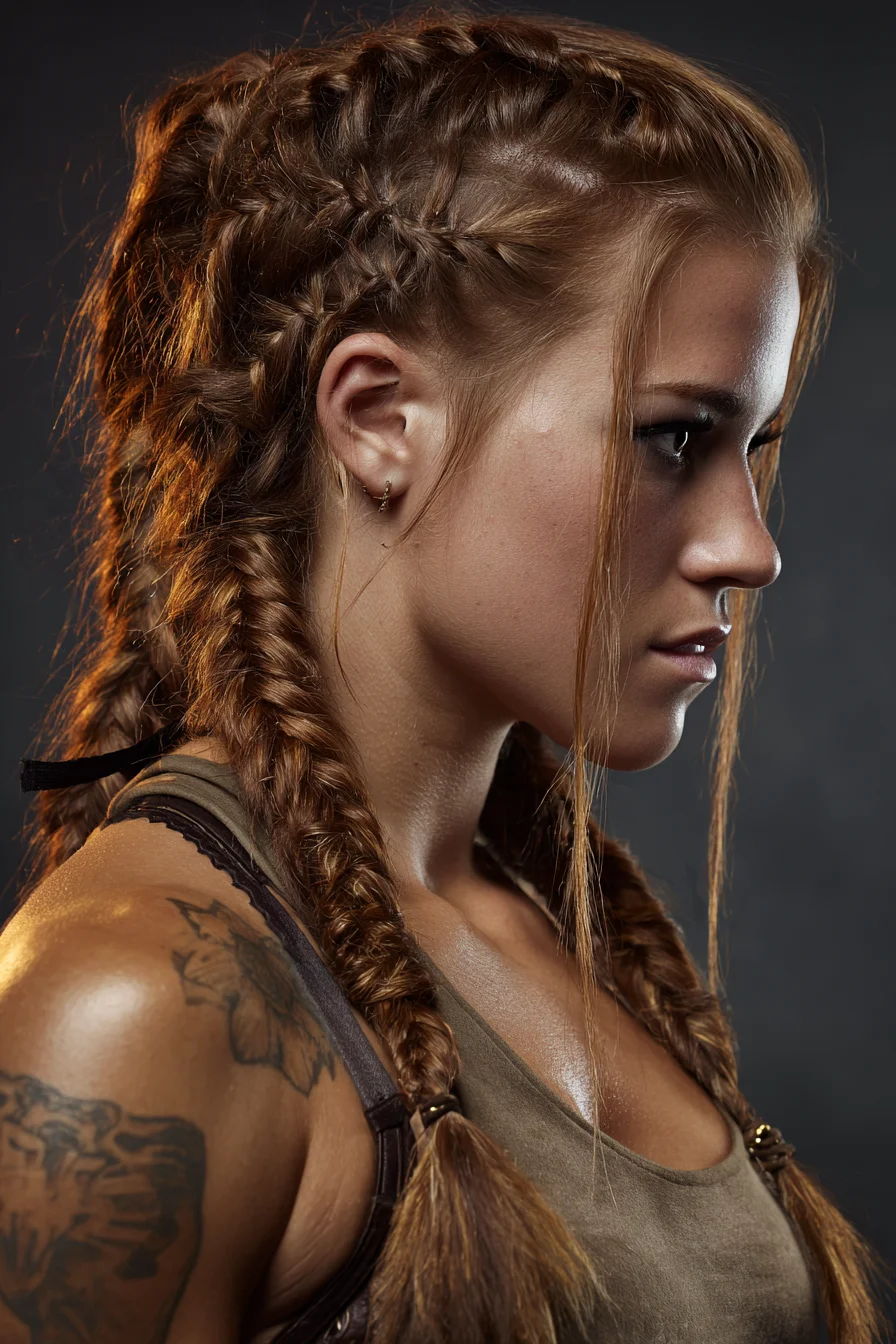
This look pairs two Dutch braids along the crown that transition into loose fishtail braids, finished with softened face‑framing pieces. It’s ideal for medium to thick hair and works best on shoulder‑length to long hair; fine hair benefits from a texture spray or light backcombing to add grip. Technique: create a clean center part, section a 1–2 inch panel at the front for each side, Dutch braid tightly along the scalp toward the nape, then switch to a fishtail or regular three‑strand braid for the remaining length. Tools needed: tail comb, sectioning clips, small clear elastics, a fine tooth comb and a paddle brush. Products required: salt or texturizing spray, light styling cream or pomade for flyaways, a medium‑hold hairspray and a lightweight shine serum or oil for ends. Difficulty: intermediate — expect 25–45 minutes depending on length and practice. Maintenance tips: sleep on a silk pillow or wrap with a scarf, refresh texture with dry shampoo, gently pancake braid sections for added volume, resecure elastics as needed, and keep ends trimmed and conditioned to prevent frizz.
Double Dutch Braids Into Low Braided Loop — Textured Braided Updo
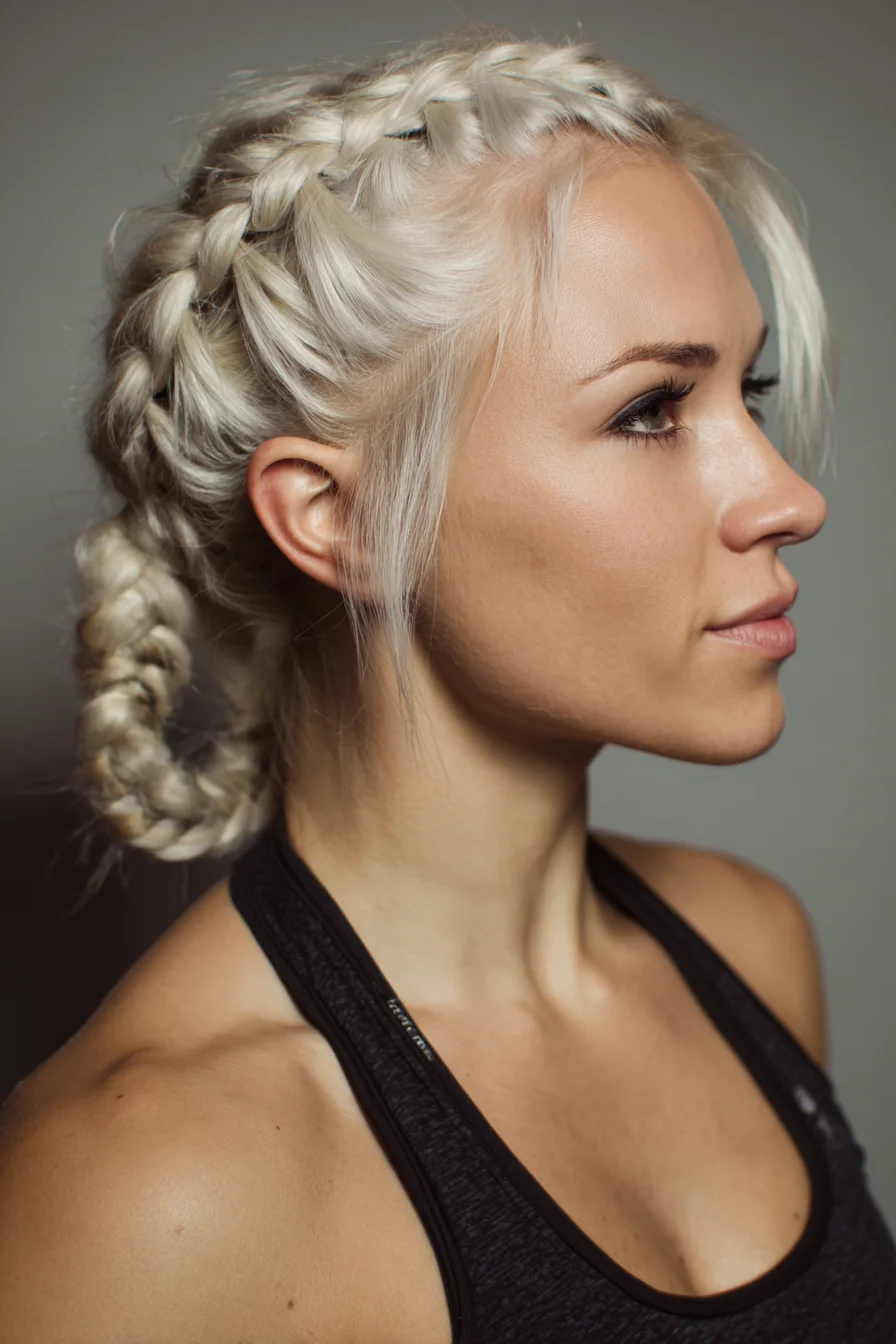
This sleek double Dutch braid into a low braided loop is ideal for medium to long hair and sits well on straight, wavy, or slightly textured hair. It accommodates fine hair with a texturizing base or added extension pieces for volume, and holds beautifully on medium to thick textures. Technique: create a clean center part, Dutch braid each side from the hairline toward the nape, keeping even 1–2 cm sections and adding hair as you go. Secure both braids with elastics, wrap them into a low loop or braided bun and anchor with bobby pins. Tools needed: rat-tail comb, sectioning clips, small clear elastics, bobby pins, fine-tooth comb and (optional) clip-in extensions. Products required: texturizing spray or dry shampoo for grip, light smoothing serum for flyaways, flexible-hold hairspray to set. Difficulty level: intermediate — expect 20–35 minutes depending on practice and hair length. Maintenance tips: sleep on a silk scarf, refresh texture with dry shampoo, tighten or re-pin after 48–72 hours, and apply a nourishing oil to ends to prevent dryness from repeated styling.
Double Braided Space Buns with Cornrows and Loose Curly Tendrils
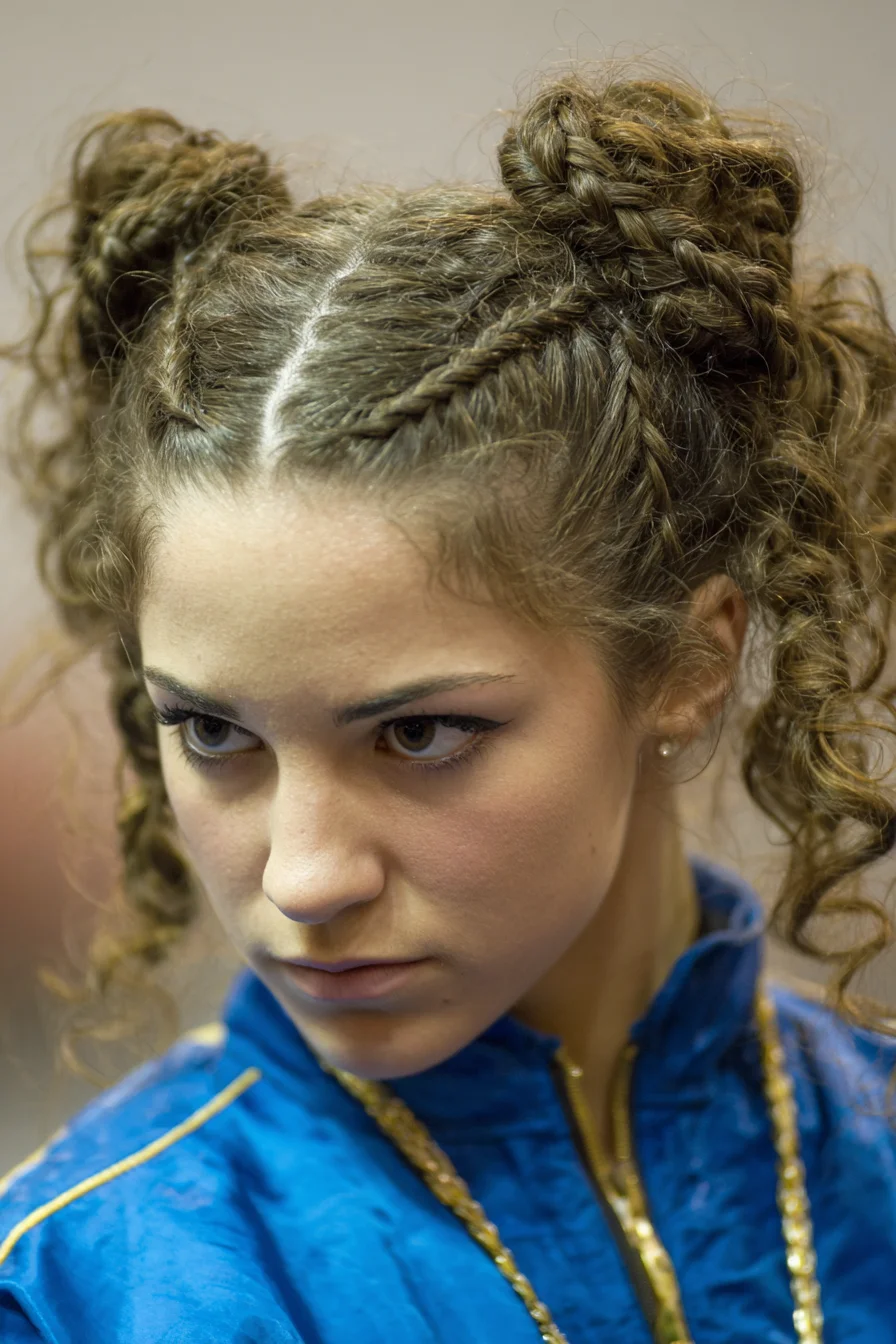
This double braided space-bun style pairs two large braided buns with small cornrows/two-strand twists running from a center part — finished with loose curly tendrils for softness. Suitability: ideal for medium to thick, wavy or curly hair; can be adapted for straight hair after adding texture with a curling iron or texturizing spray. Styling technique: create a clean center part, section each side, carve 2–3 small cornrows or twists toward the crown, secure each braid into a high pony, wrap into a bun and pin. Pull out face-framing curls and loosen the braids slightly for lived-in volume. Tools needed: rat-tail comb, small clear elastics, bobby pins, sectioning clips, curling iron (optional). Products required: lightweight gel or edge control for neat parts, sea salt or texturizing spray for grip, mousse for hold, heat protectant if using hot tools, and a flexible-hold hairspray. Difficulty level: intermediate — requires neat parting and basic braiding; allow 25–45 minutes. Maintenance tips: sleep on a silk pillow or use a satin bonnet, refresh tendrils with water + leave-in or curl cream, re-tighten buns and touch edges as needed; avoid heavy oils that weigh down texture.
Textured Center Braid Faux-Hawk Updo for Medium to Thick Hair
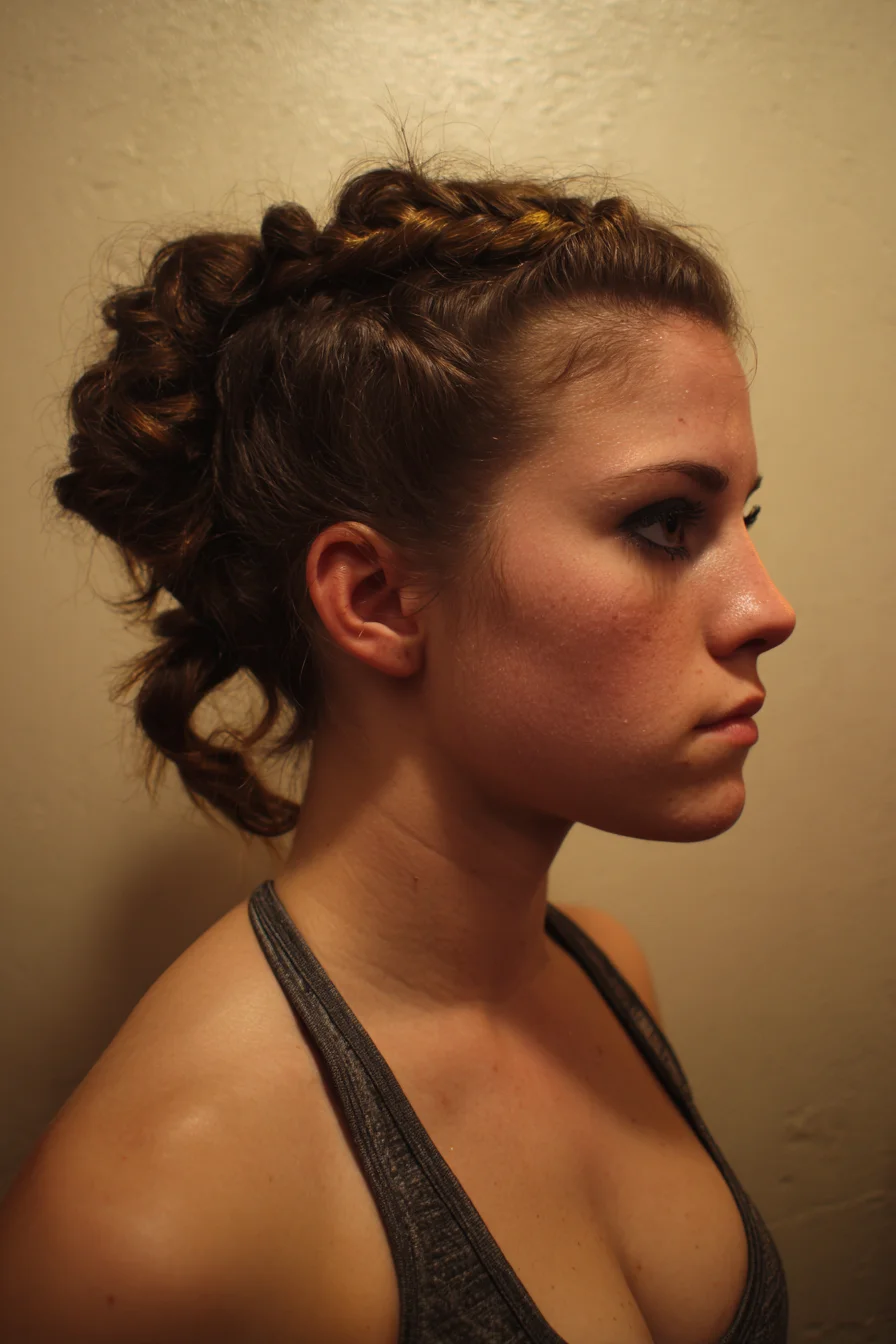
This textured faux-hawk updo is best suited to medium-to-thick, wavy or curly hair; fine hair can still wear it with clip-in pieces or extra texturizing. Start with towel-dried hair prepped with a light mousse or salt spray for grip. Create a central Dutch (or French) braid from the hairline to the nape, secure with a small elastic, then pancake the braid gently to broaden it. Divide the remaining length into looped sections, curl or twist each section and pin them inward along the braid to build the faux-hawk silhouette. Tools: tail comb, sectioning clips, small elastics, bobby/U-pins, 1
Double Dutch Crown Braids into Loose Textured Curls
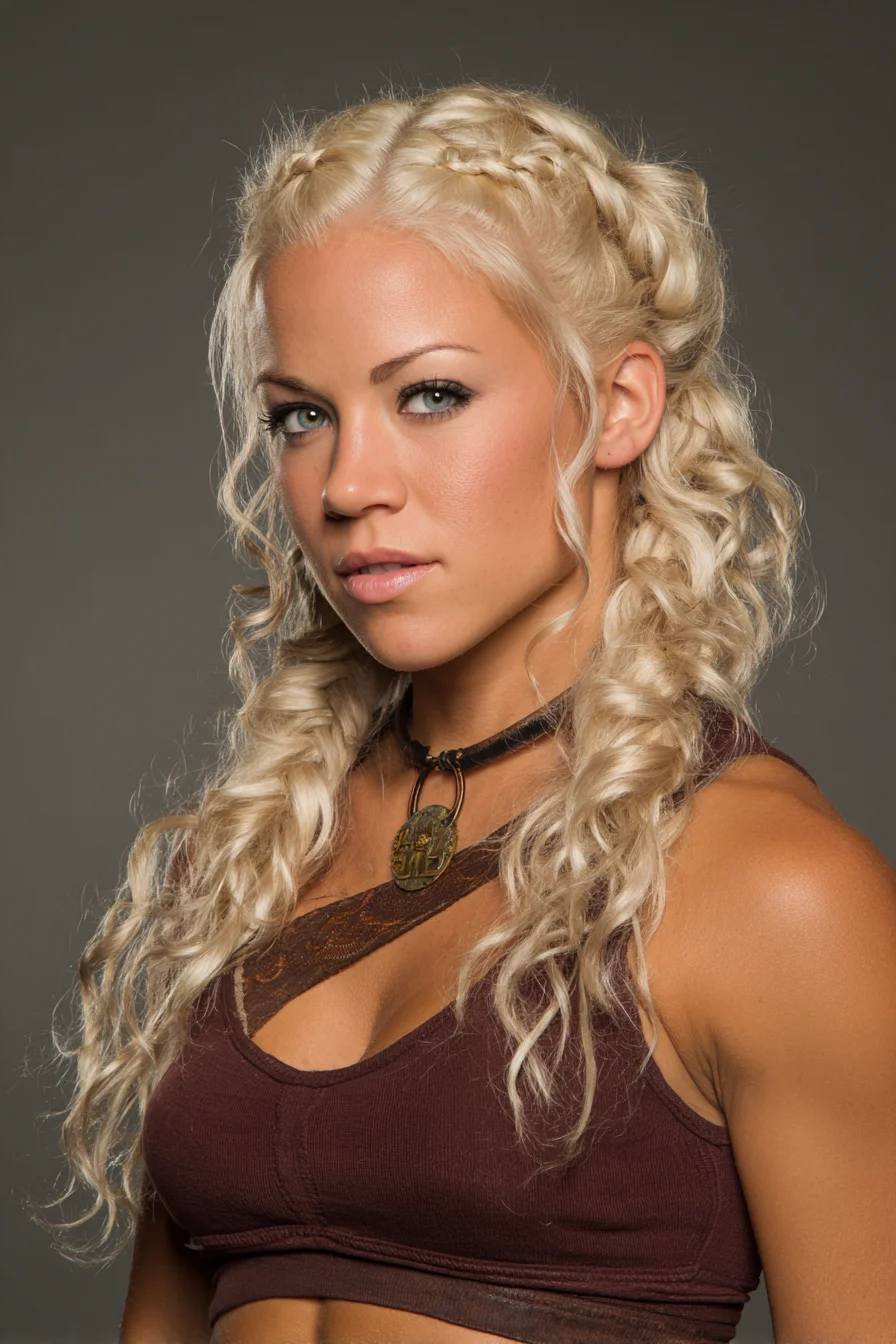
This look pairs two Dutch crown-style braids with soft, loose textured curls — ideal for medium to long hair with natural wave or curl. Salon-suitable for medium to thick densities; fine hair benefits from volumizing mousse or temporary extensions for fullness. Start on dry, styled hair: part down the center and create two Dutch braids from the front hairline toward the nape, securing with small elastics. Pancake the braids slightly for width, then curl remaining lengths with a 1-inch curling wand for loose texture, or enhance natural waves with a diffuser. Tools: rat-tail comb, small elastics, 1 curling wand, clips, diffuser (optional). Products: heat protectant, volumizing mousse or sea-salt spray, light-hold hairspray, texturizing spray, and a smoothing serum for flyaways. Difficulty: intermediate — requires basic Dutch-braiding skill and curling technique; expect 25–45 minutes. Maintenance: sleep on a silk pillowcase or loosely wrap in a silk scarf, refresh curls with misted texturizer or dry shampoo on day two, and retighten braid ends as needed. Regular trims keep ends healthy and prevent bulky build-up in the braids.
Double Dutch (Boxer) Braids — Tight Center-Parted Sporty Braided Style
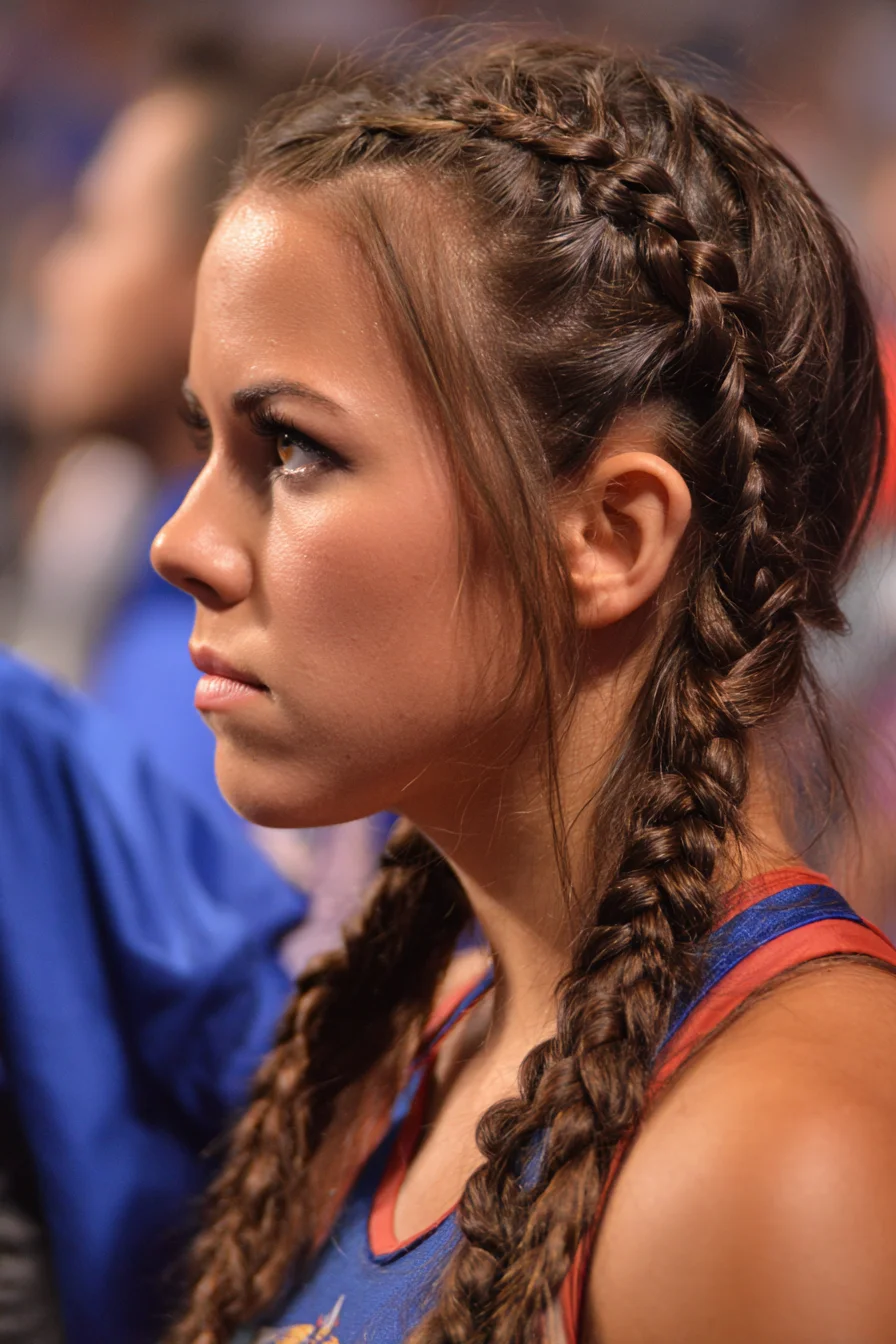
This sporty double Dutch braid is ideal for medium to long hair and works well on straight, wavy, and loosely curly textures. Fine hair benefits from a texturizing spray or light mousse to add grip; thick or coarse hair will hold the shape naturally but may need thinner subsections. Technique: create a clean center part, take small sections at the hairline and braid under (Dutch braid) tightly toward the nape, incorporating hair as you go; finish each braid to the ends and secure with elastic. Tools needed: fine-tooth comb, rat-tail comb for parting, sectioning clips, small clear elastics, and elastic bands. Products required: texturizing spray or sea-salt spray, lightweight smoothing cream or serum for flyaways, and a medium-hold hairspray. Difficulty level: intermediate — expect 20–40 minutes depending on hair density and your braiding speed; practice improves evenness. Maintenance tips: sleep on a silk pillow or wrap with a scarf to reduce frizz, refresh roots with dry shampoo, and re-tighten or redo after 48–72 hours for best shape. Use edge control for a polished hairline if desired.
Double Dutch Braids with Textured, Face‑Framing Pieces
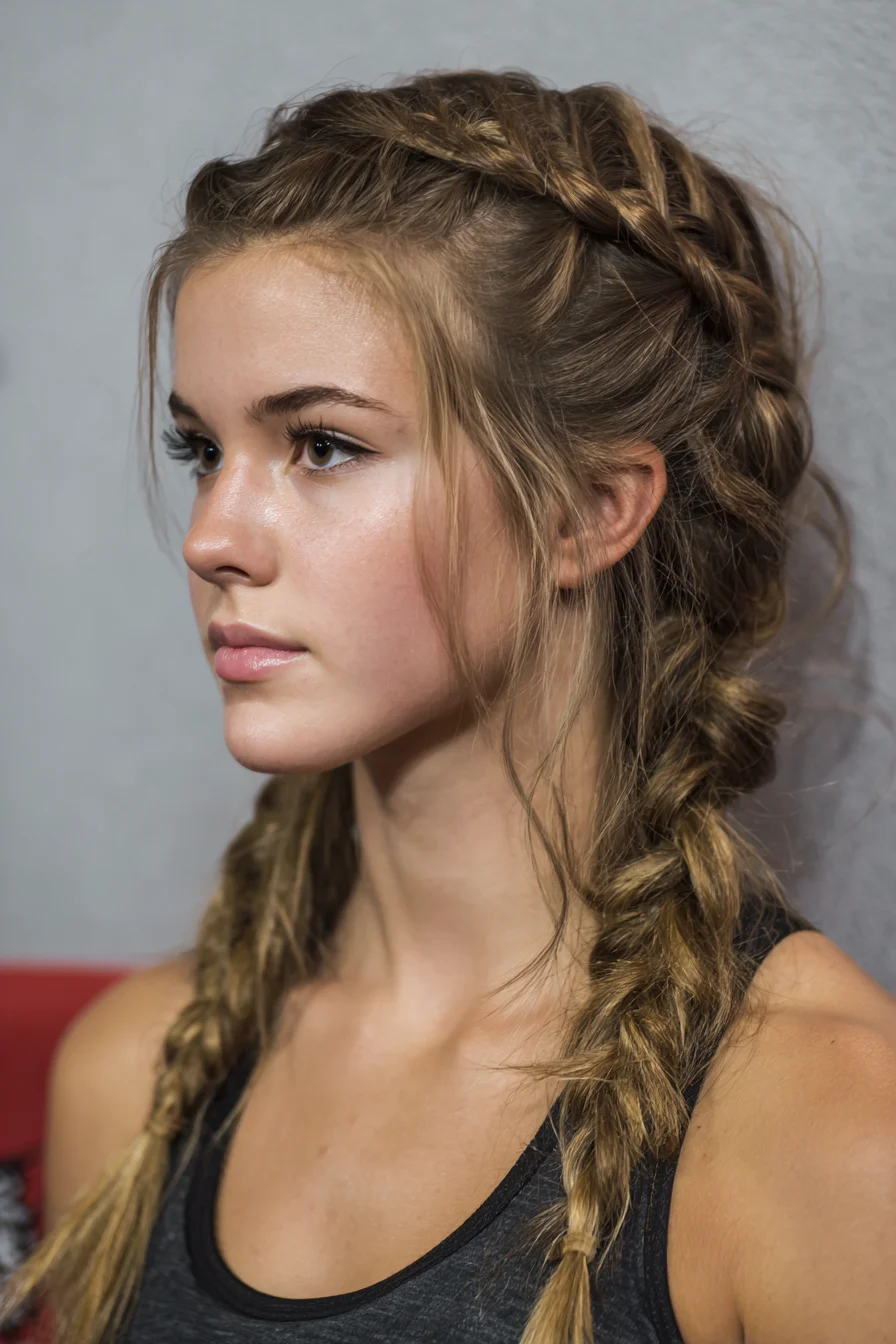
This look features two Dutch (inside-out) braids started at the hairline and finished as loose, textured plaits with soft face‑framing pieces—ideal for a relaxed, wearable style. Best suited to medium to long hair and medium to thick density; fine hair will benefit from pre‑texturizing and light backcombing for grip, while very curly hair should be smoothed slightly for cleaner braids. Technique: part the hair down the middle, clip one side, and create a Dutch braid on the other by crossing outer sections under the center while adding small pieces from the scalp. Continue to the nape, secure with an elastic, then pancake the braid (gently pull sections outward) to create width and texture. Tools: fine tail comb, sectioning clips, small elastic bands, bobby pins, and a mirror. Products: sea‑salt or texturizing spray for grip, light pomade for taming flyaways, light‑hold hairspray to set. Difficulty: intermediate — requires basic braid proficiency. Maintenance: sleep on a silk scarf, refresh with dry shampoo and a light spritz of texturizer, and re‑pancake or tighten as needed over 2–3 days.
Double Dutch Braids into Textured Messy Pony — Platinum/Silver Updo
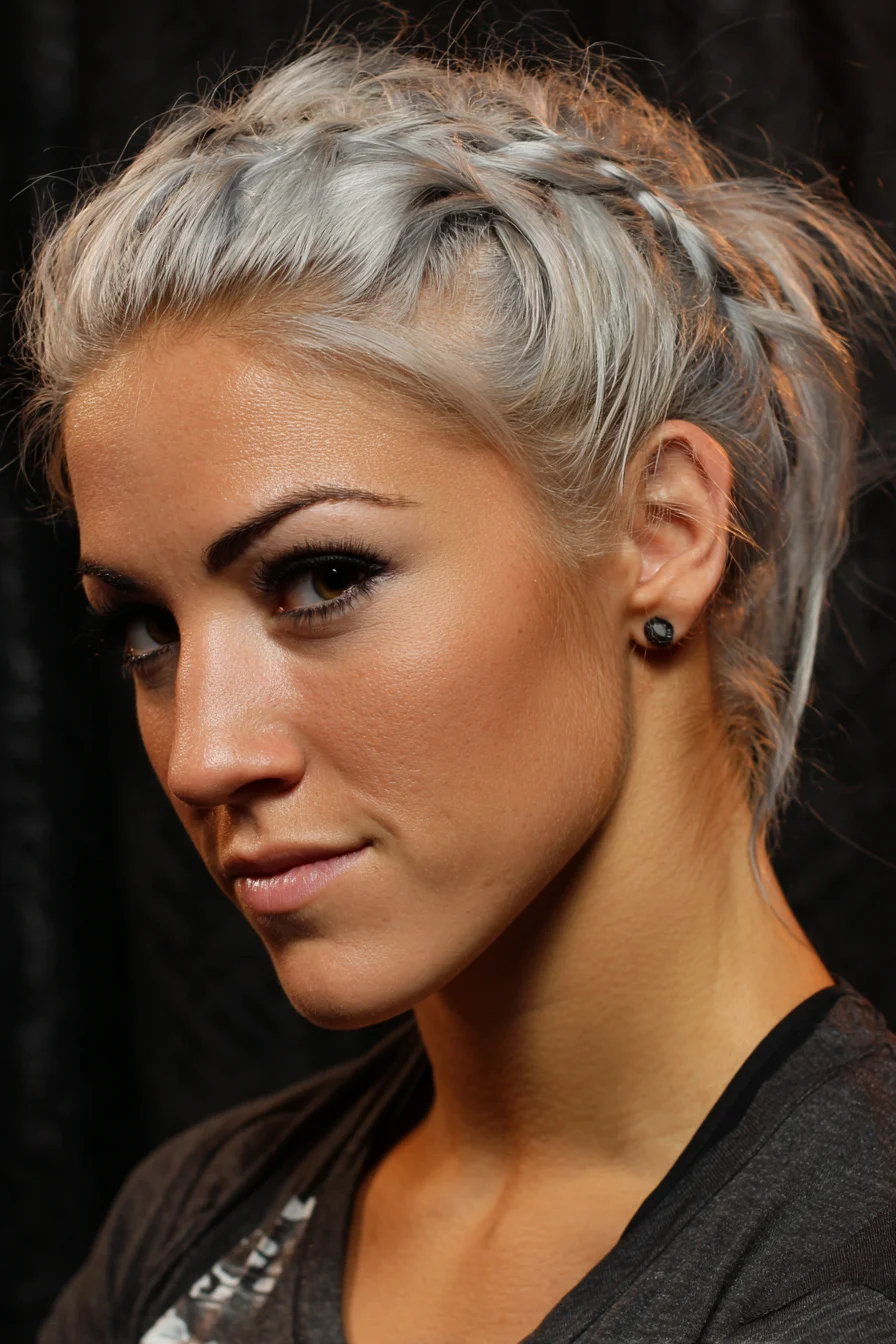
This look pairs two Dutch (inside-out French) braids along the hairline that feed into a low textured pony or messy bun — ideal for showcasing platinum or silver tones. Best suited to medium-to-thick hair and straight-to-wavy textures; fine hair can still work with prepped volume (root lift or extensions), while very curly hair should be smoothed slightly for clean braids. Technique: create a clean center part, Dutch-braid each front section from the hairline toward the crown, secure both braids with elastics, then gather remaining hair into a low pony or loose bun. Gently pancake the braids for width and pull a few face-framing pieces for softness. Tools needed: tail comb, sectioning clips, small elastics, bobby pins, and a brush. Products required: heat protectant (if smoothing), texturizing or sea-salt spray, dry shampoo for grip, a light pomade for flyaways, and flexible-hold hairspray. Difficulty: intermediate — requires comfortable two-sided braiding and shaping. Maintenance tips: refresh texture with dry shampoo, retighten elastics as needed, sleep on a silk pillowcase, and use purple shampoo + weekly deep conditioning to maintain bright silver tone.
Textured Pixie-Mohawk with Vibrant Orange Base and Rainbow Tips
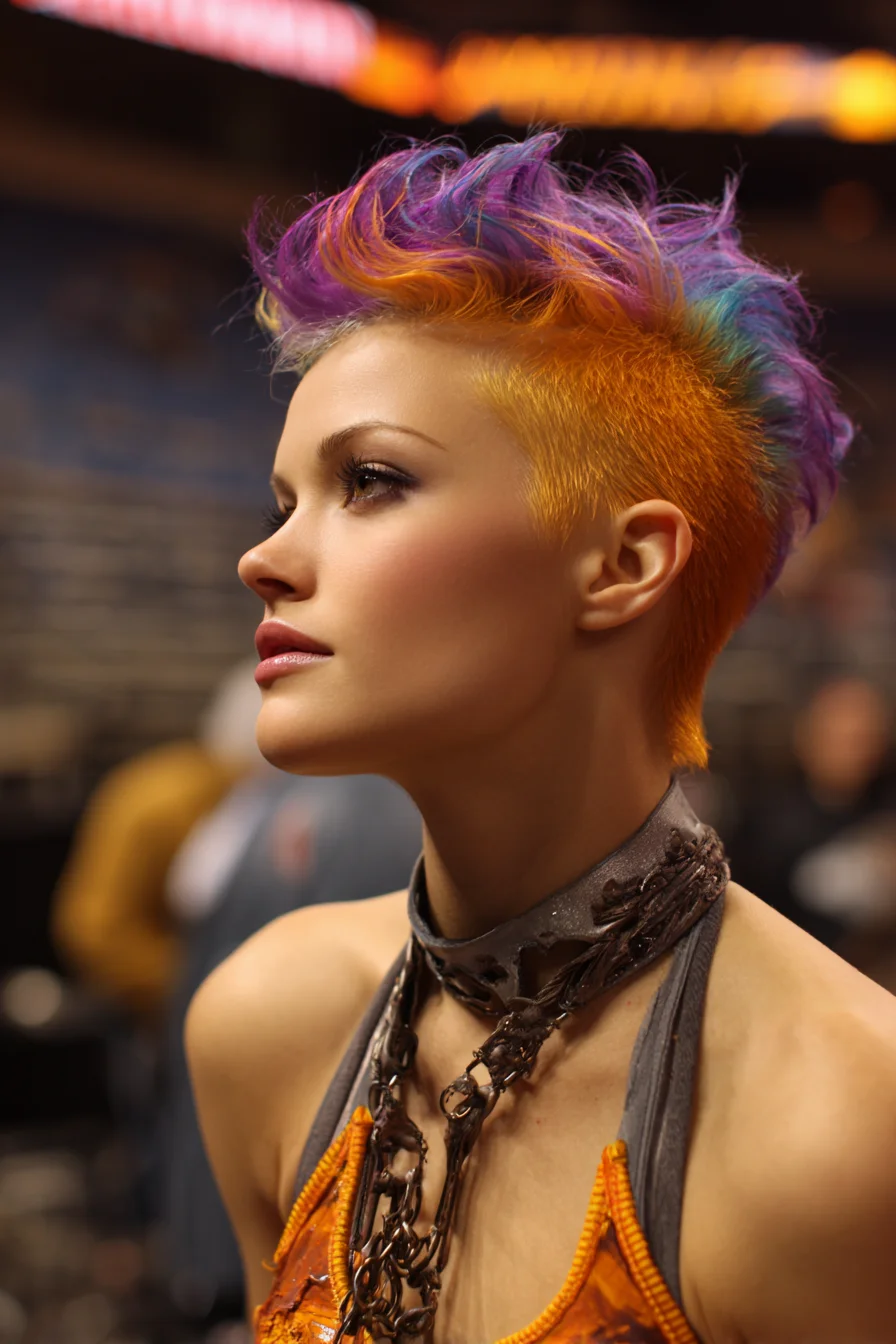
This bold textured pixie-mohawk pairs shaved sides with a sculpted, longer top dyed in a sunset orange base that blends into violet and aqua tips. Suitable for straight to wavy hair and fine-to-medium densities, the cut works well on thicker hair after strategic thinning to reduce bulk. Technique: start with a clipper undercut (graduated fade or blunt shave), then use scissor-over-comb and point-cutting to create choppy layers on top; texturize with thinning shears or a razor. Color requires pre-lightening to a pale blonde, followed by sectioned application of semi-permanent fashion shades for a blended rainbow effect and sealing with a color gloss. Tools: clippers, professional scissors, razor, texturizing shears, blow dryer with nozzle, small round brush, straightener for piece definition. Products: bond builder during lightening, ammonia-free bleach, direct dyes, heat protectant, texture paste or matte clay, flexible hold hairspray, sulfate-free color-safe shampoo and weekly deep conditioner. Difficulty: Advanced — combine cutting and vivid color work requires a stylist experienced with fashion colors. Maintenance: refresh vivid tones every 4–6 weeks, use cool water washes, avoid daily shampooing, apply color-depositing masks between salon visits, and schedule trims every 4–8 weeks to preserve shape.
Double Dutch Braids into Curly Space Buns
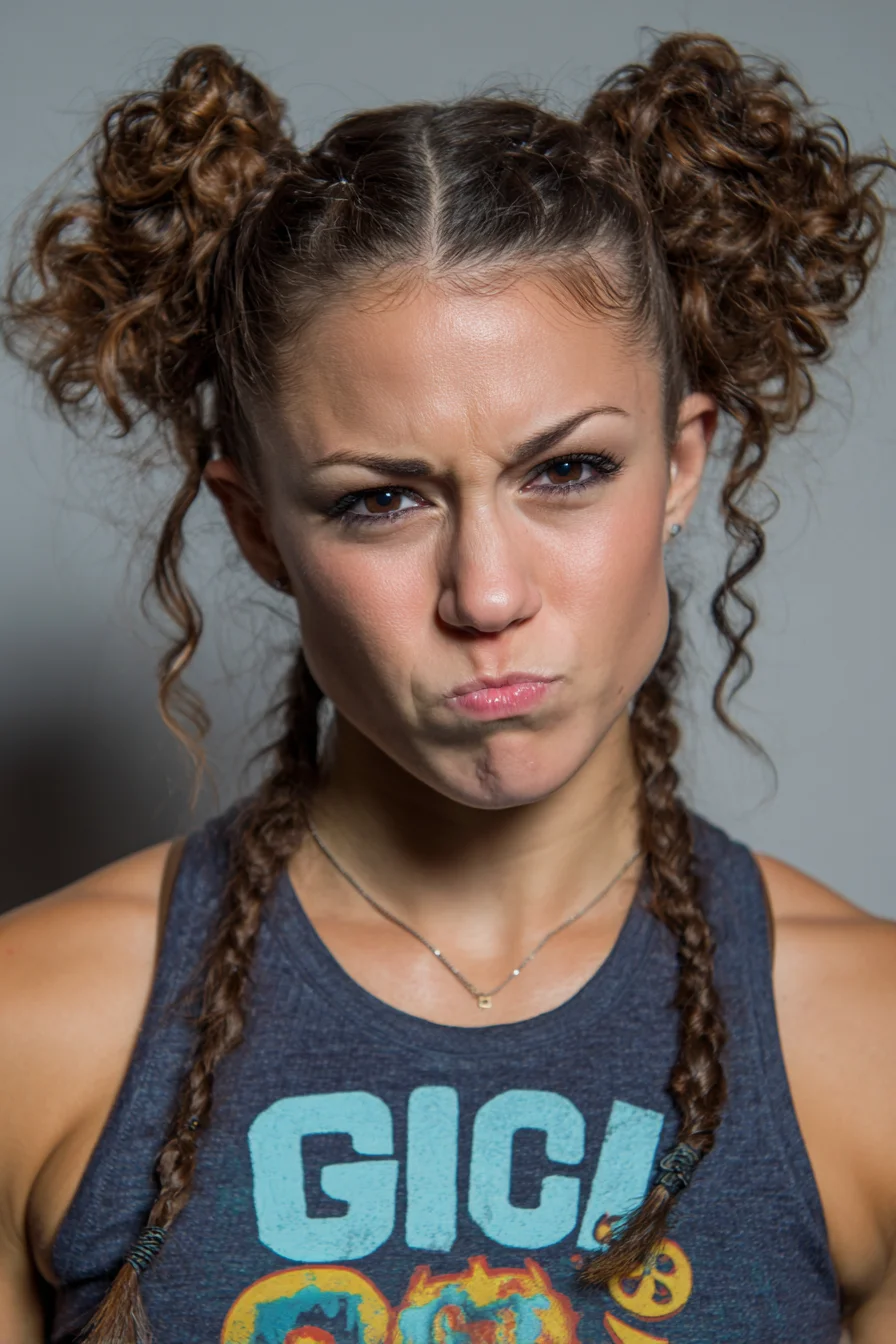
This playful, textured look suits medium to thick hair and naturally curly or wavy textures (2–4). It can be adapted for straight hair by adding curl and texture first. Start with a clean, detangled part down the center. Create two Dutch/inside-out braids from the hairline toward the crown, keeping even tension; secure each braid with a small elastic where you want the bun to sit. Tease or loosen the braid ends and wrap them into messy buns, securing with pins and a second elastic. Smooth baby hairs with edge control for a polished finish. Tools: rat-tail comb, sectioning clips, small clear elastics, bobby pins, wide-tooth comb or detangling brush. Products: lightweight leave-in conditioner, texturizing or sea-salt spray, curl cream or mousse for definition, edge gel, and flexible-hold hairspray. Difficulty: intermediate — requires confident braiding and tension control to keep braids neat and scalp comfortable. Maintenance tips: sleep on a silk pillowcase or wrap with a silk scarf, refresh curls with water + curl cream or a light mousse, retighten elastics as needed, and avoid excessive pulling to protect the hairline.
Textured Messy Curly High Bun with Face‑Framing Tendrils
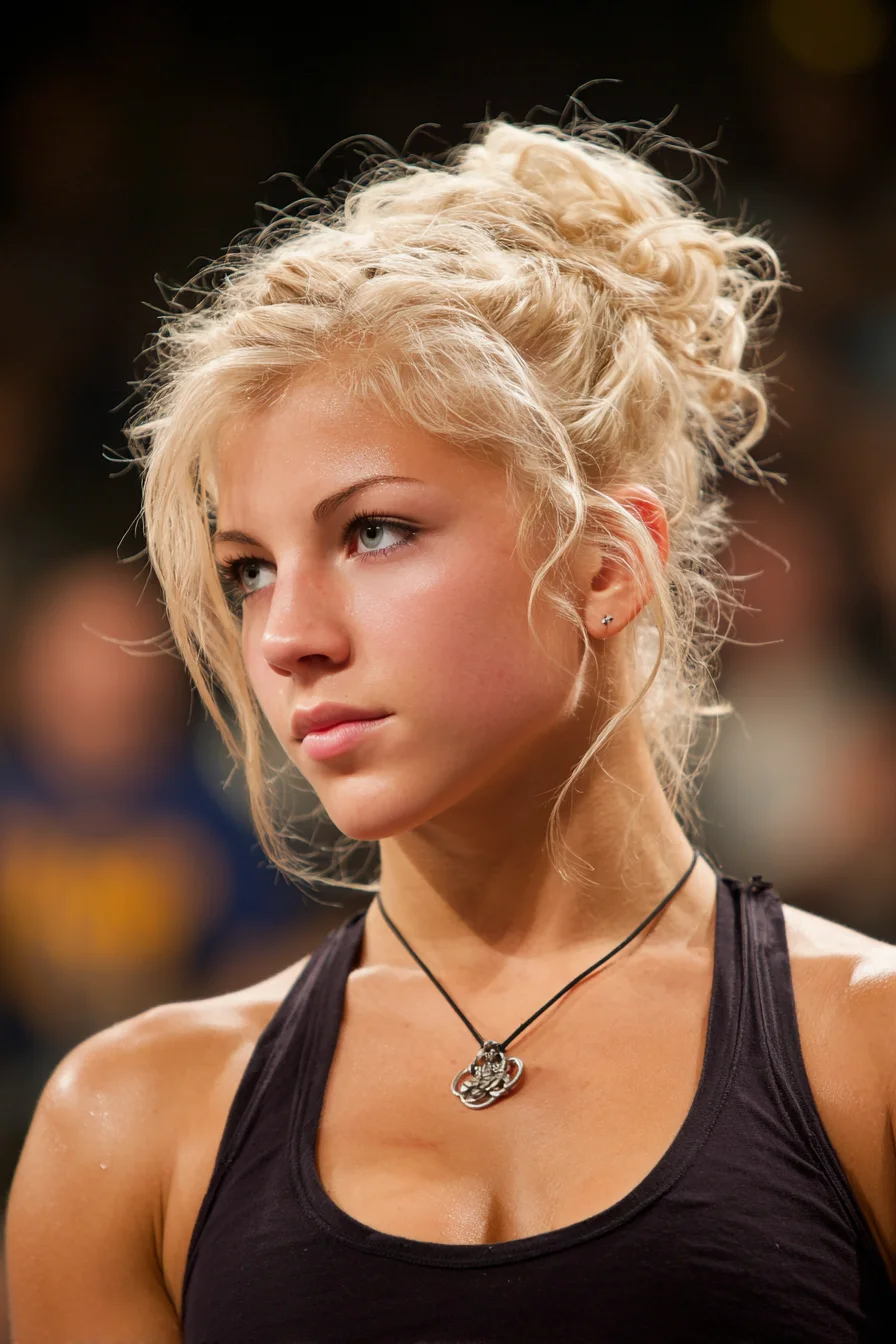
This textured messy high bun with soft face‑framing tendrils suits medium to thick hair and natural waves or curls best; fine or straight hair can achieve the look after light curling. Technique: rough‑dry with fingers for volume, apply texturizer, gather hair into a high pony leaving out two small front pieces, loosely twist the pony and pin into a messy bun, then pull and separate sections for shape and movement. Tools needed: blow dryer with diffuser (optional), 1
Textured Double Dutch Braids with Loose Beachy Waves (Braided Half‑Up)
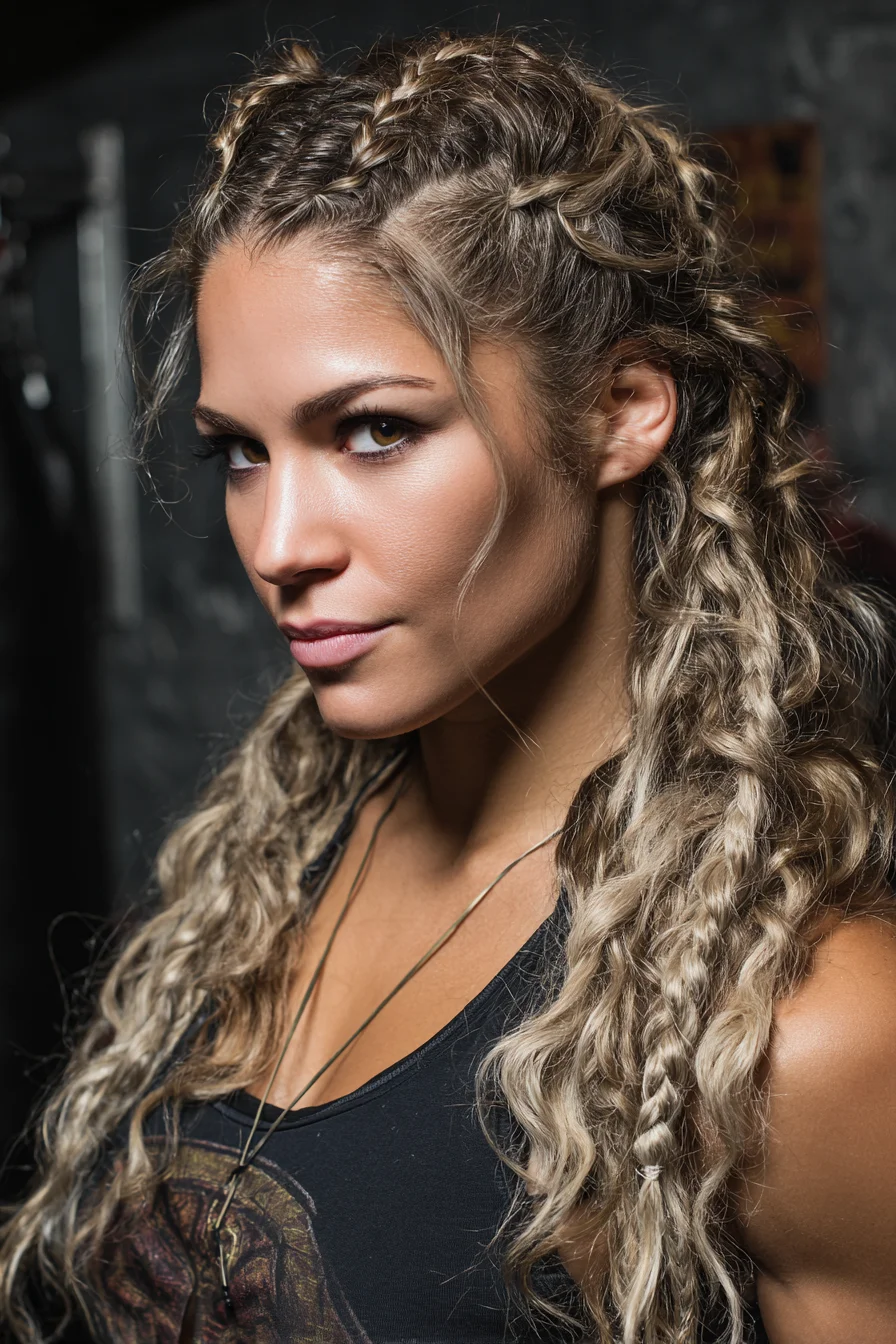
This look suits medium to very thick hair and flatters wavy or curly textures best; straight hair can achieve the same effect after adding texture with heat or salt spray. Start by creating two Dutch/French braids from the hairline toward the crown, keeping sections small and slightly tugging each stitch for a fuller, lived‑in appearance. Leave the lower lengths loose and either enhance natural wave or add loose barrel waves with a 1–1.25 inch curling wand. Finish by weaving a few small three‑strand braids into the loose lengths for an eclectic, boho feel and secure ends with discreet elastics. Tools: rat‑tail comb, sectioning clips, small clear elastics, bobby pins, 1–1.25 in curling wand, wide‑tooth comb. Products: heat protectant, sea‑salt/texturizing spray, light styling cream for frizz control, flexible hold hairspray, dry shampoo for refreshes. Difficulty: intermediate — requires neat sectioning and consistent braid tension; allow 25–45 minutes. Maintenance tips: sleep on a silk pillowcase or loosely pineapple, refresh texture with dry shampoo and sea‑salt spray, re‑tighten crown braids after 2–3 days, and deep‑condition weekly to preserve highlighted or chemically treated hair.
Textured Double Dutch Braids into Messy Curly Bun with Face‑Framing Tendrils
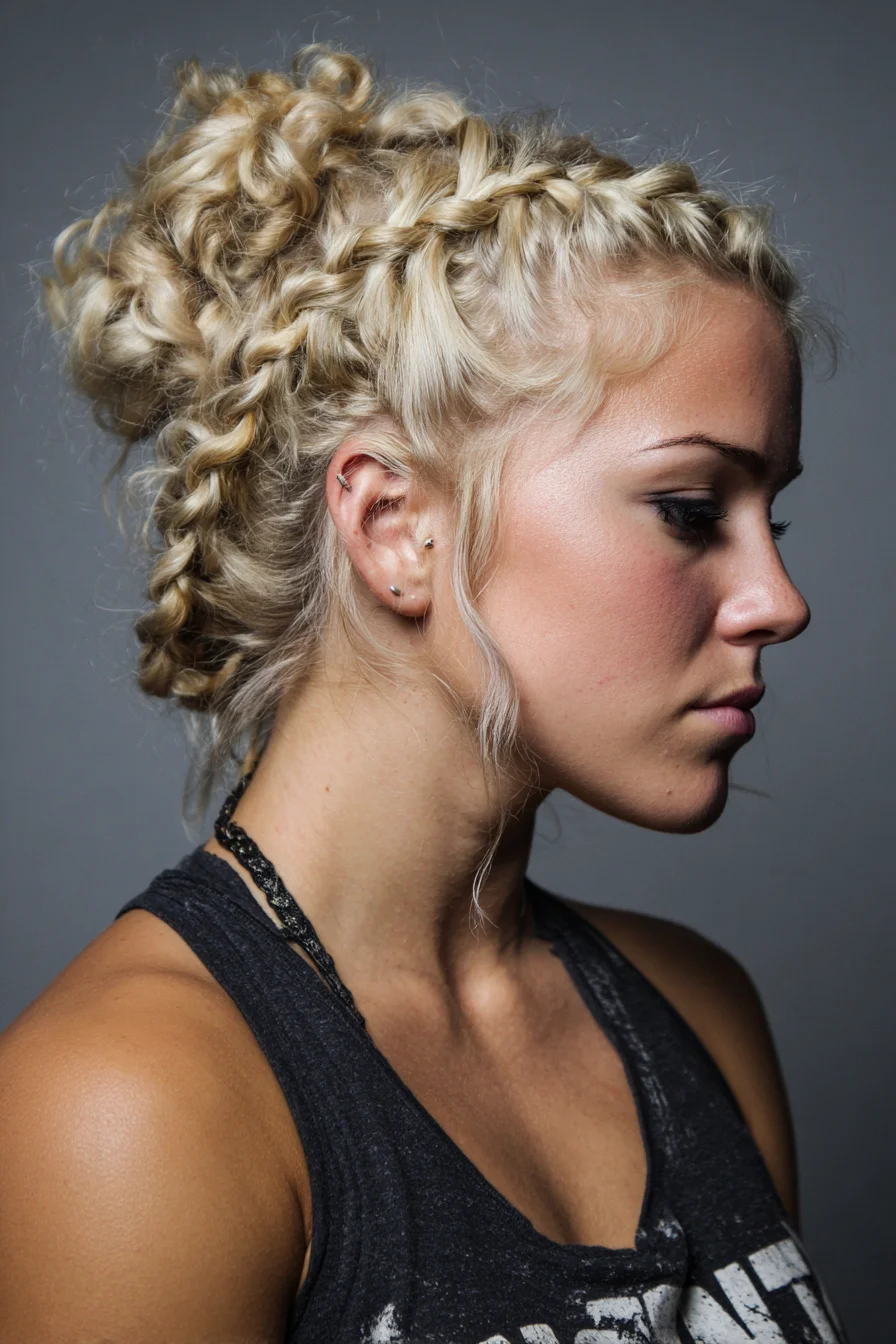
This style pairs two Dutch-style braids along the crown that feed into a relaxed, textured curly bun with soft face‑framing tendrils. Best for wavy, loose-curly, or medium-to-thick textured hair — straight hair can also work after a light curl for grip. Technique: start on towel-dried hair with a lightweight mousse, section and create two Dutch braids working from hairline to crown, pancake the braids slightly for volume, then gather the remaining lengths into a loose, low/high bun and pin. Pull out a few tendrils at the front for softness. Tools needed: tail comb, sectioning clips, small clear elastics, bobby pins, curling wand or diffuser. Products: mousse or texturizing spray for hold, light oil or smoothing cream for edges, texturizing powder for lift, medium-hold hairspray to finish and a heat protectant if using hot tools. Difficulty: intermediate — requires clean, even braids and good pinning technique; allow 25–40 minutes. Maintenance: sleep on a silk pillow or wrap, refresh curls with water + curl cream or diffuser, re-pin loose pieces as needed, and use dry shampoo to extend wear between washes.
Textured Double Curly Buns with Braided Crown Accent
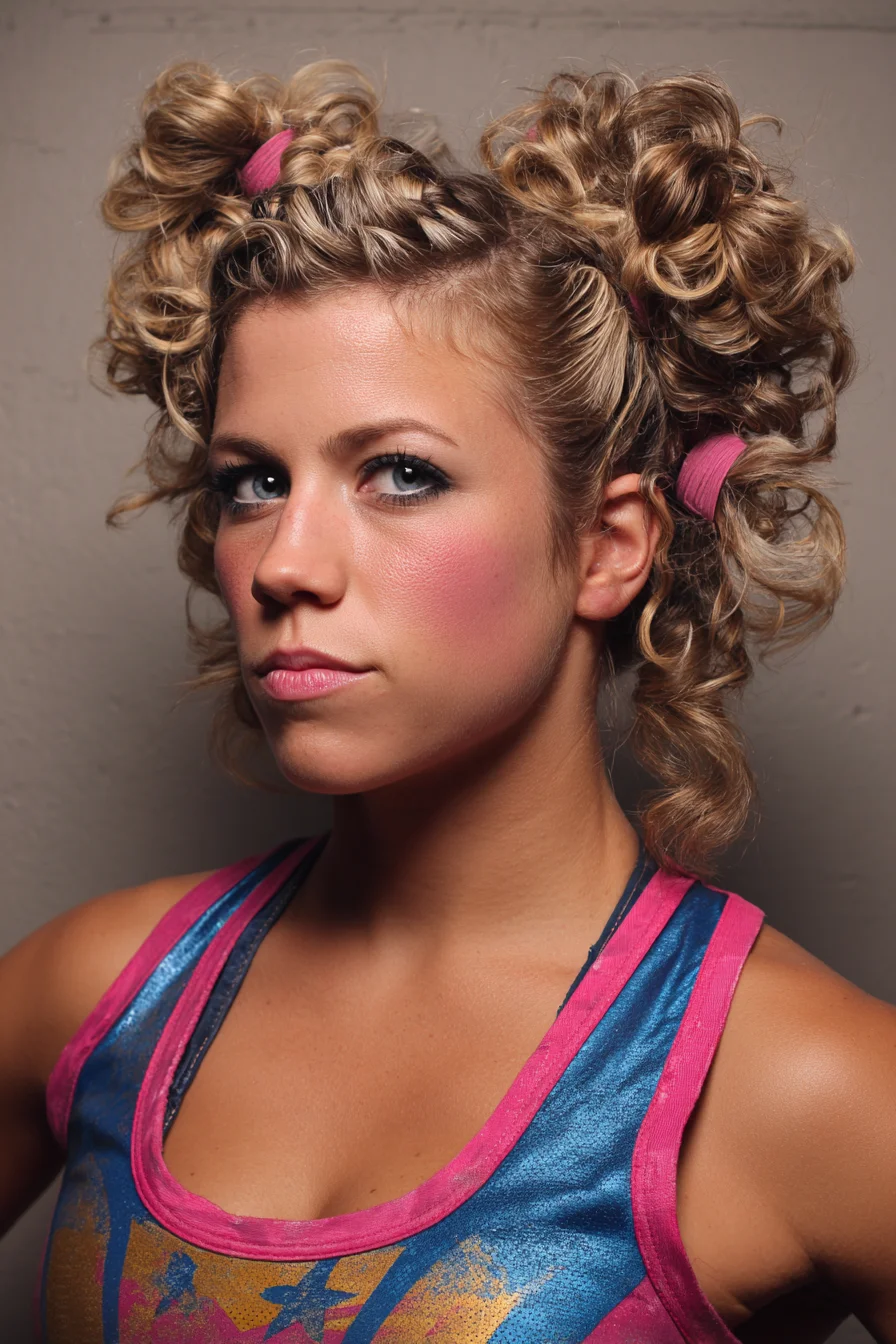
This playful updo works best on medium to thick naturally curly or wavy hair; fine hair can achieve the look after adding volume with a curling iron or clip-in extensions. Start with washed, conditioned, and detangled hair. Create a centered part and carve a small front section on each side to french- or rope-braid along the hairline toward the crown. Gather each side into a high pony, leaving some curls loose if you want softer edges. Twist or loop the ponytails into messy buns, securing with strong elastics and hidden bobby pins so individual curls form textured loops. Tools: rat-tail comb, elastic bands, bobby pins, curling iron or diffuser and wide-tooth brush. Products: heat protectant, lightweight mousse or curl cream, texturizing/salt spray for grip, and a flexible-hold hairspray to set. Difficulty: moderate — requires even braiding and balancing of volume, but no advanced cutting. Maintenance: sleep on a silk pillowcase or pineapple the buns, refresh with a water-based curl refresher or light mousse, and re-pin loose pieces as needed. Deep-condition weekly to keep curls healthy and defined.
Textured Platinum Double Braided Buns with Face‑Framing Tendrils
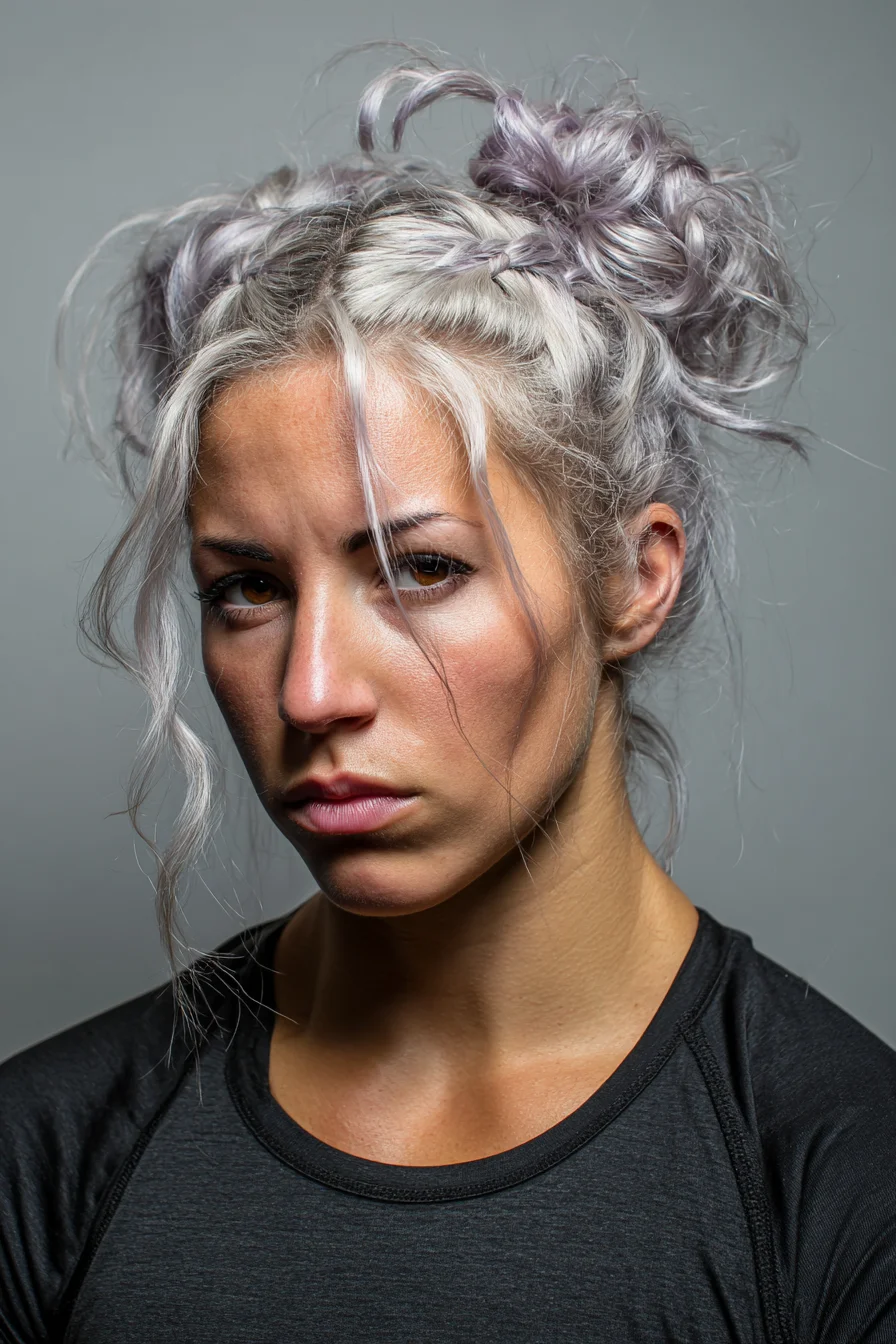
This look suits medium to thick hair and works especially well on wavy or pre-textured hair; fine hair can achieve the same volume with light padding or extensions. Start by sectioning two small front Dutch/French braids along the hairline to add structure, then gather hair into two high, slightly off-center ponytails. Tease the ponytails at the roots for lift, twist each into a loose, messy bun and secure with elastics and bobby pins, pulling pieces out for a lived-in finish. Leave a few face‑framing strands and use a curling wand (1–1.25 in) to create soft waves if needed. Tools: tail comb, sectioning clips, elastics, bobby pins, 1–1.25 in curling iron or wand, and a blow dryer with diffuser if air-drying. Products: heat protectant, sea-salt or texturizing spray, light pomade for flyaways, and a flexible-hold hairspray. Difficulty: moderate — requires basic braiding and bun technique; expect 20–40 minutes. Maintenance: refresh texture with dry shampoo and texturizer, re-tame flyaways with a dab of pomade, and preserve platinum/silver tones with a purple shampoo and regular salon toning.
Double Dutch Cornrows with Undercut and Wrapped Fishtail Braid
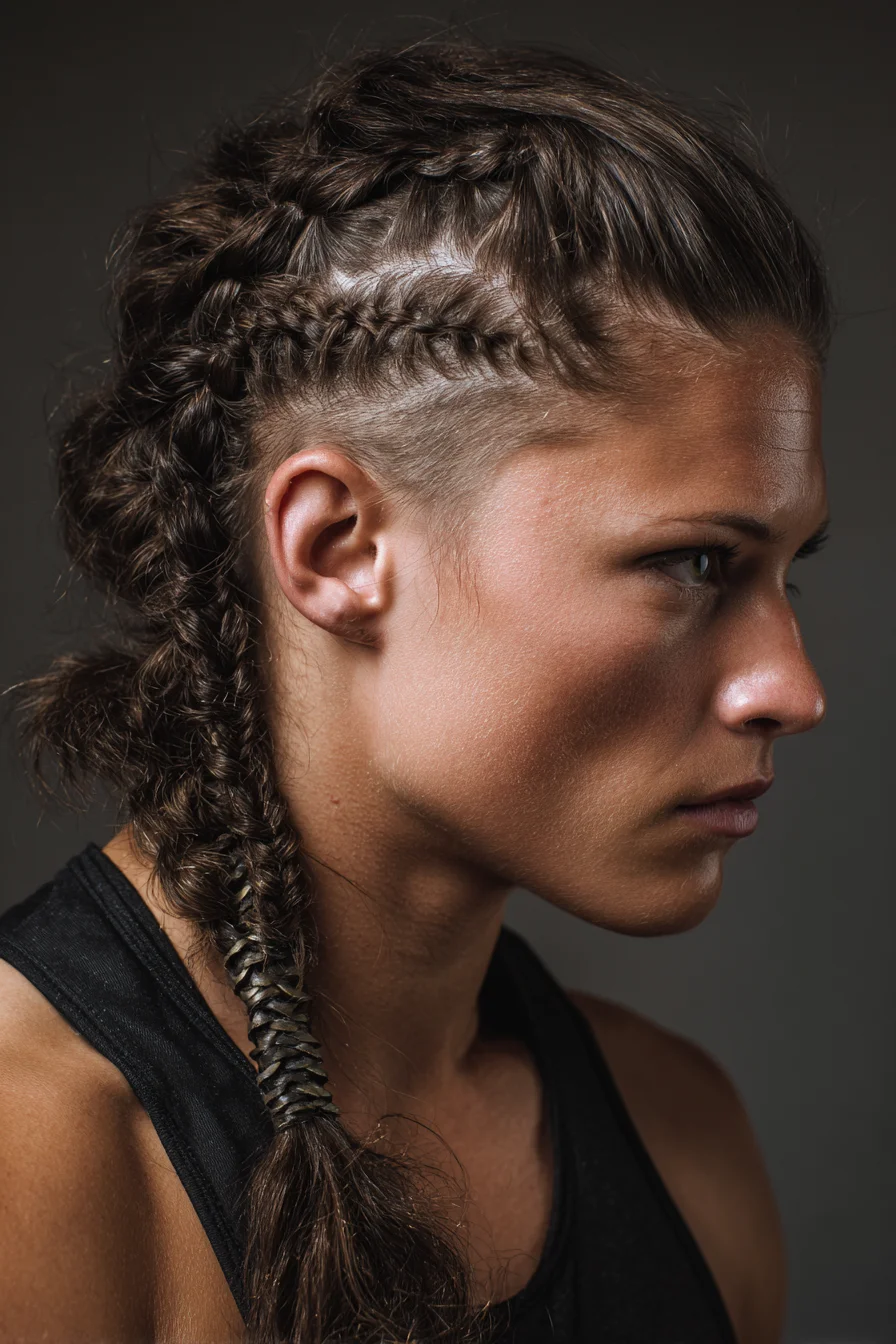
This edgy braided look suits medium-to-thick hair of shoulder length or longer; wavy or straight textures hold the structure best, while very fine hair benefits from light texturizing spray or added extensions. Technique: create a clean side part and clip away the undercut section, then Dutch-braid two tight cornrows from the hairline toward the crown, feeding hair in as you go. Continue the braids into one large fishtail or three-strand braid, finishing with a wrapped leather or thread detail to secure and mask elastics. Tools needed: rat-tail comb, sectioning clips, small clear elastics, fine-tooth comb, and hair clips. Products required: strong-hold styling gel or pomade for sleek roots, texturizing spray for grip, lightweight oil for ends, and a flexible-hold hairspray. Difficulty: advanced-intermediate — expect 45–90 minutes in a salon. Maintenance: sleep on a silk scarf or bonnet, refresh edges with pomade, lightly mist scalp with a water/oil mix, and retouch or redo braids after 1–2 weeks to prevent tension and maintain scalp health. Keep the undercut trimmed every 3–6 weeks for a crisp finish.
Textured Faux Hawk with Micro Braids and Wrapped Long Braids
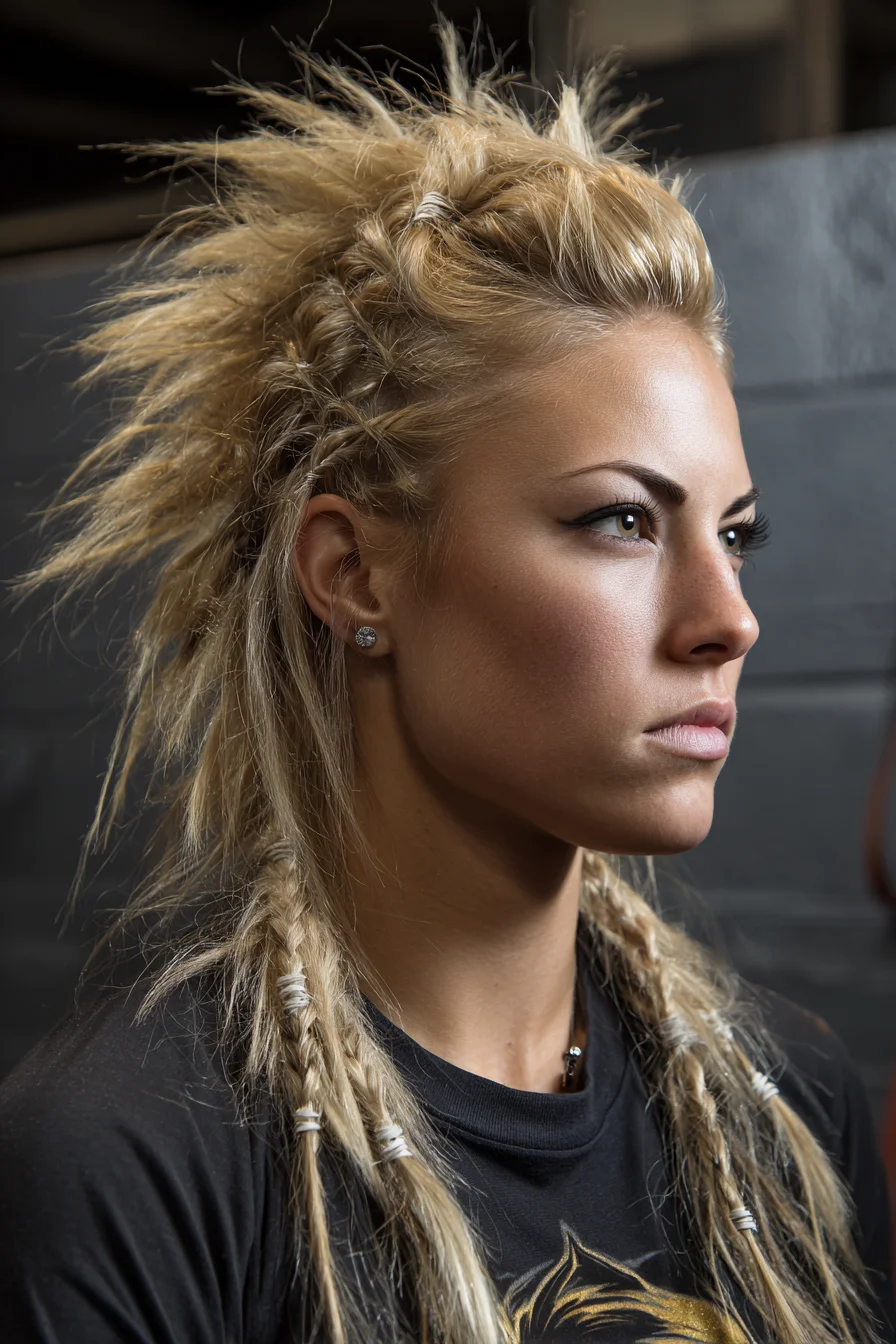
This edgy textured faux-hawk blends back-combed volume at the crown with tight side micro-braids and longer wrapped braids at the nape — ideal for medium to thick straight or wavy hair. Fine hair will benefit from pre-texturizing (sea-salt spray) or temporary extensions to build bulk. Technique: section the sides and create 2–4 small Dutch/cornrow-style braids close to the scalp, secure with small elastics; backcomb the center strip for lift, set with texturizing spray and shape spikes by smoothing the outer surface with a light pomade. Add thin three-strand braids toward the ends and wrap with thread or elastic bands for the finished look. Tools and timing: tail comb, sectioning clips, fine-tooth comb, teasing brush, small clear elastics/wraps, blow dryer, 1 curling iron or flat iron for smoothing ends — expect 45–75 minutes depending on braid detail. Products: sea-salt/texturizing spray, dry shampoo, matte paste or wax, strong-hold hairspray, heat protectant and a weekly deep conditioner. Difficulty: intermediate (requires braiding and backcombing skills). Maintenance: sleep on a silk pillowcase, refresh texture with dry shampoo, re-wrap loose bands and re-braid touch-ups every 2–4 weeks, and avoid daily heavy brushing to preserve shape and reduce breakage.
Undercut Mohawk with Textured Dutch-to-Fishtail Braid
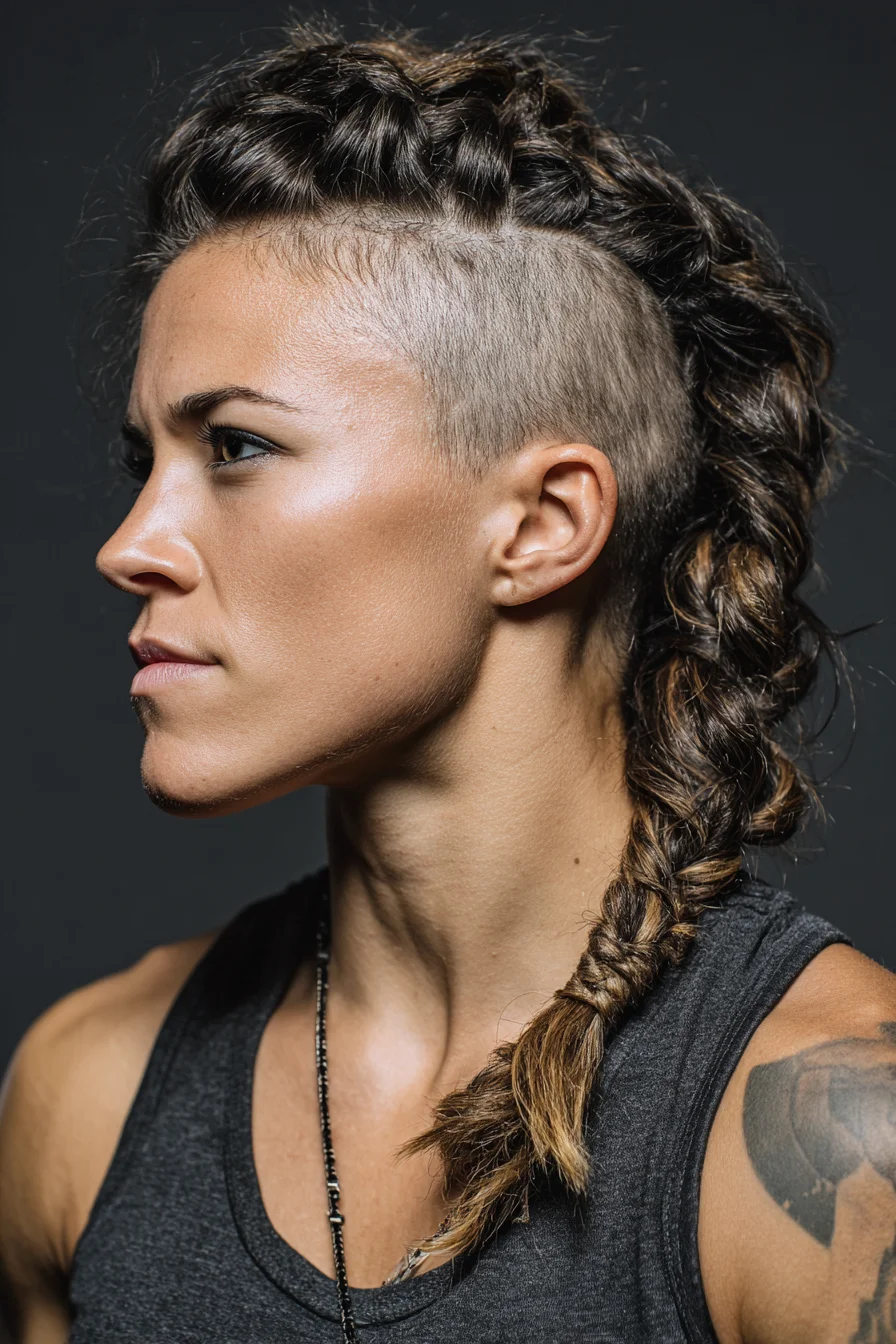
This look suits medium to long hair and works best on thick or textured hair — fine hair can still achieve it with light texturizing or clip-in extensions. Start by creating a clean undercut or faded side using clippers (have a stylist do the first shave). Section a central mohawk strip and create a Dutch (inside-out) braid from the hairline, adding hair as you move back; transition into a fishtail or rope braid down the nape for a rugged, textured finish. Tools: clippers (for undercut), tail comb, sectioning clips, small elastics, boar-bristle brush and a wide-tooth comb. Products: texturizing/sea-salt spray or dry shampoo for grip, light-hold gel or pomade for neat edges, finishing hairspray for hold, and a lightweight oil or serum on ends. Difficulty: intermediate — braiding skill and comfort with an undercut are required; book a salon appointment for the initial cut and demo. Maintenance: refresh the undercut every 3–6 weeks, re-braid daily or sleep in a loose wrap to preserve texture, use dry shampoo between washes, and deep-condition ends weekly to prevent breakage.
Double Dutch Braids (Boxer Braids) for Fine to Medium, Bleached Hair
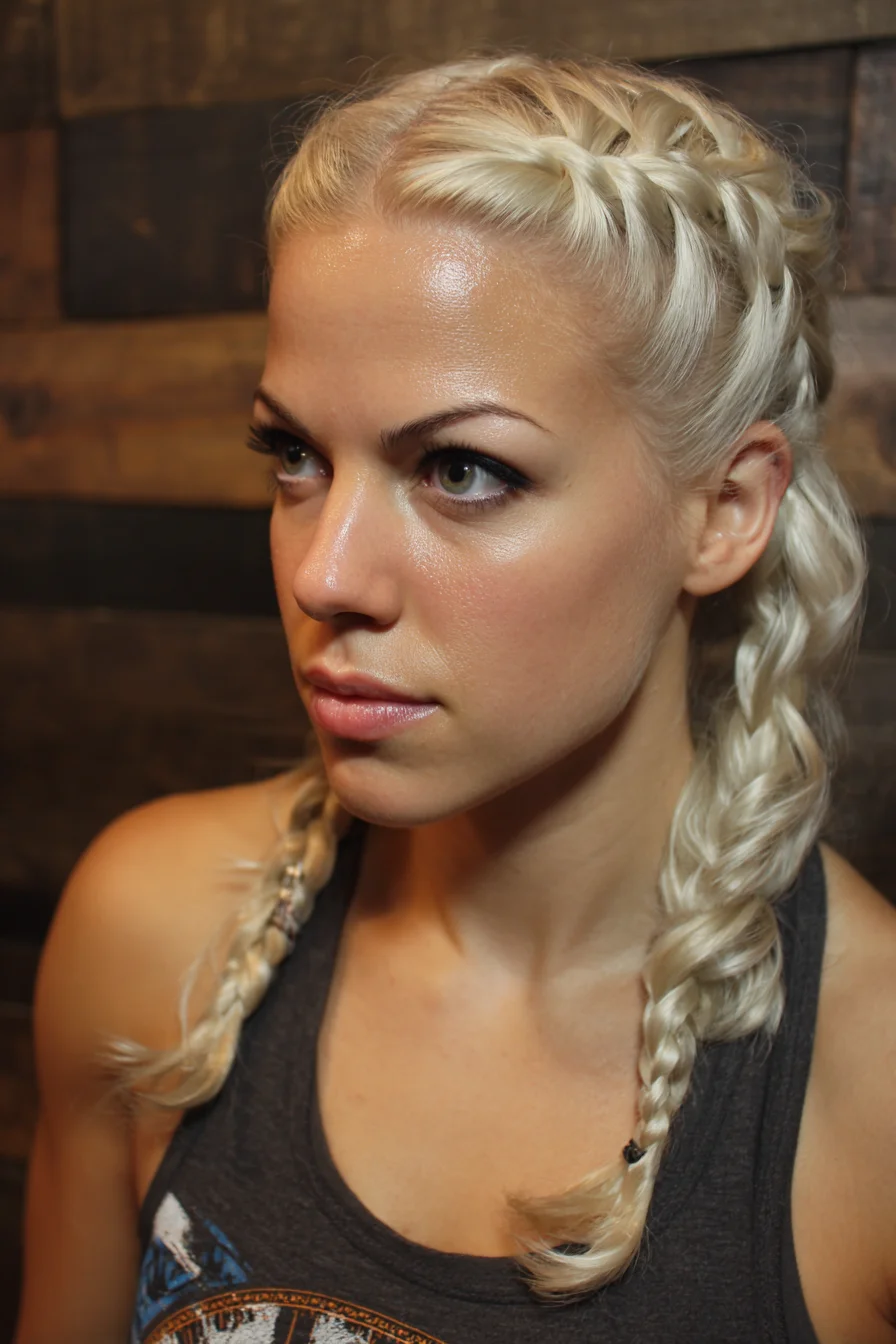
This polished double Dutch braid is ideal for fine to medium-length hair and works well on straight or slightly wavy textures; extra-porous or bleached hair will hold the style but needs gentler handling. Start on damp or lightly texturized dry hair. Create a clean center part, clip one side out of the way, and Dutch-braid (underhand) three sections adding hair as you move from the hairline to the nape; repeat on the opposite side. Secure ends with small soft elastics and gently pancake the braid for fullness. Tools: tail comb, sectioning clips, small elastic bands, a soft brush and optional blow-dryer. Products: lightweight salt or texturizing spray for grip, leave-in conditioner or hair oil to protect bleached ends, and a light-hold hairspray to tame flyaways. Difficulty: moderate — requires basic braiding skill and practice (15–30 minutes). Maintenance tips: sleep on a silk pillowcase or wrap with a silk scarf, refresh with dry shampoo and a little texturizer, avoid over-tightening to prevent breakage, and deep-condition bleached hair weekly to maintain strength and shine.
Undercut Braided Mohawk — Shaved Sides with Center Cornrows
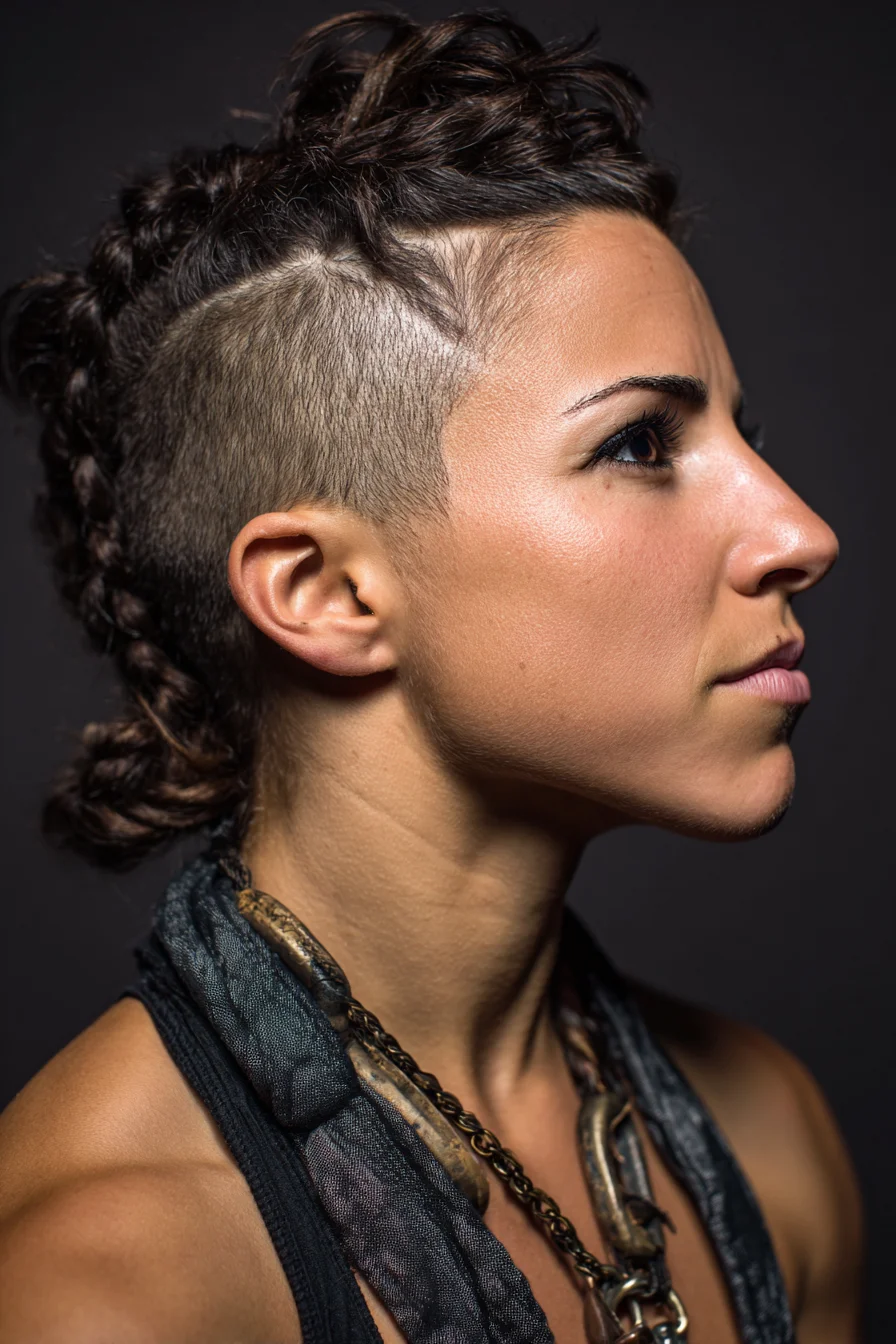
This undercut braided mohawk pairs shaved sides with tight center braids for a bold, modern profile. Best suited to medium-to-thick straight or wavy hair; curly hair also works if stretched or blow-dried first for smoother braiding. Start by clipper-cutting the sides to a short guard (0.5–3) and creating a clean central panel. Section the top into 3–5 even parts and braid each into tight cornrows or three-strand braids, anchoring ends with small elastics and tucking or rolling excess into a low bun or knot. Tools: clippers, rat-tail comb, fine-tooth comb, sectioning clips, small elastics and a soft-bristle brush. Products: leave-in detangler or smoothing primer, light-hold gel or pomade for sleekness, edge control for baby hairs, lightweight scalp oil, and flexible-hold hairspray. Difficulty: intermediate — requires precise clipper work and neat braiding; book a stylist for the initial cut and pattern if unsure. Maintenance: shave touch-ups every 2–4 weeks, refresh or redo braids every 4–8 weeks, sleep on a silk scarf, oil the scalp weekly, and shampoo gently to prevent product buildup and frizz.
As a professional stylist, I recommend choosing a wrestling hairstyle that balances security with scalp health. For most athletes, braided styles (boxer braids, cornrows, or Dutch braids) and low, wrapped buns give the best hold with minimal slippage. Prep hair with a hydrating leave-in, smooth edges with a lightweight gel or edge control, and use soft, no-metal elastics or fabric ties to prevent breakage. After a match, gently detangle, shampoo with a sulfate-free cleanser if you sweat heavily, and follow with a protein-balanced conditioner or weekly deep treatment to restore strength. Rotate styles to avoid constant tension in the same spots, and sleep with a silk scarf or bonnet to preserve braids and reduce friction. If you want a custom plan, book a consultation — I can recommend the strongest, healthiest style for your hair type and competition schedule.