
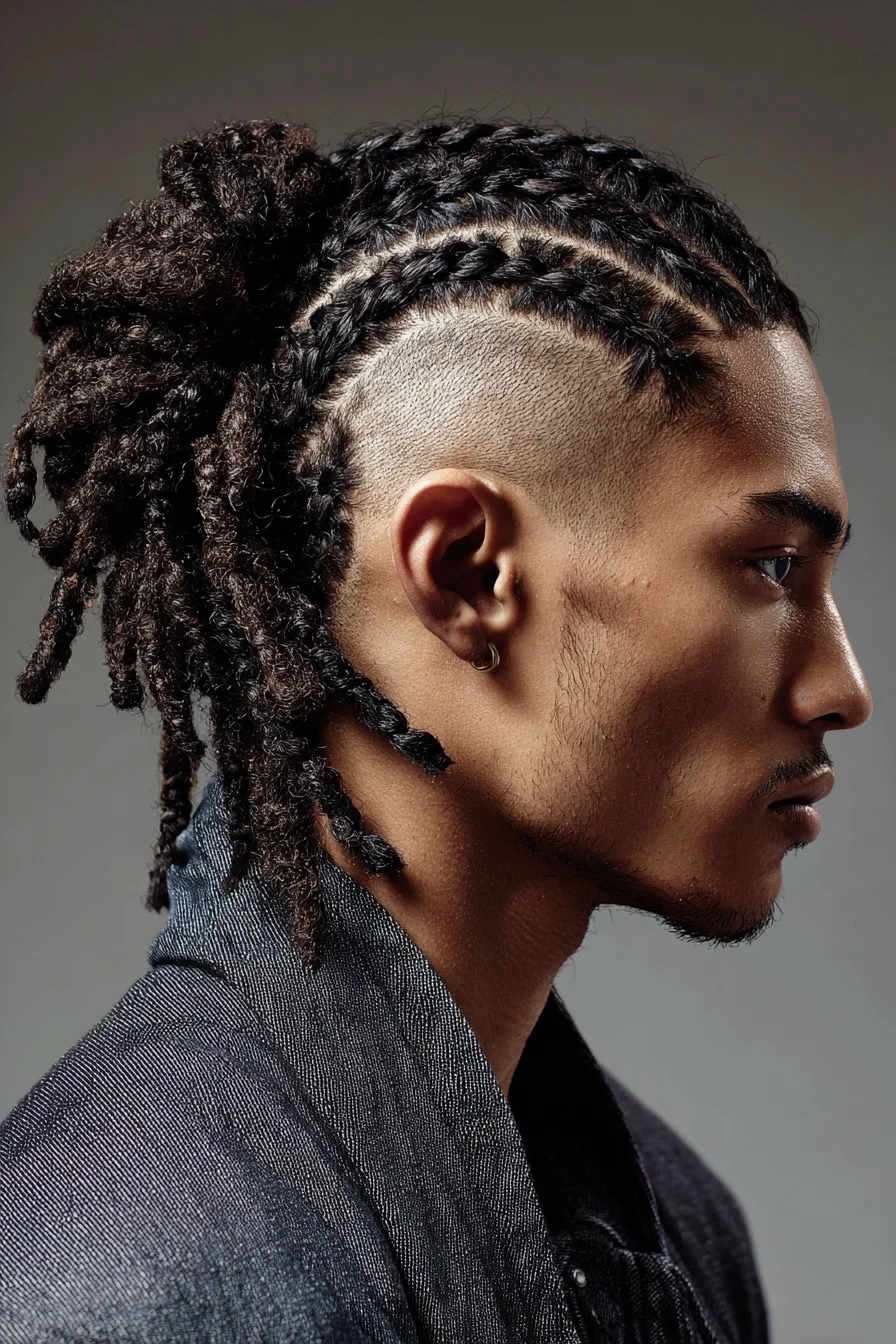
Hi, I’m Lena — a professional hairstylist with over a decade of salon experience specializing in braided looks. In this post I showcase 32 mens and womens braids hairstyles with clear images and practical styling notes from the salon floor. Braids are incredibly versatile: cornrows and box braids offer protective structure for textured hair, French and Dutch braids flatter medium to long lengths for an everyday polished look, and braided updos or faux locs are perfect for special events. These styles suit many face shapes and lifestyles but demand proper technique and hair health care. My salon tips: avoid excessive tension to protect edges, keep the scalp moisturized with lightweight oils, use a silk scarf at night, and choose installation methods that match your hair density. Whether you want low-maintenance protective styles, athletic braids, or red-carpet finishes, these 32 looks will inspire your next appointment.
Cornrowed Side Rows into Loose Dread Bun — Mens Dreads & Braids
This look pairs tight cornrowed side rows with long, loosely styled dreads gathered into a low bun — ideal for medium to coarse, textured or naturally curly hair and for anyone already maintaining dreadlocks. Create clean rows with a rat-tail comb, clip sections, and braid each cornrow toward the crown; gather remaining dreads and loose three-strand braids into a secure bun or pony. Tools: rat-tail comb, sectioning clips, small elastic bands, crochet hook (for tightening), and a wide-tooth comb for loose ends. Products: residue-free clarifying shampoo, moisturizing leave-in, light locking gel or braiding cream for clean parting, and a nourishing scalp oil. Difficulty: intermediate — expect 1.5–3 hours depending on length and density. Salon tip: maintain even tension to prevent breakage or traction alopecia. Maintenance: retighten the cornrows every 4–6 weeks, cleanse scalp every 1–2 weeks with diluted shampoo, apply oil to the scalp to prevent dryness, and sleep with a satin/silk scarf or bonnet to reduce frizz. Avoid heavy buildup products and over-manipulation to prolong style life.
Mens Cornrow Braids with Feed-In Detail and Tapered Sides
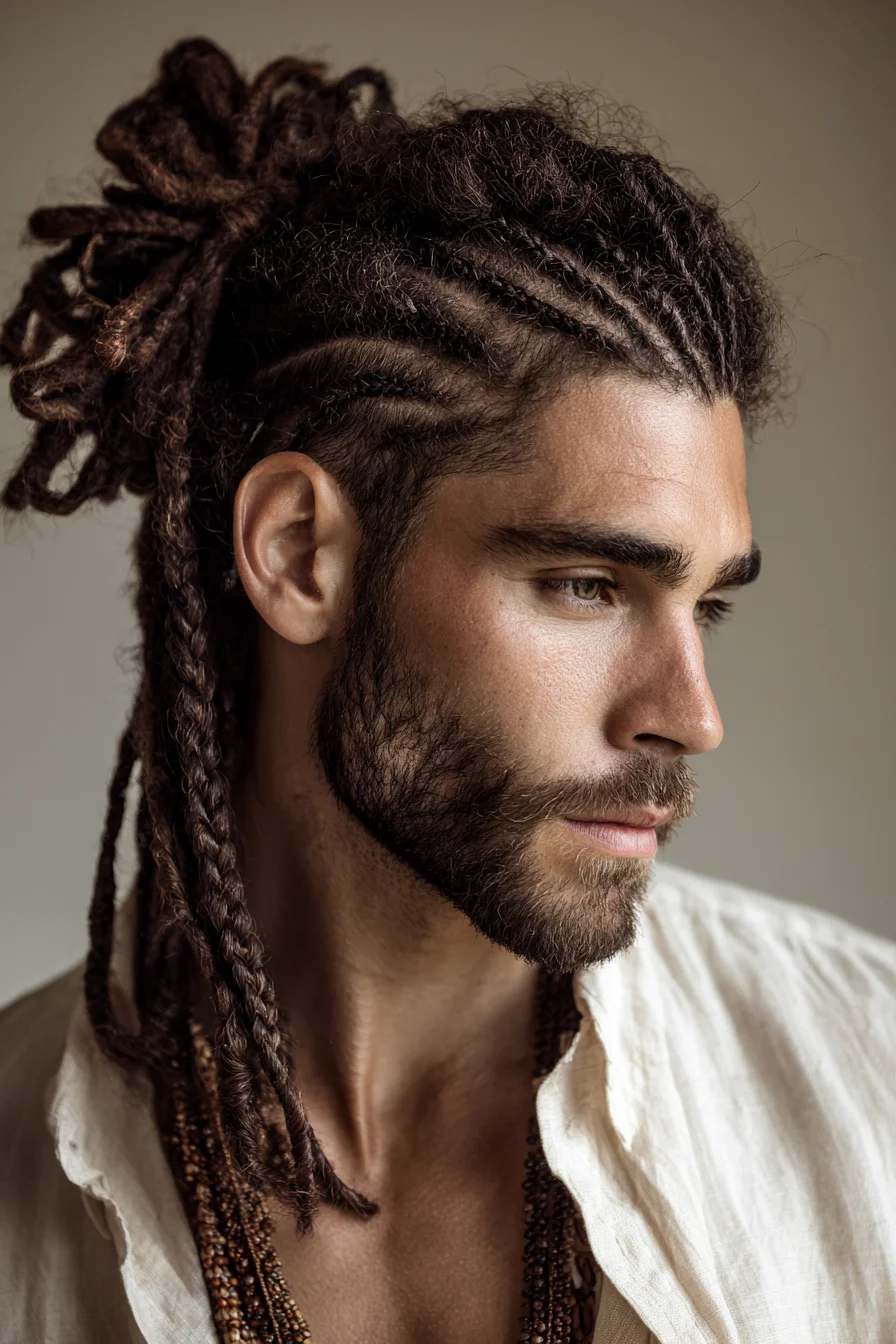
This look is ideal for Type 3–4 textured hair and for men with medium to long length who want structured, low-maintenance styling. The technique uses clean sectioning and feed-in cornrows: start with a defined side/taper outline, create small anchor braids at the hairline, then gradually feed in hair (or Kanekalon extensions) to build thicker, even braids that follow the chosen pattern. Tools needed: rattail comb, sectioning clips, fine-tooth comb, braiding hair (optional), small elastics, clipper or trimmer for tapered sides, water spray bottle. Recommended products: lightweight leave-in conditioner, edge control or styling gel for crisp parts, braid spray or scalp oil (jojoba/tea tree) to prevent dryness, anti-frizz serum or shine mist. Difficulty: intermediate — requires precision parting and consistent tension; expect 1.5–3 hours depending on size and length. Maintenance tips: sleep with a satin durag or bonnet, lightly mist braid spray twice weekly, oil the scalp sparingly, avoid over-tightening to prevent breakage, and refresh edges or redo braids after 6–8 weeks. For longer wear, remove if itching or excessive buildup occurs and deep-condition the hair afterwards.
Half-Up Textured Two-Strand Twists with Tapered Cornrow Sides
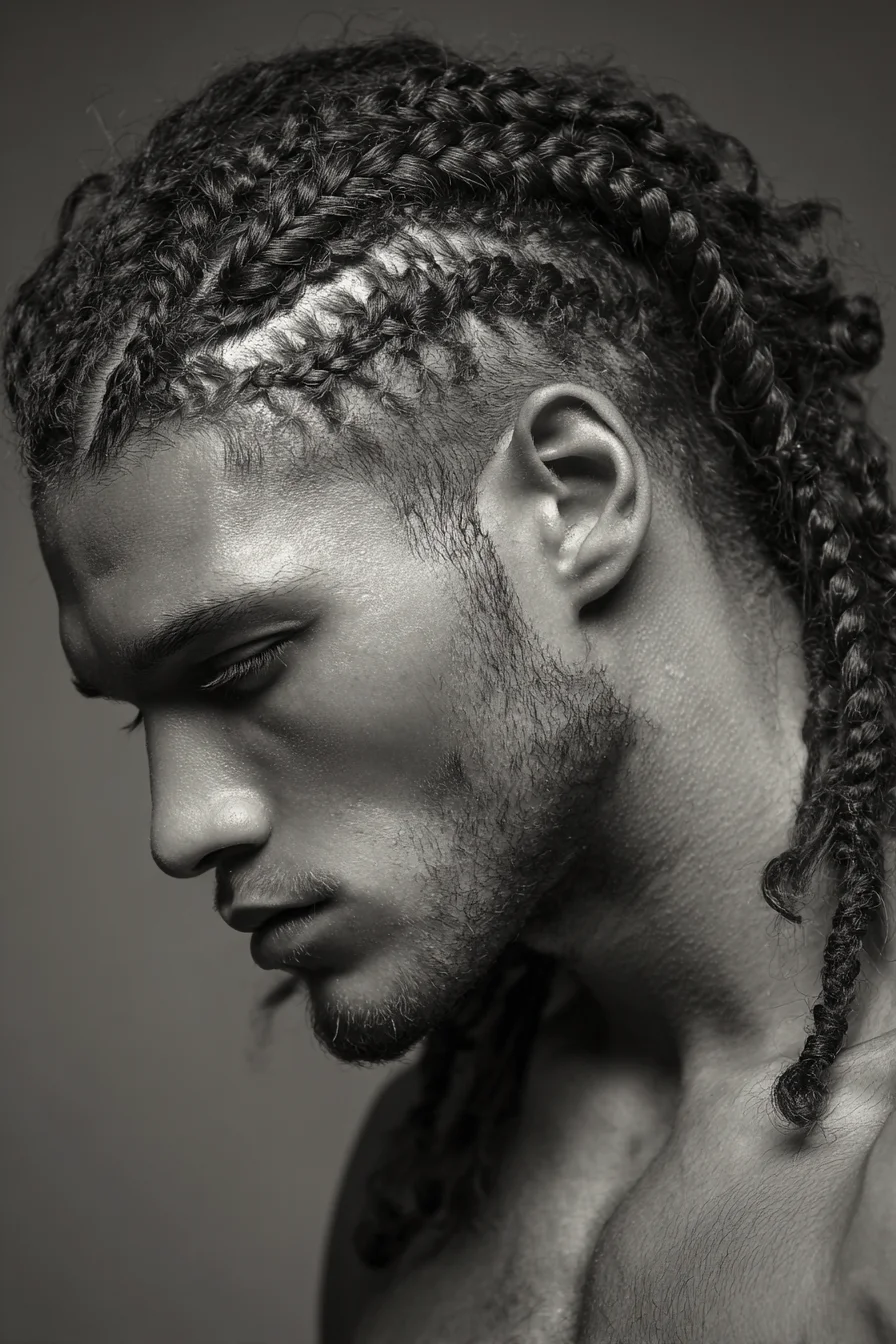
Suitable for 3A–4C textured hair and medium to long lengths (3+), this half-up look pairs neat tapered side partings with chunky two-strand twists or starter locs gathered at the back for a contemporary, low-maintenance finish. Start on clean, detangled hair. Use a rattail comb to create crisp partings, clip sections out of the way, then either feed-in braid the sides into tapered cornrows or two-strand twist them close to the scalp. Twist the remaining lengths into medium-sized two-strand twists or form starter locs and secure into a low pony or bun. Tools needed: rattail comb, sectioning clips, small elastics, wide-tooth comb, crochet hook (optional for tightening), and a diffuser if you’ll blow-dry. Recommended products: lightweight leave-in conditioner, twisting cream or styling gel for hold, a light natural oil (jojoba or argan) for shine, and a clarifying shampoo to prevent buildup. Difficulty: Intermediate — expect 1.5–3 hours depending on density and precision. Maintenance: sleep on satin, refresh or retwist new growth every 4–8 weeks, palm-roll loose twists, deep condition monthly, and avoid heavy waxes; book professional touch-ups for crisp part lines.
Undercut Feed-In Cornrows with Long Braided Falls — Textured Hair Style
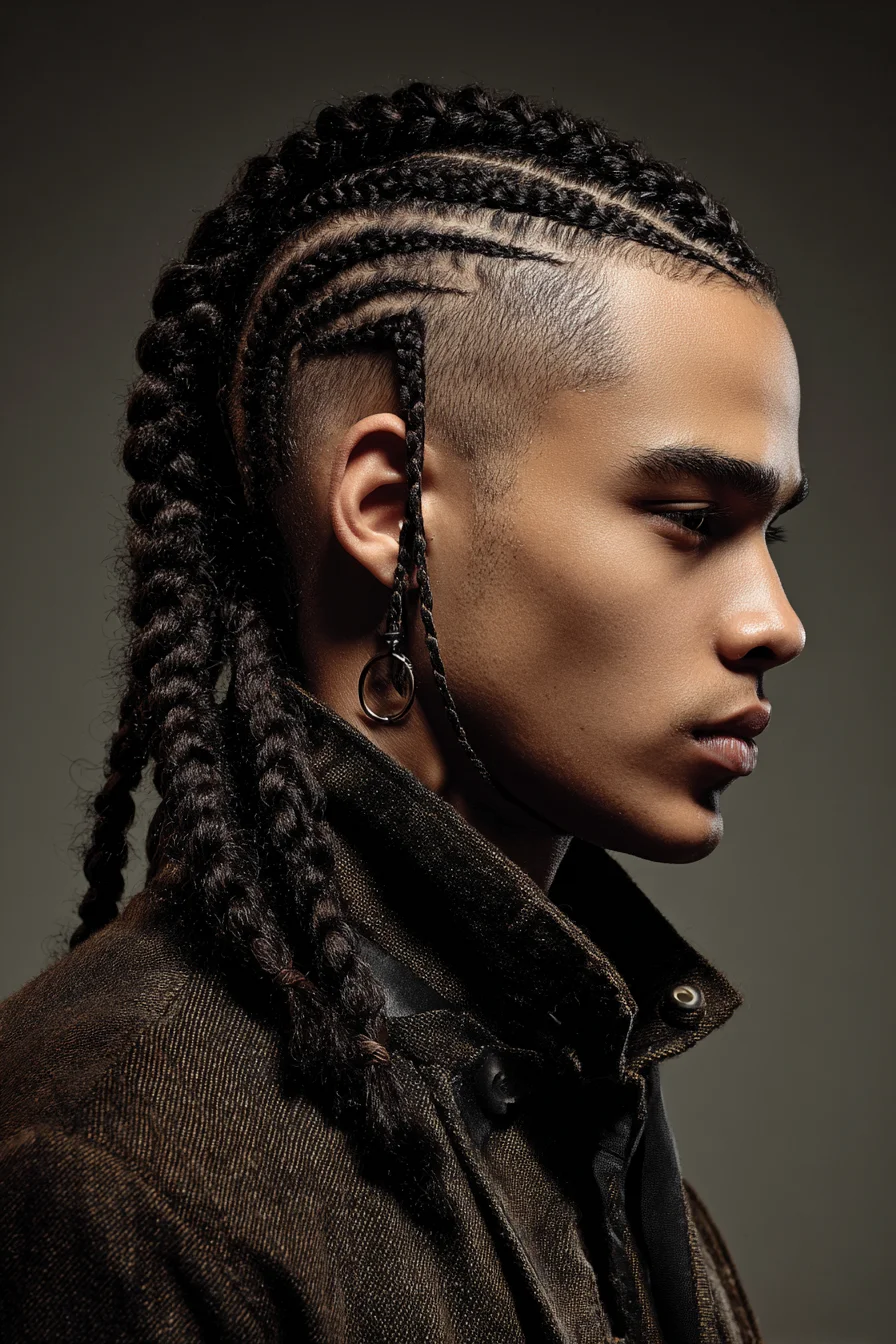
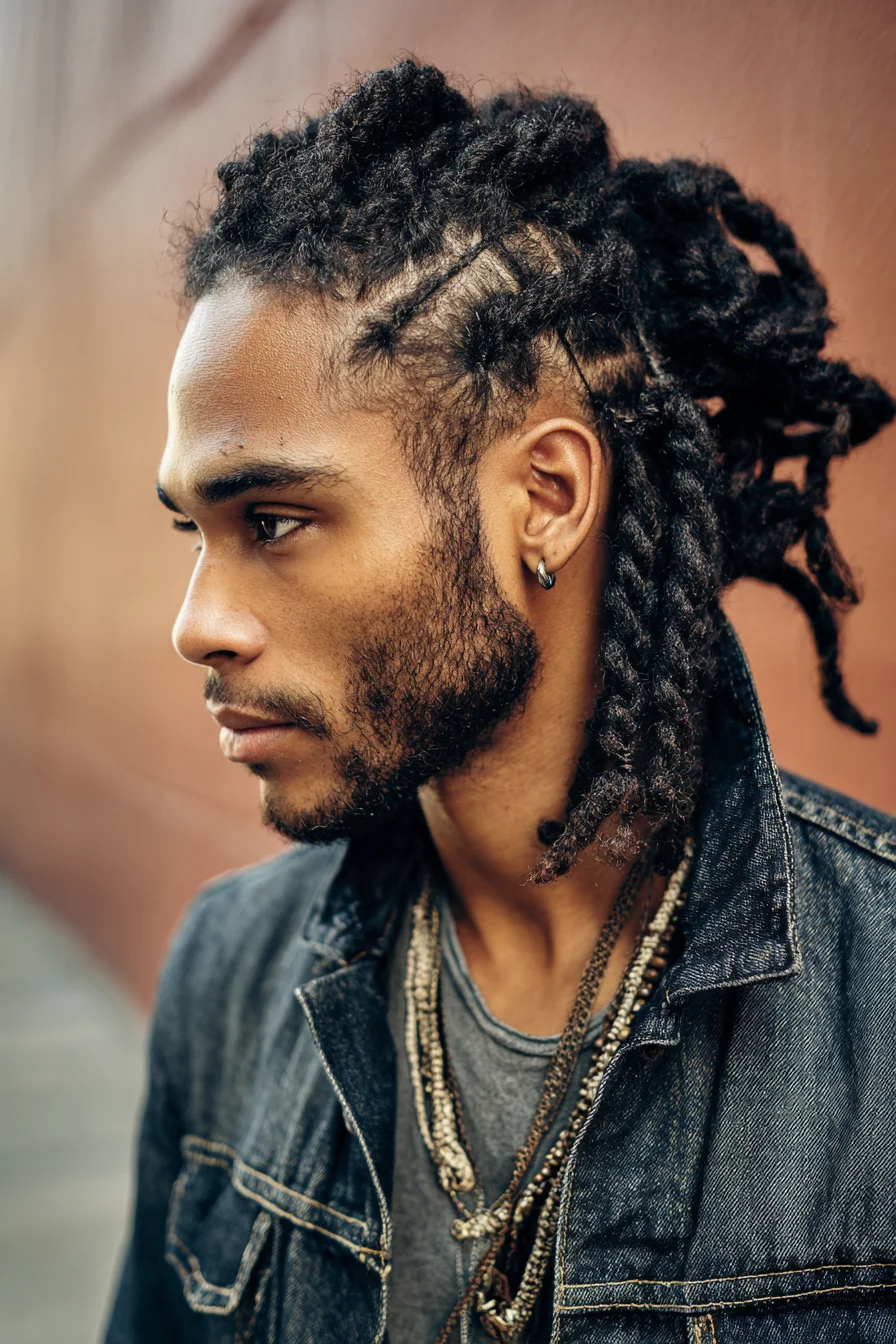
This look suits medium to thick textured hair (wavy, curly, or coarse natural strands) and works best when the top and back have at least 6–8 inches of length with an undercut or faded side. Technique: create clean, even partings and use feed‑in cornrow technique at the crown, gradually transitioning into larger three‑strand braids down the back. Leave a few narrow decorative braids at the temple for detail. For added length or uniform thickness, incorporate synthetic or human extensions with a crochet/feed‑in method. Tools needed: clippers for the undercut, rattail comb, sectioning clips, small elastics, fine edge brush, crochet needle (if using extensions) and scissors. Products required: lightweight leave‑in conditioner, styling gel or braid cream for hold, mousse to set, light scalp oil for hydration, and a finishing pomade for edges. Difficulty: intermediate to advanced — neat feed‑ins require steady tension and practice; expect 1–2 hours depending on size and extensions. Maintenance tips: sleep on silk/satin, spritz with a moisturizing braid spray, gently cleanse the scalp with diluted shampoo every 1–2 weeks, oil the scalp as needed, and avoid excessive tension to protect edges; rebraid or tighten after 4–6 weeks.
Flat-Twist to Low Bun — Textured Two-Strand Twists for Natural Hair
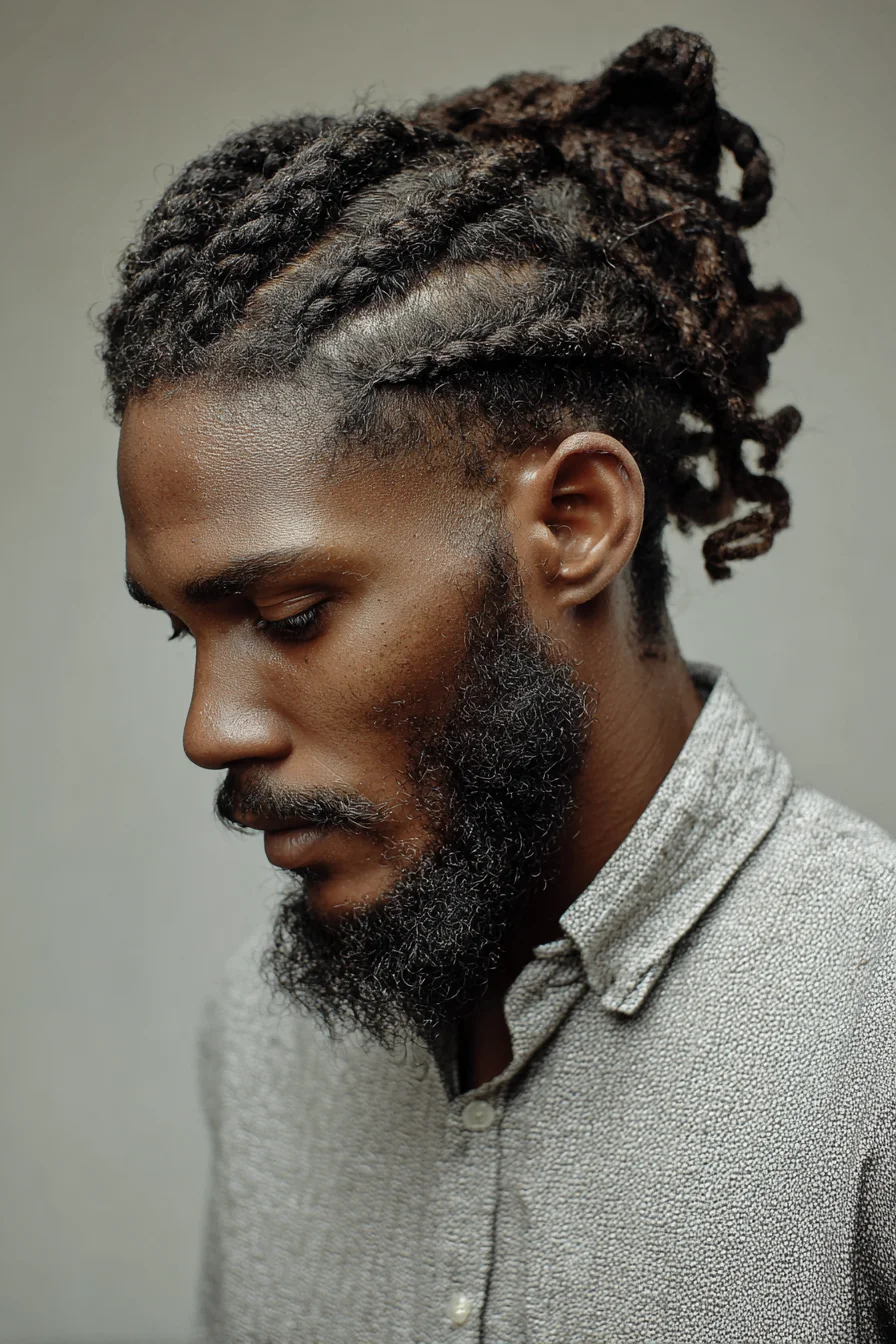
This look suits 3A–4C natural textures, medium-to-thick density, and short-to-mid length locs or loose coils. The style is created by flat-twisting or two-strand twisting sections along defined part lines, then gathering the twist ends into a low, textured bun. Start on clean, detangled hair: section with a rat-tail comb, apply a water-based leave-in, and use a twisting cream or butter for grip and definition. Twist tightly at the scalp for longevity, secure the ends with small bands if needed, and pin the twists into a low bun. Tools: rat-tail comb, sectioning clips, fine-tooth comb, wide-tooth detangler, hair bands and long bobby pins. Products: leave-in conditioner, twisting cream or gel, lightweight oil (jojoba or grapeseed), edge control for a neat hairline, and a clarifying shampoo for periodic cleansing. Difficulty: intermediate — precise parting and consistent tension are required. Maintenance: sleep on a satin scarf or pillowcase, refresh moisture with a spray leave-in and oil weekly, re-twist or tighten perimeter twists every 2–4 weeks, and clarify scalp monthly to avoid buildup. Avoid over-manipulation to preserve neatness and prevent breakage.
Tight Cornrow-to-Long Box Braids — Mens Long Braided Hairstyle
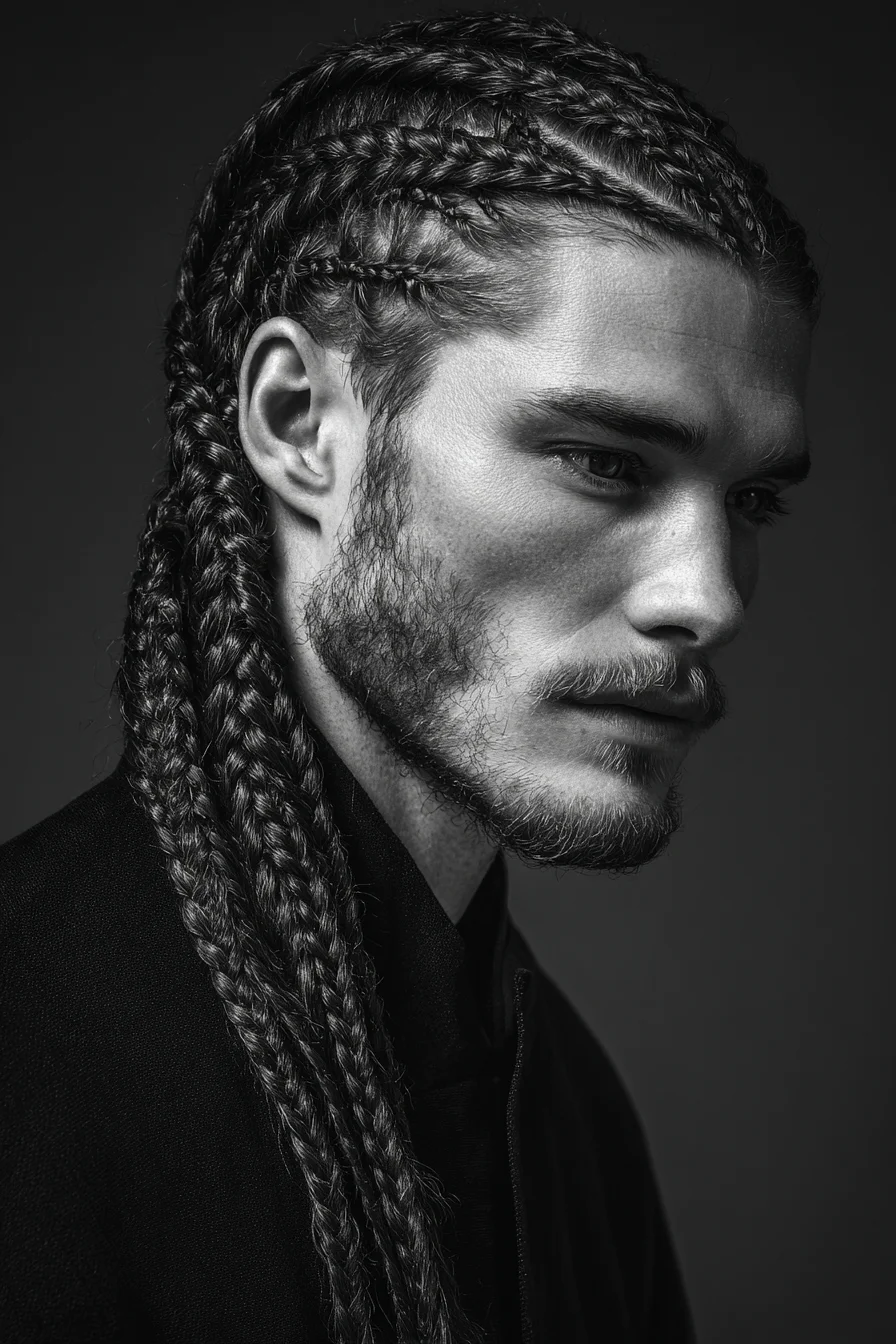
This look pairs tight, clean cornrows at the scalp with longer three-strand/box braids flowing down the back — ideal for medium to thick hair and straight to wavy textures that reach shoulder length or longer. Technique: section the hair into precise rows with a rat-tail comb, braid each row tightly at the root (cornrow) and transition into a looser three-strand or box braid down the length. Extensions can be added with a crochet technique for extra length or uniform thickness. Tools needed: rat-tail comb, sectioning clips, fine-tooth comb, small elastic bands, crochet needle (if using extensions), and sharp scissors. Products required: lightweight leave-in conditioner, braid gel or edge control for smooth parts, anti-frizz serum, and a light scalp oil (argan or jojoba). Difficulty level: intermediate to advanced; expect 2–4 hours depending on braid size and whether extensions are used—booking a pro is recommended for symmetry. Maintenance tips: sleep on a silk/satin scarf, cleanse scalp every 1–2 weeks with diluted shampoo, apply oil to the scalp as needed, avoid excessive tension to prevent breakage, and retouch edges or redo braids every 6–10 weeks.
Tight Cornrows with Long Feed-In Braids for Textured Hair
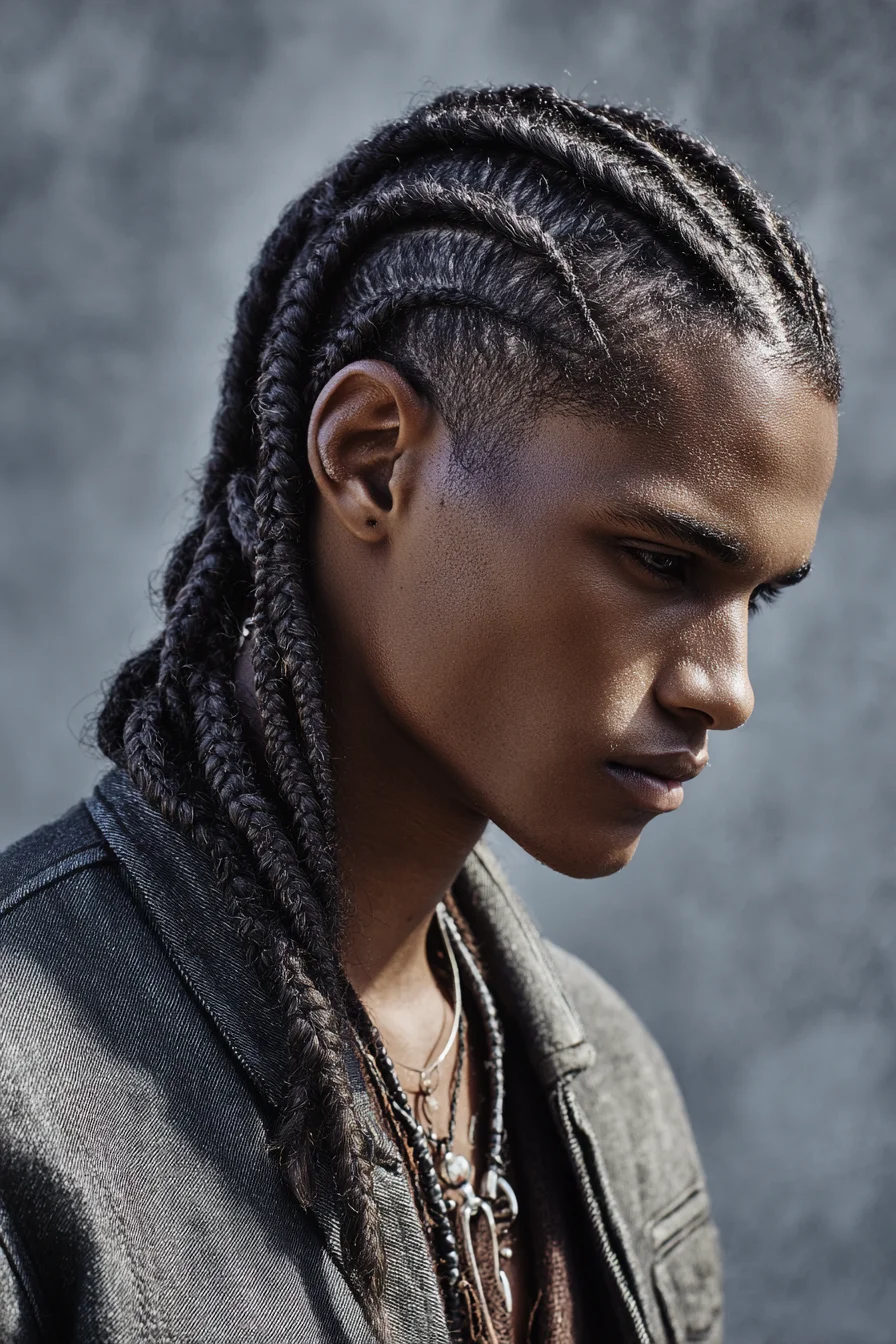
A modern, low‑fade cornrow pattern that transitions into long feed‑in braids — ideal for naturally textured, coily, or tightly curled hair. Start with a clean, detangled base and define parts using a rat‑tail comb. For the sleek, graduated look, use the feed‑in braiding technique: anchor a small stitch at the hairline and gradually add hair (or synthetic braiding hair if length/thickness is desired) to build uniform, neat rows that sit close to the scalp. Tools needed: rat‑tail comb, sectioning clips, wide‑tooth comb, small elastics, optional latch hook and braiding hair, and clippers for tapered sides. Recommended products: lightweight pomade/edge control for hold, leave‑in conditioner, scalp oil (jojoba or tea tree blend), and a light holding spray or mousse to set flyaways. Difficulty: intermediate — expect 2–4 hours depending on braid size and length; professional braiders can reduce time. Maintenance tips: sleep on a satin scarf/bonnet, lightly oil the scalp weekly, co‑wash or dilute shampoo every 1–2 weeks to avoid buildup, and refresh edges with edge control as needed. Avoid overly tight braids to prevent tension and breakage; retouch every 4–8 weeks for longevity.
Tight Cornrows with Long Back Braids — Mens Braided Textured Style
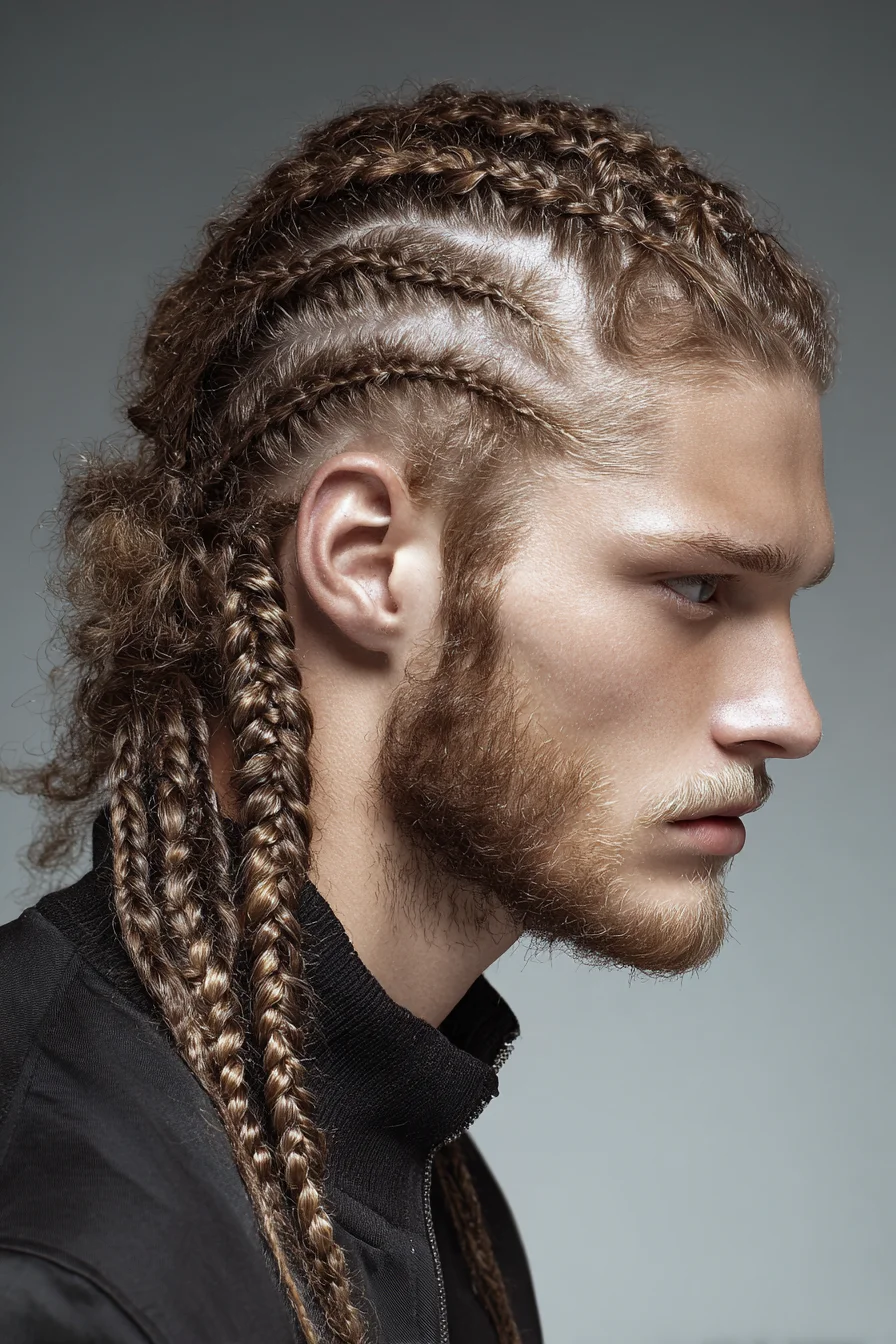
This look suits medium to thick hair and textured or wavy/curly hair best; fine or very straight hair can achieve the look with lightweight braiding extensions for added grip and volume. Technique: start on freshly washed, detangled hair. Section clean, even rows with a rat-tail comb, apply a light leave-in and a small amount of edge-control/pomade to smooth each part, then three‑strand cornrow toward the crown and continue into standalone long braids at the back. Tools needed: rat-tail comb, sectioning clips, fine-tooth comb, spray bottle, small elastics, and optional synthetic braiding hair. Products required: leave-in conditioner, lightweight gel or pomade for hold, edge-control, a nourishing scalp oil (argan or jojoba), and light hairspray for finish. Difficulty: intermediate to advanced — expect 60–150 minutes depending on density and number of braids; book a stylist if you want very tight, even rows. Maintenance tips: sleep in a silk/satin scarf or bonnet, lightly oil the scalp weekly, avoid over-tightening to prevent tension at the hairline, wash gently with diluted shampoo and dry thoroughly, and plan touch-ups every 4–8 weeks.
Tapered Sides with Textured Two‑Strand Twists and Loose Loc Ends
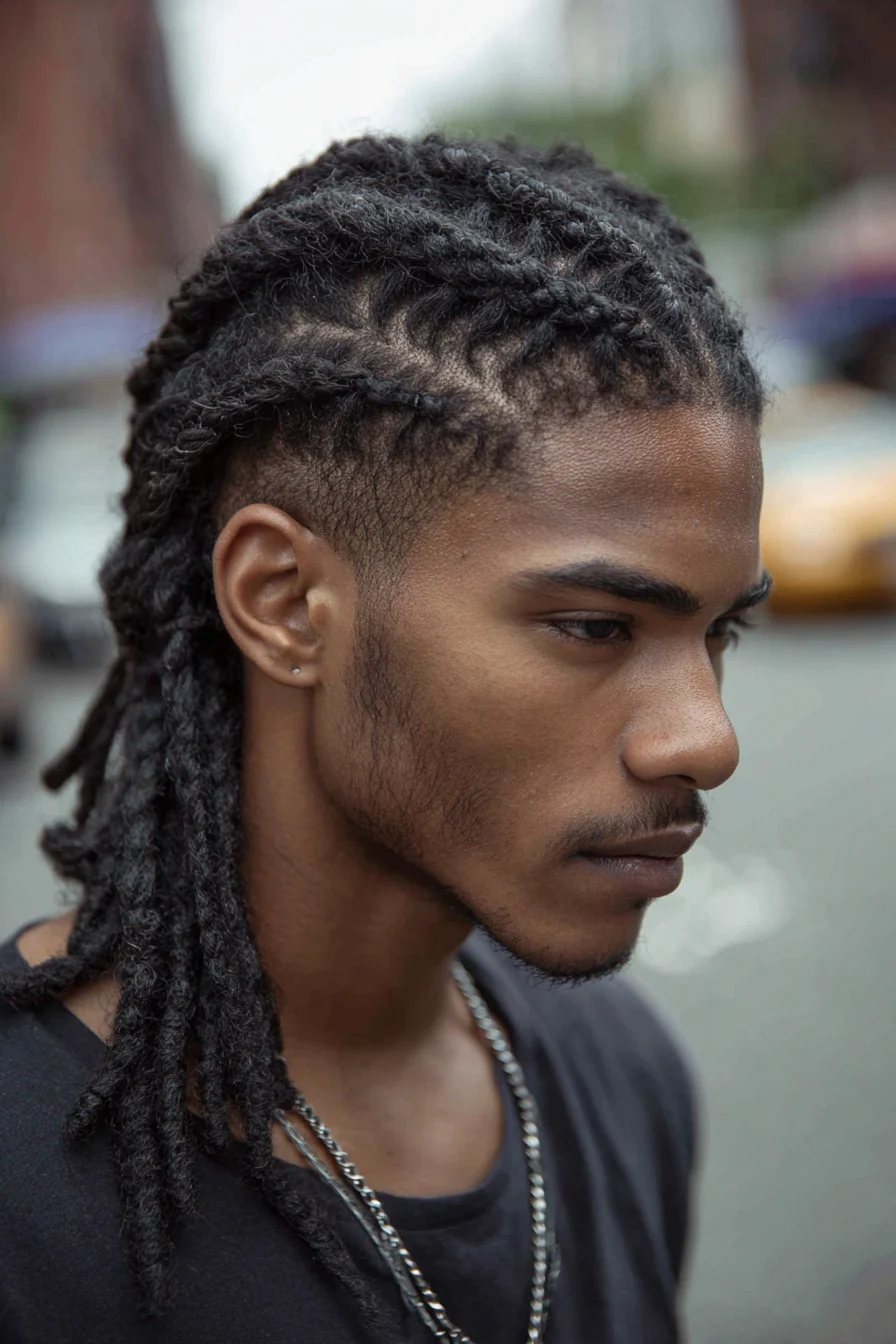
Suitable hair types: best for Type 3–4 natural textures with medium to high density; works well on shoulder‑length hair or longer. Styling technique: section hair into clean, even parts along the scalp, create small feed‑in cornrows at the hairline if desired, then two‑strand twist each section down into a loose loc or twist end. For a textured finish, palm‑roll or lightly backcomb the ends before sealing. Tools needed: rat‑tail comb for parting, clips, hair bands, fine tooth comb, loop/crochet hook (optional for tightening), and a spray bottle. Products required: leave‑in conditioner, twisting cream or butter, lightweight hold gel for edges, light natural oil (jojoba/argan), and a residue‑free clarifying shampoo. Difficulty level: intermediate — requires consistent sectioning and tension control; expect 2–4 hours depending on size. Maintenance tips: sleep on a satin bonnet, reapply light oil to the scalp weekly, refresh edges and new growth every 4–6 weeks, wash gently with diluted shampoo and condition, avoid heavy buildup to keep twists defined, and retouch the tapered sides every 2–4 weeks to maintain a clean outline.
Cornrowed Top into Long Textured Locs with Mid Fade

This look pairs tight feed-in cornrows at the crown with a mid-to-high fade and long textured locs gathered toward the back. Best suited to type 3C–4C natural hair, or relaxed hair adapted by an experienced stylist, it works well for medium to dense hair with good shrinkage and texture. Technique: begin on clean, detangled hair; use clippers to create the faded sides, then section the top into precise parts and feed-in braid toward the crown, transitioning each braid into two-strand twists or interlocked locs using a small crochet/latch hook to form the long dreads. Tools needed: clippers and guards, trimmer, rat-tail comb, sectioning clips, crochet/locking hook, fine-tooth comb and shears. Products: residue-free clarifying shampoo, lightweight leave-in conditioner, locking gel or cream, lightweight oil (jojoba or argan) and a soothing scalp spray. Difficulty: intermediate to advanced — recommend a professional for first install to ensure even tension and clean fade lines. Maintenance: retouch cornrows every 2–4 weeks, palm-roll or crochet loose roots monthly, wash every 1–2 weeks, moisturize daily, sleep on a silk scarf and avoid heavy waxes.
High Pony Chunky Twists with Undercut Fade
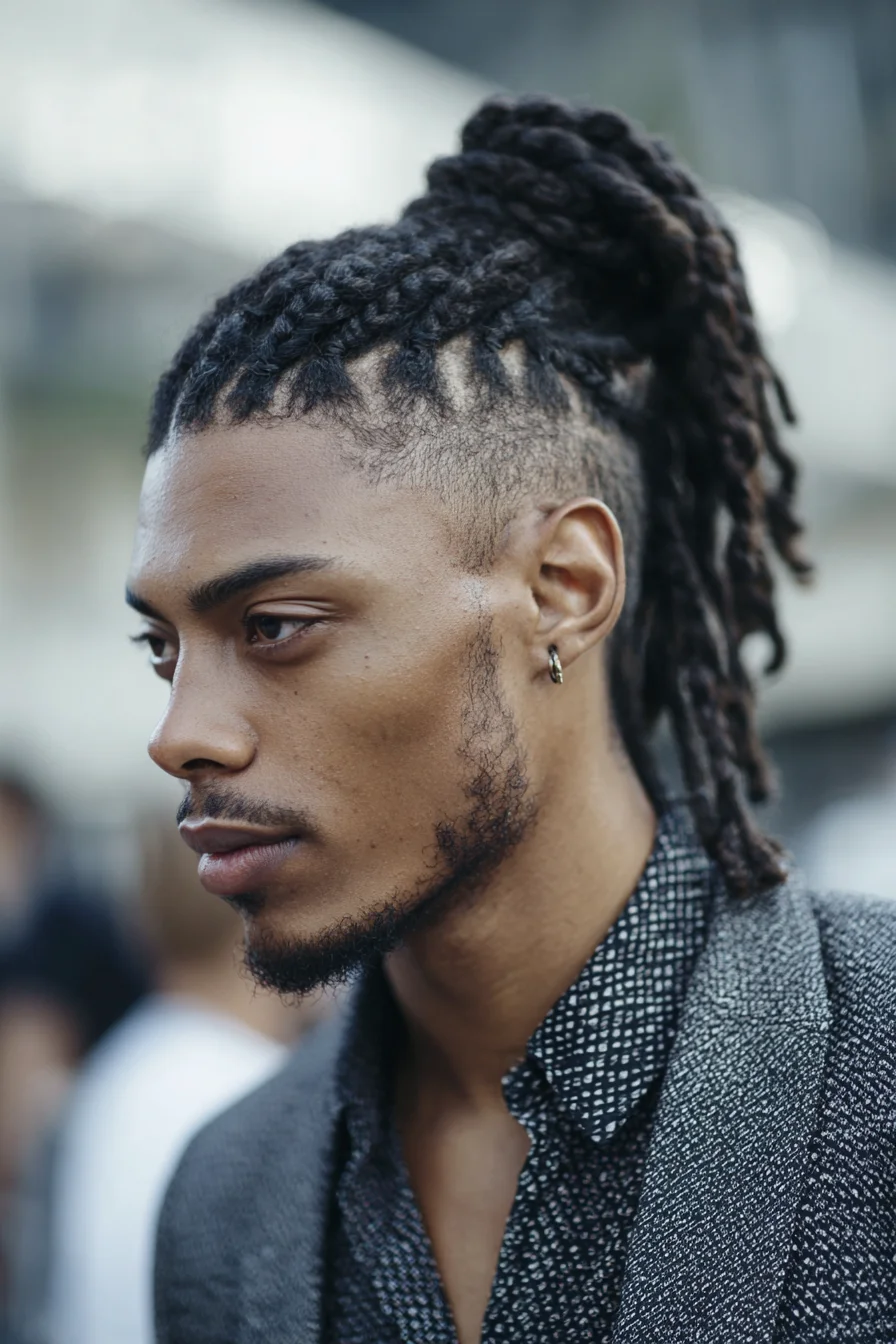
Suitable for: Type 3C–4C natural hair, medium to long length; works well with added extensions for extra length or thickness. Styling technique: start on a clean, detangled base. Section hair into larger front-to-back rows, apply a leave-in and light styling gel, create flat two-strand or rope twists anchored toward the crown, then gather into a high ponytail and secure with a strong elastic. The undercut/fade is done with clippers prior to twisting for a crisp contrast. Tools needed: clippers for the fade, rat-tail comb, sectioning clips, hair ties/elastics, small rubber bands, paddle brush and spray bottle. Products required: sulfate-free shampoo, hydrating leave-in conditioner, twist cream or gel, edge control, lightweight oil (jojoba or argan) and a clarifying shampoo for occasional use. Difficulty level: intermediate — requires competent twisting/braiding technique and a barber for a precise fade. Maintenance tips: sleep with a satin scarf/bonnet, lightly moisturize scalp and twists every 2–3 days, avoid over-tightening to reduce traction, retouch roots and the fade every 3–6 weeks, and clarify monthly to prevent product buildup.
Mens Side Cornrows with Textured Back and Long Micro Braids
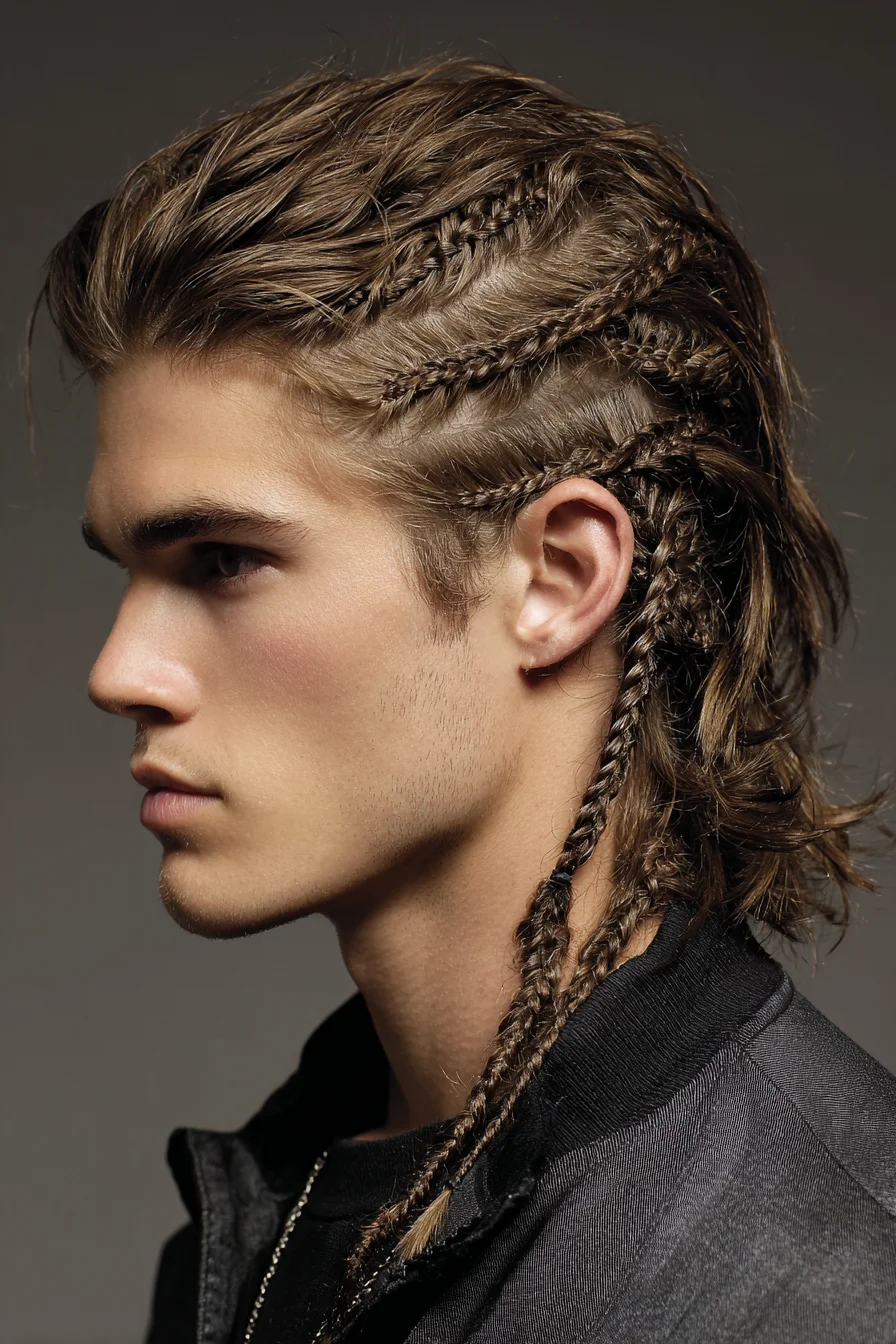
Suitable for medium to thick, straight to wavy hair at medium-long length (4–8+ inches). This look pairs neat side cornrows/micro braids with a textured, swept-back top and a few longer braids for contrast. Technique: section the hair into even panels with a rat-tail comb, lightly mist and apply a leave-in cream for grip, then braid 3–6 narrow cornrows along the sides using a three-strand or feed-in method and secure ends with small elastics. Leave the crown/back slightly tousled or create loose braids to blend with the cornrows. Tools: rat-tail comb, alligator clips, fine elastics, spray bottle, paddle brush and a blow dryer (diffuser optional). Products: leave-in conditioner, lightweight styling cream or paste, texture/sea-salt spray, anti-frizz serum and dry shampoo for longevity. Difficulty: intermediate — expect 45–90 minutes in-salon depending on braid count. Maintenance tips: sleep on a silk/satin scarf or pillowcase, refresh with braid spray and light scalp oil, avoid daily heavy washing, touch up tightness every 2–4 weeks and fully redo after 6–8 weeks to prevent matting and protect scalp health. Best done by an experienced braider for clean parts and even tension.
Medium-Thick Locs with Feed-In Cornrow Base and Low Undercut
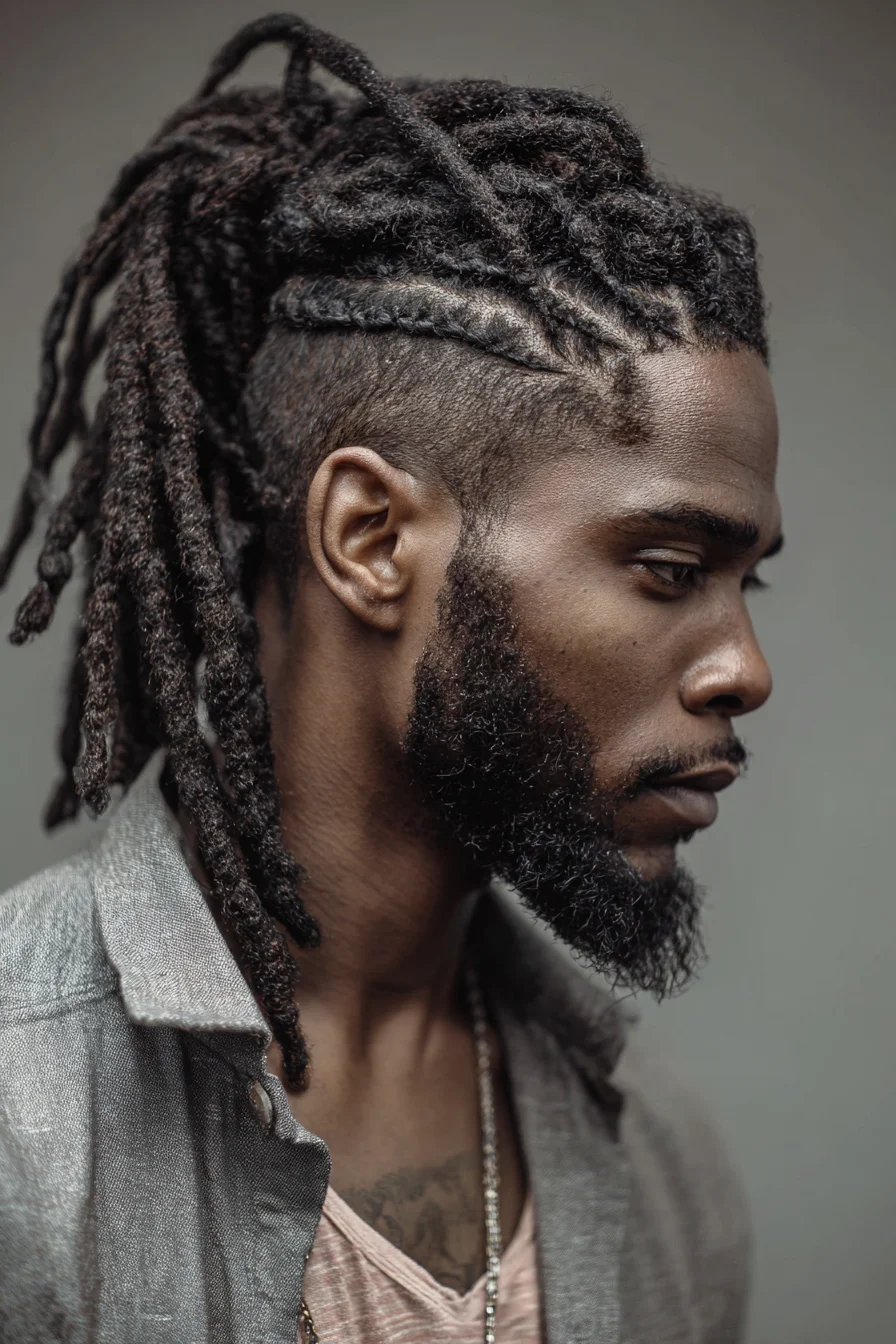
This look suits Type 3C–4 hair with medium to high density and natural texture—ideal for clients wanting defined locs with a modern undercut. Technique: create clean feed-in cornrows along the sides and top to anchor the locs, then form medium-thick locs by palm-rolling or interlocking from the braid base; gather into a loose ponytail or half-up. Salon tools: clippers for the undercut, rat-tail comb for parting, sectioning clips, fine crochet/locking hook (0.5–1.0 mm), spray bottle, and elastic ties. Products: residue-free clarifying shampoo, lightweight leave-in conditioner, locking gel or cream for first retwist, natural oils (jojoba/argan) and a light loc balm—avoid heavy waxes that cause buildup. Difficulty level: Intermediate to advanced—initial installation takes 3–6 hours depending on length and density; professional installation recommended for even feed-in braids and secure roots. Maintenance tips: wash every 1–2 weeks with gentle shampoos, palm-roll or re-tighten locs when damp, retwist or refeed cornrows every 4–8 weeks, moisturize the scalp regularly, refresh the undercut every 2–4 weeks, and sleep on a silk bonnet to minimize frizz.
Curved Cornrows into Short Freeform Dreadlock Top
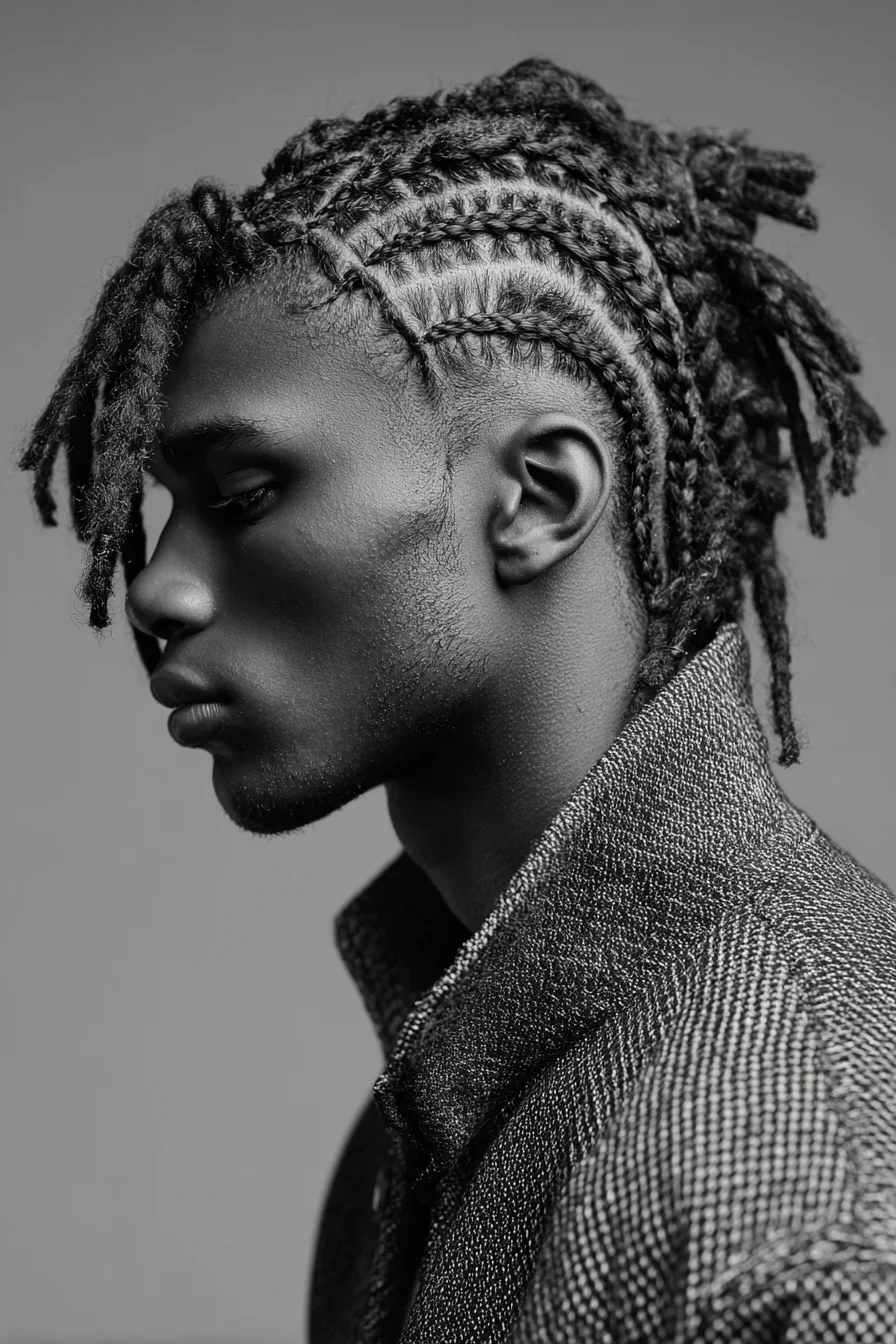
Suitable for Type 4 (coily/kinky) and textured Type 3 hair, this curved cornrow design transitions into short, freeform dreadlock-like ends for a modern, low-maintenance top. Start on clean, detangled hair: create curved partings using a rattail comb, clip sections, then cornrow each section tightly toward the crown, leaving 1–3 inches at the ends to form short locs or two-strand twists. Secure ends with small elastic bands or palm-roll and apply a light holding gel for neatness. Tools: rattail comb, sectioning clips, small elastics, edge brush, crochet needle (for tightening), and scissors. Products: sulfate-free clarifying shampoo as needed, hydrating leave-in, lightweight oil (jojoba or argan), braid spray to maintain moisture, and a light holding pomade or edge control. Difficulty: intermediate — requires precise parting and braiding skills; allow 1.5–3 hours depending on size and density. Maintenance: cleanse the scalp every 1–2 weeks (dilute shampoo to avoid residue), re-tighten cornrows every 4–8 weeks, palm-roll or crochet loose ends occasionally, and sleep on a satin bonnet or pillowcase. Avoid over-tightening to protect edges and consult a stylist for your first install.
Medium Cornrow Braids with Clean Parts and Tapered Sides
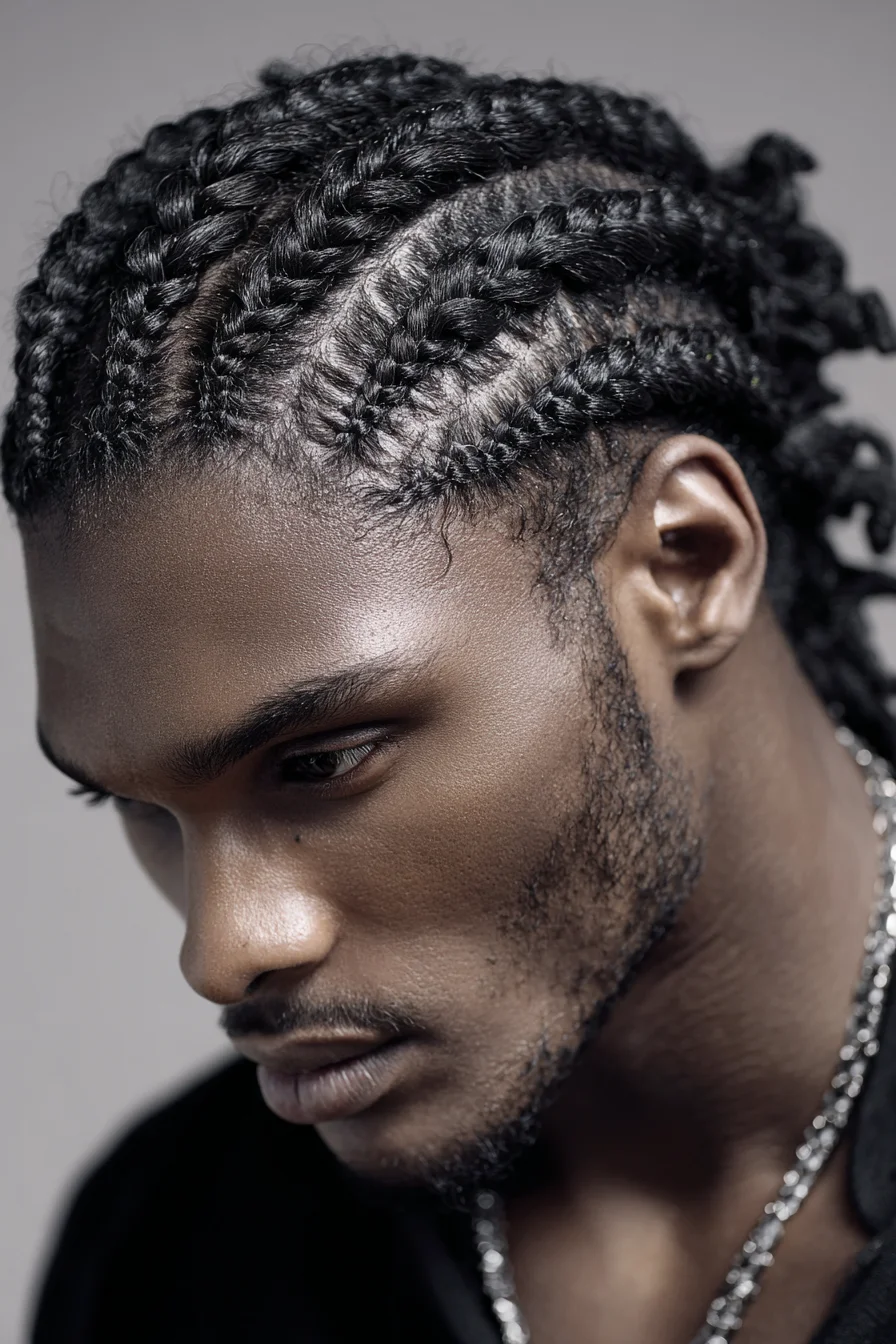
This polished medium cornrow look is best for textured, curly or coily hair (3A–4C); it also works on straighter hair with pre-taped or feed-in extensions. Start on freshly washed, detangled hair. Section precise, even rows with a rattail comb and clip each section. Use a leave-in conditioner or detangling spray, then apply a light gel or edge control at the roots for sleek parts. Braid using a three-strand or feed-in technique, keeping consistent tension to avoid breakage; add synthetic/keratin hair if you want extra length or thicker rows. Tools: rattail comb, sectioning clips, small elastics, edge brush, spray bottle, and a handheld mirror. Products: leave-in, light holding gel, nourishing scalp oil, lightweight mousse or setting spray, and a dry shampoo for touch-ups. Difficulty: moderate — expect 1.5–3 hours depending on size and extensions; consider a professional for very tight, even rows. Maintenance: sleep in a satin scarf/bonnet, oil the scalp weekly, cleanse with diluted shampoo or co-wash, avoid excessive re-tensioning, and plan touch-ups or a full redo every 4–8 weeks to protect the hairline.
Short Two-Strand Twists with Low Fade — Textured Cornrow-Inspired Style
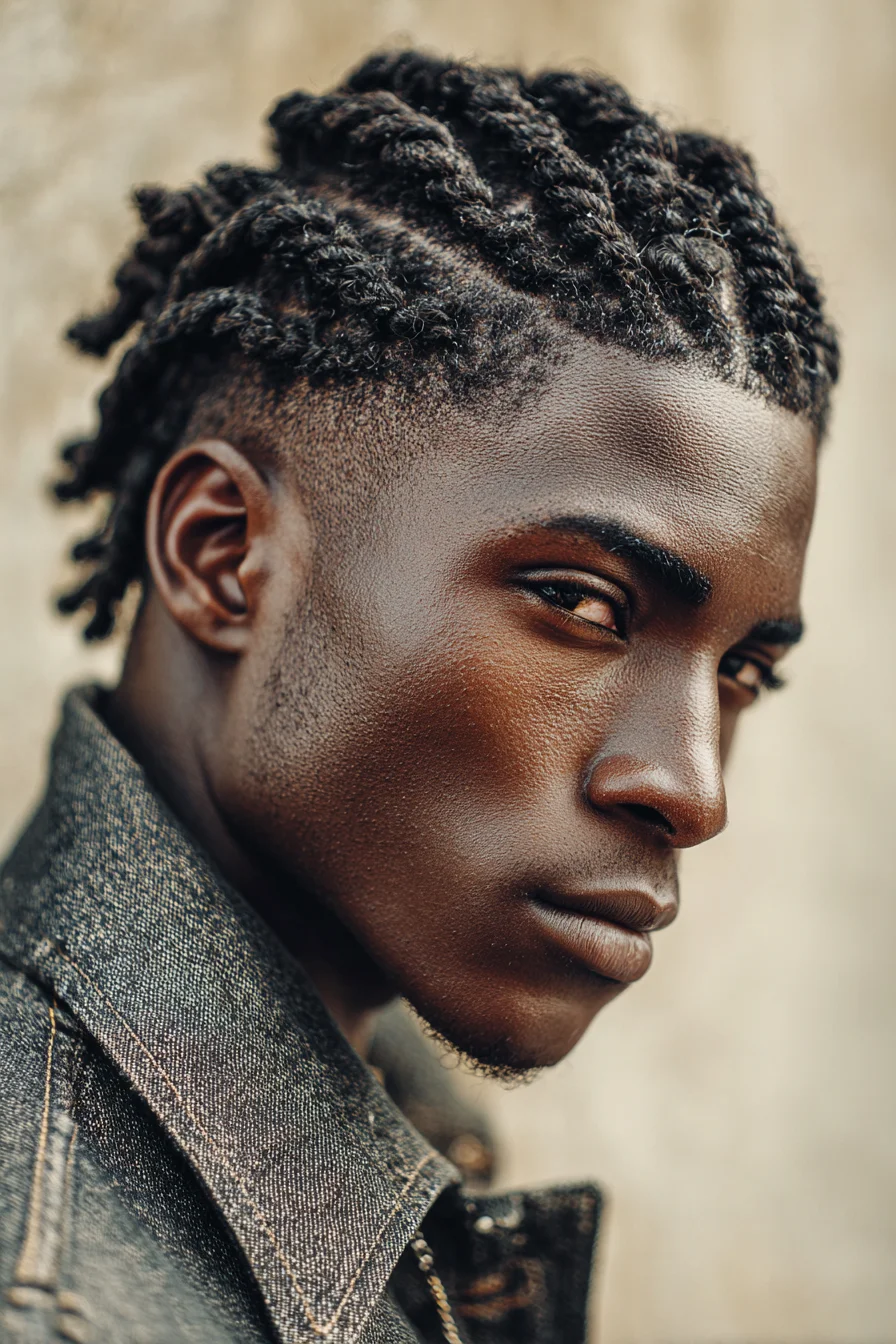
This short two-strand twist style with a low tapered fade suits natural Type 3C–4C hair and medium to high density. Ideal for clients wanting a structured textured look without long length, it works well on hair with good coil definition and some elasticity. Technique: section hair into even rows with a rat-tail comb, apply a water-based leave-in and twisting cream, then create two-strand twists (or flat/tight chunky twists) following the scalp rows; finish with a clean low fade using clippers for contrast. Tools needed: rat-tail comb, sectioning clips, clippers with guards, light mist spray bottle, and an edge brush. Products required: moisturizing leave-in, medium-hold twisting cream or gel, lightweight scalp oil, and a satin bonnet/ scarf. Difficulty level: intermediate — precise parting and even tension are essential; fading is best done by a trained barber. Maintenance tips: sleep on satin nightly, apply a light oil or spray to the scalp weekly, re-twist loose sections every 2–4 weeks, avoid excessive tension to prevent breakage, and clarify gently once every 2–3 weeks to prevent product buildup.
Sleek Feed‑In Cornrows with Chain Accents
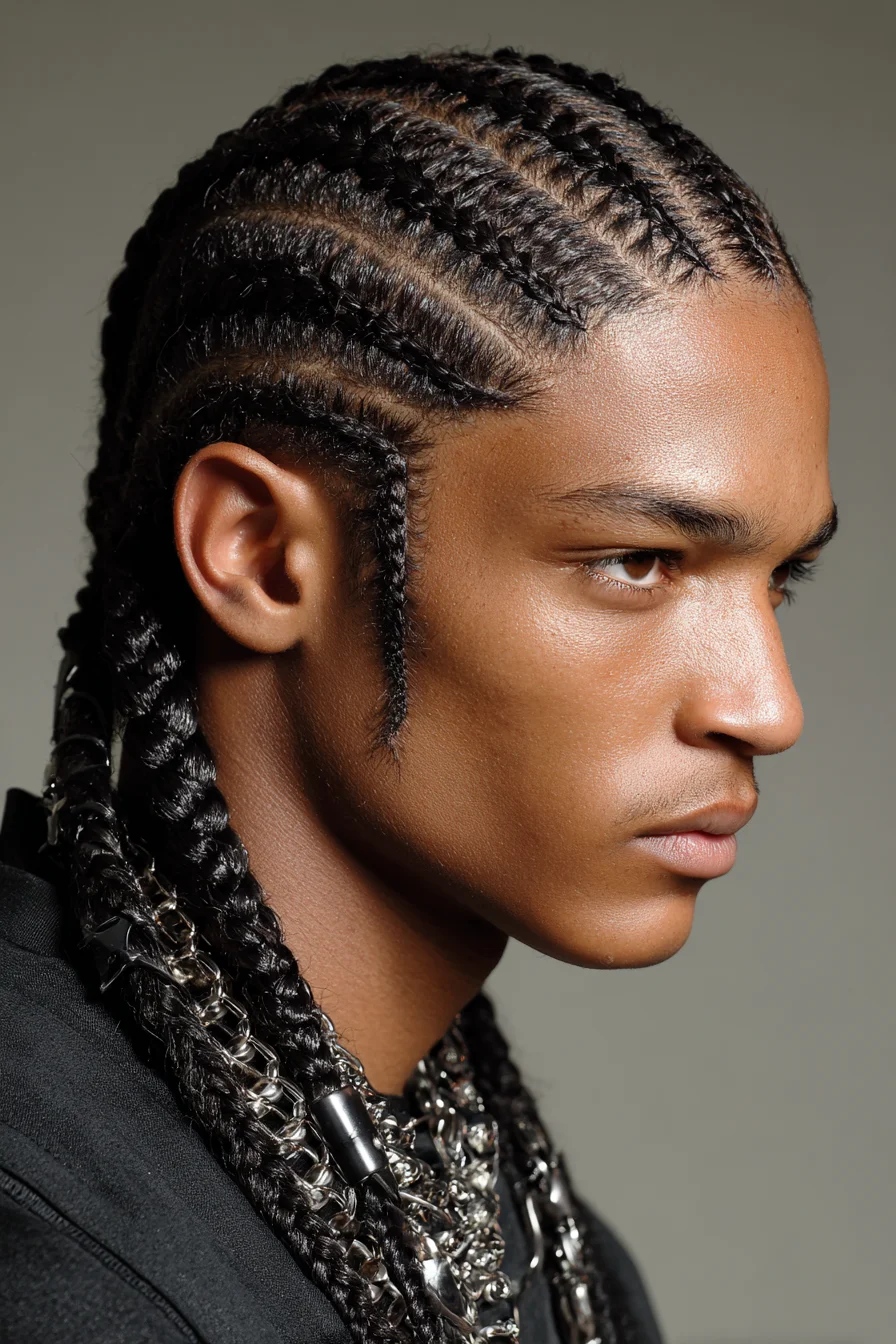
This polished feed‑in cornrow style works best on Type 3–4 textured hair but can be achieved on straighter hair after texturizing or adding extensions. Technique: start on clean, detangled hair; create neat, even partings with a rattail comb, then use the feed‑in (stitch) braiding method from the hairline back, adding Kanekalon or human hair extensions for length and thickness. Finish with small elastic bands and attach chain or bead accents with a crochet/loop tool. Tools needed: rattail comb, sectioning clips, edge brush, fine elastics, crochet/loop tool, spray bottle. Products required: leave‑in conditioner, light hold gel or edge control for a sleek finish, lightweight braid mousse, anti‑frizz serum or oil sheen, and a clarifying/diluted shampoo for scalp care. Difficulty level: intermediate — expect 1.5–3 hours depending on size; recommended professional for very small or tight parts. Maintenance tips: sleep on a satin bonnet or pillowcase, refresh edges with a small amount of gel, moisturize scalp weekly with lightweight oil, cleanse gently every 1–2 weeks to remove buildup, and avoid excessive tension to protect the hairline. Reinstall after 4–8 weeks as needed.
Tight Feed‑In Cornrows Transitioning to Long Thick Braids
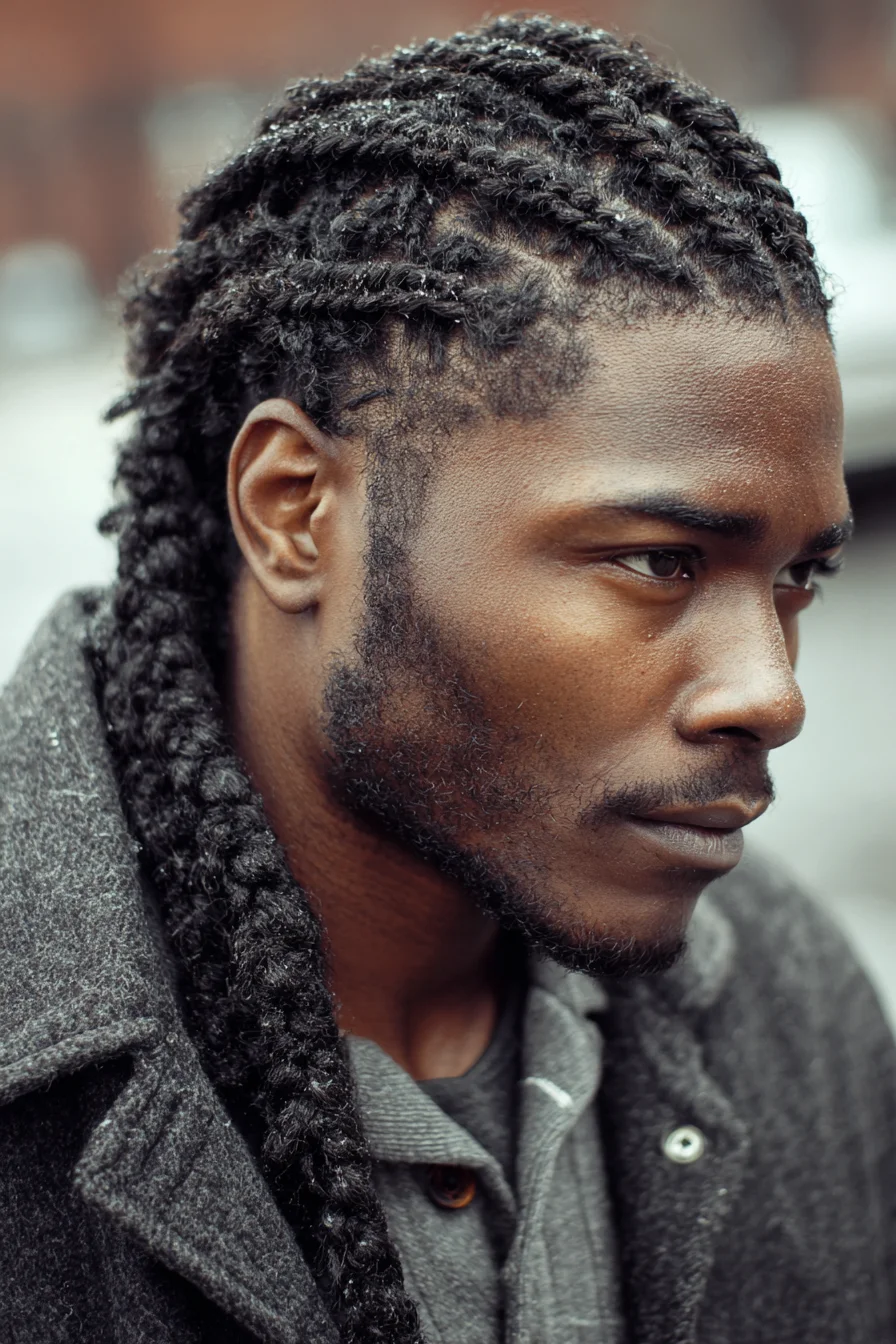
This look suits natural, textured hair (3A–4C) with medium to high density and at least 3–4 inches of length for secure feed‑in work; extensions can be added for extra length and thickness. Technique: section clean, straight parts with a rat‑tail comb, then create feed‑in (stitch) cornrows at the scalp using small, even additions of hair as you braid; transition into larger three‑strand braids down the back or finish with two‑strand twists depending on the desired bulk. Tools needed: rat‑tail comb, duckbill clips, spray bottle, wide‑tooth comb, braiding hair (optional), edge brush, and small elastic bands. Products required: lightweight leave‑in conditioner, a slip cream or braid gel for control, anti‑frizz serum, lightweight oil or scalp treatment, and a braid‑refresh spray. Difficulty: intermediate — expect 1.5–4 hours depending on density and length; precision parting and even tension are key. Maintenance tips: wear a satin bonnet at night, avoid heavy buildup by using diluted shampoo at the scalp every 1–2 weeks, reapply light oil to the scalp, touch up loose edges as needed, and remove or redo within 6–8 weeks to protect hair health.
Textured Cornrows with Tapered Undercut and Low Bun
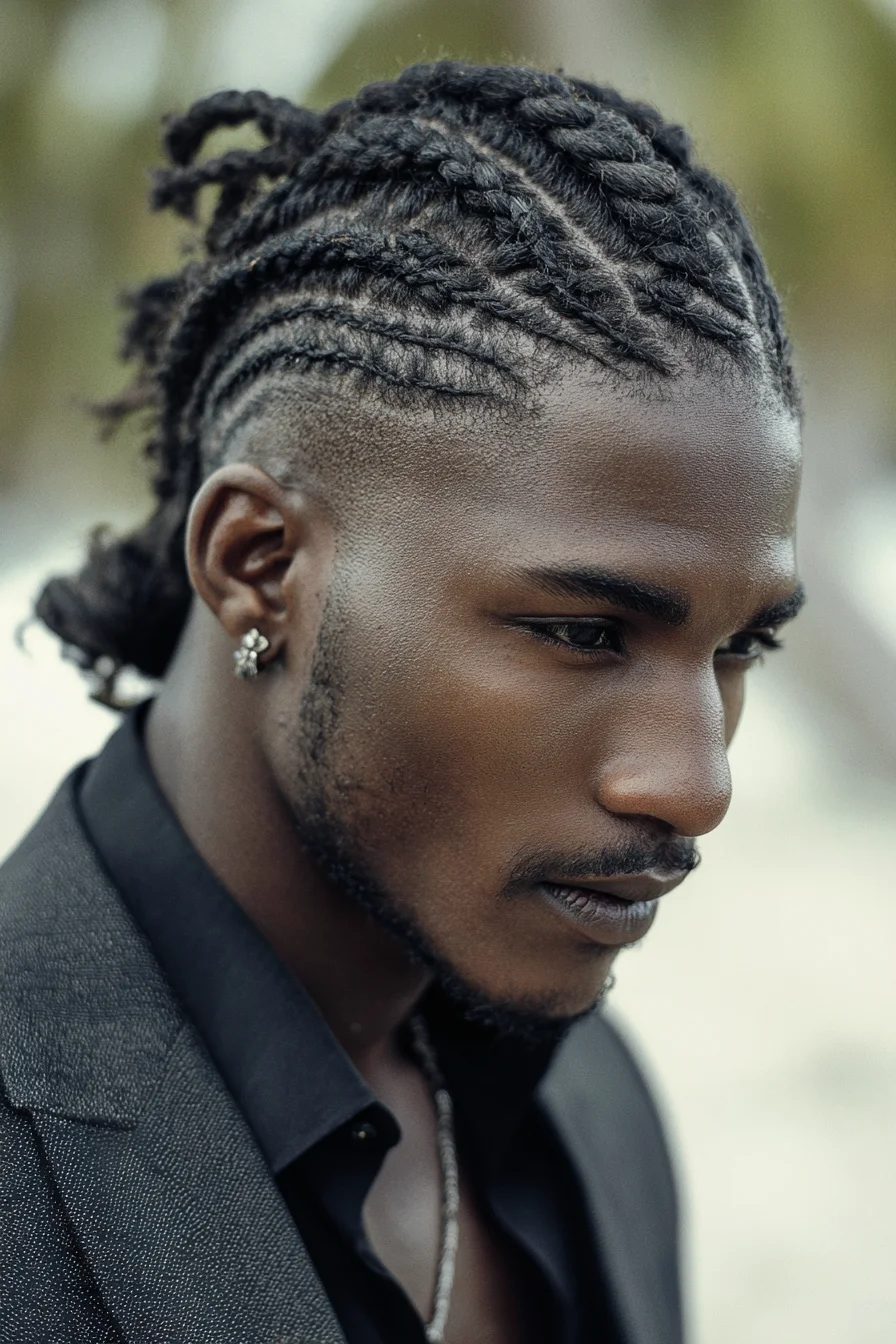
Suitable for natural textured hair (3B–4C) and chemically relaxed hair that’s been prepped, this look uses defined cornrows along the crown with a tapered undercut and a low bun. Begin on clean, detangled hair: create precise partings with a rat-tail comb and clip sections away. For each row, apply a lightweight leave-in conditioner and a medium-hold styling gel to smooth the hair, then braid or two-strand twist close to the scalp, maintaining even tension toward the back. Gather the braid ends into a low bun and secure with elastic or small rubber bands; clipper work creates the tapered sides for a sharp contrast. Tools: rat-tail comb, clips, clippers (for taper), small elastics, boar-bristle brush. Products: leave-in moisturizer, medium-hold gel or pomade, edge control, light hair oil, and anti-frizz spray. Difficulty: intermediate — recommended for experienced stylists or a patient DIYer; expect 90–150 minutes depending on density. Maintenance: sleep on a satin scarf/bonnet, refresh edges with light gel, oil the scalp weekly, and cleanse with diluted shampoo or co-wash. Avoid excessive tension to protect the hairline and retouch the taper every 3–6 weeks.
Cornrow Feed‑In to Long Individual Braids — Men’s Protective Braided Style
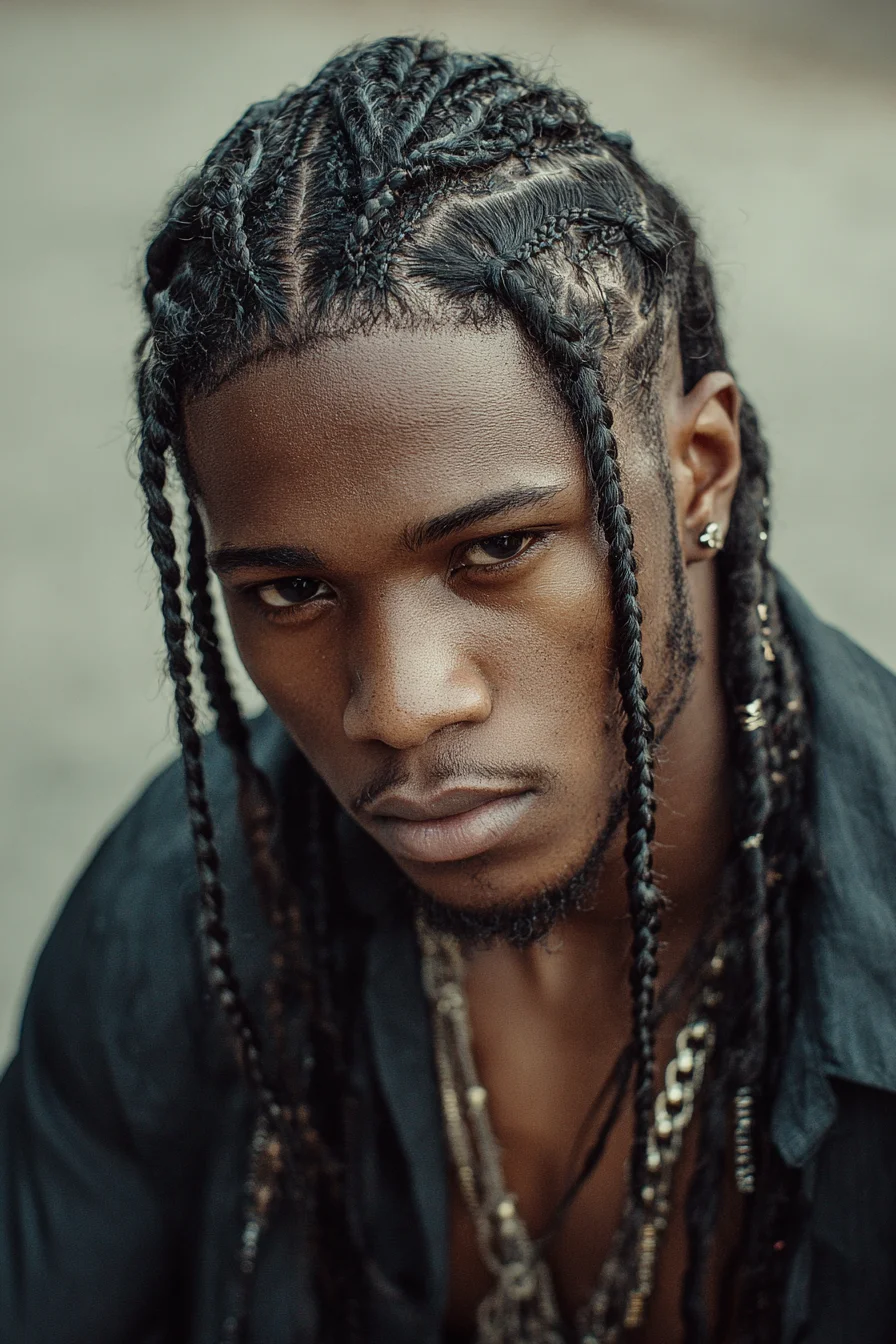
This look suits natural, tightly coiled and textured hair (3b–4c) and can be adapted for looser textures with added grip or braiding hair. The style is achieved by clean, even parting into cornrow feed‑ins at the scalp that transition into longer three‑strand/box braids. Start on damp, detangled hair with defined parts using a rat‑tail comb, secure sections with clips, and braid using the feed‑in technique for a neat, natural root. Add synthetic Kanekalon or human braiding hair only where length or thickness is desired. Tools: rat‑tail comb, sectioning clips, small elastic bands, fine tooth comb, and a mirror; optional crochet needle for extensions. Products: moisturizing leave‑in, edge control or light gel for smooth parts, braid spray or lightweight oil (jojoba/tea tree) for scalp health, and a mousse to set flyaways. Difficulty: intermediate — expect 2–5 hours depending on size and length; professional braider recommended for tight, uniform parts. Maintenance: sleep on a silk/satin scarf, apply light oil to the scalp weekly, rinse with diluted shampoo as needed, avoid heavy buildup, and remove or redo after 6–8 weeks to prevent breakage and preserve edges.
Tight Cornrow Braids with Shaved Undercut — Textured Long Braids
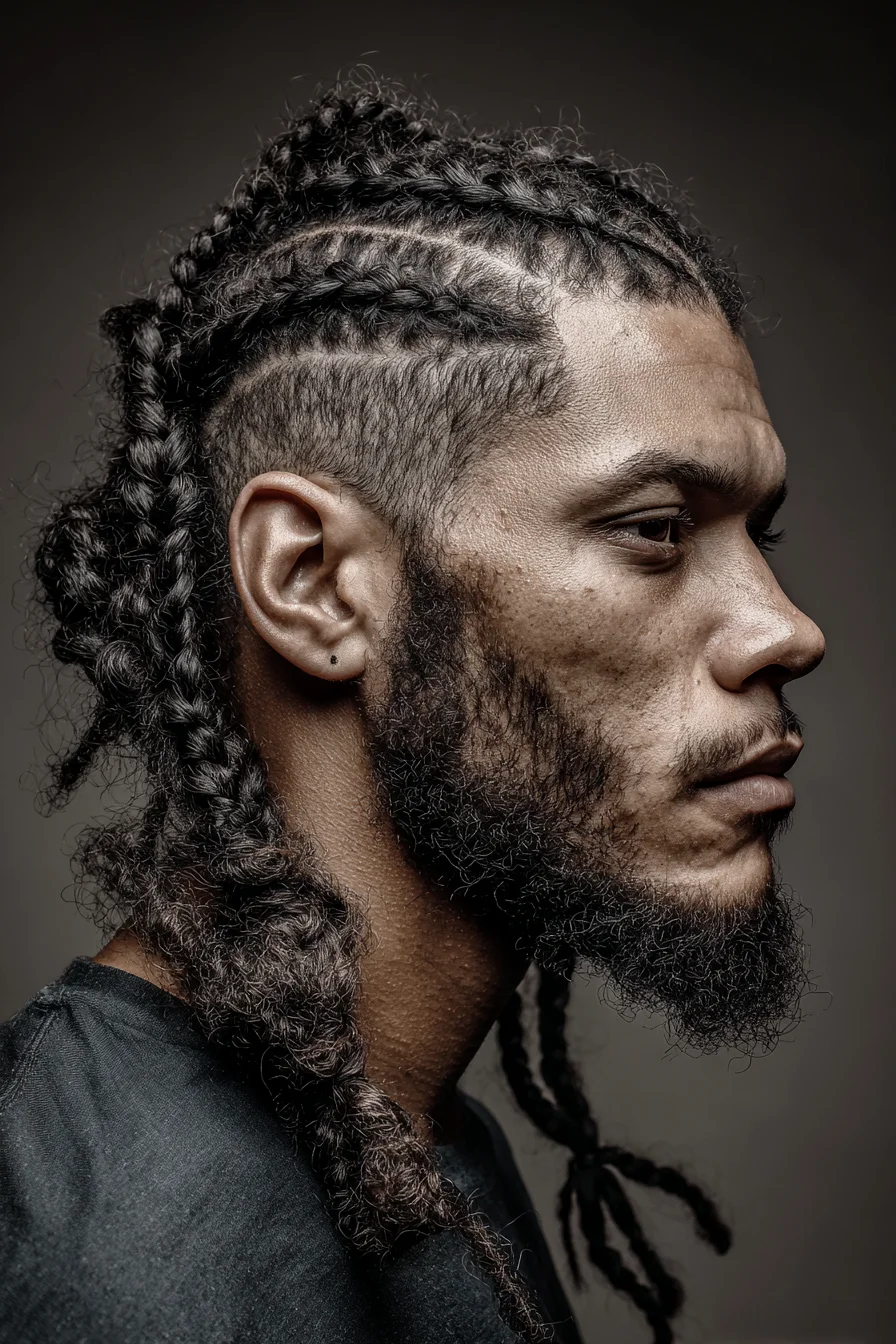
Suitable for Type 3–4 textured, coily or kinky hair and medium-to-thick densities, this look combines neat cornrows on top with a shaved undercut and long textured braids at the back. Technique: section clean, even parts with a rat-tail comb, mist hair with water/leave-in, apply a lightweight styling gel for grip and begin three-strand cornrows from the hairline toward the crown. For length or fullness, use feed-in braiding or pre-looped extensions and finish ends with small elastics. For the undercut/fade, use clippers before braiding or have a barber blend the sides afterwards. Tools needed: rat-tail comb, sectioning clips, spray bottle, fine-tooth comb, small elastics, clippers (for the fade), edge brush and hair clips. Products required: leave-in conditioner, light hold gel or pomade, braid spray or lightweight oil, edge control and a scalp oil (tea tree/peppermint) for comfort. Difficulty: moderate–advanced; clean parts and fades are best handled by a pro. Maintenance: sleep on satin, mist braid spray twice weekly, oil the scalp weekly, avoid over-tightening, and plan for a full redo or tighten at 6–8 weeks to maintain shape and scalp health.
Half-Up Chunky Two-Strand Twists for Coily and Natural Hair
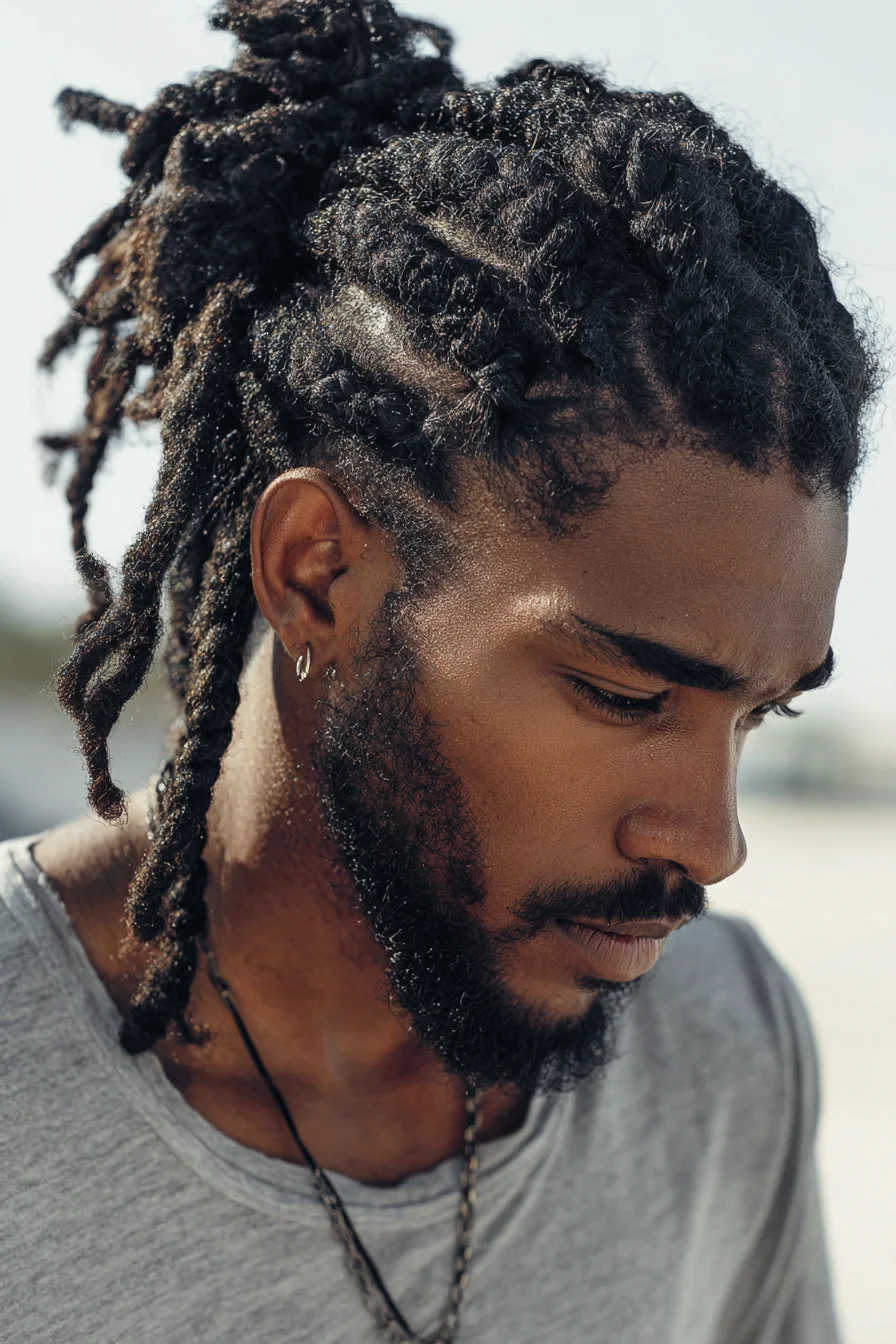
This half-up style uses chunky two-strand twists gathered into a loose bun with several twists left down for a relaxed, textured finish. Best suited for 3B–4C hair textures, natural coils, or maintained locs—works well on medium to long lengths. Technique: section hair into large horizontal or diagonal panels, apply a hydrating leave-in, then create chunky two-strand twists or palm twists. Gather the top half into a low or mid bun and secure with a snag-free elastic or soft hair tie, leaving some front or side twists loose for framing. Tools needed: wide-tooth comb, rat-tail comb for parting, clips, elastic bands, and optionally a crochet needle if refreshing locs. Products required: lightweight leave-in conditioner, moisturizing twist cream or butter, light holding gel for definition, and a natural oil (jojoba or castor) to seal. Difficulty level: moderate—basic twisting skills and neat parting are required; salon service recommended for precision or for beginner loc maintenance. Maintenance tips: sleep on a satin pillow or bonnet, refresh with water and leave-in weekly, lightly oil scalp, and re-twist or palm-roll edges every 2–6 weeks to maintain shape.
Undercut Cornrows with Feed‑In Braids into Long Textured Braided Ponytail
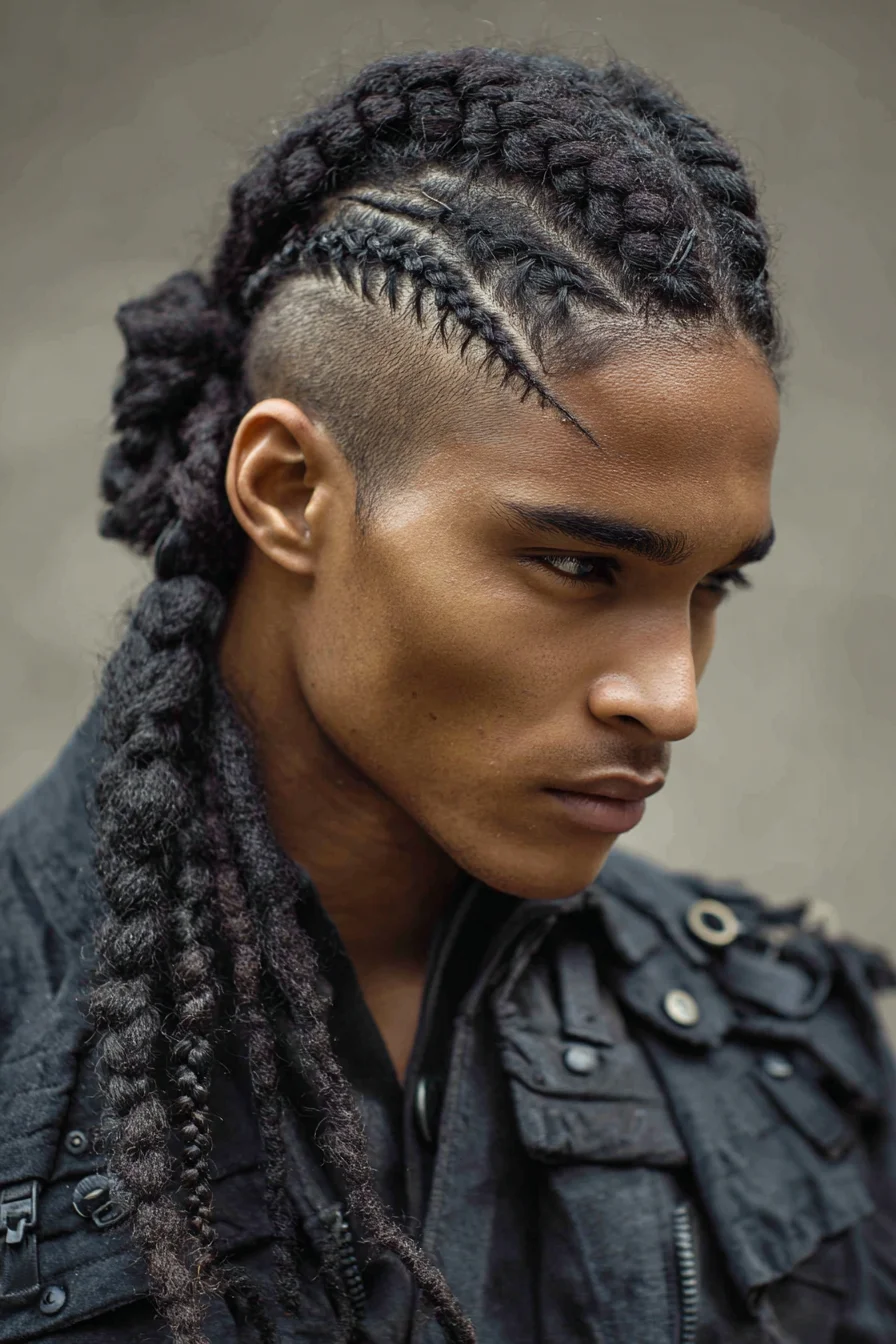
This look suits medium-to-dense textured hair (Type 3–4) best — natural volume helps cornrows lie flat and long braids hold shape. It can be created on straighter hair with added texture or extension hair. Technique: clip sides and fade or shave with clippers, map clean sections with a rattail comb, then create feed‑in cornrows at the hairline that transition into larger flat cornrows across the crown. Secure at the nape and continue into one or multiple three-strand or bubble-style braids down the back. Tools needed: clippers, rattail combs, sectioning clips, elastic bands, a wide-tooth comb, and optional synthetic hair (Kanekalon) for added length/volume. Recommended products: light hold gel or edge control for clean parts, leave-in conditioner or detangler before braiding, scalp oil or balm, braid spray for hydration, and a light setting mousse to reduce frizz. Difficulty: intermediate–advanced — clean parts and feed‑in technique are best done by a braider; expect 2–4 hours. Maintenance tips: sleep on a satin bonnet, oil the scalp weekly, avoid excessive tension to prevent traction, refresh edges with edge control and trim stray hairs; keep for 4–6 weeks maximum for scalp health.
Textured Feed-In Cornrows with Chunky Rope Braids — Natural Hair
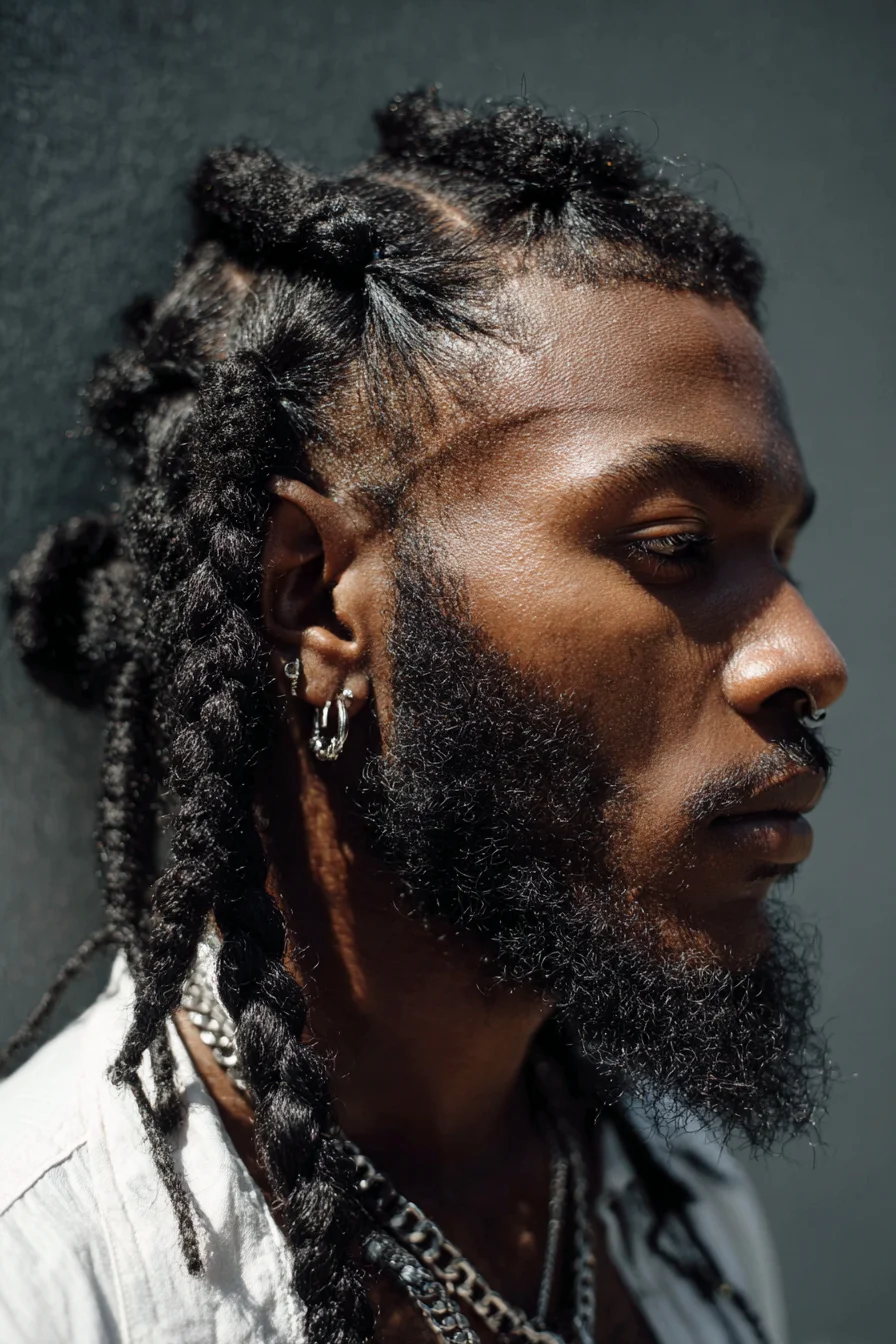
Textured feed‑in cornrow style finished with chunky rope braids. Best suited to 3B–4C natural textures and thick, coily hair — it also translates to looser curl patterns with pre-stretching or added extensions. Technique: section the hair into clean panels with a rat-tail comb, apply a lightweight leave‑in and a small amount of styling cream, then create feed‑in cornrows at the scalp, gradually adding length and transitioning to two‑strand rope or three‑strand chunky braids down the shaft. Tools needed: rat‑tail comb, sectioning clips, wide‑tooth comb, detangling brush, small elastic bands, optional synthetic or human hair for length, and a blow dryer with comb attachment if stretching. Products: pre‑poo oil, moisturizing leave‑in conditioner, light hold styling cream or braid gel for control, edge control, and a finishing shine oil. Difficulty: Intermediate — requires consistent tension and neat parting; expect 1.5–3 hours in a salon. Maintenance: sleep on a satin/silk scarf or bonnet, refresh edges with light gel, apply scalp oil weekly, co‑wash every 1–2 weeks, and redo tightened sections after 4–6 weeks to prevent breakage. Avoid excessive tension to protect the hairline.
Parallel Cornrows with Short Twists — Textured Hair Styling
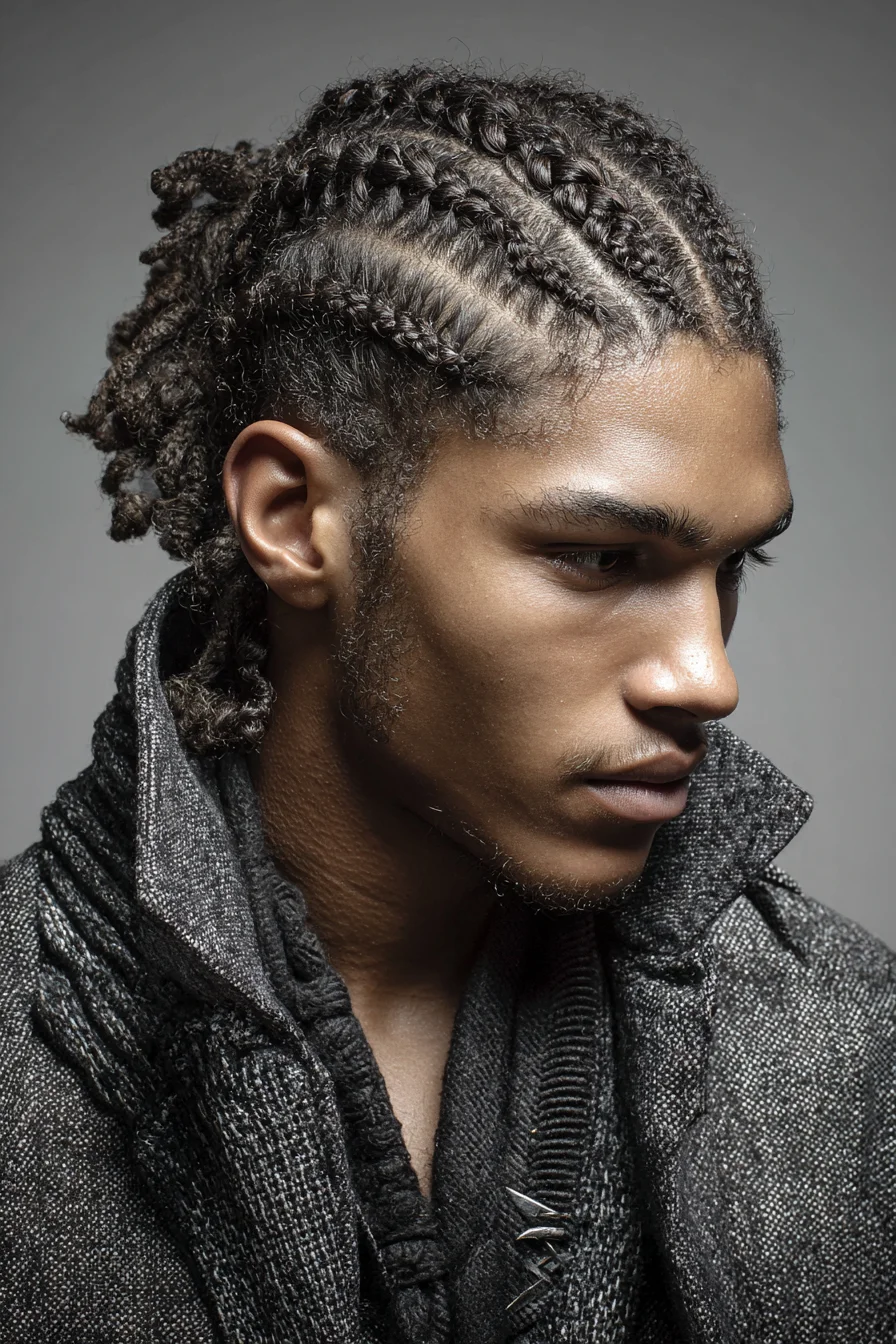
This low-profile parallel cornrow look finishing into short twisted ties is best suited to Type 3–4 curly and coily hair with medium to high density; it can be adapted for looser curls with a texturizing spray. Technique: start on clean, detangled hair, apply a lightweight leave-in, then use a rat-tail comb to create neat parallel parts. Cornrow each section with even tension toward the crown, securing ends into small twists or banded knots at the nape. Keep braiding tension moderate to protect the hairline. Tools needed: rat-tail comb, sectioning clips, fine-tooth comb for parts, small elastic bands, edge brush, spray bottle. Products required: moisturizing leave-in conditioner, lightweight styling cream or butter, light holding gel for smooth parts, a non-greasy oil for the scalp, and a residue-free clarifying shampoo for periodic washes. Difficulty level: intermediate — requires consistent parting and braiding technique; allow 60–120 minutes depending on density. Maintenance tips: sleep on a satin bonnet or pillowcase, mist with a water-based refresher and seal ends with a dab of oil, apply scalp oil weekly, avoid heavy waxes to prevent buildup, and refresh or redo after 4–6 weeks to minimize breakage and protect edges.
Tight Cornrows with Tapered Sides — Natural Textured Hair
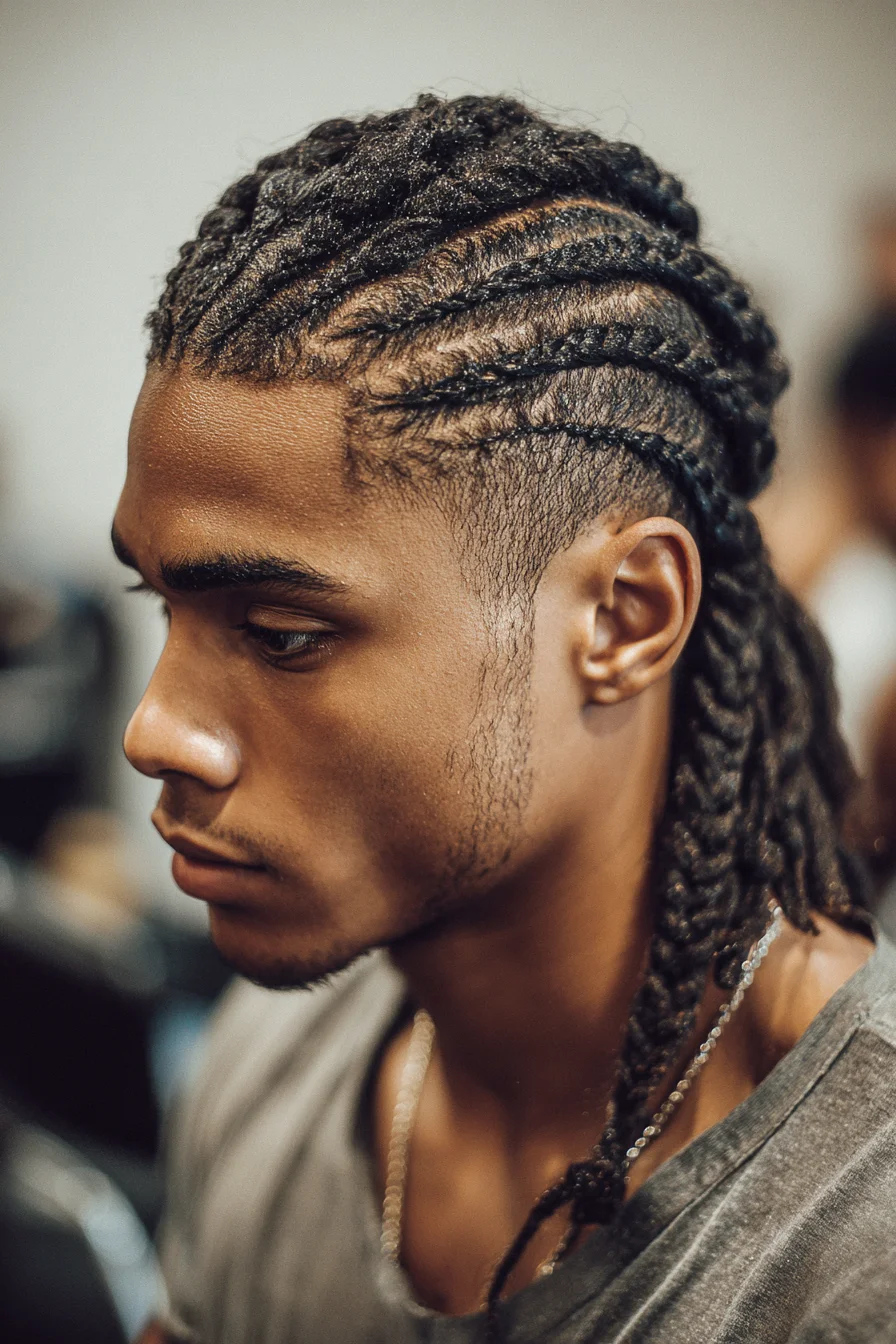
This clean cornrow style with tapered sides suits natural, textured hair (3A–4C) and thicker wavy hair when prepped. Technique: create even small-to-medium straight-back parts with a rat-tail comb, lightly mist sections, apply a leave-in conditioner, then smooth a medium-hold gel or pomade at the roots and braid using a three-strand cornrow method. Finish rows at the nape with secure bands or stitched ends and blend the sides with clippers for a soft taper or undercut. Tools needed: rat-tail comb, sectioning clips, clippers/guard set, detail trimmer for edges, small elastics, and a boar-bristle or soft brush. Recommended products: a moisturizing leave-in, lightweight holding gel or braid cream, edge-control paste, scalp oil or spritz to prevent dryness, and a satin scarf or bonnet. Difficulty: moderate — requires practiced parting and even tension; expect 60–120 minutes depending on row size and length. Maintenance tips: avoid overly tight braiding to reduce traction, moisturize scalp 2–3 times weekly, refresh edges lightly, sleep on satin and schedule touch-ups or full redo every 4–8 weeks depending on new growth and neatness.
Textured Cornrows into Dread Bun with Low Skin Fade — Braids & Locs Hybrid
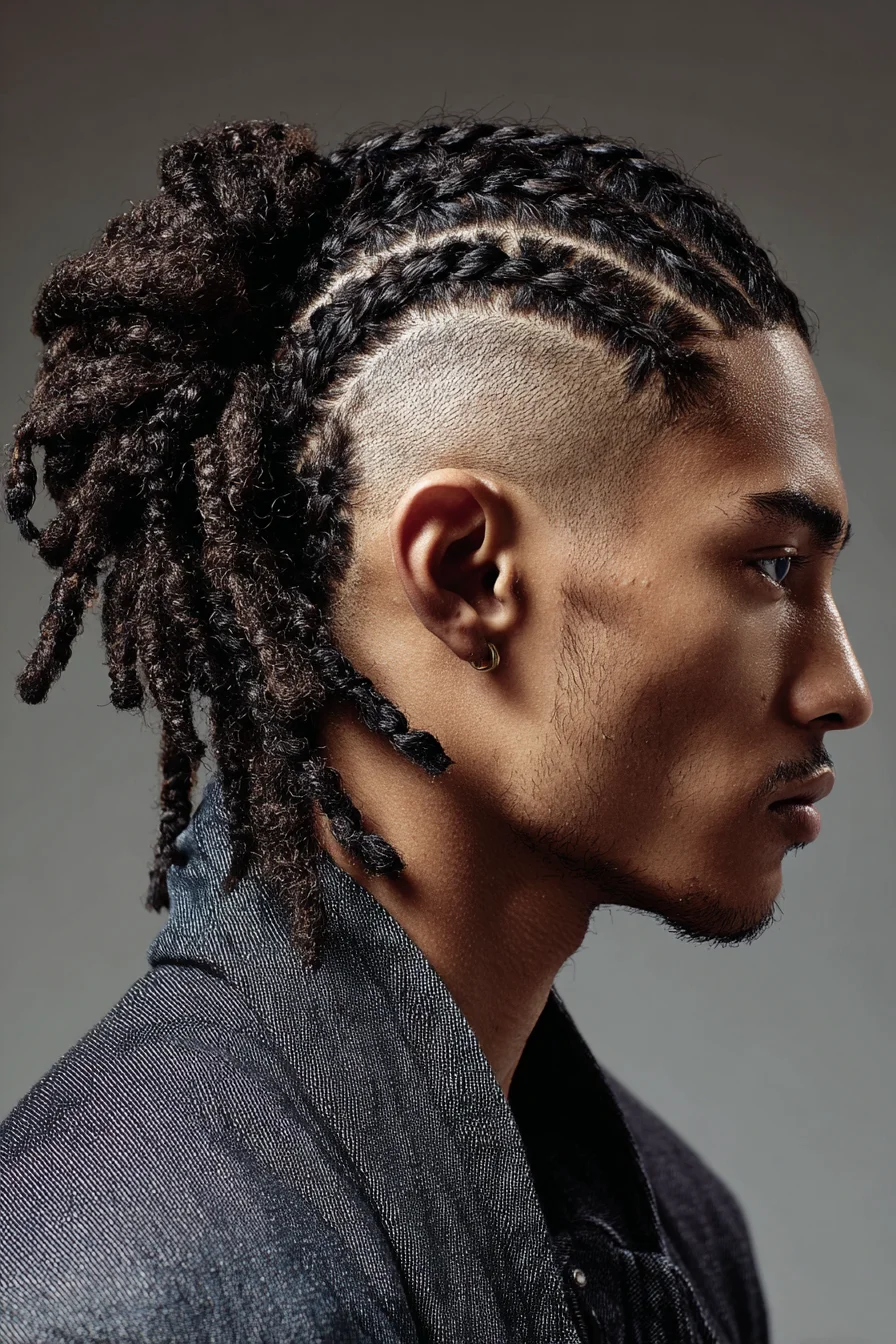
This modern hybrid pairs tight, neat cornrows along the crown with textured dread/twist ends gathered into a high bun and a low skin fade at the sides. It’s best suited to naturally curly to coily hair (3B–4C) or pre-formed locs — hair should be at least 4–6 inches long along the top for secure braiding and longer for a fuller bun. Technique: section the top into parallel parts, cornrow each section with even tension, transition the braid into twists/locs for texture, then gather and secure into a bun; finish the sides with a professional clipper fade. Tools needed: clippers, rattail comb, sectioning clips, small elastic bands, crochet hook (for loc tightening), and a fine-tooth edge brush. Recommended products: sulfate-free shampoo, lightweight leave-in, hydrating oil (jojoba/argan), holding pomade or gel for neat parts, and anti-itch/braid spray. Difficulty: intermediate–advanced — book a stylist for clean parts and fades to avoid uneven tension. Maintenance: sleep with satin, moisturize scalp twice weekly, refresh edges and bun every 4–6 weeks, retouch fade as needed, and avoid overly tight braiding to prevent traction.
Tight Cornrows with Beaded Microbraids — Mens Long Braided Style
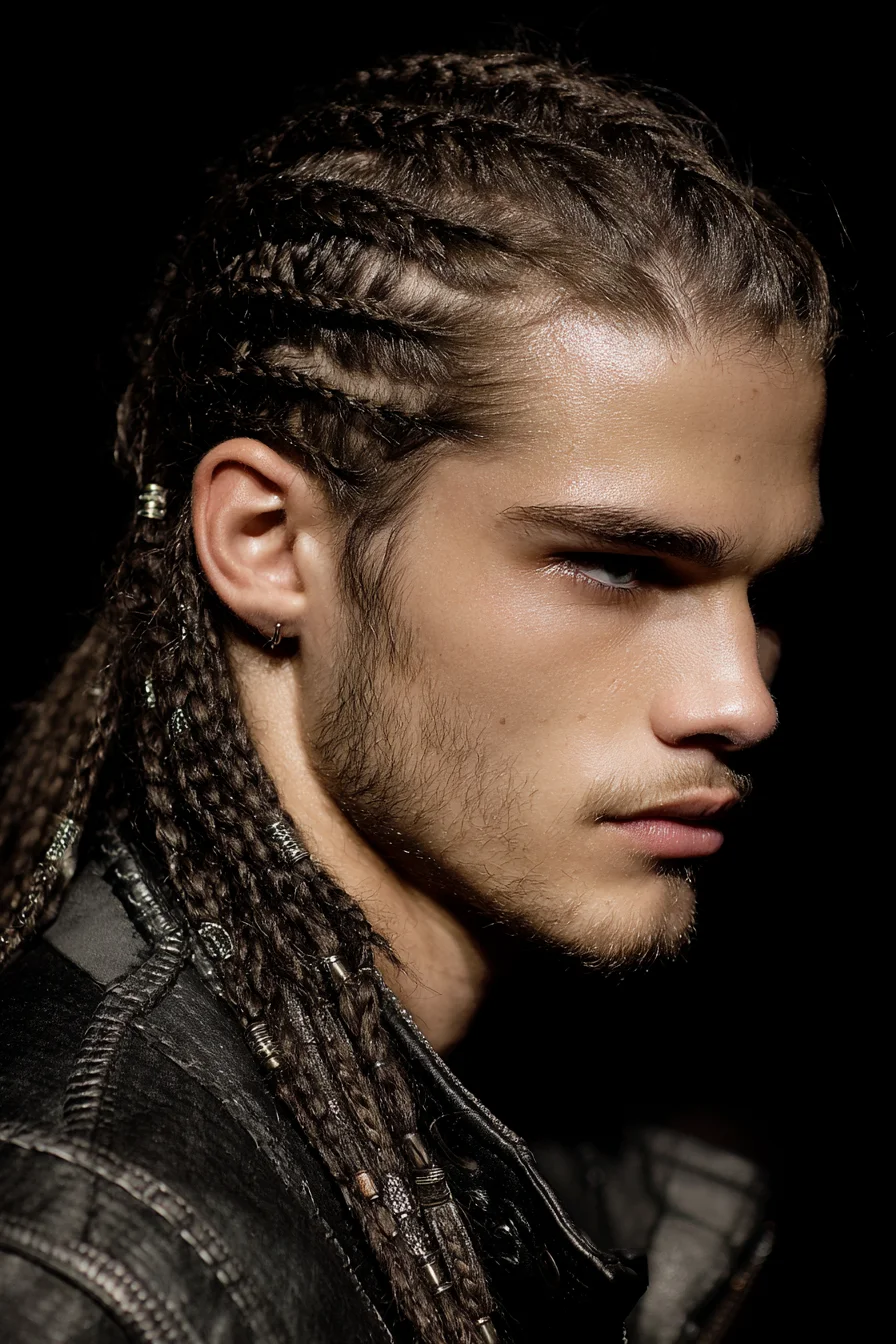
This tight cornrow-to-microbraid style suits medium to thick hair textures and can be adapted for straight hair with added grip or lightweight extensions for length. Technique: section the hair into even, narrow rows with a rat-tail comb, then braid each row tightly along the scalp (cornrow) and continue as small three-strand braids off the scalp. Add metal cuffs or beads with a beading tool for finish. Tools needed: rat-tail comb, sectioning clips, small elastics, beading tool/needle, crochet needle (if adding extensions), spray bottle, and sharp scissors. Products required: pre-poo/oil, sulfate-free clarifying shampoo, deep conditioner, leave-in detangler, small amount of braiding gel or pomade for grip, edge control, lightweight braid spray and a light scalp oil. Difficulty level: advanced — best done by a stylist (2–6+ hours depending on density/length). Maintenance tips: sleep on a silk/satin pillow or wrap, moisturize scalp and braid lengths every 3–5 days with a braid spray or light oil, cleanse gently every 1–2 weeks, avoid overly tight tension to prevent breakage/traction alopecia, and refresh edges or replace beads every 4–8 weeks.
Textured Cornrow Braids with Undercut and Long Braided Ends
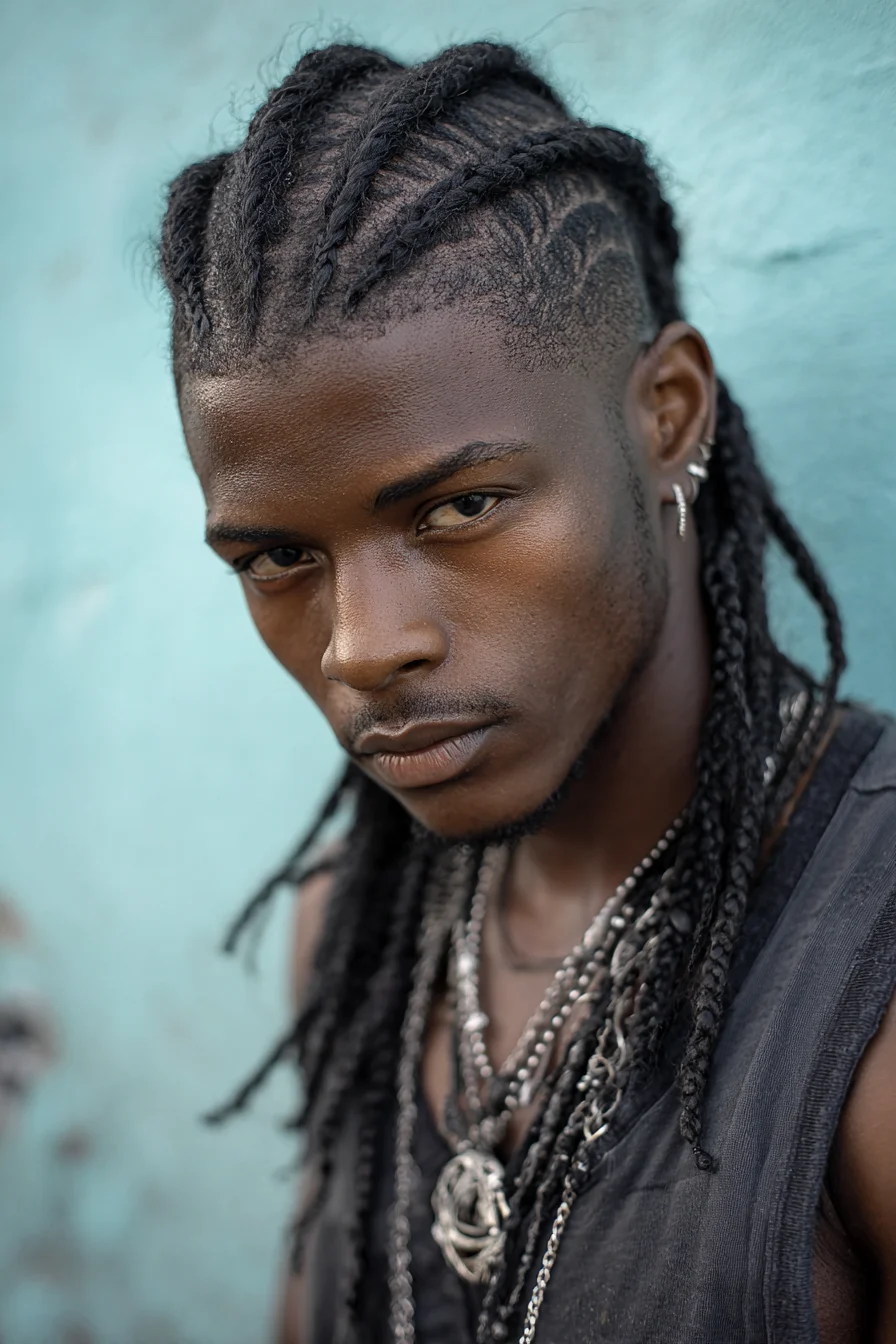
This modern cornrow look with a clean undercut and long braided ends is best suited to textured, tightly coiled hair (type 3B–4C) or relaxed hair with added braiding extensions for body and length. Start on washed, detangled hair. Use clippers to create a tapered or shaved side and a rat-tail comb to map out even, curved partings. For raised, durable cornrows use a feed-in or three-strand braiding technique from the hairline back, adding braiding hair where extra length or fullness is required. Finish ends with small elastics or heat-sealed/sleeved tips and smooth edges with a lightweight gel. Tools: rat-tail comb, clippers, sectioning clips, rattail/edge brush, braiding hair (optional), small elastics or bead/sleeve kit. Products: leave-in conditioner, braiding cream or pomade, edge control, lightweight mousse, and a scalp oil/leave-in to prevent itching. Difficulty: intermediate–advanced; expect 2–4 hours depending on density and extensions. Maintenance: sleep on a satin bonnet or pillowcase, oil the scalp weekly, wash gently with diluted shampoo every 2–3 weeks, avoid over-tightening to protect the hairline, and retouch or redo sections after 6–8 weeks as needed.
Cornrow Braids into Top Knot with Tapered Fade
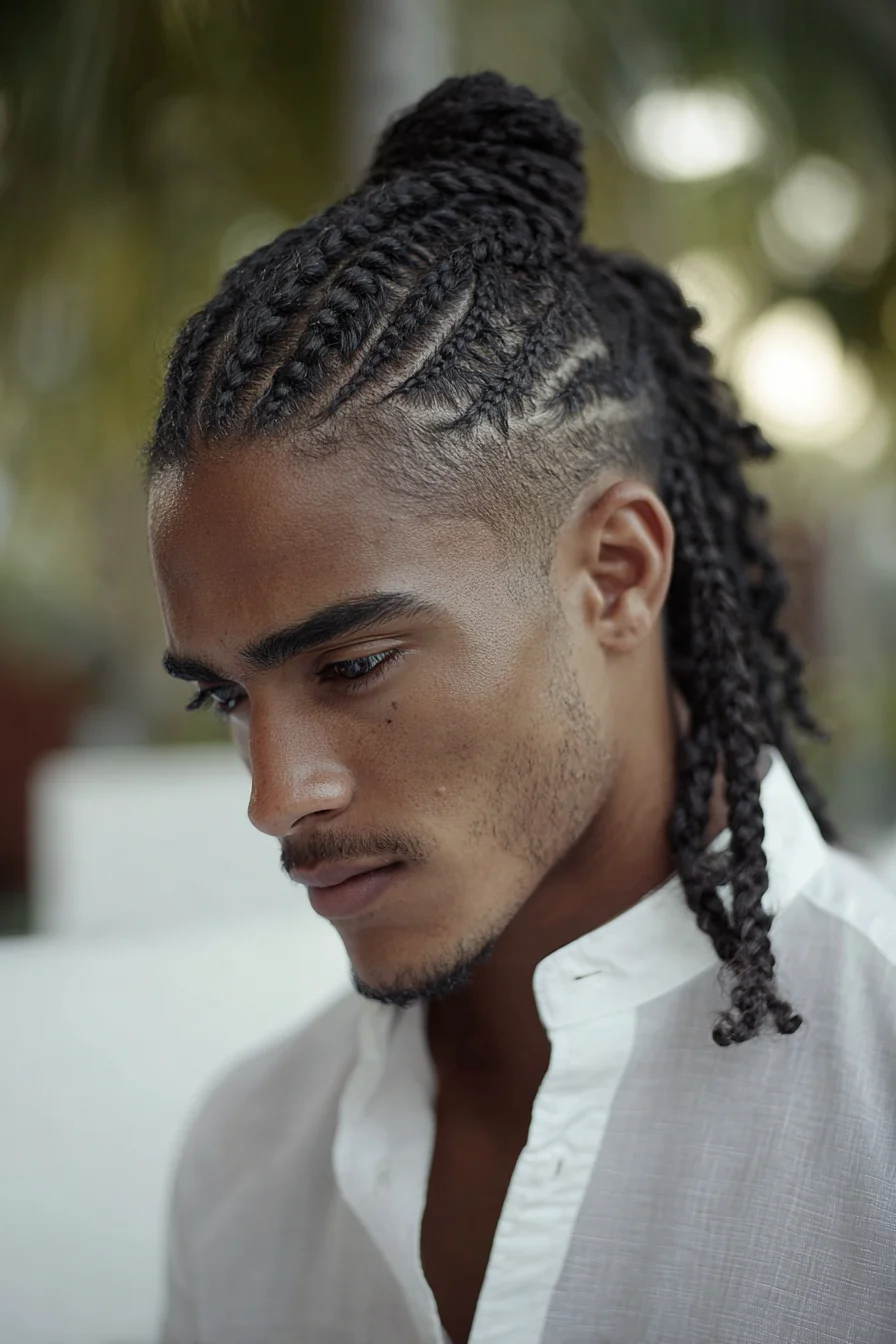
This look suits Type 3B–4C textured hair best (tight curls/coils), though looser textures can achieve it with added grip or light texturizing. Technique: section the hair into clean, even partings and cornrow each panel toward the crown, finishing the gathered braids in a secure top knot or half-up bun while leaving length at the back if desired. For a polished finish pair with a tapered or skin fade around the sides. Tools needed: rat-tail comb for precise parting, sectioning clips, clippers (for the fade), rattail/end comb, small elastics, and a spray bottle. Products: lightweight leave-in conditioner, moisturizing cream or butter, medium-hold braiding gel or edge control for neat parts, light hair oil for scalp, and a shine serum for finish. Difficulty: intermediate — expect 60–120 minutes depending on braid size and fade complexity; best done by an experienced braider/barber for even tension and neat lines. Maintenance: sleep on a silk/satin scarf or bonnet, lightly oil the scalp twice weekly, avoid over-tightening to prevent breakage, cleanse the scalp with diluted shampoo or co-wash every 1–2 weeks, and refresh edges/fade every 2–3 weeks.
Textured Twisted Locs with High Skin Fade Undercut

This look works best on tightly coiled to kinky hair (Type 4), but can be adapted for looser curls (Type 3) with proper texturizing. The style combines short, textured twisted locs on top with a sharp high skin fade on the sides for a modern, contrasted finish. Technique: section the top into uniform blocks, create two-strand twists or mini-twists and palm-roll or crochet to form locs; leave slightly loose for movement. Have a barber perform a precision high fade with clipper guards and a straight edge to define the temples and nape. Tools needed: rat-tail comb for parting, clips, clippers with guards, 0.5–2.0 mm trimmer for fade detailing, small crochet hook (0.5–1.0 mm) for tightening. Products required: residue-free lock shampoo, lightweight locking cream or gel (low-residue), leave-in conditioner, jojoba/argan scalp oil, light mattifying paste for shaping. Difficulty level: intermediate–advanced — professional installation recommended for even sections and a clean fade. Maintenance tips: sleep on a silk/satin bonnet, oil scalp weekly, wash every 1–2 weeks with gentle products, retwist or crochet loose roots every 4–6 weeks, avoid over-tightening to prevent breakage and traction.
Medium Cornrow Braids with Low Skin Fade — Textured Men’s Braided Style
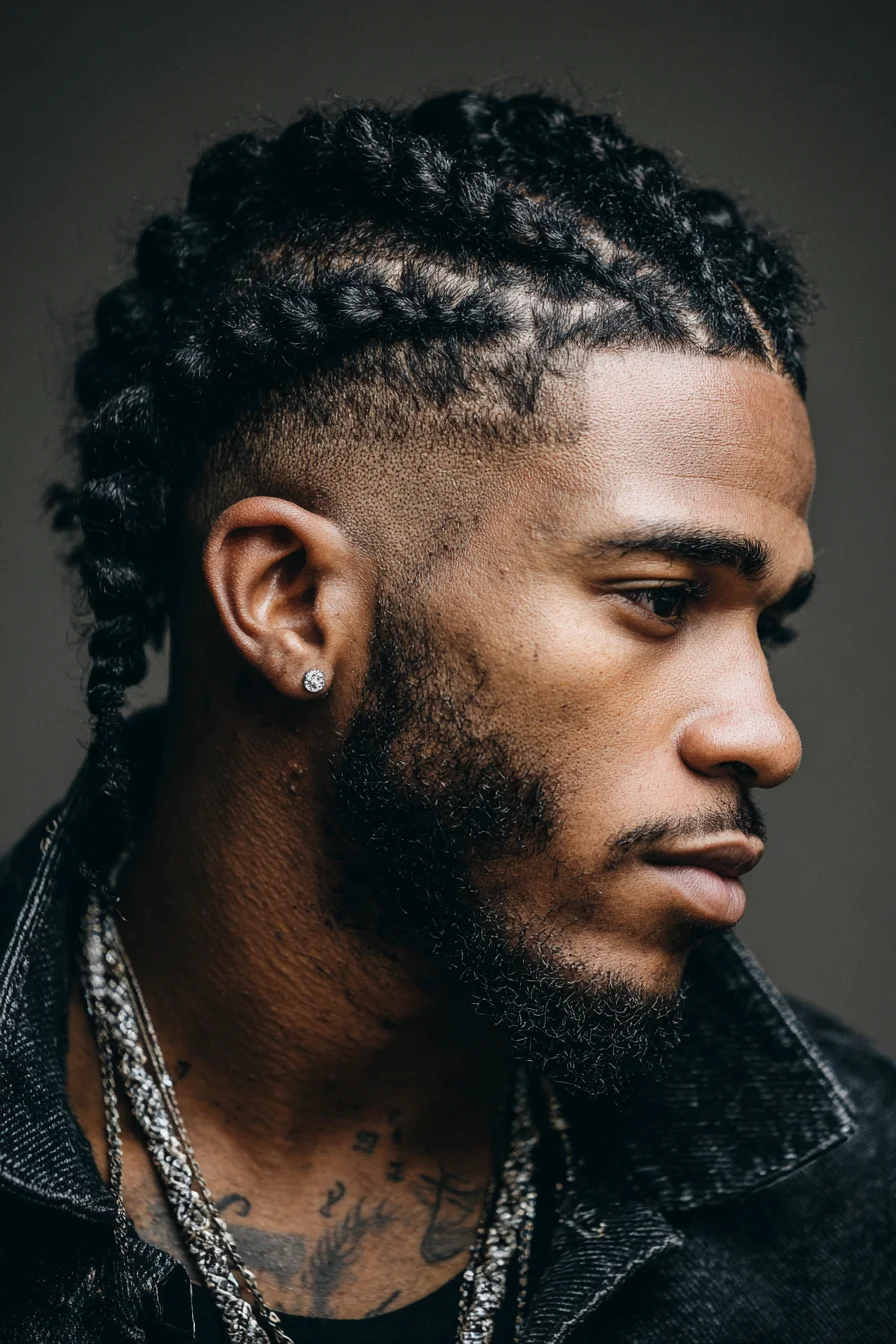
This look suits type 3–4 (curly to coily) textures with medium to thick density and 3–6 inches of length at the crown. Start with a clean, detangled base and map out even parts using a rattail comb. For each row, apply a lightweight leave-in and a small amount of gel or cream for grip, then braid close to the scalp (traditional cornrow technique) leaving the ends free or secured with small bands. Finish by blending a low skin fade at the sides and nape with clippers for a sharp contrast. Tools: clipper set with guards, rattail comb, sectioning clips, small elastic bands, spray bottle. Products: moisturizing leave-in conditioner, medium-hold braiding gel or edge control, light hair oil or scalp serum, anti-frizz cream. Difficulty: intermediate — clean parting, even tension and a professional fade are best handled by an experienced braider/barber. Maintenance: sleep with a satin/silk scarf or pillowcase, refresh edges weekly with light gel, apply scalp oil 1–2 times weekly, and get the fade touched up every 2–4 weeks. Expect to redo the braids every 4–8 weeks depending on new growth and desired neatness; avoid excessive tension to protect the hairline.
As a stylist I always put hair health first. Braids can be wonderfully protective and low-maintenance when installed and cared for properly. To keep styles fresh for up to 6–8 weeks, schedule touch-ups for loose edges, moisturize the scalp every 2–3 days with a lightweight oil or leave-in spray, and wash gently using a diluted shampoo to reduce frizz. Sleep on a silk pillowcase or wrap with a silk scarf to preserve texture and prevent breakage. Avoid overly tight braiding to protect your hairline and ask about feed-in or breakaway techniques for softer results. For colored or chemically treated hair, shorten install times and increase conditioning between appointments. If you notice persistent pain or excessive shedding, remove the style and consult a professional. Book a consult with me, Lena, for personalized braid choices and a tailored care plan that fits your hair type and lifestyle.