
Hi, I’m Lena — a salon stylist with over a decade of experience creating playful, practical children’s hairstyles. In this gallery I share 28 toddler braids with beads that balance style, comfort, and gentle care for young scalps. These looks suit toddlers with curly, coily, wavy or straight hair and work beautifully for everyday play, daycare, family photos, and special occasions. My approach emphasizes low-tension parting, scalp-friendly products, and techniques that protect growth while keeping braids tidy. You’ll find everything from simple single braids and micro braids to braided ponytails, cornrows, and creative parting patterns finished with colorful beads for personality. Each of the 28 images includes quick styling notes and product recommendations that are safe for sensitive skin. Whether you’re a parent learning to braid at home or a stylist refreshing your kids’ portfolio, these kid-friendly bead-accented braids are easy to adapt and maintain.
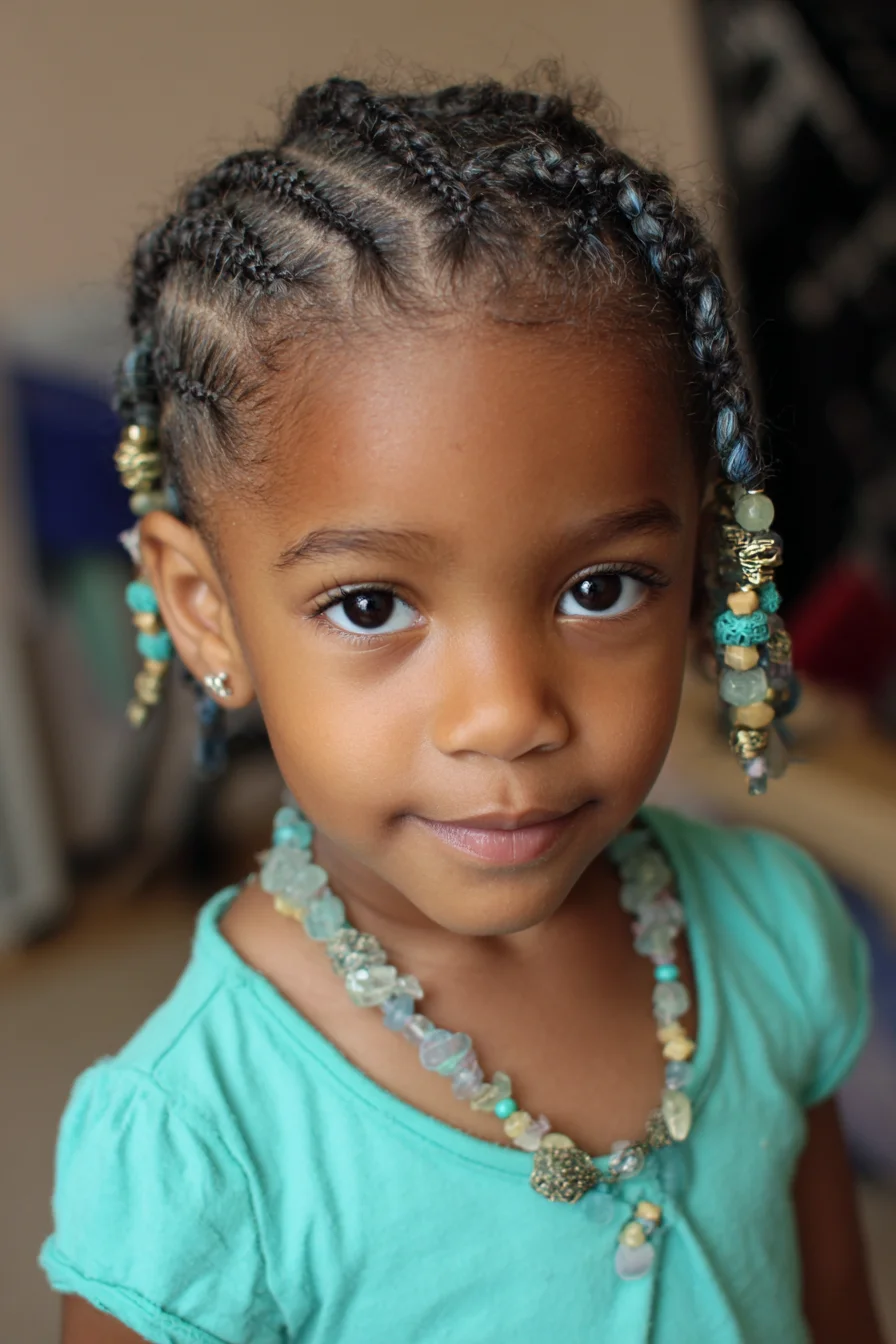
Sectioned Cornrows with Beaded Two‑Strand Twists — Protective Kids Style
This neat protective style suits tightly coiled to curly (Type 3–4) hair textures and is ideal for toddlers and young children. Hair is divided into clean sections with a center or side part; each section is cornrowed at the scalp for control, then finished as a two‑strand twist or plait to the ends with secured beads for weight and decoration. Technique: detangle damp hair, apply leave‑in conditioner and light styling cream, create precise parts with a rat‑tail comb, cornrow the root area and transition into two‑strand twists, then add beads with a bead‑applicator or small rubber bands. Tools & products: rat‑tail comb, wide‑tooth comb, sectioning clips, small elastic bands, beading tool or bead cups, leave‑in conditioner, lightweight styling cream or twist butter, edge control gel, and a light oil or sheen spray. Difficulty level: moderate — straightforward for a trained stylist or a caregiver with braiding experience; expect 45–90 minutes depending on size. Maintenance tips: sleep with a satin bonnet or scarf, refresh edges with a dab of edge control, moisturize scalp and strands weekly with a water‑based mist and light oil, check beads regularly for security, and redo sections as needed after 2–4 weeks to prevent tangling and breakage.
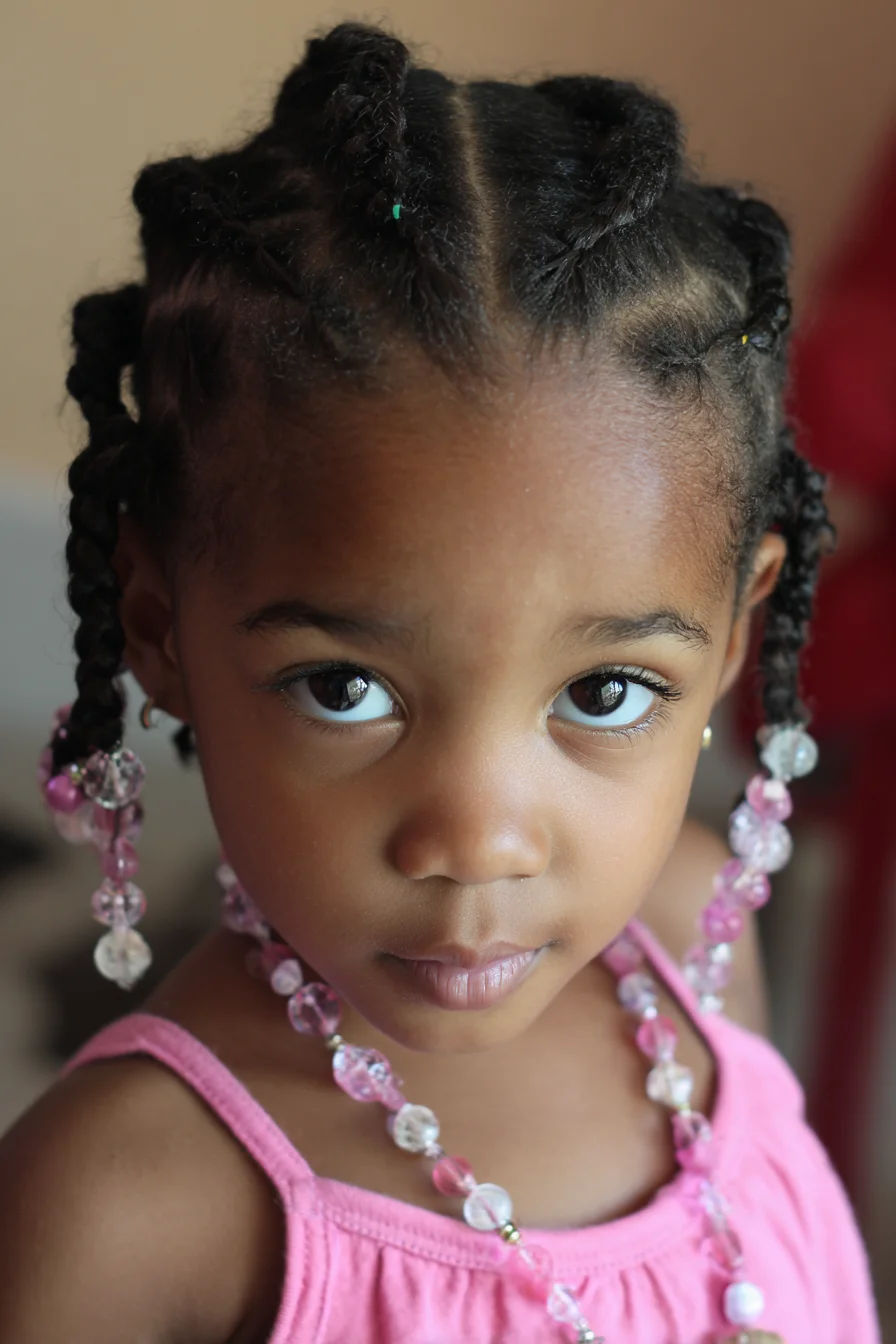
Cornrow Rooted Braids with Beads and Yarn Wraps — Protective Kids’ Style
This polished protective style pairs straight-back cornrow roots with individual braids finished with colorful beads and yarn wraps. Best suited for Type 3–4 textured hair and natural curl patterns, it works well on medium to thick density and is child-friendly when tension is kept low. Technique: section hair into even straight-back parts with a rat-tail comb, create shallow cornrow bases, then feed or transition into three-strand braids; add yarn or thread wraps and secure beads at the ends. Tools needed: rat-tail comb, sectioning clips, fine-tooth comb, small elastic bands, beading tool or crochet needle, hair-friendly beads. Products required: detangling spray or leave-in conditioner, lightweight styling gel or edge control for neat parts, a light holding mousse, and natural oil (jojoba/coconut) for sealing. Difficulty: moderate — time-consuming (about 60–120 minutes) but repeatable for experienced stylists or practiced caregivers. Maintenance tips: sleep on a satin bonnet/pillowcase, lightly mist and oil scalp twice weekly, avoid tugging beads, refresh edges with a tiny amount of edge control, and re-do braids after 4–6 weeks or sooner if slippage occurs.
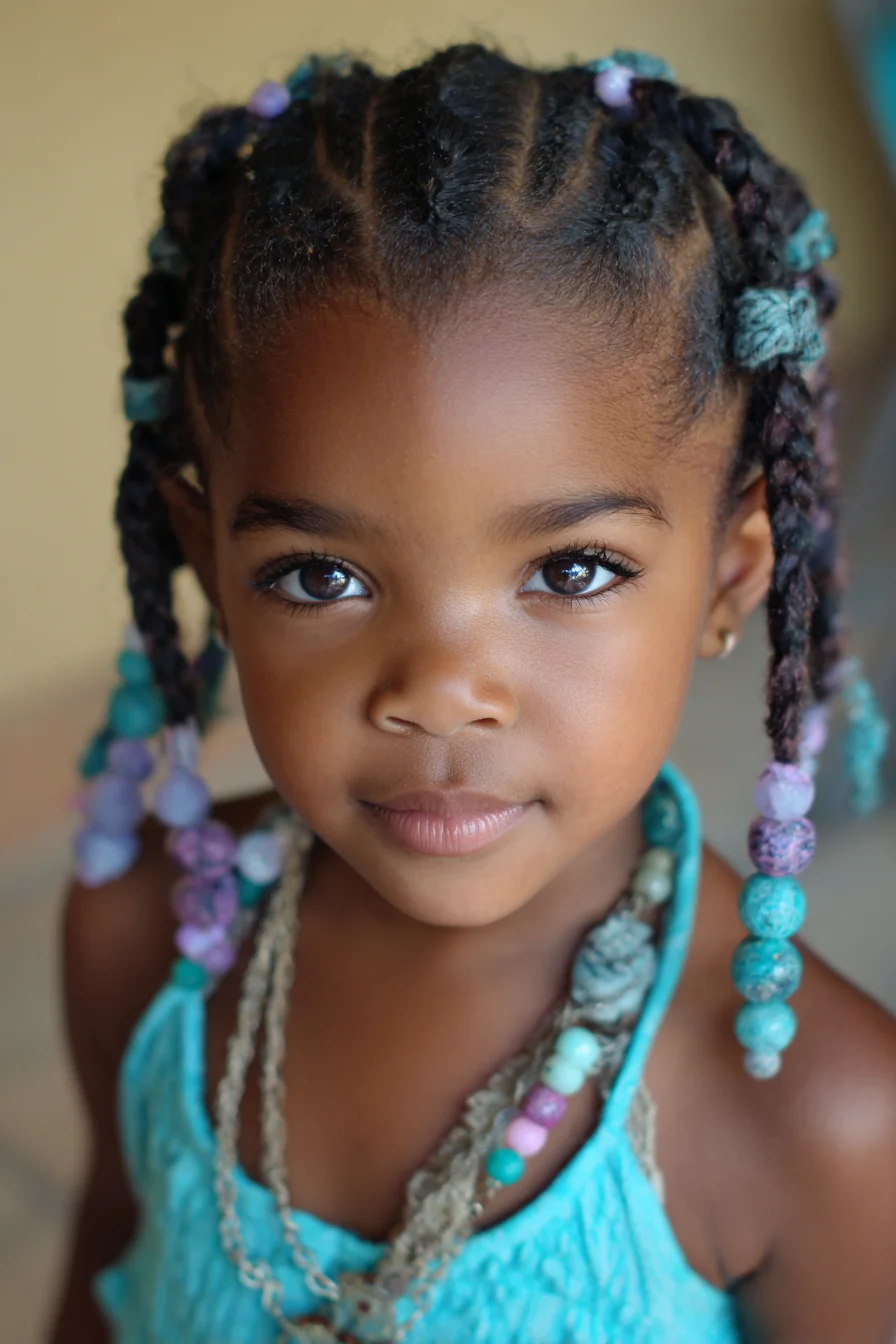
Cornrows with Braided Pigtails and Bead & Thread Accents
This style pairs neat cornrows on the scalp with three-strand braided pigtails finished with beads and decorative thread wraps. It suits natural Type 3–4 hair best (medium to coarse texture) because the texture holds the parting and braid tension; it can also be adapted for finer or straighter hair using added braiding hair for grip. Technique: section hair with a rat-tail part, secure sections with clips, cornrow each section close to the scalp and continue into regular three-strand braids to the desired length, then add beads or wrap thread at the ends. Tools needed: rat-tail comb, sectioning clips, small elastic bands, bead applicator or hair needle, edge brush, and sharp scissors. Recommended products: lightweight leave-in conditioner, moisturizing cream or butter, light hold edge control, a scalp oil (jojoba or coconut) and a flexible holding spray. Difficulty level: moderate — expect 45–90 minutes depending on size; consider a professional for young children or very small parts. Maintenance tips: sleep on a satin bonnet or pillowcase, mist weekly with water+leave-in to refresh, oil the scalp twice weekly, and redo edges or loose braids after 3–6 weeks to prevent breakage.
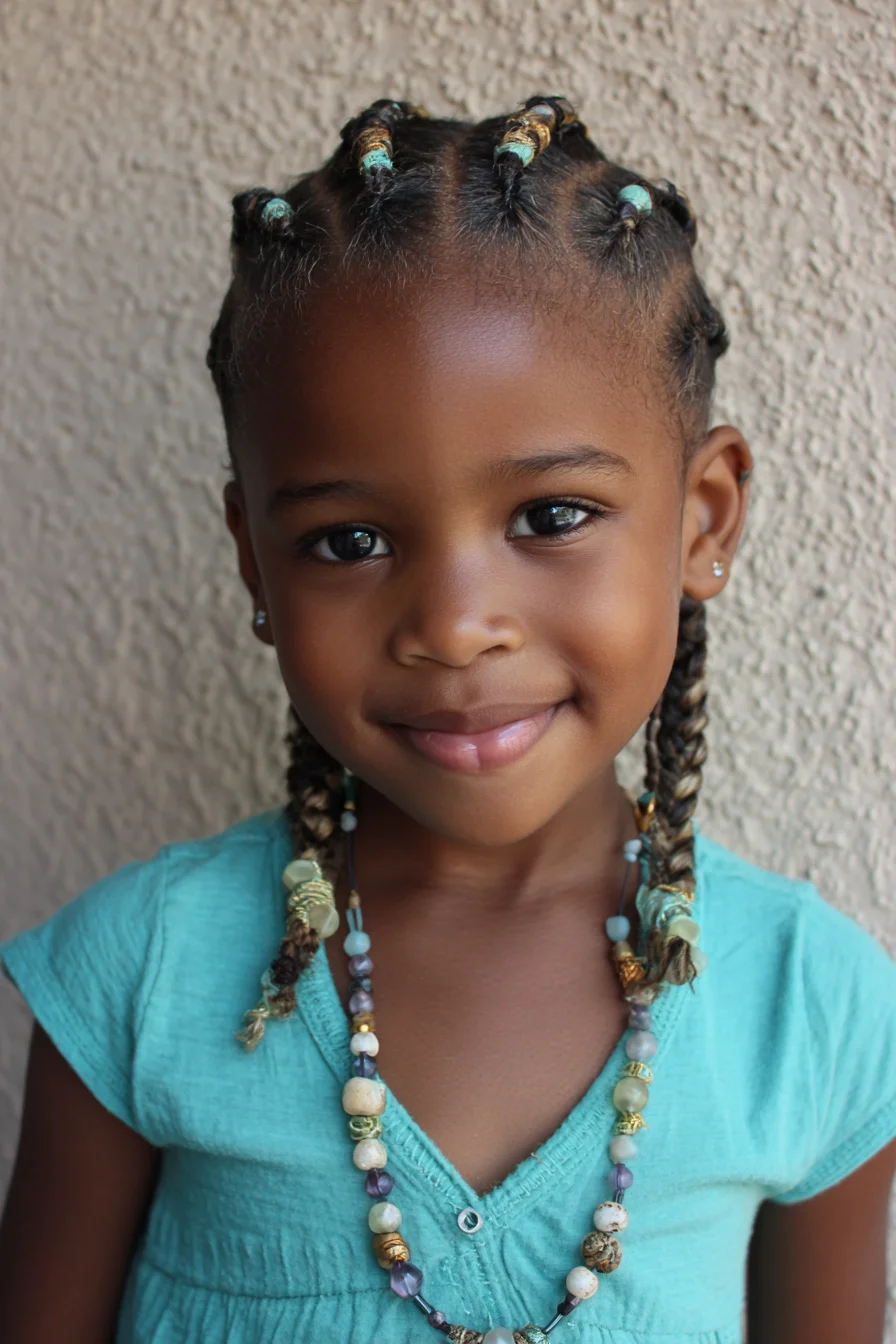
Mini Bantu Knots with Cornrowed Braids and Beaded Ends
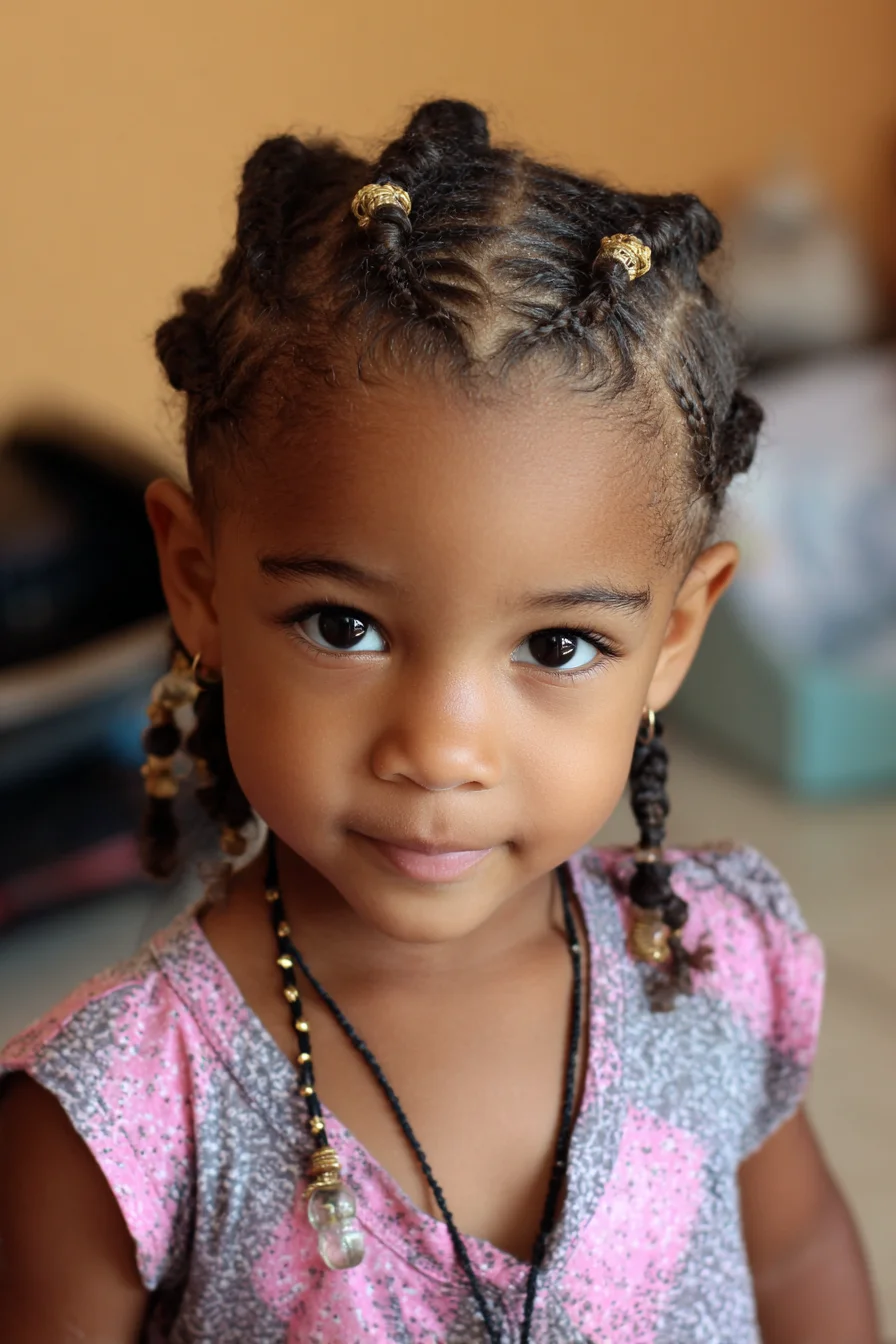
This playful protective style works best on natural, tightly coiled textures (type 3–4) but can be adapted for looser curls by adding texture with a twist product. From salon experience, the look is created by cleanly parting the hair into small sections, cornrowing the front-to-back or flat-twisting toward each section, then wrapping each braid into a small Bantu knot or finishing as a mini plait with decorative beads and cuffs. Tools needed: rattail comb for precise parts, sectioning clips, small snag-free elastic bands, an edge brush, bead applicator or threading tool, and a fine-tooth clip. Products required: a lightweight detangling spray, a moisturizing leave-in, a light hold styling cream or gel for control, and a nourishing oil or scalp serum for sheen. Difficulty: intermediate — expect 45–90 minutes depending on section size and experience; neat parts and small knots require practice. Maintenance tips: keep hair moisturized with light water-based spritzes, sleep on a satin bonnet or pillowcase, avoid overly tight tension to protect edges, resecure loose knots as needed, and refresh every 2–3 weeks to prevent build-up and breakage.
Center-Part Feed-In Cornrows with Beaded Two-Strand Braids
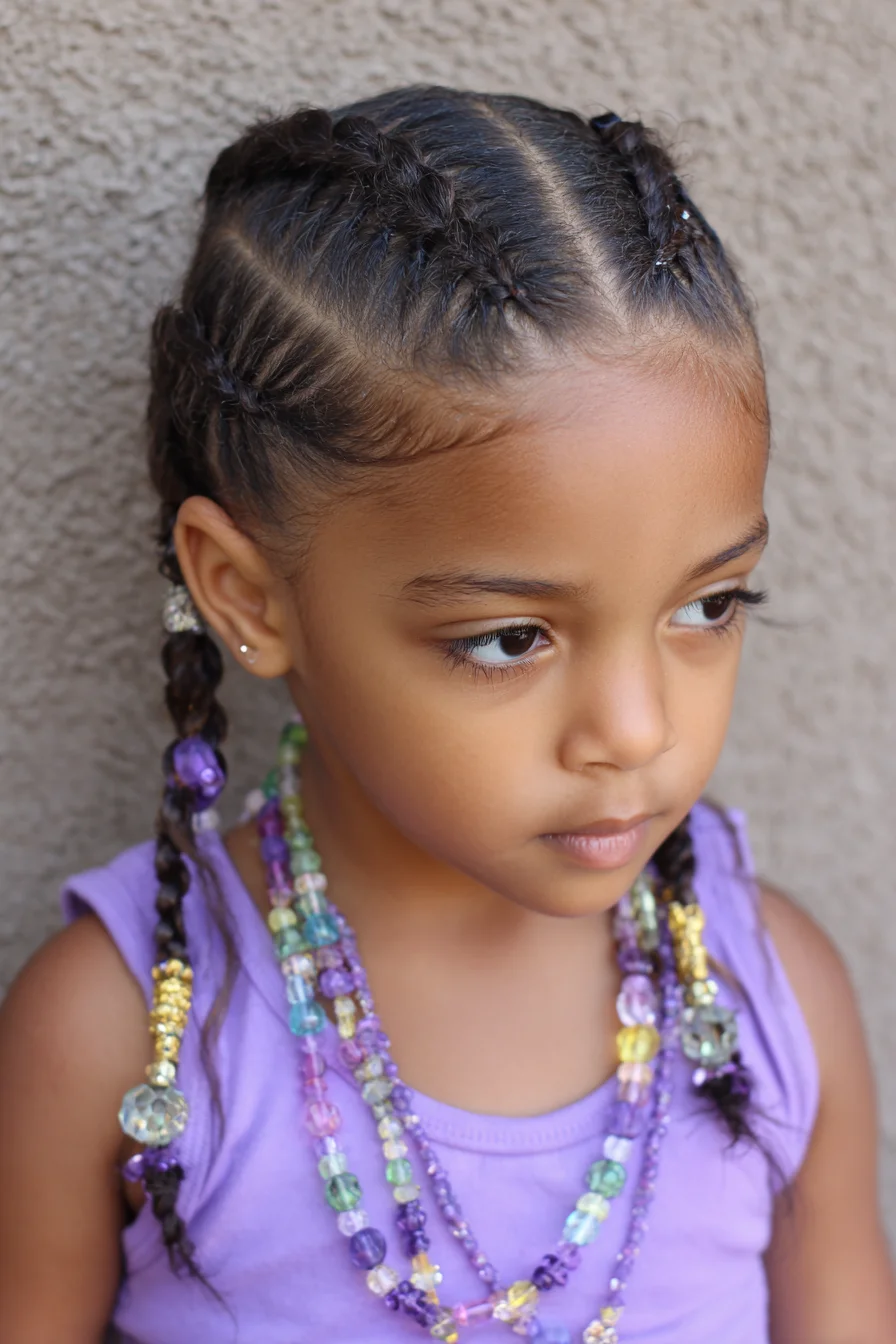
This style suits natural, curly and coily textures best but can be done on wavy or straight hair after adding light texture with a texturizing mousse. Start with a clean, detangled base and a precise center part. Work in small sections to create feed-in (invisible) cornrows along the scalp, transitioning to two-strand or three-strand braids down the length. Add small elastics at the ends and thread decorative beads before securing with a final elastic or a dab of child-safe glue. Tools required: rat-tail comb, sectioning clips, narrow-tooth comb, edge brush, spray bottle, small rubber bands and a bead threading tool. Recommended products: water-based leave-in conditioner, light-hold mousse or gel for control, edge control for baby hairs, and a lightweight oil (jojoba or argan) for scalp shine. Difficulty: moderate — expect 45–90 minutes depending on braid size and additions. Maintenance tips: avoid excessive tension (especially on children), moisturize scalp every 3–4 days, sleep on a satin bonnet or pillowcase, refresh edges with a bit of gel, and plan touch-ups or removal after 4–8 weeks to protect hair health.
Beaded Cornrows with Individual Braids — Child-Friendly Protective Style
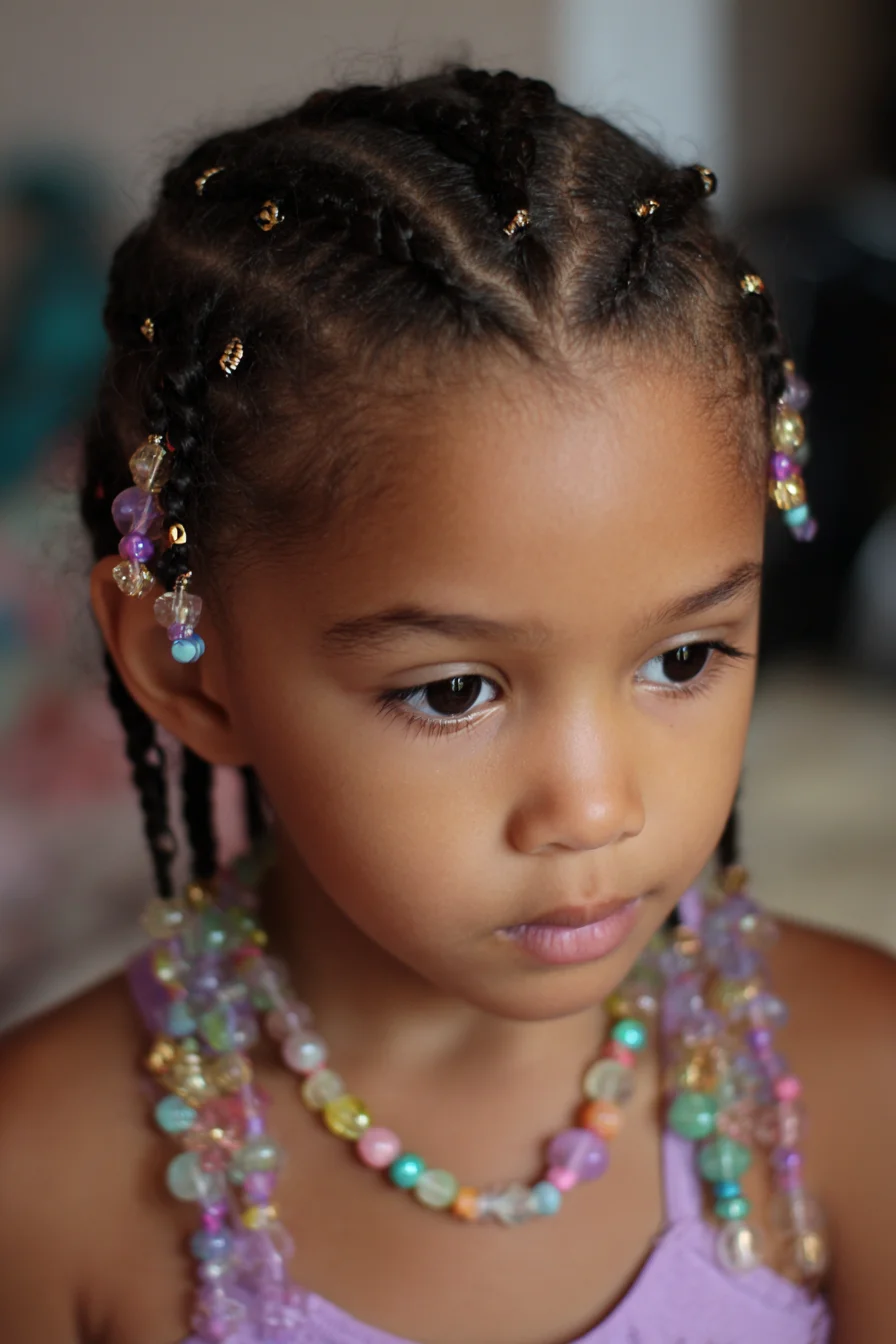
This style suits textured, curly and coily hair types and works best on medium to fine density hair for neat, small cornrows finishing in individual braids with beads. Technique: section clean, even rows with a rat-tail comb and create simple cornrows from the front to the crown, then continue each row into 3–4-inch single braids. Secure ends with small elastics and add beads using a beading tool or bead clamp; finish with metal cuffs for accent. Tools needed: rat-tail comb, sectioning clips, edge brush, small clear elastics, beading tool, gloves (optional). Products required: light leave-in conditioner, moisturizing cream, light-hold gel or edge control for neat parts, lightweight oil or serum for shine and scalp protection. Difficulty level: Moderate — requires basic braiding skill and patience; expect 45–90 minutes depending on row size. Maintenance tips: sleep on a satin bonnet or pillowcase, refresh edges with a bit of edge control, lightly oil the scalp weekly, avoid heavy buildup by co-washing every 1–2 weeks, and check bead security regularly. For longevity, redo after 4–6 weeks or sooner if hairline becomes tight.
Flat-Twist Cornrows with Gold Cuffs and Mini Twists — Protective Style for Natural Hair
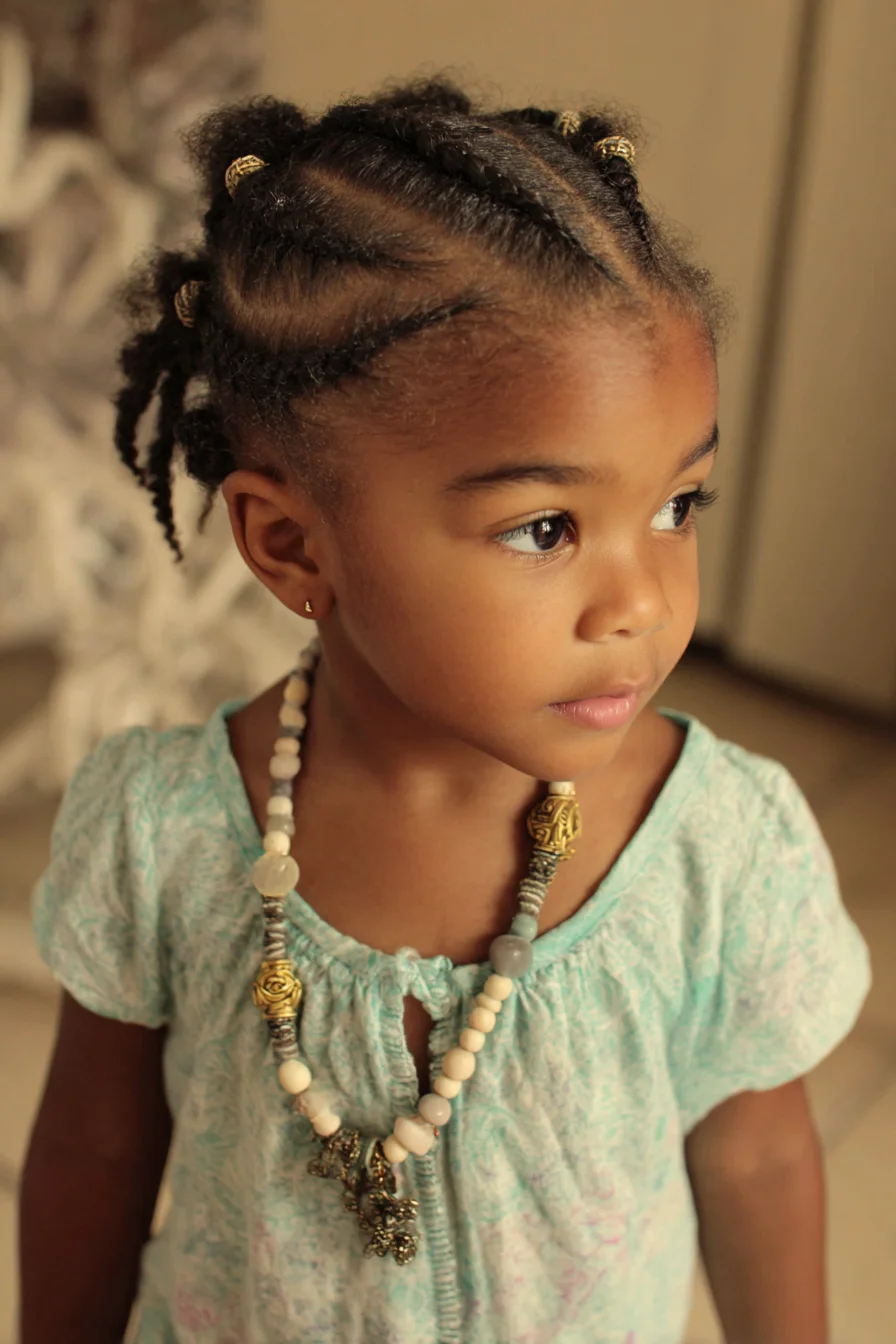
A practical protective style for natural, coily and tightly curled hair (Type 3C–4C) that also works on thicker wavy textures when hair is detangled. Begin on damp, conditioned hair: part the hair into even sections, apply a water‑based leave‑in detangler, then smooth a small amount of gel or edge control at the root. Use flat twists or two‑strand cornrows directed toward the back, finishing each section with a two‑strand mini twist or a small band before adding metal cuffs or beads. Tools: rat‑tail comb for precise parts, wide‑tooth comb, fine‑tooth comb, duckbill clips, small elastic bands, and hair cuffs. Products: leave‑in conditioner, lightweight hold gel or braid spray, natural oil (jojoba or coconut) for sheen, and a conditioning mist for daily refresh. Difficulty: moderate — requires steady parting and even tension; expect 30–60 minutes depending on size. Maintenance tips: sleep on a satin bonnet or pillowcase, lightly mist and oil the scalp twice weekly, avoid over‑tightening to protect edges, and refresh edges with a small amount of gel. Reinstall or redo after 2–3 weeks to prevent breakage and buildup.
Beaded Cornrows for Kids — Protective Braids with Colorful Beads
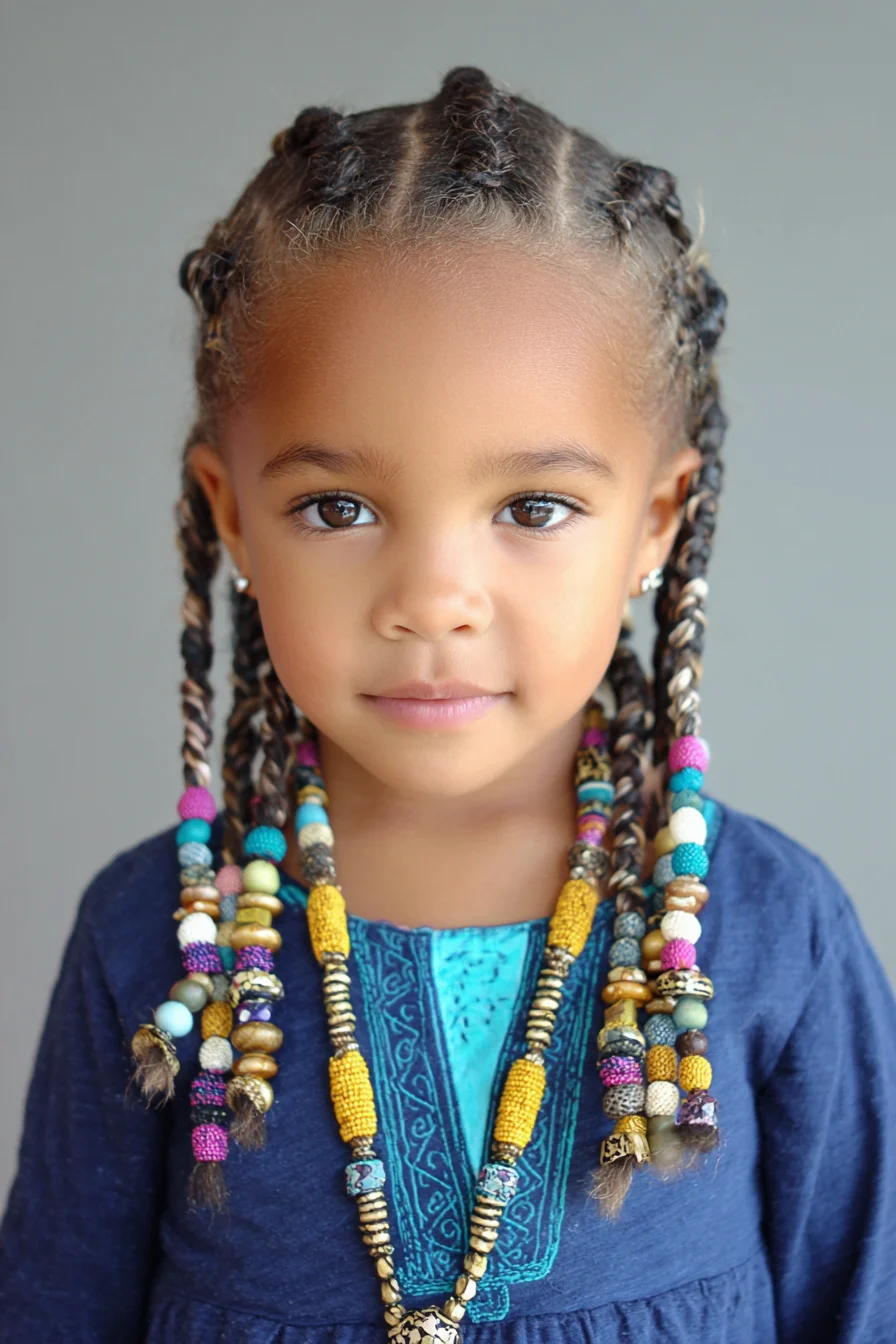
This style is ideal for naturally textured, curly or coily hair and works well on medium-to-thick fine hair when sections are appropriately sized. Technique: create clean, even partings and cornrow each section from the hairline toward the back, finishing each row into a three-strand or two-strand braid and securing the ends with a small elastic before threading decorative beads. From salon experience, dampening hair lightly with a leave-in detangler makes parting and grip easier and reduces breakage. Tools needed: rat-tail comb, sectioning clips, small elastics, beading tool or crochet needle, edge brush and scissors. Products required: lightweight leave-in conditioner, braid gel or cream for hold, edge control for sleek hairlines, and a light hair oil or scalp serum to lock in moisture. Difficulty level: moderate — an experienced braider can complete this quickly; beginners should practice neat parting and consistent tension. Maintenance tips: cover with a satin bonnet or scarf at night, apply a diluted oil mist to the scalp weekly, avoid over-manipulation, check beads regularly for tightness, and plan to refresh or remove the style after 6–8 weeks to protect edges and hair health.
Bantu Knot Base with Two-Strand Braids and Pastel Extensions (Kids)
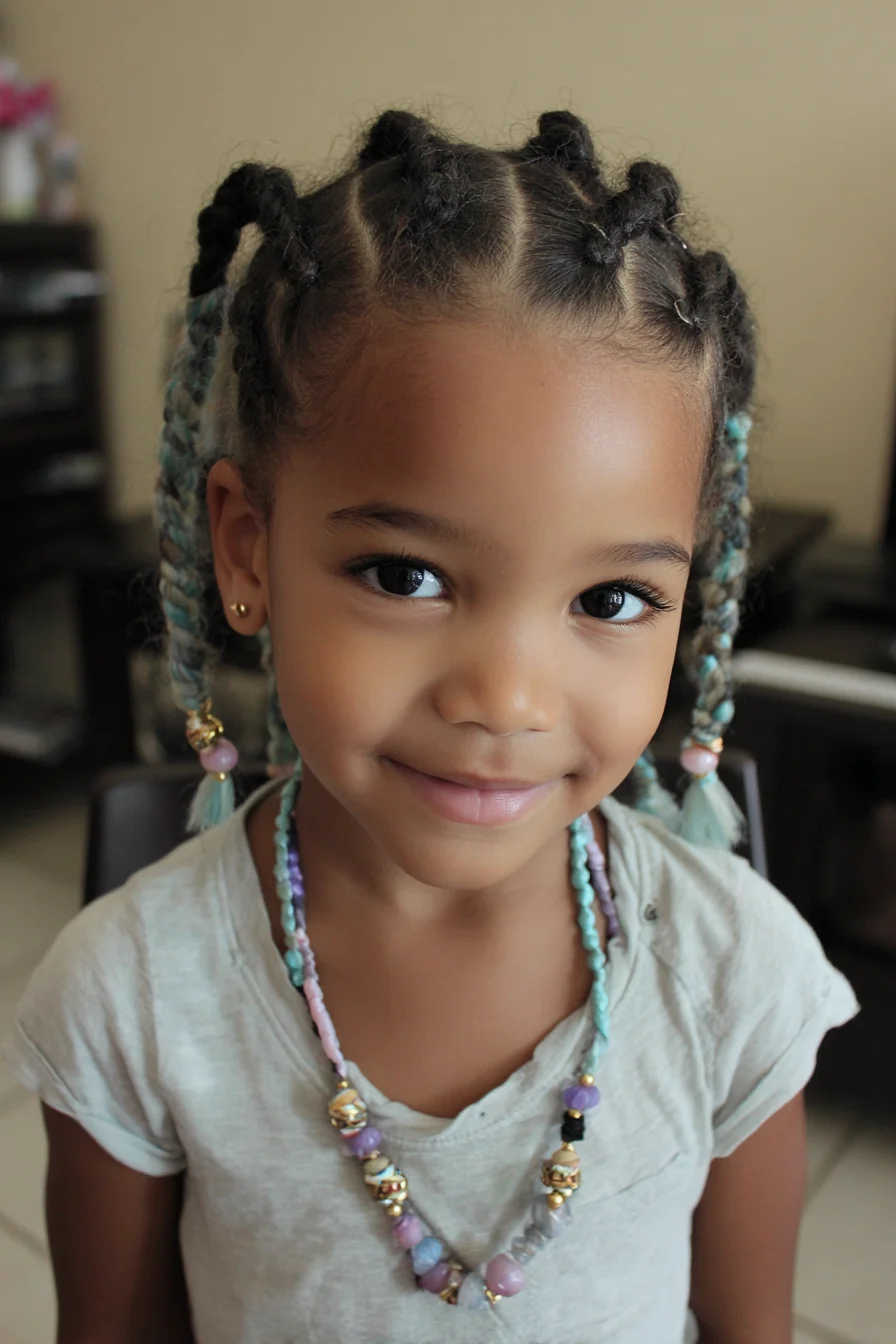
This playful protective style suits natural, textured, curly, or coily hair and is ideal for children who need low-manipulation looks. Start on detangled, lightly moisturized hair. Section into even boxes, create small Bantu knots at the crown to anchor each section, then unravel or feed two-strand/three-strand braid down the length, adding pastel synthetic extensions if extra length or color is desired. Salon tools: rat-tail comb for clean parting, wide-tooth comb, clipping pins, small rubber bands or elastics, blunt-ended beading needle (optional), and an edge brush. Recommended products: lightweight leave-in conditioner, detangling cream, edge control or styling gel for smooth parts, a light sealing oil (jojoba or coconut), and a final setting spray for hold. Difficulty: intermediate — straightforward for a trained stylist or a practiced caregiver, but time-consuming and requires steady parting. Maintenance tips: avoid excess tension on the scalp, wrap with a satin scarf or bonnet nightly, refresh edges with a small amount of oil or gel, re-moisturize braids weekly, and remove or redo knots/braids after 4–6 weeks to prevent breakage. Check beads and extensions regularly for safety and comfort.
Tight Cornrows with Beaded Ends — Protective Braids for Natural Hair
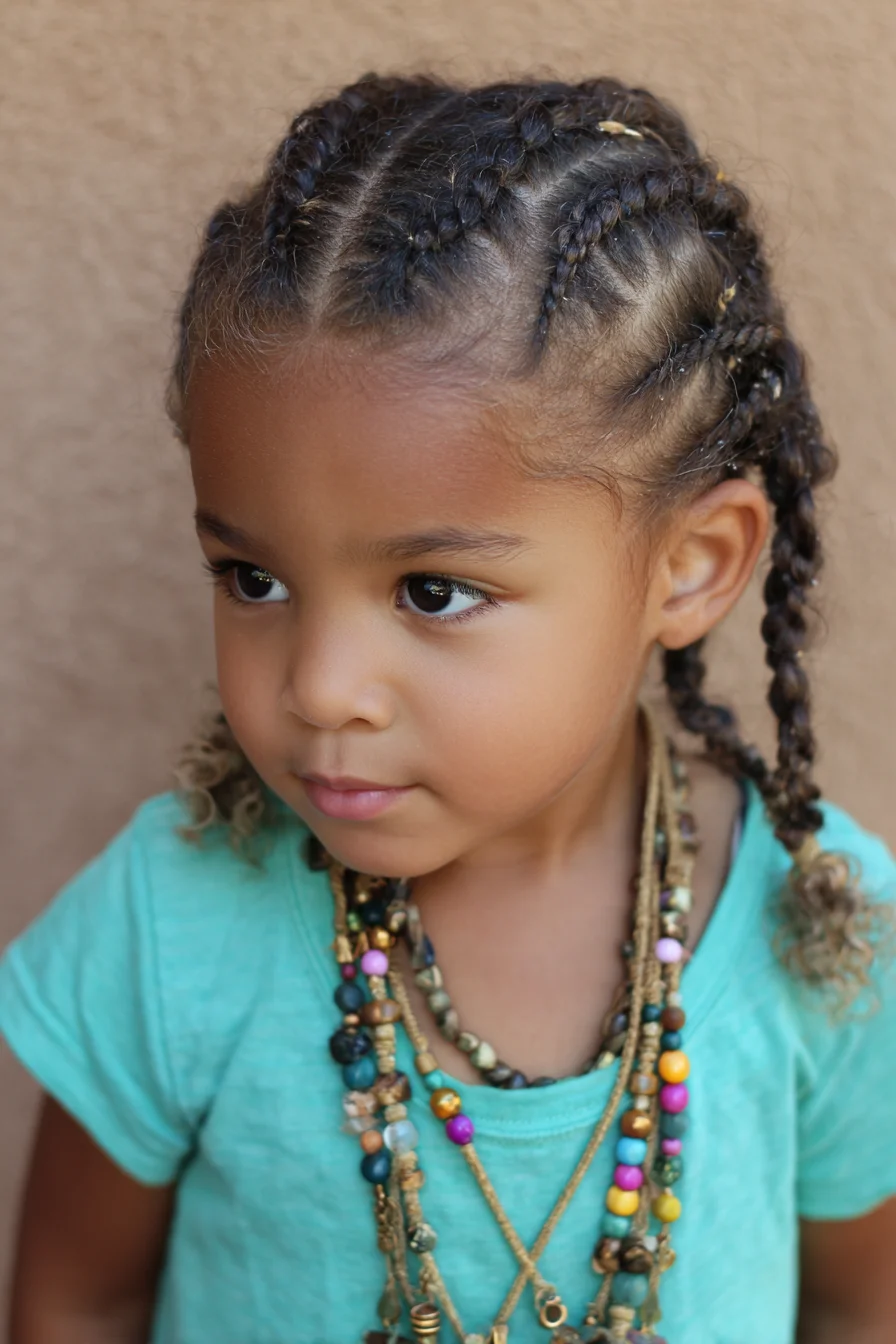
This neat cornrow style is ideal for naturally curly to coily textures and medium to thick hair densities; it works well for children and adults who want a low-manipulation protective look. Technique: section the hair into clean, even straight-back parts and create three-strand cornrows close to the scalp, continuing each braid to the ends and securing with small elastics or beads. Tools needed: rat-tail comb for parting, alligator clips, wide-tooth comb or detangler, spray bottle, edge brush, and small elastics or bead applicator. Products recommended: lightweight leave-in conditioner, smoothing cream or braid mousse for manageability, light holding gel for edges, and a braid sheen oil or scalp-friendly oil to maintain moisture and shine. Difficulty level: moderate — a trained stylist can complete this in 45–90 minutes depending on hair length and number of braids; beginners may need practice for even parting and consistent tension. Maintenance tips: sleep on a satin bonnet or pillowcase, apply a light braid spray or oil to the scalp every few days, avoid heavy buildup, refresh edges gently, and remove braids if scalp becomes irritated or after 4–8 weeks to prevent breakage.
Neat Cornrows Leading to Beaded Individual Braids
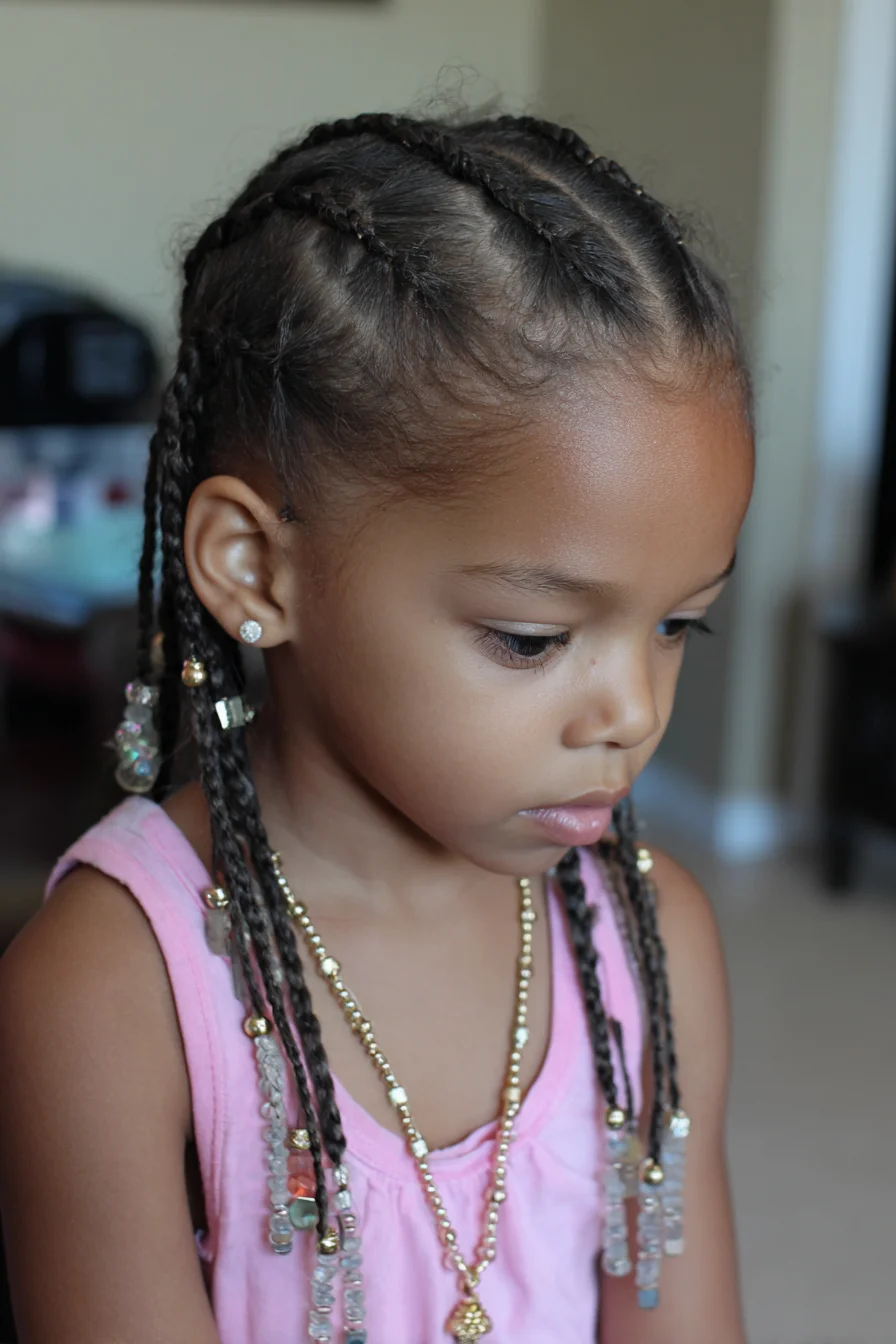
This protective style pairs small, neat cornrows at the scalp that feed into individual three-strand braids finished with decorative beads — ideal for textured, curly or coily hair textures that hold braids well. Technique: section clean, detangled hair into straight rows with a rat-tail parting, braid each row tightly but with gentle tension across the scalp, then continue each row into regular braids to the desired length before adding beads or cuffs. Tools needed: rat-tail comb, sectioning clips, edge brush, small elastic bands, beading tool or wide-tooth beading needle, and a hairdryer with low heat if sealing beads. Products: a hydrating leave-in detangler, light styling gel or edge control for smooth parts, a lightweight oil or scalp serum, and a light-hold mousse to set frizz. Difficulty: intermediate — expect 1.5–3 hours depending on size/length. Maintenance tips: sleep on a satin bonnet or pillowcase, refresh edges with a small amount of gel, lightly moisturize scalp and braid lengths weekly with a spray, avoid heavy beads that pull at the roots, and remove styles after 4–8 weeks to prevent matting or breakage.
Kids Cornrow Rows with Two-Strand Twists and Color Thread Accents
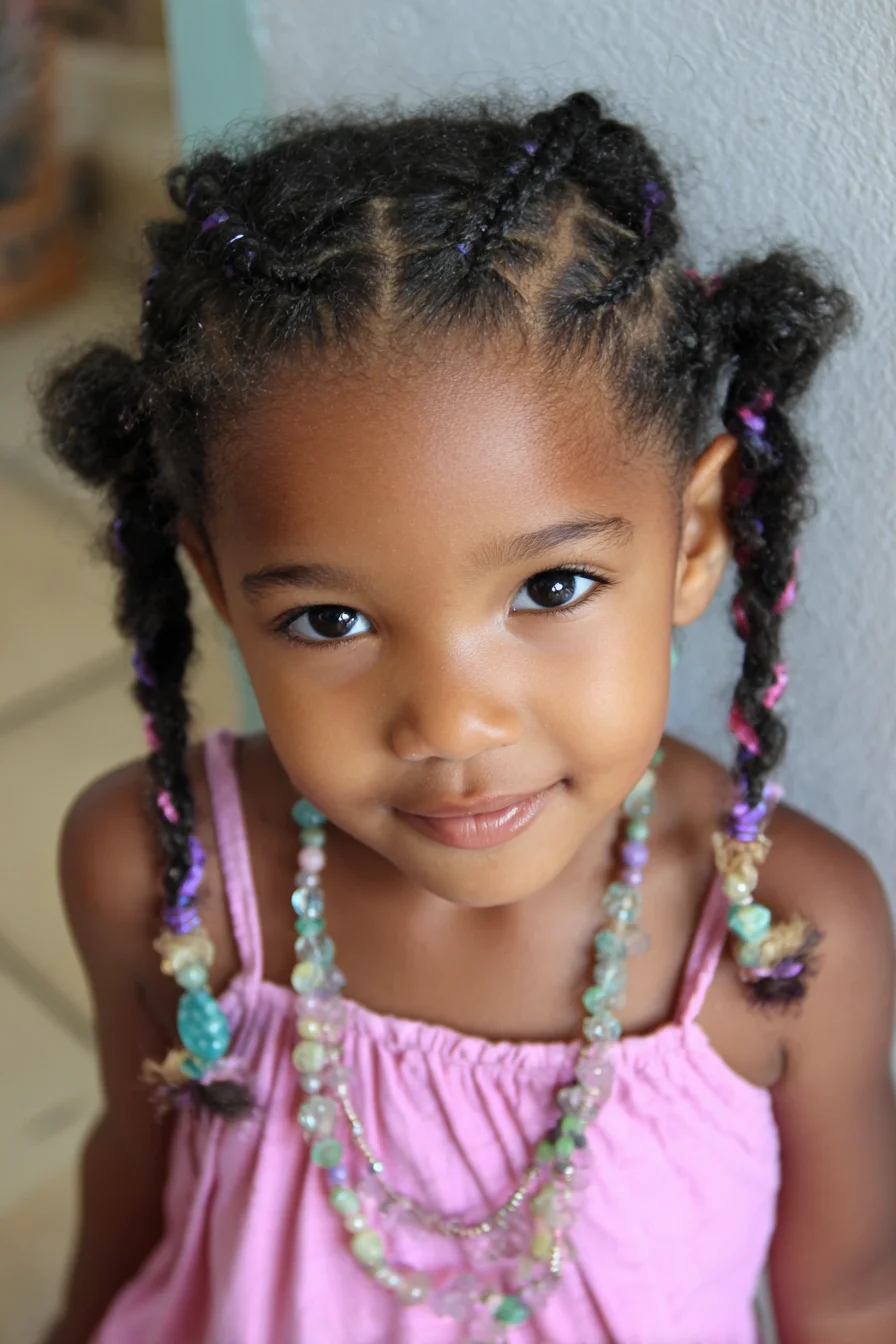
This playful protective style suits naturally curly to coily textures (Type 3–4) and short-to-medium lengths. Start on clean, detangled hair: apply a lightweight leave-in conditioner and a moisturizing styling cream to each section. Use a rat-tail comb to create neat parts and clip sections away. Create small cornrowed rows or flat twists along the scalp, finishing each row into a two-strand twist or small puff. Add color thread, yarn wraps or small beads while twisting for durable accents. Tools: rat-tail comb, wide-tooth comb, sectioning clips, small elastics, edge brush, and a yarn needle or thread for wraps. Products: moisturizing leave-in, light styling cream or curl butter, water-based edge control or gel (sparingly), and a lightweight natural oil to seal ends. Difficulty: beginner–intermediate — basic braiding skills are sufficient but achieving clean parts and even tension takes practice; allow 45–90 minutes depending on section size. Maintenance: sleep on a satin bonnet/pillowcase, lightly mist and reapply moisturizer every 3–4 days, refresh edges with small amounts of gel, avoid over-tightening to protect the hairline, and redo or touch up every 2–4 weeks to keep it neat.
Cornrow-to-Box Braids with Color Beads — Kid-Friendly Textured Hair Style
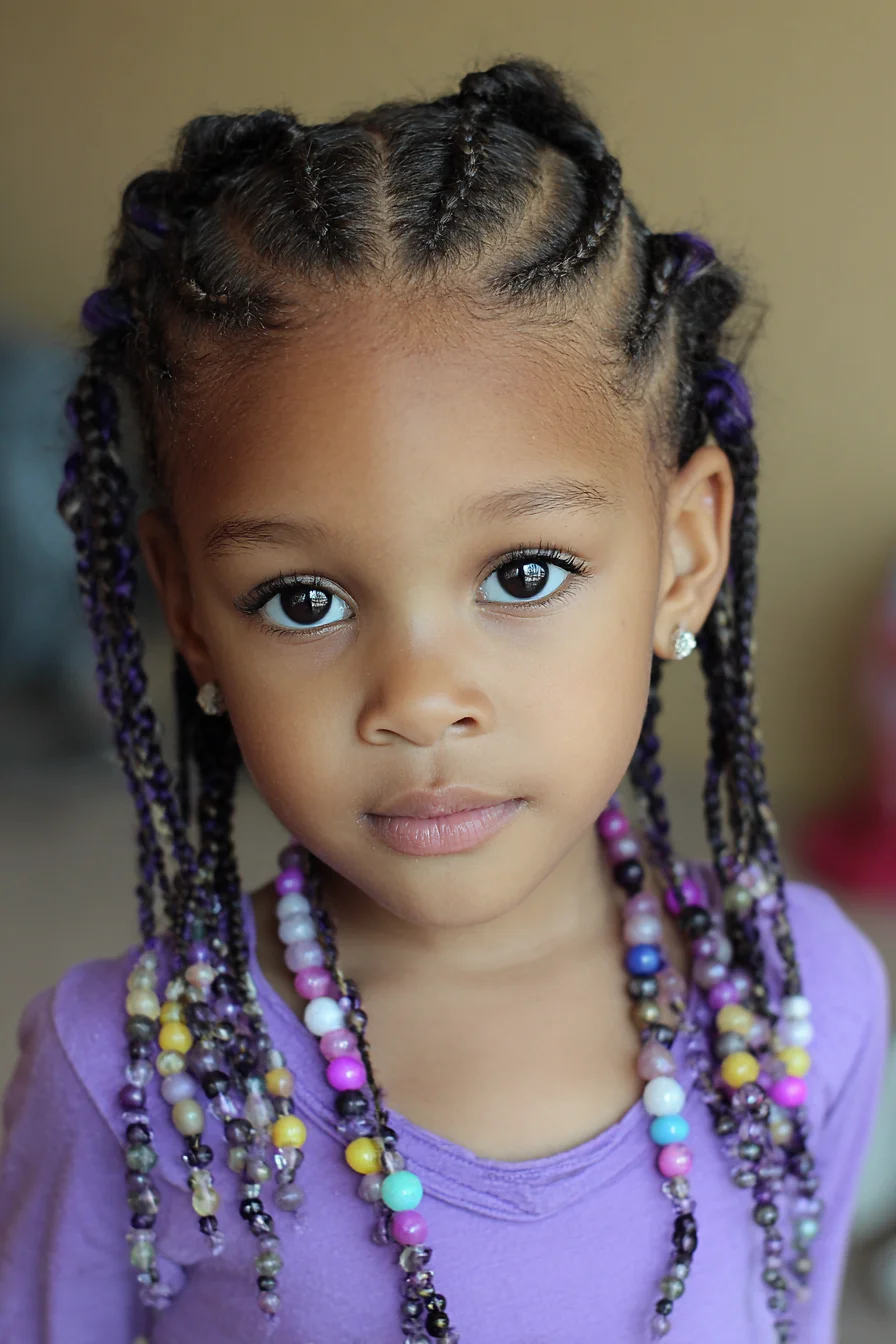
This look is best suited to natural textured hair (3A–4C) but can be adapted for relaxed or finer hair by adding pre-stretched braiding hair for bulk and color. Start with clean, deeply conditioned and detangled hair. Create even cornrow parts from the hairline toward the crown, then transition each cornrow into small three-strand braids. Add colored synthetic braiding hair as needed and secure the ends with small elastics and decorative beads. From salon experience, neat parting and consistent tension are the keys to a long-lasting finish. Tools: rat-tail comb, sectioning clips, wide-tooth comb, beading tool or crochet hook, small elastics. Products: moisturizing leave-in conditioner, light holding pomade or edge control for smooth parts, braid-setting mousse or spray for longevity, lightweight scalp oil/serum, and a shine spray. Difficulty: Moderate — expect 2–4 hours depending on hair density and braid size. Maintenance tips: sleep on a silk/satin bonnet, refresh edges sparingly, apply scalp oil weekly, wash gently with diluted shampoo every 2–3 weeks, and avoid excessive tension to protect the hairline. Re-tighten or replace beads as needed.
Mini Cornrows with Beaded Twists — Kids Natural Curly Hair
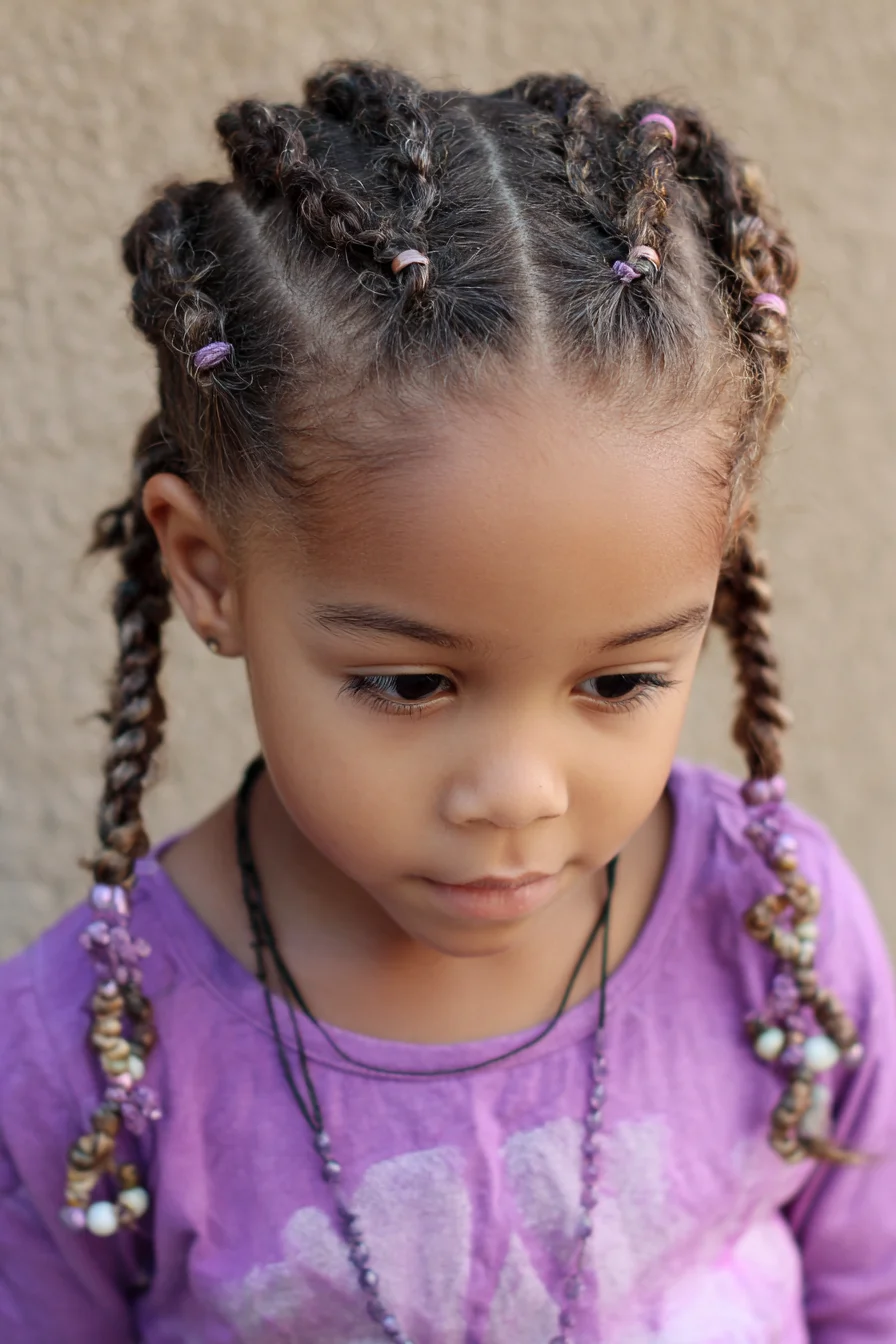
This playful protective style combines small cornrows at the crown with two‑strand twists finished with lightweight beads — ideal for natural curly and coily textures (3–4) and textured wavy hair that has been prepped for grip. Start on clean, detangled hair dampened with a leave‑in conditioner. Create neat center and side parts, cornrow the front sections toward the crown, then two‑strand twist or braid the remaining lengths. Secure each twist with a small elastic and add beads with a beading tool or micro‑tube; avoid heavy beads near the scalp. Tools: rattail comb for precise parts, sectioning clips, small elastics, beading tool, and a detangling brush. Products: lightweight leave‑in conditioner, styling gel or edge control for smooth parts, and a light oil or serum for shine. Difficulty: moderate — requires steady parting and basic braiding/twisting skills; allow 45–90 minutes depending on density. Maintenance: sleep on a satin bonnet, refresh edges with a tiny amount of gel, reapply oil to the scalp weekly, and avoid redoing tightly every week to prevent tension. Best kept for 2–4 weeks with gentle care.
Cornrow Micro-Braids with Beaded Ends — Youth Protective Style
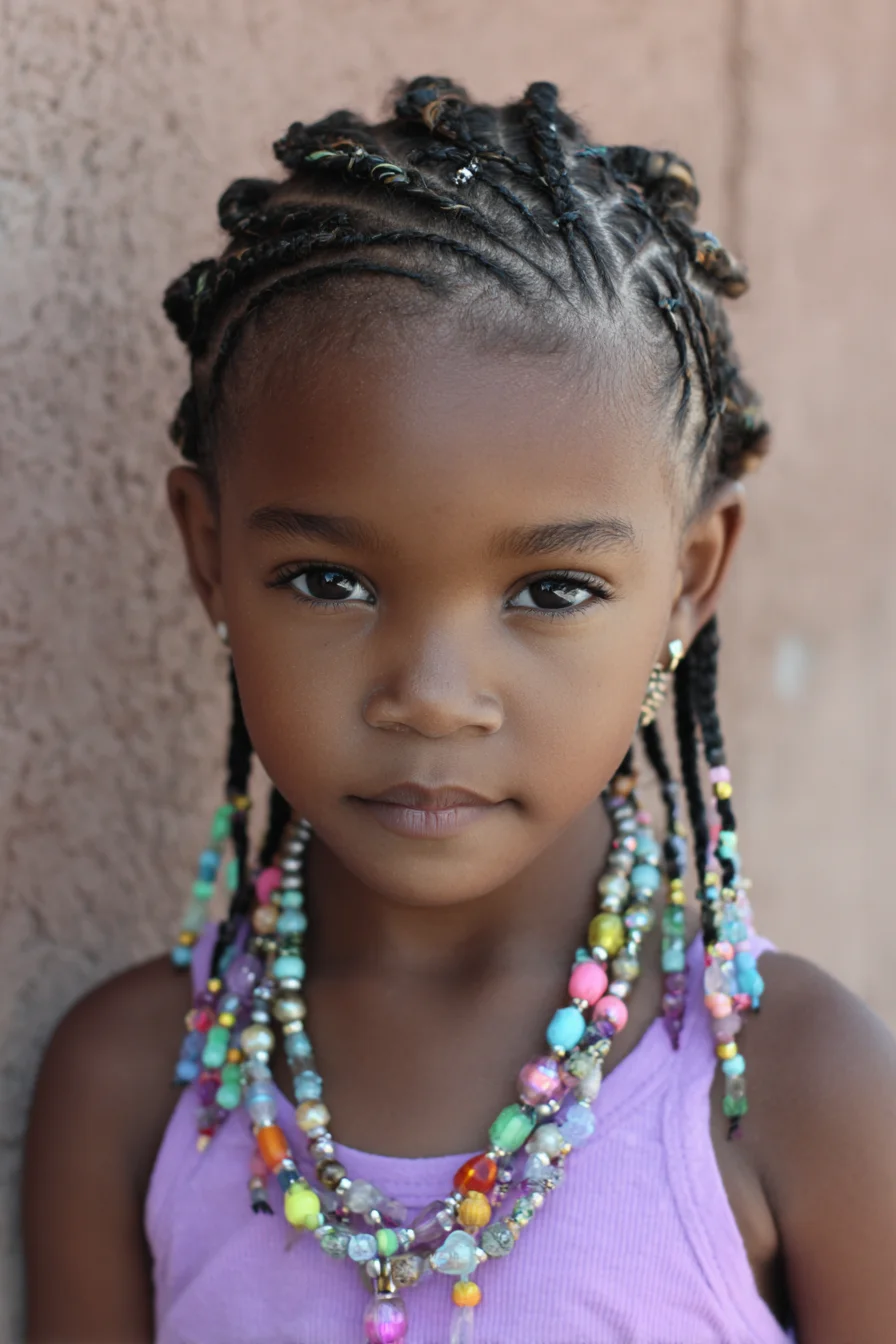
Suitable hair types: ideal for Type 3–4 textured hair with medium to high density; can be adapted for finer hair with larger sections. Technique: create neat, shallow cornrows radiating from the hairline toward the crown, then continue into small three‑strand braids or two‑strand twists and knot or secure the ends. Finish by threading colorful beads onto the braid ends and securing them with a small elastic or crimp bead. Tools needed: rat‑tail comb for clean parts, sectioning clips, small elastics, beading tool or needle, and a towel. Products required: lightweight leave‑in conditioner, a moisturizing styling cream or butter, gentle edge control for baby hairs, and a light scalp oil (jojoba or grapeseed) to seal moisture. Difficulty level: moderate — professional or practiced braider recommended; typical salon time 1.5–3 hours depending on size and length. Maintenance tips: sleep on a satin bonnet or pillowcase, refresh edges with a small amount of edge control, lightly oil the scalp weekly, avoid over‑manipulating beads, and wash gently every 2–3 weeks using diluted shampoo. Plan for a touch‑up or removal after 6–8 weeks to protect the hair and scalp.
Cornrowed Box Braids with Colorful Beaded Ends — Kids Protective Style
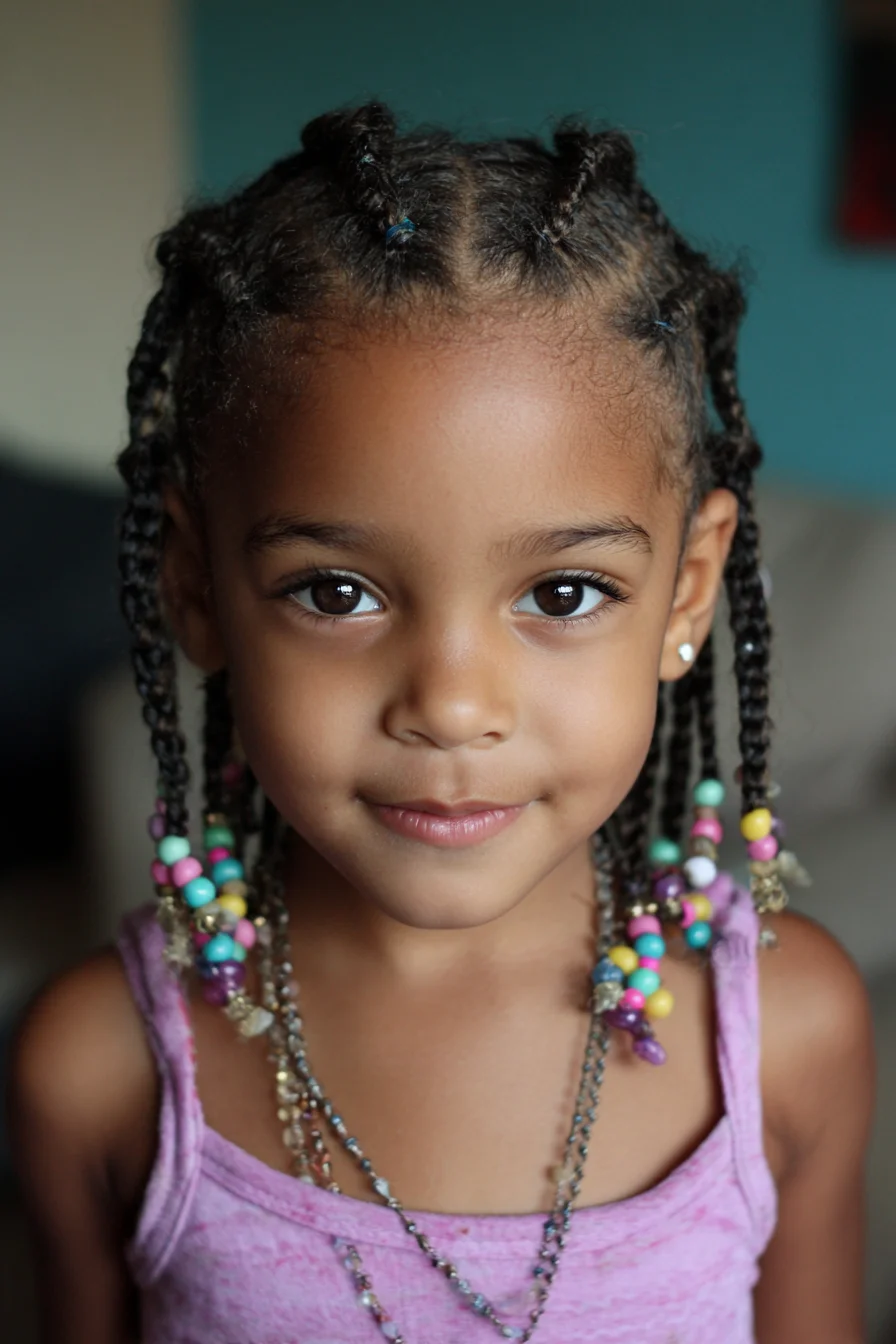
This playful protective style suits natural textured hair (3A–4C) and finer or medium-density hair on children and adults who want low-manipulation wear. Technique: section the hair into small, even boxes or cornrow rows, feed or three-strand braid each section from the hairline toward the ends, secure with small elastics, then thread on beads and clamp or knot the ends. From salon experience, keep tension light at the scalp to protect delicate edges. Tools needed: rat-tail comb, sectioning clips, small clear elastics, beading/loop tool, bead stoppers, and needle-nose pliers (for crimp beads). Products required: a light leave-in detangler, slip-friendly braiding gel or edge control for smooth parts, lightweight oil (jojoba or grapeseed) for scalp moisture, and a gentle clarifying shampoo for periodic washing. Difficulty level: moderate — takes 1–2 hours depending on size/length; practice needed for even parts and consistent braid tension. Maintenance tips: wrap with a satin scarf at night, refresh edges with a small amount of edge control, moisturize scalp twice weekly, avoid heavy products that cause buildup, check beads for tightness, and remove or redo braids after 6–8 weeks to prevent breakage.
Middle-Part Two Braided Pigtails for Natural and Curly Hair
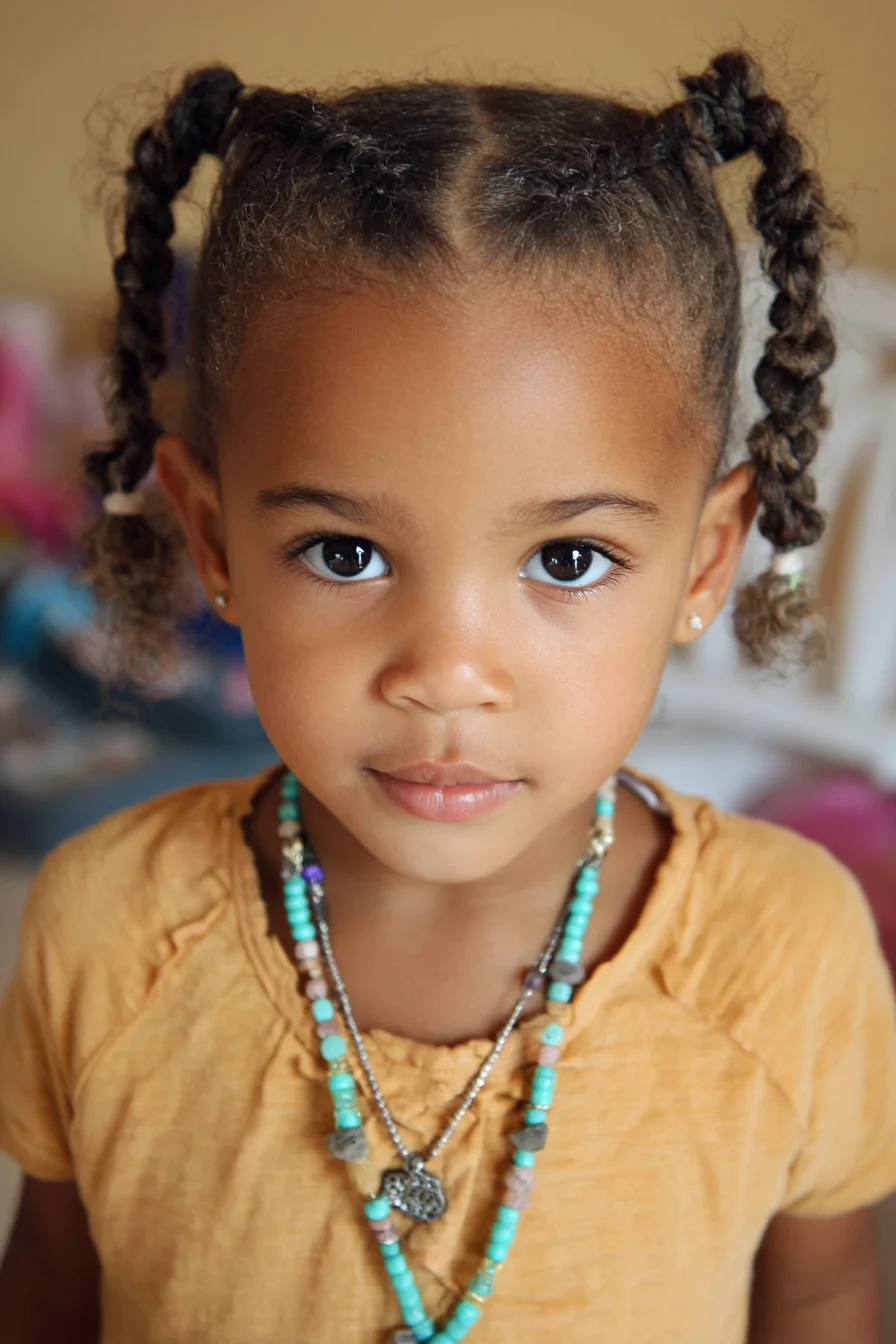
This middle-part two braided pigtail look is ideal for textured, curly and coily hair (3A–4C) and also adapts well to wavy hair when properly detangled. Start on clean, damp hair: apply a lightweight leave-in conditioner for moisture and a small amount of curl cream or styling butter for slip. Use a rat-tail comb to create a precise center part, clip one side out of the way, then smooth edges with a soft edge-control gel. Gather each side at the crown and either three-strand braid straight down or cornrow the front into a thicker braid toward the nape, finishing with snag-free elastics or decorative beads. Keep braids firm but not overly tight to protect the hairline. Tools: rat-tail comb, wide-tooth comb, detangling brush, sectioning clips, small elastics, optional bead tool. Products: leave-in conditioner, curl cream or light butter, edge control, lightweight oil or serum and a light-hold mousse or braid spray. Difficulty: Beginner–Intermediate; 20–45 minutes depending on density. Maintenance: sleep on satin, mist with water + leave-in to refresh, avoid heavy product buildup at the scalp, and re-tighten or re-braid loose sections after 2–3 weeks.
Cornrow Pigtail Braids with Beads — Protective Style for Natural Hair
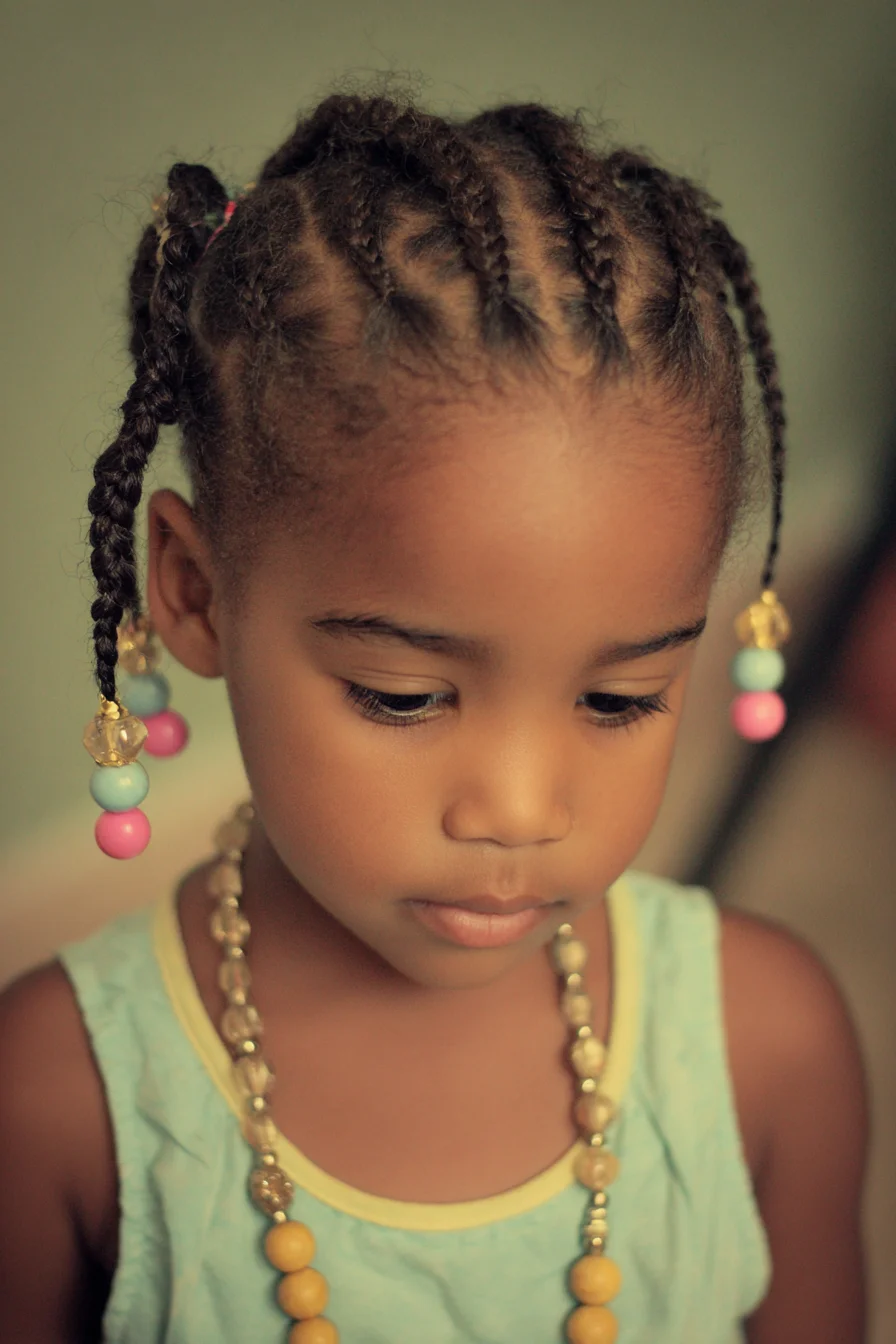
This neat cornrow-to-pigtail braid style is ideal for natural, tightly coiled hair (3B–4C) but can also be adapted for looser curls and wavy textures after proper detangling. Start on damp, conditioned hair: create even vertical parts, apply a lightweight leave-in conditioner and a small amount of edge control or styling gel at the roots, and cornrow each section toward the nape before finishing each braid to the ends. Tools needed: rat-tail comb, sectioning clips, wide-tooth comb, small elastic bands, bead applicator or tiny rubber stoppers, and a soft edge brush. Products required: sulfate-free cleanser, moisturizing leave-in, styling gel or braid mousse, lightweight oil or hair butter, and a satin bonnet or pillowcase for overnight care. Difficulty: moderate — straightforward for a trained stylist or someone comfortable with basic braiding; expect 45–90 minutes depending on section size. Maintenance tips: avoid excessive tension on the hairline, moisturize the scalp weekly with light oil, refresh edges with a dab of gel, sleep on satin, and gently cleanse the scalp every 1–2 weeks. Remove braids carefully to prevent breakage and deep-condition afterwards.
Cornrows into Colorful Beaded Box Braids — Protective Style
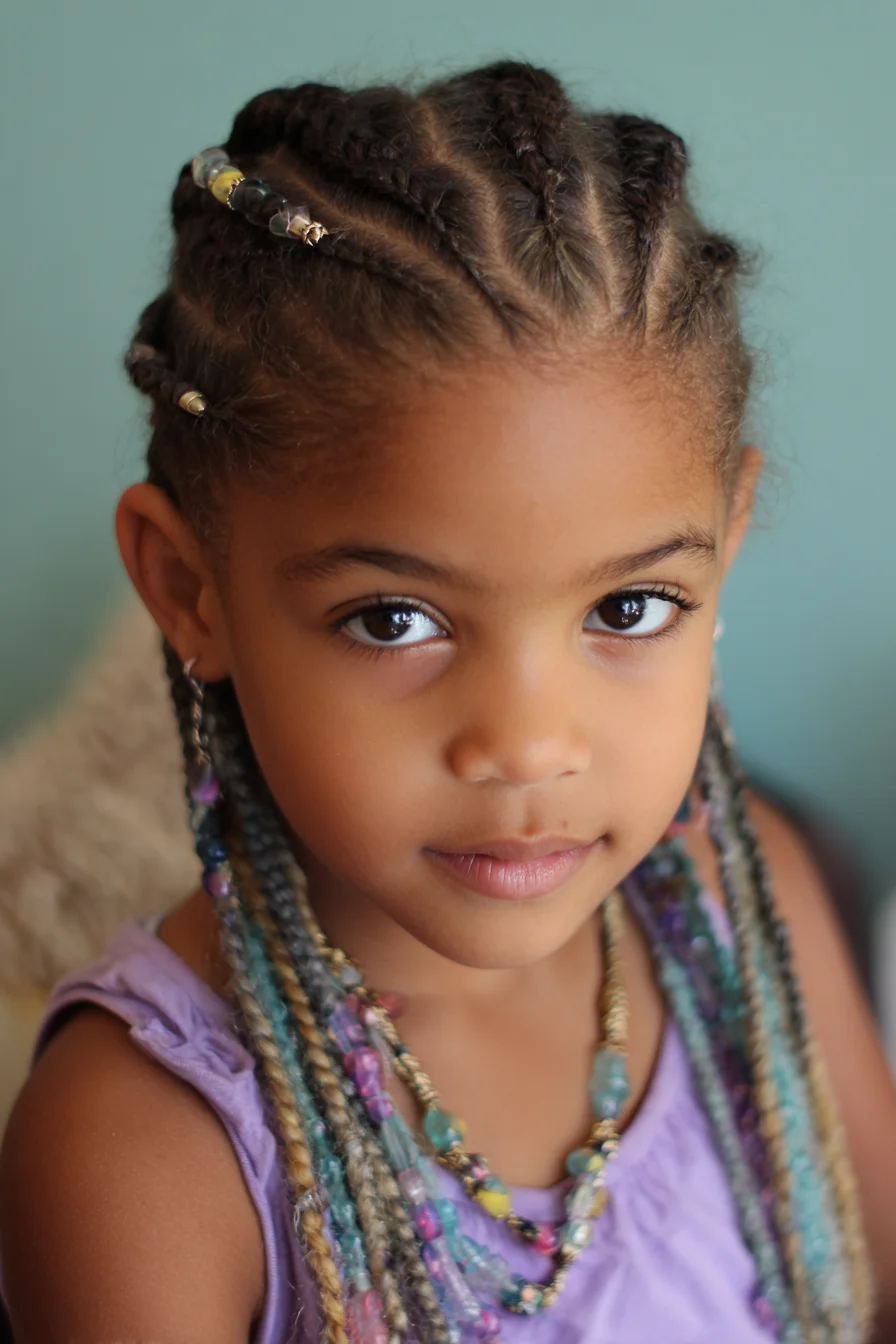
This polished look combines neat cornrows at the crown with feed-in/small box braids finished with colorful extensions, wraps and beads. Best suited to textured, curly or coily hair types (3A–4C) and works well as a child-friendly protective style when braids are kept light and soft. Technique: start on clean, detangled hair; create even cornrow parts with a rat-tail comb, braid close to the scalp, then transition to feed-in or three-strand box braids down the length using pre-stretched or synthetic braiding hair for smooth, consistent thickness. Tools & accessories: rat-tail comb, sectioning clips, small elastic bands, extension hair, bead applicator/awl, hair clips, and optional thread/wrap. Products: lightweight leave-in conditioner, firm but non-greasy edge control or gel, lightweight mousse to set, and a scalp oil (jojoba or lightweight coconut) for hydration. Difficulty: intermediate — requires precision parting and consistent tension; expect 2–4 hours depending on size. Maintenance tips: protect with a silk/satin scarf at night, oil the scalp weekly, avoid over-tightening, refresh edges with light edge control and mousse, and keep braids up to 6–8 weeks with gentle washing and minimal manipulation.
Feed-in Cornrows with Beaded Braided Tail — Child-Friendly Style
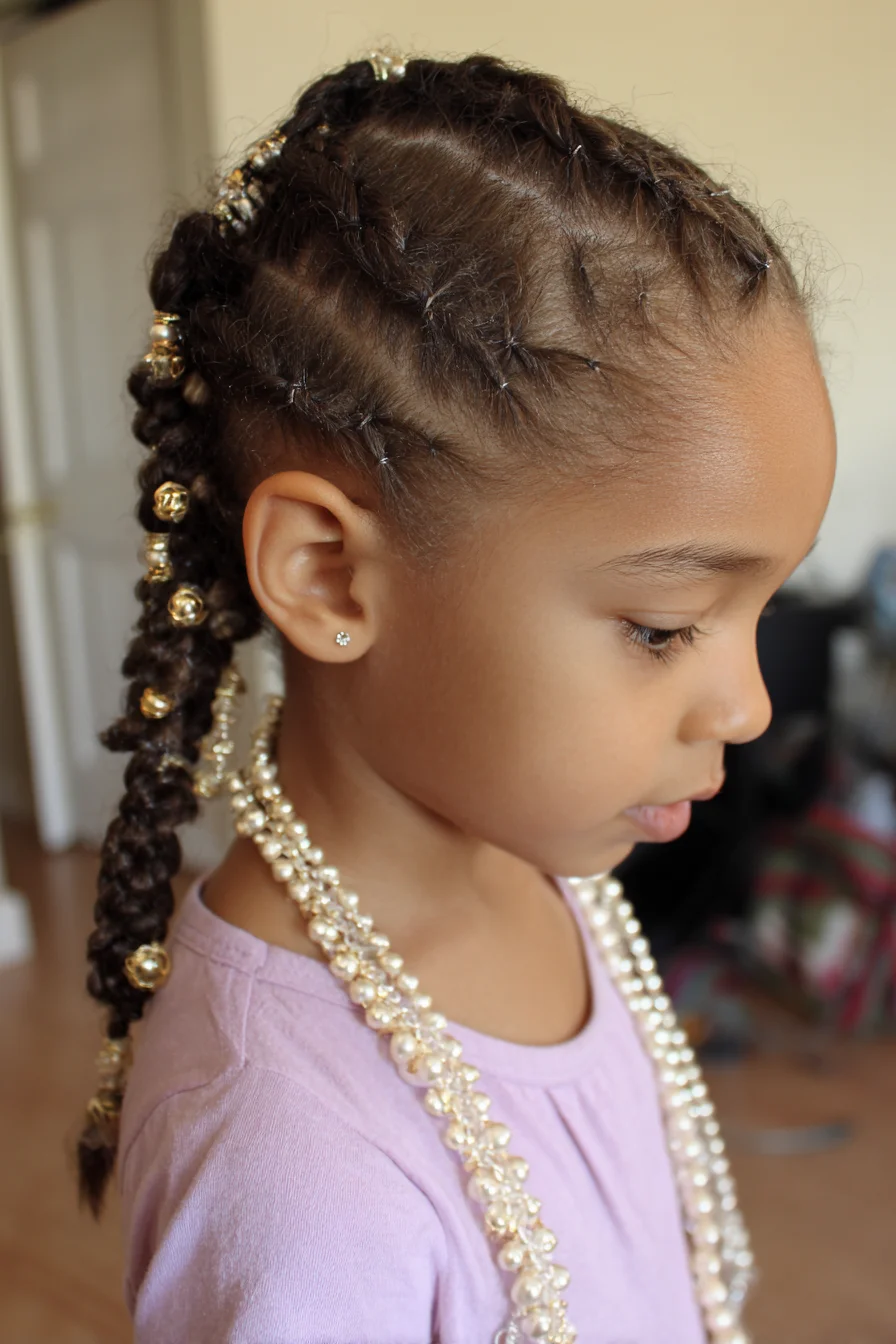
This sleek feed-in cornrow style transitions into a single beaded braided tail, ideal for children and adults with medium to coarse, textured hair. The technique uses small, close-to-the-scalp feed-in (stitch) cornrows across the crown that are gradually built into a thicker three-strand braid down the back. Tools needed: rat-tail comb for parting, fine-tooth comb, edge brush, sectioning clips, small elastics, beading kit and a beading needle or loop tool. Products required: lightweight leave-in conditioner, smoothing edge control or gel, a light-hold pomade for shine, braid spray or scalp oil (tea tree or peppermint diluted) for maintenance, and a satin bonnet or scarf. Difficulty level: intermediate — requires clean parting and consistent tension; expect 60–90 minutes depending on size. Maintenance tips: wrap nightly in satin to preserve edges and beads, mist scalp and braids weekly with diluted leave-in or braid spray to prevent dryness, avoid excessive tension on the hairline, check and tighten beads as needed, and remove braids after 4–6 weeks to prevent breakage and allow a gentle detangling and conditioning routine.
Classic Two Cornrows with Beaded Braided Ends — Protective Style for Textured Hair
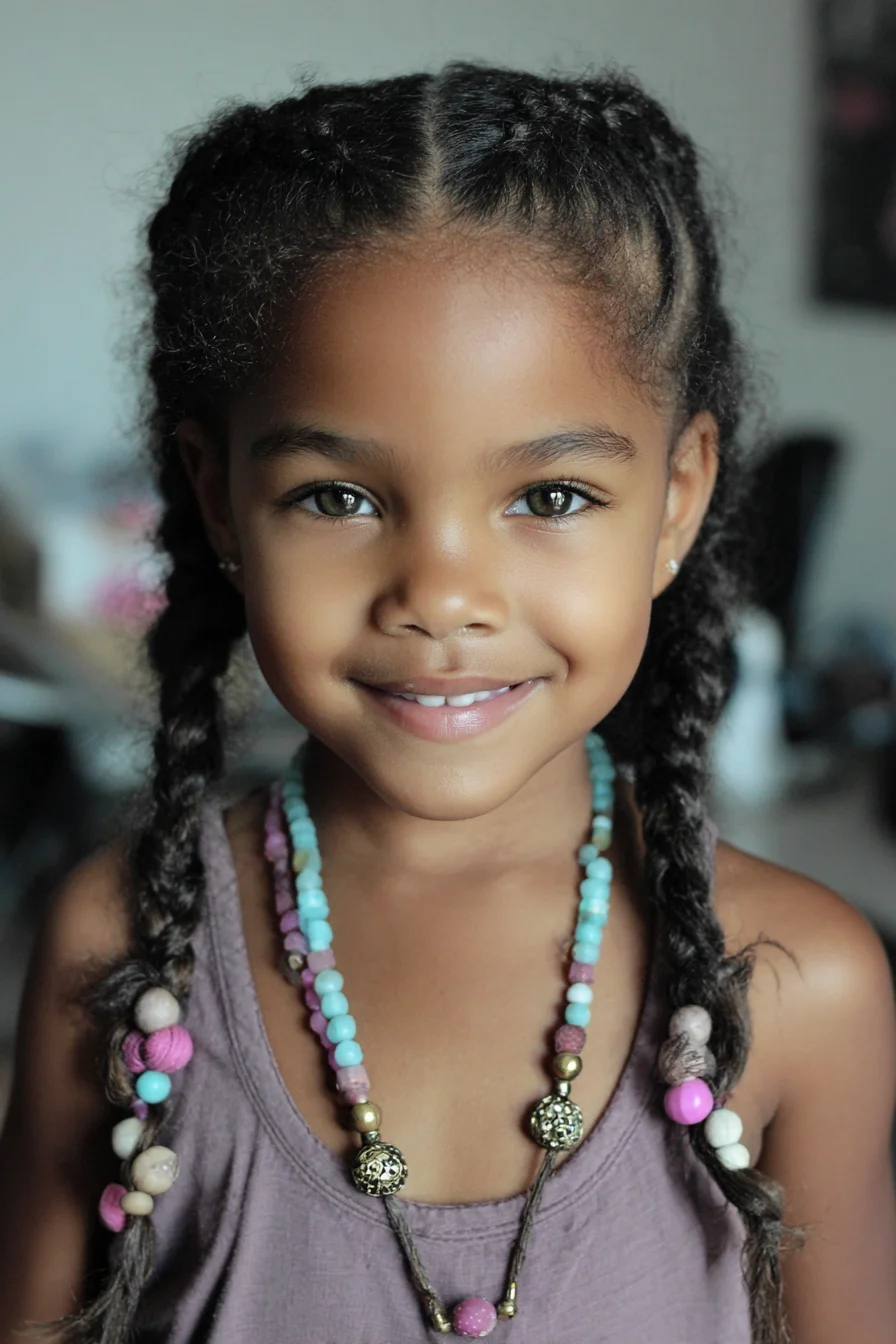
This neat two-cornrow style with beaded ends is ideal for Type 3–4 curly and coily hair and younger clients who need a low-manage, protective look. Start on freshly detangled, lightly damp hair with a leave-in conditioner. Using a rat-tail comb, create a clean center part and clip sections away. Apply a small amount of smoothing cream or edge control at the hairline, then begin two feed-in/cornrow braids from the front, keeping tension firm but gentle to avoid pulling. Braid to the ends and secure with small bands; add beads or thread as desired. Tools: rat-tail comb, wide-tooth comb, hair clips, small elastics, beading needle (optional). Products: detangler or leave-in, light styling cream or edge gel, lightweight oil for shine. Difficulty: moderate — a stylist or practiced caregiver can complete this in 30–45 minutes. Maintenance: sleep with a silk bonnet or scarf, reapply a few drops of oil to the scalp twice weekly, avoid heavy product buildup, and redo edges as they loosen. Remove after 4–6 weeks to prevent stress and shed gently with conditioning.
Neat Cornrow Braids with Beaded Ends — Protective Style for Textured Hair
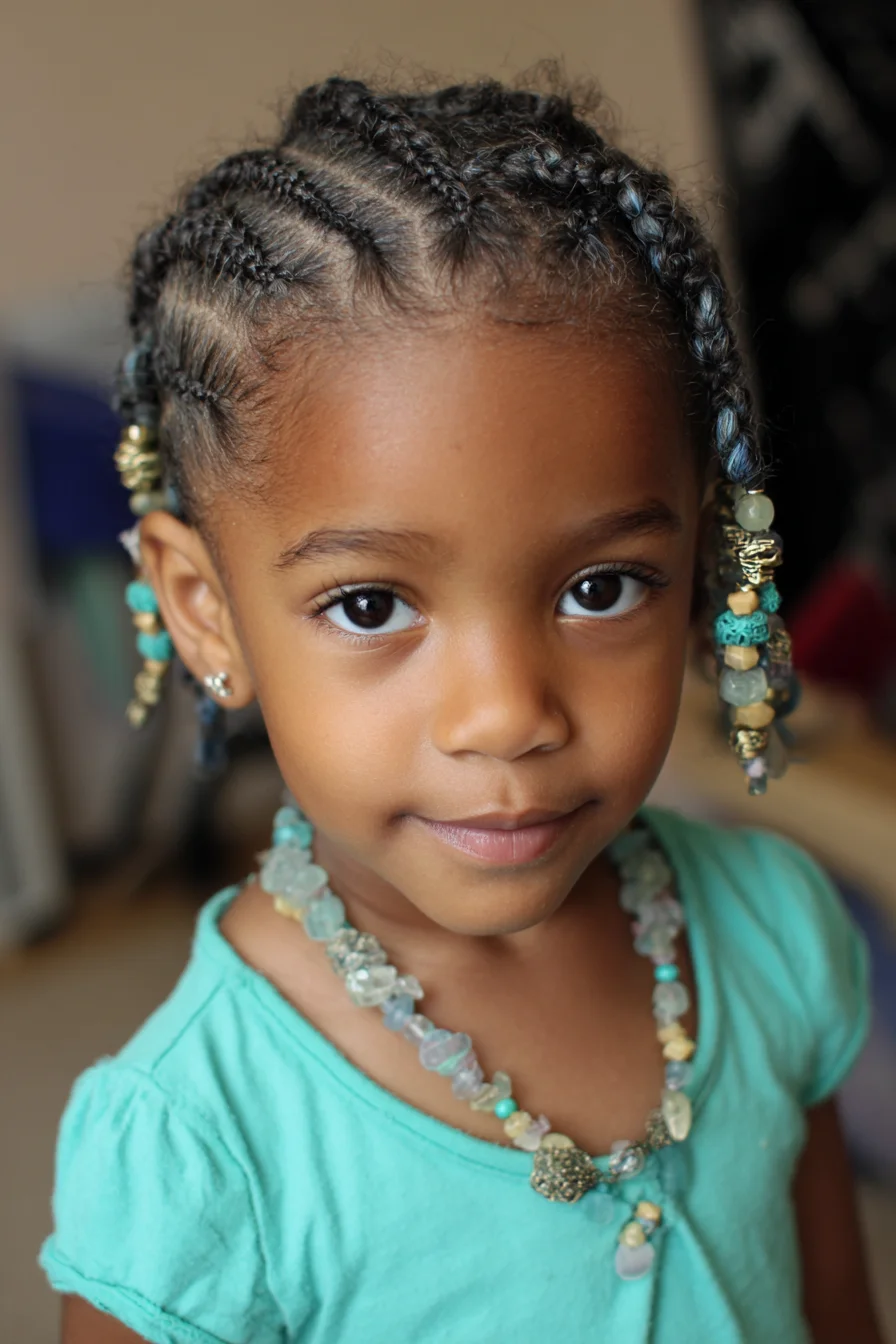
This polished cornrow style with decorative beads works best on textured, medium to coily hair but can be adapted for straighter hair using added synthetic hair for thickness. Technique: create clean, even center-to-side parts, then Dutch or traditional cornrow each section tightly but comfortably toward the ends; add small three-strand braids where desired and secure beads with short elastics or a beading tool. Salon tools: rattail comb for precise parts, fine-tooth comb, sectioning clips, braiding hair (optional), beading tool/needle, and small elastic bands. Recommended products: light leave-in conditioner, curl cream or braiding gel for hold, edge control for baby hairs, a lightweight scalp oil (jojoba or coconut) and a sulfate-free shampoo for washing. Difficulty: intermediate — requires consistent tension and neat parting; allow 60–120 minutes depending on braid size. Maintenance tips: cover with a silk/satin bonnet at night, moisturize scalp twice weekly, refresh edges sparingly with edge control, avoid over-tightening to prevent breakage, and gently wash every 2–3 weeks. Re-bead or redo braids after 4–6 weeks to maintain neatness and scalp health.
Neat Cornrow Feed‑In Braids with Beaded Ends
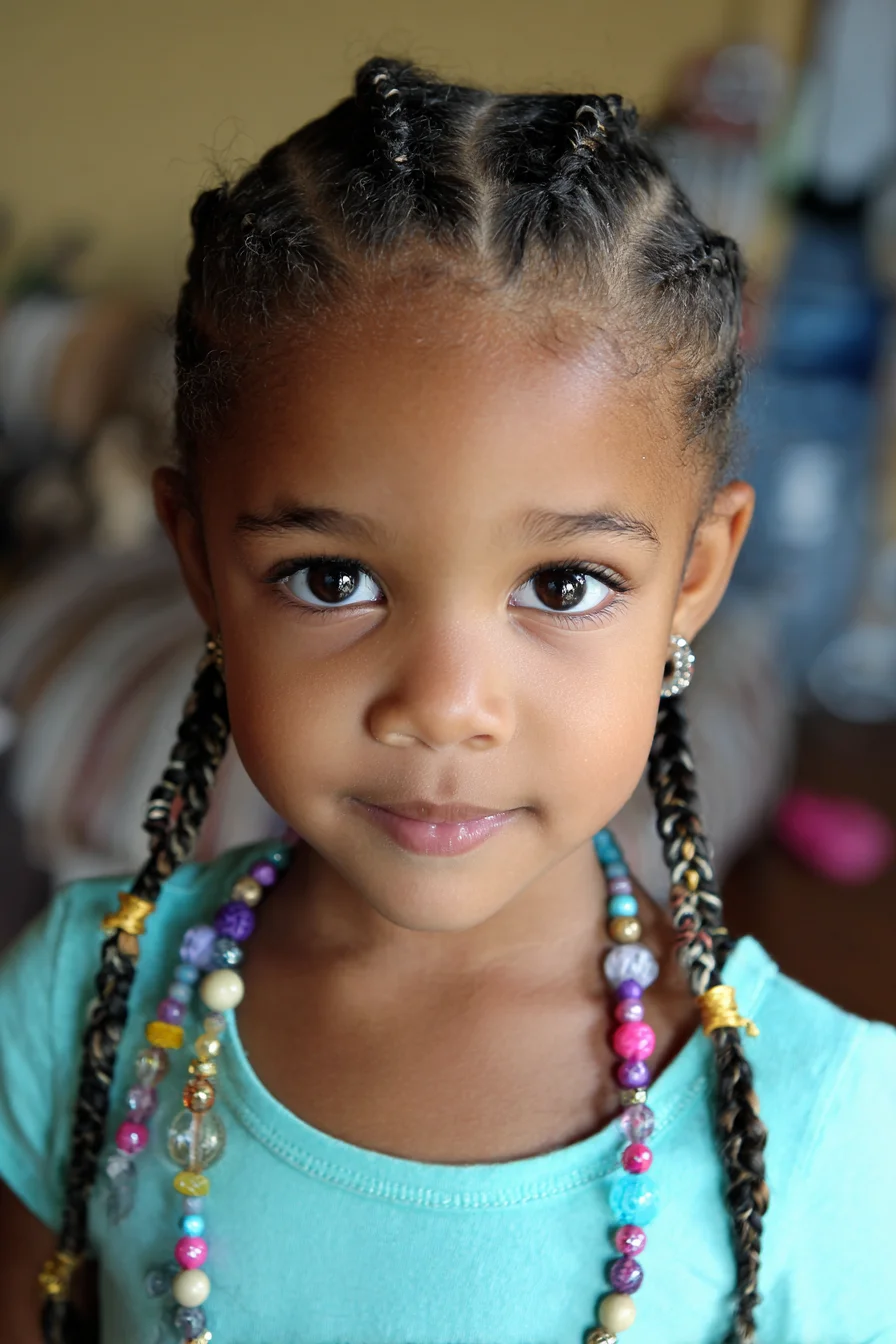
This style suits natural textured hair (3A–4C) and medium to thick curl patterns best; it also works on finer hair with added feed‑in extensions for grip and fullness. Technique: create clean center and side partings, then braid tight but gently into straight-back cornrows, using the feed‑in method to add length and even thickness. Finish each braid with small elastic bands and slide on beads or attach cuffs; secure with a dab of thread or clear gel knot. Tools needed: rat‑tail comb, sectioning clips, small elastic bands, beading tool or crochet hook, braid extensions (optional), and an edge brush. Products required: lightweight leave‑in conditioner, edge control gel for clean hairlines, anti‑frizz serum or light oil (argan/jojoba), and a mild sulfate‑free shampoo for washing. Difficulty level: moderate — requires basic braiding skill and 45–90 minutes depending on number/length of braids. Maintenance tips: cover with a satin bonnet or pillowcase at night, moisturize scalp weekly with a spray leave‑in, avoid heavy oils that cause buildup, remove beads if swimming, and refresh edges or redo braids every 4–6 weeks. For children, ensure beads/cuffs are secure and age‑appropriate to avoid choking hazards.
Mini Cornrow Braids to Low Buns — Protective Style for Curly & Coily Hair
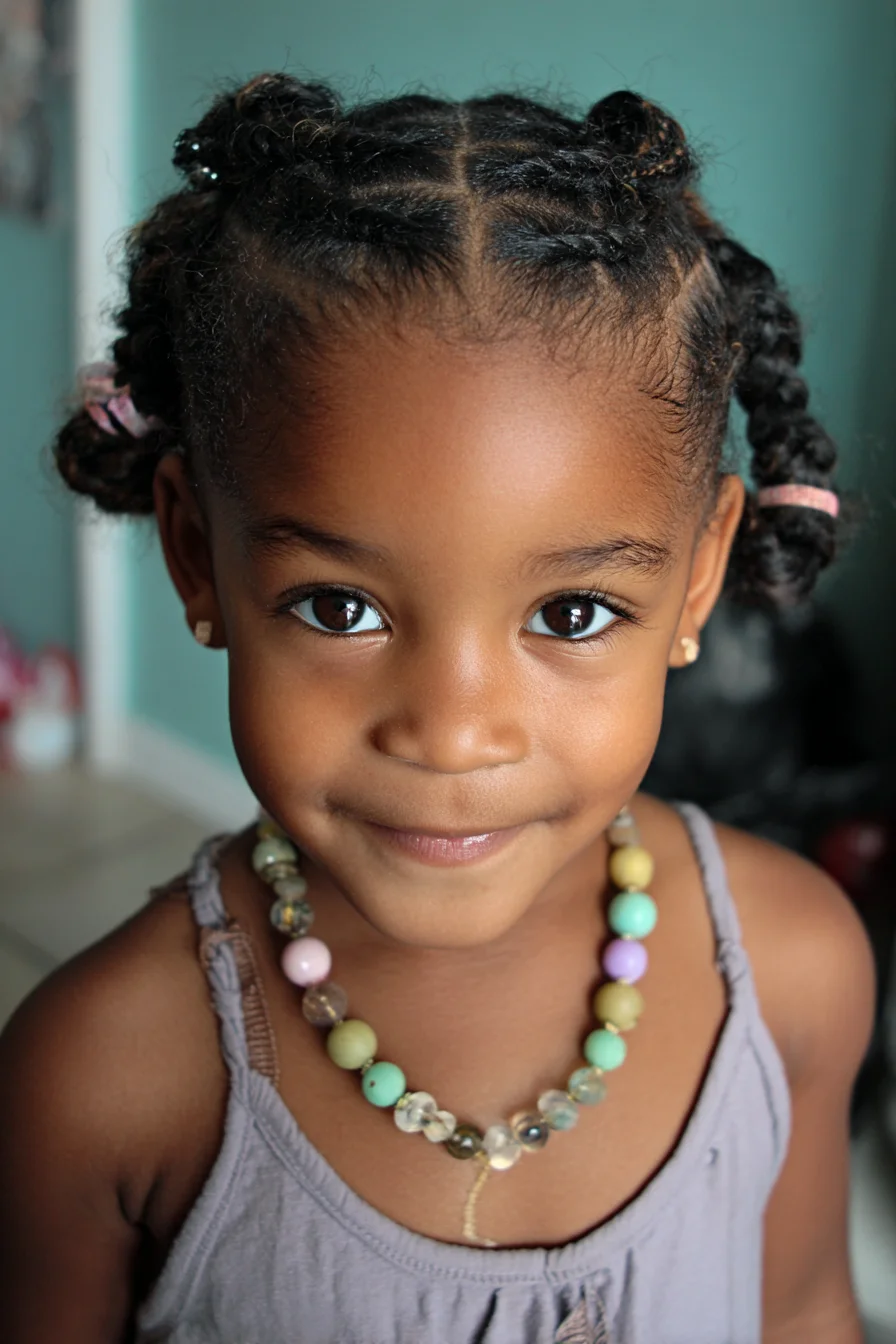
This neat, child‑friendly look uses small cornrows or flat twists that finish into low coiled buns — a practical protective style for type 3–4 hair textures and medium to fine strand widths. Technique: part the hair into even sections, create 6–8 small cornrows (or flat twists) from the front toward the back, gather each braid into a short ponytail and coil into a mini bun, securing with elastic bands and optional beads or soft scrunchies for comfort. Tools needed: rat‑tail comb, fine tooth comb, sectioning clips, small elastic bands, edge brush, and beading tool if adding beads. Products: leave‑in conditioner or detangling cream, light styling gel or edge control for smooth parts, a lightweight oil or scalp serum for shine, and a mousse or foam to set flyaways. Difficulty: moderate — requires basic cornrowing or twisting skills and neat parting; salon time about 30–60 minutes depending on sections. Maintenance: sleep on a satin bonnet or pillow, lightly oil the scalp twice weekly, refresh edges with small amounts of gel, avoid overly tight tension, and redo or tighten braids every 2–4 weeks to protect the hairline and scalp.
Cornrow Feed-In Braids with Beaded Ends — Protective Kids Style
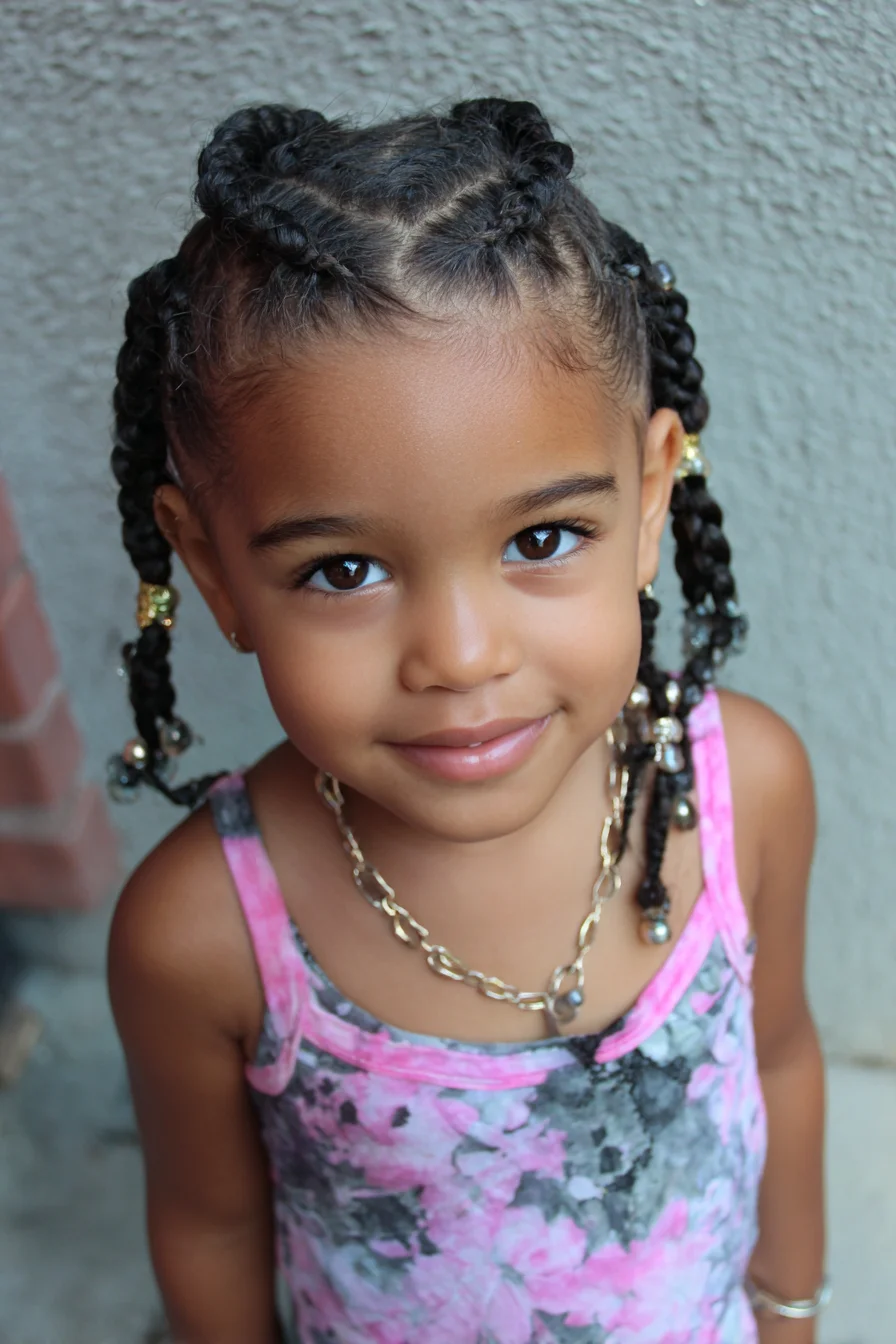
Suitable for Type 3 to 4 hair and fine-to-medium textures, this protective style uses small cornrows fed into individual three-strand braids finished with beads or charms. Technique: start on freshly washed, detangled hair. Section with a rat-tail comb into neat rows, apply a lightweight leave-in and a smoothing gel or edge control along the part for crisp lines. Use the feed-in (invisible or stitch) method to add length and reduce tension at the hairline, then braid down and secure with a small elastic before adding beads with a beading tool or thread. Tools needed: rat-tail comb, clips, wide-tooth comb, small elastics, beading tool/needle, hair beads and charms. Products required: sulfate-free shampoo, moisturizing conditioner, leave-in detangler, lightweight gel/edge control, natural oil (jojoba or sweet almond) for scalp, and a light-hold mousse for flyaways. Difficulty: intermediate — manageable for experienced braiders; beginners should practice neat parting and feed-in technique. Maintenance tips: moisturize scalp twice weekly, cover with a satin bonnet or pillowcase at night, avoid overly tight braiding, refresh edges with light gel, and plan a redo every 4–6 weeks to prevent breakage.
Cornrow Puffs with Beads — Flat Braids into Mini Pigtails for Natural Hair
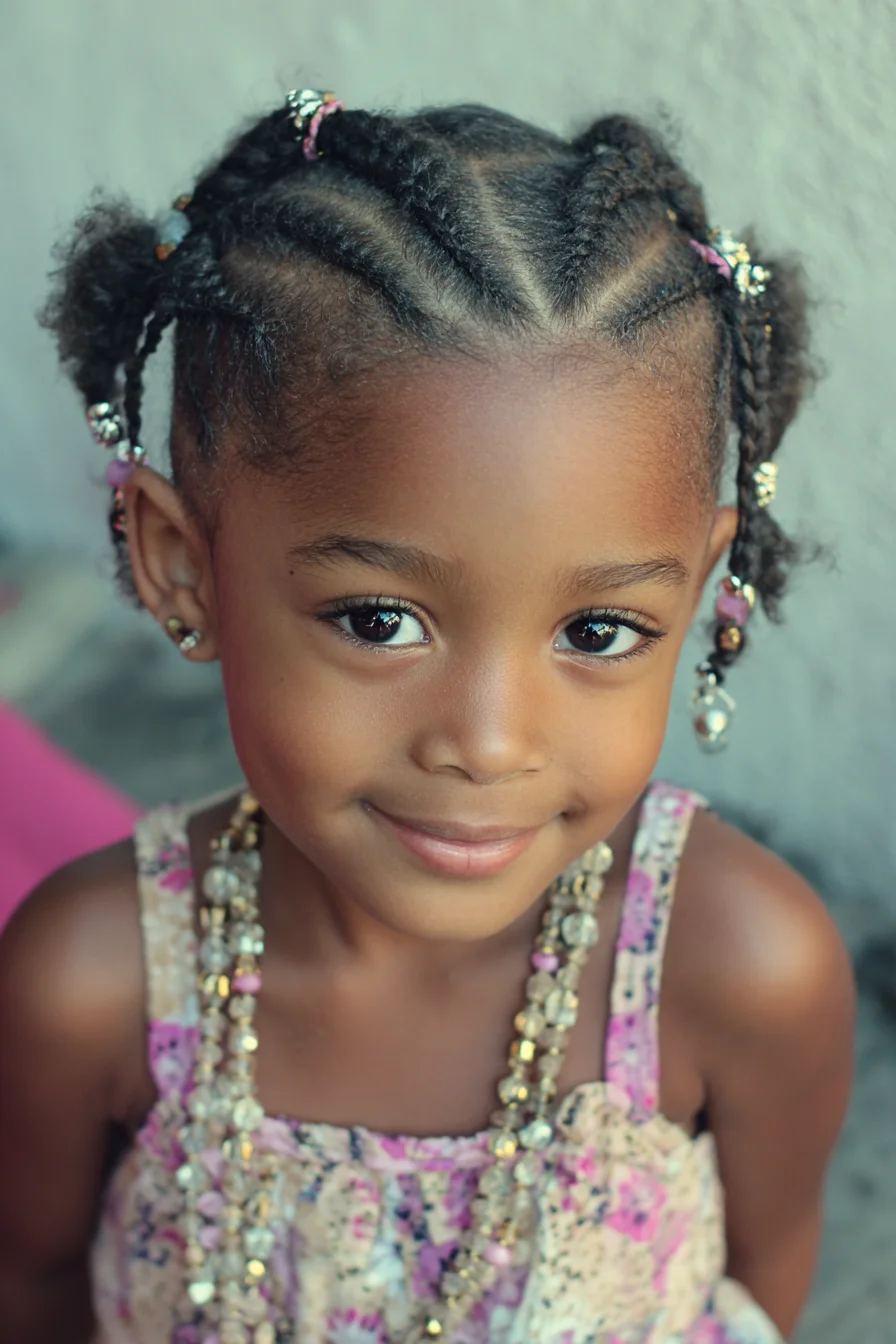
Suitable for tight-curly to coily textures (3A–4C), this style uses flat cornrows that feed into small puffs/mini pigtails decorated with beads — great for kids and low-manipulation looks. Start on clean, detangled hair: mist with a water-based leave-in, apply a light cream or styling butter for slip, and use a rattail comb to create neat parts. Braid each cornrow tightly but comfortably toward the crown and secure with small snag-free elastics; gather ends into mini puffs or single-strand braids, then add beads using a beading tool or threading method. Tools: rattail comb, sectioning clips, wide-tooth comb, small elastics, beading tool, edge brush. Products: water-based leave-in, curl cream or braid gel for hold, edge control for perimeter smoothing, lightweight oil to seal. Difficulty: moderate — requires basic cornrow technique and patience; expect 30–60 minutes depending on the number of braids. Maintenance: sleep in a satin bonnet or on a satin pillowcase, refresh with a water/leave-in spray, lightly oil the scalp, avoid daily re-braiding, and redo edges or elastics every 2–3 weeks to prevent breakage.
Child-Friendly Cornrow Braids with Bead Accents for Curly & Coily Hair
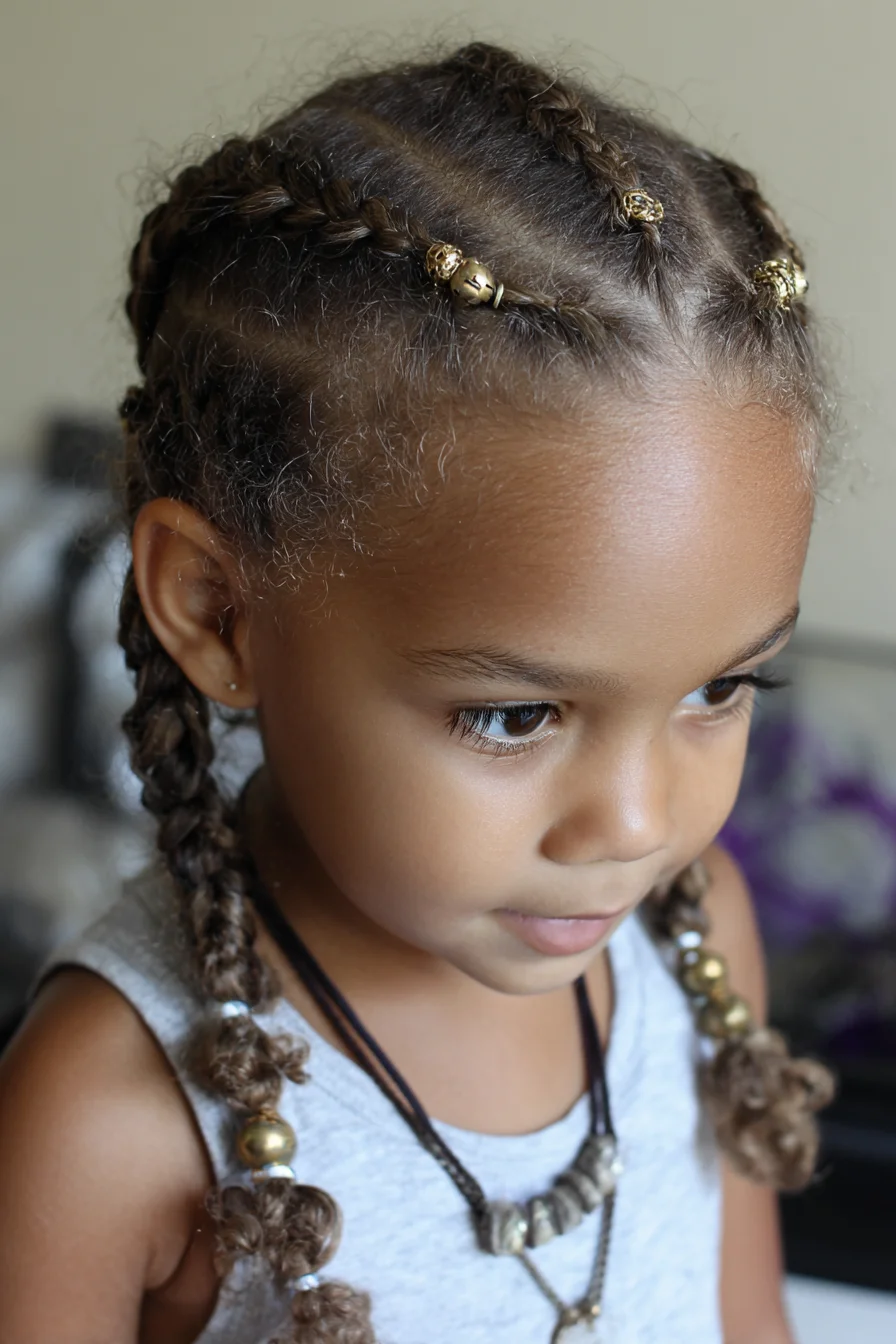
This style uses neat, evenly spaced cornrows finished with decorative beads — ideal for naturally curly, coily, or textured hair and adaptable to wavy or straighter hair with extra grip. Start on freshly detangled, lightly damp hair. Create clean partings with a rat-tail comb, apply a lightweight leave-in detangler, then use a small amount of gel or edge control at the part for hold. Braid close to the scalp using three-strand or feed-in technique and secure ends with small elastic bands; add beads with a beading tool or a drinking straw and lock them with elastics. Tools needed: rat-tail comb, sectioning clips, small elastics, beading tool/straw, edge brush, and a wide-tooth comb. Recommended products: leave-in conditioner, light styling gel or edge control, lightweight oil for shine, and a sulfate-free moisturizing shampoo. Difficulty: moderate — requires basic braiding skill and patience; expect 30–60 minutes depending on size and number of braids. Maintenance tips: sleep on a satin pillowcase or bonnet, lightly oil the scalp weekly, refresh edges with gel, avoid excess tension to protect the hairline, and redo or tighten braids after 2–4 weeks to prevent breakage.
Center-Part Cornrow Braids with Beaded Ends for Natural Curly Hair
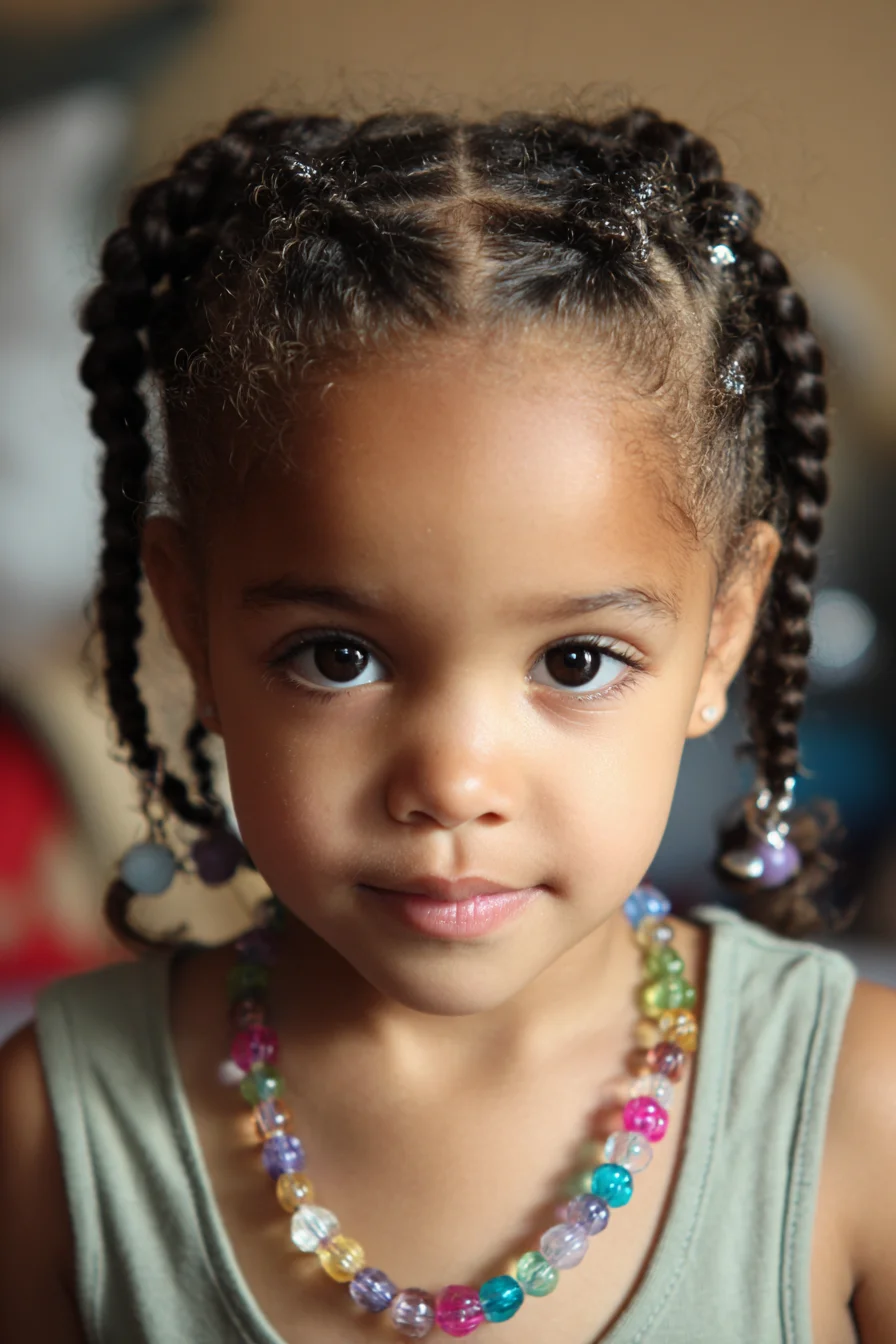
This style suits Type 3–4 textured hair and medium to long lengths — it works well on dense or fine curls when detangled and slightly stretched. Start on clean, moisturized hair: create a precise center part and section into even panels. Use a rat-tail comb for parts, detangle with a wide-tooth comb, then apply a lightweight leave-in conditioner and a medium-hold styling gel or edge control at the roots. Braid each cornrow tightly but gently, feeding hair evenly to avoid excessive tension, and finish with small elastics or beads threaded on with a beading tool. Tools needed: rat-tail comb, sectioning clips, detangling brush, edge brush, small elastics, beading tool. Products: leave-in moisturizer, gel or edge control, light oil or braid sheen spray. Difficulty: intermediate — expect 45–90 minutes depending on section count and length. Maintenance tips: sleep on a satin bonnet or pillowcase, lightly oil the scalp weekly, refresh edges with a small amount of gel, and co-wash or dilute-shampoo the scalp to prevent buildup. Redo or refresh braids every 2–6 weeks to protect hair health and minimize breakage.
As a children’s stylist, my best advice is to prioritize comfort and hair health over complexity. Choose low-tension braids, avoid elastic bands that pull on edges, and use a lightweight leave-in conditioner or detangling spray before styling. Beads are a fun accent, but opt for large-holed, smooth beads and secure them loosely so they don’t tug. Refresh styles every 1–3 weeks depending on activity level, and always check the scalp for redness or irritation. At night, protect braids with a satin bonnet or pillowcase and apply a light oil to maintain moisture at the roots. Use the 28-image gallery as visual guidance — mimic parting patterns and bead placement, then simplify steps to match your comfort level. With gentle technique and consistent care, bead-accented toddler braids are a protective, adorable option that lasts and keeps little ones happy.