
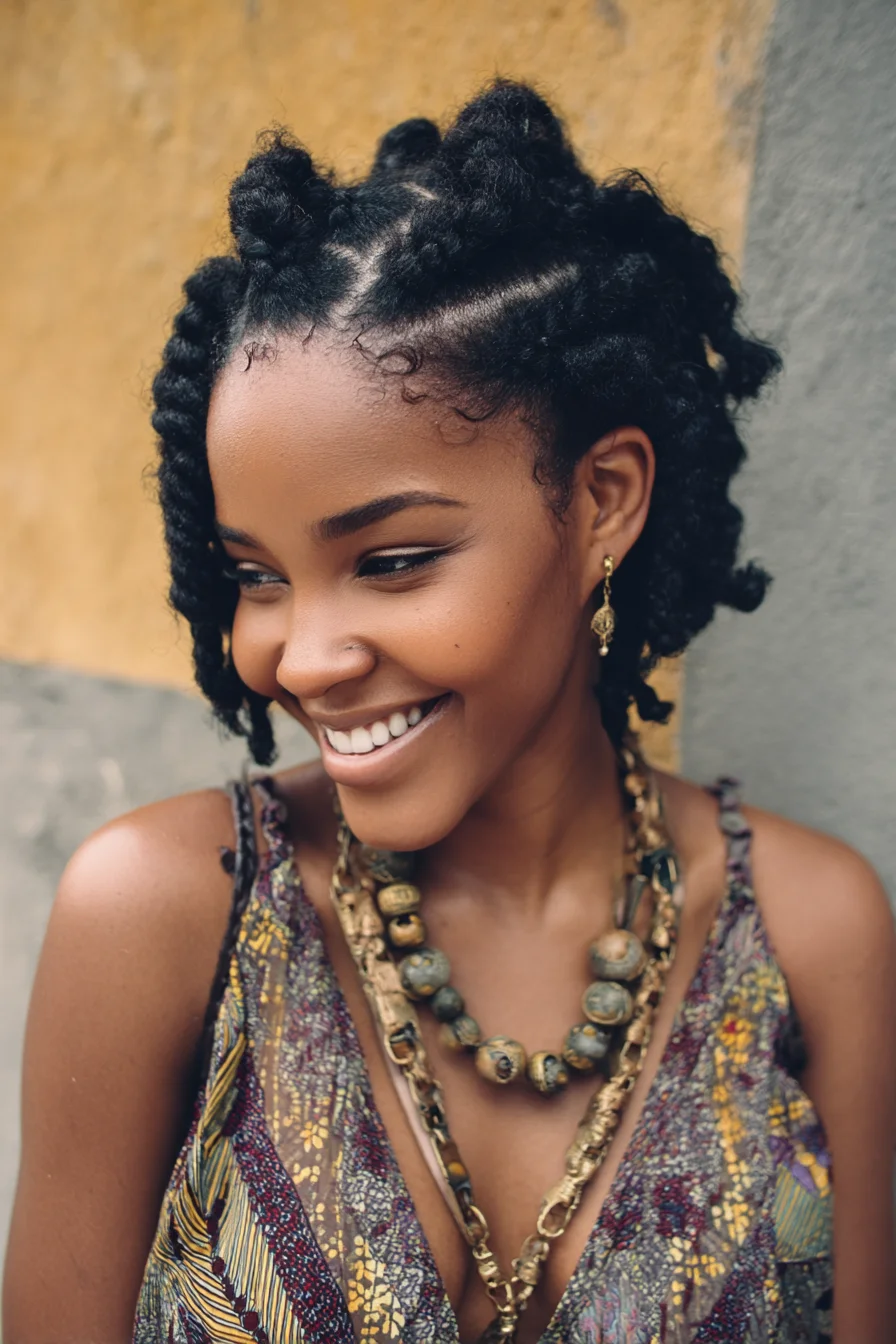
Im Lena, a stylist with over a decade in the salon chair, and I’ve braided hundreds of Fulani styles and developed a deep appreciation for short Fulani braids on women. These cropped, cornrow-forward looks combine traditional African artistry with modern edge—ideal for clients who want a protective, low-maintenance style without sacrificing personality. Short Fulani braids suit a wide range of textures and face shapes: from fine natural coils to denser 4C hair, and they flatter oval, heart, and square faces when placed thoughtfully. In this gallery of 28 images I’ll show variations: center or side parts, cornrow crowns, curved patterns, bead and cuff accents, and bob-length braids. Styling tips I recommend in-salon: keep tension gentle to protect edges, use a hydrating leave-in, and seal braid bases with light oil. For daily upkeep, refresh edges with a soft gel and sleep on a silk scarf to preserve shape.
Feed-In Cornrows into Low Braided Bun — Protective Style for Natural Hair
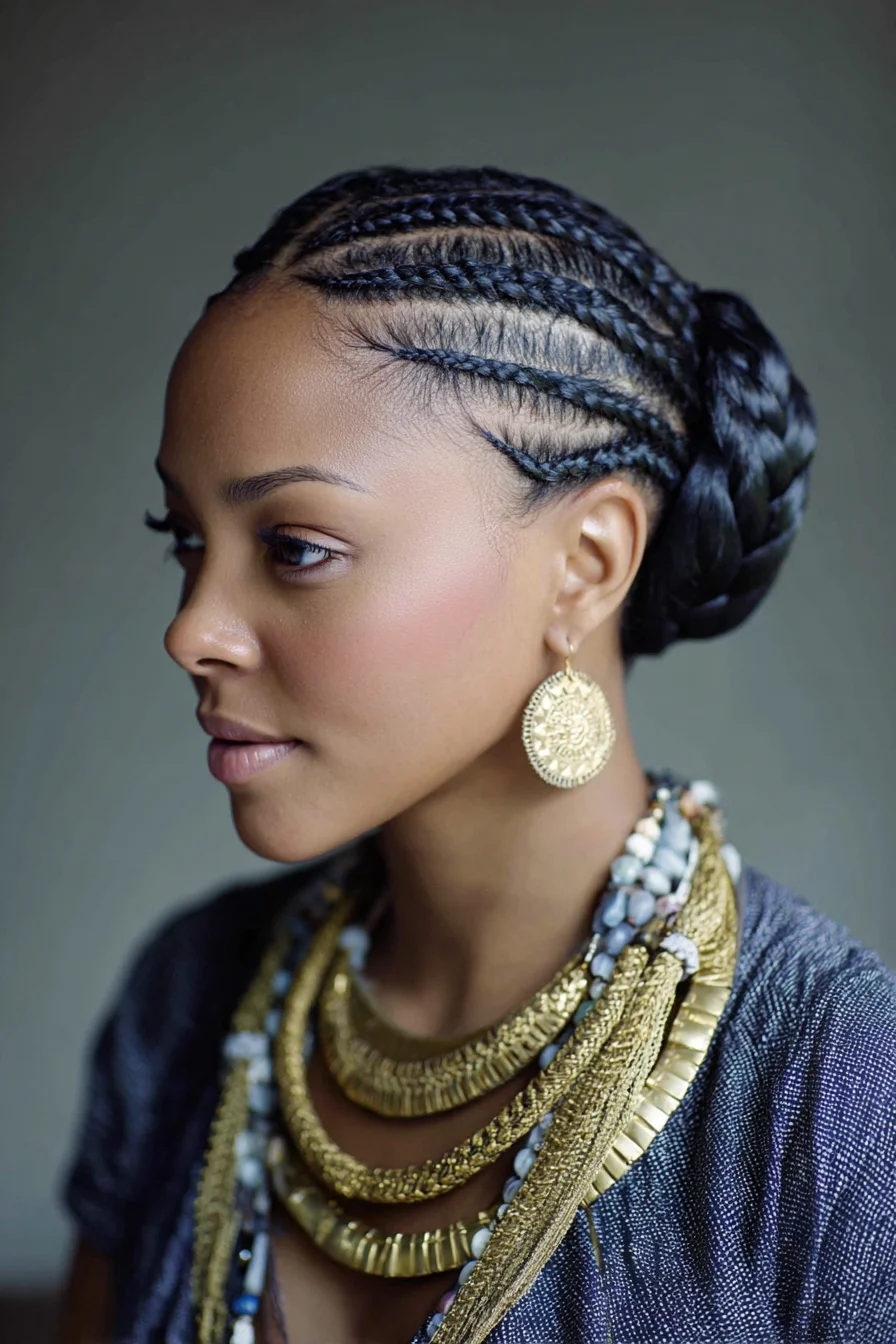
This sleek feed-in cornrow style transitions narrow, neat cornrows along the scalp into a low braided bun — a polished protective look suited to natural textured hair (3A–4C) and relaxed hair when adjusted. Begin on clean, detangled hair with a lightweight leave-in conditioner and a gentle blow-dry or finger-stretch for easier parting. Section with a rat-tail comb and create even feed-in cornrows from the hairline toward the nape; add synthetic braid hair only where extra length or volume is desired. Gather braid ends into a low pony, wrap them into a large braided bun and secure with U-pins and strong bobby pins. Smooth baby hairs with a flexible edge control for a refined finish. Tools: rat-tail comb, sectioning clips, fine-tooth comb, braiding hair (optional), hair ties, U-pins/bobby pins. Products: leave-in conditioner, braid mousse or spray, edge control, light scalp oil (jojoba/argan), and a finishing shine mist. Difficulty: intermediate (expect 2–4 hours); professional installation recommended for precise rows. Maintenance: sleep on a silk/satin scarf, lightly oil the scalp weekly, refresh edges as needed, cleanse with diluted shampoo or dry-cleanse, and remove after 4–8 weeks to avoid tension-related breakage.
Cornrow Updo with Low Twisted Bun — Protective Braided Style

This polished cornrow updo works best on natural, curly, coily, or tightly textured hair and is also suitable for medium-density relaxed hair when using extensions. The technique: create neat, medium-width cornrows directed back from the hairline, then gather the ends into a low twisted bun secured with pins or wrapped extension hair for fullness. Tools needed: rattail comb, sectioning clips, fine-tooth comb, hair elastics, long bobby pins, and a blow-dryer on low if stretching first. Products required: lightweight leave-in conditioner, curl cream or butter for slip, edge control or gel for smooth parts, braid spray for moisture, and a light holding spray or mousse. Difficulty level: intermediate — requires clean parting and consistent braiding tension; expect 1.5–3 hours depending on length and whether extensions are used. Maintenance tips: sleep on a satin bonnet or pillowcase nightly, mist scalp and braids with a hydrating braid spray 2–3 times weekly, apply a light oil to the scalp to prevent dryness, and avoid excessive tension to reduce breakage. Refresh edges with edge control and retouch or redo after 4–8 weeks as needed.
Cornrow Feed‑In Braids into Long Two‑Strand Braids with Colorful Wraps

This look works best on natural textured hair (types 3–4) but can be created on straighter textures with added extension hair for grip and volume. Technique: section the hair with a rat‑tail comb into neat triangular or curved parts, then create small-to-medium cornrows using a feed‑in method to build length and keep the roots flat. Finish each cornrow into a long two‑strand or three‑strand braid and secure ends; add thread or colorful yarn wraps for detail. Tools needed: rat‑tail comb, duckbill clips, small elastics, edge brush, crochet needle (for added extensions), and blunt scissors. Products required: lightweight leave‑in conditioner, edge control or gel for smooth parts, a light holding spray or mousse, and a nourishing oil (jojoba/argan) for the scalp. Difficulty: intermediate — expect 2–5 hours depending on size and length; precise parting and consistent tension are essential. Maintenance tips: sleep on a satin scarf/bonnet, reapply oil to the scalp weekly, avoid heavy pulling, refresh edges with a small amount of gel, and keep the style for 6–8 weeks max to protect hair health.
Feed-In Cornrows with Long Braids — Protective Braided Hairstyle

This polished feed-in cornrow style transitions into long, thick braids for a clean, protective look. Best suited to naturally curly, coily, or textured hair with medium to high density, it also works on finer hair when using added braiding hair for volume. Technique: section the hair with a rat-tail comb, create neat feed-in (invisible) cornrows along the scalp from the hairline toward the crown, gradually adding hair extension for length/thickness, then finish each row into a three-strand or two-strand braid and seal the ends. Tools needed: rat-tail comb, sectioning clips, fine-tooth comb, edge brush, hair ties, crochet or latch-hook (if using extensions), and scissors. Products required: lightweight leave-in conditioner, moisturizing cream or butter, edge control gel, braiding mousse for flyaways, anti-itch/scalp oil, and a shine serum. Difficulty: intermediate — expect 1.5–3 hours depending on size and length; professional help recommended for even tension and neat parting. Maintenance tips: sleep on a silk/satin scarf, apply light oil to the scalp twice weekly, refresh edges with edge control, avoid excessive pulling, and plan for touch-ups or removal after 4–8 weeks to protect hair health.
Feed‑in Cornrows into Long Box Braids with High Top Knot
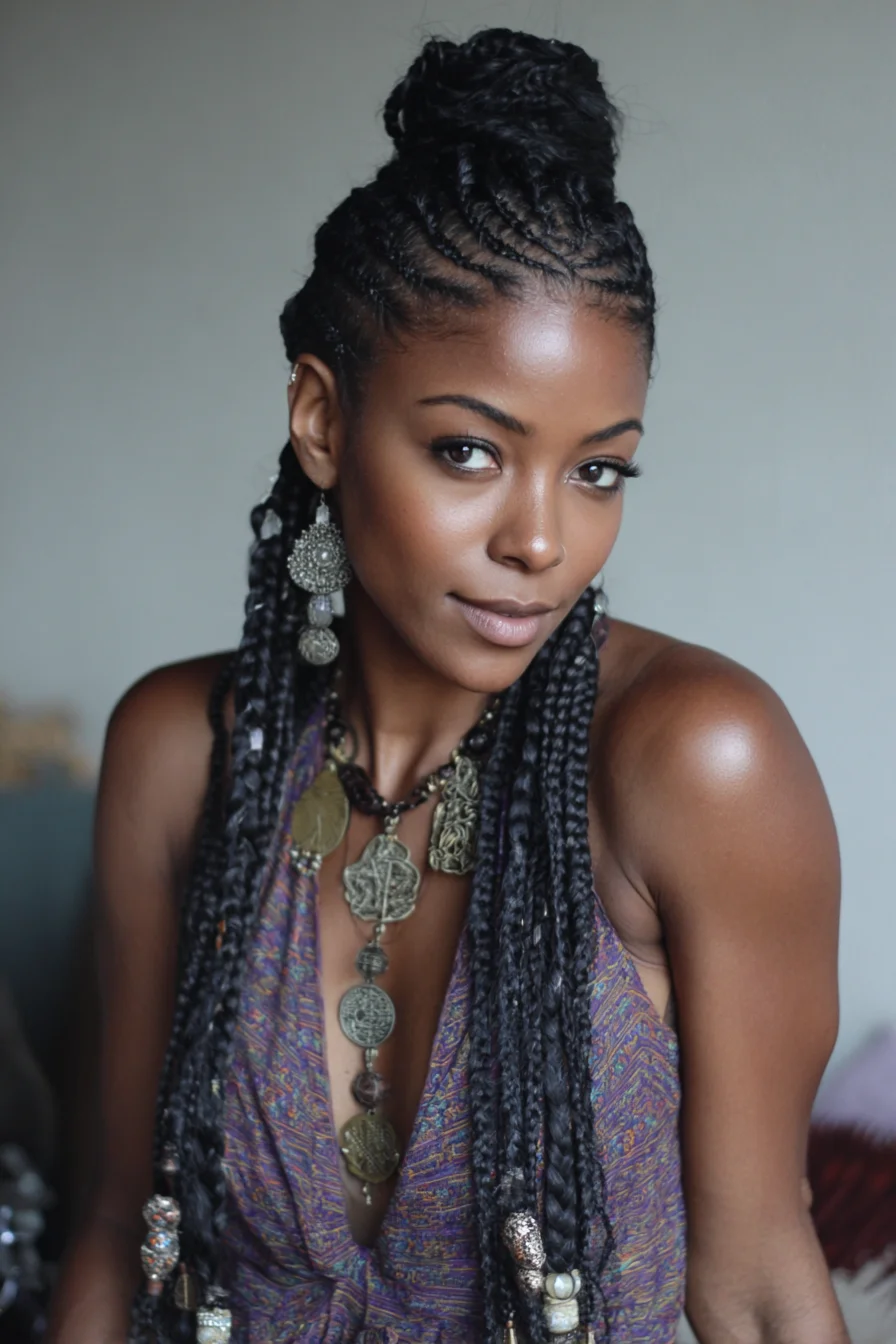
This look pairs neat feed‑in cornrows at the hairline that transition into long box braids, finished with a high top knot for everyday polish. Suitable for natural 3A–4C textures, it also works on straighter hair when using braiding extensions for grip and volume. Technique: section the hair with a rat‑tail comb, create small to medium cornrows from the hairline to the crown using the feed‑in method to build gradual thickness, add kanekalon or premium synthetic hair to extend each braid, and continue braiding down to the desired length; gather the crown braids into a bun and secure with an elastic and pins. Tools and supplies: rat‑tail comb, sectioning clips, braiding hair, small elastics, hairpins, and a mirror. Products: leave‑in conditioner, lightweight oil (jojoba/argan), edge control gel, braid spray or light mousse to set flyaways, and a gentle dry shampoo for the scalp. Difficulty: intermediate–advanced; expect 3–6 hours depending on braid size—book a professional for crisp feed‑ins. Maintenance: wrap with a silk/satin scarf nightly, oil the scalp weekly, avoid heavy buildup, wash gently with diluted shampoo, and remove or redo after 6–8 weeks to protect hair health.
Sleek Feed‑In Cornrows into Long Braids — Cornrow Braided Style
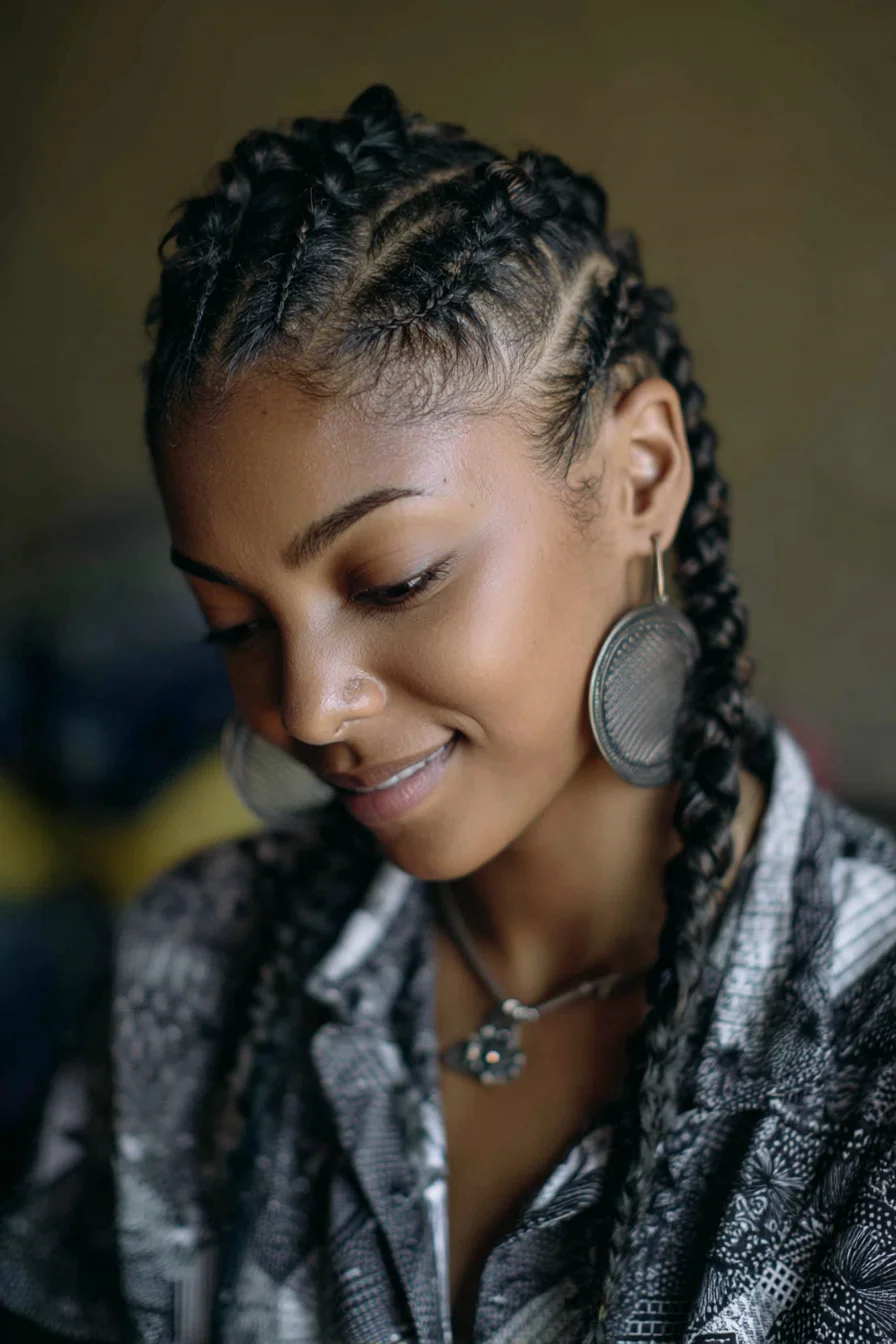
This sleek cornrow-to-braid look suits Type 3 and 4 natural textures best, and can also be created on straighter hair with added braiding hair for grip. Start with a clean, detangled base: clarify, deep-condition if needed, then apply a light leave-in and heat-protectant if using heat. Section with a rat-tail comb and work row by row, using the feed‑in (or traditional cornrow) technique to create smooth, even rows that transition into three-strand or two-strand long braids. Tools: rat-tail comb, sectioning clips, small elastics, soft-bristle brush for smoothing, and optional crochet clip for added hair. Products: water-based leave-in, a medium-hold gel or edge control for neat parts, a lightweight pomade or shine serum for braid finish, and a scalp oil or mist for hydration. Difficulty: intermediate — requires steady hand and braiding experience; expect 60–120 minutes depending on density and length. Maintenance: sleep on a satin scarf or pillowcase, refresh edges with a small amount of edge control, lightly mist scalp with oil or moisturizer every 3–4 days, and avoid over-tightening to prevent tension-related breakage. Re-do or tighten after 3–6 weeks depending on hair growth and upkeep.
Side-Swept Flat-Twist Into Chunky Two-Strand Twist Bob
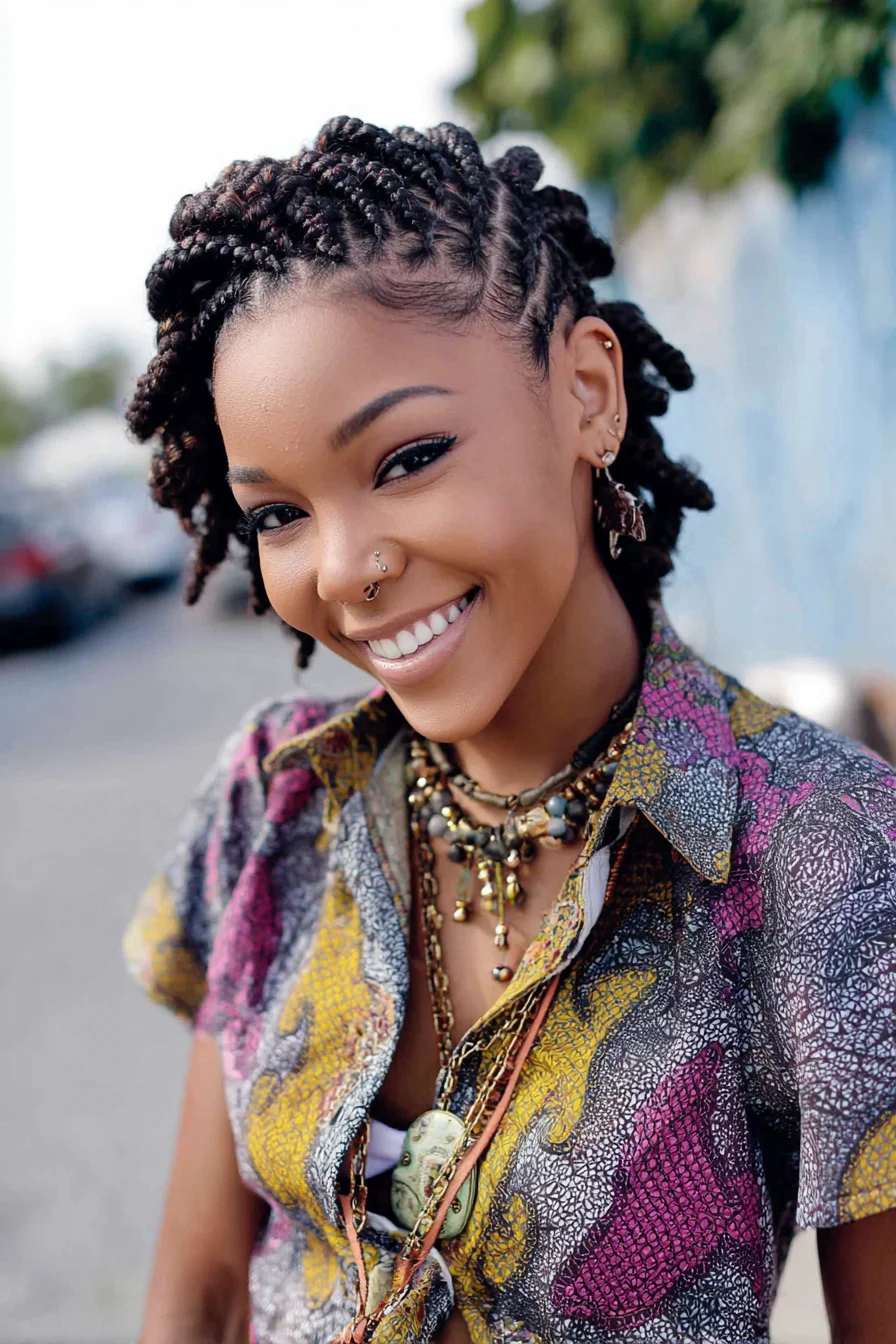
This low-maintenance, textured bob combines small flat twists/cornrows at the roots that feed into chunky two-strand twists for a polished, wearable look. Best suited for natural hair types 3A–4C with medium to high density; fine hair can achieve the look with lightweight extensions or added texture. Start on freshly washed, deep‑conditioned and detangled hair. Section with a rat-tail comb, create clean flat-twist or cornrow anchor rows, then two-strand twist each subsection using a hydrating leave-in and a twisting cream or butter for slip and hold. Tools: rat-tail comb, sectioning clips, small elastic bands (optional), edge brush, and a hooded dryer or diffuser for gentle setting. Products: moisturizing leave‑in conditioner, twisting cream or curl custard, lightweight oil (jojoba/argan) to seal, edge control for baby hairs, and a light sheen or holding spray. Difficulty: moderate — expect 1.5–3 hours in the chair depending on size and length. Maintenance: sleep with a satin scarf/bonnet, refresh by re-twisting loose pieces and reapplying light oil to the scalp weekly, avoid heavy buildup, and redo or tighten every 4–6 weeks to preserve shape and protect edges.
Flat-Twist Cornrows Gathered into a Low Textured Bun — Natural 3–4 Hair
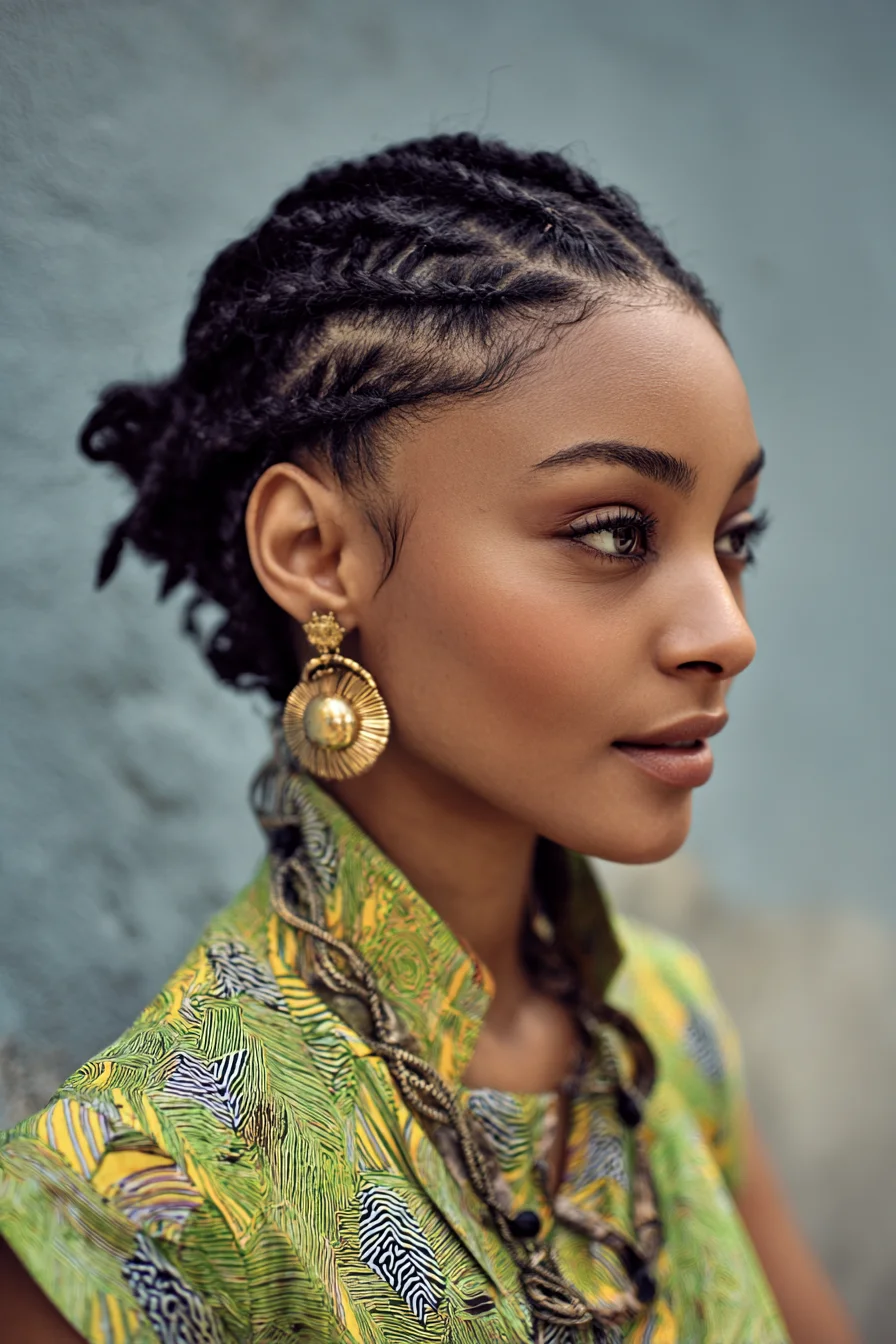
This polished flat-twist cornrow style suits medium to coarse natural textures (Type 3A–4C) and medium-to-high density hair; it can be adapted with small extensions for finer hair. Start on clean, detangled, well‑moisturized hair: section parallel parts with a rat‑tail comb, mist with leave‑in, then create flat twists or feed‑in cornrows toward the nape. Gather the finished rows into a low textured bun or small bantu knots and secure with elastic bands and pins; smooth baby hairs with a soft edge brush and light edge control. Tools needed: rat‑tail comb, wide‑tooth comb, duckbill clips, small elastics, bobby pins, spray bottle and edge brush. Products required: hydrating leave‑in, styling cream or braid gel for hold, lightweight oil/serum for shine, edge control, and optional setting mousse. Difficulty: Intermediate — requires basic braiding/flat‑twist technique; expect 45–90 minutes. Maintenance: sleep on a silk scarf/bonnet, refresh with a light oil and edge gel, cleanse scalp with diluted shampoo or dry shampoo every 1–2 weeks, avoid excessive tension on edges, and redo the style after 4–6 weeks for best hair health.
Feed‑in Cornrows with Twisted Crown and Beaded Ends — Protective Braided Style

This look suits Type 3 to 4 hair textures and is ideal for medium to thick hair or hair augmented with synthetic feed‑in braiding for length and fullness. The technique combines tight feed‑in cornrows along the scalp that transition into a larger rope twist braided across the crown, finished with decorative beads or charms on the hanging ends. Salon steps: part clean, detangled hair with a rat‑tail comb; apply a lightweight leave‑in and edge control; create small precision feed‑in cornrows starting at the hairline, gradually adding extension hair for length; gather select rows into a two‑strand rope twist for the crown. Tools and supplies: rat‑tail comb, sectioning clips, braiding hair (optional), edge brush, small elastic bands, hair beads/charms, needle or beading tool, lightweight oil or scalp serum, light‑hold gel or mousse. Difficulty: intermediate — expect 2–4 hours depending on density and length. Maintenance tips: sleep with a silk bonnet or scarf, refresh edges weekly with light gel, oil the scalp twice weekly, cleanse scalp with diluted shampoo or micellar water, and remove/re‑do braids after 6–8 weeks to prevent breakage from prolonged tension.
Feed‑In Cornrows into Long Braids — Sleek Side Cornrow Style
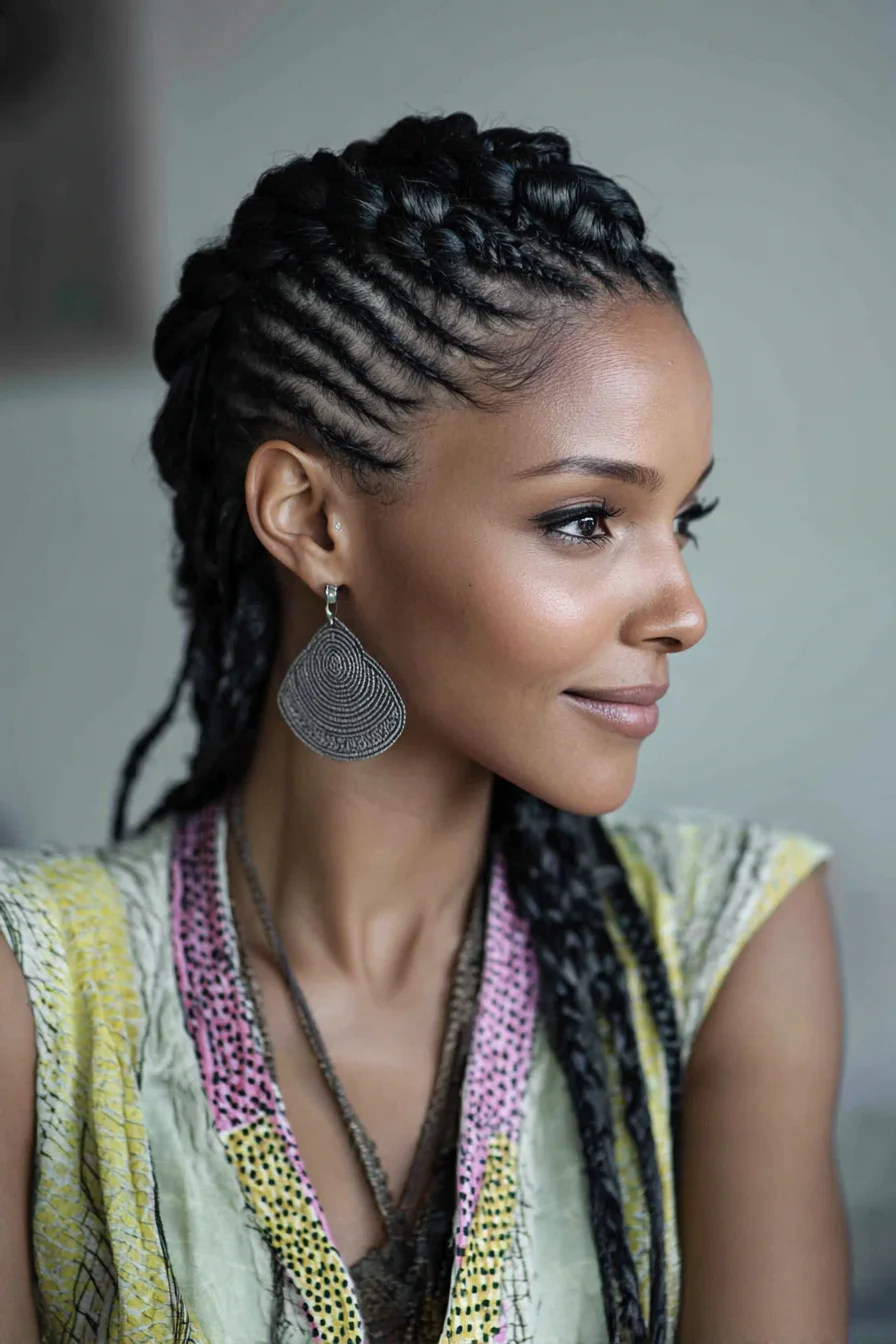
This polished feed‑in cornrow look starts with closely braided cornrows at the hairline that transition into larger three‑strand braids down the back. It’s ideal for Type 3–4 hair (curly to coily) and works well with natural hair or with added braiding hair for length and thickness. Technique: section clean parts, use a rat‑tail comb to create tidy rows, then use the feed‑in method to gradually add extension hair for fuller braids; maintain even tension to protect the edges. Tools needed: rat‑tail comb, duckbill clips, small elastic bands, edge brush, wide‑tooth comb, spray bottle, and optional braiding hair or crochet hook. Products required: lightweight leave‑in conditioner, braiding cream or butter for slip, firm hold edge control or gel, setting mousse for frizz control, and a light scalp oil for moisture. Difficulty: Intermediate to advanced — expect 2–4 hours depending on density and length; consider a professional for the cleanest results. Maintenance tips: sleep with a satin scarf/bonnet, oil the scalp every few days, cleanse gently with diluted shampoo or a dry wash every 2 weeks, avoid prolonged tension and remove within 6–8 weeks to prevent breakage.
Long Box Braids with Cornrow Top Knot — Half-Up High Bun Style

This look works best on medium to coarse natural hair (types 3–4) but can be adapted for finer or straighter hair using a stronger braid base and added extension hair. The technique combines neat frontal cornrows feeding into long box braids, with the top section gathered into a twisted/braided high bun while remaining braids fall to one side. Tools needed: rattail comb, sectioning clips, braiding (Kanekalon or premium synthetic) hair, elastic bands, and a fine-tooth edge brush. Products required: lightweight leave-in conditioner, edge control gel, moisturizing scalp spray or oil, and a light holding mousse to reduce frizz. Difficulty level: intermediate — expect 3–6 hours depending on braid size and length; a trained stylist is recommended for crisp cornrows and even tension. Maintenance tips: sleep on a satin scarf or pillowcase, refresh edges with a small amount of edge control, mist the scalp weekly with a leave-in spray, avoid excessive pulling when styling the bun, and gently cleanse the scalp with diluted shampoo between 2–4 weeks. Re-tighten or redo the front cornrows at first sign of loosening to protect edges and prolong wear.
Sleek Cornrows Flowing into a Long Single Braid with Bead Accents
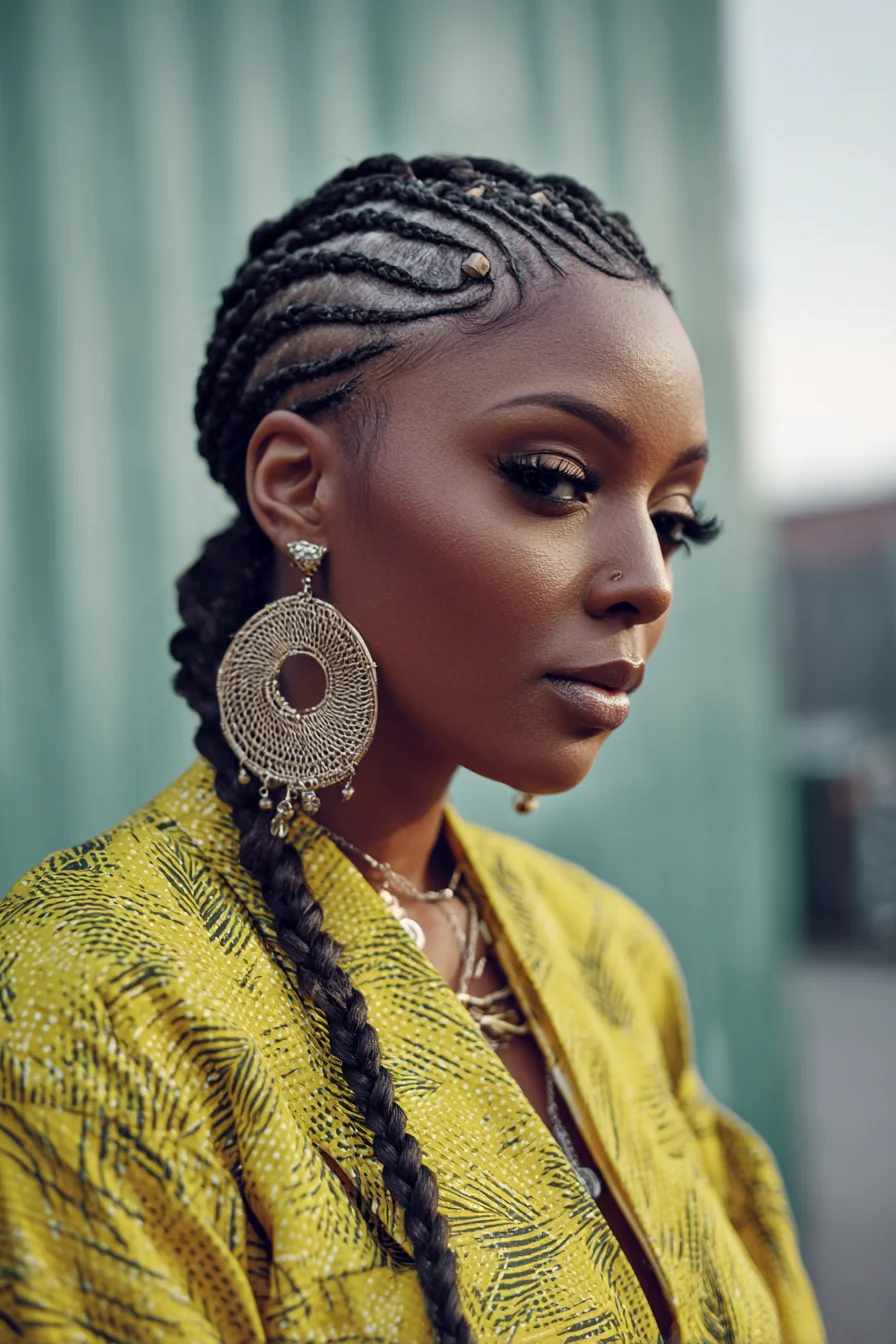
This style suits Type 3–4 natural textures and medium to thick hair; fine hair can also wear it with lightweight braiding extensions for added length and volume. Technique: start on detangled, pre-moisturized hair. Use a rat-tail comb to create clean parts and cornrow each section tightly toward the nape, then feed the sections into one continuous three-strand braid. Add small metal cuffs or threaded beads on selected cornrows for decoration. Tools needed: rat-tail comb, sectioning clips, edge brush, small elastics, beading/ threading tool or pliers, optional braiding hair. Products required: leave-in conditioner, a light gel or braiding cream for hold, edge control for sleek edges, lightweight oil or scalp serum, and a dry shampoo or gentle co-wash for cleansing. Difficulty: intermediate — requires steady parting and consistent tension; expect 1–3 hours depending on length and extensions. Maintenance tips: sleep in a silk bonnet or scarf, refresh edges with a tiny amount of edge control, apply scalp oil every 4–7 days, cleanse scalp gently on a weekly schedule, and avoid leaving tight braids in longer than 6–8 weeks to prevent breakage.
Sleek Flat-Twist Cornrows — Low Tapered Natural Hair Style
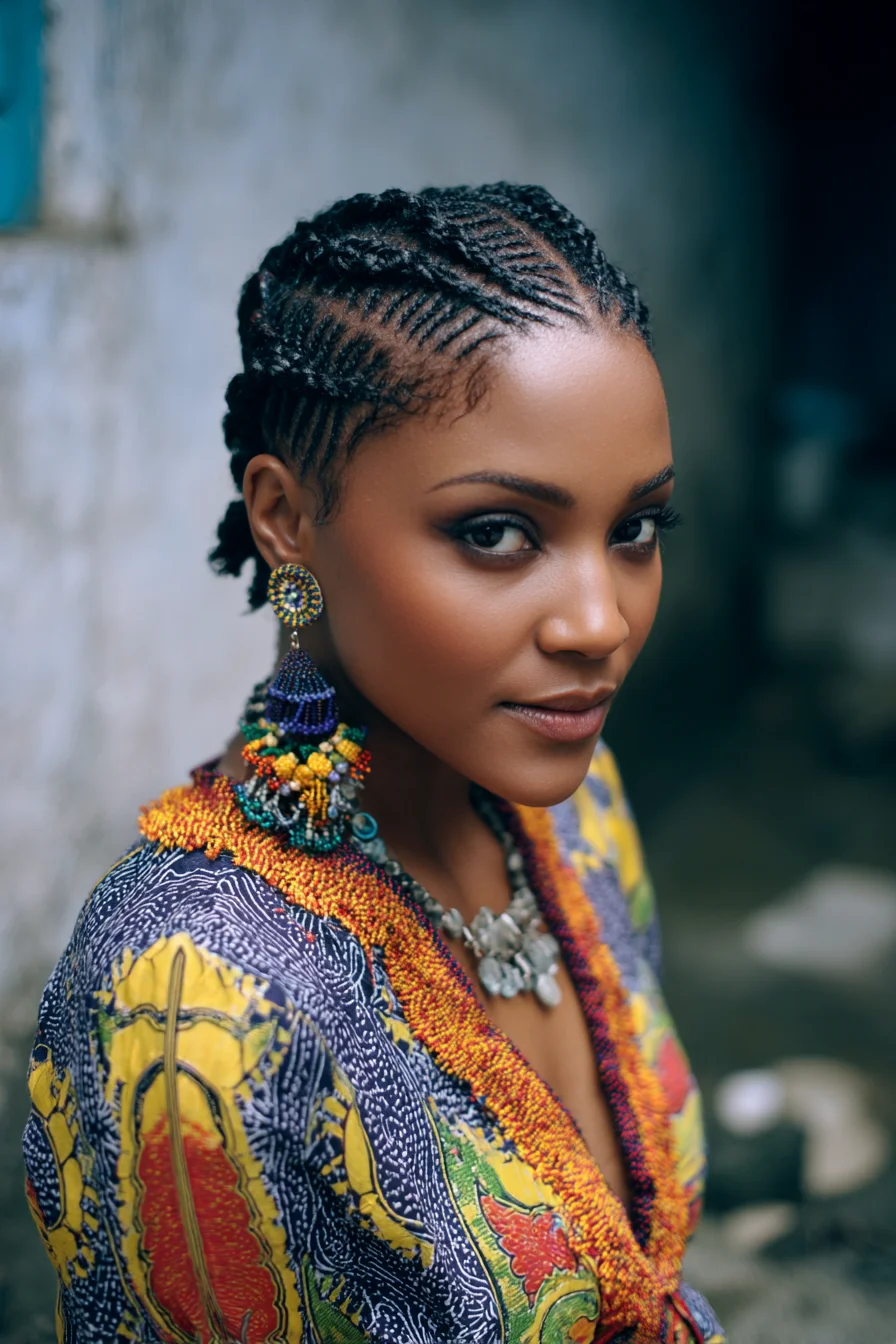
This polished flat-twist cornrow style works best on natural textured hair (3A–4C) and medium to short lengths — hair with density holds the pattern and definition best. Technique: section the hair into even rows using a rat-tail comb, apply a hydrating leave-in and a medium-hold styling gel, then create flat twists or small cornrows directed toward the nape; finish ends with small twists or secure with elastic bands. Tools needed: rat-tail comb, sectioning clips, fine-tooth comb for edges, edge brush, small elastics, and a crochet needle if adding extensions. Products required: moisturizing leave-in conditioner, medium-hold gel or edge control, lightweight oil (argan or jojoba) for shine and scalp health, and a light setting mousse or spray for extra hold. Difficulty level: intermediate — expect 45–90 minutes depending on row size and hair length; professional help recommended for very small rows. Maintenance tips: sleep on a silk scarf or bonnet nightly, moisturize scalp twice weekly with light oil, refresh edges sparingly, co-wash gently and avoid heavy buildup, and plan touch-ups every 3–6 weeks to maintain neatness and scalp health.
Feed‑In Cornrows into Chunky High Braided Bun with Wrapped Long Braids
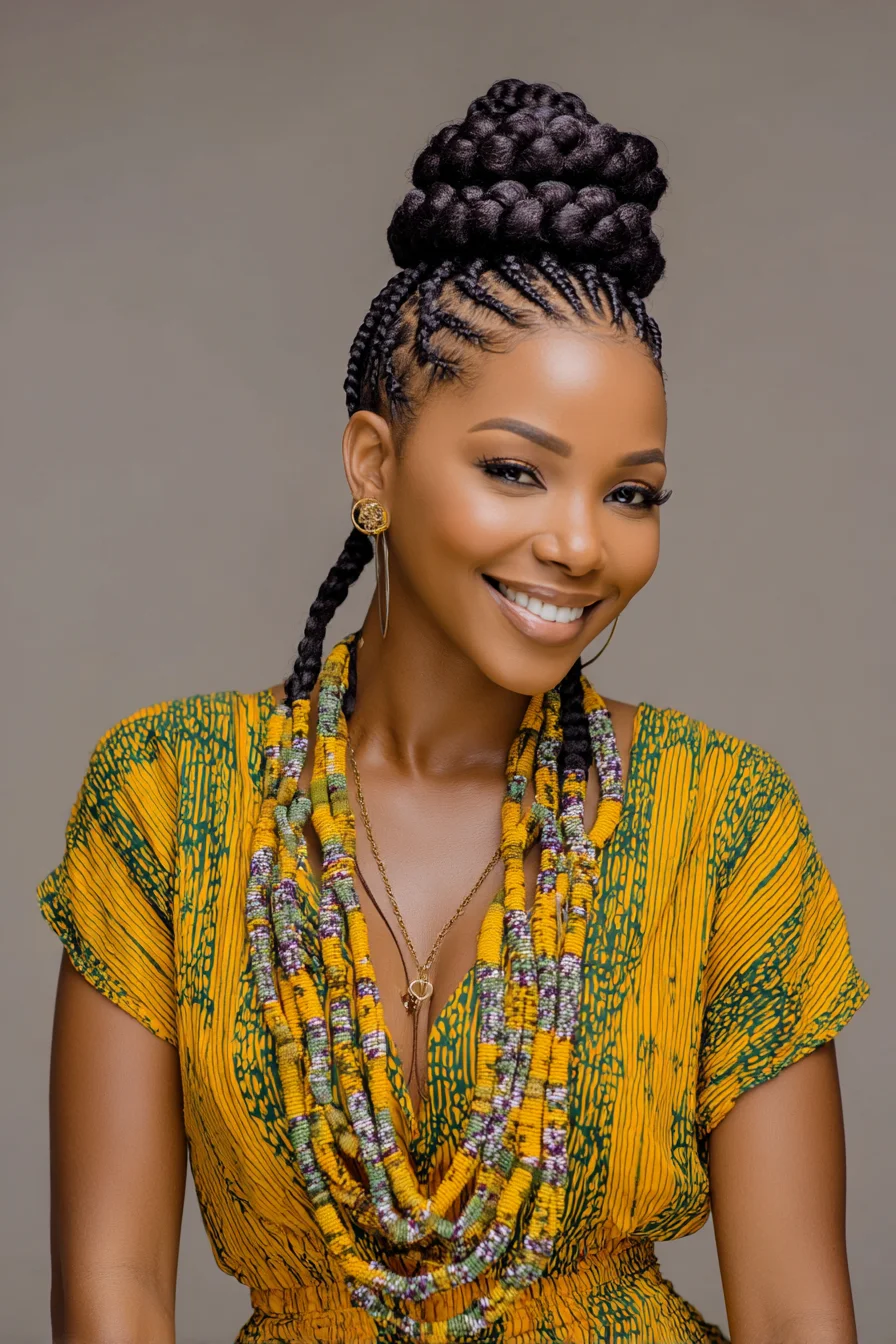
This polished updo suits medium to very coarse textured hair and works well with natural, relaxed, or chemically straightened hair when you add synthetic extensions for bulk. Technique: create small, neat feed‑in/cornrow rows at the hairline and sides, add kanekalon/jumbo hair for two long braided pieces, gather the top section into a high pony, then form multiple large braids and wrap them into a stacked chunky bun. Tools needed: rat‑tail comb, sectioning clips, small elastics, needle‑and‑thread (optional), long braiding hair (kanekalon), hair pins, edge brush and a spray bottle. Recommended products: lightweight leave‑in moisturizer, strong hold edge control, anti‑frizz mousse or setting foam, braid spray for scalp hydration, and light finishing oil for shine. Difficulty: intermediate–advanced — expect 2–5 hours depending on braid thickness and experience. Maintenance tips: sleep on a satin bonnet or pillowcase, reapply scalp oil or braid spray every 3–5 days, smooth edges with light gel as needed, avoid heavy oils on the braids to prevent buildup, and schedule touchups or a full redo after 6–8 weeks to protect your edges and scalp health.
Sleek Cornrows Flowing into Knotless Micro Braids — Long Thin Braids

This sleek cornrow-to-micro-braid look suits natural textured hair (Type 3–4) best but can be achieved on straighter hair with quality braiding extensions. Technique: clean, detangled hair is sectioned into even rows; each row is cornrowed close to the scalp and transitioned into knotless or feed-in micro braids to reduce tension at the hairline. Tools needed: rat-tail comb for precise parts, clips, small rubber bands (optional), crochet needle (for extensions), a fine edge brush, and scissors. Products required: lightweight leave-in conditioner, edge control or gel for a smooth finish, holding mousse to set braids, anti-frizz serum or light oil for shine, and a clarifying/diluted shampoo for scalp care. Difficulty level: intermediate to advanced — expect 4–7 hours depending on braid size and length; consider a professional stylist for even tension and neat parts. Maintenance tips: wrap with a satin scarf at night, apply a light scalp oil twice weekly, cleanse the scalp every 1–2 weeks with diluted shampoo, avoid heavy creams that cause buildup, and remove or refresh after 6–8 weeks to prevent breakage and maintain hair health.
High Feed-In Cornrow Bun with Long Beaded Braids

This look pairs neat feed-in cornrows into a high braided bun with long individual braids threaded with beads and wraps. It’s ideal for natural, textured hair (3A–4C) or for anyone adding braided extensions for length and volume — a strong protective style that reduces daily manipulation. Technique: create clean parts and feed-in cornrows toward the crown, secure extension braids, form a full top bun with the gathered braids and leave several long braided strands hanging for decoration. Tools: rat-tail comb, sectioning clips, edge brush, beading tool, small elastics, crochet needle (optional). Products: pre-wash conditioner, leave-in detangler, braiding gel for smooth parts, lightweight oil or scalp serum, holding mousse and dry shampoo. Difficulty: moderate to advanced; expect 3–5 hours in salon depending on extension density — professional feed-in skills recommended for a neat finish. Maintenance tips: sleep with a silk scarf or bonnet, refresh edges with edge control and light oils, mist scalp weekly with diluted leave-in, avoid heavy build-up products, and retouch the cornrows at 6–8 weeks or sooner to prevent tension and breakage.
Asymmetrical Feed‑In Cornrows with Long Box Braids and Bead Accents

Suitable for textured, natural, or relaxed hair, this asymmetrical look combines precision feed‑in cornrows at the hairline with long individual box braids gathered to one side. Technique: section clean parts, create small-to-medium feed‑in cornrows along the scalp toward one side, then transition into three‑strand box braids using pre‑stretched kanekalon or premium synthetic hair for length and consistency. Add beads and cuffs last to avoid tension during braiding. Tools needed: rat‑tail comb, sectioning clips, duckbill clips, edge brush, small elastic bands, hair extension (kanekalon), latch/crochet hook for attaching extensions, and a pair of sharp scissors. Products required: leave‑in conditioner, lightweight styling gel or edge control for neat parts, hair oil or scalp serum, mousse to set braids, and a light holding spray. Difficulty level: intermediate to advanced; expect 3–6 hours depending on braid size and length. Maintenance tips: sleep on a silk scarf or bonnet, refresh edges with lightweight edge control, oil the scalp weekly, wash with diluted shampoo or co‑wash and dry thoroughly, avoid heavy ornaments too close to the roots, and remove or redo after 6–8 weeks to prevent breakage.
Curved Cornrow Mohawk with Long Mixed Braids and Twists
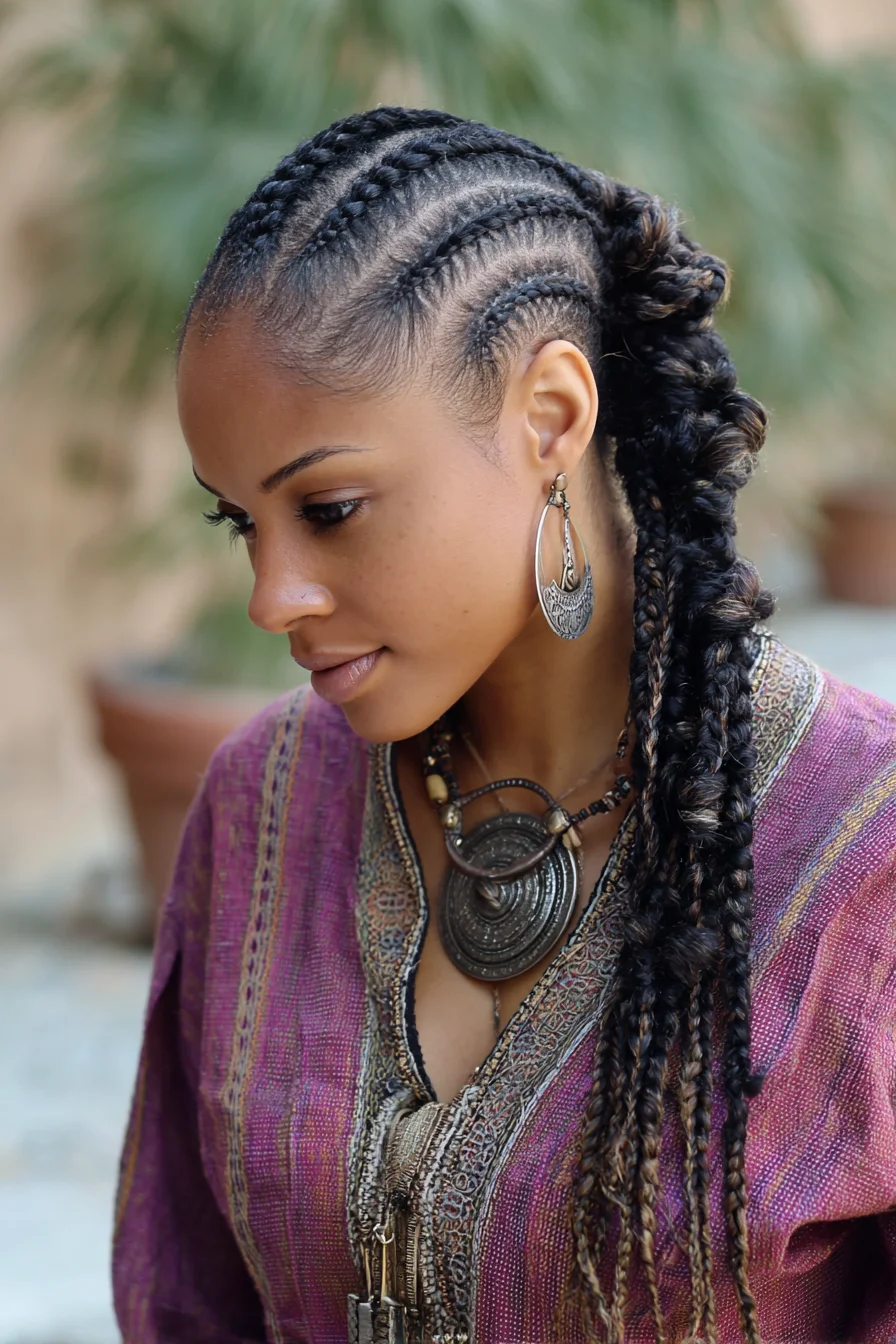
This style suits medium-to-coarse natural hair textures and relaxed hair when reinforced with extensions for grip and longevity. Technique: section clean curved parts and feed-in cornrows from the hairline toward the crown to create the mohawk shape, then gather the ends into a low or mid ponytail and incorporate extension hair to form a mix of larger rope twists and fine individual braids for texture. Tools needed: rat-tail comb, sectioning clips, small elastic bands, edge brush, crochet needle (optional), and a mirror. Products required: leave-in conditioner, lightweight styling gel or edge control for smooth parts, braid mousse to set, a light oil or scalp serum, and holding spray or sheen mist. Difficulty level: intermediate — expect 2–4 hours depending on braid size and whether extensions are added; a trained braider is recommended for even tension and neat curved parts. Maintenance tips: sleep on a satin scarf or bonnet, apply a light scalp oil weekly, gently cleanse the scalp with diluted shampoo between appointments, refresh edges with a small amount of gel, and remove or redo within 6–8 weeks to prevent breakage.
Curved Feed-In Cornrows into Low Braided Bun with Sculpted Baby Hairs
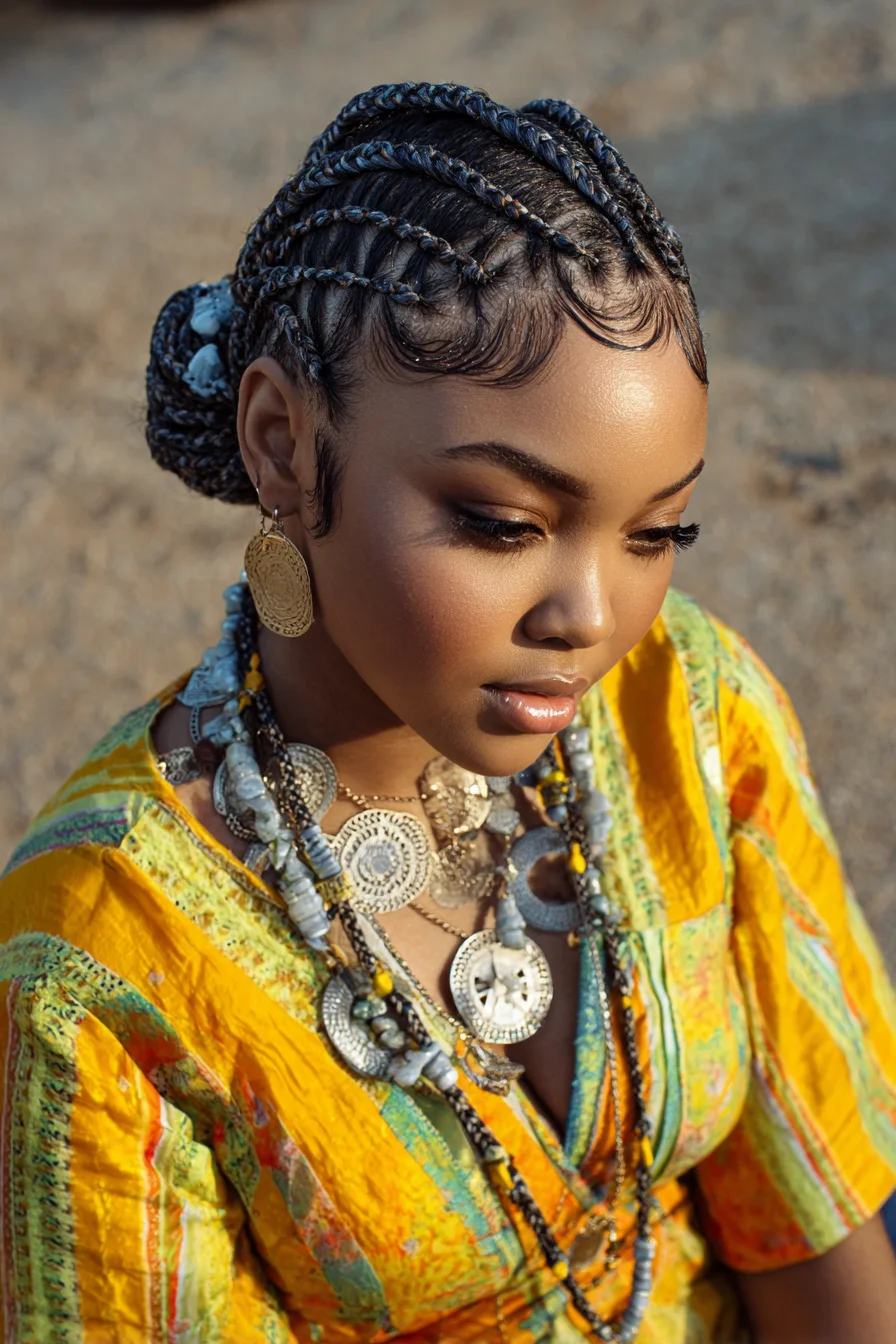
This look suits 3A–4C natural textures best but can be achieved on straighter hair with added braiding hair for volume. The style uses curved feed-in cornrows radiating from the hairline and gathered into a low braided bun, with laid baby hairs for a polished finish. Technique: start on clean, stretched hair; map and clip sections, create precise curved parts with a rat-tail comb, then use the feed-in (stitch) method to build even, low-tension cornrows and finish by wrapping or coiling the remaining braids into a secure bun. Tools needed: rat-tail comb, wide-tooth comb, edge brush, sectioning clips, small elastics, long-tooth crochet needle (optional for extensions), and hair bands. Products: leave-in conditioner, lightweight gel or edge control for baby hairs, holding pomade for part definition, braid spray or light oil for scalp hydration, and a shine mist. Difficulty: intermediate — requires clean parts and controlled tension; expect 2–4 hours. Maintenance: sleep with a silk scarf/bonnet, mist scalp with braid spray twice weekly, avoid heavy oils on edges, refresh baby hairs as needed, and plan for a retouch or redo after 4–6 weeks to protect hair health.
Feed‑in Cornrows into Low Knotted Buns with Sleek Baby Hairs

This polished protective style works best on natural, curly or coily textures (Type 3–4) and medium to thick hair; fine hair can wear it with added braiding hair for fullness. Technique: create clean, parallel partings and feed‑in (invisible) cornrows along the scalp, tapering into two or more low knot/bun finishes. Finish edges with a soft swoop using a small toothbrush or edge brush. Tools needed: rattail comb, sectioning clips, small elastics, edge brush/toothbrush, long‑tail clips, bobby pins, and optional synthetic braiding hair. Products required: lightweight leave‑in conditioner, edge control gel, holding gel or pomade for parts, lightweight oil/serum, and braid spray for shine and scalp hydration. Difficulty level: intermediate — requires steady hands and experience with feed‑in braiding; expect 2–4 hours depending on size and additions. Maintenance tips: sleep on a satin scarf/pillowcase, lightly mist scalp and braids with braid spray every 2–3 days, reapply edge control to tame baby hairs, avoid heavy creams that cause buildup, and refresh or rebraid loose perimeter braids after 3–6 weeks to extend wear.
Cornrow Feed‑In Braids Transitioning to Beaded Box Braids
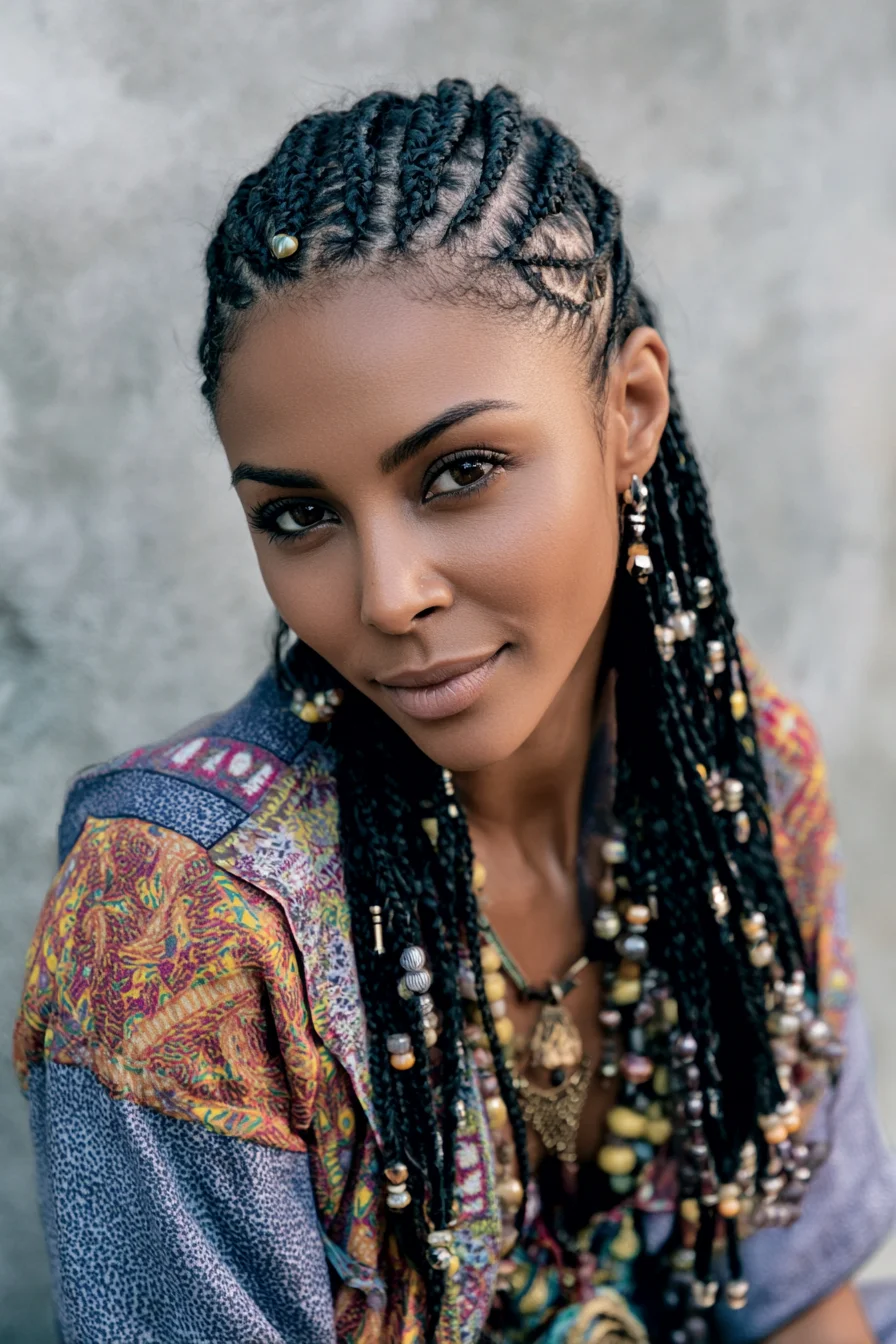
This look suits medium to very coily hair (Type 3–4) best because natural texture grips braids, but it can be installed on straighter hair with added braiding extensions for hold. Technique: create neat feed‑in cornrows at the scalp, gradually adding extension hair to build length and thickness, then finish the back sections as individual medium box braids. Add beads, cuffs or rings to the lengths and ends for style. Tools needed: rat‑tail comb, hair clips, braiding (Kanekalon or similar) hair, edge brush, bead tool or small crochet hook, scissors and a spray bottle. Products required: lightweight leave‑in conditioner, braiding cream or gel for hold, mousse to set, lightweight scalp oil (jojoba or tea tree) and dry‑shampoo or diluted clarifying shampoo for cleansing. Difficulty level: intermediate to advanced — expect a 3–6 hour salon service depending on parting size and length. Maintenance tips: sleep with a satin scarf or bonnet, oil the scalp twice weekly, refresh edges with light gel, wash gently every 10–14 days, avoid heavy products that cause buildup, and remove or redo after 6–8 weeks to prevent tension damage.
Sleek Cornrow Feed-In Braids into High Braided Bun — Protective Style
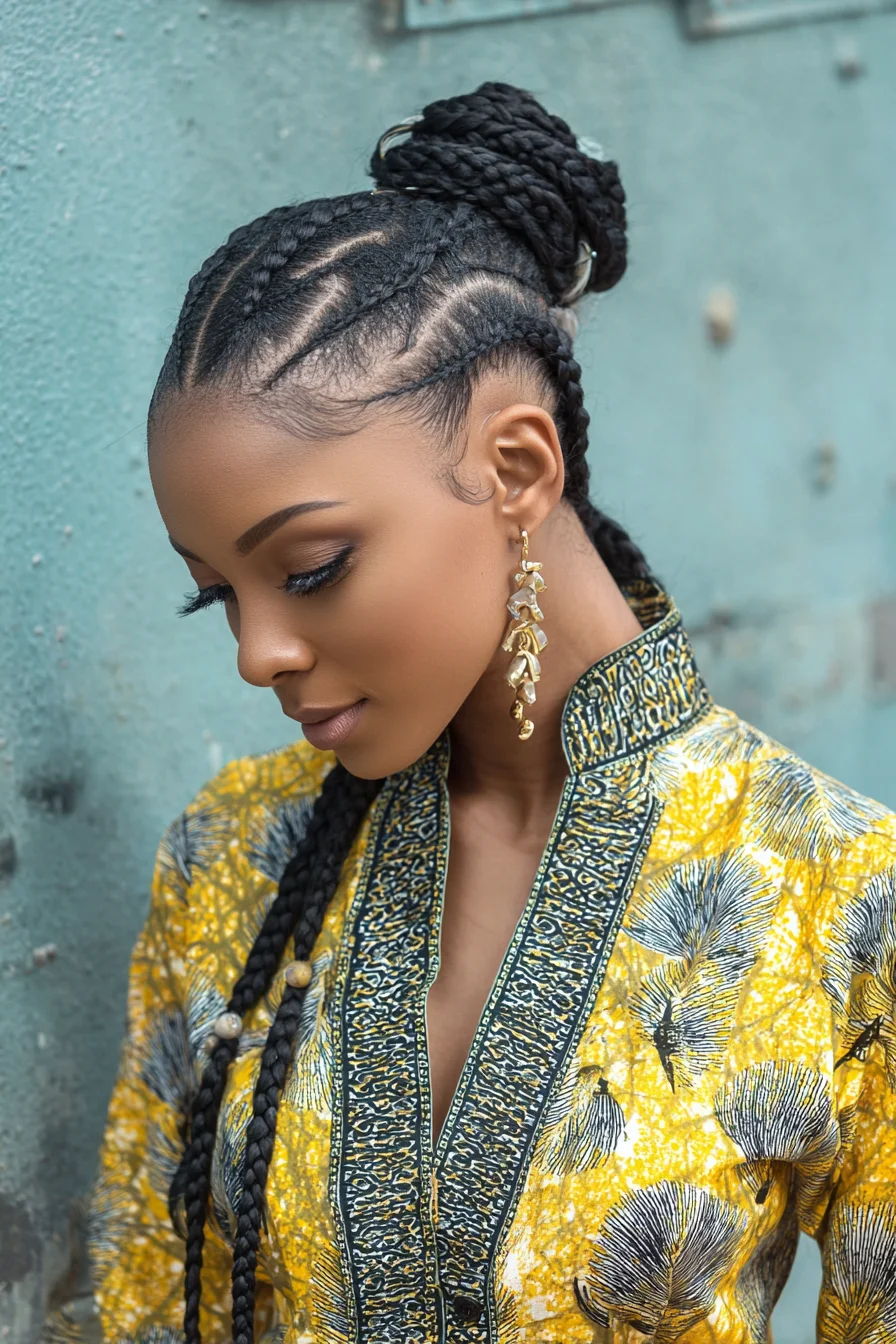
This polished look pairs clean feed-in cornrows with long box braids gathered into a high braided bun — ideal as a protective style for natural, textured hair (3A–4C) and medium- to coarse-density relaxed hair. Technique: create precise parts with a rat-tail comb, cornrow each section using the feed-in method to build thickness while adding synthetic or human hair where desired, braid down the length and gather remaining braids into a high bun secured with an elastic and a few U-pins. Finish edges with a soft-bristled brush and edge control gel for a sleek hairline. Tools needed: rat-tail comb, sectioning clips, elastic bands, U-pins, long-stitch crochet or braiding hair if adding length. Products required: light leave-in moisturizer, edge control, anti-frizz cream or pomade, lightweight oil for the scalp, and a sulfate-free clarifying shampoo for wash days. Difficulty: intermediate — expect 2–5 hours depending on size and length. Maintenance tips: sleep on a satin bonnet or pillow, lightly mist scalp and braids weekly, refresh edges with small amounts of gel, avoid heavy buildup at the roots, and remove or redo after 6–8 weeks to protect hair health.
Cornrow Braids Styled Into a Low Braided Bun
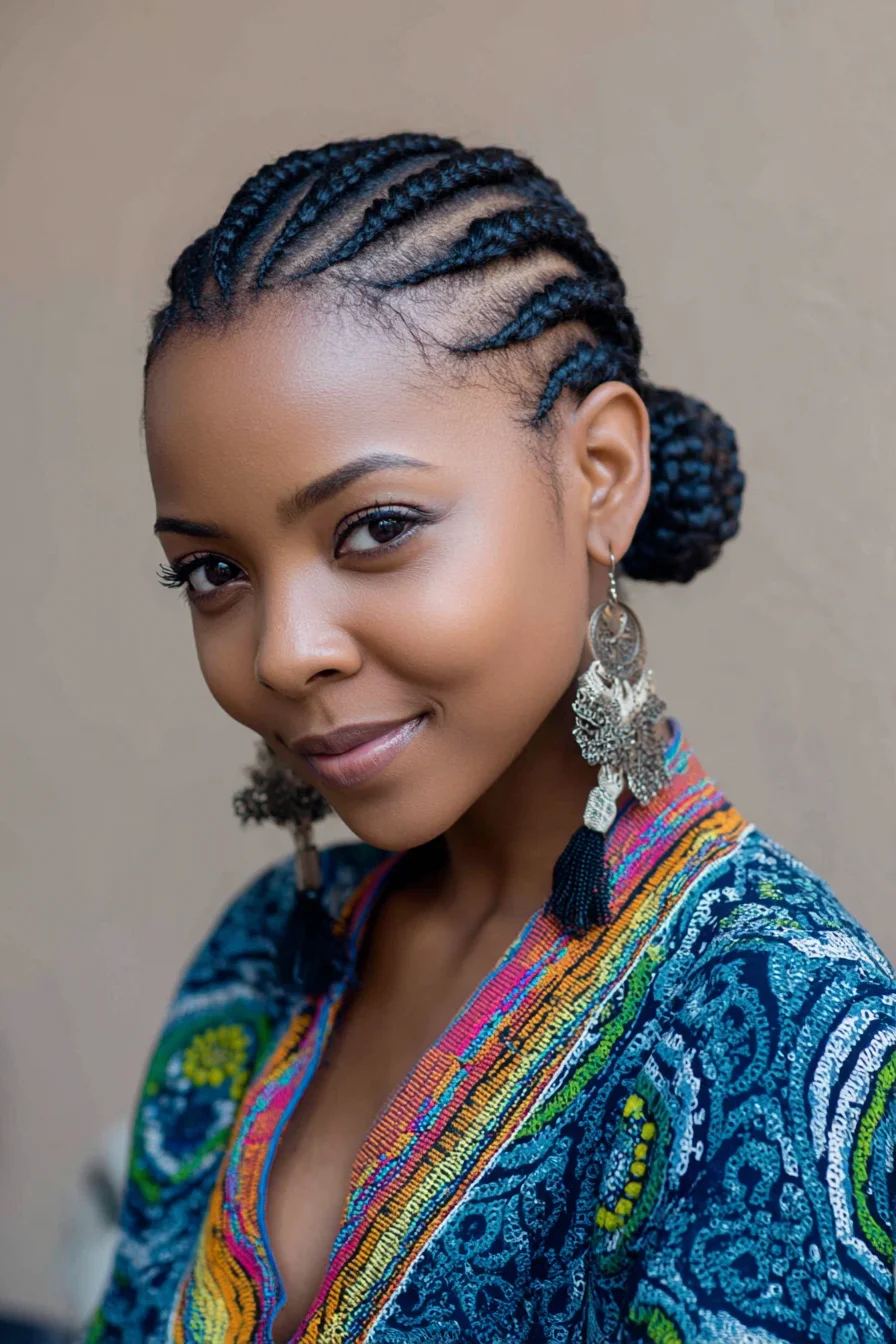
This sleek cornrow-to-bun style works best on Type 3–4 textured hair and medium to thick strands; straight hair can achieve the look with added braiding extensions for grip and volume. Technique: create clean, even parts with a rat-tail comb and sectioning clips, then feed or standard-braid neat cornrows toward the nape and secure the ends into a low braided bun. For fullness or length, add synthetic or human braiding hair at the root. Tools needed: rat-tail comb, sectioning clips, small elastics, edge brush, hairpins/bobby pins, and optional sewing needle and thread for a secure bun. Products required: lightweight leave-in conditioner, braid gel or edge control for smooth parts, a lightweight oil or scalp serum, holding mousse or finishing spray, and dry shampoo/co-wash for gentle cleansing. Difficulty level: moderate — typically 1.5–3 hours depending on braid size and use of extensions; professional styling recommended for symmetry and to protect the hairline. Maintenance tips: keep the scalp moisturized twice weekly, sleep with a satin bonnet or scarf, refresh edges sparingly, avoid excessive tension, and remove or redo after 6–8 weeks to prevent breakage.
Feed-In Cornrows into Two Long Braids with Sleek Edges
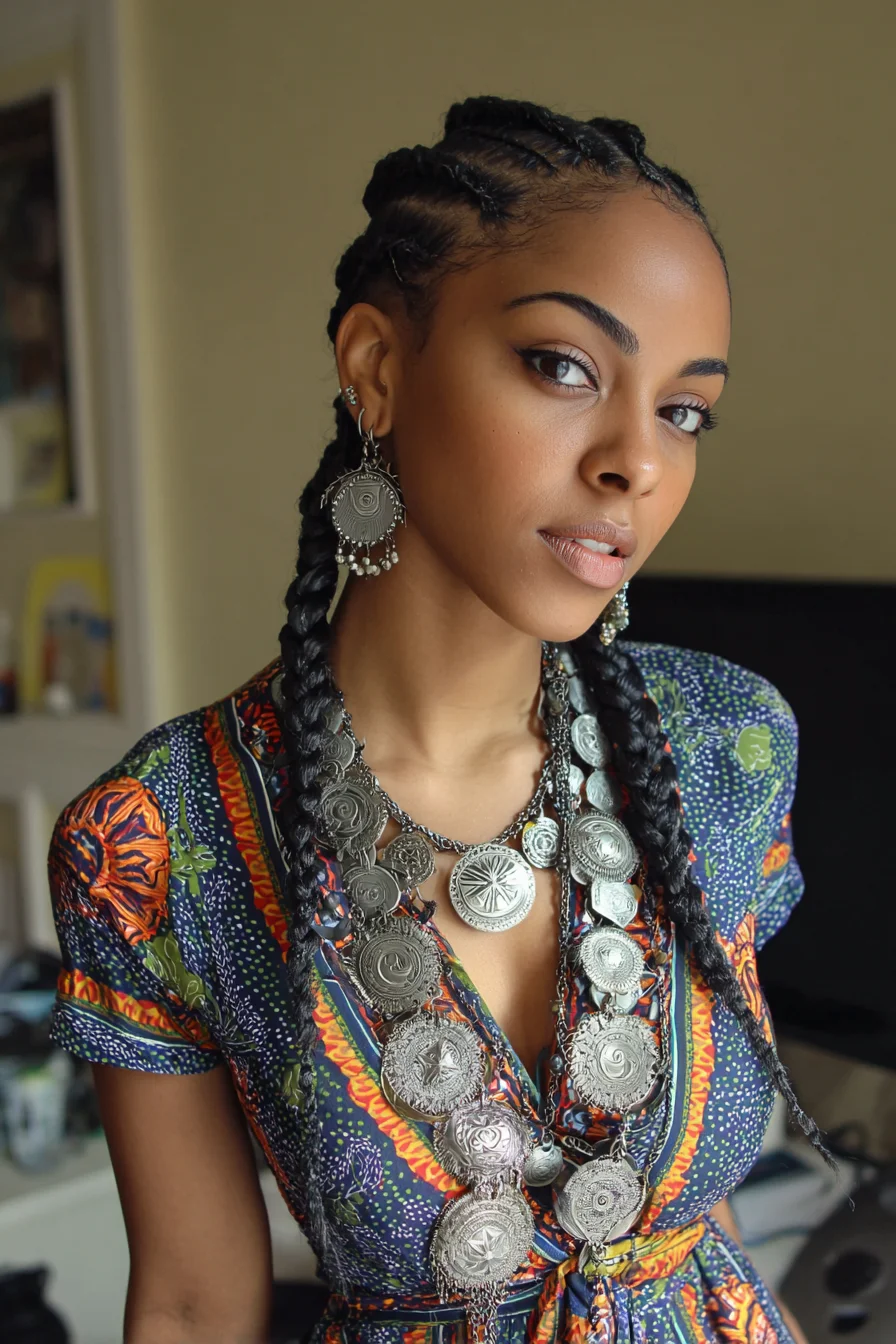
Suitable for medium to coarse textured hair and kinkier curl patterns, this feed-in cornrow style finished into two long braids adds length and polished edges. The technique uses small, even parts and a feed-in (or Ghana/Dutch) braid method starting at the hairline, gradually adding extension hair for uniform thickness, then continuing into two three-strand braids. Tools: rat-tail comb for precise parting, sectioning clips, small elastics, extension hair (kanekalon or human), braiding needle (optional), edge brush, and a blow dryer with low heat for setting. Products: moisturizing leave-in conditioner, light holding gel or edge control for sleek hairline, lightweight oil or sheen spray, braiding mousse to reduce frizz, and a scalp oil to prevent dryness and itching. Difficulty: intermediate — expect 2–4 hours depending on length and whether extensions are added; consistent tension and clean parting are essential. Maintenance tips: sleep in a silk bonnet or wrap, mist scalp and braid length weekly with a hydrating spray, refresh edges sparingly, avoid heavy product buildup, and redo after 6–8 weeks to protect the hairline. Never braid too tight to reduce risk of traction damage.
Mini Bantu Knot Twists for Natural Textured Hair
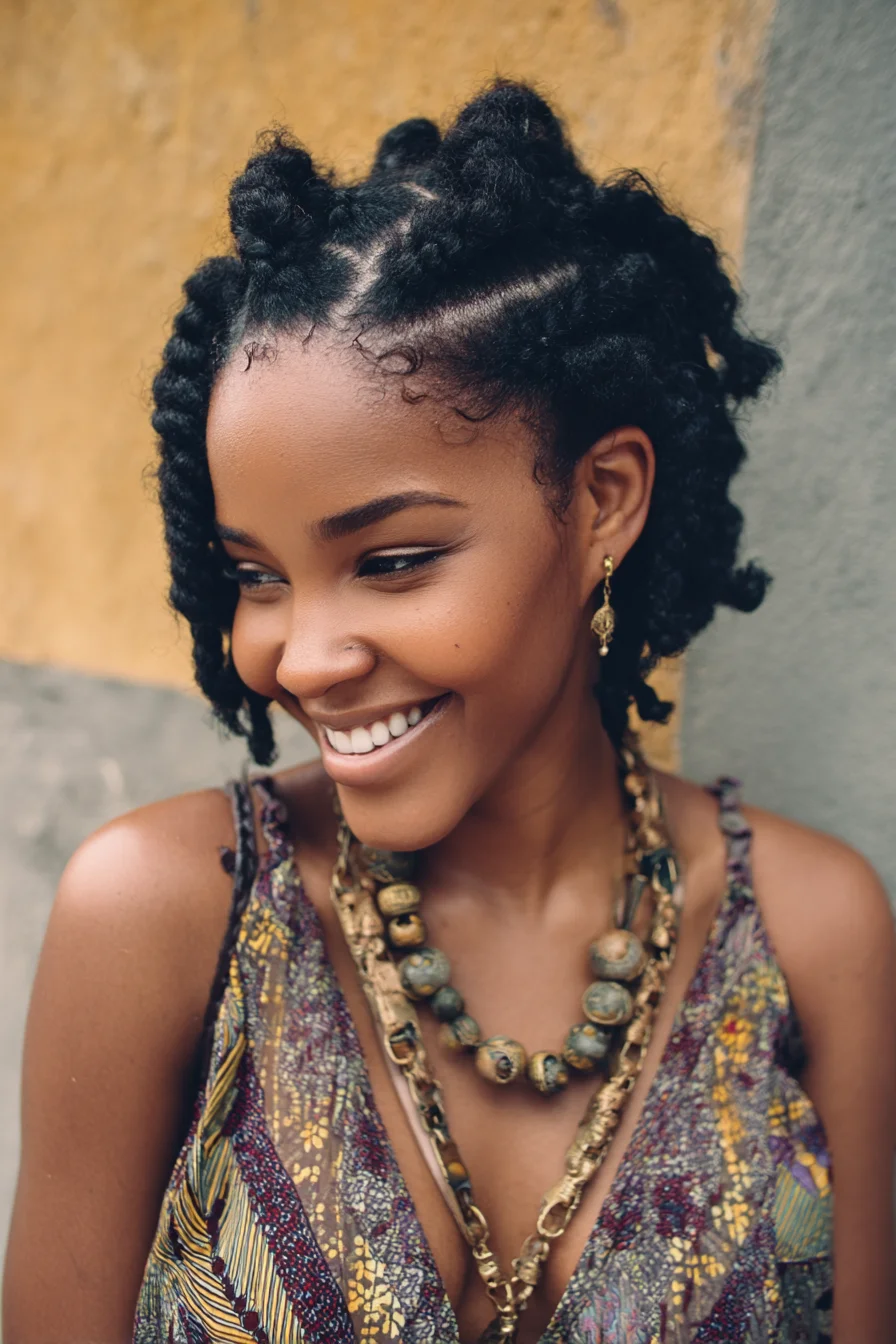
Suitable for 3A–4C natural and transitioning hair, mini Bantu knot twists offer defined texture and a protective, low-manipulation style that can last 2–4 weeks with proper care. Technique: work on clean, stretched and detangled hair; use a rattail comb to create even square or triangular sections, apply a hydrating leave-in and a medium-hold twisting cream or butter, two-strand twist each section and wrap the twist into a small Bantu knot, tucking the end or securing with a small elastic. Tools needed: rattail comb, sectioning clips, small elastics, wide-tooth comb/detangling brush and a microfiber towel. Products required: sulfate-free shampoo, nourishing leave-in conditioner, twisting cream or butter, light oil (jojoba/argan) and edge control for baby hairs. Difficulty level: moderate — requires consistent parting and controlled twisting tension; expect 45–90 minutes depending on density. Maintenance tips: sleep with a satin bonnet or pillowcase, refresh with water + leave-in spray or lightweight mousse, lightly oil the scalp every 7–10 days, avoid overly tight knots to prevent breakage, and gently retwist front sections as needed or visit your stylist for a touch-up.
Sleek Cornrow Braids Pulled into Low Ponytail

This polished style features neat straight-back cornrows gathered into a low ponytail — ideal as a protective, versatile look. Best suited for Type 3 and 4 natural textures and medium-to-thick hair; it can also be achieved on finer or straighter hair with added braiding extensions or a light texturizing product. Technique: section hair into even rows, use feed-in (invisible) braiding to build length and reduce bulk, braid toward the nape, then secure all braids into a low ponytail or bun. Tools: rat-tail comb, sectioning clips, small elastic bands, detangling brush, crochet needle (if installing extensions), and a hooded dryer (optional). Products: moisturizing leave-in conditioner, lightweight braiding gel or edge control for sleek parts, anti-frizz serum, light-hold spray, and a scalp oil for shine. Difficulty: Moderate — expect 2–4 hours depending on braid size and extensions. Maintenance tips: sleep with a silk scarf or bonnet, refresh edges with a small amount of edge control, apply a few drops of oil to the scalp weekly, cleanse gently with diluted shampoo or witch-hazel every 2 weeks, and remove within 6–8 weeks to avoid strain on the hairline.
Chunky Cornrows into Bantu Knots with Long Feed-In Braids

This sculpted style pairs chunky, deep-part cornrows that transition into small Bantu knots at the crown with long feed-in (knotless) braids cascading down — a versatile look that works best on natural textured hair (3B–4C). It can also be achieved on straighter hair using synthetic or human hair extensions for added length and volume. Technique: section hair with a rattail comb, clip away sections, and create even, large cornrows using feed-in braiding for smooth tension; twist the ends into secured Bantu knots at the top and finish longer braid lengths with knotless feed-ins for a natural fall. Tools: rattail comb, hair clips, braiding hair (optional), small elastic bands, hairpins, and a crochet needle if using loop-ins. Products: lightweight leave-in moisturizer, edge control or gel, braiding cream or jam for hold, lightweight oil or scalp serum, and finishing spray or mousse to set. Difficulty: intermediate — requires steady braiding skills and 2–4 hours depending on size. Maintenance: sleep on a silk bonnet, lightly oil the scalp weekly, refresh edges with edge control, avoid over-tightening to prevent breakage, and cleanse scalp gently every 2–3 weeks.
Knotless Feed-In Cornrows into Long Box Braids with Beads

This style suits Type 3–4 natural textures best, and can also work on finer hair when using quality extensions (Kanekalon or human hair) for added volume and length. The technique uses neat, small cornrow parts at the crown with a knotless/feed-in braiding method that gradually builds into long individual braids finished with beads or thread accents. From salon experience, start with clean, detangled hair and use a rat-tail comb for precise parting, sectioning clips, an edge brush, and soft hair ties. You’ll need braid hair (pre-stretched synthetic or human extensions), a light leave-in conditioner, edge control gel, a lightweight oil or scalp serum, and a frizz-taming mousse or setting spray. Difficulty is intermediate — allow 3–6 hours depending on size and length; book a skilled braider for very small parts. Maintenance: sleep on a silk/satin scarf or bonnet nightly, lightly oil the scalp twice weekly, cleanse with diluted shampoo or a scalp wash every 10–14 days, and refresh edges with edge control as needed. Remove or redo after 6–8 weeks to protect the hairline and avoid excess tension.
Short Fulani braids are a versatile, stylish protective choice when installed and maintained correctly. From my salon experience, the keys to great results are correct parting, even tension, and a maintenance routine focused on moisture and scalp health. Cleanse the scalp every 1–2 weeks with a diluted shampoo or scalp cleanser, follow with a light leave-in conditioner, and massage a lightweight oil into the roots to prevent dryness. Avoid heavy butters that build up and weigh small braids down. Plan to refresh or remove braids after 6–8 weeks to protect your natural hairline, and never tolerate excessive pain during installation. For styling, try side-swept feeds, small bun variations, or accessorize with beads, cuffs, or colored thread for instant personality. If you’re unsure about length or placement, book a consultation—together we’ll tailor a short Fulani look that flatters your face shape and lifestyle. —Lena