
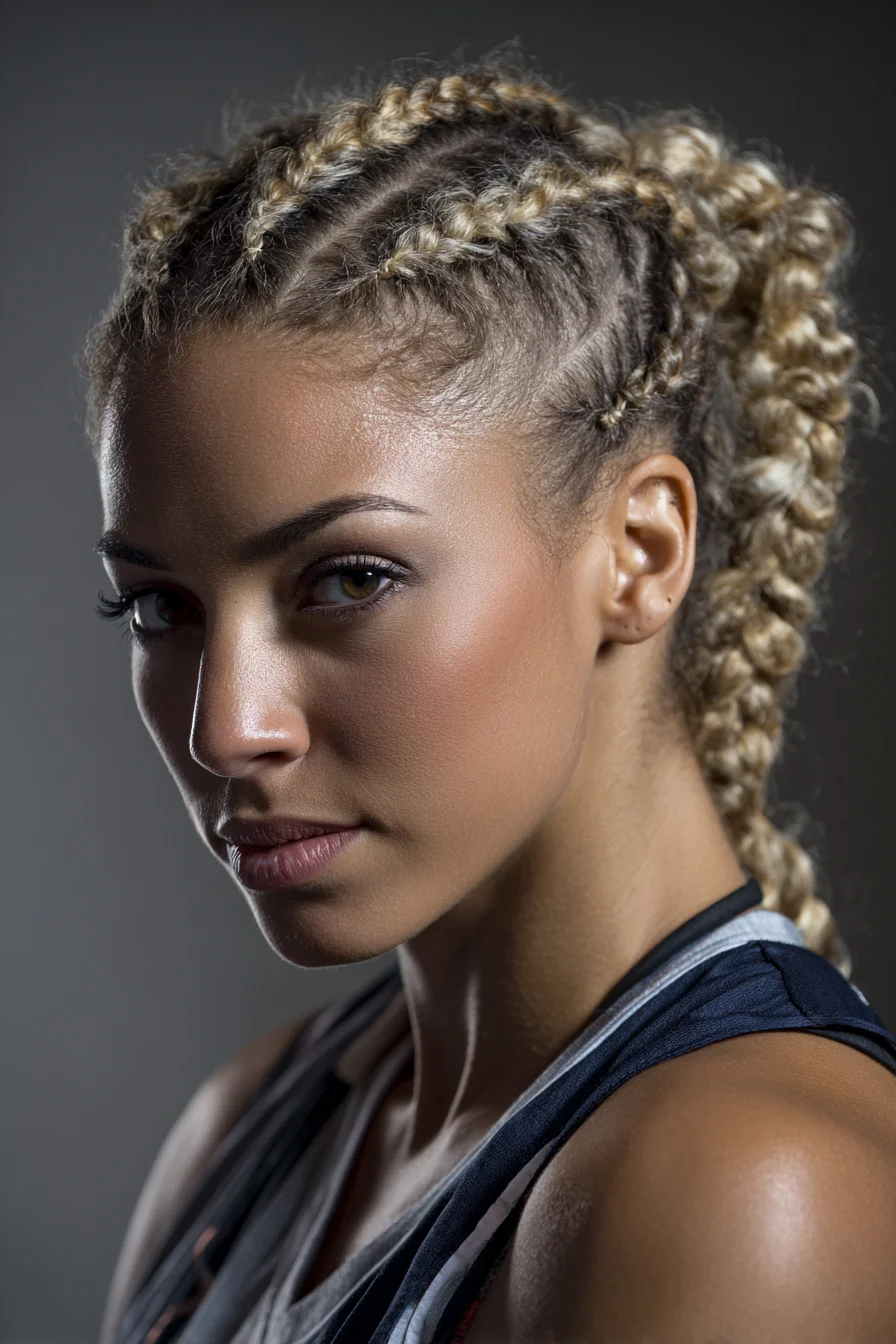
Hi, I’m Lena, a professional hairstylist with over a decade of salon experience. In this post I share 28 basketball hairstyles for women — practical, stylish looks designed to stay put through drills, games and travel. From high-performance ponytails and sleek buns to protective braids, cornrows and low-maintenance twists, these styles suit all hair lengths and textures — straight, wavy, curly or coily. I’ll show options for players, coaches, fitness moms and anyone who needs on-court confidence without fuss. Each of the 28 images highlights a variation you can copy or ask your stylist to customize. My styling tips: prep with a lightweight leave-in, use gel or edge control for sleekness, secure with snag-free elastics and long pins, and finish with a humidity-resistant spray. I also include quick refresh tricks between quarters and guidance on protecting hair from sweat and friction.
Textured Messy High Bun with Face‑Framing Tendrils
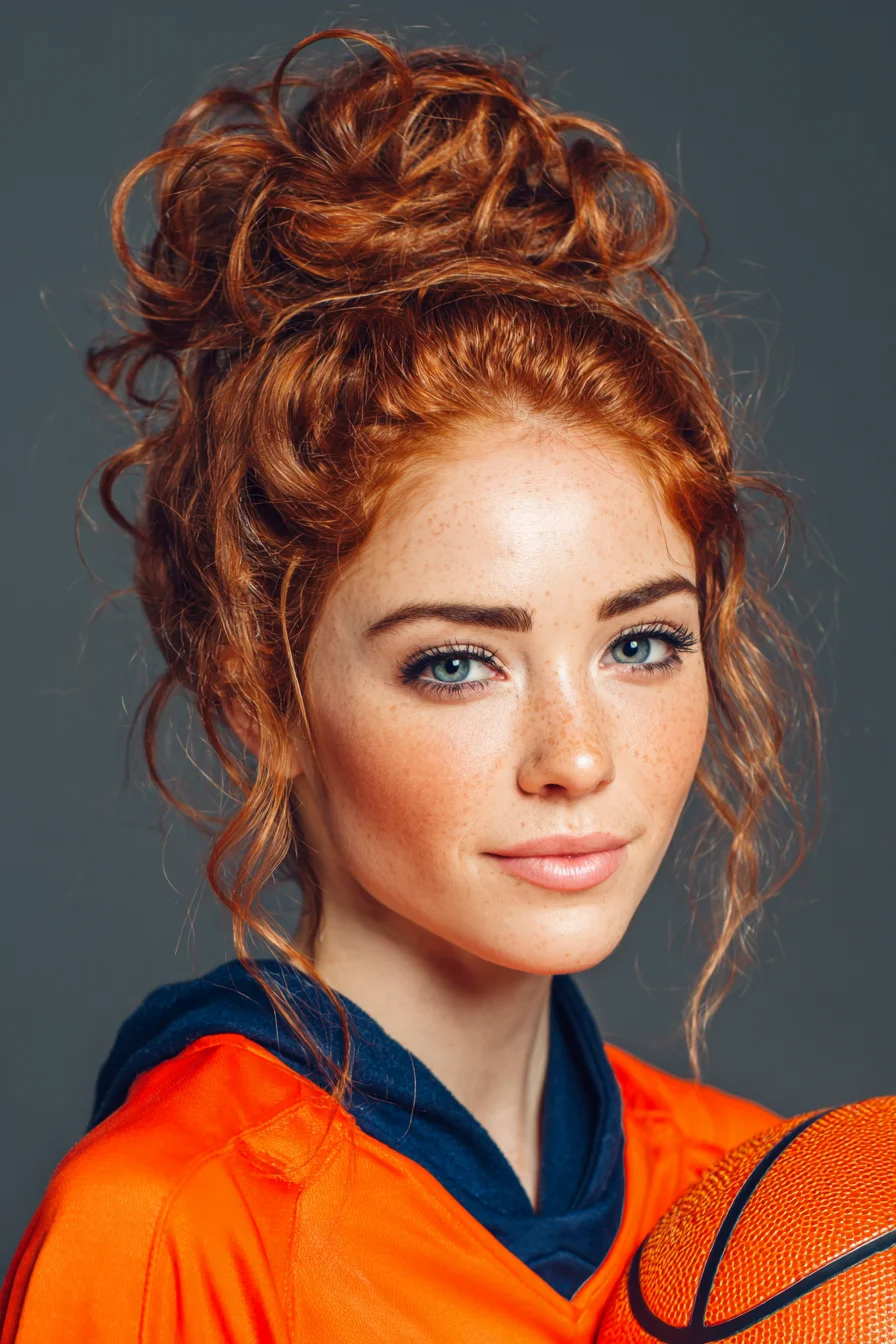
In the salon we often create this relaxed, textured high bun for clients with medium-to-thick wavy or curly hair — it holds volume naturally and looks effortless. It also adapts well to fine hair when prepped with texturizing products or a lightweight bun donut for fullness. Start on dry hair: apply a light mousse or sea-salt spray through mid-lengths to ends, then rough-dry or diffuse to enhance texture. Gather hair into a high pony and secure with an elastic; tease at the crown lightly for lift. Twist sections loosely and pin them around the base with bobby pins, pulling pieces out to form a soft, messy silhouette. Leave a few face-framing tendrils and touch them with a small-barrel wand for polished curls. Tools: tail comb, elastics, bobby pins, 1 curling wand, blow dryer with diffuser. Products: texturizing spray, light mousse, flexible-hold hairspray, small anti-frizz serum for flyaways. Difficulty: easy–moderate (10–20 minutes). Maintenance: refresh with dry shampoo, re-pin loose pieces, sleep on silk, avoid heavy oils at roots to preserve grip, and trim ends every 8–12 weeks.
Sleek Cornrows into Braided Ponytail — Scalp Braids with Added Volume
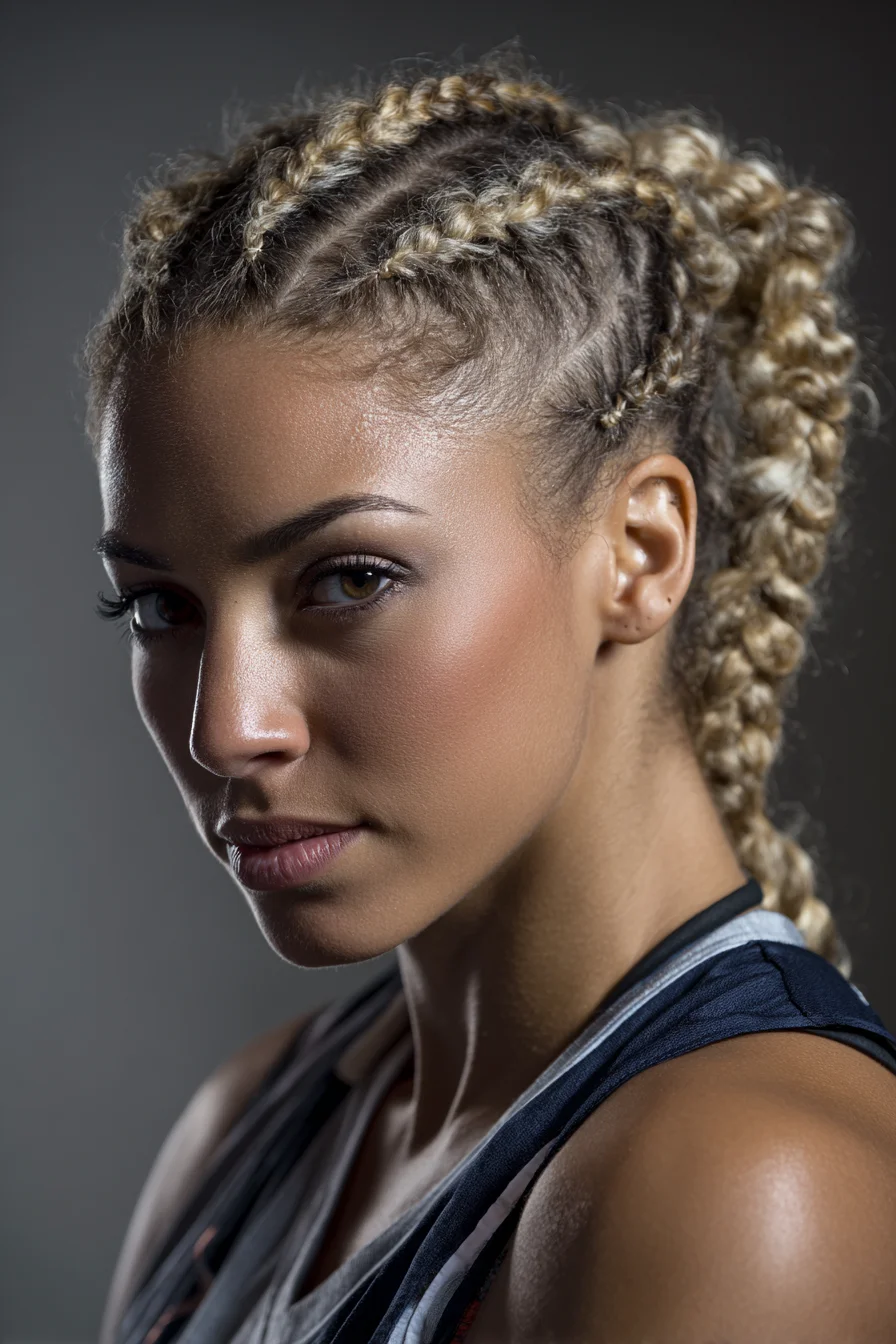
This polished cornrow-to-ponytail is ideal for textured, curly, or wavy hair and also works on straight hair with added extensions for thickness and length. Technique: create clean center or side parts, apply a moisturizing leave-in, then braid tight, even cornrows (Dutch or three-strand) close to the scalp feeding into one or two larger braid(s) down the back. For length/volume, feed in synthetic or human hair extensions at the mid-shaft while braiding. Tools needed: rat-tail comb, sectioning clips, small elastics, edge brush, paddle brush, and optional extension crochet loop. Products required: leave-in conditioner, lightweight gel or edge-control for smooth parts, holding spray, anti-frizz serum or braid sheen, and a scalp oil for hydration. Difficulty level: moderate — expect 45–90 minutes depending on braid count and extensions; professional assistance recommended for flawless, even rows. Maintenance tips: sleep on a silk/satin scarf, reapply light oil to the scalp twice weekly, gently cleanse with diluted shampoo or cleansing spray, touch up edges as needed, and avoid excessive tension to prevent breakage; refresh every 4–8 weeks.
Tight Dutch Cornrows Braided Into a Braided Crown Updo
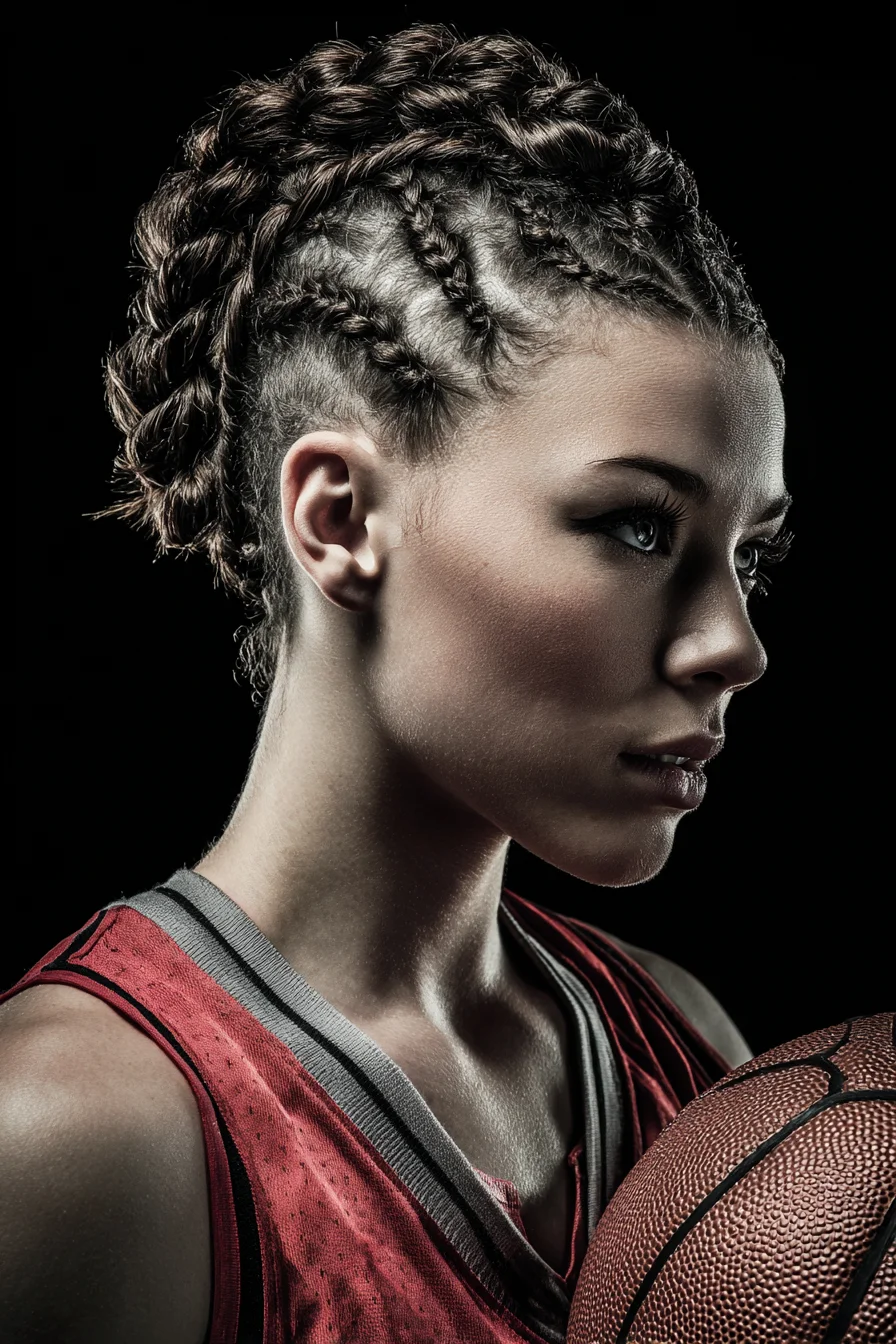
This sculpted braided crown is best suited to medium-to-thick hair and textured hair types; fine hair will benefit from light clip-in extensions for bulk. Create 4–6 tight Dutch/cornrow braids from the hairline toward the crown, then gather and interweave those braids into a larger braided crown or rope braid secured with discreet elastics and pins. Key salon technique: work on clean, detangled hair, use a rattail comb for precise parting, maintain even tension to keep rows uniform, and wrap braid ends into the crown to hide seams. Tools needed: rattail comb, sectioning clips, small clear elastics, strong bobby pins, and a fine-tooth toothbrush for edges. Products required: lightweight styling gel or edge control for flyaways, a small amount of pomade for shine, a flexible-hold hairspray to lock the style, and dry shampoo or scalp oil for maintenance. Difficulty: intermediate–advanced (45–90 minutes depending on density). Maintenance tips: sleep on a silk scarf or bonnet, refresh edges with a dab of edge control, avoid over-tightening to prevent tension damage, and cleanse scalp gently; expect 7–14 days of neat wear with periodic touch-ups.
Curly Double Space Buns with Cornrow Braids — Braided High Buns for Natural Hair
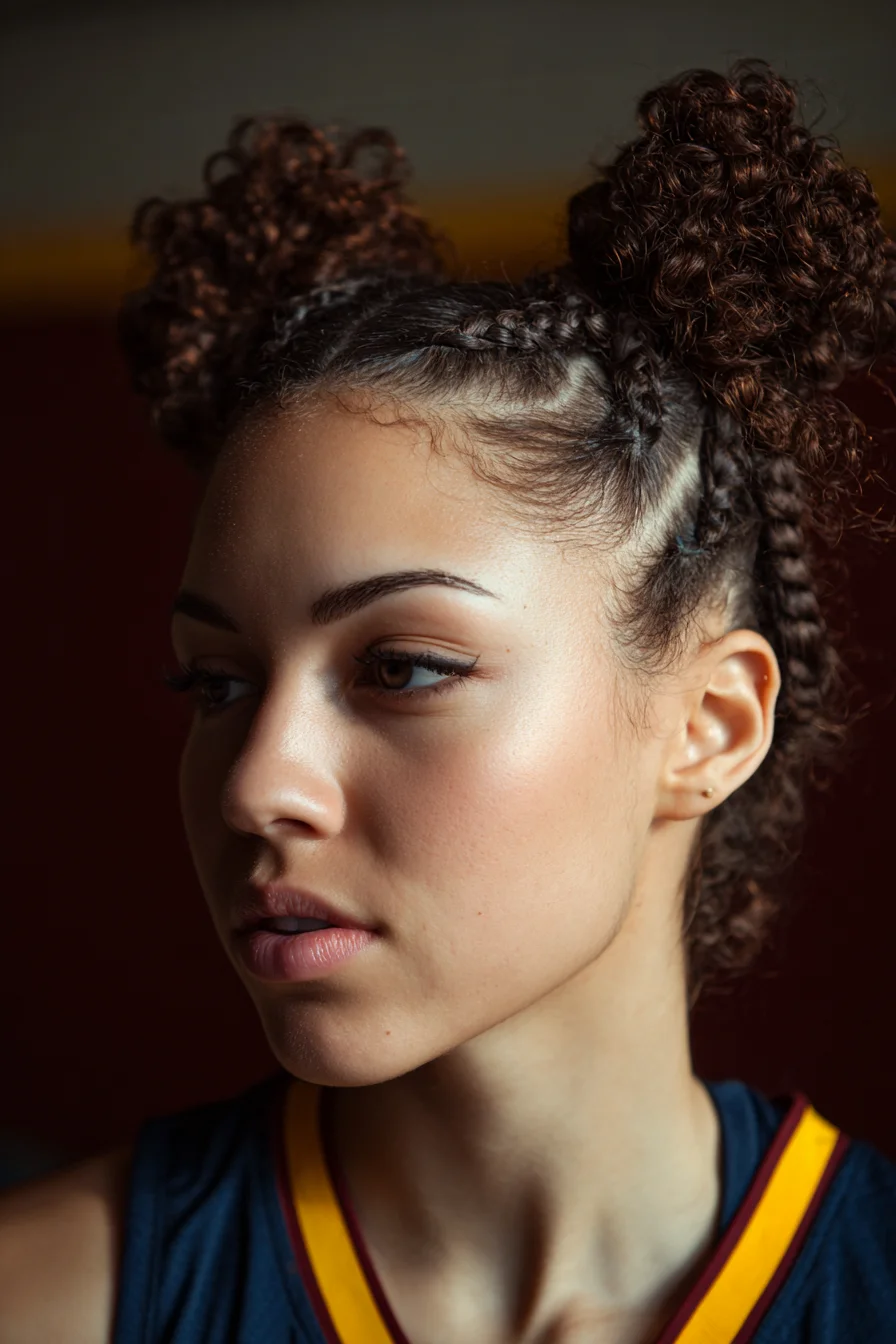
Suitability: Ideal for curly to coily textures (Type 3–4) and medium to thick density; can be adapted for straighter hair after texturizing. Technique: Create a clean center part, section the hair into two halves and cornrow three to five small straight-back braids from the hairline to the crown on each side. Gather each side into a high ponytail, secure with a strong elastic, then form a voluminous bun using the loose ends — leave the natural curl pattern out or pancake the braids for fullness. Finish by smoothing baby hairs with a light edge control. Tools needed: rat-tail comb, sectioning clips, wide-tooth comb, small elastics, bobby pins, satin scrunchies and a spray bottle. Products required: leave-in conditioner, curl-defining cream or mousse, medium-hold gel for braids/edges, lightweight oil for shine, and a flexible holding spray. Difficulty level: Moderate — requires basic cornrowing skill; expect 45–75 minutes in the salon. Maintenance tips: Sleep on a satin scarf or pillowcase; refresh curls with water + leave-in spray; avoid heavy buildup at the roots; retighten braids after 7–10 days and redo completely every 2 weeks to protect the hairline.
Double Dutch Braids with Accent Mini-Braids — Sleek Sporty Braided Updo
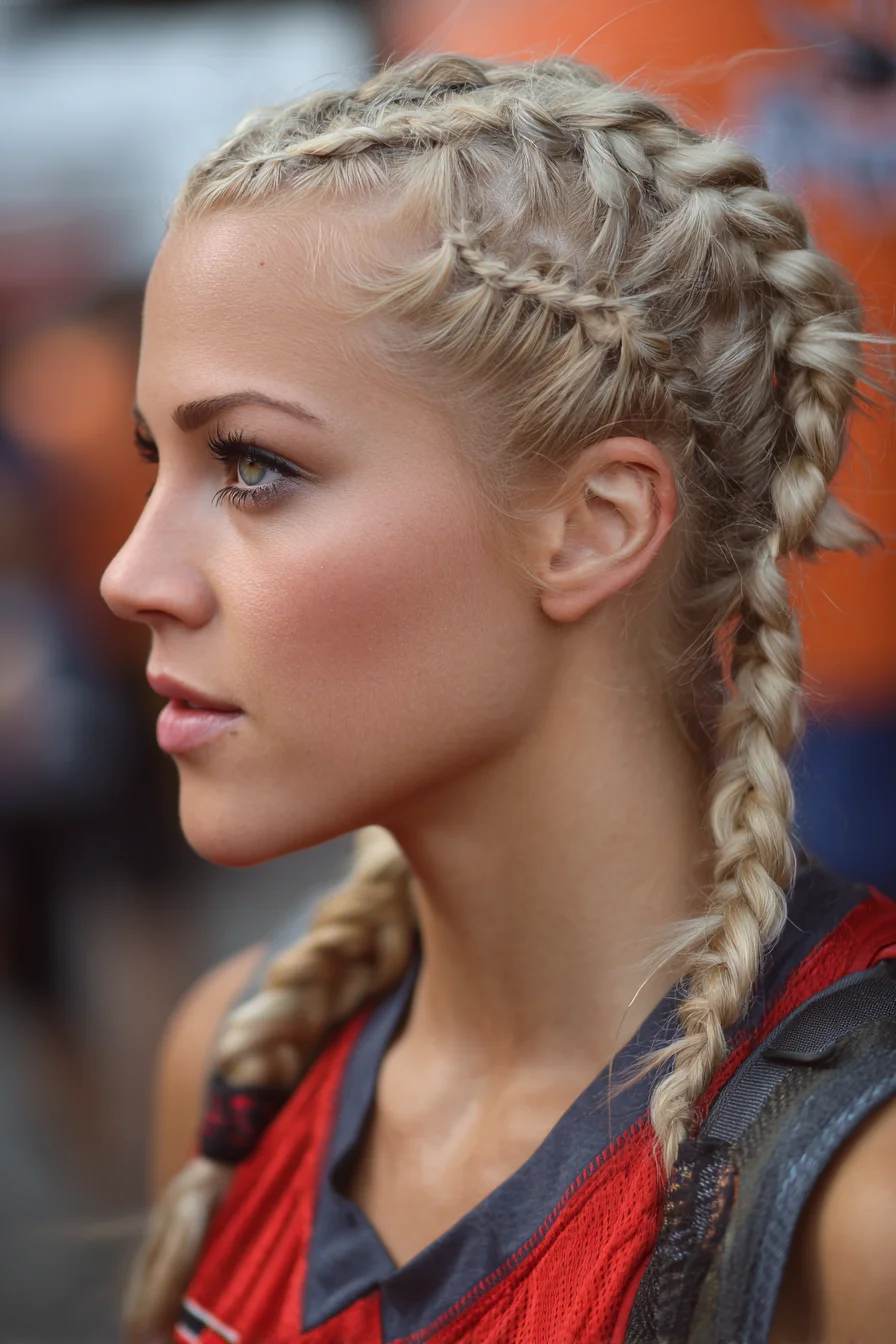
Salon-tested double Dutch braids with small accent micro-braids create a sleek, sporty updo ideal for active days or events. Suitability: works best on medium to thick straight or slightly wavy hair shoulder-length or longer; fine hair benefits from texturizing spray or clip-in extensions for added body. Technique: start on dry, detangled hair; create a clean center part and section hair into two halves. Use a tail comb to pick small subsections at the hairline to begin tight Dutch braids (braid underhand) moving toward the nape, weaving in small accent micro-braids along the crown before incorporating them into the main braids. Secure ends with elastics and pancake slightly for fullness. Tools needed: tail comb, rat-tail comb, sectioning clips, boar-bristle brush, small elastics and bobby pins. Products: texturizing or sea-salt spray for grip, lightweight pomade or edge control, flexible-hold hairspray, and dry shampoo. Difficulty: intermediate — requires braiding comfort and neat parting; allow 30–45 minutes. Maintenance tips: sleep on a silk scarf, refresh with dry shampoo, re-tighten or re-braid after 3–5 days, and avoid heavy oils at the roots.
Curly Double Dutch Braids with Face‑Framing Tendrils
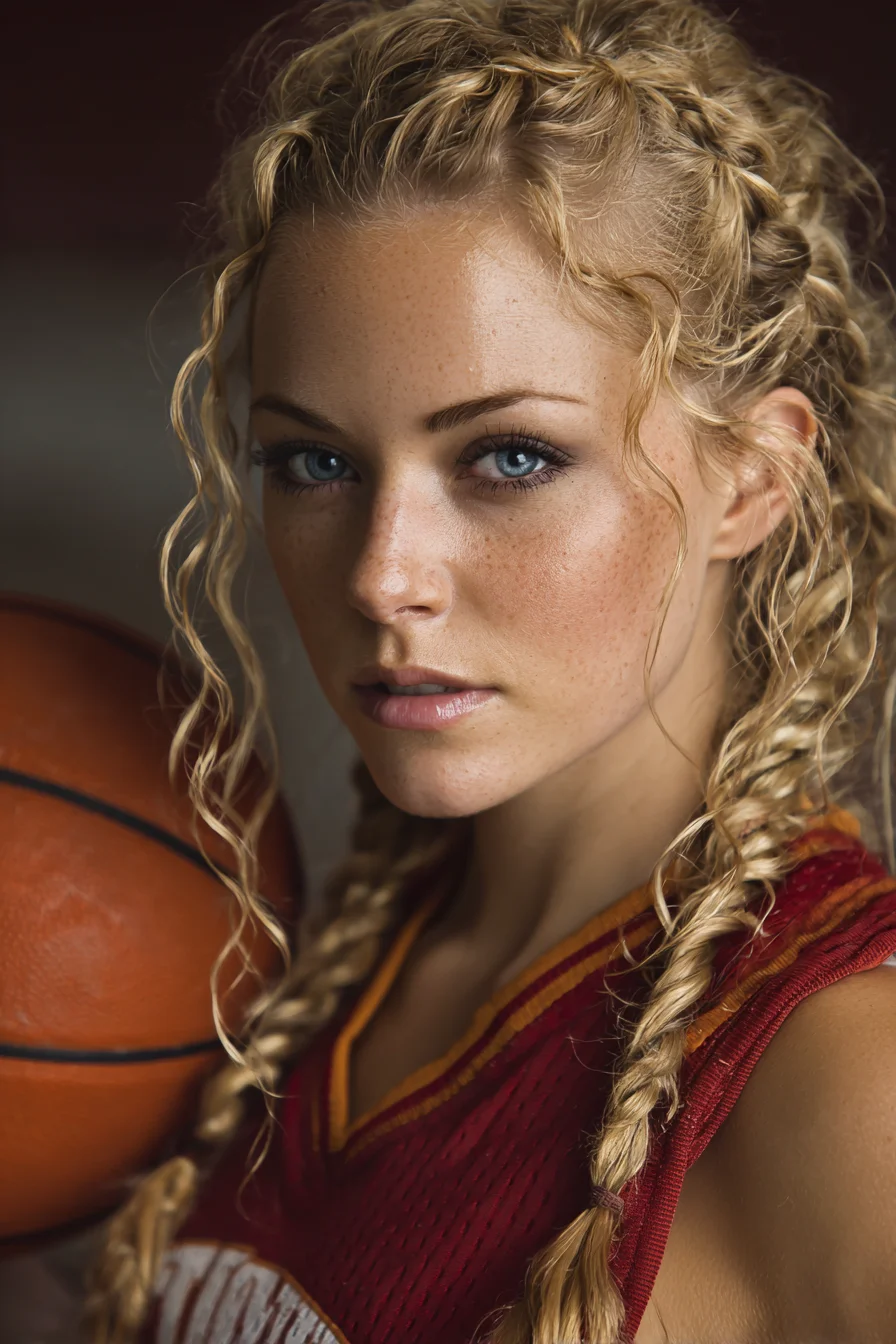
This sporty, textured look suits naturally curly to wavy hair and medium-to-thick straight hair when pre-textured. Start on damp, towel-dried hair: apply a lightweight leave-in conditioner and curl cream to define texture and reduce frizz. Use a rat-tail comb to create two even side parts; clip sections aside. Begin small Dutch braids (reverse French) along the hairline, feeding in hair and continuing into larger two-strand braids down each side, securing with snag-free elastics. Pull gently at braid seams to widen and add volume, and leave out a few face-framing tendrils for a softer finish. Tools: rat-tail comb, wide-tooth comb, sectioning clips, fine elastics, and a paddle brush. Products: leave-in conditioner, curl cream or light gel, texture spray, and a flexible-hold hairspray for hold. Difficulty: moderate — requires comfortable braiding technique and section control; allow 20–45 minutes depending on length. Maintenance: sleep on a silk pillowcase or wear a silk bonnet, refresh tendrils with water and curl cream, and re-tighten elastics as needed. Avoid heavy oils that weigh braids down.
Defined Curly Low Braid with Face‑Framing Coils
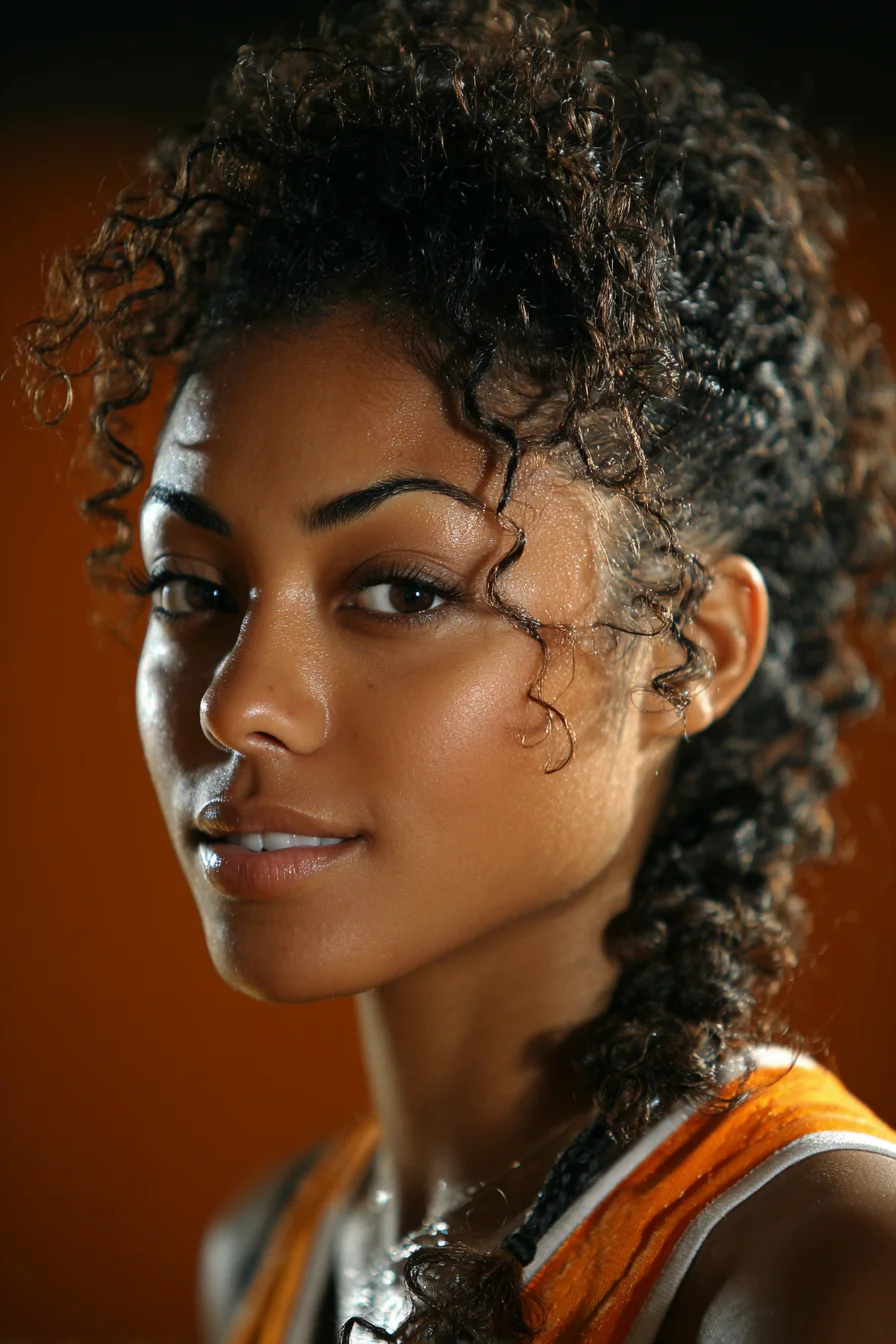
This style works best on natural curly to coily textures (Type 3–4) with medium to high density; it also adapts well to relaxed or wavy hair with prior curl definition. Start on damp, detangled hair: apply a lightweight leave‑in conditioner, then a curl‑defining cream to each subsection to enhance coil pattern. Use a wide‑tooth comb or your fingers to smooth and gather hair into a low ponytail, then create a loose three‑strand or rope braid to preserve volume. Pull out a few face‑framing tendrils and define them with a small amount of gel or edge control for a soft, controlled look. Tools: wide‑tooth comb, rat‑tail comb, sectioning clips, small elastic bands, and an optional diffuser. Products: leave‑in conditioner, curl cream, light hold gel, nourishing oil or serum for shine. Difficulty: easy–medium — straightforward for clients comfortable with basic braiding; expect 20–40 minutes depending on prep. Maintenance: sleep on a silk/satin pillow or bonnet, refresh with a water + curl‑cream spritz, avoid daily manipulation, and reapply a light oil to ends as needed. Trim every 8–12 weeks to prevent split ends.
Sleek Tight Cornrows (Boxer Braids) — Athletic Long Braided Hairstyle
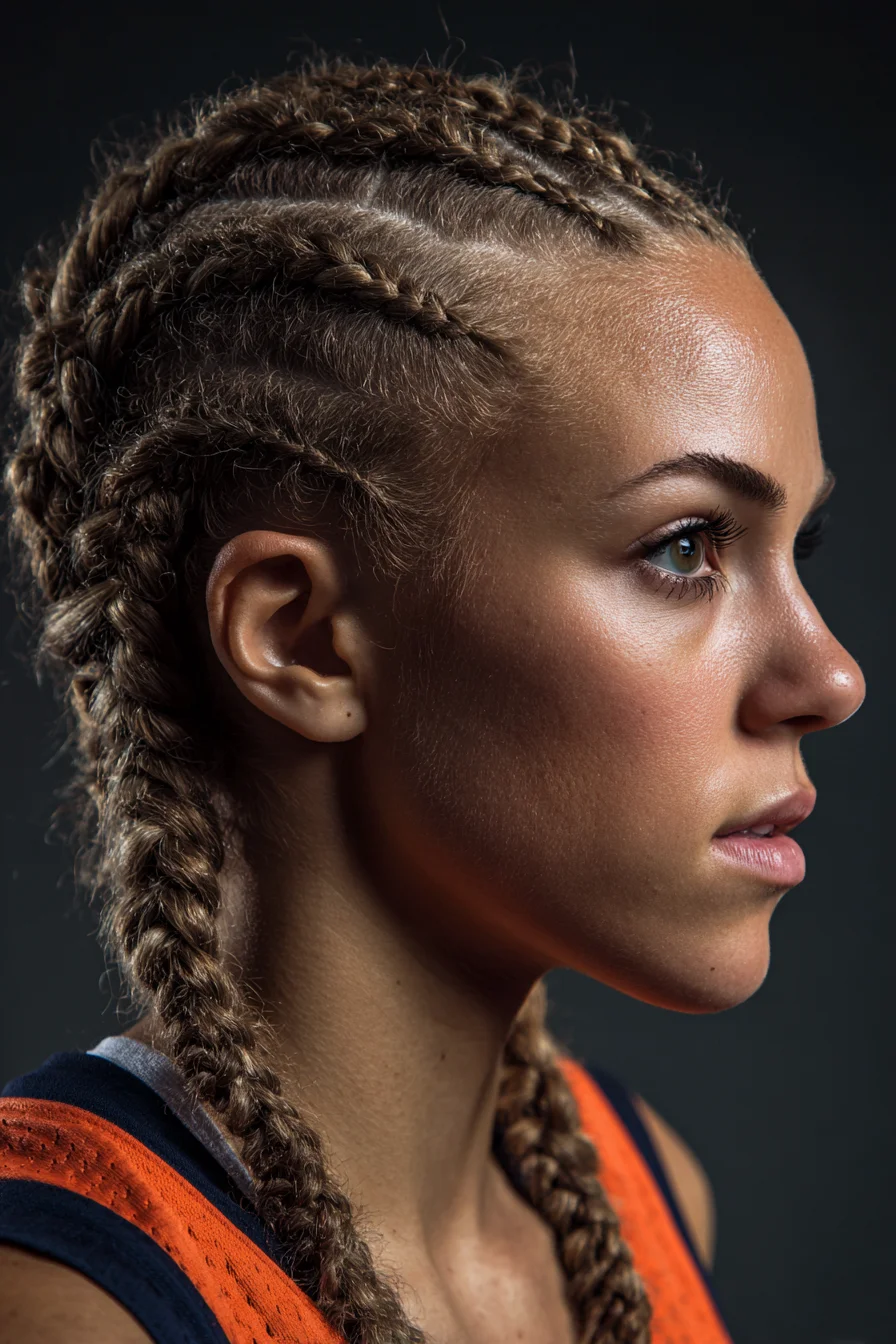
This tight cornrow (boxer braid) style suits medium to thick hair and textured or naturally curly hair best; fine hair can also work with a texturizing spray or light mousse for grip. Technique: section the hair into clean, even rows using a rat-tail comb and clip away sections. Work each row with a 3-strand Dutch (inside-out) braid, adding small amounts of hair as you move toward the nape to maintain even tension and a flush scalp line. Finish with small elastic bands and smooth edges with an edge brush. Tools needed: rat-tail comb, sectioning clips, small clear elastics, spray bottle, edge brush. Products required: leave-in conditioner, light hold gel or edge control, texturizing spray or mousse for grip, lightweight oil or scalp serum, and an anti-frizz finishing spray. Difficulty: intermediate — requires practice for even tension and straight parting; expect 45–90 minutes depending on row count and length. Maintenance tips: sleep with a silk/satin scarf or bonnet, refresh edges with minimal gel, lightly oil the scalp weekly, avoid excessive pulling to prevent breakage, and redo braids every 2–4 weeks or as new growth dictates.
Double Dutch (Boxer) Braids — Sporty Sleek Two‑Braid Style
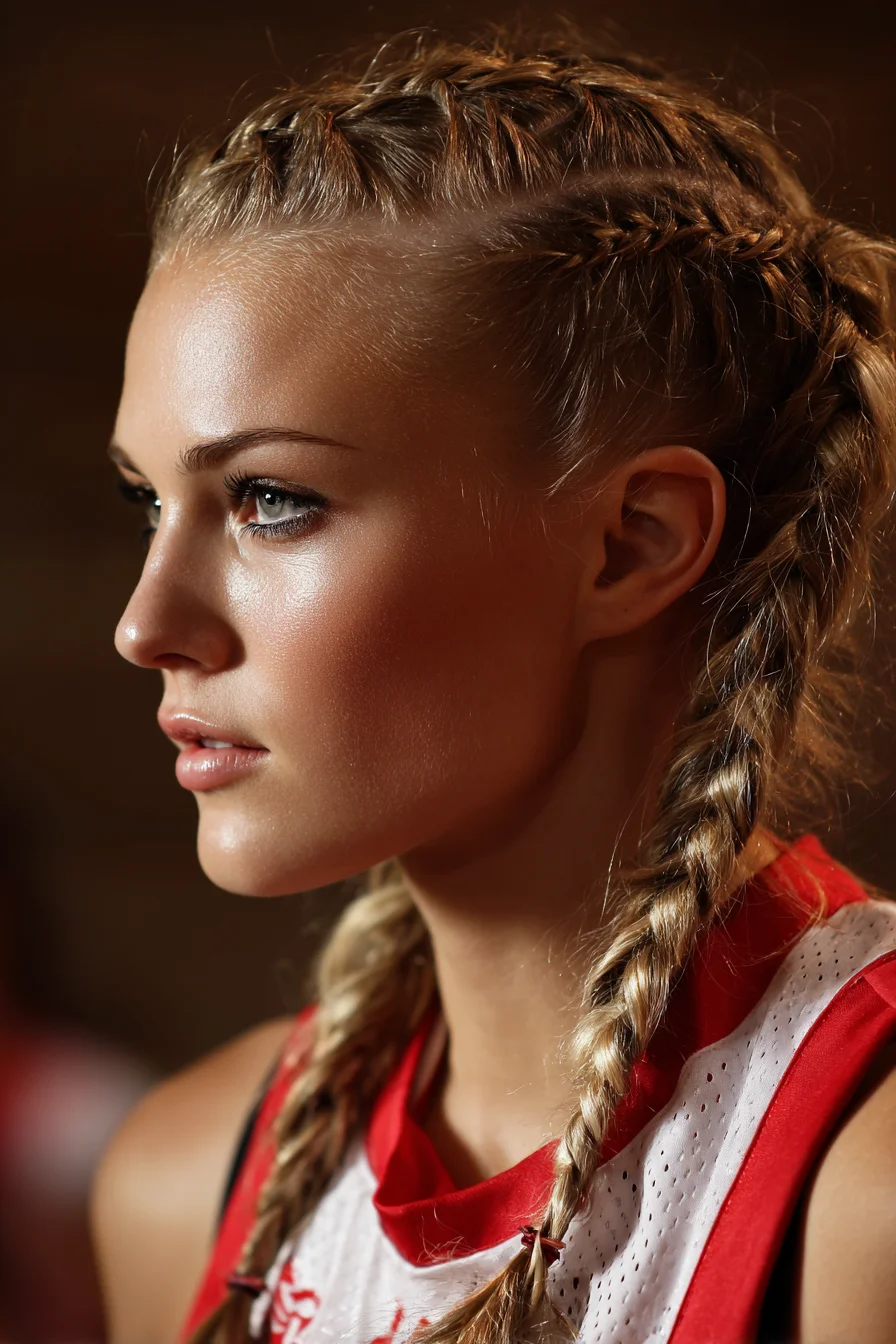
This double Dutch (boxer) braid style is ideal for medium to long hair and works well on straight, wavy, and slightly curly textures. Fine hair benefits from a texturizing spray or dry shampoo for grip; thicker or coarser hair will hold shape naturally but can be smoothed with a lightweight serum. Technique: create a clean center part, clip sections aside, then Dutch-braid (underhand French braid) each side from the hairline down, adding small sections as you go. Continue to the nape and finish with a three‑strand braid to the ends. Tools needed: rat‑tail comb, sectioning clips, paddle brush, small clear elastics, and optional bobby pins. Products required: texturizing spray or dry shampoo, smoothing cream or serum, flexible hold hairspray, and an edge control gel for baby hairs if desired. Difficulty level: intermediate — expect 20–35 minutes depending on practice. Maintenance tips: sleep with a silk scarf or bonnet, refresh with misted water and leave‑in conditioner, tuck ends or rewrap elastics if loosening, and avoid excessive tightness to prevent tension at the hairline. Lasts 2–7 days with proper care.
Textured Twisted Crown Updo — Natural Hair Braided/Twist Updo
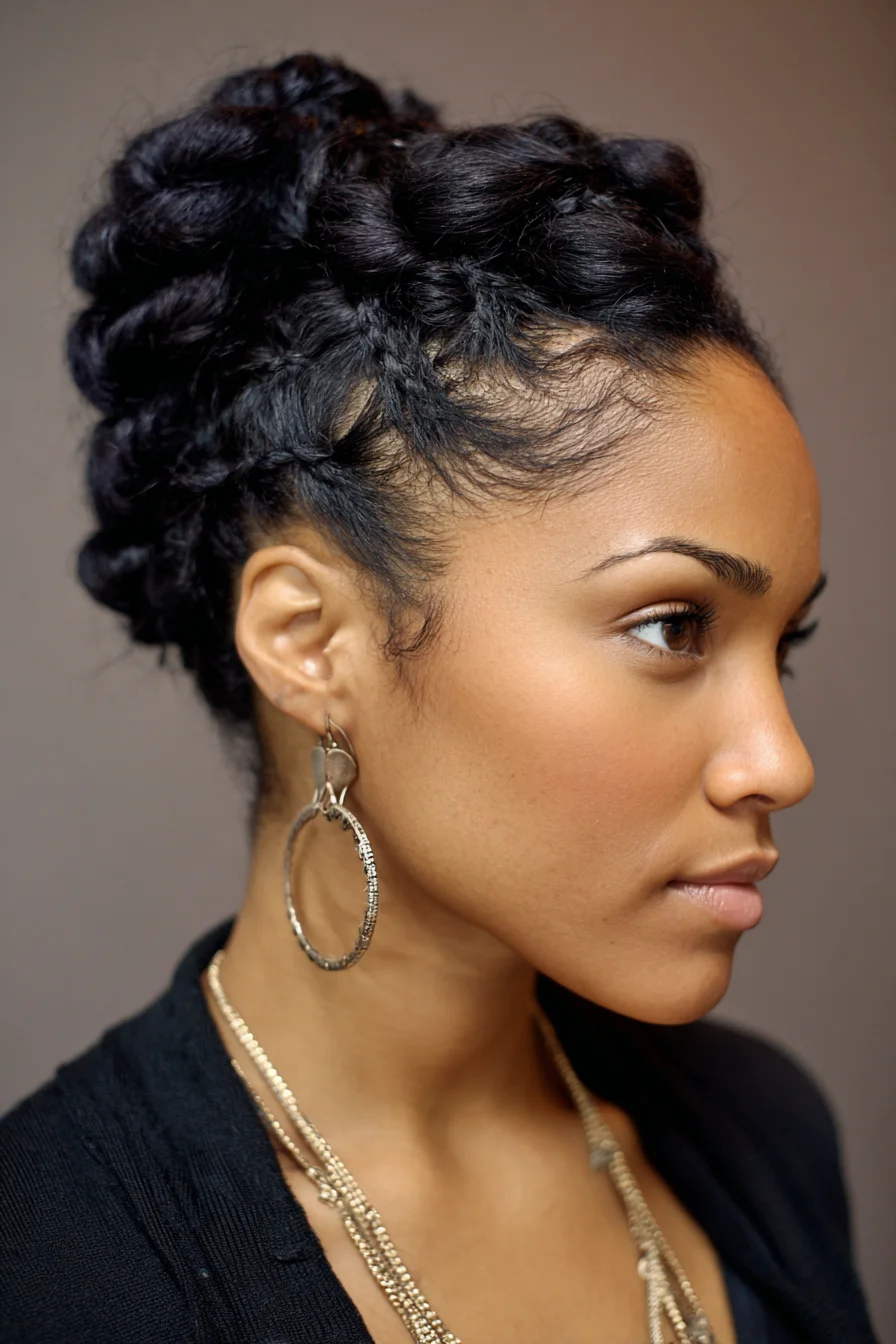
This polished twisted crown updo works best on type 3–4 curly and coily hair or on finer hair with added extensions for volume. Start with clean, detangled hair that has been lightly stretched (blow-dried on low or banded) for easier manipulation. Create perimeter flat-twist or feed-in sections, two-strand twist each section into rope twists, then wrap and pin the twists into a crown, hiding ends with bobby pins. Tools: rat-tail comb, sectioning clips, small elastics, lots of bobby pins, long-handled brush, and a heat source if you choose to gently stretch. Products: moisturizing leave-in, twist cream or butter, edge control for sleek baby hairs, light oil for shine, and a flexible-hold spray to finish. Difficulty: intermediate — expect 45–90 minutes depending on thickness and number of sections. Salon tips: use small, even sections for longevity, secure twist bases close to the scalp, and anchor with several pins. Maintenance: nightly silk/satin wrap or bonnet, refresh edges and add oil to the scalp as needed, and re-pin any loosened twists. With care, the style lasts 7–14 days before a refresh or redo.
Textured Curly Space Buns with Face‑Framing Tendrils
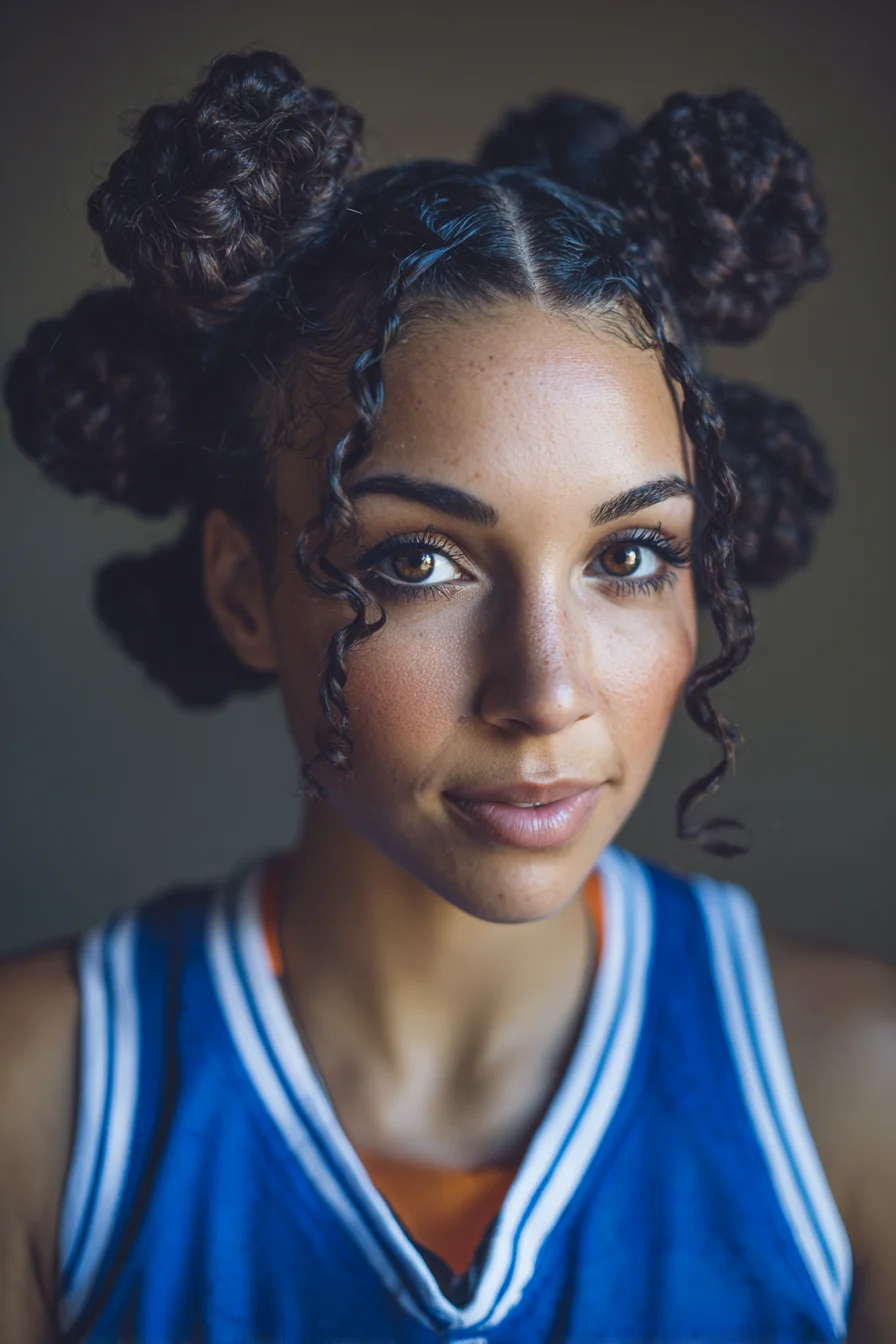
This look suits naturally curly to coily hair best (3A–4C) and also works on wavy or straight hair when pre-textured with a curling wand. Technique: create a clean middle part, section the hair into multiple even panels, lightly stretch or twist each section and coil into small buns secured with elastic bands and bobby pins. Leave two front sections out and finger‑coil or define them with a small curling wand for soft face‑framing tendrils. Tools needed: rat‑tail comb, sectioning clips, small elastic bands, bobby pins, a small curling wand or curling iron (optional) and a diffuser (for drying). Recommended products: a lightweight leave‑in conditioner, curl cream or defining custard, edge control gel for smooth baby hairs, a light hair oil for shine, and a medium‑hold hairspray. Difficulty level: moderate — requires neat parting and tension control; allow 30–60 minutes depending on density. Maintenance tips: sleep on a silk/satin pillowcase or bonnet, refresh tendrils with water + curl cream or a light mousse, tighten any loose buns with pins, and avoid heavy oils at the roots to prevent buildup.
Sleek Cornrow Fauxhawk with Twisted Center for Natural Curly Hair
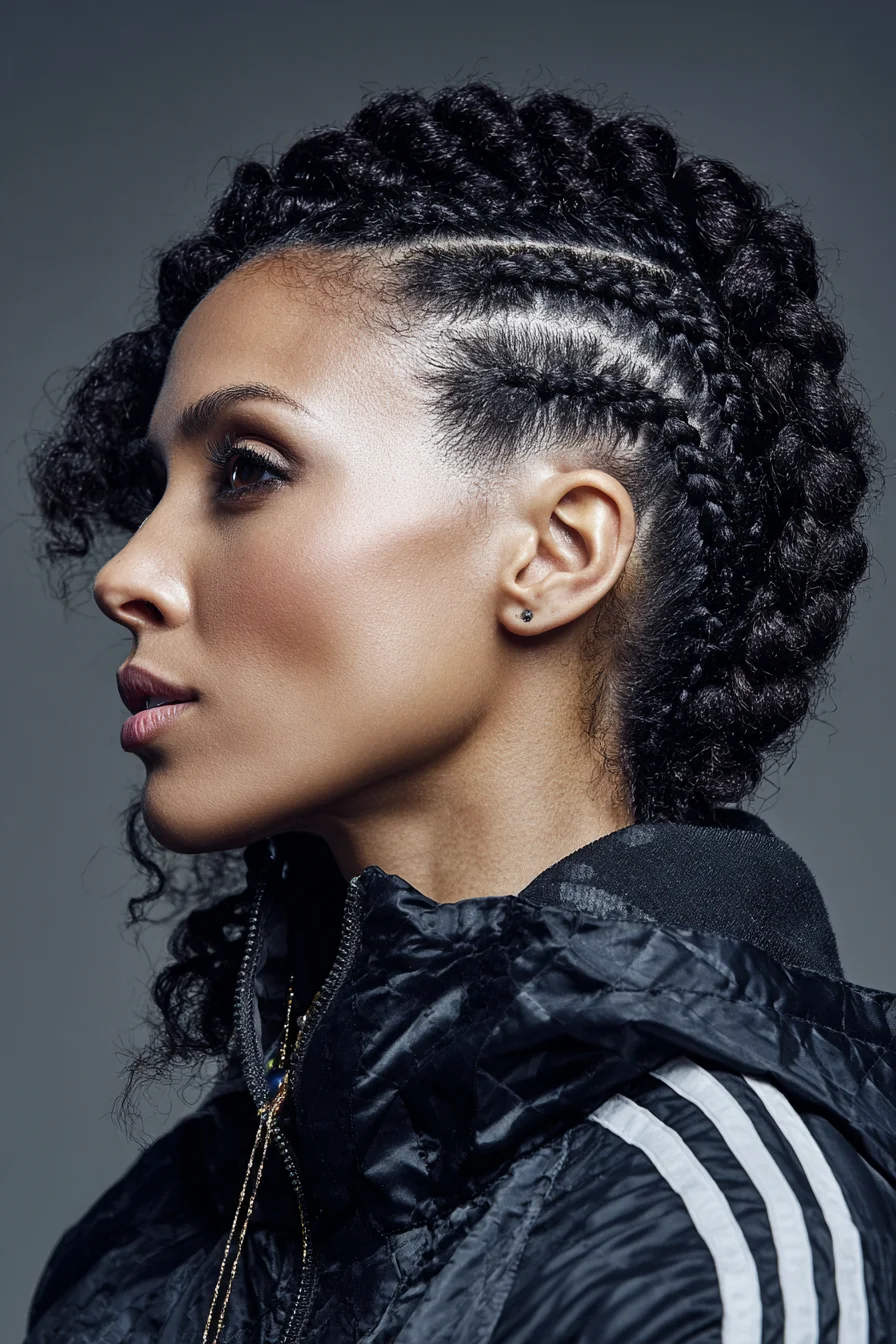
This modern fauxhawk combines clean feed-in cornrows at the sides with larger twisted/flat-braid sections down the center — ideal for 3A–4C natural textures but also adaptable to wavy or relaxed hair when pre-stretched. Technique: start on clean, detangled hair; define crisp parts with a rat-tail comb, apply a leave-in and light gel for grip, then create small feed-in cornrows on each side progressing into larger three-strand twists or flat twists along the middle. Tools needed: rat-tail comb, sectioning clips, fine-tooth comb, small elastics, hair clips, and a soft boar-bristle brush for edges. Products required: sulfate-free cleanser, deep conditioner, leave-in conditioner, braid gel or edge control, lightweight braid butter/oil, and optional light-hold hairspray. Difficulty level: intermediate — expect 60–90 minutes depending on hair length and density. Maintenance tips: sleep on a silk bonnet or scarf, reapply a light oil to the scalp every 3–4 days, refresh edges with a dab of edge control, and avoid leaving styles in past 4–6 weeks to minimize tension and breakage. For long-lasting neatness, touch up the outer rows after two weeks.
Textured Braided Mohawk with Tight Side Cornrows
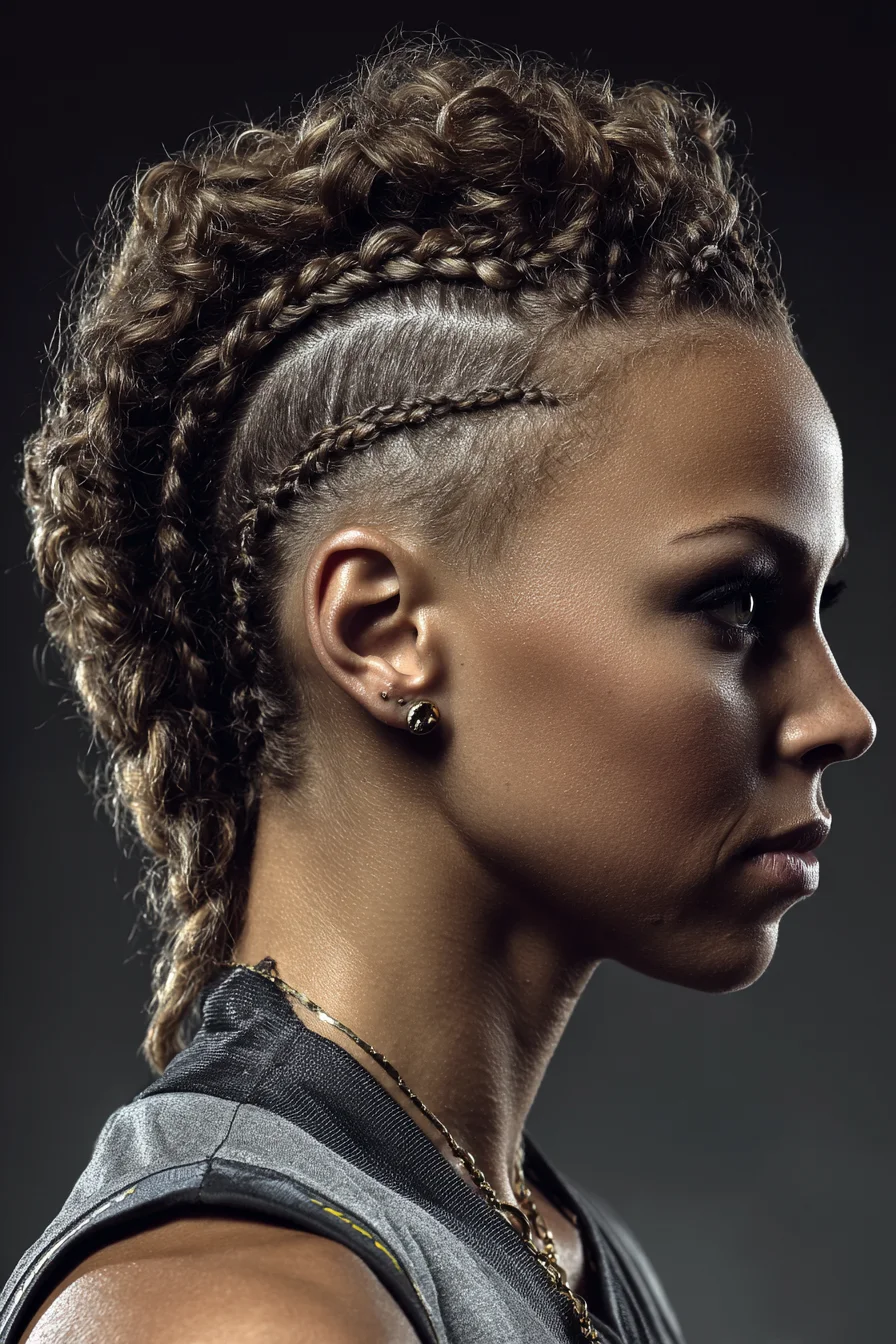
This textured braided mohawk pairs tight side cornrows with fuller, pancaked braids on top for a structured yet voluminous finish. Best suited for naturally curly, coily or thick wavy hair because the texture holds shape and gives instant volume; fine or straight hair can achieve the look with clip-in or braided extensions. Technique: section clean parts down both sides with a rat-tail comb, create 2–4 small, snug cornrows directed toward the center, then braid the center section into larger three-strand or Dutch braids, pancake them slightly for width and texture and secure ends with elastic. Tools needed: rat-tail comb, duckbill clips, fine-tooth comb, small elastic bands, wide-tooth brush and optional crochet needle for extensions. Products required: lightweight leave-in, curl cream or mousse for body, strong-hold gel/edge control for clean parts, lightweight oil or serum and a flexible-hold hairspray. Difficulty level: intermediate to advanced — expect 60–120 minutes depending on length and extensions. Maintenance tips: sleep with a silk scarf or bonnet, refresh edges weekly, moisturize scalp with a spray or light oil, avoid excessive tension and re-braid sides after 3–4 weeks to prevent breakage.
Dutch Crown into Loose Fishtail Braid — Textured Braided Updo for Medium to Long Hair
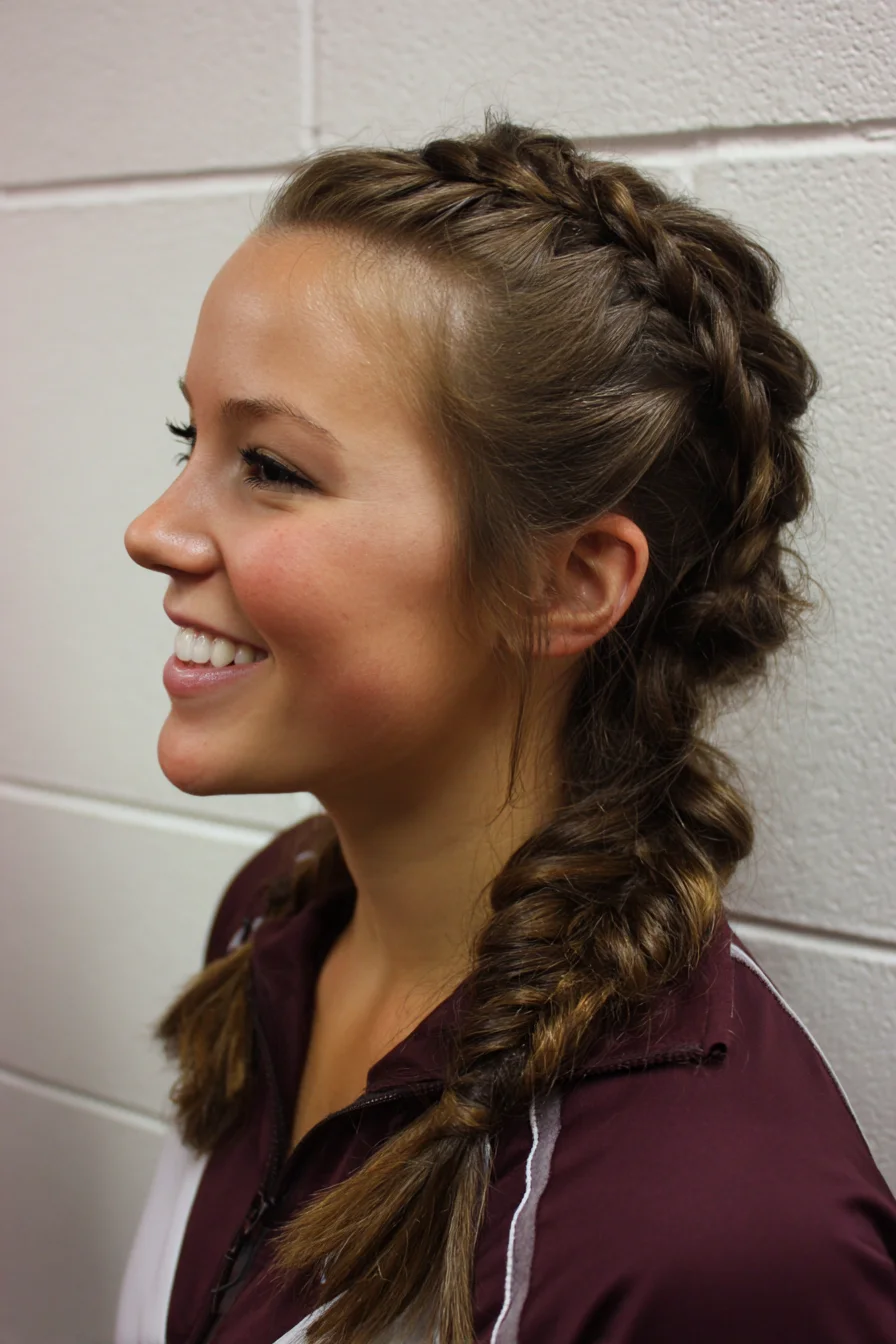
This look pairs a Dutch (inside-out) crown braid that feeds into a relaxed fishtail for a polished, textured braided updo. Suitable for medium to long lengths and medium to thick hair; fine hair can achieve the same fullness with a texturizing spray or light padding, while naturally curly hair works well when smoothed slightly at the roots. Technique: section a front-to-back panel and create a Dutch braid along the hairline, adding small sections as you move toward the back. Once at the nape, switch to a fishtail (or three-strand) braid, secure with an elastic, then gently pancake the braid for width and softness. Tools needed: tail comb, sectioning clips, small clear elastics, bobby pins, and a brush. Products: lightweight mousse or styling cream at the roots, sea-salt or texturizing spray through the lengths, smoothing serum for flyaways, and a flexible-hold hairspray. Difficulty: intermediate — expect 20–40 minutes depending on experience. Maintenance tips: sleep with a silk scarf, refresh texture with dry shampoo, re-pancake and pin any loosened sections, and avoid heavy oils that weigh the braid down.
Textured Double Dutch Braids with Soft Crown Volume — Sporty Boho Style

A versatile, slightly undone double Dutch braid with a soft pouf at the crown — ideal for medium to long hair and especially flattering on straight to wavy textures with medium to thick density. Start with second-day hair or add dry shampoo/texturizing spray to fresh hair for grip. Section a small top panel for added lift, backcomb lightly at the crown and smooth the surface with a wide-tooth comb. Create two Dutch braids (underhand braids) starting near the temples or slightly back from the hairline, adding hair evenly as you work toward the nape. Keep each braid slightly loose and “pancake” the plaits for width and softness. Secure with small elastics and gently tug strands for a lived-in finish; pull a few face-framing tendrils free for softness. Tools: tail comb, sectioning clips, small clear elastics, boar-bristle brush. Products: texturizing spray, dry shampoo, light-hold hairspray, small amount of smoothing cream or wax for flyaways and heat protectant if using irons. Difficulty: intermediate — requires comfort with Dutch braiding and symmetrical placement. Maintenance: sleep in a silk scarf, refresh texture with dry shampoo and re-pancake braids each day, trim ends every 8–12 weeks to prevent split ends.
Voluminous High Curly Updo with Defined Ringlets
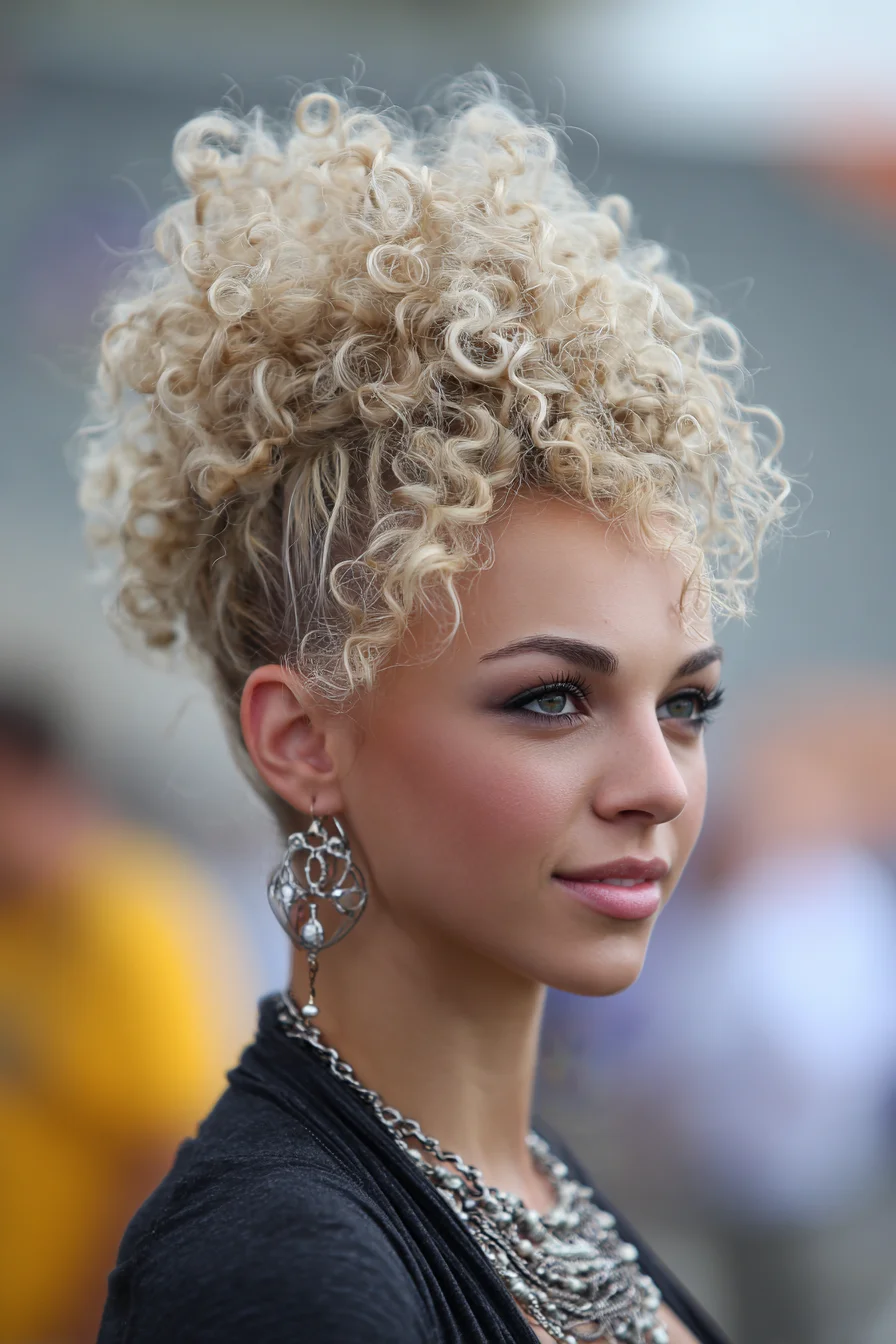
This voluminous high curly updo works best on natural curl patterns from 3A to 4B, or on textured hair created with a small-barrel curling iron for straights. Start on clean, conditioned hair: apply a leave-in conditioner and a curl-defining cream or gel to soaking-damp sections, then diffuse until 80–90% dry to lock shape without frizz. Gather the hair high at the crown, keeping the most defined ringlets free at the front for soft face-framing tendrils. Loosely coil the gathered hair into a full bun and secure with a small elastic and several long bobby pins, pulling sections out to create height and separation. Tools needed: wide-tooth comb, Denman or curl brush, microfiber towel/t-shirt, diffuser, small-barrel curling iron (optional), elastics and pins. Products: moisturizing shampoo/conditioner, leave-in, curl cream or gel, heat protectant, light oil for shine, and medium-hold hairspray. Difficulty: moderate — requires curl control and strategic pinning. Maintenance: pineapple nightly with a silk scarf/bonnet or sleep on a silk pillowcase, refresh with water + curl activator or light gel, deep-condition weekly, and avoid heavy oils at the roots to preserve volume.
Double Cornrows with Curly Ends — Textured Braided Style
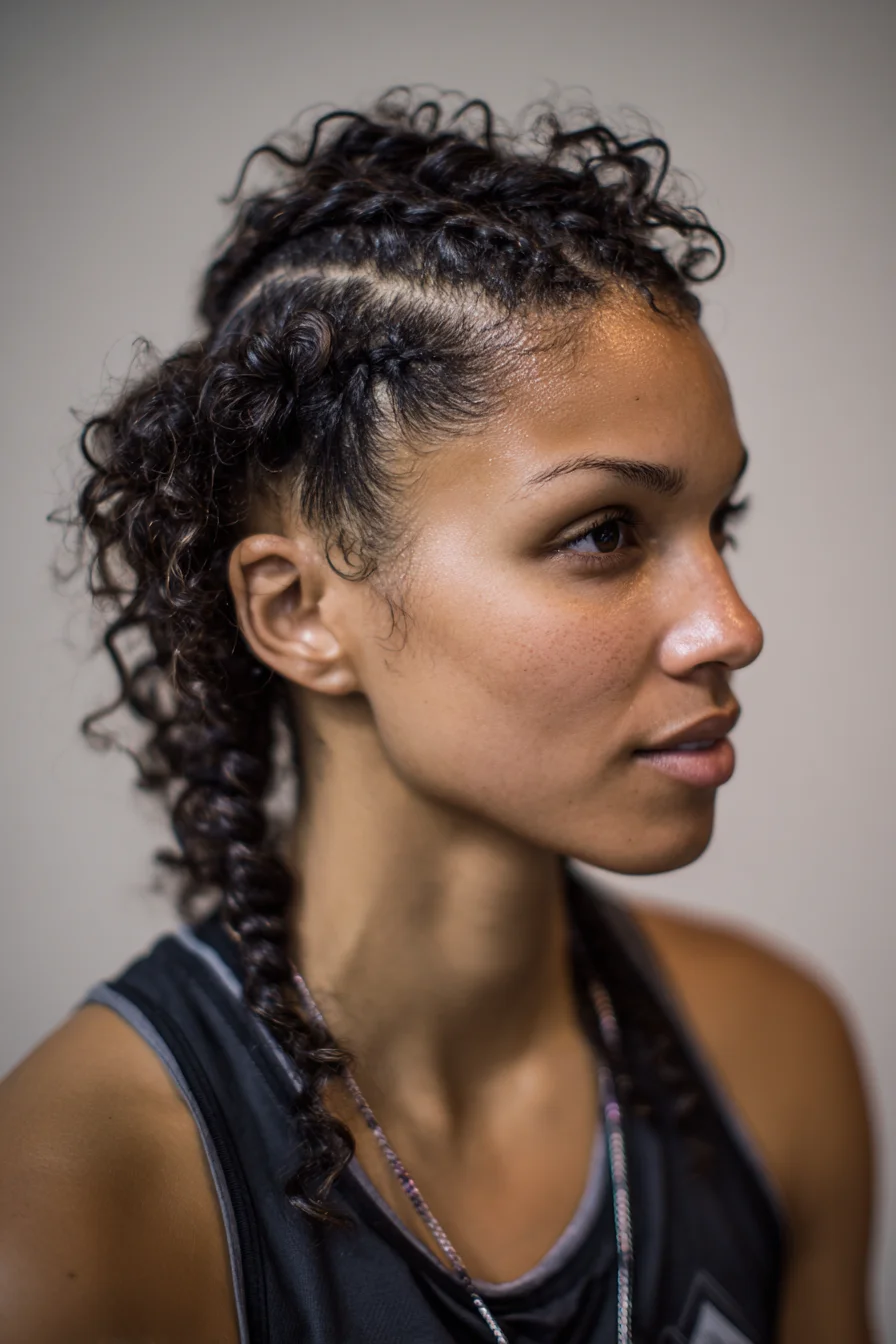
A salon-friendly look ideal for Type 3–4 curly and thick wavy hair that keeps texture visible while controlling shape. Start on clean, detangled hair with a light leave-in conditioner. Create a center or offset part, apply a curl-defining cream at mid-lengths and a medium-hold gel at the roots, then cornrow two neat rows (Dutch or traditional) along the scalp. Continue each row into a three-strand braid and finish by securing the ends, leaving the last 2–3 inches unbraided to showcase natural curls. Tools needed: rat-tail comb, sectioning clips, small snag-free elastics, edge brush, and a wide-tooth comb. Recommended products: lightweight leave-in, curl cream or custard, medium-hold gel or mousse, edge control, and a light oil or serum for shine. Difficulty: moderate — requires basic cornrowing skill and careful tension control; expect 30–75 minutes depending on density. Maintenance: sleep on a satin bonnet or pillowcase, refresh with a water-based spray and curl cream, reapply light oil to the scalp weekly, avoid overly tight tension to protect edges, and redo braids every 2–4 weeks to prevent breakage.
Tight Double Dutch (Boxer) Braids — Sleek Long Braids for Active Styles
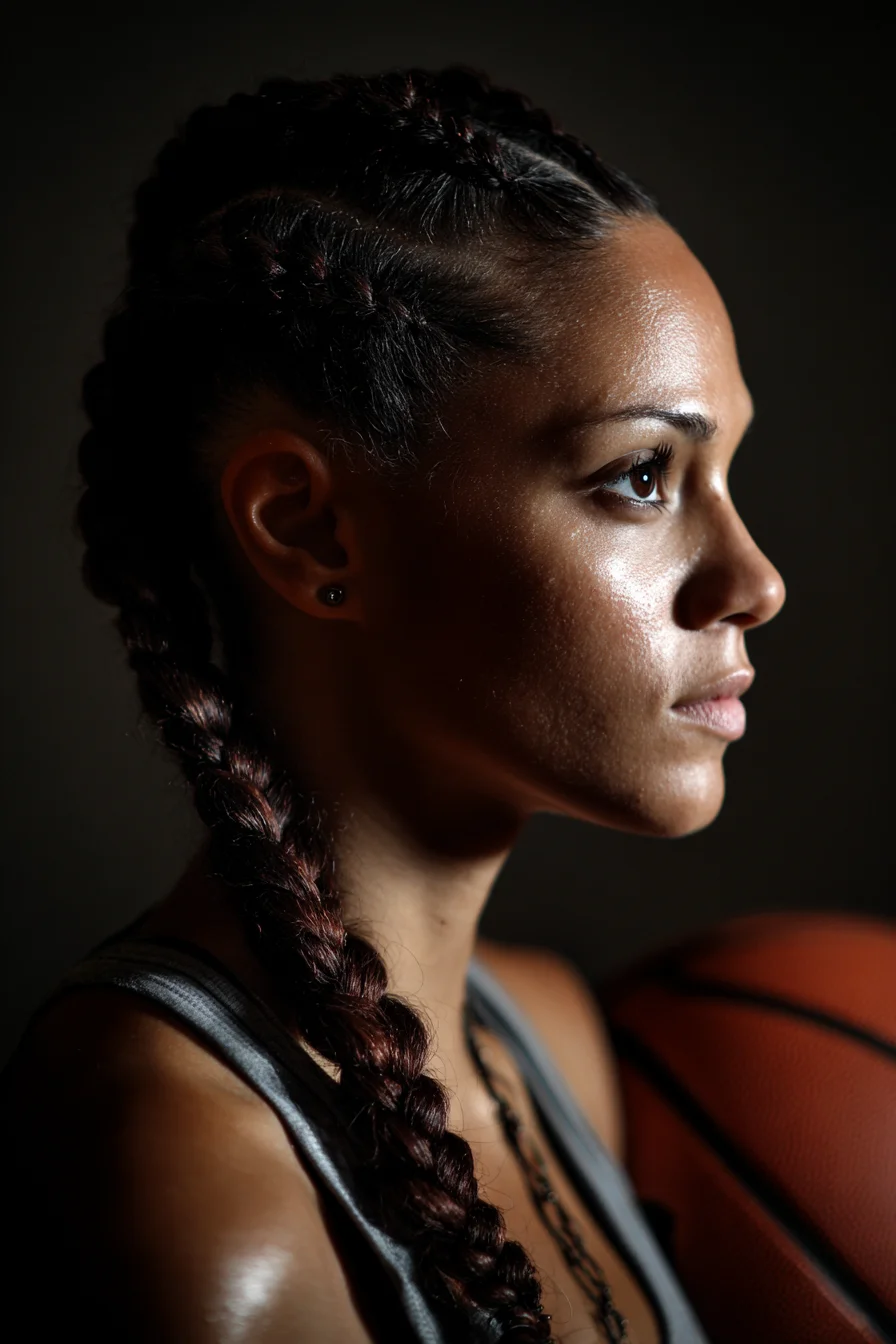
This look suits medium to thick hair textures and works well on curly or wavy hair; fine hair can achieve the same shape with prepped texture or added extensions. Technique: create a clean center part, section into two panels and perform Dutch (inside-out) braids starting at the hairline, adding even sections as you go and continuing into three-strand braids to the ends. Tools needed: rat-tail comb, sectioning clips, small clear elastics, paddle brush, edge brush, optional clip-in extensions and bobby pins. Products required: lightweight leave-in or detangler, medium-hold styling gel or pomade for sleek roots, anti-frizz serum for length, and a flexible hold hairspray to finish. Difficulty level: moderate — requires comfortable control of three-strand and Dutch braiding; expect 20–45 minutes depending on length and experience. Maintenance tips: sleep with a satin bonnet or scarf, refresh edges with a small amount of edge control, moisturize the scalp with a light oil or spray every few days, and avoid over-tightening to prevent tension. Redo every 1–2 weeks or as hair growth and frizz require; cleanse scalp gently with diluted shampoo or dry shampoo between sits.
Double Dutch/Cornrow Braids Gathered into a Sleek Braided Bun
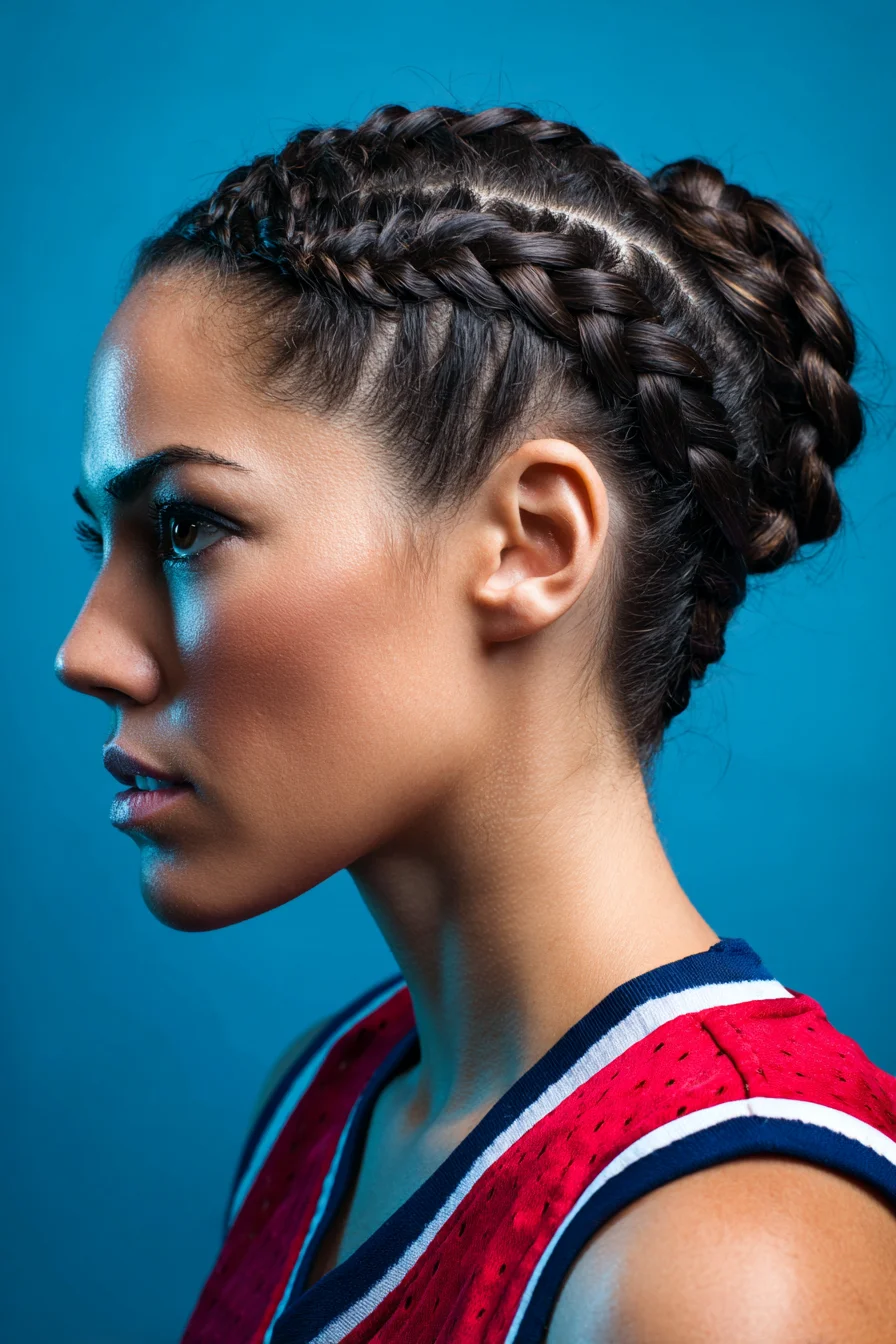
This sporty, polished updo combines tight Dutch (inverted) cornrows along the scalp that feed into a braided bun at the nape—ideal for active days or a clean red-carpet finish. Hair type suitability: works best on straight to wavy textures and medium-to-thick density; fine or short hair benefits from clip-in braiding extensions for fullness and length. Styling technique: start on washed, detangled hair; create clean center and side partings, then Dutch-braid each panel close to the scalp, secure ends with small elastics and wrap braids into a low bun, tucking and pinning for shape. Tools needed: rat-tail comb, sectioning clips, small clear elastics, bobby pins, edge brush. Products required: lightweight styling cream or gel for grip, texturizing spray for hold, anti-frizz serum, and a flexible-hold hairspray. Difficulty level: intermediate — requires confident braiding and tension control; allow 30–60 minutes. Maintenance tips: sleep with a silk scarf, refresh edges with a dab of gel, re-pin any loose sections, use dry shampoo to extend wear, and avoid overly tight braiding to prevent tension breakage.
Dutch Double Braids with Textured Rope Ends and Soft Baby Hairs
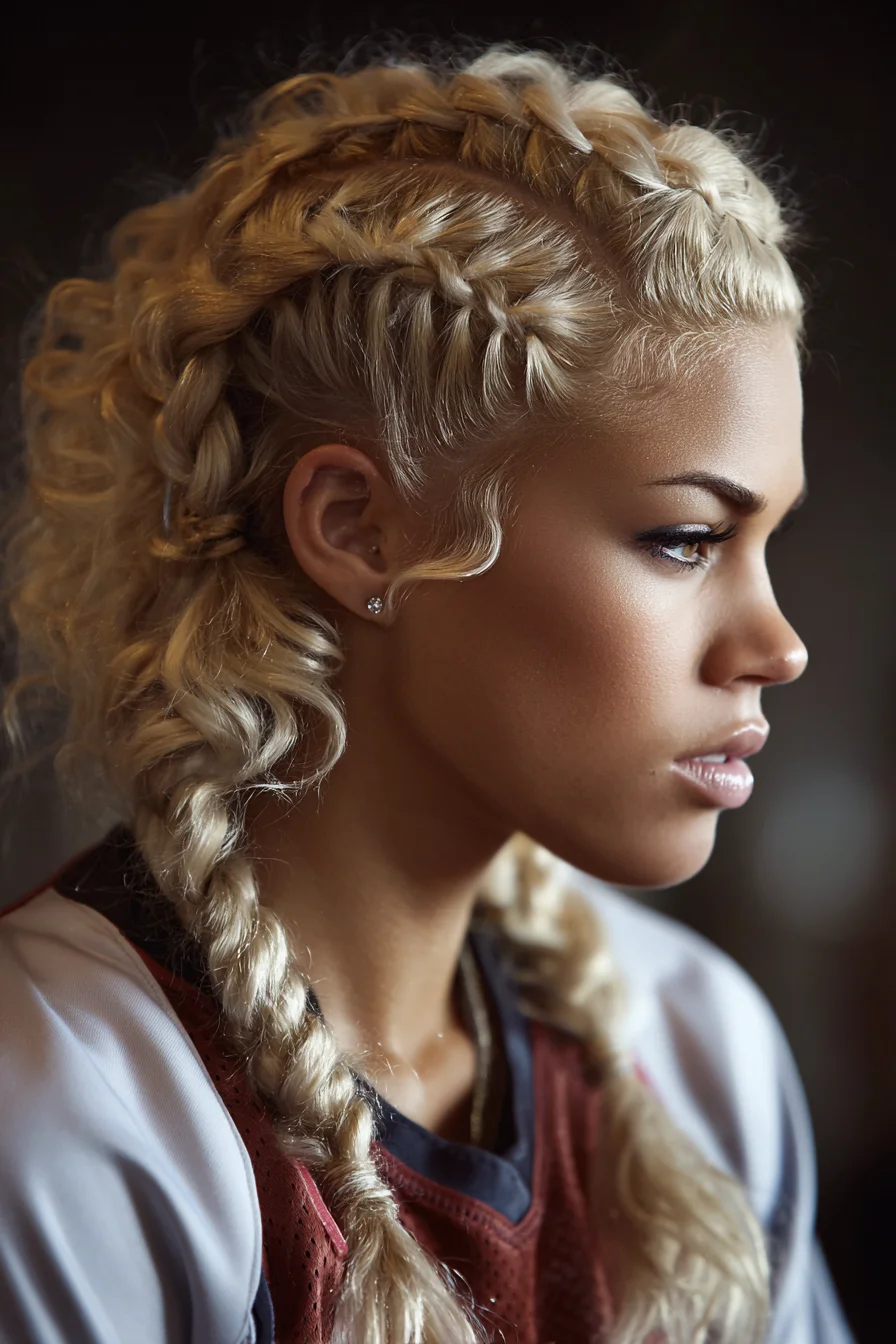
Suitability: Best on medium to thick hair lengths shoulder‑length and longer; works on straight, wavy, or curly hair. Fine hair can still wear this look but add texturizing powder or light backcombing for grip. Styling technique: Create a clean center part. Section and Dutch‑braid each side tightly along the scalp, incorporating hair evenly, then transition to a rope or three‑strand braid down the length. Pancake the braids slightly for fullness and pull a few face‑framing pieces to create the soft baby‑hair waves shown. Tools needed: rat‑tail comb, small sectioning clips, clear elastics, tail comb or toothbrush for edges, paddle brush and optional curling iron or diffuser for end texture. Products required: sea‑salt or texturizing spray, styling powder for hold, lightweight pomade/edge control for baby hairs, heat protectant if using hot tools, and flexible hold hairspray. Difficulty level: Intermediate — expect 30–60 minutes depending on hair length and your braiding speed. Maintenance tips: Sleep with a silk scarf or bonnet, refresh texture with dry shampoo or mist and re‑pancake braids to restore volume, avoid heavy oils at the roots, and redo elastics or tighten braids after 2–3 days to prevent slippage and breakage.
Textured Halo Crown Braid with Front Cornrow Accents
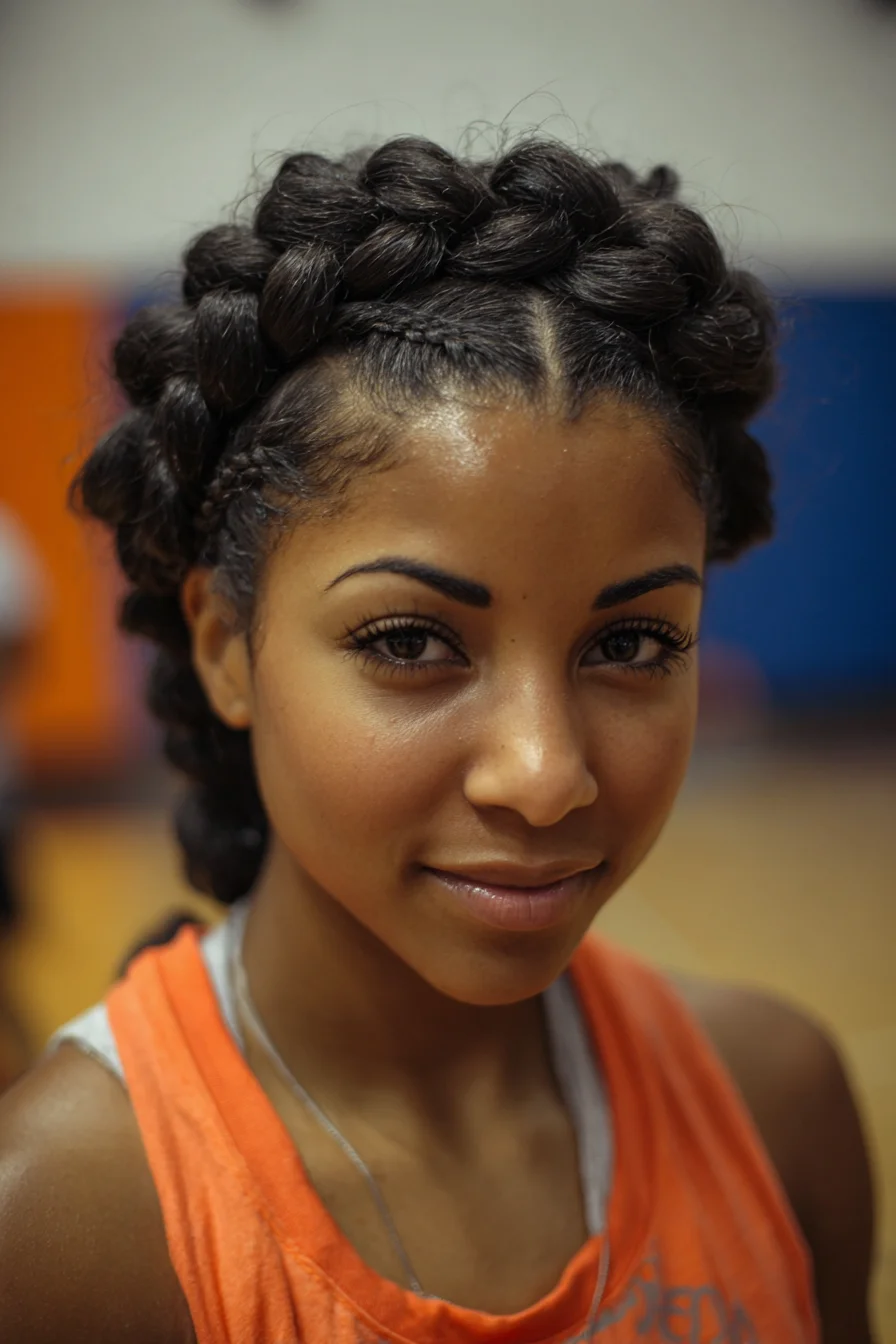
This halo crown braid with small front cornrows suits textured hair types best — 3A through 4C — and also works on straighter hair when pre-texturized or with extensions. Start on clean, detangled hair: create a center or slightly off-center part, clip sections, and cornrow two small swaths along the hairline to anchor the style. Use either a large three-strand or rope/twist braid around the perimeter, feeding in hair or pre-looped extensions for extra volume. Tools: rat-tail comb, wide-tooth comb, sectioning clips, small elastics, bobby pins, edge brush, and extension hair if desired. Products: moisturizing leave-in, light styling gel or braid cream for grip, edge control for baby hairs, a lightweight oil or serum for shine, and a flexible-hold finishing spray. Difficulty: intermediate — doable at home with practice but faster with a second pair of hands. Maintenance tips: sleep on a satin bonnet or pillowcase, mist scalp and braid with a water/leave-in mix weekly, apply light oil to the scalp to prevent dryness, avoid excessive manipulation, and refresh edges and loose sections after 2–3 weeks. For fuller effect, pancake the braid gently after securing.
Textured Dutch Crown Braid into Curly High Pony with Face‑Framing Tendrils
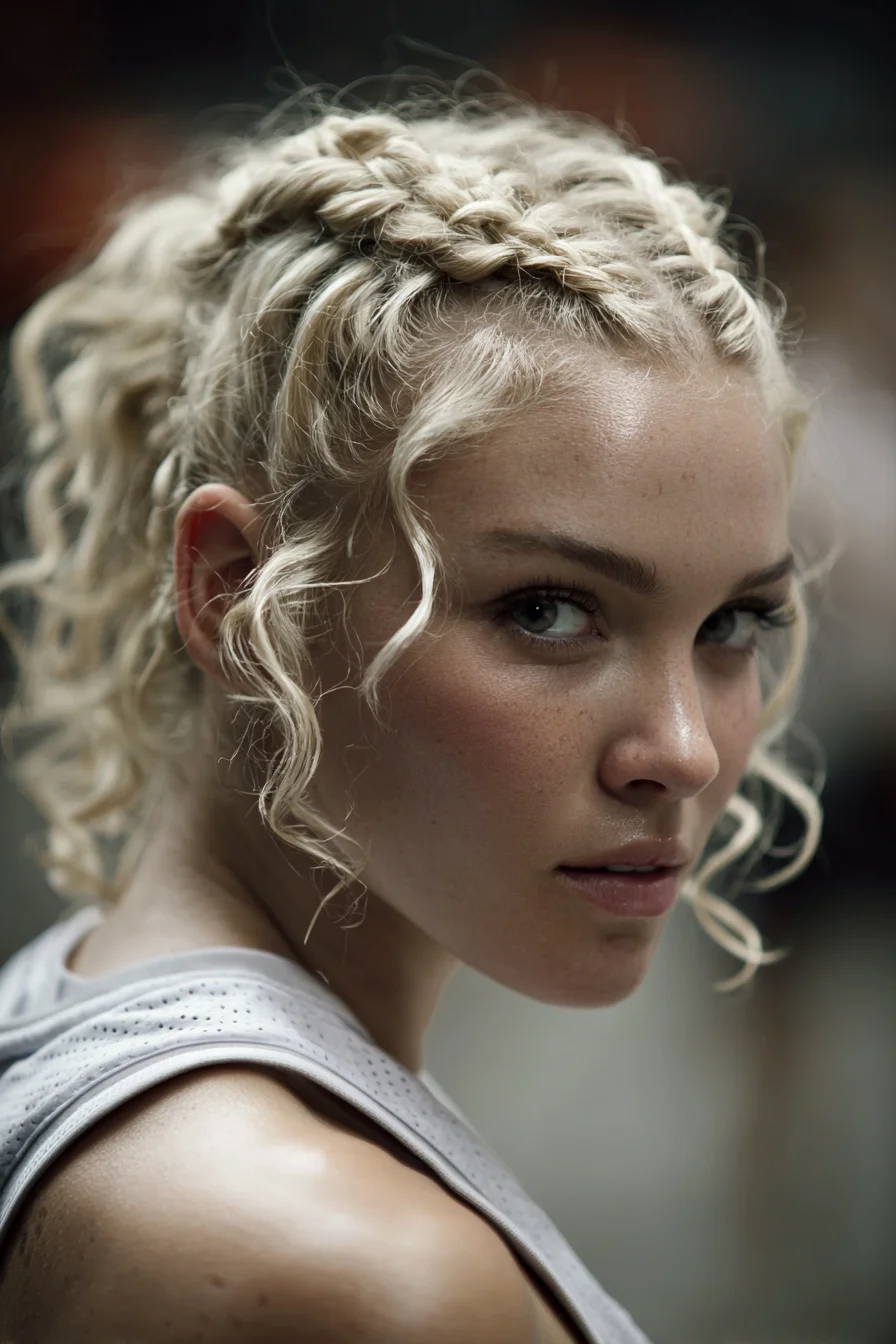
This look suits wavy to curly hair best (loose waves to tight spirals) and works well on fine to medium density lengths that reach at least shoulder-length; straight hair can be pre-curled. Start by parting and creating two Dutch/inside-out braids from each temple toward the crown, then secure both into a high ponytail. Tease the ponytail lightly for volume and let natural curls fall; pull a few soft tendrils at the hairline for a relaxed finish. Tools: rat-tail comb, sectioning clips, small clear elastics, bobby pins, curling iron or wand (optional), and a diffuser if air-drying. Products: light gel or styling cream for control at the roots, curl-defining cream or mousse, texturizing spray for hold and grit, heat protectant, and a flexible-hold hairspray. Difficulty: intermediate — requires comfortable Dutch-braiding and curl definition skills; allow 25–40 minutes. Maintenance tips: sleep with a loose “pineapple” or silk scarf, refresh with water + curl cream or a curl refresher spray, re-tighten elastics after 2–3 days, and use dry shampoo at the roots to extend wear without weighing curls down.
Crown Dutch Braid Wrapped Bun — Braided Updo for Medium to Thick Hair
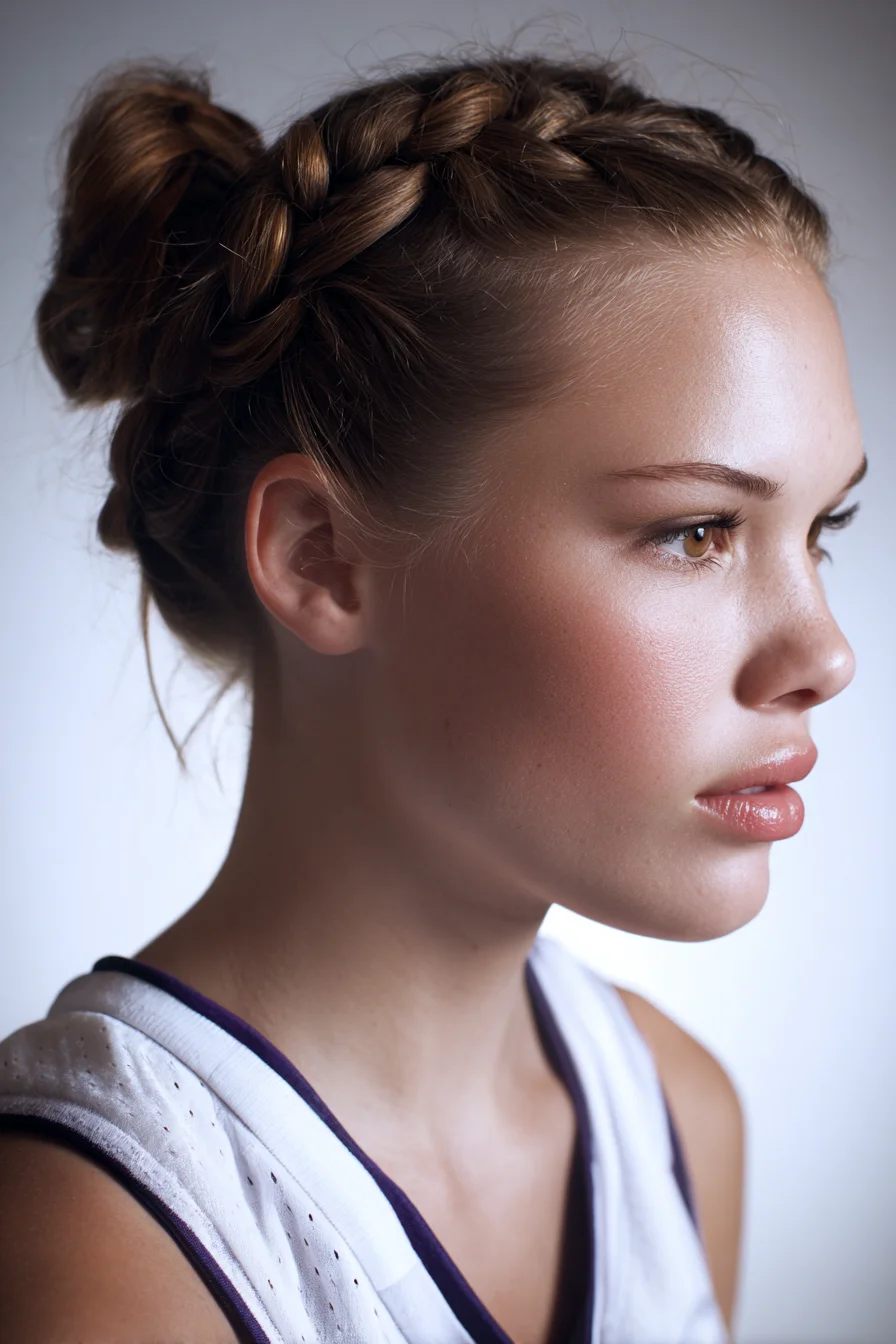
This braided crown-to-bun updo works best on medium to thick hair, straight to wavy textures; fine hair benefits from volumizing products or a small padding, and very curly hair should be smoothed or lightly stretched for a neater braid. Start on clean, detangled hair with a light mousse or volumizing foam at the roots. Create a deep side part and begin a Dutch (inside-out) braid along the hairline toward the opposite side, adding sections as you go; secure the braid end with a small elastic and wrap it into a low or mid crown bun, tucking and pinning with strong bobby pins. Tools needed: tail comb, sectioning clips, small elastics, bobby pins, and optional curling iron for texture. Products: texturizing spray or sea-salt spray for grip, light-hold hairspray, shine serum sparingly, and dry shampoo to refresh. Difficulty: intermediate — requires consistent tension and neat sectioning. Maintenance tips: loosen the braid slightly for lived-in volume, touch up with pins after 24–48 hours, sleep on a silk scarf, and refresh with dry shampoo and a bit of texturizer as needed.
Sleek Cornrow Updo with Braided Ponytails and Laid Baby Hairs
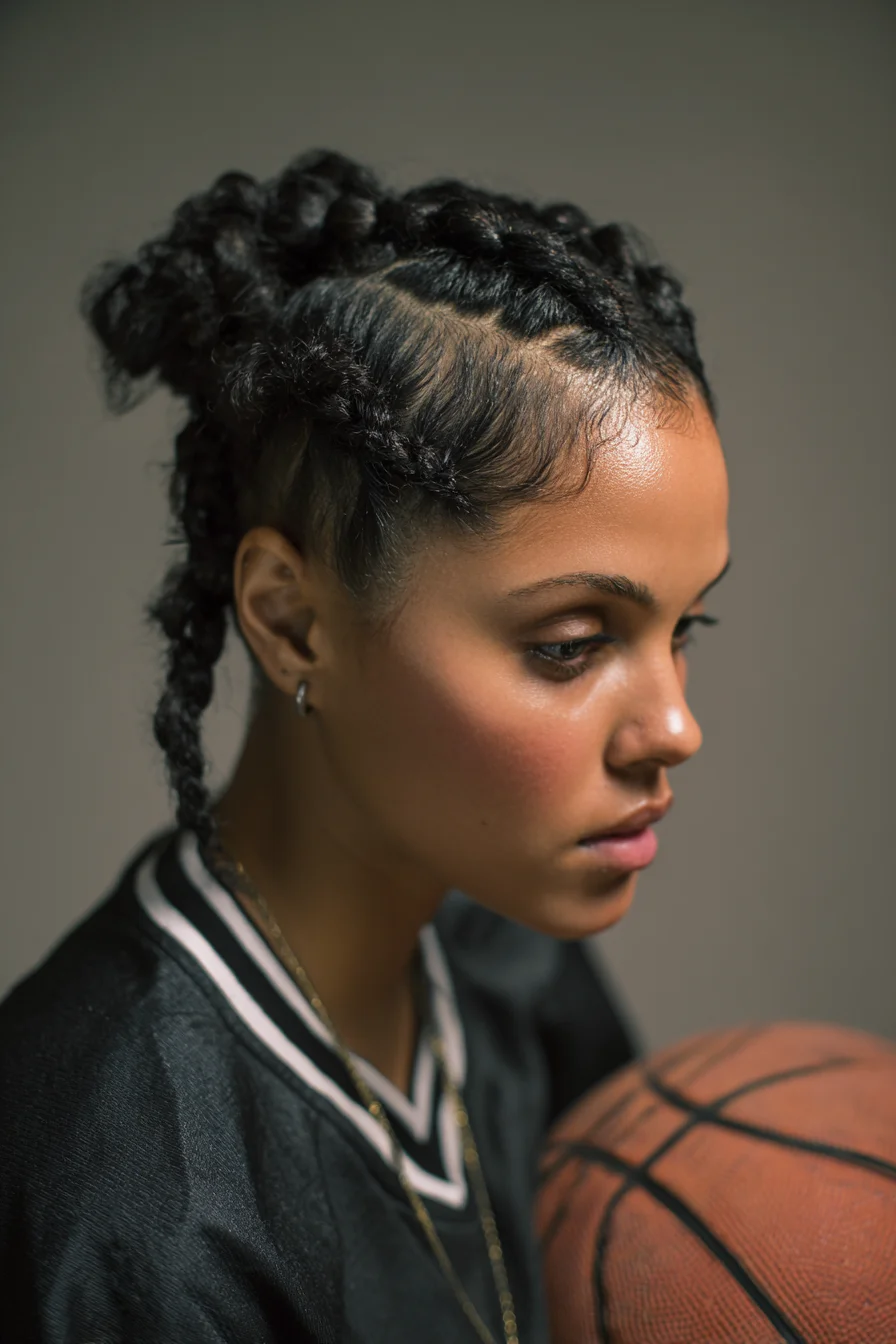
This polished cornrow updo is ideal for natural, coily or curly hair (Types 3–4) and medium to thick textures. The look is created by parting the hair into clean sections, creating flat cornrows along the scalp that feed into individual braided ponytails gathered into a low bun or puff. Finish by smoothing and shaping baby hairs at the hairline for a refined edge. Tools: rat-tail comb for parting, sectioning clips, small elastic bands, edge brush or toothbrush, wide-tooth comb, and a blow-dryer with a bonnet or diffuser if pre-stretching hair. Products: hydrating leave-in, light styling gel or edge control for sleekness, lightweight pomade for shine, anti-frizz serum, and a holding spray for longevity. Difficulty: moderate — requires even tension and clean parting; a salon braid specialist is recommended for flawless cornrows. Maintenance: sleep with a satin bonnet or scarf, refresh edges nightly with a little edge control, mist scalp and braids weekly with a water/leave-in mix and apply light oil to prevent dryness. Avoid excessive tension and redo after 3–6 weeks depending on new growth and wear.
Textured Dutch Cornrows to Low Braided Bun — Protective Sporty Updo
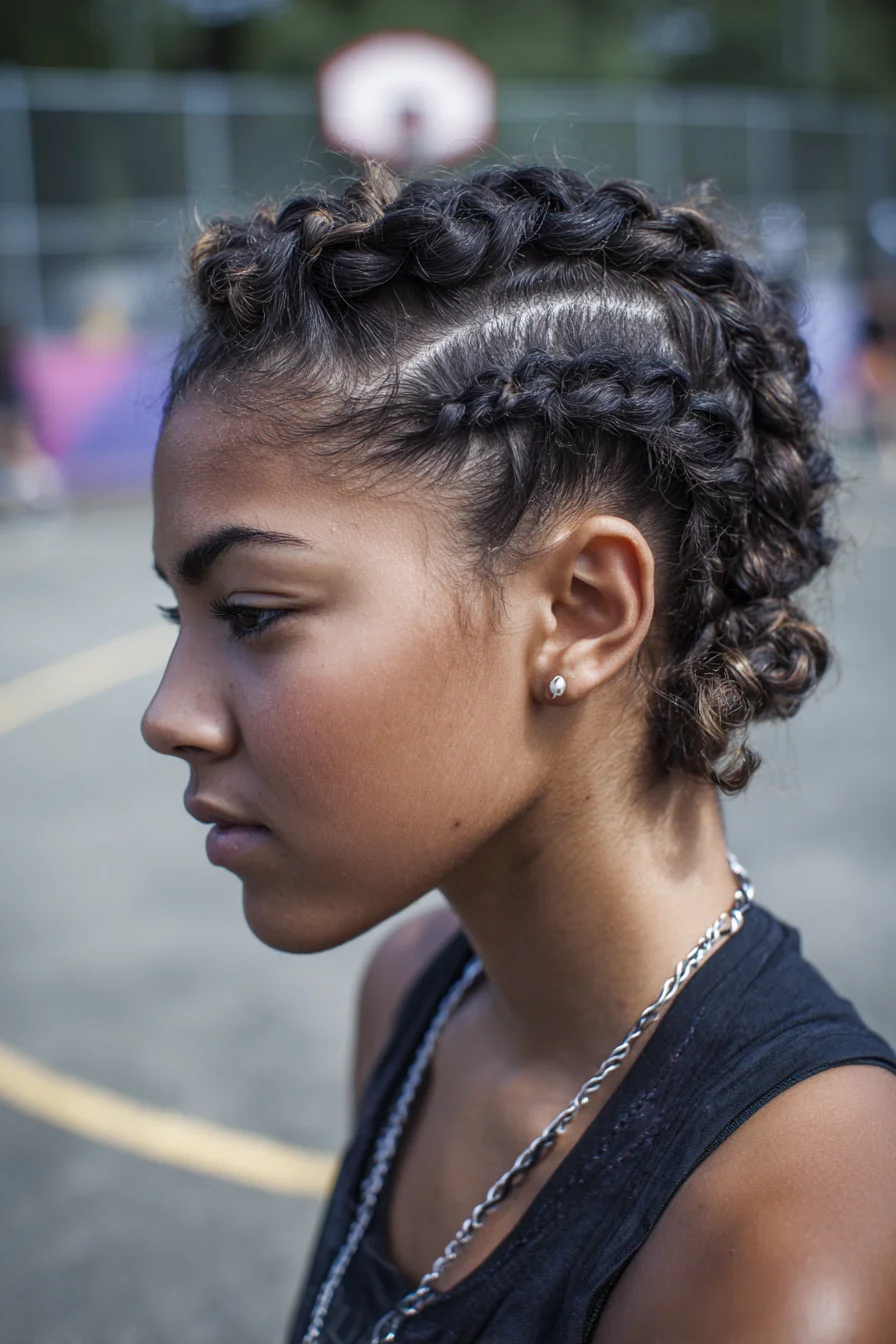
Suitable for medium to thick textured, curly, or coily hair but also works on straight hair when pre-texturized, this style combines clean cornrows/Dutch braids fed along the scalp into a low braided bun. Start on freshly detangled, slightly damp hair: apply a lightweight leave-in conditioner and a smoothing cream for manageability. Use a rat-tail comb for precise parting, sectioning clips, a soft boar-bristle brush, and gel or edge control to smooth edges. Create even, parallel parts and braid each section with an underhand (Dutch) or three-strand cornrow technique, feeding hair in for a raised, sculpted look; gather braid ends and wrap into a low braided bun, securing with elastics and long bobby pins. Difficulty is intermediate — requires neat parting and consistent tension; expect 45–75 minutes depending on hair length and number of braids. For maintenance, sleep with a satin bonnet or scarf, lightly oil the scalp every 2–3 days, refresh edges with a small amount of edge control, and mist with a water/leave-in mix to reduce frizz. Avoid excessive tension to protect the hairline and remove the style after 2–3 weeks to cleanse and rest the scalp.
Double Cornrows to Braided High Buns — Protective Sporty Style
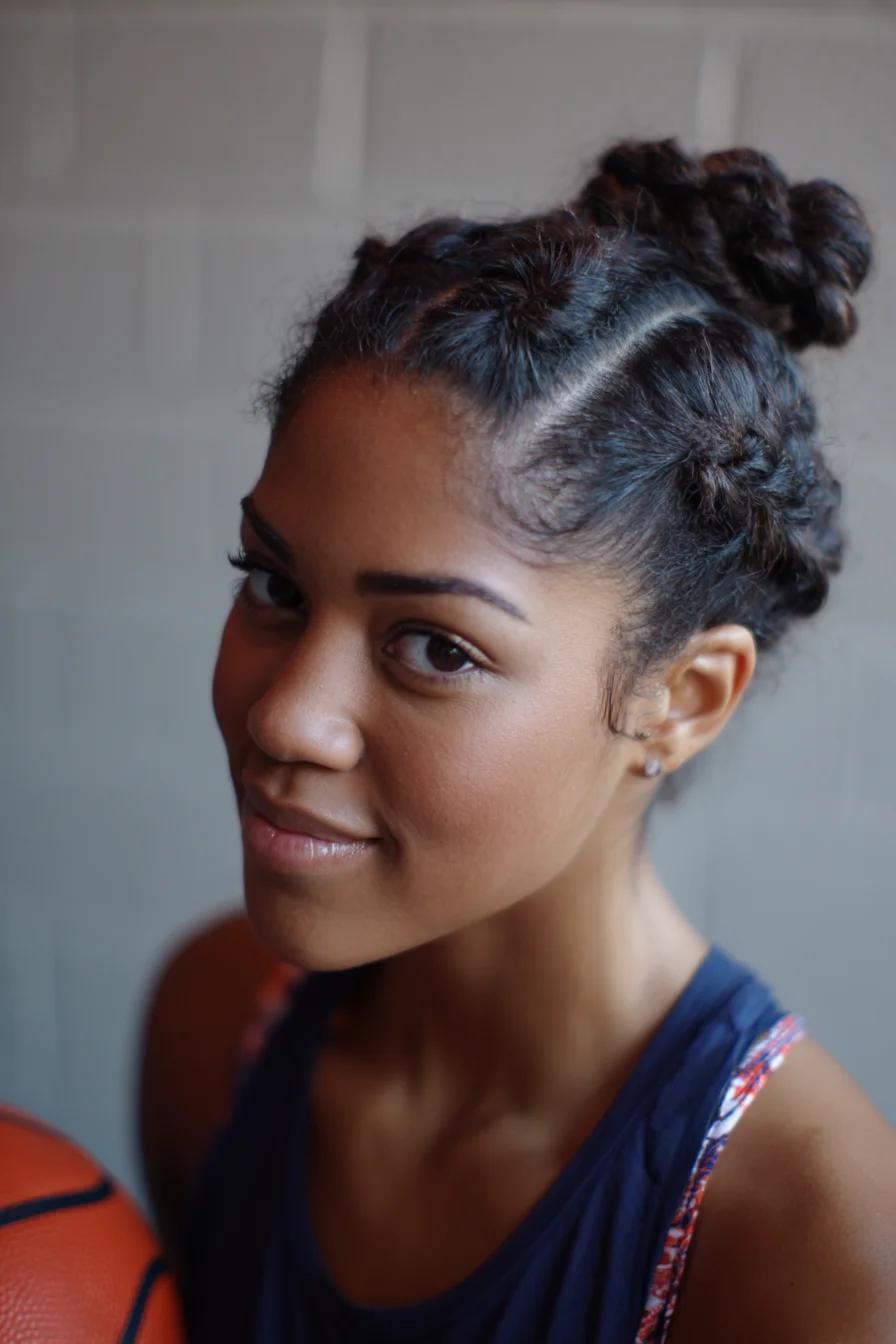
This sleek double cornrow into braided high buns is a versatile protective style suited to natural textured, curly and coily hair, and also works on wavy or relaxed hair with some texturizing. Technique: create a clean center part, section hair into two panels then Dutch-braid (or three-strand cornrow) each panel from the hairline toward the crown. Secure the braid ends and coil each into a tight or slightly pancaked bun; pin with bobby pins. For added fullness, pancake the braids gently. Tools: rat-tail comb, sectioning clips, fine-tooth and wide-tooth combs, elastic bands, bobby pins, tail comb/edge brush. Products: lightweight leave-in conditioner, styling gel or edge control for sleek parts, moisturizing oil for scalp, light-hold hairspray or setting mousse. Difficulty: intermediate — requires braiding experience and neat parting; allow 45–75 minutes in the chair. Maintenance: sleep on a satin pillowcase or bonnet, refresh edges with a small dab of gel, mist scalp with water/leave-in weekly, avoid re-tightening to prevent tension breakage, and plan to wear 1–2 weeks before redoing or resting the hair.
Sleek Cornrow Braids Gathered Into a High Braided Bun
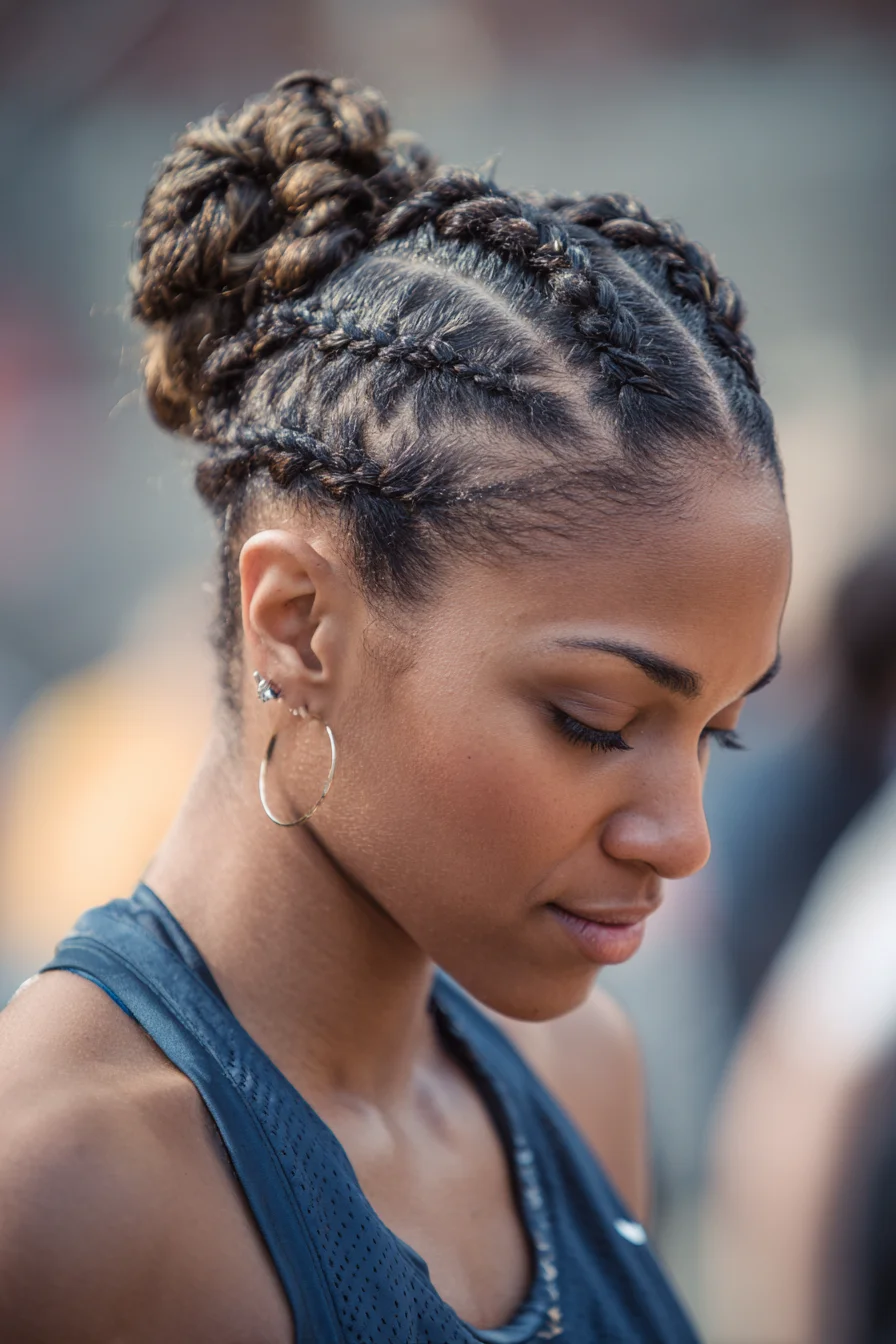
Hair type suitability: Ideal for Type 3–4 textured hair and medium to long lengths; can be adapted for straighter hair with added texture or extensions. Styling technique: Part clean, even sections with a rat-tail comb and create parallel cornrows from the hairline toward the crown. Braid each section with medium tension (avoid overtightening), gather braid ends at the crown and wrap into a secure braided bun, tucking ends under and anchoring with elastics and hairpins. Tools needed: rat-tail comb, sectioning clips, small elastics, bobby pins/hairpins, spray bottle, edge brush. Products required: lightweight leave-in conditioner, smoothing gel or edge control for neat parts, braid spray or light oil for shine, holding spray to finish. Difficulty level: Intermediate — expect 60–120 minutes depending on number of braids; professional appointment recommended for precise parting. Maintenance tips: Sleep on a satin bonnet or pillowcase, lightly mist scalp with moisturizing spray every 2–3 days, refresh edges with edge control sparingly, cleanse scalp with diluted shampoo or dry-cleanse every 1–2 weeks, and remove styles within 6–8 weeks to prevent tension-related breakage.
Double Dutch Braids with Textured Bubble Finish
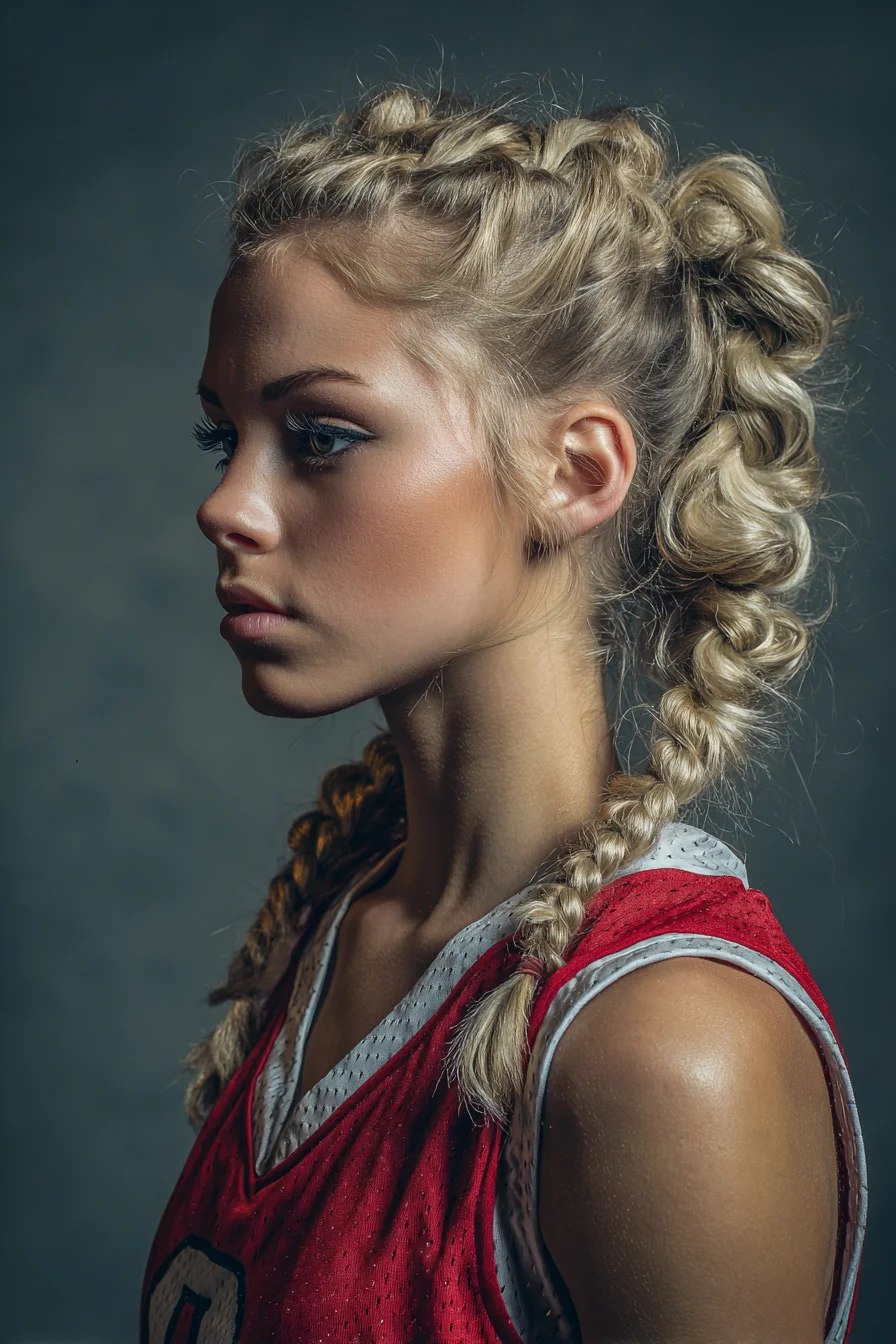
This look suits medium to thick hair best and can be adapted for fine hair using volumizing products or clip‑in extensions. Start on dry hair with a little texture — section two panels from hairline to nape. Create tight Dutch (inside‑out) braids along each panel, securing at the end with small elastics. To get the bubble effect, gently pancake each braid by pulling the outer edges of each braid segment outward and then make 2–3 evenly spaced mini elastics down the length, loosening between them to form rounded bubbles. Tools: tail comb for clean parts, small clear elastics, plenty of bobby pins, sectioning clips. Products: texturizing spray or dry shampoo for grip, light hairspray to set, smoothing serum for flyaways, and a light shine spray if desired. Difficulty: intermediate — requires confident braiding and patience; expect 25–45 minutes depending on skill and hair density. Maintenance: sleep on a silk pillow or loosely wrap with a silk scarf, refresh texture with dry shampoo, retighten elastics after 1–2 days, and avoid heavy oils near the roots to preserve grip and volume.
Whether you play competitively or enjoy pickup games, these 28 basketball hairstyles give you reliable, polished options that prioritize comfort and hair health. As a stylist, I recommend choosing a base style that matches your hair density and length — high ponytails and top knots for long, fine hair; cornrows and flat braids for curly and coily textures; low buns and wrapped ponytails for medium lengths. Prep hair with lightweight moisture, protect ends with a silicone-free serum, and use soft elastics to avoid breakage. For long tournaments, refresh with dry shampoo and re-tie using a fresh band; for post-game care, cleanse with a gentle sulfate-free shampoo and follow with a deep conditioner. If you want extra volume or protection, consult your stylist about braided extensions or a silk-lined headband. Keep a mini styling kit on hand and practice technique — small steps prevent damage and keep you looking court-ready. — Lena